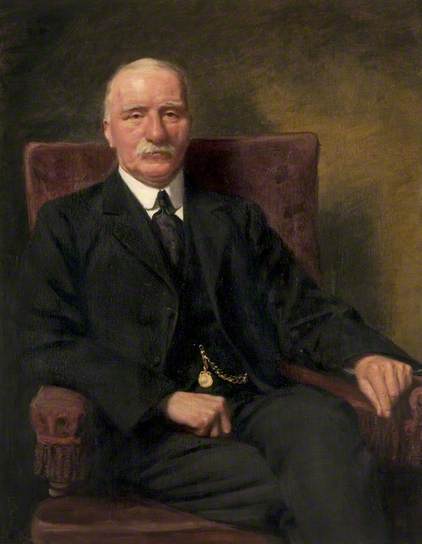
Dr Arthur James Ballantyne (1876 – 1954)

There was submitted an offer by Dr A. J. Ballantyne, 11 Sandyford Place, Glasgow C3, to gift the oil painting Interior by Tom McEwan, and the committee, after hearing a report from the director, agreed that the picture be accepted and that a letter of thanks be sent to the donor.1 The painting was received on 30 January 1942.
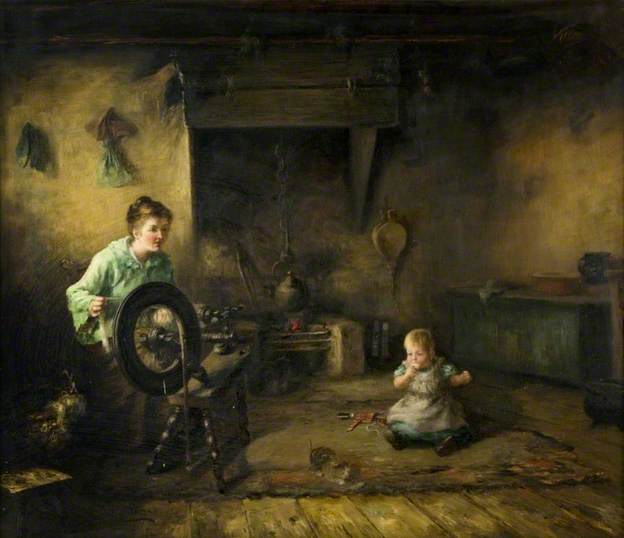
Fig. 1 Interior – (The Spinning Wheel) (2268) – Tom McEwan

© CSG GIC Glasgow Museums (Not listed on ArtUK)

The painting was exhibited at the Royal Glasgow Institute of the Fine Arts Annual Exhibition of 1895, priced at £65 2
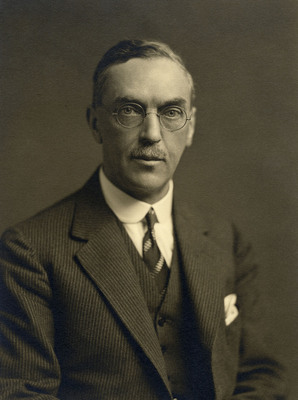
  Fig. 2 Arthur James Ballantyne (1876 – 1954)

            Arthur James Ballantyne was born on 13 July 1876, at 36 Dalhousie Street, Blythswood, Glasgow 3. He was one of a ‘large and brilliant family of a Glasgow merchant.4

His father Thomas Ballantyne was a pawnbroker and jeweller who had married Jane Kate Chalmers on 20 September 1870 in Glasgow 5. Thomas Ballantyne was born in Paisley in 1828, and this was his second marriage. Jane Kate was born in Dundee in 1838. According to the 1881 Census, in addition to Arthur, aged four, there were nine other siblings at 36 Dalhousie Street ranging in ages from 20 years to 2 months 6. Thomas Ballantyne died of cancer in 1887 leaving Jane ‘living on private means’. 7 The family moved to 260 Renfrew Street, Glasgow and in the 1891 Census there were eight children at home with one servant employed 8.

            Arthur Ballantyne was educated at Garnethill School, Glasgow and graduated M.B., Ch. B. in 1898 and M.D. in 1901 from the University of Glasgow. 9 His doctoral thesis was entitled Contusion Injuries to the Eyeball. 10 After spending a year at the University of Vienna, he returned to Glasgow and spent two years as Assistant House Physician and Assistant Surgeon at the Glasgow Eye Infirmary. He joined the Ophthalmological Society of the United Kingdom in 1903 and in 1906 was elected to the Fellowship of the Royal Faculty of Physicians and Surgeons of Glasgow. He was appointed Surgeon at the Glasgow Eye Infirmary in 1909 – a post he held until 1935. In 1909 he was appointed Professor of Physiology at Anderson`s College of Medicine. This post was relinquished in 1914 when he became Professor of Ophthalmology at the College. The previous year he had held a similar post at St. Mungo`s College. 11

            At the 1911 Census,Arthur was living with his mother and brother Thomas who was a civil engineer and two servants at 11 Sandyford Place, Anderston. His occupation was ‘physician, eye-specialist. 12 On 14July 1916 he attended a meeting of the Oxford Ophthalmological Congress where he read a paper on Quinine Amaurosis. He was then ‘Surgeon to the Glasgow Eye Infirmary’ 13. During the latter stages of the First World War, he was given a temporary commission as a lieutenant in the Royal Army Medical Corps and was appointed Ophthalmic Surgeon to the 67th General Hospital in Salonika 14. When he arrived in Salonika, he was to take the place of a certain Dr Tom Honeyman (later Director of Kelvingrove Art Gallery and Museum, Glasgow) who had become ill due to an attack of fever.15

            In 1920, Ballantyne was appointed Lecturer in Ophthalmology at the University of Glasgow. In the same year, on 23 June, at the age of 43, he married Jessie Snodgrass, the daughter of one of his colleagues. She was 27. The marriage took place in the Grand Hotel, Glasgow 16. Sadly, Jessie died from eclampsia on 27January 1928. 17 It may have been on this occasion that he reportedly wrote to a colleague, ‘These have been sad days for us, but work and service remain to make life worthwhile.’ 18

            Part of this “work” involved travelling to give lectures on his research and on 15 August 1930, he arrived in Montreal, Canada aboard the Duchess of Bedford. His final destination was St. Albans, Vermont in the U.S.A. 19 almost certainly to deliver lectures there.

            He was appointed the first Tennent Professor of Ophthalmology at the University of Glasgow in 1935, a post he held until his forced retirement in 1941 due to age rules. (The Tennent chair was the first in Ophthalmology to be founded in the United Kingdom. It was endowed by Gavin Patterson Tennent who graduated M.D. from the University in 1870). On his retirement, Arthur Ballantyne was awarded an LL.D. by the University and made an Emeritus Professor. 20
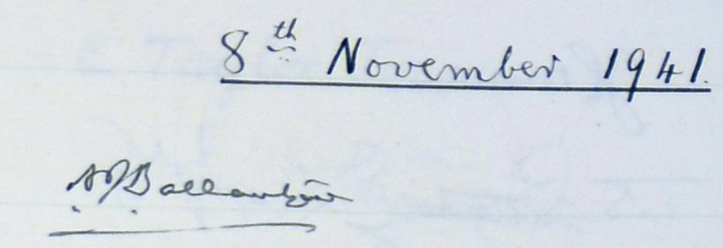
               Fig. 3 Arthur Ballantyne`s signature on the Register of Awards of
Honorary LL.D. s 21

He ‘continued his ground-breaking research in diabetic retinopathy’ and was awarded the Mackenzie Medal in 1942. (This award was established in 1924 to mark the centenary of the Glasgow Eye Infirmary. It was named after its founder and was awarded to an eye surgeon who had made a special contribution to ophthalmology). In 1943 Dr Ballantyne delivered the Montgomery Lectures in Dublin and in 1946 the Doyne Memorial Lectures at Oxford. 22

            In 1947 he travelled to Roanoke College in Virginia to be awarded an honorary D.Sc. degree. It was recorded in the immigration papers that he was ‘aged 70 and a widower, 5 ft 5 ins tall, fair complexion with grey hair and grey eyes’.23 He continued to publish original research and in 1950 was awarded the Nettleship Medal for the ‘best piece of original work by a British ophthalmologist published in any journal during the previous three years’. 24

            Despite living all his life in the West End of Glasgow, Arthur Ballantyne retired to the village of Killearn, and he died there on 9 November 1954 aged 78. The cause of death was cardiovascular degeneration. 25 His estate was valued at £83,051:14:0 26. An obituary recorded that while ‘His professional work claimed most of his time, he was an expert in colour photography and a connoisseur of art in which he was not a mere dilettante; he was a member of the Committee of the Glasgow Institute for Fine Arts and was on the hanging committee’ (of that Institute). 27 An obituary was also published in the British Journal of Ophthalmology.28

            Arthur Ballantyne was a ‘prolific contributor to medical literature’  and had an international reputation for his research activities. He served upon the editorial committees of the Glasgow Medical Journal, the Ophthalmoscope, Ophthalmologica, and the British Journal of Ophthalmology. He was co-author of the Textbook of the Fundus of the Eye which was published posthumously in 1962. A description of the book stated that; “The problems of the fundus of the eye were the life-long study of the late Professor Arthur J. Ballantyne who brought to them an unusual patience fordetail and an appreciation of their importance in the understanding of the total picture. He stimulated a generation of Glasgow ophthalmologists with his interest”. 29

References

  1. Minutes of Corporation of Glasgow, 17 February, 1942, C1/3/105, p791.
  2. Billcliffe, Roger, The Royal Glasgow Institute of the Fine Arts, 1861-1989: A Dictionary of Exhibitors at the Annual Exhibitions, (Woodend Press, 1990).
  3. Scotland`s People, Birth Certificate
  4. Thomson, A. M. Wright The Glasgow Eye Infirmary, 1824-1962
  5. Scotland’s People, Marriage Certificate
  6. ancestry.co.uk, Scottish Census, 1881
  7. Thomson, A. M. Wright The Glasgow Eye Infirmary, 1824-1962
  8. ancestry.co.uk, Scottish Census, 1891
  9. www.universitystory.gla.ac.uk
  10. www.bjo.bmj.com
  11. www.universitystory.gla.ac.uk.
  12. ancestry.co.uk, Scottish Census, 1911
  13. British Journal of Ophthalmology, 1917; 1; 153 -161
  14. British Journal of Ophthalmology, 1917; Supplement to the London Gazette, 2 July 1917.
  15. Webster, Jack, From Dali to Burrell, The Tom Honeyman Story, B & W Publishing, Ltd., Edinburgh, 1997
  16. Scotland’s People, Marriage Certificate
  17. Scotland’s People, Death Certificate
  18. British Journal of Ophthalmology, 1955; 39:1, 63 – 64.
  19. ancestry.com, Border Crossings: From Canada to U.S., 1895 – 1954
  20. Archives of the Royal College of Physicians and Surgeons,
  21. Glasgow; University Archives
  22. Minutes of the Royal College of Physicians and Surgeons of Glasgow, 6 December 1954.
  23. ancestry.com, New York, Passenger Lists, 1820 – 1957.
  24. Minutes of the Royal College of Physicians and Surgeons of Glasgow, 6 December 1954.
  25. Scotland’s People, Death Certificate
  26. Confirmations and Inventories, 1954. National Records of Scotland.
  27. British Journal of Ophthalmology, 1955; 39:1, 63 – 64.
  28. Minutes of the Royal College of Physicians and Surgeons of Glasgow, 6 December 1954.
  29. http://www.amazon.com/Textbook-Fundus-Arthur-Ballantyne-F-R-F-P-S/dp/B007LVOPXY/ref=sr_1_1?s=books&ie=UTF8&qid=1372834404&sr=1-1

Appendix

The library of the Royal College of Physicians and Surgeons of Glasgow has a set of instruments called Ballantyne Droppers. These were used and probably designed by Arthur Ballantyne.
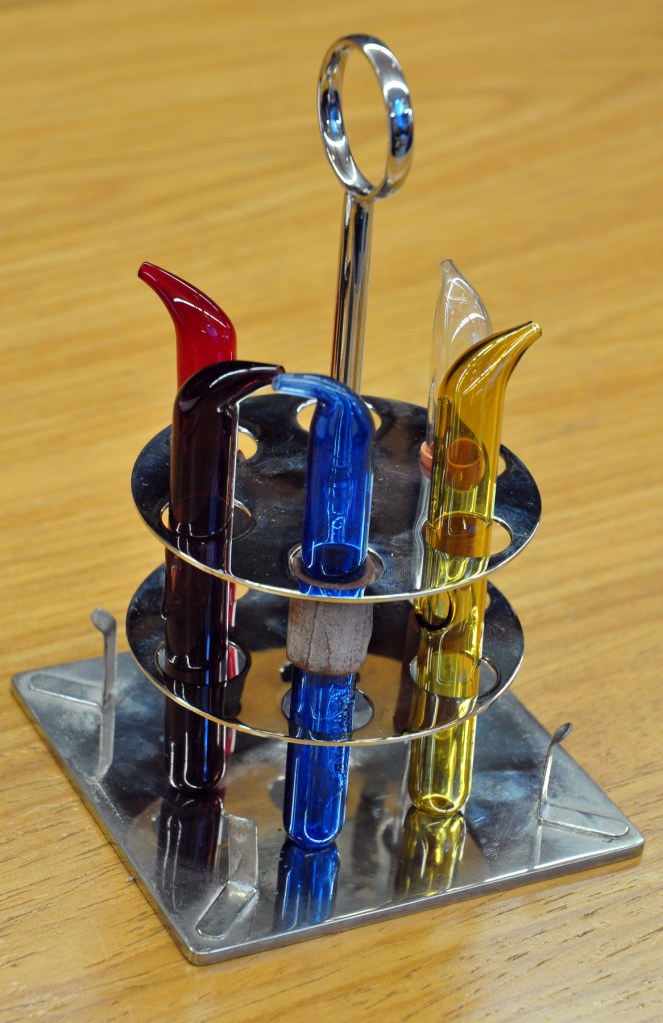
Fig. 4, A Set of Ballantyne Droppers
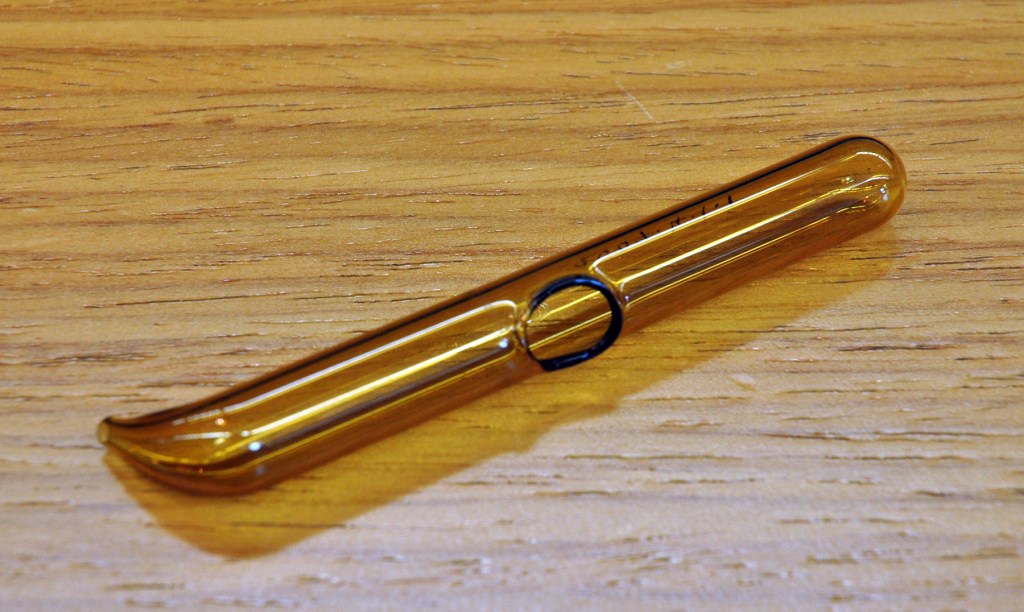
Fig. 5, A Ballantyne Dropper
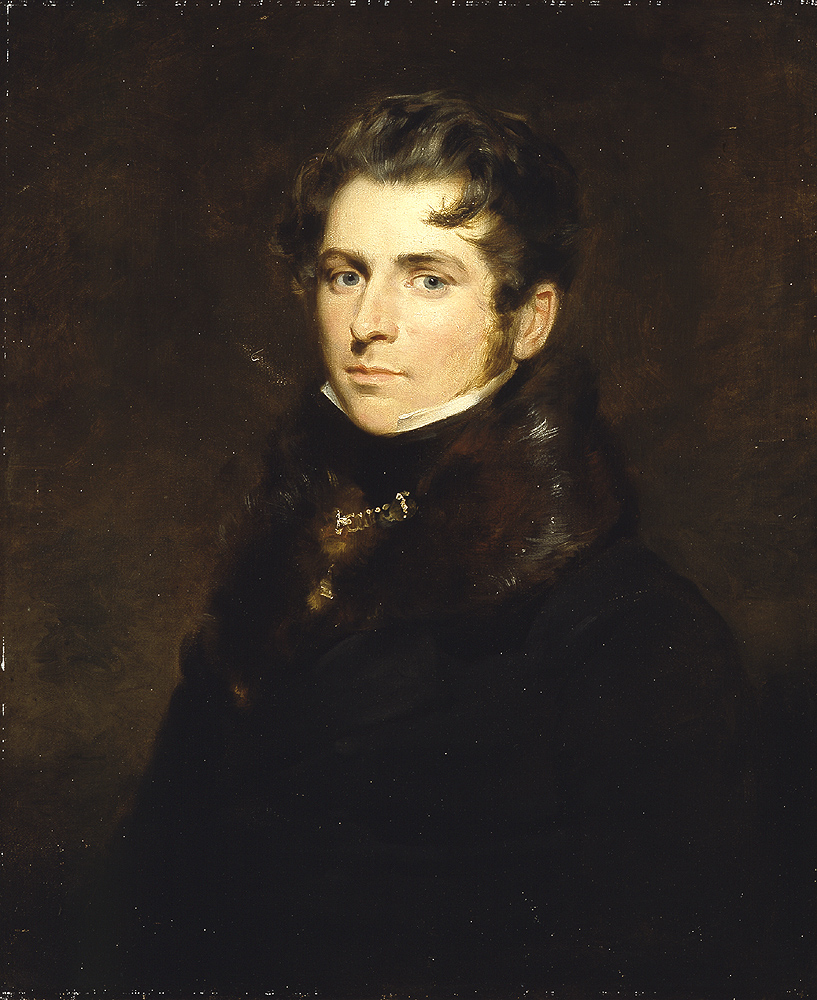
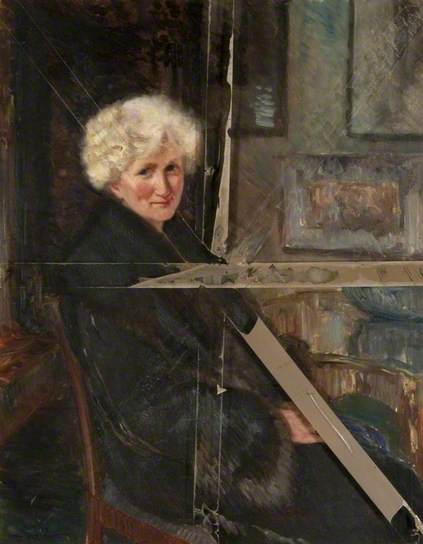
Charles Heath Wilson

Courtesy of Glasgow Museums

This portrait was donated in June 1915 by his son, William Heath Wilson, artist, in memory of all that his father had  contributed to the teaching of art in the city of Glasgow.

The artist was Sir John Watson Gordon (1788-1864) who was a successful portrait painter of the artists, literati and intellectuals of his day.(1) He was a founding member of the Royal Scottish Academy in 1826.

William Heath Wilson

William was his father’s fourth child and the only son of his second wife, Johanna Catherine, daughter of William John Thomson, himself a portrait painter. He was also the grandson of the artist Andrew Wilson.

He was born in Edinburgh in 1849 and lived in the United Kingdom until 1868 when the family moved to Florence, Italy, and he was still living there in the 1870’s and 1880’s.(2)

He was taught to paint by his father at Glasgow School of Art and specialised in genre scenes and landscape painting, mostly in oil and mostly on a small scale. He painted in the Impressionist Style. His paintings are of Scotland, Italy, London and Cairo. Ten of his works are  in the Glasgow Museums’ collection in Glasgow Museums Resource Centre at Nitshill.

In 1881 he married Isabella Clements who had been born in 1853.

He used to travel to London every year between 1884 and 1899 to exhibit his work at the Royal Academy, London.

His work was, and continues to be, very popular, and frequently appears for sale in Auction Houses, including Christies. Prices for his works are also increasing.(3) An auction of the contents of Hopton Hall, Worksworth in 1989 saw four of his paintings sold there.(4)

Charles Heath Wilson  ‘Missionary Of Art’

Charles was not a donor of paintings to Glasgow Museums although there are some of his works in their collections. He is, however, one of the most important figures in the history of Fine Arts in Glasgow.

He was born in September 1809 in London, the eldest son of Andrew Wilson, landscape painter and art importer, and Master of the Trustees Academy from 1818-1826. He trained for a short period with Alexander Naysmith and worked in London, and was friends with David Wilkie.(5)

Charles studied painting with his father and accompanied him to Italy in 1826, where he studied ancient architectural ornament. He stayed there until 1833, when he returned to Edinburgh, where he practised as an architect, and taught ornament and design in the School of Art. (6)

The 1841 census has him living in Woodhill Cottage, Corstorphine with his wife and daughter.(7)

His pictorial work was principally in watercolour and one of his paintings is in the National Gallery of Scotland – a fine watercolour of Florence and the Arno. He gave several works to Glasgow University in 1869. He was also an expert on  Fresco Painting.

In 1835 he was elected ARSA but he did not not exhibit after 1842, which resulted in his resignation in 1858.

He was interested in stained glass and spent 10 years re-glazing Glasgow Cathedral, working with the Board of Trade, and using panels made in Munich. This caused considerable controversy with those who thought that the glass should come from elsewhere but he did have the support of such people as the Duke of Hamilton and Sir John Maxwell of Pollock.(8)

He was twice married – firstly to Louisa Orr, daughter of the surgeon John Orr, in 1838; and secondly, in 1848, to Johanna Catherine, daughter of William John Thomson, the portrait painter. Altogether he had two sons and three daughters.

He was passionately interested in education. Between 1837 and 1843 he was Head of the Department of Design at Edinburgh Trustees Academy. In 1840 he visited the Continent and reported to the Government on Fresco Painting. Between 1843 and 1848 he became Director of the Government Schools of Design at Somerset House in London. It was in this capacity that he co-founded, together with John Mossman and others, the world renowned Glasgow School of Art (then known as the Glasgow School of Design).(9)

 In 1849 he moved to Glasgow and lived at 29 St. Vincent Place. He was appointed Headmaster of the Government School of Design in Glasgow, which  was housed at 116, Ingram Street. The school was immediately oversubscribed and additional space was purchased in Montrose Street.(10)

In 1853, with the creation of the Science and Art Departments, it became the School of Art. While Headmaster, Wilson made many changes to the school. He introduced life classes and set up a mechanical and architectural drawing class. He taught a class on practical geometry and superintended the advanced class. The courses of study were modified to retain established designers and pattern drawers in the school. He worked closely with the Mossman Brothers who were teaching many of the sculptors and carvers who produced the bulk of the city’s architectural sculpture and monuments in the Glasgow Necropolis and who studied their craft at evening classes in Ingram Street.

Wilson was also involved with the creation of another of the city’s great institutions, the McLellan Galleries whose treasures formed the nucleus of Glasgow’s civic art collection in 1856.

He continued with painting and architecture and was involved in several commissions and competition designs. In 1855, along with the Mossmans, he designed the monument to Henry Monteith of Carstairs in the Necropolis.(11)

In the 1861 census he was living at 286 Bath Street. (12)

In 1864 the Board of Trade masterships were suppressed and Wilson was pensioned off, although his involvement with the School of Art continued for a few more years. He became an Honorary Director of the School of Art and one of the trustees of the Haldane Academy. He gave evidence to several House of Commons Select Committees and prepared a Report for the Commission on the Design of the National Gallery.(13)

After leaving the Art School, he returned to full-time practice as an architect in 1864, opening an office at 29 St. Vincent Place, and formed a partnership with a former pupil, David Thomson.(14)

One of their projects was the monument to John Graham Gilbert in the Glasgow Necropolis, designed in 1867. In the same year they redesigned the interior of the Maclellan Galleries, converting part of the building into a picture gallery for Glasgow Corporation. They made alterations to the stables at Pollok House and rebuilt Duntreath Castle, Strathblane in 1864. These are just some of a long list of commissions and designs worked on by the partnership.(15)

In 1868 he inherited a large sum of money and in 1869 he and his family went to live in Italy. He never returned to Scotland.(16)

He spent his last years in Florence, where he was at the centre of a large circle of artists and writers. He wrote a book entitled Life of Michaelangelo Buonarotti in 1876 and he also illustrated some books for which he was awarded the cross of the ‘Corona d’Italia ‘ by Victor Emmanuel.(17)

He died in Florence in 1882.

Almost every member of his family inherited his artistic capability, the most well-known being his son, William, the donor of the painting.

In 2000 Wilson was the subject of an exhibition of his life and work held at Glasgow School of Art and entitled Missionary of Art: Charles Heath Wilson 1809-1882. This was accompanied by the publication of the book Missionary of Art(ed: Rawson) which contains the above portrait and is lavishly illustrated with examples of his paintings and designs. He is remembered chiefly as ‘one of the most important contributors to (the city’s) art scene that Glasgow has witnessed’.(18)

References

  1. Harris, Paul and Julian Halsby. The Dictionary of Scottish Painters 1600 to the Present. Canongate Books. 2001. ISBN 1 84195 150 1
  2. Ibid
  3. www.artnet.com
  4. www.worksworth.org.
  5. Harris, Paul and Julian Halsby. The Dictionary of Scottish Painters 1600 to the Present. Canongate Books. 2001. ISBN 1 84195 150 1.uk
  6. http:/en Wikipedia.org/wiki/Charles_Heath_Wilson
  7. https://scotlandspeople.gov.uk
  8. http://www.glasgowsculpture.com/pg biography.php?sub=wilson ch
  9. Ibid
  10. http://www.gashe.ac.uk:443/isaar/PO168.html
  11. http://www.glasgo.php?sub=wilsonwsculpture.com/pg biography.php?sub=wilson
  12. https://www.scotlandspeople.gov.uk
  13. http://www.gashe.ac.uk:isaar/PO168.html
  14. http://en Wikipedia.org/wiki/Charles_Heath_Wilson
  15. http://www.glasgowsculpture.com/pg biography.php?sub=wilson
  16. http://www.gashe.ac.uk:443/isaar/PO168.html
  17. http://www.glasgowsculpture.com/pg biography.php?sub=wilson ch
  18. Rawson, George (Ed). Charles Heath Wilson, 1809-1882. Foulis Press of Glasgow School of Art

Mrs John Arnott nee Eliza Stiven Cuthbert (1879 – 1942)

Two paintings were received by Glasgow Corporation on 20 April 1943. They were bequeathed by Mrs Arnott. 1

Fig. 1 Mr John Arnott                                 Fig. 2 Mrs John Arnott
Robert Cree Crawford                                 James McBey
1920 *                                                             1927 2
 © CSG GIC Glasgow Museums/ArtUK.

Accession Number 2321                                Acc. No. 2322

  • A plaque attached to the painting has the following inscription: –

‘Presented to Mr. John Arnott of Messrs. J. & B. Stevenson by the employees at Cranston Hill Bakeries in appreciation of the happy relations which have always existed between him and them and to celebrate the occasion of his completing a connection of forty-five years with the firm. Glasgow, May 1920’.

(The firm of J. and B. Stevenson was established in Glasgow in 1865 and grew to become one of the largest bakers of bread and cakes in the world. By 1891 they had established bakeries in Cranstonhill and Plantation each of which was seven stories high and capable of producing 100,000 loaves daily. Each bake house was “under the careful supervision of an efficient foreman personally responsible for the conduct of a large staff of bakers”. The firm later opened bakeries in Battersea in London). 3

            John Cuthbert (Eliza’s father) was born about 1825 in Kirriemuir, Forfarshire. His occupation initially was as a ‘seedsman’ 4 but by 1871 he was the manager of the Wick and Pulteney Gas Works in Pulteneytown, Wick. 5 He married Margaret Stiven, who was born in Arbroath, in Inverness on 15 February 1866 and thirteen years later, on 26February 1879, Eliza Stiven Cuthbert was born in Burn Street, Pulteneytown. 6 Eliza was the youngest of seven children. In 1882, John Cuthbert died in Wick, aged 58 7 and the family moved to 14 Kersland Street, Partick, Glasgow with Eliza`s older sisters variously employed as dressmaker, milliner and pupil teacher. 8 Eliza`s mother died in Partick in 1900 aged 62.9 The family remained in Kersland Street and in the 1901 census, Eliza`s oldest sister Margaret aged 32 was head of the family. Also living there were Isabel Jane Cuthbert, 25, William Stiven Cuthbert, 23 and Eliza, 22. 10 However, by 1908 Eliza had moved to 14  Glasgow Street, Hillhead and was employed as a bookkeeper. 11 This seems to have remained her address until 1929.

            On 15 November 1923 at 22 Woodlands Terrace, Glasgow, Eliza Stiven Cuthbert married John Arnott. She was 44 and he was 72. Eliza`s sister Isabel was one of the witnesses.12

            John Arnott was born in Tillicoultry, Clackmannanshire in 1851, but his family moved to Glasgow and by 1861 were living at 2 Orchard Street in Govan. John’s father, also John, was born in Fordyce, Banff in 1826 and was a wool sorter. 13 He married Janet Drummond on 5 September 1847. In 1871 the family was living at 53 McNeil Street, Hutchesontown. John, aged 19, was a ‘dyer’. Jane Arnott, 44, was head of the family. 14 In 1875, John Arnott joined the firm of J. and B. Stevenson (see above). By the time of the 1881 census, the family had moved to 120 South Wellington Street, Hutchesontown and John was now a ‘baker’s shopman’. His father was fifty-six and his mother Janet fifty-four. 15 On 4 July 1882 at 110 Thistle Street, Glasgow, John aged thirty-one, married Mary- Jane Middlemass who was twenty-six and a milliner. Their respective addresses were 120 South Wellington Street and 211 Hospital Street, both Glasgow. John was now a ‘baker’s foreman’. 16 John progressed through the firm becoming a master baker and eventually bakery manager. In the 1891 census he was at 31 Dover Street, Glasgow, aged thirty-eight, with his wife Mary Ann Arnott (sic) who was thirty-five and born in Ireland. 17 Ten year later, the couple had moved again, this time to 53 Bentinck Street, Sandyford, Glasgow and they now employed a servant. 18 From 1906 they lived at 6 Royal Terrace, Glasgow. 19 and that was their address in the 1911 census having been married for twenty-eight years but had no children. Mary Arnott died on 14 August 1918 at 3 Claremont Terrace, Glasgow. On her death certificate her name is given as Mary-Jane Arnott nee Middlemass, aged sixty-two. 20

After his marriage to Eliza, the couple probably moved to 6, Royal Terrace but it seems that Eliza retained her property at 14 Glasgow Street. 21 Eliza`s portrait was painted in 1927 when she was 48. John Arnott continued to work at J. and B. Stevenson until his death in 1928. He died at The Deans, 28 Drummond Terrace, Crieff from a cardiac syncope leaving an estate valued at £11,489. 22,23 

            After his death Eliza remained at 6 Royal Terrace with her sister Isabel at least until 1931 when she made her will. 24 Later she gave up her flat in Glasgow Street and the house in Royal Terrace (she is not listed in the Glasgow Post Office Directory at either address). She moved to Kilmacolm with her sister. 25

            Eliza Stiven Arnott died aged 63 at Oakfield, Kilmacolm on 28June 1942. Her death was caused by a thrombosis following an operation to remove a gall bladder. 26 She was buried in Cathcart cemetery on 1 July. 27 Eliza`s name was added to the family memorial stone in the Old Municipal Cemetery in Wick. 28 Her estate was valued at £3,183:10:0. Her sister Isabel who was her executor and the sole beneficiary, died aged 90 in Glasgow in 1960.29

References

  1. ArtUk
  2. Ibid
  3. Index of Firms in Glasgow,1891 
  4. glasgowwestaddress.co.uk/1891_Book/Stevenson_J_&_B.htm‎
  5. ancestry.co.uk, 1851 Scottish Census
  6. ancestry.co.uk, 1871 Scottish Census
  7. Scotland’s People, Birth Certificate
  8. Scotland’s People, Death Certificate
  9. ancestry.co.uk, 1891 Scottish Census
  10. Scotland’s People, Death Certificate
  11. ancestry.co.uk, 1901 Scottish Census
  12. Glasgow Post Office Directory, 1908-09
  13. Scotland’s People, Marriage Certificate
  14. ancestry.co.uk, 1861 Scottish Census
  15. ancestry.co.uk, 1871 Scottish Census
  16. ancestry.co.uk, 1881 Scottish Census
  17. Scotland’s People, Marriage Certificate
  18. ancestry.co.uk, 1891 Scottish Census
  19. ancestry.co.uk, 1901 Scottish Census
  20. Glasgow Post Office Directory, 1906 – 7, and subsequent years
  21. Scotland’s People, Death Certificate
  22. Glasgow Post Office Directory, 1906 – 7, and subsequent years
  23. Scotland’s People, Death Certificate
  24. Index of Confirmations and Inventories, Mitchell Library, Glasgow
  25. Index of Confirmations and Inventories, National Records of Scotland
  26. Glasgow Post Office Directory, 1931 – 32
  27. Scotland’s People, Death Certificate
  28. Glasgow Herald, deaths, 1 July 1942
  29. gravestonephotos.com
  30. Scotland’s People, Death Certificate