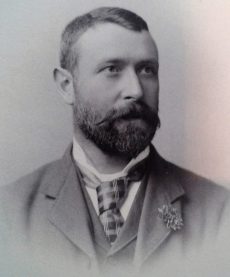
John Keppie was a renowned Glasgow architect whose business partners during his career included John Honeyman and Charles Rennie Mackintosh. He was also an accomplished watercolourist and had studied at the Glasgow School of Art and in Paris. On his death in 1945 he bequeathed a number of paintings to Glasgow which included works by Edward Walton, Bessie MacNicol and Joseph Crawhall.[1]
The following notes describe his family background, his early life, career and painting activity. Inevitably they touch on his relationship with Mackintosh whose fame, some sources suggest,[2] has unfairly overshadowed Keppie’s success and achievements as an architect. Keppie is almost invariably referenced, when mentioned, as a partner of Mackintosh as if he had no other meritorious claim.
The Keppie family originated in Haddington, East Lothian. John’s paternal grandfather, also John (Keppy), married Mary Quelain, the daughter of James Quelain, a Haddington flax dresser, in Edinburgh on 20th April 1810.[3] He was aged about twenty four and worked as a gentleman servant, Mary was about 17 years old.[4]
Between 1811 and 1836 they had five sons and seven daughters all born in Haddington.[5] John Keppie’s father, James was born on the 19th October 1816 and baptized on the 3rd November.[6] Grandfather John appears to have had a number of occupations being variously described as a labourer, carter and finally a farmer.[7]
James Keppie married twice. His first wife was Janet Smith whom he married in Canongate Parish Church on 12 June 1840. At the time of his marriage he was described as a tobacconist lodging with William Corns, a bookbinder, in Leith Walk. Janet was the daughter of John Smith, a gentleman’s butler of North Berwick. She was also lodging in Edinburgh at the time with a Miss Ritchie at 21 Lothian Road.[8]
In the following year James was working as a tobacco spinner in Glasgow, he and his wife living in Buchanan Court in the Gorbals.[9] It’s likely he was in the employ of Henry Spence and Co. whose tobacco and snuff manufactory at that time was located in Park Place, Stockwell Street.[10] Spence commenced trading around 1813 in Main Street, Gorbals [11] moving to Stockwell Street in 1816 [12] where he remained until 1848 when he ceased trading from that address.[13] His company continued for another year from premises in the Trongate which he had occupied since 1842.[14]
In 1848 James Keppie set up his tobacco business in the premises in Stockwell Street vacated by Spence,[15] hence the conjecture that Keppie had worked for Spence and had learned the broader business from him. By 1851 Keppie’s snuff and tobacco manufactory business employed two men, one apprentice and nineteen boys.[16] The smuggling and adulteration of tobacco and snuff at this time were of major concern to the legitimate manufacturers, and to the Excise. In 1851 thirty one of Glasgow’s tobacco manufactories, including Keppie’s, formed a society whose purpose was to protect themselves against such activities. In the Glasgow Herald of the 7th March 1851 notice was given of the society’s formation, included in which was the threat that retailers found selling such contraband would be liable for an Excise fine of £200.[17]
His marriage to Janet Smith was childless and sometime after March 1851 she died. The exact date has not been established but James remained a widower until 1856 when he married Helen Morton Hopkins on the 14th February in Glasgow.[18] Helen’s family came from Galston in Ayrshire where her parents, James Hopkins, a bookseller and Elizabeth Cuthbertson, had married in 1824.[19]
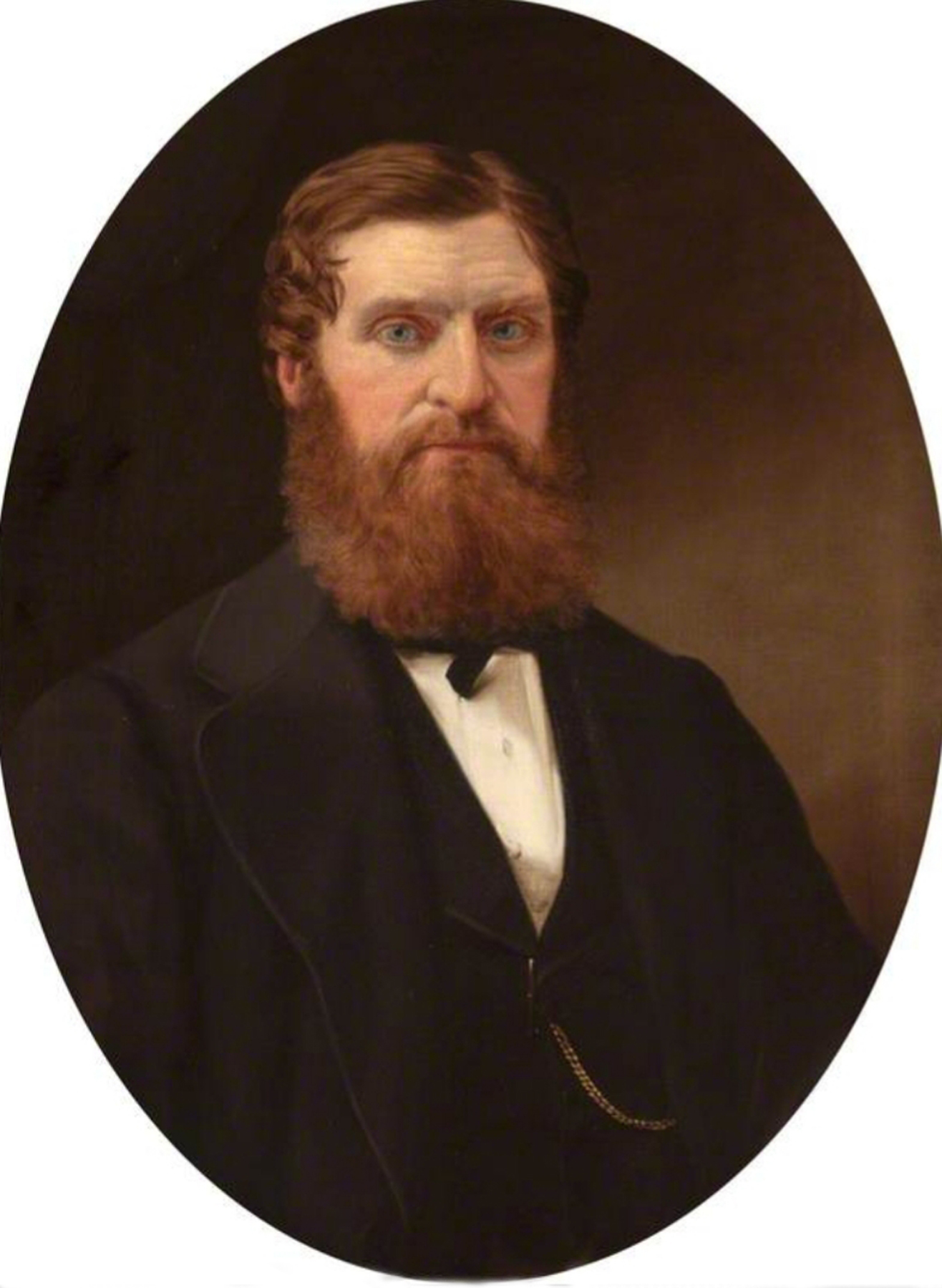
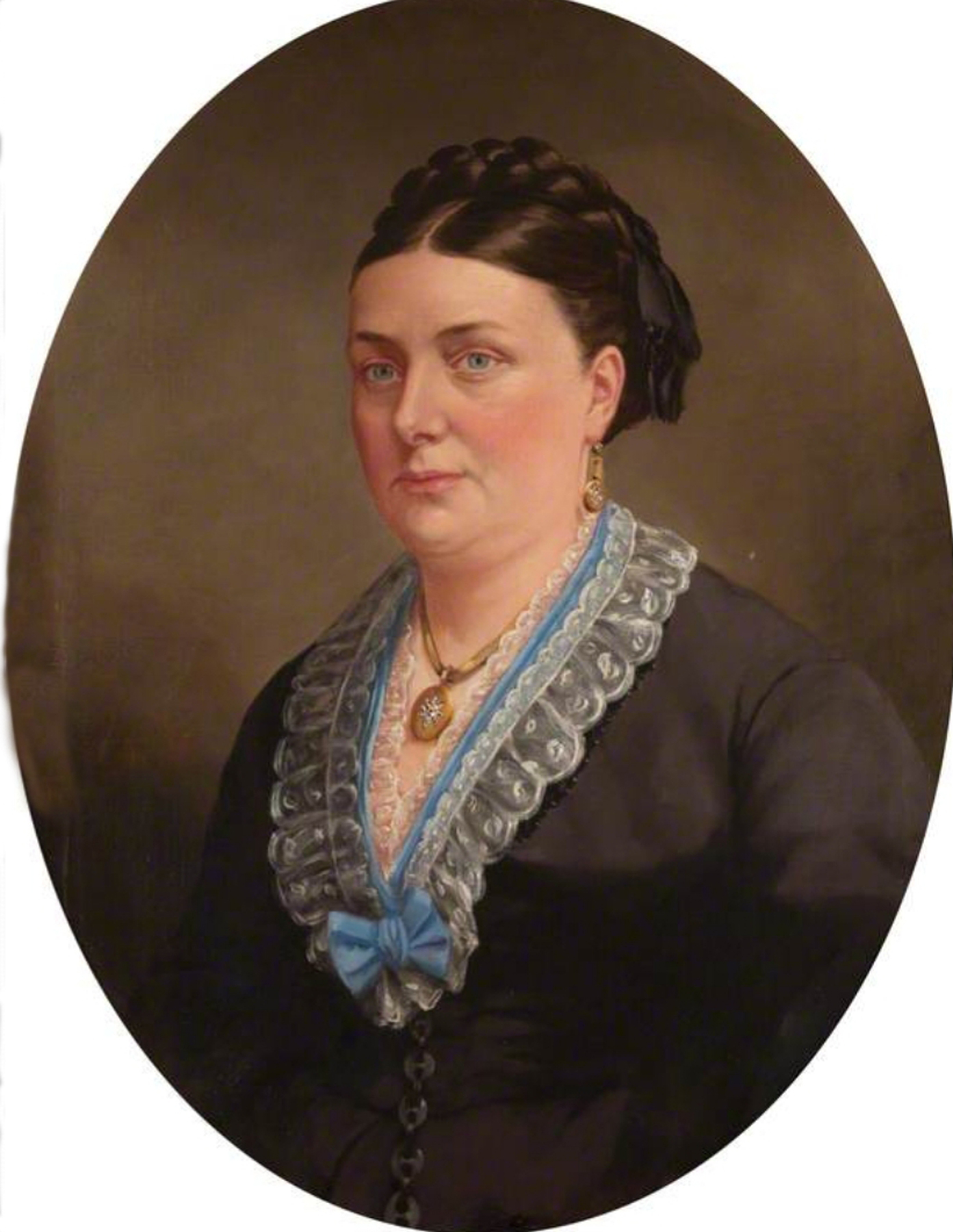
James and Helen had eight children, five daughters and three sons [20], John, the eldest boy, being born on the 4th August 1862.[21] The family lived at various addresses in Glasgow including Frederick Street, where John was born, Granville Street and by 1879 at 42 Hamilton Park Quadrant [22] which James owned.[23] This address became 42 St James Street with the street name changed late in 1887.[24] By 1875, in addition to his Glasgow home, James owned two properties in Station Road in the parish of Monkton. One was rented out to Mr. John Campbell, a police officer in Glasgow, the other was the family second home.[25]
James’ tobacco business seems to have been very successful with premises at different times in Stockwell Street, Brunswick Street, and finally at 157 Trongate where he owned two properties, acquired around 1859. He used one to run his tobacco business and rented out the other.[26] At one point he employed two travellers, four spinners, two message boys and forty two boys in the workshop.[27] He retired from business in 1880 having rented out his business property to another tobacconist, F & J Smith & Co. five years previously. He continued to operate some business from these premises until his retirement.[28] He died at home in 1889 from chronic bronchitis, his death registered by his son-in-law David Riddoch [29] who had married John’s sister Elizabeth in 1887.[30]
His will and particularly his inventory makes interesting reading. The net value of his estate was £22,494 which included a number of shareholdings as well as heritable and other moveable property. His shareholdings ranged from railways to land holdings in New Zealand, Australia and Canada.[31]
Initially his will, which was written in 1874, refers to an ante-nuptial agreement between him and his wife Helen dated 1856. She would inherit all his property should he predecease her. His will recognized that they now had seven surviving children who should be provided for in the event of his death, his wife agreeing to these provisions. It also notes he had significantly more assets than at the time of his marriage. Essentially the daughters were to be educated and supported until they married, the sons until they could ‘stand on their own two feet’. Five trustees acting as executors, curators and tutors were named to ensure the intended objectives of the will were achieved.[32]
A codicil was added in 1883 which along with some minor changes replaced two of the original trustees with his sons John and James, and added his wife Helen, Hugh Hopkins and Dr James Corns of Oldham.[33]
There were two items in the inventory which were unexpected. The first was that in addition to his estate in Scotland he had assets abroad, namely in Henderson County, Kentucky where he had an interest in Thomas Hodge and Co., a tobacco manufacturing company established in 1884 [34]. His interest in the company was valued at $40,076.[35]
What happened to that interest has not been established despite a search of Kentucky probate records and others of the period 1889 – 1895. This company continued into the 1970s when the then owner (another Thomas Hodge) sold it.[36]
How did Keppie come to invest in a tobacco company in Kentucky? It’s very likely the initial connection was with tobacconists J & T Hodge, established in 1850, whose business was located at 12 Maxwell Street, Glasgow.[37] They were members of the same society as Keppie that set out to deal with smuggling and the adulteration of tobacco.[38]
James Hodge was a partner in the business and two of his sons emigrated to the United States. Son John Henderson Hodge (b.1854) emigrated in 1876 [39] and set up the John Hodge Tobacco Co. in Madison, Kentucky.[40] His younger brother Thomas (b.1859) joined him in 1880 [41], establishing his own company in 1884. In Keppie’s will that company is referred to as Thomas Hodge & Co., in a history of tobacco manufacturers in Kentucky it is referred to as the Hodge Tobacco Manufactory.[42]
The other point of interest was that Keppie’s son James was described as a janitor in the inventory and also as a “sometime tobacco manufacturer in Henderson, Kentucky, U.S.A., at present in Glasgow”.[43] It therefore seems probable he had been working for Thomas Hodge and Co. whilst in Henderson County. He returned to Glasgow in 1890 [44] and was living with his mother Helen, brother John and sister Mary at 42 St James Street in 1891.[45] He died in Glasgow in 1918 [46] having been in the Gartnavel Royal Lunatic Asylum since before 1901, his infirmity recorded as ‘lunatic’.[47]
James Keppie senior’s estate for the time was exceptional. Looking at RPI changes since 1889 his Scottish assets equate to £2.2m today; taking into account economic power that value increases to between £17m and £29m.[48] His interest in the Kentucky tobacco company equates to somewhere between £2m and £10m,[49] using the 1889 exchange rate of $4.87/£1.[50]
When you consider his father at the time of his marriage in 1810 was a gentleman servant and that James had been a tobacco spinner in 1841, it was an incredible transformation in the family’s wealth in the following near fifty years. It provided a standard of living that all his children benefited from significantly throughout their lives.
John Keppie’s initial schooling was at Ayr Academy.[51] At the age of about 15 he began a five year architectural apprenticeship with the Glasgow firm of Campbell Douglas and Sellars. In the following year he enrolled at the Glasgow School of Art, remaining a student there until 1882, when his apprenticeship was complete.[52] During this time in 1879 he also attended Glasgow University for two sessions studying mathematics.[53] In his final year he gained a bronze medal in the National Competition, won five guineas (second prize) in the Worshipful Company of Plasterers competition and achieved a third or highest grade in the advanced section of the school.[54]
He then went to Paris to study at the Ecole des Beaux-Arts and the Atelier Jean Louis Pascal apparently because the Campbell Douglas practice was concerned that it was being threatened by others with Paris trained architects.[55] He remained there for eighteen months, sharing rooms with fellow architects Frank Lewis Worthington Simon and Stewart Henbest Clapper. [56] In the autumn of 1886, he toured northern Italy with an artist friend. This tour produced sketches and watercolours of Lucca, Florence and Sienna [57] which were used to illustrate a talk called ‘A Tour of Italy’ he gave to the Glasgow Architectural Association in May 1887.[58] The association published some of them in their sketch book of 1888,[59] the year in which he became their president.[60]
A watercolour of a Sienna street scene was also exhibited in 1888 by the Royal Glasgow Institute of the Fine Arts.[61] His future travels were to become a major inspiration for many of his watercolours and sketches.
Later in 1886 he was successful in the Royal Institute of British Architects’ William Tite Prize competition winning the silver medal, as reported in the Glasgow Herald of the 24th January 1887.[62] He was to repeat this success in 1887.[63]
In January 1887 a competition was advertised for the Glasgow International Exhibition of 1888 and Keppie worked with Sellars to produce the firm’s entry which was successful and built. However the years 1887 and 1888 were generally difficult for the practise with Campbell Douglas becoming ill and making no contribution to the business and Sellars dying late in 1888 from blood poisoning. This resulted from a wound sustained by him to his foot during a visit to the exhibition site.
As a consequence of this Keppie, late in 1888, was taken into partnership by John Honeyman thus establishing John Honeyman and Keppie. This was not only a positive move for Keppie but probably saved Honeyman’s business as at that point it was chronically short of work and capital, Keppie bringing with him the ongoing contract for the Anderson’s College of Medicine.[64] His final service to his old colleague and mentor James Sellars was to design his memorial which was erected in Lambhill Cemetery.[65]
The partnership between Honeyman and Keppie seems to have flourished from the beginning. In 1888 Herbert McNair joined the practise as a draughtsman and in 1889 Charles Rennie Mackintosh also joined as an assistant or junior draughtsman, in addition to at least four other members of staff.[66] Mackintosh had served an apprenticeship between 1884 and 1889 with architect John Hutcheson and like Keppie had attended the Glasgow School of Art.[67]
A friendship developed among the three young men which saw them spend working weekends at the Keppie Prestwick home along with, in due course, Keppie’s sister Jessie, the McDonald sisters Margaret and Frances, Agnes Raeburn, Janet Aitken and Katherine Cameron, who all stayed in rented accommodation at Dunure further down the coast. They referred to Dunure as the ‘Roaring Camp’ and collectively called themselves ‘The Immortals’.[68]
Between 1889 and the mid 1890s the practice was involved in a number of projects and competitions, perhaps the most notable of the former being company offices for the Fairfield Shipbuilding and Engineering Company in Govan (1889-1891), the Glasgow Art Club building in Bath Street, Glasgow (1893) and the Glasgow Herald building, known as ‘The Lighthouse’, in Mitchell Street, Glasgow (1893-1895).[69]
Keppie had been elected an artist-member of the Glasgow Art club in 1888.[70] In 1891 he was appointed honorary secretary of the artists section and he and three other members were tasked with investigating the possibility of the club acquiring its own premises, it then currently renting a property at 151 Bath Street.[71] Adjacent properties at 187 and 191 Bath Street were purchased in 1892 for £5500 with the aid of a loan of £3500 from the trustees of James Keppie, John Keppie’s father. The loan was secured over the two buildings and eventually discharged in 1941.[72]
The job of adding to and refurbishing the property, perhaps unsurprisingly, fell to Honeyman and Keppie, a sum of £1500 being allocated for the work which commenced on 16th September 1892 and was completed in June the following year at almost twice the planned cost.[73] John remained a member of the club for the rest of his life becoming Vice-President between 1896 and 1898 and president twice, in 1905-06 and again in 1926-27.[74]
The firm also had three entries in the competition for the new Kelvingrove Art Gallery and Museum in 1891/92, all of which were unsuccessful. [75]
Keppie, as his career developed, joined a number of architectural organisations, the first being the organisation for apprentices and junior architects, the Glasgow Architectural Association. He then became a member of the Glasgow Institute of Architects in 1890, becoming its President twice, in 1904 and 1905. In 1898 he was on the council of the newly formed Scottish Society of Art Workers and in 1906 he was Deacon of the Incorporation of Wrights in Glasgow.[76]
The Honeyman and Keppie partnership continued to progress. The staff recruited in 1889, including Mackintosh, gained in confidence and experience, as would their responsibilities in design and draughting. How this was shared with each staff member and Keppie is difficult to determine, (part of the Keppie/Mackintosh who did what debate), however Keppie or Honeyman would be signing off each project as lead architect until Honeyman retired in 1901 when Mackintosh became a partner.[77]
This would not be a passive role. In any collaborative process, the lead would ensure that the team worked together, guiding, intervening, advising, contributing to design activity and artistry, and bringing practical architectural experience and skill to the project to ensure the customer objectives were being met.
The Art Club project, as reported in various newspapers and periodicals of the time illustrates Keppie’s design and artistic skills as well as the leadership of the Honeyman and Keppie team which included Mackintosh.
The Glasgow Herald of 6th June 1893 in its report on the Club’s reopening commented that “Mr John Keppie….prepared the designs, and the work….has been carried out under his supervision”. [78] The Studio magazine of July 1893 stated “The architectural alterations……in fact all the details have been carried from the designs of Mr John Keppie and display much artistic taste”. [79]
Keppie’s and Mackintosh’s personal lives at this time were intertwined particularly at Prestwick where he formed an attachment with John’s sister Jessie. That appears to have lasted from c.1891 to 1897 with one source saying, unconfirmed by any other and unlikely, that they became engaged in 1891.[80] In the event the relationship came to nought with Mackintosh marrying Margaret McDonald in August 1900.[81]
Whether or not Mackintosh’s original intention for his prolonged involvement with Jessie was to benefit professionally from the working weekends at Prestwick and to stay close to John Keppie, his boss, is pure conjecture, however Jessie was very disappointed with the outcome and remained unmarried throughout her life.
John’s personal life also had its disappointments in that he never married. He had hoped to marry widow Helen Law however that was not to be as she married the artist Edward Arthur Walton in Glasgow in June 1890.[82] In 1897 there appears to have been, at least, the beginnings of an attachment to the artist Bessie MacNicol. However she was ill that summer and “any hint of romance with John Keppie did not survive the illness”[83]

In 1896 the director of the Glasgow School of Art Francis Newbery announced a competition for the design of a new school building. He had been instrumental in raising £21,000 for the project, £14,000 of which was to be spent on the new building. In the event Honeyman and Keppie won the competition and were awarded the contract. The first phase started in 1897 and was completed in 1899, however work on phase two did not commence until 1906 finishing three years later in 1909.
The building has deservedly become of world renown mainly because of its association with Charles Rennie Mackintosh. However there is perhaps a bit more to it than it being the work of one man. In his book of 2004 “Mackintosh and Co.” David Stark, then managing director of Keppie Design*, stated the following: “Mackintosh is traditionally credited with designing the Art School himself. More recent research (he does not say by whom) suggests the design of the building was a team effort with each partner (Honeyman and Keppie) and their assistants playing to their strengths.”[84]
One aspect of the building on which Keppie brought his skills and experience to bear was the design of its ventilation system. He had worked on such a system for the Victoria Infirmary with James Sellars in 1887 which was subsequently very successful, being described as “exemplary, leading to good air quality in the wards and quicker patient recovery.” [85]
The Art School system consisted of a series of very large basement tunnels and horizontal and vertical ducts. Keppie understood that fans large enough to move air through this system would be required and following research with the school builder appropriate fans were obtained from B.F. Sturtevant. It has been described by some as the first planned air conditioning building in the world.[86]
Mackintosh undoubtedly made a significant contribution. It seems clear that Keppie also did likewise. The site location is on a steep hill which made for a complicated structure. The large windows specified and the ‘air conditioning’ system of the building suggests that more than one mind was at work, perhaps a mix of the artistic and the practical. Did the external and internal aesthetics of the building ‘disguise’ the more mundane issue of the technical difficulties associated with the build design and process?
In 1901 the business was renamed Honeyman, Keppie and Mackintosh reflecting Mackintosh’s new status as partner. The partnership did not require any capital from Mackintosh and initially profits were split such that he got the lowest share primarily because Keppie had the largest clientele. That changed in 1906 when the original agreement expired and profits were split equally between the two men, Honeyman having been bought out in 1903.[87]
Following the partnership agreement Keppie returned to designing for his own clients producing a number of projects which were very well received. Perhaps the two most praiseworthy are the McConnell Buildings in Hope Street opposite the Theatre Royal (1907) and the Glasgow Savings Bank at Parkhead Cross (1905).[88]


His stature as an architect growing, in 1904 he became a Fellow of the Royal Institute of British Architects (RIBA) [89]and in 1905 undertook the role of competition assessor, judging “the competition for Glasgow’s Mitchell Library, a contest of much more than local significance”[90] In 1906 he proposed Mackintosh as a Fellow, which was approved in November of that year.[91]

The end of the first decade of the 20th century brought a number of difficulties to the partnership, particularly for Mackintosh whose personal client base diminished significantly. There had been problems with the Scotland Street School project in 1905 and also with the second phase of the Glasgow Art School in 1907.[92] In 1912 Mackintosh failed to complete the firm’s entry for the Jordanhill Training College competition. “Some of his corridors terminated in mid-air…his preliminary sketches were unworkable. After working on the project for several months he had nothing to show.”[93] Eventually the required design drawings for the demonstration school were done by Andrew Graham Henderson who had joined the firm in 1904.[94] When the competition was won, despite these problems, Keppie sent Mackintosh a cheque for £250 as his share of the competition award.[95]
Around this time Henderson advised Keppie he would not stay with the firm if Mackintosh remained a partner. There seems a number of reasons for this, some of which, according to Thomas Howarth (a Mackintosh biographer), would have been as a result of his mood swings, his sometime lack of purpose and vagueness in directing his team, his drinking, and his general inability to listen to advice and suggestions.[96]
Keppie had concerns of his own and subsequent to the then current partnership agreement running out in January 1910 he reviewed the firm’s accounts for the period 1901 to 1911 which effectively resulted in the partnership being ended, the formal end being sometime between 1913 and 1914. During the review period Keppie had brought £16,303 new business to the practice whilst Mackintosh new business amounted to £4,934 with his share of the profits being £5,467[97]. Keppie had also been warding off complaints from some of the business’s clientele, both issues making the continuation of the partnership untenable.[98]
The partnership reverted to its original title of Honeyman and Keppie although John Honeyman had died in 1914.[99] Henderson had gone off to war in the same year, and was wounded in 1916 resulting in him being invalided out of the forces and returning to work for Keppie. He became a partner in the firm at the end of the war, it then trading as Keppie and Henderson.[100]
From that time until Keppie retired in 1937 [101] the majority of design activity was undertaken by Henderson. During this time two notable projects were the Mercat Building (1925-1928) at Glasgow Cross and the Bank of Scotland building (1929-1931) in Sauchiehall Street both of which included statues by the sculptor Benno Schotz.[102]

He continued to be involved with the professional bodies which saw him become President of the Glasgow Institute of Architects again in 1919-1920, President of the Royal Incorporation of Architects in Scotland in 1924-1926 and Vice-President of the RIBA in 1929.[103]
In 1915 he had joined the Old Glasgow Club becoming a life member,[104] and he continued with his involvement with the Glasgow Art Club becoming known as ‘King John’ to the members.[105]

He was keen golfer and had joined the prestigious Glasgow Golf club in 1892. The club was formed in 1787 and was initially located at Glasgow Green. For a number of reasons between circa 1835 and 1870 it enjoyed only sporadic activity. It was reconstituted in that year and was located at Queens Park, then as membership continued to grow, Alexandra Park and, in 1895, Blackhill. By the early 1900s the club was again looking for new premises which resulted in Killermont House, owned by the Campbell Colquhoun family, being leased for a period of twenty years. By this time Keppie was a member of the House and General committees of the club and was very much involved with the necessary and substantial internal refurbishment of the house.[106]
It’s not clear when the original house was built however in 1804/05 the South front was added by architect James Gillespie Graham.[107] The estate owner at that time was Archibald Campbell Colquhoun whose father John Coats Campbell of Clathic had succeeded to the estate through his wife Agnes Colquhoun.[108] A perhaps interesting aside is that Coats Campbell was the brother-in-law of John Glassford who had married his sister Anne Coats in 1743.[109]
Honeyman, Keppie and Mackintosh were retained as architects and it is generally understood that the project was designed and led by Keppie. The major part of the work to be done required gas fitters, stone masons, plumbers and painters and tenders were issued early in 1904, the first quote being accepted on the 23rd February. The quotes totalled just over £978; the final bill however was £1,404, the main ‘culprits’ being the masonry work (+£230) and the gas fitting which was nearly £200 more than the quote of £43! An all too modern story.[110]
Simultaneously the course layout was designed by Old Tom Morris and all was ready for the opening ceremony on the 21st May 1904, performed by the then Lord Provost of Glasgow John Ure Primrose. In 1922 the club acquired the house and grounds permanently.[111]
In 1909 Keppie became club captain and in 1926 he gifted prints of four of his own etchings, two of which remain hanging in the club Gun Room.[112]
Throughout his life Keppie had continued to paint and exhibited frequently at the annual exhibition of the Royal Glasgow Institute of the Fine Arts and at the Royal Scottish Academy. Between 1888 and 1943 sixty seven paintings, mainly watercolours, were exhibited by the Institute, a number of them resulting from his travels in Europe and North Africa.[113]
At various times he had travelled to Spain, Morocco, Italy, Holland, Belgium, France and Egypt, each trip providing subject matter for his watercolours.[114] His exhibits included paintings of ‘Chartres’ – 1890, ‘Grenada’ – 1898, ‘Patio, Alhambra’ – 1910, ‘Bovignes, The Ardennes’ – 1907, ‘St Marks, Venice’ – 1912, Mosque Courtyard, Cairo – 1916, and ‘A Street in Tangiers’ – 1939. He also exhibited four of his etchings between 1932 and 1939. In time his Scottish paintings outnumbered those of his foreign excursions.[115] He became an Associate of the Royal Academy in 1920 and a full member in 1937.[116]
His connection with the Glasgow School of Art after his student days had begun in 1892 as a design competition examiner for the school. In 1904 he joined the Board of Governors. As Keppie’s company were the architects for the second phase of the new school he resigned from the Board in 1907 and did not re-join it until 1923. From 1926 to 1944 he served two terms as Vice-Chairman of the Board (1926-1931 and 1937-1944) and was Chairman from 1931 to 1937. He also endowed two scholarships in architecture and sculpture in 1923.[117]
The last few years of Keppie’s life saw him live with his sister Jessie at Haddington Park West in Prestwick having given up his home in Glasgow at the start of World War Two.[118] He died there on 28th April 1945, cause of death myocarditis.[119] He is buried in Monkton and Prestwick cemetery, in the same grave as his sisters Jane (d. 1924), Mary (d. 1923) and brother-in-law John Henderson who was the husband of sister Helen and had died in 1918. Jessie died in 1951 and was buried with her siblings.[120]
He left estate valued at £40,931(around £8m today in economic power) [121], bequeathing £2,000 to his partner Andrew Graham Henderson,[122] and eleven paintings to Glasgow.[123] Interestingly he left estate in Scotland and Wales, his sister Jessie and Matthew Wylie being granted probate in Llandudno in August 1945.[124] All his sisters when they died left significant estates, and all had property in Scotland and England.[125]
One final point about Keppie’s reputation or lack of one. I have no competence in the architectural debate however it does seem to me that Keppie is diminished by Mackintosh’s supporters undeservedly. The website ‘Glasgow – City of Sculpture’ in its biographical notes on Keppie states “Keppie’s contribution to the firm’s design work in the 1900s has been overshadowed by Mackintosh’s celebrity, with every one of his surviving architectural drawings scrutinized by historians eager to find evidence to confirm that drawings previously credited to Keppie were, in fact, actually by their God, Mackintosh.”[126]
It’s as if by diminishing Keppie, Mackintosh is somehow enhanced. They were two different people with similar and different skills, each deserving merit for the application of these skills. Artistically Mackintosh was the better of the two, however both had trod similar paths at the School of Art and had toured Italy producing sketches and watercolours of scenes observed. Keppie certainly was the more durable of the two professionally and was a more stable character than the temperamental, unstable, and depressive Mackintosh. It is perhaps forgotten or dismissed that Mackintosh not only would be influenced by the older Keppie, but there would be a cross fertilisation of ideas with Frances and Margaret McDonald. In 1897-98 ‘The Studio’ magazine published an article over ten pages detailing the artistic endeavours, with illustrations, of Mackintosh and the McDonald sisters.[127] Looking at these illustrations it’s difficult to dismiss the idea that some form of collaboration or cross inspiration occurred. That is not to say there is no distinction between the three, there is, however they were, along with Herbert McNair, a close knit group (The Four)[128] who would surely share ideas, enthusiasms and techniques as part of their way of life.
We should be celebrating two significant architects both with artistic skills rather than trying to deify one at the expense of the other. The Glasgow School of Art biographical notes on Keppie describe him as a superb draughtsman and watercolourist.[129] The Glasgow University project ‘Mackintosh Architecture’ headed by Professor Pamela Robertson and Joseph Sharples is probably the most balanced I’ve read with Keppie’s achievements being given due credit. It ends by saying that by the time Keppie died in 1945:
“Mackintosh’s elevation to the role of neglected genius was already underway, and Keppie’s posthumous reputation has suffered by comparison with his more illustrious associate. When his death was announced in the RIBA Journal, the opening sentence summed him up as partner of Charles Rennie Mackintosh – this despite a long and productive career of his own, with major buildings to his credit, and a lifetime of behind-the-scenes work on behalf of architecture in Glasgow and beyond”.[130]
* Keppie Design are the ‘descendants’ of the architectural company started by John Honeyman in 1854. The book is an account of architects and architecture in the following 150 years.

My thanks to Donald Macaskill (Glasgow Art Club Archive) for access to the club’s information on John Keppie and Charles Rennie Mackintosh and also for the many conversations involved.
My thanks also to Nevin McGhee, Glasgow Golf Club Archivist, for his help with John Keppie’s involvement with the club.
[1] Glasgow Museums, John Keppie object file at GMRC, South Nitshill.
[2] Royal Incorporation of Architects in Scotland: http://www.rias.org.uk/rias/about-the-rias/past-presidents/john-keppie:
[3] Marriages (OPR) Scotland. Edinburgh, Midlothian. 20 April 1810. KEPPY, John and QUELAIN, Mary. GROS Data 685/01 0530 0332. http://www.scotlandspeople.gov.uk:
[4] Census 1841 Scotland. Haddington, East Lothian. GROS Data 709/00 003/00 015. http://www.scotlandspeople.gov.uk:
[5] OPR birth searches Scotland. Haddington, East Lothian. John Keppy(Keppie) and Mary Quelain(Quillans etc) http://www.scotlandspeople.gov.uk:
[6] Births (OPR) Scotland. Haddington, East Lothian. 3 November 1816. KEPPIE, James. GROS Data 709/00 0050 0400. http://www.scotlandspeople.gov.uk:
[7] Births (OPR) Scotland. Haddington, East Lothian. 25 February 1821. KEPEY, William. GROS Data 709/0 0070 0020: Census 1841 Scotland. Haddington, East Lothian. GROS Data 709/00 003/00 015: Marriages Scotland. Central District, Glasgow. 14 February 1856. KEPPIE, James and HOPKINS Helen. GROS Data 644/01 0039. http://www.scotlandspeople.gov.uk:
[8] Marriages (OPR) Scotland. Canongate, Edinburgh. 12 June 1840. KEPPIE, James and SMITH. Janet, GROS Data 685/03 0290 0221. http://www.scotlandspeople.gov.uk:
[9] Census 1841 Scotland. Gorbals, Glasgow. GROS Data 644/02 033/00 013. http://www.scotlandspeople.gov.uk:
[10] Directories Scotland. (1840-41). Post Office annual Glasgow Directory: Henry Spence. p. 221. http://digital.nls.uk/directories/browse/pageturner.cfm?id=83821763:
[11] Directories Scotland. (1813). Glasgow Directory: Henry Spence. p. 136.
http://digital.nls.uk/directories/browse/pageturner.cfm?id=87859352:
[12] Directories Scotland. (1816). Glasgow Directory: Henry Spence. p. 144.http://digital.nls.uk/directories/browse/pageturner.cfm?id=90714452:
[13]Directories Scotland. (1847-48). Post Office annual Glasgow Directory: Henry Spence and Co. p. 252. http://digital.nls.uk/directories/browse/pageturner.cfm?id=84345905:
[14] Directories Scotland. (1848-49). Post Office annual Glasgow Directory: Henry Spence and Co. p. 252. http://digital.nls.uk/directories/browse/pageturner.cfm?id=90168216:
[15] Directories Scotland. (1848-49). Post Office annual Glasgow Directory: James Keppie. p. 153. http://digital.nls.uk/directories/browse/pageturner.cfm?id=90167028:
[16] Census 1851 Scotland. Glasgow. GROS Data 644/01 309/00 015. http://www.scotlandspeople.gov.uk:
[17] Glasgow Herald (1851) Against Adulteration and Smuggling. Glasgow Herald. 7 March. p.1dhttps://news.google.com/newspapers?nid=GGgVawPscysC&dat=18510307&printsec=frontpage&hl=en
[18] Marriages (CR) Scotland. Central District, Glasgow. 14 February 1856. KEPPIE, James and HOPKINS, Helen Morton. GROS Data 644/01 0039. http://www.scotlandspeople.gov.uk:
[19] Marriages (OPR) Scotland. Galston, Ayr. 29 August 1824. HOPKINS, James and CUTHBERTSON, Elizabeth. GROS Data 593/00 0040 0344. http://www.scotlandspeople.gov.uk:
[20] Statutory birth searches Scotland. Glasgow. James Keppie and Helen Hopkins. http://www.scotlandspeople.gov.uk:
[21] Births (CR) Scotland. Central District, Glasgow. 4 August 1862. KEPPIE, John. GROS Data 644/01 1450. http://www.scotlandspeople.gov.uk:
[22] Directories Scotland. (1879-80) Post Office annual Glasgow Directory: James Keppie. p. 279.http://digital.nls.uk/directories/browse/pageturner.cfm?id=84463001:
[23] Valuation Rolls (1885) Scotland. Govan, Lanark. Hamilton Park Quadrant. KEPPIE, James. GROS Data VR107/114/662. http://www.scotlandspeople.gov.uk:
[24] Addresses Index (1836-1915) Glasgow West End, Hamilton Park Quadrant.http://www.glasgowwestaddress.co.uk/Hamilton_Park_Avenue/Hamilton_Park_Avenue_Numbers.htm
[25] Valuation Rolls (1875) Scotland. Monkton, Ayr. Station Road, James Keppie. GROS Data VR90/53/715. http://www.scotlandspeople.gov.uk:
[26] Directories Scotland. (1859-60) Post Office annual Glasgow Directory: James Keppie. p. 150. http://digital.nls.uk/directories/browse/pageturner.cfm?id=83897800: and
Valuation Rolls (1865) Scotland. Glasgow. Trongate, James Keppie. GROS Data VR102/4/17. http://www.scotlandspeople.gov.uk:
[27] Census 1861 Scotland. Central District. Glasgow. GROS Data 644/01 027/00 003. http://www.scotlandspeople.gov.uk:
[28] Directories Scotland. (1875-76). Post Office annual Glasgow Directory: James Keppie. p. 251. http://digital.nls.uk/directories/browse/pageturner.cfm?id=84177837:
[29] Deaths (CR) Scotland. Partick, Lanark. 21 December 1889. KEPPIE, James. GROS Data 646/03 0692. http://www.scotlandspeople.gov.uk
[30] Marriages (CR) Scotland. Kelvin, Glasgow. 29 September 1887. RIDDOCH, David Spence and KEPPIE, Elizabeth. GROS Data 644/09 0387. http://www.scotlandspeople.gov.uk
[31] Testamentary Records. Scotland. 17 February 1891. KEPPIE, James. Inventory. Glasgow Sheriff Court Wills. GROS Data SC36/48/131. http://www.scotlandspeople.gov.uk
[32] Testamentary Records. Scotland. 17 February 1891. KEPPIE, James. Will. Glasgow Sheriff Court Wills. GROS Data SC36/51/102. http://www.scotlandspeople.gov.uk
[33] Ibid
[34] Henderson County, Kentucky. Tobacco Manufacturers. http://www.hendersonkyhistory.com/TobaccoManufacturers.htm:
[35] Testamentary Records. Scotland. 17 February 1891. KEPPIE, James. Inventory. Glasgow Sheriff Court Wills. GROS Data SC36/48/131. http://www.scotlandspeople.gov.uk
[36] Courier Press. Obituaries. http://www.legacy.com/obituaries/courierpress/obituary.aspx?n=thomas-hodge&pid=155225392:
[37] Directories Scotland. (1850-51) Glasgow Post Office Directory. Glasgow: William McKenzie. p. 151 http://www.archive.org/stream/postofficeannual185051uns#page/n3/mode/2up
[38] Glasgow Herald (1851) Against Adulteration and Smuggling. Glasgow Herald. 7 March. p.1d https://news.google.com/newspapers?nid=GGgVawPscysC&dat=18510307&printsec=frontpage&hl=en
[39] Census 1900 United States Federal Census Henderson Ward 2, Henderson, Kentucky; Roll: 527; Page: 2B; Enumeration District: 0057; FHL microfilm: 1240527. http://www.ancestry.co.uk
[40] Let’s Look Again. John Hodge Tobacco Co. http://letslookagain.com/tag/hodge-tobacco-company/
[41] Passport Applications 1922 United States. HODGE, Thomas. Collection: U.S. Passport Applications, 1795-1925. Roll #: 2066; Volume #: Roll 2066 – Certificates: 206100-206475, 19 Jul 1922-20 Jul 1922 http://www.ancestry.co.uk
[42] Starling. E. L. (1887) History of Henderson County, KY. Madison: University of Wisconsin. p. 516, 517. https://archive.org/details/historyofhenders00star
[43] Testamentary Records. Scotland. 17 February 1891. KEPPIE, James. Inventory. Glasgow Sheriff Court Wills. GROS Data SC36/48/131. http://www.scotlandspeople.gov.uk
[44] UK Incoming Passenger Lists 1879 – 1960. James Keppie Junior 23 January 1890. Class BT26; piece 6; item 6. http://search.ancestry.co.uk/cgi-bin/sse.dll?ti=5538&indiv=try&db=bt26&h=29404396
[45] Census 1891 Scotland. Partick, Lanark. GROS Data 646/03 043/00 042. http://www.scotlandspeople.gov.uk:
[46] Deaths (CR) Scotland. Hillhead, Glasgow. 8 November 1918. KEPPIE, James. GROS Data 644/12 1037. http://www.scotlandspeople.gov.uk
[47] Census 1901 Scotland. Partick, Lanark. GROS Data 646/3G 023/00 008. http://www.scotlandspeople.gov.uk
[48] Measuring Worth (2016). https://www.measuringworth.com/m/calculators/ukcompare/
[49] Ibid
[50] Ibid
[51] Eyre-Todd, George (1909) Who’s Who in Glasgow in 1909. Glasgow: Gowans and Gray Ltd. http://gdl.cdlr.strath.ac.uk/eyrwho/eyrwho1010.htm
[52] Mackintosh Architecture: http://www.mackintosh-architecture.gla.ac.uk/catalogue/name/?nid=KeppJ#JKbio1-back
[53] Royal Incorporation of Architects in Scotland: http://www.rias.org.uk/rias/about-the-rias/past-presidents/john-keppie
[54] Glasgow Herald (1882) Letters Glasgow Herald. 1st September 1882 p.9d.
https://news.google.com/newspapers?nid=GGgVawPscysC&dat=18820901&printsec=frontpage&hl=en
[55] Stark, David. (2004) Charles Rennie Mackintosh and Co. Catrine, Ayrshire: Stenlake Publishing Ltd. p.139.
[56] Dictionary of Scottish Architects. http://www.scottisharchitects.org.uk/architect_full.php?id=200057
[57] Stark, David, op.cit.p.141.
[58] Glasgow Herald (1887) Notes Glasgow Herald 12th May 1887. p.6g.https://news.google.com/newspapers?nid=GGgVawPscysC&dat=18870512&printsec=frontpage&hl=en
[59] Glasgow Herald (1888) Notes Glasgow Herald 20th August 1888. p.6f.https://news.google.com/newspapers?nid=GGgVawPscysC&dat=18880820&printsec=frontpage&hl=en
[60] Mackintosh Architecture: http://www.mackintosh-architecture.gla.ac.uk/catalogue/name/?nid=KeppJ
[61] Billcliffe, Roger (1992). The Royal Glasgow Institute of the Fine Arts 1861-1998: A Dictionary of Exhibitors at the Annual Exhibitions. Vol. 2. Mitchell Library reference: f.709.411.074 Roy.
[62] Glasgow Herald (1887) Notes Glasgow Herald 24th January 1887. p. 6f.https://news.google.com/newspapers?nid=GGgVawPscysC&dat=18870124&printsec=frontpage&hl=en
[63] Dictionary of Scottish Architects. http://www.scottisharchitects.org.uk/architect_full.php?id=200838
[64] Ibid.
[65] Glasgow Herald (1889) Notes. Glasgow Herald 16th January 1889. p. 6e https://news.google.com/newspapers?nid=GGgVawPscysC&dat=18890116&printsec=frontpage&hl=en
[66] Mackintosh Architecture: http://www.mackintosh-architecture.gla.ac.uk/catalogue/essay/?eid=office_essay
[67] Mackintosh Architecture: http://www.mackintosh-architecture.gla.ac.uk/mackintosh/
[68] Glasgow School of Art. Archives: The Magazine. http://www.gsathemagazine.net/context.php
[69] Dictionary of Scottish Architects. http://www.scottisharchitects.org.uk/architect_full.php?id=200838
[70] Mackintosh Architecture: http://www.mackintosh-architecture.gla.ac.uk/catalogue/essay/?eid=lead_essay
[71] Mackintosh Architecture: http://www.mackintosh-architecture.gla.ac.uk/catalogue/name/?nid=GlaArtCl
[72] Donald Mackaskill. Archive notes on history of Glasgow Art Club. 21st August 2014
[73] Ibid.
[74] Glasgow Art Club. Presidents http://glasgowartclub.co.uk/about/presidents
[75] Mackintosh Architecture: http://www.mackintosh-architecture.gla.ac.uk/catalogue/browse/display/?sysnum=s389
[76] Mackintosh Architecture: http://www.mackintosh-architecture.gla.ac.uk/catalogue/name/?nid=GlaArtCl
[77] Glasgow School of Art: Archives and Collections. http://www.gsaarchives.net/archon/index.php?p=creators/creator&id=255
[78] Glasgow Herald (1893). Glasgow Art Club. The Glasgow Herald 6 June 1893 p.7c http://find.galegroup.com.connect.nls.uk/bncn/basicSearch.do;jsessionid=2CD5B89441A71A487F30BD4DCAFFCEA87
[79] The Studio (1893). Scotch Art Notes. The Studio No.4 July 1893 p. 161. http://digi.ub.uni-heidelberg.de/diglit/studio1893
[80] Cairney, John (2015). The Quest for Charles Rennie Mackintosh. Edinburgh: Luath Press Ltd. p.65.
[81] Marriages (CR) Scotland. Dumbarton. 22 August 1900. MACKINTOSH, Charles and MACDONALD, Margaret. GROS Data 496/88. http://www.scotlandspeople.gov.uk
[82] Marriages (CR) Scotland. Kelvin, Glasgow. 2 June 1890. WALTON, Edward Arthur and LAW, Helen. GROS Data 644/9 200. http://www.scotlandspeople.gov.uk
[83] Stark, David, op.cit.p.146
[84] Stark, David, op.cit.p.205-207.
[85] Ibid
[86] Stark, David, op.cit.p.208.
[87] Glasgow School of Art: Archives and Collections. http://www.gsaarchives.net/archon/index.php?p=creators/creator&id=255
[88] Ibid.
[89] Ibid
[90] Mackintosh Architecture: http://www.mackintosh-architecture.gla.ac.uk/mackintosh/
[91] Glasgow Art Club Archives: Proposal Document. Donald Mackaskill
[92] Dictionary of Scottish Architects. http://www.scottisharchitects.org.uk/architect_full.php?id=200838
[93] Howarth, Thomas (1977) Charles Rennie Mackintosh and the Modern Movement. 2nd ed. London: Routledge & Kegan Paul p.194.
[94] Glasgow School of Art: Archives and Collections. http://www.gsaarchives.net/archon/index.php?p=creators/creator&id=255
[95] Howarth, Thomas, op.cit.p.195.
[96] Howarth, Thomas, op.cit.p.194.
[97] Glasgow School of Art: Archives and Collections. http://www.gsaarchives.net/archon/index.php?p=creators/creator&id=255
[98] Howarth, Thomas, op.cit.p.195.
[99] Deaths (CR) Scotland. Logie, Stirling. 8 January 1914. HONEYMAN, John. GROS Data 485/B 3. http://www.scotlandspeople.gov.uk
[100] Dictionary of Scottish Architects. http://www.scottisharchitects.org.uk/architect_full.php?id=201519
[101] Glasgow Herald (1937) Retirement of Mr John Keppie RSA. Glasgow Herald 31 July 1937. p.13c
https://news.google.com/newspapers?nid=GGgVawPscysC&dat=19370731&printsec=frontpage&hl=en
[102] Glasgow – City of Sculpture. Benno Schotz (1891-1984) http://www.glasgowsculpture.com/pg_biography.php?sub=schotz_b#
[103] Dictionary of Scottish Architects. http://www.scottisharchitects.org.uk/architect_full.php?id=200838
[104] Old Glasgow Club: Transactions. Vol.3. 1913-17. Glasgow: Aird & Coghill. Mitchell Library Reference: GC 941 443 OLD Vol 3.
[105] Glasgow School of Art: Archives and Collections. http://www.gsaarchives.net/archon/index.php?p=creators/creator&id=255
[106] Nevin McGhee. Archivist, Glasgow Golf Club.
[107] Dictionary of Scottish Architects. http://www.scottisharchitects.org.uk/architect_full.php?id=200250
[108] Stewart, George (1881) Curiosities of Glasgow Citizenship. Glasgow: James Maclehose. pps 139 – 144.
https://archive.org/stream/curiositiesofgla00stewuoft#page/144/mode/2up
[109] Births (OPR) Scotland Glasgow 19 June 1720. COATES, Anne. 644/01 0100 0065. Births (OPR) Scotland Glasgow 12 October 1721. COATS, John. 644/10 0100 0116. Marriages (OPR) Scotland Glasgow 24 April 1743. GLASSFORD, John and COATS, Anne. 644/01 0250 0082. http://www.scotlandspeople.gov.uk
[110] Mackintosh Architecture: http://www.mackintosh-architecture.gla.ac.uk/catalogue/name/?nid=KeppJ
[111] Nevin McGhee, op. cit.
[112] Ibid.
[113] Billcliffe, Roger, op.cit.
[114] Eyre-Todd, George, op.cit. http://gdl.cdlr.strath.ac.uk/eyrwho/eyrwho1010.htm
[115] Billcliffe, Roger, op.cit.
[116] Mackintosh Architecture: http://www.mackintosh-architecture.gla.ac.uk/catalogue/name/?nid=KeppJ
[117] Ibid.
[118] Glasgow School of Art: Archives and Collections. http://www.gsaarchives.net/archon/index.php?p=creators/creator&id=255
[119] Deaths (CR) Scotland. Monkton Prestwick, Ayr. 28 April 1945. KEPPIE, John. GROS Data 606/00 0048.
http://www.scotlandspeople.gov.uk
[120] Find A Grave: http://www.findagrave.com/cgi-bin/fg.cgi?page=gr&GSln=keppie&GSfn=john&GSbyrel=all&GSdyrel=all&GSob=n&GRid=126255262&df=all&
[121] Measuring Worth (2016). https://www.measuringworth.com/m/calculators/ukcompare/
[122] Dictionary of Scottish Architects. http://www.scottisharchitects.org.uk/architect_full.php?id=200838
[123] Glasgow Museum Resource Centre.
[124] Testamentary Records. England. 20 August 1945. KEPPIE, John Principal Probate Registry, Calendar of the grants of probate. p.49. Collection: England and Wales, National Probate Calendar 1858-1966.
[125] Ancestry: Wills and Probate Records. http://www.ancestry.co.uk
[126] Glasgow – City of Sculpture. John Keppie (1862-1945) http://www.glasgowsculpture.com/pg_biography.php?sub=keppie_j#
[127] The Studio (1898). Some Glasgow Designers and their work. The Studio 1897-98. pps. 89-99.
https://archive.org/stream/studiointernatio11t13londuoft#page/n89/mode/2up
[128] Glasgow School of Art: Archives and Collections. http://www.gsaarchives.net/archon/index.php?p=creators/creator&id=255
[129] Ibid
[130] Mackintosh Architecture: http://www.mackintosh-architecture.gla.ac.uk/catalogue/name/?nid=KeppJ

 Glasgow Museums Art Donors Group