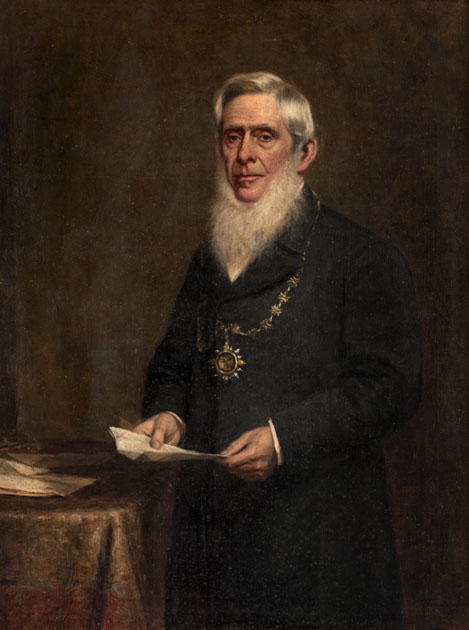
John Weir (1873-1957)

Our donor John Weir made a donation of a painting entitled Christ lamenting over Jerusalem by Sir Charles Eastlake P.R.A. to the Kelvingrove Gallery and Museum in February 1928 and a copy of it is shown below.
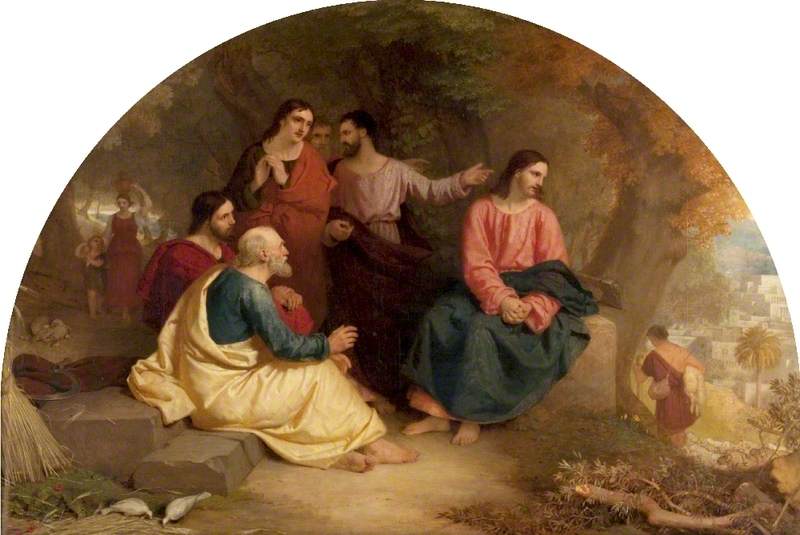
Eastlake, Charles Lock, 1793-1865; Christ Lamenting over Jerusalem

Christ Lamenting over Jerusalem by Charles Lock Eastlake; © CSG Glasgow Museums. (http://www.artuk.org)

John Weir was born in Rothesay on 23 July 1873. He was the eldest child of John and Mary Weir. His father was a boilermaker and plater. When John was still a young boy, his family moved to Govan, then, to Dumbarton and settled there. [1] He attended Rowallan Public School, between 1880 and1883. [2] He then attended College St. School in Dumbarton between 1883 and 1887. In his last year he became the Dux Gold Medallist. Between 1888 -1892 he attended Dumbarton School of Science and Art, where his technical education began. After graduating he attended the Glasgow Athenaeum Commercial College 1892-1897. In his last year, he was once again a Dux medallist. [3] The Glasgow Athenaeum Commercial College was then an important establishment in Glasgow. [4] having first started in 1847 in the Assembly Rooms, Ingram Street, and the inaugural address was  given by Charles Dickens. [5] It was originally built as a centre of adult education and recreation. Fundamentally, it was a go-between the Mechanic’s Institute and the University. However, in 1888 the commercial part of the Glasgow Athenaeum was separated from the Music, Drama and Art sections and became the Glasgow Athenaeum Commercial College. In 1915, it became the Glasgow and West of Scotland Commercial College and in 1955 the Scottish College of Commerce. Nine years later the Scottish College of Commerce combined with the Royal College of Science and Technology to form the University of Strathclyde. [6]

After completing his education, John Weir started work at William Denny and Brothers Limited in Dumbarton as an apprentice clerk between the years 1887 to 1892. It should be noted here that William Denny and Brothers Limited was often referred to simply as Denny or Denny’s which was a very important British shipbuilding company based in Dumbarton, Scotland, on the River Clyde. It built a total in excess of 22,000 vessels in its working life. Although the Denny’s Yard was situated near the junction of the River Clyde and the River Leven, the yard was on the Leven. Denny’s was always an innovator and was one of the first commercial shipyards in the world to have their own experimental testing tank. This is now open to the public as a museum in Dumbarton. [7] During the time he was working at Denny’s John Weir was a Private Secretary to James Denny, who was the son of William Denny, and also to the late Walter Brock, one of the directors.

Between 1897 and 1901, our donor had already left Scotland and gone to London. During this period, he served as Secretary and Estimates Clerk to the Superintendent Engineer of the New Zealand Shipping Co. Ltd., Royal Albert Dock, having been appointed by the Chairman of the Company, the late Sir Edwyn S. Dawes. [8] In 1901 John Weir married Mary Thomson. [9] Mr. and Mrs. Weir lived in West Ham in East London. However, before long, John Weir became a founder director of the shipping firm Silley Weir in London. [10]

In and around 1907 the Thames shipbuilding industry was in decline. One of the larger ship builders of the Blackwall Docks, R. & H. Green Ltd. continued to build ships until 1907. Then, in 1910 they amalgamated with Silley Weir & Company and became R. H. Green & Silley Weir Ltd. The new company grew rapidly until the outbreak of the First World War and then became one of the largest ship building companies in London. Throughout the war the firm constructed and repaired munitions ships, mine-sweepers, hospital-ships and destroyers. Their contribution to the war effort was acknowledged by a visit from King George V in November 1917. [11]

John Weir always considered himself to be a Dumbartonian. [12] He kept in touch with Dumbarton and in 1902, became a founder member of the London–Dunbartonshire Association. [13] He was the Association’s first secretary and for many years the chairman. It was largely due to his interest that the gift of amountain indicator’ was placed on Dumbarton Rock and also the memorial fountain, which was erected and dedicated at Dumbarton Cemetery shortly after the end of World War II. [14]

Our donor’s interests spread quite widely. Among them was geography, so much so that he applied for a fellowship to the Royal Scottish Geographical Society (RSGS) on 20 February 1913. [15] His address on his application form is given as: Dunbritton, Alderton Hill Loughton, Essex. He stayed at this address until his death. [16] Around this time there were some notable artistic and scientific communities as well as quite a collection of ship building magnates also living there. Among them were William Brown Macdougall (1868-1936), a Scottish artist, wood engraver, etcher and book illustrator and his wife Margaret Armour (1869-1943) the translator, poet and playwright, both of whom lived at Elm Cottage, Debden Road where a BLUE PLAQUE commemorating them was unveiled in 2012. They were both members of the New English Art Club. William died on the 20 April 1936 in Loughton and after his death Margaret returned to Edinburgh where she died in 1943. [17]

Our donor was also a friend of James Howden Hume [18] who was a keen collector of art and was President of the Royal Glasgow Institute of Fine Arts between 1919 and 1924 and more information about Mr Hume may be found in a previous blog under his name at this website.

 He also devoted a great deal of time to social and welfare work in the East End of London. For many years he was the Chairman of the St. Mary’s Hospital for Women and Children Plaistow. [19] From 1915-32 he was a member and chairman of the London County Council’s School of Engineering and Navigation in Poplar, where a hall was named after him. [20] He was also a permanent magistrate at West Ham Court. He was considered ‘Father’ of the Court of the Worshipful Company of Shipwrights, as he was then the oldest member of the Court. [21]

In The Scotsman of 26 September 1949 a news article appeared announcing under the title of GESTURE FROM “BLITZED” LONDON:

Memorial at Dumbarton

There was unveiled and dedicated in Dumbarton Cemetery yesterday a memorial fountain built to the design of Mr Hugh Lorimer, A.R.S.A., and erected by the London-Dunbartonshire Association to commemorate Servicemen belonging to Dunbartonshire who fell in the last war and those of the county who lost their lives by enemy action. The dedication was performed by the Rev. K. Goldie, clerk to Dumbarton Presbytery, and the memorial was unveiled by Major-General A. Telfer-Smollett, Lord-Lieutenant of the county, who formally handed it over to the Town Council for perpetual upkeep. Provost H. Brown accepted custody on behalf of the Town Council.

Mr John Weir, chairman of the London-Dunbartonshire Association, emphasised that the memorial was a county one and was a gesture from “blitzed” London to “blitzed” Dunbartonshire. After the ceremony Major-General Telfer-Smollett took the salute at a march past of detachments and units of His Majesty’s Forces.

It might be of some interest here to mention that a letter written by John Weir on headed notepaper of “R & H. Green and Silley Weir”, the “Ship and Engine repairers” of the Royal Albert Dock in the East End of London in 1926 to the Royal Society of Arts was on sale on e-bay recently (in 2006). [22]. The letter [23] was a request by John Weir for application forms for the competitions for the Fothergill Prize (for the studies in history and philosophy of sciences) and the Thomas Gray Memorial Trust Prize (for the advancement of the Science of Navigation and the Scientific and Educational interests of the British Mercantile Marine). It is signed, in ink by John Weir, and relates to his position of ‘Vice Chairman of the advisory committee of the LCC School of Engineering and Navigation’. It has been stamped with the Royal Society of Arts receiving mark. It is not known if the letter was sold on e-bay.

John Weir’s wife Mary Thomson, who both together were a Freeman of the city of London. [24] Mrs Mary Thomson died aged 71 years old in October 1944. [25] There were no children. John Weir died on 16 November 1957, at the age of 85. There was a funeral service held for him at The Crown Church Covent Garden, London. His family and friends and all the local dignitaries attended. [26]

The remains of John Weir were brought to Dumbarton for interment in the cemetery on Friday, 22 November 1957 according to his wishes. A large gathering was present at the ceremony. [27]

Acknowledgements

The author would like to express her thanks to Sarah Strong, Archives Officer, Foyle Reading Room, Royal Geographical Society, Mr Graham Hopner, Dumbarton Library Study Centre, Cllr C Pond, the local historian of Loughton, Essex for their generous help.

References:

[1] 1891 Census Book-9, Dumbarton Library Archives.

[2] UK Mechanical Engineer Records 1847-1838 for John Weir; Sequence No 20,875.

[3] ibid.

[4] https://en.wikipedia.org/wiki/Royal_Conservatoire_of_Scotland

[5] http://www.arthurlloyd.co.uk/Glasgow/AthenaeumGlasgow.htm

[6] https://www.theglasgowstory.com/image/?inum=TGSS00017&t=2

[7 https://www.gracesguide.co.uk/William_Denny_and_Brothers

[8] op. cit. UK Mechanical Engineer Records 1847-1838 art. 15

[9] 1901 England Census

[10] The Lennox Herald, Saturday, 23rd Nov. 1957, Dumbarton Library Archives.

[11] British History online:
https://www.british-history.ac.uk/survey-london/vols43-4/pp565-574

[12] op. cit. [10]

[13] ibid.

[14] ibid.

[15] Communication with Sarah Strong, Archives Officer, RGS, London.

[16] ibid. and op.cit. [10]

[17] https://en.wikipedia.org/wiki/William_Brown_Macdougall

[18] Glasgow Council Minutes, February 1928, Mitchell Library Archives.

[19] op. cit. [10].

[20] ibid.

[21] ibid.

[22] Correspondence with Cllr C. Pond.

[23] e-mail by Cll. C Ponds informing a letter written by J. Weir sold on e-bay.

[24] op. cit.[10].

[25] England and Wales, Civil Registration Death Index, 1916-2007 for Mary T. Weir.

[26] The Times,18 November 1957, p.12.

http://archive.timesonline.co.uk/tol/ archive/

[27] op. cit. [10].


James Waddell (1846-1907)

Lorimer, John Henry, 1856-1936; Reverend Peter H. Waddell
Figure 1. Lorimer, John Henry; Reverend Peter H. Waddell.© CSG CIC Glasgow Museums Collection.

In 1903, James Waddell wrote to the Glasgow museums donating a painting of his father, Revd Peter Hately Waddell by James Lorimer, a leading artist of the day. His letter says that the painting had been well-received when exhibited in Glasgow and Edinburgh and that his father had been well known as a preacher and as a member of the school board in Glasgow. (1)

James Waddell was born on 26 December 1846 (2) in Girvan the oldest son of the Revd Peter  Hately Waddell and Helen Halcro  Waddell. He attended classes at Glasgow University (3) but did not graduate. This was not unusual at that time. He became a mechanical engineer and worked abroad in Singapore and Java. On 5th February 1881 (4), in Singapore, he married Margaret Little, daughter of a doctor, in the Presbyterian Church. Thereafter his place of work can be defined by the locations of his children’s births(5): Peter Hately Waddell 1881 ; Robert Waddell 1883 ; Mary Campbell Waddell 1885 ; Helen Halcrow Waddell 1887 all in Singapore and Margaret Wardlaw Waddell 1889 in Java . By 1892 he had retired to Glasgow where he made his will. (6) In 1901 he was living in the West End of Glasgow with his wife and family. (7) He died in 1907. (8)

The Rev Peter Hately Waddell LL.D. (1816-1891)

Our donor’s father and the subject of the painting was a colourful character: minister of religion, ardent student of Scottish culture, particularly of the life and works of Robert Burns and author of several books. He was born at Balqhatston, Slamannan on 19 May 1816 the son of Revd James WaddelL and his wife Anne Hately Waddell. (9)  The family moved to Glasgow wherehe attended high school and Glasgow University. He was ordained as a minister at Rhinie in Aberdeenshire. In 1841 he was licensed as a minister in the established Church of Scotland and began his career in Girvan.(10)  In 1843 at the time of the Disruption (11) he joined the Free Church of Scotland as a probationer. However he disagreed on some points of faith and governance with the Free Church, writing pamphlets and letters to Thomas Chalmers and James Guthrie.(12) He left the Free Church in the same year and founded a church in Girvan,  known as Waddell’s Church. He preached there for 19 years.(13 ) He married Helen Halcro in August 1845.(14)

11 Rev Peter Hately Waddell no 95
Figure 2. The Bailie. © CSG CIC Glasgow Museums and Libraries The Mitchell Library Special Collections

In 1861 he moved to Glasgow to a Chapel in Waterloo Street and the expansion of his congregation led to a move to the City Halls. (15) A church was then built for him in east Howard Street.(16)  In  1874 he had to move back to the City Halls where he continued to preach for several months in the year.  (17 ) By all accounts he was an evangelical “Latter Day “ preacher.

While in Girvan he developed and pursued a love of Scottish culture and literature, particularly the writings of Robert Burns, Sir Walter Scott and Ossian. He gave the oration in Alloway in 1859 at the centenary of Burns birth. (18) After that he was much in demand as a lecturer in Glasgow. He gave a series of three lectures in 1860 (19) in which he compared Burns as a poet to Shakespeare and, significantly to King David who wrote the Psalms. He addressed the problem of Burns as a moral man and as a poet. This led to criticism from the Moderator of the Free Church of Scotland that he had made a profane comparison.(20)

In 1864 he was the Chairman of a public dinner in Burns’ Cottage in Alloway to mark the Shakespeare tercentenary celebrations.(21) He proposed the toast and he said

Shakespeare was the Glorious Legend, Burns was the Glorious Voice.

In 1868 The Glasgow Herald reported that the Tusculum College, Tennessee, USA had conferred the degree of LL.D. on him. (22)

He was the author of several books. He edited an edition of the poems of Robert Burns published in 1869 in two volumes. (23) The contents can be read on the electronic Scotland website. He also edited an edition of Scott’s Waverly novels with notes and an introduction.(24)

He intended to produce a translation of the Old Testament in the Scottish tongue from the Hebrew but only the Psalms of David were published in 1871 as The Psalms :Frae Hebrew intil Scottis.(25) This translation was unique in that it was a direct translation from the original Hebrew and not a Scottish version of English translations.  It is a scholarly work. He also translated Isaiah (26) but did not attain his objective of translating all of the Old Testament.

He was supportive of education and was a member of the school Board in Glasgow. (27 )

He died on 5th May 1891 at 5 Ashton Terrace, Glasgow.(28)

References

  1. Minutes of Glasgow City Council 1903
  2. Ancestry.co.uk
  3. Glasgow University Archives
  4. Ancestry.co.uk
  5. Ancestry.co.uk
  6. National Records of Scotland Wills and Conformations 1907
  7. National Records of Scotland Census 1901
  8. National Records of Scotland Statutory Register of Deaths 1907
  9. Ayrshire Roots www.ayrshireroots.co.uk
  10. Matthew, H.C.G. Peter Hately Waddell in Oxford Dictionary of National Biography
  11. Hamish McPherson in The Disruption . www.thenational.scot
  12. Protestant Delusion in the nineteenth century: A remonstrance. Google Books
  13. Ayrshire Roots www.ayrshireroots.co.uk
  14. Ancestry.co.uk
  15. The Bailie August 12 1874
  16. ibid
  17. Ibid
  18. ibid
  19. The Glasgow Herald Saturday November 10 1860
  20. The Liverpool Mercury Thursday June 11 1863
  21. The Glasgow Herald Monday April 25 1864
  22. Glasgow Herald Saurday May 2 1868
  23. Matthew, H.C.G. Peter Hately Waddell in Oxford Dictionary of National Biography
  24. Ibid
  25. Waddell,Peter Hately : The Psalms in Scots. Reprint of Peter Hately Waddell’s   The Psalms: Frae Hebrew intil Scottis. First published 1871. Aberdeen University Press 1989
  26. Waddell,Peter Hately : Isaiah: Frae Hebrew intil Scottis. J Menzies and Co. Edinburgh and Glasgow, 1871
  27. Glasgow Mitchell Library Special Collections
  28. National Records of Scotland Statutory Register of Deaths 1891

Portrait of Councillor Alexander Waddell

Figure 1. Alexander Waddell by Joseph Henderson. Glasgow Museums © CSG GIC Glasgow Museums Collection.

This portrait was donated by his family in May 1896 in recognition of the work which he did for the East End of Glasgow and the posts which he held on Glasgow City Council. It was painted in 1893 by Joseph Henderson, RSW.(1)

Joseph Henderson was born in Stanley, Perthshire on 10 June 1832. His family moved to Edinburgh when he was six years old and at the age of thirteen, he was apprenticed to a hosier and studied art alongside this. Eventually, in 1852 he gave up hosiery and moved to Glasgow and became a portrait painter. As he had a reputation for painting honest representations of his sitters, he painted many of the important people of that time in the West of Scotland.(2)

Alexander Waddell was born in Girvan, Ayrshire on 18 February 1820. His parents were Matthew Waddell who was a tailor and Elizabeth, nee Rowan. (3)

Sometime between then and 1840 the family moved up to Glasgow to live in Calton, in the east end of the city. The family home was at 72 Canning Street.

Alexander also served his time as a tailor and went into business with his father in the firm of M. Waddell and Son, clothiers, of 44 Canning Street and 75 Jamaica Street.

On 8 June 1840 he married Isabella Barrett. The 1841 census has them living in Duncan Street with a two-month-old daughter, Elizabeth.

In 1845 he opened a branch of the Western Bank in Calton, the first suburban bank branch and moved into a house in the Western Bank Buildings in Canning Street. The Western Bank tried to attract small (working class or artisan) depositors. Their extensive branch systems opened in the evenings and paid high deposit rates. However, it failed in November 1857. The Western bank was later taken over by the Royal Bank of Scotland and Waddell managed several of its branches. (4)

By the 1851 census his address is given as 66 Canning Street where he is described as a clothier, and he and Isabella have five daughters, the youngest a baby of three months. The 1855 Valuation Roll records him at the Western Bank, 70 Canning Street and he is described as a Registrar. He was Registrar for Calton, a post which he held until his death. (5)

I can find him in neither the 1861 nor the 1871 census returns. Sometime after 1851 his wife Isabella dies, but I can find no record of her death. In 1867, described as a widower, he marries Grace French, a spinster, at Boathaugh, Lanark. By this time he has moved to 37 Monteith Row, overlooking Glasgow Green, where he lived for the rest of his life.

In 1871 he was elected to represent the First Ward (Great Hamilton Street on the south; Well Street on the east; New Street on the north; and the Royalty of the City of Glasgow on the west). He held this post until his death in 1895.(6) Offices which he held included Baillie of the Burgh, City Treasurer and Master of Works. He was also a Preceptor of Hutcheson’s Hospital.(7)

He actively supported many community institutions in the Calton and Bridgeton areas.

He was involved with the South Eastern District Sabbath School Union in 1868 -1869.  He was Superintendent of the Calton, Mile-End and Bridgeton Mechanics Institute which had been established at 46 Canning Street in 1833. It was the first institution of its kind in the country. He was also involved with the London Road Baths which were opened in 1876 under the management of the Police Board. They were situated in the Calton Police Building at 92 Tobago Street.(8)

He was Chair of the Glasgow Eastern Merchants and Tradesmen’s Society which met in the Mechanics Hall in Canning Street.  This was a Friendly Society and ran many social events. He was also involved with the Bridgeton Working Men’s Club.(9)

His second wife, Grace, died in 1879 of heart disease and congestion of the lungs. In 1883 he married for a third time to Christina Jeffs, a spinster, living in 21 Holyrood Crescent.

The 1891 census finds them still in Monteith Row with his daughter Catherine who is described as being 35 years old, which is odd as she as three months old in 1851.

Alexander Waddell died at home on 18 November 1895. His funeral was held in Greenhead U.P. Church in Bridgeton on 21 November and he was buried in the Eastern Necropolis.

On 22 November the following announcement was made in the Glasgow Herald:-

Funeral of Ex-Baillie Waddell.

The remains of Ex-Baillie Waddell were interred yesterday in the eastern Necropolis, Janefield. A public service was held within Greenhead U.P. Church which was attended by the Lord Provost and magistrates and many of the Town Councillors, the Lord Dean of Guild, and the Deacon-Convenor, along with a number of the leading Corporation Officials. The funeral cortege, which consisted of 28 mourning coaches, was watched by large crowds along the route. The flag was hoisted at half-mast on the City Chambers, and the city bells were tolled from half-past one until three o’clock.

     Bibliography

  1. Who’s who in Glasgow in 1909 (artist)
  2. http://www.bbc.co.uk/arts/your paintings.
  3. http://www.scotlandspeople.org – all references to births, marriages, deaths and census are covered by this category
  4. http://www.banking-history.co.uk/glasgow.html
  5. Post Office Annual Glasgow Directories – 1854/55; 1856/57
  6. Glasgowhistory.co.uk
  7. http://www.theglasgowstory.com
  8. http://www.  glasgoweasternmerchants.co.uk
  9. http://www.EastGlasgowHistory.com
  10. http://www.Glasgow Herald, November 19, 1895.