Archibald Walker Finlayson J.P.

Archibald Walker Finlayson was a linen thread manufacturer whose company had factories in Johnstone, Renfrewshire and in the USA.

He was born in October 1849 (1) the oldest child of James Finlayson and his wife Rachel nee Watson. At that time they were living in Paisley. His father was a linen thread manufacturer, one of the first to introduce the spinning of flax mechanically.

  (2 ) In 1844, James and his brother Charles and C.H, Bousefield had established a business manufacturing linen thread which continued in production up to 1958 and formed part of the Linen Thread Company Ltd. The factory became a major employer in Johnstone. So Archibald was born into a successful family business.

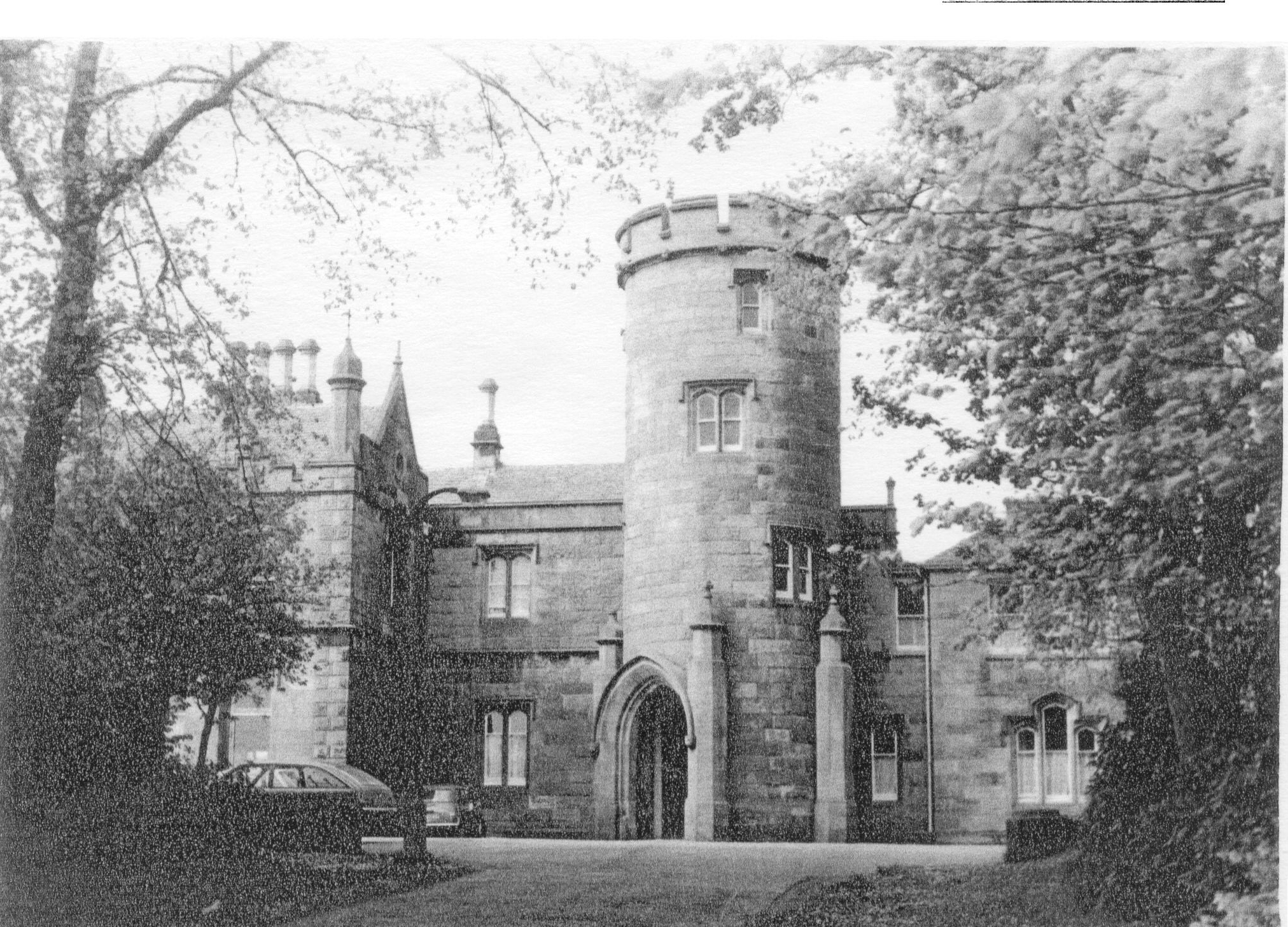
Merchiston House
Figure 1. Merchiston House. From Canmore.

 His education is not known. At the age of 21years, (3 ) he is living with his parents and brothers and sisters in the family home , Merchiston, Johnstone, Renfrewshire , an impressive turreted building which required 7 servants to run (4). Later this house was to become part of the estate of the Western Regional Hospital Board as Merchiston Hospital.(5 )

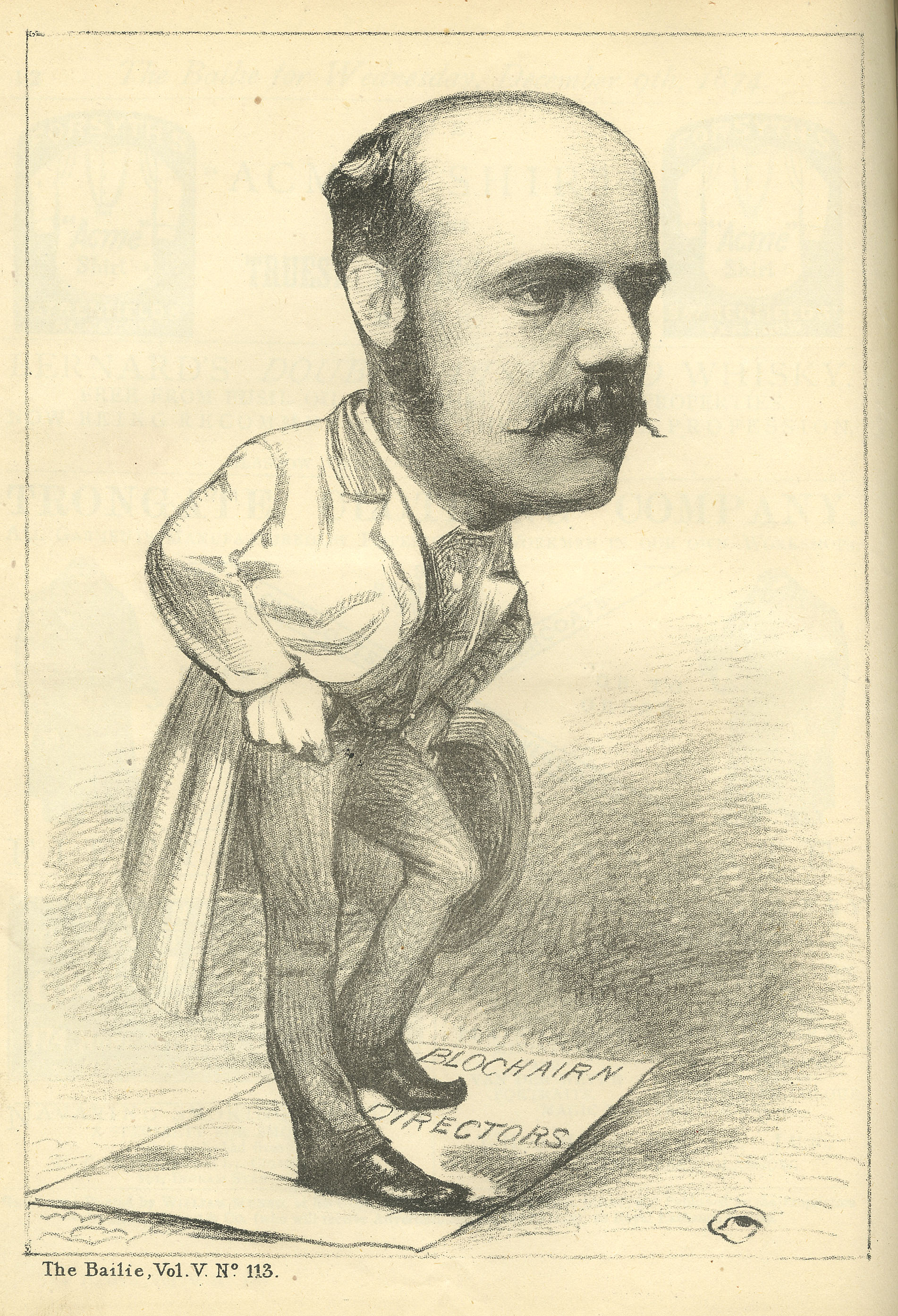
In 1847 at the age of 25 years, he wrote to the Glasgow Herald (6 ) as one of the shareholders in what became known as the The Blochairn Share Scandal-effectively a “bubble”- which had promised impossibly high returns and which lost many small shareholders money. The subject was taken up by the Glasgow Herald in an article published the next day.(7 ) 

02 Mr Archibald Finlayson no 113
Figure 2 Archibald Walker Finlayson The Bailie  © CSG CIC Glasgow Museums and Libraries

 The Bailie, discovering that he was the son of James Finlayson, a former M.P. and Deputy Lieutenant of Renfrewshire, were fulsome in his praise and promised a bright political future.(8)

 Archibald joined the family firm and was sent to America in 1880 to establish a linen thread mill in Massachusetts. He travelled to and from America on occasions. Eventually the firm became part of The Linen Thread Company, Ltd. (9)

He married Elizabeth MacAndrew. In 1891 his home address was Spring Grove, Kilbarchan. (10 ) He lived there until 1903 when his father died. (11) He then moved back to Merchiston. (12 )

 He was not able to become an MP but contented himself with representing West Renfrewshire on the County Council, was a JP and gave the Provost’s chain to Paisley. There is a death notice and an obituary in the local paper (13) on his death in November 1916. (14)

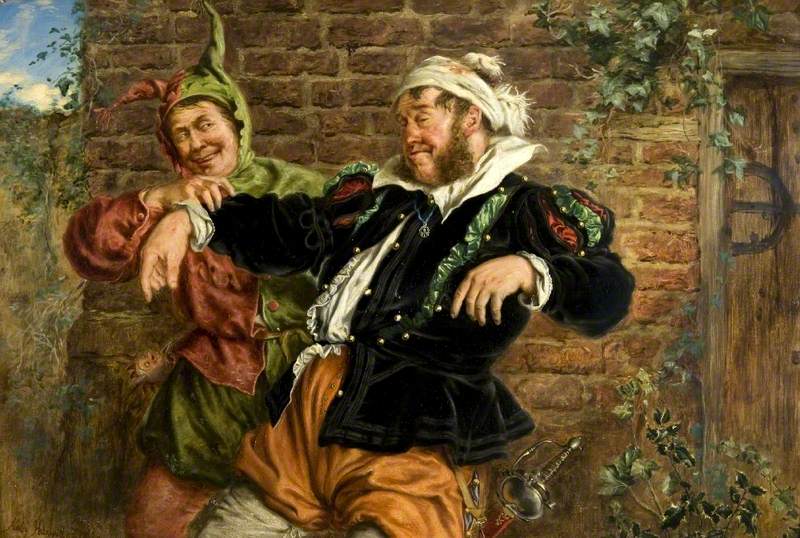
Halswelle, Keeley, 1832-1891; Sir Toby Belch and the Clown
Figure 3. Sir Toby Belch and the Clown  by  Keeley  Halsewell   © CSG CIC Glasgow Museums Collection

He gave two paintings to Glasgow Museums. In the Object file for the 1903 donation (15), there is a letter from him with information about Sir Toby Belch and the Clown , by Keeley Halsewell.    It was painted in 1862 at which time it cost £40, was shown at the Paisley Arts Institute Exhibition in 1896(16) then bought by Archibald Finlayson in 1901.

_ISP4824.NEF
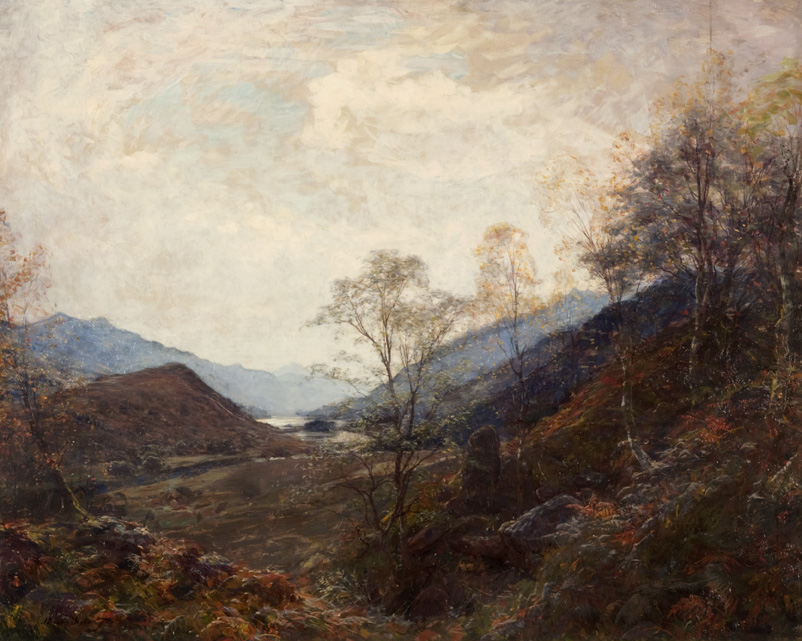
Figure 4 September, Glen Falloch by A Brownlie Docherty© CSG CIC Glasgow Museums Collection

The other painting, September, Glen Falloch by A. Brownlie Docherty was exhibited at the Glasgow Institute and at the St Louis National Institute in 1904. (17) It was bought by Finlayson in 1907 and donated to Glasgow City Council. (18)

References

  1. National Records of Scotland      Statutory Births  OPR 18492.
  2. Calder, John.  Finlayson, James. Oxford Dictionary of National Biography, Oxford University Press, 2014.
  3. National Records of Scotland. Census 1871
  4. Photographs of houses in Renfrewshire. Renfrew Archive
  5. Canmore images
  6. The Glasgow Herald 9 November 1874 page 4
  7. The Glasgow Herald 10 November 10 1874 page 9
  8. The Bailie 1874 vol 5 pp 113-1149.
  9. Calder, John.  Finlayson, James. Oxford Dictionary of National Biography, Oxford University Press, 2014.
  10. National Records of Scotland      Census 1891
  11. National Records of Scotland      Statutory Deaths
  12. National Records of Scotland      Census 1891
  13. Paisley and Renfrew Gazette 18 November, 1916
  14. Ancestry .co.uk
  15. Glasgow Museums Archive
  16. Catalogue of Paisley Fine arts exhibitions, Paisley Archive.
  17. The Glasgow Herald 13 November  1940 A. Brownlie Docherty   Obituary          
  18. Minutes of Glasgow City Council 1907.

MACLEHOSE SISTERS

On 27 March 1908 Miss Sophia MacLehose wrote a letter to the Provost of Glasgow Corporation asking him to accept on behalf of the Corporation a present of a picture, which was entitled Ben Ledi painted by Charles N. Woolnoth (1820-1904), she and her sisters Sophie Harriet, Louisa Sing and Annie Russell were making. [1]

At the time of the presentation that was made to the Kelvingrove Gallery, the sisters were living together at their late brother’s house named Westdel, in Dowanhill, Partick. The red sandstone villa was designed by Edinburgh architect George Washington Browne and was built for Robert MacLehose, their brother who lived there with his wife, Seymour Martha Porter. Furthermore, during 1898-1901, the Glasgow architect Charles Rennie Mackintosh was responsible for designing the second-floor bedroom of their house. It included a dormer window and adjoining bathroom. This was one of Rennie Mackintosh’s first recorded ‘white room’.  The house still exists, but the room was dismantled. Furniture and fittings from the room as well as the original plans are held in the Hunterian Museum. [2]

THE FAMILY MACLEHOSE

As our donors’ name is very much entangled with their family, it is found that here a short introduction to their family may be suitable here.

The ‘MacLehose’ name had a special meaning in the publishing world, it is appropriate to start with the father of the donors, James MacLehose.  According to the 30 March 1851 Scotland Census [3], the father, James MacLehose, was the son of Thomas MacLehose, a weaver. James was born on 16 March 1811 in the District of Govan of the Burgh of Lanarkshire, Glasgow, Scotland.  In 1823, he was apprenticed for seven years to George Gallie, the Glasgow bookseller. In 1833, he made his way to London to Seeley’s, a well-known publishing house. Then, in 1838, he returned to Glasgow, where he began his business at 83 Buchanan Street with his business partner, Robert Nelson as ‘J. MacLehose & R. Nelson’. In 1841, he took over the business and continued in his own name.  In 1850, he married Louisa Sing, the eldest daughter of Mr John S. Jackson, a Manchester banker. The census records show that they lived at 1 Kelvingrove Place, Glasgow and Mr James MacLehose’s occupation was recorded as Bookseller and Stationery. It is interesting to note that David Livingstone, a missionary and explorer, and a friend of our donors’ father had visited his friend on the morning of his first visit to Africa as a missionary. The two breakfasted together. [4] 

The 1861 Scotland Census [5] shows that their first daughter Sophia Harriet was born in 1852 and then, their second daughter Louisa Sing in 1853. This was followed by Robert in 1854, Jeanie Maclean in 1855, James Jackson in 1858, Norman Macmillan in 1859 and finally Annie Russell, in 1862. [6,7]  James MacLehose was appointed as the Glasgow University’s bookseller in 1864, and then as publisher to the University in 1871. [8] Having assumed his sons Robert and James into the business which had become known as ‘James MacLehose and Sons’ in 1881, James MacLehose senior died on 20 December 1885. [9]

His sons Robert and James both graduated from Glasgow University with MA degrees and continued the publishing business. [10] The other son Norman MacMillan MacLehose also graduated from Glasgow University with an MA in 1882 and became a surgeon. [11] On 6 March 1886, Norman Macmillan MacLehose married Olive Macmillan, daughter of the late Alexander Macmillan, publisher in London, and they lived in London. Robert MacLehose married Seymour Martha Porter and in 1896, James married Mary Macmillan another daughter of Alexander Macmillan, hence, cementing a long great friendship between the two great publishing houses of Great Britain. Norman MacMillan MacLehose died on 30 August 1931. [12]

Our donors, the Misses Maclehose

Our donors studied at the ‘Glasgow Association of Higher Education for Women’ from 1879 to 1883.  They studied Logic, Moral Philosophy and Physiology in the class lists from 1877 onwards.

A name which is mostly associated with the ‘Glasgow Association of Higher Education for Women’ at the end of nineteenth century was one Janet Campbell (always known as Jessie Campbell) who promoted the need for higher education for women in Glasgow.  She proposed that lectures be given by professors from Glasgow University and these lectures were very successful and continued until 1877 when the ‘Glasgow Association for the Higher Education’ for Women was formed. [13]

In spite of being deprived of a University education, it is clear that the MacLehose women received a very good education as we see from their contributions. The eldest daughter Sophia Harriet and her sister Louisa Sing were both authors in their own rights. Sophia was the author of two books:

(1) Tales from Spencer.

(2) From the Monarchy to the Republic in France 1788-1792.

Both of these books were published by their family firm:

Glasgow, James MacLehose and Sons, Publishers to the University, I90I

These books are still available and can be bought from bookshops.

Sophia Harriet MacLehose died on 22 June 1912. [14] 

In 1907 a book entitled Vasari on Technique written by Giorgio Vasari, an artist, architect and a biographer of the artists of the Renaissance, was published in London by J M Dent & Co. The book was printed at the University Press by Robert MacLehose & Co. Ltd. and for the first time translated from Italian into English by Louisa Sing MacLehose, the translation being done during her stay near Florence.

Due to the fact that her brother Robert MacLehose passed away just before the book was published, there is a note from the author, his sister, on the first pages of the book.

The original book written by Giorgio Vasari was first published in Italian in the 1550s. Louisa Sing MacLehose’s translation into English was reprinted in 1960. Furthermore, Louisa S MacLehose was thanked by the editor of the Scottish Historical Review (issue October 1913) for her translation of some letters, written in 1543, from Italian into English. [15]

Louisa Sing MacLehose died on 7 April, 1917. [16] Her home address at the time of her death was recorded as Westdel, Dowanhill, Partick, and Glasgow.

The third eldest daughter of the MacLehose Family was Jeanie MacLean. She was born on 6 Sep 1855 and she last appears in the 1881 Scotland’s Census when she was 25. There is no record of her been married. But there is a record of her death in Ancestry.com pages of as ‘Death 30 October 1888 • Antwerp, Belgium’ [17] and no other references were given.

Annie Russell was the youngest of the MacLehose Family. She was born in 1862. She appears on the English census during a visit to London. She she also travelled to New York in 1924. She travelled back via Montreal, Quebec. On her return she stayed at Westdel.

Annie R MacLehose died on 1 December 1950 in Edinburgh in the Church Hill Hotel Edinburgh. [18]

References

[1] 1908 minutes of the Glasgow Corporation, Mitchell Library.

[ 2] Design for a fireplace, for the upper bedroom, Westdel, Glasgow c.1898,

http://www.culturegrid.org.uk/static/showResource/2929199

Also see additional Notes below at the end of the References.

[3] 1851 Scotland Census.

[4] Memoirs and Portraits of 100 Glasgow men,

http://gdl.cdlr.strath.ac.uk/mlemen/mlemen101.htm

[5] 1861 Scotland Census.

[6] 1881 Scotland Census.

[7] 1891 England Census Record.

[8] The University of Glasgow Story,

http://www.universitystory.gla.ac.uk/site-map/

[9] op cit. [4]

[10] ibid. [p. 345]

[11] op cit [8]

[12] Notice of Norman Macmillan MacLehose

Ancestry.co.uk (MacLehose Family)

[13] Jessie Campbell

https://www.worldchanging.glasgow.ac.uk/gallery/?id=UGSP00479

[14] op cit .[12]

[15] http://www.electricscotland.com/history/articles/papal.htm

[16]op cit [12]

[17] ibid.

[18] ibid.
Colonel Charles Louis Spencer DSO CBE (1870-1948)

Colonel Charles Louis Spencer was a merchant, a soldier, a yachtsman and a generous donor to museums in Glasgow and Edinburgh and a donor to The National Trust for Scotland.

He was born in 1870 to John and Robina (nee Jarvie)   Spencer (1 ) then living at 165 Hill Street, Glasgow. John Spencer had been a manufacturer of optical and photographic equipment, in business with his father, John senior,  with premises at 34 Union Street, Glasgow. (2)  John senior retired in 1869 and the business closed down. ( 3) By 1872 young John was a merchant, at 125  West Regent Street, Glasgow. The family home was at 2 Rosslyn Terrace, Victoria Park, Glasgow. ( 4) By 1881, they were living in Bridge of Allan and John is listed as a foreign merchant. (5 )

Charles was educated at Kelvinside Academy (6 ) and then from 1895 to 1896 at the College Chaptal in Paris. This was a college dedicated to the education of young men, destined for a career in commerce and industry, in science and languages. (7 ) His father John died in 1890. (8)  His mother moved to Edgehill, Horselethill Road, Glasgow and her children John, Elizabeth and Ann lived with her. They had a cook, a laundress and  a table maid. (9)

Charles and his older brother John carried on their father’s business. (10) Their father’s  inventory (11) published after his death  gives an idea of the scope of their  business in Canada, the USA, Calcutta and Colombo. The brothers were admitted to the Merchants House in 1912. (12 )

Charles had a long association with the Lanarkshire Volunteers Royal Engineers (13)     During the First World War, he was a Lieutenant Colonel in the Royal Engineers and served in France and Flanders.  (14)    He was thrice mentioned in dispatches and received the DSO in 1918.(15) and in 1919 he was appointed a  CBE (16)

He was a yachtsman and gained his Master’s certificate in 1897.  He was Commodore of the Clyde Cruising Club and Flag Officer for 23 years. He sailed in his yacht RON and King George V was a frequent guest. (17 ) He collected, fashioned and repaired ship models and some of these are now in Glasgow museums’ collection.(18 ) On board ship sailing from India or from Canada he spent time making ship models. His book Knots , Splices and Fancy work went to several editions. (19 )

His brother John made a study of the Darien scheme and when he died in 1939 ( 20) his collection of papers was left to the University of Glasgow where they are kept as the Spencer Bequest in Special Collections. (21)

Charles was a member of the Society of Antiquaries in Edinburgh. He was a Councillor from 1922 to 1937.(22 ) Charles and his sister Ann lived together at 5 Great Western Terrace and also bought a house at Warmanbie in Dumfriesshire in 1933.(23) In 1940 they wrote to Glasgow City Council (24 ) offering;

Figure 1. Pirie, George; Black Setter; © CSG CIC Glasgow Museums Collection

  1. Two pastel drawings by Sir James Guthrie: Ploughing and The Smiddy; An oil painting      Black Setter by Sir George Pirie and The Steeple Chase by Joseph Crawhall
  2. 12 items of arms and weapons
  3. A collection of Japanese swords
  4. 16 books relating to arms and armour

In addition Colonel Spencer wanted to place on permanent loan several models of sailing ships.(25 )

The National Museums of Scotland received the rest of his weapons collection. This comprises 18 crossbows, 7 prodds,1 windlass,4 cranequins   and 8 crossbow bolts. (26

Another donation should be noted. He had inherited two small islands in Loch Lomond in 1911 from Donald Macgregor of Ardgarten and in 1943 he gave them to The National Trust for Scotland.(27 )

Charles and John had set up a Trust  to  maintain the upkeep of the Nunnery garden in Iona.(28 )

Charles died at Warmanbie  in 1948. (29 )       His sister Ann died in  1952. (30 )

Acknowledgement

I am pleased to acknowledge the help I received from Roderick Mc Callum from the Annandale Museum with respect to documents relating to Colonel Spencer’s time in Warmanbie  and to his death there.

References

  1. National Records of Scotland Statutory Births 1870
  2. National Records of Scotland Census 1861
  3. Edinburgh Gazette April 1870
  4. Post Office Directories, Glasgow 1872
  5. National Records of Scotland Census 1881
  6. Who Was Who 1941-1950
  7. College Chaptal: Vie de Chaptal: http://lycee-chaptal-paris.com
  8. National Records of Scotland Statutory Deaths. 1890
  9. National Records of Scotland  Census 1891
  10. Post Office Directory Glasgow 1910
  11. National Records of Scotland Wills and Inventories 1890
  12. Request for membership, Merchants  House Archives, Glasgow Mitchell Library
  13. Annandale Observer 7th May 1948
  14. www.forces-war-records.co.uk
  15. Who Was Who 1941-1950
  16. www.forces-war-records.co.uk
  17. Clyde Cruising Club -100years. Personal communication
  18. Malcolm, Emily and Harrison, M.R.    Glasgow Museums: the ship Models. Seaforth Publishing, 2019
  19. Spencer, Charles Louis.  Knots Splices and Fancy Work. Brown, Son and Ferguson, Glasgow. 1938
  20. National Records of Scotland Statutory Deaths. 1939
  21. University of  Glasgow. Special Collections
  22. Proceedings of Society of Antiquaries of Scotland 1922 personal communication.
  23. Annandale Observer 7th May 1948
  24. Minutes of Glasgow City Council April 1940
  25. Malcolm, Emily and Harrison, M.R.    Glasgow Museums: the ship Models. Seaforth Publishing, 2019
  26. National Museums of Scotland .personal communication
  27. http://www.aboutbritain.com /Bucinchandcreardoch
  28. Annandale Observer 7th May 1948
  29.  National Records of Scotland Statutory Deaths. 1948
  30. National Records of Scotland Statutory Deaths. 1950