James Couper (1839-1916)

Mr James Couper of Craigforth, Stirling was a Company Director living on private means.
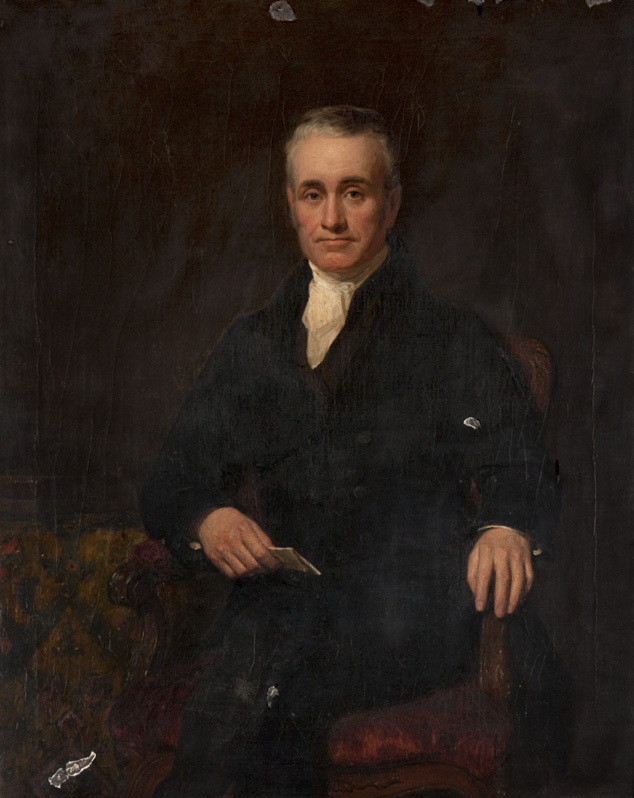
Figure 1. Portrait of the late Charles Tennant by Andrew Geddes. © CSG CIC Glasgow Museums Collection

The Portrait of the late Charles Tennant by Andrew Geddes was received by Glasgow Corporation in 1920. It had been bequeathed by his grandson, James Couper, to his wife Jane as life rent (2) and under the terms of his Will, after her death, was then to be given by his Trustees to Glasgow Corporation.
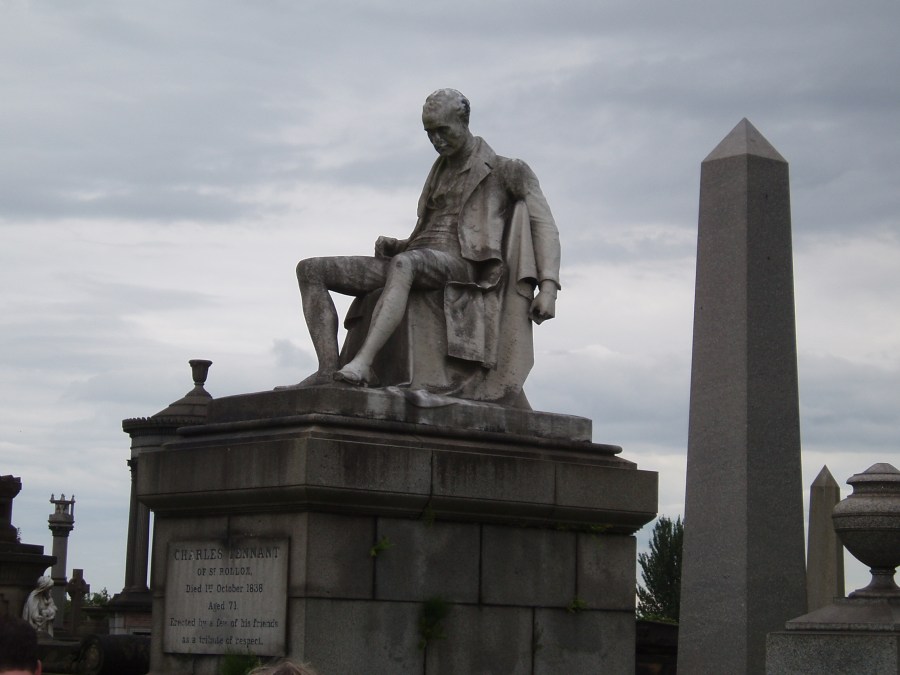
Figure 2. Statue of Charles Tennant and Obelisk for William Couper. Image © F J Dryburgh

James Couper was born on 13 September 1839 (3) the son of John Couper MD MRCP, Regius Professor of Materia Medica at Glasgow University (4) and his wife Charlotte Couper. His mother was the daughter of Charles Tennant (5) and his father was the son of Tennant’s great friend and associate, William Couper. (6)

The monuments to these men are side by side in the Necropolis in Glasgow. (7)

In the 1871 Census James Couper is living in Glasgow but visiting his parents and he is a manufacturing chemist. (8) James Couper moved to Craigforth in Stirling in1873 as a tenant and eventually as owner in 1904. (9)  In the 1881 Census he is listed as a manufacturing chemist, his wife is Jane, he has two sons, and 8 servants are listed. (10)  Craigforth is an impressive country house now on the M9 looking towards Stirling Castle and the Wallace Monument. Couper was a director of the Steel Company of Scotland and of Messrs Ogston and Tennant. (11) He and his wife were active in local society and contributed to charitable and civic activities in Stirling. (12) In 1878, James and Jane gave the Bishop’s Chair to the newly established Episcopal Church of The Holy Trinity in Stirling. (13)

He was a Director of Stirling Royal Infirmary and of The Albert Hall Company while these were being built. (14)

He died in the Central Hotel in Glasgow on 13 June 1916. (15)

His funeral was attended by many people including his nephew Mr. Charles Tennant Couper. He is buried in Logie cemetery. (16)

Charles Tennant (1768-1838) was a bleacher from Ayrshire with bleach fields in Darnley. (17)  There is a watercolour of the bleach fields by an unknown artist in the collection of Lady Maxwell in Pollok House, Glasgow (18) and a map from 1791 showing their location in the East Renfrewshire Public Library in Giffnock. (19) He went on to develop the first chemical method of bleaching using bleaching powder and to establish the St Rollox works in Glasgow, the first great chemical works in the world. (20)  His son John Tennant (21) developed the firm and built Tennant’s Stalk- a huge chimney in the North of Glasgow. His son was Sir Charles Tennant, an art collector, Liberal politician and industrialist. He was the founder of a family well known in social and political circles. (22) (23)   In 1926 the business became part of Imperial Chemical Industries and in 2008 became part of Atezo Nobel. (24)

References

  1. Archives of Glasgow Museums
  2. National Records of Scotland Wills and Testaments  1916
  3. National Records of Scotland Statutory Births 1839
  4. John Couper The University of Glasgow Story.  https://universitystory.gla.ac.uk/people
  5. National Records of Scotland Wills and Testaments  1840
  6. John Couper The University of Glasgow Story.  https://universitystory.gla.ac.uk/people
  7. The Glasgow Necropolis. http://www.glasgownecropolis.org
  8. National Records of Scotland census 1871
  9. Stirling Advertiser and Journal 3 March 1916. Obituary of James Couper
  10. National Records of Scotland census 1881
  11. Stirling Advertiser and Journal 3 March 1916. Obituary of James Couper
  12. Personal communication Stirling librarian
  13. http://www.holytrinitystirling.org
  14. Stirling Advertiser and Journal 3 March 1916. Obituary of James Couper
  15. National Records of Scotland Statutory Deaths 1916
  16. Stirling Advertiser and Journal 16 March 1916. Funeral of James Couper
  17. Massie, Alan. Glasgow Portraits of a City. London: Barrie and Jenkins,1989
  18. Watercolour of Mr Charles Tennant’s Bleachfields, artist unknown, held in Pollok House, Glasgow.
  19. Map of East Renfrewshire, 1791 showing Mr Tennant’s Bleachfields held in the East Renfrewshire Public Library, Giffnock
  20. Massie, Alan. Glasgow Portraits of a City. London: Barrie and Jenkins,1989
  21. Lindsey, Christopher F. Oxford Dictionary of National Biography. Oxford University Press, 2014.
  22. Sir Charles Tennant Wikipaedia
  23. Ibid
  24. ibid

George Dickson(1829 -1917)

In August 1918, the Trustees of the late Mr George Dickson presented a painting called Falls of the Dochart, Killin by Sir Alfred East (1844–1913) as a memorial to Mr George Dickson. [1]

Figure 1. Falls of Dochart, Killin. Alfred East (1844-1913). © CSG GIC Glasgow Museums Collection. (www.artuk.org)

The above painting that was presented to Kelvingrove Gallery, on behalf of our donor, was painted by Alfred East who was born in 1844 in Kettering and died in 1913, four years before our donor George Dickson’s death. By a strange coincidence Alfred East’s family as well as our donor’s family were both in the shoe business. A letter received from a research assistant in the Alfred East Gallery, Kettering, (http://www.kettering.gov.uk) at our request, gave some information regarding Alfred East. In the following lines this information is summarised.

After the death of his father, Charles East, in 1876, Alfred East became a junior partner in the business, with his nephews, Walter and Fred East. In Glasgow, he attended his first evening classes at the Government School of Art. In 1880, he resigned from the family business and with his savings and a part-time job in a bank, he was able to attend the Glasgow School of Art. How long he spent there is unclear, but by 1882 he was in Paris studying at the École des Beaux Arts and, later, the Académie Julién. He painted A Dewy Morning (a Barbizon landscape) in 1882, which was his first work to be exhibited at the Royal Academy in 1883.

It transpired that Alfred East managed his family’s firm’s warehouse and appears to have been the firm’s representative for sales and distribution in Scotland as well as in the north of England. In around 1874, he was sent to Glasgow by his family’s shoe business. It is possible that Alfred East and George Dickson might have met in Glasgow and perhaps the painting that was given to Kelvingrove Gallery and Museum was then bought by George Dickson from Alfred East. But the research assistant mentioned in his letter that he could not find any notes or indicators in the records that such an encounter had ever taken place.

Our donor, George Dickson, was born on 18 October 1829, in Glasgow. His father was James Dickson and mother was Janet Dickson (née Janet MS Nimmo). He was baptised

on 22 November 1829 in the Gorbals district of the city. When he was 10 years old, his family lived in Saltmarket Street, Glasgow.  His father, James Dickson, was a currier, a craftsman who curries leather for shoe making and any other articles such as gloves. [2]

It may be appropriate at this juncture to mention that the Incorporation of Cordiners is one of the fourteen ancient crafts which comprise the Trades House of Glasgow founded in 1605. It has its meetings in the historic Trades Hall designed by Robert Adam in 1791. The Incorporation of Cordiners in Glasgow has been supporting aspiration in the leather trade for nearly five-hundred years, certainly long before it received its Deed of Cause in 1558. [3]

There is not much information available about our donor’s early education, but it is known that there was quite an emphasis on education in Scotland during the nineteenth century. Scotland has long enjoyed an international reputation as historically one of the best-educated countries in the world. The foundation for this reputation was laid in the seventeenth century and was the result of the Calvinist emphasis on reading the Bible. Putting men and women in touch with the word of God was seen by the Scottish authorities and clergy as of paramount importance. To achieve this goal, schools paid for by the Church of Scotland and local landowners were established in all rural parishes and burghs by an Act of Parliament in 1696.

These educational establishments were run by the Church and were open to all boys and girls regardless of their social status. The democratic nature of the Scottish system had so impressed the eighteenth-century writer Daniel Defoe that he remarked while England was a land ‘full of ignorance’, in Scotland the ‘poorest people have their children taught and instructed’. The openness of the Scottish system ran all the way from the schoolroom to the university. A talented working-class boy the ‘lad o’pairts’ (a clever or talented fellow) through intelligence and hard work and by utilising a generous system of bursaries was able to gain a university education, something largely unthinkable in England in the eighteenth century. [4]

Therefore, we can assume that there had been a good education available to George Dickson as he was growing up. He had married Annie Buchanan on 20 February 1857 in Glasgow. [5] The I871 Census shows that, they had 5 children by that date. They were James (13), George B. (11), Robert (8), Oliver (6) and Jessie Ann (2). [6]

Also, in the censuses available during his lifetime, we see that he lived at several different addresses. The address given in the 1871 Census indicates that Dickson and his family lived at 2 Abercromby Terrace. Glasgow. In the 1881 and 1891 censuses, his home address is given as 15 North Claremont Street, Glasgow, then it changed to 8 Sandyford Place, Glasgow where he stayed until his death in October 1917. [7] His death was recorded in the Deaths column of the Glasgow Herald of 13 October 1917. [8]

His death certificate indicates that, he was a boot and shoe merchant, though the certificate could not be traced.  As his father before him was a currier, it appears that he had followed his father’s footsteps into the shoe business. There are also recordings in the censuses during his lifetime that he had been a boot and shoe merchant. His premises were in 449 Argyle Street in Glasgow, which was later extended to include 451 Argyle Street, Glasgow. Furthermore, after his death, when his son Oliver Dickson was in charge, the company was extended further to have many branches throughout Glasgow.[9]

It is interesting to note that our donor lived after the Napoleonic Wars (1792-1815) and during the time when Wellington boots were becoming fashionable in Great Britain. To see how the name of Wellington Boots came into being, the following story can be read online at the following reference. [10]

Acknowledgement

Help of the Archive staff of Mitchell Library, Glasgow and also the Trades House Glasgow is greatly appreciated.

References

[1] Data given by the Gallery Staff.

[2] Family History

https://www.ancestry.co.uk

[3] The Incorporation of Cordiners in Glasgow

https://www.cordiners-glasgow.com/

[4] Scottish Education in the nineteenth Century,

[5] Marriage Certificate,  https://www.ancestry.co.uk

[6] ibid. 1871 census.

[7] ibid. Death Certificate, 11 October 1917,

https://www.ancestry.co.uk

[8] The Glasgow Herald, Deaths Column, 13 October 1917,

[9] Scottish Post Office Directories, https://digital.nls.uk/directories/browse/archive/84702144?mode=transcription

[10] Wellington Boots,

https://www.english-heritage.org.uk/visit/places/walmer-castle-and-gardens/history-and-stories/invention-wellington-boot/

George Edgar Campbell (1899 – 1976)

On 16 October 1950 an oil painting Mimosa (2863) by F. J. Conway was donated to Glasgow Corporation by Mr George Campbell, per Dr. Honeyman. 1

Figure 1. Mimosa © CSG GIC Glasgow Museums Collection. (http://www.artuk.org)

In 1952, the same donor gave a second painting, Amintas Revived by Sylvia (2959), by François Boucher, (after). 2

Figure 2. Amintas Revived by Sylvia © CSG GIC Glasgow Museums Collection. (http://www.artuk.org)

This painting has labels on the reverse, ‘19219’; ‘Pictures with Care Dr T. J. Honeyman Glasgow’; ‘G E Campbell’ ‘no. 2/’; ‘5GA’; ‘6013-2’S’. At one time it was in the possession of Asher Ezra Wertheimer a London art dealer. It was sold at Christie’s, London in 1923. 3

                Also in 1952, a companion piece to the above was purchased from George Campbell by Glasgow Corporation. This is Sylvia Saved by Amintas also by François Boucher  (after) (2958)

Figure 3.  Sylvia Saved by Amintas © CSG GIC Glasgow Museums Collection. (http://www.artuk.org).

            The artist F. J. Conway (Ferdinand Joseph Conway) 4 was born on 19 January 1888 in Paddington, London. 5 He was the son of the British art dealer Asher Ezra Wertheimer and his wife Flora. Asher had inherited premises in London from his father Samson. Ferdinand  and his older brother changed their name to Conway ‘perhaps to avoid anti-German sentiment during the First World War’. 6 He became known as Bob Conway, artist, and writer. John Singer Sargent was commissioned by Asher to paint twelve portraits of his family between 1898 and 1908. Nine of these portraits are now in the Tate Britain Gallery in London.

Figure 4, Essie, Ruby, and Ferdinand, Children of Asher and Mrs Wertheimer,John Singer Sargent, 1902. © Tate Gallery. (http://www.artuk.org)

When Conway died on 1 April 1950, he left his house, Tarras, Crawley Drive, Camberley, ten thousand pounds, ‘and all my personal chattels’ to his friend George Edgar Campbell. He also instructed his trustees to pay George Edgar Campbell during his lifetime, the income from his estate. 7 Although not specifically mentioned in his will, it is likely that the two donated paintings were among his ‘personal chattels’ since Conway and Campbell shared the same house for many years.

            George Edgar Campbell was born on 9 December 1899 in Liverpool. 8 His parents, Thomas Campbell and Margaret Farrell were Scottish. He was christened at Edge Hill on 10 January 1900. 9 In 1911 he was living at 85 White Rock Street, Liverpool, the youngest of the family of four sisters and four brothers. His eldest brother Thomas Matthew Campbell aged 33, a railway van man, was head of the family his mother having been widowed. An uncle, Robert Edmond Farrell was also living with them. 10

            On 20 August 1917, George, aged seventeen, joined the White Star Line shipping company as a steward and sailed to New York aboard the RMS Adriatic. He is described on the ship’s manifest as ‘Scotch’. 11 The following year from 1 to 25 June he served as an ordinary seaman in the Royal Navy Volunteer Reserve (RNVR) on HMS Vivid 3 based at Devonport. From 26 June to 20 October, he was based at HMS Victory 6. Like H.M..S Vivid, this was a land-based establishment and not an actual ship. (At this time, Crystal Palace was used as a Royal Navy training establishment and was given the name HMS Victory 6). He returned to HMS Vivid on 21 October 1918 and remained there until discharged with a disability on 6 February 1919 and was paid a war gratuity.12 The RNVR records describe him as being 5’10”, 38” chest with light brown hair, grey eyes and a fair complexion. His character was VG and his ability Satisfactory.

            After his war service, George enrolled in the Regent Street Polytechnic to study sculpture. After five years he passed the exams of the Royal College of Art and won the Whitechapel Prize for sculpture. On completing his studies, he travelled in Italy, Switzerland and the USA and lived for a time in France. 13 He continued to sculpt and between 1934 and 1937 he completed at least three works, Virginia (1935), Helen (1936) and A Youth (1937) which were shown at the Royal Scottish Academy (RSA) of Painting, Sculpture and Architecture exhibitions between 1935 and 1937. His address at that time was 26 Holland Villas Road, London, W14. Between 1934 and 1966 he exhibited one or two works per year (twenty-two times in all) at the Royal Academy of Arts summer exhibitions. 14

            ‘Bob’ Conway commissioned a house to be built at 32 Newton Road, Paddington from the architect Denys (later Sir Denys) Lasdun. The house was completed in 1938 and was occupied by Conway and Campbell till at least 1943.15

Figure 5. The house at 32 Newton Road, Paddington, London. © Copyright Jim Osley, licensed for reuse under the Creative Commons  Licence.

The house was bought in the 1950s by the cartoonist Ronald Searle and his wife Kaye Webb. It was remarked that the house was,

‘built for a pair of bachelor artists, (unknown artistically, but extremely wealthy) it was topped by a splendid studio favoured by north light, as the estate agents say, and a fine terrace overlooking half of Paddington. As Searle remarked to his friend David Arkell, ‘If one had to overlook half of Paddington, this was the way to do it.’ 16

The Searles found that ‘the cellar was full of stuff left by the previous owners (including several Lucian Freuds, which they returned)’.17

It is not clear that the ‘previous owners’ were Conway and Campbell since in 1943 they were in residence at Tarras, Crawley Drive, Camberley. In that year George Campbell exhibited Archangel Gabriel at the RSA. 18

            George Campbell again saw service in WW2. He was promoted to lieutenant on 23 June 1941 and, as part of the Royal Naval Reserve, was stationed at the shore base HMS Lucifer in Swansea. 19 This was the base for a mine sweeping trawler fleet tasked with ensuring the Bristol Channel was kept free of mines. 20

            When Conway died in 1950, he left an estate valued at £83,690 with George Campbell one of his trustees and main beneficiary, He was buried in St. Peter’s Churchyard, Frimley, Surrey. 21 George Campbell had two nephews and a godson living in Sydney 22 and on 22 November 1951, he travelled first class to Australia aboard the P&O steamship Strathnaver. His London address was now 37 Holland Park Road, W.14. 23

On his return he continued to exhibit at the Royal Academy summer exhibitions, and he also executed a large amount of religious works. He became an Associate Member of the Royal Society of British Sculptors (RSBS) in 1941 and organized Children in Sculpture for the society in 1947. Two years later he served as a Member of Council. He was elected a Fellow of the RSBS in 1951. 24 In the same year, Glasgow Corporation bought one of his sculptures, Torso from the Royal Glasgow Institute of the Fine Arts Exhibition. 25

Figure 6. Torso – Sculpture in Wood by George Edgar Campbell, 1944 (S.265). © CSG GIC Glasgow Museums Collection. (http://www.artuk.org)

George Edgar Campbell died on 11 May 1976 at 71 Marsham Court, Marsham Street, London, SW1. He was seventy-six.26                                              

            On 10 March 2021, a 44.5 inch, bronzed, plaster maquette by Campbell, of Judith at the Well was put up for auction with an estimate of £1500 – £2000. It was unsold. 27

Figure 7. Judith at the Well

References

  1. Catalogue of Donors to Glasgow Museums, Glasgow Museums Resource Centre
  2. Ibid
  3. Toutziari, Dr. Georgia, National Inventory of Continental European Paintings, Culture and Sport Glasgow (Museums): Kelvingrove Museum
  4. Information from his will published 15 June 1950
  5. “Find A Grave Index,” database, FamilySearch (https://www.familysearch.org/ark:/61903/1:1:7JW8-TWZM : 3 August 2020), Wertheimer, ; Burial, Frimley, Surrey Heath Borough, Surrey, England, St. Peter’s Churchyard; citing record ID 197025066, Find a Grave, http://www.findagrave.com.
  6. https://en.wikipedia.org/wiki/Wertheimer_portraits
  7. Information from his will published 15 June 1950
  8. ancestry.co.uk, Royal Naval Reserve Service Records Index, 1860-1955, http://discovery.nationalarchives.gov.uk
  9. FamilySearch.org., England Births and Christenings, 1538-1975
  10. ancestry.co.uk, Census 1911, England
  11. ancestry.co.uk, New York, U.S., Arriving Passenger and Crew Lists (including Castle Garden and Ellis Island), 1820-1957
  12. https//www.forces-war-records.co.uk
  13. Stevenson, Hugh, Catalogue of Sculpture Collections, Glasgow Museums Resource Centre, August 2008
  14. ‘George Edgar Campbell’, Mapping the Practice and Profession of Sculpture in Britain and Ireland 1851-1951, University of Glasgow History of Art and HATII, online database 2011 [http://sculpture.gla.ac.uk/view/person.php?id=msib6_1204564125, accessed 12 Nov 2021]
  15. http://architectuul.com/architecture/house-in-newton-road
  16. Russell Davies in http://ronaldsearle.blogspot.com/
  17. Ibid
  18. ‘George Edgar Campbell’, Mapping the Practice and Profession of Sculpture in Britain and Ireland 1851-1951, University of Glasgow History of Art and HATII, online database 2011 [http://sculpture.gla.ac.uk/view/person.php?id=msib6_1204564125, accessed 12 Nov 2021] This gives George Campbell`s address from 1943
  19. Forces Records, UK Navy List, February 1942.
  20. https://rootschat.com>forum
  21. https://www.findagrave.com/
  22. Information from his will, published 30 July 1976
  23. ancestry.co.uk, UK and Ireland, Outward Passenger Lists, 1890-1960
  24. ‘George Edgar Campbell’, Mapping the Practice and Profession of Sculpture in Britain and Ireland 1851-1951, University of Glasgow History of Art and HATII, online database 2011 [http://sculpture.gla.ac.uk/view/person.php?id=msib6_1204564125, accessed 12 Nov 2021]
  25. Catalogue of Donors to Glasgow Museums, Glasgow Museums Resource Centre
  26. Information from his will, published 30 July 1976
  27. https://auction.gorringes.co.uk/

John Douglas Campbell White M.D. (1871 – 1940)

Dr. John Douglas Campbell White was heir to his uncle, Lord Overtoun. He donated four paintings to Glasgow Museums in 1935. (1)

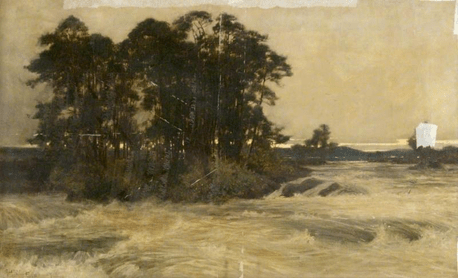
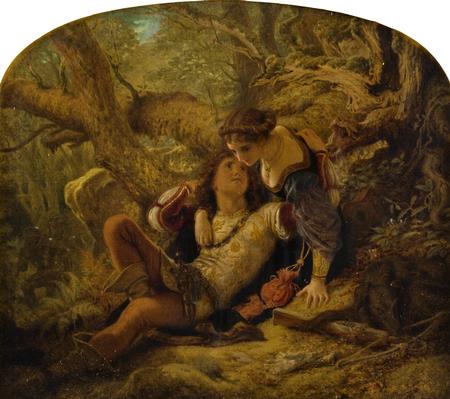
Figure 1. The Tryst by  Sir John Noel Paton RSA © CSG CIC Glasgow Museums Collection

J D C White was born at Hayfield House, Rutherglen on 18 August 1871, to John Orr White and Fanny Campbell White (2) who were second cousins and came from a family of industrialists. The family moved to London. His father died on 22 January1879 (3) but his mother continued to live in London. (4) He was educated at Charterhouse School where he did well. (5) He then attended Trinity College Cambridge and in his five years there he was awarded a BA First Class in the Classical Tripos (1894) and also in the Theological Tripos (1896). He proceeded to an MA in 1899. (6) He went to the London Hospital where he was a House Physician and qualified MRCS and LRCP. (7) In 1905 Cambridge awarded him an MD. (8) He did not go into medical practice but joined the Lister Institute to undertake research. This was made possible in 1908 because he was his uncle Lord Overtoun’s heir and on his death inherited his estate in Dunbartonshire. (9)

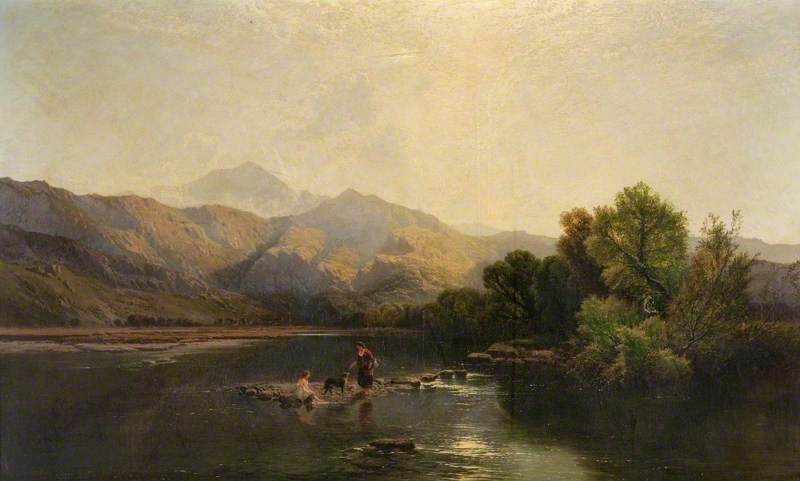
Figure 2. Loch Ericht by Henry John Boddington © CSG CIC Glasgow Museums Collection

 His research was mainly into the social aspects of venereal disease and he was a member of the British Social Hygiene Council. (10) In the following years he published and lectured quite widely. In the First World War he was a Captain in the Royal Army Medical Corps. (11) In 1922 he was sent by the army to Constantinople to conduct an anti-venereal disease campaign. (12) From 1923 he was Chairman of the Council of the Tavistock Clinic. (13)He was a committed Christian and continued to take an interest in religious affairs. He had been ordained a Deacon in the Church of St Peters in Eaton Square, London in 1898. (14)  He was Chairman of the Council of the Modern Churchmen’s Union from 1923 to 1930.  (15)

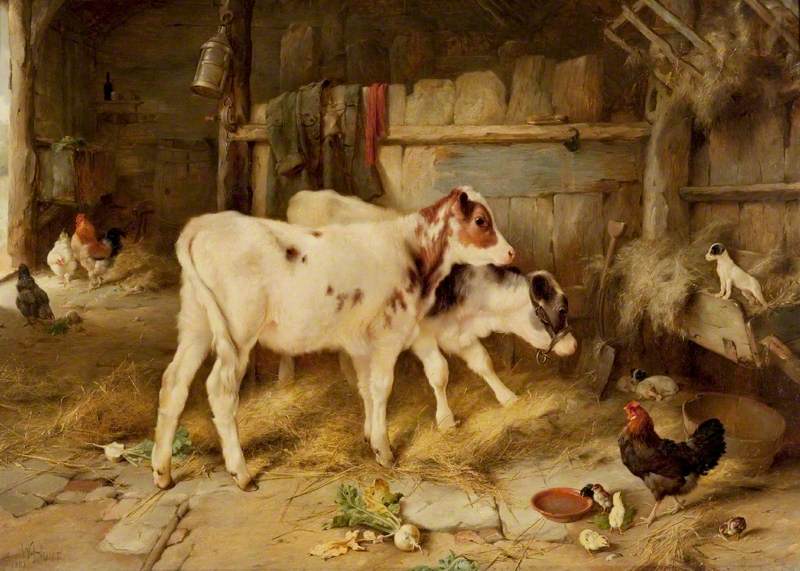
Figure 3. Dog in the manger by Walter Hunt © CSG CIC Glasgow Museums Collection

In 1898 he married Lucy Agnes McClure (16) and they had a son. He died at Harrow-on the-Hill on 25 March 1940. (17) His life is summed up in the BMJ obituary: ‘Circumstances made it possible for him to do unpaid jobs; training made him competent to look on sociological problems from both ethical and physiological viewpoints.’ (18)

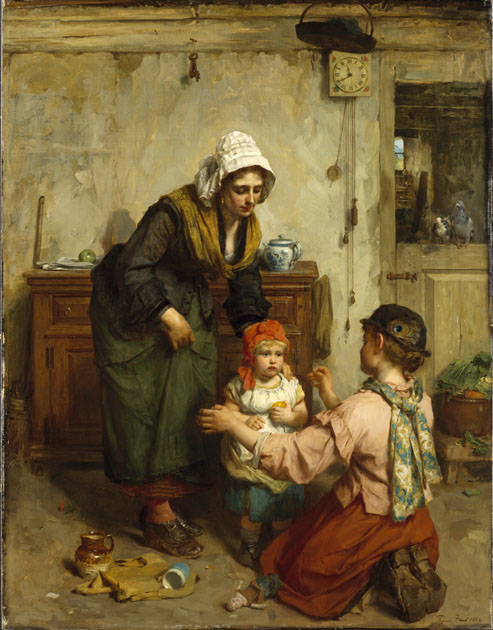
Figure 4. Where’s my Good Little Girl   by  Thomas Faed RA © CSG CIC Glasgow Museums Collection

Paintings donated to Glasgow Museums:

Oil. Thomas Faed RA. Where’s my Good Little Girl

Oil. Henry John Boddington.  Loch Ericht

Oil. Walter Hunt. Dog in the manger

Oil. Sir John Noel Paton RSA. The Tryst

The Family Inheritance

The White family members were industrialists and chemical manufacturers in the west of Scotland. They combined business acumen with strong religious beliefs and a commitment to civic service. (19) The family had come out at the Disruption in the Church of Scotland and clung to the ethics of the Free Church.

In the early years of the nineteenth century, brothers James and John White established a factory to make soda and soap in Shawfield, Rutherglen near Glasgow. By 1830 they were producing potassium dichromate, used as a mordant for the dye industry. By 1850 the site covered 200 acres and employed 500 men. It was a very successful business, a near monopoly, because of the large textile factories within Glasgow and Paisley. (20) James was well known in business and for philanthropy and his statue now stands in Cathedral Square, Glasgow. (21)

Their sons, John Orr White, son of James and John Campbell White, son of John, carried on the business but it was John Campbell White who became best known. (22) He studied at Glasgow University, graduating MA and studied law before entering the business. (23) Over the years he left others to run the business and devoted himself to philanthropy and religious causes and gave much time and money to charity. He was a powerful figure in the Liberal Party and became Baron Overtoun in 1893. He developed his estate in Dumbarton at Overtoun which he had inherited from his father.

The chrome business was successful but it was a dirty business. Little heed was paid to the well-being of workers or to the disposal of toxic waste. In 1899, the workers went on strike and their cause was taken up by Keir Hardie. This became a cause célèbre with much criticism of Lord Overtoun and can be followed in the Scotsman. (24) (25 ) (26 )(27) Opinions are divided about how much Lord Overtoun was involved.   Eventually a compromise was reached and the workers returned to work with improved conditions of employment but the legacy of chrome persisted in ill health and environmental damage.

In 1903 Lord Overtoun gave public parks to Dumbarton and to Rutherglen, both called Overtoun Park. For this he was made a Freeman of Dumbarton (28) in 1903 and of Rutherglen in 1905. (29)

In 1908 Lord Overtoun died childless and the estate and his art collection passed to his nephew. (30)  Dr John Campbell Douglas White also inherited a religious belief and a sense of duty to society.

 In 1935 the estate was given to Dumbarton by Dr White and some paintings were given to Glasgow and Dumbarton. (31)

  1. Minutes of Glasgow City Council 1935
  2. National Records of Scotland Statutory Births 1877
  3. Ancestry .co.uk
  4. Census England and Wales 1880
  5. Venn J.A, Alumni Cantabriensis London England. Cambridge University Press, 1922-1954
  6. BMJ 20 April 1940 p673. Obituary
  7. Ibid
  8. Ibid
  9. National Records of Scotland Statutory Deaths 1908
  10. BMJ 20 April 1940 p673. Obituary
  11. Venn J.A, Alumni Cantabriensis London England. Cambridge University Press, 1922-1954
  12. BMJ 20 April 1940 p673. Obituary
  13. ibid
  14. Venn J.A, Alumni Cantabriensis London England. Cambridge University Press, 1922-1954
  15. BMJ 20 April 1940 p673. Obituary
  16. Venn J.A, Alumni Cantabriensis London England. Cambridge University Press, 1922-1954
  17. Ancestry.co.uk
  18. BMJ 20 April 1940 p673. Obituary
  19. Ritchie, Lionel Alexander. ‘John Campbell White, Lord Overtoun’ in Slaven, A              A Dictionary of Scottish Business Biography. Aberdeen. Aberdeen University Press,1986. Page 293
  20. ibid
  21. Memoirs and Portraits of 100 Glasgow Men
  22. Who’s who in Glasgow in 1909
  23. ibid
  24. The Bailie. The Man you Know June 1889
  25. The Scotsman 29 June 1899
  26. The Scotsman 5 July 1899
  27. The Scotsman 5 August 1899
  28. Who’s who in Glasgow in 1909
  29. ibid
  30. Wills and Probate. London, England
  31. Personal communication Dumbarton Librarian