Robert Bontine Cunninghame Graham. (Don Roberto). Adventurer, Writer and Politician. (1852-1936)

In 1916 Robert Bontine Cunninghame Graham (RBCG), adventurer, politician and writer, donated a portrait of his wife Gabriella by John Lavery to Glasgow Museums.

Figure 1. John Lavery (1856-1941). Mrs Robert Bontine Cunninghame Graham. © CSG GIC Glasgow Museums Collection. (www.artuk.org)

Starting this research, I rather assumed that following the surname of the donor back in time would present no more than the usual difficulties and similarly with his wife. However that that was not the case as Cunninghame Graham’s surname was not a consistent feature of his ancestry. Additionally his wife’s name was an assumed one, entirely different from her birth name.

RBCG’s great-great-great-grandfather was Nicol Graham, the son of Robert Graham of Gartmore and his wife Isobel Buntine, who was the daughter of Nicol Buntine, Laird of Ardoch.  Unfortunately there are no primary sources that confirm this however I’m reasonably confident that this marriage is the source of the Bontine part of RBCG’s surname. Hopefully what follows will support that.

Figure 2. Gartmore House in 2oo8. Public Domain (Jonathan Ng).

Nicol Graham married Margaret Cunninghame, eldest daughter of the Earl of Glencairn in 1732.[1] This marriage is the source of the Cunninghame element of RBCG’s surname. They had four sons; the eldest William, baptized in 1733, [2] the second, Robert, born circa 1735,[3] being RBCG’s great-great-grandfather. William, the heir presumptive to Gartmore, and Robert both matriculated at Glasgow  University in 1749.[4]

In his entry in the matriculation records William is described as being an advocate in 1756, although I have been unable to find any evidence to support a law degree from Glasgow. In James Boswell’s London Journal 1762-1763, reprinted in the Penguin Classics series in 2010, it is recorded in the notes that he met William on the 18th June 1763 and again in Lausanne, Switzerland on the 21st December 1764, this latter encounter causing Boswell to comment that it pleased him to see that ‘an Advocate may be made a fine fellow’.[5] In 1767 William married Margaret Porterfield, the daughter of Dr. Porterfield of Edinburgh.[6]
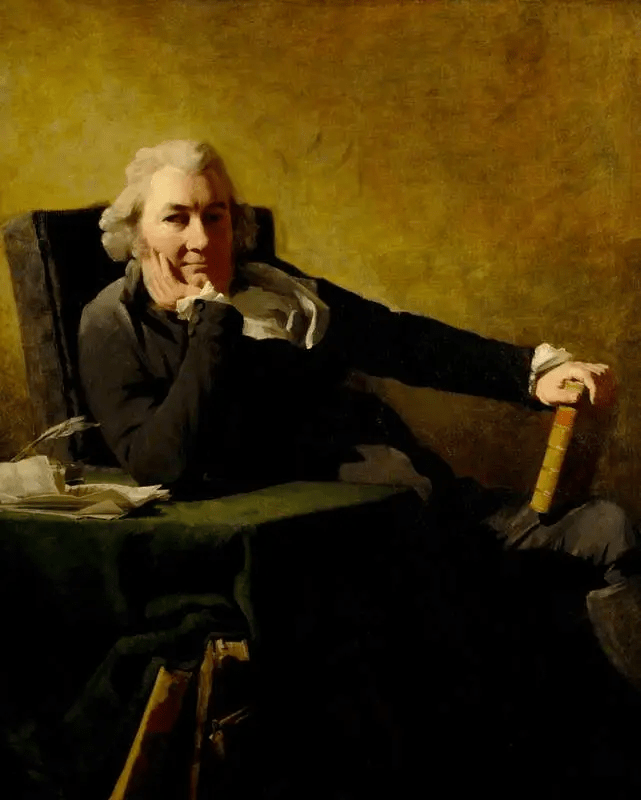
Figure 3. Sir Henry Raeburn (1756-1823). Robert Cunninghame Graham of Gartmore. © National Portrait Gallery of Scotland. (www.artuk.org)

In the meantime Robert had decided his fortunes lay in Jamaica, going there it seems in 1752 at the age of 17. His father had a cousin there who was Clerk of the Court in Kingston therefore it’s probable he was the catalyst for Robert leaving Scotland. As it happens the cousin’s name was Bontein, the relationship no doubt as a consequence of the marriage of Nicol Graham and Isobel Buntin.

By 1753 he was appointed Receiver-General of Taxes, deputed by Thomas Graham (a relative?), a previous holder of the office. In August of that year he wrote to his mother essentially seeking news from home, in particular asking after his sister Henrietta.[7] He suffered all the usual sicknesses that newcomers to the Caribbean colonies did, overcoming them due to the care ofvery friendly ladys, the power ofmedicine and the strength of his constitution.He wrote two letters to his mother in 1757, the first telling her of his health problems, the second stating that he was again fit and well.[8]

As he gained experience in his tax role he became confidant enough to write to Sir Alexander Grant, a London Parliamentarian who previously had business interests in Jamaica and had advised the Board of Trade on West Indian commerce,[9] criticising the methods employed in the collection of taxes and stating that it was a hindrance to trade. His first personal commercial venture was to invest ‘a small sum’ in a privateer whose sole purpose seems to have been capturing French ships for prize money.[10]

His relatively peaceful existence however was severely disrupted by a slave revolt in 1760. The ringleader was Tacky an Obeah man who claimed occult powers that would protect the rebelling slaves. (Obeah can be broadly defined as anything used, or intended to be used by anyone pretending to be possessed of any occult or supernatural power.)[11]

As can no doubt be imagined the revolt was put down brutally and without mercy, any captured rebelling slave being dealt with by ‘Burning, Hanging and Gibetting.’ The slaves set up a negress called Cabeah as queen of Kingston with robes and a crown. In due course she was caught and executed. Tacky was shot and killed during a chase by an army lieutenant, with two other ringleaders Kingston and Fortune being up hung up in chains alive, Fortune taking seven days to die, Kingston nine days.  He reported these events to his father in a very matter of fact way, as if he was describing how to cure belly aches and fevers.[12]

At the end of 1760 a law was passed outlawing Obeah to prevent further slave revolts. Another view of this might be that Act in reality was to protect the concept of the slavery of Africans and to deny the slave population’s African origins.[13]

Robert remained in Jamaica until 1770 continuing with his public duty as Receiver- General until 1764. In the following year he was elected to the National Assembly for the district of St. David’s remaining in that position until 1768.[14] He was also the owner of two sugar plantations on the island: Roaring River and Lucky Hill, his biographical notes in the Glasgow University Story website stating he owned fifty-one slaves of the latter plantation valued at £3,604.[15] In 2018 Stephen Mullen and Simon Newman wrote a report for Glasgow University, its theme being how the University benefited financially from slavery. In it Robert Graham features significantly, including reference to his fathering illegitimate children writing to a friend that he had ‘rather too great a latitude to a dissipated train of whoring, the consequence of which [is] I now dayly see before me a motley variegated race of different complexions’.[16]

In 1757 the Bontine estate of Ardoch was entailed to him by kinsman Nicol Bontine, the entail requiring him to assume the name of Bontine.[17] In 1764 on the death of Bontine he duly became the Laird of Ardoch.[18] Some sources say that Bontine’s death occurred around 1767-68 although I can find no primary source to confirm that.

In 1764 in Jamaica Robert Graham married Anne Taylor, daughter of  Patrick Taylor and sister of Simon Taylor,[19] a wealthy merchant who owned several plantations and at the time of his death in 1813 owned 2228 slaves.[20]

Robert and Anne had six children two of whom were born in Jamaica, the others in Scotland. Their first was Margaret Jane who was born in Kingston in 1765 [21] and died the same year. 1766 saw the birth of their second, also Margaret,[22] who in due course travelled back to Scotland with them in 1770.[23] She was a beneficiary of her uncle Simon Taylor’s will in 1813 inheriting £10,000.[24]

Their Scottish born children were John, born and died in 1773, William Cunninghame, born in 1775 and RBCG’s great grandfather, Ann Susannah, born 1776, died 1778 and Nicol, born in 1778,[25] who became a soldier in the Austrian army rising to the rank of Maréchal de Camp.[26]

Robert and Anne on returning to Britain had initially lived in London for a short period but by late 1772 the family were living in Ardoch House,[27] his father Nicol and his elder brother William and family living at Gartmore.

William had been in poor health for some time and in 1774 had gone to Lisbon with his wife hoping that would help him. Unfortunately no improvement occurred and he died there later that year. As his three children were all girls that meant Robert was the next male heir of his father. When his father died in 1775 Robert became Laird of Gartmore in addition to Ardoch. [28] He and his family moved to Gartmore House sometime during 1776.[29]

From that time on he worked to improve his estates. He also appears to have supported his brother’s widow financially, paying for their three girls, education. In 1779 he took a house in Edinburgh to facilitate the education of his own children. Funds were also provided for the education of his illegitimate ‘offspring’  in Jamaica. In 1784 he became a burgess and guild brother of Edinburgh.[30]

Since his return to Scotland he had not engaged in any commercial activity however  in 1778 he gave a Captain Stephenson £250 to help fit out a ship to be used in the Jamaica trade.[31]

Despite periods of ill health (gout) life at this point seemed to be very satisfactory, his interest in politics and literary matters growing, however that was to change with the death of his wife Anne circa 1781. Her cause of death has not been established however RBCG refers to periods of illness from when she settled in Scotland. He also from time to time refers to her as Robert’s creole wife however no significant evidence is produced in his book to support that.[32] Robert subsequently married Elizabeth Buchanan Hamilton circa 1786 which was short lived, ending by separation in 1789.[33]

His interests in politics and literary matters had been developing for some time. He became MP for Stirlingshire from 1794 to 1796 with a keen interest in political reform. He promoted a bill of rights during his tenure which although unsuccessful could be said to foreshadow the Reform Bill of 1832. Prior to that he had been rector of Glasgow University from 1785 to 1787.[34]

He also wrote poetry, his main claim to fame lying with his lyrical poem ‘If doughtydeeds my lady please’. When it was written is not clear, probably sometime between 1780 and 1790, but it was included in Palgrave’s Golden Treasury of 1875 and in 1866 Arthur Sullivan put it to music and dedicated it to a Mrs. Scott Russell, the mother of Rachel Scott Russell with whom he had or hoped for, a romantic attachment, much to her mother’s displeasure.[35]

Thereafter Graham was known as ‘Doughty Deeds’, RBCG’s biography of him bearing that title.

In 1796 he inherited the estate of Finlaystone on the death of the last Earl of Glencairn, John Cunninghame, and assumed the name Cunninghame, thereafter known as Robert Cunninghame Graham. He died in 1797 at Gartmore, son William inheriting.[36]

At the age of twelve William matriculated at Glasgow University in 1787,[37] under the tutelage of family friend Professor William Richardson, who holidayed often at a cottage on the Gartmore estate.[38] Apparently destined to run the family estates rather than be involved in business or commerce he then went on to study French and German in Neuchatel in Switzerland from around 1790 until late 1793.[39]

He married twice, first to Anne Dickson in 1798 [40] and they had five children between 1799 and 1809, the first born being Robert Cunninghame his eventual heir and grandfather of RBCG. The others were: Anna (1802), William John (1803), Douglas (1805) and Charlotte Maria Elizabeth (1809).[41]

His second marriage, in 1816, was to Janet Bogle nee Hunter.[42] They had four children as follows: Thomas Dunlop Douglas (1817), Alexander Spiers (1818), Susan Jane (1820) and Margaret Matilda (1821).

Like his father he became involved in politics being MP for Dunbartonshire from June 1796 to May 1797, winning his seat by eleven votes to three, his father Robert being the other candidate. He apparently had committed to support the then government but subsequently ‘now found he was unable in conscience to do so, hence the short duration of his political career.[43]

If he really was destined to run the family estates then what he achieved was the exact opposite. He was a gambler, not a very good one as he lost a fortune, and ultimately a swindler. He was forced to leave the country in 1828 to avoid his creditors, having squandered the family art collection through his gambling plus compromising the financial stability of his estates. By 1832 he was living in Florence with his wife Janet and their two daughters.

He was something of a mechanical genius developing a machine with which he could very accurately make copies of rare and famous engravings, thereby earning a living by selling these copies. The machine however was in due course used to produce false letters of credit of the bank Glyn, Halifax, Mills and Co.

There were fourteen individuals involved the main instigator of the fraud being the Marquis de Bourbel. They initially obtained a genuine letter of credit from the bank, from a strong box which Cunninghame Graham’s stepson Allan George Bogle had control of, thus seeing the approval signatories required.[44] They were then able to procure the same paper used by the bank, create a number of letters of credit and then forge the bank signatures using Cunninghame Graham’s machine to ‘trace’ them on to the false documents. By this means the conspirators were able to defraud banks in Italy, France, Belgium and elsewhere of £10,700 in six days. That sum today would, on RPI changes alone, be worth around £1million.[45]

However, as always seems to happen, greed overcame caution with one of the fraudsters being arrested on the Ostend ferry whilst trying to flee, the rest when learning of his fate scattered. An article in the Times newspaper goes into great detail with regards to the scheme with all fourteen conspirators being named, including William, his son Alexander and his stepson Allan Bogle. None of the main players in the fraud appear to have suffered any adverse consequences with the exception being the Graham family. Allan Bogle sued the writer of the article which he claimed defamed him. He was eventually awarded one farthing damages and ordered to pay his own legal expenses. Alexander lived under an assumed name in France and died there within the year at the age of twenty three. William was banished from Tuscany, ending up in London where he died in 1845.[46]

He was succeeded by his son Robert Cunninghame Cunninghame Graham. He had married Frances Laura Speirs in 1824 in the parish of Port of Monteith,[47] she being  the daughter of Archibald Speirs, son of tobacco lord Alexander Speirs and his wife Mary Buchanan. They had nine children between 1826 and 1844, born in a variety of places. His eldest son and heir William Cunninghame Bontine was born in Leamington, Warwickshire in 1825 as was brother Douglas Alexander in 1844. Four were born at the family estate of Finlaystone between 1826 and 1834, a son and a daughter were born in Edinburgh in 1838 and 1839 respectively, and one daughter was born in Frankfurt, Germany in 1842.[48] In the 1851 census he is recorded as a visitor to the Speirs family in the parish of St. Ninians in the county of Stirling.[49]

Presumably the Finlaystone births over eight years are an indication of his involvement with the management of his estates, what he was doing in the other localities, in particular Germany, has not been established. He was Vice-Lieutenant of the county of Dunbartonshire and Deputy Lieutenant of the counties of Renfrew and Stirling.

Robert died in 1863 at Castlenaw House, Mortlake, in Surrey, his son William being his sole executer. Also in 1863 his son William was forced to sell of the Finlaystone estate to pay off outstanding debt, presumably emanating from his grandfather’s gambling activities.[50] In the year of Robert’s death his personal estate was valued at £20,358,[51] however in 1879 a second confirmation took place which identified further inventory valued at £134,276. On this occasion there was a reference to William’s curator bonis, a legal representative who looks after an individual’s affairs because of some physical or mental incapacity. The reason for that will become clear in due course.[52]

William Cunninghame Bontine Graham was to spend most of his life in the military. Prior to that however he attended Trinity College, Cambridge in 1842. What he studied has not been established.[53] In 1845 he became an ensign in the 15th Regiment of Foot (Scots Greys) by purchase,[54] a year later becoming a Cornet in the same regiment, again by purchase.[55] At that time he was serving in Ireland remaining there for circa five years.[56]

He married Anne Elizabeth Elphinstone Fleeming, daughter of the late Admiral Sir Charles Elphinstone Fleeming, in June 1851.[57] They had three sons, the eldest being Robert Bontine Cunninghame Graham (RBCG), born at Cadogan Place, London in 1852.[58] The second son was Charles Elphinstone Fleeming Cunningham Graham, who enlisted in the Royal Navy in 1873 at the age of nineteen. He was promoted to Lieutenant in 1877 and served until 1888.[59] He was awarded the M.V.O. and in 1908 became Groom in Waiting to the King.[60] In 1910 he became Groom of the Bedchamber.[61] The youngest son Malise Archibald Cunninghame Grahame became a minister of religion dying aged twenty five in 1885.[62]

William’s final promotion came in 1855 when he was made a major in the Prince of Wales Renfrew Regiment of Militia.[63] He remained at that rank until 1862 when he resigned his commission.[64]  In the following year he became Deputy Lieutenant of the County of Stirling on the death of his father.[65]

From the late 1850s he began to suffer mental health issues. Whilst in Ireland with his regiment he had been attacked in Waterford and had suffered a severe head injury, letters written by his wife between 1857 and 1866 making reference to his problems and suggesting that they arose from this attack.[66] By 1876 it was of such concern that there was a legal notice in the Edinburgh Gazette requiring ‘in theQueen’s namethe Lord President of the Court of Session to summon William to attend the Parliament House in Edinburgh to determine his sanity.[67] Clearly at some time after a curator bonis was appointed to look after his affairs hence the comment in the 1879 probate statement.

For the rest of his life William continued to have significant mental health problems. He died in 1883 at Eccles House in Penpont, Dumfriesshire, cause of death given as ‘Insanity – about 19 years.’ [68]

FIgure 4. John Lavery. (1856-1941). Robert Bontine Cunninghame Graham. © CSG GIC Glasgow Museums Collection. (www.artuk.org).

RBCG’s life by any measure became an incredible journey starting essentially as a cowboy, then general adventurer, a politician holding, for the time and considering his lineage, very socialist ideas, and a prolific writer.

His schooling began at Hillhouse in Leamington Spa from 1863 to 1865 followed by two years at Harrow. His education continued in London and Brussels before he went to the Argentine in 1869/70.[69]

Why the Argentine? The answer probably lies with his mother Anne Elizabeth who was half Spanish, her mother being Dona Catalina Paulina Alessandro de Jiminez who married her father in Cadiz in 1816. She was apparently aged 16, he was 42 years old. Another connection to South America may have been that RBCG’s mother had been born on board her father’s flagship HMS Barnham in 1828, whilst it was off-shore from Venezuela. At any rate he was brought up heavily influenced by his Spanish grandmother, speaking Spanish fluently from a very early age, and in general having, for the time, an unconventional upbringing.

One other, perhaps more pressing reason, was that his father’s illness had resulted in significant debts for the family, hence, as the eldest son, he would feel an obligation to deal with those debts. It was during this time in the Argentine where he rode with gauchos, dealt in cattle and horses, for which he had an abiding passion, that he became known as Don Roberto. Unfortunately whatever he did in South America had no effect on the debt situation at home and only served to create debt of his own.[70] One clear benefit however was his experiences there were the basis of a number stories he wrote in later life detailing the turbulent every-day life with the gauchos and the physical expansiveness of their country. He returned to Britain around 1877 however he was to go back to South America in later life on a number of occasions, one specific stay was in Uruguay where he purchased horses for the British army during World War I.

He lived in Paris for a while which is where he met his future wife Gabriela de la Balmondiere, apparently half French, half Chilean, marrying her there around 1878. However that was an entirely assumed name, more of which later.

His political career began in the General Election of 1885 when he stood as a Liberal candidate in North-West Lanarkshire. He lost to his Conservative opponent John  Baird by over a thousand votes. In July of the following year, again as a Liberal, he stood against the same opponent and won by 332 votes. However he clearly identified as a radical socialist throughout his political career being described as the first socialist elected to parliament. He condemned a whole series of injustices of the society of the day. He was anti-imperialism, anti-racism, against child labour and was for abolishing the House of Lords.. He was also vigorously against the profiteering he saw in property and industry which was to the detriment of the people making the profit, that is, the workforce. Considering his ancestry and family background these were astonishing views to have held but by all accounts not out of character.[71]

His maiden speech in the House of Commons included the following words:

‘ the society in which one man works and enjoys the fruit – the society in which capital and luxury make Heaven for thirty thousand and a Hell for thirty million, that society…. with its want and destitution, its degradation, its prostitution and its glaring social inequalities – the society we call London….’

In 1887 the threat of disorder was such that demonstrations were forbidden. That did not stop a rally in Trafalgar Square against unemployment which ended in a riot. Among the leaders of the rally were RBCG and fellow socialist John Burns. Police and the army were in attendance which resulted in violence with over seventy people seriously injured and over four hundred arrests. RBCG and Burns were both severely beaten, arrested and eventually each sentenced to six weeks in Pentonville jail.[72]

Throughout his time in Parliament (until 1892) he continued to espouse his socialist views clearly and emphatically. On one occasion at the end of his speech he said:

‘To sum up the position briefly. Failure of civilisation to humanise; failure of commercialism to procure a subsistence; failure of religion to console; failure of our parliament to intervene; failure of individual effort to help; failure of our whole social system.’

This led to his expulsion from the House of Commons.[73]

Around 1888 he left the Liberal party and along with Keir Hardy formed the Scottish Labour party, RBCG becoming its first president, Hardy its first secretary general. In 1892 they both stood for election as party candidates, Hardy was successful in West Ham, London however RBCG lost in the Camlachie constituency in Glasgow, thus ending his parliamentary career.

That setback did not change his political views, which even led him to criticise Labour MPs for not  presenting a radical challenge to the government. He had always advocated home rule for Scotland becoming president of the Scottish Home Rule Association and in 1928 president of the newly formed National Party of Scotland. Six years later the Scottish National Party was created when the National Party joined with the Scottish Party, RBCG being appointed president of the new organisation.[74]

Being freed of his formal involvement with politics allowed him and his wife to travel more often. He also wrote prolifically about his travels, his politics and his concerns about the disappearance of local cultures and ways of life he had experienced in his travels. He had a large number of friends and acquaintances from all walks of life, including George Bernard Shaw, Oscar Wilde, artist John Lavery who painted portraits of him and his wife, Whistler, Epstein and Augustus John. From his early visits to South America his writings refer to gauchos he befriended in particular Exaltacion Medina and Raimundo Barragan. He had also become friendly with the author Joseph Conrad from about 1897 with the writer in a letter to RBCG commenting on his wide experiences and the people he had met by saying:

‘What don’t you know? From the outside of a sail to the inside of a prison!’

In 1900 due to the level of debt, including death duties, he was forced to sell  his Gartmore estate to Sir Charles Cayzer, a cause of great disappointment and sorrow  to him.[75]
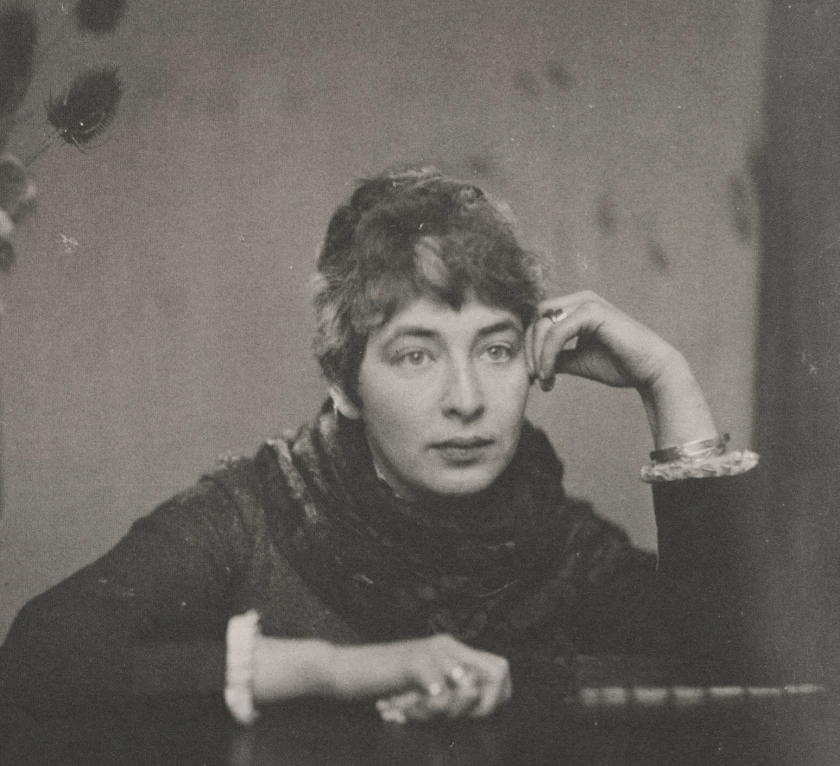
Figure 5. Gabriela photographed in 1890 by Frederick Hollyer. Victoria and Albert Museum.

More was to follow with the death of his wife in 1906 in France. Her true name was Carrie or Caroline Horsefall born in 1858 to a Yorkshire surgeon. Why she chose her assumed name is not clear however it seems she was rebelling against her strict upbringing and took herself to Paris which may have been the reason. Another, perhaps the more plausible, is that she assumed her chosen name on her marriage to RBCG to be more acceptable to his social circle. Presumably close family members knew of the deception but that is not clear.

She was an accomplished writer contributing to The Yellow Book and writing, amongst others a life of St Teresa of Avila, had artistic and musical skills, and wrote poetry.[76]

She died on the 8th September at Hendaye in France, her name registered as Gabriela Chideock (where did that come from?) Cunninghame Grahame.[77] As she had wished she was interred in the Inchmahome Priory on the Lake of Menteith.[78]

RBCG’s writings covered over thirty books which included 200 short stories and sketches. He also wrote Doughty Deeds a history of his great great grandfather Robert Cunninghame Graham. As may be expected during his life-time he had a very good reputation as a writer, his writings often being full of exotic individuals and adventure in faraway places. That has not fared very well since his death. A number of his stories also indicated the sadness he felt about the changes that occurred in some of the places he had visited such as the Pampas. His political reputation was also well established, particularly in the labour and Scottish Independence movements although with his privileged background it may have seemed strange but welcome to some and perhaps traitorous, to his class, to others. Again as for his writings his political activity is not well remembered today.
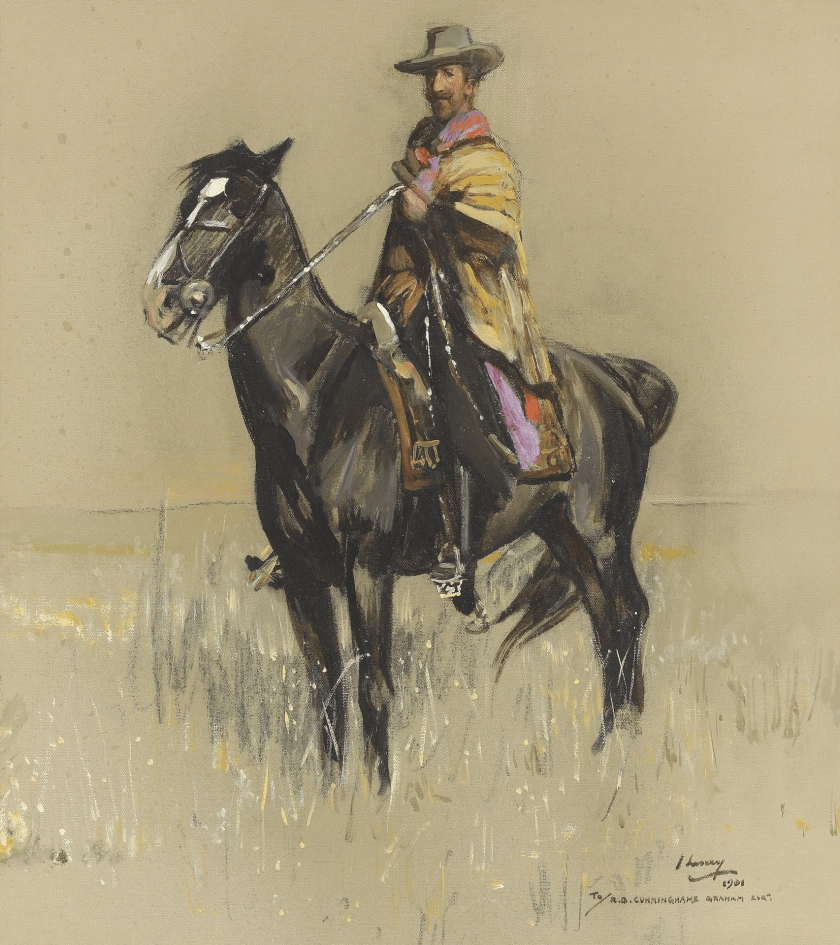
Figure 5. John Lavery (1856-1941). Don Pedro on Pampa.

He had one other passion and that was horses. He owned several throughout his life but his favourite was Pampa, an Argentinian stallion he saw pulling a tram-car in Glasgow. He bought it from the tram company and rode it at every opportunity until it died in 1911.

When he went to buy horses for the British Army in Uruguay during the Great War he had two opposing emotions. He was happy to be riding again in the Pampas, but was saddened to think of their likely fate in Flanders. He wrote a book about his experience in Uruguay entitled ‘Bopicua’. The book ends with the words, to the horses, ‘eat well there is no grass like that of La Pileta , to where you go across the sea. The grass in Europe all must smell of blood’.[79]

His made one last trip to Argentina in 1936, dying there in the Plaza Hotel in Buenos Aries on the 20 March. He lay in state in the Casa del Teatro his strong affinity with the country being recognised by the attendance of the Argentinian President at his funeral. His body was subsequently returned home and buried beside his wife in the Inchmahome Priory.[80] The last of the family estates, Ardoch, was inherited by his brother Charles’ son Angus.[81]


[1] Marriages. (OPR) Scotland. Edinburgh. 23 April 1732. GRAHAME, Nicol and CUNNINGHAME, Margaret. 685/1 470 74. www.scotlandspeople.gov.uk

[2] Births. (OPR) Scotland. Kilmacolm, Renfrew. 9 March 1733. GRAHAM, William. 569/  10 60. www.scotlandspeople.gov.uk

[3] Find a Grave. Robert Cunninghame Grahamhttps://www.findagrave.com/memorial/215228097/robert-cunninghame-graham

[4] Addison, W. Innes. (1913). The Matriculation Albums of Glasgow University, from 1728 to 1858. Glasgow: James Maclehose and Sons. p. 40. https://archive.org/details/matriculationalb00univuoft/page/40/mode/2up?view=theater

[5] Turnbull, Gordon, ed. (2010) London Journal 1762-1763. London: Penguin Classics. https://books.google.co.uk/books

[6] Marriages. (OPR) Scotland. Port of Monteith. 26 March 1767. GRAHAM, William and PORTERFIELD, Margaret. 388/  10 475. www.scotlandspeople.gov.uk

[7] Graham, R. B. Cunninghame. (1925). Doughty Deeds. London: William Heinemann Ltd. pp. 19-22. https://archive.org/details/doughtydeeds

[8] Graham, op.cit. pp. 26,27.

[9] The History of Parliament. Grant, Sir Alexander, 5th Bt. (1772) of Dalvey, Elgin. http://www.historyofparliamentonline.org/volume/1754-1790/member/grant-sir-alexander-1772

[10] Graham, op.cit. pp. 28,29.

[11] History Workshop. The Racist History of Jamaica’s Obeah Laws. (Diana Paton) https://www.historyworkshop.org.uk/the-racist-history-of-jamaicas-obeah-laws

[12] Graham, op.cit. pp. 31-33.

[13] History Workshop. The Racist History of Jamaica’s Obeah Laws. (Diana Paton) https://www.historyworkshop.org.uk/the-racist-history-of-jamaicas-obeah-laws

[14] Graham, op.cit. pp. 39, 44, 63.

[15] University of Glasgow. The University of Glasgow Story – Robert Graham. https://www.universitystory.gla.ac.uk/biography/?id=WH0240&type=P

[16] University of Glasgow. Slavery, Abolition and the University of Glasgow, report, and recommendations of the
University of Glasgow History of Slavery Steering Committee.
https://www.gla.ac.uk/media/Media_607547_smxx.pdf

[17] Shaw, Samuel (1784). An Accurate Alphabetical Index of the Registered Entails in Scotland. Edinburgh. p. 14. https://books.google.co.uk/books AND Graham, op.cit. p. 76.

[18] Grant, Francis J., ed. (1898). The Commissariot Record of Hamilton and Campsie. Register of Testaments 1564-1800. 24 October 1764. BUNTEN, Nicol of Ardoch. p.13. https://archive.org/details/scottishrecordso05scotuoft/page/n1/mode/2up?view=theater

[19] Graham, op.cit. p. 20.

[20] Petley, Christer. ‘Simon Taylor (1739-1813)’. In: Oxford Dictionary of National Biography. Oxford: Oxford University Press. https://www.oxforddnb.com/view/10.1093/ref:odnb/104876

[21] Baptisms. Jamaica. Kingston. 1765. GRAHAM, Margaret Jane . FHL Film Number1291763, page 178. https://www.ancestry.co.uk

[22] Baptisms. Jamaica. Kingston. 1766. GRAHAM, Margaret. FHL Film Number1291763, page 186. https://www.ancestry.co.uk

[23] Graham, op.cit. p. 85.

[24] University College London. Simon Taylor.  https://www.ucl.ac.uk/lbs/person/view/2146634174

[25] Births (OPR) Scotland. Cardross. 7 April 1778. GRAHAM, Nicol. 494/  10 180. www.scotlandspeople.gov.uk

[26] Graham, op.cit. p. 155 note.

[27] Graham, op.cit. p. 111.

[28]Testamentary Records Scotland. 25 December 1775. GRAHAM, Nicol. TT. Dunblane Commissary Court. CC6/5/28. www.scotlandspeople.gov.uk

[29] Graham, op.cit. p.113.

[30] Watson, Charles R. Boog (ed). Roll of the Burgesses and Guild Brethren of Edinburgh 1761-1841. Edinburgh: Scottish Record Society. p. 68. https://archive.org/details/scottishrecordso53scotuoft/page/68/mode/2up

[31] Graham, op.cit. pp.111-124.

[32] Graham, op.cit. pp.125,126.

[33] Walker, John. ‘Robert Graham (later Cunninghame Graham) (1735-1797). In: Oxford Dictionary of National Biography. Oxford: Oxford University Press. https://www.oxforddnb.com/view/10.1093/ref:odnb/11220

[34] Ibid.

[35] Gilbert and Sullivan Archive. ‘If Doughty Deeds’. https://www.gsarchive.net/sullivan/songs/doughty/deeds.html

[36] Graham, op.cit. p.164.

[37] Addison, W. Innes, op. cit. p. 150.

[38] Graham, op.cit. p.122.

[39] Graham, op.cit. pp.156-158.

[40] the peerage.com. William Cunninghame Cunninghame Graham. https://www.thepeerage.com/p18700.htm#i187000

[41] Births (OPR) Scotland. Port of Menteith. 14 September 1799. GRAHAM, Robert + Anna + William John + Douglas + Charlotte Maria Elizabeth. 388/  10 385. www.scotlandspeople.gov.uk

[42] the peerage.com. William Cunninghame Cunninghame Graham. https://www.thepeerage.com/p18700.htm#i187000

[43] The History of Parliament. Dunbartonshire. https://www.historyofparliamentonline.org/volume/1790-1820/constituencies/dunbartonshire

[44] WRBCG. Ancestral Tales – Bad Willie’s Crime.  https://cunninghamegrahamblog.wordpress.com/tag/william-cunningham-cunninghame-graham-of-gartmore-finlaystone/ AND The Times. Extraordinary and Extensive Forgery and Swindling Conspiracy on the Continent. The Times. 26 May 1840 p.6. https://www.nls.uk/

[45] Measuring Worth (2022) https://www.measuringworth.com/calculators/ukcompare/

[46] WRBCG. Ancestral Tales – Bad Willie’s Crime.  https://cunninghamegrahamblog.wordpress.com/tag/william-cunningham-cunninghame-graham-of-gartmore-finlaystone/ AND The Times. Extraordinary and Extensive Forgery and Swindling Conspiracy on the Continent. The Times. 26 May 1840 p.6. https://www.nls.uk/

[47] Marriages (OPR) Scotland. Port of Monteith 20 June 1824. BUNTIN, Robert Cunninghame and SPEIRS, Frances Laura. 388/  20 120. www.scotlandspeople.gov.uk

[48] Births (OPR) Scotland. 1826 to 1844. GRAHAM. 388/  20 83 and 388/   20 84. www.scotlandspeople.gov.uk

[49] Censuswww.scotlandspeople.gov.uk

[50] Finlaystone Country Estate. The Cunninghame Grahams. https://www.finlaystone.co.uk/about/finlaystone-house/the-cunninghame-grahams/

[51] Testamentary Records Scotland. 18 April 1863. GRAHAM, Robert Cunninghame Cunninghame. TT. Dunblane Sheriff Court. CC44/44/15. www.scotlandspeople.gov.uk

www.scotlandspeople.gov.uk

[52] Testamentary Record Scotland. 19 April 1879. GRAHAME Robert Cunninghame Cunninghame . Additional Inventory. Dunblane Sheriff Court. CC44/44/24. www.scotlandspeople.gov.uk

[53] Cambridge University Alumni 1261-1900. William Cunninghame Graham or Bontine. https://www.ancestry.co.uk

[54] London Gazette (1845) 28 March 1845. Issue 20457, p. 984. https://www.thegazette.co.uk/London/issue/20457/page/984

[55] London Gazette (1846) ^ November 1846. Issue 20657, p. 3876. https://www.thegazette.co.uk/London/issue/20657/page/3876

[56] National Library of Scotland. Inventory ACC11335 Cunninghame Graham. https://digital.nls.uk/catalogues/guide-to-manuscript-collections/inventories/acc11335.pdf

[57] Marriage Announcements. (1851) Morning Post London. 14 June. BONTINE, William Cunninghame and Fleeming, Anne Elizabeth Elphinstone. p. 8. https://www.nls.uk/

[58] Watts, Cedric. ‘Graham, Robert Bontine Cunninghame (1852-1936)’ In: Oxford Dictionary of National Biography. Oxford: Oxford University Press. https://www.oxforddnb.com/view/10.1093/ref:odnb/33504

[59] National Archives. Reference ADM 19638556. file:///C:/Users/gmanz/AppData/Local/Temp/ADM-196-38-556.pdf

[60] London Gazette (1908) 13 October 1908. Issue 28185, p. 7379. https://www.thegazette.co.uk/London/issue/28185/page/7379

[61] London Gazette (1910) 10 June 1910. Issue 28383, p. 4073. https://www.thegazette.co.uk/London/issue/28383/page/4073

[62] Testamentary Records. England. 19 January 1886. CUNNINGHAME GRAHAM, Malise Archibald. England & Wales, National Probate Calendar (index of Wills and Administrations), 1858-1995. https://www.ancestry.co.uk

[63] London Gazette (1855) 9 January 1855. Issue 21649, p. 87. https://www.thegazette.co.uk/London/issue/21649/page/87

[64] London Gazette (1862) 25 July 1862. Issue 222647, p. 3719. https://www.thegazette.co.uk/London/issue/22647/page/3719

[65] London Gazette (1863) 29 May 1863. Issue 22740, p. 984. https://www.thegazette.co.uk/London/issue/20457/page/984

[66] National Library of Scotland. Inventory ACC11335 Cunninghame Graham. https://digital.nls.uk/catalogues/guide-to-manuscript-collections/inventories/acc11335.pdf

[67] Edinburgh Gazette (1876) 7 March 1876. Issue 8667, p. 166. https://www.thegazette.co.uk/Edinburgh/issue/8667/page/166

[68] Deaths (SR) Scotland. Penpont, Dumfries. 6 September 1883. CUNNINGHAME Graham, William. 845/  18. https://www.scotlandspeople.gov.uk

[69] Watts, Cedric. ‘Graham, Robert Bontine Cunninghame (1852-1936)’ In: Oxford Dictionary of National Biography. Oxford: Oxford University Press. https://www.oxforddnb.com/view/10.1093/ref:odnb/33504

[70] MacGillivray, Allan. A World of Story Rediscovered: R.B. Cunninghame Graham, Scotland’s Forgotten Writer. https://www.thebottleimp.org.uk/2012/05/a-world-of-story-rediscovered-r-b-cunninghame-graham-scotlands-forgotten-writer/

[71] Watts, Cedric. ‘Graham, Robert Bontine Cunninghame (1852-1936)’ In: Oxford Dictionary of National Biography. Oxford: Oxford University Press. https://www.oxforddnb.com/view/10.1093/ref:odnb/33504

[72] Scotiana, Everything Scottish. Who was ‘Don Roberto’? Robert Bontine Cunninghame Graham of Gartmore. 1852-1936. https://www.scotiana.com/who-was-don-roberto-robert-bontine-cunninghame-graham-of-gartmore-1852-1936/

[73] The National. (2017) The wise words of Scotland’s greatest ever orator shaped our country. The National 31 October. https://www.thenational.scot/news/15629163.the-wise-words-of-scotlands-greatest-ever-orator-shaped-our-countrys-future/

[74] Watts, Cedric. ‘Graham, Robert Bontine Cunninghame (1852-1936)’ In: Oxford Dictionary of National Biography. Oxford: Oxford University Press. https://www.oxforddnb.com/view/10.1093/ref:odnb/33504

[75] Watts, Cedric. ‘Graham, Robert Bontine Cunninghame (1852-1936)’ In: Oxford Dictionary of National Biography. Oxford: Oxford University Press. https://www.oxforddnb.com/view/10.1093/ref:odnb/33504,

AND MacGillivray, Allan. A World of Story Rediscovered: R.B. Cunninghame Graham, Scotland’s Forgotten Writer. https://www.thebottleimp.org.uk/2012/05/a-world-of-story-rediscovered-r-b-cunninghame-graham-scotlands-forgotten-writer/

[76] Meacock, Joe. The true Identities of Mrs R.B. Cunninghame Grahame https://www.youtube.com/watch?v=LV0HK23yD3A

[77] Testamentary Records. Scotland. 9 November 1906. CUNNINGHAME GRAHAME, Gabriela Chideock. SC65/35/10. www.scotlandspeople.gov.uk

[78] UK and Ireland, Find a Grave Index. 1300s-Current. CUNNINGHAME GRAHAM, Gabriela Marie (?). https://www.ancestry.co.uk

[79] MacGillivray, Allan. A World of Story Rediscovered: R.B. Cunninghame Graham, Scotland’s Forgotten Writer. https://www.thebottleimp.org.uk/2012/05/a-world-of-story-rediscovered-r-b-cunninghame-graham-scotlands-forgotten-writer/

[80] Scotiana, Everything Scottish. Who was ‘Don Roberto’? Robert Bontine Cunninghame Graham of Gartmore. 1852-1936. https://www.scotiana.com/who-was-don-roberto-robert-bontine-cunninghame-graham-of-gartmore-1852-1936/

[81] Testamentary Records. Scotland. 17 July 1936. Cunninghame Grahame, Robert Bontine. Scottish National Probate Index (Calendar of Confirmations and Inventories), 1876-1936. p. G63. https://www.ancestry.co.uk

Thomas Walter Donald (1878 – 1970)

On 21 November 1944, an oil painting of Provost Robert Donald by an unknown artist was presented to Glasgow Corporation by Mr T. W. Donald, 172 St. Vincent Street, Glasgow. C.2.

 (Thomas Walter Donald was the 3x great grandnephew of Robert Donald).

Figure 1. Robert Donald, Provost of Glasgow, 1776 -77. © CSG CIC Glasgow Museums Collection. Supplied by The Public Catalogue Foundation

 There was submitted a letter from Mr T.W. Donald, Writer, 172 St. Vincent Street, offering to present to the Corporation a portrait of Robert Donald, who was provost of Glasgow from 1776 to 1777, and the committee, after hearing a report from the Director, agreed that the gift be accepted and that a letter of thanks be sent to the donor.1

            Thomas Walter Donald was born on 5 January 1878 at The Baths, Helensburgh. (This was an extension of the Baths’ Hotel – later the Queen`s Hotel – built for Henry Bell who ferried customers from Glasgow in his steamship The Comet to the hotel).  His parents were Ellen Mary Jane Brown and Colin Dunlop Donald jr., a writer in the family firm of McGrigor, Donald & Co., (later C.D. Donald & Sons) of 172 St. Vincent Street, Glasgow. Colin`s address at the time was North Cottage, Wemyss Bay. Colin and Ellen had married on 16 January 1877 in Helensburgh and Thomas was their first child. 2 Thomas` brother, Colin Dunlop Donald was born on 11 September 1879. 3

Figure 2. Colin Dunlop Donald jr. By kind permission of Frank and Colin Donald.
Figure 3. Ellen Mary Jane Donald. By kind permission of Frank and Colin Donald.


In the 1881 census, the family was at 72 East Clyde Street, Helensburgh.4 This was the home of Thomas`s great grandfather Walter Buchanan of Shandon who had been an MP for Glasgow between 1857 and 1865. A third brother, William Frances Maxwell Donald (Frank) was born on 3 June 1881, and a sister Helen (Nelly) on 16 July 1882. Thomas later wrote a memoir of his childhood in Helensburgh recalling some of his earliest memories.5

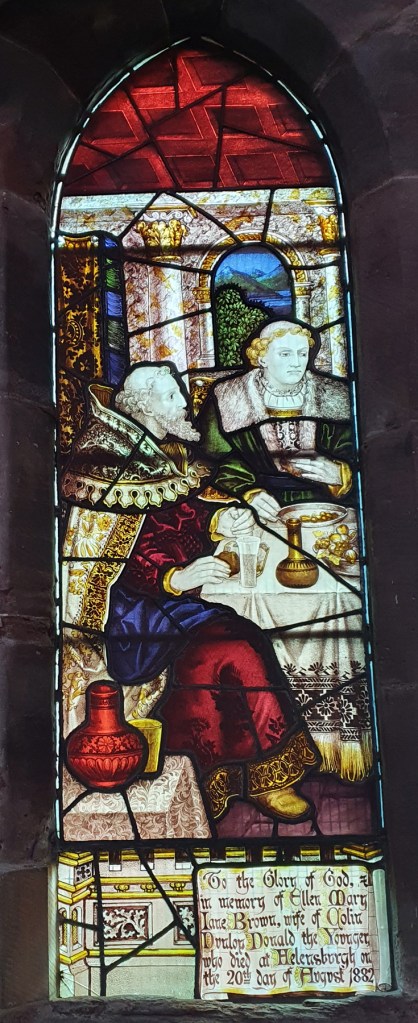
Thomas`s mother died suddenly of a chill on 20 August 1882 shortly after the birth of her daughter. A memorial window to her was placed in St. Michaels`s Church in Helensburgh in 1889. 6

Figure 4. Memorial Window to Ellen Mary Jane Brown (Donald)
  (Photographs by the author)


In the year following Ellen Donald’s death, the family left Helensburgh and moved to Glasgow, first to Westbourne Gardens where they remained for a year, and then to 14 Huntly Gardens, Hillhead. 7,8

Figure 5. Four Siblings (about 1887?) By kind permission of Frank and Colin Donald.

The boys were later sent to boarding schools in England. In the 1891 Census, Thomas, aged 13, was a pupil at Bilton Grange School in Warwickshire. 9 In January of the following year he entered Rugby School boarding at Michell House. At Rugby he seems to have kept a low profile as there is no record of him participating in any of the school teams or winning any major prizes. 10 He left in the summer of 1895 to go to Glasgow University.

(His two younger brothers also attended Rugby School. Both boarded at Mitchell; Colin Dunlop Donald from 1893-1895 and William Francis Maxwell Donald from 1895-1898.11  William later studied engineering at Glasgow University).

Figure 6. The Donald Family on holiday at the Coul Estate, Auchterarder in 1892.
It was here that Thomas shot his first rabbit!  Thomas is in the middle
of the back row. By kind permission of Frank and Colin Donald.

Thomas`s father, Colin Dunlop Donald III wrote articles on archaeology and a history of The Board of Green Cloth which provided ‘a social history of Glasgow at the turn of the nineteenth century’. He was Hon. Secretary of the Regality Club which published books on the buildings of Glasgow. These were illustrated by etchings by D. Y. Cameron who used to call at 14 Huntly Gardens with the proofs.12 (These etchings were left to Thomas and subsequently passed to his grandson Frank Donald who donated them to Glasgow. These are catalogued as PR.2004.5).

When their father died suddenly (of a chill) in 1895, Thomas`s unmarried uncle Thomas F. Donald (TFD) took over the care of the four orphans.

(Thomas F. Donald was an accountant and stockbroker. As a young apprentice his firm had been engaged by one of the Directors of the City of Glasgow Bank to see if he had any defence after the bank failed in 1878. TFD saw the balance sheet which had been presented to a meeting of the board, and when he examined the same balance sheet afterwards it had fictitious amendments in red ink! TFD was secretary of the Royal Northern Yacht Club in Rhu for 24 years and was presented with 200 guineas when he retired in 1910. He was also a donor to Glasgow gifting The Clyde from Dalnottar by John Knox in 1921. This is displayed in the  Kelvingrove Art Galleries and Museum).

Figure 7.  Thomas F. Donald By kind permission of Frank and Colin Donald.

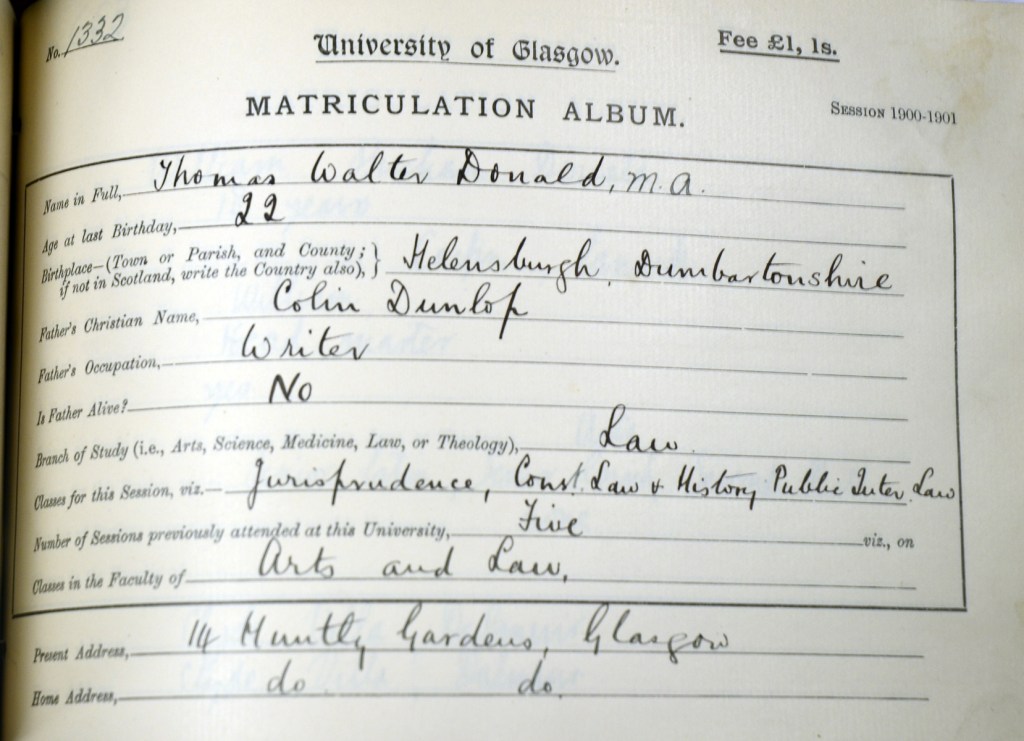
At university Thomas Walter Donald continued the study of Latin and Greek which he had begun at school. He also attended classes in Mathematics, English, Logic and Roman Law for fees of £5.5.0 per year. He graduated MA on 3 November 1898. Thereafter, he began a course leading to the degree of LLB. He gained a ‘Highly Distinguished’ award in History in 1898-99. In 1899-1900 he studied Scots Law under Professor Alexander Moody Stuart and was awarded a prize for ‘Eminence in Class Examinations’. He matriculated as ‘Thomas Walter Donald MA’ for session 1900-1901 taking classes in Jurisprudence, and Constitutional Law and History. In the latter class he was awarded first prize and he graduated LLB in 1901.13

Figure 8.     Page from Matriculation Album 1901-2. Glasgow University Records.

 In the 1901 Census, Thomas was a ‘lawyer`s apprentice’, aged 23, living with his uncle, Thomas F. Donald, 47, at 14 Huntly Gardens, Glasgow.  His brothers, Colin aged 21 and William, 19, were also living there.14

After serving an apprenticeship with the Glasgow legal firm of Maclay, Murray and Spens, Thomas was admitted a solicitor in 1902.

On 20 September 1902, Thomas married Sarah Gertrude Newstead, at St. Mary’s Church, Bryanston Square, Westminster, London.15 She was 28, the daughter of a retired surgeon from Bristol. The couple moved to Glasgow to a flat at 8 Clarence Drive, Hillhead, where their son Colin George Walter Donald was born on 7July 1904. 16,17 Soon after the birth they moved to Grendon Lodge in Helensburgh. 18 It was here that their daughters Monica Mary Louise (1910) and Barbara Gertrude (1912) were born.19 Apparently, the children later became close friends of the Blackie children who lived in the ‘Hill House’. Barbara later reported that ‘while the window seats in the Hill House were great fun, the famous Charles Rennie Mackintosh chairs were terribly uncomfortable’. 20

About 1905, Thomas joined McGrigor, Donald and Co., Glasgow a law firm which had been part founded by his great-grandfather, Colin Dunlop Donald.21 He remained with this firm for the rest of his life eventually becoming senior partner. He also became the senior member of the Royal Faculty of Procurators in Glasgow. He seems to have specialized in lawsuits involving shipping and shipwrecks and often acted on behalf of the Board of Trade at which time, ‘all other work in the office ceased!’ The firm also acted for the family of Madeleine Smith.22

Thomas had a keen interest in his family history and outlined some of its main points in a letter to the Glasgow Herald in 1909 23. This was in response to a previous letter requesting information about the father, grandfather and great grandfather of Robert Donald – the subject of the donated portrait. (Appendix 1)

Due to a pre-existing medical condition, Thomas was not required to do active service in WW1. However, he did undertake a course of training in the Glasgow Citizen Training force which he completed in 1915 before transferring to the corresponding company in Helensburgh. (In WW2 his duties involved a stint of fire watching at 172 St Vincent Street).

Figure 9.   Thomas Walter Donald. By kind permission of Frank and Colin Donald.

              After living for eighteen years in Helensburgh the family moved to Stirling in 1922, to a house at 9 Snowdon Place which they also named Grendon. 24 (This is still called Grendon House but has been converted to flats)

Thomas and his brother Colin Dunlop Donald became members of the Merchants’ House of Glasgow in 1928. 25

Figure 10. The Merchant`s House Matriculation Album

(The page shows, Matriculation Number; Date, 13th Sept. 1928; Name; Occupation; Address of Firm; Father`s Name and Designation; Entry Fee (21 guineas) and date when paid).

Thomas was fond of ‘cruising in other peoples’ yachts’ but he also undertook some more far-flung voyages. On 19 June 1931, he arrived in London via Plymouth from Bombay, India. He was 53 and had travelled on the P & O ship ‘Malwa’.

On 21 February 1938 he arrived at Bristol from Kingston, Jamaica following a visit to his son and daughter-in-law.26

 Figure 11. T.W.D. at chess. By kind permission of Frank and Colin Donald.

 Gertrude Donald died from cancer at 9 Snowdon Place, Stirling on 13 April 1942. She was 68.27

In 1952 Thomas moved to 44 Kelvin Court on Great Western Road, Glasgow. In 1969 he gave an interview to Jack Webster of the Scottish Daily Express in which he talks about his connection with the West India Association.28 This had been set up in 1807 to facilitate trade with the West Indies. He had become treasurer of the association in the 1930s and had presided over their last meeting in 1969. (Appendix)

Thomas Walter Donald died on 23December 1970 at 44 Kelvin Court, Glasgow. He was 92. The cause of death was hypostatic pneumonia and myocardial degeneration. The death was registered by his nephew Colin Dunlop Donald.29

According to the writer of his obituary, Thomas Walter Donald ‘was a man of great charm and wide culture, and in his extensive legal practice his humanity found full scope’.

            He played his part in public work as a director of the Merchants` House and the Elder Hospital, and as representative of the Glasgow Faculty on the Joint Committee of Legal Societies from which the Law Society of Scotland developed. He was a director of the British Linen Bank and the Scottish Provident Institution.30 He was also a Trustee of Provands Lordship.

            Thomas`s daughter-in-law was Russian and a good friend of the painter Eric Prehn and his wife Irina, whom she had known in Riga. When Eric and Irina moved to Edinburgh Thomas used to stay with them when he attended British Linen Bank board meetings. As a result of their friendship Thomas was encouraged to take up painting himself. Unfortunately, not much of his work has survived. Thomas does not appear to have been a collector of art but owned the following paintings which have family connections.

  1. Portrait of Robert Donald, Provost of Glasgow 1776-7. Donated to Glasgow.
  2. Portrait of Colin Dunlop of Carmyle, Provost of Glasgow and one of the founders of the ‘Ship Bank’. This was donated to the British Linen Bank to celebrate the bicentenary of the Ship Bank. It passed to the Bank of Scotland and was subsequently returned to the family.
  3. Portrait of Kathrine Donald, wife of Robert. This remains in the family.
  4. Portrait of James Donald painted in1757. This remains in the family. It was shown as part of the Old Glasgow Exhibition.

The Sitter

Robert Donald (1724 – 1803)

Robert Donald was a ‘Virginia Merchant’ – one of the Glasgow ‘Tobacco Lords’ – and a Provost of the City. He was born in 1724 the fourth son of Thomas Donald of Lyleston (also a tobacco merchant) and Janet Cumming of Baremann. 31

He formed a partnership with his older brother James. (James Donald, also a tobacco merchant, acquired the lands of Geilston in Cardross in 1757 and was subsequently styled, James Donald of Geilston). Robert married his first cousin Katherine Donald, daughter of Robert Donald of Greenock.

When James Donald died in 1760 his estate passed to his eldest son Thomas who maintained the partnership with his uncle Robert, and they traded as Robert Donald and Co. They had their own fleet of ships which they operated in conjunction with their cousins in Greenock.  They maintained a network of Company Stores in the back country of Virginia and dealt with the small tobacco growers. 

Both Robert and James appear to have spent time in Virginia, and had a house in Pages a township in Hanover County where they were visited by George Washington in 1752. Robert left America to return to Scotland in 1758.

Robert became a Burgess of Glasgow (by right of his wife) in 1759. He was elected a Baillie in 1765 and 1773. In 1767, he feued the 24-acre Mountblow estate near Clydebank from George Buchanan of Auchentoshan and built Mountblow House on this estate.

Figure 12. Mountblow House photographed in 1870 by Thomas Annan. National Galleries Scotland. Creative Commons – CC by NC

  He was elected Provost of Glasgow on 1 October 1776 and retained that position until 30September 1777. In 1778 he took an active part in raising a regiment to serve against the Americans in the War of Independence. However, he later lost most of his fortune when Thomas Donald & Son became bankrupt in 1787. (Presumably Thomas was now senior partner hence the name change.) Robert remained at Mountblow and, until 1798, was employed by the city to supervise the deepening of the River Clyde at a salary of £50 per annum later increased to £60.

On 6 June 1793, Robert wrote a letter from Mountblow to George Washington asking him to look favourably on the bearer who was his nephew.

Katherine Donald died in 1798 and five years later, on 22 February 1803 Robert Donald died at Mountblow. 32 He was buried in the Ramshorn Churchyard in Glasgow. Having no children of his own he seems to have left the bulk of his estate to his nephew Alexander Donald.

            The Mountblow estate was acquired by Henry Bowie and then by William Dunn of Duntocher (1770-1849). It was inherited by Dunn’s nephew, the Advocate Alexander Dunn Pattison. He sold it to Glasgow Corporation in 1877 and they in turn rented it to James Rodger Thomson of the Clydebank Shipyard until 1893 when it was leased to the Seamen’s Orphans’ Institute. It became Mountblow Children’s Home in 1922.33 The house probably suffered damage in the Clydebank Blitz of 1941 although was not hit directly by bombs. The remains were demolished to make way for housing after the war.

The Painting

The painting was completed in London in 1762 when Robert Donald was 38. The artist is unknown. The painting did not remain in the family and may have been sold either when Robert`s business collapsed or when he died. In 1868, the portrait was on loan at an Exhibition of Portraits held in the New Galleries of Art in Sauchiehall Street. It was lent by Thomas Carlisle Esq.* It was loaned to the ‘Old Glasgow Exhibition’ held under the auspices of the Glasgow Institute for Fine Arts in 1894. This time the lender was a Miss Carlisle.

*Thomas Carlisle was a manufacturing chemist and a partner in the firm of Stevenson, Carlisle and Co. with works at Millburn Street, Townhead, Glasgow and an office at 23 West Nile Street. He had a house at 2 Lancaster Terrace, Great Western Road. He died in 1917. It seems he was also in possession of a portrait of Katherine Donald, wife of Robert at the time of the 1868 exhibition. Perhaps Thomas Walter Donald purchased both portraits from the Carlisles?

  Figure 13. Portrait of Katherine Donald. By kind permission of Frank and Colin Donald.

 Appendix

An article written by Jack Webster which appeared in the Scottish Daily Express.

                 ‘When the tax on rum was a farthing a gallon’

Thomas Walter Donald nods towards a portrait above his lounge mantelpiece and tell you that the robust gentleman in question, his great-great-grandfather, was born in 1745 and became one of Glasgow`s tobacco lords trading with the American colonies.

But Mr. Donald, quiet and cultured, does not require a portrait to give his visitor a sense of history. For he himself has lived through 92 years in which he has been, and remains, an active city lawyer. He was a trustee of the estate of Mr. Smith of Blythswood Square, father of Madeleine Smith, the Glasgow girl accused in 1857 of poisoning her secret French lover, a charge which was found “not proven”.

The other day, Mr. Donald brought another reminder of an age that is all but forgotten when he called a rather special meeting of the West India Association. The association was founded in 1807 to help those eager businessmen who were trading with the West Indies during last century to bring home the rum, sugar and tobacco. “My family has turned from trading to law, however”, says Mr. Donald, “and I was never a trader myself. I merely became treasurer of the West India Association in the 1930s, by which time there was not much business being done”.

“The emancipation of the slaves had knocked a considerable hole in the profits. But there was a time in the heyday of these tobacco, rum and sugar lords when the association was very active. In 1840 for example, it appointed a delegation to go to Parliament to protest against an increase on the duty on rum from ¼ d to ½ d per gallon. Glasgow was doing a tremendous overseas trade at that time. By the time the Second World War came, more and more trade was being done from London”.

“Those in Glasgow still interested began to die off and the association became moribund. We met again in 1946 – but not again until 1969, when I thought it was perhaps about time that we had another meeting”.

“This time it was to see about disposing of stock and cash totaling around £730 – and eight remaining members of a once flourishing organisation agreed that the remaining surplus funds will be handed over to “the West India Committee” in London. This is a non-profit making body founded in 1750, which promotes Commonwealth, Caribbean/UK trade and stimulates investment in the Commonwealth and Caribbean and the improvement of the standard of living there”.

In his luxury flat in Glasgow`s west end, Mr. Donald showed me the massive tomes of minutes stretching back to 1807 – which are now being handed over to the Mitchell Library. He had known nearly half of that period from his own experience. To talk to him was to absorb history itself. At 92, he is still senior partner in one of the Scotland`s biggest legal practices. He pops down to the Western Club in the city centre, or off on a cruise to Madeira.

Jack Webster

References

  1. Glasgow Corporation, Minutes of Art Galleries and Museums Committee, 21 November 1944, page 165. Held in The Mitchell Library, Glasgow
  2. Scotland`s People, Birth Certificate
  3. ibid
  4. ancestry.co.uk, 1881 Census, Scotland
  5. Memoir written by T.W. Donald. Excerpts from this memoir were supplied by Frank Donald, grandson of the donor. I am most grateful to Frank and his cousins Colin and James Donald for supplying photographs and information contained in this report. Any un-attributed material in this report is due to them.
  6. Stained Glass Window in St. Michael`s Church, Helensburgh. Made by Charles Eamer Kempe, 1889. (Mary Magdalene anointing the feet of Christ), St Michael’s Church — a short history Penny Johnston, 30 March 2010, Helensburgh Heritage
  7. T. W. Donald Memoir
  8. Glasgow Post Office Directory, 1884-5
  9. Ancestry.co.uk, 1891 Census for England
  10. Information from Rusty MacLean, archivist, Rugby School
  11. ibid
  12. T.W. Donald Memoir
  13. Archives of the University of Glasgow
  14. Ancestry.co.uk, 1901 Census, Scotland
  15. Ancestry.com, London Marriages
  16. Glasgow Post Office Directories for 1903-4, 1904-5 and 1905-6
  17. Scotland`s People, Birth Certificate
  18. Scotland`s People, Census 1911
  19. Scotland’s People, Birth Certificates
  20. T.W. Donald Memoir
  21. Glasgow Post Office Directories for 1903-4, 1904-5 and 1905-6
  22. Glasgow Herald, 25 December 1970, page 11.
  23. Letter initialed “T. W. D.”, Glasgow Herald, 16 April 1909, page 14
  24. Post Office Directory, Stirling, 1922
  25. Merchants` House of Glasgow Archive, Mitchell Library, Glasgow
  26. Ancestry.com, UK Incoming Passenger Lists, 1878-1960
  27. Scotland`s People, Death Certificate
  28. Scottish Daily Express, 31 July 1969
  29. Scotland`s People, Death Certificate
  30. Glasgow Herald, 25 December 1970, page 11
  31. Marwick, J.D. ed., Provosts of Glasgow, in Charters and Documents Relating To the City of Glasgow 1175-1649 Part 1, Glasgow, 1897
  32. The Scots Magazine, Vol 65, 1803, (‘At Mountblow, in the 79th year of his age, Robert D(onald) Mountblow, Esq formerly Lord Provost’)
  33. Glasgow University Library, Special Collections, Dougan Add. 73

Mrs A.H Pollen (or Maud Beatrice Lawrence) (1877-1962)

Painting

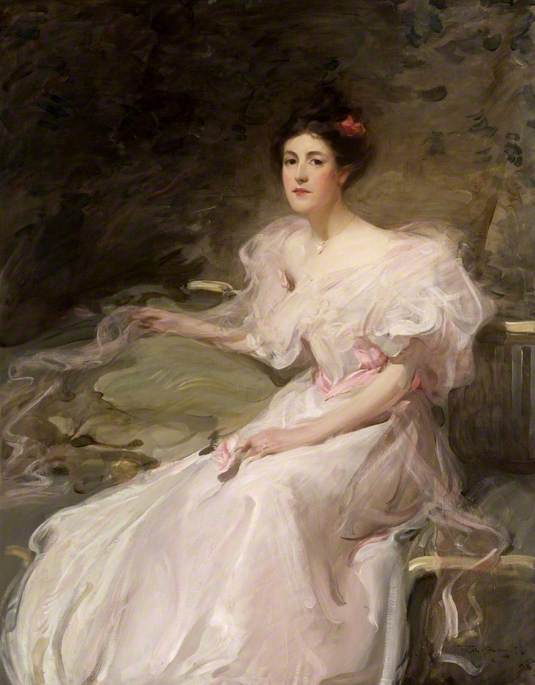
Figure 1. Maud Beatrice Lawrence . Artist  Robert Brough  1898. Acc 344. © CSGCIC  Glasgow Museum. (http://www.artuk.org/)

Robert Brough (1872-1905) was born in Invergordon, Ross-shire and brought up in Aberdeen. He was a student at the Royal Scottish  Academy Life School in 1891. He was a close friend of J.D. Peploe with whom he spent a few months in Paris, returning to Aberdeen for three years where he earned his living as a portrait painter. He moved to London in 1897 and became a friend and neighbour of J.S Sergeant who influenced his technique.1 This portrait is of our donor aged about twenty one and was painted before her marriage. Brough  died at the age of 33 in a railway accident in Yorkshire in 1905. This portrait of Maud Beatrice Lawrence was one of the exhibits at a memorial exhibition of Brough’s work held at the Burlington Gallery in London in 1907. It was reported in the  Scotsman that, ”the pink satin and flowing chiffon of the dress are painted with wonderful cleverness”.2

We do not know why this painting was donated to Glasgow as there does not seem to be any link between Glasgow and Mrs Pollen except perhaps ,as we shall see, Lord Kelvin was a friend and business associate of her  father Joseph Lawrence. Maud donated the  portrait in 1951 while she was living at Cranleigh Gardens in Kensington. Perhaps she was downsizing? There is some evidence that she offered it first of all to Aberdeen Art Gallery, possibly because Robert Brough came from Aberdeen. It appears that for some reason the offer was declined and the portrait was presented to Glasgow instead but there is no information as to the reasoning behind this.3

Maud Beatrice Pollen (or Lawrence) 1877-1962

Our donor was born on 28 April 1877  at Urmston, Lancashire. She was the only child of Joseph Lawrence (1847-1919) and Margaret  Alice Jackson.4   There is little information about her early life but as  according to a later comment, “they travelled a lot for some years”5,we can perhaps presume that wherever her father went to work she and her mother went too.

Thus we can say that she probably lived in Urmston until c1878 as her   father  was deputy secretary to the Manchester, Sheffield and Liverpool Railway Company.6 They  then moved to Kingston-upon-Hull when her father went to work for the Hull Dock Company 7 and then briefly for the Hull, Barnsley and West Riding Junction Railway and Dock Company.8 Neither Maud or her parents appear in the 1881 UK Census so they probably accompanied Joseph to South Africa in early 1881 when Joseph  went to work for a railway company  in the Cape of Good Hope  travelling on the Royal Mail packet, SS Balmoral Castle.9

1882 sees the Lawrence family  back in Manchester, presumably with Maud and her mother,  when Joseph Lawrence began working for the company which supported the construction of the Manchester Ship Canal.10

The only information about Maud in her early years is a report in 1884 of her attendance aged seven at a “Character Ball” for “juveniles” held by M.D Adamson, JP at The Towers, Didsbury. Maud was among fifty children attending and was dressed as “Folly”.11  M. D. Adamson was an old friend and colleague of her father.12 Maud was educated at various private schools including in the USA and Dresden but there are no further  details available  about  travelling to the USA and Dresden except a reference, “ up till 1889 one year in Dresden at a pension.”13

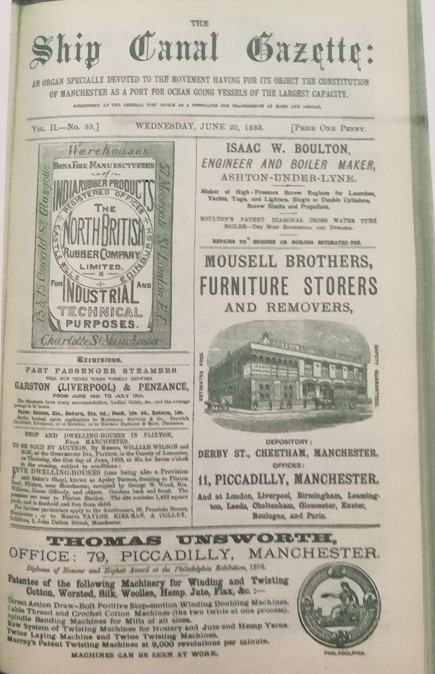
According to the 1891 UK census the Lawrence’s family home was a house called Oaklands, Park Road, Kenley in Surrey. The house was set in two acres of land and had, “three reception rooms,10 bedrooms, bath and dressing rooms, servants hall (or library), excellent cellarage”.14. The 1891 census also states that Joseph Lawrence’s occupation was now that of ‘newspaper proprietor. It is thought that Joseph Lawrence first became involved in the newspaper world  during his time working for the Manchester Ship Canal Project when he produced a weekly newspaper The Ship Canal Gazette as part of the campaign to influence public opinion in favour of the Manchester Ship Canal Project.15

Figure 2. The  Ship Canal Gazette  June 20 1893. © Peel Holdings

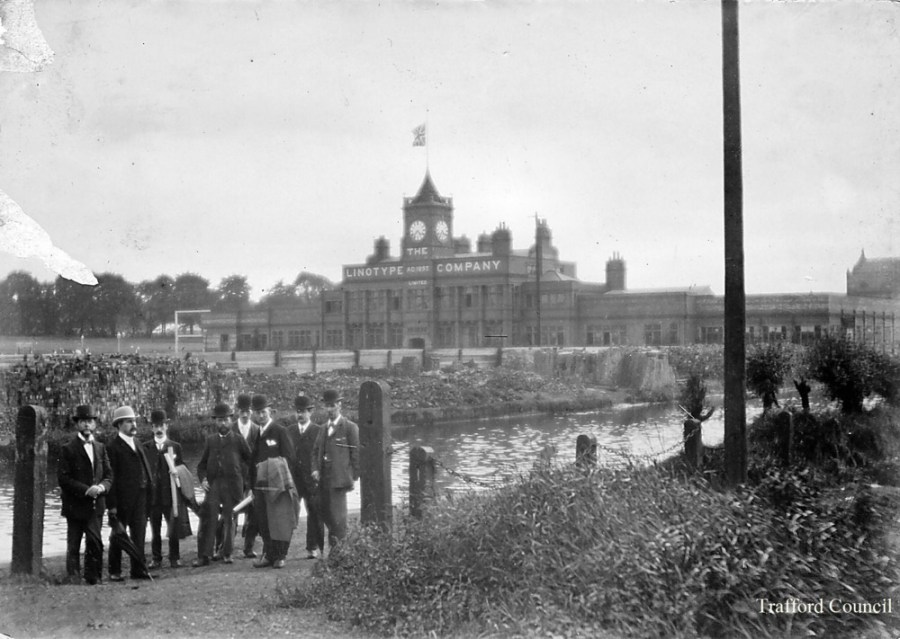
  Then in the late1880s Joseph Lawrence became involved in the production of a railway staff magazine The Railway Herald 16 where he complained that the  cost of typesetting ”was draining my purse”.17 Possibly as a result of this experience Joseph Lawrence played a large part in the revolutionising of the printing industry both at home and abroad and which, as we shall see later , indirectly influenced his daughter’s future. On a trip to America Lawrence had come across the Linotype machine which had been invented by a German watchmaker Ottmar Mergenthaler. These machines cut the cost of typesetting by 60% ,thus making newspapers, magazines and books available to a wider public. In 1895 Lawrence set up The Linotype Company in Manchester and then in Broadheath, Altringham to manufacture the typesetting machines  which  were soon adopted by newspaper and book publishers all over the world.18

Figure 3. The Linotype Company Broadheath. ©Trafford Local Studies Collection .TL 2534

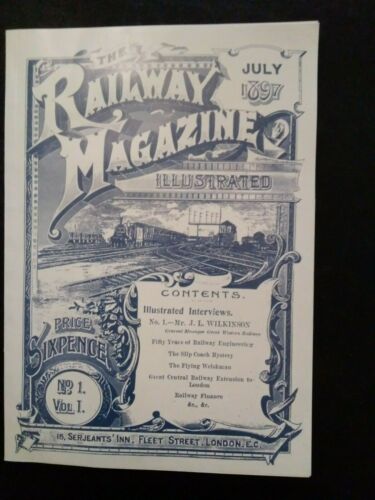
The new machines were used by Lawrence  when, in July 1897, along with another railway enthusiast Frank Cornwall, he produced the first issue of The Railway Magazine which was aimed at all railway enthusiasts and which is still in production today.19

 Figure 4. First issue of Railway Magazine  July 1897 ©  Mortons Media  Group

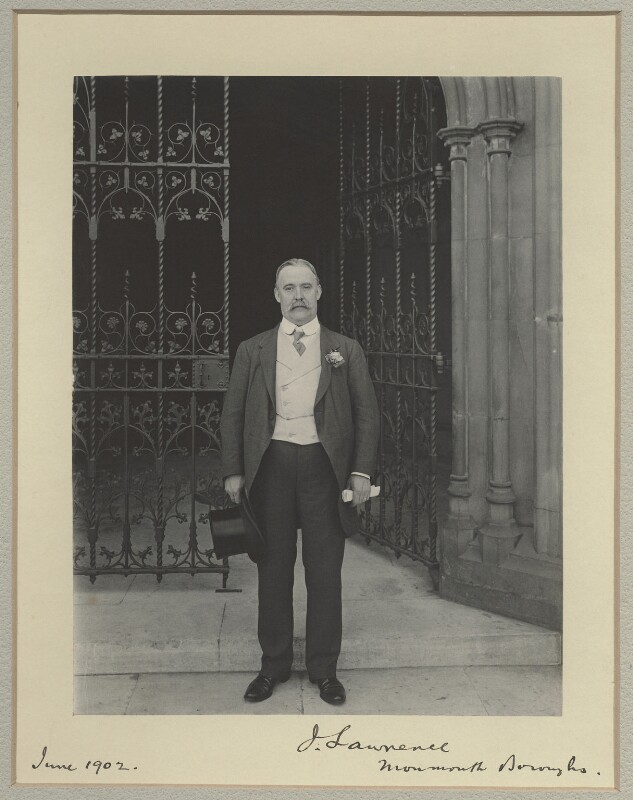
 As well as being a newspaper proprietor Joseph Lawrence  became the  Member  of Parliament for Monmouth in 1901 and was  knighted in 1903 for his services to the printing industry.20

After all the moving from place to place  according to where her father’s career took him by the early 1890s the family appear to have settled at Oaklands.                                                

Figure 5. Joseph Lawrence  1902  © National Portrait Gallery NPGx31509

At some point between 1891 and 1895 Maud became a pupil at The Cliff, St John’s Road, Eastbourne which was a private boarding school for girls run by Mrs Emma Powers.21 Mrs Powers was the wife of the Reverend Philip Bennett Powers(1822-1899) a Church of England minister who held several appointments until around 1865 when his health forced him to retire from his post as vicar of Christ Church, Worthing in Sussex.22 By this time there were seven children in the family.23 The Reverend Bennett then took up writing and between 1864 and 1894 produced over  one hundred short religious tracts and individual longer tracts.24 The 1881 census tells us that Mrs Powers was the “Principal of  a Ladies School” in Ham which was  a suburb of Richmond in Surrey. Perhaps Mrs Powers had taken up this profession to supplement the family income, though this is speculation. The school had  fifty-four pupils in 1881 ranging in age from thirteen to eighteen.25 By 1892 the Powers had moved to Eastbourne and opened The Cliff in St Johns Road. We do not know exactly when this school was opened as there is no trace of  Philip or Emma Powers in the 1891 census . However in 1892 The Gentlewoman magazine reported in an article which gave advice and recommendations of schools  entitled, ”Our Children and How to Educate them” which stated  that if a reader  chose to send a daughter to school in Eastbourne, ”The training, discipline and education she will receive with Mrs Power, The Cliff, St Johns Road is incomparable.”26 Of course this article might well have been merely  advertising but at least we know the school was there by 1892.

We do not know exactly when Maud began at The Cliff but she had certainly left  by the end of the summer term in 1895 as in the autumn of that year  she entered Girton College, Cambridge as a student. At the time of entry her home address was 24,Cranley Gardens London SW7 probably  the Lawrence’s London home. She did not sit the entrance examinations known as the Previous Parts 1and 2 which meant she was “allowed” them because of examinations taken while at school.27

In 1858 the first public examinations for schools had been introduced . The Universities of Oxford and Cambridge had been approached by headmasters of many schools to produce these examinations as a way of marking their pupils’ attainment and enabling boys to take the “locals”, as they were known, where they lived. Girls were allowed to take these examinations from 1867. There were two stages, the Junior for under sixteens and the Senior for under eighteens, which would eventually also be  allowed for university entrance.  From 1860 examiners from Cambridge travelled by train  to village and church halls all over the country wearing full academic dress and carrying the examination papers in  a locked box. The examinations took place over six or seven days. Most schools made a point of advertising the fact that they prepared pupils for these “locals”. The exemptions had been introduced in 1893 and this is probably how Maud gained her place at Girton.28 Mrs  Emma Powers gave a standard character reference to support Maud’s application for entry, though we have no details of this.29                                                                                                   

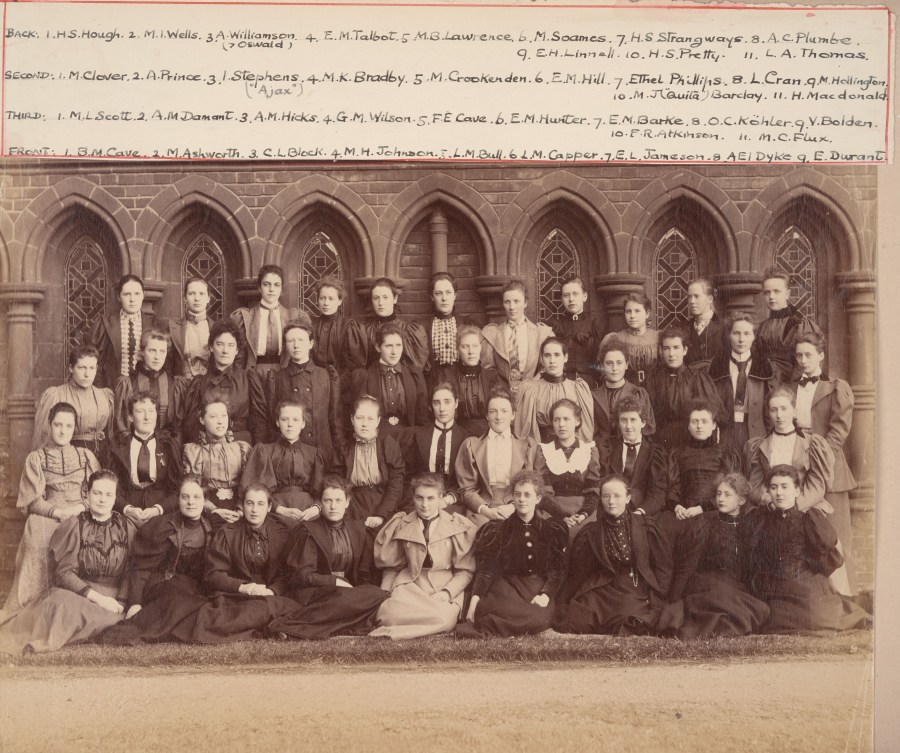
Figure 6. First Year Students 1895. Girton College. Maud is 5th from left on back row. ©  Girton College Archives

Maud appears to have studied languages . German was available for study from 1886 and in 1896 Maud studied for and passed what were known as Additional Papers in German. In her first year these papers covered translation into English from selected books and questions on grammar. According to the Girton College Archives  in  her second year 1896-1897 Maud would have moved on to what was known as Tripos study30, perhaps in MML(Medieval and Modern Languages) ,”as she was clearly good at languages”. However there is no record of which Tripos she was studying. Maud did not complete three years at Girton but left in the Easter term of 1897 for what the College noted were ”family reasons” but with no further information.31

Figure 7. Clara Butt – Famous Contralto  ©National Portrait Gallery NPG x 197258

The next we hear of Maud is the announcement of her engagement to Arthur Hungerford Pollen in April 1898 .Perhaps this was Maud’s reason for leaving Girton. Her address at the time was given as Oaklands, Kenley, the family home. 32 To celebrate her engagement and her coming of age as well as their silver wedding anniversary Maud’s parents held a reception at  Oaklands. The famous  contralto Clara Butt performed  at the event along with Whitney Mockridge, a Canadian tenor  and the Royal Welsh Ladies Choir.33

Arthur  Hungerford Pollen (1866-1937) was the sixth son of a family of eight children born to John Hungerford Pollen and his wife Maria. Arthur’s grandfather was Sir Richard Hungerford Pollen(1786-1838), third Baronet of Redenham in Hampshire.34   In 1852  Arthur’s father  had been one of the prominent  converts to Catholicism  influenced by his  friend and former fellow student John Henry Newman later Cardinal Newman. John H Pollen was an Anglican clergyman by training but gave up holy orders in 1852 on his conversion to Catholicism and turned to art and architecture in which career he was greatly assisted by Cardinal Newman.35

Arthur Hungerford Pollen was born in London on 13 September 1866. He attended Birmingham Oratory School which had been founded by Cardinal Newman in 1859.36 Arthur then went to Trinity College, Oxford where he graduated with a BA Honours in History. He  became a barrister-at-law at Lincolns Inn in 1893.In 1895 he stood as Liberal candidate for Walthamstow but was never elected.37Arthur’s interests appear to have gone beyond the law and politics as he was at the time of his engagement also the Saturday reviewer and art critic of the Westminster Gazette and ”late acting editor of the Daily Mail”.38

 Arthur’s leisure interests before his marriage were those of the rich such as racing, polo and hunting both at home and abroad. In 1893 while hunting big game in the Canadian Rockies he and his party were lost for two weeks and had to resort to shooting and eating some of their horses. The party was led by Lord Henry Somerset, son of Lady Henry Somerset ,”England’s famous apostle of temperance”.39 There is  evidence that Arthur was also a  supporter of temperance.40 In September 1897 we find Arthur hunting deer in the Highlands on the Lochrosque Estate of Arthur Bignold, owner of the Norwich Union Fire Insurance Company, and attending balls associated with The Northern Meetings in Inverness.41 The year before Francis Pollen, a brother of Arthur, also attended the hunting at Lochrosque so perhaps the Bignolds were family friends.42 Maud appears to have become engaged to a man with as much energy and as many interests as her father.

According to the Western Mail Arthur was  also managing director of the Linotype Company of which Maud’s father was chairman.43 There is no information at this point which states how he came to be appointed though at the AGM of the Linotype Company in March 1898  Joseph Lawrence had suggested to the Board ,”that someone from the newspaper trade should be added to the Board who could give them more advice and assistance.”44 Whether Arthur was appointed as managing director of Linotype through his being the prospective son-in-law of Joseph Lawrence or whether he met Maud after that appointment we do not know but the consensus of opinion is that he proved himself to be a shrewd businessman and intelligent  technical innovator.45

One example of Arthur’s talents and initiative and which confirmed that he was involved in the management  of the  Linotype Company before his  marriage was demonstrated at what was thought at the time  to be the biggest society event of 1898 . This was The Press Bazaar held on 28th and 29th June 1898 at the Cecil Hotel in London. There had been an appeal in the press in March 1898 by the board of the London Hospital which catered for the poor of the East End of London for £100,000 funding from the government.46 Led primarily by Mrs J.A. Spender, wife of the editor of the Westminster Gazette  around thirty-four prominent newspapers decided to hold a charity event to raise funds for the hospital  by holding The Press Bazaar where each newspaper or a group of newspapers would manage stalls selling a range of objects to the public who would pay an entry fee to the bazaar of 5/- or 2/6d.

 Arthur hit upon the idea of  writing, editing,” setting up”  a newspaper in the hotel  over the two days of the event  using a Linotype machine and printing the newspaper on the premises. News Agencies such as Reuters installed their communication equipment in the hotel and the proprietors and  editors of the all the prominent newspapers joined the “staff” of the Press Bazaar News. Arthur was the “managing editor” of what was possibly the shortest lifespan of a newspaper ever of two days during which numerous editions were produced and sold for 1/- each. The bazaar was opened by the Princess of Wales and the stalls were run by as many duchesses and countesses as well as a multitude of high society ladies as one would see at a coronation. Around 10,000 visitors attended the event, though those with the cheaper tickets were not allowed in until the Princess of Wales had left the building.47 The Press Bazaar raised £12,000 for the London Hospital.48 Of course as well as raising money for the London Hospital the use of the Linotype equipment and the carrying of the total financial responsibility for the production of Press Bazaar News  would have been brilliant publicity for the Linotype Company.

The Lawrence-Pollen wedding took place on  7th September 1898 at Brompton Oratory as Arthur was a Catholic. Presumably Maud converted to Catholicism before her wedding. The wedding service was conducted by one of Arthur’s brothers the Reverend Anthony Hungerford Pollen. The bridegroom  ”did a very effective setting of Tantum Ergo”.49

The wedding was a big social event and  was reported in many newspapers. The report in the Croyden Chronicle of 10th September 1898 covered four columns.  Among the hundreds of guests was the Duke of Norfolk and the American Ambassador Colonel Hay as well as numerous  members of the aristocracy, journalists, diplomats, politicians and commercial friends. The reception was held in the Empress Rooms, Royal Palace Hotel, Kensington Gardens. Fifty or so of the staff of Oaklands, the Lawrence country home in Kenley, also attended the  ceremony. However they dined at a West End café with the head gardener Mr Bannerman in the chair. Maud and Arthur spent their honeymoon at Elmwood in Kent which was the country home of Alfred Harmsworth the proprietor of the Daily Mail.50

 As is often the situation with female donors there is little information available  about the donor herself. There is no trace of the family in the 1901 census,  but by 1911 Maud and Arthur were living at New Cottage ,Walton-on-the-Hill, Epsom51 but also had a London address at 69, Elmpark Gardens London SW .52

During the first four years of marriage Maud and Arthur had three children. Arthur Joseph Lawrence Pollen was born in 1899 at Oaklands, the Lawrence family home.53 Arthur went on to become a sculptor.54 John Anthony Pollen was born in Chelsea in September 1900 55 and Margaret Mary Pollen was born in Chelsea in September 1901.56 Sadly Margaret died at the age of almost five in August 1905.57 There were no more children after that.

  The little we know about Maud is from newspaper reports which tells us they were considered newsworthy by the press. In  May 1903 she and Arthur went on a trip to the Mediterranean  to help Arthur recover from an attack of “articular rheumatism”.58 The couple attended several society weddings during the next few years, for example in January 1904 they attended the wedding of Lady Marjorie Greville ,daughter of Lord and Lady Warwick, to Viscount Helmsley.59

Although we hear little of Maud her husband is mentioned frequently in the press. He continued as managing director of the Linotype Company for ten years and was elected to the board of directors in 1899 along with Lord Kelvin.60 He travelled frequently to the USA for the next 30 years including the war years but there is no evidence that Maud accompanied him.61

To add to Arthur’s portfolio of interests in 1900 he witnessed a naval gunnery practice in Malta through a relative, Commander William Goodenough and was disturbed by the inaccuracy of the naval guns even at a range of less than a mile. With the help and advice of scientist and mathematician Lord Kelvin and his brother James Thomson Arthur  used the resources of Linotype and especially a designer named Harold Isherwood to develop an “Aim Correction” system which used an analogue computer to improve the fire control of naval guns by enabling the calculation of the range of the guns when the ships  and the targets were in motion. He set up the Argo Company in 1909 to develop and produce the equipment. The Argo system was not adopted for use by the Royal Navy during WW1 for political reasons however after the war it was confirmed that many aspects of the Argo system had been used in the Dreyer System which was used and Arthur Pollen was paid £30,000 compensation in 1926. Arthur also published books and articles on naval warfare which often criticised the conduct of the war at sea.62

It is after the war that Maud’s father died suddenly. It is one of life’s sad ironies that Joseph Lawrence died in a railway station, having spent a large part of his working life involved in railways. The Surrey Mirror and County Post of 31 October 1919 reported that while travelling back to his home in Kenley after attending a dinner in London he had a heart attack and was taken from the train  at East Croyden station where he died. He was buried in Coulsden Churchyard with a memorial service shortly afterwards at St Margarets in Westminster.

Figure 8. Arthur Hungerford Pollen. © National Portrait Gallery Reserved Collection

After the war Arthur continued as part-time director of Linotype and joined the board of The Birmingham Small arms Company (BSA), Daimler and several others.63  We do know from the press that Maud was supplied with a new  Daimler car in1931 possible a benefit of being married to one of the directors.64 He became vice-president of the Council of the Federation of British Industries and chairman of the British Commonwealth Union. He believed in the role of the entrepreneur in the growth of industry and campaigned against the growth of socialism. In 1926 he resumed the role as managing director of Linotype and hired one of the first management consultants T. Gerald Rose to reorganise the company. In 1936 he was part of a group of Catholics who acquired the Catholic magazine The Tablet serving as its chairman for a year while its fortunes were restored.65

The couple lived at various addresses in Kensington and Chelsea such as Elmpark Gardens, Wilton Place  and St James Court while maintaining a country home at Walton-on-the Hill near Reigate.66  Arthur Hungerford Pollen died at his London home in St James Court on January 28 1937 aged 71.67

After her husband’s death Maud continued to live in London’s West End. In 1939 she was living at 24 Cranleigh Gardens, Kensington which is the same address as her parents’ London home so perhaps she inherited this but this is speculation. There is no information as to her activities during WW2  at the end of which she was sixty -eight years old.

Maud   remained  at 24 Cranleigh Gardens until 195668 when she became a resident  of St Johns Convent, Kiln Green ,Twyford in Berkshire. She was  seventy -six by this time. As well as being a convent St Johns appears to have  been a residential home for the  elderly.69 Maud Beatrice Pollen died at St Johns Convent on 12th May 1962.70

Acknowledgements

Many thanks to Hannah Westall of Girton College Archives, Michelle Owen, Archives Officer with Manchester Central Library, Lisa Olrichs, Rights and Images Office, National Portrait Gallery, London  and Emma Boyd of the National Library of Scotland for all their help in the production of this report.

Notes and References

1.  Halsby, Julian and Harris ,Paul  Dictionary Of Scottish Painters 1600-1990 p21. Canongate, 1990.

2. Scotsman  08/02/1907. p7

3. Glasgow Museums Resource Centre . Object Files. Mrs A.H. Pollen

4. www.ancestry.co.uk Statutory Births
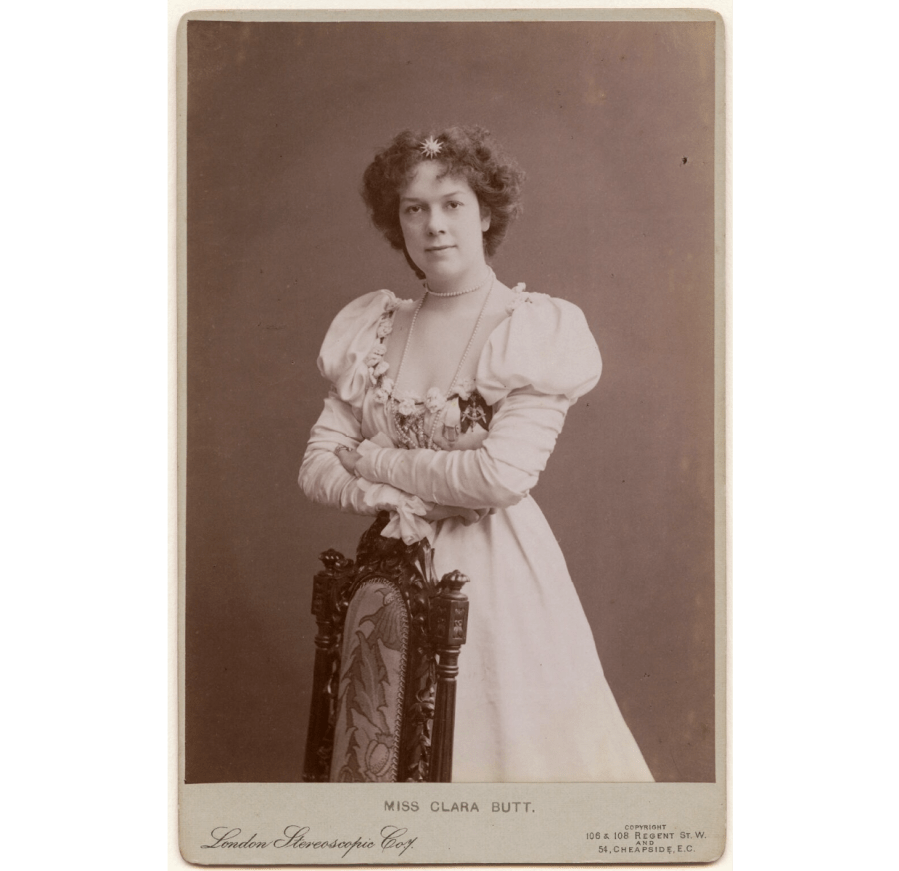
5. archives@girton.cam.ac.uk Maud Beatrice  Lawrence

6.  Railway Magazine 1919 Vol 45pp436-7

7.  Hull Packet and East Riding Times  08/02/1878 p.2

8. Deacon ,Nick  The Hull and Barnsley Railway Company .No 1.Formation and Early Years. P15. pub Lightmoor Press 2020

9.  Surrey Mirror and County Post. 31/10/1919 p.2

10. op. cit ref 6

11. Alderley and Wilmslow Advertiser 12/01/1884 p6

12. op cit. ref 11

13. op.cit ref 5

14. The Standard 20/04/1880 p8

15. en.wikipedia.org.wiki/Manchester-Ship-Canal

16.  Grantham Journal 10/11/1888 p.6

17. op. cit ref 9

18. http://www.gracesguide.co.uk/Linotype

19. en.wikipedia.org/wiki/The-Railway-Magazine

20. op.cit ref 9

21. op cit. ref 5

22. http://www.librivox.org/author/15192

23. UK Census 1861,1871,

24. op cit. Ref 22

25. UK Census 1881

26. The Gentlewoman 21/06/1892 p.24

27. op cit. ref 5

28. http://www.cambridgeassessment.org.uk/news/how-have-school-exams-

     changed-over-the-last-150-years/

29. op cit. ref 5

30. The Tripos are the recognised courses leading to a BA Honours Degree at Cambridge.

31. op cit ref 5

32. Chelmsford Chronicle  08/04/1898 p 7

33.TheGentlewoman 16/07/1898 p66

34. https://en.wikipedia.org/Arthur_Pollen

35.www.dib.ie/biography/pollen_john_hungerford_a7403

36. https://www.oratory.co.uk-about-history-of-the-oratory

37. op cit. ref 32

38. Western Mail 08/09/1898 p 7

39.Toronto Mail  27/11/1893  p3

40. Derby Mercury 18/04/1894 p7

41. Highland News 18/09/1897 p5

42. Glasgow Herald 05/09/1896 p7

43. Western Mail  08/09/1898 p4

44. Belfast Newsletter 18/03/1898 p??

45. https://doi.org/10.1093

46. Bicester Herald 13/05/1898 p4

47. Morning Post 29/06/1898 p7

48. Evening Telegraph 19/07/1898 p5

49. op cit. ref 38

50. Croyden Chronicle 10/09/1898  p3

51. UK Census 1911

52. The Globe 15/02/1915 p7

53. www.ancestry.co.uk Statutory Births
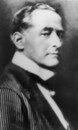
54. www.sculptor.gla.ac.uk

55. www.ancestry.co.uk Statutory Births

56. as above

57. www.ancestry.co.uk Statutory Deaths

58. St James Gazette 05/05/1903 p2

59. Leamington,Warwick Daily Circular 20/01/1904 p. 3

60. Yorkshire Post and Leeds Intelligencer 15/02/1900 p8

61. www.ancestry.co.uk Passenger Lists . Arthur Hungerford Pollen

62. op cit. ref 34

63. as above

64. The Sketch o8/04/1931 p44

65. op.cit ref 34

66. www.ancestry.co.uk Electoral Rolls 1920-1937

67. Yorkshire Post and Leeds Intelligencer 29/01/1937 p2

68. www.ancestry.co.uk Electoral Rolls 1938-1956

69. as above 1956-1961

70. www.ancestry.co.uk Statutory Deaths