Painting
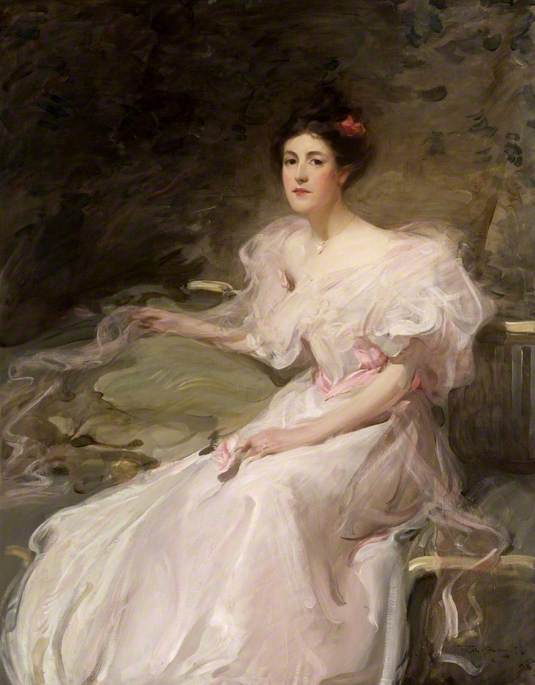
Robert Brough (1872-1905) was born in Invergordon, Ross-shire and brought up in Aberdeen. He was a student at the Royal Scottish Academy Life School in 1891. He was a close friend of J.D. Peploe with whom he spent a few months in Paris, returning to Aberdeen for three years where he earned his living as a portrait painter. He moved to London in 1897 and became a friend and neighbour of J.S Sergeant who influenced his technique.1 This portrait is of our donor aged about twenty one and was painted before her marriage. Brough died at the age of 33 in a railway accident in Yorkshire in 1905. This portrait of Maud Beatrice Lawrence was one of the exhibits at a memorial exhibition of Brough’s work held at the Burlington Gallery in London in 1907. It was reported in the Scotsman that, ”the pink satin and flowing chiffon of the dress are painted with wonderful cleverness”.2
We do not know why this painting was donated to Glasgow as there does not seem to be any link between Glasgow and Mrs Pollen except perhaps ,as we shall see, Lord Kelvin was a friend and business associate of her father Joseph Lawrence. Maud donated the portrait in 1951 while she was living at Cranleigh Gardens in Kensington. Perhaps she was downsizing? There is some evidence that she offered it first of all to Aberdeen Art Gallery, possibly because Robert Brough came from Aberdeen. It appears that for some reason the offer was declined and the portrait was presented to Glasgow instead but there is no information as to the reasoning behind this.3
Maud Beatrice Pollen (or Lawrence) 1877-1962
Our donor was born on 28 April 1877 at Urmston, Lancashire. She was the only child of Joseph Lawrence (1847-1919) and Margaret Alice Jackson.4 There is little information about her early life but as according to a later comment, “they travelled a lot for some years”5,we can perhaps presume that wherever her father went to work she and her mother went too.
Thus we can say that she probably lived in Urmston until c1878 as her father was deputy secretary to the Manchester, Sheffield and Liverpool Railway Company.6 They then moved to Kingston-upon-Hull when her father went to work for the Hull Dock Company 7 and then briefly for the Hull, Barnsley and West Riding Junction Railway and Dock Company.8 Neither Maud or her parents appear in the 1881 UK Census so they probably accompanied Joseph to South Africa in early 1881 when Joseph went to work for a railway company in the Cape of Good Hope travelling on the Royal Mail packet, SS Balmoral Castle.9
1882 sees the Lawrence family back in Manchester, presumably with Maud and her mother, when Joseph Lawrence began working for the company which supported the construction of the Manchester Ship Canal.10
The only information about Maud in her early years is a report in 1884 of her attendance aged seven at a “Character Ball” for “juveniles” held by M.D Adamson, JP at The Towers, Didsbury. Maud was among fifty children attending and was dressed as “Folly”.11 M. D. Adamson was an old friend and colleague of her father.12 Maud was educated at various private schools including in the USA and Dresden but there are no further details available about travelling to the USA and Dresden except a reference, “ up till 1889 one year in Dresden at a pension.”13
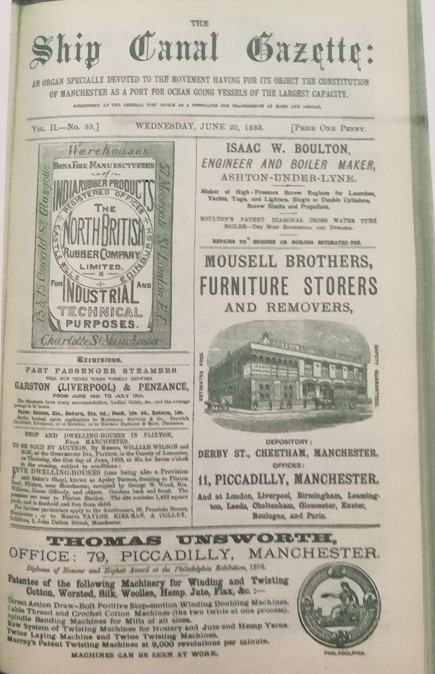
According to the 1891 UK census the Lawrence’s family home was a house called Oaklands, Park Road, Kenley in Surrey. The house was set in two acres of land and had, “three reception rooms,10 bedrooms, bath and dressing rooms, servants hall (or library), excellent cellarage”.14. The 1891 census also states that Joseph Lawrence’s occupation was now that of ‘newspaper proprietor. It is thought that Joseph Lawrence first became involved in the newspaper world during his time working for the Manchester Ship Canal Project when he produced a weekly newspaper The Ship Canal Gazette as part of the campaign to influence public opinion in favour of the Manchester Ship Canal Project.15
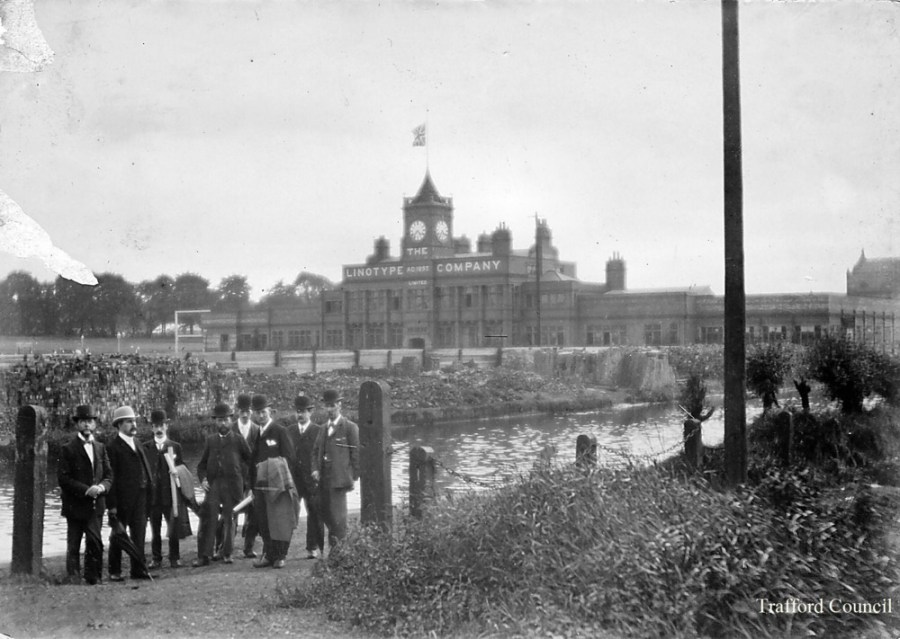
Then in the late1880s Joseph Lawrence became involved in the production of a railway staff magazine The Railway Herald 16 where he complained that the cost of typesetting ”was draining my purse”.17 Possibly as a result of this experience Joseph Lawrence played a large part in the revolutionising of the printing industry both at home and abroad and which, as we shall see later , indirectly influenced his daughter’s future. On a trip to America Lawrence had come across the Linotype machine which had been invented by a German watchmaker Ottmar Mergenthaler. These machines cut the cost of typesetting by 60% ,thus making newspapers, magazines and books available to a wider public. In 1895 Lawrence set up The Linotype Company in Manchester and then in Broadheath, Altringham to manufacture the typesetting machines which were soon adopted by newspaper and book publishers all over the world.18
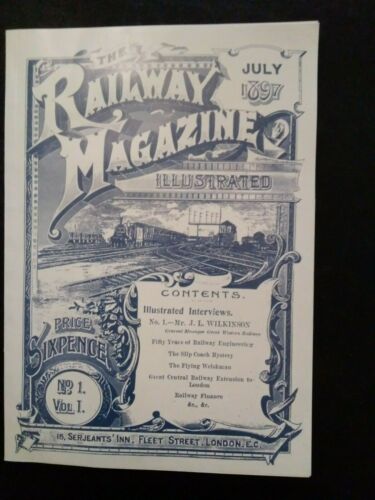
The new machines were used by Lawrence when, in July 1897, along with another railway enthusiast Frank Cornwall, he produced the first issue of The Railway Magazine which was aimed at all railway enthusiasts and which is still in production today.19
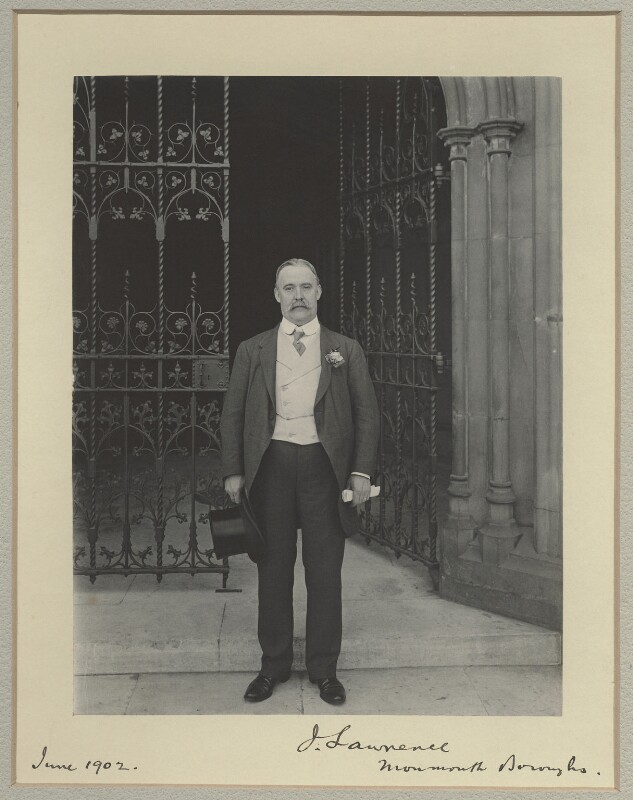
As well as being a newspaper proprietor Joseph Lawrence became the Member of Parliament for Monmouth in 1901 and was knighted in 1903 for his services to the printing industry.20
After all the moving from place to place according to where her father’s career took him by the early 1890s the family appear to have settled at Oaklands.
At some point between 1891 and 1895 Maud became a pupil at The Cliff, St John’s Road, Eastbourne which was a private boarding school for girls run by Mrs Emma Powers.21 Mrs Powers was the wife of the Reverend Philip Bennett Powers(1822-1899) a Church of England minister who held several appointments until around 1865 when his health forced him to retire from his post as vicar of Christ Church, Worthing in Sussex.22 By this time there were seven children in the family.23 The Reverend Bennett then took up writing and between 1864 and 1894 produced over one hundred short religious tracts and individual longer tracts.24 The 1881 census tells us that Mrs Powers was the “Principal of a Ladies School” in Ham which was a suburb of Richmond in Surrey. Perhaps Mrs Powers had taken up this profession to supplement the family income, though this is speculation. The school had fifty-four pupils in 1881 ranging in age from thirteen to eighteen.25 By 1892 the Powers had moved to Eastbourne and opened The Cliff in St Johns Road. We do not know exactly when this school was opened as there is no trace of Philip or Emma Powers in the 1891 census . However in 1892 The Gentlewoman magazine reported in an article which gave advice and recommendations of schools entitled, ”Our Children and How to Educate them” which stated that if a reader chose to send a daughter to school in Eastbourne, ”The training, discipline and education she will receive with Mrs Power, The Cliff, St Johns Road is incomparable.”26 Of course this article might well have been merely advertising but at least we know the school was there by 1892.
We do not know exactly when Maud began at The Cliff but she had certainly left by the end of the summer term in 1895 as in the autumn of that year she entered Girton College, Cambridge as a student. At the time of entry her home address was 24,Cranley Gardens London SW7 probably the Lawrence’s London home. She did not sit the entrance examinations known as the Previous Parts 1and 2 which meant she was “allowed” them because of examinations taken while at school.27
In 1858 the first public examinations for schools had been introduced . The Universities of Oxford and Cambridge had been approached by headmasters of many schools to produce these examinations as a way of marking their pupils’ attainment and enabling boys to take the “locals”, as they were known, where they lived. Girls were allowed to take these examinations from 1867. There were two stages, the Junior for under sixteens and the Senior for under eighteens, which would eventually also be allowed for university entrance. From 1860 examiners from Cambridge travelled by train to village and church halls all over the country wearing full academic dress and carrying the examination papers in a locked box. The examinations took place over six or seven days. Most schools made a point of advertising the fact that they prepared pupils for these “locals”. The exemptions had been introduced in 1893 and this is probably how Maud gained her place at Girton.28 Mrs Emma Powers gave a standard character reference to support Maud’s application for entry, though we have no details of this.29
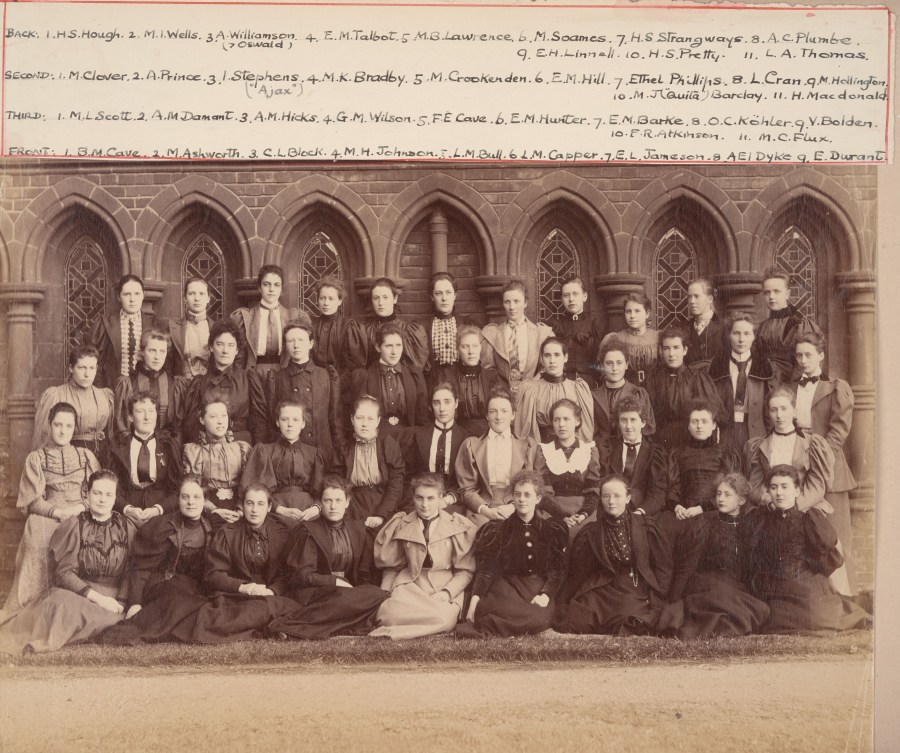
Maud appears to have studied languages . German was available for study from 1886 and in 1896 Maud studied for and passed what were known as Additional Papers in German. In her first year these papers covered translation into English from selected books and questions on grammar. According to the Girton College Archives in her second year 1896-1897 Maud would have moved on to what was known as Tripos study30, perhaps in MML(Medieval and Modern Languages) ,”as she was clearly good at languages”. However there is no record of which Tripos she was studying. Maud did not complete three years at Girton but left in the Easter term of 1897 for what the College noted were ”family reasons” but with no further information.31
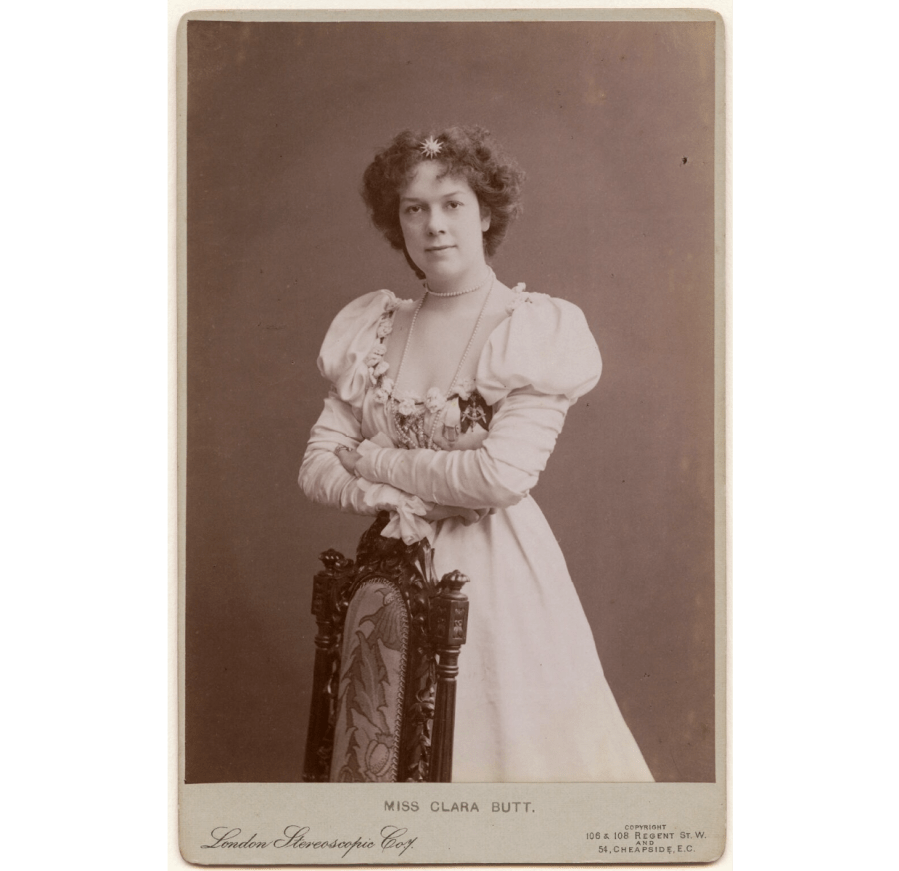
The next we hear of Maud is the announcement of her engagement to Arthur Hungerford Pollen in April 1898 .Perhaps this was Maud’s reason for leaving Girton. Her address at the time was given as Oaklands, Kenley, the family home. 32 To celebrate her engagement and her coming of age as well as their silver wedding anniversary Maud’s parents held a reception at Oaklands. The famous contralto Clara Butt performed at the event along with Whitney Mockridge, a Canadian tenor and the Royal Welsh Ladies Choir.33
Arthur Hungerford Pollen (1866-1937) was the sixth son of a family of eight children born to John Hungerford Pollen and his wife Maria. Arthur’s grandfather was Sir Richard Hungerford Pollen(1786-1838), third Baronet of Redenham in Hampshire.34 In 1852 Arthur’s father had been one of the prominent converts to Catholicism influenced by his friend and former fellow student John Henry Newman later Cardinal Newman. John H Pollen was an Anglican clergyman by training but gave up holy orders in 1852 on his conversion to Catholicism and turned to art and architecture in which career he was greatly assisted by Cardinal Newman.35
Arthur Hungerford Pollen was born in London on 13 September 1866. He attended Birmingham Oratory School which had been founded by Cardinal Newman in 1859.36 Arthur then went to Trinity College, Oxford where he graduated with a BA Honours in History. He became a barrister-at-law at Lincolns Inn in 1893.In 1895 he stood as Liberal candidate for Walthamstow but was never elected.37Arthur’s interests appear to have gone beyond the law and politics as he was at the time of his engagement also the Saturday reviewer and art critic of the Westminster Gazette and ”late acting editor of the Daily Mail”.38
Arthur’s leisure interests before his marriage were those of the rich such as racing, polo and hunting both at home and abroad. In 1893 while hunting big game in the Canadian Rockies he and his party were lost for two weeks and had to resort to shooting and eating some of their horses. The party was led by Lord Henry Somerset, son of Lady Henry Somerset ,”England’s famous apostle of temperance”.39 There is evidence that Arthur was also a supporter of temperance.40 In September 1897 we find Arthur hunting deer in the Highlands on the Lochrosque Estate of Arthur Bignold, owner of the Norwich Union Fire Insurance Company, and attending balls associated with The Northern Meetings in Inverness.41 The year before Francis Pollen, a brother of Arthur, also attended the hunting at Lochrosque so perhaps the Bignolds were family friends.42 Maud appears to have become engaged to a man with as much energy and as many interests as her father.
According to the Western Mail Arthur was also managing director of the Linotype Company of which Maud’s father was chairman.43 There is no information at this point which states how he came to be appointed though at the AGM of the Linotype Company in March 1898 Joseph Lawrence had suggested to the Board ,”that someone from the newspaper trade should be added to the Board who could give them more advice and assistance.”44 Whether Arthur was appointed as managing director of Linotype through his being the prospective son-in-law of Joseph Lawrence or whether he met Maud after that appointment we do not know but the consensus of opinion is that he proved himself to be a shrewd businessman and intelligent technical innovator.45
One example of Arthur’s talents and initiative and which confirmed that he was involved in the management of the Linotype Company before his marriage was demonstrated at what was thought at the time to be the biggest society event of 1898 . This was The Press Bazaar held on 28th and 29th June 1898 at the Cecil Hotel in London. There had been an appeal in the press in March 1898 by the board of the London Hospital which catered for the poor of the East End of London for £100,000 funding from the government.46 Led primarily by Mrs J.A. Spender, wife of the editor of the Westminster Gazette around thirty-four prominent newspapers decided to hold a charity event to raise funds for the hospital by holding The Press Bazaar where each newspaper or a group of newspapers would manage stalls selling a range of objects to the public who would pay an entry fee to the bazaar of 5/- or 2/6d.
Arthur hit upon the idea of writing, editing,” setting up” a newspaper in the hotel over the two days of the event using a Linotype machine and printing the newspaper on the premises. News Agencies such as Reuters installed their communication equipment in the hotel and the proprietors and editors of the all the prominent newspapers joined the “staff” of the Press Bazaar News. Arthur was the “managing editor” of what was possibly the shortest lifespan of a newspaper ever of two days during which numerous editions were produced and sold for 1/- each. The bazaar was opened by the Princess of Wales and the stalls were run by as many duchesses and countesses as well as a multitude of high society ladies as one would see at a coronation. Around 10,000 visitors attended the event, though those with the cheaper tickets were not allowed in until the Princess of Wales had left the building.47 The Press Bazaar raised £12,000 for the London Hospital.48 Of course as well as raising money for the London Hospital the use of the Linotype equipment and the carrying of the total financial responsibility for the production of Press Bazaar News would have been brilliant publicity for the Linotype Company.
The Lawrence-Pollen wedding took place on 7th September 1898 at Brompton Oratory as Arthur was a Catholic. Presumably Maud converted to Catholicism before her wedding. The wedding service was conducted by one of Arthur’s brothers the Reverend Anthony Hungerford Pollen. The bridegroom ”did a very effective setting of Tantum Ergo”.49
The wedding was a big social event and was reported in many newspapers. The report in the Croyden Chronicle of 10th September 1898 covered four columns. Among the hundreds of guests was the Duke of Norfolk and the American Ambassador Colonel Hay as well as numerous members of the aristocracy, journalists, diplomats, politicians and commercial friends. The reception was held in the Empress Rooms, Royal Palace Hotel, Kensington Gardens. Fifty or so of the staff of Oaklands, the Lawrence country home in Kenley, also attended the ceremony. However they dined at a West End café with the head gardener Mr Bannerman in the chair. Maud and Arthur spent their honeymoon at Elmwood in Kent which was the country home of Alfred Harmsworth the proprietor of the Daily Mail.50
As is often the situation with female donors there is little information available about the donor herself. There is no trace of the family in the 1901 census, but by 1911 Maud and Arthur were living at New Cottage ,Walton-on-the-Hill, Epsom51 but also had a London address at 69, Elmpark Gardens London SW .52
During the first four years of marriage Maud and Arthur had three children. Arthur Joseph Lawrence Pollen was born in 1899 at Oaklands, the Lawrence family home.53 Arthur went on to become a sculptor.54 John Anthony Pollen was born in Chelsea in September 1900 55 and Margaret Mary Pollen was born in Chelsea in September 1901.56 Sadly Margaret died at the age of almost five in August 1905.57 There were no more children after that.
The little we know about Maud is from newspaper reports which tells us they were considered newsworthy by the press. In May 1903 she and Arthur went on a trip to the Mediterranean to help Arthur recover from an attack of “articular rheumatism”.58 The couple attended several society weddings during the next few years, for example in January 1904 they attended the wedding of Lady Marjorie Greville ,daughter of Lord and Lady Warwick, to Viscount Helmsley.59
Although we hear little of Maud her husband is mentioned frequently in the press. He continued as managing director of the Linotype Company for ten years and was elected to the board of directors in 1899 along with Lord Kelvin.60 He travelled frequently to the USA for the next 30 years including the war years but there is no evidence that Maud accompanied him.61
To add to Arthur’s portfolio of interests in 1900 he witnessed a naval gunnery practice in Malta through a relative, Commander William Goodenough and was disturbed by the inaccuracy of the naval guns even at a range of less than a mile. With the help and advice of scientist and mathematician Lord Kelvin and his brother James Thomson Arthur used the resources of Linotype and especially a designer named Harold Isherwood to develop an “Aim Correction” system which used an analogue computer to improve the fire control of naval guns by enabling the calculation of the range of the guns when the ships and the targets were in motion. He set up the Argo Company in 1909 to develop and produce the equipment. The Argo system was not adopted for use by the Royal Navy during WW1 for political reasons however after the war it was confirmed that many aspects of the Argo system had been used in the Dreyer System which was used and Arthur Pollen was paid £30,000 compensation in 1926. Arthur also published books and articles on naval warfare which often criticised the conduct of the war at sea.62
It is after the war that Maud’s father died suddenly. It is one of life’s sad ironies that Joseph Lawrence died in a railway station, having spent a large part of his working life involved in railways. The Surrey Mirror and County Post of 31 October 1919 reported that while travelling back to his home in Kenley after attending a dinner in London he had a heart attack and was taken from the train at East Croyden station where he died. He was buried in Coulsden Churchyard with a memorial service shortly afterwards at St Margarets in Westminster.
After the war Arthur continued as part-time director of Linotype and joined the board of The Birmingham Small arms Company (BSA), Daimler and several others.63 We do know from the press that Maud was supplied with a new Daimler car in1931 possible a benefit of being married to one of the directors.64 He became vice-president of the Council of the Federation of British Industries and chairman of the British Commonwealth Union. He believed in the role of the entrepreneur in the growth of industry and campaigned against the growth of socialism. In 1926 he resumed the role as managing director of Linotype and hired one of the first management consultants T. Gerald Rose to reorganise the company. In 1936 he was part of a group of Catholics who acquired the Catholic magazine The Tablet serving as its chairman for a year while its fortunes were restored.65
The couple lived at various addresses in Kensington and Chelsea such as Elmpark Gardens, Wilton Place and St James Court while maintaining a country home at Walton-on-the Hill near Reigate.66 Arthur Hungerford Pollen died at his London home in St James Court on January 28 1937 aged 71.67
After her husband’s death Maud continued to live in London’s West End. In 1939 she was living at 24 Cranleigh Gardens, Kensington which is the same address as her parents’ London home so perhaps she inherited this but this is speculation. There is no information as to her activities during WW2 at the end of which she was sixty -eight years old.
Maud remained at 24 Cranleigh Gardens until 195668 when she became a resident of St Johns Convent, Kiln Green ,Twyford in Berkshire. She was seventy -six by this time. As well as being a convent St Johns appears to have been a residential home for the elderly.69 Maud Beatrice Pollen died at St Johns Convent on 12th May 1962.70
Acknowledgements
Many thanks to Hannah Westall of Girton College Archives, Michelle Owen, Archives Officer with Manchester Central Library, Lisa Olrichs, Rights and Images Office, National Portrait Gallery, London and Emma Boyd of the National Library of Scotland for all their help in the production of this report.
Notes and References
1. Halsby, Julian and Harris ,Paul Dictionary Of Scottish Painters 1600-1990 p21. Canongate, 1990.
2. Scotsman 08/02/1907. p7
3. Glasgow Museums Resource Centre . Object Files. Mrs A.H. Pollen
4. www.ancestry.co.uk Statutory Births
5. archives@girton.cam.ac.uk Maud Beatrice Lawrence
6. Railway Magazine 1919 Vol 45pp436-7
7. Hull Packet and East Riding Times 08/02/1878 p.2
8. Deacon ,Nick The Hull and Barnsley Railway Company .No 1.Formation and Early Years. P15. pub Lightmoor Press 2020
9. Surrey Mirror and County Post. 31/10/1919 p.2
10. op. cit ref 6
11. Alderley and Wilmslow Advertiser 12/01/1884 p6
12. op cit. ref 11
13. op.cit ref 5
14. The Standard 20/04/1880 p8
15. en.wikipedia.org.wiki/Manchester-Ship-Canal
16. Grantham Journal 10/11/1888 p.6
17. op. cit ref 9
18. http://www.gracesguide.co.uk/Linotype
19. en.wikipedia.org/wiki/The-Railway-Magazine
20. op.cit ref 9
21. op cit. ref 5
22. http://www.librivox.org/author/15192
23. UK Census 1861,1871,
24. op cit. Ref 22
25. UK Census 1881
26. The Gentlewoman 21/06/1892 p.24
27. op cit. ref 5
28. http://www.cambridgeassessment.org.uk/news/how-have-school-exams-
changed-over-the-last-150-years/
29. op cit. ref 5
30. The Tripos are the recognised courses leading to a BA Honours Degree at Cambridge.
31. op cit ref 5
32. Chelmsford Chronicle 08/04/1898 p 7
33.TheGentlewoman 16/07/1898 p66
34. https://en.wikipedia.org/Arthur_Pollen
35.www.dib.ie/biography/pollen_john_hungerford_a7403
36. https://www.oratory.co.uk-about-history-of-the-oratory
37. op cit. ref 32
38. Western Mail 08/09/1898 p 7
39.Toronto Mail 27/11/1893 p3
40. Derby Mercury 18/04/1894 p7
41. Highland News 18/09/1897 p5
42. Glasgow Herald 05/09/1896 p7
43. Western Mail 08/09/1898 p4
44. Belfast Newsletter 18/03/1898 p??
46. Bicester Herald 13/05/1898 p4
47. Morning Post 29/06/1898 p7
48. Evening Telegraph 19/07/1898 p5
49. op cit. ref 38
50. Croyden Chronicle 10/09/1898 p3
51. UK Census 1911
52. The Globe 15/02/1915 p7
53. www.ancestry.co.uk Statutory Births
55. www.ancestry.co.uk Statutory Births
56. as above
57. www.ancestry.co.uk Statutory Deaths
58. St James Gazette 05/05/1903 p2
59. Leamington,Warwick Daily Circular 20/01/1904 p. 3
60. Yorkshire Post and Leeds Intelligencer 15/02/1900 p8
61. www.ancestry.co.uk Passenger Lists . Arthur Hungerford Pollen
62. op cit. ref 34
63. as above
64. The Sketch o8/04/1931 p44
65. op.cit ref 34
66. www.ancestry.co.uk Electoral Rolls 1920-1937
67. Yorkshire Post and Leeds Intelligencer 29/01/1937 p2
68. www.ancestry.co.uk Electoral Rolls 1938-1956
69. as above 1956-1961
70. www.ancestry.co.uk Statutory Deaths

 Glasgow Museums Art Donors Group