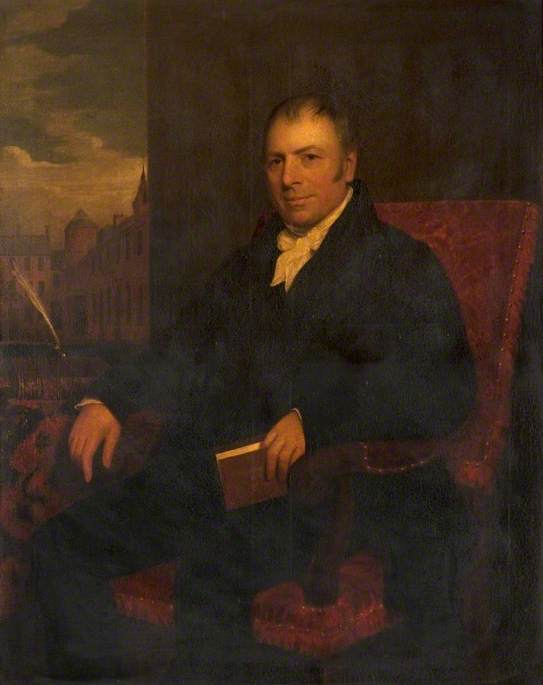
This portrait was donated to Glasgow Art Galleries in 1953 by the Reverend John McClure Brodie. The painting had originally been owned by the Glasgow Blind Asylum in Castle Street and was offered to Glasgow Art Galleries in 1934 when the building was sold to Glasgow Royal Infirmary. However the Galleries Committee rejected the work and it was given to our donor.1
The subject of the portrait was our donor’s great- grandfather .2
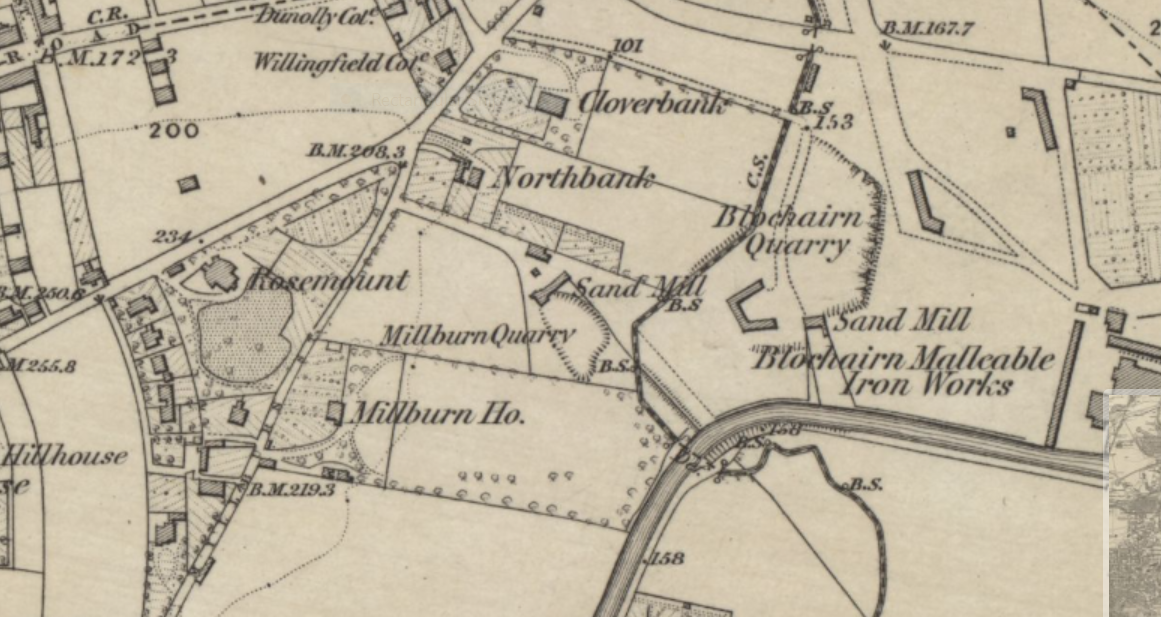
John Alston was a cotton manufacturer based at 55 Glassford Street ,Glasgow but lived at Rosemount House on the Rosemount Estate in the area of Glasgow now known as Roystonhill, previously known as Garngad.3 The Rosemount Estate was described as,’ composed of beautiful grounds and orchards.’ The area is now a housing estate but its history is remembered by one of the streets being named Rosemount Street.4
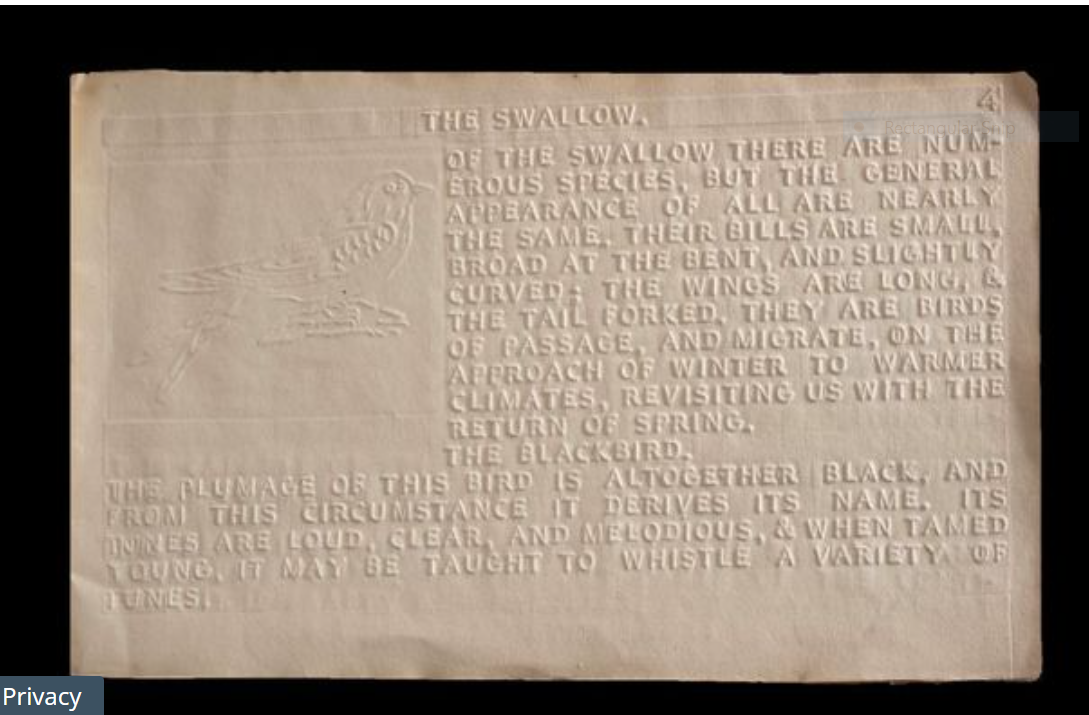
During his life in Glasgow John Alston was a town councillor, a magistrate and Deacon Convenor of the Incorporated Trades and a tireless supporter of many charities. However he is best known for his work for the Glasgow Blind Asylum of which he was a director and honorary treasurer and enthusiastic fund- raiser. He developed a system of reading for the blind using an embossed version of the Roman alphabet arguing that sighted people could then teach the blind to read. Alston Type was used at the School for the Blind in Paris for many years before the adoption of the system invented by Louis Braille. Alston produced the first embossed copy of the New Testament printed on the Asylum printing press. His ambition was that every blind child in the country should be able to read The Word of God. By 1844 almost 14,000 volumes of the whole Bible had been distributed across the country.5
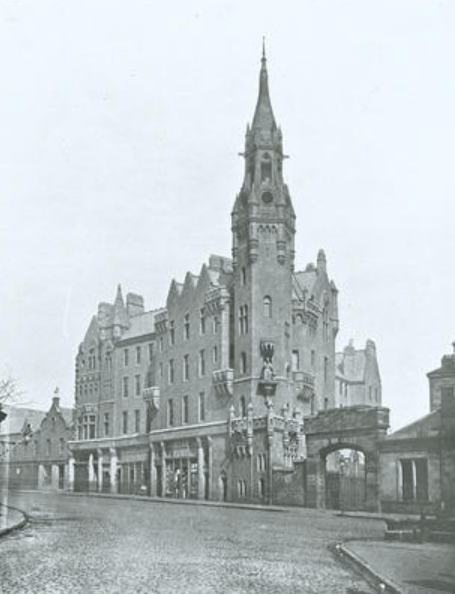
The Glasgow Blind Asylum was founded in 1804 but the first building was erected in Castle Street in 1828 to be replaced in 1881 with a building designed by William Landless. The building was taken over in 1934 by the Glasgow Royal Infirmary as the Out Patients Department. Residents of the Asylum were taught music as well as various trades. Costs were covered by subscriptions, donations, bequests and the sale of articles made in the workshops such as brushes, baskets and bedding made in the various workshops.6
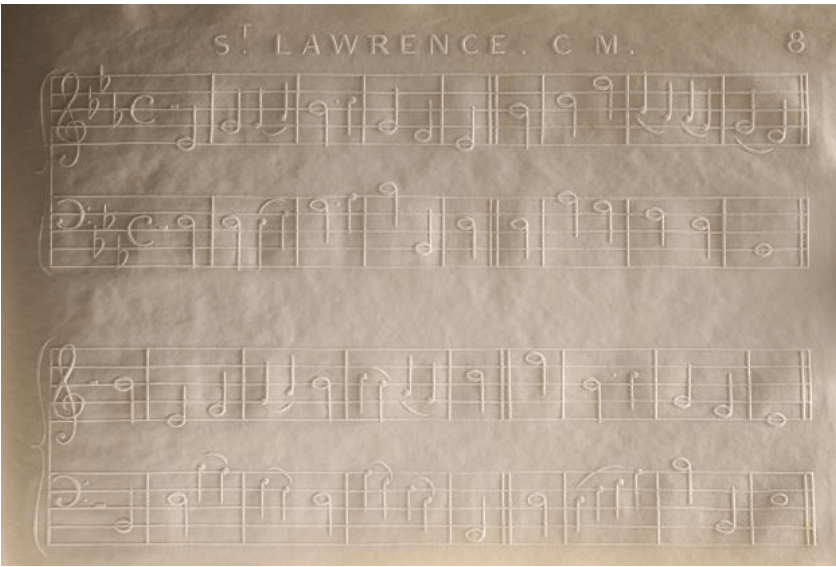
© CSGCIC Glasgow Museums Alston Collection
Reverend John McClure Brodie 1874-1964)
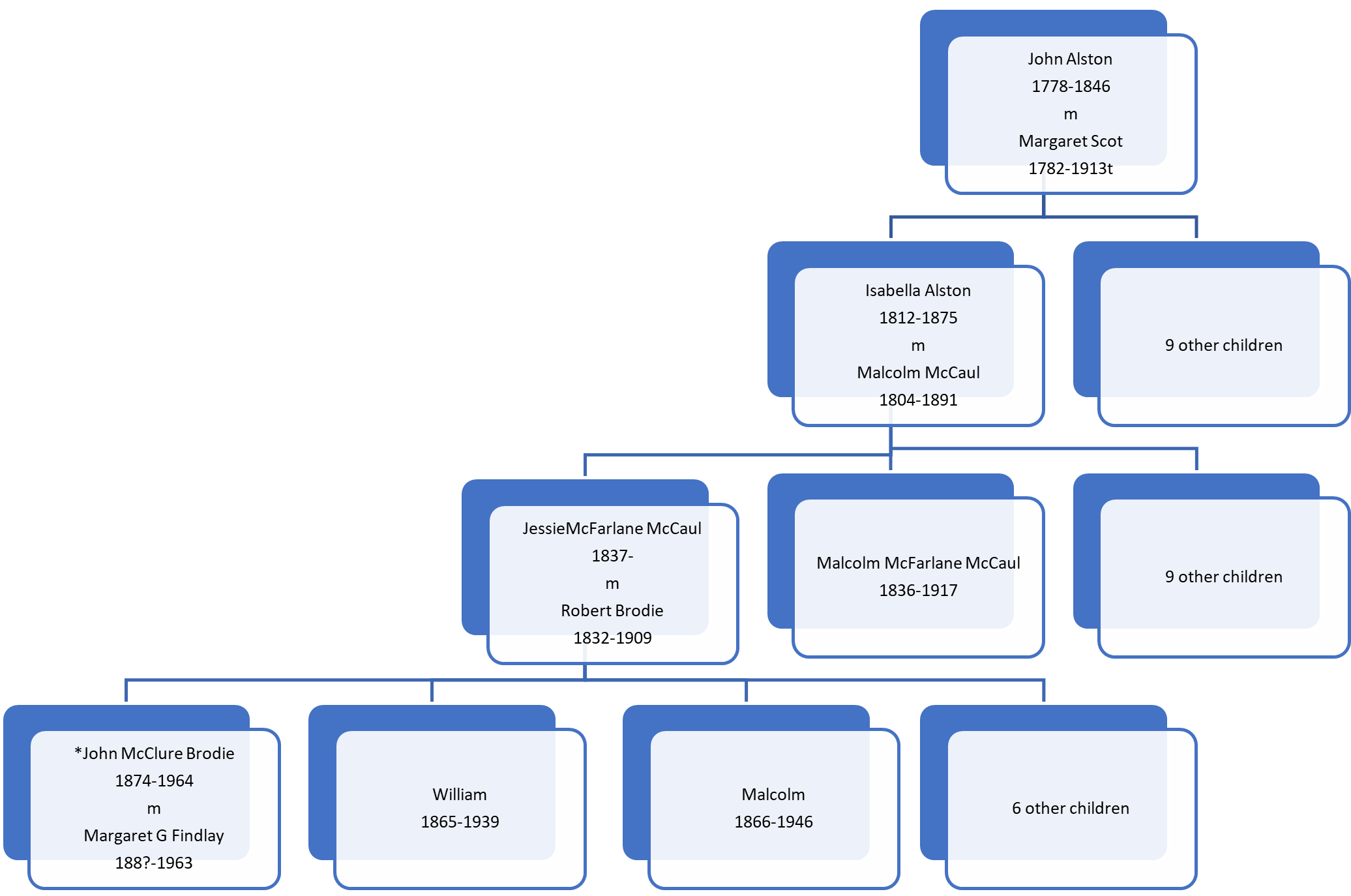
John McClure Brodie(J McC) was born on 5 September 1874 in Govan.7 He was one of several children born to Robert Brodie8 and Jessie McFarlane McCaul.9According to the 1881 UK Census the family lived at 23 Belhaven Terrace, Partick, Glasgow which remained the family home until Robert Brodie’s death in 1909.10 Robert Brodie was a partner in the firm of McClure,Naismith and Brodie ,Writers to the Signet, and our donor was probably named after John McClure, one of the partners.11 In the 1891 census JMcC was recorded as a scholar and probably attended Kelvinside Academy as not only did his father Robert Brodie hold shares in the company which owned the school12 but John’s brother Malcom certainly attended the school13.By 1901 John McC was a law clerk and scholar, possibly working for his father’s firm though that is not certain.14 He graduated Batchelor of Law from Glasgow University in 1902.15 While attending the University he was a member of the Volunteer Medical Staff Corps. 16
Sometime after graduating J McC appears to have moved to Edinburgh where in 1907 he was a partner in the firm ofGraham ,Miller and Brodie, Writers to the Signet, at 44 Frederick Street17 and lived at 9 Marchmont Street.18 He appears to have moved back to Glasgow by the time of the 1911 Census or perhaps was commuting to Edinburgh. He lived in the family home at 23 Belhaven Terrace in Hillhead along with his mother, brother Thomson who was an accountant and sisters Margaret and Mary both spinsters in their thirties. By this time JMcC was thirty -six years old.19
Our donor’s life changed later in 1911 when he emigrated to New Zealand via Australia where he landed in Melbourne in October 1911 on the SS Anchises.20 We do not know for certain why he went to New Zealand, perhaps the death of his father in 1909 was the catalyst. Also his uncle Malcolm McFarlane McCaul(see Figure 2 above) had emigrated first to Australia sometime after 1862 and then moved to New Zealand sometime before 188121 Perhaps this was the reason for our donor’s choosing New Zealand. JMcC went via Australia perhaps to visit his elder brother, Malcolm who lived there.22
By September 1912 JMcC was living at 12 Lower Symonds Street , Auckland, North Island, where he was enrolled as a solicitor of the Supreme Court of New Zealand on the motion of W.A. Styak23 for whose law firm at Colville Chambers in Auckland he worked for the next few years.24
After the outbreak of WW1 at the age of forty-one JMcC volunteered for the New Zealand Expeditionary Force and became a private in the New Zealand Medical Corps.25 As we have seen while at Glasgow University JMcC had been a member of the Volunteer Medical Staff Corps of the Glasgow University Volunteers. While living in Auckland he had also been a volunteer with the Auckland Highland Company one of many such volunteer companies.26
According to his Military Record JMcC enlisted as a private on 15 December 1915 and was posted for training the following day to the Awapuni Camp near Palmerston, North Island.27 Established in October 1915 this was New Zealand’s only dedicated training camp for medical officers, orderlies, stretcher bearers and medical crew for hospital ships.28 He remained at Awapuni until March 1916 and was then transferred to Featherston Training Camp as a lance corporal and then back to Awapuni from where he was posted to the Hospital Ship Marama on 1 September 1916. Only three days later he was sent back to Awapuni having been demoted to private again, though it appears this may have been a temporary promotion and was ended when he was no longer needed.29 JMcC’s Military Record also states he was posted back to the Marama on 10 November 1916 in time to sail on its second commission on November 12 1916.The ship sailed via Bombay to Suez then proceeded to Southampton where 540 patients were embarked for New Zealand. A few days out from Southampton the Marama rescued survivors from a torpedoed ship.
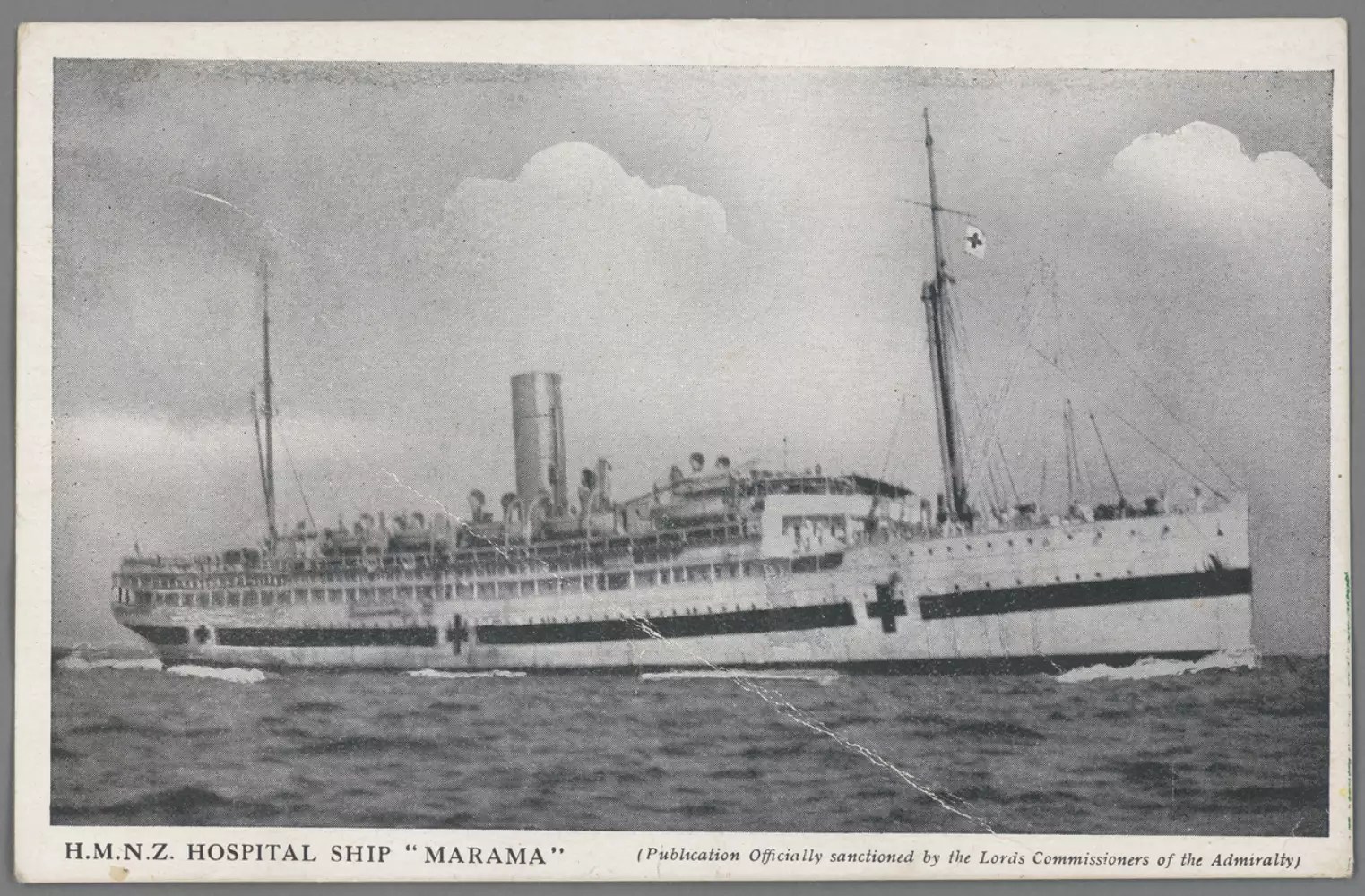
The ship sailed again for England via Bombay on 17 March 1917 then to Mesapotamia and Suez where orders were received that the Mediterranean was unsafe and all nurses had to disembark. This may have been because in March 1917 the German Government had announced an unrestricted submarine campaign resulting in the sinking of several hospital ships in the English Channel. From Suez the Marama sailed to Durban. The lack of nurses put a great strain on the orderlies ,of which JMcC was probably one, as they had to take over the nursing of the most severely wounded, who were confined to the cots, as well as carrying out their own duties.30 JMcC must have been doing a good job as on 3rd May 1917 he was promoted to the rank of Corporal.31
From Durban they went to Cape Town and Sierra Leone and finally docked in Avonmouth to pick up a full complement of wounded New Zealand soldiers bound for home via the Suez Canal.32 JMcC’s Military Record states that he reported to Awapuni Camp on 10 October 1917 only to rejoin the Marama on 19 October 1918. The purpose of this voyage was to clear the New Zealand Hospitals in England of New Zealand patients and transport them back to various ports in New Zealand as necessary.33 He arrived back at Awapuni on 27 January 1919 and was finally discharged on 6 March 1919.
After discharge JMcC appears to have taken a post as a school teacher in Wallaceville ,Upper Hutt, a city in Wellington Region.(Military record; voting reg).34 According to The Wallaceville School Attendance and Examination Register of February to December 1921 the teacher was certainly a J.M Brodie.35
Then in 1922 JMCc enrolled as a student at Knox College, Dunedin in South Island in order to train to be a minister in the Presbyterian Church.36 There is some evidence of his earlier involvement in the Presbyterian Church in three letters kept in the National Library of Scotland addressed to John McClure Brodie at 23 Belhaven Terrace Glasgow between 1894 and 1896 which refer to his proposed sponsorship of a local person as an agent, possibly a missionary, in another country but unfortunately the content lacks detail .37 JMcC was also a member of the Kirk Session of St Andrews Church, Wellington, presumably while he was living in the area after his war service thus giving us further evidence of his connection to the Presbyterian Church.38
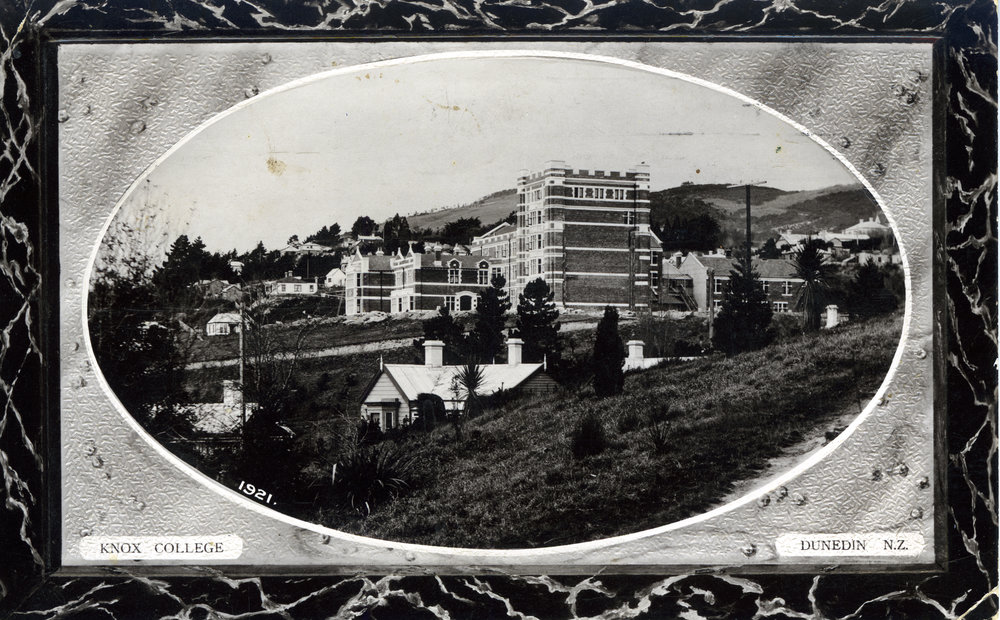
While at Knox College JMcC appears to have made his mark amongst his fellow students as in the student magazine The Knox Collegian No 14 1923 p23 the following ‘poem’ appeared along with others in the same vein regarding other students:-
“We now have a legal advisor
John Brodie, B.L. word geyser
He will scratch his bald head
And talk like-nuff sed-
But at the end you’re no wiser.”39
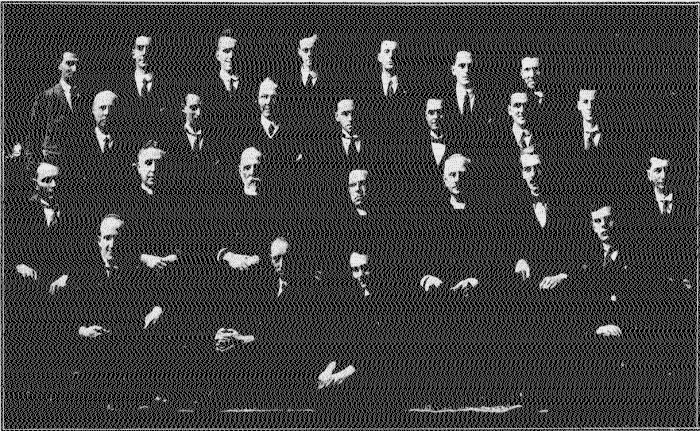
J.M Brodie is first on left, second row from the back.
By 1925 JMcC was 50 years old and at that point, surprisingly, he married. He married 43- year- old Margaret Graham Findlay from Glasgow who appears to have sailed to New Zealand specifically to marry our donor. Margaret had sailed from Southampton on the SS Corinthic accompanied by one of her sisters, a Miss A Findlay, though we do not know if it was Agnes or Anna, on 27 November 1924.They travelled First Class and were headed for Wellington.40 According to the Intention To Marry Register dated 10th January 1925 John McClure Brodie, theological student aged fifty had been resident in Wellington for three weeks. On the other hand Margaret Graham Findlay, spinster aged 43, had been resident in Wellington for only two days which suggests she arrived in very early January1925.41The couple were married on 15 January 1925 in the Scots Church, Seatown, Wellington.42
Margaret Graham Findlay was born in Glasgow on 2 January 1882 at 9 Montgomerie Drive, Kelvinside in Glasgow’s West End. Her father was Joseph Findlay(1852-1910),a cotton merchant and her mother was Jessie B Marshal(1852-1927).43 There is little information about Margaret except from census records. In 1891 the family was living at 11 Winton Drive, Kelvinside. There were six children including twin girls Agnes and Anna.44 The 1901 census gives us the same address and Margaret is recorded as being still a scholar even at the age of nineteen though we have no information as to the school.45
There is no mention of Margaret at the family home in Kingsborough Gardens in Hillhead in the 1911 Census, though there is a record of a Margaret Findlay aged 29 who was a patient at a Nursing Home at 4 Queens Crescent in the Park District of Glasgow but it is mere speculation that this is the same person.46 By 1921 she was back living in the family home at 16 Kingsborough Gardens, Hillhead along with her mother Jessie and twin sisters Agnes and Anna 00.47How Margaret and JMcC came to know one another is a complete mystery at this time.
The newly-weds lived in Dunedin at 15 Craigleith Street and attended the First Presbyterian Church in Dunedin48 until 1926 when John McClure Brodie was ordained as the Minister of the Seacliff and Warrington Presbyterian Church, Otago on 29th June for a period of five years.49 Seacliff was a small village on the east coast of the Otago Region of New Zealand’s South Island about twenty miles north of Dunedin. Most early Otago settlers were Presbyterians and the district had been served by Presbyterian ministers or missionaries in one way or another since 1858. The Seacliff Parish was first established around 1916 but there was no church building until 1923. However a manse was built in 1916 on land purchased in Kilgour Street ,Seacliff, intended for both the manse and the church. The first minister was the Reverend F. Tucker. 50Seacliff is best known for the presence of the Seacliff Mental Hospital, opened in 1884 and once the largest building in New Zealand.51
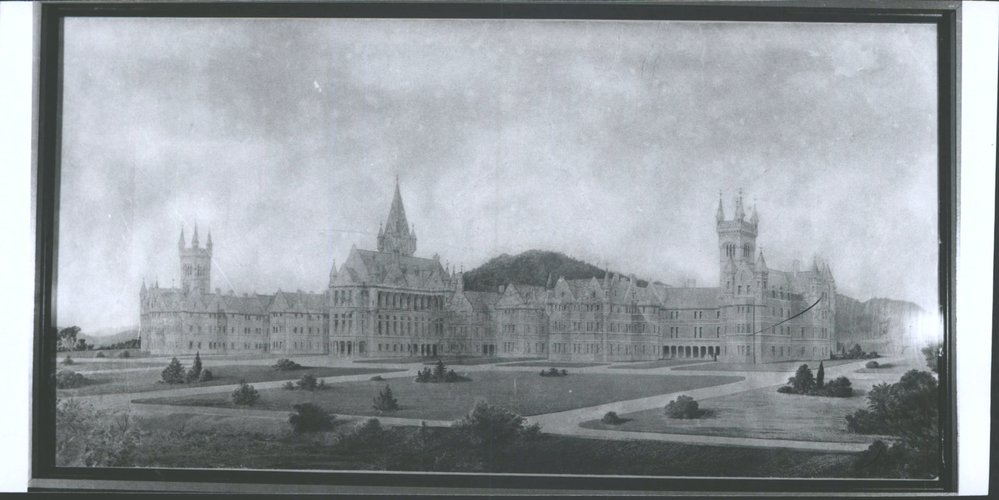
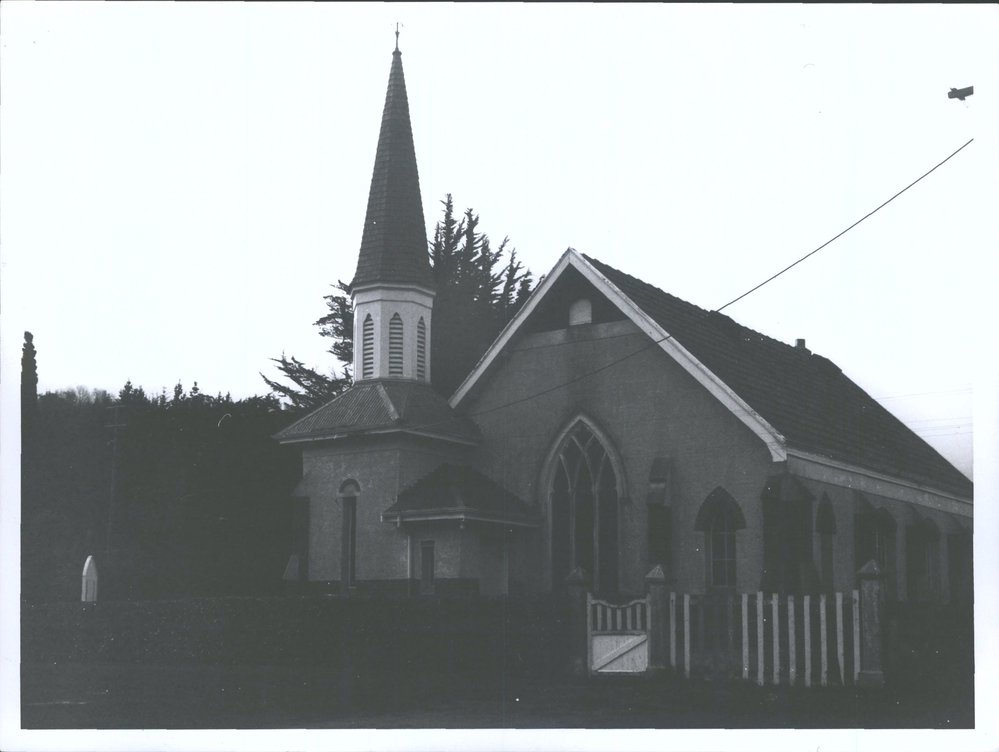
The foundation stone for the new church was laid in June 1923 by Dr A.C. McKillop, Medical Superintendent of the Seacliff Mental Hospital. The Seacliff Presbyterian Church had an intimate connection with Mental Hospital from its inception and there is a suggestion that it was originally built for the staff of the hospital. Before the building of the church services were often held in the hospital hall as well as in the local school. The various ministers who served the parishioners in the district over the years also ministered to the patients in the hospital. Services were held in the wards and hospital patients also attended services in the Seacliff Presbyterian Church after its opening in 1923 and much of the minister’s time was spent serving the patients in the hospital.52
Figure 11. Seacliff Presbyterian Church , Kilgour Street.
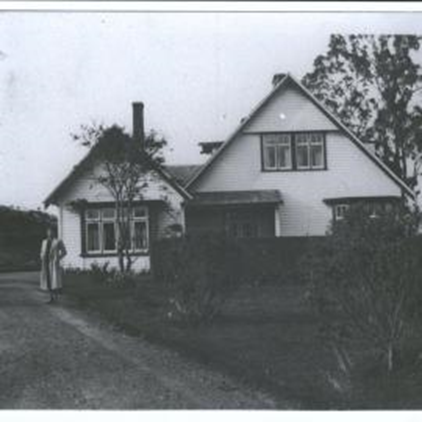
John and Margaret Brodie appear to have remained living at The Manse in Seacliff until 1929.53
In March 1929 after only three years JMcC resigned as minister of Seacliff because of unspecified eye trouble.54 There had been some warning about this in the Kirk session Minutes of 22nd March 1927 when it was reported that, ‘Mr Brodie had had to postpone a communion service for Karitane( a small village about 3 miles north of Seacliff) because of eye trouble.’55 We do not know if this was the reason the Brodies decided to return to Scotland that same year. They travelled Third Class from Brisbane, Australia on the SS Berima, arriving in London on 27 August 1929.56
We do not know if JMcC had treatment for his eye problem but the Brodies did not return to New Zealand. By 1930 JMcC and his wife were living in Glasgow, probably at 18 Bank Street off Great Western Road.57 At some point in 1930 JMcC became Assistant Chaplain to the Reverend James Cardwell at the Glasgow Royal Mental Hospital in Great Western Road. Perhaps his experience ministering to the patients at the Seacliff Mental Hospital had played a part in the appointment. The Reverend Cardwell had been chaplain for 25 years. J McC took over from him sometime before 1940 when Cardwell died.58
Gartnavel Royal Hospital as it is known today originally opened in 1814 as the Glasgow Lunatic Asylum in Parliamentary Road, Cowcaddens. The hospital was awarded a Royal Charter in 1924 and became the Glasgow Royal Lunatic Asylum. It moved to new premises in the Gartnavel district of Glasgow in 1843 designed by architect Charles Wilson in the Tudor Gothic Style. There were two main wings to the hospital. The West House, later West Wing was for private patients and the East House ,later East Wing, for patients who could not afford to pay for their treatment. The hospital became Glasgow Royal Mental Hospital in 1931 then Gartnavel Royal Hospital in 1963. 59
There is little information about our donor’s time at Gartnavel .He did find time to write a History of Gartnavel Mental Hospital1810-1948 though it was never published. 60 The only information we have about JMcC during this period is from a couple of newspaper reports. In 1931 the Scotsman reported that along with others the Reverend J M Brodie had donated £1/1/0 to the New Zealand Earthquake Relief Fund.61 Then in 1940 the JMcC attended the celebration of the founding of Presbyterianism in New Zealand held at the Martyrs Church in Paisley.
‘ In the afternoon the Reverend J M Brodie, formerly a member of the Kirk session of St Andrews Church, Wellington, was the preacher.’62
The Brodies lived at 18 Bank Street during the 1930s 1940s and early 1950s.63 JMcC retired from Gartnavel around 1950.64Then around 1952 or1953 at the age of seventy-nine J McC and Margaret moved to 3 Buckingham Terrace, Great Western Road. Numbers 3 and 4 Buckingham Terrace at that time were the Kirklee Hotel. So perhaps the couple felt life would be easier for them at their age if they lived in a hotel.65
On 9 January 1962 Margaret Brodie was admitted to the West Wing of Gartnavel Royal Hospital.66 This wing was for private patients. J McC joined her on 30th January 1963 aged eighty-eight.67 Margaret died on the 19 November 1963 of ,’myocardial degeneration with arterio sclerosis’68 and the Reverend John McClure Brodie died on 11 April the following year of ‘generalised arterio sclerosis’.69 We do not know if Gartnavel Hospital acted as a care home and took in elderly patients as a matter of course or if the Brodies were taken as patients because JMcC had once worked there. There is no information as to where the couple are buried.
References
1.Glasgow Museums Resource Centre Object File. Accession No 2993
3.Glasgow Post Office Directory 1840-41
4. www.roystonroadproject/archive/history/garngad_royston.htm
6. as above
7. www.scotlandspeople.co.uk Statutory Births
8.UK Census 1881,1891,1901
9. op cit ref 7
10. www.scotlandspeople.co.uk Statutory Deaths
11. Glasgow Post Office Directory 1890-91
12. www.scotlandspeople.co.uk Will of Robert Brodie
13. Victoria State Library https://www.slv.vic.gov.aw/
14.UK Census 1901
15. https://www.universitystory.gla.ac.uk/biography
16. Archives New Zealand. New Zealand Defence Force. Personnel Records. John McClure Brodie. Ref AABK 18805 W5520 0018299
17. Edinburgh Post Office Directories 1907-1911
18. op cit ref 12
19. UK Census 1911
20. www.ancestry.co.uk Incoming and Outgoing Passenger Lists 1845-1940
21. https://nzolivers.com/tree/ps01/ps01_041.html
22. op cit ref 13
23. New Zealand Herald 02/09/1912 p.8
24. op cit ref 16
25. as above
26. op cit ref 24
27. op cit ref 24
28. https://nzhistory.gov.nz>photo>awapuni:-wa
29. op cit ref 16
30. Archives New Zealand. New Zealand Defence Force. Personnel Records. John McClure Brodie. Ref AABK 18805 W5520 0018299
31. Barnes,Frank . Hospital Ship Marama http://ehive.com/account/3319
32. as above
33. op cit ref 31
34. op cit ref 16
35. https://uncl.recollect.co.nz
36. Knox College Archives Dunedin. pcanzarchives@prcknox.org.nz
37. National Library of Scotland. Missionary Correspondence for United Presbyterian Church. Ms.7707,Ms 7710-11
38. Scotsman 01/04/1940 p.6
39. Knox Collegian No 14.1923 p.33
40. www.ancestry.co.uk UK and Ireland Outward Passenger Lists 1890-1960
41. Archives New Zealand. Ref BDM 20/165/p1914/27
42. New Zealand Herald 05/02/1925 p.1
43. www.scotlandspeople.co.uk Statutory Births
44. UK Census 1891
45.UK Census 1901
46. UK Census 1911
47. www.scotlandspeople.co.uk 1921 Census
48. pcanzarchives@prcknox.or.nzFirst Church Dunedin Communion Roll1916-35
49. Otago Daily Times 26/10/1926 p.7
50. Tod, Frank E. The History of Seacliff :a History of the District to 1970. pub Otago Daily Times Print ,Dunedin 1971 p.65
52. op cit ref 50
53. op cit Tod p.66
54. Seacliff Warrington Presbyterian Church Session Minutes 25/3/1929 pcanzarchives@prcknox.org.nz
55. as above 22/03/1927
56. www.ancestry.co.uk UK and Ireland Incoming Passenger Lists1878-1960
57. Glasgow Post Office Directory 1931-2
58. Brodie,John McClure The Glasgow Royal Mental Hospital 1810-1948 unpublished. NHS Archives HB13/14/24 Mitchell Library, Glasgow
59. https://theglasgowstory.com
60. op cit 58
61. Scotsman 09/03/1931 p.1
62. Scotsman 01/04/1940 p.6
63. Glasgow Post Office Directories 1932-1951
64. Church Of Scotland Yearbook 1964.pub. Church Of Scotland Committee on Publications
65. Glasgow Post Office Directory 1952-3
66. Register of Patients 1959-63.ref HB/13/6/70 NHS Archives. Mitchell Library Glasgow
67. As above
68. www.scotlandspeople.com Statutory Deaths
69. as above
Acknowledgements
I would like to thank the following people for their invaluable help with the research for this donor: Danielle Ashby Coventry and Alison Metcalfe-National Library of Scotland; Laura Stevens-NHS Archives,Mitchell Library Glasgow; Susan Taylor-Special Collections,Mitchell Library,Glasgow;Matthew-Auckland Military Museum;Nick Austen-Hocken Collection,University of Otago;Hilary Ackroyd-Archives New Zealand;Linda McGregor-National Library of New Zealand;Rachel Hurd and Jane Boore -Presbyterian Research Centre(Archives) Knox College Dunedin.

 Glasgow Museums Art Donors Group