Andrew Lusk (1853 – 1927)

Figure 1. Andrew Lusk National Archives of Scotland, (NAS) GD501


Paintings Donated:     

Figure 2. Barmouth, John Wright Oakes, ARA (1820 – 1887)(Accession Number 1732) © CSG GIC Glasgow Museums Collection. (Art UK).

Figure 3. St. Ives Bay, John Brett, ARA (1831 – 1902) (1733) Exhibited RA 1881© CSG GIC Glasgow Museums Collection./ArtUK
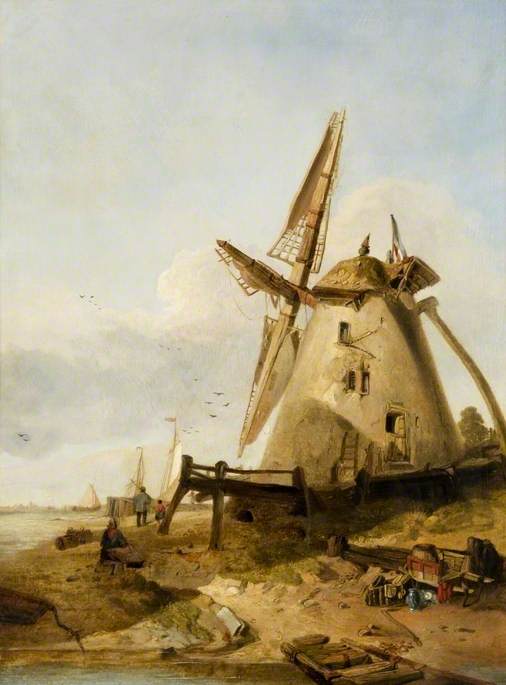
Fig. 4  A Dutch Mill, Clarkson Frederick Stanfield, RA (1793 – 1867) (1734)
© CSG GIC Glasgow Museums Collection/ArtUK
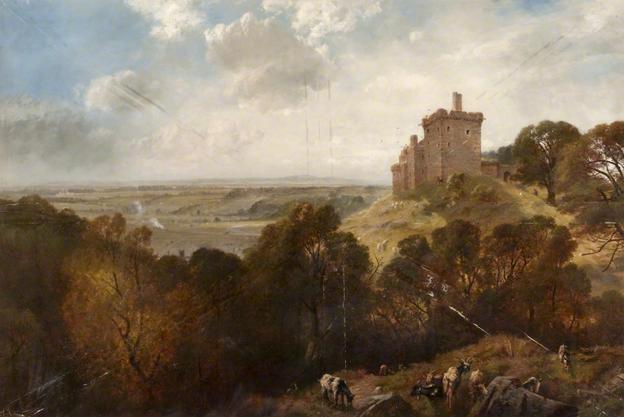
Figure 5. Castle Campbell, near Dollar, Richard Beavis (1824 – 1896) (2239) Exhibited RA 1896. © CSG GIC Glasgow Museums Collection                


( Barmouth, St. Ives Bay and A Dutch Mill, were received in February 1928 from Andrew Lusk`s executor. Castle Campbell near Dollar was given by his niece Mrs. Berkeley Robertson, nee. Janet Lusk on 29 August 1941. However, the catalogue entry at Glasgow Museums Resource Centre for this painting has a note added ‘to be described as presented by the late Andrew Lusk, Windsor, 1941’).

Andrew Lusk was born at ‘Lusk`s Cottage’, Coatbridge, Lanarkshire on 3 June 1853. 2 He was the son of James Lusk, a master baker and his wife Janet Reid. (James was born in Colmonell, Ayrshire in 1817. Janet was born in Cambuslang also in 1817). 3 There were two other children, John Lusk, born 14 July 1848 (the father of Janet Lusk) and Margaret Earl Lusk, born 3 March 1851.4 All were at Lusk`s Cottage in the 1861 Census along with two servants. Andrew`s father employed two men and forty-three boys. 5 The family is listed in Armorial Families 6. (Appendix 1)
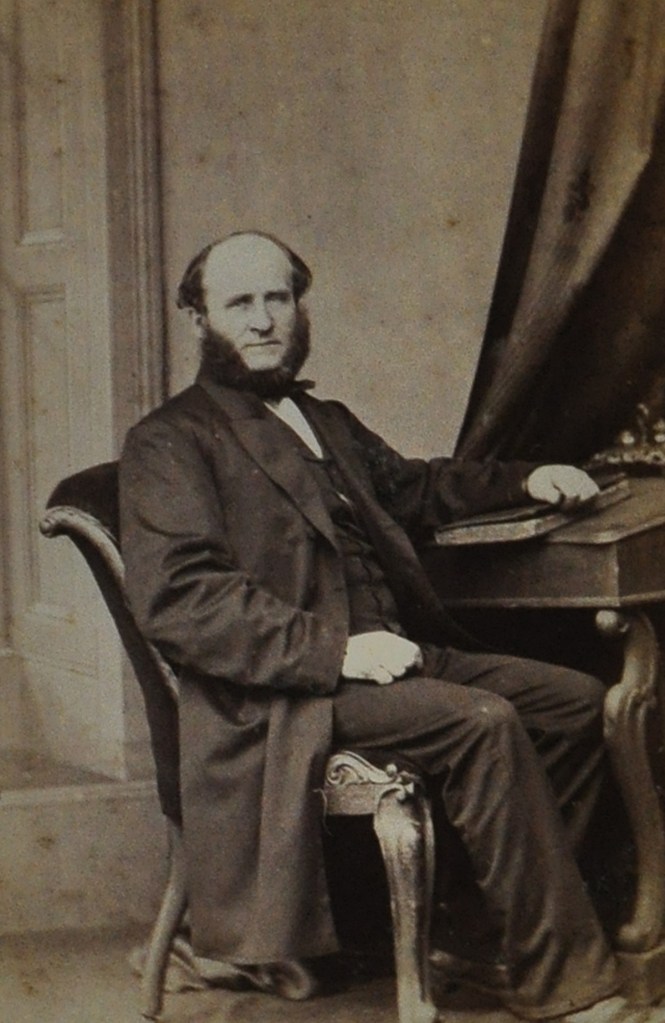
Figure 6. James Lusk.  National Archives of Scotland, (NAS) GD501


 Figure 7. Janet Reid. National Archives of Scotland, (NAS) GD501

Andrew attended Glasgow High School in the 1860s and seems to have had an interest in and an aptitude for art from an early age which was further developed while at school. 7

            From the 1871 census, Andrew, aged 17, was living with his parents, brother and sister at Glasgow Road, Bothwell. He was employed as a clerk. 8 By 1881 his siblings had both married and he had moved with his parents to Hamilton Road, Ferniebank, Bothwell. He was now aged 27 and a ‘commercial clerk in the iron trade’. 9 Sometime after that he moved to England. His father died in 1890 and Andrew was one of his executors. His address then was 3 Fenchurch Avenue, London. The 1891 census found him, aged 37 and single, at The Dell, Woking in Surrey. (The Dell was one of the larger houses in Woking but has since been demolished 10). He was now an ‘iron and steel merchant’ and employed two servants. 11 Woking would seem an unlikely place to find an iron and steel merchant. However, the town had an excellent train service to London so Andrew could have commuted to his business in the city.

      It is possible that his career as a steel merchant came about after his brother John married, in 1876, Jessie, the daughter of David Colville, the founder of the Colville steel firm. 12 An account of his assets after his death showed that Andrew was receiving a pension from Colvilles. 13

     By the time of the 1901 Census, Andrew had moved to 7 Queen`s Gardens, Osborne Road, New Windsor. 14 He later named the house St. Moritz after a holiday in Switzerland in 1909.

     Andrew’s uncle Sir Andrew Lusk who was Lord Mayor of London in 1874 and head of the firm of Andrew Lusk and Co. died in 1909. His funeral took place at St. John’s Church, Southwick Crescent, London on 24 June 1909. Andrew was in attendance as one of the ‘chief mourners’. 15 Andrew later wrote a memoir of his uncle which is held in the National Archives of Scotland. Dame Eliza Lusk, widow of Sir Andrew, died the following year. Andrew was an executor of her will and was left the sum of £1000.

     In the 1911 census, Andrew was at the Regent Hotel, Leamington Spa, 16 presumably on holiday because by this time his residence was in Windsor, Berkshire.  He also owned a house Roseisle in Glasgow Road, Perth. This was occupied by his sister Margaret and her husband Alexander Sutherland who was a local minister. After Andrew`s death, the house was to have been left to Margaret during her lifetime. However, she predeceased him. His mother Janet who was living on private means moved in with her daughter after the death of her husband in 1890. She died at Roseisle in 1899 and Andrew was present to register her death. 17

        In 1915 an appeal was made for subscribers to ‘extinguish the debt incurred by the King Edward VII Hospital in Windsor’. Andrew donated fifteen guineas and a further twenty the following year 18.

            Andrew had a great interest in art, music and books. In his house in Windsor he had a collection of paintings, sculpture and many fine editions of books. These were to be kept in the family after his death as ‘I cannot bear the thought of my Fine Editions being handled by careless young people’. He owned a library of music manuscripts which was left to his nephew the Rev. David Colville Lusk who sold it to St. Andrew`s University in 1952.19 He also owned a violin and piano which he may have played. His intention, according to his will was that his paintings be given to the National Gallery in Edinburgh. Were the National Gallery to refuse them, they were then to be offered to Glasgow and to Perth. In the event, Glasgow received four paintings as detailed above. The Sandeman Library in Perth was given five pictures, five marble busts and three pedestals (Appendix 2). The Royal Scottish Academy was given a tea urn believed to have belonged to Sir Henry Raeburn 20. In his will he left £100 to his former housekeeper. After his death she wrote to his executor thanking him for the legacy and stating that as Mr. Lusk`s housekeeper, she ‘had spent many happy years in his service’. (As well as a detailed will, he left a four-page document of ‘Testator’s Suggestions to his Executors’ on how to dispose of his assets e.g. who should be employed to sell his furniture and books and where to find various items mentioned in his will. He also suggested the best firm to pack up his pictures for donation). 21 

            He also left a painting by Fred Roe ARA, The Landing of Nelson at Yarmouth to the Castle Museum at Yarmouth. (This painting had been exhibited at the Royal Academy in 1909). His own sketches – views of Rome, Florence, Holland, Sweden etc. were to be kept in the family ‘if at all possible’.

                        Andrew Lusk never married and died at his home in Windsor on 12 October 1927. It is likely he had been ill for some time as illness prevented him attending the funeral of his sister who died in Perth the previous year.22 He was buried in a lair in St. Andrew`s Cathedral Churchyard, Fife which he had purchased in 1899.23   His will contained instructions for the design of his tombstone! It was to be ‘in the same style and colour as Lord Playfair`s close by’! According to his will which was probated in Edinburgh his personal estate was valued at £25, 190. 5s. 8p. The Scotsman reported that he ‘left £100 to the Royal Society of Musicians, and £300 to the United Free Church of Scotland Foreign Missions, in memory of his mother Janet Lusk’ and gave details of his donation of paintings to Edinburgh and Glasgow. 24  The Motherwell Times also carried a report of his estate and noted that he was a director of David Colville and Sons, Ltd., steel manufacturers. 25

       The following are two extracts from the Minutes of the Corporation of Glasgow, sub-committee on Art Galleries and Museums:

23 December 1927:  The Superintendant reported that he had received a letter from Messrs. Gard, Lyell and Co., London, Law Agents for the trust estate of the late Andrew Lusk, St. Moritz, Windsor, intimating that the deceased under his will, had bequeathed to the National Gallery, Edinburgh, certain pictures, and that six of these pictures specified in said letter might, if desired, be available for the Corporation of Glasgow. The sub-committee, after consideration, agreed that it be remitted to Depute River Baillie Doherty and Councillor Drummond, along with the Superintendant, to inspect the pictures, and with power to accept the same on behalf of the Corporation.

2 March 1928: With reference to the minute, of date 23rd December last, Depute River Baillie Doherty and Councillor Drummond, under remit to them, along with the Superintendant, reported that they had inspected the collection of pictures belonging to the Trust Estate of the late Andrew Lusk, St. Moritz, Windsor, and had agreed to recommend acceptance of the following works of art, viz.

  1. Barmouth  – J. W. Oakes, A.R.A.
  2. St. Ives Bay – John Brett, A.R.A. and
  3. The Windmill – Clarkson Stanfield, R.A. 26

Because Andrew Lusk had insisted in his will that his paintings should be hung tastefully and together with the appellation ‘from the bequest of Andrew Lusk, Windsor’, his executor went to great lengths to see that this was carried out. There are three letters relating to the placement of the pictures given to Glasgow in the NAS file.

      In his ‘Testator’s Suggestions to his Executors’ he stated that ‘I wish particularly that my other pictures apart from those mentioned in my will be kept in the family (the Greenock cousins excluded!!) or given to friends who would appreciate them rather than sold to dealers for whom I have a great objection’.

A portrait of Lady Sawyer by Sir Hubert Herkomer RA was left to his nephew and executor David Colville Lusk. Heidelberg on the Rhine by J. B. Pyne probably went to his niece Jenny Robertson. Another picture Old Mortality had been entrusted to him by his aunt Dame Eliza Lusk in her will but was in fact the property of his brother.

References.

  1.  National Archives of Scotland, (NAS) GD501 (This is an extensive collection of Lusk family papers and photographs. It contains a book of Andrew`s paintings completed while still at school. The donor`s address was Dunblane, Perthshire). Other family photographs (Figs. 6 and 7) taken from the same source,
  2. Scotland, Lanarkshire Church Records, 1823 – 1967, FamilySearch (https://www.familysearch.org/ark:/61903/1:1:66K6-5M6X : 2 February 2022)
  3. Ibid
  4. ibid
  5. Scotland’s People, 1861 Census
  6. Fox-Davis, Arthur Charles, Armorial Families – A Directory of Gentlemen of Coat-Armour, two vols., Edinburgh, T.C. and E.C. Jack, 1905.
  7. Scotland`s People, 1871 Census
  8. Scotland’s People, 1881 Census
  9. Woking History Society, Sue Jones, by e-mail
  10. ancestry.co.uk, England Census, 1891
  11. Scotland’s People, Marriages
  12. NAS, GD501
  13. Ancestry.co.uk, England Census, 1901
  14. The Times, 25 June 1909
  15. Ancestry.co.uk, England Census, 1911
  16. Scotland’s People, Death Certificate
  17. Slough, Eton and Windsor Observer, 17 and 24 July 1915, p. 4 and 19 May 1916, p1.
  18. NAS, GD501
  19. ibid
  20. ibid
  21. Perthshire Advertiser, 6 November 1926.
  22. NAS, GD501
  23. The Scotsman, 3 March 1928, p14.
  24. Motherwell Times, 10 October 1928, p5.
  25. Corporation of Glasgow, Minutes, 1928, C1/3/78 pp. 516 and 987.

Appendix 1: From Armorial Families.

Sons of James Lusk of Feam Bank(sic), Lanarksh., (5. 1817 ; d. 1890; m. 1846, Janet, d. of Andrew Reid of Hamilton, Cambuslang : — 
John Lusk, Gentleman [Arms as above, and (matric. 30 May 1903) a bordure silver. Crest — An ancient ship as in the arms, but without the rainbow as above], b. 14 July 1848 ; m. 10 Aug. 1876, Jessie, d. of David Colville ; and has issue — (i) James Lusk, Gentleman, b. 19 Sept. 1878 (2) David Colville Lusk, Gentleman, b. 19 Nov. i88i 
and Janet. Res. — South Dean, Merchiston, Edinburgh ..Coulter House, Lanarkshire. 
Andrew Lusk, Gentleman, b. 3 June 1853. Res. — St. Moritz, Windsor. 

Appendix 2

 Donations to the Sandeman Library, Perth (Now Perth Museum).

  1. Trebarwith Strand, Cornwall, Edwin John Ellis, R.I. (1848 – 1916)
  2. Dover Cliffs, Edwin John Ellis, R.I.
  3. Cattle and Trees (original title), now Landscape with Cattle, William Shayer, sen.
  4. Windsor Castle from Snowhill (original title), now Windsor Castle from Windsor Great Park, Charles Edward Johnson, R.I. (Exhibited at RA, 1895)
  5. General Gabriel Gordon, (1763 – 1855), Sir John Watson Gordon, P.R.S.A. (1788 – 1864)
  6. Marble Busts of: Sir Walter Scott, with pedestal

                            Milton

                           Diana, with pedestal

                           Dido, with pedestal

                           Demosthenes.

Further Information about these:

  1. There is a picture in Perth Art Gallery by Edwin John Ellis entitled Fishing Boats on a Beach. Could this be the same picture? It has reference FA76/78 and acquisition method is ‘unknown’.
  2. In Perth Art Gallery, ref. FA99/78. ‘Unknown acquisition method’.
  3. In Perth Art Gallery, ref. FA59/78. ‘Unknown acquisition method’.
  4. In Perth Art Gallery, ref. FA101/78. ‘Bequeathed by Andrew Lusk, 1951’.
  5. In Perth Art Gallery, ref. FA92/78. ‘Bequeathed by Andrew Lusk, 1951’.

A receipt for five pictures, five busts and three pedestals was received by D.C. Lusk on 5 December 1927 from the Sandeman Library, Perth.

Archibald McLellan – Coach Builder and Art Collector. (c.1795-1854).

Figure 1. Archibald McLellan from Memoirs and Portraits of 100 Glasgow Men. (1886)

Archibald McLellan’s gift to Glasgow was an unusual, if somewhat inadvertent, one. It was an idea, not necessarily his, which led to the creation of a municipally owned art collection and the building of Kelvingrove Art Galleries.

He was the son of Archibald McLellan, a coach builder and his wife Christian Shillinglaw who married in 1794.[1] No record of his birth has been discovered however he died in 1854, his death registration document recording his age as 59 years.[2] There appears to have been a brother, James, and a sister, Christian, born in 1796 [3] and 1799 [4] respectively, both seem never to have married nor have any death records for either been identified.

Archibald senior was born in Luss in 1749.[5] On the 14 of March 1782 he became a Burgess and Guild Brother of Glasgow, being described as a hammerman and having served an apprenticeship with coach and harness makers Archibald Bogle and John Edmiston.[6] In the 1799 Glasgow directory he is listed as a partner in the coachbuilding company of McLelland and Dunbar, his  name being spelt incorrectly with the addition of a ‘d’.[7] It wasn’t until 1812 that the entry was corrected to McLellan and Dunbar.[8] The business was located at various addresses in Miller Street, mostly at number 21.

In 1814 Archibald junior joined with his father, the business now being known as Archibald McLellan and Son at number 24 Miller Street, [9] eventually moving to 81 Miller Street.[10] Archibald senior died in 1831 in Glasgow. His Trust and Deed Settlement written in the same year mentions only his wife Christian and son Archibald.[11]

Archibald junior matriculated at Glasgow University in 1808, his date of birth being given as 1797.[12] His education seems to have been extensive, and might be described as a classical one, which was probably the basis for his interest in art and literature which became evident in later life.[13] He also had acquired the necessary skills to join with his father in coachbuilding, particularly as a heraldic draughtsman.[14] On the 26th of August 1813 he became a Burgess and Guild Brother of Glasgow. [15] The following day he became hammerman number 822, being described as a coachmaker. His ‘essay’ ( the manufacture of a piece of equipment to demonstrate the required skills) was a screw, bolt and nut.[16] At best he would be 18 years old, if the university birth date applies then he would 16 years old. Normally a member of the trade would be 21 years old at the time of their membership.[17] In 1819 he became Collector of the Incorporation of Hammerman probably in recognition of his varied practical and intellectual skills. In 1821 he became Deacon of the Hammermen.[18]

Prior to the 1833 Burgh Reform Act (Scotland) members of the Trades and Merchants Houses could be nominated by these organisations to become Glasgow councillors. McLellan was nominated in 1822 and on the 8 March gave his oath of allegiance and abjuration. He was described in the minutes of the council as a councillor of the Crafts rank. He was to remain a councillor in various roles for several years thereafter.[19]

He subsequently became a magistrate (bailie) of Glasgow being elected on the 2 October 1827. There were eleven  crafts candidates for the position of youngest or second trades bailie. They were split into two groups of six and five, McLellan and Walter Ferguson coming top of their respective groups to run off against each other. In the event McLellan was elected unanimously. He served as bailie until October 1829. He also served as  deacon convener on the council for various periods in between 1831 and 1835 and was elected city treasurer on the 11 October 1831.[20]

Most sources say he became a bailie before he reached the age of twenty five years. Clearly that is not true. If he was born in 1795 he would have been thirty two. The latest birthday I have come across for him is 1798, which means he would have been twenty nine on becoming a bailie.

McLellan was a multifaceted individual. In addition to running the coach business, initially with his father then on his own, and advancing the interests of the city through the council and the Trades House he also had a passionate interest in art, literature and music. He was friends with a number of artists of the day including Sir Daniel Macnee and Sir David Wilkie.[21]

In 1825 he became a member of the Glasgow Dilettanti Society which had been formed around February of that year. Its stated aim was ‘ to improve the taste for, and advance the knowledge of the fine arts,’ its membership being restricted to painters, sculptors, etchers and engravers but also included those individuals possessing artistic taste and knowledge. Its first president was Andrew Henderson, a portrait painter, McLellan and David Hamilton the architect joining later that year. The society met monthly with essay readings and exhibitions of work by the members or the owners. In 1826 McLellan exhibited a number of prints from his own collection.[22],[23] In 1834 he was the society’s president.[24] He was also the first president of the Glasgow Fine Arts Association in its foundation year of 1853 and on the Glasgow Art Unions management committee.

His growing influence in the Trades House resulted in him becoming its deacon convener in 1831 and again in 1832. The following year saw the introduction of the Reform Act which initially prohibited the Trades and Merchant Houses from nominating councillors. McLellan was instrumental in maintaining the right of the Deacon Convener of the Trades House and the Dean of Guild of the Merchants House, to become councillors ex officio.[25] He was again elected deacon convener of the Trades House in 1834, probably for his success in having the Act revised.[26] They also had his portrait painted by his friend Sir John Graham Gilbert which hangs in the Trades House today.[27]

Figure 2. Archibald McLellan by Sir John Graham Gilbert (1794-1866). © Trades House of Glasgow.

It’s not clear when he started to collect works of art but it was an eclectic collection which included paintings, sculptures, and books. How it was housed is also not clear as initially he probably lived with his parents. However by 1828 he was living at 78 Miller Street,[28] near the coachworks. He remained at that address until 1838 [29] at which time he moved to 3 Dalhousie Street in the Barony parish. This last address according to Dr. Wangen, director of the Royal Gallery of Pictures in Berlin who visited Glasgow around 1852/53, housed a significant collection of paintings from the seventeeth century Dutch and Flemish schools. It also contained a number of Italian, English, Spanish and French works. Dr. Wangen was pretty scathing about other Glasgow collectors, or the lack of them, describing McLellan as an honourable exception. He described the house as being overfilled with paintings and listed and commented on over sixty of them in three of the rooms there which included works by Van Dyk, Sir David Wilkie and Brueghel. [30] McLellan also had a country domicile at Mugdock Castle, leasing the castle from around 1836 from the Marquis of Montrose family, the Grahams.[31]

He had a great interest in the architecture of Glasgow undertaking new buildings on his own account culminating in the galleries building in Sauchiehall Street named after him. He wrote Essay on the Cathedral Church of Glasgow which was published in 1833 which lamented the state of the cathedral since reformation times and suggested action to improve. Not all of his suggested changes were made however it was ‘renovated and became the pride and ornament of the land.’ [32] He also proposed a new western approach to the cathedral and purchased land between Weaver Street and Stirling’s Road to achieve this. The land was subsequently given to the city council and the Merchants House who carried out the required improvements.[33]

He never married however in a talk given to the Old Glasgow Club in 2010 by Mrs Jane Anderson, a guide at Kelvingrove Art Galleries, she describes him as having two mistresses, one, Isabella Hutcheson at Dalhousie Street who had been his servant/housekeeper there at least since 1841, the other at Mugdock, Elizabeth Park. She described them as his town and country common law wives. One other comment she made was that he was expelled from the university for vandalising the tomb of Bishop Wishart at the cathedral.[34]

He died at Mugdock Castle on the 22 October 1854. His obituary in the Glasgow Herald, including an extract from that of the Courier, described him as an orator and debater who was unrivalled, but also as someone who could be over emphatic. He was also described as kind-hearted. The Courier described his character as not being flat or neutral. He was warm, impetuous, irascible and also generous, open hearted, kind and hospitable.[35]

However one capability escaped him, namely that of keeping control of his finances. He was indebted to several banks, to such an extent that his intention to leave his art works and other property to Glasgow could not be complied with. In the event the city purchased those works and the Sauchiehall Street galleries for £44,500,[36] (today worth £4.4m re RPI changes or £143m re project cost changes[37]) from his trustees which in due course was the genesis of the city’s art collection. He may not have seen his collection as the basis of a municipal one, whether gifted or otherwise but the idea of such occurred to those who promoted the purchase however inadvertently it was arrived at.

He was buried in the Glasgow Necropolis.[38]


[1] Marriages (OPR) Scotland. Glasgow. 4 August 1794. MCLELLAN, Archibald and SHILLINGLAW, Christian. 644/1   270/173.  www.scotlandspeople.gov.uk

[2] Deaths (OPR) Scotland. Glasgow. 22 October 1854. MCLELLAN, Archibald. 644/1 580/127. www.scotlandspeople.gov.uk

[3] Births (OPR) Scotland. Glasgow. 13 May 1796. MCLELLAN, James. 644/1 190/279. www.scotlandspeople.gov.uk

[4] Births (OPR) Scotland. Glasgow. 10 May 1799. MCLELLAN, Christian. 644/1 190/431. www.scotlandspeople.gov.uk

[5] Births (OPR) Scotland. Luss. 9 June 1749. MCLELLAN, Archibald. 499 10/165. www.scotlandspeople.gov.uk

[6] Anderson, James (ed) (1935)The Burgesses & Guild Brethren of Glasgow 1751-1848. Edinburgh: Scottish Record Society. p. 127 https://archive.org/details/scottishrecord51scotuoft/page/n5/mode/2up

[7] Directories. Scotland. (1799) Glasgow Directory. Glasgow: W. McFeat and Co. p. 65.

https://digital.nls.uk/directories/browse/archive/87870583

[8] Directories. Scotland. (1812) Glasgow Directory. Glasgow: W. McFeat and Co. p. 110. https://digital.nls.uk/directories/browse/archive/90149171

[9] Directories. Scotland. (1814) Glasgow Directory. Glasgow: W. McFeat and Co. p. 112. https://digital.nls.uk/directories/browse/archive/87861325

[10] Directories. Scotland. (1833) Glasgow Directory. Glasgow: Post Office. p. 239. https://digital.nls.uk/directories/browse/archive/87849874

[11] Testamentary Records. Scotland. 1 November 1834. MCLELLAN, Archibald. Trust Disposition and Settlement. Glasgow Sheriff Court. www.scotlandspeople.gov.uk

[12] Addison, W. Innes (1913). The Matriculation Albums of Glasgow University, from 1728 to 1858. Glasgow: James Maclehose and Sons. p. 238. https://archive.org/details/matriculationalb00univuoft/page/238/mode/2up

[13] Maclehose, James (1886) Memoirs and Portraits of 100 Glasgow Men. 60. Archibald McLellan. Glasgow; James Maclehose and Sons. pp. 205,206. http://gdl.cdlr.strath.ac.uk/mlemen/mlemen060.htm

[14] Ibid

[15] Anderson, James (ed) (1935)The Burgesses & Guild Brethren of Glasgow 1751-1848. Edinburgh: Scottish Record Society. p. 281  https://archive.org/details/scottishrecord51scotuoft/page/n5/mode/2up

[16] Lumsden, Harry and Aitken, Rev. P. Henderson. (1912) History of the Hammermen of Glasgow. Paisley: Alexander Gardner. p.305. https://archive.org/details/historyofhammer00lums

[17] Bryce, Craig R. Trades House of Glasgow, Deacon Convener Archibald McLennan. PDF https://www.tradeshouselibrary.org/

[18] Lumsden and Aitken, op.cit. p. 389.

[19] Minutes, Glasgow Council Act Book March 1821 to 1823. Mitchell Library.

[20] Minutes, Glasgow Council Act Books 6 volumes 1819 – 1837. Mitchell Library.

[21] Maclehose, James (1886) Memoirs and Portraits of 100 Glasgow Men. 60. Archibald McLellan. Glasgow; James Maclehose and Sons. pp. 205,206. http://gdl.cdlr.strath.ac.uk/mlemen/mlemen060.htm

[22] University of Strathclyde Archives and Special Collections. The Dilettanti Society https://atom.lib.strath.ac.uk/glasgow-dilettanti-society

[23] Glasgow’s Cultural History. The Dilettanti Society.  https://www.glasgowsculturalhistory.com/the-fine-arts/the-glasgow-dilettanti-society/

[24] Bryce, Craig R. Trades House of Glasgow, Deacon Convener Archibald McLennan. PDF https://www.tradeshouselibrary.org/

[25] Maclehose, James (1886) Memoirs and Portraits of 100 Glasgow Men. 60. Archibald McLellan. Glasgow; James Maclehose and Sons. pp. 205,206. http://gdl.cdlr.strath.ac.uk/mlemen/mlemen060.htm

[26] Lumsden and Aitken, op.cit. p. 391.

[27] Ibid.

[28] Directories. Scotland. (1828) Glasgow Directory. Glasgow: John Graham & Co. p. 190. https://digital.nls.uk/directories/browse/archive/83783196

[29] Directories. Scotland. (1838) Glasgow Directory. Glasgow: The Post Office. p. 149. https://digital.nls.uk/directories/browse/archive/90161167

[30] Obituaries. (1854) Glasgow Herald. 27 October. MCLELLAN, Archibald. p. 5a,b,c. https://www.nls.uk/

[31] ScotWars. Mugdock Castle. http://old.scotwars.com/mugdock_castle.htm

[32] Obituaries. (1854) Glasgow Herald. 27 October. MCLELLAN, Archibald. p. 5a,b,c. https://www.nls.uk/

[33] Bryce, Craig R. Trades House of Glasgow, Deacon Convener Archibald McLennan. PDF https://www.tradeshouselibrary.org/

[34] Old Glasgow Club. Minutes of Meeting on 14 October 2010. http://www.oldglasgowclub.org.uk/oldwebsite/minutes_14_10_10.htm

[35] Obit Obituaries. (1854) Glasgow Herald. 27 October. MCLELLAN, Archibald. p. 5a,b,c. https://www.nls.uk/

[36] Maclehose, James (1886) Memoirs and Portraits of 100 Glasgow Men. 60. Archibald McLellan. Glasgow; James Maclehose and Sons. pp. 205,206. http://gdl.cdlr.strath.ac.uk/mlemen/mlemen060.htm

[37] Measuring Worth (2023)  https://www.measuringworth.com/calculators/ukcompare/

[38] Glasgow Necropolis. https://www.glasgownecropolis.org/profiles/archibald-mclellan/

Frederick Thoby Leyland Prinsep (1887 – 1936)

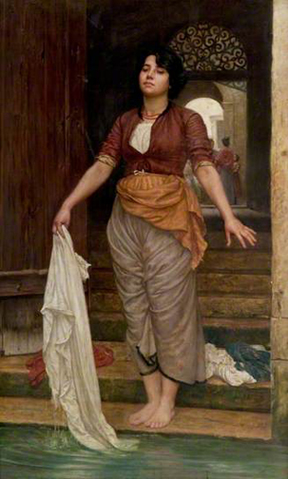
Figure 1. In a Street in Venice by Val. C. Prinsep, R.A. (c) Glasgow Museums; Supplied by The Public Catalogue Foundation

‘The sub-committee agreed to accept an offer by Mr. Prinsep, 104 Leadenhall Street, London, made through Mr. Noel E. Peck, to present to the Corporation a picture by his father, the late Mr. Val. Prinsep RA, which was executed at Venice and thereafter exhibited at the Royal Academy, London, and to accord Mr. Prinsep a vote of thanks for his gift’.1

The painting has the title In a Street in Venice with ‘Ay, because the sea`s the street there’ added. It was exhibited at the Royal Academy in the summer of 1904. In a letter to Noel Peck, Frederick Prinsep states that ‘The picture …. is the last one my father painted. It was executed in Venice and was thereafter exhibited at the Royal Academy’.2

Frederick Thoby Leyland Prinsep was baptised in Kensington, London, on 27 January 1887.3 He was the eldest of three sons of the Calcutta-born artist Valentine Cameron Prinsep RA and his wife Florence Leyland, the daughter of the wealthy industrialist, ship owner and art collector Sir Frederick Richards Leyland (Appendix 1). Valentine`s father, Henry Thoby Prinsep married Sarah Monckton Pattle at Thoby Priory in Essex. Sarah`s sisters, Julia Margaret Cameron (the photographer} and Maria Jackson were the grandmothers respectively of the author Virginia Woolf and the artist Vanessa Bell.

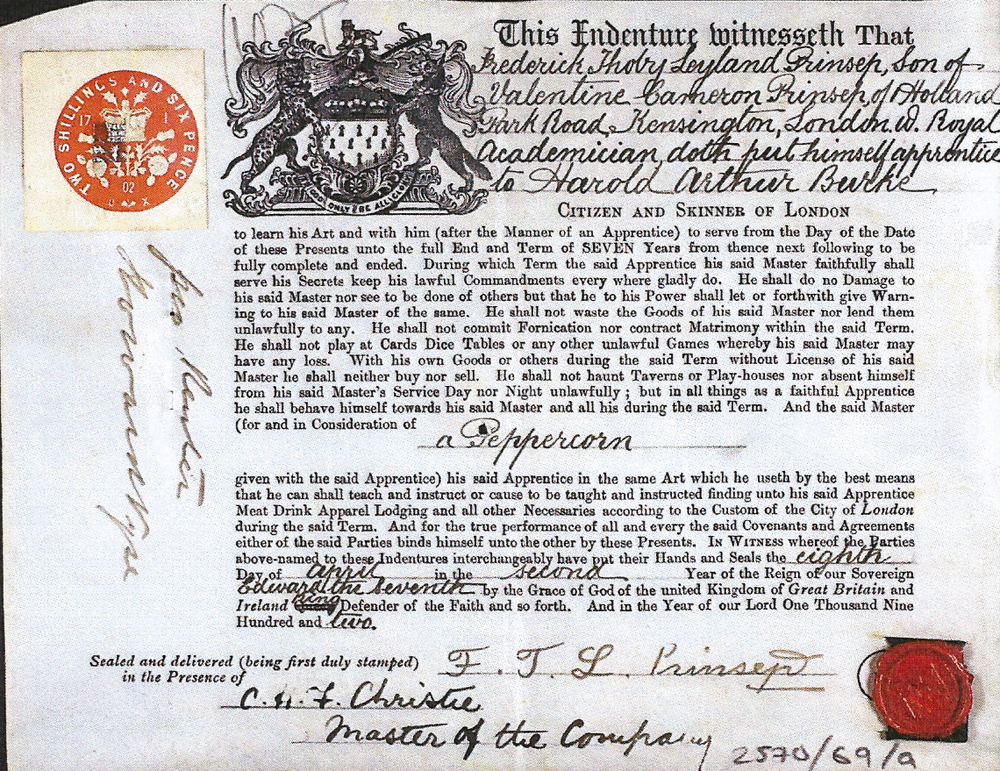
In the 1891 Census, Frederick, aged 4, was living with his parents and younger brother Anthony at 1 Holland Park Road, Kensington, London.4 In 1893, aged 6, he sailed with his family from Liverpool aboard the Georgian and arrived in Boston on 4July. Their destination was Chicago. This would probably have been to attend the World`s Fair which opened in May of that year.5 Frederick was not with his parents at the 1901 census. (Check where he was?) On 8April 1902, aged 15, he was apprenticed to Harold Arthur Burke ‘Citizen and Skinner of London’ for seven years. ‘to learn his art’.6 (Appendix 2) Frederick`s  father Valentine Prinsep, died on 11 November 1904. He had been a director of the London, Liverpool & Ocean Shipping Company (which became Ellerman Lines Ltd. in 1902) since 1901 and his death was recorded in the company minute book:

The Secretary reported the death of Mr. V.C. Prinsep….. and it was resolved that the Directors have learned with sincere regret the death of their esteemed colleague ….. and desire to tender their sincere sympathy with the Widow and family in their bereavement.7

(The Ellerman and Bucknall Steamship Company Limited had addresses at 104/6 Leadenhall Street, London and at 75 Bothwell Street, Glasgow).8

Three years after her husband`s death, Frederick`s mother married George Courtney Ball-Greene and on 21 December 1907, the family left Liverpool bound for the Canary Isles. Frederick was with his mother, stepfather and brother Anthony.9     

 On 12 December 1911 at a meeting of the directors of the Ellerman Shipping Line at 12 Moorgate Street, London, Frederick was elected to occupy the position previously held by his father on the Board:

Mr. Francis Elmer Speed (who had replaced Valentine Prinsep) tendered his resignation as a director in order to allow Mr. F. T. L. Prinsep to be elected in his place. His resignation was accepted with regret. It was resolved that Mr. Frederick Thoby Leyland Prinsep be and is hereby elected a Director of the Company …… 10

He was re-elected as a director on 14 June 1912. 11 At this time he held 2000 shares in the company and was living with his mother and stepfather at 14 Holland Park Road, Kensington.12 (His mother was also a shareholder in the Company partly through shares left to her by her first husband but also on her own behalf). According to the Company Minutes, Frederick left in 1915 ‘to undertake Red Cross work in France’. 13 He arrived in France on 21July 1915 under the aegis of the British Red Cross Society and the Order of St. John of Jerusalem. He was awarded the ‘15 Star’ and the ‘Victory’ medals.14 His time in France seems to have been brief as he was still able to attend Directors’ meetings in London and he served as a director of the company until his death in 1936.

From 1915 till at least 22 July 1921 when his mother died, Frederick`s address was  14 Holland Park Road, Kensington.15 In 1923 he (and his brothers) presented the painting by his father to Glasgow. This was possibly a result of him disposing of some family possessions and moving out of his mother`s house since in 1925 he was living at 47 Curzon Street, Westminster.16 It was also about this time that he wrote to Noel Peck about the donation to Glasgow.

Frederick`s interest in ships and shipping, not just from a commercial point of view, was shown in 1924 when he had a book published on the subject.17 It must also have been about this time that he married Francoise Catherine Pauline ……… (maiden name unknown. However, she may have been the Catalina Francisca Paula Sala Pous who was born in Gerona, Spain on 24 September 1876. 18 This date matches her age at death.).

Thereafter he is recorded on several voyages presumably associated with his shipping interests or holidays. On 20 January 1930 he and his wife left London bound for Madeira aboard the City of Nagpur. The following month on 18 February he arrived in Southampton from Buenos Aires. 19 His address was 16 Bolton Street, London, W.1. 20 Meantime, his wife (now named as Catalina Francisca Pauline Prinsep) was registering some land at Little Marlow, Buckinghamshire. Her address was ‘The Abbey’, Bourne End, Buckinghamshire.21

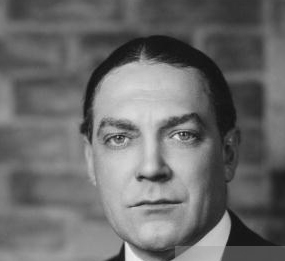
Figure 2. Thoby Prinsep in 1930.(Getty Images)

            On 17 January 1931 Frederick arrived in London having travelled from Durban via Cape Town and Dunkirk. He was described as a ship owner aged 44 and was accompanied by his wife and four others aged between 15 and 51. They all gave their address as ‘The Abbey’, Bourne End, Buckinghamshire. 22 By 1932, Frederick had an address at 47 West Hill, N.6.23 The owner and chairman of the Ellerman Shipping Line, Sir John Ellerman, died in 1933. He left £2,500 ‘to his friend Thoby Prinsep’.24 The following year, on 23October, Thoby and his wife travelled to Calcutta leaving from Liverpool. Their address this time was 35 West Hill Court, Highgate, London.25 but in 1935 his address was again at 47. In that year both Thoby and his wife were in Birkenhead for the launch of the new steamship City of Manchester. It had been built for the Ellerman Lines by Cammell, Laird, and Co., and ‘on May 2nd it was christened with Australian wine by Mrs. Prinsep, wife of Mr. F. T. L. Prinsep, a member of the executive controlling the Ellerman Lines, Ltd. The City of Manchester has been built specially for the Australian trade and is fitted for the carriage of all classes of cargo, including chilled beef. The new ship will be an important addition to the company’s fleet’. 27

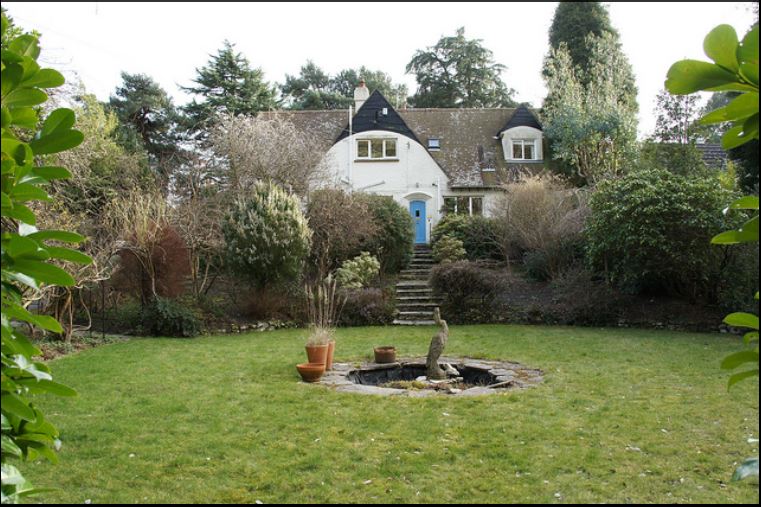
By the following year the Prinseps had moved to The Lychgate, Spencer Road, Canford Cliffs, Poole, Dorset

Figure 3. The Lychgate, Spencer Road, Canford Cliffs, Poole, Dorset. Attribution-Non Commercial-No Derivatives 4.0 International (CC BY-NC-ND 4.0). https://www.flickr.com

Thoby Prinsep`s last voyage was made on 23 January 1936 when he left Liverpool for Marseilles.  He was 49 and a ‘ship owner’, with an address at Stoneways, Winnington Road, Hampstead, London. He was travelling with a nurse, Miss Daisy Winn, aged 33, of the same address.28

Frederick Thoby Leyland Prinsep died aged 49, on 12February 1936 at Villa la Pescade, Avenue du Cape de Nice, Nice in the south of France. 29

News was received in London yesterday of the death in the South of France of Mr Frederick Thoby Leyland Prinsep, elder brother of Mr. Anthony Prinsep the theatrical producer and son of the late Mr Val. Prinsep, the Victorian R.A. 30

The Ellerman Line`s house magazine said that:

The directors have to report with sincere regret the death, in February last, of Mr. F.T.L. Prinsep, who had been associated with the company as a director and one of its managers for about twenty-five years, and they desire to record their appreciation of his valued services to the Company. 31

He was buried on 15 February 1936 at St. Barnabas Cemetery. Kensington.32 His will was probated on 8 April 1936. 33 When it was written on 10 January 1929, his address was ‘The Abbey’, Bourne End, Bucks with his business address 104 Leadenhall Street, London. He lists bequests to his wife Francoise Catherine Pauline Prinsep, to his brothers and to his stepson, Serge Albert Kiriloff. The latter was to receive his ‘gold platinum watch chain’ as well as £1000. This was later altered to £25,000 in a codicil of 1934 when he was living at 47 West Hill, Highgate.

Mr Frederick Thoby Leyland Prinsep, of Stoneways, Winnington Road, Hampstead Lane, Finchley, a director of Ellerman Lines and other concerns, left £208,842. (Estate Duty £50,221). He made various bequests and left three-quarters of the residue to his wife and divided the remainder between his brothers, Anthony, the theatrical producer, and Nicholas. 34

Judging by his will, he was not a collector of art as all his paintings were either by his father or were passed down through the family. Catherine Prinsep died in 1945, aged 68, at Hendon, Middlesex.35

Noel Edwin Peck was born on 5 December 1873 in Glasgow. He was the eldest child of William Edwin Peck and Margaret Budge Forbes.36 According to the 1891 census he was an ‘apprentice shipbuilder’ living with his family at Broomhill Farm House, Partick. 37

Ten years later the family had moved to Newington in Renfrewshire and Noel was now a Naval Architect. 38 He joined the firm of Barclay, Curle and Co. Shipbuilders, Glasgow as a draughtsman eventually becoming chief draughtsman and then shipyard manager. He was made a director of the firm and, during the First World War, was Director of Shipbuilding at the National Shipyards. He died at his home in Helensburgh on 13 October 1937.39

Barclay Curle built thirteen ships for the Ellerman Line between 1903 and 1918 and a further eight between 1920 and 1936.40 Presumably Peck would have been responsible for supervising the building of most of them and it is likely that in this capacity he would have met Frederick Prinsep.  The close connection between Barclay Curle, Peck and Prinsep would probably explain why the painting was given to Glasgow together with the fact that Valentine Prinsep had exhibited at the Glasgow International Exhibition of 1901.

In the Object File associated with the painting at Glasgow Museums Resource Centre it is stated that it was ‘presented by the artist`s three sons’.

The second son, Anthony Leyland Valentine Prinsep was born on 21 September 1888 in London.41 In his teens he developed into an excellent tennis player and entered Wimbledon reaching the second round of the tournament in 1909 but was eliminated in the first round in 1910.42 In the 1911 Census he was an undergraduate boarding at Carhullen, Newquay, Cornwall.43 The following year on 8 August, he married Marie Kaye Wouldes Lohr at St. Martin-in-the-Fields in London. This was a large ‘theatrical’ wedding as she was a well-known Australian actress and was appearing at the Duke of York theatre at the time.44 They had one child, Jane Prinsep, who was born in 1913 45. Between 1918 and 1928 Anthony was manager of the Globe Theatre in Shaftesbury Avenue, London. He and his wife managed it jointly until 1923.46 In August 1921 they sailed on the Empress of France to Canada where they were to embark on a ‘theatrical tour’ to Vancouver and back. His occupation was ‘theatrical lessee’.47 They returned via Liverpool on 5 March 1922.48 The couple divorced in 1928 and on 30 April 1928 Anthony married Margaret Grande Bannerman in Melbourne. She had been born in Toronto on 15 December 1896. This marriage also ended in divorce on 14 June 1938.49 Anthony Prinsep died on 26 October 1942 in London.50

The third son, Nicholas John Andrew Leyland Prinsep was born on 19 November 1894 and was baptised in St Barnabas, Kensington on 4 May 1904. 51 He served during the First World War reaching the rank of Second Lieutenant. 52 After the war he returned to live with his mother and brother Thoby at 14 Holland Park Road, London. On 9 February 1927 he left Southampton aboard the Olympic and sailed to New York. He was now aged 32 and a member of the stock exchange. On the passenger list he gave his nearest relative as Thoby Prinsep. 53

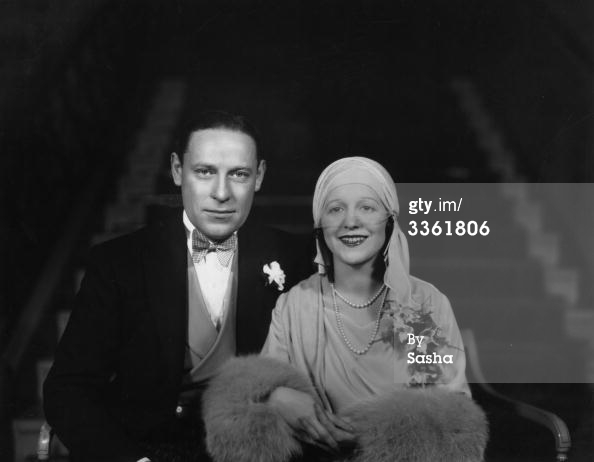
In January 1930, Nicholas Prinsep married Hannah Edelsten at St. George`s, Hanover Square, London. 54 She was a musical comedy actress with the stage name Anita Elsom.

Figure 4. Nicholas Prinsep and his wife Anita Elsom 7 Jan 1930. (Getty Images)

 For their honeymoon, the couple travelled to Yokohama, Los Angeles and New York arriving back in Liverpool on 9June 1930. They were accompanied by a ‘lady`s maid’. Nicholas was a stockbroker with an address at 10 Farm Street, Mayfair. 55, 56 He seems to have been in Japan on his own in 1933 returning via Shanghai, Colombo, Bombay and Gibraltar arriving in Plymouth on 2 March. 57 On 30 January the following year Nicholas and Hannah sailed to New York aboard the Isle de France. They returned to Southampton on 23 February. He was now a ‘merchant in the London Stock Exchange’ still living at Farm Street, Mayfair. 58, 59

However, in April 1936, the couple divorced with ‘Mrs Hannah Prinsep, of Chesterfield House, Mayfair’ being granted a decree nisi with costs from her husband ‘on the grounds of his adultery in a West End hotel’. The suit was undefended. 60

In 1940, Nicholas, aged 46, was one of several Flight Lieutenants who relinquished their commissions on appointment to commissions in the Royal Air Force Volunteer Reserve. 61 When his brother Anthony died in 1942, Nicholas, now a Wing Commander, was one of his executors. 62 His name appears in The London Gazette in 1952 concerning the dissolution ‘by mutual consent’ of his business partnership with various others. 63

Nicholas Prinsep died on 27 May 1983 in London. He was 88 and was survived by his spouse Cele Prinsep. 64

References

  1. Glasgow Corporation, Minutes of Sub-Committee on Art Galleries and Museums, 27 July 1923.
  2. Object File at Glasgow Museums Resource Centre. This refers to a letter dated 5.7.23 from Thoby Prinsep to Noel Peck, re. proposed gift to Glasgow. (No 50 of papers relating to bequests and gifts). However, this letter cannot be traced.
  3. London Births and Baptisms, 1813-1906, ancestry.co.uk
  4. Census, England 1891, ancestry.co.uk
  5. Boston Passenger and Crew Lists, 1820 -1943, ancestry.com
  6. London, Freedom of the City, Admission Papers, 1902, ancestry.com
  7. Minute Book of Ellerman Shipping Lines, University of Glasgow Archives
  8. Lloyds Register of Ships and Shipping
  9. UK Outward Passenger Lists, 1890 – 1960, ancestry.co.uk
  10. Minute Book of Ellerman Shipping Lines, University of Glasgow Archives
  11. ibid
  12. London Electoral Registers, 1832 – 1965, ancestry.co.uk
  13. Minute Book of Ellerman Shipping Lines, University of Glasgow Archives
  14. British Army WW1 Medal Rolls Index Cards
  15. London Electoral Registers, 1832 – 1965, ancestry.co.uk
  16. ibid
  17. The Development of British Shipping throughout the Ages, Prinsep, Thoby, Ellerman Lines; Spottiswoode, Ballantyne & Co., 1924 http://www.worldcat.org/title/development-of-british-shipping…/82154545‎)
  18. Family Search
  19. UK Incoming Passenger Lists 1878-1960, ancestry.com
  20. British Phone Books, ancestry.co.uk
  21. The London Gazette, 21 February 1930
  22. UK Incoming Passenger Lists 1878-1960, ancestry.co.uk
  23. British Phone Books, ancestry.co.uk
  24. Daily Express 16August 1933
  25. UK Outward Passenger Lists, 1890-1960, ancestry.co.uk
  26. British Phone Books, ancestry.co.uk
  27. The Courier-Mail, Brisbane 6May1935
  28. trove.nla.gov.au/ndp/del/article/36749311
  29. UK Outward Passenger Lists, 1890-1960, ancestry.co.uk
  30. From his probated will.
  31. University of Glasgow Archives, Press Cuttings Book, Ellerman Lines.
  32. ibid
  33. London, Deaths and Burials, 1813-1980, ancestry.co.uk 
  34. National Probate Calendar – Index of Wills.
  35. University of Glasgow Archives, Press Cuttings Book, Ellerman Lines.
  36. London, Deaths and Burials, 1813-1980, ancestry.co.uk
  37. Family Search
  38. Scotland`s People, 1891 Census
  39. Scotland’s People, 1901 Census
  40. Glasgow Herald 14 Oct 1937, Deaths and Obituary page 9
  41. Lloyds Register of Ships and Shipping
  42. London Births and Baptisms, 1813-1906, ancestry.co.uk
  43. http://www.wimbledon.com/en_GB/scores/draws/archive/…/index.html‎
  44. England Census, 1911, ancestry.co.uk
  45. New York Times 9 August 1912.
  46. www.stanford.edu/group/auden/cgi-bin/auden/individual.php
  47. ibid
  48. UK Outward Passenger Lists, 1890 – 1960, ancestry.co.uk
  49. UK Incoming Passenger Lists 1878-1960, ancestry.co.uk
  50. www.stanford.edu/group/auden/cgi-bin/auden/individual.php
  51. The London Gazette 19 February 1943
  52. London Births and Baptisms, 1813-1906, ancestry.co.uk
  53. The London Gazette 18September 1914
  54. NY Passenger Lists, 1820-1957, ancestry.com
  55. England and Wales Marriage Index, 1916-2005, ancestry.co.uk
  56. NY Passenger Lists, 1820-1957, ancestry.com
  57. UK Incoming Passenger Lists 1878-1960, ancestry.co.uk
  58. ibid
  59. ibid
  60. UK Outward Passenger Lists, 1890-1960, ancestry.co.uk
  61. The Glasgow Herald, 9 April 1936, page 19
  62. The London Gazette, 28May 1940
  63. The London Gazette, 19 February 1943
  64. The London Gazette, 4 January 1952
  65. The London Times, Death Notices,1982-1988, ancestry.co.uk

Appendix 1

Sir Frederick Richards Leyland – Grandfather of Frederick Thoby Leyland Prinsep

            Frederick Richards Leyland was born in Liverpool in 1831. He was apprenticed in 1844 to John Bibby & Sons, Liverpool`s oldest, independent shipping line. He prospered within the firm and was made a partner in 1861. At the end of 1872 he bought out his employers and changed the company name to the Leyland Line. He expanded into the transatlantic trade and by 1882 owned twenty-five steamships.

            In 1855 Frederick married Frances Dawson and the marriage produced four children one of whom, Florence, married Valentine Prinsep. He leased Speke Hall near Liverpool in 1867 and began restoring it with advice from his friend the artist Dante Gabriel Rossetti. The walls were decorated with much of his art collection which consisted of Italian Renaissance paintings including a Botticelli series illustrating Boccaccio’s tale of Nastagio degli Onesti and mentioned in Vasari (now in the Cambó collection, Barcelona, and an Italian private collection). He also became the leading patron of several living artists, primarily Rossetti, Edward Burne-Jones, and James McNeill Whistler. Leyland began to buy Whistler’s paintings in the 1860s and had his portrait, Arrangement in Black: Portrait of F. R. Leyland painted by the artist. Leyland also commissioned several paintings from Whistler including Symphony in Flesh Colour and Pink: Portrait of Mrs. Frances Leyland, and several portraits of his daughter Florence and her sisters. He also commissioned The Beguiling of Merlin, from Edward Burne-Jones. In the 1870s, Leyland commissioned Whistler to decorate the dining room of his London house. The resulting ‘Peacock Room’ is considered one of Whistler’s greatest works. However, Leyland refused to pay the price Whistler demanded for the project, they quarreled, and their relationship ended in 1877. The Peacock Room was later dismantled and shipped to the United States.

            Brooding and aloof, Leyland took solace in music, faithfully practising on his piano but never mastering the instrument to his satisfaction. According to contemporaries he was ‘hated thoroughly by a very large circle of acquaintance’ and his ‘immorality and doings with women’ are said to have been widely acknowledged. He and his wife officially separated in 1879, possibly because of Leyland’s liaison with Rosa Laura Caldecott, whom he had established in 1875 at Denham Lodge, Hammersmith, and who bore a son named Frederick Richards Leyland Caldecott in 1883. At about that time Leyland acquired Villette, near Broadstairs in Kent, a house he shared with Annie Ellen Wooster and her children, Fred Richards and Francis George Leyland Wooster, born in 1884 and 1890; they are noted in Leyland’s will as his ‘reputed sons’.

            When Leyland died from a heart attack on 4January 1892 he was one of the largest ship owners in Britain with his estate was assessed at £732,770. He was buried in Brompton cemetery where his grave is marked by a bronze monument designed by Edward Burne-Jones.

            In 1892, John Ellerman formed a consortium which purchased the Leyland Line from the estate of Frederick Leyland. Valentine Prinsep, Leyland`s son-in-law, was made a director. In 1901, Ellerman sold this business to J.P. Morgan for £1.2 million. However, Ellerman remained as chairman and subsequently formed the London, Liverpool & Ocean Shipping Company Limited as a separate enterprise. This company acquired fifty percent of George Smith & Sons, City Line in Glasgow and established an office in the city. Its name was changed in 1902 to Ellerman Lines Ltd. with offices in Liverpool, London and Glasgow. Frederick Prinsep became a director of this company in 1912.

Adapted from the Oxford Dictionary of National Biography and

http://www.mr-whistlers-art.info/life/k_m.shtml‎

Appendix 2

Frederick Prinsep`s Certificate of Apprenticeship

            Skinners, originally fur companies, made up one of the ‘great 12’ livery companies. Joining a ‘Livery Company’ was a condition of being able to trade in the City of London although it was not necessary to work in the company joined.