Isabella Ure’s parents were Alexander Ure (b.1788), a writer in Glasgow, and his wife Mary Ross (b.1800) the daughter of a grocer in the Gorbals. Alexander and Mary had married on 4 December 1819 in the Gorbals and had four children; John Francis, b. 1820, Margaret, b. 1822, d. 1829; Mary, b. 1824, d. 1826; and Isabella who was born on 15 March 1828 at 13 St. Vincent Place, Glasgow.
Isabella of Alexander Ure and Mary Rofs in Hutchesontown, 15th March, bapt. 27th 1
Alexander Ure died on 23 November 1830 when Isabella was only two years old and was buried in the Old Gorbals Cemetery alongside his two infant daughters. Mary Ure and her two surviving children moved to 145 Hill Street, Garnethill. Later John Francis was sent to a boarding school in England leaving Mary and Isabella on their own. In the 1851 Census, they were visiting 34 Portland Street, Gorbals 2.
John Ure became a civil engineer and then Resident Engineer with the Clyde Trust. In this capacity he is likely to have met John Elder of ‘Randolph, Elder and Co.’, marine engineers on the Clyde. There would then follow an introduction to his sister Isabella.
In any event, on the 31 March 1857 ‘in her mother`s home’, Isabella, now aged 28 married John Elder (b. 1824) master engineer and shipbuilder 3. He was the third son of the marine engineer David Elder. The service was conducted by the Rev. Norman MacLeod after banns had been read in the Barony Church where Isabella was a member. An ante nuptial contract had been signed on 30 March 1857. By this agreement, Isabella was free to do whatever she wished with her own estate without reference to her husband. In the event of his death all his estate was to pass to her.
After their marriage, John and Isabella moved as tenants to 121 Bath Street (built in 1840) and were listed there with three servants in the 1861 Census 4. The business of ‘Randolph and Elder’ which was concerned in the manufacture of marine engines, continued to flourish and in 1863 the Fairfield Estate in Govan was purchased, and the firm diversified into shipbuilding. This necessitated a move by John and Isabella to Elmpark, a villa in Govan Road.
The Elders seem to have been very happy together sharing a common interest in music (Isabella played the piano) and they had a wide circle of friends and acquaintances among whom were Professor Macquorn Rankine, Regius Chair of Civil Engineering and Mechanics at Glasgow University and the Reverend Norman Macleod who was later to preach to Queen Victoria at Crathie Church. Both John and Isabella had strong religious convictions and were motivated to try to improve the lot of their Govan workforce. Apprentices were encouraged to attend evening classes with expenses paid where necessary; an accident fund was set up and a cooking depot provided at the gate of the shipyard. The business was expanding and when Charles Randolph retired in 1868 it was renamed ‘John Elder and Company’. However, in 1869, John Elder`s health began to decline. He and Isabella went to London to consult specialists, but it was to no avail. John Elder died in London on 17 September 1869. His body was returned to Glasgow and interred in the Necropolis on 23 September.
The business of John Elder and Co. now employed about five thousand workers and had many orders to fulfill. For nine months after John Elder`s death, Isabella ran the business single-handedly until strain and exhaustion forced her to seek partners. The senior partner nominated was her brother John Francis Ure. It was also at this time that she decided to move from Govan back to Glasgow. She bought Claremont House, a mansion in the West End which had been designed by John Baird I and built in 1842. Also, at this time because of the state of her health, Isabella was advised by her doctor to embark on a tour of the Continent.
She and a lady companion, Miss Caroline Jay set of from Glasgow in November 1870 apparently with no great enthusiasm. She wrote,
I certainly expected no enjoyment from this Continental tour but went as a duty – I was too crushed by my great sorrow and unnerved by long anxiety and fatigue during Mr. Elder`s illness and afterwards, to look to the right or the left for anything of the kind.
They visited England, Belgium, Germany, Austria and Italy. While staying at the Hotel Danieli in Venice they first encountered the man Isabella referred to in her notes as ‘the Russian’ and later just as ‘R’. After her return to Glasgow in May 1871, ‘R’ turned up unexpectedly at Claremont House. He subsequently proposed marriage in a letter. She immediately wrote back rejecting his proposal which she had received with some alarm. In the summer of 1872, Isabella travelled to Florence to commission a bust of her late husband. On the way she received two letters from ‘R’ one of which claimed they were now engaged! While she was staying at Ems on the return journey ‘R’ turned up at her hotel. He pleaded with her to give him money to repay a debt. ‘I, very foolishly perhaps, gave him £50….‘ On this visit, ’R’ also met John Francis Ure who was visiting his sister but who was unaware of the situation between them.
All three left Ems to journey to Metz where they visited the battlefields of the Franco-Prussian war. On the way, Isabella lent ‘R’ her watch which had been a present from her husband and precious to her. In October 1872, ‘R’ turned up unexpectedly at Claremont House and was asked to stay to dinner to meet John Francis. Before dinner he apparently said to her, ‘If you don`t accept me, I`ll hunt you like a Red Indian as long as you live’. This eventually prompted Isabella to tell her brother the whole story. He visited ‘R’ and told him to discontinue his visits. Later, through her lawyer, Isabella received her letters and her watch. She never saw ‘R’ again. In the 1880s a man called Romanoff was executed in Paris. Her law agent at the time told her that ‘R’ and Romanoff were one and the same.
Isabella was now a wealthy widow with a comfortable and commodious house. Its walls were hung with pictures including A Lake Scene by Corot and Flowers by Narcisse Diaz which were later bequeathed to Glasgow. However, she felt the need to return something to the community, especially that of Govan where her husband had made his fortune. She began in 1873 by giving £5000 to Glasgow University as a ‘supplementary endowment’ to the Chair of Civil Engineering in memory of her husband. This ‘augmented the Professor`s salary ….. by £225 a year’5. Professor McQuorn Rankine was a close friend whom Isabella held in high regard. Earlier that year he had published a Memoir of John Elder which had a very favourable reception in the press. (Professor Rankine was also one of those who proposed the idea of supplying Glasgow`s water from Loch Katrine).
Isabella`s mother died in Dunoon in 1876 aged 79 years. Her death was reported by Isabella`s brother John Francis 6. Because of failing health, John Francis retired in 1878 and took up residence in Cannes. Isabella spent the winters there with him until he died of a stroke in 1883.
In 1883 Isabella gave a further donation of £12,000 to Glasgow University to endow the “John Elder Chair of Naval Architecture” the first such chair of its kind in the world. In the same year, she purchased 37 acres of land opposite Elder`s shipyard and had it turned into a park for the people of Govan at a total cost estimated at £50,000. The park was eventually opened in 1885 by the Earl of Roseberry amid great fanfare and a public holiday.

In 1884, Isabella bought North Park House and grounds near the Botanic Gardens in Glasgow for £12,000 and gave it to Queen Margaret College (QMC) to be used for the Higher Education of Women on condition that the College raised £20,000 as an endowment fund. When Queen Victoria visited the College in 1888, Isabella was presented to her as ‘a true benefactress to women`s education’. To commemorate the visit, Isabella presented the College with a new set of gates for the main entrance. Reporting on a Bazaar organized to raise funds for the endowment of the College, the Glasgow Evening Times observed that Mrs. Elder, who gave the opening speech, ‘is a buxom, well-preserved lady, with a self-possessed manner, and she said what she had to say with calm deliberation’. 7 She was then 64 years old. As a result of the bazaar, the endowment fund was now raised, and Isabella gifted North Park house and grounds to the university in October 1893. When the College extended its teaching to include female medical students, Isabella undertook to meet the running costs for the first few years. The College became incorporated into the University of Glasgow and the first female medical students graduated in 1894.
Another project with which Isabella was involved was the School of Domestic Economy in Govan. The aim was ‘to improve the ability of women to cook nutritious meals cheaply and well and also to manage a home’. This was established in 1885 in the Broomloan Halls. Isabella met all the costs of the School and contributed money for prizes. An article praising the work of the school appeared in the British Medical Journal 8.
She was one of the subscribers (ordering two copies) to Memoirs and Portraits of One Hundred Glasgow Men in 1886. This contained entries for both her husband and brother 9. A statue of John Elder which had been paid for by public subscription was unveiled in the Elder Park, Govan on 28July 1888.
In 1891, Isabella arranged and paid for a course of lectures to be given at QMC on Astronomy. This was to continue for three years. She also gave an orrery to QMC. In her will she left £5000 to the Glasgow and West of Scotland Technical College to found a course of lectures on astronomy. These ‘David Elder Lectures’ (named after her father-in-law) are still given today at the University of Strathclyde.
Isabella continued to take an interest in medical education for women both in Queen Margaret College and elsewhere. In October 1895 she gave an address to the Edinburgh School of Medicine for Women in which she described what had been established in Glasgow at QMC. She concluded,
It is always a great happiness to me when women, wherever educated, distinguish themselves and prove their sex worthy of the higher education so long withheld.
In 1901 as part of the 450th anniversary celebrations of the University of Glasgow, Isabella was one of four women awarded an Honorary LLD degree. This was the first-time women had been awarded honorary degrees by the university. In the same year she provided a home in Govan for the Cottage Nurses Training Scheme and donated £27,000 to establish the Elder Park Library which was opened by Andrew Carnegie in 1903.

She also gave £5000 to the building fund of the Glasgow and West of Scotland Technical College. Another gift, the Elder Cottage Hospital was opened in Govan in 1903. Isabella paid all of the hospital expenses up till her death and in her will she gave an endowment of £50,000 to assist with running costs
Isabella Elder died at home on 18 November 1905 leaving an estate valued at £159,404. 0s. 6d. (about £15,000,000 today). Her death certificate stated that she died of heart failure, gout, bronchitis and cerebral effusion 10. Appropriately it was signed by Dr. Marion Gilchrist – the first female medical student to graduate from Queen Margaret College. Isabella was buried in the Elder Family Tomb in the Necropolis on 22 November 1905.

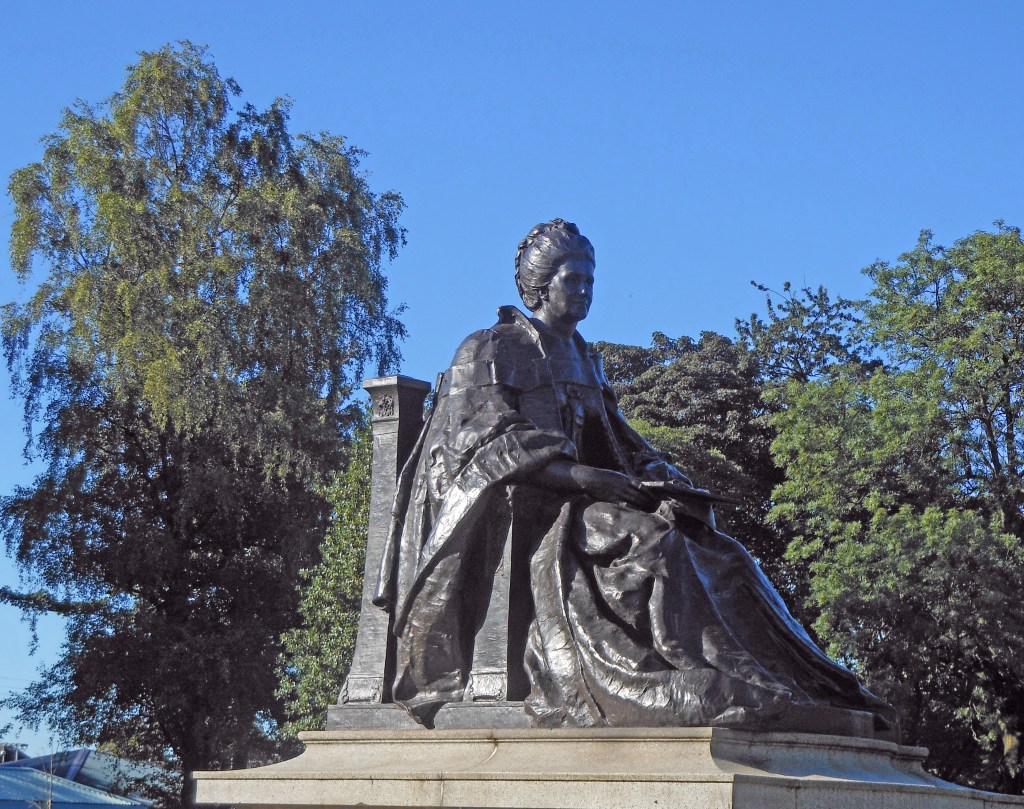
A statue of Mrs. Elder, paid for by public subscription, was unveiled in Elder Park on 13 October 1906 by the Duchess of Montrose. In the same year the ‘Ure-Elder Fund for Indigent Widows of Glasgow and Govan’ was set up under the terms of her will.
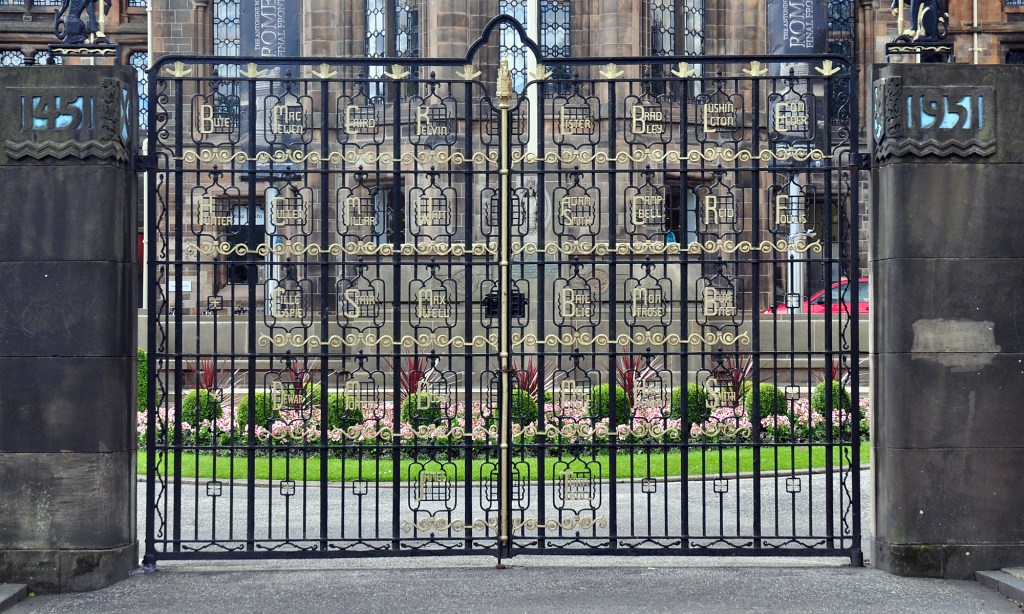
The 500th anniversary of the University of Glasgow was marked in 1951 with the erection of new wrought iron gates at the main entrance. These incorporated the names of twenty-eight people associated with the University. One of these was Isabella Elder – the only woman so honoured.
References
Much of the material for this report was taken from the biography of Isabella Elder
The Lady of Claremont House, Isabella Elder, Pioneer and Philanthropist,
by C. Joan McAlpine, Argyll Publishing, 1997.
The same author also wrote the entry for Isabella Elder in the Oxford Dictionary of National Biography, OUP 2004-13, May 2006.
- Scotland`s People, OPR, Glasgow, 1828.
- Scotland`s People, Census Record 1851
- Scotland’s People, Marriage Certificate
- Scotland’s People, Census, Glasgow, 1861
- The Bailie, 12 December 1883.
- Scotland’s People, Death Certificate
- Glasgow Evening Times, 25 November 1892.
- British Medical Journal, 14 June 1890.
- Memoirs and Portraits of One Hundred Glasgow Men etc. Maclehose, James & Sons,Glasgow, 1886
- Scotland’s People, Death Certificate
Appendix 1
Mrs. Isabella Elder of 6 Claremont Terrace, Glasgow, bequeathed twenty paintings to Glasgow in February 1906:
Oil. John Linnell. (1792-1882). The Disobedient Prophet (1854). Acquisition 1153. Destroyed by enemy action 1939-451
Oil. Edward Armitage R.A. (1817-1896). Hero2. (1869, exhibited R.A.) Acquisition 1154.
Oil. Marcus Stone R.A. (1840-1921). Royalists Seeking Safety (1866). Acquisition 1155.
Oil. Antonio Canaletto.3 (1697-1768, imitator of). Grand Canal, Venice. (early 19th Cent?). Acquisition 1156.
Oil. Emile Charles Lambinet. (1811-1877). Coast Scene. (1867). Acquistion 1157
Oil. unknown4. Nell Gwynn? (c.1765?). Acquisition 1158.
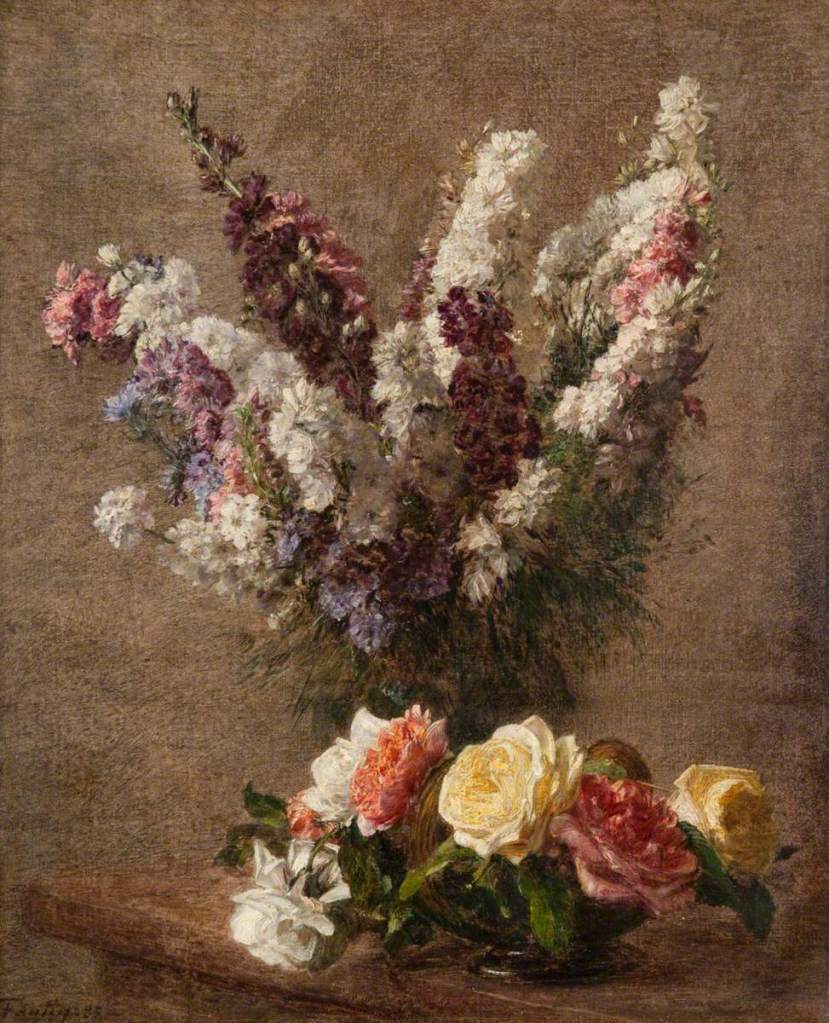
Oil. Narcisse V. Diaz. (1807-1876). Roses and other Flowers. (1845-50). Acquisition 1159.
Oil. J. B. C. Corot. (attributed to, 1796-1875). Wooded Landscape with figures. (1865-1874?). Acquisition 1160.
Oil. Fosco Tricca (1856-1918). Looking at the Carnival (1881). Acquisition 1161.
Oil. Frederick Goodall R.A. (1822-1904). Spanish Peasants Retreating from the French Army (1846, exhibited R.A.). Acquisition 1162.
Oil. Enrique Serra. (1859-1918). The Chess Players (1889). Acquisition 1163.
Oil. Theophile Emmanuel Duverger. (1821-1901). Playmates (1840-1880?). Acquisition 1164.
Oil. Peter Graham R.A. (1836-1921). Along the Cliffs (1868). Acquisition 1165.
Oil. Sam Bough R.A. (1822-1878). Loch Achray (1869). Acquisition 1166.
Oil. T. Sidney Cooper A.R.A. (1803-1902). Landscape with Cattle (1833, exhibited R.A.). Acquisition 1167.
Oil. T. Sidney Cooper A.R.A. (1803-1902). Landscape with Sheep (1864). Acquisition 1168.
Oil. Lionel Percy Smythe R.A. (1839-1918). Children coming from School (1868). Acquisition 1169.
Oil. Jacques d’Artois 5 (1613-1686). Wooded Landscape (after 1634). Acquisition 1170.
Oil. James Archer R.S.A. (1823-1904). Portrait of J. F. Ure (1884). Acquisition 1171.
Oil. Sir Daniel Macnee P.R.S.A. (1806-1882). Portrait of John Elder (after 1826). Acquisition 1172.
- Another version of this painting is in the Harris Museum and Art Gallery.
- This was called Hero and Leander.
- This was bought at Sir Richard Wallace`s sale as by Canaletto.
- This was painted by Sir Peter Lely and had the title, Nell Gwynne.
- This was by Artois ‘with figures added by Teniers’.
She also gifted busts of John Elder by Powers, David Elder, senior by Ewing and Diana by Powers.
Appendix 2
Isabella Elder`s Will – Abridged – The Scotsman, 24 November 1905, p 8.
The trustees are instructed to hand over to the Corporation of Glasgow the following paintings in the house at 6, Claremont Terrace, Glasgow, along with the busts of John Elder by Powers, of David Elder, sen., by Ewing and of “Diana” by Powers.
“The Disobedient Prophet”, by John Linnell,
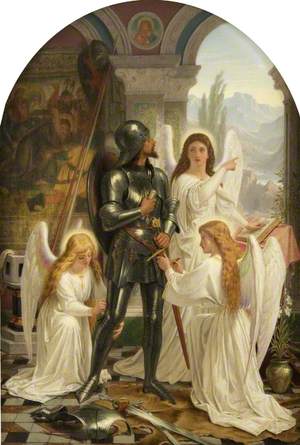
“Hero and Leander”, by Armitage,
“Royalists Seeking Safety”, by Marcus Stone,
“Grand Canal Venice”, bought at Sir Richard Wallace`s sale as by Canaletto,
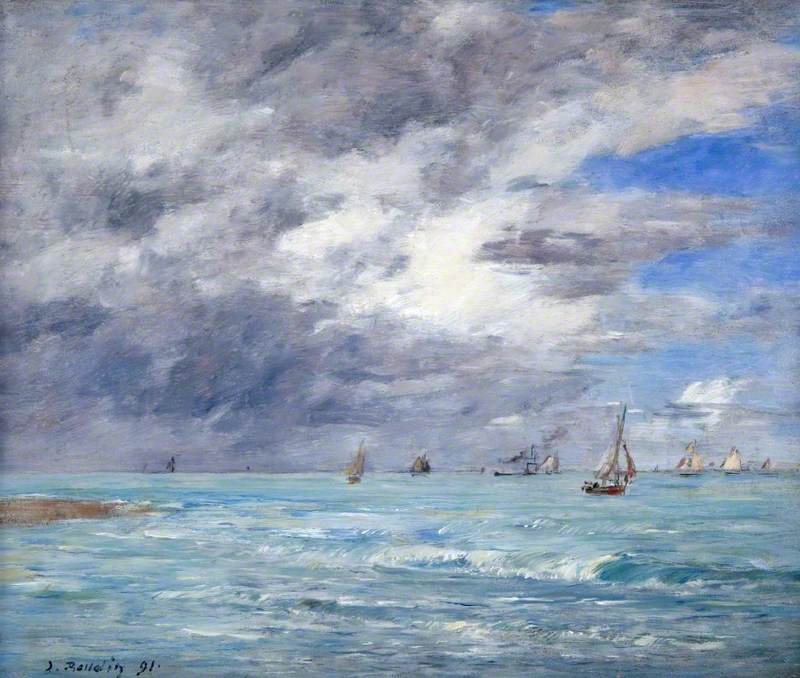
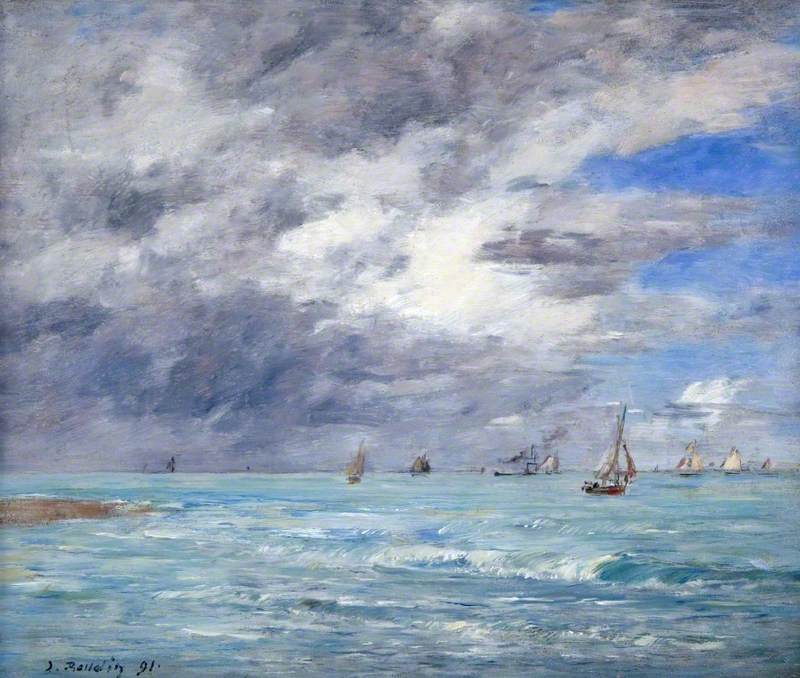
“Sea Piece”, by Lambinet,
“Nell Gwynne”, by Sir Peter Lely,
“Roses”, by Diaz,
“Wood Scene”, by Corot,
“Four Faces”, by Fosco Fritta,
“Passing the Cross”, by Goodall,
“The Chess Players”, by Serra,
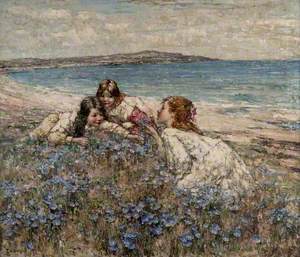
“Playmates”, by Duverger,
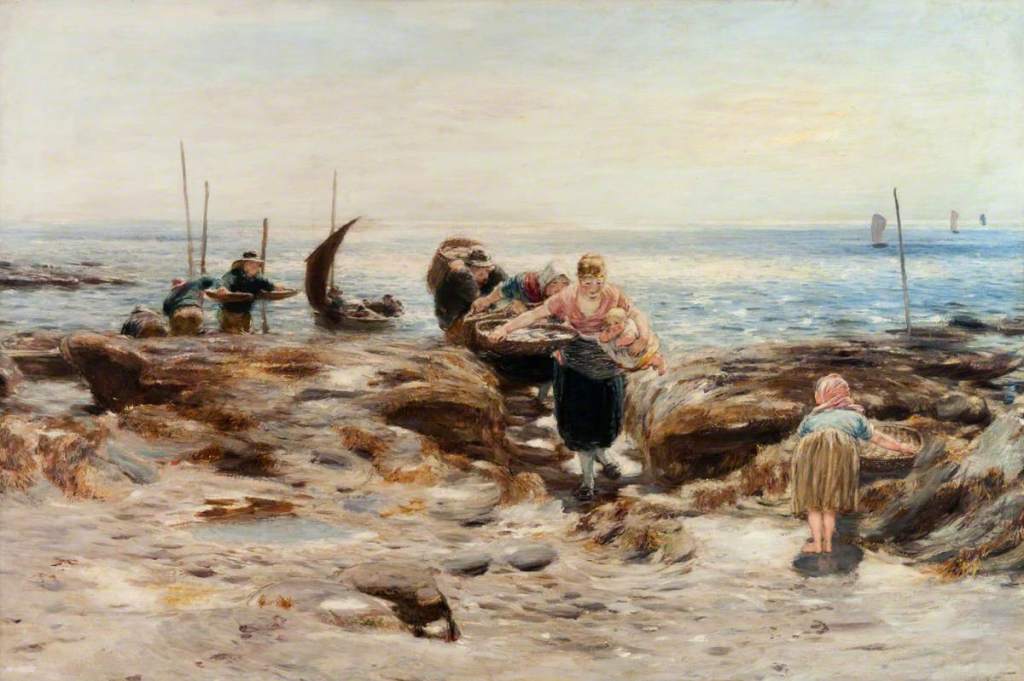
“Sea View” by Peter Graham,
“Loch Achray”, by Sam Bough,
“Cattle”, by Cooper,
“Sheep”, by Cooper,
“Children Coming from School”, by Lionel Smythe,
And landscapes by Artois, with figures added by Teniers.
They are also directed to hand over to the Corporation the portraits of the testator’s late brother and husband upon the condition that the two pictures be hung together in such gallery or other suitable place as the Corporation may see fit to locate them in. And, in addition to the paintings and portraits enumerated above the trustees are given the fullest power, should they think fit to do so, to hand over to the Corporation of Glasgow such others of the remaining paintings and watercolours as the Corporation may desire, declaring that as this bequest in intended entirely for the benefit of the public in all time coming, the Corporation shall at no time be at liberty to sell the said paintings and others or any of them.
Appendix 3
Deaths: Glasgow Herald, 20 November 1905.
ELDER – At 6 Claremont Terrace, Glasgow, on the 18th inst., Isabella, widow of John Elder, engineer and shipbuilder in Glasgow. – Funeral from 6 Claremont Terrace to the Glasgow Necropolis on Wednesday, the 22nd curt (?) at 2 p.m. to which all friends are invited; carriages at St. George`s Church at 1.40; those desiring to attend will please notify Messrs Wylie & Lochhead, 96 Union Street.
Obituary: Glasgow Herald, 20 November 1905
Mrs. John Elder of Govan. A Noted West of Scotland Philanthropist.
By the death of Mrs. John Elder, which took place on Saturday evening at her house, 6, Claremont Terrace, Glasgow, the West of Scotland loses one of its most distinguished and philanthropic ladies and the burgh of Govan one who has been closely associated for many years with its principal industry, and who has besides conferred on it many benefactions. Than “Mrs. Elder of Govan” there is no better known on the Clydeside, and even among those who had not seen her she was respected and revered, not only because of her husband, who predeceased her by thirty-six years, but also because of the way in which she has spent her life in good works, always more than ready to anticipate any possible method whereby she could help a good cause quietly, and above all to do something for the social and moral welfare of the West of Scotland in general and the burgh of Govan in particular. In Govan her name has all along been a synonym for open-handed though discreet philanthropy, and she could always be depended upon to contribute to any movement likely to benefit the public of the burgh.
Association with Shipbuilding
Mrs. Elder was the widow of Mr. John Elder, the famous shipbuilder and engineer, whose improvements on the marine steam engine have always been considered as second only to those made by James Watt. Mr. Elder with his friend Mr. Randolph founded the engineering firm of Randolph & Elder, and after about eight years as millwrights and engineers began, in 1860, to build ships. Their business increased immensely and ultimately became the great works which afterwards developed into Fairfield Shipbuilding and Engineering Company (Limited), Govan. Mr. Elder in his later years had entire chargeof the works, which he carried on with great success until his death in1869 at the early age of forty-five. To these works or to Mr. John Elder himself it is unnecessary to make more extended reference here. Mrs. Elder was the only daughter of Mr. Alexander Ure, who was in his day a well-known writer in Glasgow, and her only brother was Mr. John F. Ure, one of the most distinguished of civil engineers, and a man who, as engineer of the Clyde Navigation Trust, laid the foundation of many of the improvements which were afterwards made in the harbor and the river. When Mr. Elder died his widow was left sole proprietrix of the extensive business at Fairfield. This position, however, she retained for only nine months. First her brother became a partner and some time later the works passed entirely into other hands and became first a private and then a public limited liability company. Mrs. Elder, however, never ceased to take a personal interest in everything that concerned Fairfield and she was a frequent and welcome visitor at the establishment, which is even yet among those who have known it long spoken of as “Elder`s Yard”.
Mrs. Elder and Govan
Of Mrs. Elder`s methods of spending the wealth which her husband`s genius and industry endowed her it is hardly possible to speak with adequate fullness. Her private benefactions were many but of those the public were always kept in ignorance.

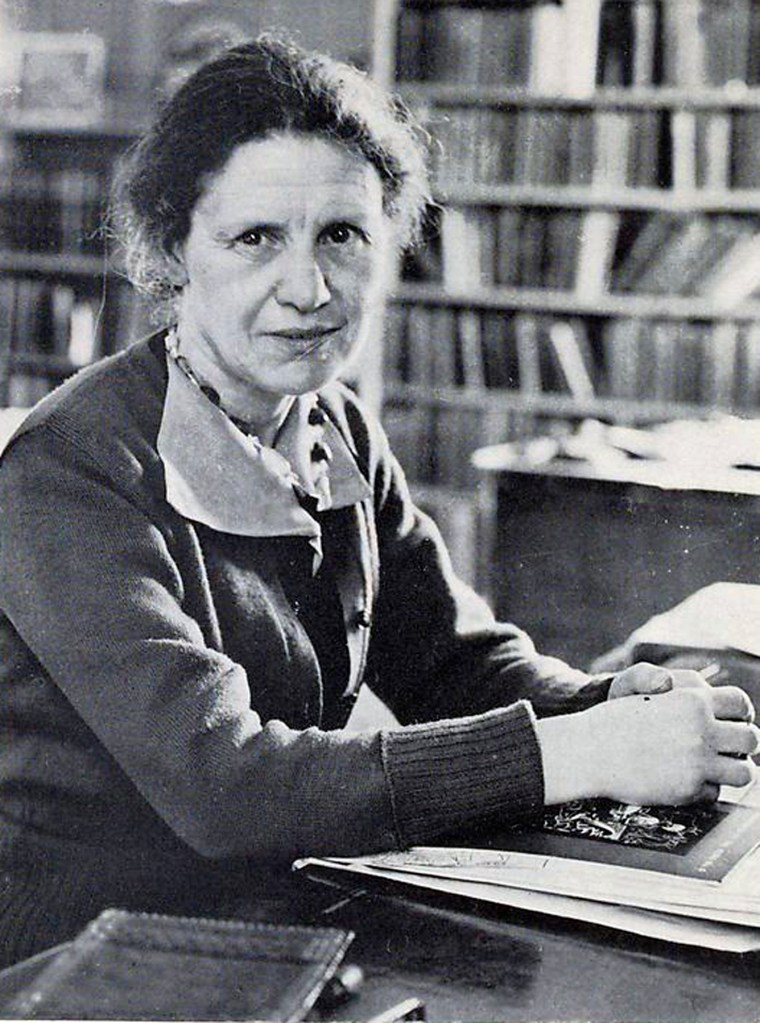
Millais, John Everett; Mrs Isabella Elder (1828-1905); Glasgow Museums; http://www.artuk.org/artworks/mrs-isabella-elder-18281905-85332



 Glasgow Museums Art Donors Group