George Brown Dunlop bequeathed seven paintings to Glasgow. These were received on 5 November 1950.
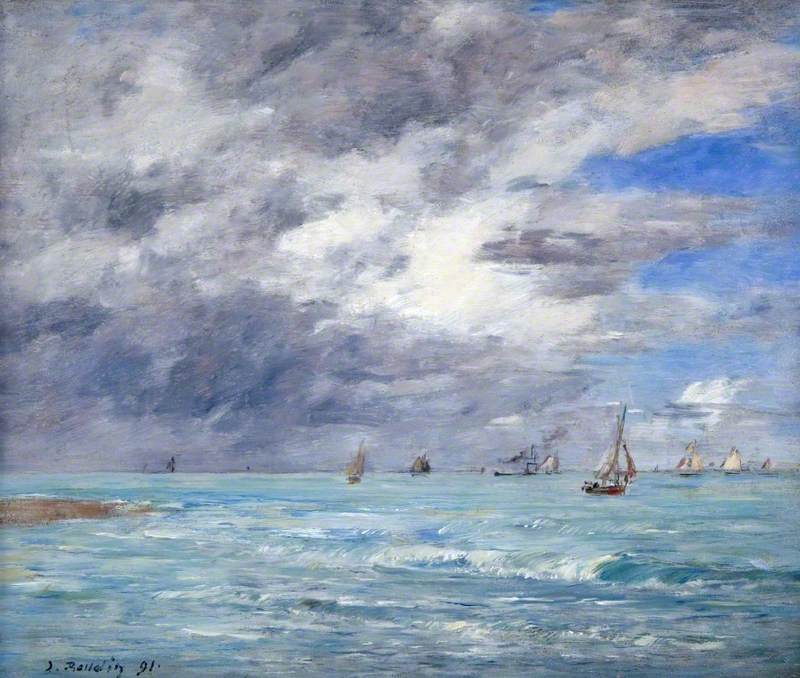
© CSG GIC Glasgow Museums Collection/ArtUK

(1836 – 1904), (2917)
© CSG GIC Glasgow Museums Collection/ArtUK

© CSG GIC Glasgow Museums Collection/ArtUK
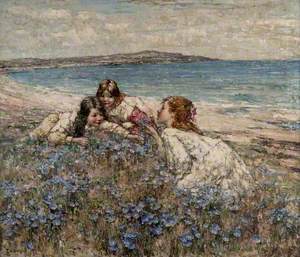
© CSG GIC Glasgow Museums Collection/ArtUK

© CSG GIC Glasgow Museums Collection/ArtUK
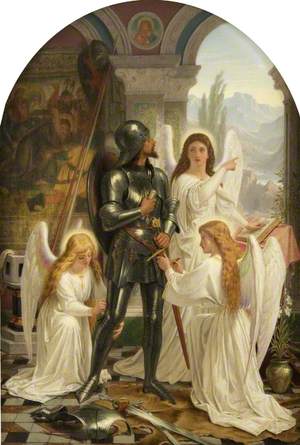
(1821 – 1901) (2921)
© CSG GIC Glasgow Museums Collection/ArtUK
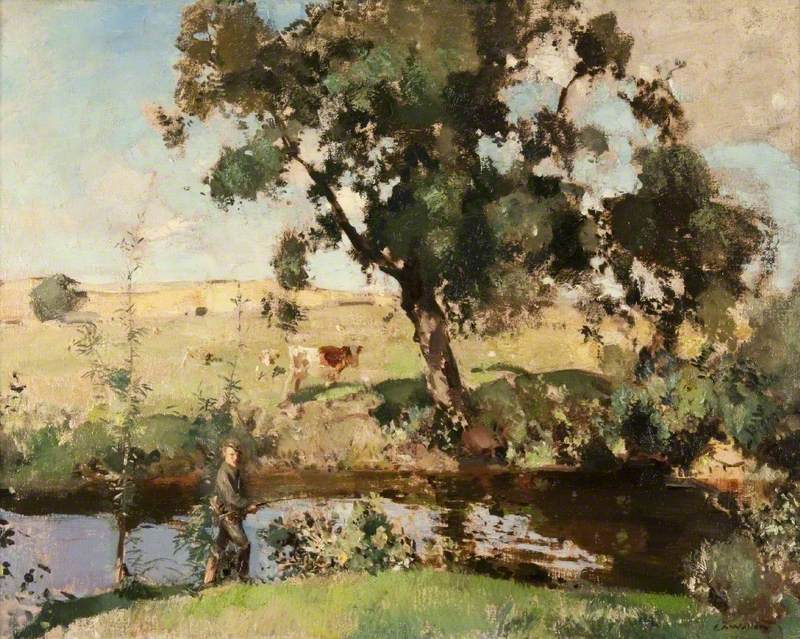
© CSG GIC Glasgow Museums Collection/ArtUK
George Brown Dunlop was born on 24 November 1876 at Witch Road, Kilmarnock. His parents were George Dunlop, a reporter, and Annie Roxburgh who had married in Kilmarnock on 14 October 1869. 1 By 1881 the family had moved to 78 Titchfield Street, Kilmarnock. George aged four had two older siblings, Annie R. born 1872, and James W. born 1873 and a younger sister Helen Jane born 1878. 2
In 1891 the family was living at 82 Titchfield Street, Kilmarnock. George was now aged fourteen and a scholar. 3 By 1901 George had become an ‘assistant publisher’ living with the same family members apart from James. 4 George Dunlop senior died in 1909 5 and with Annie Dunlop now head, the family moved to 19 Portland Road, Kilmarnock. In the 1911 census, George was thirty-four, single and a ‘publisher – employer’. His sister Helen was also living with them. 6 George’s mother, Annie Dunlop died the same year. 7
From 1915 to 1935, George was the proprietor/occupier of a house at 44 Portland Road, Kilmarnock 8 probably remaining there until 23 August 1938 when he married Annie Isabella Cameron (qv) at Juniper Green in Edinburgh. 9 The couple then moved to Dunselma in Fenwick about five miles from Kilmarnock.
George Dunlop senior was for many years the editor/partner of the Kilmarnock Standard newspaper which was founded 1863. George became its second editor in 1878. and the following year he formed a business partnership with William Drennan to form the firm of Dunlop and Drennan publishers of, among other things, the Kilmarnock Standard. George was highly respected as an editor and as a historian. He was a founder member of the international Burns Federation.10 When he died in 1909 George junior succeeded him initially as a partner and then as head of the firm. During his tenure he appears to have been able to maintain the prestige and standards of the paper so that it had a reputation as one of the best provincial weeklies in Scotland. 11
Away from work George Dunlop had a great interest in art and was for a time vice-president of the Kilmarnock Art Club. He had an extensive art collection and had a gallery built onto his house at Dunselma in Fenwick to display it to the full. Included in his collection in addition to those artists mentioned above were works by William McTaggart the elder and Joseph Crawhall. It was reputed that his collection of works by D. Y. Cameron (a close friend) was the largest in the country. 12 As well as his bequests to Glasgow, he gave several paintings to Kilmarnock which are now displayed at the Dick Institute. He also donated each year the Kilmarnock Academy dux prize for art. 13
Another of George Dunlop’s interest was chess. He was a leading member of the Kilmarnock Chess Club and a past president. He was also honorary president of the Ayrshire Chess Association to whom he gifted a ‘beautiful trophy’. 14
Like his father before him, George was an elder in the Portland Road Church and a generous contributor to church funds. When he moved to Fenwick, he became associated with the church there. He was a major shareholder in Kilmarnock Football Club and an avid supporter rarely missing one of the club’s matches. 15
George Brown Dunlop died at his home, Dunselma, on 11 October 1950. After a service at Portland Road Church, he was buried in Kilmarnock cemetery. 16 A provision in his will was that Dunselma was to be given to the Church of Scotland for use as an Eventide Home. This was completed in 1956 although his wife continued to live there.
“Mr Dunlop was […] the possessor of an extensive library, which included a considerable number of volumes of Ayrshire interest, many of which had been passed on to him by his father.” Following his death his widow Annie Isabella Dunlop (1897–1973), presented the University of Glasgow with a collection of 170 volumes of English and Scottish literature from his library. 17
References
- Scotland’s People, Birth Certificate
- Scotland’s People, Census 1881
- Scotland’s People, Census 1891
- Scotland’s People, Census 1901
- Scotland’s People, Death Certificate
- Scotland’s People, Census 1911
- Scotland’s People, Death Certificate
- Scotland’s People, Valuation Rolls, Kilmarnock
- Scotland’s People, Marriage Certificate
- mykilmarnock@gmail.com
- https://www.kilmarnockchessclub.co.uk/gbdunlopobituary.htm
- Glasgow Herald, 13 October 1950, p6
- https://www.kilmarnockchessclub.co.uk/gbdunlopobituary.htm
- Ibid
- Glasgow Herald, 13 October 1950, p6
- ibid
- https://scholarcommons.sc.edu/cgi/viewcontent.cgi?article=2223&context=ssl
Appendix
After being donated to Glasgow, the painting Blue Flax by E. A. Hornel was put on display in Glasgow City Chambers. It remained there for over twenty years until 1994 when it was stolen. At that time, it was valued at £100,000 but it was felt that it would have been almost impossible to sell. 1 The painting was later recovered having been left in a telephone box,
- Glasgow Herald 13 July 1994

 Glasgow Museums Art Donors Group