There was submitted an offer by Dr A. J. Ballantyne, 11 Sandyford Place, Glasgow C3, to gift the oil painting Interior by Tom McEwan, and the committee, after hearing a report from the director, agreed that the picture be accepted and that a letter of thanks be sent to the donor.1 The painting was received on 30 January 1942.
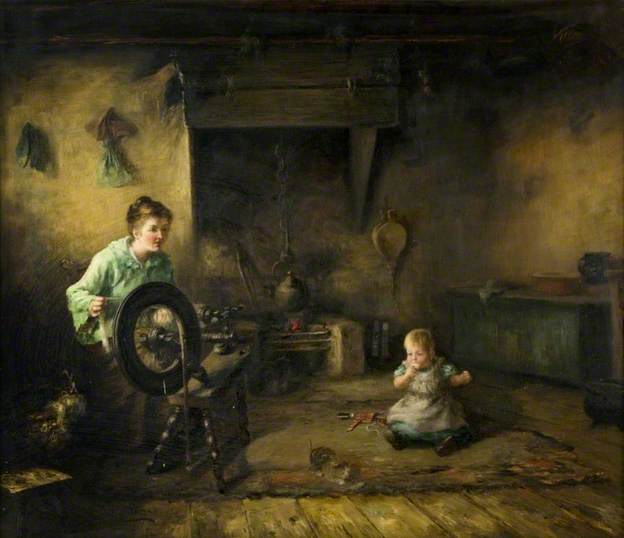
Fig. 1 Interior – (The Spinning Wheel) (2268) – Tom McEwan
© CSG GIC Glasgow Museums (Not listed on ArtUK)
The painting was exhibited at the Royal Glasgow Institute of the Fine Arts Annual Exhibition of 1895, priced at £65 2
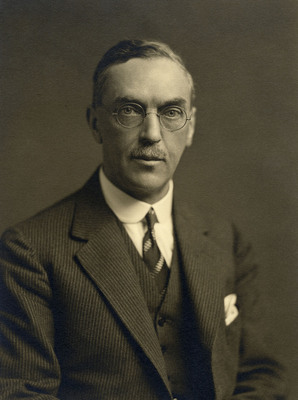
Fig. 2 Arthur James Ballantyne (1876 – 1954)
Arthur James Ballantyne was born on 13 July 1876, at 36 Dalhousie Street, Blythswood, Glasgow 3. He was one of a ‘large and brilliant family of a Glasgow merchant.4
His father Thomas Ballantyne was a pawnbroker and jeweller who had married Jane Kate Chalmers on 20 September 1870 in Glasgow 5. Thomas Ballantyne was born in Paisley in 1828, and this was his second marriage. Jane Kate was born in Dundee in 1838. According to the 1881 Census, in addition to Arthur, aged four, there were nine other siblings at 36 Dalhousie Street ranging in ages from 20 years to 2 months 6. Thomas Ballantyne died of cancer in 1887 leaving Jane ‘living on private means’. 7 The family moved to 260 Renfrew Street, Glasgow and in the 1891 Census there were eight children at home with one servant employed 8.
Arthur Ballantyne was educated at Garnethill School, Glasgow and graduated M.B., Ch. B. in 1898 and M.D. in 1901 from the University of Glasgow. 9 His doctoral thesis was entitled Contusion Injuries to the Eyeball. 10 After spending a year at the University of Vienna, he returned to Glasgow and spent two years as Assistant House Physician and Assistant Surgeon at the Glasgow Eye Infirmary. He joined the Ophthalmological Society of the United Kingdom in 1903 and in 1906 was elected to the Fellowship of the Royal Faculty of Physicians and Surgeons of Glasgow. He was appointed Surgeon at the Glasgow Eye Infirmary in 1909 – a post he held until 1935. In 1909 he was appointed Professor of Physiology at Anderson`s College of Medicine. This post was relinquished in 1914 when he became Professor of Ophthalmology at the College. The previous year he had held a similar post at St. Mungo`s College. 11
At the 1911 Census,Arthur was living with his mother and brother Thomas who was a civil engineer and two servants at 11 Sandyford Place, Anderston. His occupation was ‘physician, eye-specialist. 12 On 14July 1916 he attended a meeting of the Oxford Ophthalmological Congress where he read a paper on Quinine Amaurosis. He was then ‘Surgeon to the Glasgow Eye Infirmary’ 13. During the latter stages of the First World War, he was given a temporary commission as a lieutenant in the Royal Army Medical Corps and was appointed Ophthalmic Surgeon to the 67th General Hospital in Salonika 14. When he arrived in Salonika, he was to take the place of a certain Dr Tom Honeyman (later Director of Kelvingrove Art Gallery and Museum, Glasgow) who had become ill due to an attack of fever.15
In 1920, Ballantyne was appointed Lecturer in Ophthalmology at the University of Glasgow. In the same year, on 23 June, at the age of 43, he married Jessie Snodgrass, the daughter of one of his colleagues. She was 27. The marriage took place in the Grand Hotel, Glasgow 16. Sadly, Jessie died from eclampsia on 27January 1928. 17 It may have been on this occasion that he reportedly wrote to a colleague, ‘These have been sad days for us, but work and service remain to make life worthwhile.’ 18
Part of this “work” involved travelling to give lectures on his research and on 15 August 1930, he arrived in Montreal, Canada aboard the Duchess of Bedford. His final destination was St. Albans, Vermont in the U.S.A. 19 almost certainly to deliver lectures there.
He was appointed the first Tennent Professor of Ophthalmology at the University of Glasgow in 1935, a post he held until his forced retirement in 1941 due to age rules. (The Tennent chair was the first in Ophthalmology to be founded in the United Kingdom. It was endowed by Gavin Patterson Tennent who graduated M.D. from the University in 1870). On his retirement, Arthur Ballantyne was awarded an LL.D. by the University and made an Emeritus Professor. 20
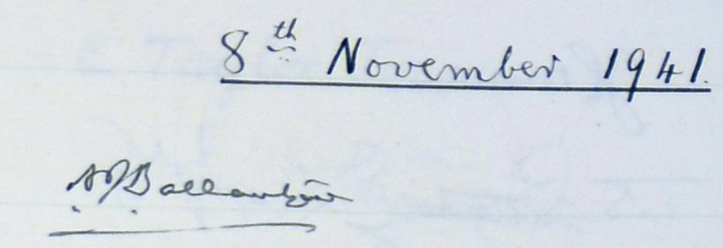
Fig. 3 Arthur Ballantyne`s signature on the Register of Awards of
Honorary LL.D. s 21
He ‘continued his ground-breaking research in diabetic retinopathy’ and was awarded the Mackenzie Medal in 1942. (This award was established in 1924 to mark the centenary of the Glasgow Eye Infirmary. It was named after its founder and was awarded to an eye surgeon who had made a special contribution to ophthalmology). In 1943 Dr Ballantyne delivered the Montgomery Lectures in Dublin and in 1946 the Doyne Memorial Lectures at Oxford. 22
In 1947 he travelled to Roanoke College in Virginia to be awarded an honorary D.Sc. degree. It was recorded in the immigration papers that he was ‘aged 70 and a widower, 5 ft 5 ins tall, fair complexion with grey hair and grey eyes’.23 He continued to publish original research and in 1950 was awarded the Nettleship Medal for the ‘best piece of original work by a British ophthalmologist published in any journal during the previous three years’. 24
Despite living all his life in the West End of Glasgow, Arthur Ballantyne retired to the village of Killearn, and he died there on 9 November 1954 aged 78. The cause of death was cardiovascular degeneration. 25 His estate was valued at £83,051:14:0 26. An obituary recorded that while ‘His professional work claimed most of his time, he was an expert in colour photography and a connoisseur of art in which he was not a mere dilettante; he was a member of the Committee of the Glasgow Institute for Fine Arts and was on the hanging committee’ (of that Institute). 27 An obituary was also published in the British Journal of Ophthalmology.28
Arthur Ballantyne was a ‘prolific contributor to medical literature’ and had an international reputation for his research activities. He served upon the editorial committees of the Glasgow Medical Journal, the Ophthalmoscope, Ophthalmologica, and the British Journal of Ophthalmology. He was co-author of the Textbook of the Fundus of the Eye which was published posthumously in 1962. A description of the book stated that; “The problems of the fundus of the eye were the life-long study of the late Professor Arthur J. Ballantyne who brought to them an unusual patience fordetail and an appreciation of their importance in the understanding of the total picture. He stimulated a generation of Glasgow ophthalmologists with his interest”. 29
References
- Minutes of Corporation of Glasgow, 17 February, 1942, C1/3/105, p791.
- Billcliffe, Roger, The Royal Glasgow Institute of the Fine Arts, 1861-1989: A Dictionary of Exhibitors at the Annual Exhibitions, (Woodend Press, 1990).
- Scotland`s People, Birth Certificate
- Thomson, A. M. Wright The Glasgow Eye Infirmary, 1824-1962
- Scotland’s People, Marriage Certificate
- ancestry.co.uk, Scottish Census, 1881
- Thomson, A. M. Wright The Glasgow Eye Infirmary, 1824-1962
- ancestry.co.uk, Scottish Census, 1891
- www.universitystory.gla.ac.uk
- www.bjo.bmj.com
- www.universitystory.gla.ac.uk.
- ancestry.co.uk, Scottish Census, 1911
- British Journal of Ophthalmology, 1917; 1; 153 -161
- British Journal of Ophthalmology, 1917; Supplement to the London Gazette, 2 July 1917.
- Webster, Jack, From Dali to Burrell, The Tom Honeyman Story, B & W Publishing, Ltd., Edinburgh, 1997
- Scotland’s People, Marriage Certificate
- Scotland’s People, Death Certificate
- British Journal of Ophthalmology, 1955; 39:1, 63 – 64.
- ancestry.com, Border Crossings: From Canada to U.S., 1895 – 1954
- Archives of the Royal College of Physicians and Surgeons,
- Glasgow; University Archives
- Minutes of the Royal College of Physicians and Surgeons of Glasgow, 6 December 1954.
- ancestry.com, New York, Passenger Lists, 1820 – 1957.
- Minutes of the Royal College of Physicians and Surgeons of Glasgow, 6 December 1954.
- Scotland’s People, Death Certificate
- Confirmations and Inventories, 1954. National Records of Scotland.
- British Journal of Ophthalmology, 1955; 39:1, 63 – 64.
- Minutes of the Royal College of Physicians and Surgeons of Glasgow, 6 December 1954.
- http://www.amazon.com/Textbook-Fundus-Arthur-Ballantyne-F-R-F-P-S/dp/B007LVOPXY/ref=sr_1_1?s=books&ie=UTF8&qid=1372834404&sr=1-1
Appendix
The library of the Royal College of Physicians and Surgeons of Glasgow has a set of instruments called Ballantyne Droppers. These were used and probably designed by Arthur Ballantyne.
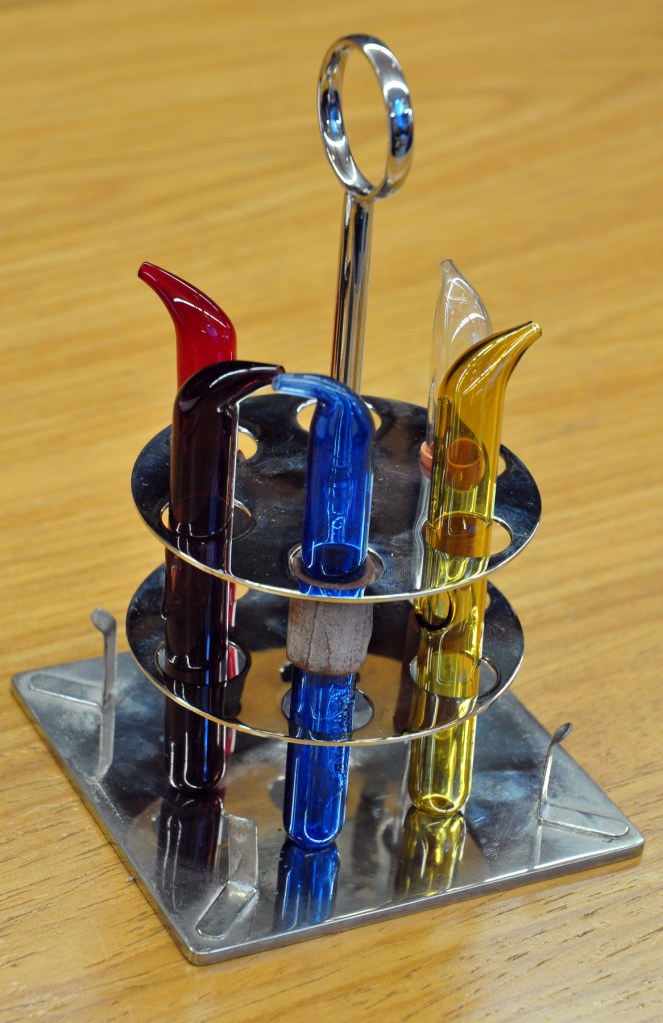
Fig. 4, A Set of Ballantyne Droppers
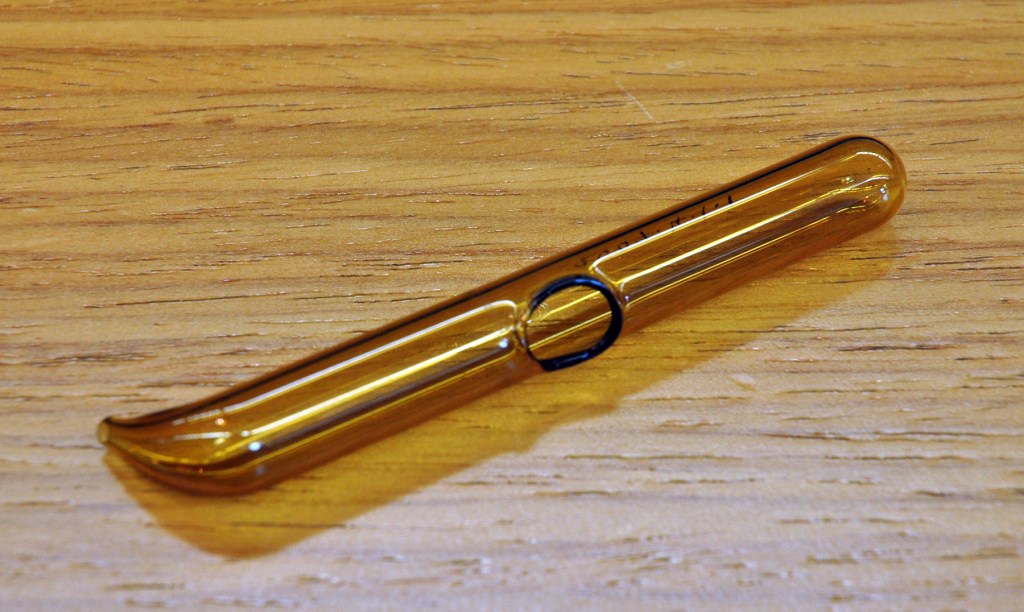
Fig. 5, A Ballantyne Dropper

 Glasgow Museums Art Donors Group