An oil painting titled Barden Moor by Cecil Lawson was received by Glasgow Corporation from Mrs. Graham, 4 Belgrave Crescent, Edinburgh on 29 February 1924.1
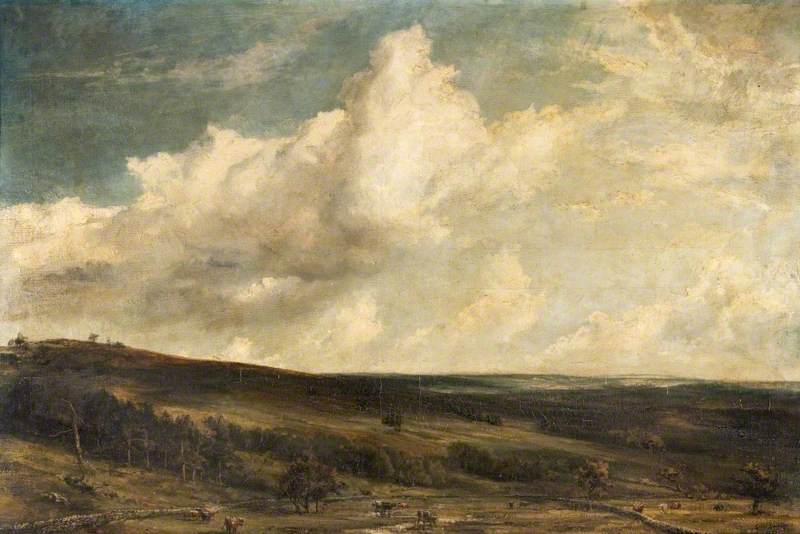
© CSG GIC Glasgow Museums/ArtUK. (Accession Number 1572)
Gertrude Lawrence Clara Dunsterville (Mrs. Clara Graham) was born on 16 September 1853 in Bombay, India. She was christened at Naseerabad, Bombay on 11 October 1853. 2 Clara (as she preferred to be called) was born into a family with a history of service in the Indian Army. She was the eldest daughter of Colonel James Barnes Dunsterville and Harriet Birch who had married in Deesa, India in 1847. Her father was attached to the 19th Regiment of Native Infantry and at that time was Assistant Commissary General of the Bombay Army. Her grandfather, General James Henderson Dunsterville, was Commissary General of the East India Company. He married Clara`s grandmother, Lucy Barnes, in Bombay in 1817. Clara`s sister, Harriet Mary, married Lt. Col. Arthur Shewell in Bombay in 1869 3. One of Clara`s cousins, Major General Lionel Charles Dunsterville, was a friend of the author Rudyard Kipling and served as the model for ‘Stalky’ Corkran in the author`s stories of Stalky and Co.4
On 3 August 1872, aged eighteen, Clara married twenty-eight year old Donald Graham in Bombay 5. He was a son of John Graham of Skelmorlie, Ayrshire who had extensive business interests in Scotland, India and Portugal based on textiles and port wine.
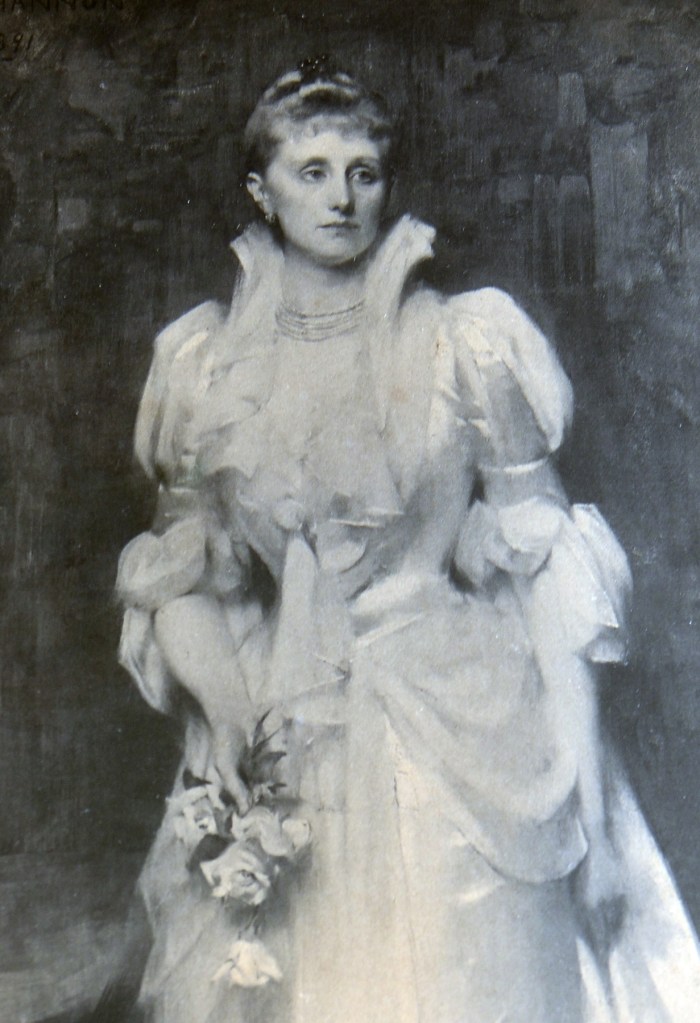
Fig. 2 Mrs. Clara Graham in her wedding dress 6
Very soon after their marriage the couple travelled to Scotland and took up residence in Skelmorlie Castle in Ayrshire the home of Donald`s parents and on 15 May 1873 their first child, James Dunsterville Graham was born. 7 The family then returned to Bombay probably because of Donald`s business interests but also because Clara`s widowed mother was still living there. Two further sons were born in Bombay, Donald M. N. Graham on 12 November 1874 and Charles T. J. Graham on 4 December 1877. 8 Thereafter the family returned to Scotland possibly as late as 1880. They were probably accompanied by Clara`s mother and sister who was widowed that year.9 In the 1881 census Donald, Gertrude (Clara) and their three sons were living at Skelmorlie Castle 10. A fourth son, Archibald, was born in Edinburgh in 1882. This birth was registered in both Largs and Edinburgh. Another son, Maurice, was born at Skelmorlie in 1888. 11
Donald Graham bought Airthrey Castle and estate in Stirlingshire from Lord Abercrombie in 1889 for the sum of £75,000. He built a large extension to the castle at a cost of a further £15,708 and planted the grounds with conifers and rhododendrons. 12 In the 1891 census, Donald and Gertrude and four of their sons were living at Airthrey Castle. 13 Clara gave birth to three more sons there between 1892 and 1898.
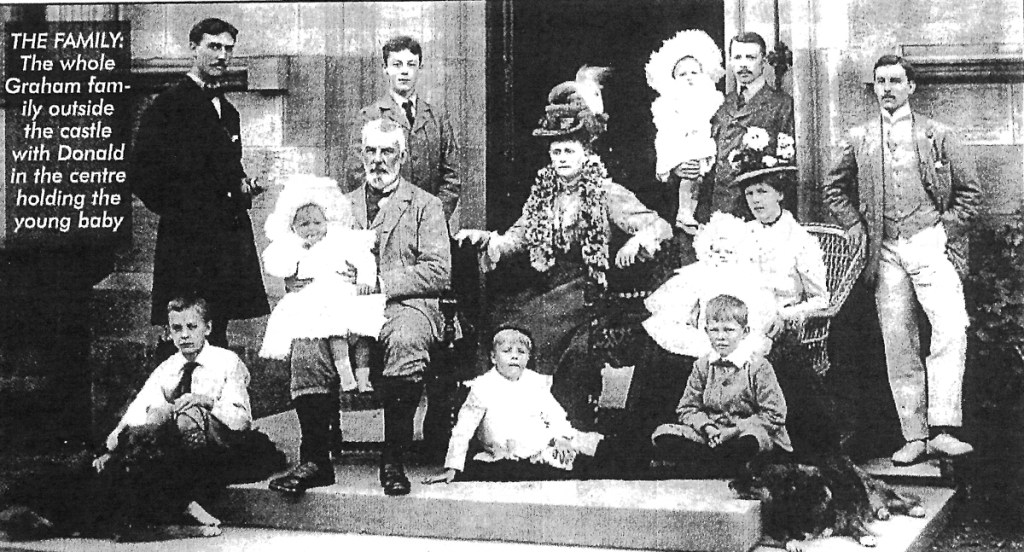
Fig. 3 Donald and Clara Graham and family , Airthrey Castle (about 1898) 14
Donald Graham died at Airthrey Castle on 23 January 1901 after a short illness. He was buried in Logie Churchyard and Clara commissioned a stained-glass window to be placed in the new Logie Church in his memory. 15 Clara continued to live at Airthrey Castle and in the 1901 census she was the head of the family, aged 47 with four sons at home. 16
Ownership of the estate was formally handed over to her by Donald`s trustees on 15 May 1902 17. In the 1911 Census, Clara and two of her sons, John and Nigel were living at Airthrey Castle together with her widowed sister Harriet (Shewell) and a niece. 18
In 1924, Airthrey Castle was leased to Charles Donaldson of the shipping family Donaldson Brothers.19 This coincides with the date of donation of the painting and most probably resulted from Clara ‘downsizing’ to move in, at least temporarily, with her niece in Belgrave Crescent, Edinburgh. The painting would have been given to Glasgow because of her husband`s business connections with the city.
Clara Graham died aged seventy-nine on 20 April 1932, at 9 Weymouth Street, Portland Place, London. 20 She was buried beside her husband and two of her grandchildren in the Old Churchyard of Logie Kirk, Bridge of Allan on 23 April. Six of her sons acted as pallbearers. 21
In the course of her funeral service, the Rev. W. McIntyre referred to the work Mrs. Graham had done as a heritor in the parish, (with which she had been associated for nearly fifty years), and of the widespread interest she took in its welfare. He commented that ‘she was esteemed for her charity and her own spirit and personality and her loyalty to those who served her’. 22
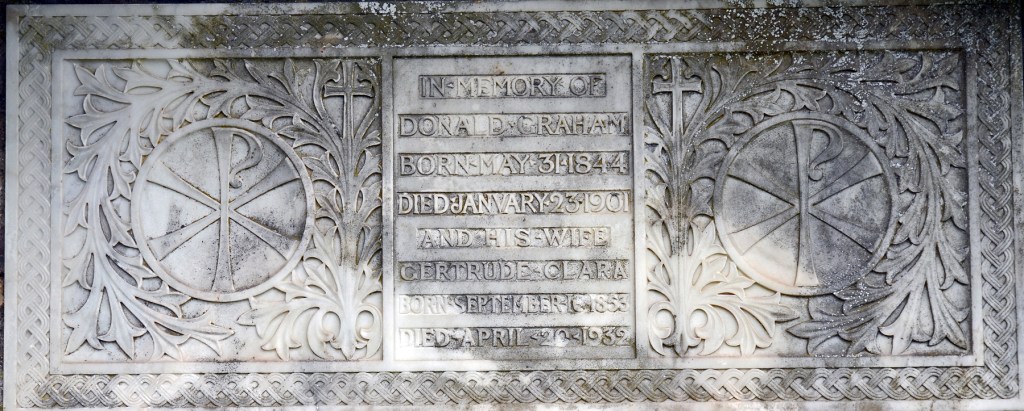
Logie Old Church. (Photo by author)
Airthrey Castle became a maternity hospital in 1939. Airthrey Estate continued in family ownership until 1946 and eventually became the campus for the University of Stirling.
Edinburgh Connection
Donald Graham`s sister Margaret married Henry Hill Lancaster an advocate and essayist. Their daughter, Elizabeth Ethel Graham Lancaster married Sir Ludovic James Grant, Regius Professor of Public Law at Edinburgh University. The Grants owned the house at 4 Belgrave Crescent, Edinburgh from where the painting was donated in 1924. Elizabeth Grant was Clara’s niece with whom she was living at this time, Airthrey Castle having been leased to Charles Donaldson.
The writer and broadcaster Sir Ludovic Kennedy was born at 4 Belgrave Crescent in 1919. He was the grandson of Sir Ludovic and Lady Grant.
The Painting
The painting was bought by John Graham (father-in-law of Clara) soon after it was completed in 1881. It was lent by him to the Royal Glasgow Institute of the Fine Arts (RGI) Exhibition of 1882. 23 The painting then passed to Donald Graham and was lent by him to the Glasgow International Exhibition of 1888. The minutes of Glasgow Corporation of 5 January 1934 record that the painting was lent to the Paisley Art Institute for their 58th Exhibition to be held that year. 24
The Graham Family
The firm of W. & J. Graham & Co has its roots in a Glasgow based textile concern. However, the family had extensive business interests not just in their native Scotland but also in India. The success of their affairs led to them being described by a contemporary historian, as being ‘among the merchant princes of Great Britain’.
At the early age of fifteen, John Graham undertook the establishment of a branch of the firm at Leghorn, which continued until the success of Napoleon’s policy excluded British commerce from all the continental markets except Portugal. Therefore, an office of the company was established in Oporto, Portugal`s second city. In 1820 John and his brother William, who were then managing the office, accepted 27 pipes of Port wine in settlement of a bad debt. This Port was shipped to the parent company in Glasgow which initially reprimanded the brothers for not sending cash. Fortunately, however, the Port turned out to be very popular and soon William and John were being urged by their parent company to acquire and ship more of this wine.
The brothers formed the partnership of W & J Graham & Co. with the aim of specialising in the production of the finest Port wines. They channelled their considerable resources and energy towards the pursuit of this goal.
In 1839 the firm, by the formation of a house at Bombay, extended its business operations to India; and again in 1863 a separate firm was established at Calcutta and later a branch was formed at Kurrachee. 25
John Graham retired to Skelmorlie Castle in Ayrshire. He was well known in Glasgow as an enthusiastic supporter of the fine arts. From its foundation in 1861 he had contributed paintings each year to the RGI Loan Exhibitions and in 1878 this amounted to twenty-six pictures including works by Turner and Gainsborough. ‘All the canvases shown …..are no more than so many specimens of what his private gallery really is. They only enable us to judge ……of the wonderful treasures of the Skelmorlie mansion’. 26 He died at Skelmorlie Castle on 4 October 1886 aged 89 years.
Donald Graham, C.I.E., was born in Oporto, Portugal in 1844 and educated at Harrow. He was a son of John Graham of Skelmorlie and Elizabeth Hatt Noble. His business interests were centred in Glasgow and Bombay. He was made a Companion of the Most Eminent order of the Indian Empire (C.I.E.) for his services on the Legislative Council of Bombay. In 1896 he was vice-president of the Glasgow Chamber of Commerce and was elected Lord Dean of Guild the following year. His business address was ‘W. & J. Graham & Co., 55 Cathedral Street, Glasgow’ later becoming ‘Graham, D. and J. & Co., merchants’.27 He was also a JP for Lanarkshire and Deputy Lieutenant of the City of Glasgow and Stirlingshire.
References
- Minutes of Glasgow Corporation, Sub-Committee on Art Galleries and Museums, 29February 1924.
- FamilySearch, United Kingdom, British India Office, Births and Baptisms, 1712 – 1965. (Her date of birth is given incorrectly in Family Search. The correct date is taken from the plaque in Logie Old Churchyard).
- http://www.swinhopeburnfamilies.com/grpf1266.html
- Information from Mrs. Christina McLaren, (great granddaughter of Clara Graham). Also archiveshub.ac.uk/data/gb012-ms.add.9498
- FamilySearch, India Marriages, 1792 – 1948
- From a picture in the possession of Mrs Christina McLaren, with permission
- Scotland`s People, Birth Certificate
- FamilySearch, India Births and Baptisms, 1786 – 1947
- Information from Mrs. Christina McLaren,
- ancestry.co.uk, Scottish Census, 1881
- Scotland’s People, Birth Certificates
- Ferguson, R. Menzies, M.A., Logie, A Parish History, Vol II, Alexander Gardner, pub., Paisley, 1905, pp 61-63.
- ancestry.co.uk, Scottish Census, 1891
- The original photograph is in the possession of Mrs. Christina McLaren. Used with permission
- Information from Mrs. Christina McLaren
- ancestry.co.uk, Scottish Census, 1901
- Ferguson, R. Menzies, M.A., Logie, A Parish History, Vol II, Alexander Gardner, pub., Paisley, 1905, pp 61-63.
- Scotland’s People, Census 1911
- Information from Mrs. Christina McLaren
- Bridge of Allan Gazette 23 April 1932
- Bridge of Allan Gazette 30 April 1932
- ibid
- Billcliffe, Roger, The Royal Glasgow Institute of the Fine Arts, 1861-1989: A Dictionary of Exhibitors at the Annual Exhibitions, Woodend Press, 1990
- Object File, Glasgow Museums Resource Centre
- Memoirs and Portraits of One Hundred Glasgow Men, James Maclehose and Sons, Glasgow, 1886
- The Bailie, No 296, 19June 1878, Mitchell Library, Glasgow
- Glasgow Post Office Directories 1888 and 1901

 Glasgow Museums Art Donors Group