James Reid of Auchterarder (1823-1894)

James Reid was a locomotive engineer and Art collector.
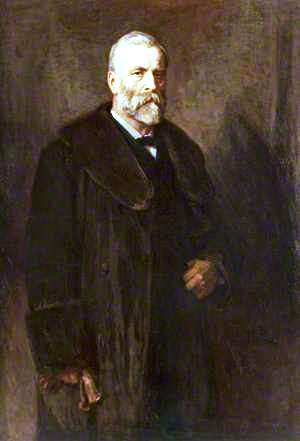
James Reid of Auchterarder and The Hydepark Works. By George Reid.© CSG CIC Glasgow Museums Collection

James Reid was born in Kilmaurs, a small Ayrshire town to the north of Kilmarnock on 8 September 1823. (1) He was the second son of William Reid described as a carter, or maybe a contractor (2) and his mother was Mary née Millar.  Scotland had for years offered primary school education for all and there is no evidence that he had proceeded any further with schooling although there were long established Grammar Schools in Irvine (3) and in Ayr. (4)

His first job was as a blacksmith’s assistant. He moved to the firm of Liddell and company in Airdrie, a firm of millwrights and metal workers and served an apprenticeship there.  (5)   Such firms relied on blacksmiths and it would have been progress from his previous employment. He next moved nearer to home to  Greenock where he initially joined Scott’s of Greenock  a shipbuilding firm principally at that time, producing engines for small vessels. (6 )  Staying in Greenock he joined another shipbuilding firm, Cairds and Company of Greenock which built seagoing, steam propelled ships. (7) Working in these firms would have exposed him to the various uses to which engines could be put and focussed his attention on their production.  At Cairds he rose to the position of chief draughtsman.                                                                    

He married Margaret Scott in Greenock in December 1850. (8 )  She was the daughter of a cabinetmaker. (9) A son William Scott Reid was born in February 1852 but died in April. He is buried in the churchyard in Greenock.

At this time, interest was developing in engines both stationary and for railway locomotives and the West of Scotland was well placed for their manufacture because of the local availability of iron and coal. He must have seen this as the coming thing so he moved to Springburn, in Glasgow, to Neilson and company at the Hydepark Works. At this time, he was living at St Vincent Street, Glasgow. (10)  Two children were born: Elizabeth (11) and James (12). He rose to become general manager of the firm until in 1858 he was replaced by Henry Dubs, a German engineer then working for Sharp Stewart and a company in Manchester which had extensive experience in the manufacture of railway engines. Dubs became a partner in the firm. (13)

James Reid then made an important decision and moved to Manchester to Sharp and Stewart for further experience. (14) In Manchester three more children were born: Hugh (15 ) John (16 )  and Andrew. (17) The family lived in Charlton upon Medlock. (18 )

In 1863 James moved back to Glasgow to the Hydepark Works now as a director of the firm which became Neilson and Reid. (19) He can be found in Springburn living at Wellfield House certainly until 1874. (20 ) Another three sons were born: Edward (21),Walter (22) and William(23). William died  aged 3 years.

About 1875 the family moved to 10 Woodside Terrace in the Park District of Glasgow, living in some style with four live-in servants. (24 ) (25)

   His wife, Elisabeth Ann died in August 1881 in Perthshire. (26)

James and family suffered another tragic bereavement in November 1882 (27) on the death of his oldest son James. The Glasgow Herald and other papers gave an account of the accident. (28 ) (29 ) (30 )  He had been shooting partridge on the Glenquaich estate with Mr Wilkes, the shooting tenant and his son. One of the party stumbled and his gun discharged all of its shot into James Reid’s thigh. All efforts were made to stop the bleeding and he was taken to the Royal Hotel, Crieff. The next day Professor Robertson of Glasgow performed a hind quarter amputation but James died that night from weakness and haemorrhage .
In 1886 James married Charlotte Geddes. ( 31) There is evidence that the family had visited Perthshire on occasions and in 1887 he bought Auchterarder house  (32 ) which was extensively remodelled for him by the architect Sir John James Burnett.

In 1894 James died of a heart attack on the golf course at St Andrews .  (33)  He is buried in the Necropolis in Glasgow.(34)
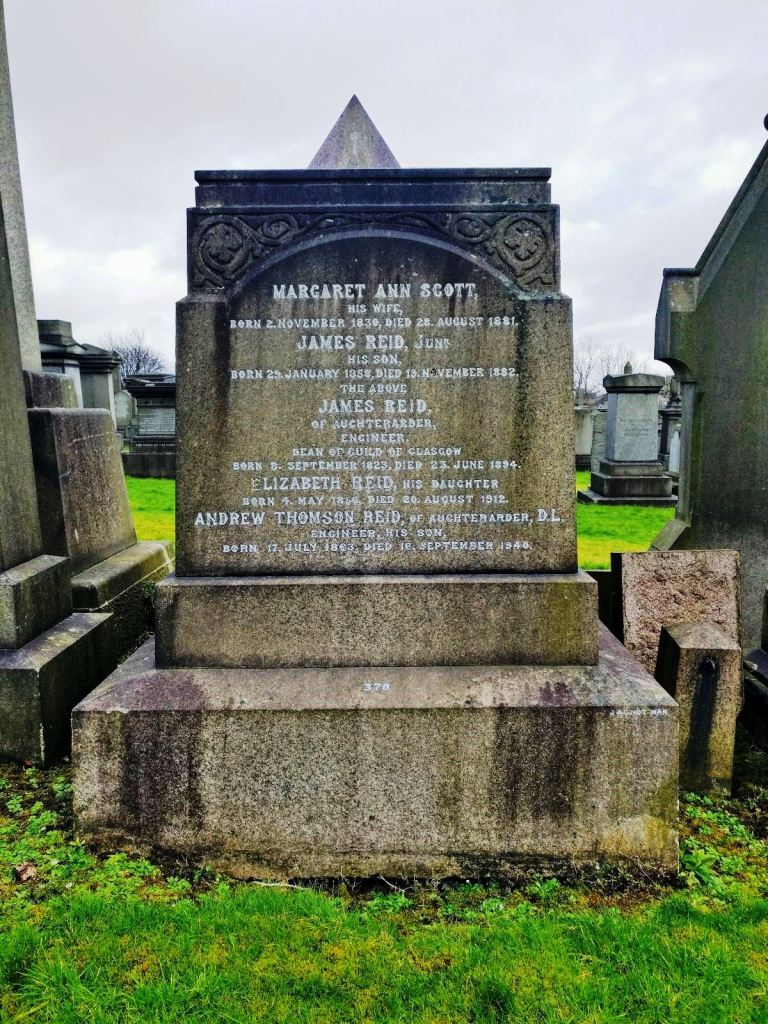
Family grave stone in Glasgow Necropolis
Image from Find my Grave

To his four sons he bequeathed not only material goods but also a legacy of public service, philanthropy and sound business sense.  His son Hugh became Managing Director and his brothers were all directors of Reid and Sons.

Public Life and Membership of Societies
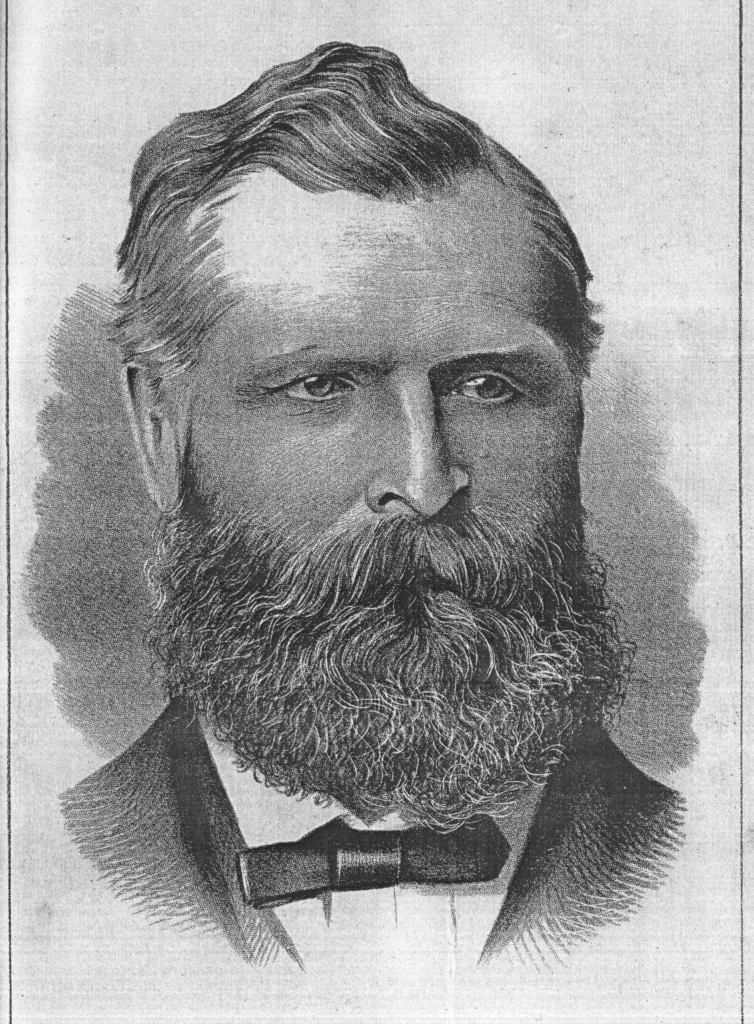
James Reid in The Bailie 407 ©CSG CIC Glasgow Museums and Libraries Collection: The Mitchell Library, Special Collections”
 

James was involved in civic affairs as a Town Councillor and a JP being elected in 1877. (35)  In 1880 he took a prominent  part in the decision about the building of the new City Chambers. The Bailie (36 ) records his views on the proposal to limit the finance available which restrictions, he thought, showed Glasgow in a poor light compared to the proposals for other cities such as Manchester. In 1893, he became the Second Citizen of Glasgow when he became Lord Dean of Guild, Head of the Merchants House. (37 ) He died in office.

James Reid was a member of the Institution of Mechanical Engineers founded in 1857 and now the IMechE. He was President of the Scottish Institution of Engineers and Shipbuilders 1882-84. (38.)
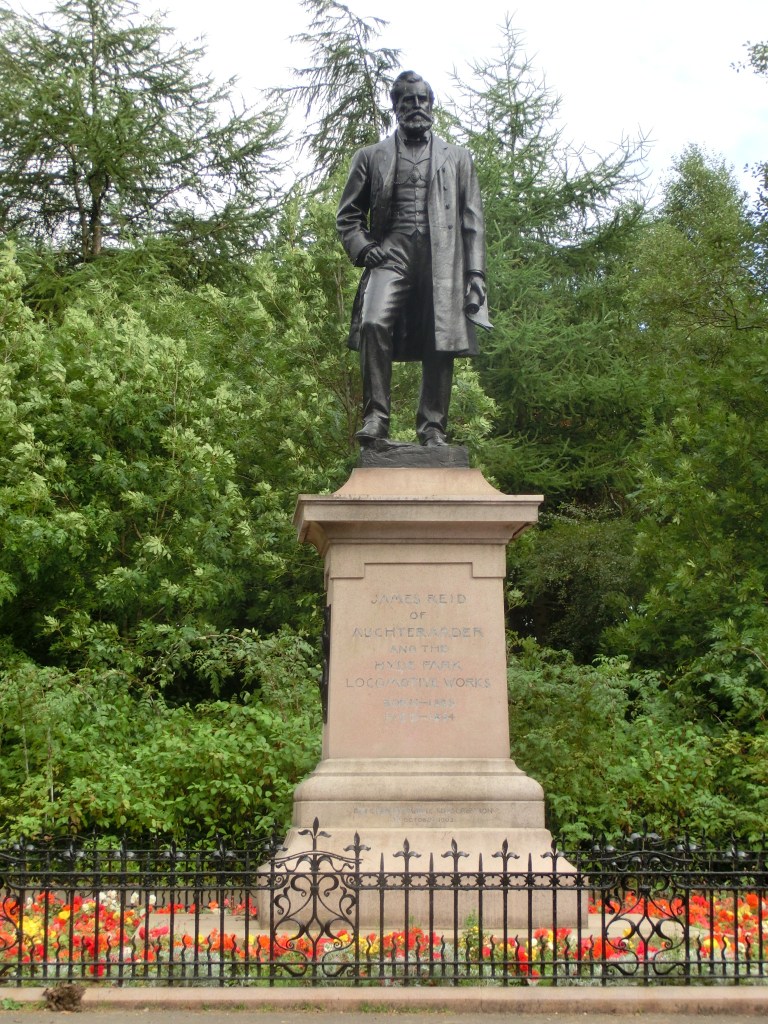
Statue of James Reid in Springburn Park. Copyright Fiona Murphy

Because he had lived and worked in Springburn, he was Chairman of the Springburn School Board. He was a major donor to Springburn and gave land to the citizens for Springburn Park and bandstand. This is commemorated by a statue in the park, raised by public subscription in 1903. (39)

He was also a Director of the Tramways Company.

He was an art collector of note (40) favouring the Barbizon and Hague schools. He chaired the Royal Glasgow Institution of Fine Arts.

When he died his sons gifted ten important paintings from his collection to the City of Glasgow, now in Kelvingrove Art Gallery and Museum. These are among the best known and much valued paintings in the collection. (41)

ArtistPainting
J M TurnerI Pifferari
John ConstableHampstead Heath
Sir Lawrence Alma TademaA Lover of Art
Sir William Quiller OrchardsonThe Farmer’s Daughter
John LanelliDownward Rays
Patrick NaismithWindsor Castle
Jean B C CorotPastorale
Constant TroyonLandscape and Cattle
Josef IsraelsThe Frugal meal
Sir George ReidJames Reid of Auchterarder
  

In March 1914 an auction of his remaining 114 pictures was held at J and R Edminston. The catalogue includes paintings by Horatio McCulloch, William McTaggart, John Faed, Sam Bough and many others showing his interest in and support for the Scottish painters.

References

  1. OPR Births and Baptisms 21.09.1823
  2. National Records of Scotland Statutory Deaths 1894
  3. Irvine Academy website
  4. Ayr Academy website
  5. Grace’s Guide to British Industrial history
  6. Wikipedia  Scotts of Greenock website
  7. Wikipedia Cairds of Greenock website
  8. OPR Marriages 20.12.1850
  9. National Records of Scotland Statutory Deaths 1881
  10. Post Office Directories Glasgow 1852
  11. National Records of Scotland Statutory Births 1857
  12. National Records of Scotland Statutory Births 1858
  13. Henry Dubs Wikipaedia
  14. Grace’s Guide to British Industrial history
  15. National Records of England Statutory Births 1860
  16. National Records of England Statutory Births 1861
  17. National Records of England Statutory Births 1862
  18. National Records of England Census 1861
  19. Grace’s Guide to British Industrial history
  20. National Records of Scotland  Census 1871
  21. National Records of Scotland Statutory Births 1862
  22. National Records of Scotland Statutory Births 1865
  23. Ancestry .co.uk 1871
  24. Post Office Directories Glasgow 1871
  25. National Records of Scotland  Census 1881
  26. National Records of Scotland Statutory Deaths 1881
  27. National Records of Scotland Statutory Deaths 1881
  28. The Glasgow Herald  21 November 1881
  29. The Glasgow Herald 22 November 1881
  30. Leamington Spa Gazette 22 November 1881
  31. National Records of Scotland Statutory Marriages 1886
  32. Auchterarder House Wikipaedia
  33. National Records of Scotland Statutory Deaths 1894
  34. Find a grave website
  35. Obituary in Grace’s Guide to British Industrial history
  36. The Bailie no 407 August 1880. The Man you Know
  37. Grace’s Guide to British Industrial history
  38. Institution of Mechanical Engineers website
  39. Springburn Park website
  40. Frances Fowles. Impressionism in Scotland. National Galleries of Scotland in Association with Culture and Sport Glasgow. Edinburgh, 2008
  41. Edmiston:  A catalogue of a valuable collection of pictures belonging to the late James Reid esq.10 Woodside Terrace and his representatives. Thursday 26 March 1914
  42. National Railway Museum records
  43. James W Lowe. British Steam Locomotive Builders 2014.  Kindle Edition, Amazon 2014

Appendix 1

Railway Locomotive Manufacturers in Glasgow.  
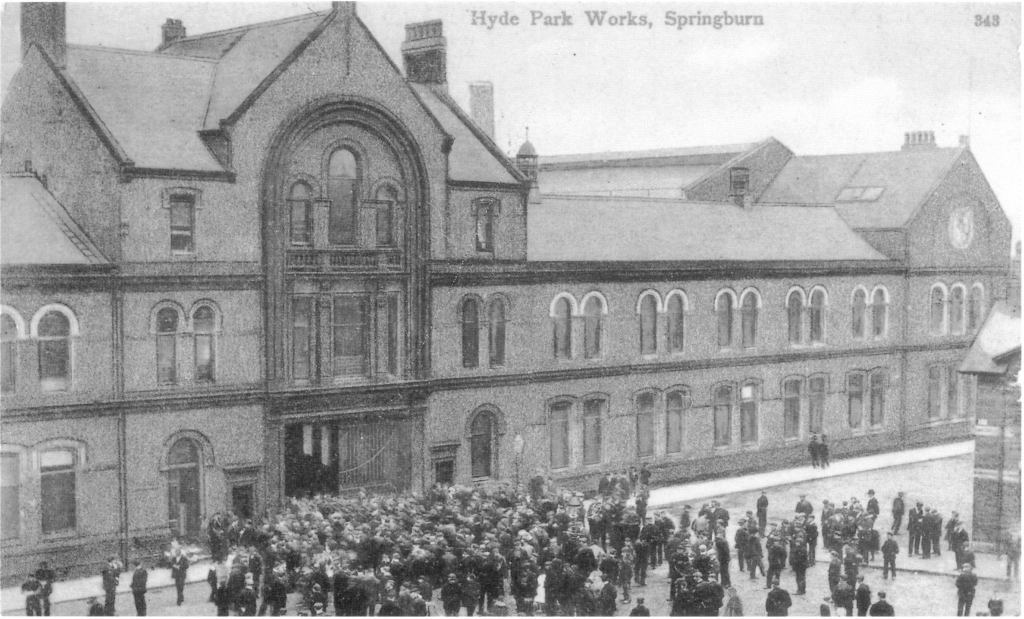
The firm of Neilson and Mitchell was established in 1836 to manufacture marine and stationary engines at Hyde Park Works in Glasgow. It was not until 1855 that they began to produce railway engines. The firm of Sharp and Roberts had been  originally established in Manchester in  1828 to manufacture stationery engines for cotton mills and to make machine tools. They built their first railway engine in 1833. In 1843 the firm became Sharp, Stewart and Company and had established an excellent reputation at home and abroad.

By 1861 Neilson and company had established an export business in locomotives exporting to Europe and India. Henry Dubs left the company and formed his own company at the Glasgow Locomotive works at Polmadie in 1863.

Walter Neilson branched out on his own to establish  the Clyde Locomotive company in 1884. In 1887 Sharp Stewart and Company, looking to expand their business moved to Glasgow and purchased the Clyde  Locomotive Company.

There were at that time three competing locomotive works in Glasgow: Neilson Reid and Company, Sharp and  Stewart  Company and The Glasgow Locomotive company. In 1903, they amalgamated and became

The North British Locomotive Company.

Information received from two main sources:


The records of the North  British Locomotive Company and constituent companies, Locomotive builders, Glasgow Scotland held in the National Railway Museum (42)

James W Lowe, British Steam Locomotive Builders (43)
Both these sources can be consulted for further information.
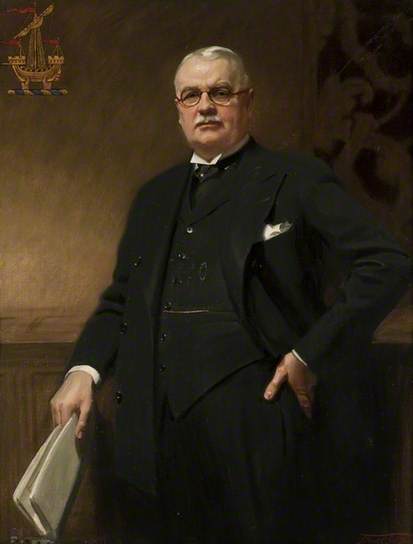
Andrew Weir – The Right Hon. Lord Inverforth of Southgate (1865 – 1955)

Fig. 1 The Rt. Hon. Lord Inverforth, P.C
Frank O. Salisbury, C.V.O., LL.D., R.P., R.I. (1874-1962).
       Acquisition Number 2310.
© estate of Frank O. Salisbury. All rights reserved, DACS 2024.
     Image credit: Glasgow Life Museums/ArtUK

‘The Town Clerk submitted a letter from Lord Inverforth offering to present to the corporation his portrait by Frank O. Salisbury, at present on exhibition in the Kelvingrove Art Galleries, and the committee agreed that the gift be accepted and that a letter of appreciation be sent to the donor.’ 1

            Andrew Weir was born on the 24 April 1865 in Glasswork Street, Kirkcaldy. He was the eldest son of William Weir a cork manufacturer and Janet Laing who were married on 2 January 1865.2 According to the census, 3 the family was still at Glasswork Street in 1871 but by 1881 had moved to 269 High Street, Kirkcaldy.4 Andrew, aged 15, having attended Kirkcaldy High School was now an apprentice clerk with the Commercial Bank of Scotland living with his parents, brothers Thomas (13), William (8), David (1) and sisters Jessie (6) and Isabella (4). Thereafter, Andrew moved to Glasgow and worked for a time in a shipping office. Then, in 1885, at the age of twenty, he bought his first ship – the barque Willowbank. On 5 May that year he opened a small office in Hope Street, Glasgow 5 (According to The Bailie it was at 70 Waterloo Street. 6) and used his ship in the coasting trade. The business prospered and within ten years he had built up a fleet of fifty-two ships of modern design and created the firm of Andrew Weir and Co. Shipowners of Glasgow. This firm ‘controlled the largest fleet of sailing ships in the world’ under one owner. 7 It became managing owners of the Bank Line (named after Weir`s first ship), Invertanker, Inver Transport, Trading Company, and several other shipping companies.  

            On 1 August 1889 Andrew Weir married Tomania Anne Dowie, daughter of Thomas Kay Dowie, a coachbuilder, in her home at 28 Thomson Place, Kirkcaldy. Andrew`s address was 185 Kent Road, Glasgow. His younger brother William was a witness. 8 Two years later, Andrew and Tomania were living at 4 Edelweiss Terrace, Partick, Glasgow with their newborn daughter Anne Forrestdale.  With them were Andrew`s siblings, William Weir (19), Jessie B. Weir (16) and Bella B. Weir (14). 9

            In 1896 Weir began to modernize his fleet by converting it to steam. His first steamship was launched under the banner of the Bank Line. At the time of the 1901 Census, he was with his family (now four girls and a boy) at Blanefield Mansion, Kirkoswald, Ayrshire. 10 Sometime after this he moved to London and at the 1911 Census his address was 57 Holland Park, Kensington, London. 11

                 In 1917 Weir was asked to investigate the way in which materials were supplied to the army. Among his recommendations was the appointment of a Surveyor-General of Supply to oversee the task of providing the army with all its stores and equipment other than munitions. His recommendations were accepted, and he was given the job of Surveyor-General with a seat on the Army Council.

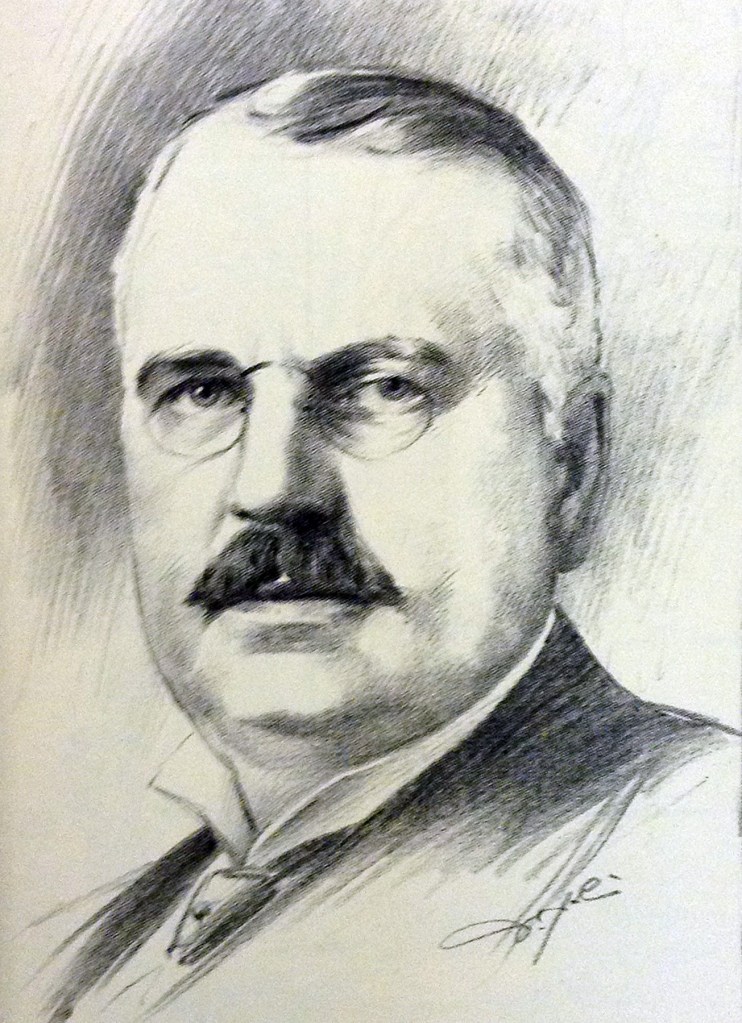
                                  Fig. 2    Andrew Weir in 1917 12

                In 1919 he was appointed Minister of Munitions, and he remained in this office until March 1921. His focus now changed to the sale of the vast quantities of army stores which had accumulated during the war. ‘Again, his genius for organization and great business acumen converted what might have been worthless goods or liabilities into considerable assets. It was not without reason that he was termed the man who saved Britain millions.’  For his services he was raised to the peerage as Baron Inverforth, of Southgate on 5February 1919. 13 He was also made a member of the Privy Council and received the American Distinguished Service Medal.

            After the war he invested in diesel-powered ships and broadened his business interests. He became chairman of the Marconi Wireless Telegraph Company and president of the Radio Communications Company, the Marconi International Marine Communications Company and Cable and Wireless which was formed by a merger of all the transmission companies. He was chairman of the Anglo-Burma Rice and Wilmer Grain companies and was on the board of Lloyds Bank. He was founder and first chairman of the United Baltic Corporation set up at the instigation of George V to replace German shipping interests in the Baltic. 

            In 1925, Inverforth bought the 60-room mansion, and eight acres of grounds called The Hill, Hampstead Heath. This property had formerly belonged to Lord Leverhulme. (When Inverforth died in 1955 he bequeathed the house, now known as Inverforth House, to Manor House Hospital. Inverforth House became the women’s section of the hospital and became known as Inverforth House Hospital).14

            Andrew Weir and his wife celebrated their golden wedding in 1939, but Lady Inverforth died two years later in 1941. He continued to go to his office four days a week into his ninety-first year. He died at his home in Hampstead on 17 September 1955.15,16 An obituary was published in the Glasgow Herald.17(Appendix 1) His wealth at death was £548,214 1s. 8d.18

            ‘One thing more remains to be said. Mr. Andrew Weir inherited the moral traditions of Scottish industry. He grew rich, but not ostentatious. His increasing fortune went back and back into trade. He never dreamed either of cutting a figure in plutocratic society or making himself a public character. A quiet, rather shy, and not often articulate person, he lived a frugal life, loving his business because it occupied all his time and satisfied nearly every curiosity of his inquiring mind.’19

            ‘Inverforth possessed great energy and enthusiasm, and also that almost essential quality of leadership: the ability to select suitable subordinates and leave them to carry on without interference. His integrity, great driving force, and brilliant organizing ability made him a man of power and influence in the commercial world although he shunned the limelight of publicity. His friends and employees, terms frequently synonymous, knew his unobtrusive generosity and kindness. He was particularly approachable: even the most junior employee who had some suggestion towards the improvement or well-being of the firm would be sure of a patient and appreciative hearing and would carry away the remembrance of a kindly twinkle in Inverforth’s eye and a good-humoured quiet voice. In many ways he was a model employer, taking interest in the welfare of his staff and their families both during and after their service with him. For many years, until he was eighty, he was treasurer of the Royal Merchant Navy School and, even after he had handed over this office, he continued to take a deep interest in the children.’ 20

References

  1. Minutes of Glasgow Corporation, 19th January 1943, page 394, Mitchell Library.
  2. Scotland`s People, Birth Certificate
  3. Scotland’s People, 1871 Census
  4. Scotland’s People, 1881 Census
  5. Oxford Dictionary of National Biography
  6. The Bailie, No. 2321, Mitchell Library, Glas
  7. Begbie, Harold, The Mirrors of Downing Street Chapter XII, G. P. Putnam and Sons, 1921 http://www.readcentral.com/Books/Harold Begbie
  8. Scotland’s People, Marriage Certificate
  9. Scotland’s People, Census 1891
  10. Scotland’s People, Census 1901
  11. ancestry.co.uk, England Census, 1911
  12. The Bailie, No. 2321, Mitchell Library, Glasgow
  13. The London Gazette 7Feb 1919, p 1956
  14. www.cityoflondon.gov.uk/…/Hampstead-heath-inverforth-house-heritage#
  15. Wikipedia, en.wikipedia.org/wiki/Andrew_Weir,_1st_Baron_Inverforth‎
  16. Glasgow Herald 19 September 1955, page 1
  17. Glasgow Herald 19 September 1955, page 8. (There were also obituaries published in The Times, Manchester Guardian and The Scotsman)
  18. probate, 3 Oct 1955, CGPLA Eng. & Wales
  19. Begbie, Harold, The Mirrors of Downing Street Chapter XII, G. P. Putnam and Sons, 1921 http://www.readcentral.com/Books/Harold Begbie
  20. Oxford Dictionary of National Biography

Obituary Glasgow Herald 19 September 1955 page 8

            The death occurred on Saturday of Lord Inverforth at his home, The Hill, Hampstead Heath, London. He was in his ninety-first year.

            Lord Inverforth was one of the greatest shipowners of his time, and his work as Surveyor-General of Supply at the War Office during the First World War and later as Minister of Munitions was of the greatest importance to the nation. He was Andrew Weir and was born in Kirkcaldy in 1865 and educated at Carlyle`s High School. He originally chose banking as a profession but at a very early age his interest turned to shipping.

            At the age of 20, having purchased two sailing vessels, he founded the firm of Andrew Weir and Co., with offices in Glasgow. The two ships soon became a fleet, and one of his barques, the Willowbank, gave her name to the Bank Line. In 1896 his first steamship was launched, and this was the beginning of the Bank Line which Andrew Weir and Co. managed.

War Services

            During the First World War, Mr. Weir placed his services at the Government`s disposal. In 1917 he was made Surveyor-General of Supply at the War office and a member of the Army Council. Two years later he became Minister of Munitions and remained in that post and a member of the Cabinet until 1921. For his war services he was created a baron in 1919 and made a member of the Privy Council.

            On entering the Government he severed his connection with Andrew Weir and Co. and thereafter his business interests lay in wider fields. He became chairman of a number of companies, including the Marconi Wireless Telegraph Company, and when in 1929 the merger of all the transmission companies was arranged Lord Inverforth became the chairman of the new Cable and Wireless, Ltd. and later president and then honorary president. He was also the president of the Andrew Weir Shipping and Trading Company, chairman of the United Baltic Corporation, and the Bank Line. He had been a director of Lloyds Bank and the National Bank of Australasia.

Heir to the Peerage

            In 1889 Lord Inverforth married Anne (who died in 1941), younger daughter of Mr Thomas Kay Dowie and they had one son and four daughters. The son, who succeeds to the peerage, is the Hon. Andrew Alexander Morton Weir. He was born in 1897 and is a partner in Andrew Weir and Co. In 1929 he married Iris Beryl, daughter of the late Charles Vincent, 4th battalion, The Buffs, and they have two sons.