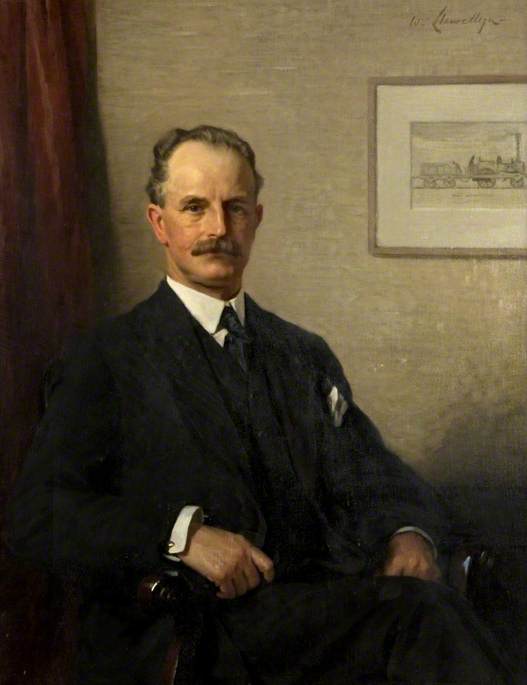
Hugh Reid was born in Manchester on 9 February1860. (1) His father was the locomotive manufacturer James Reid and his mother was Margaret Ann Scott. His parents moved to Glasgow when he was 3 years old (2) and he was brought up in Springburn. (3) He was educated at the High School of Glasgow. (4) He was apprenticed to his father’s firm, Neilson and Company at the Hydepark Engineering Works from 1871 to 1875. He then attended the Faculty of Engineering at Glasgow University from 1881 to 1883. (5) After the death of James Reid’s oldest son in 1881(6) James decided that his four sons should eventually be directors of the company of which he had been the sole director since 1874 and this was fully accomplished in1893. (7) James died in 1894 (8) and Hugh as the oldest son became Senior partner in the Hydepark Works, which in 1903 amalgamated with the Atlas Works and The Queens Park Works and the North British Locomotive company was born .
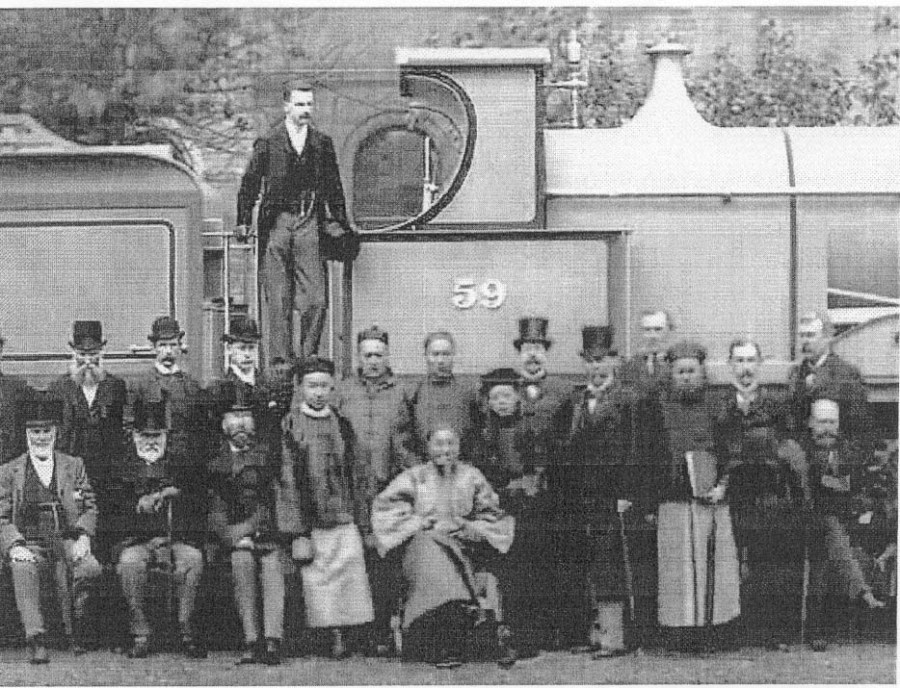
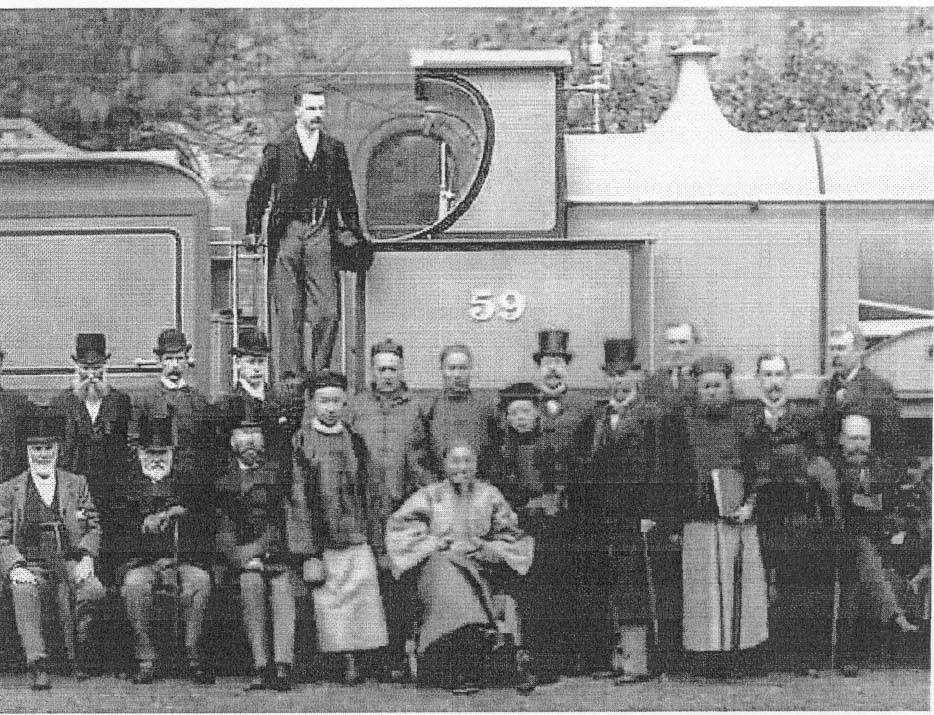
This became a major locomotive company exporting steam engines to Australia , Malaysia, New Zealand, Palestine and South Africa employing thousands of men. Hugh Reid was Chief Managing Director and Deputy Chairman. (9) At this time the company continued to innovate and he personally was responsible for the Reid Ramsay steam turbine electric locomotive. A full list of his patents is available in an article in Ancestry. (10) In later years the company designed diesel locomotives but this was not so successful and the company filed for bankruptcy in 1962.
Private Life
On 8 August 1888 he married Marion McClune Bell in Prestwick the daughter of a deceased shipbuilder. (11) They had four children (12): Captain James Reid (1889-1915) killed in the battle of Loos; Madelaine (1882-1983); Sir Douglas Neilson Reid (1898-1971) and George Hugh Neilson Reid (1901-1961). George was childless and at his death the baronetcy lapsed.(13 ) The family lived in Belmont House in Springburn.(14 )
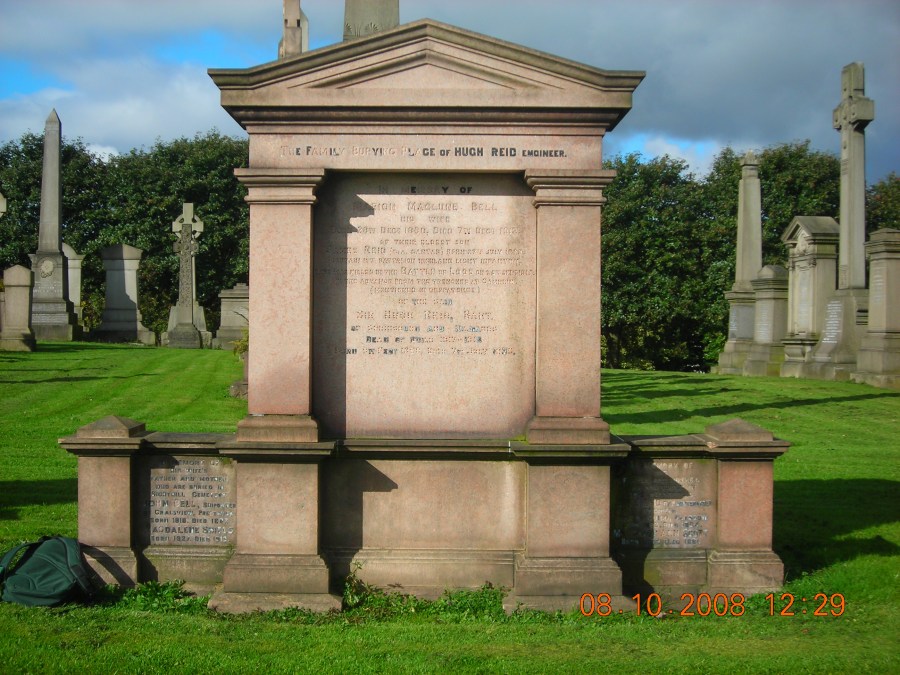
Marion died on 7 December 1913 at Belmont House. (15) She is buried in the family grave in the Glasgow Necropolis. Sir Hugh died in 1935 of a heart attack. (16) There were extensive obituaries in The Glasgow Herald (17), The Scotsman (18) and in The Times. (19) His grave is in the Glasgow Necropolis.
Public Life
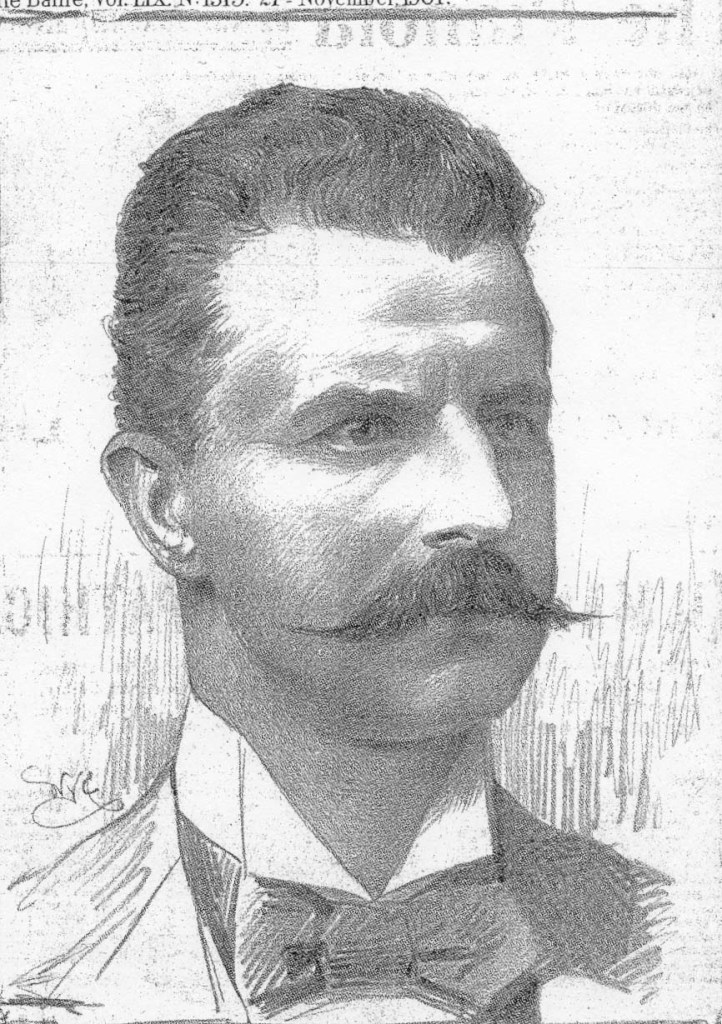
He held no elected office in Parliament or In Glasgow city council. He is reported in the Bailie as saying that it is neither necessary to be in Parliament nor in the City Council to do good service to the city. (20) He followed this precept all his life. He was Deacon of the Hammermen in the Trades House in Glasgow in 1903.(21) He was a member of the Merchants House in Glasgow and in 1916 he was elected by the members to be Dean of Guild thus becoming the second citizen of Glasgow. The Lord Provost is the first.
He was awarded the Freedom of the City of Glasgow in 1917 and a granddaughter returned the casket to the City in 2017. (22)
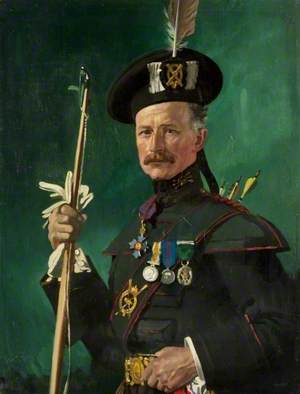
He joined the First Lanarkshire Volunteers as a private in 1877 and retired as Lieutenant Colonel in 1903. He became CBE in 1918 awarded for service to the Red Cross during the war. He had converted a part of the Springburn Works in to a military hospital. He successfully chaired a Munitions Committee.
He was created a baronet in 1922 and was Deputy Lord Lieutenant of the city of Glasgow.(23) He was a Brigadier in the Royal Company of Archers and he excelled at archery, winning the King’s prize in 1934. (24)
Services to The Arts in Glasgow
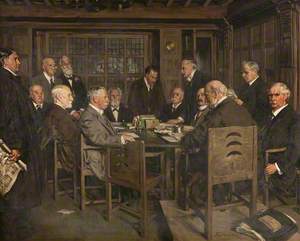
He served on the committee which appointed Charles Rennie Macintosh as architect for the Art School. He chaired the Machinery and Lighting committee for the Great Exhibition of 1901 for which he received much praise in the Bailie. (25) He was Chairman of the Royal Glasgow Institute for the Fine Arts from 1925 to 1928. (26
Philanthropy
He followed his father in giving to Springburn. He commissioned the statue of his father which is in the park. He gave land to extend Springburn Park and gave buildings such as the Winter Gardens in the park and also funded the Reid Hall and the Reid library. (27)
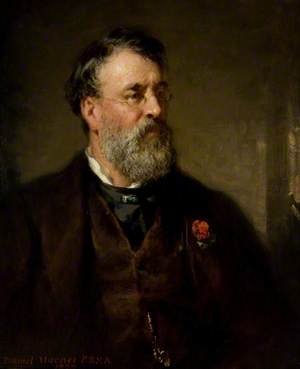
With his brothers, he donated some paintings which had been collected by his father James Reid to Glasgow Museums. Information about these can be found in the blog under James Reid of Auchterarder.
He gave a painting on his own behalf which is shown here.
Reference
National records of England statutory Births 1862.
- Who’s Who in Glasgow 1909
- National Records of Scotland census 1871
- Who’s who in Glasgow 1909
- David Fox in Ancestry.co.uk. Sir Hugh Reid
- National records of Scotland Statutory deaths 1881
- National Railway Museum Records
- National Records of Scotland statutory deaths 1894
- National Railway Museum Records
- Ancestry .com. Sir Hugh Reid and Marion M. Reid, article by David Fox
- Ibid
- Post office Directories Glasgow
- Laing, Alan ‘Sir Hugh Reid’ in The Glasgow Herald 20 December 2012
- Death of Marion recorded on Hugh Reid gravestone 7 December 1913
- National records of Scotland statutory deaths 1935
- The Glasgow Herald 8 July 1935
- The Scotsman 8 July 1935 ‘Death of a Captain of Industry’
- The Times 3 July 1935
- The Bailie ‘The Man you Know’ 27 November 1901
- Obituary in The Glasgow Herald’ 8 July 1935
- The Bailie ‘The Man You Know’ 23 September 1908
- The Glasgow Herald 20 November 2017
- Grace’s Guide to British Industrial History. https://gracesguide.co.uk. Creative commons
- Munn, Charles W. Dictionary of Scottish Business Biography: Sir Hugh Reid. Aberdeen University Press.1990
- The Bailie ‘The Man you Know’ 27 November 1901
- Graces Guide to British Industrial History
- http://cdlr.strath.ac.uk/springburn/sprin041 17/12/2009

 Glasgow Museums Art Donors Group