Figure 1. Archibald McLellan from Memoirs and Portraits of 100 Glasgow Men. (1886)
Archibald McLellan’s gift to Glasgow was an unusual, if somewhat inadvertent, one. It was an idea, not necessarily his, which led to the creation of a municipally owned art collection and the building of Kelvingrove Art Galleries.
He was the son of Archibald McLellan, a coach builder and his wife Christian Shillinglaw who married in 1794.[1] No record of his birth has been discovered however he died in 1854, his death registration document recording his age as 59 years.[2] There appears to have been a brother, James, and a sister, Christian, born in 1796 [3] and 1799 [4] respectively, both seem never to have married nor have any death records for either been identified.
Archibald senior was born in Luss in 1749.[5] On the 14 of March 1782 he became a Burgess and Guild Brother of Glasgow, being described as a hammerman and having served an apprenticeship with coach and harness makers Archibald Bogle and John Edmiston.[6] In the 1799 Glasgow directory he is listed as a partner in the coachbuilding company of McLelland and Dunbar, his name being spelt incorrectly with the addition of a ‘d’.[7] It wasn’t until 1812 that the entry was corrected to McLellan and Dunbar.[8] The business was located at various addresses in Miller Street, mostly at number 21.
In 1814 Archibald junior joined with his father, the business now being known as Archibald McLellan and Son at number 24 Miller Street, [9] eventually moving to 81 Miller Street.[10] Archibald senior died in 1831 in Glasgow. His Trust and Deed Settlement written in the same year mentions only his wife Christian and son Archibald.[11]
Archibald junior matriculated at Glasgow University in 1808, his date of birth being given as 1797.[12] His education seems to have been extensive, and might be described as a classical one, which was probably the basis for his interest in art and literature which became evident in later life.[13] He also had acquired the necessary skills to join with his father in coachbuilding, particularly as a heraldic draughtsman.[14] On the 26th of August 1813 he became a Burgess and Guild Brother of Glasgow. [15] The following day he became hammerman number 822, being described as a coachmaker. His ‘essay’ ( the manufacture of a piece of equipment to demonstrate the required skills) was a screw, bolt and nut.[16] At best he would be 18 years old, if the university birth date applies then he would 16 years old. Normally a member of the trade would be 21 years old at the time of their membership.[17] In 1819 he became Collector of the Incorporation of Hammerman probably in recognition of his varied practical and intellectual skills. In 1821 he became Deacon of the Hammermen.[18]
Prior to the 1833 Burgh Reform Act (Scotland) members of the Trades and Merchants Houses could be nominated by these organisations to become Glasgow councillors. McLellan was nominated in 1822 and on the 8 March gave his oath of allegiance and abjuration. He was described in the minutes of the council as a councillor of the Crafts rank. He was to remain a councillor in various roles for several years thereafter.[19]
He subsequently became a magistrate (bailie) of Glasgow being elected on the 2 October 1827. There were eleven crafts candidates for the position of youngest or second trades bailie. They were split into two groups of six and five, McLellan and Walter Ferguson coming top of their respective groups to run off against each other. In the event McLellan was elected unanimously. He served as bailie until October 1829. He also served as deacon convener on the council for various periods in between 1831 and 1835 and was elected city treasurer on the 11 October 1831.[20]
Most sources say he became a bailie before he reached the age of twenty five years. Clearly that is not true. If he was born in 1795 he would have been thirty two. The latest birthday I have come across for him is 1798, which means he would have been twenty nine on becoming a bailie.
McLellan was a multifaceted individual. In addition to running the coach business, initially with his father then on his own, and advancing the interests of the city through the council and the Trades House he also had a passionate interest in art, literature and music. He was friends with a number of artists of the day including Sir Daniel Macnee and Sir David Wilkie.[21]
In 1825 he became a member of the Glasgow Dilettanti Society which had been formed around February of that year. Its stated aim was ‘ to improve the taste for, and advance the knowledge of the fine arts,’ its membership being restricted to painters, sculptors, etchers and engravers but also included those individuals possessing artistic taste and knowledge. Its first president was Andrew Henderson, a portrait painter, McLellan and David Hamilton the architect joining later that year. The society met monthly with essay readings and exhibitions of work by the members or the owners. In 1826 McLellan exhibited a number of prints from his own collection.[22],[23] In 1834 he was the society’s president.[24] He was also the first president of the Glasgow Fine Arts Association in its foundation year of 1853 and on the Glasgow Art Unions management committee.
His growing influence in the Trades House resulted in him becoming its deacon convener in 1831 and again in 1832. The following year saw the introduction of the Reform Act which initially prohibited the Trades and Merchant Houses from nominating councillors. McLellan was instrumental in maintaining the right of the Deacon Convener of the Trades House and the Dean of Guild of the Merchants House, to become councillors ex officio.[25] He was again elected deacon convener of the Trades House in 1834, probably for his success in having the Act revised.[26] They also had his portrait painted by his friend Sir John Graham Gilbert which hangs in the Trades House today.[27]
It’s not clear when he started to collect works of art but it was an eclectic collection which included paintings, sculptures, and books. How it was housed is also not clear as initially he probably lived with his parents. However by 1828 he was living at 78 Miller Street,[28] near the coachworks. He remained at that address until 1838 [29] at which time he moved to 3 Dalhousie Street in the Barony parish. This last address according to Dr. Wangen, director of the Royal Gallery of Pictures in Berlin who visited Glasgow around 1852/53, housed a significant collection of paintings from the seventeeth century Dutch and Flemish schools. It also contained a number of Italian, English, Spanish and French works. Dr. Wangen was pretty scathing about other Glasgow collectors, or the lack of them, describing McLellan as an honourable exception. He described the house as being overfilled with paintings and listed and commented on over sixty of them in three of the rooms there which included works by Van Dyk, Sir David Wilkie and Brueghel. [30] McLellan also had a country domicile at Mugdock Castle, leasing the castle from around 1836 from the Marquis of Montrose family, the Grahams.[31]
He had a great interest in the architecture of Glasgow undertaking new buildings on his own account culminating in the galleries building in Sauchiehall Street named after him. He wrote Essay on the Cathedral Church of Glasgow which was published in 1833 which lamented the state of the cathedral since reformation times and suggested action to improve. Not all of his suggested changes were made however it was ‘renovated and became the pride and ornament of the land.’ [32] He also proposed a new western approach to the cathedral and purchased land between Weaver Street and Stirling’s Road to achieve this. The land was subsequently given to the city council and the Merchants House who carried out the required improvements.[33]
He never married however in a talk given to the Old Glasgow Club in 2010 by Mrs Jane Anderson, a guide at Kelvingrove Art Galleries, she describes him as having two mistresses, one, Isabella Hutcheson at Dalhousie Street who had been his servant/housekeeper there at least since 1841, the other at Mugdock, Elizabeth Park. She described them as his town and country common law wives. One other comment she made was that he was expelled from the university for vandalising the tomb of Bishop Wishart at the cathedral.[34]
He died at Mugdock Castle on the 22 October 1854. His obituary in the Glasgow Herald, including an extract from that of the Courier, described him as an orator and debater who was unrivalled, but also as someone who could be over emphatic. He was also described as kind-hearted. The Courier described his character as not being flat or neutral. He was warm, impetuous, irascible and also generous, open hearted, kind and hospitable.[35]
However one capability escaped him, namely that of keeping control of his finances. He was indebted to several banks, to such an extent that his intention to leave his art works and other property to Glasgow could not be complied with. In the event the city purchased those works and the Sauchiehall Street galleries for £44,500,[36] (today worth £4.4m re RPI changes or £143m re project cost changes[37]) from his trustees which in due course was the genesis of the city’s art collection. He may not have seen his collection as the basis of a municipal one, whether gifted or otherwise but the idea of such occurred to those who promoted the purchase however inadvertently it was arrived at.
John Blackie jnr. donated three paintings by Hugh William Williams to Glasgow museums in 1868, the subjects of the paintings being a portrait of David Dale, industrialist and philanthropist who founded the cotton mills in New Lanark, and two different views of his factories.[1]
Although being described as John jnr. he was in fact John Blackie the fourth, his great grandfather, grandfather and father all being named John.
The Blackie family originated from the east of Scotland, great grandfather John living in Haddington. Grandfather John was born and christened in 1762 [2] in Yester, Haddingtonshire, and for the first part of his life he lived in the parish of Dirleton and Gullane. He was a tobacco spinner and in 1781 he moved to Glasgow, presumably to pursue his trade more effectively. Later that year he married Agnes Burrell,[3] the daughter of James Burrell and Margaret Anderson, who was born in Scoonie in Fife in 1760.[4]
John and Agnes lived in the Old Wynd in Glasgow and had five children, three boys and two girls, the first of whom was John born in 1782.[5] He, in due course, became known as John senior.
Around 1793/94 John, Agnes and family decided to move to Newcastle, however son John snr. remained behind to serve an apprenticeship as a weaver with his father’s friend Robert Dobbie who had a four loom weaving business. The terms of the indenture were that John snr. would serve five years as an apprentice, followed by two years as a journeyman thereafter. Another common condition of the time was that John snr. would be given board and lodging with the family of Robert Dobbie. In the event John snr. was released from his journeyman commitment after one year.
His maternal grandfather James Burrell and his wife came to Glasgow around 1799/1800, James being involved in supplying water to the military barracks in the Gallowgate. The water conduit passed through Ark Lane near Duke Street on its way to the Gallowgate. In that area resided John Duncan, a well-to-do weaver. Burrell got to know Duncan and he recommended his grandson to him. Duncan agreed to employ John snr. and on the 30th January 1800 he formally joined Duncan’s business and lived with the family for nearly five years until December 1804, when on the 31st December he married Duncan’s daughter Catherine, who was five years older than him. Their first home was in Barrack Street where on the 27th September 1805, son John was born, later known as John jnr.[6] They also had two other sons, Walter Graham, born in 1816 [7] and Robert born in 1820.[8]
John snr. did not remain a weaver for long. He clearly had ambitions to improve his lot and was offered the opportunity to change his occupation by A Brownlie of the firm W.D. & A. Brownlie who were publishers and booksellers located at 414 Gallowgate.[9] It’s not clear how long he stayed with them however the last entry in the Glasgow P.O. directory for Brownlie was in 1807, located at 20 New Vennel.[10] There is some evidence to suggest that the business ran into financial difficulties and that John snr. was asked to take on some of it by its main creditor and Brownlie.[11]
He seems to have been successful in what he did as in 1812 he first appears in the Glasgow directory as J. Blackie and Co., printers and booksellers, located at 5 Saltmarket.[12] He remained there until 1816 when he moved premises to 8 East Clyde Street.[13] Also located at 5 Saltmarket was Andrew Khull, printer, and it seems likely that Blackie used him for his own publications as when he moved to East Clyde Street so did Khull.[14] By 1819 the entry in the directory was for Khull, Blackie and Co.[15] The formal partnership was established in 1820,[16] but dissolved in 1826.[17]
In 1824 he formed a partnership with Archibald Fullarton and William Somerville, the company being known as Blackie, Fullarton and Co.[18], located in 8 East Clyde Street, and first appearing in the directory of 1828.[19]John jnr. joined the partnership in 1826.[20] which lasted until 1831 when the partnership was dissolved.[21] In the 1832-33 directory, Blackie’s entry is as Blackie and Son, consisting of John snr. and Johnjnr., printer and publisher, still in East Clyde Street; Fullarton is listed as Fullarton and Co., printer and stereotype founders, located at 34 Hutcheson Street.[22]
John jnr. was initially educated at the school of William Angus thereafter attending the High School being tutored in English by a Mr. Gibson and in commercial arithmetic (accountancy) by Thomas Rennie at which he excelled. This was to be of great benefit to him in his early days working with his father. As the business had developed, various agencies had been set up in different parts of Great Britain. Johnjnr. had the task of visiting these agencies to supervise, look at accounts, and to generally be satisfied that the conduct of each agency was acceptable. Dealing with the English agencies only could take as long as three months to visit them all.[23]
Figure 2. John Blackie Jnr. From Memoirs and Portraits of 100 Glasgow Men. 1886.
He was also involved with company publications, the Casquet of Literary Gems being the first major book entrusted to him. It sold very well and probably confirmed to his father that he had [24] the capability to deal with all aspects of the business. Another major success for John jnr. was obtaining the publication rights in 1833 to the Winter Evening Tales by James Hogg, the Ettrick Shepherd. The first volume was published in 1836, the year after Hogg died.[25]
John jnr. continued to develop his activity in the business getting more involved with its publications and finances and sharing the management load with his father. His younger brothers Walter and Robert had also become active in the business and became partners in 1842.[26] He was a member of the Free Church of Scotland and became heavily involved with the publication of the company’s religious books. In particular he was instrumental in the publication of Scotland’s first religious newspaper, Scottish Guardian in 1832. It was a liberal minded publication and evangelical, it’s motto being ‘The people of Great Britain are a free and religious people and by the blessing of God I will lend my aid to help keep them so’.It remained in publication until 1862.[27]
His beliefs also manifested themselves in a number of practical ways. He helped set up three model lodging houses in Glasgow in 1845 (Green Dyke Street), 1847 (Mitchell Street) and 1856 (Carrick Street) in attempt to alleviate the squalor of existing lodging houses and generally to try and improve the conditions of the housing in which the poor were forced to live which were consequentially overcrowded, and unhealthy. In the mid-1860s he was to do much more as I’ll explain later.[28]
John jnr. married Agnes Gourlie, the daughter of Glasgow merchant William Gourlie in 1849.[29] They had three children, all boys: John James, born 1851 [30], William Gourlie, born 1853 [31], and Alfred, born 1855.[32]
Incidentally John snr. at the age of 68 married again in 1850, his second wife being Margaret Frame, the widow of wine merchant David Ferguson,[33] his first wife Catherine Duncan, having died in 1847 according to the Ancestry website although there is no primary proof of this.
In 1857 John jnr. was asked by the electors of the seventh ward in Glasgow to put himself forward for election to the town council. He was duly elected in November of that year and served on the police committee. In 1860 he was elected in ward six after becoming a bailie in 1859. He became a senior bailie in 1862 and in November 1863 he was unanimously elected as Glasgow’s Lord Provost remaining so until 1866.[34]
As a councillor, bailie and Lord Provost John jnr. continued to seek, in accordance with his political and religious beliefs, practical solutions to the housing of Glasgow’s poor whose living conditions were filthy, disease ridden and over-crowded, the buildings being too close together lacking full daylight and air. In a talk given to the Glasgow Philosophical Society in 1895 by Bailie Samuel Chisolm, a future Lord Provost of Glasgow who promoted further city improvement action, the condition of central or old Glasgow in the 1860s was clearly stated:
‘There were narrow streets, with high and crowded tenements on either side ; and closes, dark and filthy, running at right angles to the streets, were literally swarming with inhabitants. Within a comparatively narrow area 75,000 persons were huddled together, a large proportion of them under conditions which made physical well-being difficult, and moral well-being all but impossible.’
‘From each side of the Gallowgate, High Street, Saltmarket, Trongate, etc. there are narrow lanes or closes running like so many rents or fissures backwards to the extent of two, or sometimes three hundred feet, in which tenements of three or four storeys stand behind each other, generally built so close on each side that the women can either shake hands or scold each other, as they often do, from the opposite windows. When clothes are put out from such windows to dry, as is usually done by means of sticks, they generally touch each other. The breadth of these lanes is, in most instances, from three to four feet, the expense of the ground having at first induced the proprietor to build upon every available inch of it. Throughout the whole of these districts the population is densely crowded. In many of the lanes and closes there are residing in each not fewer than five, six, and even seven hundred souls, and in one close we observed thirty-eight families occupying one common stair. In the Tontine Close there are nearly eight hundred of the most vicious of our population crowded together, forming one immense hot bed of debauchery and crime’.
Dealing with this situation was therefore the key action of his time as Glasgow’s chief magistrate. Initially he and some like-minded friends joined together for the purpose of purchasing property in some of the worst districts of the city, with a view to laying out wider streets and thereafter reselling the remaining building ground, or themselves building upon it. That was not successful mainly due the exorbitant prices asked for by the landowners. What they did however was to bring the issue to the general public’s attention and demonstrate, by their failure, that the problem would only be resolved by means of an Act of Parliament which would compel change.[35]
He first brought before the council his City Improvement Scheme on the 17th September 1865. It was well received by council members and the public at large. It provided for 88 acres of over built land being dealt with, the creation or improvement of 45 streets and the power to spend £1,250,000 on the purchase of property. It also included a general rental taxation of 6d per £ for five years. This latter feature was to result in John jnr. leaving the council. In June 1866, the Act of Parliament was approved and trustees were appointed to deal with its implementation. In 1867 the first imposition of the 6d rental tax was due to be applied which led to a negative reaction to the act and John jnr. personally. So much so that when stood for re-election in November 1866, his three years tenure being up, he lost by two votes. [36]
He never sought election to the council again, continuing to play an informal part in city affairs and running the family business. He died of pleurisy on the 12th February 1873.[37]
His obituary in the Scotsman of the 13th February recorded his many attributes and included the following comment:
‘Ex Provost Blackie, as originator of the (City) Improvement Plan, has perhaps done more for the good of the city of Glasgow than any other of its chief Magistrates, with the exception of Lord Provost Stewart who promoted the Loch Katrine water scheme.’[38]
John snr. died in 1874,[39] the company he formed essentially in 1809 ceased trading in 1991.[40]
Shown below are examples of the children’s books Blackie published which are in the writer’s possession.
Figure 3. Published 1928
Figure 4. Published 1890.
Figure 5. Published 1935.
One other point worthy of mention, it was William Wilfrid Blackie, the son of Walter Graham Blackie, brother of John jnr., who commissioned Charles Rennie Mackintosh to design and build the Hill House in Helensburgh.
Archibald Gray Macdonald was an engraver/lithographer who bequeathed twenty three paintings to Glasgow, eleven of which were by the landscaper Samuel Bough. The paintings were to go to Glasgow on his death or on his wife’s if he predeceased her,[1] which is what happened as she died in 1903, three years after he did.[2] Two examples from his gift by Samuel Bough are shown below.
Archibald was born in 1813 in the Barony parish to John Macdonald, writer (lawyer) and Thomina Gray[3] who had married in 1810.[4] He was named after his maternal grandfather Archibald Gray and was the youngest of their three children, Mary being born in 1811[5] and Eneas in 1812.[6]
Very little has been established about father John, not helped by the fact there were two writers of the same name in Glasgow at the same time. When he was born is not clear but it may have been around 1790. He died intestate at Bridge of Allan in 1856, son Archibald was confirmed as executor, his estate being valued at £295 6s 9d. Interestingly in his inventory document he was described as being the owner of the Gartverrie Fire Clay Works in New Monklands and lived in Kingshill Cottage in the parish of Cadder.[7] In the Glasgow Herald of the 12th January he is recorded as donating £1 to the Patriotic Fund, set up to support the troops fighting the Crimean War (1853-56).[8] His death is recorded in the Inverness Courier on the 19 June 1856.[9] On his father’s death Archibald became owner of the Clay Works [10] eventually selling it c.1860 to J. Arthur and Co. and the Garnkirk Company.[11] Archibald’s mother Thomina was born in Kilmallie in 1780, the daughter of merchant Archibald Gray and Mary Cameron.[12]
Where Archibald was schooled has not been established nor is there any evidence to support his attendance at university. By 1835 however he partnered Andrew Maclure in the lithographing and engraving company Maclure, Macdonald & Co, situated at 190 Trongate,[13] the company first appearing in the Post Office Directory of 1836/37.[14] It’s not clear how he got involved with that activity, perhaps he and/or Andrew worked with another company initially. As it happens Hugh Wilson was an engraver and lithographer situated at 197 Trongate. Wilson had been in the profession since 1822 in Argyle street[15] and had moved to the Trongate in 1828[16] at which time Andrew would be age 16 and Archibald 15. Is this where one or both served their ‘apprenticeship’? Pure conjecture of course.
In 1838 their description in the directory was given as ‘lithographers, printers, draughtsmen and printers to Her Majesty’[17]the latter part subsequently becoming ‘ornamental printers to Her Majesty’ in 1846.[18]
In 1839 they moved their business premises to 57 Buchanan Street[19] remaining there until 1853 when they moved to 20 St. Vincent Place.[20] They were to stay there for the next thirty one years, moving to Bothwell Street in 1884. Their directory entry for that year gives a clear indication of the range and growth of the company which now included engineering activity, chromo lithographs, photographs, photo engraving, making medals, die sinks and embossing.[21] They were also at the forefront of innovation in their profession having bought a Sigi machine from Germany in 1851 which could print 600 sheets per hour and were the first company in the UK to use steam power for lithographic printing.[22]
Their business activity was not confined to Glasgow. In 1840 they opened premises in Liverpool, then London in 1845. In 1886 they opened in Manchester[23] by which time the founders of the company were no longer there. Andrew Maclure had died in 1885 at Monzie Castle in Perth, usual residence given as Ladbroke Square, London [24] having lived there from at least 1861.[25] Archibald retired from the business in 1886.[26]
Their products included portraiture, events and postage stamps. The National Portrait Gallery in London have forty four lithographs and chromolithographs of significant Victorian individuals including royalty, politicians, artists and soldiers, the original artwork on a number of them being done by Andrew Maclure.[27] The Wellcome Collection based at London University has thirty three lithographs of varying subject matter, with a small number of portraits. They also have thirty published reports produced by the company on a variety of subjects . [28]
The stamps they produced were mainly for the National Telephone Company, which was based in Glasgow, although they also created postage stamps for Uruguay and Sarawak.[29]
Some examples of their output are shown below.
Figure 6. Gordon of Khartoum.
Figure 3. Queen Victoria.
Figure 4. Lord Randolph Churchhill
Figure 5. Sir John Millais
These lithographs are from the National Portrait Gallery. The two below are from the Wellcome Collection .
Figure 7. Duke of Wellington lying in state
Figure 8. Opium Factory at Patna India.
Figure 11. Uruguay Postage Stamp
Figure 9. National Telephone Company
Figure 10. Sarawak Postage Stamp
Stamp images from Wikipedia Commons.
Archibald married Janet Gemmill Aitken in 1845.[30] She was the daughter of Dr. John Aitken and Margaret Montgomerie Thomson who married in 1817.[31] The Aitkens had four children, Janet being the third, born in 1823.[32] Her father was a graduate of Glasgow University gaining an MA in 1815 and an MD in 1839 and was also at one time the Register of the Faculty of Physicians and Surgeons.[33]
Archibald and Janet’s marriage was childless. Two years after their marriage they were living at 1 Fitzroy Place in Glasgow.[34] They moved to 8 Park Circus in 1866 where they lived for the rest of their lives.[35]
Archibald died at home on the 25th April 1900, cause of death given as Pulmonary Congestion.[36] Janet died, also at home on the 10th January 1903, cause of death recorded as acute bronchitis.[37] They were both buried in the Glasgow Necropolis in the tomb of Janet’s father and mother.[38]
Their favourite artist seems to have been Samuel Bough. He was born in England in 1822 but became well known and influential in landscape paintings of Scotland in the 19th century. He initially started out by painting theatrical scenes but by 1855 had moved to Edinburgh and was elected to the RSA the following year.[39] His portrait was painted by Daniel Macnee which is shown below.
In 1916 Robert Bontine Cunninghame Graham (RBCG), adventurer, politician and writer, donated a portrait of his wife Gabriella by John Lavery to Glasgow Museums.
Starting this research, I rather assumed that following the surname of the donor back in time would present no more than the usual difficulties and similarly with his wife. However that that was not the case as Cunninghame Graham’s surname was not a consistent feature of his ancestry. Additionally his wife’s name was an assumed one, entirely different from her birth name.
RBCG’s great-great-great-grandfather was Nicol Graham, the son of Robert Graham of Gartmore and his wife Isobel Buntine, who was the daughter of Nicol Buntine, Laird of Ardoch. Unfortunately there are no primary sources that confirm this however I’m reasonably confident that this marriage is the source of the Bontine part of RBCG’s surname. Hopefully what follows will support that.
Figure 2. Gartmore House in 2oo8. Public Domain (Jonathan Ng).
Nicol Graham married Margaret Cunninghame, eldest daughter of the Earl of Glencairn in 1732.[1] This marriage is the source of the Cunninghame element of RBCG’s surname. They had four sons; the eldest William, baptized in 1733, [2] the second, Robert, born circa 1735,[3] being RBCG’s great-great-grandfather. William, the heir presumptive to Gartmore, and Robert both matriculated at Glasgow University in 1749.[4]
In his entry in the matriculation records William is described as being an advocate in 1756, although I have been unable to find any evidence to support a law degree from Glasgow. In James Boswell’s London Journal 1762-1763, reprinted in the Penguin Classics series in 2010, it is recorded in the notes that he met William on the 18th June 1763 and again in Lausanne, Switzerland on the 21st December 1764, this latter encounter causing Boswell to comment that it pleased him to see that ‘an Advocate may be made a fine fellow’.[5] In 1767 William married Margaret Porterfield, the daughter of Dr. Porterfield of Edinburgh.[6]
In the meantime Robert had decided his fortunes lay in Jamaica, going there it seems in 1752 at the age of 17. His father had a cousin there who was Clerk of the Court in Kingston therefore it’s probable he was the catalyst for Robert leaving Scotland. As it happens the cousin’s name was Bontein, the relationship no doubt as a consequence of the marriage of Nicol Graham and Isobel Buntin.
By 1753 he was appointed Receiver-General of Taxes, deputed by Thomas Graham (a relative?), a previous holder of the office. In August of that year he wrote to his mother essentially seeking news from home, in particular asking after his sister Henrietta.[7] He suffered all the usual sicknesses that newcomers to the Caribbean colonies did, overcoming them due to the care of ‘very friendly ladys, the power ofmedicine and the strength of his constitution.’ He wrote two letters to his mother in 1757, the first telling her of his health problems, the second stating that he was again fit and well.[8]
As he gained experience in his tax role he became confidant enough to write to Sir Alexander Grant, a London Parliamentarian who previously had business interests in Jamaica and had advised the Board of Trade on West Indian commerce,[9] criticising the methods employed in the collection of taxes and stating that it was a hindrance to trade. His first personal commercial venture was to invest ‘a small sum’ in a privateer whose sole purpose seems to have been capturing French ships for prize money.[10]
His relatively peaceful existence however was severely disrupted by a slave revolt in 1760. The ringleader was Tacky an Obeah man who claimed occult powers that would protect the rebelling slaves. (Obeah can be broadly defined as anything used, or intended to be used by anyone pretending to be possessed of any occult or supernatural power.)[11]
As can no doubt be imagined the revolt was put down brutally and without mercy, any captured rebelling slave being dealt with by ‘Burning, Hanging and Gibetting.’ The slaves set up a negress called Cabeah as queen of Kingston with robes and a crown. In due course she was caught and executed. Tacky was shot and killed during a chase by an army lieutenant, with two other ringleaders Kingston and Fortune being up hung up in chains alive, Fortune taking seven days to die, Kingston nine days. He reported these events to his father in a very matter of fact way, as if he was describing how to cure belly aches and fevers.[12]
At the end of 1760 a law was passed outlawing Obeah to prevent further slave revolts. Another view of this might be that Act in reality was to protect the concept of the slavery of Africans and to deny the slave population’s African origins.[13]
Robert remained in Jamaica until 1770 continuing with his public duty as Receiver- General until 1764. In the following year he was elected to the National Assembly for the district of St. David’s remaining in that position until 1768.[14] He was also the owner of two sugar plantations on the island: Roaring River and Lucky Hill, his biographical notes in the Glasgow University Story website stating he owned fifty-one slaves of the latter plantation valued at £3,604.[15] In 2018 Stephen Mullen and Simon Newman wrote a report for Glasgow University, its theme being how the University benefited financially from slavery. In it Robert Graham features significantly, including reference to his fathering illegitimate children writing to a friend that he had ‘rather too great a latitude to a dissipated train of whoring, the consequence of which [is] I now dayly see before me a motley variegated race of different complexions’.[16]
In 1757 the Bontine estate of Ardoch was entailed to him by kinsman Nicol Bontine, the entail requiring him to assume the name of Bontine.[17] In 1764 on the death of Bontine he duly became the Laird of Ardoch.[18] Some sources say that Bontine’s death occurred around 1767-68 although I can find no primary source to confirm that.
In 1764 in Jamaica Robert Graham married Anne Taylor, daughter of Patrick Taylor and sister of Simon Taylor,[19] a wealthy merchant who owned several plantations and at the time of his death in 1813 owned 2228 slaves.[20]
Robert and Anne had six children two of whom were born in Jamaica, the others in Scotland. Their first was Margaret Jane who was born in Kingston in 1765 [21] and died the same year. 1766 saw the birth of their second, also Margaret,[22] who in due course travelled back to Scotland with them in 1770.[23] She was a beneficiary of her uncle Simon Taylor’s will in 1813 inheriting £10,000.[24]
Their Scottish born children were John, born and died in 1773, William Cunninghame, born in 1775 and RBCG’s great grandfather, Ann Susannah, born 1776, died 1778 and Nicol, born in 1778,[25] who became a soldier in the Austrian army rising to the rank of Maréchal de Camp.[26]
Robert and Anne on returning to Britain had initially lived in London for a short period but by late 1772 the family were living in Ardoch House,[27] his father Nicol and his elder brother William and family living at Gartmore.
William had been in poor health for some time and in 1774 had gone to Lisbon with his wife hoping that would help him. Unfortunately no improvement occurred and he died there later that year. As his three children were all girls that meant Robert was the next male heir of his father. When his father died in 1775 Robert became Laird of Gartmore in addition to Ardoch. [28] He and his family moved to Gartmore House sometime during 1776.[29]
From that time on he worked to improve his estates. He also appears to have supported his brother’s widow financially, paying for their three girls, education. In 1779 he took a house in Edinburgh to facilitate the education of his own children. Funds were also provided for the education of his illegitimate ‘offspring’ in Jamaica. In 1784 he became a burgess and guild brother of Edinburgh.[30]
Since his return to Scotland he had not engaged in any commercial activity however in 1778 he gave a Captain Stephenson £250 to help fit out a ship to be used in the Jamaica trade.[31]
Despite periods of ill health (gout) life at this point seemed to be very satisfactory, his interest in politics and literary matters growing, however that was to change with the death of his wife Anne circa 1781. Her cause of death has not been established however RBCG refers to periods of illness from when she settled in Scotland. He also from time to time refers to her as Robert’s creole wife however no significant evidence is produced in his book to support that.[32] Robert subsequently married Elizabeth Buchanan Hamilton circa 1786 which was short lived, ending by separation in 1789.[33]
His interests in politics and literary matters had been developing for some time. He became MP for Stirlingshire from 1794 to 1796 with a keen interest in political reform. He promoted a bill of rights during his tenure which although unsuccessful could be said to foreshadow the Reform Bill of 1832. Prior to that he had been rector of Glasgow University from 1785 to 1787.[34]
He also wrote poetry, his main claim to fame lying with his lyrical poem ‘If doughtydeeds my lady please’. When it was written is not clear, probably sometime between 1780 and 1790, but it was included in Palgrave’s Golden Treasury of 1875 and in 1866 Arthur Sullivan put it to music and dedicated it to a Mrs. Scott Russell, the mother of Rachel Scott Russell with whom he had or hoped for, a romantic attachment, much to her mother’s displeasure.[35]
Thereafter Graham was known as ‘Doughty Deeds’, RBCG’s biography of him bearing that title.
In 1796 he inherited the estate of Finlaystone on the death of the last Earl of Glencairn, John Cunninghame, and assumed the name Cunninghame, thereafter known as Robert Cunninghame Graham. He died in 1797 at Gartmore, son William inheriting.[36]
At the age of twelve William matriculated at Glasgow University in 1787,[37] under the tutelage of family friend Professor William Richardson, who holidayed often at a cottage on the Gartmore estate.[38] Apparently destined to run the family estates rather than be involved in business or commerce he then went on to study French and German in Neuchatel in Switzerland from around 1790 until late 1793.[39]
He married twice, first to Anne Dickson in 1798 [40] and they had five children between 1799 and 1809, the first born being Robert Cunninghame his eventual heir and grandfather of RBCG. The others were: Anna (1802), William John (1803), Douglas (1805) and Charlotte Maria Elizabeth (1809).[41]
His second marriage, in 1816, was to Janet Bogle nee Hunter.[42] They had four children as follows: Thomas Dunlop Douglas (1817), Alexander Spiers (1818), Susan Jane (1820) and Margaret Matilda (1821).
Like his father he became involved in politics being MP for Dunbartonshire from June 1796 to May 1797, winning his seat by eleven votes to three, his father Robert being the other candidate. He apparently had committed to support the then government but subsequently ‘now found he was unable in conscience to do so,’ hence the short duration of his political career.[43]
If he really was destined to run the family estates then what he achieved was the exact opposite. He was a gambler, not a very good one as he lost a fortune, and ultimately a swindler. He was forced to leave the country in 1828 to avoid his creditors, having squandered the family art collection through his gambling plus compromising the financial stability of his estates. By 1832 he was living in Florence with his wife Janet and their two daughters.
He was something of a mechanical genius developing a machine with which he could very accurately make copies of rare and famous engravings, thereby earning a living by selling these copies. The machine however was in due course used to produce false letters of credit of the bank Glyn, Halifax, Mills and Co.
There were fourteen individuals involved the main instigator of the fraud being the Marquis de Bourbel. They initially obtained a genuine letter of credit from the bank, from a strong box which Cunninghame Graham’s stepson Allan George Bogle had control of, thus seeing the approval signatories required.[44] They were then able to procure the same paper used by the bank, create a number of letters of credit and then forge the bank signatures using Cunninghame Graham’s machine to ‘trace’ them on to the false documents. By this means the conspirators were able to defraud banks in Italy, France, Belgium and elsewhere of £10,700 in six days. That sum today would, on RPI changes alone, be worth around £1million.[45]
However, as always seems to happen, greed overcame caution with one of the fraudsters being arrested on the Ostend ferry whilst trying to flee, the rest when learning of his fate scattered. An article in the Times newspaper goes into great detail with regards to the scheme with all fourteen conspirators being named, including William, his son Alexander and his stepson Allan Bogle. None of the main players in the fraud appear to have suffered any adverse consequences with the exception being the Graham family. Allan Bogle sued the writer of the article which he claimed defamed him. He was eventually awarded one farthing damages and ordered to pay his own legal expenses. Alexander lived under an assumed name in France and died there within the year at the age of twenty three. William was banished from Tuscany, ending up in London where he died in 1845.[46]
He was succeeded by his son Robert Cunninghame Cunninghame Graham. He had married Frances Laura Speirs in 1824 in the parish of Port of Monteith,[47] she being the daughter of Archibald Speirs, son of tobacco lord Alexander Speirs and his wife Mary Buchanan. They had nine children between 1826 and 1844, born in a variety of places. His eldest son and heir William Cunninghame Bontine was born in Leamington, Warwickshire in 1825 as was brother Douglas Alexander in 1844. Four were born at the family estate of Finlaystone between 1826 and 1834, a son and a daughter were born in Edinburgh in 1838 and 1839 respectively, and one daughter was born in Frankfurt, Germany in 1842.[48] In the 1851 census he is recorded as a visitor to the Speirs family in the parish of St. Ninians in the county of Stirling.[49]
Presumably the Finlaystone births over eight years are an indication of his involvement with the management of his estates, what he was doing in the other localities, in particular Germany, has not been established. He was Vice-Lieutenant of the county of Dunbartonshire and Deputy Lieutenant of the counties of Renfrew and Stirling.
Robert died in 1863 at Castlenaw House, Mortlake, in Surrey, his son William being his sole executer. Also in 1863 his son William was forced to sell of the Finlaystone estate to pay off outstanding debt, presumably emanating from his grandfather’s gambling activities.[50] In the year of Robert’s death his personal estate was valued at £20,358,[51] however in 1879 a second confirmation took place which identified further inventory valued at £134,276. On this occasion there was a reference to William’s curator bonis, a legal representative who looks after an individual’s affairs because of some physical or mental incapacity. The reason for that will become clear in due course.[52]
William Cunninghame Bontine Graham was to spend most of his life in the military. Prior to that however he attended Trinity College, Cambridge in 1842. What he studied has not been established.[53] In 1845 he became an ensign in the 15th Regiment of Foot (Scots Greys) by purchase,[54] a year later becoming a Cornet in the same regiment, again by purchase.[55] At that time he was serving in Ireland remaining there for circa five years.[56]
He married Anne Elizabeth Elphinstone Fleeming, daughter of the late Admiral Sir Charles Elphinstone Fleeming, in June 1851.[57] They had three sons, the eldest being Robert Bontine Cunninghame Graham (RBCG), born at Cadogan Place, London in 1852.[58] The second son was Charles Elphinstone Fleeming Cunningham Graham, who enlisted in the Royal Navy in 1873 at the age of nineteen. He was promoted to Lieutenant in 1877 and served until 1888.[59] He was awarded the M.V.O. and in 1908 became Groom in Waiting to the King.[60] In 1910 he became Groom of the Bedchamber.[61] The youngest son Malise Archibald Cunninghame Grahame became a minister of religion dying aged twenty five in 1885.[62]
William’s final promotion came in 1855 when he was made a major in the Prince of Wales Renfrew Regiment of Militia.[63] He remained at that rank until 1862 when he resigned his commission.[64] In the following year he became Deputy Lieutenant of the County of Stirling on the death of his father.[65]
From the late 1850s he began to suffer mental health issues. Whilst in Ireland with his regiment he had been attacked in Waterford and had suffered a severe head injury, letters written by his wife between 1857 and 1866 making reference to his problems and suggesting that they arose from this attack.[66] By 1876 it was of such concern that there was a legal notice in the Edinburgh Gazette requiring ‘in theQueen’s name’ the Lord President of the Court of Session to summon William to attend the Parliament House in Edinburgh to determine his sanity.[67] Clearly at some time after a curator bonis was appointed to look after his affairs hence the comment in the 1879 probate statement.
For the rest of his life William continued to have significant mental health problems. He died in 1883 at Eccles House in Penpont, Dumfriesshire, cause of death given as ‘Insanity – about 19 years.’ [68]
RBCG’s life by any measure became an incredible journey starting essentially as a cowboy, then general adventurer, a politician holding, for the time and considering his lineage, very socialist ideas, and a prolific writer.
His schooling began at Hillhouse in Leamington Spa from 1863 to 1865 followed by two years at Harrow. His education continued in London and Brussels before he went to the Argentine in 1869/70.[69]
Why the Argentine? The answer probably lies with his mother Anne Elizabeth who was half Spanish, her mother being Dona Catalina Paulina Alessandro de Jiminez who married her father in Cadiz in 1816. She was apparently aged 16, he was 42 years old. Another connection to South America may have been that RBCG’s mother had been born on board her father’s flagship HMS Barnham in 1828, whilst it was off-shore from Venezuela. At any rate he was brought up heavily influenced by his Spanish grandmother, speaking Spanish fluently from a very early age, and in general having, for the time, an unconventional upbringing.
One other, perhaps more pressing reason, was that his father’s illness had resulted in significant debts for the family, hence, as the eldest son, he would feel an obligation to deal with those debts. It was during this time in the Argentine where he rode with gauchos, dealt in cattle and horses, for which he had an abiding passion, that he became known as Don Roberto. Unfortunately whatever he did in South America had no effect on the debt situation at home and only served to create debt of his own.[70] One clear benefit however was his experiences there were the basis of a number stories he wrote in later life detailing the turbulent every-day life with the gauchos and the physical expansiveness of their country. He returned to Britain around 1877 however he was to go back to South America in later life on a number of occasions, one specific stay was in Uruguay where he purchased horses for the British army during World War I.
He lived in Paris for a while which is where he met his future wife Gabriela de la Balmondiere, apparently half French, half Chilean, marrying her there around 1878. However that was an entirely assumed name, more of which later.
His political career began in the General Election of 1885 when he stood as a Liberal candidate in North-West Lanarkshire. He lost to his Conservative opponent John Baird by over a thousand votes. In July of the following year, again as a Liberal, he stood against the same opponent and won by 332 votes. However he clearly identified as a radical socialist throughout his political career being described as the first socialist elected to parliament. He condemned a whole series of injustices of the society of the day. He was anti-imperialism, anti-racism, against child labour and was for abolishing the House of Lords.. He was also vigorously against the profiteering he saw in property and industry which was to the detriment of the people making the profit, that is, the workforce. Considering his ancestry and family background these were astonishing views to have held but by all accounts not out of character.[71]
His maiden speech in the House of Commons included the following words:
‘ the society in which one man works and enjoys the fruit – the society in which capital and luxury make Heaven for thirty thousand and a Hell for thirty million, that society…. with its want and destitution, its degradation, its prostitution and its glaring social inequalities – the society we call London….’
In 1887 the threat of disorder was such that demonstrations were forbidden. That did not stop a rally in Trafalgar Square against unemployment which ended in a riot. Among the leaders of the rally were RBCG and fellow socialist John Burns. Police and the army were in attendance which resulted in violence with over seventy people seriously injured and over four hundred arrests. RBCG and Burns were both severely beaten, arrested and eventually each sentenced to six weeks in Pentonville jail.[72]
Throughout his time in Parliament (until 1892) he continued to espouse his socialist views clearly and emphatically. On one occasion at the end of his speech he said:
‘To sum up the position briefly. Failure of civilisation to humanise; failure of commercialism to procure a subsistence; failure of religion to console; failure of our parliament to intervene; failure of individual effort to help; failure of our whole social system.’
This led to his expulsion from the House of Commons.[73]
Around 1888 he left the Liberal party and along with Keir Hardy formed the Scottish Labour party, RBCG becoming its first president, Hardy its first secretary general. In 1892 they both stood for election as party candidates, Hardy was successful in West Ham, London however RBCG lost in the Camlachie constituency in Glasgow, thus ending his parliamentary career.
That setback did not change his political views, which even led him to criticise Labour MPs for not presenting a radical challenge to the government. He had always advocated home rule for Scotland becoming president of the Scottish Home Rule Association and in 1928 president of the newly formed National Party of Scotland. Six years later the Scottish National Party was created when the National Party joined with the Scottish Party, RBCG being appointed president of the new organisation.[74]
Being freed of his formal involvement with politics allowed him and his wife to travel more often. He also wrote prolifically about his travels, his politics and his concerns about the disappearance of local cultures and ways of life he had experienced in his travels. He had a large number of friends and acquaintances from all walks of life, including George Bernard Shaw, Oscar Wilde, artist John Lavery who painted portraits of him and his wife, Whistler, Epstein and Augustus John. From his early visits to South America his writings refer to gauchos he befriended in particular Exaltacion Medina and Raimundo Barragan. He had also become friendly with the author Joseph Conrad from about 1897 with the writer in a letter to RBCG commenting on his wide experiences and the people he had met by saying:
‘What don’t you know? From the outside of a sail to the inside of a prison!’
In 1900 due to the level of debt, including death duties, he was forced to sell his Gartmore estate to Sir Charles Cayzer, a cause of great disappointment and sorrow to him.[75]
Figure 5. Gabriela photographed in 1890 by Frederick Hollyer. Victoria and Albert Museum.
More was to follow with the death of his wife in 1906 in France. Her true name was Carrie or Caroline Horsefall born in 1858 to a Yorkshire surgeon. Why she chose her assumed name is not clear however it seems she was rebelling against her strict upbringing and took herself to Paris which may have been the reason. Another, perhaps the more plausible, is that she assumed her chosen name on her marriage to RBCG to be more acceptable to his social circle. Presumably close family members knew of the deception but that is not clear.
She was an accomplished writer contributing to The Yellow Book and writing, amongst others a life of St Teresa of Avila, had artistic and musical skills, and wrote poetry.[76]
She died on the 8th September at Hendaye in France, her name registered as Gabriela Chideock (where did that come from?) Cunninghame Grahame.[77] As she had wished she was interred in the Inchmahome Priory on the Lake of Menteith.[78]
RBCG’s writings covered over thirty books which included 200 short stories and sketches. He also wrote Doughty Deeds a history of his great great grandfather Robert Cunninghame Graham. As may be expected during his life-time he had a very good reputation as a writer, his writings often being full of exotic individuals and adventure in faraway places. That has not fared very well since his death. A number of his stories also indicated the sadness he felt about the changes that occurred in some of the places he had visited such as the Pampas. His political reputation was also well established, particularly in the labour and Scottish Independence movements although with his privileged background it may have seemed strange but welcome to some and perhaps traitorous, to his class, to others. Again as for his writings his political activity is not well remembered today.
Figure 5. John Lavery (1856-1941). Don Pedro on Pampa.
He had one other passion and that was horses. He owned several throughout his life but his favourite was Pampa, an Argentinian stallion he saw pulling a tram-car in Glasgow. He bought it from the tram company and rode it at every opportunity until it died in 1911.
When he went to buy horses for the British Army in Uruguay during the Great War he had two opposing emotions. He was happy to be riding again in the Pampas, but was saddened to think of their likely fate in Flanders. He wrote a book about his experience in Uruguay entitled ‘Bopicua’. The book ends with the words, to the horses, ‘eat well there is no grass like that of La Pileta , to where you go across the sea. The grass in Europe all must smell of blood’.[79]
His made one last trip to Argentina in 1936, dying there in the Plaza Hotel in Buenos Aries on the 20 March. He lay in state in the Casa del Teatro his strong affinity with the country being recognised by the attendance of the Argentinian President at his funeral. His body was subsequently returned home and buried beside his wife in the Inchmahome Priory.[80] The last of the family estates, Ardoch, was inherited by his brother Charles’ son Angus.[81]
[1] Marriages. (OPR) Scotland. Edinburgh. 23 April 1732. GRAHAME, Nicol and CUNNINGHAME, Margaret. 685/1 470 74. www.scotlandspeople.gov.uk
[16] University of Glasgow. Slavery, Abolition and the University of Glasgow, report, and recommendations of the University of Glasgow History of Slavery Steering Committee.https://www.gla.ac.uk/media/Media_607547_smxx.pdf
[17] Shaw, Samuel (1784). An Accurate Alphabetical Index of the Registered Entails in Scotland. Edinburgh. p. 14. https://books.google.co.uk/books AND Graham, op.cit. p. 76.
[41] Births (OPR) Scotland. Port of Menteith. 14 September 1799. GRAHAM, Robert + Anna + William John + Douglas + Charlotte Maria Elizabeth. 388/ 10 385. www.scotlandspeople.gov.uk
[47] Marriages (OPR) Scotland. Port of Monteith 20 June 1824. BUNTIN, Robert Cunninghame and SPEIRS, Frances Laura. 388/ 20 120. www.scotlandspeople.gov.uk
[57] Marriage Announcements. (1851) Morning Post London. 14 June. BONTINE, William Cunninghame and Fleeming, Anne Elizabeth Elphinstone. p. 8. https://www.nls.uk/
[62] Testamentary Records. England. 19 January 1886. CUNNINGHAME GRAHAM, Malise Archibald. England & Wales, National Probate Calendar (index of Wills and Administrations), 1858-1995. https://www.ancestry.co.uk
[81] Testamentary Records. Scotland. 17 July 1936. Cunninghame Grahame, Robert Bontine. Scottish National Probate Index (Calendar of Confirmations and Inventories), 1876-1936. p. G63. https://www.ancestry.co.uk
Note: Charles Rennie Cowie and his son John always in Bold.
Figure 1. John Cowie. By kind permission of John D. Napper.
In 1964 the widow of East India merchant John Cowie, Mrs. Elizabeth Janet Cowie, donated to the National Library of Scotland (NLS) in Edinburgh and the Mitchell library in Glasgow a collection of rare books, historical manuscripts and letters, included in which are rare editions of Robert Burns poems, first editions of Milton, Galt, and Scott, and a large number of letters of Burns and others. It consists of several hundred items and is an astonishingly eclectic accumulation of material covering over six hundred years. The NLS was to get that material which was of national importance, the Mitchell the rest, the decision making process being undertaken by personnel from both libraries, Mrs. Cowie and her lawyer. Eventually the NLS collection consisted of manuscripts of Robert Burns, Sir Walter Scott and the poet Allan Ramsay.
The individual who had collected all this material was not John Cowie however, it was his father Charles Rennie Cowie, also an East India merchant, who had bequeathed it to his wife Grizel on his death in 1922.[1] In his will the collection was identified as of National and Historic Interest, thereby excluding it from his estate for tax purposes, and valued at £4083.[2] Today, at that valuation, the joint collections would be worth around £2 million.[3] Grizel died seven years later with the collection eventually going to John.[4]
Who was Charles Rennie Cowie, what was his and his wife’s family background? By what means did he fund his purchases? One other question which seems unlikely to be answered by this research is from whom did he make his purchases?
The Cowie family originated in Stirlingshire, most likely in the parish of Larbert. JohnCowie’s great grandfather was forester James Cowie who was married to Margaret McAlpine.[5] It’s not clear when they married however John’s grandfather, also John, was born in 1817,[6] the fifth of eight children all born in Larbert. They lived in Carronhall village to the east of Larbert, James dying there in 1848.[7] Margaret remained in Carronhall until circa 1863 when she moved to Grahamston to live in a house owned by her son John.[8][9] She died there at the age of eighty seven in 1870.[10]
John married Margaret Rennie in 1839,[11] she also being born in Larbert the daughter of iron founder John Rennie and his wife Mary Alexander.[12] It’s not clear what his occupation was at the time of his marriage however by 1841 he was a grocer in Grahamston in the parish of Falkirk,[13] an occupation he followed for most of his working life. He and Margaret had twelve children between 1840 and 1862, seven sons and five daughters, the relevant offspring to this research being Charles RennieCowie and three of his brothers, James, Archibald and Thomas, and his sister Jessie.
John and Margaret lived in Grahamston until at least 1872[14] however by 1881 they had moved to Mavis Villa, Riddrie,[15] which is where he died in 1882.[16] Margaret lived a further twelve years, dying in Hyde Park, Blantyre in 1895.[17] Interestingly in the 1891 census she was resident in Rutherglen, living on a private income, with her son James, another East India merchant, and two grandchildren John and Mary, both born in Rangoon,[18] the children, as I’ll show, of her son Charles Rennie Cowie.
Charles was born on the 24th October 1851 and baptized in July the following year[19]. His initial education was at a local school. He then attended Anderson’s College in George Street in Glasgow studying chemistry under Frederick Penny.[20] Penny was a Londoner who had studied chemistry under Michael Faraday at the Royal Institution and in 1839 had been appointed Chair of Chemistry at the College, a position he held until his death in 1869. He also was involved in testing the water quality from Loch Katrine to establish if it was suitable for Glasgow’s water supply and gave expert testimony in a number of criminal trials involving poisons including that of the infamous Dr. Pritchard who had murdered his wife and mother in law.[21]
When Charles left College is not certain, nor is it clear what his qualification was, but he must have left around 1870 as by 1871 he was employed as chemist at the Uphall Oil Works in Linlithgow, living in lodgings at Crossgreen Farm in Uphall.[22] In due course he became manager of the facility[23] which was just a few miles from James ‘Paraffin’ Young’s refinery in Bathgate. In 1873, being described as ‘gent’ he was appointed ensign in the 5th Linlithgowshire Rifle Volunteers.[24]
He did not remain in Uphall very much longer as around 1874[25] he travelled to Rangoon eventually becoming manager of the Rangoon Oil Company the precursor of Burmah Oil, this being his occupation when he married Grizel or Grace Purdie in 1878,[26] more of whom shortly.
Between 1876 and 1878 he registered two patents in Rangoon, one dealing with the use of rice husks as furnace fuel in rice mills,[27] the other about improving the efficiency of steam furnace combustion.[28] The first patent at least halved the cost of milling rice with the added benefit of the burnt rice husks proving to be an effective deodorizer used to cover all kinds of refuse dumps. His invention not only found use in Burma but also in Thailand and French Indo-China.[29] He also registered a third patent with a colleague in 1881, again dealing with furnace efficiency.[30]
Figure 2. Grace Purdie Christening Cup. Courtesy of Bo’ness Pottery
He remained manager of the oil works until circa 1878/79 at which time he founded in Rangoon the trading company Charles R Cowie & Co.,[31] trading in almost any commodity that was required by customers in British India and elsewhere. That was the beginning of Charles, his brothers James, Archibald and Thomas, and his eventual sons, becoming East India merchants
His wife Grizel was the daughter of Thomas Purdie, farmer, and Margaret Storrie, [32] her birth being commemorated by her parents having a christening mug made by Bo’ness Potteries.[33]
The family originated in West Calder where Grizel’s grandfather Andrew Purdie farmed at West Mains which is where he died in 1863 age ninety five.[34] In 1837 whilst Andrew was the tenant of the farm a servant girl Elizabeth Brown was charged with child murder or concealment of a pregnancy. She confessed and was sentenced to ten months imprisonment. The court records make no mention of the male involvement only that Elizabeth’s address was c/o Andrew Purdie, West Mains Farm. [35]
Figure 3. Uphall, Crossgreen and Fortneuk Farms. Courtesy of Bo’ness Pottery
Thomas Purdie farmed at Forkneuk, Uphall from around 1855[36] which makes it likely that Charles and Grizel met before he went to Rangoon, the farms being in close proximity to each other. They married at Forkneuk on the 17th December 1878, the beginning of a married life that for the first twelve or so years saw them travelling frequently between Rangoon and Glasgow.
Their first born child was John, the ostensible donor of the Cowie Collection. He was born in Rangoon in October 1880 and baptized there in July 1881.[37] They had a further nine children between 1882 and 1903 as follows:
Mary Storrie, born 1882 at Rangoon and baptized there.[38]
Margaret Rennie, born 1884 at Portobello, baptized in Rangoon later that year.[39]
Gracie Purdie, born and baptized at Rangoon in 1886.[40]
Thomas Purdie, born at Woodend House, Partick in 1893.[44]
Charles Rennie, born at Woodend House, Partick in 1895.[45]
Gladys Dorothy, born at Woodend House, Partick in 1903.[46]
Whilst Charles ran his company in Rangoon his brother James in 1880 was working for Jas. L. McClure & Co., merchants and agents for a number of companies dealing in iron and steel products.[47] Two years later he established his own agency company, James Cowie & Co., representing a number of similar companies from England and Scotland.[48]
In the following year Cowie Brothers & Co. were formed located at the same address, 59 St. Vincent Street, as James’ company. No other brother seemed to be involved at that point[49] however it does appear that simply was a matter of timing as within the next twelve months brother Archibald joined the company.[50]Charles was home in Glasgow that year (1884), not associated with either of the family businesses but with merchants Russell, Macfarlane & Co., a situation that occurred every time he came home from Rangoon until circa 1891 when he came home to Glasgow for good. He had lived at various address on each return home finally settling at Woodend House, Partick sometime after 1891, his wife Grizel being recorded as the owner.[51] His Rangoon company however still operated in his name as before directed by Rangoon partners and his sons.
The two Glasgow Companies continued to operate for another ten years, latterly from 196 St Vincent Street, with Charles continuing to be associated with Russell, Macfarlane and Co. until 1893 when he formally joined Cowie Brothers & Co.[52] It’s clear brother James was seriously ill at that time as he died the following year of cirrhosis of the kidneys which he had suffered from for at least six months.[53] James’ company ceased trading in 1897/98, the last year it appeared in the Glasgow directory.[54] Cowie Brothers & Co continued for several years afterwards with brother Thomas joining the company in 1905, remaining involved until 1911. Subsequent to that date the Cowies involved in the company were the three sons of Charles, namely John, Thomas and his namesake Charles. The company was still listed in the Glasgow Directory in 1975.[55]
Charles senior’s company in Rangoon also continued to operate at least until the late 1930s, with his three sons all involved to varying degrees, travelling back and forth to Rangoon as required. The last journey from Rangoon I have established is that of son Charles Rennie Cowie and his wife Norah on the M.V. Oxfordshire during April/May 1939.[56]
However a third Charles Rennie Cowie was to remain in Burma. John, the eldest son of Charles and Grizel married in 1908 Elizabeth Janet Ramsay. They had four children the eldest of whom was another Charles Rennie Cowie, born in Rangoon in 1911. He joined the Rangoon Battalion of the Burmese Auxiliary Force in 1938 and in 1940 is listed as a lieutenant in the Battalion. He continued to be listed through 1941 as such although it seems he was promoted captain in April 1941.[57] Exactly where he was located during this time has not been established although I have come across a photograph of him and fellow officers, along with their honorary colonel, Sir Alexander Cochrane, in Burma (Rangoon?) in 1940.[58] Lieutenant C. R. Cowie is seated at the extreme right hand side.
He stayed in Burma throughout the war, attaining the rank of Lieutenant-Colonel by its end.
John’s brother Thomas Purdie Cowie married in Rangoon in 1921[59]. In the Thacker’s Commercial Directory of 1925, the company was located at 6 Merchants Street and described as machinery importers, mill furnishers and mill stores, engineers and contractors, electrical stores, insurance agents, importers and exporters, and as agents for the Dollar Steamship Line. There were no Cowies listed as Rangoon partners although Thomas was listed as an assistant in the company.[60] He returned to British India in 1945, this time to Bombay, as the Director of Stores for the Indian Red Cross.[61]
As stated previously, the Cowie companies traded any commodity that had a buyer. Their sales included cutlery, steam engines, pottery, biscuits and bricks. Where they could they labelled or marked the items with their company name.
Figure 5. Cowie Brothers and Co. trademark applied to transfer printed bowls by Bridgeness Pottery. Courtesy of Bo’ness Pottery
Figure 6. As figure 5.
Figure 7. Steam Engine with Cowie Brothers and Co. nameplate. Courtesy of Bo’ness Pottery.
Their involvement with bricks came about when Charles senior’s sister Jessie married coalmaster Mark Hurll in 1888.[62] At the time of his marriage his brother Peter was a fireclay brick manufacturer in Glenboig. About three years later Mark set up with his brother as a brick manufacturer, amongst other similar products, forming P & M Hurll, with works in Maryhill, Garscsadden as well as Glenboig. This led to the Cowie brothers trading the bricks and applying their name to each individual product.[63]
Their involvement with biscuits in terms of their trademark however was not as successful. In 1896 at the Court of Session they applied for an interdict against biscuit manufacturers George Herbert, a supplier of Cowies, to stop them using what they claimed to be the Cowie trademark, an image of the Glasgow Municipal Building, on biscuits sold by Herberts on their own behalf in Rangoon.
Charles Rennie Cowie and brother Archibald gave evidence essentially saying that Cowies had traded biscuits to Rangoon since 1889, with that trademark. The defendant had also been trading in Rangoon but had begun to use a similar image of the Municipal Building on biscuits he sold directly there thereby confusing potential native purchasers. After a very longwinded obtuse argument involving images of temples and mosques, the judgement went against Cowies and the interdict was refused, the judges essentially declining to accept Rangoon natives would be confused.[64]
It will be pretty obvious by now that the money Charles senior earned through his business ventures as an East India Merchant was the means by which he created his collection. When he died in 1922 his estate was valued at £144,507[65], current worth somewhere between £7million and £70million.[66]
The NLS collection is listed on the library website as contained within MSS 15951 – 15975 and consists of manuscripts relating to Robert Burns, Sir Walter Scott and the poet Allan Ramsay. The manuscripts include an autobiographical letter written by Burns to Dr. John Moore in 1787 in which the poet writes retrospectively of his life to date (MS 15952), and a series of thirteen manuscripts relating to the seven volume collection ‘The Works of Robert Burns’ edited by W Scott Douglas, 1877-1879 (MSS 15955-67). Also included are proofs of ‘The History of Scotland’, 1829-1830, by Sir Walter Scott (MS15969), the final version of ‘The Gentle Shepherd’ by Allan Ramsay, 1724-1725 (MS15972), and letters of Sir Walter Scott to Robert Southey and others (MS15971).[67],[68]
The Cowie collection at the Mitchell is somewhat different. Although it also contains a lot of Burns material, it has an exceptional range of other manuscripts, books, including first editions, and letters from an extremely wide range of individuals including royalty. As far as I’m aware there are no digitalised records of the collection however there are two catalogues which contain a full list of the items donated. They are ‘The John Cowie Collection-Catalogue’ and ‘The John Cowie Collection-Autograph Albums. Index 1 to 4’.
The following will give some idea of the range of topics and material that the Mitchell holds.
Statutes of Edward I and II. MSS dated 1274.
Rerum Scoticarum Historia. Edinburgh: A. Arbuthnot 1582. Author George Buchanan.
Quintus Curtius. Venice 1494. De Rebus Gestis Alexandri Magni.
John Milton – Paradise Regained. 1st Edition 1671.
Carolus Gustavus, King of Sweden. Last will and Testament – 1660.
Aesop Fables by Sir Roger L’Estrange. 1692/1699.
The Rosebery Burns Club, Glasgow. Its origins and Growth 1906.
Charles Edward Stuart – Order signed by him to raise the Mackintoshes – 1746
Letter of Leopold I, King of the Belgians 1850.
Paul, Emperor of Russia letter to Baron Dimsdale 1778.
Bassendyne Bible 1576
C.F. Brotchie. History of Govan 1905
Eikon Basilike. The Pourtraicture of his sacred Majestie in his solitudes and sufferings. 1648. (Charles I).
Acts of Parliament – 1711.
Royal Navy Accounts of Cruisers and Home- Convoys – 1704.
George I Document headed 15/4/1724
M.W. Turner R.A. lecture ticket dated 1818.
William Wilberforce various letters 1819 – 1825
Louis XVI. Order for lieutenant to command the corvette ‘La Poulette’ – 1781.
Last will and testament of Carolus Gustavus King of Sweden – 1660.
Allan Ramsay The Ever Green, a collection of poems – 1724.
Sir Walter Scott. Guy Mannering, Edinburgh 1815
An account of the taking of the late Duke of Monmouth. Samuel Keble 1685.
Giuseppe Garibaldi – letter to Rear Admiral Mundy. 1860.
James III letter to Cardinal Gotti, Bologna. 1729.
James Boswell. The journal of a tour to the Hebrides with Samuel Johnson. London:1785.
The Works of Geoffrey Chaucer 4th John Kyngston 1561.
Figure 9. Charles Rennie Cowie. Courtesy of Bo’ness Pottery.
His enthusiasm for Robert Burns went beyond collecting books and manuscripts. He contributed significantly to the purchase and restoration of buildings associated with the poet.
Burns’ house in Castle Street (previously Back Causeway), Mauchline, where he and Jean Armour lived was put up for sale at the beginning of 1915 by its then owner, a Miss Miller. The Glasgow and District Burns Clubs Association were interested in purchasing it and sent a delegation to examine the premises, which included Cowie as president of the Partick Burns Club.
It was decided to buy the property despite it being in the need of repair. It’s not clear what the total costs involved were however Cowie donated the required funds to purchase and repair the house. The building once restored was formally opened to the public on the 28th August 1915. In addition to the museum created, provision was made in the other rooms of the property to accommodate deserving elderly people.[70] At the end of the ceremony Mrs Cowie was presented with a silver key to mark the occasion and her husband’s generous gift.[71]
Figure 10. Opening of Burns House, Mauchline. Mrs Cowie and Charles fifth and sixth from left. Courtesy of Bo’ness Pottery.
Following on from that in 1916 Charles funded the purchase of the property adjoining the Burns house which had been once owned by Dr. John MacKenzie who had apparently attended Burns’ father at the end of his life. Little work was done during the war but by 1919 the premises were fully restored allowing the museum to expand and to provide accommodation for additional elderly people. His final act of generosity in this respect was for the purchase of Nanse Tinnocok’s Tavern across the road from the other two properties. It was formally opened after repair on the 24th May 1924 by Mrs. Cowie, Charles having died in 1922.[72]
Figure 11. Mrs Grizel Cowie being presented with ceremonial key after performing the opening ceremony of the restored Nanse Tinnocks Tavern. Courtesy of Bo’ness Pottery.
Charles Rennie Cowie died at Woodend House, Partick on the 18th November 1922, cause of death given as chronic nephritis (inflammation of the kidneys).[73] In his lifetime he had been a very successful chemist, inventor and merchant, amassing a fortune from his trading activities which allowed him to indulge his interests in Burns, and collecting.
His obituary in the Glasgow Herald makes reference to his professional life and to his collecting, describing him as a an ‘ardent admirer of the national poet’ and ‘keenly interested in the history of Scotland’. It also adds that he was prominent in temperance circles, an elder in Dowanhill U.F. Church and a member of several General Assembly committees.
He was President of the Abstainers Union and had been a director of the Scottish Temperance League, also supporting these organisations and others financially, and had purchased the old Partick Academy gifting it to the Western branch of the Y.M.C.A. He had also endowed one of the beds in the Arran War Memorial Hospital, an island he visited annually on holiday. He was a J.P., vice president of the Hillhead Liberal Association, had been a member of the Govan School Board, and was a Fellow of the Society of Antiquaries of Scotland. (F.S.A.). [74]
In his obituary in The Straits Times of 16 December it was stated that every rice eater owed the cheapness of his meal to the ‘unobtrusive chemist from Scotland’. He was also described as a ‘public spirited and charitable citizen’.[75]
John and his mother Grizel were named as executors and trustees of Charles’ estate. Grizel inherited all the household items including his collection and other artefacts and there were also a number of bequests to his church and the temperance organisations he had been involved with. The residue was then to be split half to Grizel, and the other half equally divided between his ten children.[76]
Grizel died in 1929 leaving the collection to John. He died on the 10th March 1963 of a heart attack.[77]
Acknowledgement: My thanks to John D. Napper, grandson of John Cowie, for additional information on the Cowie family
To avoid confusion donor Cecilia Douglas will always be in bold.
In 1862 Mrs Cecilia Douglas (nee Douglas) bequeathed oil paintings and sculptures to the then Glasgow Corporation. The paintings, thirteen in total consisting of an old master, copies of old masters and other originals, initially were on display in the Mclellan Galleries in Sauchiehall Street. Currently they are located in the Glasgow Museum Resource Centre or on display in Kelvingrove Art Galleries.
She and her husband Gilbert represented two different branches of the Douglas family. Hers, according to one source, perhaps wishful thinking, descended from the Douglas Earls of Angus via the Douglas families of Cruixton and Stobbs,[1] Gilbert’s from the Douglases of Mulderg in Ross-Shire.[2] Her mother was a Buchanan, descending from the Buchanans of Leny, Gilbert’s mother was a Robertson, daughter of a farmer from Balcony (Balconie). Interestingly there is a line of descent chart which shows the Robertson family descending from Edward I of England and his wife, the daughter of the king of France.[3] All pre-eminent families, particularly the Douglases and the Buchanans who were heavily involved in the West Indies in the eighteenth century, owning plantations and dealing in sugar and tobacco.
Gilbert Douglas
Gilbert’s paternal ancestry can be traced back to Hector Douglas, the first of Mulderg, who is mentioned in the 1644 Valuation Roll of the Sheriffdom of Inverness and Ross. He seems to have been the proprietor of the estate from around 1630.He died before 1653, his son Hector succeeding him being ‘retoured as heir of his father’ (legally recognised). Son Hector had married Bessie Gray around 1630 producing at least three sons, however his time as owner of the estate was short lived as he died around 1657, to be succeeded by son Robert. Robert, his brother another Hector who succeeded him, both had no issue the estate passing on to a third brother, first name unfortunately not known. This brother was succeeded by his son Hector who was Gilbert’s great grandfather. Around 1718 the Douglases ceased to own Mulderg, Gilbert’s great grandfather’s eldest son (another Hector) being the last.[4]
The second son was Robert [5] who married Catherine Munro in 1703.[6] She was his second wife and they had three children one of whom was yet another Robert, a farmer in Balcony, who was Gilbert’s father. He married Janet Robertson, daughter of farmer Hugh Robertson also of Balcony, Gilbert being born in 1749. He was baptised in the parish church of Kiltearn in Ross-shire.[7]
Cecilia Douglas
From 1378 to 1660 there were twelve Douglas Earls of Angus, the last one being William Douglas, who became the Marquis of Angus in 1633. No clear connection has been established between the Earls and Cecilia’s father John Douglas, a Glasgow merchant, however I believe his first traceable direct ancestor, and Cecilia’s paternal great great grandfather was Robert Douglas, an Edinburgh merchant who married Helen Hunter in 1665.[8] According to the Douglas Archives website they had a son, Robert of Cruixton, who married Rachael McFarlane, who in turn had a son named William, John Douglas’s father. William was a merchant in Leith. He married Katherine Dunlop of Garnkirk[9] and died in 1772.[10]
John Douglas was born in Leith in 1727.[11] He married Cecilia Buchanan in 1766,[12] the daughter of George Buchanan, a maltman, burgess and guild brother of Glasgow. Her paternal ancestry can be traced back to Walter Buchanan of Leny in the sixteenth century, his grandson Andrew Buchanan of Gartacharn being her great grandfather. She shares this ancestry with Mary Buchanan, the wife of Alexander Speirs, who also was Andrew’s great granddaughter.
Andrew’s son George was a maltman in Glasgow, a member of the Trades House from 1674, where he held a number of positions. At various times he was also a Glasgow Bailie and Deacon Convener of the Trades House. He married twice, his second wife being Mary Maxwell, daughter of Glasgow merchant Gabriel Maxwell. They had ten children, seven sons and three daughters.
The eldest was also George, born in 1686 who followed in his father’s footsteps becoming a maltman in Glasgow. He was also Glasgow Burgh Treasurer at one point and became a Bailie in 1732.[13] He married three times, his third wife Cecilia Forbes, whom he married in 1736,[14] being the mother of Cecilia Buchanan who was born in 1740.[15]
George’s younger brothers Andrew, Neil and Archibald, who was Alexander Speirs’ father in law, were heavily involved in the American tobacco trade becoming Glasgow’s largest tobacco importer by 1730.[16]
The Family of John Douglas and Cecilia Buchanan
John and Cecilia had eleven children, all born in Glasgow, as follows:
· William, b. October 1766.[17] Matriculated at Glasgow University in 1778.[18] Died before 1828, the Trust deed of Cecilia Douglas, written in 1828 refers to him as her late brother as she bequeathed to his daughter Rosina £250.[19] As the name Rosina in the Scotlandspeople records for that time is rare there is some reasonably strong evidence, but not fully conclusive, that William was a ship’s captain, had married Rosina Service, daughter Rosina being born in 1811.[20] She died in 1912,[21] the widow of Peter Drew whom she married in 1854,[22] her father being described as a master mariner.
· John, b. May 1768.[24] What happened to his twin George has not been established except that he matriculated at Glasgow University in 1780 and died young.[25] John also matriculated at Glasgow[26] and afterwards was significantly involved with the sugar trade in Demerara, (British Guiana, now Guyana) probably on his own initially but subsequently with his brothers through the family firm of J. T. and A. Douglas & Co. Probably/possibly his involvement in the trade was through Gilbert Douglas who owned plantations in the West Indies. He actually lived in Demerara around 1800 owning, with his brothers, at least three sugar plantations directly, plus others indirectly as mortgagees.[27] Whilst there he fathered three children, two boys and a girl, with a free creole woman. The second son James, born in 1803, was to have an astonishing career considering his parents never married and his mother was of mixed European and black descent. He came to Scotland with his brother Alexander, possibly with their father, for his early schooling and in 1819 they both went to Canada to work in the fur trade for the North West Company. By 1821 James was working for the Hudson Bay Company. He married Amelia Connelly, who was half native Canadian, half white in 1827 and continued to rise through the Hudson Bay Company, eventually being transferred to British Columbia to run its operation there with a wide range of responsibilities. By 1851 he had been appointed governor of Vancouver Island. When it became officially a crown colony in 1859 he became the first governor of British Columbia, holding the two posts until his retirement in 1864 at which point he became a Knight Commander of the Order of the Bath. He died in 1877.[28]
Figure 3. Sir James Douglas. From Dictionary of Canadian Biography. (source Wikimedia Commons).
John returned to Glasgow before 1809, probably around 1806/07 as the first time the family firm of J. T. snd A. Douglas & Co., located at 51 Virginia Street, appeared in the Glasgow Post Office Directory was in the 1807 edition.[29] He married Jessie Hamilton, the daughter of a Greenock merchant in 1809[30] and they had at least three children, one boy named for his father and two girls.[31] I have the impression that he returned to Demerara at some point but there is no clear proof of that. He eventually moved to Edinburgh living at Moray Place where he died in 1840. His estate in Scotland was valued at just under £71,500, the majority of it in bank, railway and canal stock.[32] Today that would be worth between £7m and £290m.[33] His estate in England was valued at ‘under £20,000’, being finally settled in 1862, his brother Thomas being by that time the sole surviving executor,[34] John’s wife Jessie having died in 1861 at Moray Place.[35]
· Robert, b. 20 July 1770.[36] Not mentioned in her 1828 Trust deed presumably having died before then.
· Cecilia, b. 28 February 1772,[37] more of whom and husband Gilbert to follow.
· Neil, b. 24 February 1774.[38] Matriculated at Glasgow University in 1786 then became a partner in Douglas and Brown, cotton spinners.[39] Joined the Rifle Brigade in 1801 as a second lieutenant and had an extremely successful military career. By 1811 he had attained the rank of major and had fought with Sir John Moore in Portugal and Sweden. He was no desk soldier being wounded twice between 1810 (Busaco) and 1815 (Quatre Bas). In June of that year he had commanded his battalion at Waterloo. He continued to progress through the ranks becoming by the end of his career Lieutenant General of the 78th regiment in 1851. He was an aide-de-camp of William IV from 1825 to 1837 and from 1842 to 1847 was governor of Edinburgh Castle.[40] He was awarded many honours being made a Commander of the Order of Maria Theresa in 1815 by the Austrian emperor,[41] in 1831 he was knighted becoming a Knight-Companion of the Royal Hanoverian Guelphic Order,[42] finally becoming a Knight Commander of the Bath. I’ve not been able to clearly identify when he was given this last honour but when he was appointed to Edinburgh Castle in 1842 he was described as a KCB.[43] In 1816 he married Barbara Robertson, the daughter of George Robertson, a banker of Greenock.[44] They had at least one son, Sir John Douglas, who like his father became a soldier. He fought in the Crimean War and was involved in dealing with the Indian Mutiny of 1857. He reached the rank of general in 1880.[45] Sir Neil Douglas died in Brussels in 1853.[46]
Figure 4. Sir Neil Douglas. National Portrait Gallery of Scotland
· Thomas Dunlop, b. 1 February 1776.[47] He began his business life as an apprentice hat maker with Thomas Buchanan (a relative of his mother?) in Glasgow and by 1801 had his own hat making business located between Brown Street and Carrick Street.[48] Following the partnership with his brothers John and Archibald in 1807 he continued as a hat maker until 1816, the last year he appears in the Glasgow directory as such.[49] From 1823 until 1857/58 he was described as an insurance broker. From 1807 until 1855 he continued to be a partner of J. T. and A. Douglas & Co., that being the last year the company appeared in the Glasgow directory [50]. He married Rose Hunter of Greenock in May 1808,[51] there being, apparently, no children of the marriage. He was a member of the Board of Green Cloth, a Glasgow whist and supper club from at least 1809 and in 1845 bought the Dunlop estate in Ayrshire, which was once owned by the Dunlop family his grandfather William Douglas had married into.[52] He died in 1869 at Dunlop House, his wife Rosina pre- deceasing him.[53] His inventory of assets totalled over £64,000 in Scotland and £176,000 in England, combined total being £241,600.[54] Today this would equate to around £500m in terms of economic worth.[55] In his trust settlement of 1867 he made several bequests to the families of his brothers, other family members, servants, farm hands and charitable institutions, however the most significant beneficiary was Thomas Dunlop Douglas Cunninghame Graham, who I believe was a nephew or great nephew, but not proven.[56]
· Archibald, b. 10 October 1778.[57] Reliable information about Archibald has been difficult to get, however like his brothers he matriculated at Glasgow University in 1789.[58] He clearly was a partner in the family business but rarely appeared in the Glasgow directory. There is an Archibald Douglas, stocking manufacturer, in the 1801 directory, becoming Archibald Douglas & Co, hosiers by 1807, thereafter no further entries. Similarly his personal life only becomes clear through his Trust settlement of 1860. In the Regality Club of Glasgow publications he is described as a merchant in 1811 and a member of Glasgow Golf Club in 1815.[59] In addition to being a partner in J. T. and A. Douglas and Co. he was also a partner, with brother Neil, in Douglas, Brown and Co., cotton spinners. He purchased the estate of Glenfinnart in Argyllshire in 1845 where lived for the rest of his life.[60] He died there in 1860 and it is in his Trust document that you get primary evidence that he married and had children. He married firstly Christina Riddell in 1810, then Harriet May in 1828, and finally Anna McNeill in 1838. There appears to be children only of the last marriage, namely John, a colonel and Assistant Adjutant General of Cavalry who was his executor and main beneficiary, and daughters Anna Glassford and Eleanor Louisa, who pre deceased him. His estate was valued at over £28,000.[61]
· James, b. 8 August 1779.[62] Very little known about this brother except he seems to have lived and died in Demerara. The only evidence I have for that is that there is a reference to his death in the July-December 1853 issue of the Official Gazette for British Guiana concerning a share of the Good Hope plantation there being transferred to his brother Thomas Dunlop Douglas.[63] In his sister Cecilia’s Trust deed of 1828 he is described as ‘of Demerara’[64] however it’s possible he may have returned to Glasgow on occasion as in his brother John’s will in 1840 he is described as a merchant in Glasgow.[65] In his only entry in the Glasgow directory in 1850/51 he is described as a partner in the family company his house address given as 234 St Vincent Street. [66]
· Colin, 25 November 1781.[67] Matriculated at Glasgow University in 1793 and graduated M.D. in 1802.[68] He is very likely to have died unmarried before 1828 as sister Cecilia does not mention him or any family of his in her Trust settlement of 1828
As Indicated previously John Douglas senior was a Glasgow merchant. Around 1775 he purchased from John Miller a plot of land in what became Miller Street.[70] In the same year he and two other city merchants were charged by the Sheriff Depute of the County of Lanark, with ensuring that the Clyde from Dumbuck Ford to the Broomielaw had been deepened in accordance with the contract between Glasgow and a Mr. Goldburne, which was confirmed as seven feet at an ordinary neep tide![71]
What kind of merchant he was is not entirely clear as entries in the Glasgow directories don’t always specify. His first entry in the1783 John Tait directory simply says he was a merchant in Miller Street.[72] However in the Jones directories in 1789 and 1790/91 the only John Douglas entry in each states he was a wine and rum merchant, located in Miller Street.[73] Confusingly another source states he was the father of Sir Neil Douglas, which is correct, but then goes on to describe him as an insurance broker.[74]
I have not been able to clearly identify when John Douglas died but it must have been after 1803, the date of his last entry in the Glasgow directory and before 1810, the date of his wife Cecilia’s death where she was described as the relict (widow) of merchant John Douglas.[75]
J. T. and A. Douglas and Co.
The company lasted for just under fifty years, the final entry in the Glasgow directory being in 1854. Its main area of operation had been the sugar plantations it or the brothers owned in Demerara and Berbice in British Guiana. They had an involvement with at least six plantations Union, Better Hope, Enfield, Good Hope, Belmont and Windsor Forest either as owners or mortgagees which collectively had 1155 slaves. Additionally there were five more slaves presumably household for either John or James. When slavery was abolished they claimed compensation, eventually receiving as owners £41517 and a further £48874 from other owners which paid off the outstanding mortgage debt.[76] The total of these sums, £90391, equate today to £392m in terms of economic power.[77] That sum was in addition to the profits they made over the lifetime of the company, the majority of that time investing in human misery to their clear advantage. That misery erupted into a slave rebellion in Demerara in 1823 which was savagely put down by the military with hundreds of slaves killed, those who weren’t being sentenced to 1,000 lashes and hard labour.[78]
Cecilia and Gilbert Douglas
Cecilia and Gilbert married in Glasgow on the 26 January 1794.[79] There were no children of the marriage. As a farmer’s son Gilbert presumably spent his early working life on his father’s farm in Balcony, however there is not a great deal known about his subsequent business activities. At the time of his marriage he was described as a merchant in Glasgow but the usual sources to confirm that such as the city directories, the Merchants House and the Scottish Record Society records of burgesses etc, contain no reference to him. Nor is there any record of matriculating/graduating from the University. What is known is that at the time of his death he owned a cotton plantation called Fairfield in Demerara and a sugar plantation called Mount Pleasant, on the island of St. Vincent, where he had lived for a period.[80] How and when he acquired them has not been discovered.
In 1800 he bought the Douglas Park estate from Major-General John Hamilton of Orbiston,[81] following which he engaged architect Robert Burn to build a mansion on the site of the old Orbiston House based on plans apparently prepared in 1795.[82] He also bought the estate of Boggs from Hamilton a year later. He and Cecilia lived there for the rest of their lives.
He died in 1807 at Douglas Park,[83] his deed of settlement in St. Vincent naming Cecilia and her brothers as trustees of his estate. She specifically was bequeathed half shares in the two plantations as well as life rent of the Douglas Park and Boggs estates.[84]
As it turned out the plantations had debts which Cecilia paid off by continuing to sell the Demerara produce for a time and eventually her half share in the plantation itself.[85]
Figure 5. Orbiston House. From: Smith, John Guthrie and Mitchell, John Oswald. (1878). The Old Country Houses of the Old Glasgow Gentry. 2nd ed. Glasgow: James Maclehose and Sons.
The remainder of Cecilia’s life does not reflect that of a typical Victorian lady. She travelled to Italy and lived there for an extended period, she purchased the estate of Orbiston, adjacent to her own and renamed the whole estate and house Orbiston,[86] and she had a number of significant industrial and financial investments which included the Forth and Clyde Canal (£3536), the Bank of England (£7977) and various railway stocks (over £9700).[87] She also retained her half share in the ownership of the St. Vincent plantation which had 231 slaves. When slavery was abolished in 1834 she claimed compensation and in 1836 was duly awarded £3014.[88] She collected art in many different formats, paintings, sculptures, furniture and so on, the collection in due course being donated to Glasgow.[89]
Figure 6. The Tontine Building in 1868, photographed by Thomas Annan. From ‘ Glasgow’s Treasure Chest’ by James Cowan, ‘Peter Prowler’. Published June 1951, page 393.
In December 1860 she came into the ownership of the Tontine building in Glasgow. The Tontine scheme in 1781 financed the reconstruction of the old Tontine Hotel creating what became known as the Tontine Building. Individual shares were purchased at £50 per share, there being a total of one hundred and seven shares sold. Two shares were bought in young Cecilia’s name one of which was by her grandfather William Douglas, the other by Glasgow merchant Alexander McCaul. The objective of the scheme, apart from having a grand civic building, was that the last living share holder would have ownership of it. That turned out to be Cecilia,[90]although it was a close run thing as she was the oldest of four survivors in February of that year.[91]
She died at home in 1862 in her ninety first year, essentially from old age.[92] She left a personal estate valued at just over £40,365. In accordance with her Trust deed her bequests included family and a number of charities and organisations, and individual members of her domestic staff.[93] In accordance with her husband’s Trust deed the Orbiston estate was left to his grandnephew Robert Douglas.[94]
She and her husband are commemorated by a plaque on the wall of St. Bride’s Collegiate Church in Bothwell inscribed as follows:
To the memory of Gilbert Douglas of Douglas Park. Born 28th May 1749 Died 10th March 1807 and also of Cecilia Douglas of Orbiston his wife Born 28th Feby 1772 Died 25th July 1862
Before her death she funded a window in Glasgow Cathedral dedicated to her husband and her parents and siblings, which was completed in October 1862, part of it being shown below.[95]
Figure 8. Kind Permission of Heritage Environment Scotland.
In 2013 articles about the paintings bequest to Glasgow appeared in the Herald newspaper, one entitled “The Paintings Sullied by Slavery”. It goes into detail about the Cecilia Douglas fortune being founded on slavery and asks the inevitable question about whether paintings with their financial provenance should ever go on show. A complex question with no easy answer. The following are two telling and moving extracts referring to the conditions on the Douglas plantation in St. Vincent.
‘Slavery conditions on the Mount Pleasant estate on St. Vincent were brutal. Large gangs of slaves would spend much of the day digging holes for the sugar cane and constantly weeding the plantation, with women not spared such physical labour.’
‘The slaves die off because they are being worked in very difficult conditions very hard with inadequate nutrition.’[96]
It’s clear that the fortunes of the family of Cecilia Douglas, both paternal and maternal, came about, either directly or indirectly through the exploitation of African slaves, the extracts above indicating what little regard they had for the enslaved people creating their fortunes.
Glasgow generally has come late to the idea that slavery underpinned the city’s commerce from around the Act of Union to the mid 1800’s. This was a major ‘self-denial’ that persisted well into the twentieth century, the following, which was printed in the Herald in 1883, being typical of the mindset that existed until fairly recently.
‘The American War of Independence finished the latter (the tobacco lords), but the trading instinct of Glasgow was not to be denied, and prompted no doubt by its favourable situation for the purpose, the merchants of Glasgow embarked largely in the West India (West Indies) trade. The other great sugar ports were London, Bristol and Liverpool, and it is to Glasgow’s lasting honour that while Bristol and Liverpool were up to the elbows in the slave trade Glasgow kept out of it. The reproach can never be levelled at our city, as it was at Liverpool, that there was not a stone in her streets that were not cemented with the blood of a slave.’ [97]
2] Ross, A.M. (1895) The Genealogy of the Families of Douglas of Mulderg and Robertson of Kindeace and theirdescendants. Dingwall: A.M. Ross and Co. pp. 9-12.
[34] Testamentary Ancestry. England. 9 April 1862. DOUGLAS, John. National Probate Calendar. (Index of Wills and Administration). 1858 – 1995. p. 147. https://www.ancestry.co.uk
[40] Stephens, H. M. ‘DOUGLAS, Sir Neil, (1774-1853)’ In: Oxford Dictionary of National Biography. Oxford: Oxford University Press. https://doi.org/10.1093/ref:odnb/7913
[46] Stephens, H. M. ‘DOUGLAS, Sir Neil, (1774-1853)’ In: Oxford Dictionary of National Biography. Oxford: Oxford University Press. https://doi.org/10.1093/ref:odnb/7913
[47] Births. (OPR) Scotland. Glasgow. 1 December 1776. DOUGLAS, Thomas Dunlop. 644/1 160 218. www.scotlandspeople.gov.uk
[56] Testamentary Records. Scotland. 26 March 1869. DOUGLAS, Thomas Dunlop. Trust Disposition and Deed of Settlement. Ayr Sheriff Court Wills. SC6/46/6. www.scotlandspeople.gov.uk
[60] Devine, T. M. An Eighteenth Century Business Elite: Glasgow West India Merchants etc. In : The Scottish Historical Review Vol 57, No. 168. Part 1 April 1978. pp. 40-67. Edinburgh: Edinburgh University Press. https://www.ucl.ac.uk/lbs/person/view/27301
[61] Testamentary Records. Scotland. 22 January 1861. DOUGLAS, Archibald. Trust Deed of Settlement and Inventory. Dunoon Sheriff Court. SC51/32/11. www.scotlandspeople.gov.uk
On 17 May 1947 Mrs. Houstoun, through her solicitors, donated to Glasgow Museums two oil paintings by the artist Robert Harvie. The subjects were Lord Provost Arthur Connell of Glasgow (1772-1774) and his wife Magdalen.
Note: to avoid confusion Mrs Houstoun and her birth name Anne Douglas Stirling will always be in bold.
These notes discuss her and her husband’s family background, and hopefully, will show how these paintings came into her possession.
Both she and her husband came from long established landed and titled families whose histories can be traced back to, at least, the sixteenth century. She descended from the Stirlings* of Drumpellier through her father and also from the Kippendavie branch through her mother, he from the Lairds of Johnstone. She was not the only daughter of the Stirling family who married a Houstoun, but more of that later.
*Spelling of this surname can also be Sterling.
The Drumpellier Stirlings.
The Drumpellier Stirling’s ancestor appears to have been Robert Stirling (d.1537) of Bankeyr and Lettyr. A further seven generations between 1537 and 1777 inherited these estates, [1] this line producing a number of notable individuals including a Lord Provost of Glasgow, John Stirling (1728-1730), who when a Baillie in 1725 was arrested along with other magistrates and the Lord Provost because of the Shawfield riot in Glasgow caused by the imposition of a malt tax, [2] and Walter Stirling, his nephew, (1723-1791) who, on his death in 1791, bequeathed his house in Miller Street, his books, and £1,000 to establish Stirling’s Library, the first free public library in Scotland.[3]
John Stirling’s son William was born in Glasgow on 29 July 1717. [4] He was a Glasgow merchant, founding the cloth printing company of William Stirling and Sons c.1750, being the first to import Indian cotton printed in London, to Glasgow.[5] By the mid nineteenth century it was the largest of its kind in Scotland.[6] He married Mary Buchanan in 1747,[7] the daughter of Andrew Buchanan of Drumpellier.[8] The Drumpellier estate came into the Stirling’s hands when William’s son Andrew bought it from his mother’s brother James Buchanan in 1777 when the American War of Independence ruined the Buchanan business (Buchanan Hastie and Co.) in the American colonies.[9]
Andrew was born on 14 February 1751 in Glasgow.[10] He attended the Grammar School of Glasgow between 1760 and 1764.[11] On 26 May 1778 he married Anna Stirling, daughter of Sir Walter Stirling of Faskine and Dorothy Willing (born in Philadelphia in 1735)[12], in St. George the Martyr, Queen Square, Camden.[13] According to the record of marriage Andrew was already living in the parish.
He and Anna had sixteen children, eight boys and eight girls born between 1779 and 1798. His sons included an admiral of the Royal Navy who became the first Governor of Western Australia.[14]
Initially he was a partner in the family business William Stirling and Sons, however in 1792 he left the partnership having set up his own commission house, Stirling, Hunter and Co. in London.[15] The venture was successful for a while however in 1808 he ran into financial difficulties and sold Drumpellier back to the Buchanan family.[16] He and his brother John were also shareholders in the company building the Monkland Canal. Initially James Watt had been involved in supervising the necessary work however it was not completed as planned and the company ran out of money.
In 1782 the company was auctioned off and with others the brothers bought it, the Stirlings owning just under 50%. By 1789 Andrew owned over two thirds. From that date, and as a result of his energy and foresight, the canal was extended eastwards to Calderbank and westwards to Port Dundas.[17] He was also a significant user of the canal, exporting coal mined from his land and bringing in dung and lime by return to support his agricultural activity.[18]
Andrew died at Pirbright Lodge in Surrey and was buried in St. Michaels and All Angels Churchyard in Pirbright on the 5th April 1823.[19] Anna also died at Pirbright and was buried on 11 June 1830.[20]
His fourth son was Charles Stirling, whose granddaughter Anne Douglas Stirling, the donor of the paintings, was in due course to marry into the Houstoun family. He was born on 16 June 1788 at Drumpellier,[21] and educated at Westminster School [22]. He married his cousin Charlotte Dorothea Stirling, the daughter of Admiral Charles Stirling of Woburn in Surrey[23] in 1827. [24] They had seven children the third of whom was General Sir William Stirling. In 1835 Charles bought the estate of Muiravonside in Stirlingshire and developed the agriculture of the estate.[25] In 1826 he was also a partner in the Thistle Bank.[26] He died at Muiravonside House on the 25th August 1867 from heart disease.[27]
Charles’s son William was born on the 4th August 1835.[28] He attended Edinburgh Academy and then the Royal Military Academy at Woolwich.[29] He was appointed to Woolwich in November 1849, age 14 years and three months, passing his probationary examination in December 1850. He progressed through the Academy satisfactorily finally being promoted second lieutenant in the Royal Artillery on 22 June 1853.[30]
He married twice, his first wife being Anne Douglas Sylvester Stirling whom he married in 1864.[31] Her father was Sylvester Douglas Stirling of Glenbervie, and of the Kippendavie Stirling family.[32]
The Kippendavie Stirlings.
The Kippendavie branch of the family was established in 1594 when Archibald Stirling was given the estate of Kippendavie by his father, Sir Archibald Stirling of Keir and Cadder.[33] From this branch of the family came a number of individuals who, along with their Keir cousins were heavily involved in the sugar trade in the West Indies. Patrick and John Stirling, great, great grandsons of Archibald Stirling,[34] in turn, owned a sugar plantation in Jamaica called Content. Patrick had succeeded his father to Kippendavie and lived in Jamaica from about 1753 where he managed the plantation. He died however with no heirs in 1775 and is buried there, his brother John succeeding him to Kippendavie and Content.[35]
John, the father of Sylvester Douglas Stirling,[36] became a senior partner in Stirling Gordon & Co. This company was formed c.1750 by Arthur Connell and James Somervill and was known as Somervill Connell & Co. In 1780, five years after Connell died, it became Somervill Gordon & Co, finally in 1795, Stirling Gordon & Co.[37] It’s clear therefore that there was a business connection between Arthur Connell and the Stirlings of Kippendavie. Later that connection was strengthened through a marriage between the two families.
Between 1835 and 1837 the partners of Stirling Gordon & Co., (including two other sons of John Stirling, Charles and William) were awarded £15,616 as compensation for the loss of their slave labour when slavery was abolished in 1833. The company had four estates or plantations, including Content, with a total of 665 enslaved individuals.[38] At current values the amount awarded would be worth between £1.4m and £57m dependant on the measure used.[39]
Sylvester Douglas Stirling married Anne Craigie Connell in 1830.[40] She was the daughter of David Connell, the son of Arthur and Magdalen Connell, born in 1759. [41] He died in 1819, his death registration stating that he was buried in “Provost Connell’s lair”.[42] This marriage is the means by which the Connell paintings came into the possession of the Stirlings and ultimately Anne Douglas Stirling.
Sir William and Anne Douglas had two children the eldest of whom was Anne Douglas Stirling, born in Edinburgh in 1865. [43] She was in due course the sole executor and beneficiary of her maternal grandmother’s (Anne Craigie Connell) estate when she died in 1899, which I believe brought the Connell paintings into her ownership.[44] Further evidence of the Stirling/Connell familial ties is given by the 1901 census where Anne Douglas Stirling is registered as living (not visiting) with her cousin Arthur K Connell in Brockenhurst, Hampshire.[45]
Sir William’s military career spanned 52 years during which he saw action in the Crimea, India, China and Afghanistan.[46] Following the Afghan campaign in 1879 he was awarded Companion of the Order of the Bath (CB),[47] and in 1893, whilst Governor and Commandant of the Royal Military Academy he was made a Knight Commander of the Order, (KCB).[48]
He became Lieutenant of the Tower of London in 1900,[49] retiring from that position and the army on half pay in 1902.[50] He died on the 11th April 1906 at Ochiltree, Folkstone[51] and is buried in Cheriton Road Cemetery, Folkstone.[52]
The Houstouns of Johnstone.
Anne Douglas Stirling married the sixth Laird of Johnstone George Ludovic Houstoun at St Peter’s, Eaton Square, London on 10 November 1903.[53] His family ancestry can be traced back to Sir Ludovic Houstoun of that ilk, whose great-great-great grandfather, Sir Peter Houstoun was killed at Flodden. Sir Ludovic had two sons, the eldest and heir being Patrick, who was created a baronet in 1668. His second son was George, who became the first Laird of Johnstone.[54] It is from George that Anne Douglas Stirling’s husband is descended.
The fourth Laird of Johnstone was another George Houstoun who succeeded his father Ludovic who had succeeded his father, also Ludovic.[55] He was born on the 8th September 1744, his mother being Jane Rankine.[56] He succeeded his father at the age of 14 in 1757 and in 1779 he married Mary McDowall,[57] daughter of William McDowall, M.P. of Garthland. They had two sons, Ludovic and William born in 1780 and 1781 respectively.[58]
During his time as Laird, George extended Johnstone Castle, was involved in coal mining at Quarrelton, had lime works at Floor Craig and cotton mills on his estate.[59] He was also a founding partner of the Paisley Union Bank in 1788 along with nine others.[60] In 1838 the bank was taken over by the Union Bank of Scotland.[61] He died on the 31st December 1815[62] and was succeeded by his son Ludovic. He left estate valued at £29,750, in economic power terms worth over £155 million today.[63]
Ludovic married Ann Stirling, daughter of John Stirling of Kippendavie and Kippenross in 1809.[64] They had one son, another George, more of which later. He carried on with the businesses his father had established and in the 1861 census, when he was 80 years old it was recorded that he farmed 120 acres, employed 55 miners and 12 labourers in his coal works, 14 miners, 14 labourers, 2 joiners and 2 blacksmiths in the lime works and in his three mills 156 males and 276 females. Clearly a major employer in the area.[65]
He was a J.P. for the Abbey Parish in Johnstone and in 1831 he was appointed Deputy Lieutenant of Renfrewshire.[66]
His wife Ann’s sister Jane Stirling was a pupil of the pianist Frederic Chopin. She had met him around 1827 in Paris, which she visited annually with another sister Kathrine. She became a close friend of the pianist and in 1844 he dedicated his two Nocturnes Opus 55 to her. In 1848 she and Katherine were instrumental in bringing him to London for a series of concerts. He was subsequently invited to Scotland arriving in Edinburgh in early August, eventually staying in Johnstone Castle as a guest of the Houstoun’s for a couple of days in September.[67]
Ludovic and Ann’s son George was born on 31 July 1810.[68] He attended Eton[69] and in 1828 matriculated at Christ Church, Oxford.[70] He was an officer in the Renfrew Yeomanry Cavalry and in 1831 was commissioned as Captain[71]. He was a Conservative candidate in the Parliamentary elections in 1835 for the County of Renfrew but lost by 68 votes to Sir Michael Shaw Stewart. Sir Michael died early in 1837 and George won the subsequent by-election by 170 votes. Later that year there was a general election and he again won the seat. He remained an MP until 1841 when he decided not to stand again in the coming election.
George was the heir apparent to the Lairdship, however in 1843 he collapsed and died whilst on a shoot at Invercauld in Aberdeenshire.[72] In the transept of Paisley Abbey there is a plain stone tablet, executed by Mossman, over his grave surmounted by a sand glass which is inscribed “George Houstoun, only child of Ludovic Houston and Ann Stirling of Kippendavie – born 31st July 1810, died 14th September 1843.”[73]
In addition to his personal business activity Ludovic, as might be expected, was involved in a number of enterprises at various times. He was a director of the West of Scotland, Fire Insurance Company, a director of the Johnstone Coffee and News Room, within the Black Bull Inn, on the management committee of the Glasgow, Paisley and Ardrossan Canal and a founder member of the Flax Growers Society of Scotland.[74] He died on the 3rd October 1862 at Johnstone Castle.[75]
As he had no surviving offspring and as his brother William had died in 1856[76], his nephew George Ludovic Houstoun became the sixth and last Laird of Johnstone.
William had married Marion Douglas Russell in 1845 at Gargunnock.[77] Her mother was yet another Stirling, Mary Stirling, daughter of John Stirling of Kippendavie and sister of Ludovic’s wife Ann.[78] William was 64 years old at the time of the marriage which was probably prompted by the death of his nephew George in 1843. With no prospect apparently of his brother Ludovic and his wife having more children he was the only option for the continuation of the title. Sadly it was doomed to fail.
His bride, his niece, was c. 23 and they had four children, George Ludovic, born on the 15th October 1846,[79] William James b. 1848[80] Mary Erskine b. 1850 [81] and Ann Margaret b. 1852.[82] In 1851 the family was living in Cartside House in Johnstone, William described as a cotton spinner employing 532 men and women in his mills and a JP.[83]
The Last Laird.
George Ludovic Houstoun entered Rugby School on the 31st August 1860. His house was ‘Mayor’ so named after the house master R.B. Mayor. He remained there until 1863,[84] having become Laird the previous October at the age of 16 on the death of his uncle. He matriculated at Queens College, Cambridge in 1866, in due course graduating MA.[85]
He joined the Renfrewshire Militia also in 1866 as a lieutenant, retaining a military connection until c. 1911 when he joined the Veteran Reserve (Territorial Force Association of Renfrew) having attained the rank of Lieutenant Colonel and being associated with the 4th Argyll and Sutherland Highlanders.[86] He was appointed a Deputy Lieutenant of the County of Renfrewshire in 1873, relinquishing the role in 1922.
He also appears to have had significant political connections and may also have been involved with the Colonial Office between 1877 and c.1900. His papers are lodged in the Mitchell Library in Glasgow and contain a wealth of information in respect of his activities in South Africa and his interest in Cyprus where he had an estate near Kyrenia in Northern Cyprus.[87]
It seems he spent some time in South Africa being appointed in 1877 Commissioner for the District of Rustenberg in the Transvaal and as a Justice of the Peace. He was present in Somboti, Swaziland, in 1895, witnessing the King’s signature on a letter to Queen Victoria and in 1900 he was in Bulawayo where he received a letter from Arthur Balfour who corresponded with him often, as did other political figures. He also exchanged letters with General Gordon of Khartoum and also with the writer H. Rider Haggard between 1889 and 1891.[88]
The information in the preceding three paragraphs comes from the Houstoun Family of Johnstone papers in the Glasgow City Archives held in the Mitchell Library. The papers, contained in three boxes, are extensive and date from 1630 to 1912, reference TD263.
In the censuses of 1891[89] and 1901[90] he is recorded as staying with his sisters Mary and Ann at Johnstone Castle living on his own means, his brother William James having died in 1866.[91] It may therefore be that his involvement in colonial affairs was sporadic and informal however, in terms of his correspondence, he exchanged information and comments on a number of subjects dealing with the British presence in Africa.
When he married Anne Douglas Stirling in 1903 she brought to the marriage a significant ‘fortune’ having some £13,000 of her own money and the expectation of an inheritance from her mother’s trust fund when her father died, as per her parent’s Marriage Settlement in 1864, and also from him.[92]
They lived for a period at Johnstone Castle until c.1912 when they moved permanently to their estate in Kyrenia, apparently due to Lloyd George’s Land Tax reforms which had begun in 1909.[93]
He had been interested in establishing a Scottish Episcopalian Church in Kyrenia for some time having between 1887 and 1891 began to seek financial support from wealthy friends with the aim of raising £1,000 to do so.[94] He seems to have had a good response, whether he reached his target however is not clear. No action seems to have been taken until 1912 when St Andrews Episcopalian Church was built, the land being donated by Houstoun and the church being built by Mr. and Mrs. Ernest Eldred McDonald, he being the District Commissioner for Kyrenia.[95]
Houstoun was also involved in founding the local hospital and along with a number of other philanthropic activities, trying to improve local farming. In support of this he also established an Agricultural Show.[96]
The Church is still in existence and appears to be very active. Its current vicar is the Reverend Wendy Hough.[97]
He died in Kyrenia in 1931[98], his wife surviving him until 1950,[99] also dying in Kyrenia. They are both buried in the small Houstoun Cemetery there.[100]
Their marriage was childless and as his two sisters Mary Erskine and Ann Margaret died unmarried, Mary in Cannes in 1904[101] and Ann in Edinburgh in 1925[102], the Houstoun line begun by George Houstoun in the mid-1600s ended.
[2] Smith, John Guthrie and Mitchell, John Oswald. (1878). The Old Country Houses of the Old Glasgow Gentry. 2nd ed. ‘Drumpellier’ .Glasgow: James Maclehose and Sons. http://gdl.cdlr.strath.ac.uk/smihou/smihou036.htm
[13] Marriages. (PR) England. Bloomsbury, London. 26 May 1778. STERLING, Andrew and STIRLING, Ann. Collection: London, England, Church of England Marriages and Banns, 1754-1931. http://ancestry.co.uk
[19] Burials (PR) England. Pirbright, Surrey. 5 April 1823. STIRLING, Andrew. Collection: Surrey, England, Church of England Burials, 1813-1987. Reference Number PI/4/1. http://ancestry.co.uk
[20] Burials (PR) England. Pirbright, Surrey. 11 June 1830. STIRLING, Anna. Collection: London, England, Church of England Deaths and Burials, 1813-2003 http://ancestry.co.uk
[21] Births (OPR) Scotland. Old Monkland or Coatbridge. 16 June 1788. STIRLING, Charles. 652/ 10 263
[24] Marriages (PR) England. Pirbright, Surrey. 1 May 1827. STIRLING, Charles and STIRLING, Charlotte Dorothea. Collection: Surrey, England, Church of England Marriages, reference PI/2/2/2. http://ancestry.co.uk
[31] Marriages (PR) England. Westminster, London. 2 June 1864 STIRLING, William and STIRLING, Anne Douglas. Collection: England, Select Marriages, 1538–1973. FHL Film number 1042324.http://ancestry.co.uk
[40] Marriages (OPR) Scotland. Abbey. 7 September 1830. STIRLING, Sylvester Douglas and CONNELL, Anne Craigie. 559/ 80 234. http://www.scotlandspeople.gov.uk
[51] Testamentary Records. Scotland. 5 June 1906. STIRLING, General Sir William. Supplementary Inventory. Edinburgh Sheriff Court. SC70/1/457. http://www.scotlandspeople.gov.uk
[53] Marriage Announcements (1903) The Scotsman 12 November. HOUSTOUN, George Ludovic and STIRLING, Anne Douglas. p. 10h. Collection: Scotsman Digital Archive 1817 – 1950. https://auth.nls.uk
[54] Burke, John and Burke, John Bernard. (1844). A Genealogical and Heraldic History of the Extinct and Dormant Baronetcies of England, Ireland and Scotland. 2 ed. London: John Russell Smith. p. 627. https://books.google.co.uk
[92] Houstoun Family of Johnstone Papers. Glasgow City Archives: Mitchell Library TD263.
[93] Death Announcements. (1931). the Scotsman. 5 September. HOUSTOUN, George Ludovic. p. 15b. Collection: Scotsman Digital Archive 1817 – 1950. https://auth.nls.uk
[94] Houstoun Family of Johnstone Papers. Glasgow City Archives: Mitchell Library reference TD263.
[95] Collins, P.C. (1988) A Short History of St. Andrew’s English Church, Kyrenia, Cyprus: 1913 – 1988.
[98] Testamentary Records. Scotland. 16 March 1932. HOUSTOUN, George Ludovic. National Probate Index (Calendar of Confirmations and Inventories), 1876-1936. http://ancestry.co.uk
[99] Testamentary Records. England and Wales. 21 October 1950. STIRLING, Anne Douglas. National Probate Calendar (Index of Wills and Administrations), 1858-1966. http://ancestry.co.uk
[101] Testamentary Records. Scotland. 16 June 1904. HOUSTOUN, Mary Erskine. Paisley Sheriff Court Wills. SC58/45/13 and SC58/ 42/64. http://www.scotlandspeople.gov.uk
In 1877 Alexander Dennistoun donated to Glasgow Museums the painting View of Glasgow and Cathedral by the Scottish painter John Adam Houstoun. However, this was not the only ‘gift’ he gave to Glasgow as in 1861 he began to create the suburb of Dennistoun in the east of the city.
Alexander’s father was James Dennistoun who along with his brother Alexander established J & A Dennistoun, cotton merchants. It’s not clear when the company was set up but when their father, yet another Alexander, died in 1789 his will describes them as merchants in Glasgow.[1]
Their father was farmer Alexander Dennistoun of Newmills Farm, Campsie whose wife was Margaret Brown. James was their third child, baptised in 1759, [2] Alexander, the fourth, baptised in 1764. [3] Their siblings were Jean, Ann and George, the two girls being the first children of the family.[4]
It is not clear where James or Alexander was educated, what is certain however is that neither matriculated nor graduated from Glasgow University.
There is some evidence to suggest that by 1787 James was a merchant manufacturer in Glasgow. Whilst there are three James Dennistouns listed in that year’s city directory it’s clear that the first two are father and son Dennistouns of Colgrain.[5] By 1799 J & A Dennistoun was listed as manufactures in Brunswick Street, neither brother being separately listed.[6]
J & A Dennistoun continued in business until circa 1876 by which time James and Alexander were both dead. Over its eighty odd years it moved premises on a number of occasions, but it centred mainly on various addresses in Montrose Street until 1839, thereafter in George Square until it ceased trading. More on the business in due course.
James married Mary Finlay, daughter of William Finlay of the Moss, Killearn in 1786. They had eight children, donor Alexander being the eldest boy, born in 1790.[7]
His siblings were:
Elisabeth, born in 1787 in Glasgow.[8] She married Glasgow merchant John Wood in 1807 [9] and had five children between 1808 and 1817.[10] One of her daughters Anna, born in 1812, married William Cross in 1835.[11] She was the mother of John Walter Cross[12] who married the novelist George Eliot (Mary Ann Evans) in 1879 and subsequently wrote her biography after her death in 1880.[13]
James, born in Barony parish in 1799.[21] He matriculated at Glasgow University in 1813,[22] and married Marjory Gibson Gordon of Milrig. He died in June 1828 of consumption [23], five days before his son James was born.[24]
John, born in Glasgow in 1803,[25] matriculated at Glasgow University in 1816.[26] In due course he and his brother Alexander became the key players in the family business. He also had his own company, John Dennistoun & Co., cotton spinners, usually located at the same premises as J & A Dennistoun. He was elected as one of the two MPs for Glasgow in 1837, succeeding James Oswald. He remained an MP until 1847 when he lost his seat at the general election. He married Frances Anne Onslow, the daughter of Sir Henry Onslow at All Saints in Southampton in 1838.[27] They had three children, all surviving into adulthood. At various times they lived in England and in Scotland, essentially as business and parliamentary life required. He died in 1870 at Rhu, Dumbarton.[28] His estate was valued at over £130,000 with property in Scotland, England, Paris, Melbourne and New Orleans.[29]
Mary Finlay died sometime around 1808 in Devon, unfortunately not confirmed by any primary source. James subsequently married widow Maria Ann Bennett in 1813.[30] She had previously married John Cukit a merchant of Liverpool in 1802,[31] however he had died in 1809,[32] the marriage apparently being childless.
James and Maria had three daughters all born in Glasgow as follows:
Figure 3. Golfhill House. From The Old Country Houses of the Old Glasgow Gentry by John Guthrie Smith and John Oswald Mitchell. 1878.
J & A Dennistoun flourished during this period, allowing James to purchase the estate of Goufhill, which later became known as Golfhill. The estate was part of the ecclesiastical lands of Wester Craigs which had come into the ownership of the Merchants House in 1650. Merchant John Anderson bought Golfhill from the House in 1756 his family trustees selling it to James Dennistoun in 1802.[36] In the following year James had built Golfhill House, designed by architect David Hamilton.[37]
How brother Alexander’s life was developing is not known as I’ve not been able to establish anything in that respect. As the business grew it had branches in Australia, France, England and the United States, the US being key to their cotton and manufacturing activities. I rather suspect therefore he moved to their New York premises at some point to manage that side of the business. The only evidence I have to support that contention is that an Alexander Dennistoun died there in 1846, the information given to, or by, a William Wood of Liverpool, where the company had offices.[38] He also had a nephew of that name, the son of his sister Elisabeth and John Wood. Pure conjecture.
James became a member of the Glasgow Merchants House serving on various committees over a number of years and in 1806-07 became a bailie.[39] He was a Burgess and Guild Brother (B and GB) of Glasgow although it’s not clear from what date. However, sons Alexander and John became the same in 1824 and 1845 respectively, by right of their father.[40]
In 1809 he and sixteen others founded the Glasgow Banking Company, the last partnership bank to be formed in Glasgow. James was the lead and managing partner, having invested £50,000 in the venture amounting to one quarter of the capital raised.[41] The bank’s original premises were located at 74 Ingram Street, moving to 12 Ingram Street in 1825.
In the meantime, the business was expanding from a cotton based one essentially trading with the US to one which was an export /import business serving worldwide markets. Subsidiary companies were set up in in various places including Dennistoun, Cross and Company, London (his niece Anna’s husband William Cross), Dennistoun, Wood and Company, New York (his brother-in-law John Wood and/or his nephew William Wood previously mentioned), A & J Dennistoun and Company, New Orleans and Dennistoun Brothers and Company, Melbourne.[42]
Figure 4. Alexander Dennistoun. From Memoirs and Prtraits of 100 Glasgow Men by James Maclehose. 1886.
His sons were all involved in the business, Alexander from c.1815 followed by James and then John, James’ involvement being cut short by his untimely death in 1828.
James senior retired from the family firm and the bank in 1829, continuing to live at Golfhill House until his death in October 1835.[43] He left over £204,000 with various legacies to the children of his two marriages,[44] his second wife Maria predeceasing him in February 1835.[45] Currently that sum would equate to over £20 mllion in terms of purchasing power. By other measures it could be worth just under £1bn.[46] When his father Alexander had died in 1789 his estate had been valued at £29.[47]
Like his brothers, James’ eldest son Alexander had matriculated at Glasgow University in 1803.[48] It’s not clear when he became active in the family business however by 1820 he was in New Orleans running the company’s cotton trade operation. Following his return to Britain he managed the company’s Liverpool branch for a time. It was during this period that he met Eleanor Jane Thomson, the daughter of John Thomson of Nassau, New Providence, then living in Liverpool.[49] They married in St Anne’s in Liverpool in 1822, continuing to live there until his return to Glasgow around 1827 when he was first listed in the Post Office directory.[50]
They had eight children, five sons and three daughters as follows:
James, born in Cathcart in 1823.[51] Died circa 1838 from scarlet fever.[52]
Robert, born in Cathcart in 1826.[53] He joined the 11th Dragoons at the age of 14 and in 1847 he purchased his promotion from Cornet to Lieutenant [54] and transferred to the 6thDragoons.[55] He seems to have left the army prior to 1851 as in that year’s census he is boarding in a hotel in Little Meolse, Chester being described as ‘late Lieutenant, army’.[56] What he did subsequently has not been established however in 1867 he is recorded in the London Gazette as one of the partners in the multiple family partnerships as they were renewed, his father Alexander signing approval on his behalf.[57] In a similar Gazette statement in 1870 he is not listed amongst the partners.[58] It seems he never married as in his will, he died at Eastbourne in 1877, there is no mention of a wife or children. He left a number of legacies, one to a Lieutenant Colonel of the 54th Regiment, his estate being valued at just under £64,000 with assets in Scotland, England and Australia.[59]
Alexander Horace, born in Scotland in 1827. [60] He matriculated at Trinity College, Cambridge in 1847 and graduated BA in 1852. In 1850 he was admitted to Lincolns Inn whilst still a student. What profession he followed after that, if any, is not clear however he gained an MA from Cambridge in 1872.[61] At some point he joined the 1st Dumbartonshire Rifle Volunteers’, formed in 1860,[62] as in 1870 he was promoted from Captain to Major.[63] Further promotions followed in 1876[64] and 1892 when he became Lieutenant Colonel and finally Honorary Colonel.[65]He married Georgina Helena Oakeley, the daughter of Sir Charles Oakeley, in 1852 at St John the Baptist in Hillingdon.[66] They had seven children, the first five of whom were girls born between 1855 and 1864. The first son and heir Alexander Heldewier Oakeley was born in 1867,[67] to be followed by brother Charles Herbert Oakeley in 1870 in London,[68] the only child not to be born in Scotland. Alexander joined the Black Watch and in 1891 had the rank of Captain. He went to France in 1916 and at the end of his military service had attained the rank of Major.[69] Charles went to Eton and matriculated at Trinity in 1888.[70]In Alexander’s Trust Settlement of 1866 son Alexander Horace was named as one of his father’s executors, with eldest son Robert not included in the list. It was clear however that once specific legacies had been paid, mainly to the daughters, then the estate residue would be shared equally between the brothers. A change was made in a codicil dated 1873 which essentially varied the daughters’ legacies but left the brothers’ inheritance as per 1866. However, in 1874 a few months before he died Alexander, in a further codicil, essentially disinherited Robert by leaving him only 200 shares in the Union Bank of Scotland, the residue of the estate, both heritable and movable, being left to Alexander Horace.[71] The estate inventory valued it at over £343,000.[72] Why this change occurred is not known. Alexander Horace died in 1893 whilst visiting Fort Augustus, his usual residence being Roselea, Row, Dumbartonshire.[73]
Eleanor Mary was born in Havre de Grace, Normandy in 1829 and baptised later that year in Ingouville.[74]Alexander at that time was running a branch of the family business in France, subsequently moving to Paris before returning home sometime before 1833.[75] Eleanor married William Young Sellar, interim Professor of Humanity at Glasgow University in 1852.[76] He was the son of Patrick Sellar of Sutherland and had a distinguished academic career. He matriculated at Baliol College Oxford in 1842, gained a BA in 1847, followed by a MA in 1850. He was a Fellow of Oriel College from 1848 to 1853. He subsequently held professorships at Glasgow, Edinburgh and St. Andrews Universities.[77] They had 6 children, 3 sons and 3 daughters between 1853 and 1865.[78] Eleanor wrote a family history in 1907 called Recollections andImpressions dedicated to her children, grandchildren and great grandchildren, which I have referred to from time to time in this report.[79] William died in 1890,[80] Eleanor in 1918.[81]
Walter Wood was born in Ingouville, Normandy in 1831 and baptised there in 1832.[82] He died of consumption in 1847.[83]
Elizabeth Anna was born in Scotland in 1833.[84] She married insurance broker Seton Thomson, a maternal cousin, in 1862 [85]. They had one son, Seton Murray Thomson born at Golfhill House in 1864.[86] Seton senior had been born in the Bahamas [87]and at the time of his marriage was living at Golfhill House. Elizabeth died intestate in London in 1885, her estate valued at just under £1,000.[88] Seton died in 1918 at Linlithgow, his estate valued at £172,500, son Seton Murray being the major beneficiary.[89]
Euphemia was born in Scotland circa 1835. She died in 1840. [90]
John Murray was born in Scotland circa 1837. He died in 1840.[91] Both he and Euphemia would appear to have died from meningitis.
Figure 5. Germiston House. From The Old Country Houses of the Old Glasgow Gentry by John Guthrie Smith and John Oswald Mitchell. 1878.
When Alexander and family returned from France in 1833 they lived at Germiston House.[92] In January 1835 he was elected MP for Dunbartonshire, a position he held until 1837, having decided not to stand as a candidate for that year’s election.[93] Despite not pursuing his political career Alexander remained a firm supporter of the Whig party as an advisor and benefactor. When his father James died in 1835, he and his family moved to Golfhill House where he lived for the rest of his life.
Figure 6. Mrs Alexander Dennistoun and some of her children. From Recollections and Impressions by her daugher Mrs Eleanor Mary Sellar 1907.
He and his brother John continued to be involved with J & A Dennistoun and the various subsidiary companies with significant success. They also maintained their interest in the Glasgow Banking Company which in 1836 amalgamated with the Ship Bank. In 1843 the Union Bank of Scotland was formed when the Glasgow and Ship Bank joined with the Glasgow Union Bank.[94] By 1847 however, as described above, four of his eight children had died before reaching adulthood. More tragedy was to follow with the death of his wife Eleanor from consumption in 1847, shortly after the death of his son Walter.[95]
In 1857 a serious financial issue arose for Alexander and the family when the Borough Bank of Liverpool failed, the Dennistouns being major shareholders of the bank.[96] The situation was exacerbated as the bank failure was coincident with the American financial crisis of the same year, the ‘Panic of 1857’, which was caused by a declining international economy and the over expansion of the American economy.[97] The effect on the business was that liabilities exceeded £3million, resulting in the suspension of payment to creditors which would have ended in bankruptcy. Alexander and John dealt with it by asking their creditors for a period of grace to allow them to resolve the issue, which was agreed. Within a year confidence in the business was restored and the creditors paid their dues in full plus five per cent interest. The following few years took the business back to its pre-crisis financial condition. [98]
Before the financial problems of 1857 Alexander began to plan the founding of the suburb to Glasgow which would bear his name, Dennistoun. For some time he had been buying plots of land adjacent to Golfhill which included Craig Park, Whitehill, Meadow Park, Broom Park and parts of Wester Craigs. Some of these purchases came from merchant John Reid who had similar ideas but had died in 1851 before any significant action had been taken.[99] In 1854 the architect James Salmon was commissioned by Alexander to design and produce a feuing plan for such a suburb.[100]
By 1860 Alexander also owned Lagarie Villa on the Gareloch at Row (Rhu), sharing his time between there and Golfhill. Brother John also had a home in the parish of Armadale.[101]
In 1861 the process of creating Dennistoun began however the eventual reality did not reflect the grand detail of Salmon’s design for a number of reasons. Nonetheless Dennistoun was eventually successfully established, much reduced from the original concept, with a mixed style of housing as opposed to the Garden Suburb with villas, cottages and terraces, aimed at the middle-class, envisaged by Alexander and James Salmon. The first street to be formed was Wester Craig street which ran from Duke Street northwards. It was on that street that the first house was built by James Dairon in 1861.[102]
In 1861 the Glasgow Corporation acquired the Kennyhill estate and started to lay out what became Alexandra Park. Alexander donated five acres to the project which allowed the main entrance to the park to be from Alexandra Parade.[103]
Figure 7. Alexander Dennistoun in later life. From Recollections and Impressions by her daugher Mrs Eleanor Mary Sellar 1907.
Alexander spent the rest of his life quietly at the Gareloch or Golfhill. He continued to be keenly interested in the development of Dennistoun and is said to have travelled round the district often to observe the changes made. His daughter Eleanor described him in her book as someone who had a great interest in finance and politics despite him having no formal business training and having eschewed a political career. He had a great interest in art and had a ‘very good collection, ancient and modern‘[104] He was described by others as affable and courteous with a kindly disposition, and a willingness to help others when it was needed.[105]
There is one possible sour note however. The University College London research on the Legacies of British Slavery identifies an Alexander Dennistoun who received £389 2s 4d compensation in 1837 for the release of 25 slaves from a plantation in the Bahamas. It states that it possibly could be Alexander Dennistoun of Golfhill but that it was not certain.[106] It may be significant that his wife Eleanor was born in the Bahamas.
Alexander died on the 15th July 1874 at Lagarie, his son Alexander Horace, as described above, his heir.[107]
References.
[1] Testamentary Records. Scotland. 6 August 1789. DENISTON, Alexander. Hamilton and Campsie Commissary Court. CC10/5/12. www.scotlandspeople.gov.uk
[13] Ashton, Rosemary. (2008). ‘Evans, Marion (George Eliot) (1819-1880).’ In: Oxford Dictionary of National Biography. Oxford: Oxford University Press. https://www.oxforddnb.com/view/article/6794.
[29] Testamentary Records. Scotland. 4 January 1871. DENNISTOUN, John. Dumbarton Sheriff Court. SC65/34/16. www.scotlandspeople.gov.uk
[30] Marriages (PR) England. Neston, Cheshire. 10 September 1813. DENNISTOUN, James and CUKIT, Maria Ann. Record 218. Collection: England, Cheshire Bishop’s Transcript 1598-1900. https://www.familysearch.org/ark:/61903/1:1:NHH5-8ZZ
[31] Marriages (PR) England. Liverpool, Lancashire. 19 April 1802. CUKIT, John and BENNETT, Maria Ann. Collection: England Select Marriages 1538-1973. https://search.ancestry.co.uk
[38] Death Announcements (1846). 25 July 1846. Dennistoun, Alexander. p.49. Collection: New York, Death Newspaper Extracts 1801-1890 (Barber Collection). https://search.ancestry.co.uk
[50] Marriages (PR) England. Liverpool, Lancashire. 12 March 1822. DENNISTOUN, Alexander and THOMSON, Eleanor, Jane. Collection: Lancashire, England, Church of England Marriages and Banns 1754 – 1936.
[62] Grierson, Major-General J.M. (1909) Records of the Scottish Volunteer Force 1859-1908. Edinburgh and London: William Blackwood and Sons. pp. 228-232. https://www.tradeshouselibrary.org
[66] Marriages (PR) England. Hillingdon, Middlesex. 10 November 1852. DENNISTOUN, Alexander Horace and OAKELY, Georgina Helena. London Metropolitan Archives; London, England; Reference Number: dro/110/017https://search.ancestry.co.uk
[67] Births (SR) Scotland. Glasgow. 14 June 1867. DENNISTOUN, Alexander Heldewier Oakeley. 644/ 2 1262. www.scotlandspeople.gov.uk
[68] Births (SR) England. London, Westminster. 23 February 1870. DENNISTOUN, Charles Herbert Oakeley. City of Westminster Archives Centre; London, England; Westminster Church of England Parish Registers; Reference: STA/PR/4/21https://search.ancestry.co.uk
[69] Hart’s Annual Army List 1908. DENNISTOUN, Alexander Heldewier Oakeley, and Army Medal Office (Great Britain). WW 1 Medal Index Card. DENNISTOUN, Alexander Heldewier Oakeley. Collection: British Army WW 1 Medal Roll Index Cards, 1914-1920. https://search.ancestry.co.uk
[71] Testamentary Records. 2 November 1874. DENNISTOUN, Alexander. Glasgow Sheriff Court Wills. SC36/51/66. www.scotlandspeople.gov.uk
[72] Testamentary Records. 2 November 1874. DENNISTOUN, Alexander. Glasgow Sheriff Court Inventories. SC36/48/75.. www.scotlandspeople.gov.uk
[73] Deaths (SR) Scotland. Fort Augustus, Inverness. 29 August 1893. DENNISTOUN, Alexander Horace. 092/ A2 8. www.scotlandspeople.gov.uk
[74] Births France. Havre de Grace, Normandy. 19 September 1829. DENNISTOUN, Eleanor Mary. Collection: UK, Foreign and Overseas Registers of British Subjects 1628-1969. https://search.ancestry.co.uk
[80] Deaths (SR) Scotland. Dalry, Kirkcudbright. 12 October 1890. SELLAR, William Young. 865/ 14. www.scotlandspeople.gov.uk
[81] Deaths (SR) Scotland. St George, Edinburgh. 9 February 1918. SELLAR, Eleanor Mary. 685/ 1 61. www.scotlandspeople.gov.uk
[82] Births France. Ingouville, Normandy. 23 February 1931. DENNISTOUN, Walter Wood. Collection: UK, Foreign and Overseas Registers of British Subjects 1628-1969. https://search.ancestry.co.uk
In October 1950 Mrs. Helen Percy presented to Glasgow Museums a portrait of her mother by the artist John Graham Gilbert.
Her mother was Elizabeth Bannatyne, wife of Glasgow merchant John Jarvie who was heavily involved in trade with China and the Far East during the middle of the nineteeth Century.
This article looks at both their family backgrounds and how he became a ‘foreign merchant’ particularly in Singapore, who was not always successful.
John Jarvie’s grandfather was William Jarvie, a coal master of Pollokshaws. He married Agnes McGie in 1754[1] and they had at least four children, three girls and one boy. They were all baptised on the same day in 1762 in the parish of Eastwood, their birth dates ranging from 1755 to 1762.[2]
William was a coal master at a time in Scotland when essentially miners were no better than slaves and were legally tied to mines (bondsmen) by an Act of Parliament (1606), unless their master agreed to release them. Another Act in 1672 authorised ‘coal masters, salt masters and others, who had manufactories in this kingdom to seize upon any vagabonds or beggars wherever they can find them, and to put them to work.’ [3] This state of affairs continued until the beginning of the 19th Century. For more on the history of coal mining in Scotland the Scottish Mining Website (http://www.scottishmining.co.uk/index.html) is an excellent source of information.
Whilst his main occupation is given as coal master he also farmed at various locations within Sir John Maxwell’s Pollok estate, including at Clogholes farm, PolIocktoun and Northwoodside. His will, he died c.1767, details the value of equipment and crops at each of these locations and others, and also includes the value of tools, equipment and instruments associated with his coal works at Napiershall. When household goods, furniture and so on are included his estate was valued at £334 2s., his wife Agnes being his named executrix.[4]
His son Robert was born in July 1758 at Shaws.[5] His initial schooling has not been established, the only certainty being that he did not attend the University as the matriculation or graduation records do not include his name. It’s probable he worked for his father at some stage but again nothing has been found to indicate what he did in the early part of his life.
Robert eventually became a merchant in Glasgow however his first appearance in the Post Office Directories does not occur until 1806 where he is described as a merchant with James Hamilton, Sen. and Co., his home address being given as Charlotte Lane,[6] which is where he lived until 1815.[7] He remained with that company for the rest of his active life, eventually becoming a partner in the business and others. He was also a director of the Chamber of Commerce from 1829 until 1833.[8]
He married in 1814 Jane Milligan,[9] the daughter of William Milligan, merchant, and Jean Ure of Fareneze Printfield, Neilston.[10] They had seven children, five sons and two girls. The family home was at Maxwellton Place from 1815 until 1824, at which time they moved to 19 Carlton Place.[11]
Robert died at home on the 28th April 1843. At the time of his death his movable estate was valued at £8378 9s 3d,[12] equivalent to £800,000 today by simple RPI changes, in terms of economic power it equates to several millions of pounds.[13]
However, that does not tell the whole story of his wealth. In 1830 he set up a Trust Disposition and Settlement which dealt with his heritable estate in Glasgow plus what is described as his ‘stock in trade’ including his ‘share of same’ from other co-partneries with which he was involved. Included was property/ground bounded by the west of Robertson Street and the Broomielaw, subjects in Queen Street, property in Carlton Place and other properties and ground.
Eleven trustees were named whose function was to manage the trust to support his wife and children and if need be, their children. There are three codicils to the deed the last of which in 1836 names his eldest son William as a trustee.[14]
Four of the five sons, William, Robert, James and John,more of whom later, all matriculated at the University between 1829 and 1837,[15] and all became merchants in due course. There is no evidence to suggest the youngest son Alexander became a merchant or attended the University, however there was a bit of a mystery about his whereabouts after 1856 which led to a petition for him to be presumed dead.
In 1885 Robert’s sister Agnes, the widow of Isaac Buchanan, resident in Hamilton, Canada, sought to have Alexander presumed dead in accordance with the 1881 Presumption of Life Limitation Scotland Act. In her submission to the Lords of Council and Session she stated that her brother had sailed from New York to Melbourne, Australia in 1856 and had not been heard of since. She also stated that he was unmarried at that time.
Deposited in a bank account in his name was his share of his father’s estate which was finally settled in 1865, plus other bequests and interest accrued amounting to £1644, all of which had remained untouched since the account had been set up.
Judgement was given in her favour and Alexander was presumed to have died on or about the 23rd February 1864. Why that date is not made clear however a reasonable guess would be that since he was presumed to have died before his father’s estate was settled then his share would automatically go to his siblings, otherwise it should go to any heirs (children) he may have had which would have entailed a difficult search for proof.
In the event with Alexander being declared dead Agnes, as the only surviving sibling, was confirmed as executrix and sole beneficiary of his estate in January 1886.[16]
When I tried to find out if he did die in Australia only one possibility arose in that an Alexander Jarvie died in Wellington, New South Wales in 1902. The data from the NSW web site is sparse but intriguingly the first names of the parents quoted in the document were Robert and Jane. Pure coincidence or could this have been the long lost brother?[17]
The other brothers’ stories are also somewhat interesting. The eldest, William, started on his own account as a commission agent in 1839 in Robertson Street. By 1846 he was a partner in Rainey, Jarvie and Co. and by 1848 he was declared bankrupt and had his assets sequestrated.[18] He never appears in the Post Office Directories again.
Very little is known about James except he died in 1867 at Lismore, Argyllshire. The registration document describes him as a merchant, no other source has been found to confirm that, and that he died of ‘excessive drinking’.[19]
A little more is known about Robert. He undoubtedly was a merchant but it’s not obvious with whom in Glasgow. The most likely is Buchanan, Hamilton and Co. as in 1860 a partnership was established in Shanghai between Buchanans, Robert Jarvie and William Thorburn, which was styled Jarvie, Thorburn and Co.[20] This partnership lasted until Robert’s death in Shanghai in 1866.[21]
John Jarvie, the second youngest of the brothers was born in 1822.[22] He matriculated at the University in 1837[23] and by 1842 he was in Singapore donating 20 Spanish dollars for raising a spire and tower for St. Andrew’s Church there.[24]
He was essentially to remain there for the next eighteen years, travelling around the Far East as required by business. In 1848 he was acting as an agent for the Glasgow firm of Hamilton, Gray and Co.[25] and in 1852 he became a partner of the company in Singapore and also of Buchanan, Hamilton and Co. in Glasgow.[26] During that period, he travelled to and from Hong Kong,[27]Siam[28], India,[29] and Australia.[30] His travels continued to these destinations and others until he returned home circa 1860.
In 1854 he was appointed Consul for Denmark in Singapore, an appointment he fulfilled well on behalf of that country.[31] In 1858 he travelled to Siam accredited to the Royal Court there by King Frederich VII of Denmark. His task was to negotiate a treaty with the ‘first and second kings’ of Siam and their ‘magnates’. As he was well known to all of the personnel involved he had no difficulty in concluding a treaty of friendship and commerce along the same lines as other countries had done before.[32]
He played his part in Singapore civic life serving on several grand jurys between 1849 and 1854. In 1853 he served on a jury whose calendar comprised of eighteen cases including two murders.[33] In November 1850 he was elected Master of the local Masonic lodge from the position of Senior Warden.[34]
In 1859 in recognition of his service to Denmark he was created a Chevalier of the Royal Order of Danebrog by the King of Denmark.[35]
He returned to Glasgow in 1860 and married Elizabeth Bannatyne in November of that year. She was the daughter of Andrew Bannatyne, writer, and Margaret Millar.[36]
Her paternal grandfather was Dugald Bannatyne[37] a prominent citizen of Glasgow in the early part of the nineteenth century. He was a stocking weaver who was influential in the development of George Square around 1800. He formed, along with Robert Smith Jr and John Thomson, the Glasgow Building Company.[38] He was able to attract English capital to what was a speculative venture through Thomson’s brother-in-law, an English stocking weaver called Johnston.[39] By 1804 the Square had buildings on each side which were being described as ‘elegant, particularly on the north (side).’[40]
He was appointed Post Master General in 1806 and was secretary to the Glasgow Chamber of Commerce from 1809 to 1830.[41] In 1817 he was a member of a committee of the Glasgow Merchants House charged with bringing about the building of a new Merchants Hall.[42] Dugald’s wife was Agnes Stirling, who was a descendant of the Stirling family of Drumpellier.[43]
John and Elizabeth had 11 children, six boys and five girls. Sadly, with two exceptions they all died before they were forty-five years old, the exceptions being Helen the donor of the painting and her sister Agnes. Two died as infants, four as teenagers, two of whom, Andrew and Robert, died from pneumonia within 8 days of each other in 1878.[44][45] The other five all married, more of which later.
John continued in partnership with Buchanan, Hamilton and Co. and others this time based in Glasgow, the family living at 13 Park Circus.[46] Unfortunately this situation did not last for very long. In 1865 the funds of all the partnerships he was involved with and those of the individual partners were sequestrated. The companies involved were Buchanan, Hamilton and Co., Jarvie, Thorburn and Co., and Hamilton, Gray and Co., the partners being Walter Buchanan, William Hamilton, John Jarvie and George Henderson.[47] The process of dealing with creditors lasted until 1876.[48]
John however around 1866/67 had already formed another partnership with George Henderson apparently unaffected by the sequestration problems they both faced. They were known as Jarvie, Henderson and Co, in Glasgow [49] and J. Jarvie and Co. in Shanghai. However, this was another venture which ended up in failure, the funds of the companies and those of the partners being sequestrated on the 2nd June 1873.[50]
There is no evidence that he formed any other partnerships following that with George Henderson, as from 1874 on his entries in the Post Office Directories simply state that he is a merchant.[51][52]
He died intestate in 1879 at 9 Lyndoch Crescent, the family home since 1866. When he died his occupation was recorded as wine agent.[53] The value of his estate was eventually given as £642 5s 7d.[54] John’s wife Elizabeth died in Bournemouth in 1924. Her estate was valued at £9690 16s, probate being granted to her daughters Agnes Bannatyne and Elizabeth Helen Percy.[55]
The five surviving children of John and Elizabeth were George Garden Nicol, Norman Alexander, Helen (Elizabeth Helen), Agnes and Susan Evelyn.
George married Sarah Elizabeth Tuffin at St Peter’s Limehouse in 1900. He was 29 years old and Sarah was 22. At the time of his marriage his occupation was given as mariner.[56] They had a son in 1903, George Norman who died a few months after his birth. George’s occupation at that was time given as ‘independent’.[57] Not much more has been established about him except that he died on the 10th May 1907, age 36 at the Deddington Arms, a beer house in Poplar, Middlesex. He left estate valued at £30.[58] He seems to have been the landlord of the establishment as two years later his wife was still at the same address.[59]
Norman spent some of his life in the military. In 1895 he was given a commission as a second lieutenant in the 3rd/4th battalion of the Highland Light Infantry.[60] As a lieutenant he acted as aide-de-camp to Colonel Thackery, his battalion commander, when the Duke of Connaught, son of Queen Victoria and the battalion’s honorary chief, visited the battalion in June 1899.[61]
He eventually attained the rank of temporary captain and was an Instructor of Musketry when he was seconded to a line battalion in South Africa early in 1900 at the start of the second Boer War.[62]
It seemed his military career was progressing satisfactorily though it came to an abrupt end a few months later whilst he was in South Africa. In the London Gazette of the 1st May 1900 it was announced that Captain N.A. Jarvie was to be appointed second lieutenant.[63] I have not been able to ascertain what caused this demotion but worse was to follow. About seven weeks later his new appointment was cancelled[64] to be followed by his dismissal from the army in November, the official Gazette notice stating that he was ‘removed from the army, Her Majesty having no further occasion for his service’.[65]
Norman married Edith Nora Ferguson in Huntingdon in 1903.[66] By the 1911 census they were living in a private apartment in Llandudno with no family. Norman’s occupation was given as actor working on his own account.[67] You can’t help but get the impression that he had led a rather nondescript life since his dismissal from the army.
However, there are two postscripts to his army life. In 1905 there was a further entry in the London Gazette about him, which stated that the paragraph about his removal from the army in the November 1900 issue was to be substituted by one that simply said that Captain (temporary) N.A. Jarvie has retired from the Military.[68]
The other is that three weeks after Great Britain declared war on Germany on the 4th August 1914 Norman enlisted as a private with the King Edward’s Horse at the age of 41. He did not see any active service as he died on the 13th December of that year at a hospital in Hounslow, cause of death not stated but seemingly from an accident or an illness. The army documentation which records his enlistment and his death also records that his estate was not entitled to any war gratuity as he had not served for six months.[69] His estate was valued at £11.[70]
Agnes married chartered accountant John Allan Bannatyne in 1894.[71He was the son of her mother’s brother John Miller Bannatyne, that is, they were first cousins.[72] He was a partner in Bannatyne, Bannatyne and Guthrie when the company was founded in 1892[73] but after 1902 he is no longer mentioned in the directory and the company name has changed to Bannatyne and Guthrie.[74] What he did subsequently is unknown. They had a son Ninian John, born in 1896, who was killed in action in France in 1917.[75] John died intestate in Sierra Madre, California in 1909, leaving £688 2s 7d, probate granted to Agnes twenty years after his death.[76] She died in Durban, South Africa in 1949.[77]
Susan Evelyn married Duncan Forbes Robertson Aikman in 1903 in Westminster, London.[78] He was a member of the Robertson Aikman family of Ross House and New Parks House Leicester. His father was Hugh Henry Robertson Aikman whose brother Frederick Robertson Aikman[79] won a V.C. during the Indian Mutiny in 1858.[80] The marriage was childless and did not last very long as Susan died at the age of 32 in 1908.[81] He died in 1920.[82]
Helen, the donor of the painting was born in 1868.[83] She married Edward Josceline Percy in 1907 in London.[84] He was the son of Hugh Josceline Percy who was descended from Hugh Percy, the 1st Duke of Northumberland (great grandfather), via the 1st Earl Beverly (grandfather),and the Rev. Hugh Percy, Bishop of Rochester and then Carlisle, his father.[85] Edward died in 1931, probate granted to Helen, his estate being valued at £7898.[86] She died in 1954.[87] There were no children of the marriage.
In the Necropolis in Glasgow, the family lair has fifteen family names inscribed on its headstone starting with Robert Jarvie and his wife Jane Milligan. They are followed by John Jarvie and his wife Elizabeth Bannatyne and all of their children. Not all of them are buried there however, the exceptions being George Garden Nicol Jarvie and Susan Evelyn Jarvie.[88]
When it’s considered that Robert Jarvie left a very significant fortune when he died in 1843 it’s difficult not to come to the conclusion that none of the adult sons took advantage of the start in business that had been given to them. In fact, the family fortune went in reverse due to their combined lack of the business acumen shown by their father.
On a sadder note, despite having eleven children there are no direct descendants of John Jarvie and Elizabeth Bannatyne.
[1] Marriages (OPR) Scotland. Govan. 11 November 1754. JARVIE, William and MCGIE, Agnas. 646/ 10 379. www.scotlandspeople.gov.uk
[2] Births (OPR) Scotland. Barony. 23 September 1755, JARVIE, Margaret, Shaws. 1 July 1758, JARVIE Robert, 12 June 1760, JARVIE, Agnes and 23 June 1762. JARVIE, Janet. 562/ 20 30. www.scotlandspeople.gov.uk
[24] Singapore Free Press and Mercantile Advertiser. (1842). The Free Press, Church subscriptions. Singapore Free Press and Mercantile Adviser. 10 November 1842. p. 3d. http://eresources.nlb.gov.sg/newspapers
[38] Kellet, John R. (2002)’ Property Speculators and the Building of Glasgow, 1780-1830.’ In: Pacione, Michael, ed. The City: The City in Global Context. London: Routledge. p.79.
[54] Testamentary Records. Scotland. 16 June 1880. JARVIE, John. Inventory. Glasgow Sheriff Court. SC36/48/92. www.scotlandspeople.gov.uk
[55] Testamentary Records. Scotland. 8 May 1925. JARVIE, Elizabeth. National Probate Index (Calendar of Confirmations and Inventories), 1876-1936. 1925, p. J10. https://www.ancestry.co.uk
[56] Marriages (SR) England. Limehouse, Tower Hamlets. 30 July 1900. JARVIE, George Garden Nicol and TUFFIN, Sarah Elizabeth. England, Church of England Marriages and Banns, 1754-1932. https://www.ancestry.co.uk
[57] Births (SR) England. Poplar, St Stephen, Tower Hamlets. 10 May 1903. JARVIE, George Norman. London, England, Church of England Births and Baptisms, 1813-1917. https://www.ancestry.co.uk
[58] Testamentary Records. England. 18 July 1907. JARVIE, George Garden Nicol. Principal Probate Registry. Calendar of the Grants of Probate. 1907, p. 325. Collection: England & Wales, National Probate Calendar (Index of Wills and Administrations), 1858-1995. https://www.ancestry.co.uk
[66] Marriages (SR) England. Huntingdon. 1st Qtr. 1903. JARVIE, Norman Alexander and FERGUSON, Edith Nora. England & Wales, Civil Registration Marriage Index, 1837-1915. Vol. 3b, p. 630. https://www.ancestry.co.uk
[67] Census. 1911. Wales. Llandudno cum Eglyws-Rhos. RD 632, ED 05. Piece: 34540; Schedule Number: 119. https://www.ancestry.co.uk
[70] Testamentary Records. England. 14 June 1916. JARVIE, Norman Alexander. Principal Probate Registry. Calendar of the Grants of Probate. 1916, p. 285. Collection. England & Wales, National Probate Calendar (Index of Wills and Administrations), 1858-1995. https://www.ancestry.co.uk
[71] Marriages (SR) Scotland. Hamilton, Lanark. 4 December 1894. BANNATYNE, John Allan and JARVIE, Agnes Marion. 647/ 195. www.scotlandspeople.gov.uk
[76] Testamentary Records. Scotland. 26 November 1929. BANNATYNE, John Allan. National Probate Index (Calendar of Confirmations and Inventories), 1876-1936. 1929, p. B15. https://www.ancestry.co.uk
[77] Testamentary Records. England. 30 June 1950. BANNATYNE, Agnes Marion. Principal Probate Registry. Calendar of the Grants of Probate. 1950, p. 317. Collection. England & Wales, National Probate Calendar (Index of Wills and Administrations), 1858-1995. https://www.ancestry.co.uk
[78] Marriages. (SR) England. London. 1st Qtr. 1903. AIKMAN, Duncan Forbes Robertson and JARVIE, Susan Evelyn. England and Wales Civil Registration Indexes, 1837-1915. Vol. 1a, p. 768. https://www.ancestry.co.uk
[81] Deaths. (SR) England. Faringdon, Berkshire. 2nd Qtr. 1908. AIKMAN, Susan Evelyn R. England & Wales, Civil Registration Death Index, 1837-1915. Vol. 2c, p. 157.https://www.ancestry.co.uk
[82] Deaths. (SR) England. Faringdon, Berkshire. 4th Qtr. 1920. AIKMAN, Duncan Forbes Robertson. England & Wales, Civil Registration Death Index, 1837-1915. Vol. 2c, p. 318.https://www.ancestry.co.uk
[83] Births. (SR) Scotland. Anderston, Glasgow. 13 March 1868. JARVIE, Elizabeth Helen. 644/8 529 www.scotlandspeople.gov.uk
[84] Marriages. (SR) England. London. 1st Qtr. 1907. PERCY, Edward Josceline and JARVIE, Elizabeth Helen. England and Wales Civil Registration Indexes, 1837-1915. Vol. 1a, p. 868. https://www.ancestry.co.uk
[86] Testamentary Records. England. 8 August 1931. PERCY, Edward Josceline. Principal Probate Registry. Calendar of the Grants of Probate. 1931, p. 679. Collection. England & Wales, National Probate Calendar (Index of Wills and Administrations), 1858-1995. https://www.ancestry.co.uk
[87] Testamentary Records. England. 11 April 1954. PERCY, Helen Elizabeth. Principal Probate Registry. Calendar of the Grants of Probate. 1954, p. 377. Collection. England & Wales, National Probate Calendar (Index of Wills and Administrations), 1858-1995. https://www.ancestry.co.uk
Figure 1. John Keppie.Courtesy of Glasgow Art Club.
John Keppie was a renowned Glasgow architect whose business partners during his career included John Honeyman and Charles Rennie Mackintosh. He was also an accomplished watercolourist and had studied at the Glasgow School of Art and in Paris. On his death in 1945 he bequeathed a number of paintings to Glasgow which included works by Edward Walton, Bessie MacNicol and Joseph Crawhall.[1]
The following notes describe his family background, his early life, career and painting activity. Inevitably they touch on his relationship with Mackintosh whose fame, some sources suggest,[2] has unfairly overshadowed Keppie’s success and achievements as an architect. Keppie is almost invariably referenced, when mentioned, as a partner of Mackintosh as if he had no other meritorious claim.
The Keppie family originated in Haddington, East Lothian. John’s paternal grandfather, also John (Keppy), married Mary Quelain, the daughter of James Quelain, a Haddington flax dresser, in Edinburgh on 20th April 1810.[3] He was aged about twenty four and worked as a gentleman servant, Mary was about 17 years old.[4]
Between 1811 and 1836 they had five sons and seven daughters all born in Haddington.[5] John Keppie’s father, James was born on the 19th October 1816 and baptized on the 3rd November.[6] Grandfather John appears to have had a number of occupations being variously described as a labourer, carter and finally a farmer.[7]
James Keppie married twice. His first wife was Janet Smith whom he married in Canongate Parish Church on 12 June 1840. At the time of his marriage he was described as a tobacconist lodging with William Corns, a bookbinder, in Leith Walk. Janet was the daughter of John Smith, a gentleman’s butler of North Berwick. She was also lodging in Edinburgh at the time with a Miss Ritchie at 21 Lothian Road.[8]
In the following year James was working as a tobacco spinner in Glasgow, he and his wife living in Buchanan Court in the Gorbals.[9] It’s likely he was in the employ of Henry Spence and Co. whose tobacco and snuff manufactory at that time was located in Park Place, Stockwell Street.[10] Spence commenced trading around 1813 in Main Street, Gorbals [11] moving to Stockwell Street in 1816 [12] where he remained until 1848 when he ceased trading from that address.[13] His company continued for another year from premises in the Trongate which he had occupied since 1842.[14]
In 1848 James Keppie set up his tobacco business in the premises in Stockwell Street vacated by Spence,[15] hence the conjecture that Keppie had worked for Spence and had learned the broader business from him. By 1851 Keppie’s snuff and tobacco manufactory business employed two men, one apprentice and nineteen boys.[16] The smuggling and adulteration of tobacco and snuff at this time were of major concern to the legitimate manufacturers, and to the Excise. In 1851 thirty one of Glasgow’s tobacco manufactories, including Keppie’s, formed a society whose purpose was to protect themselves against such activities. In the Glasgow Herald of the 7th March 1851 notice was given of the society’s formation, included in which was the threat that retailers found selling such contraband would be liable for an Excise fine of £200.[17]
His marriage to Janet Smith was childless and sometime after March 1851 she died. The exact date has not been established but James remained a widower until 1856 when he married Helen Morton Hopkins on the 14th February in Glasgow.[18] Helen’s family came from Galston in Ayrshire where her parents, James Hopkins, a bookseller and Elizabeth Cuthbertson, had married in 1824.[19]
James and Helen had eight children, five daughters and three sons [20], John, the eldest boy, being born on the 4th August 1862.[21] The family lived at various addresses in Glasgow including Frederick Street, where John was born, Granville Street and by 1879 at 42 Hamilton Park Quadrant [22] which James owned.[23] This address became 42 St James Street with the street name changed late in 1887.[24] By 1875, in addition to his Glasgow home, James owned two properties in Station Road in the parish of Monkton. One was rented out to Mr. John Campbell, a police officer in Glasgow, the other was the family second home.[25]
James’ tobacco business seems to have been very successful with premises at different times in Stockwell Street, Brunswick Street, and finally at 157 Trongate where he owned two properties, acquired around 1859. He used one to run his tobacco business and rented out the other.[26] At one point he employed two travellers, four spinners, two message boys and forty two boys in the workshop.[27] He retired from business in 1880 having rented out his business property to another tobacconist, F & J Smith & Co. five years previously. He continued to operate some business from these premises until his retirement.[28] He died at home in 1889 from chronic bronchitis, his death registered by his son-in-law David Riddoch [29] who had married John’s sister Elizabeth in 1887.[30]
His will and particularly his inventory makes interesting reading. The net value of his estate was £22,494 which included a number of shareholdings as well as heritable and other moveable property. His shareholdings ranged from railways to land holdings in New Zealand, Australia and Canada.[31]
Initially his will, which was written in 1874, refers to an ante-nuptial agreement between him and his wife Helen dated 1856. She would inherit all his property should he predecease her. His will recognized that they now had seven surviving children who should be provided for in the event of his death, his wife agreeing to these provisions. It also notes he had significantly more assets than at the time of his marriage. Essentially the daughters were to be educated and supported until they married, the sons until they could ‘stand on their own two feet’. Five trustees acting as executors, curators and tutors were named to ensure the intended objectives of the will were achieved.[32]
A codicil was added in 1883 which along with some minor changes replaced two of the original trustees with his sons John and James, and added his wife Helen, Hugh Hopkins and Dr James Corns of Oldham.[33]
There were two items in the inventory which were unexpected. The first was that in addition to his estate in Scotland he had assets abroad, namely in Henderson County, Kentucky where he had an interest in Thomas Hodge and Co., a tobacco manufacturing company established in 1884 [34]. His interest in the company was valued at $40,076.[35]
What happened to that interest has not been established despite a search of Kentucky probate records and others of the period 1889 – 1895. This company continued into the 1970s when the then owner (another Thomas Hodge) sold it.[36]
How did Keppie come to invest in a tobacco company in Kentucky? It’s very likely the initial connection was with tobacconists J & T Hodge, established in 1850, whose business was located at 12 Maxwell Street, Glasgow.[37] They were members of the same society as Keppie that set out to deal with smuggling and the adulteration of tobacco.[38]
James Hodge was a partner in the business and two of his sons emigrated to the United States. Son John Henderson Hodge (b.1854) emigrated in 1876 [39] and set up the John Hodge Tobacco Co. in Madison, Kentucky.[40] His younger brother Thomas (b.1859) joined him in 1880 [41], establishing his own company in 1884. In Keppie’s will that company is referred to as Thomas Hodge & Co., in a history of tobacco manufacturers in Kentucky it is referred to as the Hodge Tobacco Manufactory.[42]
The other point of interest was that Keppie’s son James was described as a janitor in the inventory and also as a “sometime tobacco manufacturer in Henderson, Kentucky, U.S.A., at present in Glasgow”.[43] It therefore seems probable he had been working for Thomas Hodge and Co. whilst in Henderson County. He returned to Glasgow in 1890 [44] and was living with his mother Helen, brother John and sister Mary at 42 St James Street in 1891.[45] He died in Glasgow in 1918 [46] having been in the Gartnavel Royal Lunatic Asylum since before 1901, his infirmity recorded as ‘lunatic’.[47]
James Keppie senior’s estate for the time was exceptional. Looking at RPI changes since 1889 his Scottish assets equate to £2.2m today; taking into account economic power that value increases to between £17m and £29m.[48] His interest in the Kentucky tobacco company equates to somewhere between £2m and £10m,[49] using the 1889 exchange rate of $4.87/£1.[50]
When you consider his father at the time of his marriage in 1810 was a gentleman servant and that James had been a tobacco spinner in 1841, it was an incredible transformation in the family’s wealth in the following near fifty years. It provided a standard of living that all his children benefited from significantly throughout their lives.
John Keppie’s initial schooling was at Ayr Academy.[51] At the age of about 15 he began a five year architectural apprenticeship with the Glasgow firm of Campbell Douglas and Sellars. In the following year he enrolled at the Glasgow School of Art, remaining a student there until 1882, when his apprenticeship was complete.[52] During this time in 1879 he also attended Glasgow University for two sessions studying mathematics.[53] In his final year he gained a bronze medal in the National Competition, won five guineas (second prize) in the Worshipful Company of Plasterers competition and achieved a third or highest grade in the advanced section of the school.[54]
He then went to Paris to study at the Ecole des Beaux-Arts and the Atelier Jean Louis Pascal apparently because the Campbell Douglas practice was concerned that it was being threatened by others with Paris trained architects.[55] He remained there for eighteen months, sharing rooms with fellow architects Frank Lewis Worthington Simon and Stewart Henbest Clapper. [56] In the autumn of 1886, he toured northern Italy with an artist friend. This tour produced sketches and watercolours of Lucca, Florence and Sienna [57] which were used to illustrate a talk called ‘A Tour of Italy’ he gave to the Glasgow Architectural Association in May 1887.[58] The association published some of them in their sketch book of 1888,[59] the year in which he became their president.[60]
A watercolour of a Sienna street scene was also exhibited in 1888 by the Royal Glasgow Institute of the Fine Arts.[61] His future travels were to become a major inspiration for many of his watercolours and sketches.
Later in 1886 he was successful in the Royal Institute of British Architects’ William Tite Prize competition winning the silver medal, as reported in the Glasgow Herald of the 24th January 1887.[62] He was to repeat this success in 1887.[63]
In January 1887 a competition was advertised for the Glasgow International Exhibition of 1888 and Keppie worked with Sellars to produce the firm’s entry which was successful and built. However the years 1887 and 1888 were generally difficult for the practise with Campbell Douglas becoming ill and making no contribution to the business and Sellars dying late in 1888 from blood poisoning. This resulted from a wound sustained by him to his foot during a visit to the exhibition site.
As a consequence of this Keppie, late in 1888, was taken into partnership by John Honeyman thus establishing John Honeyman and Keppie. This was not only a positive move for Keppie but probably saved Honeyman’s business as at that point it was chronically short of work and capital, Keppie bringing with him the ongoing contract for the Anderson’s College of Medicine.[64] His final service to his old colleague and mentor James Sellars was to design his memorial which was erected in Lambhill Cemetery.[65]
The partnership between Honeyman and Keppie seems to have flourished from the beginning. In 1888 Herbert McNair joined the practise as a draughtsman and in 1889 Charles Rennie Mackintosh also joined as an assistant or junior draughtsman, in addition to at least four other members of staff.[66] Mackintosh had served an apprenticeship between 1884 and 1889 with architect John Hutcheson and like Keppie had attended the Glasgow School of Art.[67]
A friendship developed among the three young men which saw them spend working weekends at the Keppie Prestwick home along with, in due course, Keppie’s sister Jessie, the McDonald sisters Margaret and Frances, Agnes Raeburn, Janet Aitken and Katherine Cameron, who all stayed in rented accommodation at Dunure further down the coast. They referred to Dunure as the ‘Roaring Camp’ and collectively called themselves ‘The Immortals’.[68]
Between 1889 and the mid 1890s the practice was involved in a number of projects and competitions, perhaps the most notable of the former being company offices for the Fairfield Shipbuilding and Engineering Company in Govan (1889-1891), the Glasgow Art Club building in Bath Street, Glasgow (1893) and the Glasgow Herald building, known as ‘The Lighthouse’, in Mitchell Street, Glasgow (1893-1895).[69]
Keppie had been elected an artist-member of the Glasgow Art club in 1888.[70] In 1891 he was appointed honorary secretary of the artists section and he and three other members were tasked with investigating the possibility of the club acquiring its own premises, it then currently renting a property at 151 Bath Street.[71] Adjacent properties at 187 and 191 Bath Street were purchased in 1892 for £5500 with the aid of a loan of £3500 from the trustees of James Keppie, John Keppie’s father. The loan was secured over the two buildings and eventually discharged in 1941.[72]
The job of adding to and refurbishing the property, perhaps unsurprisingly, fell to Honeyman and Keppie, a sum of £1500 being allocated for the work which commenced on 16th September 1892 and was completed in June the following year at almost twice the planned cost.[73] John remained a member of the club for the rest of his life becoming Vice-President between 1896 and 1898 and president twice, in 1905-06 and again in 1926-27.[74]
The firm also had three entries in the competition for the new Kelvingrove Art Gallery and Museum in 1891/92, all of which were unsuccessful. [75]
Keppie, as his career developed, joined a number of architectural organisations, the first being the organisation for apprentices and junior architects, the Glasgow Architectural Association. He then became a member of the Glasgow Institute of Architects in 1890, becoming its President twice, in 1904 and 1905. In 1898 he was on the council of the newly formed Scottish Society of Art Workers and in 1906 he was Deacon of the Incorporation of Wrights in Glasgow.[76]
The Honeyman and Keppie partnership continued to progress. The staff recruited in 1889, including Mackintosh, gained in confidence and experience, as would their responsibilities in design and draughting. How this was shared with each staff member and Keppie is difficult to determine, (part of the Keppie/Mackintosh who did what debate), however Keppie or Honeyman would be signing off each project as lead architect until Honeyman retired in 1901 when Mackintosh became a partner.[77]
This would not be a passive role. In any collaborative process, the lead would ensure that the team worked together, guiding, intervening, advising, contributing to design activity and artistry, and bringing practical architectural experience and skill to the project to ensure the customer objectives were being met.
The Art Club project, as reported in various newspapers and periodicals of the time illustrates Keppie’s design and artistic skills as well as the leadership of the Honeyman and Keppie team which included Mackintosh.
The Glasgow Herald of 6th June 1893 in its report on the Club’s reopening commented that “Mr John Keppie….prepared the designs, and the work….has been carried out under his supervision”. [78] The Studio magazine of July 1893 stated “The architectural alterations……in fact all the details have been carried from the designs of Mr John Keppie and display much artistic taste”. [79]
Keppie’s and Mackintosh’s personal lives at this time were intertwined particularly at Prestwick where he formed an attachment with John’s sister Jessie. That appears to have lasted from c.1891 to 1897 with one source saying, unconfirmed by any other and unlikely, that they became engaged in 1891.[80] In the event the relationship came to nought with Mackintosh marrying Margaret McDonald in August 1900.[81]
Whether or not Mackintosh’s original intention for his prolonged involvement with Jessie was to benefit professionally from the working weekends at Prestwick and to stay close to John Keppie, his boss, is pure conjecture, however Jessie was very disappointed with the outcome and remained unmarried throughout her life.
John’s personal life also had its disappointments in that he never married. He had hoped to marry widow Helen Law however that was not to be as she married the artist Edward Arthur Walton in Glasgow in June 1890.[82] In 1897 there appears to have been, at least, the beginnings of an attachment to the artist Bessie MacNicol. However she was ill that summer and “any hint of romance with John Keppie did not survive the illness”[83]
Fig. 2 Francis Newbery. Courtesy of Glasgow Art Club.
In 1896 the director of the Glasgow School of Art Francis Newbery announced a competition for the design of a new school building. He had been instrumental in raising £21,000 for the project, £14,000 of which was to be spent on the new building. In the event Honeyman and Keppie won the competition and were awarded the contract. The first phase started in 1897 and was completed in 1899, however work on phase two did not commence until 1906 finishing three years later in 1909.
The building has deservedly become of world renown mainly because of its association with Charles Rennie Mackintosh. However there is perhaps a bit more to it than it being the work of one man. In his book of 2004 “Mackintosh and Co.” David Stark, then managing director of Keppie Design*, stated the following: “Mackintosh is traditionally credited with designing the Art School himself. More recent research (he does not say by whom) suggests the design of the building was a team effort with each partner (Honeyman and Keppie) and their assistants playing to their strengths.”[84]
One aspect of the building on which Keppie brought his skills and experience to bear was the design of its ventilation system. He had worked on such a system for the Victoria Infirmary with James Sellars in 1887 which was subsequently very successful, being described as “exemplary, leading to good air quality in the wards and quicker patient recovery.” [85]
The Art School system consisted of a series of very large basement tunnels and horizontal and vertical ducts. Keppie understood that fans large enough to move air through this system would be required and following research with the school builder appropriate fans were obtained from B.F. Sturtevant. It has been described by some as the first planned air conditioning building in the world.[86]
Mackintosh undoubtedly made a significant contribution. It seems clear that Keppie also did likewise. The site location is on a steep hill which made for a complicated structure. The large windows specified and the ‘air conditioning’ system of the building suggests that more than one mind was at work, perhaps a mix of the artistic and the practical. Did the external and internal aesthetics of the building ‘disguise’ the more mundane issue of the technical difficulties associated with the build design and process?
In 1901 the business was renamed Honeyman, Keppie and Mackintosh reflecting Mackintosh’s new status as partner. The partnership did not require any capital from Mackintosh and initially profits were split such that he got the lowest share primarily because Keppie had the largest clientele. That changed in 1906 when the original agreement expired and profits were split equally between the two men, Honeyman having been bought out in 1903.[87]
Following the partnership agreement Keppie returned to designing for his own clients producing a number of projects which were very well received. Perhaps the two most praiseworthy are the McConnell Buildings in Hope Street opposite the Theatre Royal (1907) and the Glasgow Savings Bank at Parkhead Cross (1905).[88]
Fig. 3 The McConnell Buildings, Hope Street, Glasgow. G.Manzor
Fig. 4. Glasgow Savings Bank Parkhead Cross. G.Manzor
His stature as an architect growing, in 1904 he became a Fellow of the Royal Institute of British Architects (RIBA) [89]and in 1905 undertook the role of competition assessor, judging “the competition for Glasgow’s Mitchell Library, a contest of much more than local significance”[90] In 1906 he proposed Mackintosh as a Fellow, which was approved in November of that year.[91]
Fig. 5 RIBA proposal documentation. Charles Rennie Mackintosh. Courtesy of Glasgow Art Club.
The end of the first decade of the 20th century brought a number of difficulties to the partnership, particularly for Mackintosh whose personal client base diminished significantly. There had been problems with the Scotland Street School project in 1905 and also with the second phase of the Glasgow Art School in 1907.[92] In 1912 Mackintosh failed to complete the firm’s entry for the Jordanhill Training College competition. “Some of his corridors terminated in mid-air…his preliminary sketches were unworkable. After working on the project for several months he had nothing to show.”[93] Eventually the required design drawings for the demonstration school were done by Andrew Graham Henderson who had joined the firm in 1904.[94] When the competition was won, despite these problems, Keppie sent Mackintosh a cheque for £250 as his share of the competition award.[95]
Around this time Henderson advised Keppie he would not stay with the firm if Mackintosh remained a partner. There seems a number of reasons for this, some of which, according to Thomas Howarth (a Mackintosh biographer), would have been as a result of his mood swings, his sometime lack of purpose and vagueness in directing his team, his drinking, and his general inability to listen to advice and suggestions.[96]
Keppie had concerns of his own and subsequent to the then current partnership agreement running out in January 1910 he reviewed the firm’s accounts for the period 1901 to 1911 which effectively resulted in the partnership being ended, the formal end being sometime between 1913 and 1914. During the review period Keppie had brought £16,303 new business to the practice whilst Mackintosh new business amounted to £4,934 with his share of the profits being £5,467[97]. Keppie had also been warding off complaints from some of the business’s clientele, both issues making the continuation of the partnership untenable.[98]
The partnership reverted to its original title of Honeyman and Keppie although John Honeyman had died in 1914.[99] Henderson had gone off to war in the same year, and was wounded in 1916 resulting in him being invalided out of the forces and returning to work for Keppie. He became a partner in the firm at the end of the war, it then trading as Keppie and Henderson.[100]
From that time until Keppie retired in 1937 [101] the majority of design activity was undertaken by Henderson. During this time two notable projects were the Mercat Building (1925-1928) at Glasgow Cross and the Bank of Scotland building (1929-1931) in Sauchiehall Street both of which included statues by the sculptor Benno Schotz.[102]
He continued to be involved with the professional bodies which saw him become President of the Glasgow Institute of Architects again in 1919-1920, President of the Royal Incorporation of Architects in Scotland in 1924-1926 and Vice-President of the RIBA in 1929.[103]
In 1915 he had joined the Old Glasgow Club becoming a life member,[104] and he continued with his involvement with the Glasgow Art Club becoming known as ‘King John’ to the members.[105]
Fig.7 ‘King John’ as drawn by Wat Miller in 1931. Courtesy of Glasgow Art Club
He was keen golfer and had joined the prestigious Glasgow Golf club in 1892. The club was formed in 1787 and was initially located at Glasgow Green. For a number of reasons between circa 1835 and 1870 it enjoyed only sporadic activity. It was reconstituted in that year and was located at Queens Park, then as membership continued to grow, Alexandra Park and, in 1895, Blackhill. By the early 1900s the club was again looking for new premises which resulted in Killermont House, owned by the Campbell Colquhoun family, being leased for a period of twenty years. By this time Keppie was a member of the House and General committees of the club and was very much involved with the necessary and substantial internal refurbishment of the house.[106]
It’s not clear when the original house was built however in 1804/05 the South front was added by architect James Gillespie Graham.[107] The estate owner at that time was Archibald Campbell Colquhoun whose father John Coats Campbell of Clathic had succeeded to the estate through his wife Agnes Colquhoun.[108] A perhaps interesting aside is that Coats Campbell was the brother-in-law of John Glassford who had married his sister Anne Coats in 1743.[109]
Honeyman, Keppie and Mackintosh were retained as architects and it is generally understood that the project was designed and led by Keppie. The major part of the work to be done required gas fitters, stone masons, plumbers and painters and tenders were issued early in 1904, the first quote being accepted on the 23rd February. The quotes totalled just over £978; the final bill however was £1,404, the main ‘culprits’ being the masonry work (+£230) and the gas fitting which was nearly £200 more than the quote of £43! An all too modern story.[110]
Simultaneously the course layout was designed by Old Tom Morris and all was ready for the opening ceremony on the 21st May 1904, performed by the then Lord Provost of Glasgow John Ure Primrose. In 1922 the club acquired the house and grounds permanently.[111]
In 1909 Keppie became club captain and in 1926 he gifted prints of four of his own etchings, two of which remain hanging in the club Gun Room.[112]
Throughout his life Keppie had continued to paint and exhibited frequently at the annual exhibition of the Royal Glasgow Institute of the Fine Arts and at the Royal Scottish Academy. Between 1888 and 1943 sixty seven paintings, mainly watercolours, were exhibited by the Institute, a number of them resulting from his travels in Europe and North Africa.[113]
At various times he had travelled to Spain, Morocco, Italy, Holland, Belgium, France and Egypt, each trip providing subject matter for his watercolours.[114] His exhibits included paintings of ‘Chartres’ – 1890, ‘Grenada’ – 1898, ‘Patio, Alhambra’ – 1910, ‘Bovignes, The Ardennes’ – 1907, ‘St Marks, Venice’ – 1912, Mosque Courtyard, Cairo – 1916, and ‘A Street in Tangiers’ – 1939. He also exhibited four of his etchings between 1932 and 1939. In time his Scottish paintings outnumbered those of his foreign excursions.[115] He became an Associate of the Royal Academy in 1920 and a full member in 1937.[116]
His connection with the Glasgow School of Art after his student days had begun in 1892 as a design competition examiner for the school. In 1904 he joined the Board of Governors. As Keppie’s company were the architects for the second phase of the new school he resigned from the Board in 1907 and did not re-join it until 1923. From 1926 to 1944 he served two terms as Vice-Chairman of the Board (1926-1931 and 1937-1944) and was Chairman from 1931 to 1937. He also endowed two scholarships in architecture and sculpture in 1923.[117]
The last few years of Keppie’s life saw him live with his sister Jessie at Haddington Park West in Prestwick having given up his home in Glasgow at the start of World War Two.[118] He died there on 28th April 1945, cause of death myocarditis.[119] He is buried in Monkton and Prestwick cemetery, in the same grave as his sisters Jane (d. 1924), Mary (d. 1923) and brother-in-law John Henderson who was the husband of sister Helen and had died in 1918. Jessie died in 1951 and was buried with her siblings.[120]
He left estate valued at £40,931(around £8m today in economic power) [121], bequeathing £2,000 to his partner Andrew Graham Henderson,[122] and eleven paintings to Glasgow.[123] Interestingly he left estate in Scotland and Wales, his sister Jessie and Matthew Wylie being granted probate in Llandudno in August 1945.[124] All his sisters when they died left significant estates, and all had property in Scotland and England.[125]
One final point about Keppie’s reputation or lack of one. I have no competence in the architectural debate however it does seem to me that Keppie is diminished by Mackintosh’s supporters undeservedly. The website ‘Glasgow – City of Sculpture’ in its biographical notes on Keppie states “Keppie’s contribution to the firm’s design work in the 1900s has been overshadowed by Mackintosh’s celebrity, with every one of his surviving architectural drawings scrutinized by historians eager to find evidence to confirm that drawings previously credited to Keppie were, in fact, actually by their God, Mackintosh.”[126]
It’s as if by diminishing Keppie, Mackintosh is somehow enhanced. They were two different people with similar and different skills, each deserving merit for the application of these skills. Artistically Mackintosh was the better of the two, however both had trod similar paths at the School of Art and had toured Italy producing sketches and watercolours of scenes observed. Keppie certainly was the more durable of the two professionally and was a more stable character than the temperamental, unstable, and depressive Mackintosh. It is perhaps forgotten or dismissed that Mackintosh not only would be influenced by the older Keppie, but there would be a cross fertilisation of ideas with Frances and Margaret McDonald. In 1897-98 ‘The Studio’ magazine published an article over ten pages detailing the artistic endeavours, with illustrations, of Mackintosh and the McDonald sisters.[127] Looking at these illustrations it’s difficult to dismiss the idea that some form of collaboration or cross inspiration occurred. That is not to say there is no distinction between the three, there is, however they were, along with Herbert McNair, a close knit group (The Four)[128] who would surely share ideas, enthusiasms and techniques as part of their way of life.
We should be celebrating two significant architects both with artistic skills rather than trying to deify one at the expense of the other. The Glasgow School of Art biographical notes on Keppie describe him as a superb draughtsman and watercolourist.[129] The Glasgow University project ‘Mackintosh Architecture’ headed by Professor Pamela Robertson and Joseph Sharples is probably the most balanced I’ve read with Keppie’s achievements being given due credit. It ends by saying that by the time Keppie died in 1945:
“Mackintosh’s elevation to the role of neglected genius was already underway, and Keppie’s posthumous reputation has suffered by comparison with his more illustrious associate. When his death was announced in the RIBA Journal, the opening sentence summed him up as partner of Charles Rennie Mackintosh – this despite a long and productive career of his own, with major buildings to his credit, and a lifetime of behind-the-scenes work on behalf of architecture in Glasgow and beyond”.[130]
* Keppie Design are the ‘descendants’ of the architectural company started by John Honeyman in 1854. The book is an account of architects and architecture in the following 150 years.
My thanks to Donald Macaskill (Glasgow Art Club Archive) for access to the club’s information on John Keppie and Charles Rennie Mackintosh and also for the many conversations involved.
My thanks also to Nevin McGhee, Glasgow Golf Club Archivist, for his help with John Keppie’s involvement with the club.
[1] Glasgow Museums, John Keppie object file at GMRC, South Nitshill.
[3] Marriages (OPR) Scotland. Edinburgh, Midlothian. 20 April 1810. KEPPY, John and QUELAIN, Mary. GROS Data 685/01 0530 0332. http://www.scotlandspeople.gov.uk:
[6] Births (OPR) Scotland. Haddington, East Lothian. 3 November 1816. KEPPIE, James. GROS Data 709/00 0050 0400. http://www.scotlandspeople.gov.uk:
[7] Births (OPR) Scotland. Haddington, East Lothian. 25 February 1821. KEPEY, William. GROS Data 709/0 0070 0020: Census 1841 Scotland. Haddington, East Lothian. GROS Data 709/00 003/00 015: Marriages Scotland. Central District, Glasgow. 14 February 1856. KEPPIE, James and HOPKINS Helen. GROS Data 644/01 0039. http://www.scotlandspeople.gov.uk:
[8] Marriages (OPR) Scotland. Canongate, Edinburgh. 12 June 1840. KEPPIE, James and SMITH. Janet, GROS Data 685/03 0290 0221. http://www.scotlandspeople.gov.uk:
[18] Marriages (CR) Scotland. Central District, Glasgow. 14 February 1856. KEPPIE, James and HOPKINS, Helen Morton. GROS Data 644/01 0039. http://www.scotlandspeople.gov.uk:
[19] Marriages (OPR) Scotland. Galston, Ayr. 29 August 1824. HOPKINS, James and CUTHBERTSON, Elizabeth. GROS Data 593/00 0040 0344. http://www.scotlandspeople.gov.uk:
[30] Marriages (CR) Scotland. Kelvin, Glasgow. 29 September 1887. RIDDOCH, David Spence and KEPPIE, Elizabeth. GROS Data 644/09 0387. http://www.scotlandspeople.gov.uk
[31] Testamentary Records. Scotland. 17 February 1891. KEPPIE, James. Inventory. Glasgow Sheriff Court Wills. GROS Data SC36/48/131. http://www.scotlandspeople.gov.uk
[32] Testamentary Records. Scotland. 17 February 1891. KEPPIE, James. Will. Glasgow Sheriff Court Wills. GROS Data SC36/51/102. http://www.scotlandspeople.gov.uk
[39] Census 1900 United States Federal Census Henderson Ward 2, Henderson, Kentucky; Roll: 527; Page: 2B; Enumeration District: 0057; FHL microfilm: 1240527. http://www.ancestry.co.uk
[61] Billcliffe, Roger (1992). The Royal Glasgow Institute of the Fine Arts 1861-1998: A Dictionary of Exhibitors at the Annual Exhibitions. Vol. 2. Mitchell Library reference: f.709.411.074 Roy.
[80] Cairney, John (2015). The Quest for Charles Rennie Mackintosh. Edinburgh: Luath Press Ltd. p.65.
[81] Marriages (CR) Scotland. Dumbarton. 22 August 1900. MACKINTOSH, Charles and MACDONALD, Margaret. GROS Data 496/88. http://www.scotlandspeople.gov.uk
[82] Marriages (CR) Scotland. Kelvin, Glasgow. 2 June 1890. WALTON, Edward Arthur and LAW, Helen. GROS Data 644/9 200. http://www.scotlandspeople.gov.uk
[124] Testamentary Records. England. 20 August 1945. KEPPIE, John Principal Probate Registry, Calendar of the grants of probate. p.49. Collection: England and Wales, National Probate Calendar 1858-1966.


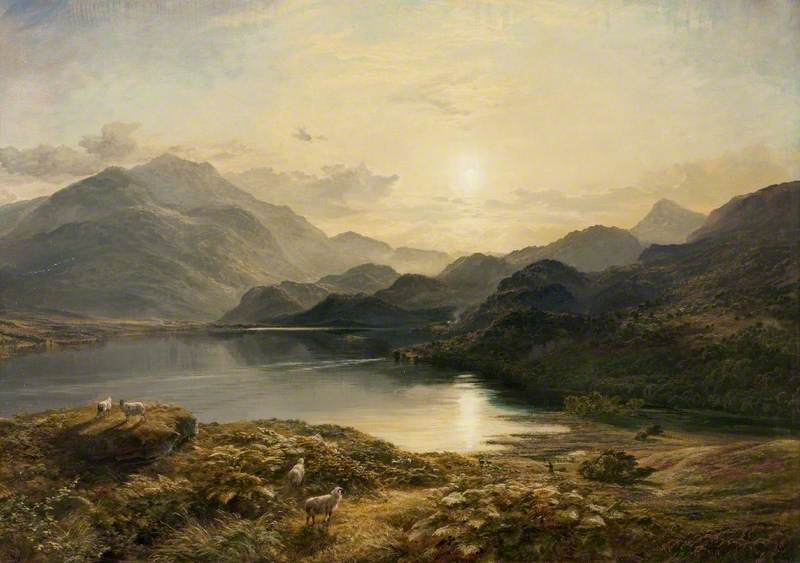
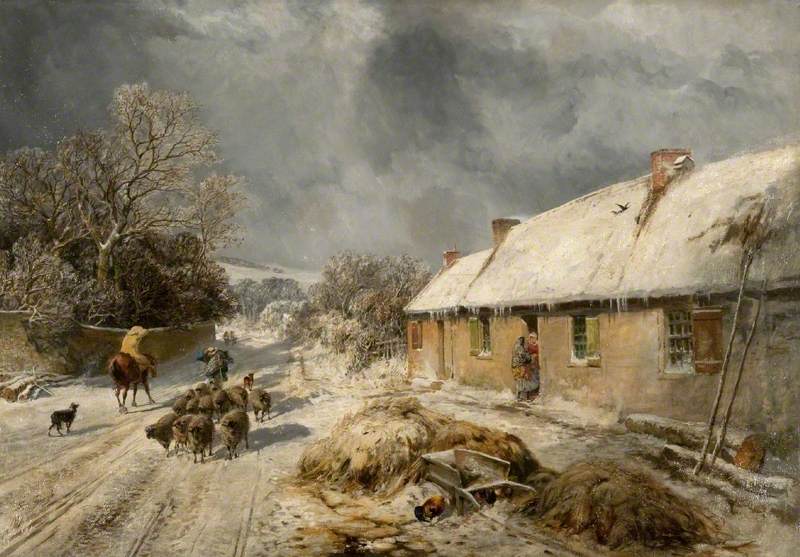
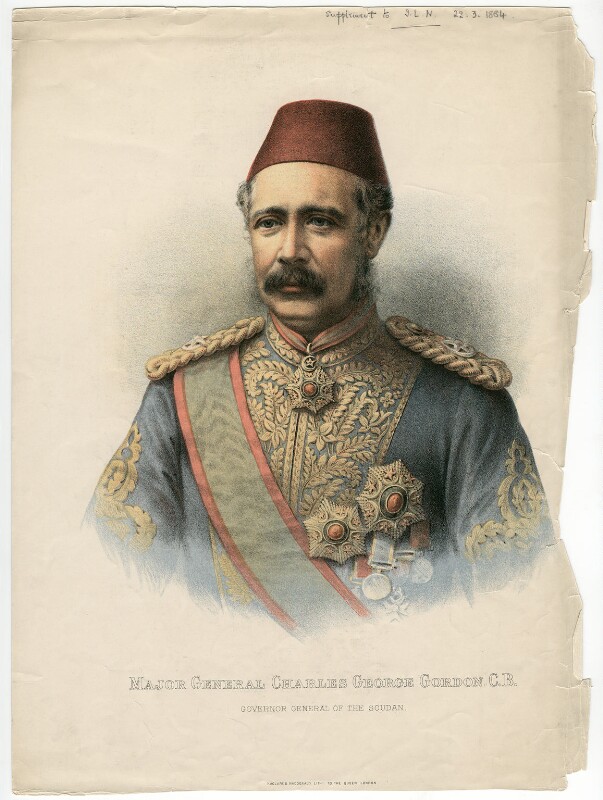
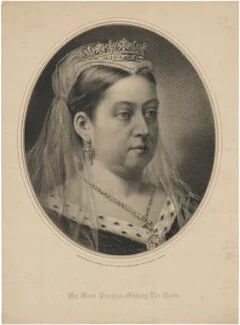
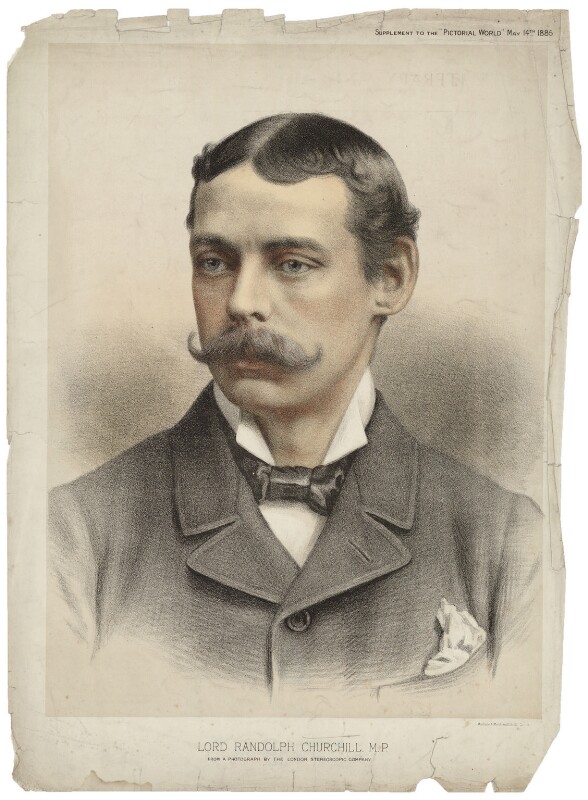
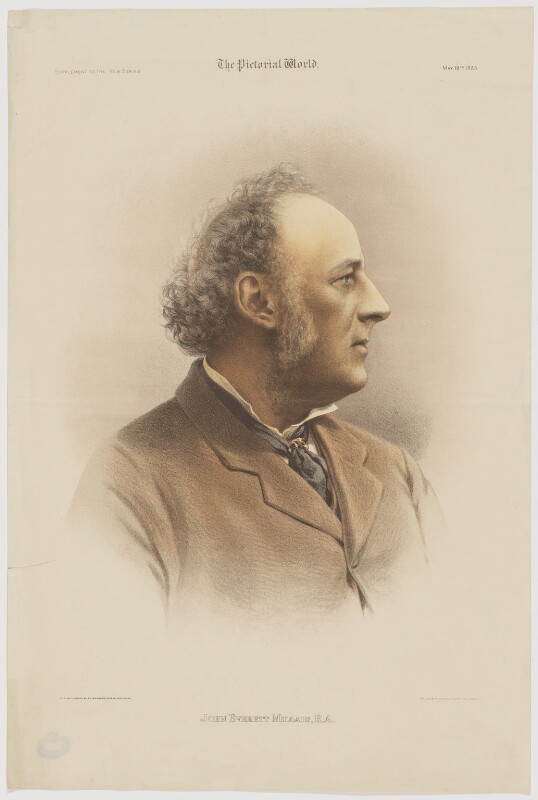
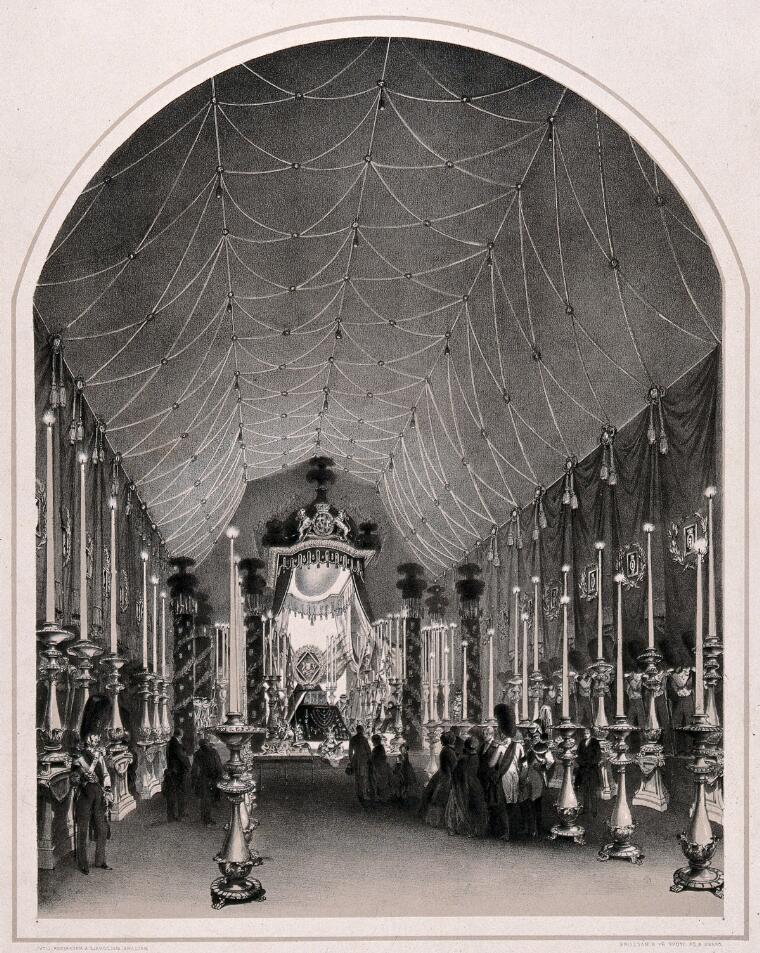
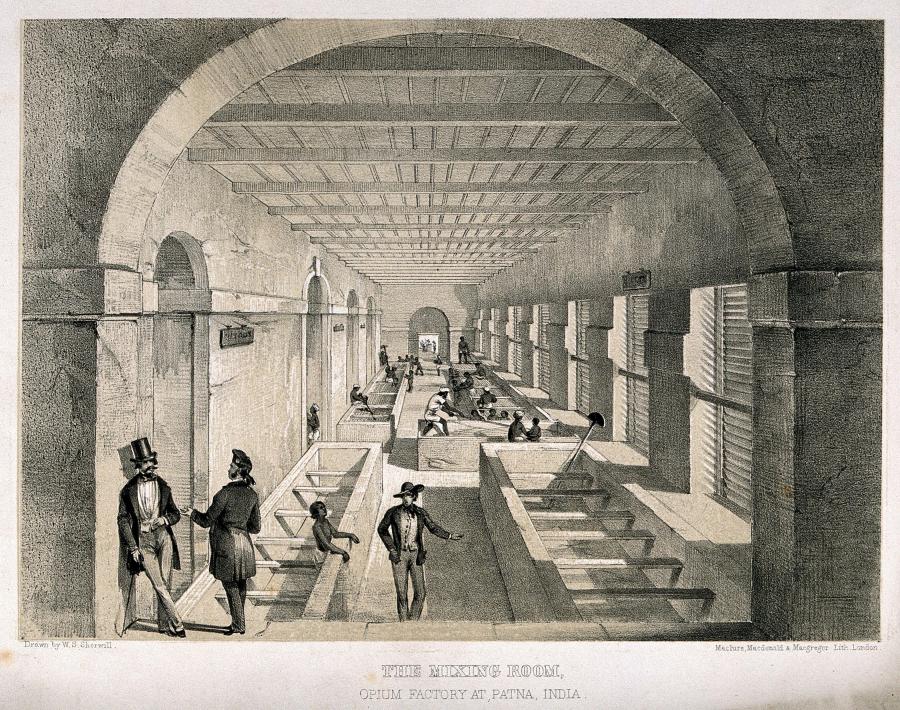
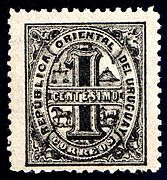
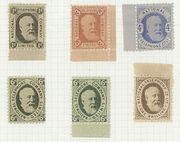
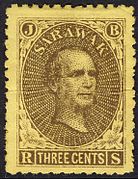
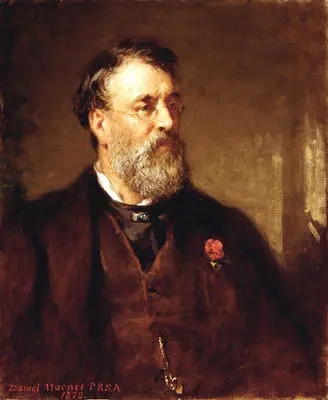


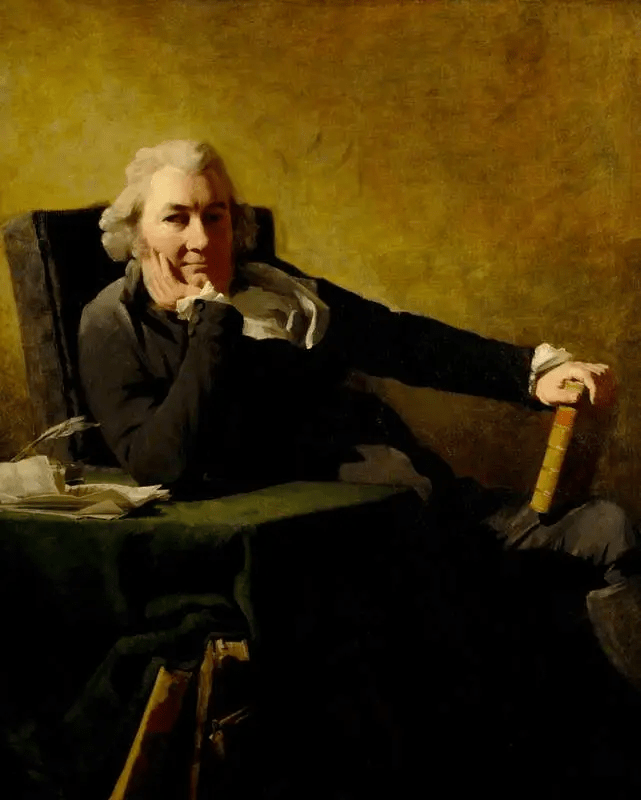

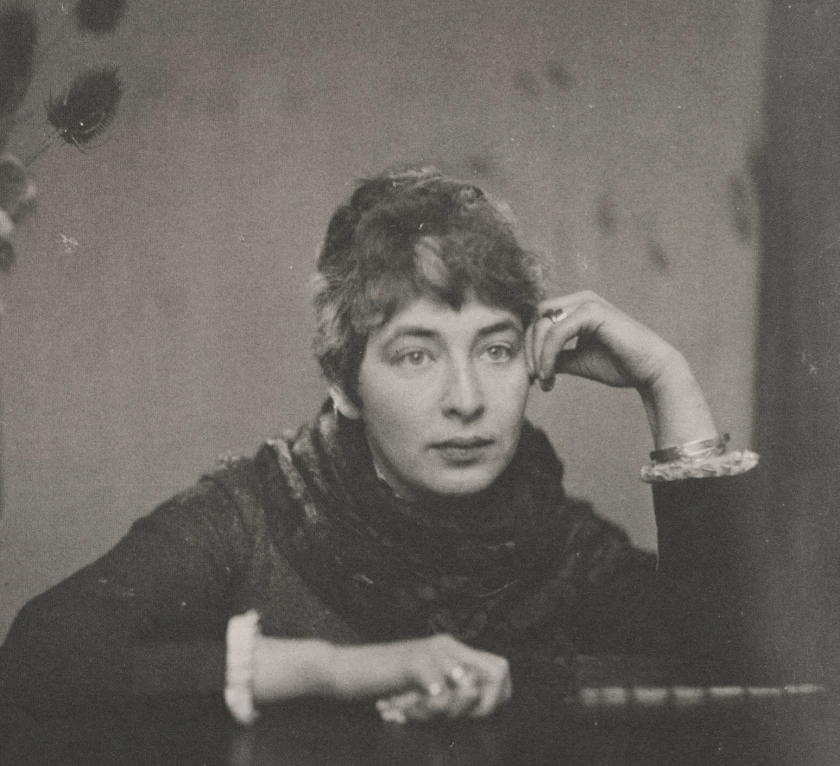
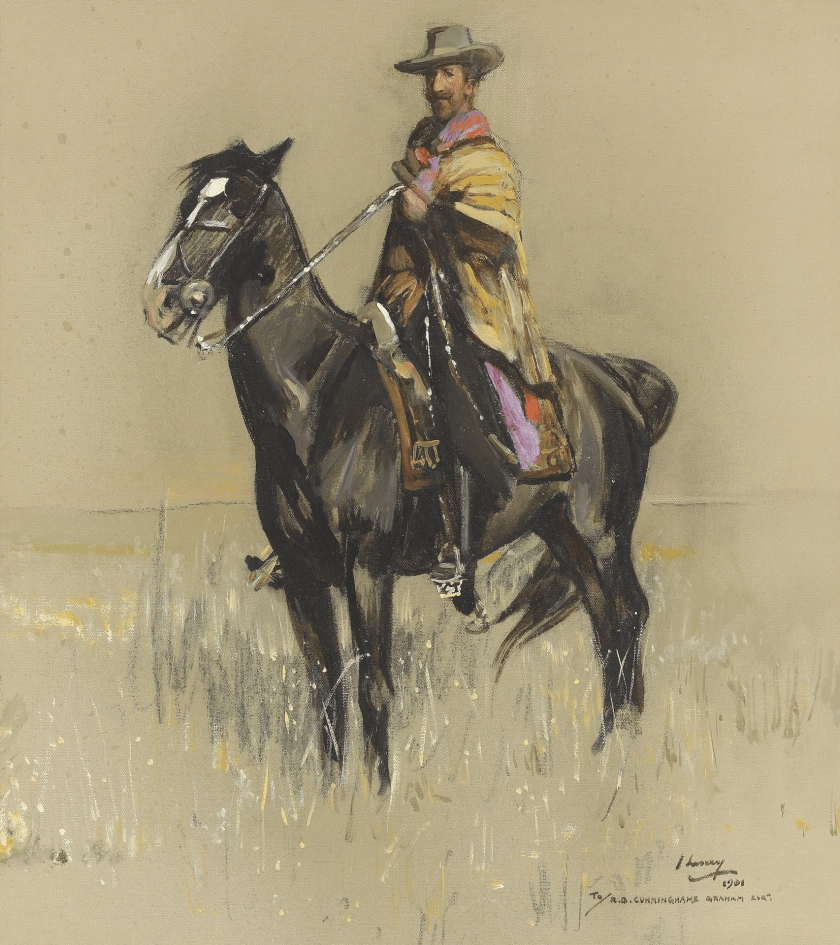


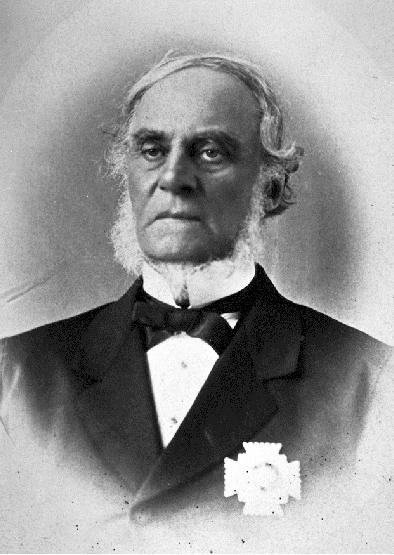


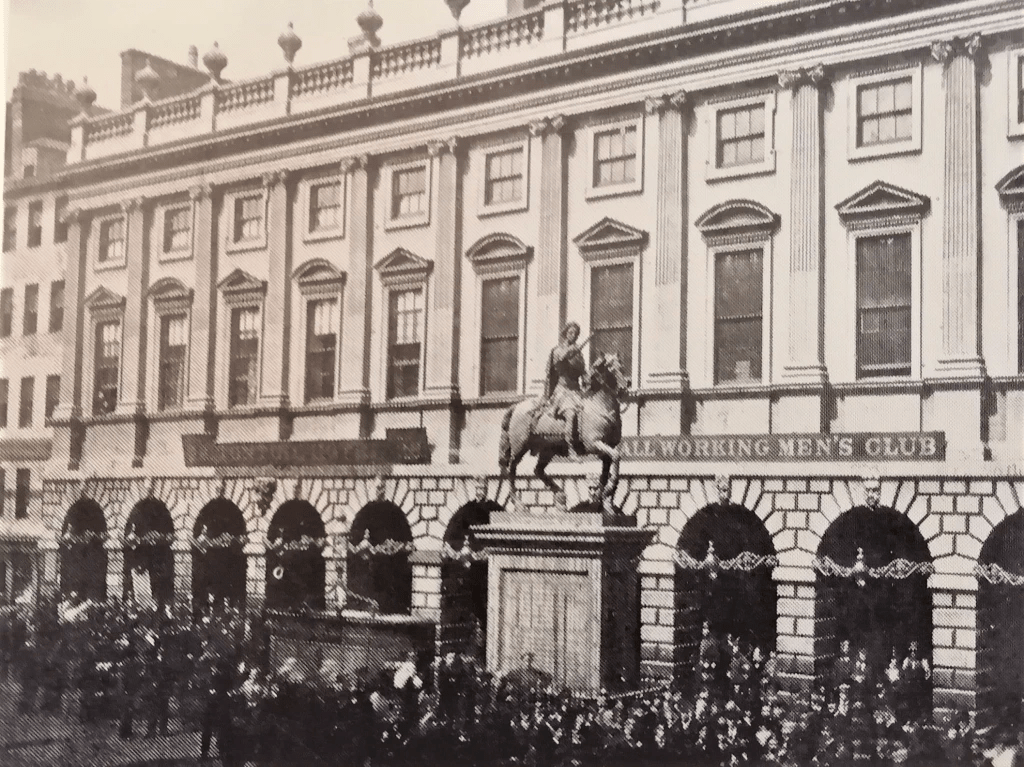

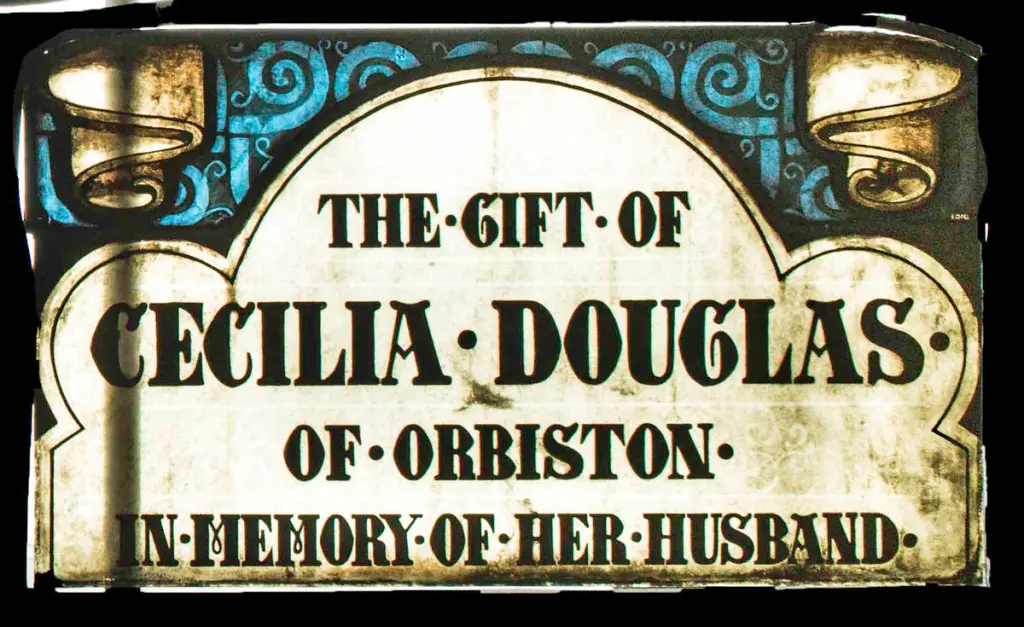


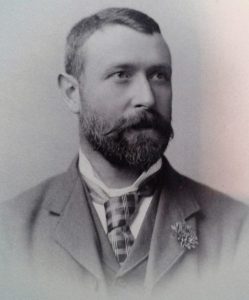


 Glasgow Museums Art Donors Group