Charles Heath Wilson

Courtesy of Glasgow Museums

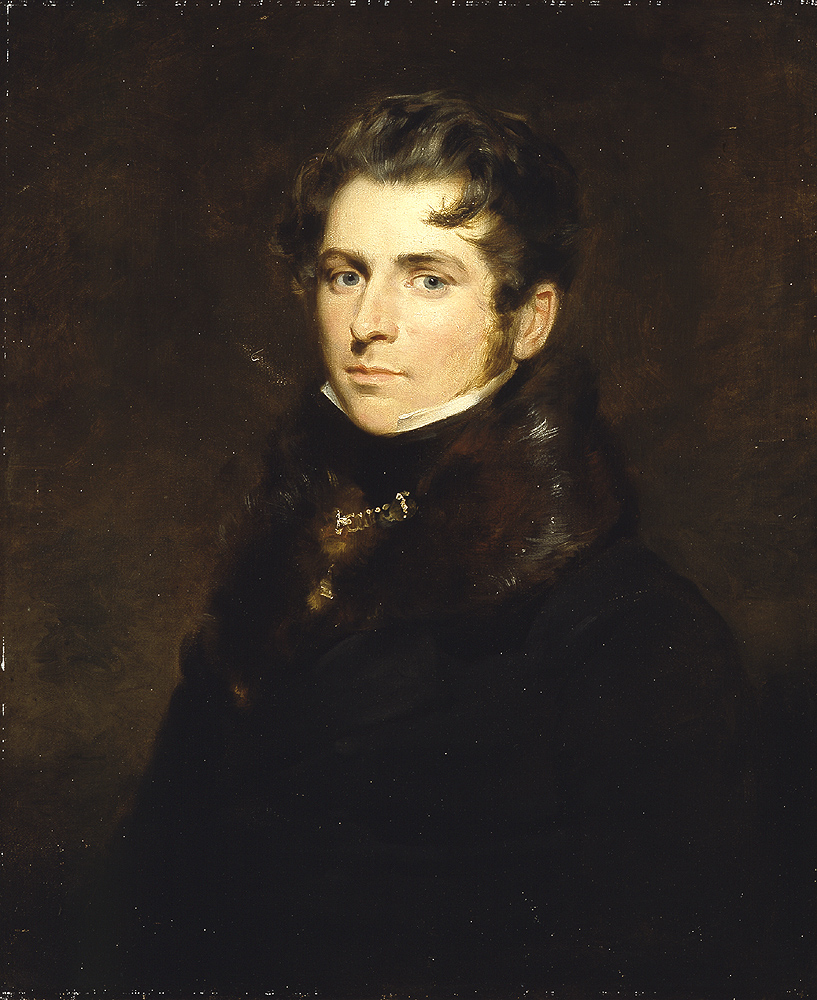
This portrait was donated in June 1915 by his son, William Heath Wilson, artist, in memory of all that his father had  contributed to the teaching of art in the city of Glasgow.

The artist was Sir John Watson Gordon (1788-1864) who was a successful portrait painter of the artists, literati and intellectuals of his day.(1) He was a founding member of the Royal Scottish Academy in 1826.

William Heath Wilson

William was his father’s fourth child and the only son of his second wife, Johanna Catherine, daughter of William John Thomson, himself a portrait painter. He was also the grandson of the artist Andrew Wilson.

He was born in Edinburgh in 1849 and lived in the United Kingdom until 1868 when the family moved to Florence, Italy, and he was still living there in the 1870’s and 1880’s.(2)

He was taught to paint by his father at Glasgow School of Art and specialised in genre scenes and landscape painting, mostly in oil and mostly on a small scale. He painted in the Impressionist Style. His paintings are of Scotland, Italy, London and Cairo. Ten of his works are  in the Glasgow Museums’ collection in Glasgow Museums Resource Centre at Nitshill.

In 1881 he married Isabella Clements who had been born in 1853.

He used to travel to London every year between 1884 and 1899 to exhibit his work at the Royal Academy, London.

His work was, and continues to be, very popular, and frequently appears for sale in Auction Houses, including Christies. Prices for his works are also increasing.(3) An auction of the contents of Hopton Hall, Worksworth in 1989 saw four of his paintings sold there.(4)

Charles Heath Wilson  ‘Missionary Of Art’

Charles was not a donor of paintings to Glasgow Museums although there are some of his works in their collections. He is, however, one of the most important figures in the history of Fine Arts in Glasgow.

He was born in September 1809 in London, the eldest son of Andrew Wilson, landscape painter and art importer, and Master of the Trustees Academy from 1818-1826. He trained for a short period with Alexander Naysmith and worked in London, and was friends with David Wilkie.(5)

Charles studied painting with his father and accompanied him to Italy in 1826, where he studied ancient architectural ornament. He stayed there until 1833, when he returned to Edinburgh, where he practised as an architect, and taught ornament and design in the School of Art. (6)

The 1841 census has him living in Woodhill Cottage, Corstorphine with his wife and daughter.(7)

His pictorial work was principally in watercolour and one of his paintings is in the National Gallery of Scotland – a fine watercolour of Florence and the Arno. He gave several works to Glasgow University in 1869. He was also an expert on  Fresco Painting.

In 1835 he was elected ARSA but he did not not exhibit after 1842, which resulted in his resignation in 1858.

He was interested in stained glass and spent 10 years re-glazing Glasgow Cathedral, working with the Board of Trade, and using panels made in Munich. This caused considerable controversy with those who thought that the glass should come from elsewhere but he did have the support of such people as the Duke of Hamilton and Sir John Maxwell of Pollock.(8)

He was twice married – firstly to Louisa Orr, daughter of the surgeon John Orr, in 1838; and secondly, in 1848, to Johanna Catherine, daughter of William John Thomson, the portrait painter. Altogether he had two sons and three daughters.

He was passionately interested in education. Between 1837 and 1843 he was Head of the Department of Design at Edinburgh Trustees Academy. In 1840 he visited the Continent and reported to the Government on Fresco Painting. Between 1843 and 1848 he became Director of the Government Schools of Design at Somerset House in London. It was in this capacity that he co-founded, together with John Mossman and others, the world renowned Glasgow School of Art (then known as the Glasgow School of Design).(9)

 In 1849 he moved to Glasgow and lived at 29 St. Vincent Place. He was appointed Headmaster of the Government School of Design in Glasgow, which  was housed at 116, Ingram Street. The school was immediately oversubscribed and additional space was purchased in Montrose Street.(10)

In 1853, with the creation of the Science and Art Departments, it became the School of Art. While Headmaster, Wilson made many changes to the school. He introduced life classes and set up a mechanical and architectural drawing class. He taught a class on practical geometry and superintended the advanced class. The courses of study were modified to retain established designers and pattern drawers in the school. He worked closely with the Mossman Brothers who were teaching many of the sculptors and carvers who produced the bulk of the city’s architectural sculpture and monuments in the Glasgow Necropolis and who studied their craft at evening classes in Ingram Street.

Wilson was also involved with the creation of another of the city’s great institutions, the McLellan Galleries whose treasures formed the nucleus of Glasgow’s civic art collection in 1856.

He continued with painting and architecture and was involved in several commissions and competition designs. In 1855, along with the Mossmans, he designed the monument to Henry Monteith of Carstairs in the Necropolis.(11)

In the 1861 census he was living at 286 Bath Street. (12)

In 1864 the Board of Trade masterships were suppressed and Wilson was pensioned off, although his involvement with the School of Art continued for a few more years. He became an Honorary Director of the School of Art and one of the trustees of the Haldane Academy. He gave evidence to several House of Commons Select Committees and prepared a Report for the Commission on the Design of the National Gallery.(13)

After leaving the Art School, he returned to full-time practice as an architect in 1864, opening an office at 29 St. Vincent Place, and formed a partnership with a former pupil, David Thomson.(14)

One of their projects was the monument to John Graham Gilbert in the Glasgow Necropolis, designed in 1867. In the same year they redesigned the interior of the Maclellan Galleries, converting part of the building into a picture gallery for Glasgow Corporation. They made alterations to the stables at Pollok House and rebuilt Duntreath Castle, Strathblane in 1864. These are just some of a long list of commissions and designs worked on by the partnership.(15)

In 1868 he inherited a large sum of money and in 1869 he and his family went to live in Italy. He never returned to Scotland.(16)

He spent his last years in Florence, where he was at the centre of a large circle of artists and writers. He wrote a book entitled Life of Michaelangelo Buonarotti in 1876 and he also illustrated some books for which he was awarded the cross of the ‘Corona d’Italia ‘ by Victor Emmanuel.(17)

He died in Florence in 1882.

Almost every member of his family inherited his artistic capability, the most well-known being his son, William, the donor of the painting.

In 2000 Wilson was the subject of an exhibition of his life and work held at Glasgow School of Art and entitled Missionary of Art: Charles Heath Wilson 1809-1882. This was accompanied by the publication of the book Missionary of Art(ed: Rawson) which contains the above portrait and is lavishly illustrated with examples of his paintings and designs. He is remembered chiefly as ‘one of the most important contributors to (the city’s) art scene that Glasgow has witnessed’.(18)

References

  1. Harris, Paul and Julian Halsby. The Dictionary of Scottish Painters 1600 to the Present. Canongate Books. 2001. ISBN 1 84195 150 1
  2. Ibid
  3. www.artnet.com
  4. www.worksworth.org.
  5. Harris, Paul and Julian Halsby. The Dictionary of Scottish Painters 1600 to the Present. Canongate Books. 2001. ISBN 1 84195 150 1.uk
  6. http:/en Wikipedia.org/wiki/Charles_Heath_Wilson
  7. https://scotlandspeople.gov.uk
  8. http://www.glasgowsculpture.com/pg biography.php?sub=wilson ch
  9. Ibid
  10. http://www.gashe.ac.uk:443/isaar/PO168.html
  11. http://www.glasgo.php?sub=wilsonwsculpture.com/pg biography.php?sub=wilson
  12. https://www.scotlandspeople.gov.uk
  13. http://www.gashe.ac.uk:isaar/PO168.html
  14. http://en Wikipedia.org/wiki/Charles_Heath_Wilson
  15. http://www.glasgowsculpture.com/pg biography.php?sub=wilson
  16. http://www.gashe.ac.uk:443/isaar/PO168.html
  17. http://www.glasgowsculpture.com/pg biography.php?sub=wilson ch
  18. Rawson, George (Ed). Charles Heath Wilson, 1809-1882. Foulis Press of Glasgow School of Art
Portrait of Councillor Alexander Waddell

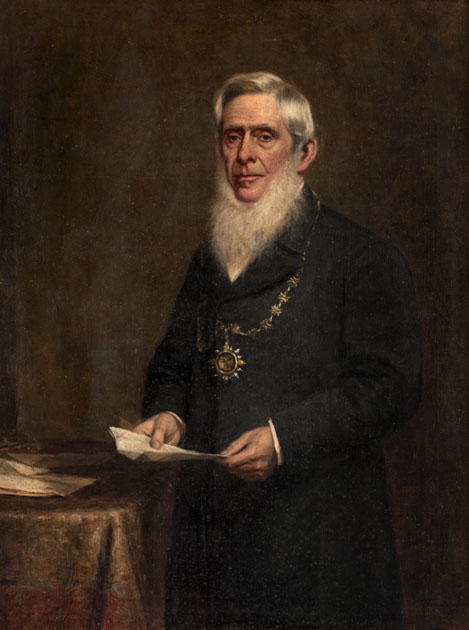
Figure 1. Alexander Waddell by Joseph Henderson. Glasgow Museums © CSG GIC Glasgow Museums Collection.

This portrait was donated by his family in May 1896 in recognition of the work which he did for the East End of Glasgow and the posts which he held on Glasgow City Council. It was painted in 1893 by Joseph Henderson, RSW.(1)

Joseph Henderson was born in Stanley, Perthshire on 10 June 1832. His family moved to Edinburgh when he was six years old and at the age of thirteen, he was apprenticed to a hosier and studied art alongside this. Eventually, in 1852 he gave up hosiery and moved to Glasgow and became a portrait painter. As he had a reputation for painting honest representations of his sitters, he painted many of the important people of that time in the West of Scotland.(2)

Alexander Waddell was born in Girvan, Ayrshire on 18 February 1820. His parents were Matthew Waddell who was a tailor and Elizabeth, nee Rowan. (3)

Sometime between then and 1840 the family moved up to Glasgow to live in Calton, in the east end of the city. The family home was at 72 Canning Street.

Alexander also served his time as a tailor and went into business with his father in the firm of M. Waddell and Son, clothiers, of 44 Canning Street and 75 Jamaica Street.

On 8 June 1840 he married Isabella Barrett. The 1841 census has them living in Duncan Street with a two-month-old daughter, Elizabeth.

In 1845 he opened a branch of the Western Bank in Calton, the first suburban bank branch and moved into a house in the Western Bank Buildings in Canning Street. The Western Bank tried to attract small (working class or artisan) depositors. Their extensive branch systems opened in the evenings and paid high deposit rates. However, it failed in November 1857. The Western bank was later taken over by the Royal Bank of Scotland and Waddell managed several of its branches. (4)

By the 1851 census his address is given as 66 Canning Street where he is described as a clothier, and he and Isabella have five daughters, the youngest a baby of three months. The 1855 Valuation Roll records him at the Western Bank, 70 Canning Street and he is described as a Registrar. He was Registrar for Calton, a post which he held until his death. (5)

I can find him in neither the 1861 nor the 1871 census returns. Sometime after 1851 his wife Isabella dies, but I can find no record of her death. In 1867, described as a widower, he marries Grace French, a spinster, at Boathaugh, Lanark. By this time he has moved to 37 Monteith Row, overlooking Glasgow Green, where he lived for the rest of his life.

In 1871 he was elected to represent the First Ward (Great Hamilton Street on the south; Well Street on the east; New Street on the north; and the Royalty of the City of Glasgow on the west). He held this post until his death in 1895.(6) Offices which he held included Baillie of the Burgh, City Treasurer and Master of Works. He was also a Preceptor of Hutcheson’s Hospital.(7)

He actively supported many community institutions in the Calton and Bridgeton areas.

He was involved with the South Eastern District Sabbath School Union in 1868 -1869.  He was Superintendent of the Calton, Mile-End and Bridgeton Mechanics Institute which had been established at 46 Canning Street in 1833. It was the first institution of its kind in the country. He was also involved with the London Road Baths which were opened in 1876 under the management of the Police Board. They were situated in the Calton Police Building at 92 Tobago Street.(8)

He was Chair of the Glasgow Eastern Merchants and Tradesmen’s Society which met in the Mechanics Hall in Canning Street.  This was a Friendly Society and ran many social events. He was also involved with the Bridgeton Working Men’s Club.(9)

His second wife, Grace, died in 1879 of heart disease and congestion of the lungs. In 1883 he married for a third time to Christina Jeffs, a spinster, living in 21 Holyrood Crescent.

The 1891 census finds them still in Monteith Row with his daughter Catherine who is described as being 35 years old, which is odd as she as three months old in 1851.

Alexander Waddell died at home on 18 November 1895. His funeral was held in Greenhead U.P. Church in Bridgeton on 21 November and he was buried in the Eastern Necropolis.

On 22 November the following announcement was made in the Glasgow Herald:-

Funeral of Ex-Baillie Waddell.

The remains of Ex-Baillie Waddell were interred yesterday in the eastern Necropolis, Janefield. A public service was held within Greenhead U.P. Church which was attended by the Lord Provost and magistrates and many of the Town Councillors, the Lord Dean of Guild, and the Deacon-Convenor, along with a number of the leading Corporation Officials. The funeral cortege, which consisted of 28 mourning coaches, was watched by large crowds along the route. The flag was hoisted at half-mast on the City Chambers, and the city bells were tolled from half-past one until three o’clock.

     Bibliography

  1. Who’s who in Glasgow in 1909 (artist)
  2. http://www.bbc.co.uk/arts/your paintings.
  3. http://www.scotlandspeople.org – all references to births, marriages, deaths and census are covered by this category
  4. http://www.banking-history.co.uk/glasgow.html
  5. Post Office Annual Glasgow Directories – 1854/55; 1856/57
  6. Glasgowhistory.co.uk
  7. http://www.theglasgowstory.com
  8. http://www.  glasgoweasternmerchants.co.uk
  9. http://www.EastGlasgowHistory.com
  10. http://www.Glasgow Herald, November 19, 1895.


The Misses Kirsop

The painting below was donated by the Agnes and Jessie Kirsop to Glasgow Corporation in January, 1915

 Me

_ISP7369.NEF
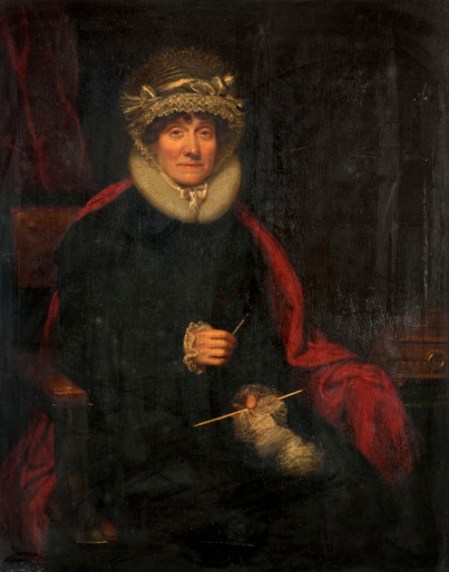
Figure 1 “Portrait of a Lady” by Sir John Watson-Gordon, PRSA. © CSG GIC Glasgow Museums Collection.

Agnes Wotherspoon Kirsop and Jessie Brown Kirsop were the youngest of seven children of John Kirsop and his wife Mary (nee Brown) who were married in Gorbals in 1846(1). The first four children were born there, but by the time that the other three came along the family had moved to 12, Corunna Street, off Argyle Street, which was then classed as Anderston but would now be classed as part of Finnieston. There in 1871, according to the census (2), the family consisted of the parents, three unmarried daughters, Elizabeth, Agnes and Jessie.

John Kirsop was a Master Hatter who had a hat and cap manufactory at 106, St. Vincent Street (3). Later, under the control  of their brother, the firm, now John Kirsop and Son(Ltd) moved to 49/51, Renfield Street in 1927-28. This firm was later, in 1956, taken over by the House of Fraser and wound up(4).

John Kirsop came of a long line of hatters. he was  related to the Kirsops who had premises in Argyll Street in the early 19th century and to their uncle, Richard Nixon, who had premises at the corner of the Argyll Arcade, and was appointed hatter to King George 4th (5).

The three principal wholesale hat manufacturers in Glasgow in the second half of the 19th century had been trained by the Nixon establishment.

The family moved further west to 3, Victoria Crescent, Partick, and then in 1891 to 15, Westbourne Terrace. Agnes was the only daughter at home then.

John died in 1898, when his estate was valued at over £21,000. Mary, his widow, died in 1908.

By 1911(6) Agnes, Jessie and Elizabeth were back at Westbourne Terrace, where, in the census of that year, they were  described as having independent means.

In 1915, Jessie was in rented accomodation in 9, York Drive (7), which was in 1929 renamed as Novar Drive(8). As far as I can find out, Agnes did not join her there until 1927(9).

The painting which the sisters donated, according to the minute of Friday, February 20th, 1914, of the Royal Glasgow Institute of Fine Arts, appeared on a list of works for sale(10). There was no  mention there of price sought or achieved, and the purchaser was not named in the minute.

The sisters donated the painting  to Glasgow Corporation in January, 1915 and the gift is recorded in a minute of the Corporation of 6th January, 1915 thus” Miss Agnes Kirsop, 9, York Drive is offering, on behalf of herself and her sister, to present to the Corporation the portrait of an old lady by Sir John Watson-Gordon, PRSA.”(11)

The sisters continued to live in various addresses around the West End until their deaths. Jessie died in Gartnavel Royal Asylum in 1930, and Agnes died at 28, Ashton Road in 1940 (12).

Bibliography

(1) http://www.scotlandspeople.gov.uk

(2) Ibid

(3) Glasgow Street Directories – Mitchell Library

(4) http://www.houseoffraserarchive.ac.uk/company/?id=c1375

(5) http://www.glasgowwestaddresses.co.uk/1888_Book/Kirsop_John_&_Son.htm (Index of Firms(1888) ).

(6) http://www.scotlandspeople.gov.uk

(7) Voters Roll 1915 – Mitchell Library

(8) Post Office Directories – Mitchell Library

(9) http://www.scotlandspeople.gov.uk

(10) Royal Glasgow Institute of Fine Arts Minute Book 1914 – Mitchell Library

(11) Glasgow Corporation Minute Book 1915 – Mitchell Library

(12) http://www.scotlandspeople.gov.uk