Helen Robertson Carmichael was born on 28 March 1869 at 13 Balfour Street, St. Peter, Dundee. She was the seventh child of James Carmichael, a leather merchant and his wife Helen Robertson who had married on 19 June 1857 in Dundee. 1,2 Her brother, Stewart was born on 8 February 1867 at 4 Heathfield Place, Hawkhill, Dundee. 3 An eighth child, Lizzie Batchelor Carmichael was born on 8 October 1871. 4 Helen’s father was widowed on 15 January the following year when Helen’s mother died from heart disease. 5 By 1881 the family had moved to 51 Park Wynd, Dundee. 6 Helen attended Aberdeen Teacher Training College from 1890 – 91. 7 While at the college, she was lodging at 18 Balmoral Lane, Aberdeen and in the census was described as a ‘normal student’. 8 The following year she began teaching at Blackness Primary School in Dundee. 9 In the 1901 census she was aged thirty and living with her brother John at 10 Airlie Terrace, Dundee. Her occupation was ‘school board teacher’. 10 From 1915 till at least 1940, Helen was a tenant at 89 Magdalen Road, Dundee. 11 In August 1931, she was one of a group of tenants which sought an interim interdict to prevent the town council from closing Magdalen Park to hold the annual flower show with the resultant expected disturbance. 12 However, the matter was resolved when the council agreed not to hold the show there in subsequent years and to take steps to minimise noise etc. in the present year. 13 Helen retired from Blackness Primary School in 1932 after forty years as a teacher there. 14 She died on 25 February 1953 at Maryfield Hospital, Dundee. She was 83. Her usual address was 2 Windsor Street, Dundee. 15
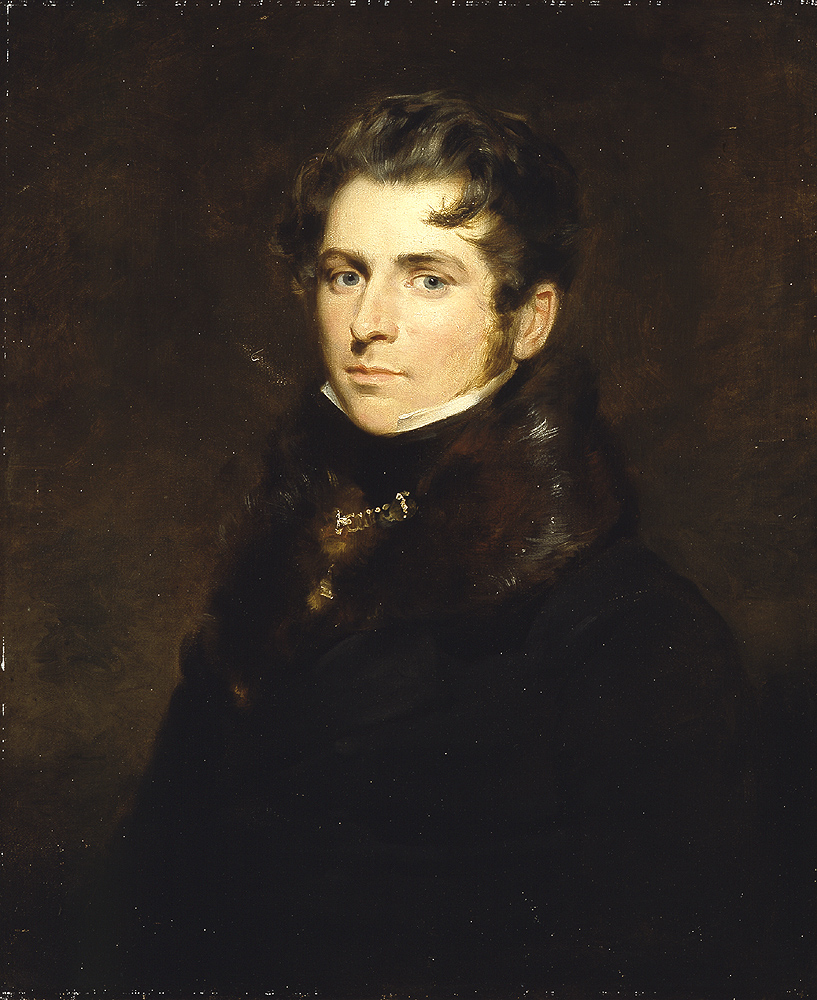
This portrait was donated in June 1915 by his son, William Heath Wilson, artist, in memory of all that his father had contributed to the teaching of art in the city of Glasgow.
The artist was Sir John Watson Gordon (1788-1864) who was a successful portrait painter of the artists, literati and intellectuals of his day.(1) He was a founding member of the Royal Scottish Academy in 1826.
William Heath Wilson
William was his father’s fourth child and the only son of his second wife, Johanna Catherine, daughter of William John Thomson, himself a portrait painter. He was also the grandson of the artist Andrew Wilson.
He was born in Edinburgh in 1849 and lived in the United Kingdom until 1868 when the family moved to Florence, Italy, and he was still living there in the 1870’s and 1880’s.(2)
He was taught to paint by his father at Glasgow School of Art and specialised in genre scenes and landscape painting, mostly in oil and mostly on a small scale. He painted in the Impressionist Style. His paintings are of Scotland, Italy, London and Cairo. Ten of his works are in the Glasgow Museums’ collection in Glasgow Museums Resource Centre at Nitshill.
In 1881 he married Isabella Clements who had been born in 1853.
He used to travel to London every year between 1884 and 1899 to exhibit his work at the Royal Academy, London.
His work was, and continues to be, very popular, and frequently appears for sale in Auction Houses, including Christies. Prices for his works are also increasing.(3) An auction of the contents of Hopton Hall, Worksworth in 1989 saw four of his paintings sold there.(4)
Charles Heath Wilson ‘Missionary Of Art’
Charles was not a donor of paintings to Glasgow Museums although there are some of his works in their collections. He is, however, one of the most important figures in the history of Fine Arts in Glasgow.
He was born in September 1809 in London, the eldest son of Andrew Wilson, landscape painter and art importer, and Master of the Trustees Academy from 1818-1826. He trained for a short period with Alexander Naysmith and worked in London, and was friends with David Wilkie.(5)
Charles studied painting with his father and accompanied him to Italy in 1826, where he studied ancient architectural ornament. He stayed there until 1833, when he returned to Edinburgh, where he practised as an architect, and taught ornament and design in the School of Art. (6)
The 1841 census has him living in Woodhill Cottage, Corstorphine with his wife and daughter.(7)
His pictorial work was principally in watercolour and one of his paintings is in the National Gallery of Scotland – a fine watercolour of Florence and the Arno. He gave several works to Glasgow University in 1869. He was also an expert on Fresco Painting.
In 1835 he was elected ARSA but he did not not exhibit after 1842, which resulted in his resignation in 1858.
He was interested in stained glass and spent 10 years re-glazing Glasgow Cathedral, working with the Board of Trade, and using panels made in Munich. This caused considerable controversy with those who thought that the glass should come from elsewhere but he did have the support of such people as the Duke of Hamilton and Sir John Maxwell of Pollock.(8)
He was twice married – firstly to Louisa Orr, daughter of the surgeon John Orr, in 1838; and secondly, in 1848, to Johanna Catherine, daughter of William John Thomson, the portrait painter. Altogether he had two sons and three daughters.
He was passionately interested in education. Between 1837 and 1843 he was Head of the Department of Design at Edinburgh Trustees Academy. In 1840 he visited the Continent and reported to the Government on Fresco Painting. Between 1843 and 1848 he became Director of the Government Schools of Design at Somerset House in London. It was in this capacity that he co-founded, together with John Mossman and others, the world renowned Glasgow School of Art (then known as the Glasgow School of Design).(9)
In 1849 he moved to Glasgow and lived at 29 St. Vincent Place. He was appointed Headmaster of the Government School of Design in Glasgow, which was housed at 116, Ingram Street. The school was immediately oversubscribed and additional space was purchased in Montrose Street.(10)
In 1853, with the creation of the Science and Art Departments, it became the School of Art. While Headmaster, Wilson made many changes to the school. He introduced life classes and set up a mechanical and architectural drawing class. He taught a class on practical geometry and superintended the advanced class. The courses of study were modified to retain established designers and pattern drawers in the school. He worked closely with the Mossman Brothers who were teaching many of the sculptors and carvers who produced the bulk of the city’s architectural sculpture and monuments in the Glasgow Necropolis and who studied their craft at evening classes in Ingram Street.
Wilson was also involved with the creation of another of the city’s great institutions, the McLellan Galleries whose treasures formed the nucleus of Glasgow’s civic art collection in 1856.
He continued with painting and architecture and was involved in several commissions and competition designs. In 1855, along with the Mossmans, he designed the monument to Henry Monteith of Carstairs in the Necropolis.(11)
In the 1861 census he was living at 286 Bath Street. (12)
In 1864 the Board of Trade masterships were suppressed and Wilson was pensioned off, although his involvement with the School of Art continued for a few more years. He became an Honorary Director of the School of Art and one of the trustees of the Haldane Academy. He gave evidence to several House of Commons Select Committees and prepared a Report for the Commission on the Design of the National Gallery.(13)
After leaving the Art School, he returned to full-time practice as an architect in 1864, opening an office at 29 St. Vincent Place, and formed a partnership with a former pupil, David Thomson.(14)
One of their projects was the monument to John Graham Gilbert in the Glasgow Necropolis, designed in 1867. In the same year they redesigned the interior of the Maclellan Galleries, converting part of the building into a picture gallery for Glasgow Corporation. They made alterations to the stables at Pollok House and rebuilt Duntreath Castle, Strathblane in 1864. These are just some of a long list of commissions and designs worked on by the partnership.(15)
In 1868 he inherited a large sum of money and in 1869 he and his family went to live in Italy. He never returned to Scotland.(16)
He spent his last years in Florence, where he was at the centre of a large circle of artists and writers. He wrote a book entitled Life of MichaelangeloBuonarotti in 1876 and he also illustrated some books for which he was awarded the cross of the ‘Corona d’Italia ‘ by Victor Emmanuel.(17)
He died in Florence in 1882.
Almost every member of his family inherited his artistic capability, the most well-known being his son, William, the donor of the painting.
In 2000 Wilson was the subject of an exhibition of his life and work held at Glasgow School of Art and entitled Missionary of Art: Charles Heath Wilson1809-1882. This was accompanied by the publication of the book Missionary ofArt(ed: Rawson) which contains the above portrait and is lavishly illustrated with examples of his paintings and designs. He is remembered chiefly as ‘one of the most important contributors to (the city’s) art scene that Glasgow has witnessed’.(18)
References
Harris, Paul and Julian Halsby. The Dictionary of Scottish Painters 1600 to the Present. Canongate Books. 2001. ISBN 1 84195 150 1
Annie Isabella Cameron was born at 16 Grafton Square, Glasgow on 10 May 1897. Her parents were James Cameron, a civil engineer who had been involved in the construction of the Glasgow Underground and Mary Sinclair Cameron whom he married on Christmas Day 1894 at 42 Church Street, Ayr. 1 16 Grafton Square was Annie’s father’s home before his marriage. In 1901, Annie and her two siblings, Donald aged one and Mary four months with their parents were visiting James Gray, a grocer and his family at 60 Church Street, Ayr. 2 By 1911 the family had moved to Willbraepark, Overton Road, Strathaven. James Cameron was now aged 62, a civil engineer and contractor, with Mary 44, and children Annie 13, Donald 11, Mary 10 and Ewen 9. The children were all scholars. The family employed one domestic servant. 3 Mary Cameron became the tenant/occupier at Willbraepark after the death of her husband in 1921 and remained there until at least 1925. 4
After attending school in Strathaven, Annie Cameron enrolled at Glasgow University and graduated with a first-class honours degree in history in 1919. 5 She then undertook teacher training at Jordanhill College in Glasgow. After a brief spell of teaching, she returned to academia to study for a PhD supervised by Professor R.K. Hannay at Edinburgh University. Her subject was James Kennedy, Bishop of St Andrews (1408 – 1465). She completed her PhD in 1924 6 and in 1928 was awarded a Carnegie Research Fellowship which enabled her to live in Rome and to attend the Vatican School of Palaeography. In the Vatican Archives she found a rich source of fifteenth century material relating to Scotland, in particular the Scottish Supplications to Rome. The research and publication (from 1934 to 1970) of this material became her life’s work. Her frequent visits to the archives in this connection resulted in her affectionate nickname Nonna (grandmother) of the Archivo Vaticano. 7
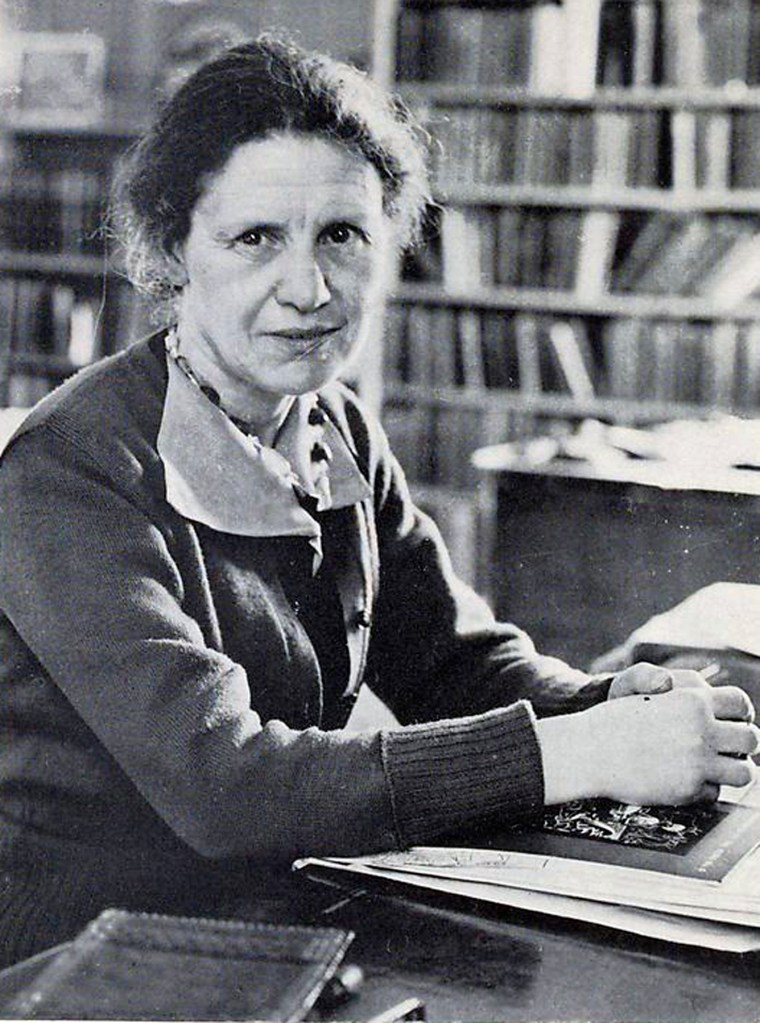
Figure 1. Dr Annie I. Dunlop (nee Cameron) National Library of Scotland, Creative Commons Attribution 4.0 International Licence 8
Annie Cameron was awarded a DLitt from the University of St Andrews in 1934 9 and was employed in the Scottish Record Office until she married George Dunlop (qv) on 23 August 1938 at Juniper Green in Edinburgh. 10 The couple then moved to Dunselma in Fenwick about five miles from Kilmarnock. Annie taught part-time at Edinburgh University and contributed regularly to her husband’s newspaper the Kilmarnock Standard. She was awarded an OBE in the King’s Birthday Honours of 1942 (Annie Isabella Cameron, MA, PhD, DLitt, (Mrs. G. B. Dunlop), Member of the Council of the Scottish History Association). After the war she was able to resume her research in Rome in 1947 – accompanied on this occasion by her husband. She was awarded an honorary LLD from St Andrews University in 1950 – the same year she was widowed. After her husband’s death, Dunselma was given to the Church of Scotland as a residential home for the elderly although Annie continued to live there. Thereafter she travelled widely continuing her research, lecturing and writing. She embarked on a lecture tour of the United States in 1955 promoting Scottish history. 11 She was appointed to the Royal Commission on the Ancient and Historical Monuments of Scotland on 26 April 1955 and was a member of the Scottish History Society whom she addressed on 12 December 1964 12 and the Scottish Church History Society. In 1972 she was awarded the Papal Benemerenti medal by Pope Paul VI. A particularly rare honour especially for a non-Catholic but reflecting the esteem in which she was held by the Vatican. 13
Annie I. Dunlop died at Dunselma on 23 March 1973. 14 Her funeral service was held at Masonhill Crematorium, Ayr on 27 March. 15 She was remembered as a kind, gentle, diligent personality who was always willing to offer help to others. 16 She was instrumental in ensuring that her husband’s bequest was delivered to Glasgow and to the National Galleries of Scotland. She also donated paintings on her own behalf to Glasgow’s Hunterian Art gallery.
The Annie Dunlop Endowment was set up at the Centre for Scottish and Celtic Studies at the University of Glasgow. Funds from the endowment are awarded bi-annually for the purpose of ‘promoting historical research into documents relevant to Scotland that are located outside Scotland’.
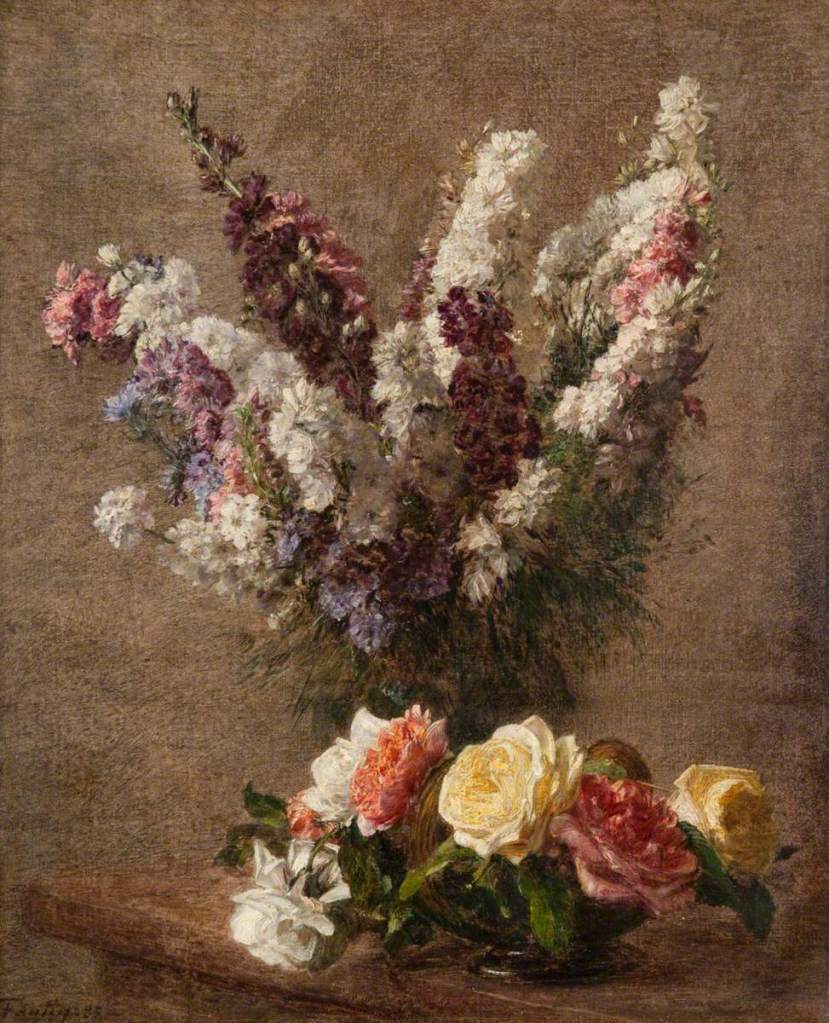
Figure 2. Roses and Larkspur (Roses et pieds-d’alouette Henri Fantin-Latour (1836 – 1904) Hunterian Art Gallery, University of Glasgow/ArtUK Gift from Annie Dunlop from the estate of her husband, George B. Dunlop, 1951
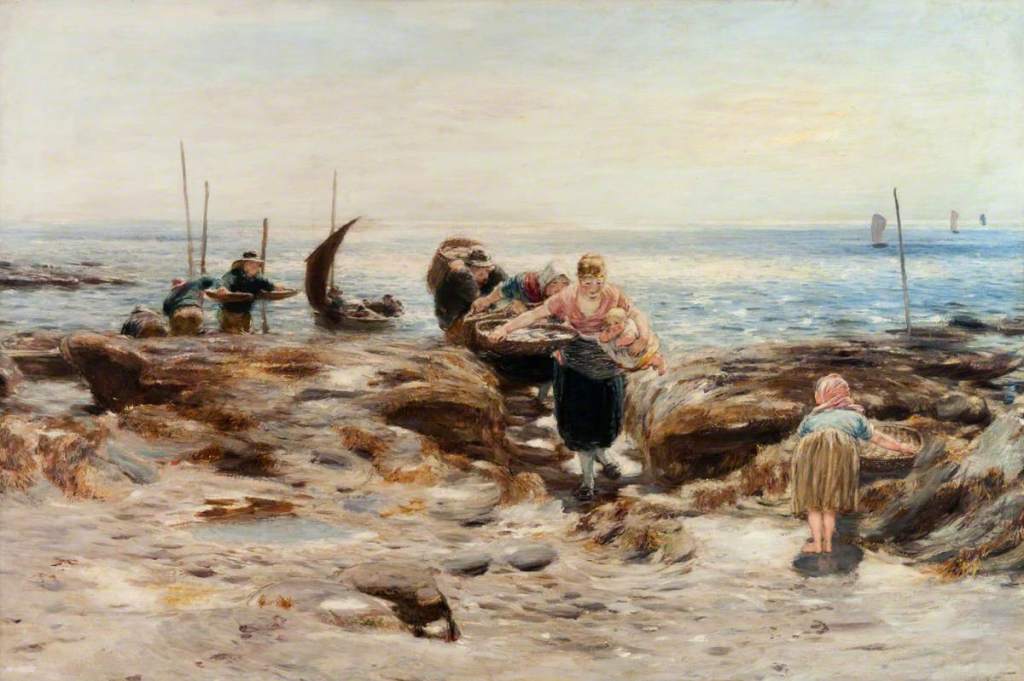
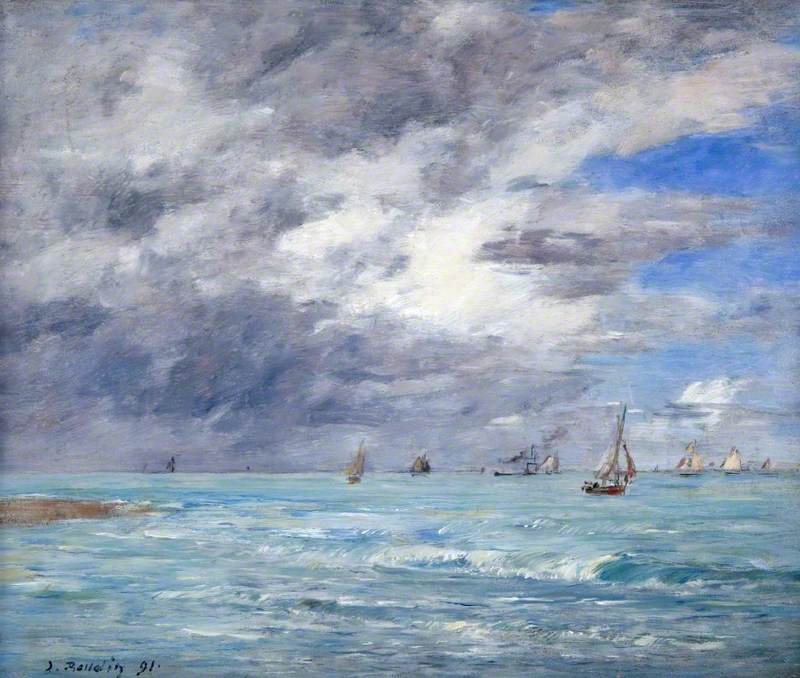
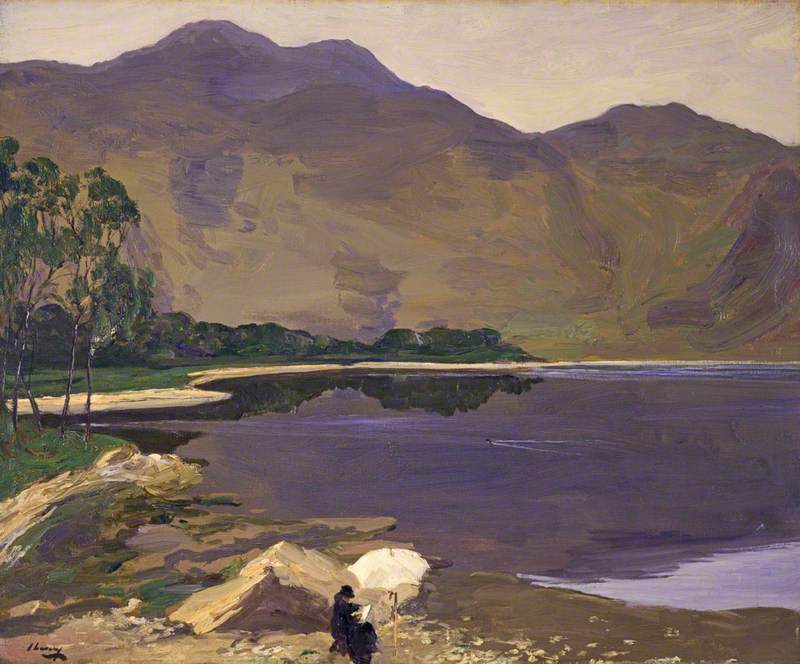
Figure 3. Fisher’s Landing. William McTaggart (1836-1910). Hunterian Art Gallery/ArtUK Gift from Mrs Annie Dunlop, widow of George B. Dunlop, 1951Figure 4. The Seashore (Sur la plage). Eugene Louis Boudin (1824-1898) Hunterian Art Gallery, University of Glasgow/ArtUK. Gift from Annie Dunlop, widow of George B. Dunlop, 1951Figure 5. Evening Thoughts, 1864. Robert Inerarity Herdman (1869-1888). Presented to the National Galleries of Scotland by Mrs. Annie Dunlop from the estate of George B. Dunlop, 1951. (ArtUK)Figure 6. Loch Katrine. John Lavery (1856-1941). National Galleries of Scotland /ArtUK. Presented by Mrs Annie Dunlop from the estate of George B. Dunlop, 1951
Glasgow Herald, 26 March 1973. This is from an obituary which also claims erroneously that she was born in Strathaven and attended the Glasgow High School for Girls.
Close, Rob, FSA (Scot) Ayrshire Notes No. 2018/1 Spring 2018 ISSN 1474-3, Ayrshire Archaeological & Natural History Society (pub.) in association with Ayrshire Federation of Historical Societies
Frontispiece of Calendar of Papal Letters to Scotland of Clement VII of Avignon, 1378-1394, Scottish History Society
The Apostolic Camera and Scottish Benefices, 1418 – 1488 Humphrey Milford, OUP (pub) for St Andrew’s University 1934
Scotland’s People, Marriage Certificate
Ewan Elizabethet al. The Biographical Dictionary of Scottish Women from the earliest times to 2004. Edinburgh University Press, 2007
St. Andrew’s University Archives
Ewan Elizabethet al. The Biographical Dictionary of Scottish Women from the earliest times to 2004. Edinburgh University Press, 2007
Scotland’s People, Death Certificate
Glasgow Herald, 24 March 1973
Close, Rob, FSA (Scot) Ayrshire Notes No. 2018/1 Spring 2018 ISSN 1474-3, Ayrshire Archaeological & Natural History Society (pub.) in association with Ayrshire Federation of Historical Societies
On 27 March 1908 Miss Sophia MacLehose wrote a letter to the Provost of Glasgow Corporation asking him to accept on behalf of the Corporation a present of a picture, which was entitled Ben Ledi painted by Charles N. Woolnoth (1820-1904), she and her sisters Sophie Harriet, Louisa Sing and Annie Russell were making. [1]
At the time of the presentation that was made to the Kelvingrove Gallery, the sisters were living together at their late brother’s house named Westdel, in Dowanhill, Partick. The red sandstone villa was designed by Edinburgh architect George Washington Browne and was built for Robert MacLehose, their brother who lived there with his wife, Seymour Martha Porter. Furthermore, during 1898-1901, the Glasgow architect Charles Rennie Mackintosh was responsible for designing the second-floor bedroom of their house. It included a dormer window and adjoining bathroom. This was one of Rennie Mackintosh’s first recorded ‘white room’. The house still exists, but the room was dismantled. Furniture and fittings from the room as well as the original plans are held in the Hunterian Museum. [2]
THE FAMILY MACLEHOSE
As our donors’ name is very much entangled with their family, it is found that here a short introduction to their family may be suitable here.
The ‘MacLehose’ name had a special meaning in the publishing world, it is appropriate to start with the father of the donors, James MacLehose. According to the 30 March 1851 Scotland Census [3], the father, James MacLehose, was the son of Thomas MacLehose, a weaver. James was born on 16 March 1811 in the District of Govan of the Burgh of Lanarkshire, Glasgow, Scotland. In 1823, he was apprenticed for seven years to George Gallie, the Glasgow bookseller. In 1833, he made his way to London to Seeley’s, a well-known publishing house. Then, in 1838, he returned to Glasgow, where he began his business at 83 Buchanan Street with his business partner, Robert Nelson as ‘J. MacLehose & R. Nelson’. In 1841, he took over the business and continued in his own name. In 1850, he married Louisa Sing, the eldest daughter of Mr John S. Jackson, a Manchester banker. The census records show that they lived at 1 Kelvingrove Place, Glasgow and Mr James MacLehose’s occupation was recorded as Bookseller and Stationery. It is interesting to note that David Livingstone, a missionary and explorer, and a friend of our donors’ father had visited his friend on the morning of his first visit to Africa as a missionary. The two breakfasted together. [4]
The 1861 Scotland Census [5] shows that their first daughter Sophia Harriet was born in 1852 and then, their second daughter Louisa Sing in 1853. This was followed by Robert in 1854, Jeanie Maclean in 1855, James Jackson in 1858, Norman Macmillan in 1859 and finally Annie Russell, in 1862. [6,7] James MacLehose was appointed as the Glasgow University’s bookseller in 1864, and then as publisher to the University in 1871. [8] Having assumed his sons Robert and James into the business which had become known as ‘James MacLehose and Sons’ in 1881, James MacLehose senior died on 20 December 1885. [9]
His sons Robert and James both graduated from Glasgow University with MA degrees and continued the publishing business. [10] The other son Norman MacMillan MacLehose also graduated from Glasgow University with an MA in 1882 and became a surgeon. [11] On 6 March 1886, Norman Macmillan MacLehose married Olive Macmillan, daughter of the late Alexander Macmillan, publisher in London, and they lived in London. Robert MacLehose married Seymour Martha Porter and in 1896, James married Mary Macmillan another daughter of Alexander Macmillan, hence, cementing a long great friendship between the two great publishing houses of Great Britain. Norman MacMillan MacLehose died on 30 August 1931. [12]
Our donors, the Misses Maclehose
Our donors studied at the ‘Glasgow Association of Higher Education for Women’ from 1879 to 1883. They studied Logic, Moral Philosophy and Physiology in the class lists from 1877 onwards.
A name which is mostly associated with the ‘Glasgow Association of Higher Education for Women’ at the end of nineteenth century was one Janet Campbell (always known as Jessie Campbell) who promoted the need for higher education for women in Glasgow. She proposed that lectures be given by professors from Glasgow University and these lectures were very successful and continued until 1877 when the ‘Glasgow Association for the Higher Education’ for Women was formed. [13]
In spite of being deprived of a University education, it is clear that the MacLehose women received a very good education as we see from their contributions. The eldest daughter Sophia Harriet and her sister Louisa Sing were both authors in their own rights. Sophia was the author of two books:
(1) Tales from Spencer.
(2) From the Monarchy to the Republic in France 1788-1792.
Both of these books were published by their family firm:
Glasgow, James MacLehose and Sons, Publishers to the University, I90I
These books are still available and can be bought from bookshops.
Sophia Harriet MacLehose died on 22 June 1912. [14]
In 1907 a book entitled Vasari on Technique written by Giorgio Vasari, an artist, architect and a biographer of the artists of the Renaissance, was published in London by J M Dent & Co. The book was printed at the University Press by Robert MacLehose & Co. Ltd. and for the first time translated from Italian into English by Louisa Sing MacLehose, the translation being done during her stay near Florence.
Due to the fact that her brother Robert MacLehose passed away just before the book was published, there is a note from the author, his sister, on the first pages of the book.
The original book written by Giorgio Vasari was first published in Italian in the 1550s. Louisa Sing MacLehose’s translation into English was reprinted in 1960. Furthermore, Louisa S MacLehose was thanked by the editor of the Scottish Historical Review (issue October 1913) for her translation of some letters, written in 1543, from Italian into English. [15]
Louisa Sing MacLehose died on 7 April, 1917. [16] Her home address at the time of her death was recorded as Westdel, Dowanhill, Partick, and Glasgow.
The third eldest daughter of the MacLehose Family was Jeanie MacLean. She was born on 6 Sep 1855 and she last appears in the 1881 Scotland’s Census when she was 25. There is no record of her been married. But there is a record of her death in Ancestry.com pages of as ‘Death 30 October 1888 • Antwerp, Belgium’ [17] and no other references were given.
Annie Russell was the youngest of the MacLehose Family. She was born in 1862. She appears on the English census during a visit to London. She she also travelled to New York in 1924. She travelled back via Montreal, Quebec. On her return she stayed at Westdel.
Annie R MacLehose died on 1 December 1950 in Edinburgh in the Church Hill Hotel Edinburgh. [18]
References
[1] 1908 minutes of the Glasgow Corporation, Mitchell Library.
[ 2] Design for a fireplace, for the upper bedroom, Westdel, Glasgow c.1898,
In 1911, from the 2nd May to the 4th November, the Scottish Exhibition of History, Art and Industry was held in Kelvingrove, Glasgow. The exhibition was formally opened on the 3rd May by the Duke of Connaught (brother of the late King Edward VII) and his wife.[1] It was not on the same scale as the exhibitions of 1888 and 1901 however over its course it attracted 9.4 million visitors. Its central point was the Stuart Memorial in Kelvingrove Park surrounded by a number of palaces, the principal one being the Palace of History which was modelled on Falkland Palace. It was divided into four galleries, one of which, the West Gallery, dealt with the historical ties between Sweden and Scotland.
One of the exhibition’s key objectives was to fund the creation of a Chair of Scottish History and Literature at Glasgow University, which was achieved, the Chair being founded in 1913. [2], [3]
Between 1909 and 1911 a number of visits between the two countries had been made to determine what the Swedish/Scottish exhibition should contain. The Swedish committees were led by Professor Oscar Montelius, of Uppsala University, a noted pre-historian and archeologist, and Dr. E.E. Etzel of Stockholm and Uppsala University. The convener of the Scottish committee was John S. Samuel. [4], [5]
The agreed Swedish exhibits included the following items:
from Professor Montelius, prehistoric artefacts from graves and tombs in Sweden, similar to objects found in Scotland
a collection of medals struck in honour of celebrated Scotsmen, from the Swedish Academy of Science
pistols, guns and daggers made in Scotland and taken to Sweden by Scottish soldiers of fortune, loaned by the Royal Armoury in Stockholm
heraldic shields of Swedish Nobles of Scottish extraction. These were replicas of the originals and they were to be used again at the ‘Scots in Sweden ‘exhibition held in the Royal Scottish Museum in Edinburgh in 1962.[6]
genealogical documentation of Scots who had lived and stayed in Sweden. This information was eventually published in The Scottish Historical Review in 1912, taken from work carried out by Dr. Etzel and given to the magazine by John Samuel.[7]
portraits of Swedish and Scottish Royalty which included two copies of portraits from the Royal Gallery in Gripsholm Castle, being the work of Swedish artist John Osterlund (1875-1953), completed between 1900 and 1910. These were the paintings eventually gifted to Glasgow at the end of the exhibition by Dr. Etzel.[8]
The first portrait was that of ‘Mary Queen of Scots as a Child’, which had been discovered during a Scottish deputation to Sweden in 1909. The catalogue of the exhibition described it as ‘a unique and valuable portrait of Mary Stuart… its existence had not previously been recorded by any historian of the period of history to which it belongs.’ The original artist was unknown and the date attributed to the painting was 1577.[9]
The other was a portrait of King Gustavus Adolphus II. Again the original artist was unknown although it had been annotated with the initials ‘G.T.’ and dated 1630.
The entry in the exhibition catalogue regarding Gustavus Adolphus is interesting in that he is described as the ‘Lion of the North and Bulwark of the Protestant religion, the hero of the 30 years war, that awful period of bloodshed, rapine and robbery that devastated Germany in the early part of the 17th century.’ It also added that his victorious armies included 13,106 Scotsmen.[10]
In an attempt to find out more about the original paintings I contacted the National Museum of Sweden. The initial response from the Museum confirmed there was a painting of ‘MariaStuart’ in the Royal Gallery collection; inventory number NMGrh 1142, artist unknown. In a very comprehensive second reply I was informed that the museum did not now consider it to be a portrait of Mary Stuart and that it depicted an unknown girl. The inscription on the painting they believe to be later, the date of 1577 questionable and that the girl does not resemble Mary. They now list the painting as ‘possibly 16th century, or a later copy after a painting from the 16th century – Unknown child’.[11]
With reference to the painting of Gustavus Adolphus, there are a number of such paintings in museum collections in Sweden, none of which seemed to be the original we were looking for. It was suggested that as Osterlund had spent most of his life in Uppsala it may be that the original lay there, possibly within the University. I contacted Uppsala University who were able to confirm that they had a portrait, very similar to the Osterlund copy, which had been painted in the 17th century. It did not however give an exact date, and the artist is recorded as ‘The Monogramist P.G.’ who, it was thought, may be Pieter de Grebber.
In appearance this painting fits the bill very well, and it’s possible, maybe probable that it is the one Osterlund copied, although the copy is darker in some areas.[12], [13]
In a letter to the Lord Provost of Glasgow, Sir Archibald McInnes Shaw, dated 20th November 1911 Dr. Erik Erikson Etzel formally gifted the two Osterlund copies to Glasgow.
Little is known about Dr. Etzel except that he was a D.Ph. probably from Uppsala University. He was born in 1868 in Karlskoga, Sweden. In 1902 he lived in Stockholm which is where died in 1964. [14], [15]
John Smith Samuel was the private secretary to Lord Provost McInnes Shaw, and had held that position for 10 years serving others in that office. He was elected to the Royal Society of Edinburgh in 1902, held various other civic positions and was a member of the Glasgow Art Club. He was appointed Knight of the Royal Order of Vasa by Professor Montelius on behalf of King Gustav V of Sweden in 1910.[16], [17]
Professor Oscar Montelius, was born in Stockholm in 1843. He studied history and Scandinavian languages at Uppsala University between 1861 and 1869. He was attached to the Museum of National Antiquities, Stockholm, from 1863 and was appointed professor in 1888. He was the Museum’s director from 1907 to 1913. Still controversial is his theory, the “Swedish typology,” suggesting that material culture and biological life develop through essentially the same kind of evolutionary process. In 1911 he was Director General of the Swedish Board of National Antiquities. He died in Stockholm in 1921.[18], [19]
John Osterlund was born in 1875 in Stockholm and was mainly known as a landscape artist and conservator of paintings, particularly church paintings. He died in 1953. [20]
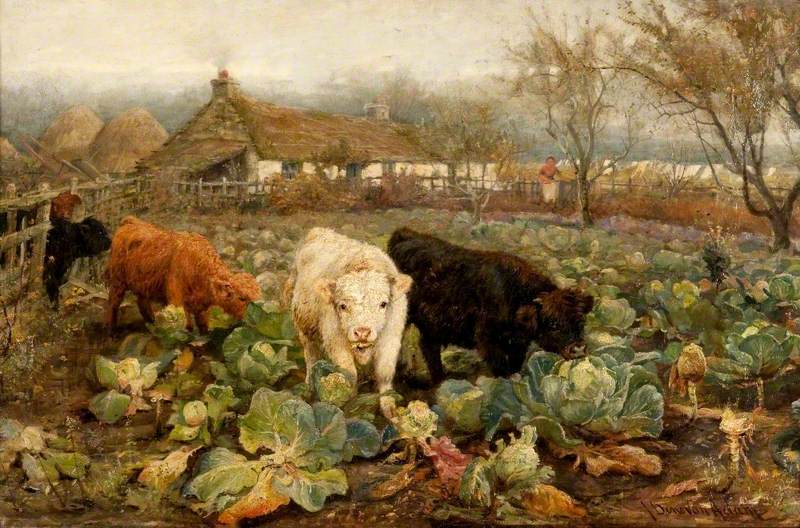
Donated in July 19491, the painting was bought from an auction held at the Crown Hall Auction Rooms in Glasgow on 8th April 1949 for £1.2 ( Today a Denovan Adam painting can fetch as much as £60003).
Joseph Denovan Adam was a Scottish painter specialising in the painting of animals, Highland landscapes and still life. In 1887 he set up a school of animal painting at Craigmill near Stirling which became the centre for a group of Stirling and Glasgow artists. It was based on Adam’s small farm where students were encouraged to paint his herd of Highland Cattle from life.4
Exhibitions.
The painting was exhibited at the Smith Art Gallery in Stirling in 1996 in an exhibition called, Mountain,Meadow,Moss and Moor.5
Ronald McNeilage (1935-1959)
The official donor of this painting is rather unusual as he was only 14 years old when he gave the painting to Glasgow. At the time of the donation Ronald was a patient in Killearn Hospital, Stirlingshire, suffering from a brain tumour. The brain tumour was pressing on an optical nerve and affected his eyesight. Killearn Hospital was a specialist hospital which dealt with brain injuries and illness which affected the brain. His parents were Alexander McNeilage, an electrical engineer, and Jessie Lowe Nicolson. They lived at 32 Alden Road Newlands, Glasgow at that time.
The Director of Glasgow Art Gallery and Museum, Dr Tom Honeyman, wrote to Ronald thanking him for the painting . Ronald was so proud of the letter that he had it framed and showed it to all his visitors. Dr Honeyman even wrote again to Ronald who was still in hospital, in November 1949 to say that Ronald was still in the thoughts of himself and the staff of the Art Galleries.
As one might guess there was more to this story. In fact it was Ronald’s maternal grandfather, David Gordon Nicolson (DGN), who masterminded this donation. After acquiring the painting he wrote to Dr Honeyman explaining the circumstances of his grandson’s illness and asked him to write the letter of thanks to his grandson.6 As we already know DGN had bought the painting for £1 in at an auction in Glasgow in 1949 (buying and selling Figure 2. paintings at auctions was a hobby) and hatched the plan for its donation probably hoping this would cheer up his grandson who was in hospital for the greater part of 1949.
According to his younger brother, Alan, Ronald was in and out of Killearn for the next ten years . He had several operations and was under the care of neurosurgeon James Sloan Robertson. Ronald eventually went to work for the RNIB in Glasgow where he was a library assistant. Both Ronald and Alan were pupils at Glasgow High School.7
David Gordon Nicolson (1871-1952)
Thus our true donor is David Gordon Nicolson (DGN). He was born in Dunse, Berwickshire. His father, David William Nicolson, was a mariner and his mother was Mary Jane Whitelaw.8 The couple were married in Liverpool where Mary’s family ran a boarding house.9 Perhaps DGN’s father had been a lodger at the boarding house when his ship came to Liverpool? DGN had an elder brother William Darling and a sister Janet, known as Jessie. By 1881 the family had moved to Musselburgh. The father was not on the census and was presumably at sea.10
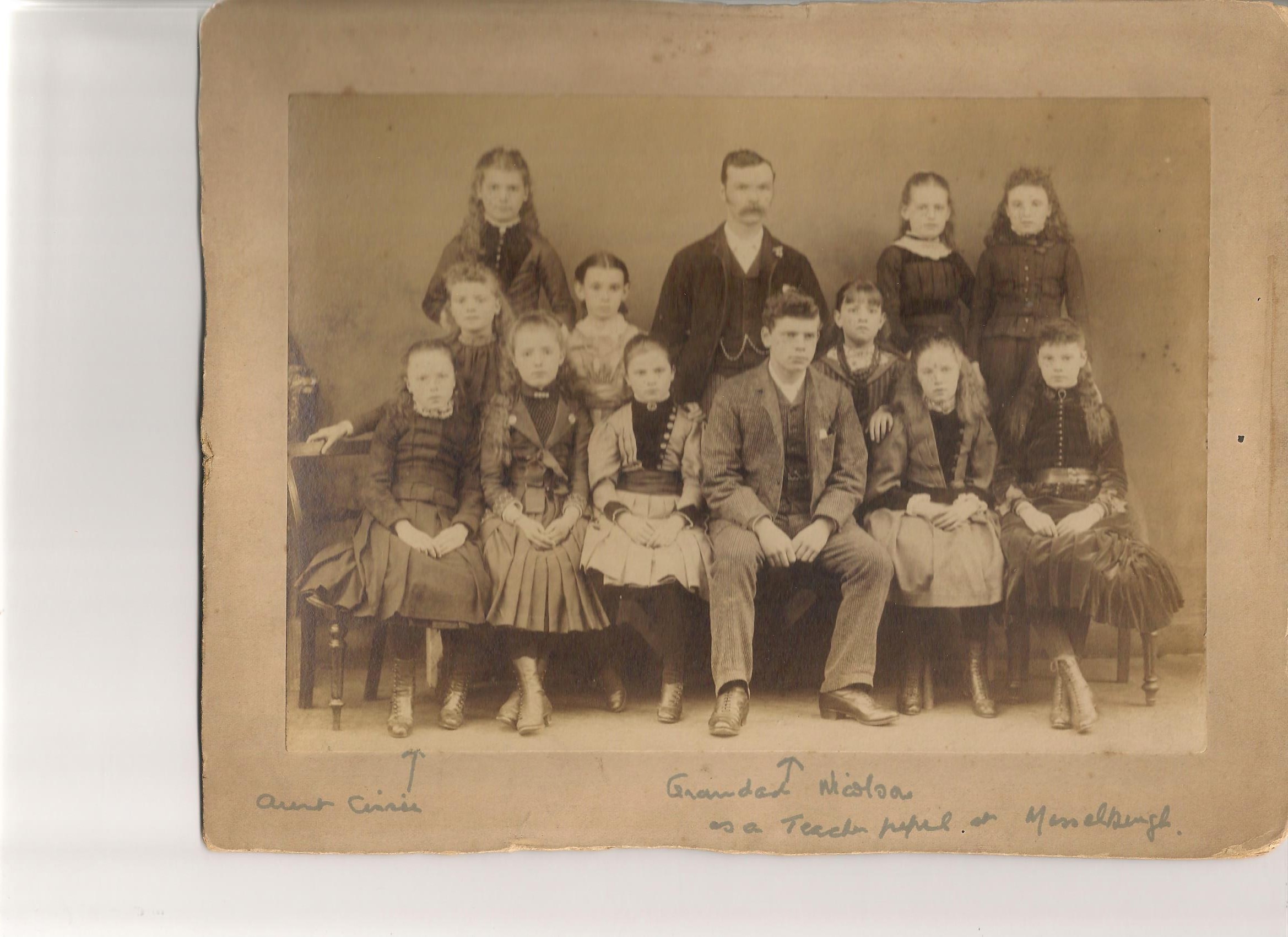
David was a pupil at Musselburgh Grammar School which was managed by the Musselburgh School Board. In July 1885 at the age of 14 he was employed as a pupil -teacher at the school. 11 At that time in Scotland and in England this was one road into teaching.
At the age of fourteen (after Standard III) the best pupils in a school were chosen to stay on as pupil-teachers. They remained as pupil-teachers until they were 18.
They were paid a salary starting at £10 per annum rising to £20. Schools were allowed to have one pupil teacher per 25 pupils and were paid to have pupil teachers. Pupil -teachers had to sit an examination every year and were annually inspected.12
David remained as a pupil- teacher until 10th September 1889 when he left the Musselburgh School to take up the post of uncertificated teacher at Brand’s School Milnathort in Kinrosshire.13 It was common for ex-pupil teachers to work as uncertificated teachers after completing their ‘ apprenticeship’. We know he remained at Brands School for 15 months.14
DGN was back in Musselburgh at the time of the 1891 Census, usually held in March. He was listed in the census as a ‘teacher of English’ while his sister Janet was a ‘certificated teacher’. It is unknown at this point in which school they were teaching. Mary, DGN’s, mother appears to have been running a boarding house as there were two more certificated teachers and one assistant teacher living as lodgers at the same address. Running a boarding house appears to have been a Whitelaw family business.
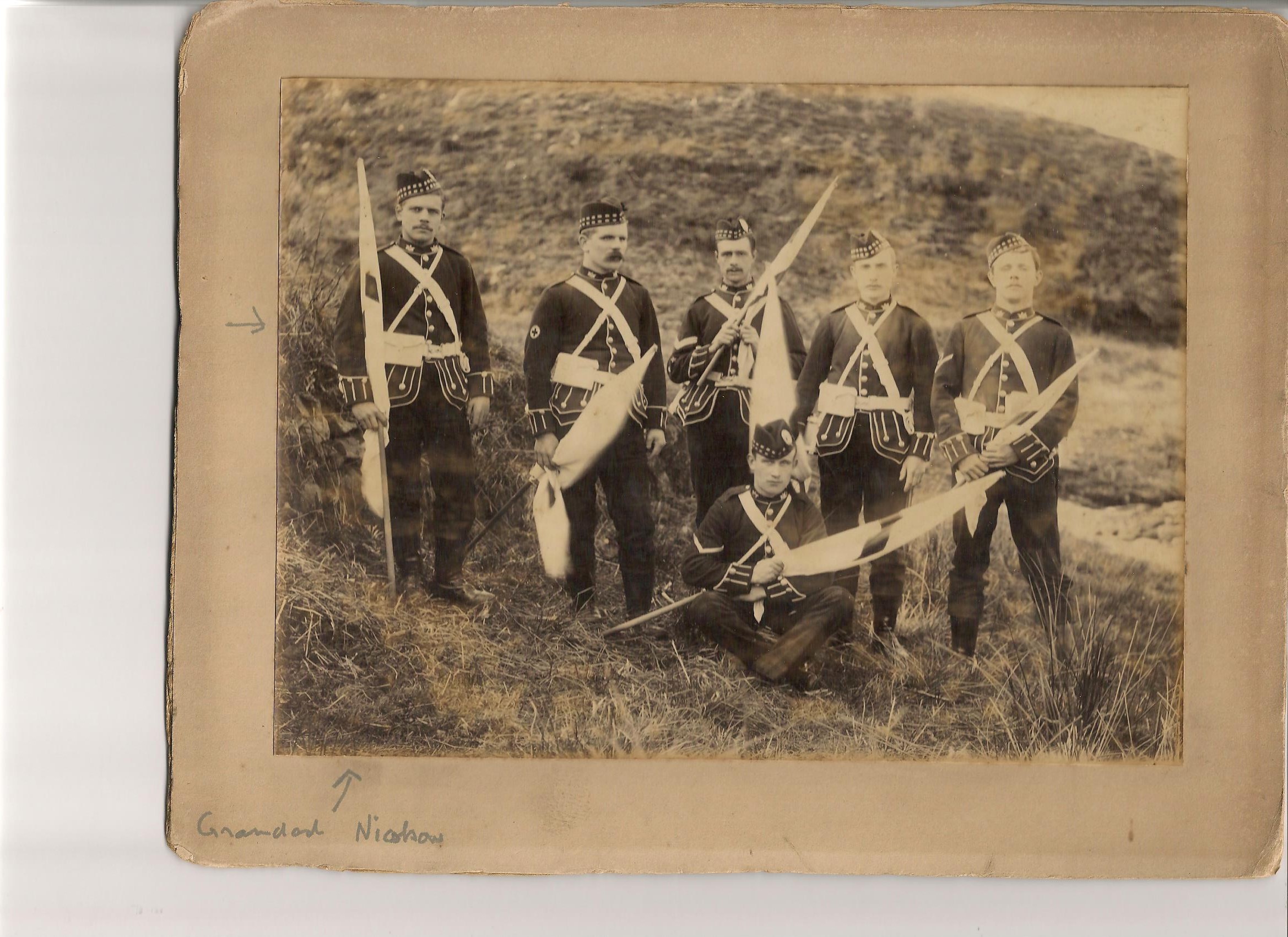
It is unknown at this time where DGN was between March 1891 and February 1892. There is a family story, backed up by a photograph of DGN in uniform that he served in the Boer War, however he does not appear in any of the military records.15 Information from Dr Patrick Watt of the National Museum of Scotland suggested the photograph was taken in the 1890s and identified the uniform as that of the Royal Scots, possibly a volunteer battalion. Perhaps DGN, like many other young men of that time had joined one of the volunteer regiments. The Royal Scots were the local Edinburgh Regiment based at Glencorse Barracks. The photograph may have been taken at the annual summer camp which was part of the commitment required of volunteer soldiers.
In February 1892 DGN began a course at the Church of Scotland Teacher Training College in Edinburgh. He was there for two years graduating in December 1893 25th out of a class of 13416. There is little information as to how teacher training was financed during the 1890s. Until the 1860s pupil -teachers could sit a competitive examination for a Queens Bursary of £25 per year for men (less for women) which would maintain them while at college. Presumably college fees would be paid as well.17 There is some evidence that these bursaries carried on after the 1872 Elementary Schools (Scotland)Act when there was a huge rise in demand for teachers. It is not known if DGN was in receipt of a bursary as the records of male students have been lost but the list of female students records some in receipt of a bursary.18
Until 1905 provision of teacher training was in the hands of the churches either the Church of Scotland, the Free Church of Scotland, the Catholic Church or the Episcopalian Church. The latter two were much smaller organisations. In Edinburgh the Church of Scotland Teacher Training College was first in Johnston Terrace and then in Chambers Street while the Free Church Training College was at Moray House. In 1905 teacher training was taken out of the hands of the churches and taken over by the Scotch Education Department as it was then known. The two Presbyterian Edinburgh Colleges amalgamated in 1907 and became Moray House Teacher Training College, one of four Provincial Training Colleges in Scotland, the others being in Glasgow, Aberdeen and Dundee.19
In January 1894 DGN began his first post as a probationary teacher at Grahamston Public School in Barrhead, Renfrewshire. The headmaster of the School was James Maxton, father of the James Maxton who became the ‘Red Clydesider ‘ MP in the 1920s.20 Even though he was in his first year of probation DGN was given Standards 1V,V and V1 to teach- in other words what would be known today as Secondary Education which had only been publicly funded since 1892. The 1872 Act had only provided public funds for elementary education before that date.21
.DGN’s appointment possibly came about as a result of comments made by the School Inspector during his annual visit to Grahamston School in 1893. When commenting on the Senior School, Standards 1V,V and V1 –“The staff of the senior department would require to be strengthened if these subjects are to be carried on to any further extent.”22
DGN seems to have settled in well as the log book entry for February 2nd 1894 states,” Mr Nicolson is promising very well and manages Standard 1V… very satisfactorily”. DGN completed his two year probation and became a certificated teacher in February 1896.23 As the log books show, at this time schools underwent an inspection every year and the results of that inspection affected the annual grant given by the SED.
In December 1896 DGN married Ellen Agnes Robertson in Musselburgh.24 DGN’s home before his marriage was in Albany Place Nitshill where he appears to have been a lodger. 25
DGN was obviously ambitious and keen to earn extra money as he quickly became involved in teaching evening classes at various schools under the Neilston Parish School Board. There are several entries in the minutes of the Evening Class Committees of the Neilston Parish School Board from 1895 onwards regarding DGN’s involvement in evening class teaching at Cross Arthurlie Evening School and Uplawmoor Evening School where he was described as ‘Chief Teacher’ of the evening school.26
On April 29th 1898 after four years at Grahamston Public School another entry in the log book tells us that on the order of the Neilston Parish School Board Mr DG Nicolson was to be transferred to another Barrhead School i.e. Cross Arthurlie Public School (also under the Neilston Parish School Board) as First Assistant27(Deputy Head today). The Nicolsons continued to live at Nitshill where in 1898 a daughter Ellen was born. Mary followed in 1900 shortly after which the family were living at 36 Carlibar Road Barrhead in a block of 3 storey tenements.28.
In 1902 the Nicolsons moved to Uplawmoor, Renfrewshire as on 8th September DGN took up his duties as headteacher of Uplawmoor Public School, living in the School House.29
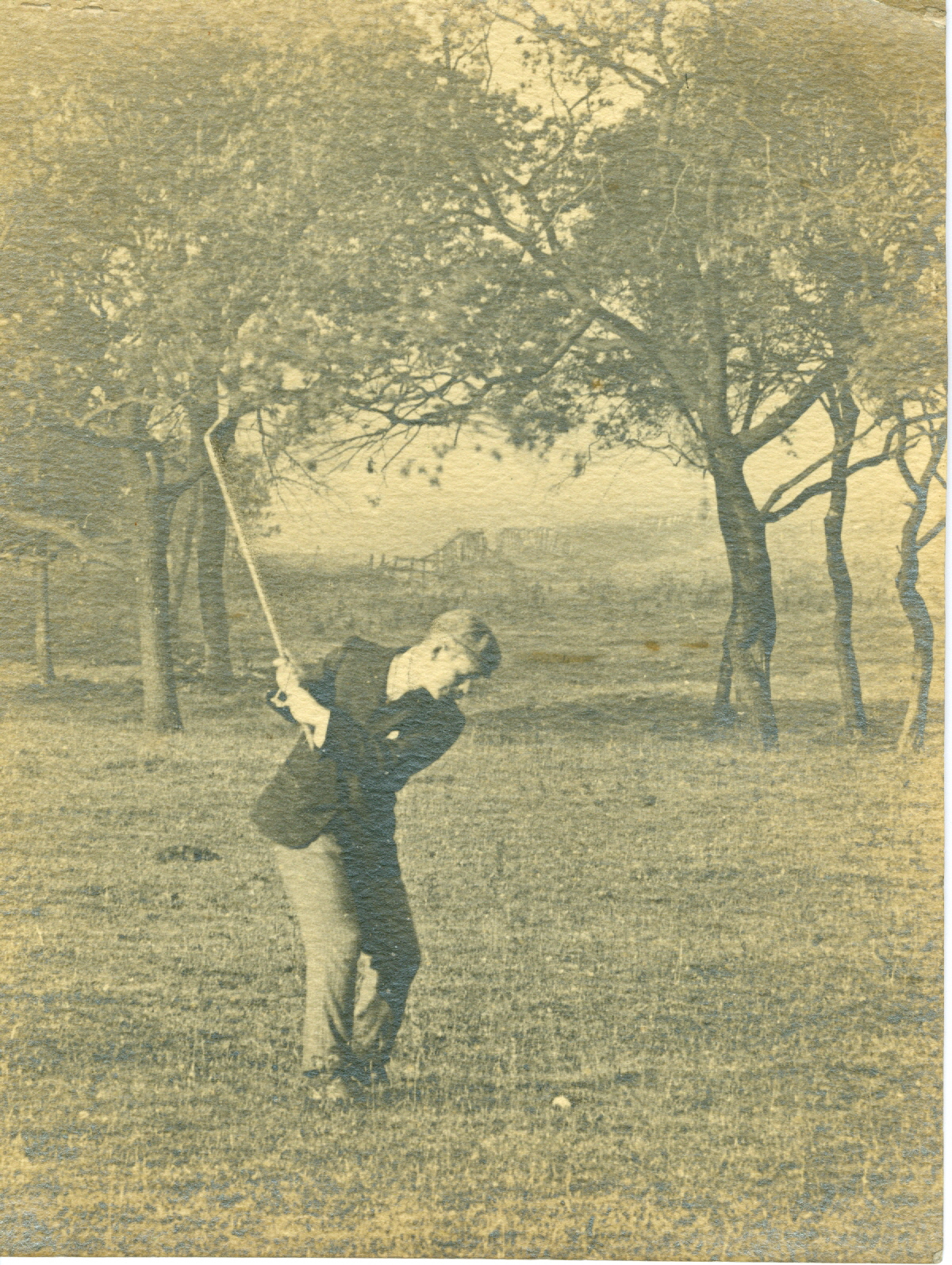
DGN was a keen golfer and was one of the founder members of the Caldwell Golf Club, Uplawmoor, in 1903. The first meeting was held at the Old School House in the village, DGN’s home. He became the club’s first secretary and treasurer.30
While at Uplawmoor DGN was given leave of absence for two weeks to attend,” a course of instruction at the Royal College of Art ,South Kensington”. DGN had a keen interest and talent in artistic subjects. In the annual Inspectors Report in May 1904 DGN was praised for his teaching of the Supplementary Course in art subjects single-handed.31
In 1905 DGN was transferred to Neilston Public School as Headmaster, again living in the School House. This was probably because of the sudden death of the headmaster, Duncan Martin in February 1905. DGN’s salary was £200 per annum and use of the School House. Both Uplawmoor and Neilston schools were managed by the Neilston Parish School Board. The family lived at 47 High Street Neilston which was the School House.32 DGN is credited with starting the Neilston School Magazine.33
In 1908 another daughter, Jessie Lowe was born. She became the mother of our young donor Ronald.34
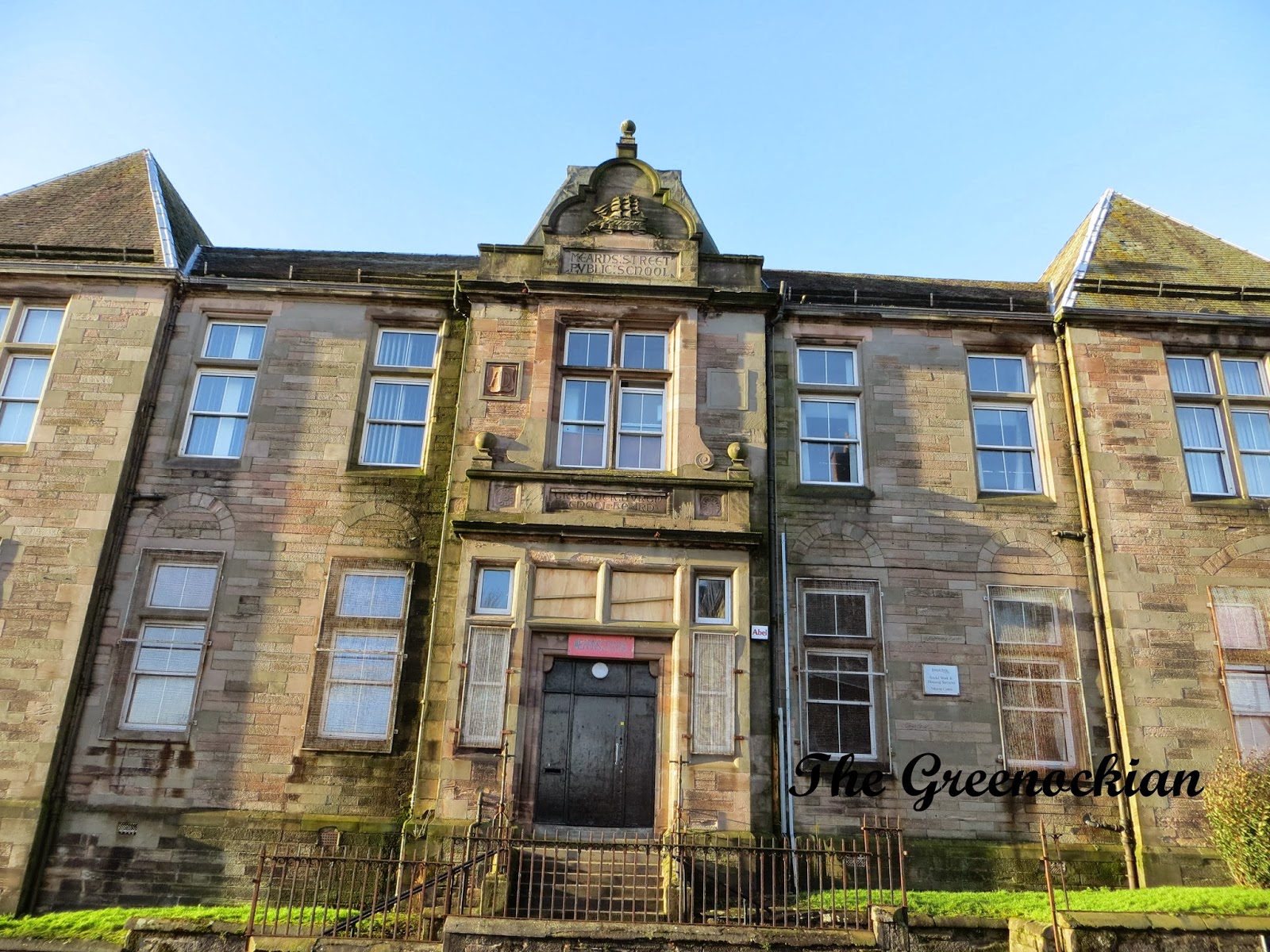
DGN remained at Neilston until 1924 when he was appointed Headmaster of Mearns Street School in Greenock.35 He was headmaster of Mearns Street School until his retirement in 1932.36
According to his grandson, Alan, DGN was a keen chess player and a member, Honorary Secretary and Treasurer for several years , of Glasgow Chess Club which met in the Athenaeum building in Glasgow. As we know he was a keen golfer. He was a keen angler too. His efforts were once reported in the press when he spent three hours on the River Stinchar bringing in a salmon with a trout rod. He used to go and stay at the Portsonach Hotel on Loch Awe and look after the fishing for hotel guests. His grandson, Alan, visited the Hotel in 1959 and found his grandfather’s handwriting in the catch record book.
DGN was a talented sketcher and loved carving items such as animals out of wood. As we have seen, a favourite hobby was going to art auctions and buying and selling paintings. On his retirement he presented a painting to Mearns Street School and as we know he bought a painting for his grandson to present to Glasgow.
DGN was a freemason, holding the office of Provincial Grand Junior Warden for Renfrewshire East based in Paisley. On January 1st 1932 for holding this office DGN was presented with a small wooden mallet made from the old rafters of Paisley Abbey.37
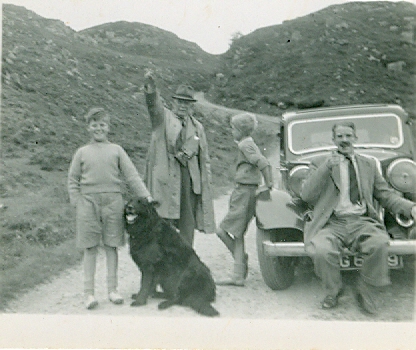
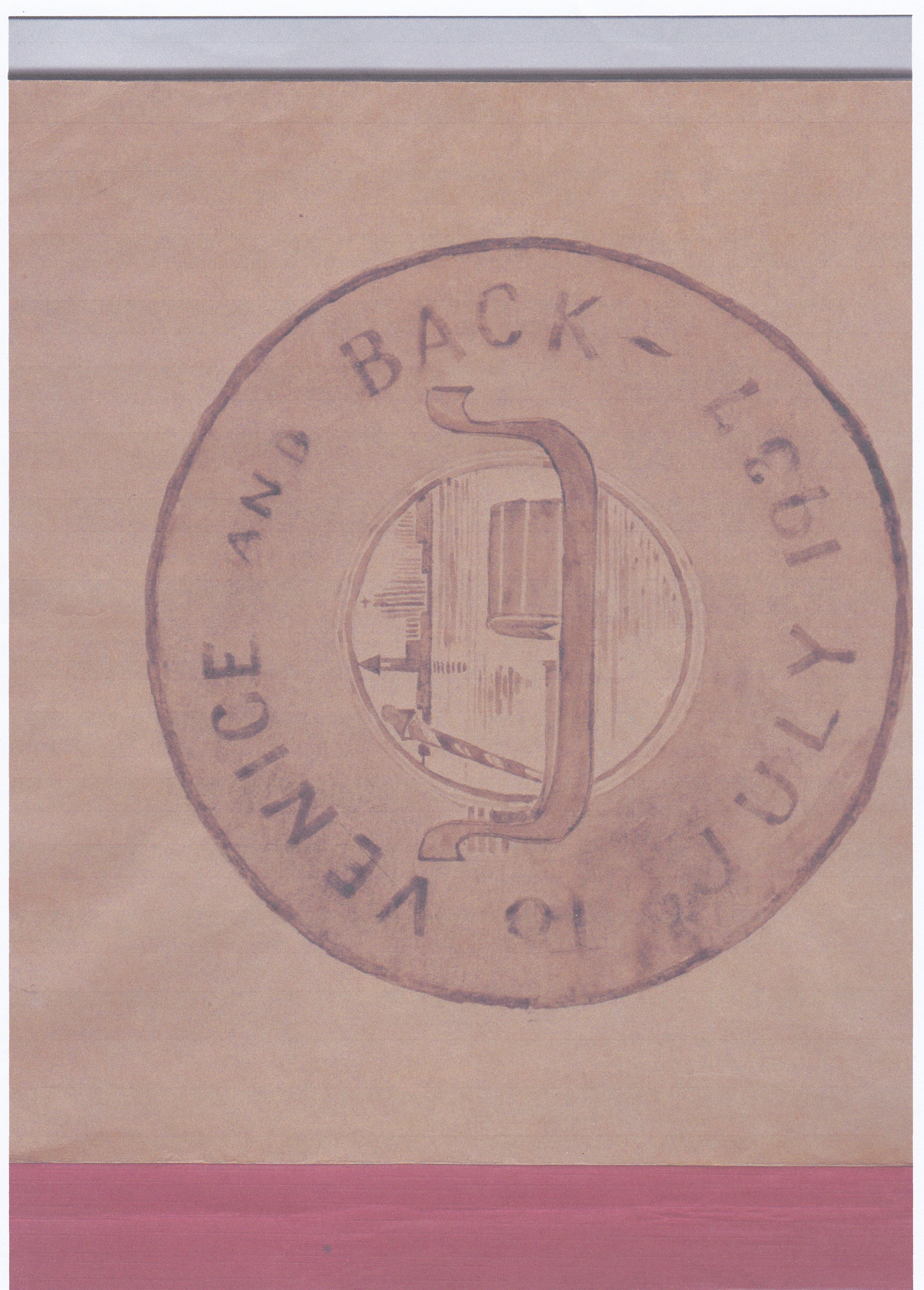
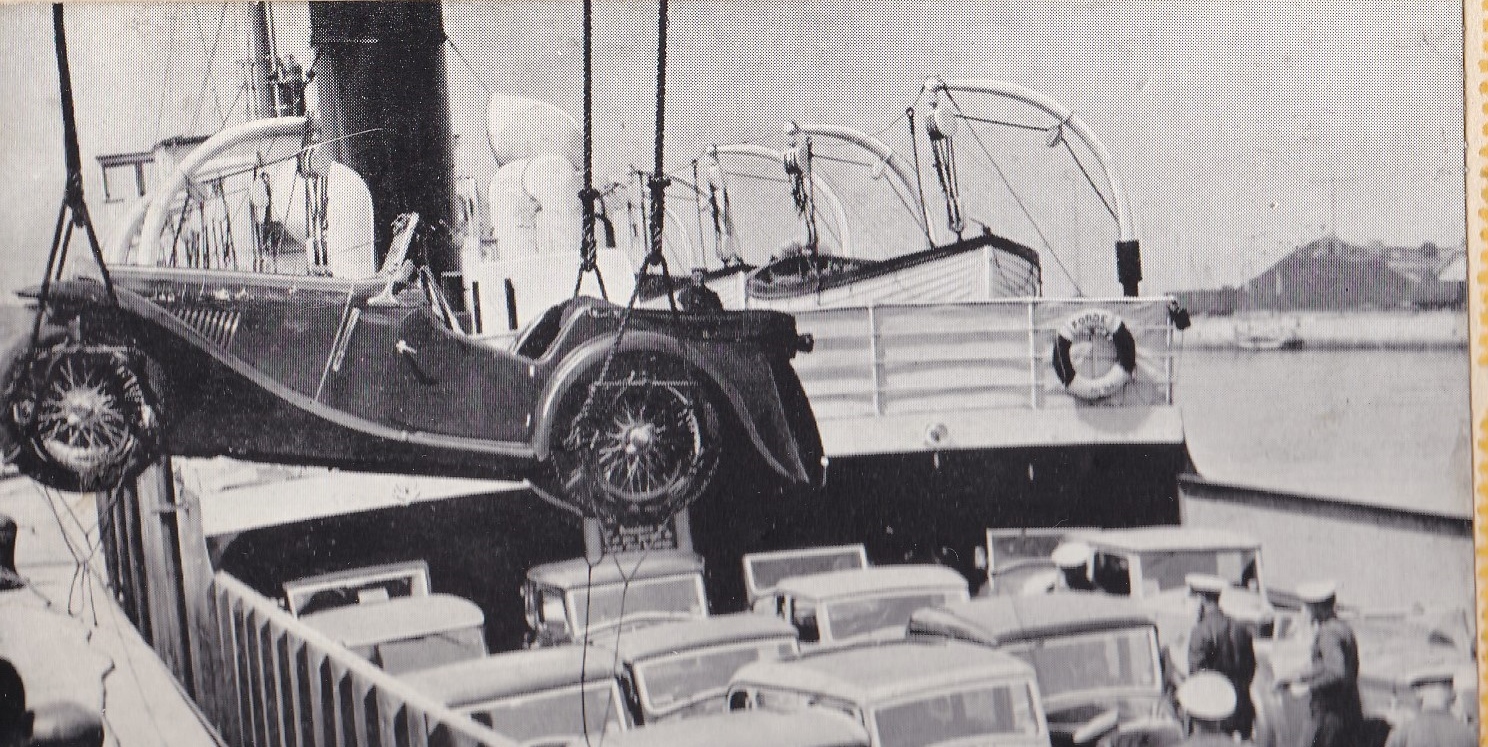
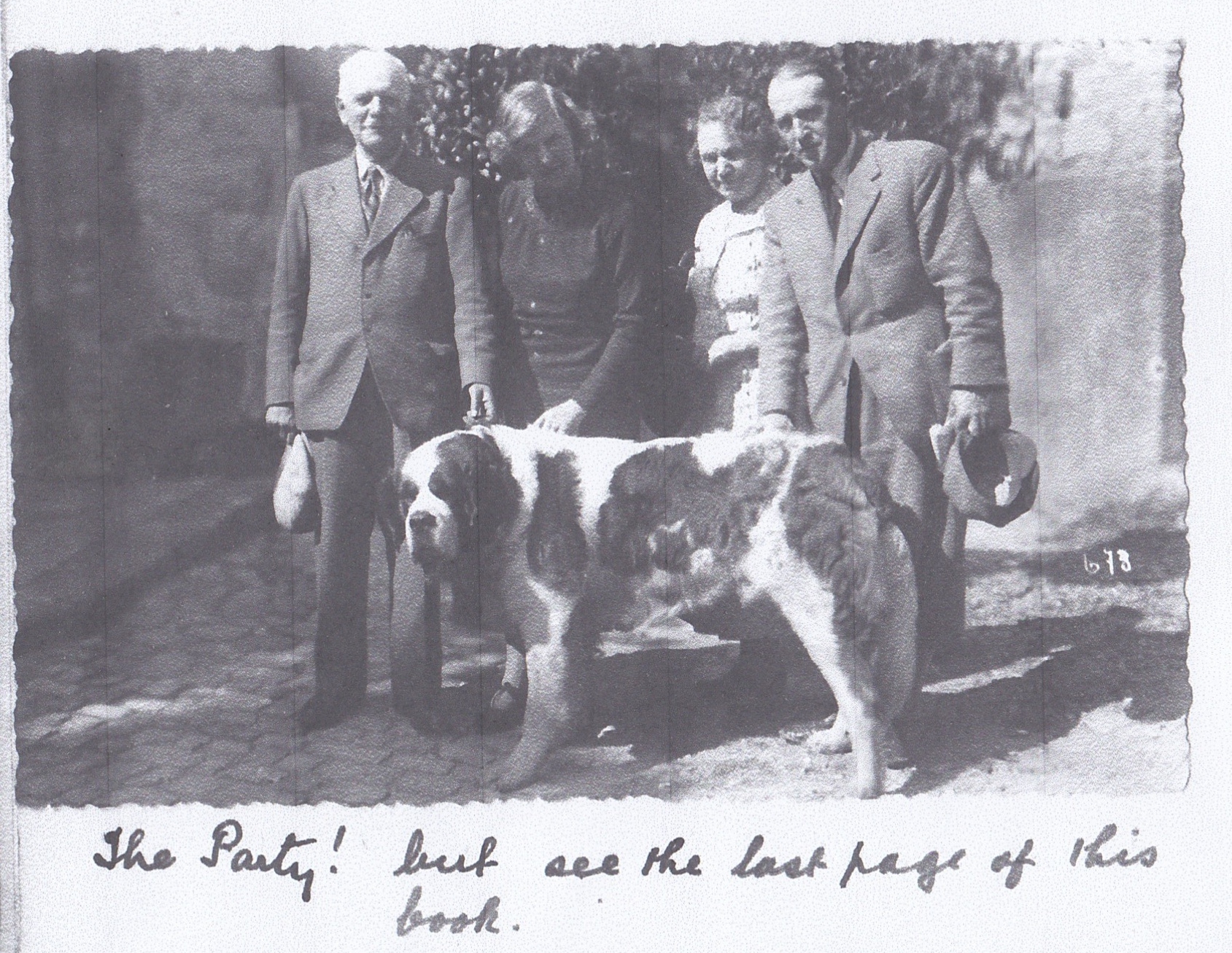
DGN’s retirement was not short of adventure. In July 1937, he and Ellen his wife, daughter Ellen and son-in -law John embarked on a road trip to Venice. Ellen chose Venice as she said she wanted to make sure, “it wasn’t just a Fairy Tale”. They travelled in a Hillman Minx-AGG 149- which the young people had just bought on HP. (see figure 2)
What was known as the Automobile Association in those days was extremely helpful providing them with routes and all the official documents they needed for the trip for the car and for themselves. The AA, as it is known today ,arranged the ferry crossing from Dover to Calais with AA representatives to smooth the path at the ports, all for £12/11/-(£12 and 11 shillings-£12 60 pence today). Each car had to be hoisted on board as there was no such thing as a roll-on roll-off car ferry in 1937.
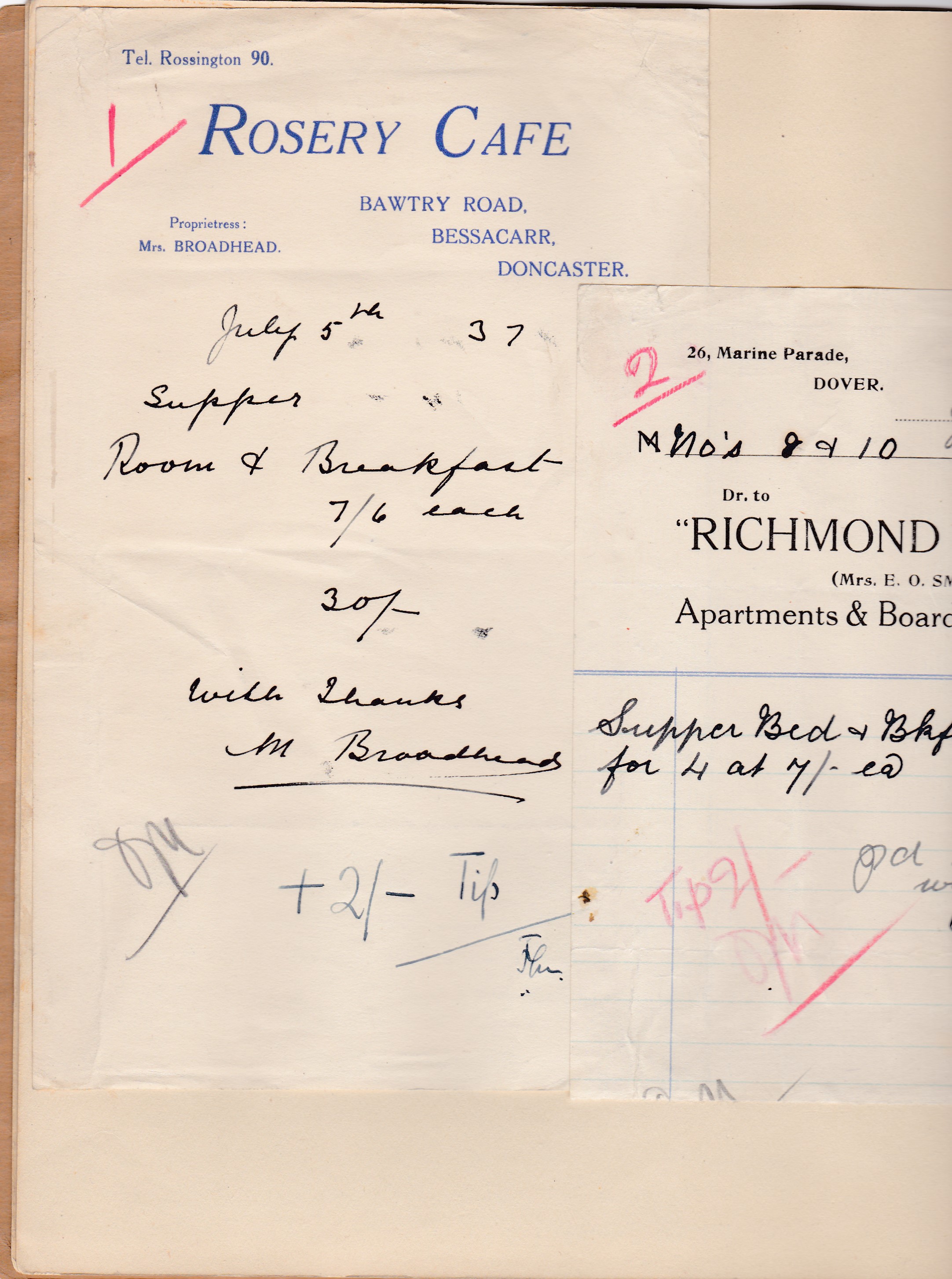
There is no time or space here to go into too much detail of the trip but from the first stop of the trip outside Doncaster where bed, breakfast and supper for four at the Rosery Cafe was 30 shillings (about £1.25 today), they travelled to Dover where bed and breakfast and supper cost seven shillings each (about 70pence). They then drove through France, Switzerland and Italy to Venice where they spent only a few days before starting the journey home.
The party travelled back through Austria, Germany and Belgium where they spent time at the Great War Battlefields such as Ypres. The scrapbooks are fascinating to read. They tell of hair- raising climbs up mountain passes such as the Brenner Pass as well as friendly meetings with local people and visiting places of interest such as Versailles, Cologne Cathedral and St Marks in Venice.
The travellers had taken with them a small spirit stove and everywhere they went in all the countries they passed through, often staying only one night, they made tea and had lunch by the roadside on most days, eating locally bought provisions.
They were in Italy during the time of Mussolini and in Germany during the time of the Third Reich where they only once came into contact with,” that Heil Hitler nonsense “, as DGN put it. In all they covered 3,500 miles in AGGI 49 as the car became known, having developed a personality by the time the party had travelled in her for a while. The car never travelled above 55 miles an hour and never had a puncture.38
Ellen died in 194339 and eventually DGN went to live with his daughter Ellen in Hamilton from where he masterminded the donation of Calves in aCabbage Patch on behalf of his grandson Ronald. David Gordon Nicolson die on March 2nd 1952.40
And what of our young donor Ronald? Unfortunately at the age of 24, after years of being in and out of hospital for numerous operations, the brain tumour returned once again41 and, sadly, Ronald died in Killearn Hospital on September 13th 1959.42 At least his grandfather did not live to see that.
Postscript
While researching David Gordon Nicholson, entries were found on the http://www.ancestry.co.uk website referring to photographs of one David G Nicolson. They were posted by Lorraine Whitelaw Speirs who lives in Vancouver. As Whitelaw was the maiden name of DGN’s mother the owner of these photographs was contacted in order to confirm that the posts referred to DGN. Mrs Lorraine Whitelaw Spiers revealed that she was a descendant of Robert, younger brother of Mary Whitelaw, mother of DGN. Lorraine knew nothing of the McNeilage side of the family but had visited Scotland several times researching her family. When Alan McNeilage, Ronald’s younger brother and grandson of DGN was informed of the existence of a branch of the family of which he was unaware he was delighted. By pure chance he and his wife Caryl had a holiday planned in July 2018 to Vancouver. Alan and Lorraine are now in touch by e-mail and plan to meet during the visit. Who says there is no such thing as co-incidence?
References.
1.Glasgow Museums Resource Centre. Object Files. Adam, J Donevan.
Acc 3442 1/1/563 (GMRC)
2.GMRC
3.www.bonhams.com/auctions/14216/lot/57
4.Julian Halsby, Paul Harris. The Dictionary of Scottish Painters 1600 to the Present. Canongate 2001 p.1
5.Glasgow Herald 7/7/1996
6.GMRC
7.Interview with Alan McNeilage, grandson of DGN. 16/04/2018(A. McNeilage)
8.www.scotlandspeople.gov.uk. Statutory Births
9.www.ancestry.co.uk. Statutory Marriages
10.UK Census 1881
11.East Lothian Archives. SCH 34/1/1
12.Marjorie Cruikshank History of the Training of Teachers in Scotland.University of London 1979.p.56
13.East Lothian Archives SCH 34/1/1
14.Grahamston Public School Log Book 19/01/1894. Glasgow City Archives (GCA) REF. C02/5/6/4/1
15.A. McNeilage
16.Edinburgh University Library. Special Collections. REF GB237EUA 1N18.(EUL)
17.Cruikshank.p61
18.EUL
19.Cruikshank.Chapter 5.
20.Grahamston Public School Log Book. 19/01/1894.GCA Ref. C02/5/6/4/1
21.Cruikshank .p219
22.Grahamston Public School Log Book. 06/05/1893.GCA Ref.C02/5/6/4/1
23. As above 02/02/1896
24. http://www.ancestry.co.uk.Statutory Marriages.
25. http://www.scotlandspeople.gov.uk. Valuation Rolls 1895
26.Neilston Public School Board Minutes. GCA Ref.C02/5/3/14/11
27.Grahamston Public School Log Book 29/04/1898.Ref.GCA C02/5/6/4/1
28.UK Census 1901
29.Uplawmoor Public School Log Book 08/09/1902.Ref.GCA C02/5/6/78/2
30. Caldwell Golf Club:The First Hundred Years-1903-2003. Akros Printers 2003
31.GCA.Ref.C02/5/6/78/2. Supplementary Classes were classes aimed at the Intermediate and Leaving Certificate for pupils who stayed on after the age of 14. See Cruikshank.
32.Berwickshire News and Advertiser 11/04/1905 33.e-mail correspondence with Lorraine Whitelaw Speirs
34.UK Census 1910
35.Sunday Post 06/07/1924
36.A. McNeilage
37. ibid.
38. To Venice and Back July 1937.Scrapbooks 1-4 A. McNeilage Family Papers.
39.www.scotlandspeople.gov.uk Statutory Deaths
40. ibid
41. A McNeilage
42. www.scotlandspeople.gov.uk Statutory Deaths
Acknowledgements
Many thanks to Alan McNeilage and his wife Caryl for their hospitality and for the supply of so much invaluable information from family papers and photographs. JMM
Women donors frequently present a challenge to the researcher. Many women who have donated paintings to Glasgow Museums seem to be “invisible”.
Obviously, the research is focused on less well known donors to the city, so it is to be expected that information on this group may be less easily available. The time in which donors lived is also a factor in finding information about them. Many of the donors researched lived in the nineteenth and early to mid twentieth centuries, a time when women were less active in public life and where their realm was considered to be the domestic one. Women were frequently seen as adjuncts to their husbands, fathers or brothers.
Lady Violet Bonham Carter asked her governess in 1850, “What shall I do with my life?” Her governess replied, “Until you are eighteen you will learn. After that you will do nothing.” This paints a very extreme picture of a woman’s life. Obviously some Victorian women , usually from the upper and middle classes, may have “done nothing” in adulthood. However, Professor Sheila Rowbotham, in her history of twentieth century women, points out that many women, from all classes, were unwilling to be confined by the restrictions placed upon them by society and carved out careers for themselves. (1) At least one of the Birrell sisters was such a woman.
The Misses Birrell came from a large family, two sons and ten daughters, and lived in the west end of Glasgow at Wilton Street. The father, Alexander Birrell, originated from Falkland in Fife. He came to Glasgow and set up as a soft goods manufacturer and calenderer. The mother of the family was Margaret McDowall Birrell. (2)
Of the two sons, little could be found about Samuel. He is listed in the 1881 census as a clerk to a West India Merchant. Alexander is listed in the same census, aged 18, as a clerk to a calenderer, possibly a start in the family business. He later became a partner in Crawford Easton and Company, a calico printing company, married well and served in WW1 as an army reserve officer, for which he featured in the “Men You Know” column of the Baillie. (3)
Census returns show that many of the ten Birrell daughters worked for a living, although some had “own means”. Janet is listed in the census of 1891 as a “daily governess”. Agnes is listed as a nurse. Some sisters married and moved away from Glasgow.
This research focussed on the four sisters who are listed as living in the family home during the 1901 census and who later died there, since they are the most likely donors of the painting. (4)
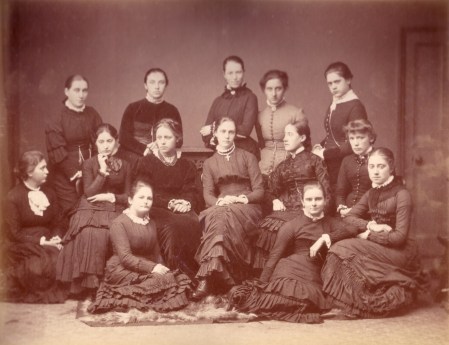
Lydia, who had no stated profession, was a lay member of Glasgow and West of Scotland Lady Artists’ Club. (5) Two of the four sisters, Margaret and Catherine, worked as teachers, Margaret teaching music and Catherine teaching English and Classics. Catherine worked from home. Catherine’s distinctive name, Catherine Jane Ballingall Birrell, led to the discovery that Catherine had attended Girton College in Cambridge between 1882 and 1885. (6) This was a relatively exciting find, since young women of the time tended not to go to university, particularly not to Oxford or Cambridge.
Catherine was also a member of a number of intellectual societies in Glasgow, including the Royal Philosophical Society, the Royal Scottish Geographical Society and the Classical Association of Scotland.
Catherine was also a playwright and poet, writing as C.J.B Birrell. Her play “Two Queens – A Drama” was published by John Mclehose Glasgow in 1889. (7) This play deals with the struggle for succession between Mary Tudor and Jane Grey after the death of Edward VI. The play is well written, with some feminist ideas explored, as in this conversation between Jane Grey and her husband, who hopes to become king as she becomes queen.
Lady Jane: “If power be equal, I am set aside to whom the crown was due: what sense in that? Why should the king leave me an empty honour ?”
Guildford: “Who argues with a woman? They’ve no wit to know when they are beaten. I shall go. So great a queen can never own a husband; Go, boast yourself in solitary state that you are queen of England, I am king.”
Her second play ” The Lesbians”, (8) appears to have been privately printed around 1914. This play is set on the island of Lesbos and deals with the last days of Sappho, leading up to her suicide on account of unrequited love for a young man. Both plays are available in the National Library in Edinburgh.
The book “Gendering the Nation” sheds a little more light.(9) Edwin Morgan had also discovered C.J.B. Birrell and her plays. Morgan stated that there was some lesbian interest in the Two Queens play which, though not overtly lesbian, does feature two very strong women.Morgan also saw the private publication of “The Lesbians”, alongside what he describes as the “sexless” initials of the author as indicative of “the circumspection of an undeclared interest” in lesbianism, although he also acknowledges that, at the time of publication, the modern meaning of “Lesbian” did exist, but would be found mostly in medical and psychological contexts. Usually, in these times, lesbian was taken to mean an inhabitant of Lesbos.
Morgan discovers more overtly lesbian themes in CJB Birrell’s book of poems “Things Old and New”, which was privately printed in Brighton in 1917. He selects the poem Gulduc and Guldelaun as evidence, the two women of the title being in love with the same man, but also with each other
“But take ye heed, fair maidens all
How with mankind ye do
For the more love you give to them
The less they give to you.”
Morgan acknowledges his difficulty in trying to find any further information relating to C.J.B. Birrell, but hopes that “some day Catherine Birrell will emerge from the shadows and tell us whether these speculations are out of order”
Unfortunately, the research could not clarify the acquisition of the painting by the Birrell Family, or which of the sisters donated the painting. However, the research does confirm the idea that, if a woman of the nineteenth and twentieth century was strong enough, she could carve out a life and a career for herself, without marriage, and not be required to “do nothing”. It is also important to remember however, that Catherine’s story is not the only one. Hers is the story which has been found. Perhaps the other Birrell sisters have equally interesting stories which may be discovered at a later date.
Note: If you wish to reproduce image 2 please contact Girton College, Cambridge.
Bibliography
1.Rowbotham, Sheila (1999), Century of women: The History of women in Britain and the United States in the Twentieth Century: Penguin Publishing
2. Post Office Directories
3. Men You Know, The Baillie, 16/12/1914
4. 1881,1891,1901 census: Births, Deaths and Marriages: Scotlands People
5. Archive Material, Glasgow and West of Scotland Lady Artists’ Club, Mitchell Library


 Glasgow Museums Art Donors Group