Annie Isabella Cameron was born at 16 Grafton Square, Glasgow on 10 May 1897. Her parents were James Cameron, a civil engineer who had been involved in the construction of the Glasgow Underground and Mary Sinclair Cameron whom he married on Christmas Day 1894 at 42 Church Street, Ayr. 1 16 Grafton Square was Annie’s father’s home before his marriage. In 1901, Annie and her two siblings, Donald aged one and Mary four months with their parents were visiting James Gray, a grocer and his family at 60 Church Street, Ayr. 2 By 1911 the family had moved to Willbraepark, Overton Road, Strathaven. James Cameron was now aged 62, a civil engineer and contractor, with Mary 44, and children Annie 13, Donald 11, Mary 10 and Ewen 9. The children were all scholars. The family employed one domestic servant. 3 Mary Cameron became the tenant/occupier at Willbraepark after the death of her husband in 1921 and remained there until at least 1925. 4
After attending school in Strathaven, Annie Cameron enrolled at Glasgow University and graduated with a first-class honours degree in history in 1919. 5 She then undertook teacher training at Jordanhill College in Glasgow. After a brief spell of teaching, she returned to academia to study for a PhD supervised by Professor R.K. Hannay at Edinburgh University. Her subject was James Kennedy, Bishop of St Andrews (1408 – 1465). She completed her PhD in 1924 6 and in 1928 was awarded a Carnegie Research Fellowship which enabled her to live in Rome and to attend the Vatican School of Palaeography. In the Vatican Archives she found a rich source of fifteenth century material relating to Scotland, in particular the Scottish Supplications to Rome. The research and publication (from 1934 to 1970) of this material became her life’s work. Her frequent visits to the archives in this connection resulted in her affectionate nickname Nonna (grandmother) of the Archivo Vaticano. 7
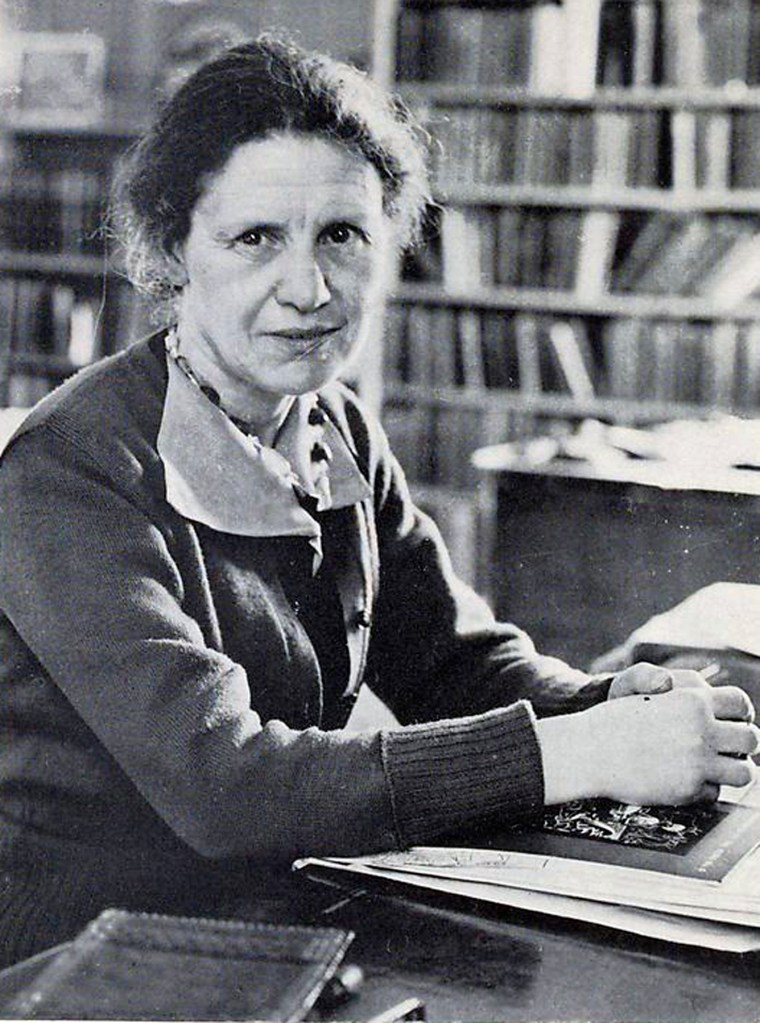
National Library of Scotland, Creative Commons Attribution 4.0
International Licence 8
Annie Cameron was awarded a DLitt from the University of St Andrews in 1934 9 and was employed in the Scottish Record Office until she married George Dunlop (qv) on 23 August 1938 at Juniper Green in Edinburgh. 10 The couple then moved to Dunselma in Fenwick about five miles from Kilmarnock. Annie taught part-time at Edinburgh University and contributed regularly to her husband’s newspaper the Kilmarnock Standard. She was awarded an OBE in the King’s Birthday Honours of 1942 (Annie Isabella Cameron, MA, PhD, DLitt, (Mrs. G. B. Dunlop), Member of the Council of the Scottish History Association). After the war she was able to resume her research in Rome in 1947 – accompanied on this occasion by her husband. She was awarded an honorary LLD from St Andrews University in 1950 – the same year she was widowed. After her husband’s death, Dunselma was given to the Church of Scotland as a residential home for the elderly although Annie continued to live there. Thereafter she travelled widely continuing her research, lecturing and writing. She embarked on a lecture tour of the United States in 1955 promoting Scottish history. 11 She was appointed to the Royal Commission on the Ancient and Historical Monuments of Scotland on 26 April 1955 and was a member of the Scottish History Society whom she addressed on 12 December 1964 12 and the Scottish Church History Society. In 1972 she was awarded the Papal Benemerenti medal by Pope Paul VI. A particularly rare honour especially for a non-Catholic but reflecting the esteem in which she was held by the Vatican. 13
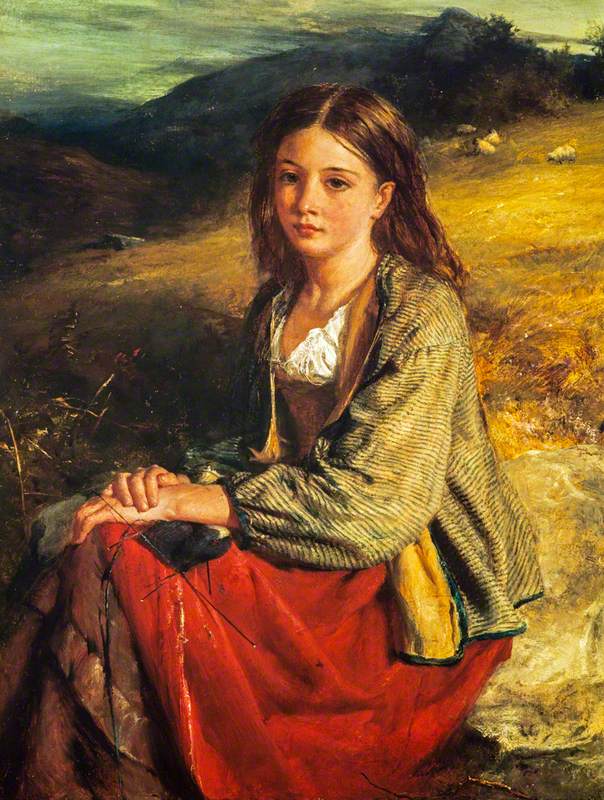
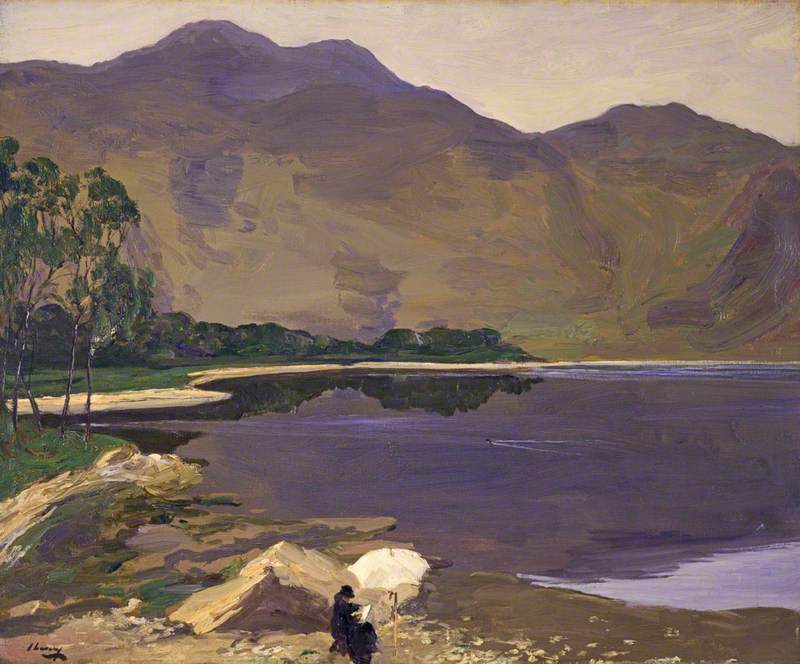
Annie I. Dunlop died at Dunselma on 23 March 1973. 14 Her funeral service was held at Masonhill Crematorium, Ayr on 27 March. 15 She was remembered as a kind, gentle, diligent personality who was always willing to offer help to others. 16 She was instrumental in ensuring that her husband’s bequest was delivered to Glasgow and to the National Galleries of Scotland. She also donated paintings on her own behalf to Glasgow’s Hunterian Art gallery.
The Annie Dunlop Endowment was set up at the Centre for Scottish and Celtic Studies at the University of Glasgow. Funds from the endowment are awarded bi-annually for the purpose of ‘promoting historical research into documents relevant to Scotland that are located outside Scotland’.
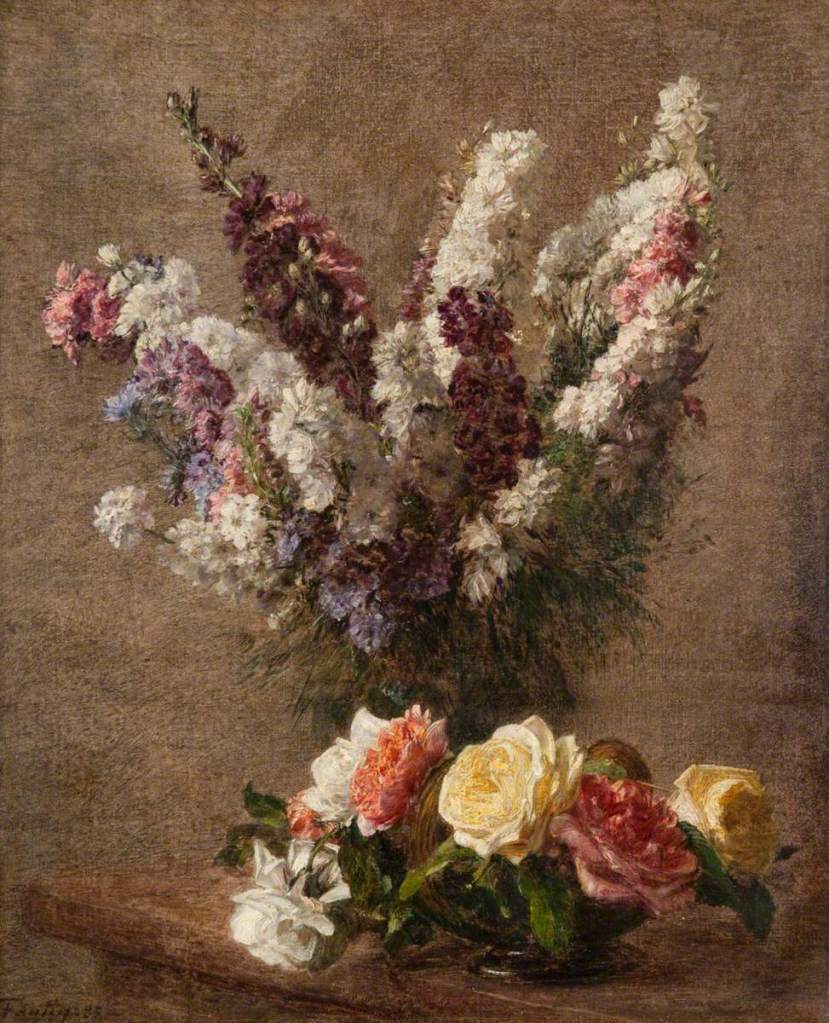
Henri Fantin-Latour (1836 – 1904)
Hunterian Art Gallery, University of Glasgow/ArtUK
Gift from Annie Dunlop from the estate of her husband, George B. Dunlop, 1951
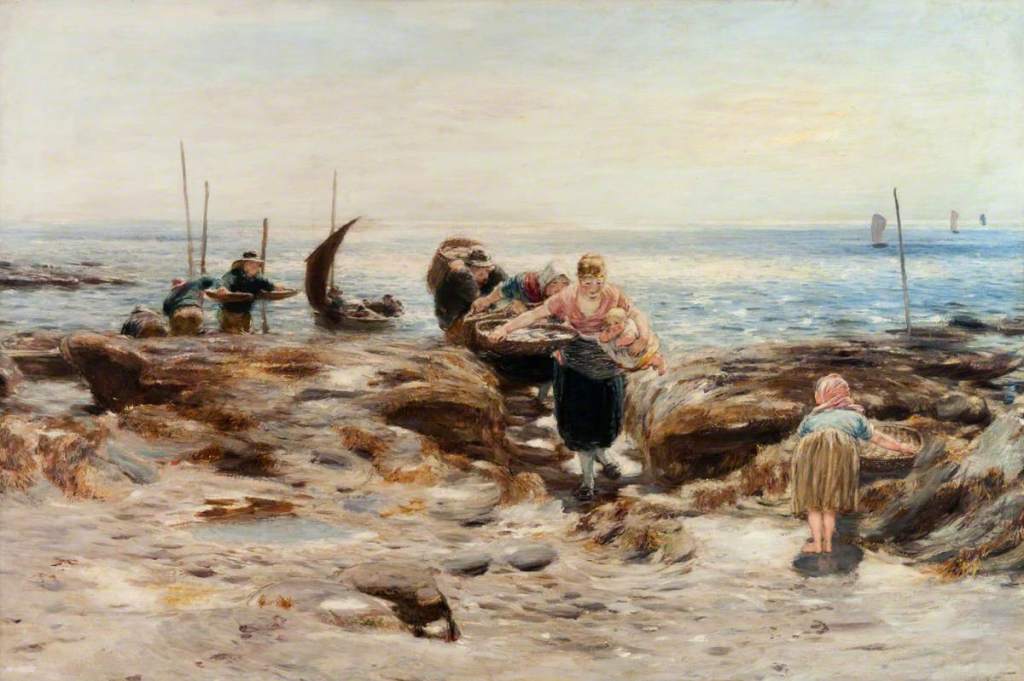
Hunterian Art Gallery/ArtUK
Gift from Mrs Annie Dunlop, widow of George B. Dunlop, 1951
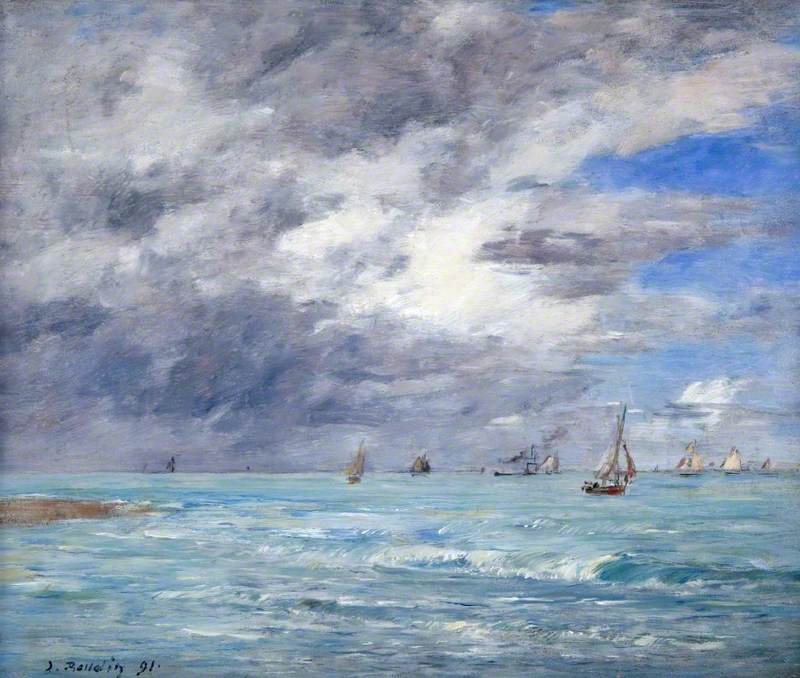
Hunterian Art Gallery, University of Glasgow/ArtUK. Gift from Annie Dunlop, widow of George B. Dunlop, 1951
- Scotland’s People, Birth Certificate
- Scotland’s People, Census 1901
- Scotland’s People, Census 1911
- Scotland’s People, Valuation Roll, Strathaven 1925
- Glasgow Herald, 26 March 1973. This is from an obituary which also claims erroneously that she was born in Strathaven and attended the Glasgow High School for Girls.
- University of Edinburgh, 17 July 1924, History and Classics, PhD Thesis Collection, https://era.ed.ac.uk/handle/1842/1410
- Close, Rob, FSA (Scot) Ayrshire Notes No. 2018/1 Spring 2018 ISSN 1474-3, Ayrshire Archaeological & Natural History Society (pub.) in association with Ayrshire Federation of Historical Societies
- Frontispiece of Calendar of Papal Letters to Scotland of Clement VII of Avignon, 1378-1394, Scottish History Society
- The Apostolic Camera and Scottish Benefices, 1418 – 1488 Humphrey Milford, OUP (pub) for St Andrew’s University 1934
- Scotland’s People, Marriage Certificate
- Ewan Elizabethet al. The Biographical Dictionary of Scottish Women from the earliest times to 2004. Edinburgh University Press, 2007
- St. Andrew’s University Archives
- Ewan Elizabethet al. The Biographical Dictionary of Scottish Women from the earliest times to 2004. Edinburgh University Press, 2007
- Scotland’s People, Death Certificate
- Glasgow Herald, 24 March 1973
- Close, Rob, FSA (Scot) Ayrshire Notes No. 2018/1 Spring 2018 ISSN 1474-3, Ayrshire Archaeological & Natural History Society (pub.) in association with Ayrshire Federation of Historical Societies
 Glasgow Museums Art Donors Group