Frederick John Nettlefold (1867-1949)

Frederick John Nettlefold was the oldest son of Frederick Nettlefold, a businessman and patron of the arts.  Like his father, Frederick John Nettlefold was an art lover. Throughout his life he donated paintings to many galleries around the UK, including the Glasgow Museums. Frederick John Nettlefold donated a number of oil paintings to the Kelvingrove Art Gallery, including works by Patrick Nasmyth, J. C. Ibbetson, Leon A. L’Hermitte, and Anton Mauve. He also donated a group of four paintings depicting the seasons by Marguerite Gerard. (1)

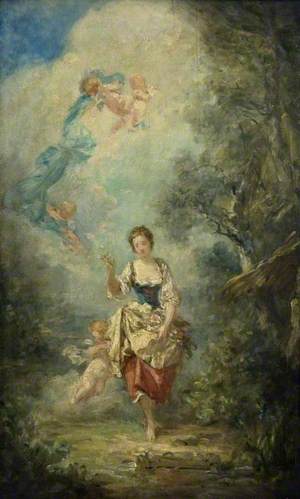
Figure 1. Women Washing Clothes in a Welsh Stream by Julius Caesar Ibbetson. © CSG GIC Glasgow Museums Collection. (www.artuk.org).
Figure 2. Summer by Jean-Honore Fragonard. © CSG GIC Glasgow Museums Collection. (www.artuk.org).
Figure 3. A Woman Driving Cattle by Anton Mauve. © CSG GIC Glasgow Museums Collection. (www.artuk.org).

The Nettlefold family was an important part of British industrial history. At the start of the Industrial Revolution the Nettlefolds built up a company which is still in existence, known today as GKN or Guest, Keen and Nettlefold. John Sutton Nettlefold (1792 – 1866) opened a hardware shop at High Holborn, London in 1823. In 1826 he opened a workshop to make wood screws. This was followed by a second factory in Birmingham. He named the company Nettlefold and Sons.  In 1854 Nettlefold bought a licence to manufacture a new type of wood screw from an American patent. He needed capital investment for this and brought in his brother in law, Joseph Chamberlain, as an equal partner. The company Nettlefold and Chamberlain was formed. They established further factories in Smethwick and  Wolverhampton. The company was managed by both families. One of John Sutton Nettlefold’s sons was Frederick, the father of Frederick John Nettlefold. One of Joseph Chamberlain’s sons was Joseph Chamberlain, who eventually became a managing partner of the business with Frederick Nettlefold. (2) His sons were Neville Chamberlain (1869-1940), Prime minister from 1937-1940 and Austen Chamberlain (1863-1937) (3,4)

Frederick Nettlefold married Mary Warren. They had three children, Frederick John, Mary and Archibald. Frederick Nettlefold was involved in the family business throughout his life. After Joseph Chamberlain left the business, it reverted to using only the Nettlefold name, and was run by Frederick and his brother Joseph. By 1880, the company had grown and Frederick remained Chairman of the company from 1881 – 1893. From 1890, Frederick also took an interest in the silk manufacturing company of Samuel Courtauld. His mother-in-law was both the cousin and sister-in-law of Samuel Courtauld. Frederick Nettlefold was the Chairman of Samuel Courtaulds and Co between 1910 and 1913 and from 1913 to 1927 theChairman of Courtaulds Ltd. (5)

Figure 4. Frederick John Nettlefold by John Hillyard Swinstead 1926. Photograph, Anna McCann by kind permission of the National Library of Scotland.

Frederick Nettlefold was a known collector of art and after his death in 1913, his art collection was auctioned at Christie’s. News of the sale was reported by the New York Times amongst others. The sale raised a large amount of money. (6)

Frederick John Nettlefold studied at Corpus Christi, Oxford and later at Heidelberg and Berlin Universities. He was involved in the Nettlefold company and other businesses for much of his life, both in the UK and abroad but was also variously an actor manager in a number of theatres, president of a football club and a trainer of racehorses. He was a patron of the arts and an art collector. He was a director of Courtaulds for 38 years, so he obviously carried on the family involvement with the company.  He was also chairman of a number of other companies, including a lighting company, a petroleum company and a gold mining syndicate in Kenya. He was president of Crystal Palace Football club from 1933 to 1938. (7)

Frederick John Nettlefold began his theatrical career as an actor in the  Opera Comique in 1893. He worked with Kate Vaughan’s repertory company between 1898 and 1899. He was the actor manager of the Scala Theatre in London from 1919 -1922 and also worked as actor manager at the Apollo, London. There is little evidence of his accomplishments as an actor. However, on one occasion he sued a critic for a bad review. The play was Othello and the critic had reviewed the performance and published his review before the play was staged. The judge found in Mr Nettlefold’s favour, although the finding rested on the advance publication rather than the fairness of the review. (8)

Frederick John Nettlefold married three times. He married women involved with the theatre. His first marriage in 1907 was to Ellen Maud Redgrave m.s. Pratt. He worked with the actress, whose stage name was Judith Kyrle, at the Scala Theatre in London. They acted together in a number of productions. She was a wealthy farmer’s daughter. She had previously been married to Roy Redgrave, the founding father of the Redgrave acting dynasty. She had three children, John Kyrle Redgrave born 1895, Robin Roy Redgrave born 1897 and Nellie Maud Redgrave born 1898. The census of 1911 shows two of her children living with her and F.J. Nettlefold. The marriage lasted until her death in 1922 at the age of 50. There is no evidence of any children of this marriage. Mr Nettlefold retired from the theatre in the year of his wife’s death. (9)

His second marriage was to Lucy Eleanor Louisa Atcherley, an actress who was thirty years younger than him. They met at the Scala Theatre in 1919, where Mr Nettlefold was staging and acting in the play, The Lady of Lyons. The principal roles were played by Frederick John Nettlefold and his first wife Ellen. Lucy Atcherley also played a minor role in this play. After the run ended, Lucy Atcherley moved on to work with other stage companies in Britain and South Africa. She returned from South Africa in June 1922 and became reacquainted with Frederick John Nettlefold, whose wife had died in March of that year.  They married within weeks. In December 1922, Frederick John set off for Bombay, with the agreement that Lucy would follow him in February 1923. Frederick waited at his shooting lodge in Ceylon, but Lucy never arrived, having met a diplomat on route to Baghdad and gone with him to that country. They divorced in 1924. (10)

His third marriage in 1925 was to Johanna Veronique Waterson Graaff. She was an opera singer. There were three children from the marriage, Mary April, born 1926, Frederick, born 1927, and Dorothy Anne, born 1931. This marriage, though longer lasting than his second, ended in 1944 after his wife left him for the composer Albert Coates. (11)

Frederick John Nettlefold kept careful records of his collections, publishing a series of guides to them in collaboration with a number of authors.(12) (13) He took a particular interest in Martinware.

Figure 5. From L to R: Walter F. Martin, Robert Wallace Martin and Edwin Martin. http://www.ceramicstoday.com Public domain

The four Martin brothers were early pioneers in the production of studio pottery in the late nineteenth and early twentieth centuries. Their ceramics were eccentric, but have stood the test of time and are still highly collectible today. The brothers made little money from their pottery and lived in poverty. They apparently could only afford to fire up their kiln once a year. In 1978 an exhibition of their work was held in Sotheby’s in London, followed by a New York exhibition in 1981. In 2019 two of their stoneware bird jars sold for £26,000 and £28,000 respectively. (14)

Figure 6. Martin Brothers, tabacheirra wally bird, londra e southall 1911. Wikimedia Commons.

In 1963 one of the Nettlefold donations was stolen from the Kelvingrove Art Gallery. The painting was one of the four seasons paintings entitled Winter by Marguerite Gerard. At 1.15 p.m on 2 December 1963 the theft was discovered on the screen wall in the main French Gallery. The attendant who came on duty at 1p.m. was making a routine check of his beat and discovered the theft. The attendant on duty between 12.00 and 1.00 p.m. had noticed nothing amiss. The glass on the pictures had been cleaned between 11.15 and 11.30 a.m. The painting has never been found. Doubts had been expressed about the attribution of the four paintings, and in 1967 it was suggested that they be reattributed as Unknown, French (early nineteenth Century), Pastiche in the style of Fragonard. (15)

Frederick John Nettlefold died in 1949. His obituaries noted his support for the London Symphony Orchestra, and his gift of art works to the National Gallery and the Tate in London and over sixty provincial galleries. He had led a very privileged and colourful life, throughout which he maintained a devotion to the arts in all their forms.  Glasgow was a beneficiary of that devotion. (16)

References

  1. Glasgow Corporation Minutes November 1947 to May 1948 p. 495

2.   Grace’s Guide gracesguide.co.uk. Nettlefold and Sons accessed 14/03/22. Nettlefold and Chamberlain accessed 14/03/22

3.   NICHOLAS, David, CHAMBERLAIN Joseph in: Loades, David. (2003) Readers Guide to British History. London,Routledge

4.   Wikipedia : Joseph Chamberlain accessed 14/03/22

5.   Grace’s Guide gracesguide.co.uk Frederick Nettlefold accessed 24/03/2022

6.   New York Times 6 June 1913

7.   The News 10 November 1950

8.   The Era 22 December 1920

      Pall Mall Gazette 16 December 1920

9. Gloucestershire Echo 26 November 1949

10. Atcherley Family Website: atcherley.org.uk accessed 24/3/2022

11. Lincolnshire Echo 21 November 1944

12. Grundy Reginald (1933-1938) A Catalogue of the Pictures and Drawings in the collection of Frederick John Nettlefold, 4 Volumes  London, Bemrose and Sons

13. Forrer,R. (1934) The Collection of Bronzes and Castings in Brass and Ormolu formed by FJ Nettlefold . London, Waterlow and Sons

14. Beard, Charles R (1936) A Catalogue of the Collection of Martinware formed by Mr F J Nettlefold together with a short history of the firm of R W Martin and Brothers of Southall. London, Waterlow and Sons

15. Object File GMRC

16 The Stage 1 December 1949. The Liverpool Echo 26 November 1949

Other Sources:

The Stage: May 15 1930

The News (Norwood) 10 February 1950

Frederick John Nettlefold, by George Hillyard Swinstead

Janette Thesiger née Ranken (1877 – 1970) Actor and socialite

Janette Mary Fernie Ranken was born on 16 December 1877 to Robert Burt Ranken, Writer to the Signet, and his wife Mary at 8 Learmonth Terrace, Edinburgh. (1)      On her birth certificate she is ‘Jeanette’ but on all other documents this is spelt ‘Janette’.  She first appears in the 1881 census (2) with father, mother and her brother Thomas and household staff which included a cook, 2 housemaids, a laundress, 3 nurses and a kitchen maid. In the 1891 census (3) she is at Cringletie Manor House, near Eddleston, with her younger brother William, and a governess, housekeeper, nurse, cook, laundry maid and coachman. Her parents are not present and are presumably furth of Scotland. Cringleltie is now a hotel and is a substantial house which was then rented, since it was owned by another family. (4)

Figure 1. Janette Ranken at Lady Margaret Hall .By kind permission of the Principal and Fellows

She attended Lady Margaret Hall in Oxford from 1895 to 1897 and in their records is described as having been educated at home. (5)

 From time to time her father, while retaining his main residence in Learmonth Terrace in Edinburgh, rented other substantial houses in the Borders   In 1901 Janette’s residence is listed as with her father at Dalswinton house, Dumfries (6) and at 8 Learmonth Terrace, Edinburgh. (7)

Her father died in August 1902 (8) at Dalswinton House and she was named a Trustee in his Will with her older brother Thomas and others. (9) Glimpses of her may be seen in Hilary Spurling’s biography of Ivy Compton Burnett (10) ‘her (Margaret Jourdain’s) closest friend at Lady Margaret Hall, Oxford was Janette Ranken, a statuesque beauty from a well-to –do Edinburgh family’. Margaret Jourdain became a writer and a much-admired historian of furniture. She and Janette lived together until 1917. (11)   Margaret was friendly with Janette’s brother William and with his friend Ernest Thesiger. They all moved in a literary and aesthetic circle in London. (12)

 Janette eventually became an actor. During the 1914-1918 war she worked in censorship and in relief organizations. From 1918 she worked for the Theosophist Society. (13)

Figure 2. From ‘The Sketch‘ 30 May 1917

Janette married the actor Edward Thesiger, a friend of her brother William, on 29 May 1917 at Holy Trinity, Chelsea London. (14)  Margaret Jourdain then became Ivy Compton Burnett’s lifelong companion. Janette’s forthcoming marriage was reported in various papers, in The Scotsman (15) and in The Sketch ‘An interesting marriage between the actor Edward Thesinger and the well-known actor Miss Ranken’. (16)   This was because he was known to be gay. She was given away by her brother Major Thomas Ranken.

On the subject of her marriage Hilary Spurling comments that ‘Janette whose devotion to Margaret remained unimpaired by a marriage so unexacting on both sides that a great many of Ernest’s friends never suspected him of having a wife at all’. (17) An article in The Stage published after his death quoted him as saying ‘that the marriage was never consummated’.  (18)

After her marriage her life is not well documented and she would appear to have lived on private means and to have continued her interest in Theophisists but she did travel to Colombo in 1928 and to Durban in 1936 (19) (20) and she appears to have been unaccompanied.   Ernest Thesinger died in 1961. (21)

Figure 3. W.E.B. Ranken The Garden Door © CSG CIC Glasgow Museums Collection
 

 Janette was always very close to her brother William and when he died in 1941, (22) she distributed his paintings to Art Galleries in the UK and abroad.

She gave two paintings to Glasgow Museums in 1926 both by William Ranken’, an Oil Painting The Garden Door and a watercolour Dreaming Room at 139 Picadilly  She died in June 1970, aged 92 years, in Kensington, London.  The last years of her life had been marred by illness. She was blind and latterly bedridden. (23)

It was generally agreed that Janette found women more attractive than men (24) but there were three men in her life. Her brother Thomas Ranken was a donor to Glasgow museums in his own right and is reported separately.

 The second and most important was her brother the artist William Bruce Ellis Ranken (1881-1942). (25) He was educated at Eton and the Slade School of Art under Henry Tonks. (26)  It was there that his lifelong friendship with Ernest Thesiger began. His first exhibition in London in 1904 was well received. He became friendly with John Singer Sargent and travelled to America possibly with him. In America his clientele expanded to include the wealthy and famous and he exhibited successfully. He returned to Britain and his studio was at 14 Cheltenham Terrace, London.  His subjects included Queen Mary and the Princess Christian. (27)  He also painted miniatures for the Queen’s Dolls’ house.

Figure 4. Ranken, William Bruce Ellis; The Throne Room, Madrid; © CSG CIC Glasgow Museums Collection
 

He was an accomplished and prolific painter and painted interiors e.g.in Madrid and landscapes in France.

Figure 5. Ranken, William Bruce Ellis; Sir John Stirling Maxwell (1866-1956), 10th Bt; Pollok House, Glasgow. © CSG GIC Glasgow Museums Collection. (www.artuk.org).

His many portraits include that of Sir John Stirling Maxwell at Pollok House, which is in the Glasgow Museums Collection and hangs in Pollok House. (28)   He became quite wealthy and bought an estate Warbrook, in Hampshire.  

He died suddenly in 1942 and left about 200 paintings. (29)

Janette was responsible for donating these to Art Galleries around Britain. Eighty-two of his paintings feature in the ArtUK website. (30)
Her husband Ernest Thesiger (1879-1961) (31) came from a prominent English family of public and civil servants. (32)     His grandfather was the first Lord Chelmsford; his father was Sir Edward Pierson Thesiger a civil servant; an uncle was General Charles Thesiger of the African campaign and a cousin was the explorer, Wilfred Thesiger.

Figure 6. W.E.B. Ranken. Ernest Thesiger. Photo credit: Manchester Art Gallery (www.artuk.org).

After an education at Marlborough College, he proceeded to the Slade School of Art where he met William Ranken. (33) He tried to follow a career as a painter but became an actor though he continued to be an accomplished embroiderer. From 1909 he had success on the London stage and moved in artistic circles which included George Bernard Shaw and John Singer Sargent. He served in France in the First World War but was wounded and honourably discharged. He first appeared in a film in 1916 but it was not until 1930 that his Hollywood career was launched properly.  He continued to appear in films until the year before he died. He appeared in over 50 films and among them are some which are well known such as The Bride of Frankenstein and The Man in the White Suit. (34)  He was awarded a CBE in 1960 (35) and died in 1961. (36).       

References

  1. National Records of Scotland Statutory Births 1877
  2. National Records of Scotland Census 1881
  3. National Records of Scotland Census 1891
  4. Cringletie House Hotel website
  5. Archives of Lady Margaret Hall. By kind permission of the Principal and Fellows
  6. Dalswinton House Dumfries
  7. National Records of Scotland Wills and Confirmations 1902
  8. National Records of Scotland Statutory Deaths 1902
  9. National Records of Scotland Wills and Confirmations 1902
  10. Hilary Spurling. Secrets of a Woman’s Heart: the later life of Ivy Compton-Burnett. Hodder and Stoughton, London, 1984
  11.  Ibid           
  12. Milne, James Lees.    Ranken, William Bruce (1881-1961).    Oxford Dictionary of National Biography, Oxford University Press, 2014.
  13. Archives of Lady Margaret Hall. By kind permission of the Principal and Fellows
  14. Ancestry.co.uk
  15. The Scotsman 10 April 1917
  16. The Sketch 30 May 1917
  17. Hilary Spurling. Secrets of a Woman’s Heart: the later life of Ivy Compton-Burnett. Hodder and Stoughton, London, 1984
  18. The Stage 20 October 2000
  19. Ancestry.co,uk
  20. ibid
  21. England and Wales National Probate Calendar
  22. Milne, James Lees.    Ranken, William Bruce Ellis (1881-1961).    Oxford Dictionary of National Biography, Oxford University Press, 2014.
  23. Hilary Spurling. Secrets of a Woman’s Heart: the later life of Ivy Compton-Burnett. Hodder and Stoughton, London, 1984
  24. ibid
  25. National Records of Scotland Statutory Births 1881
  26. A Forgotten Gay Great: mrmhadams.typed.com
  27. ibid
  28. Art.uk
  29. Ancestry.co.uk
  30. Art.uk
  31. Ancestry.co.uk
  32. National Portrait Gallery website
  33. Anderson, Michael. Thesiger, Ernest Frederic Graham (1879-1961) Oxford Dictionary of National Biography, Oxford University Press, 2014.
  34. Wikipedia
  35. Anderson, Michael. Thesiger, Ernest Frederic Graham (1879-1961) Oxford Dictionary of National Biography, Oxford University Press, 2014.
  36. ibid
  37. Ancestry.co.uk