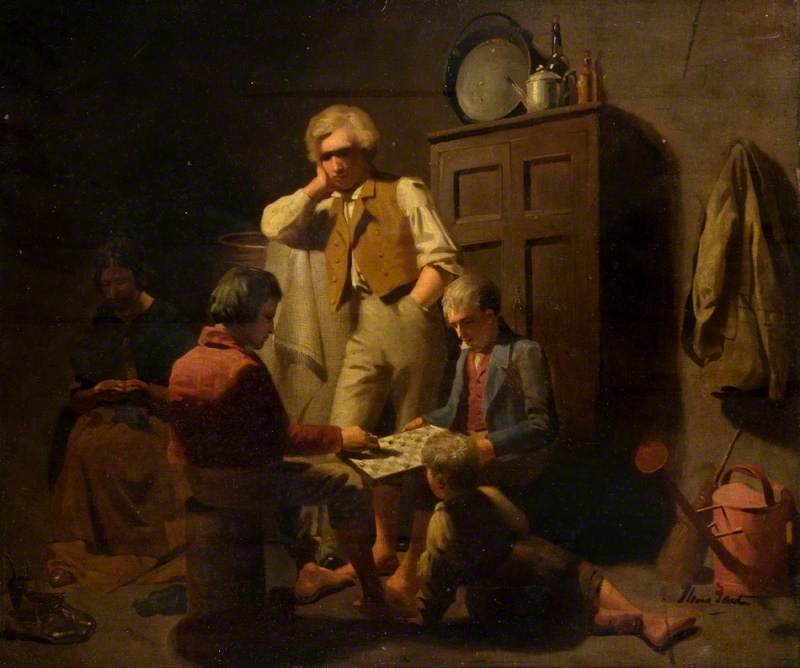
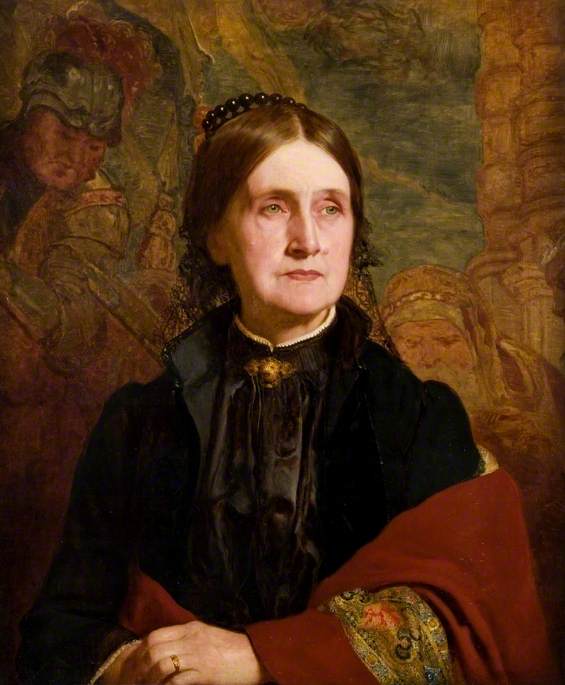
James was born into a family of prominent nineteenth-century artists and engravers who lived at Barley Mill in Gatehouse of Fleet, Galloway. He gifted two paintings to Glasgow 1) Interior With Figures by Thomas Faed (his father), and 2) The Artists Wife, Jane McDonald by John Faed (his uncle).
James Alastair was born on 19 November 1905 to James Faed junior, artist, and Eleanor Annie Herdman, (1) who came from a flour milling family from East Lothian and had moved to 38 Abbey Road, St John’s Wood, London prior to Jame’s birth. (2) James junior (1856 – 1920) was a landscape painter and much influenced by his father, sometimes referred to as James senior.
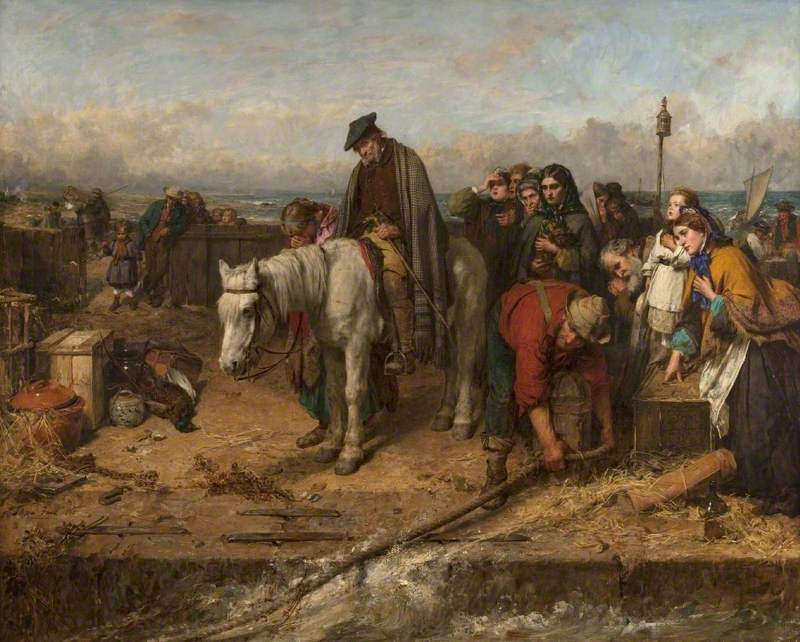
James senior’s brothers Thomas and John were also artists and Thomas is probably the best known, having moved to London, exhibited at the Royal Scottish Academy and become a full member of The Royal Academy in London in 1864. Thomas’s best known work is Last of The Clan which has become an iconic symbol of Scottish emigration, and is currently exhibited at Kelvingrove Art Gallery in Glasgow. (3)
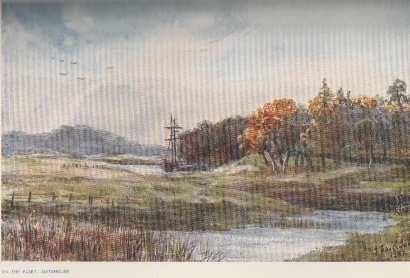
James Faed junior’s uncles excelled in painting pictures of humble Scottish life and people, but James preferred to paint landscapes, especially in Galloway, capturing the colour and depth of the countryside. (4) In 1908 James junior illustrated the book Galloway by J M Sloan, which describes the landscapes and history of Galloway. Each chapter is illustrated with a relevant watercolour such as On The Fleet, Gatehouse. (5)
Figure 4.On The Fleet, Gatehouse James Faed jun, from Galloway by J M Sloan 1908
He married Eleanor Annie Herdman in 1897 and soon afterwards they moved to St John’s Wood in London where there was a thriving artists population. Their first son, James Ronald Herdman was born in May 1899. He entered the royal Navy as a midshipman at the outbreak of WW1 and tragically was killed when his ship Goliath was torpedoed in the Dardanelles in May 1915. He was awarded the Star Victory Medal.(6) By 1913 James junior and Eleanor had moved with the young James Alastair to The Bungalow, New Galloway. The valuation roll of 1915 notes Eleanor Annie Faed of 38 Abbey Road, London as proprietor, with James Faed Junior as tenant. (7) James junior did little painting after 1915 due to paralysis of his hands, although he subsequently did some painting using his mouth. He died on 17 February 1920 and is buried in Kells Churchyard, New Galloway. Eleanor returned to Edinburgh shortly thereafter. (8)
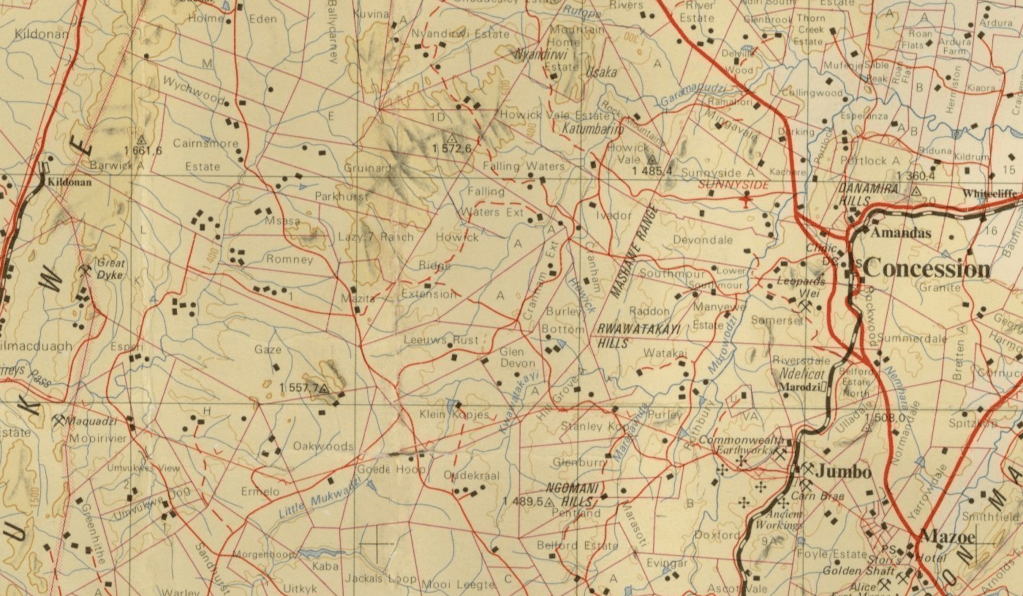
James Alastair emigrated to Southern Rhodesia (now Zimbabwe) when he was in his twenties. He became a farmer and lived at Cairnsmore Ranch, possibly named after the hill Cairnsmore of Fleet, a short distance from Gatehouse of Fleet in Galloway, the home of his forebears.(9) The farm is near the village of Umvukwe in Mazoe district about thirty five miles north of the capital Salisbury, now Harare.
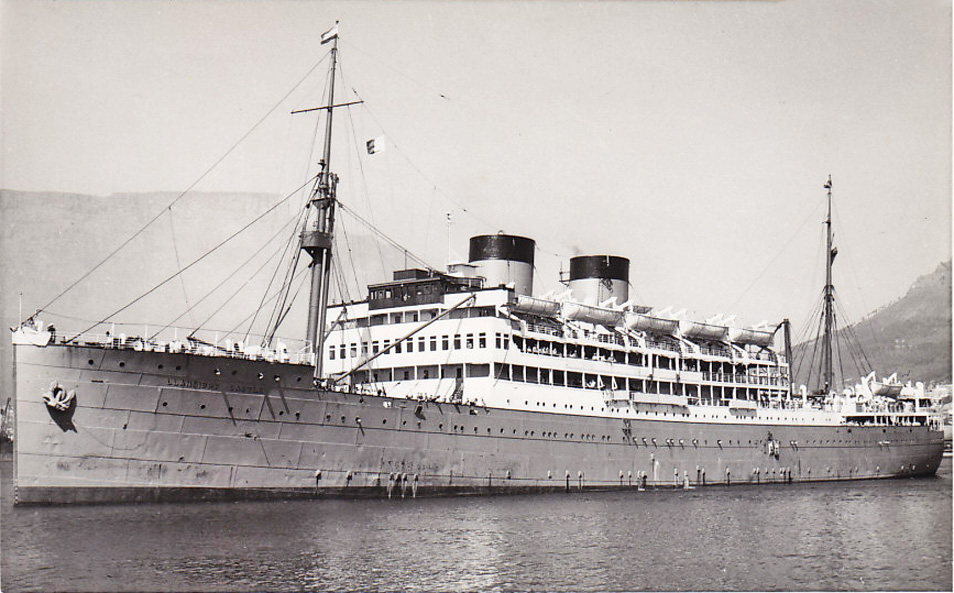
His mother left Edinburgh and travelled from the UK with James on 18 May 1933 on the ship Llangibby Castle (built by Harland and Wolff, Govan in 1929) to Mozambique,(10) and later that year on 12 October James Alastair married Frances Elizabeth Herdman in Salisbury, Rhodesia. (11) Frances was born in Edinburgh in 1905 (12) to John Herbert Herdman, a flour miller and Edith Marian Paton who lived in Edinburgh and who had been married at St Giles Cathedral on 20th June 1900. (13) James Alastair and Frances had two children, Fiona Joan Faed and Simon James Faed. (13)
James Alastair qualified as MRAC (Member of the Royal Agricultural College) (14) and arrived in Southern Rhodesia at a time when immigration was encouraged, especially from the UK, to establish and build on agricultural output. The Mazoe area was a wilderness up to the early twentieth century, the name being a corruption of the word manzou, meaning ‘place of the elephants’.
Gold mining was an important industry in the area, but as the fertile region developed, farming gained in importance. Orange growing developed in the Mazoe valley, helped by the building of The Mazoe Dam, completed in 1920 by The British South Africa Company which supplied irrigation water to maintain production on a large scale. (15)
Tobacco plantations were developed, with cattle ranches and, to a lesser extent, dairy farming becoming a feature of the area. The decline in mining in the early 1900’s led to The British South Africa Company encouraging settler farmers from abroad. Consequently, agricultural research, settlement schemes and farm training programmes were implemented. By attracting settler farmers with at least £500 capital, the fertile land was developed commercially and led to increased exports, compared to the more traditional subsistence farming of the indigenous population. (16)
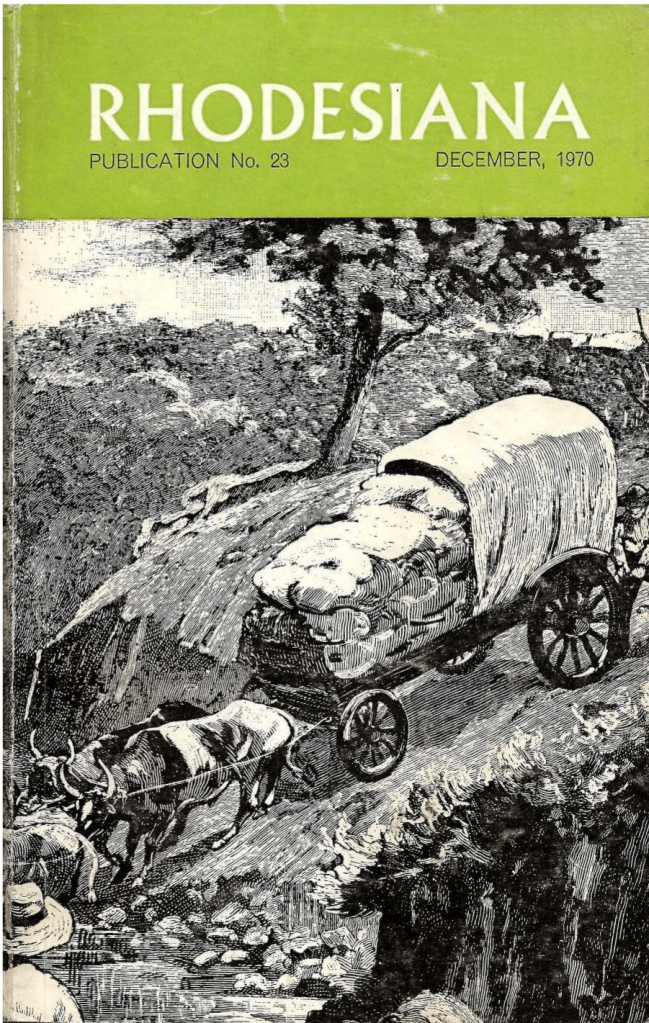
The Rhodesiana magazine was published from 1956 by The Rhodesiana Society and promoted historical studies and research about Rhodesia. Occasionally a list of subscribers was included and James Alistair is listed as a member over a number of years.
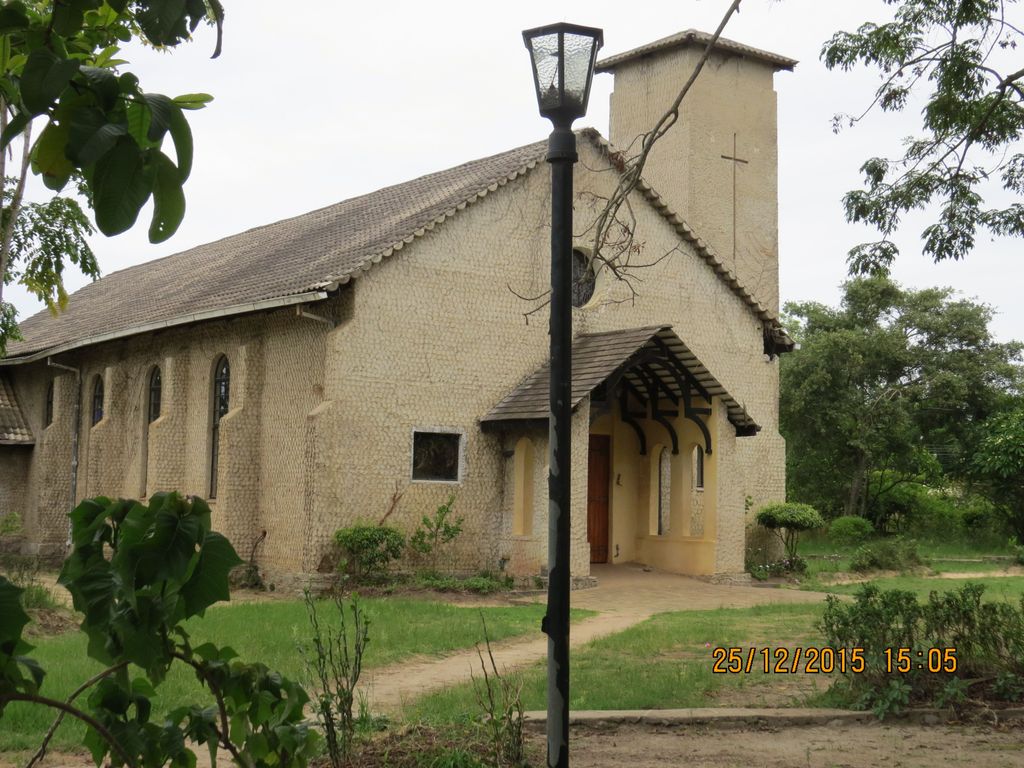
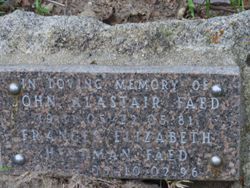
James Alistair Faed died in Zimbabwe in 1981 and was interred in The Anglican Cathedral cemetery, Mazoe District, Zimbabwe. Frances returned to Edinburgh and died in 1996.
In December 1945, Godfrey Pattison donated five paintings to Glasgow museums. The paintings were thought to be associated with family members from the late eighteenth to nineteenth centuries. Godfrey Pattison was a widower with no surviving children and no surviving brother. It is reasonable to suppose that, having no immediate family, he would ensure that family pictures were in safekeeping.
Godfrey Herbert Pattison was born in Chorleton upon Medlock, Lancashire on 16 April 1877 to John Pattison (1840-1917) and Mary Jane Ovington (1850-). (1 ) He was from a well-known Glasgow family descended from John Pattison of Kelvingrove House. He lived with his parents in Withington, in Lancashire and then in Cheshire. In !897 he sailed from the Liverpool docks bound for Calcutta. (2) The records of The Imperial Yeomanry show that he enlisted during the Boer War and served in South Africa from January 1900 to June 1901. (3)
Our subject is found travelling to and from England during his lifetime but passenger lists do not give his occupation or profession. Over the years he had different temporary addresses when he was on leave. In 1932 he was travelling to the UK from Dar-es-Salaam and his permanent address is given as Tanganyika (now Tanzania). He returned to Mozambique in 1932. (4) By 1939 he was home living in Andover, Hampshire. (5) His occupation at that time was given as farmer. When he gave the paintings in 1945 his address was given as the Commercial Hotel, High Street, Andover, Hants. (6)
In1939 he is described as widowed but there is no mention of his wife’s name or of a wedding. A son Donald Moncrieff Pattison (1920- 1944) was born in Tanganyika Territory. He served in the Second World War in the Royal Army Corps but died in action in June 1944 in Calvados in France and is buried in Ryles War Cemetery. (7)
Godfrey continued to travel to Africa after 1945 and was travelling to and from Mombasa in 1958. (8) He died in 1960 and is buried in Manchester. (9)
Family History
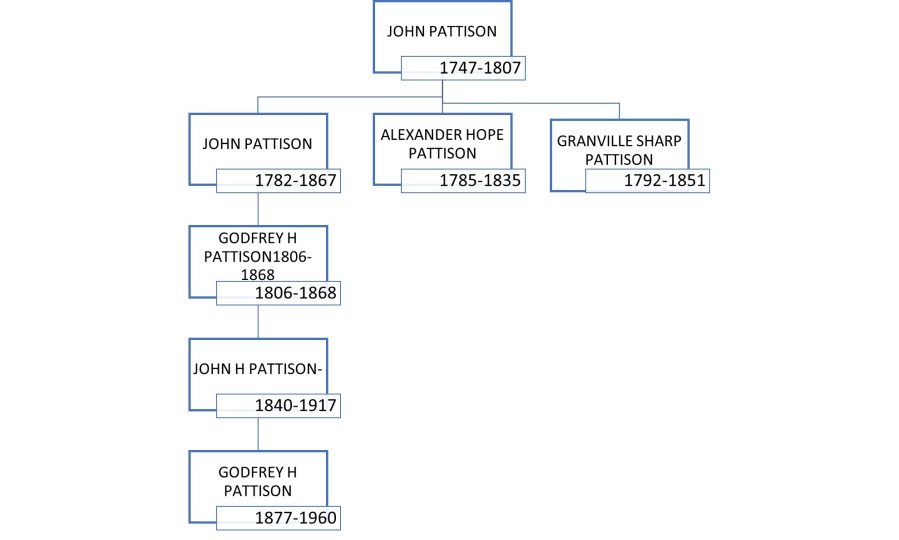
Figure 1. Pattison Family Tree
The family history, not only shows the direct line of descent of our subject from John Pattison of Kelvingrove House and the links to the present day Kelvingrove Museum, but also that this was a family who did not remain in Glasgow and were well travelled.
His father, John Pattisson (1840-1917) was the son of Godfrey Thomas Hope Pattison (1806- 1868) and Mary Cornelia Thomson (1819-1885). . He was born in New York at the British Naval Dockyard Hospital (10) (11) and his mother was an American citizen He is next found in the UK 1851and 1861 censuses (12) (13) in Glasgow. He married Mary Jane Ovington in 1873 in Glasgow. (14) Thereafter he lived in Lancashire and then in Altringham Cheshire. (15) (16) His occupation was given as Silk Merchant. He died on 7 March 1917 and is buried in Chorlton-cum-Hardy. (17)
His grandfather, Godfrey Thomas Hope Pattison (1806-1868) was the son of John Pattison (1782-1867) and Rebecca Monteith (1786-). (18) He became an American citizen on January 2 1828. (19) The reason for his being in America and his occupation have not been ascertained. However, he was a nephew of Alexander Hope Pattison and of Granville Sharp Pattison, who was Professor of Anatomy in the University of New York. (20) Godfrey married Mary Cornelia Thomson (1819 -1885) in 1836 in New York at a ceremony conducted by the mayor. (21). His son John was born in New York. Thereafter the family returned to Glasgow and are found in the 1851(22) and 1861(23) censuses at 27 Newton Place when he is described as a Commission merchant. He died in Glasgow in 1868 (24) and is buried in the Glasgow Necropolis.
Our subject’s great grandfather, John Pattison (1782-1867) was born in Glasgow son of John Pattison of Kelvingrove (1747-1807) and his wife Hope Margaret Moncrieff (1755-1803) of Culfargie in Perthshire. (25) He was active in local politics and a strong supporter of the Reform Act of 1832. (26) He married Rebecca Monteith in Glasgow in 1803. He lived in Bothwell in 1851(27) and in Mauchline (28) in 1861. He died in 1867 in Edinburgh. (29) He is buried in the Glasgow Necropolis. (30) It is his portrait by the American artist Chester Harding which was donated to Glasgow.
Our Subject’s great great grandfather John Pattison (1747-1807) of Kelvingrove was born in Paisley on 7 December 1750. (31) He was a Glasgow merchant and mill owner who owned one of the largest steam driven spinning mills in Glasgow. (32 ) He married Hope Margaret Moncrieff of Culfargie in the Low Church Paisley on 17 July 1781. (33)
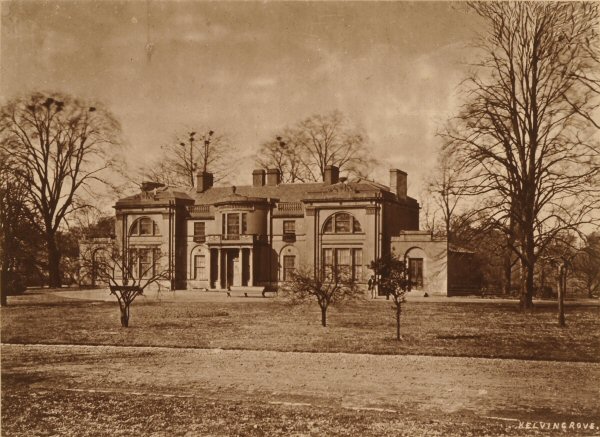
Figure 2. Kelvingrove House by Thomas Annan. Wikimedia Commons
In 1792 he bought Kelvingrove House, which had been built for Lord Provost Patrick Colquhoun in 1782. With the house was an estate of 24 acres .and to which he added and sold both in 1795. It was not until 1852 that it was acquired by Glasgow Corporation .and became Kelvingrove House in the West End Park. Kelvingrove House was much extended to become a museum but it was later demolished. (34) Kelvingrove Park is the site of the present day Kelvingrove Museum Glasgow. He died in Glasgow in December 1807. (35)
John Pattison and Hope Margaret Moncrieff Pattison had a large family who incorporated the names ‘Hope’ and ‘Moncrieff’ into the family forenames.
The Donated paintings
Painting Artist
Lt Colonel A .Hope Pattison
Thomas Duncan R.S.A.
Portrait of a Young Man, nephew of the above
Unknown
Lord Moncrieff
After Raeburn
John Pattison
Chester Harding
Unknown Gentleman
Unknown
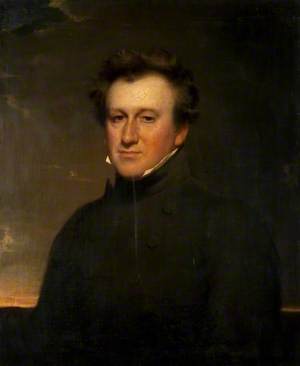
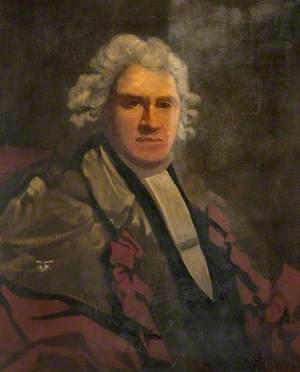
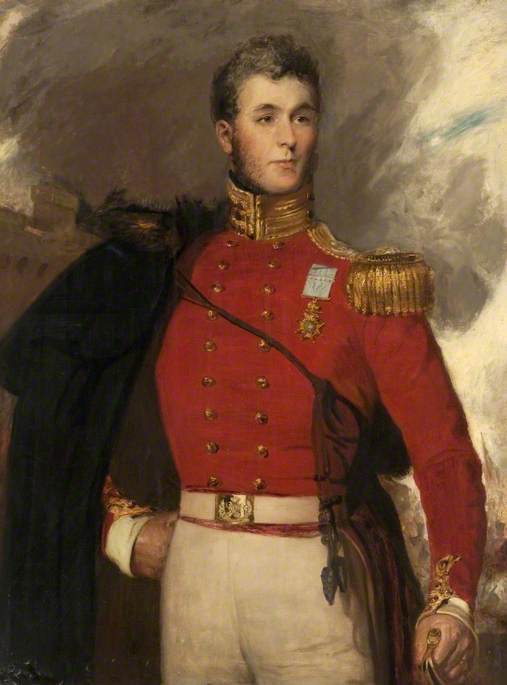
These portraits give some clues to the antecedents of Godfrey Pattison but there are some questions about the reliability of their connections.
Four of the paintings merit some attention. The other is obscure and there is no information about the identity of the subject or of the painter.
The painting of John Pattison by Chester Harding is not of John Pattison of Kelvingrove (1747-1807) but of his son John Pattison (1782-1867). Harding was an American artist who did not arrive in Britain until 1823. (36) John Pattison of Kelvingrove died in 1807. It is of interest that there is a painting of his wife Hope Margaret Pattison by Harding which is in a private collection.
The painting of Lord Moncrieff (1776-1851) is of Sir James Wellwood Moncrieff of Tullibole in Kinross. (37) No family link has been found at the time of the marriage with Hope Margaret’s family who were Moncrieff of Culfargie in Perthshire. Her father was a minister of the Church of Scotland. However it may be that the families have a common ancestor.
The painting of Lt. Colonel A Hope Pattison (1785-1835) by Thomas Duncan does have a strong family connection. He was a son of John Pattison of Kelvingrove and Hope Margaret Moncrieff but our subject is not a direct descendant. Alexander fought with distinction in the Napoleonic wars. There is a monument to him and to other members of the Pattison family (38)) in the Glasgow Necropolis and there is much information about them on their website and in the Glasgow Stories website of Glasgow University.
The painting of a young man, nephew of Alexander Hope Pattison, might be a portrait of Godfrey Thomas Hope Pattison but without knowledge of artist or date this is only a theory.
References
Ancestry .co.uk/ Church of England Births and Baptisms
Passenger lists 1878-1960
Ancestry.co.uk/Records of Imperial Yeomanry
Incoming passenger lists 1878-1960
1939 England and Wales Register
Archives of Glasgow Museums
Royal Army Corps Records
Outgoing Passenger Lists 1878-1960
Find a Grave Index 1300 to current day
Ancestry.co.uk
Wikipaedia Naval Dockyard Hospital, New York City USA
National Records of Scotland Census 1851 and 1861
National Records of Scotland Statutory Marriages 1873
Ancestry .co.uk
Ibid
ibid
England and Scotland Select Cemetery Registers 1800-1961
In November 1950 a Mr. John Duncan M.B.E., of Cairnhouse, Wigtown, donated to Glasgow Museums an oil painting of the Glasgow Tobacco Lord John Glassford and his family. How did it come about that a farmer, born in the small parish of Menmuir, Angus in 1897, had in his possession that particular painting which was begun around 1765 and completed sometime after Glassford married his third wife in December 1768?
As it turns out it was not by purchase but by direct descent through the Glassford family to him. These notes will tell the story of the painting’s journey to John Duncan and also comment on the people it portrays.
Firstly, it may be useful to relate some of the history of John Glassford and his marriages.
His first marriage was to Anne Coats whom he married in 1743. [1] Her father Archibald Coats, a Glasgow merchant, along with Bailie George Carmichael, was taken hostage in 1745 by Bonnie Prince Charlie to ensure the terms he enforced on Glasgow were implemented.[2] These demands included “six thowsand shirt cloath coats, twelve thowsand linnen shirts, six thowsand pairs of shoes and the like number of pairs of tartan hose and blue bonnets.”[3]
John and Anne had five children, all but one dying in infancy. Daughter Jean, born in 1746, was to become a ‘staging post’ for the painting’s journey. Anne died a few weeks after giving birth to her fifth child in 1751.[4]
Less than a year later in 1752 Glassford married Ann Nisbet the daughter of Sir John Nisbet of Dean.[5] They had six children, born between 1754 and 1764, all of whom, with the exception of the fifth child John, survived into adulthood.[6] Ann Nisbet died in April 1766 from child bed fever.[7]
In 1768 there were two Glassford family marriages. The first was that of daughter Jean who married James Gordon on the 18th August.[8] This marriage was key to the painting getting to John Duncan.
The second was when Glassford married his third wife Lady Margaret McKenzie, daughter of the Earl of Cromarty, on the 7th December.[9] There were three children of this marriage, born between 1770 and 1773. Unfortunately, just over five weeks after the third child Euphemia was born[10], Lady Margaret died on the 29th March.[11]
It’s worth noting at this time that between 1745 and 1767 Glassford had bought three significant properties. The first was Whitehill House purchased c. 1745[12] and sold in 1759,[13] the second was Shawfield Mansion bought the following year for 1700 guineas from William McDowall,[14] and finally the Dougalston Estate, purchased from the Grahame family in 1767.[15]
Figure 3. Whitehill House from The old country houses of the old Glasgow gentry. John Guthrie Smith and John Oswald Mitchell, 1878. Glasgow: James Maclehose & Sons. http://gdl.cdlr.strath.ac.uk
In common with the two other major tobacco traders Alexander Speirs and William Cunninghame, Glassford was fabulously wealthy during this period, however, that was not to last, particularly as far as Glassford was concerned.
By the early 1770s the general tobacco trade was not in the best financial health. The business model was such that debt (money owed by the planters to the traders) had grown significantly, resulting in potential working capital and cash flow problems in the longer term. When the War of Independence broke out in 1775 it signalled the end of the trade as it had been. As the war progressed the French market collapsed due to French sympathies lying with the revolutionaries, import volumes dropped and debts were not being paid as settlers probably saw a way out of their debt issues.
What of Glassford’s fortune? His difficulties began before the commencement of the war. He was by nature a gambler both in business and in gaming. In particular a number of disastrous business speculations between 1774 and 1778 fundamentally laid the foundations for the loss of his fortune. He believed the war was essentially an English conflict which should have not involved Scotland. He sided with the revolutionaries, unlike his peers, even to the point of refusing to sell ships to the government to aid the war effort, leaving them berthed in Port Glasgow Harbour. This at a time when he was already in deep financial trouble and could have done with the funds that these sales would have brought.[16]
As 1783 approached Glassford’s financial affairs continued to be problematic and he was in poor health. On the 6th August he created a tailzie (entail) of his Dougalston estate in favour of his son Henry and his heirs thus protecting it from his creditors. On the 14th August he established a trust covering the rest of his property, real and personal, the purpose of which was the winding up of his financial affairs and to further protect the entailed Dougalston estate.[17]
Glassford died on the 27th August 1783, cause of death was given as ’growth in stomach.’[18] He was buried in the Ramshorn Churchyard, where also lie several members of his family.[19] It took a further ten years to sort out his finances, his personal debt amounting to £93,140.[20] Today that sum would equate to somewhere between £11million and £1.1 billion, dependant on the measure used.[21]
On his father’s death Henry, who was the only surviving son of Glassford and Ann Nisbet, succeeded to Dougalston. He was an advocate, was Rector of Glasgow University from 1805 until 1807 and MP for Dunbartonshire from 1806 to 1810.[22] He never married and when he died in 1819[23] his half-brother James, son of Lady Margaret and John Glassford, succeeded him.
James’ succession to Dougalston was not without some difficulty. Henry had amassed significant debt during his life and in 1823 the terms of the tailzie was challenged in the Court of Session, the pursuers claiming the Dougalston estate was liable for these debts. In the event the pursuers lost, two of the five judges finding for the defender, one for the pursuers, and the two others excusing themselves as “they had an interest”![24]
James was also an advocate and legal writer.[25] Despite marrying twice, he died in 1845 [26] without any offspring. He was the last of John Glassford’s sons which meant that in accordance with the tailzie his daughter Jean Gordon would succeed. However, she had died in 1785, which meant that her eldest surviving son, James Gordon, would inherit. A further condition of the tailzie was that the surname Glassford should be adopted by any heir, should that be necessary. James Gordon therefore legally became James Gordon Glassford. By this means the painting began its journey to John Duncan.
James Gordon Glassford died two years later to be succeeded by his brother Henry Gordon, who, as required, adopted the surname Glassford. He married Clementina Napier in 1831[27] and had five children, the eldest being James Glassford Gordon, born in 1832[28]. He inherited Dougalston on his father’s death in 1860[29] and became known as James Glassford Gordon Glassford. As far as I can tell he was the last Glassford owner of Dougalston.
James married Margaret Thomson Bain, the daughter of a banker, in 1861[30]. There was no information found about them in the UK census of 1871 however in 1881 they were living at Over Rankeillour House in Monimail, Fife with ten children. This census also recorded that three of the children (two girls and a boy) had been born in Otago, New Zealand between 1868 and 1872, James being described as a Runholder (lessee of a sheep run) there.[31] This explained their absence from Scotland in 1871.
In 1891 a similar picture emerged with another two daughters now living with the family, one had been born in New Zealand in 1879, the other born in Australia in 1865. Margaret was a widow by then,[32] James having died in 1881.[33] One other crucial piece of information was also evident. Staying with them at 35 Coats Gardens, Edinburgh was a 24 year old visitor by the name of James Duncan.[34]
My first thoughts were along the lines of, which daughter did he marry? Well he did marry one of the daughters, as it turned out it was not one who had been recorded in either of the 1881 or 1891 censuses.
He married Margaret Edith Gordon Glassford in St Giles, Edinburgh on the 12th June 1894. He was a farmer aged 26, the son of a doctor, she was the daughter of James and Margaret, aged 29, living at 35 Coats Gardens.[35]
Margaret Edith was born in 1864 in New South Wales, Australia.[36] When she returned to the UK is not clear however in 1881 she was living with her aunt Christian’s family in Kent.[37] Christian was the sister of her mother Margaret Bain.
By 1901 James and Margaret were living in Balfour, Menmuir where James farmed. They had two children, daughter Margaret aged five and son John aged three[38] who was in due course to inherit the Glassford family painting. He was born on the 29th April 1897 at Menmuir[39] and married Nancy Marion Robertson in 1943.[40] They had one child James born in 1944 whilst they were living at Uckfield in Sussex.[41]
John was awarded an MBE, I believe in 1943.[42] I’m not entirely sure that this date is correct, but it is the best fit for him for the years 1940 to 1955. If this is indeed him, and I believe it is, then he was a pilot officer in the Royal Air Force Volunteer Reserve in 1940, service number 03227. In 1942 he was a Flight Lieutenant and had been with the Administrative and Special Duties Branch before being released from active service.[43]
He subsequently farmed at Cairnhouse in Wigtown and according to the present owner Mr. Colin Craig he remained there until c.1955 when Mr. Craig’s parents took over the farm. Mr Craig also related that John’s son James had died in tragic circumstances and that his wife Nancy and her daughter in law had visited the farm in the 1970s.[44]
In generational terms John was John Glassford’s great, great, great grandson. It’s likely therefore he inherited the painting on his mother’s death in September 1950[45], her father James having previously inherited it along with Dougalston. On the 23 November he gifted it to Glasgow, which was the end of its journey within the Glassford family.
He died in the Royal Northern Infirmary in Inverness on the 13th August 1966, his normal home address being Allt-A-Bhruais, Spean Bridge.[46]
The Family Portrait
The Glassford family portrait, as might be expected, demonstrates how wealthy John had become with the fine clothing on display and the room’s furnishings, which was within Shawfield Mansion. Much has recently been written about it particularly around the time (2007) when conservation work on the painting was being undertaken at Kelvingrove Art Gallery and Museum.
The painting contains the surviving children from his first two marriages and his third wife Lady Margaret McKenzie. The conservation work led by conservator Polly Smith established that his second wife Ann Nisbet had originally been included but had been painted out following her death in 1766, suggesting that it was in progress prior to that date or possibly had been completed. Lady Margaret would have been added subsequent to their marriage in 1768, probably early in 1769.
Another figure was also established behind John Glassford’s chair, that of a black manservant. It had been believed previously that he had been painted out to avoid any family connection to slavery, however it seems that the figure simply faded over time.[47]
I believe the children in the painting to be Jean at the rear to the right of her father, the middle row left to right being Rebecca, Christian, Anne, Catherine and on Lady Margaret’s lap Henry, and standing at the front, John.
Who was the black servant and by what means did he come to Glassford’s household? Perhaps the answer lies in the following extracts from Frederick County, Maryland Land Records[48] and the Maryland Genealogical Society Records.[49]
Robert Peter or Peters was a Scottish tobacco factor working for John Glassford and Company in Maryland. He began in Bladensburgh circa 1746, moving to Georgetown in 1755. (In 1790 he became the first mayor of Georgetown). He was also John Glassford & Company’s attorney in Maryland. On the 27th September 1756, he bought a negro boy named Jim for 4,000 lbs of tobacco and £2 5s. For this purchase he is recorded as Glassford’s attorney. I think it probable therefore that this purchase was made in the name of the company. Why else record that it was made by the attorney of John Glassford?
Robert Peter bought other slaves but those records I have seen clearly state that the purchases were on his own or his family’s behalf, and they never involved a single slave purchase.
Was ‘Jim’ purchased for Glassford personally? Is he the manservant in the painting? In truth who knows but intriguing none the less.
Bibliography.
Devine, Tom. (1975). The Tobacco Lords. John Donald, Edinburgh.
Payne, Peter (ed.) Studies in Scottish Business History. 1967, Frank Case & Co. (Reprint from the William and Mary Quarterly entitled ‘The Rise of Glasgow in the Chesapeake Tobacco Trade 1707-1775)
Glasgow Past and Present. 3 Volumes. David Robertson and Co. 1884.
[9] Marriages. (OPR) Scotland. St Cuthbert’s, Edinburgh. 24 November 1768. GLASSFORD, John and MACKENZIE, Margaret. 685/02 0160 0212. http://www.scotlandspeople.gov.uk
[14] Goodfellow, G. L. M. “Colin Campbell’s Shawfield Mansion in Glasgow.” Journal of the Society of Architectural Historians, vol. 23, no. 3, 1964, pp. 123–128. JSTOR, JSTOR, www.jstor.org/stable/988232.
[15] Devine, T. M. (1990) The Tobacco Lords. Edinburgh: Edinburgh University Press. p. 181.
[16] Castle, Colin M. (1989). John Glassford of Dougalston. Milngavie and Bearsden Historical Society. p. 22,23 and Oakley, Charles A. (1975). The Second City. Glasgow: Blackie. p. 7,8.
[17] Shaw, Patrick and Dunlop, Alexander. (1834) Cases Decided in the Court of Session 1822-1824. Vol II. Edinburgh: Thomas Clark.pp. 431 to 433.https://books.google.co.uk
[24] Shaw, Patrick and Dunlop, Alexander. (1834) Cases Decided in the Court of Session 1822-1824. Vol II. Edinburgh: Thomas Clark.pp. 431 to 433.https://books.google.co.uk
[25] Wentworth-Shields, W.F. and Harris, Jonathan. (2004) Glassford, James (1771-1845). In: Oxford Dictionary of National Biography. Oxford: Oxford University Press. https://doi.org/10.1093/ref:odnb/10806
[27] Marriages. (OPR) Scotland. Linlithgow, West Lothian. 6 August 1831. GORDON, Henry and NAPIER, Clementina. 668/00 0120 0311. http://www.scotlandspeople.gov.uk
[28] Births. (OPR) Scotland. Linlithgow, West Lothian. 8 December 1832. GORDON, James Glassford. 668/00 0120 0089. http://www.scotlandspeople.gov.uk
[30] Marriages. Scotland. St. Georges, Edinburgh. 10 December 1861. GLASSFORD, James Glassford Gordon Glassford and BAIN, Margaret Thomson. 685/01 0273. http://www.scotlandspeople.gov.uk
[35] Marriages. (SR) Scotland. St Giles, Edinburgh. 12 June 1894. DUNCAN, James and GLASSFORD, Margaret Edith Gordon. 685/ 4 138. http://www.scotlandspeople.gov.uk
[40] Marriages. (SR) Marriage Index 1916-2005. England. Uckfield, Sussex. July 1943. DUNCAN, John and ROBERTSON, Nancy Marion. Vol. 2b, page 244. https://www.ancestry.co.uk/
[48] Maryland State Archives. Maryland Indexes, (Chancery Papers, Index), 1788-1790, MSA S 1432. 1790/12/013990: Robert Peter vs. William Deakins, Jr., Bernard O’Neal, Edward Burgess, Richard Thompson, John Peters, and Thomas Beall. MO. Contract to serve as securities. Accession No: 17,898-3990. MSA S512-4108 1/36


 Glasgow Museums Art Donors Group