Lady Simpson On 7 November 1854, Alexander MacKay married Isabella Thomson in Wick, Caithness. 1 The family moved to Thurso where a daughter, Rose-Ann MacKay was born on 31 August 1856 in Durness Street. 2 From the census taken in 1861, the family had moved to 9 Dempster Street in Pulteneytown, Wick. Alexander, aged fifty-five, was a mason born in Rogart, Sutherland while Isabella, thirty-six, had been born in Eday, Orkney. The couple had two daughters, Isabella aged eleven (perhaps from a previous marriage?) born in Avie, Orkney and Rose-Ann aged four. 3 Ten years later Roseanna (sic) and her parents were still at 9 Dempster Street, but Isabella was not. 4 The family later moved to Kintore, Aberdeenshire where Alexander is listed as tenant/occupier of Kintore House from 1877-1880. 5
Rose-Ann MacKay, (now styled Ann Fitzgerald MacKay) married Sir Walter Grindlay Simpson of 5 Randolf Cliff, Edinburgh on 13 January 1881 in the Manse at Banchory Devenick, Kincardinshire. Walter was thirty-seven and an advocate. Ann was twenty-four living at Kintore, Aberdeenshire. On the marriage certificate, Ann’s parents are Alexander MacKay, architect, deceased and Isabella Catherine Thomson. 6
(According to the 1911 census for England, Ann Simpson (nee MacKay) was born in Thurso about 1857. The only birth listed on Scotland’s People for that date is that of Rose-Ann MacKay born to Alexander MacKay and Isabella Thomson. There is no record of an Ann Fitzgerald MacKay.)
The best man at the wedding was the groom’s brother, William Simpson. The sole bridesmaid was Evelyn Farquharson, cousin of the bride. Ann’s uncle, Peter Farquharson was a witness. (Evelyn Farquharson was born in Kirkwall, Orkney on 24 August 1843. Her parents were Peter Farquharson and Mary Thomson7 who married in Shapinsay on 18 January 1842 8) After the ceremony the couple left for London and thence to a honeymoon in the south of France. 9
Walter Grindlay Simpson was born on 1 September 1843 in Edinburgh. He was the second son of Sir James Young Simpson (7 June 1811 – 6 May 1870), the eminent physician and pioneer in the use of chloroform as an anaesthetic) and Janet (Jessie) Grindlay. With the death of his father in 1870, Walter became the second baronet. He was a good friend of Robert Louis Stevenson whom he met at the University of Edinburgh and in 1876, the pair undertook a voyage by canoe from Antwerp to Pontoise. This was later documented by Stevenson. 10
Sir Walter and Lady Simpson had four children, James Walter MacKay Simpson (1882 – 1924), Odo Louis MacKay Simpson (1885 – 1917, k.i.a.), Ethel Lucy Florence MacKay Simpson (later Lady Willert) and Beatrix Frances Frederica MacKay Simpson. In 1891 the family was living in Hanover Square, Belgravia, London. 11 This suggests the painting was completed in London the following year when Lady Simpson was thirty-six.
Walter Grindlay Simpson died on 29 May 1898 at his home, Ballabraes, House Ayton, Berwickshire. He was 54. 12 Obituaries mentioned that he was educated at Edinburgh Academy and Caius College, Cambridge where he studied chemistry and anatomy graduating with a BA Hons. in Natural Science. He also rowed stroke for the university. He was called to the Scottish Bar in 1873. 13 He was an enthusiastic golfer and was Captain of the Honourable Company of Edinburgh Golfers. He published an authoritative guide to the game The Art of Golf in 1887. It seems that he purchased Millbank House about 1890 14 and renamed it Balabraes 15
Now widowed, Lady Simpson continued to live at Balabraes House with her two daughters. She and Florence were ‘living on their own means’. 16 Florence married Arthur Willert in 1908 and by 1911 Ann was in residence in Kensington, London with Beatriix and Odo. The census of that year states that she was born in Thurso. 17 During WW1, her son Odo enlisted in the Canadian Expeditionary Force. Ann signed his Attestation Papers 18 Tragically, he was killed in action in 1917. She seems to have retained ownership of Balabraes until about 1920 when it was sold. 19 In 1921, Ann Simpson was living at 14a Westbourne Terrace, Paddington, London. 20 This was the home of her daughter Beatrix and husband Bertram Couly. (They divorced in 1933). She probably attended the wedding of her grandson Paul Willert in 1934. Lady Ann Fitzgerald MacKay Simpson died on 23 October 1941 at 62 St. John Street, Oxford. She was eighty-six. 21
Lady Willert Florence Ethel Lucy Mackay Simpson (later Lady Willert) was born in Kensington, London in the second quarter of 1882. 22 She was the daughter of Sir Walter Grindlay Simpson, Bt. and Anne Fitzgerald Mackay. Florence was also the granddaughter of Sir James Young Simpson who pioneered the use of chloroform as an anaesthetic.
She must have been a precocious child since when her grandmother, Isabella MacKay, died on 26 January 1896 at Sunnyside, Bridge of Allan, Stirlingshire, the thirteen-year-old Florence was entrusted with reporting the death the following day. 23 She was seventeen when her father died in 1898 at the family home Ballabraes House, Ayton, Berwickshire.24 She was one of the executors of her father’s will. 25 In 1901, Florence was with her widowed mother, both living on their own means, and sister Beatrix F. Simpson aged five at Ballabraes House. 26 (There are two mistakes in the census; Florence was not twenty-five and her mother was not born in England). On 25 January 1908, Florence married Arthur Willert. 27 The marriage took place in Italy.
In Genoa, at the Archbishop’s Palace, and before H.B.M.’s Consul General, Arthur, son of P. F. Willert Esq., Headington Hill, Oxford, to Florence, elder daughter of the late Sir Walter Grindlay Simpson, Bart. of Balabraes, Ayton, Berwickshire. 28
The following month, on 10 February both Florence and Arthur left Southampton to sail to New York and then on to Washington D.C. 29
After returning from America, Florence gave birth to a son, Paul Odo Willert, on 25 May 1909, in Marylebone, London. 30 On 15 January 1910, Arthur Willert sailed to New York from Liverpool on his own. His last permanent address was that of his parents at Headington Hill, Oxford. He was a journalist. 31
Arthur and Florence again sailed to New York and then to Washington on 7 February 1910 with Florence’s mother, Lady Simpson, listed as their nearest relative in the old country. They remained in Washington at The Dresden Apartments and were there at the time of the census on 28 April 1910. Florence confirmed that her parents were born in Scotland. Arthur’s occupation was ‘journalist’. They were also travelling with a nurse. So, although Paul does not appear on the census, it would appear he was with them. 32
Arthur Willert was The Times‘s chief United States correspondent from 1910 to 1920, with an interruption from 1917 to 1918, when he was Secretary of the British War Mission in Washington and the representative of the Ministry of Information. He formed an extensive network of influential American contacts, which enabled him to supply the British government with valuable information concerning American politics during the First World War and to convey British views to American officials. 33
It seems likely therefore that Florence and Arthur spent the years 1914-1918 in America returning to Britain at the end of the war. On 19 February 1919, Arthur sailed from Liverpool via New York to Washington. Later that year he was in Canada but there is no indication that Florence was with him. 34
Arthur Willert was appointed Knight Commander of the Order of the British Empirein 1919 ‘for valuable services rendered in connection with the war’ and was ‘late secretary of the British War Mission in Washington’. 35
In 1924 Florence was joint author of Told in the Corner Tides with B. Montgomery and E. Paterson. 36 Thereafter she and Arthur appear to have been part of the London social scene. ‘Sir Arthur and Lady Willert (who) lived in Washington for some years’ attended a reception given by the American Women’s Club for the new American Consul-General’. 37 It was also noted that Sir Arthur and Lady Willert and Mr Paul Willert have returned to Cambridge Square from Italy. 38 On 12 November 1925 Lady Willert assisted in the opening of a Grand Bazaar at St. Thomas the Apostle church. 39 In 1927 she sailed to New York with her son Paul who was then a student aged 18. They travelled on ‘Diplomatic Passports’. 40
On 11 June 1934, Paul Willert married the Honourable Brenda Pearson daughter of Viscount Cowdray at St. Mark’s Church, North Audley Street, London. 41
On 20 December 1935 Arthur and Florence sailed from Southampton to New York aboard S.S. New York. He was described as a ‘writer’, she was a ‘housewife’. 42 They remained in Washington over Christmas and the New Year and later visited the White House.
As Eleanor Roosvelt recorded on 4 January 1936,
Sir Arthur and Lady Willert, who spent many years in Washington when he was correspondent for the London Times, were also staying with us. He has since served many years in the Foreign Office in London. There were many to greet them warmly on their reappearance even here where people are quickly forgotten because they change so often. 43
and on 16 March 1936,
This morning, I said goodbye to Lady Willert who is sailing for England, and now I am on the train on my way back to Washington. 44
Arthur and Florence again spent the following Christmas and New Year in Washington having sailed from Southampton on 23 December 1936, aboard S.S. New York. Both were described as ‘writers’. Florence was 57yrs 10mo, Arthur 54yrs 4mo. 45 The following year on 24 February they had dinner at The White House and were also houseguests of President Roosevelt. 46
Eleanor Roosevelt again recorded on 1 March 1937 that
Lady Willert, Miss Fannie Hurst, Mrs. Leach and I had a grand evening of talk.
One of the items discussed appears to have been the White House meals which the President had complained were too ‘routine’. Mrs. Roosevelt revealed that she had given the President a ‘New Deal’ and that the new menus would include several items suggested by Lady Willert. 47
On 4 November 1942, Mrs. Roosevelt recorded,
I was in London. During the day I saw my old friends, Sir Arthur and Lady Willert and their granddaughter (born in 1936) who is my godchild.
From 1939 to 1945, Sir Arthur Willert oversaw the regional work at the Ministry of Information. At a leaving ceremony in 1945 he was presented with an engraved silver tankard, and Lady Willert received a bouquet of flowers. 48
In 1948, Lady Willert and her sister Mrs. Beatrice Long gifted some documents related to the early use of chloroform as an anaesthetic to the University of Edinburgh. These included a letter from Sir William Lawrence to Sir James Young Simpson reporting the first use of chloroform in St. Bartholomew’s Hospital in 1847. 49
Two years after she donated the painting of her mother, Dame Ethel Lucy Florence Mackay Willert died on 3 April 1955. Her address at the time was 12 Sloane Terrace Mansions, Chelsea, London. Arthur Willert died aged ninety in 1973. His papers were bequeathed to Yale University. Among them are his own letters to and from his wife and also correspondence of Florence’s e.g. to and from Winston Churchill in 1917 and to/from Eleanor Roosevelt at various times between 1932 and 1955.
The painting was bought by Glasgow collector William McInnes from Alexander Reid and Lefevre in 1942 in what turned out to be to his final purchase. The painting then passed to his son Thomas and then to Thomas’s widow Jessie.
Jessie McEwan was born on 27 September 1874 at 13 Cedar Street in the Hillhead district of Glasgow. She was the daughter of Thomas McEwan a journeyman baker and his wife Jessie Ewing who had married on 15 November 1867 in Milton, Glasgow. Jessie’s mother registered the birth. 1 By the 1881 census, the family had moved to 31 Crossburn Street, Milton. 2 Ten years later, Jessie was employed as a stationer’s assistant still living at 31 Crossburn Street with her parents and seven siblings. 3
On 5 July 1899 at 30 Berkeley Terrace, Glasgow, Jessie married Thomas Macdonald McInnes a draughtsman and a younger brother of William McInnes (qv) who was a witness at the ceremony. The other witness was Jessie’s sister Nellie. 4 The couple took up residence at 40 Nithsdale Drive, Strathbungo, Glasgow. Jessie was described as a ‘sanitary engineer draughtsman’s wife’. 5 By the time of the next census, Thomas and Jessie had moved to 74 Norham Street, Shawlands, Glasgow. 6 Thomas McInnes died at 17 Darnley Gardens, Glasgow in 1951 aged 79. He was a retired sanitary engineer. Jessie reported his death. 7
Jessie Ewing McInnes died on 21 January 1957 at 17 Darnley Gardens, Glasgow. She was 83. Her death was reported by her niece, Jessie Chase. 8
The painting was presented in memory of John Young by his family. 1 It was purchased by Mary’s grandfather, James ‘Paraffin’ Young, in 1877 and passed to her father John Young. 2
Mary Young was one of twelve children, and the second daughter, born to John Young ‘a landed proprietor’ and his wife Christina Maclellan who married at 17 Royal Crescent, Glasgow on 17 July 1877. 3, 4 The couple were given the estate of Durris in Kincardineshire by John’s father. John and his brother James managed the chemical works at Addiewell and Bathgate established by their father. 5 Mary was born on 13 July 1881 in Durris House. Which Mary’s grandfather James Young had bought together with the estate in 1871 from Alexander Mactier. The house was apparently later known locally as ‘Paraffin Ha’. 6 In the census of 1881, Durris House was in the possession of John Young who gave his occupation as ‘chemist’. 7 By 1885 the estate seems to have been shared between John Young and his younger brother Thomas Graham Young. 8 It was sold in 1890 9 In 1891 Mary was a scholar aged nine living with her family at 22 Belhaven Terrace, Govan, Glasgow. 10 By 1901 Mary was still a scholar, but the family had moved to 2 Montague Terrace, Partick, Glasgow. As well as Mary and eleven siblings, there were six servants. 11 On 6 June 1912 at Westbourne United Free Church, Glasgow, Mary married James Alexander Mackenzie a writer of 3 Queen’s Gardens, Glasgow. 12, 13 The couple moved to 11 Montgomerie Quadrant, Hillhead, Glasgow and by 1921 had three children, James Y., born 1914, Mona C., 1916 and Helen H., 1920. They also employed a table maid, cook and a nurse. 14 James Mackenzie died in 1960 aged 82. 15 Mary Mackenzie died on 10 October 1968 in a nursing home at 50 Cleveden Drive, Glasgow. She was 87 years old. 16 Her funeral was held at Glasgow Crematorium, Maryhill on 12 October. 17
References
Catalogue of Donations to Glasgow Museums, Glasgow Museums Resource Centre
VADS
Scotland’s People, Birth Certificate
Glasgow Herald, 18 July 1877
Leitch, Mary Muir Paraffin Young and Friends, A Biography of James Young, 1811-1883, the World’s First Professional Oilman, Alan Fyfe, 2012
This painting was donated by ‘Miss Rule’ from Perthshire on 19 December 1951.1 According to Scotland’s People there were four ‘Miss Rules’ who died in Perthshire after 1951. Two of these were in the wrong timeframe and only one of the others was a ‘Miss’. This left the likely donor as being Miss Elsie Spiers Rule. 2
Elsie Spiers Rule was born at 7 Montgomerie Crescent, Kelvinside, Partick on 25 April 1879. Her birth was reported by Catherine Black, a nurse. Elsie’s parents were Robert Rule (a soft goods manufacturer) and Louisa Shand who had married on 9 June 1868 in Partick. 3 Elsie was their youngest child in a family of four girls (Louisa E. born 1871, Helen Margaret, born 1872, Mary Shand, born 1876 and Elsie) and a boy, Robert born 31 May 1873. 4
The family was at 7 Montgomerie Crescent in 1881 with Elsie S. Rule aged 1. Elsie’s father Robert who was born in Rothesay in 1837, was a ‘manufacturer of cotton and woollen dress goods employing twenty men and ten women’. 5 He was the second son of Robert Rule, a Paisley yarn merchant. Elsie’s mother, Louisa, was a sister of Baron Shand of Woodhouse, Dumfriesshire who sat as a Lord of Appeal in the House of Lords. She died on 28 September 1888 aged 53. 6, 7
All three of Elsie’s sisters married. On 19 January 1898, Louisa married J (I?) Graham, an East India Merchant at 7 Montgomerie Crescent. Two years later, on 18 April 1900, Helen, married J. D. Nimmo, also an East India Merchant at the same adress. Mary married Robert Spiers Fullarton, a General Practitioner at The Grant Arms, Grantown on Spey on 11 July 1908. Elsie was a witness at this wedding. 8
In 1891, Elsie and her sister Mary both scholars, were in Dollar visiting a Miss Jane Macalister in Academy Street, Eglinton Place. 9 Also present were Margaret Cameron, pupil governess and Elizabeth Birch, lady housekeeper. This latter person remained with the family until her death in 1939. 10
Eight years later, Elsie passed the Arts and Sciences Preliminary Examination at Glasgow University. 11 Her brother Robert had earlier graduated with an MA from the same University.
Elsie does not appear on the 1901 Census, however, her father Robert Rule aged 63, widowed, and retired was residing at Pokesdown, Hampshire. 12 The family home remained at 7 Montgomerie Crescent, Govan. 13 On 5 October 1905 a Miss E. S. Rule left England for Calcutta aboard the Oceana although it is not clear that this is the same Miss Rule. 14 In 1911, Elsie was still at 7 Montgomerie Crescent with her father and four servants, living next door to Mary Kirkpatrick (qv) who was also a donor of paintings to Glasgow. 15 On 6 December 1913, Elsie sailed from Glasgow to New York aboard the California. She had no occupation listed. 16
By 1915, Robert Rule had become the proprietor/occupier of Benachie House and Grounds in Crieff, as well as retaining his house at 7 Montgomerie Crescent, Govan. 17 Benachie was to become Elsie’s future home. The family seems to have taken up a prominent place in Crieff society. In 1921 Elsie attended the Crieff Highland Gathering among the ‘fashionable attendance’ in the grandstand. She was accompanied by Mrs Robert Rule and Miss Birch. 18 In the census of that year Elsie is listed at Benachie with her father and his grandson, also Robert, along with four servants. 19 Later, Elsie’s father acquired more property in Crieff with a house and offices in Ferntower Road. 20 Robert Rule died at Benachie on 19 October 1929 aged ninety-two. His death was reported by his son Robert. 21, 22,23
The following year, Elsie donated a view indicator to be placed on the Knock of Crieff, a small, wooded hill to the north of the town, in memory of her father. 24 The inscription reads:
IN MEMORY OF ROBERT RULE
BENACHIE CRIEFF
“I will lift up mine eyes unto the hills from whence cometh my help”
Fig. 2 View Indicator on the Knock of Crieff 25
Thereafter, Elsie Rule became ‘one of Crieff’s most respected residents, a lady who gave unstintingly of her wealth – through channels publicly and anonymously’. 26 In the same year as her father’s death she contributed £200 to the miners’ relief fund. 27 In 1934 she again travelled to America arriving in Boston on 1 September aboard the St. Louis. 28In 1940 she was still the proprietor of the house at 3 Cleveden Crescent, as well as Benachie House and grounds, The Haven, Ferntower Road West and a house on Ferntower Road, all Crieff. During the war years it was reported that she donated a ham to Crieff Cottage Hospital 29 and provided funds so that the men of the 3rd Battalion Home Guard could be provided with a ‘Balmoral’ in place of the F.S. Cap. 30 She attended various fund-raising events and at the Crieff Ladies’ Lifeboat Guild sale, held to raise funds for the RNLI, she won one dozen (13) eggs in a raffle. 31 She was especially generous to ex-servicemen who were down on their luck by providing money and purchasing of various items of clothing. She also supported events at Morrison’s Academy, presenting the Senior Shot Putt Cup in 1958. 32
In 1952, the year after her donation of the painting to Glasgow, she gifted her house ‘one of the finest mansions in Strathearn’ to Crieff Old Peoples’ Welfare Committee as a ‘home for old folks’. 33
Elsie Spiers Rule died aged 83 on 27 October 1962 at Benachie, Crieff. Her death was reported by her personal servant William F. Eades who was living at Benachie Cottage, Ferntower Place, Crieff. 34 A memorial service was held at Woodside Crematorium Chapel in Paisley on 30 October. 35
In the grounds of the crematorium stands a stone marking the Rule Family Memorial. An inscription contains the following information:
‘Erected in the Abbey burying ground by Robert Rule (Elsie’s grandfather), merchant in Paisley, in memory of Margaret Spiers his wife, who died 24th Sept 1842 aged 35 years, and was buried in the angle formed by the north transept and nave of the church, where was also buried Robert Rule (Elsie’s father) who died 7th Feb’y 1854, aged 53 years. This stone was removed by their son Robert, in consequence of the ground being required for the late repairs upon the Abbey Church and is placed here to mark the spot where lie the mortal remains of his beloved sisters’ (Helen, and Jessie Currie Rule).
Various tributes were paid to Elsie including at the AGM of the local Horticultural Society. An obituary in the local paper noted that she had ‘disbursed thousands of pounds to deserving causes and to people in Crieff and further afield over the past 30 years’. She was a Christian Scientist and attended the Crieff South Church. 36 In her will, she left £73,397. Her house at 3 Cleveden Crescent was left to her caretaker Ian David Eades and his wife Jean ‘with the hope that it would not be turned into flats’. Her chauffeur was given the house that he occupied at the time of her death. 37
The painting was initially owned by ‘Mrs Edwards’. (This was Ruth Edwards who with her husband, were Fantin-Latour’s British agents. He often visited the Edwards at Sunbury-on-Thames during the 1860s. 38,39 The painting was exhibited at the Royal Glasgow Institute of Fine Arts, Glasgow in 1892, cat. no. 369, as Baigneuses. It was priced at £31. This may have been where it was purchased by Robert Rule and passed to his daughter.
References
Glasgow Museums Resource Centre, List of Donations to Glasgow.
Scotland’s People, Death Certificates.
Scotland’s People, Birth Certificate.
Ibid
Scotland’s People, Census, 1881.
Scotland’s People, Death Certificate
Glasgow Herald, 29 September 1888
Scotland’s People, Marriage Certificates.
Scotland’s People, Census, 1891.
Scotland’s People, Death Certificate.
Glasgow Herald, 20April 1899, p3.
ancestry.co.uk, 1901 Census, England.
Scotland’s People, Valuation Roll 1905
ancestry.co.uk, UK and Ireland, Outward Passenger Lists, 1890-1960.
Scotland’s People, Census, 1911
ancestry.co.uk, UK and Ireland, Outward Passenger Lists, 1890-1960.
In 1956, the same couple donated two paintings by the same artist to Michigan State University via the Carlebach Gallery of New York. Information about these donations is contained in the following letters.
Fig. 3 Letter offering paintings. Michigan State University Archives, Used with permission.Fig. 4 Letter acknowledging receipt of the paintings. Michigan State University Archives, Used with permission.
These letters provided the background to Mr. E. K. Perry and gave an address to work from. One also provided some information about the artist. One of the paintings Dancing in Harlem was painted in the 1940s.
John Edmund Liggett was born on 11 June 1826 in St. Louis. He was a co-founder, in 1873, of the Liggett and Myers Tobacco Company which became the fourth largest tobacco company in America. The company had its origins in a snuff mill in New Egypt, New Jersey owned by Christopher Foulks. When the mill was destroyed by British soldiers in 1812, Foulks moved to Illinois and then to St. Louis to set up business. His daughter, Elizabeth married Joseph K. Liggett and their son John Edmund entered the business about 1845. The company became J. E. Liggett and Brother until a partnership was formed with George Smith Myers in 1873. 2
John Liggett married Elizabeth J. Calbreath on 21 December 1851. 3 They had one son and four daughters one of whom, Dorothy (‘Dolly’) married Claude Kilpatrick about 1883. One of their two daughters, Mary Lois Kilpatrick (born 1885) married Eugene Albert Perry and their only son, Eugene Kilpatrick Perry was born in New York on 18 December 1918. 4 In the fourteenth US Census of 1920 5 the family was living in Manhattan with Eugene A. Perry a stockbroker aged 39, born in Virginia. However, his wife, a ‘housewife’, is listed as Georganne Perry aged 34, born in St. Louis.
In 1927, the nine-year-old Eugene and his parents sailed from New York aboard the Nieuw Amsterdam. They arrived at Plymouth on 12 September before travelling on to London and staying at the Park Lane Hotel. 6
In the 1930 census 7 the details are essentially the same as in 1920, but the wife’s name is now Lois K. Perry who is aged 44. The family was employing three maids and a servant. Shortly after this, Eugene’s parents were divorced, and his mother married Russell L. McIntosh a textile dealer. In 1934, Eugene, with his mother and stepfather, were in Hamilton, Bermuda and on 6 April sailed from there aboard the S.S. Monarch of Bermuda, arriving in New York on 8 April. The family’s address was now Darien, Fairfield, Connecticut. 8 Later in August the same year, Eugene, aged fifteen, sailed with his family to Britain. They left Southampton on 25 August aboard the S.S. Statendam and arrived in New York on 1 September. 9 The following year, after a stay in the Ritz Hotel in London, the family left Southampton aboard the S.S. Bremen on 11 September 1935 bound for New York. Russell L. McIntosh was now retired, and Eugene was a student aged 16. 10 In 1937, the family was again on holiday. This time leaving Vancouver, British Columbia on 7 August and sailing to Hawaii aboard the S.S. Empress of Canada. They arrived in Honolulu on 12 August and stayed at the Royal Hawaiian Hotel. 11 On 1 September 1939, the family sailed from Buenos Aires aboard S.S. Brazil arriving in New York on 18 September. Their address was East Trail, Darien, Connecticut. 12
In the census of 1940 13 Eugene was at the same address ‘stepson to Russell L. McIntosh’, aged 21. His parents were in Miami and the family employed three servants, all German.
In 1940, Eugene competed a Draft Registration Form giving his address and stating that he was unemployed. It also gave some personal details. On 18 November he enlisted for three years in Battery C of the 207th Coastal Artillery, National Guard.
Fig. 5 Draft Registration Form 14
Eugene’s father, Eugene Albert Perry died aged sixty-four on 26 May 1944 in Charlottesville, Virginia. He was a stockbroker divorced from Lois Kilpatrick Hayes. 15 A Florida state census of 1945 recorded Eugene K. at Boca Raton with his mother and stepfather. His occupation was ‘army’. 16
Fig. 6 Posting and Demobilisation 17
Eugene was demobilised on 13 January 1946 and on 12 March he married Cristina DeLeon in West Palm Beach, Florida.
Fig. 7 Marriage License 18
A report of the wedding in a local newspaper contained the information that Eugene was an ‘alumnus of the Hun School in Princeton, N. J. and that he enlisted in the old 7th Regiment of New York’. ‘Until recently (he) served in the Army Medical Corps in the Philippines and Japan’. In the same report, Cristina was described as the ‘daughter of Mrs. Amanda B. de Leon of 1185 Park Ave., New York’. One of the bridesmaids was Miss Nara de Leon, the bride’s sister. Cristina’s father was ‘the late Diego de Leon of Madrid and her grandfather was Rafael Lopez Andrade, court painter to the late King Alfonso’. A reception took place ‘at the winter home of the bridegroom’s mother, Mrs. Russell L. McIntosh, and Mr. McIntosh in Boca Raton’. 19
The bride’s mother was Amanda Rangel, daughter of Domingo Rangel and Luisa Espinal. She was born in Caracas, Venezuela on 19 April 1901.20 She married Diego De Leon and had three children: Ester born 27.10.1917, Edna (27.12.1918) and Ralph (21.7.1922) Diego died in May 1922 and Amanda married Albert Bencid. Her children took their stepfather’s surname. However, Albert died in 1923 and Amanda emigrated to the United States with her family. She landed at New York on 13 May 1924, aboard the S.S. Prins Frederik Hendrik. This information is contained in her application for naturalisation. When she applied, on 29March 1938 she was living at 353 Central Park West, New York. 21 She was granted naturalisation on 19 December 1940. Her address was now 1 West 85th Street, New York and her occupation was ‘housekeeper’. She declared that all children were the issue of (her) first husband, Diego de Leon, who died in May 1922 in British West Indies. She also stated that all her children were born in the British West Indies rather than in Caracas as stated previously. Her witnesses were a millinery designer and an art student perhaps reflecting her own artistic endeavours. 22
Fig. 8 (Ref. 21)
At some point after entering the US, both daughters changed their names, Ester Bencid became Nara de Leon and Edna became Christina (or Cristina) de Leon. In the 1940 census, Amanda Bencid was living in Manhatten, a widow aged 39 with no occupation listed. With her were her son Ralph Bencid, 17, and daughters, Nara de Leon, 21, and Cristina de Leon, 20. Both daughters were employed as models in advertising. All four were listed as born in Venezuela.23
Cristina completed a Declaration of Intention to seek naturalisation on 30 April 1938. She stated that her full name was ‘Christina de Leon of 352 Central Park West, New York. She was born in Trinidad, B.W.I. on 27 December 1918 and had arrived in the US on 13 May 1924 under the name of Edna Bencid. She was a model and had dark hair, brown eyes and was five foot three inches tall.
Fig. 9 (from ref. 24)
A petition for naturalisation was completed two years later. Her address was now 1 West 85th Street and she was an art student. 24 On 8 December Cristina was issued with a passport. She became a US citizen in July 1942. 25 Her sister, Nara, received naturalisation on 7 June 1943. She stated she was born on 27 October 1917 in Port of Spain, British West Indies. Cristina and her mother were witnesses, both living at 1185 Park Avenue, New York. Cristina’s occupation was ‘artist’ and her mother’s ‘housewife’. They both claimed to have known Nara continuously in the United States since 13 May 1924. 26
On 21 May 1949, Eugene’s mother, Mary Lois Kilpatrick McIntosh died aged 64 in New York. She had been married three times. Firstly, to Louis Lee Hayes in 1907, secondly to Eugene Albert Perry and finally, to Russell L. McIntosh. In 1928 she inherited a one-million-dollar estate from her mother Dolly Kilpatrick. She was buried in the Bellefontaine Cemetery in St. Louis on 24 May. 27
On 28 December 1949 the family again set sail, this time bound for Genoa, Italy. Eugene and Cristina were accompanied by Amanda Bencid, Nara and her husband Gerard Heim. The ship, S.S. Vulcania left New York and was due to arrive in Genoa on 8 January 1950. According to the ship’s manifest, Eugene, Cristina and Amanda planned to stay abroad for six months while the Heims’ stay was to be indefinite. 28
However, there was obviously a change of plans as on 7 April 1950 the whole family Amanda Bencin, Andrew Gerard Heim, Nara Heim, Eugene Kilpatrick Perry, Cristina Perry, all with an address at 1185 Park Avenue, New York, arrived at La Guardia airport from Maiquetja, Venezuela.29 The census of 9 April 1950 records that Nara E. Heim, aged 28, born in Venezuela, was married to Andrew G. Heim, aged 35, born in New York. He was a freelance artist. 30 Nara Heim was now a painter and sculptor with works in several galleries.
After their return, the Perrys moved to Pelham, New York – one of the oldest settlements in the USA. On 7 March 1952, they set off on a cruise accompanied by Amanda aged 50 and her son Ralph, 29. They all gave their addresses as 165 Boulevard, Pelham, New York. Cristina’s age is mistakenly listed as 25. The cruise was aboard Nieuw Amsterdam and returned to New York on 15 March. 31
Cristina Perry became an accomplished portrait painter. ‘She recently painted a large portrait of Helen Hayes which the actress claimed was the only one ever to capture her true likeness and personality’.
Fig. 10 Helen Hayes by Cristina Perry. US National Portrait Gallery website.
Due to the favourable reception of this painting, a second one, depicting Helen Hayes in her role of Queen Victoria, was commissioned. Both canvases were placed on exhibition in the Helen Hayes Theatre. 32
Fig. 11. Pelham artist, Cristina Perry (right) and Helen Hayes, take a pleased look at the picture of the actress painted by Miss Perry. The occasion was the unveiling of two portraits executed by Miss Perry.’ 33
Cristina also wrote an account of her meeting with Miss Hayes which took place in the Spring of 1956.
Cristina Perry, one of the country’s distinguished portrait artists who makes her home on the Boulevard, Pelham Heights, with an artist’s sensitivity records impressions both on her canvas and with words. Her work brings her into contact with many of the world’s great and near great and she presents for Pelham Sun readers this week a discerning pen portrait of one of her famous sitters, Helen Hays.
A member of a notable artistic family. Mrs Perry, wife of E. K. Perry, is the daughter of artist Amanda de Leon and sister of another artist Nara Heim. They all make their home in Pelham.34
Thereafter, the couple set about disposing of their collection of Amanda de Leon art. This consisted of donations to various art museums around the world. Cristina gave two paintings, Summer and FlowerVendor to the Lowe Art Museum in Miami on 12 January 1953 35 and Eugene is credited with donations to the Museum of Modern Art in Barcelona 36 and the Kunsthaus in Zurich in 1954.37 Thereafter the donations are invariably made under their joint names. Information from the Kunstmuseum in Basel may indicate how the donations were made.
‘The work (Evening in the Country) was bequeathed to the Kunstmuseum by Mr. and Mrs. Eugene Kilpatrick Perry in 1954. According to a letter (in the museum archives), they decided to give a work to the museum after a visit to Basel. The work was shipped from New York to Basel in the spring of 1954 after the Kunstmuseum confirmed its acceptance. There is no evidence that Mr. and Mrs. Eugene Kilpatrick Perry personally delivered it to Basel. According to the archive, a selection of several works was presented to the museum, which then decided on Evening in the Country. The only information we have about the artist Amanda de Leon is that she was born in Madrid on April 19, 1908, and trained in Caracas, Venezuela, before becoming an American citizen. She is also described as a peintre naif.’ 38
In 1954 they donated two paintings to Glasgow and on 23 November 1955 they gave ‘two modern paintings by Amanda de Leon, Boy with Dogs and At the Horse Races’ to the Art Gallery of the University of Notre Dame to ‘augment the galleries’ growing collection of modern art’. 39 A label from the reverse of Park Scene confirms their donation to the Saginaw Museum, Michigan in 1956. 40
Fig. 12. Label from reverse of Park Scene. From auctioneers Du Mouchelles website.
On 3 February 1957, the McGuire Hall Art Galleries in Richmond, Indiana were gifted a painting Mother and Child by Nara Heim, sister of Christina Perry. This was donated via the Carlebach galleries of New York. (A list of the couple’s other donations is contained in the appendix)
In 1957, Eugene and Christina embarked on a cruise aboard the British ship T.S.S.Ocean Monarch to Hamilton, Bermuda and Nassau, Bahamas. They left New York on 15 February returning to New York on 23February. In the column headed ‘U.S. Passport Number/Place of Birth’ Cristina’s details are listed as ‘U. S. Dist. CT. N.Y.C Dec. 8/40, S. America’. 41
In 1960, the following intimation appeared in the Pelham Sun,
Mr and Mrs Eugene Kilpatrick Perry have moved from the Boulevard to New Rochelle. They have purchased a new home at 100 Pryer Terrace.42
Fig. 13. – 100 Pryer Terrace, New Rochelle (Redfin Real Estate App)
However, before moving they donated two oil paintings by Amanda de Leon, Peasant Woman of Avila, Spain, and Shanti Town to the Hunter Art Gallery, Chattanooga on 8 September 1962. 43
Amanda Bencin (Rangel, de Leon), Cristina’s mother, and the artist responsible for all the paintings, died on 1 March 1996 in Miami Beach, Florida aged ninety-five. 44
Having retired to Miami, Eugene Kilpatrick Perry died at 5080 Alton Road Miami-Dade, Miami Beach on 11 May 1998 aged seventy-nine. His occupation was ‘Investor in Stock Market’, married to Cristina De Leon who was the informant. 45 Ralph Bencid (de Leon) died at Broward, Florida on 2 August 2001. He was 79. 46
References
Catalogue of donations to Kelvingrove Art Gallery, Glasgow
Wikipedia – CC BY-SA 4.0
Nisinger, Connie, findagrave.com
ancestry.com, Find a Grave Memorial ID 107675665, US Records
ancestry.com, United States Census 1920
ancestry.com, UK and Ireland, Incoming Passenger Lists, 1878-1960
ancestry.com, U.S. Arriving Passenger and Crew Lists (including Castle Garden and Ellis Island) 1820 – 1957
ancestry.com, UK and Ireland, Outward Passenger Lists, 1890 -1960ancestry.com, Honolulu, Hawaii, U.S. Arriving and Departing Passenger and Crew Lists, 1900 – 1959
ancestry.com, U.S. Arriving Passenger and Crew Lists (including Castle Garden and Ellis Island) 1820 – 1957
ancestry.com, United States Census 1940
Connecticut, World War II Draft Registration Cards, 1940 – 1945,
The Palm Beach Post, West Palm Beach, Florida, 13 Mar 1946 also reported in The Miami News
familySearch.org, United States, Social Security Numerical Identification Files (NUMIDENT), 1936-2007database,
New York, U.S. District and Circuit Court Naturalization Records, 1824-1991, familysearch.org
ibid
ancestry.com, United States Census 1940
familysearch.org, New York, U.S. District and Circuit Court Naturalization Records, 1824-1991
ancestry.com New York State, Passenger and Crew Lists, 1917-1967, S.S. New York, U.S. District and Circuit Court Naturalization Records, 1824-1991, familysearch.org
St. Louis Globe-Democrat, 23 May 1949
ancestry.com New York State, Passenger and Crew Lists, 1917-1967, S.S. Vulcania
familysearch.org, New York, New York Passenger and Crew Lists 1909, 1925-1957
familysearch.org, United States Census 9 April 1950
ancestry.com, New York, U.S., Arriving Passenger and Crew Lists, 1820 – 1957
Pelham Sun, 2 August 1956
Pelham Sun, 5 December 1957
ibid
Information from the Lowe Art Museum, Miami, by email.
Information from MACBA, Centre d’Estudis, Barcelona, by email
Information from the Kunsthaus Zurich, by email
Information from the Kunstmuseum Basel by email
University of Note Dame, Dept. of Public Information, 18 November 1955
The painting was auctioned by Du Mouchelles, 409 East Jefferson Ave., Detroit in July 2016. Image from their website.
ancestry.com, U.S. Arriving Passenger and Crew Lists (including Castle Garden and Ellis Island) 1820 – 1957
familysearch.org, United States, Social Security Numerical Identification Files (NUMIDENT), 1936-2007
Ibid
Ibid
Appendix 1
Paintings by Amanda de Leon Donated by the Perrys
Title Year of Gallery Donation
Flower Vendor 1953 Lowe Museum, Miami* Summer 1953 Lowe Museum, Miami* Man with Snakes 1954 Kunsthaus, Zurich * Nativity 1954 Museum of Modern Art, Barcelona * Evening in the 1954 Kunstmuseum, Basel * Country (1953) Spanish Dancers 1954 Glasgow Museums * The Papaya Tree 1954 Glasgow Museums * Girls with Kittens 1954 Musee des Beaux Arts Lausanne * Chinatown 1954 Municipal Gallery of Modern Art, Dublin * Night Scene 1954 Art Gallery of Toronto * Tropical Scene 1954 Hamburger, Kunsthalle * Boy with Dogs 1955 Notre Dame * At the Horse Races 1955 Notre Dame * Park Scene(1950) 1956 Saginaw Museum, Michigan * In the Seminary 1956 Krannert Art Museum, Ill* Dancing in Harlem 1956 Krannert Art Museum, Ill* Peasant Woman of 1962 Hunter Art Gallery, Chattanooga* Avila, Spain Shanti Town 1962 Hunter Art Gallery, Chattanooga.*
Others probably donated by the Perrys but not confirmed.
Gypsy Cave Osterreichische Galerie, Vienna (4) The Market Place Municipal Art Museum, Dusseldorf (4) Volcano Wolfgang Gurlitt Museum Linz, Austria (4) Cock Fight Museum of Modern Art, Sao Paulo (4) Convent Bound National Museum of Modern Art, Tokyo (B) Scene from “Giselle” Municipal Gallery of Modern Art, Genoa (B) The Bathers National Gallery of Modern Art, New Delhi (B) On the Lake National Gallery of Modern Art, Rome (B)
N.B. * Confirmed by the museum; “4” Is from 4rarefinds a seller on eBay. The seller lists prints of Amanda’s paintings for sale and helpfully gives the gallery where the originals can be found. “B” indicates information from a book containing prints of Amanda’s paintings. (Osbourne, Duncan, Contemporary Masterpieces Series, 1954.)
Some, possibly all of these donations were arranged through the Carlebach Gallery in New York. The Perrys also offered a painting to the Tate Gallery in London which was declined.
Paintings Sold at Auction Nuns on Horseback Sold 2017 Du Mouchelles, Detroit $150.00 Farm Scene c1940 Sold 2008 Toomey & Co.
On occasion, the Perrys also donated paintings by Cristina’s sister, Nara e.g. Mother and Child, 1957 to the McGuire Hall, Richmond *
Appendix 2
Amanda de Leon (1901 – 1996)
It has been difficult to pin down this artist. This is partly because references to her always give her dates as 1908 – 1990 and state that she was born in Madrid, the daughter of Rafael Andrade, ‘a well-known portrait painter in his own right’.1 However, it has been impossible to trace any reference to this painter. Initial findings said she was raised in Venezuelaand educated at theSan Jose de Tarbes, Convent in Caracas.2 She lived in the US in Pelham, New York throughout her creative period.3 She painted mainly on Masonite (hardboard) and was described as a Peintre naif.4
In fact, she was born Amanda Rangel in Caracas, Venezuela on 19 April 1901, the daughter of Domingo Rangel and Luisa Espinal.5 She married Diego de Leon about 1917 and had three children, all born in the British West Indies; Esther, 27 October 1917, Edna, 27 December 1918 and Ralph 21 July 1922. Diego died in May 1922, and she moved back to Caracas. She then married Albert Bencid on 15 April 1923, but he died the same year. She emigrated to the United States from La Guaira, Venezuela arriving on 13 May 1924 aboard the Prins Frederik Hendrik. At the time she applied for naturalisation she was living at 1 West 85th Street, New York and was employed as a housekeeper. 6
In the 1940 census, she is listed as Amanda Bencid and was living in Manhattan, a widow aged 39 with no occupation given. With her were her son Ralph Bencid, 17, and daughters, Nara de Leon, 21, and Cristina de Leon, 20. 7 After her daughter Cristina (formerly Edna) married Eugene Kilpatrick Perry in 1946, Amanda moved in with her daughter and son-in-law at 1185 Park Avenue, New York. On 28 December 1949 she sailed with the family including her daughter Nara (formerly Esther) and Nara’s husband Andrew Gerard Heim, to Genoa arriving there on 8 January 1950. The visit must have been curtailed as on 7 April 1950 the whole family arrived at La Guardia Airport, New York having visited Venezuela. Shortly after this, the family moved to 165 Boulevard, Pelham NY which was the address given when Amanda this time accompanied by her son Ralph as well as Eugene and Cristina cruised from New York aboard the Nieuw Amsterdam.
The following year, her daughter and son-in-law began donating some of Amanda’s paintings to various art museums around the world. This began with a gift to the Lowe Museum in Miami of Flower Vendor and Summer.
In 1954 a booklet of copies of fourteen of her paintings was published in the Contemporary Masterpieces series with an introduction by Duncan Osbourne.
A volume of color reproductions of paintings by Amanda de Leon, noted artist who resides at 165 Boulevard, Pelham Heights has recently been published by the Fine Arts Publishers of New York. The paintings reproduced in the book are from the collections of museums in 14 different countries.
Miss de Leon’s works are represented in over 50 major museums throughout the world, including the Musee d’Art Moderne, Paris, the National Gallery of Modern Art, Rome, the Museum of Modern Art, Barcelona and the Glasgow Art Gallery, Scotland.
Universally famous, Amanda de Leon is considered to be one of the most notable self-taught painters of the generation. 8
Each painting has a legend indicating the gallery to which the original was donated. However, there is little in the way of biographical detail. One copy of the book was gifted to the Joslyn Memorial Art Library in 1957 by Eugene Kilpatrick Perry.
Exhibition of Paintings by Amanda de Leon An exhibition of paintings by internationally known Amanda de Leon of 165 Boulevard began Monday at the Mattatuck Museum in Waterbury, Conn. The one-man show will continue until Jan. 30. Many of the works on display have been loaned by museums, universities and distinguished private collectors. Miss de Leon, outstanding in the primitive style, has had several one-man shows in Paris and New York. 9
In 1955 she held an exhibition of her works in Washington D.C. Venezuelan painter Amanda de Leon held a successful exhibition of her works last June at the Pan American Union building in Washington D.C. by special invitation extended to her by that organisation.10
And later the same year she had an exhibition at the Carlebach Gallery in New York.
Paintings of Amanda de Leon on Exhibition A reception in honor of Amanda de Leon famous Pelham artist was opened on Monday evening September 19 by Mrs. Vincent R. Impellitteri wife of the former mayor of New York City. The occasion was the opening of her new exhibition of paintings at the Carlebach Gallery of 943 Third Avenue in New York. Many notables attended the reception including leading artists, sculptors and museum directors. Miss de Leon resides on the Boulevard, Pelham Heights. Last week Mayor Stanley W. Church of New Rochelle appointed Amanda de Leon as ambassador at large of New Rochelle. As the artists paintings hang in over (?) major museums throughout the world, Mayor Church said she has done a wonderful job fostering cultural relations between this country and the nations where her work is exhibited. Miss de Leon who is one of the leading contemporary painters of our time is noted for her originality and mastery of color and design. Although the daughter of a famous portrait painter of Madrid, the artist is independent of any tradition and paints in a style completely her own. The forcefulness and vitality of her work is enhanced by her rich and sumptuous colors. Amanda de Leon is the mother of two daughters, Cristina Perry and Nara Heim, successful artists themselves who are following in the footsteps of their illustrious mother. During the exhibition at the Carlebach Gallery, Miss de Leon will be the subject of numerous interviews on radio and television shows. 11
Five Years Ago Pelham Artist Amanda de Leon, an internationally known painter, has been included in the 1957 edition of “Who’s Who in the East,” as well as “Who’s Who in American Art.” The artist, whose paintings are represented in over 70 major museums throughout the world, is currently having a one-woman show in the Museum of Modern Art in Genoa. Subsequently, the exhibit will travel to museums in Barcelona and Dusseldorf. Amanda de Leon is the mother of the well-known artists Christina Perry and Nara Heim, all of whom have their residence and studios at 165 Boulevard. 12 Presumably Amanda continued to paint but there is no record after this point of any further donations of her artworks. Amanda de Leon (nee Rangel), also known as Amanda Bencid, died on 1 March 1996 aged ninety-five in Miami Beach, Miami-Dade, Florida. 13
Information from the archives of the Kunstmuseum Basel via. Marion Keller
familysearch.org, United States, Social Security Numerical Identification Files (Numident), 1936-2007
familysearch.org, Petition for Naturalisation 19 December 1940
ancestry.com, U.S. Census, 1940 (Check same as before)
Pelham Sun, 28 April 1955
Pelham Sun, 14 January 1954
Venezuela Up-to-date, 1956, Volumes 7-10, p 19. Google e-book.
Pelham Sun 22 September 1955
Pelham Sun 4 October 1962
Florida Death Records (Check)
Appendix 3
Nara Heim
Ester de Leon was born in Port-au-Spain Trinidad on 27 October 1917 to Diego de Leon and Amanda Rangel. When her father died, her mother married Albert Bencid and Ester took his name. After emigrating to the United States, she adopted her father’s surname and changed her first name to Nara. She worked as a photographic model in New York before marrying Andrew Gerard Heim. She studied at the Art Students League of New York and at the National Academy of Design School also in New York,and the Sculpture Center in New York.1 She exhibited at the Carlebach Gallery, New York (1950), New Rochelle AA (1952*, 1954), Manor Club (1952* – 1954), Westchester Arts and Crafts (1954 – 1955*) and Mount Vernon AA (1955*). (* Her exhibit was awarded a prize). Her work was exhibited at Everhart Museum of Art, Scranton, PA; Lyman Allyn Museum; Howard University; Farnsworth Museum of Art, Wellesley, MA; Georgia Museum of Art, Athens; Hickory Museum of Art, NC; and Mills College, Oakland, CA.2 She has an entry in Who Was Who in American Art, 1564 – 1975. 3 Nara Heim died on 13 March 2004 in Miami Shores. 4
In 2010, the following appeared on an art auction site,
Nara Heim painting (Venezuela/New York, born 1921), “The Sun Bathers”, signed upper right “Nara Heim”, mixed media on Masonite, 30 x 20 in.; lattice style gilt and painted wood frame. Some losses to composition material; frame with abrasions. Carlebach Gallery, New York City; Mr. and Mrs. E.K. Perry, Pelham, New York; Property of the Hickory Museum of Art, Hickory, North Carolina. 5
References (Appendix 3)
askart.com
fr.artprice.com
Who Was Who in American Art, 1564 – 1975, Falk, Peter Hastings, 1999
Our donor was born Edith Mary Adam on 20 January 1870 at 6 Oakley Terrace, Dennistoun ,Glasgow .2 Her father was John Adam whose family owned a bleachworks, William Adam & Son of which John was a partner .3 Her mother was Elizabeth Jane Cochrane .4 According to the 1871 Census Edith lived at at 8 Oakley Terrace with her parents and the following siblings:- John aged seventeen, Catherine aged fifteen, Charles aged ten and Eliza aged eight. There were also at least four servants living in the house .5
Oakley Terrace was part of a model middle- class suburb planned from the 1850s by Alexander Dennistoun, from a wealthy Glasgow merchant family . Up to that time this area to the east of Glasgow consisted of country estates such as Craigpark ,Whitehill and Meadowpark which were owned by wealthy Glasgow businessmen(see below Figure 2).
Alexander’s father James had bought the Golfhill Estate in 1814 and built Golfhill House, the home of Alexander Dennistoun. Architect James Salmon was engaged to design the feuing and planning of the suburb after Alexander Dennistoun had purchased the above estates in the 1850s, an area of around 200 acres. However the plan was eventually modified and only Oakley Terrace, Westercraig Street and Clayton Place were built as after the 1870s there was competition from the expanding building for wealthier Glaswegians to the west and south of the city. Also, with builders were requesting more profitable feus to build tenements in the Dennistoun area to house lower middle- class and working class families often from Ireland, Italy and Eastern Europe. This put an end to the original plan for a model suburb for the wealthier middle class merchants in Dennistoun .6
Edith’s father’s occupation was that of master bleacher of the firm WilliamAdam and Son of Milnbank which was a bleaching and dyeing company located at 399-400 Townmill Road Glasgow situated between the Monkland Canal and the Molindinar Burn and employing over 300 workers 7 The bleachworks were situated east of Alexander Park in Dennistoun(see below Figure 4). The earliest reference to the Milnbank bleachworks was in the Glasgow Post Office Directory of 1828-9.
The following year, 1872, the Adam children lost both their parents. Eliza Adam died at 6 Oakley Terrace on 2 March 1872 of congestion of the brain and lungs .8 Edith’s father John also appears to have had health problems as he died on 13 December 1872 while ‘visiting Bournemouth for his health’.9
Edith was only two years old at the time of her parent’s death. It appears she and her elder sister Eliza went to live with her father’s elder brother William and his wife Helen. From about 1875 William Adam and his wife lived at 5 Windsor Terrace West in Glasgow’s West End .10 Edith, now aged eleven , was with her Uncle William and Aunt Helen at the time of the 1881 census ,visiting a Mrs Agnes Arthur at Cove , Kilcreggan in Dunbartonshire .11 She was at 5, Windsor Terrace, aged 21, with her Aunt Helen at the time of the 1891 Census with no indication that she was merely a visitor .12 She was married from that address in 190013 so we may presume that her Uncle William and his wife became substitute parents. It would also explain why Edith donated the painting Crummock Water by Samuel Bough in memory of her Uncle William .14 When Edith’s sister Eliza married in 1886 her address on the marriage certificate was also 5 Windsor Terrace .15
William Adam was also a partner in the family bleaching and finishing business. Helen Adam or Walker was his second wife ,his first wife Frances having died in 1869.16 Helen was Frances Walker’s younger sister .17 At this point no record of the second marriage has been found but according to William’s will Helen was certainly his wife .18
Uncle William died age sixty-seven on 24 September 1894 at 5 Windsor Terrace of ‘general debility’ so did not see his niece Edith marry .19 Edith married John Willison Anderson, an East India merchant, on November 7 1900 . John was twenty-seven and Edith was thirty .20
The Anderson family were cotton manufacturers in Glasgow so both families were involved in the cotton textile business which may be how the couple met. The business began in 1822 as Anderson & Lawrie, cotton manufacturers .21 It was taken over in 1839 by brothers David and John Anderson who was John W. Anderson’s grandfather .22 They built the Atlantic Mills in Bridgeton in 1864 which was a major employer in Bridgeton with 700 looms. The company concentrated on high quality fabrics with short production runs. Their shirt fabrics in particular earned a strong reputation at the top end of the market. D &J Anderson expanded in the early twentieth century becoming a limited company in 1911. In 1959 the company was absorbed into the House of Fraser .23
John Anderson, our donor’s husband, worked for Steel Brothers Co. Ltd, Burma24 which had originally been W S Steel & Co founded in Burma by Glasgow merchant William Strang Steel(1832-1911) in 1870. After moving to London in 1873 the founder was joined by his brother James Alison Steel as Steel Brothers Co. Ltd. The company traded in rice from 1871, in the export of teak from the 1890s and in 1906 became involved in the Indo -Burma OilCompany of which they eventually took control .25
Edith and John were married at St Georges Church in Buchanan Street Glasgow which was popular with wealthy Glaswegians .26 Only ten days after the wedding Edith and John boarded the SS Derbyshire in Liverpool bound for Marseilles and from there to Rangoon (now Yangon ), in Burma ( now Myanmar) where they appear to have spent the next ten years or so .27 Both their children were born in Rangoon: Hilda Constance Willison on 12 August 190528 and Freda Campbell Willison on 19 November 1910 .29 Neither Edith nor her husband appear in either the 1901 or the 1911 UK Census so it would appear they were living in Burma during this period.
The couple returned to Britain for a visit in 190330 and Edith and daughter Hilda came back in 1910. Mother and daughter sailed on the SS Derbyshire arriving in London on March 24th 1910 via Port Said and Marseilles .31 This journey may have been made for the purpose of bringing five year old Hilda to live in England as she appeared in the 1911 census living with her mother’s elder sister Elizabeth and her family in Willsden , Middlesex .32 Elizabeth had married Archibald E. Scott, a civil engineer, in 1886.33 Perhaps the climate in Burma did not suit such a young child. Edith herself certainly returned to Rangoon because as we have seen her second daughter Freda was born there on 19 November 1910.
By 1918 the Andersons had returned to Britain though the exact date of their return is not known. In 1918 they were living in a house called Greystones ,St Georges Hill, Weybridge. 34 St Georges Hill was a luxurious ,gated estate some 19 miles from London and had been developed by builder Walter George Tarrant . Tarrant had begun as a carpenter but in 1895 set up the building firm of W. G Tarrant Ltd. In 1911 he bought 964 acres of Surrey scrubland from the Edgertons, the family of the Earl of Ellesmere, on which he planned to build homes for wealthy London businessmen, the estate being near to Weybridge Railway station thus within easy commuting distance of London. No house was to be built on less than one acre of land and most had grounds of up to 10 acres. St Georges Hill was to contain not only a championship golf course which was laid out in 1912 but also tennis courts, croquet lawns, bowling greens , a swimming pool and an archery range. Such was the prestige attached to the development that the SurreyAdvertiser issued a special supplement in 1912 describing all the features of St Georges Hill in glowing terms. Each plot was to be sold freehold to individuals and several different architects were contracted so most houses were custom- designed, many being very large mansions .35 Greystones was built in 1913 to a design by architect Theophilus A. Allen . There is no information to date when the Andersons bought the house. The original name was Blythewood but the name was changed to Greystones in May 1914 so one could speculate that that is when the Andersons bought it. There is no image available of the house at this time but it was,’ three storeys high, classical style, buff roughcast ,red pantiles ….stone surround to front door.’ 36
There is little information about the life the Andersons led at Greystones .They employed several servants so one can presume they were affluent. There are references in local newspapers to a Mrs Anderson and a Miss Anderson taking part in tennis tournaments but we do not know if these referred to our donor and her daughters .37 There is also some evidence that a Miss H. Anderson(Hilda perhaps?) was involved in the Oatlands and Weybridge Girl Guide Association during the nineteen thirties.38
During World War Two both daughters served in the Voluntary Aid Detachment 39, a voluntary unit of civilians who provided nursing care for military personnel both in Britain and abroad .40 According to the 1939 Register Hilda was Acting Commandant of presumably a local VAD unit 41 while Freda served abroad where she probably met Major Edwin Archer of the Royal Army Service Corps. Major Archer was Scottish and was born in Morningside 42, Edinburgh in 1914 .They were married in Colombo, Ceylon(now Sri Lanka) on 17 May 1944. Eldest daughter Hilda did not marry .43 There is no further information at this point regarding John, Edith or Hilda Anderson during World War Two.
John And Edith remained at Greystones along with Hilda until their death. John died on 22 October 194544 and Edith died on 27 October 1952.45
St Georges Hill remains an exclusive gated community today where houses sell for millions of pounds. In recent decades it has been home to celebrities such as John Lennon, Ringo Starr, Cliff Richard and Elton John .46
Agnes Janet Richmond was born to David Richmond and his wife Bethia on 29 March 1871 (1) then living at 7 Newark Drive Kinning Park. She was a twin and her brother was James Alexander Richmond (2). His birth is found in the statutory register of births but hers is not.
She lived at home until her marriage. In 1891 the family are at 53 Albert Drive.(3)
On 25 July 1906, she married John Fairlie .(4) He was a mechanical engineer and came from a family of Indian merchants. She was his second wife. There are no children of the second marriage. Both her father and her husband- to- be made Wills (5 ) (6 ) which effectively ensured that she would inherit from her father but not from her husband since there were children and heirs from his first marriage.
When Sir David Richmond died on 15 January 1908 Agnes and her mother inherited money from the estate.(7)
Agnes and her husband would appear to have spent time in Lamlash on the Isle of Arran and were benefactors of the Lamlash Parish Church (8).There is no evidence that they were permanent residents in Arran. Agnes Fairlie donated a stained-glass window by Andrew Rigby Gray in memory of her father.(9) In 1913, her husband gave a church bell in Agnes’ honour.(10) In 1934 she gave the organ to the church in memory of the Reverend Peter Robertson.(11) John Fairlie died on 19 May 1921. (12)
Agnes died on 10 April 1946 (13) at 61 Clevedon Drive and in her will she donated a painting of her father by John Singer Sargent to Glasgow. Another painting hangs in the City Chambers.
Sir David Richmond (1843-1906)
David Richmond was born in Deanston Perthshire on 14 July 1843, the ninth of ten children to James King Richmond and his wife, Mary Lauchlan .(14) His parents moved to Glasgow when he was an infant He was educated at St James Parish School then Glasgow High School. He is also recorded as having attended the Mechanics Institute. (15) .In his teenage years he was sent to Australia because he had poor health and he spent two years there. (16) He returned in 1868 to set up a tube works, which was located at Aytoun Court in Glasgow.
In 1879, he joined the Glasgow Town Council representing the 14th ward (17). His most important contributions as Lord Provost were the building of the Peoples Palace in 1899 (18) and hosting the laying of the foundation stone of the Kelvingrove Art Gallery and Museum by The Duke of York in 1897.(19) This is commemorated in Kelvingrove.
Figure 3. Kelvingrove. Photograph F. Dryburgh.
Figure 4. Kelvingrove. Photograph. F. Dryburgh.
He was greatly involved in the expansion of electricity through the city and in initiating building of several public baths and fire stations . (20) He also supervised the establishment of Tollcross Park (21) and Richmond Park (named in his honour). (22) He was knighted in 1899 by Queen Victoria.(23)
Figure 5. The grave of Sir David Richmond in Glasgow Necropolis. Wikipaedia Creative Commons
By 1900, his company had expanded and had premises at both Broomloan Road in Govan at 35 Rose Street in the Hutchesontown district. Sir David was then living at Broompark in Pollokshields. (24) After he retired he served as Chairman of the Clyde Trust.
He died at 53 Albert Drive in Glasgow on 15 January 1906 and his heir was his son James (25). Agnes and her mother inherited money from the estate. He is buried in the Glasgow Necropolis. 26)
References
Ancestry.co.uk
National Records of Scotland Statutory Births 1871
National Records of Scotland census1891
National Records of Scotland Statutory marriages
John Fairlie Glasgow Sheriff Court Wills 1921
Sir David Richmond Glasgow Sheriff Court Wills 1906
Ibid
Homepage.ntlworld.cm/morritek/lamlashchurch
Ibid
Ibid
Ibid
National Records of Scotland Statutory Deaths 1921
National Records of Scotland Statutory Deaths 1946
Grace’s Guide to British Industrial History
Ibid
Ibid
Who’s Who in Glasgow Mitchell Library, Glasgow
The Peoples Palace Glasgow Website
The Glasgow Story
Grace’s Guide to British Industrial History
Tollcross Park web site
Richmond Park web site
Grace’s Guide to British Industrial History
National Records of Scotland census 1901
National Records of Scotland Statutory Deaths 1906
‘The Director reported that Mrs. Howard, Green Gates, Albion Hill, Loughton, Essex, had gifted a portrait of herself as a young child by Robert Brough, and the committee agreed that the gift be accepted and that a letter be sent to Mrs. Howard conveying their appreciation therefor’.1
(‘Green gates’ was a house that Edith and her husband occupied temporarily while they were looking for permanent accommodation in London). 2
In the catalogue of donations to Glasgow, the painting is entitled Edie, Daughter of O. H. Edinger, Esq., London (2285) and was presented by Mrs Geoffrey E. Howard, of Ashmore, near Salisbury on 6 June 1942.3
There is no photograph available of the painting as it is currently on extended loan to Edith’s family.
The portrait was painted about 1900 when ‘Edie’ was nine. It was exhibited at the Royal Scottish Academy (RSA) Exhibition of 1900 having been sent from the Rossetti Studios, Flood Street, Chelsea, London. 4 The artist, who was Scottish, was a protégé of John Singer Sargent who in turn was a friend of Edith`s father which is probably why Brough was chosen to paint the portrait.5
Figure 1. Photograph supplied by Professor Sir Michael Howard and used with permission
Edith Julia Emma Edinger (“Edie”) was born in London on 15 May 1891 6. Her parents were German Jews who emigrated to Britain and took British citizenship. Her father, Otto Henry Edinger was born in Worms in 1856; her mother was Augusta Fuld, whose date of birth was 24 June 1869 7. They married in Germany on 2 July 1890 8. Edith had two younger brothers, Valentine (born 1894) and George (born 1900) 9.
Otto had first visited London in 1875 and set up in business there. He appears on the 1881 Census as a ‘lodger’ at 72 Prince`s Square, Paddington. 10 He was employed as a clerk. However, by 1901 he was living with his family at 83 Cadogan Gardens, Chelsea. He was now a stockbroker and employed six servants.11 He made several trips to New York between 1904 and 1907 but seems to have been unaccompanied. 12
Otto`s family was now ‘rich and fashionable ……..kept a carriage and a butler, rode in Rotten Row, and in the winter months took the train out to Leighton Buzzard to hunt’. 13 As a result, Edith received a privileged upbringing. She ‘went to a fashionable, girls` day-school near Sloane Square and to finishing schools in France and Germany’. She was a debutante at the court of Edward VII and was also presented to the Kaiser aboard his yacht. (She reported to the family that the Kaiser spoke better English than Edward VII). ‘She dined with his officers, flirted with the King of Norway (and) attended the Berlin premiere of Rosenkavalier. She was lively, witty, wealthy ……….. and very beautiful’. She met her husband, Geoffrey Eliot Howard, at a dance at the Alpine Club in London in 1913 and they married on 19 November the following year. 14
Figure 2. Photograph supplied by Professor Sir Michael Howard and used with permission
Geoffrey, who was born on 24 December 1877 in Walthamstow, was thirty-even and Edith twenty-three. He was a director of the family firm of Howards and Sons based in Ilford and was later appointed chairman 15. The firm manufactured pharmaceutical and industrial chemicals. (Their main medicinal products were ether, quinine and aspirin, the latter being marketed with the slogan ‘Howard’s Aspirin is not the cheapest – it is the Best’)16
After their marriage, Geoffrey and Edith moved into a house in Brompton Square ‘in a highly fashionable area on the borders of South Kensington and Chelsea’. Their first son, John Anthony Eliot Howard was born there on 19 January 1916. The next three years saw the birth of another son, Denis Valentine Eliot Howard but also the death of both of Edith`s parents. Her brother Val was killed on the Western Front in 1918. After the war they moved to a larger house looking on to Ennismore Gardens where a third son, Michael Eliot Howard was born in 1922.
According to Michael, the 1920s were happy times for his mother. Her family was growing up and living in some style with a retinue of servants to look after them. She had a wide circle of friends in London and in the country. In addition, ‘She collected pictures and (Chinese) jade with enthusiasm and discrimination with a taste for modern artists’. She possessed works by Walter Sickert, Laura Knight, Duncan Grant, Jacob Epstein, Paul Maitland, Mary Potter, Marie Laurencin and Matthew Smith. She and her brother George were founder members of Chatham House set up in 1920 to analyse and promote understanding of major international affairs.
Geoffrey`s father, Eliot Howard, died in 1927 and his house The Cottage on the Ashmore Estate, near Salisbury in Dorset passed to Edith and Geoffrey . Later as the house became too small for their needs it was ‘swapped’ for the village Rectory. Michael recalled ‘My mother spent what were probably the happiest years of her life redecorating what had now become The Old Rectory……in the elegant and comfortable style of the 1930s’.
‘But in the 1930s ……she slipped into a decline from which she never entirely recovered. Still implacably elegant, increasingly neurotic ………she spent the rest of her life in a search for the kind of stability that the world of the twentieth century proved unable to provide’. Her depression was exacerbated by the likely outbreak of war and the prospect of all three of her sons being called up for military duty. When war did break out, she moved with the family out of London to Ashmore. They returned to London in early 1940 when the more valuable pictures (in her collection) were placed in store’.
However, in the bombing which followed, their house in Brompton Square although not directly hit was declared unsafe and they were again evacuated to Ashmore. In the spring of 1942, they moved back to central London to a flat in Ennismore Gardens. Edith ‘regained her old elegance and sparkle ……. visiting picture galleries and adding to her small, excellent collection of contemporary, British painters’. She also worked in the Red Cross attending to the needs of prisoners-of-war. ‘Air raids she took in her stride, refusing to go to the shelter at night and next morning, immaculate in twinset and pearls……..she crunched in her high heeled shoes through the broken glass of Knightsbridge and Piccadilly to the Redfern Gallery or Harrods; this was her finest hour’.
After the war she and Geoffrey moved to a house in Egerton Crescent, London. Geoffrey Howard died on 16 January 1956 and was buried at Ashmore. Edith survived him by 20 years and died in the spring of 1977 aged 86. Her ashes were buried at Ashmore beside her husband.
It is still not clear why Edith took the decision to donate her portrait to Glasgow since it seems unlikely that she ever visited the city. Was the nationality of the artist a factor? The painting itself had crossed the border once before to be exhibited at the RSA exhibition of 1900. It may have been sent north to escape the bombing in London although many of her other paintings were placed in storage at that time. It may also be that as she continued to collect the works of modern artists, she needed space to display them.
References
Minutes of the Corporation of Glasgow, November 1941 to May 1942, C1/3/105, Mitchell Library, Glasgow. Minute of the Committee on Art Galleries and Museums, 21April 1942.
Information from Professor Sir Michael Howard, Edith’s youngest son
Catalogue of Paintings Donated to Glasgow Corporation, Glasgow Museums Resource Centre
Baile de Laperriere , Charles, editor, The Royal Scottish Academy Exhibitors, 1826-1900, Hillmartin Manor Press, 1991
This and subsequent quotes are used with permission from Captain Professor, a life in war and peace – The Memoirs of Sir Michael Howard, Continuum UK, 2006.
Robert Brough (1872-1905) was born in Invergordon, Ross-shire and brought up in Aberdeen. He was a student at the Royal Scottish Academy Life School in 1891. He was a close friend of J.D. Peploe with whom he spent a few months in Paris, returning to Aberdeen for three years where he earned his living as a portrait painter. He moved to London in 1897 and became a friend and neighbour of J.S Sergeant who influenced his technique.1 This portrait is of our donor aged about twenty one and was painted before her marriage. Brough died at the age of 33 in a railway accident in Yorkshire in 1905. This portrait of Maud Beatrice Lawrence was one of the exhibits at a memorial exhibition of Brough’s work held at the Burlington Gallery in London in 1907. It was reported in the Scotsman that, ”the pink satin and flowing chiffon of the dress are painted with wonderful cleverness”.2
We do not know why this painting was donated to Glasgow as there does not seem to be any link between Glasgow and Mrs Pollen except perhaps ,as we shall see, Lord Kelvin was a friend and business associate of her father Joseph Lawrence. Maud donated the portrait in 1951 while she was living at Cranleigh Gardens in Kensington. Perhaps she was downsizing? There is some evidence that she offered it first of all to Aberdeen Art Gallery, possibly because Robert Brough came from Aberdeen. It appears that for some reason the offer was declined and the portrait was presented to Glasgow instead but there is no information as to the reasoning behind this.3
Maud Beatrice Pollen (or Lawrence) 1877-1962
Our donor was born on 28 April 1877 at Urmston, Lancashire. She was the only child of Joseph Lawrence (1847-1919) and Margaret Alice Jackson.4 There is little information about her early life but as according to a later comment, “they travelled a lot for some years”5,we can perhaps presume that wherever her father went to work she and her mother went too.
Thus we can say that she probably lived in Urmston until c1878 as her father was deputy secretary to the Manchester, Sheffield and Liverpool Railway Company.6 They then moved to Kingston-upon-Hull when her father went to work for the Hull Dock Company 7 and then briefly for the Hull, Barnsley and West Riding Junction Railway and Dock Company.8 Neither Maud or her parents appear in the 1881 UK Census so they probably accompanied Joseph to South Africa in early 1881 when Joseph went to work for a railway company in the Cape of Good Hope travelling on the Royal Mail packet, SS Balmoral Castle.9
1882 sees the Lawrence family back in Manchester, presumably with Maud and her mother, when Joseph Lawrence began working for the company which supported the construction of the Manchester Ship Canal.10
The only information about Maud in her early years is a report in 1884 of her attendance aged seven at a “Character Ball” for “juveniles” held by M.D Adamson, JP at The Towers, Didsbury. Maud was among fifty children attending and was dressed as “Folly”.11 M. D. Adamson was an old friend and colleague of her father.12 Maud was educated at various private schools including in the USA and Dresden but there are no further details available about travelling to the USA and Dresden except a reference, “ up till 1889 one year in Dresden at a pension.”13
According to the 1891 UK census the Lawrence’s family home was a house called Oaklands, Park Road, Kenley in Surrey. The house was set in two acres of land and had, “three reception rooms,10 bedrooms, bath and dressing rooms, servants hall (or library), excellent cellarage”.14. The 1891 census also states that Joseph Lawrence’s occupation was now that of ‘newspaper proprietor. It is thought that Joseph Lawrence first became involved in the newspaper world during his time working for the Manchester Ship Canal Project when he produced a weekly newspaper The Ship Canal Gazette as part of the campaign to influence public opinion in favour of the Manchester Ship Canal Project.15
Then in the late1880s Joseph Lawrence became involved in the production of a railway staff magazine The Railway Herald16 where he complained that the cost of typesetting ”was draining my purse”.17 Possibly as a result of this experience Joseph Lawrence played a large part in the revolutionising of the printing industry both at home and abroad and which, as we shall see later , indirectly influenced his daughter’s future. On a trip to America Lawrence had come across the Linotype machine which had been invented by a German watchmaker Ottmar Mergenthaler. These machines cut the cost of typesetting by 60% ,thus making newspapers, magazines and books available to a wider public. In 1895 Lawrence set up The Linotype Company in Manchester and then in Broadheath, Altringham to manufacture the typesetting machines which were soon adopted by newspaper and book publishers all over the world.18
The new machines were used by Lawrence when, in July 1897, along with another railway enthusiast Frank Cornwall, he produced the first issue of TheRailway Magazine which was aimed at all railway enthusiasts and which is still in production today.19
As well as being a newspaper proprietor Joseph Lawrence became the Member of Parliament for Monmouth in 1901 and was knighted in 1903 for his services to the printing industry.20
After all the moving from place to place according to where her father’s career took him by the early 1890s the family appear to have settled at Oaklands.
At some point between 1891 and 1895 Maud became a pupil at The Cliff, St John’s Road, Eastbourne which was a private boarding school for girls run by Mrs Emma Powers.21 Mrs Powers was the wife of the Reverend Philip Bennett Powers(1822-1899) a Church of England minister who held several appointments until around 1865 when his health forced him to retire from his post as vicar of Christ Church, Worthing in Sussex.22 By this time there were seven children in the family.23 The Reverend Bennett then took up writing and between 1864 and 1894 produced over one hundred short religious tracts and individual longer tracts.24 The 1881 census tells us that Mrs Powers was the “Principal of a Ladies School” in Ham which was a suburb of Richmond in Surrey. Perhaps Mrs Powers had taken up this profession to supplement the family income, though this is speculation. The school had fifty-four pupils in 1881 ranging in age from thirteen to eighteen.25 By 1892 the Powers had moved to Eastbourne and opened The Cliff in St Johns Road. We do not know exactly when this school was opened as there is no trace of Philip or Emma Powers in the 1891 census . However in 1892 The Gentlewoman magazine reported in an article which gave advice and recommendations of schools entitled, ”Our Children and How to Educate them” which stated that if a reader chose to send a daughter to school in Eastbourne, ”The training, discipline and education she will receive with Mrs Power, The Cliff, St Johns Road is incomparable.”26 Of course this article might well have been merely advertising but at least we know the school was there by 1892.
We do not know exactly when Maud began at The Cliff but she had certainly left by the end of the summer term in 1895 as in the autumn of that year she entered Girton College, Cambridge as a student. At the time of entry her home address was 24,Cranley Gardens London SW7 probably the Lawrence’s London home. She did not sit the entrance examinations known as the Previous Parts 1and 2 which meant she was “allowed” them because of examinations taken while at school.27
In 1858 the first public examinations for schools had been introduced . The Universities of Oxford and Cambridge had been approached by headmasters of many schools to produce these examinations as a way of marking their pupils’ attainment and enabling boys to take the “locals”, as they were known, where they lived. Girls were allowed to take these examinations from 1867. There were two stages, the Junior for under sixteens and the Senior for under eighteens, which would eventually also be allowed for university entrance. From 1860 examiners from Cambridge travelled by train to village and church halls all over the country wearing full academic dress and carrying the examination papers in a locked box. The examinations took place over six or seven days. Most schools made a point of advertising the fact that they prepared pupils for these “locals”. The exemptions had been introduced in 1893 and this is probably how Maud gained her place at Girton.28 Mrs Emma Powers gave a standard character reference to support Maud’s application for entry, though we have no details of this.29
Maud appears to have studied languages . German was available for study from 1886 and in 1896 Maud studied for and passed what were known as Additional Papers in German. In her first year these papers covered translation into English from selected books and questions on grammar. According to the Girton College Archives in her second year 1896-1897 Maud would have moved on to what was known as Tripos study30, perhaps in MML(Medieval and Modern Languages) ,”as she was clearly good at languages”. However there is no record of which Tripos she was studying. Maud did not complete three years at Girton but left in the Easter term of 1897 for what the College noted were ”family reasons” but with no further information.31
The next we hear of Maud is the announcement of her engagement to Arthur Hungerford Pollen in April 1898 .Perhaps this was Maud’s reason for leaving Girton. Her address at the time was given as Oaklands, Kenley, the family home. 32 To celebrate her engagement and her coming of age as well as their silver wedding anniversary Maud’s parents held a reception at Oaklands. The famous contralto Clara Butt performed at the event along with Whitney Mockridge, a Canadian tenor and the Royal Welsh Ladies Choir.33
Arthur Hungerford Pollen (1866-1937) was the sixth son of a family of eight children born to John Hungerford Pollen and his wife Maria. Arthur’s grandfather was Sir Richard Hungerford Pollen(1786-1838), third Baronet of Redenham in Hampshire.34 In 1852 Arthur’s father had been one of the prominent converts to Catholicism influenced by his friend and former fellow student John Henry Newman later Cardinal Newman. John H Pollen was an Anglican clergyman by training but gave up holy orders in 1852 on his conversion to Catholicism and turned to art and architecture in which career he was greatly assisted by Cardinal Newman.35
Arthur Hungerford Pollen was born in London on 13 September 1866. He attended Birmingham Oratory School which had been founded by Cardinal Newman in 1859.36 Arthur then went to Trinity College, Oxford where he graduated with a BA Honours in History. He became a barrister-at-law at Lincolns Inn in 1893.In 1895 he stood as Liberal candidate for Walthamstow but was never elected.37Arthur’s interests appear to have gone beyond the law and politics as he was at the time of his engagement also the Saturday reviewer and art critic of the Westminster Gazette and ”late acting editor of the Daily Mail”.38
Arthur’s leisure interests before his marriage were those of the rich such as racing, polo and hunting both at home and abroad. In 1893 while hunting big game in the Canadian Rockies he and his party were lost for two weeks and had to resort to shooting and eating some of their horses. The party was led by Lord Henry Somerset, son of Lady Henry Somerset ,”England’s famous apostle of temperance”.39 There is evidence that Arthur was also a supporter of temperance.40 In September 1897 we find Arthur hunting deer in the Highlands on the Lochrosque Estate of Arthur Bignold, owner of the Norwich Union Fire Insurance Company, and attending balls associated with The Northern Meetings in Inverness.41 The year before Francis Pollen, a brother of Arthur, also attended the hunting at Lochrosque so perhaps the Bignolds were family friends.42 Maud appears to have become engaged to a man with as much energy and as many interests as her father.
According to the Western Mail Arthur was also managing director of the Linotype Company of which Maud’s father was chairman.43 There is no information at this point which states how he came to be appointed though at the AGM of the Linotype Company in March 1898 Joseph Lawrence had suggested to the Board ,”that someone from the newspaper trade should be added to the Board who could give them more advice and assistance.”44 Whether Arthur was appointed as managing director of Linotype through his being the prospective son-in-law of Joseph Lawrence or whether he met Maud after that appointment we do not know but the consensus of opinion is that he proved himself to be a shrewd businessman and intelligent technical innovator.45
One example of Arthur’s talents and initiative and which confirmed that he was involved in the management of the Linotype Company before his marriage was demonstrated at what was thought at the time to be the biggest society event of 1898 . This was The Press Bazaar held on 28th and 29th June 1898 at the Cecil Hotel in London. There had been an appeal in the press in March 1898 by the board of the London Hospital which catered for the poor of the East End of London for £100,000 funding from the government.46 Led primarily by Mrs J.A. Spender, wife of the editor of the Westminster Gazette around thirty-four prominent newspapers decided to hold a charity event to raise funds for the hospital by holding The Press Bazaar where each newspaper or a group of newspapers would manage stalls selling a range of objects to the public who would pay an entry fee to the bazaar of 5/- or 2/6d.
Arthur hit upon the idea of writing, editing,” setting up” a newspaper in the hotel over the two days of the event using a Linotype machine and printing the newspaper on the premises. News Agencies such as Reuters installed their communication equipment in the hotel and the proprietors and editors of the all the prominent newspapers joined the “staff” of the Press Bazaar News. Arthur was the “managing editor” of what was possibly the shortest lifespan of a newspaper ever of two days during which numerous editions were produced and sold for 1/- each. The bazaar was opened by the Princess of Wales and the stalls were run by as many duchesses and countesses as well as a multitude of high society ladies as one would see at a coronation. Around 10,000 visitors attended the event, though those with the cheaper tickets were not allowed in until the Princess of Wales had left the building.47 The Press Bazaar raised £12,000 for the London Hospital.48 Of course as well as raising money for the London Hospital the use of the Linotype equipment and the carrying of the total financial responsibility for the production of Press Bazaar News would have been brilliant publicity for the Linotype Company.
The Lawrence-Pollen wedding took place on 7th September 1898 at Brompton Oratory as Arthur was a Catholic. Presumably Maud converted to Catholicism before her wedding. The wedding service was conducted by one of Arthur’s brothers the Reverend Anthony Hungerford Pollen. The bridegroom ”did a very effective setting of Tantum Ergo”.49
The wedding was a big social event and was reported in many newspapers. The report in the Croyden Chronicle of 10th September 1898 covered four columns. Among the hundreds of guests was the Duke of Norfolk and the American Ambassador Colonel Hay as well as numerous members of the aristocracy, journalists, diplomats, politicians and commercial friends. The reception was held in the Empress Rooms, Royal Palace Hotel, Kensington Gardens. Fifty or so of the staff of Oaklands, the Lawrence country home in Kenley, also attended the ceremony. However they dined at a West End café with the head gardener Mr Bannerman in the chair. Maud and Arthur spent their honeymoon at Elmwood in Kent which was the country home of Alfred Harmsworth the proprietor of the Daily Mail.50
As is often the situation with female donors there is little information available about the donor herself. There is no trace of the family in the 1901 census, but by 1911 Maud and Arthur were living at New Cottage ,Walton-on-the-Hill, Epsom51 but also had a London address at 69, Elmpark Gardens London SW .52
During the first four years of marriage Maud and Arthur had three children. Arthur Joseph Lawrence Pollen was born in 1899 at Oaklands, the Lawrence family home.53 Arthur went on to become a sculptor.54 John Anthony Pollen was born in Chelsea in September 1900 55 and Margaret Mary Pollen was born in Chelsea in September 1901.56 Sadly Margaret died at the age of almost five in August 1905.57 There were no more children after that.
The little we know about Maud is from newspaper reports which tells us they were considered newsworthy by the press. In May 1903 she and Arthur went on a trip to the Mediterranean to help Arthur recover from an attack of “articular rheumatism”.58 The couple attended several society weddings during the next few years, for example in January 1904 they attended the wedding of Lady Marjorie Greville ,daughter of Lord and Lady Warwick, to Viscount Helmsley.59
Although we hear little of Maud her husband is mentioned frequently in the press. He continued as managing director of the Linotype Company for ten years and was elected to the board of directors in 1899 along with Lord Kelvin.60 He travelled frequently to the USA for the next 30 years including the war years but there is no evidence that Maud accompanied him.61
To add to Arthur’s portfolio of interests in 1900 he witnessed a naval gunnery practice in Malta through a relative, Commander William Goodenough and was disturbed by the inaccuracy of the naval guns even at a range of less than a mile. With the help and advice of scientist and mathematician Lord Kelvin and his brother James Thomson Arthur used the resources of Linotype and especially a designer named Harold Isherwood to develop an “Aim Correction” system which used an analogue computer to improve the fire control of naval guns by enabling the calculation of the range of the guns when the ships and the targets were in motion. He set up the Argo Company in 1909 to develop and produce the equipment. The Argo system was not adopted for use by the Royal Navy during WW1 for political reasons however after the war it was confirmed that many aspects of the Argo system had been used in the Dreyer System which was used and Arthur Pollen was paid £30,000 compensation in 1926. Arthur also published books and articles on naval warfare which often criticised the conduct of the war at sea.62
It is after the war that Maud’s father died suddenly. It is one of life’s sad ironies that Joseph Lawrence died in a railway station, having spent a large part of his working life involved in railways. The Surrey Mirror and County Post of 31 October 1919 reported that while travelling back to his home in Kenley after attending a dinner in London he had a heart attack and was taken from the train at East Croyden station where he died. He was buried in Coulsden Churchyard with a memorial service shortly afterwards at St Margarets in Westminster.
After the war Arthur continued as part-time director of Linotype and joined the board of The Birmingham Small arms Company (BSA), Daimler and several others.63 We do know from the press that Maud was supplied with a new Daimler car in1931 possible a benefit of being married to one of the directors.64 He became vice-president of the Council of the Federation of British Industries and chairman of the British Commonwealth Union. He believed in the role of the entrepreneur in the growth of industry and campaigned against the growth of socialism. In 1926 he resumed the role as managing director of Linotype and hired one of the first management consultants T. Gerald Rose to reorganise the company. In 1936 he was part of a group of Catholics who acquired the Catholic magazine The Tablet serving as its chairman for a year while its fortunes were restored.65
The couple lived at various addresses in Kensington and Chelsea such as Elmpark Gardens, Wilton Place and St James Court while maintaining a country home at Walton-on-the Hill near Reigate.66 Arthur Hungerford Pollen died at his London home in St James Court on January 28 1937 aged 71.67
After her husband’s death Maud continued to live in London’s West End. In 1939 she was living at 24 Cranleigh Gardens, Kensington which is the same address as her parents’ London home so perhaps she inherited this but this is speculation. There is no information as to her activities during WW2 at the end of which she was sixty -eight years old.
Maud remained at 24 Cranleigh Gardens until 195668 when she became a resident of St Johns Convent, Kiln Green ,Twyford in Berkshire. She was seventy -six by this time. As well as being a convent St Johns appears to have been a residential home for the elderly.69 Maud Beatrice Pollen died at St Johns Convent on 12th May 1962.70
Acknowledgements
Many thanks to Hannah Westall of Girton College Archives, Michelle Owen, Archives Officer with Manchester Central Library, Lisa Olrichs, Rights and Images Office, National Portrait Gallery, London and Emma Boyd of the National Library of Scotland for all their help in the production of this report.
Notes and References
1. Halsby, Julian and Harris ,Paul Dictionary Of Scottish Painters 1600-1990 p21. Canongate, 1990.
The other two paintings in the donation were: The Old Story by D.A.C. Artz (2627) and Highland River by John MacWhirter, RA, ARSA (2628).
According to the Glasgow Voters’ Roll for 1948, there was a Mary J. Kirkpatrick resident at 1 Cleveden Crescent. In 1937 the Voters’ Roll has Mrs Mary A. Kirkpatrick and Mary J Kirkpatrick living at 6 Cleveden Crescent. This suggested that the two women were mother and daughter and that the mother had died sometime between 1937 and 1948. Mary Anne Kirkpatrick, widow of Thomas Kirkpatrick, grain merchant, died at 6 Cleveden Crescent, Glasgow on 13 December 1940. She was 86 years old, and her death was reported by her daughter Mary J. Kirkpatrick. Her father, John Jackson, was also a grain merchant. 2
Thomas Kirkpatrick was employed by the firm of John Jackson & Co., grain and flour factors of 23 Hope Street, Glasgow. 3 He was thirty-four years old and a bachelor when he married the boss’s daughter, twenty-year-old Mary Anne Jackson at the bride’s residence, 13 Lauder Road, Grange, Edinburgh on 25 March 1875. Thomas Kirkpatrick’s address was 24 Berkeley Terrace, Glasgow.4 Mary Jackson Kirkpatrick was born the following year on 20 January at 2 Park Quadrant, Glasgow.5 Two years later, a son, Thomas was born and a second daughter, Edith Grant Kirkpatrick was born in 1880. 6 The family was completed with the birth of Arthur in 1887.7 By 1891 the family had moved to 6 Montgomerie Crescent in Kelvinside. Thomas Kirkpatrick’s occupation was ‘grain merchant, employer’. Mary was a scholar aged fifteen. 8 Ten years later, on 18 November 1901, Thomas Kirkpatrick died aged sixty-one after an operation for an epithelioma of the colon. 9 The family remained at 6 Montgomerie Crescent with Mary Ann Kirkpatrick living on private means along with her daughter Mary, son Arthur who was now an accounts clerk and two servants. 10 Edith Kilpatrick had married John Ernest Jarrett in 1902 11 and Thomas Jr. followed in his father’s footsteps as a grain merchant and took over the family business.
Sometime between 1911 and 1936, Montgomerie Crescent was renamed Cleveden Crescent. Mary Anne Kirkpatrick died at 6 Cleveden Crescent on 13 December 1940. She was eighty-six. Her daughter Mary reported her death. 13 After her mother’s death, Mary moved to 1 Cleveden Crescent 14 perhaps to a smaller flat and this may have occasioned the donation of the paintings to Glasgow. Mary Jackson Kirkpatrick died at the Royal Glasgow Cancer Hospital on 18 February 1956 aged eighty. Her sister Edith who was living with her at 1 Cleveden Crescent, reported her death. 15,16
References
Glasgow Corporation, Catalogue of Donations, Glasgow Museums Resource Centre
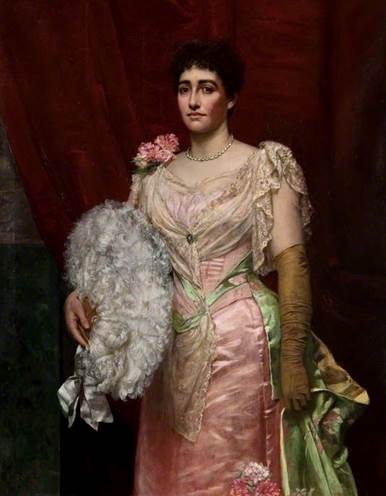
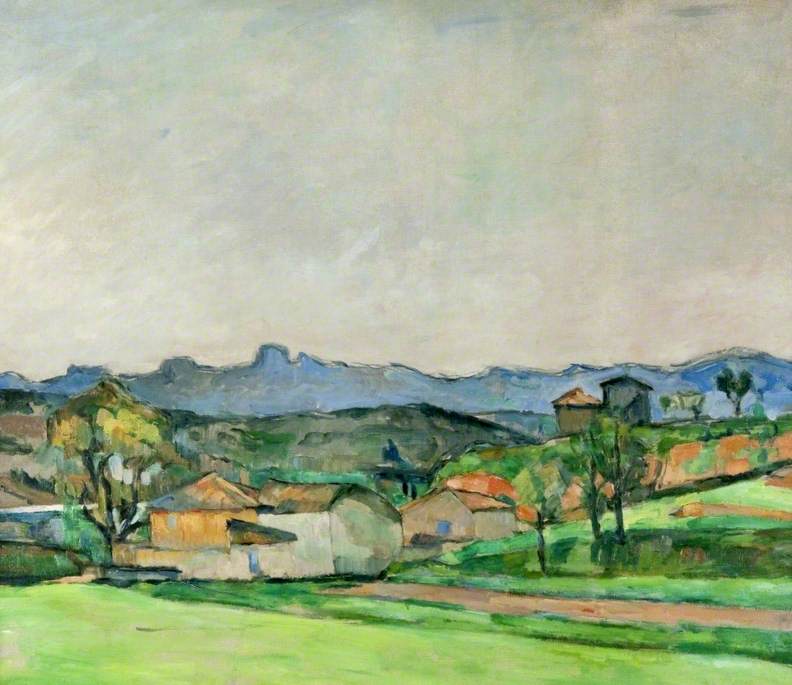
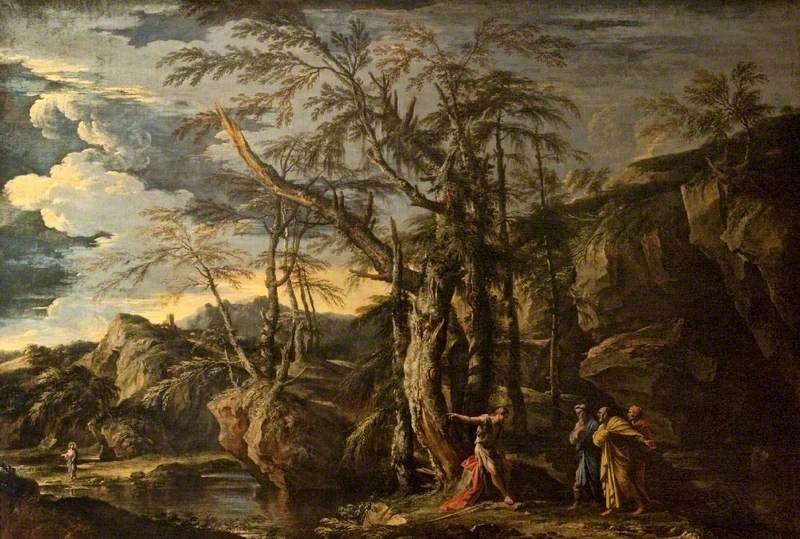
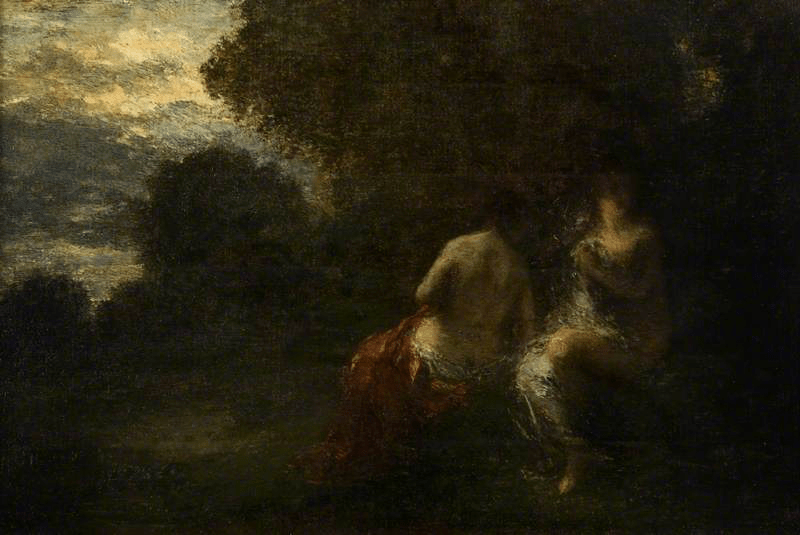
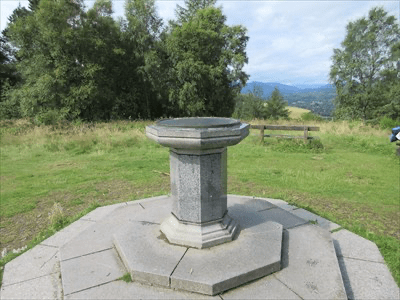
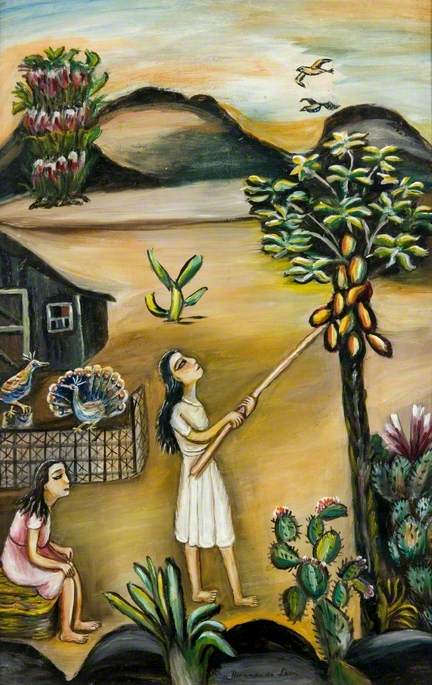
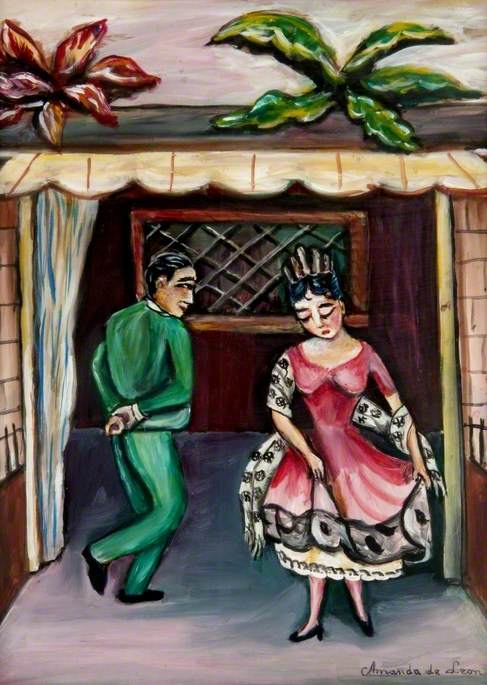
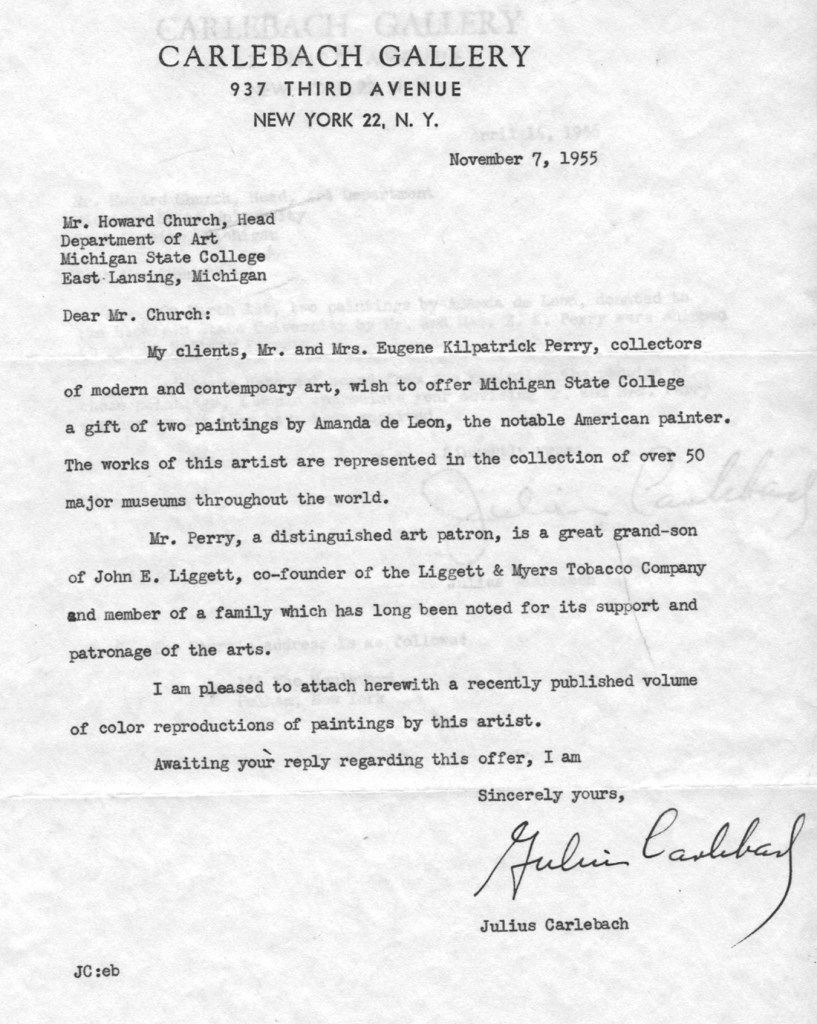
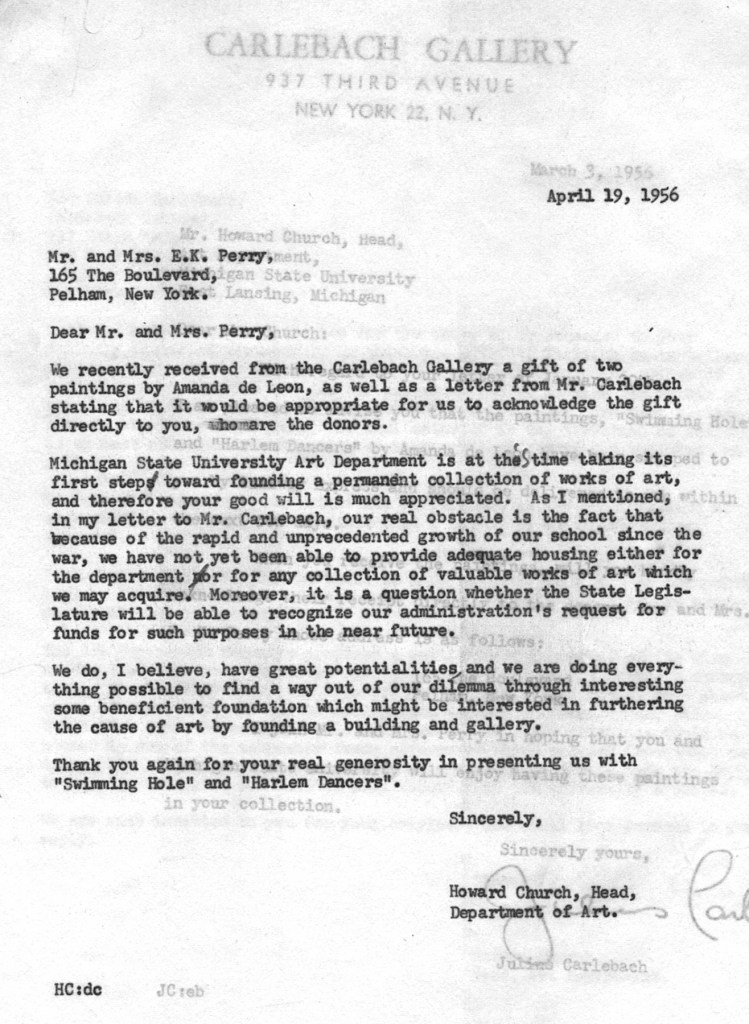
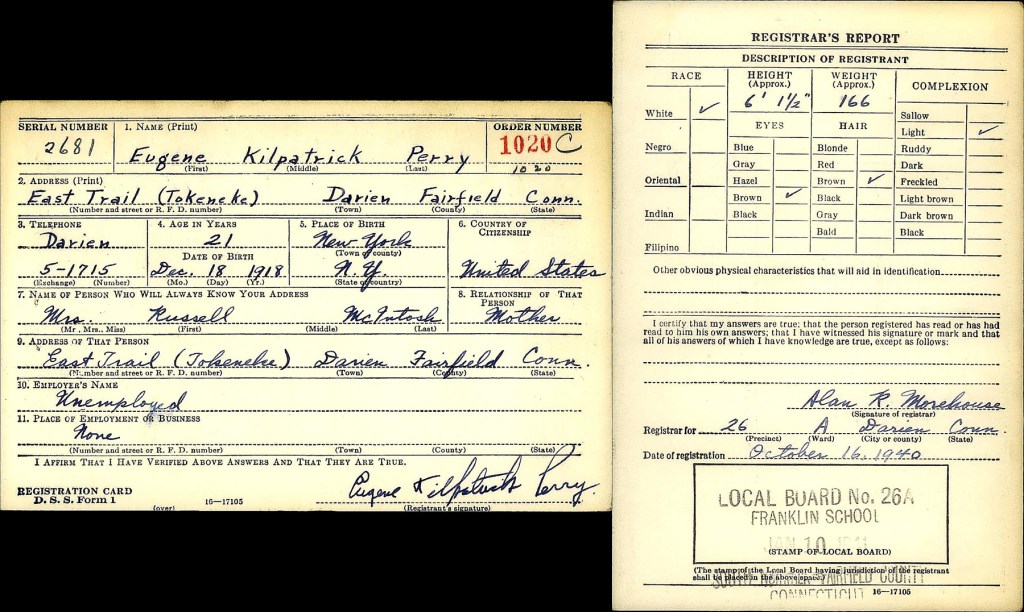
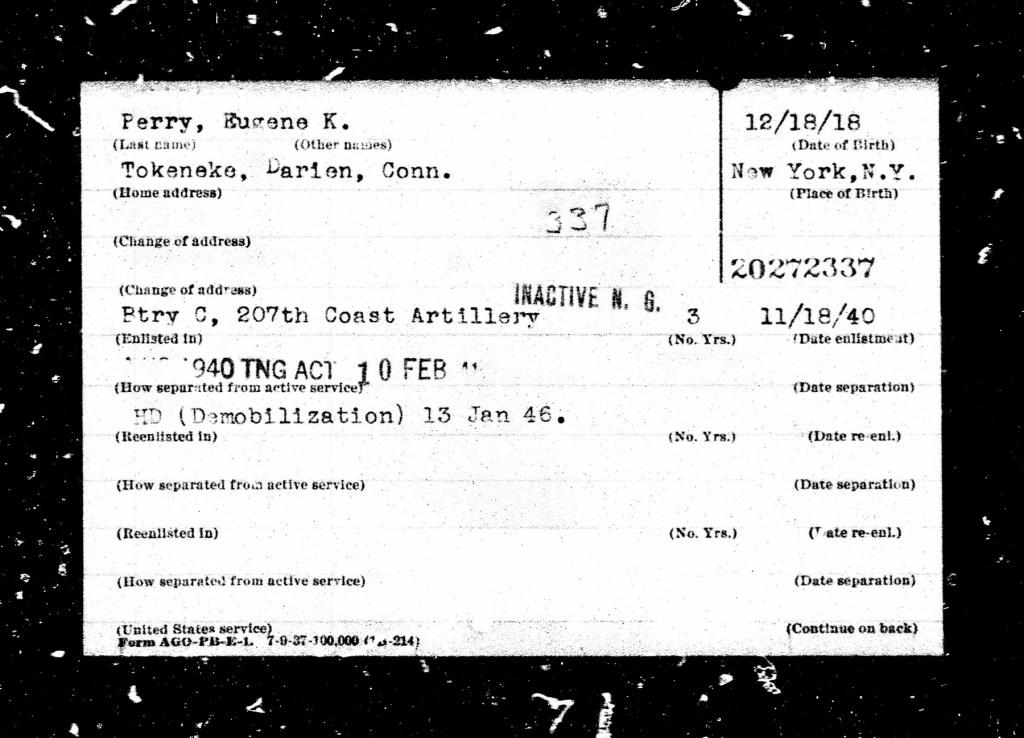
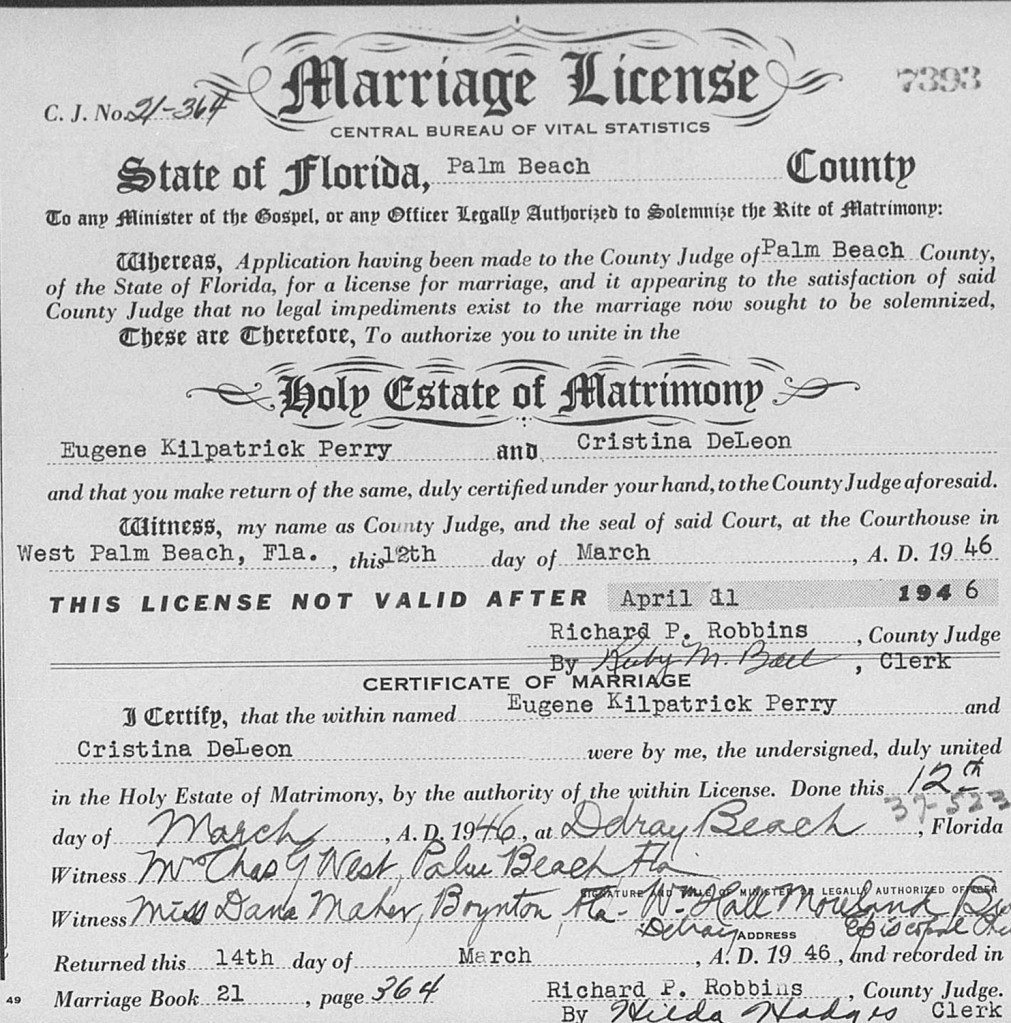
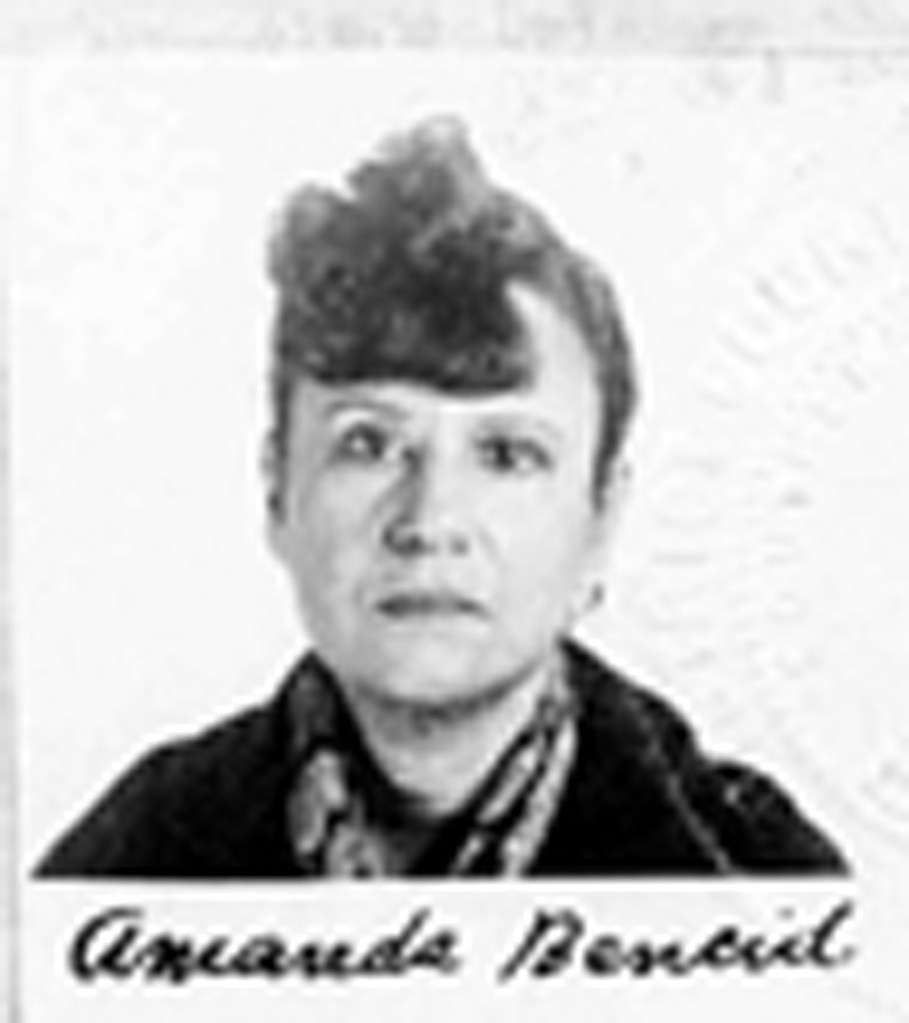
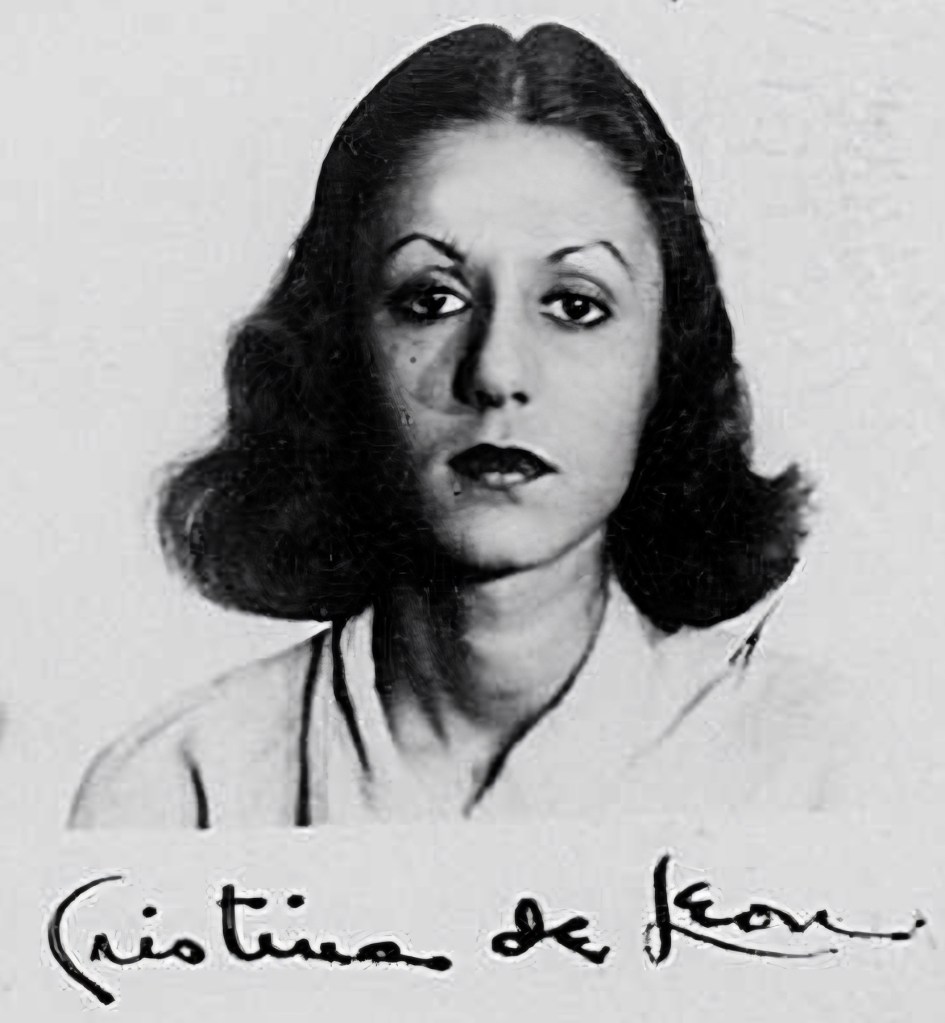
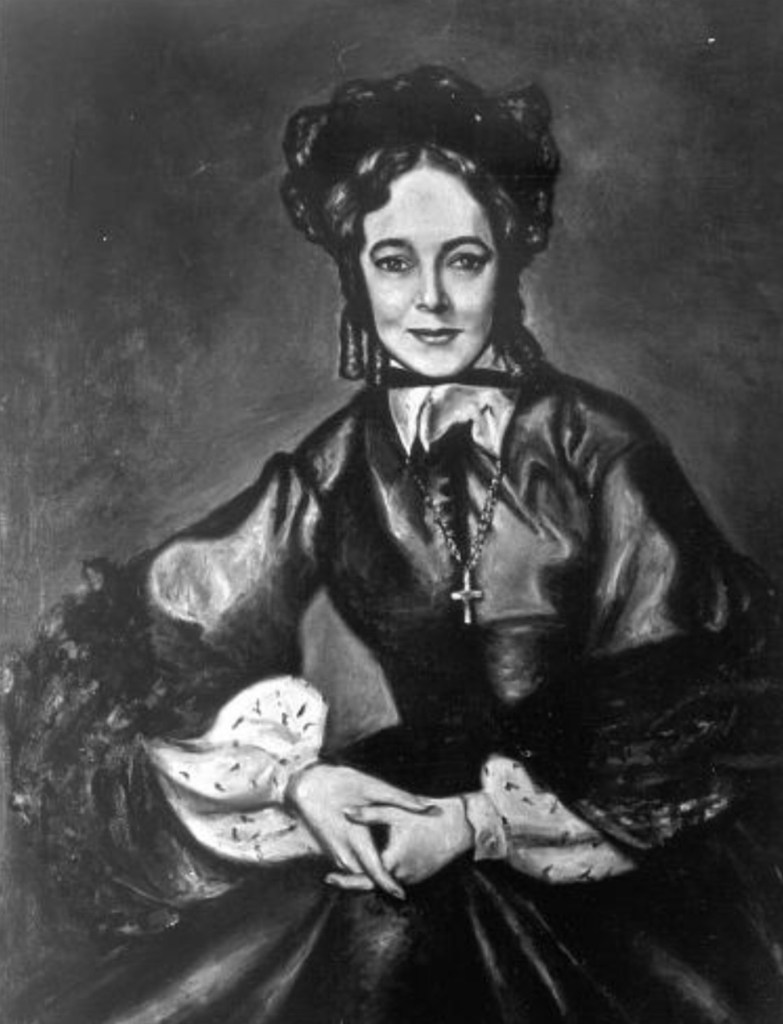
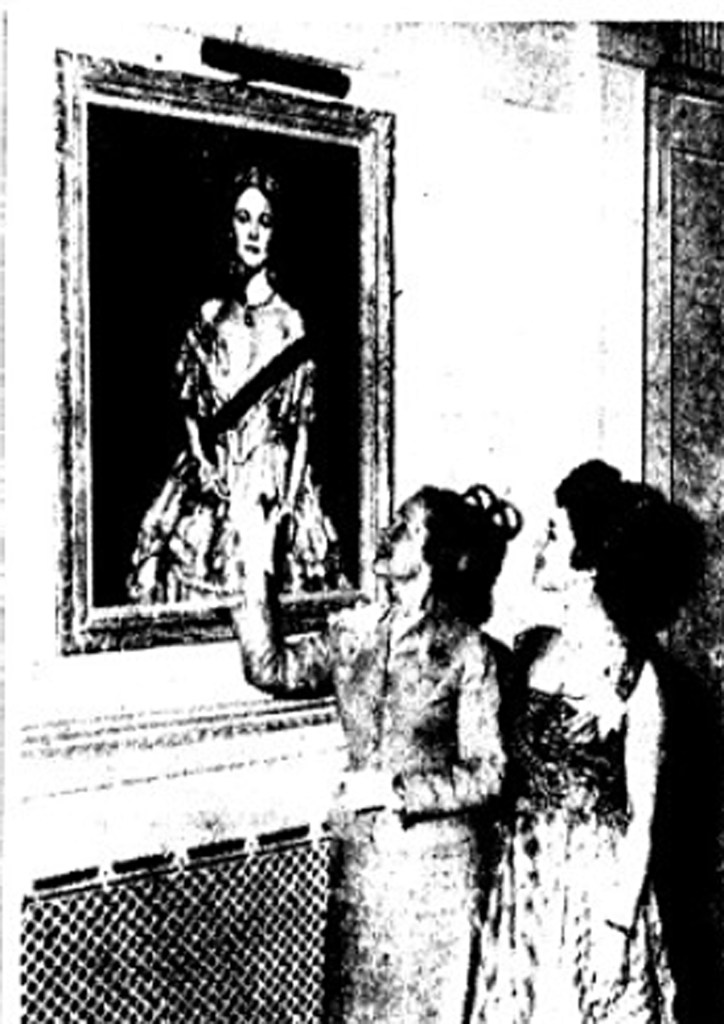
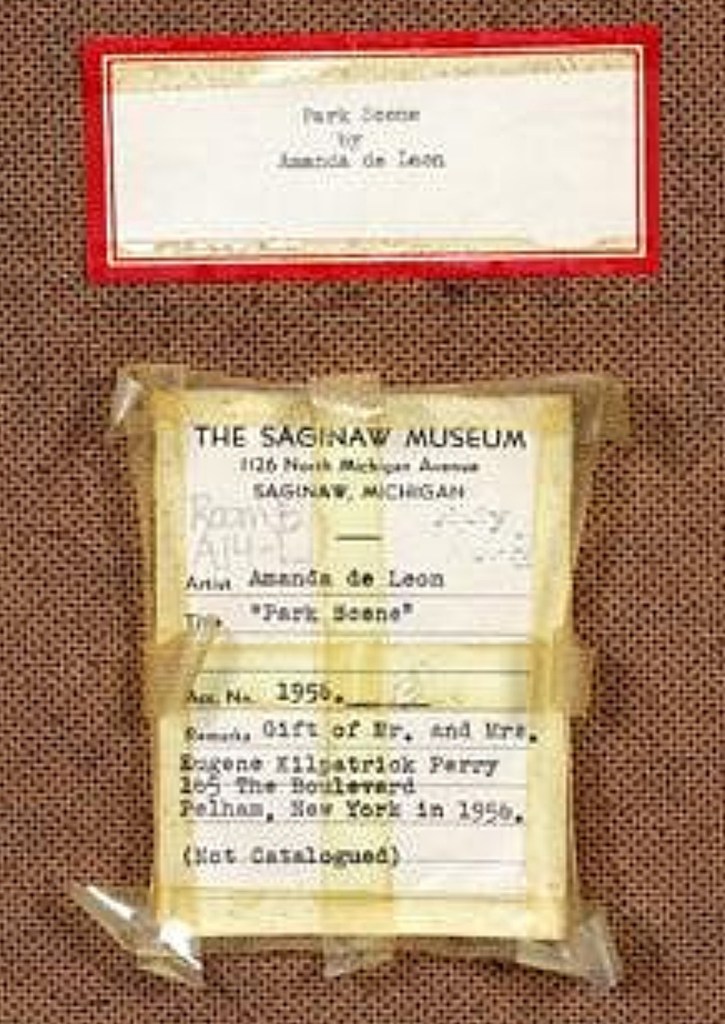
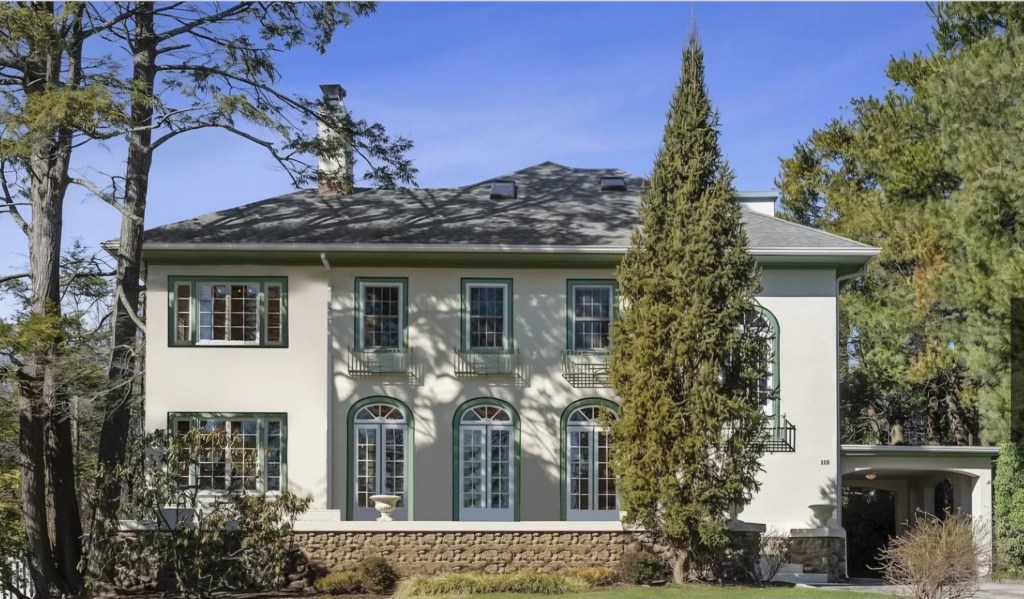
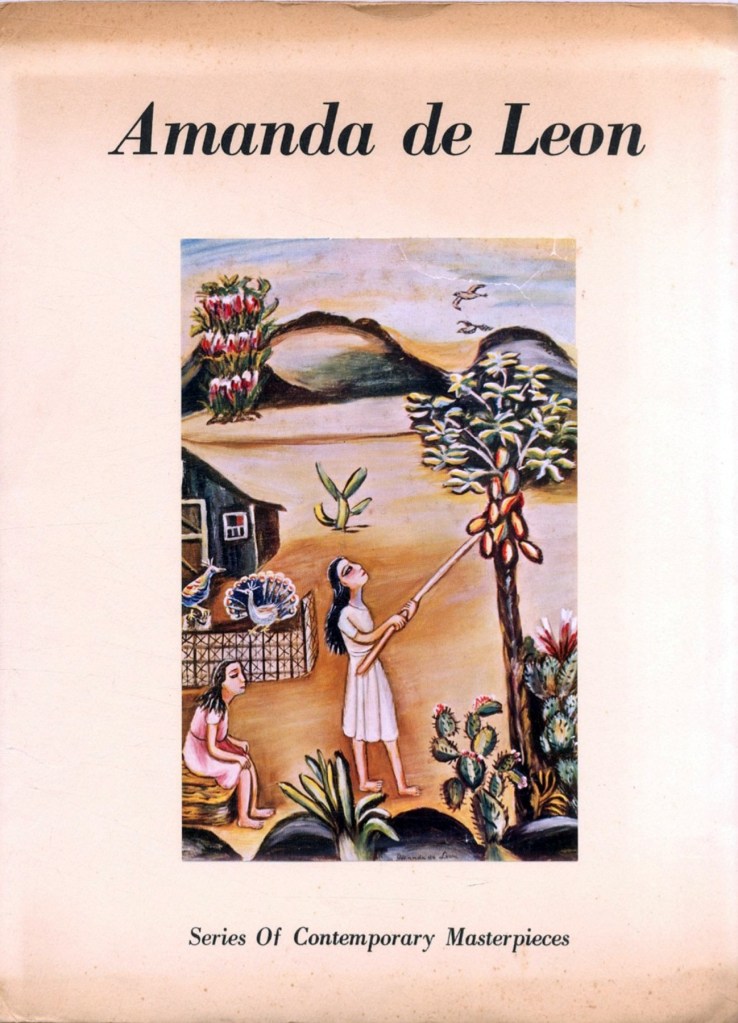
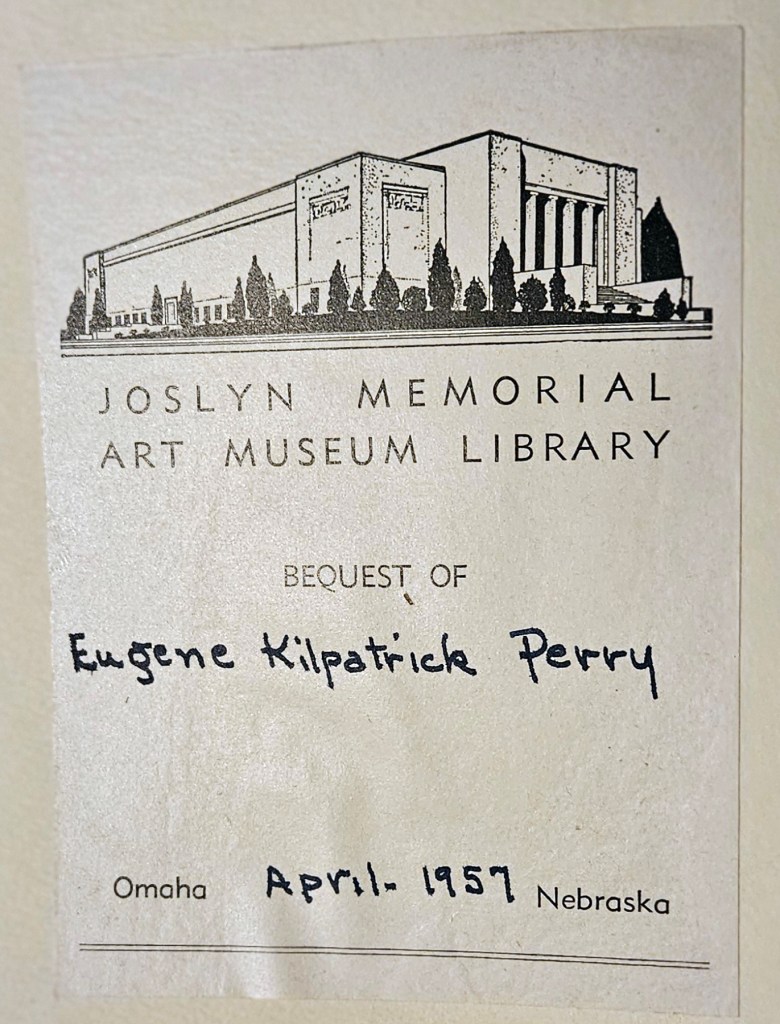

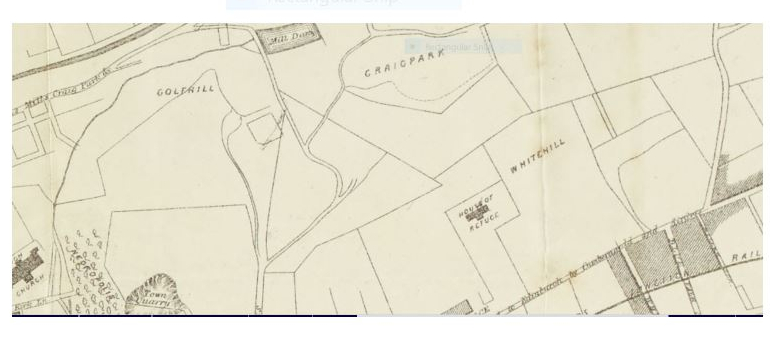
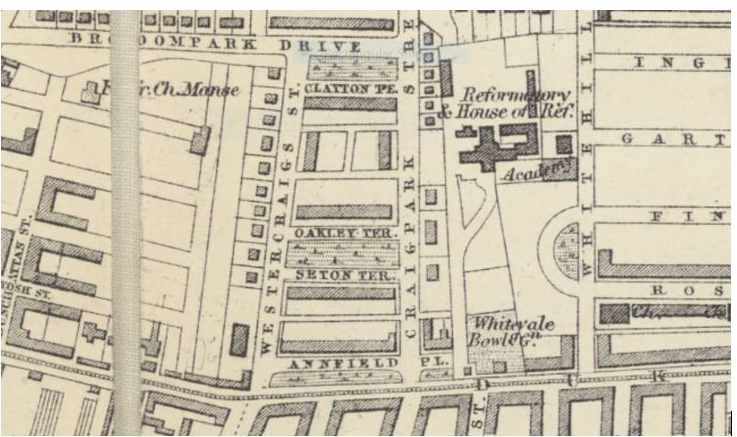
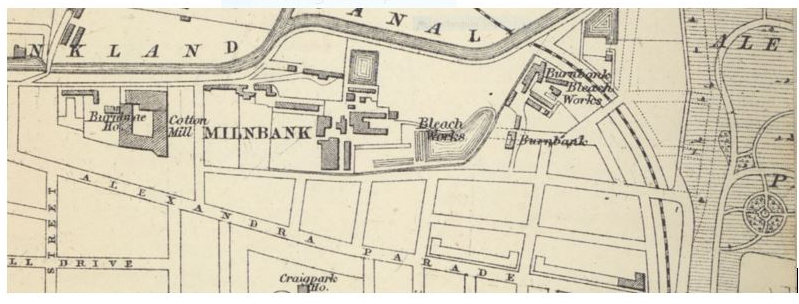
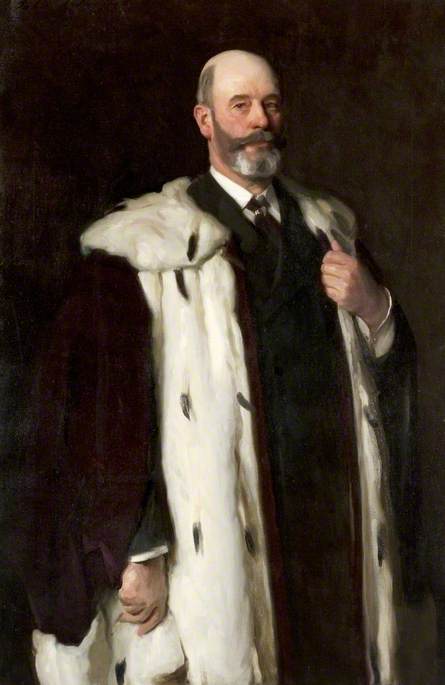
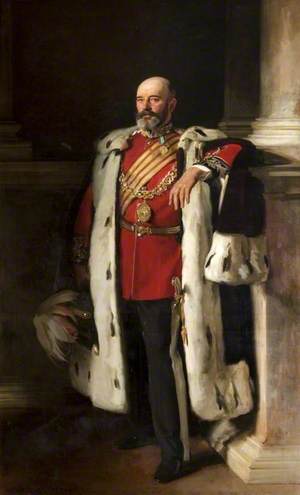
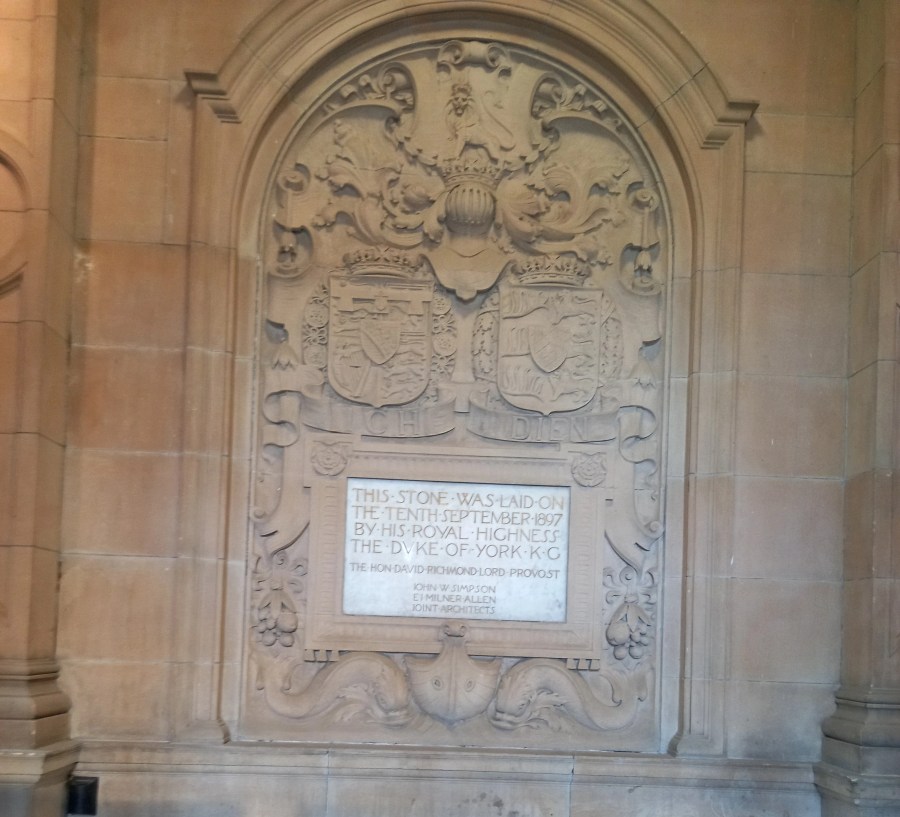
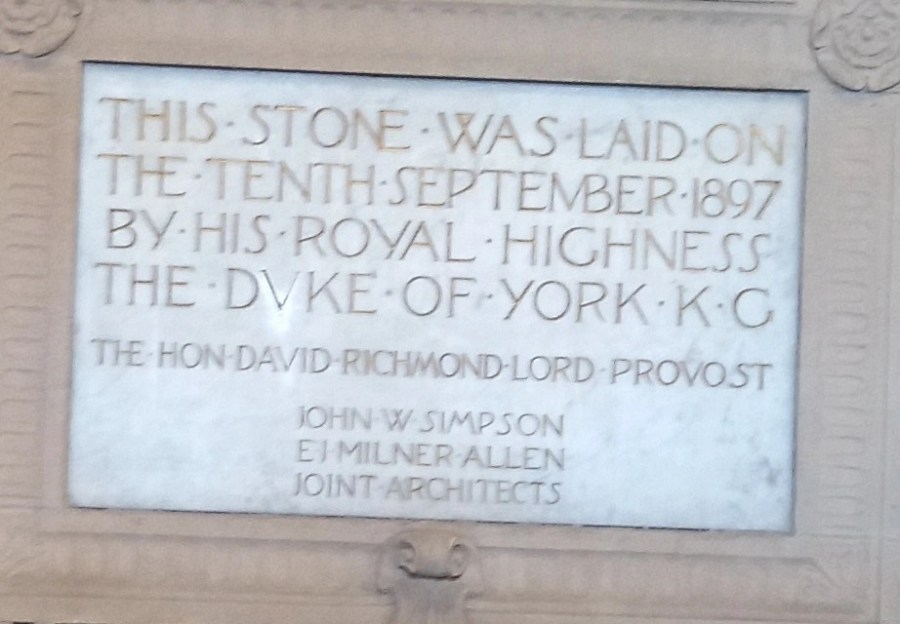
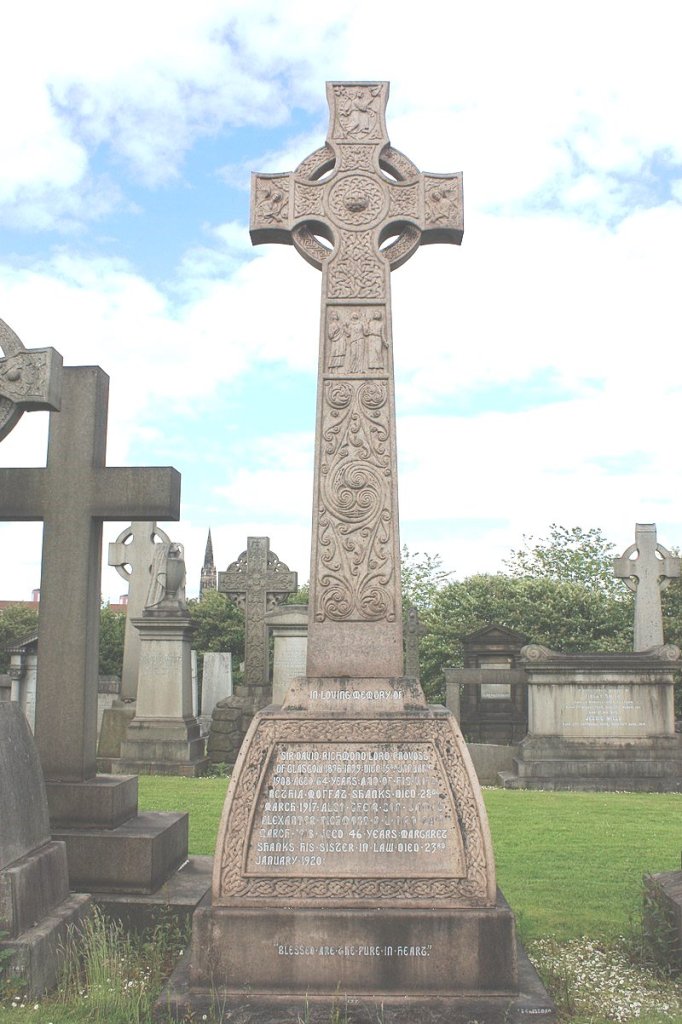


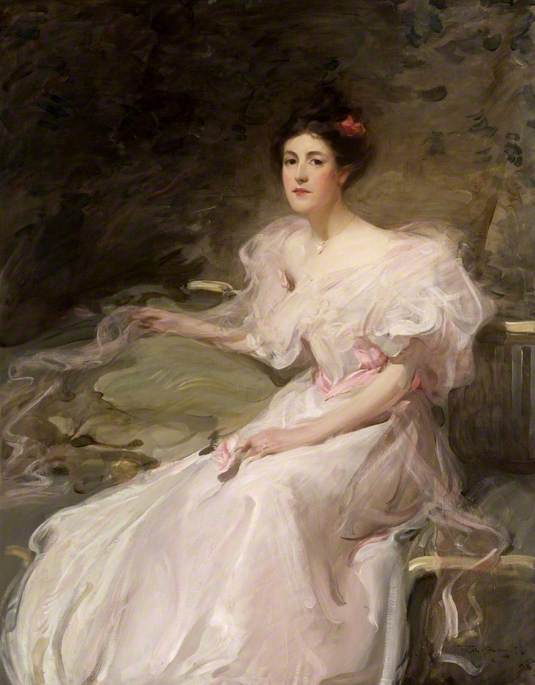
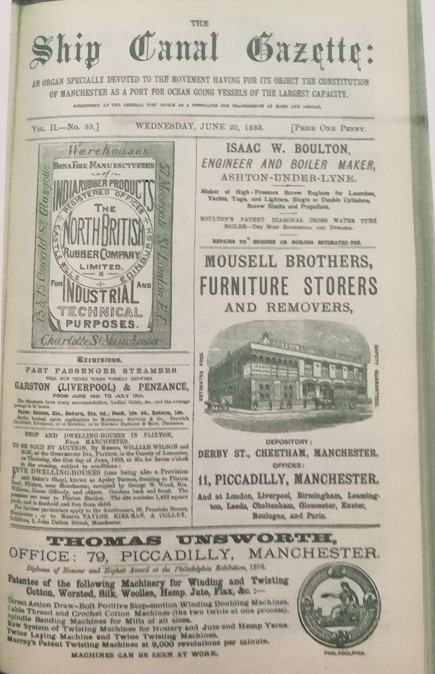
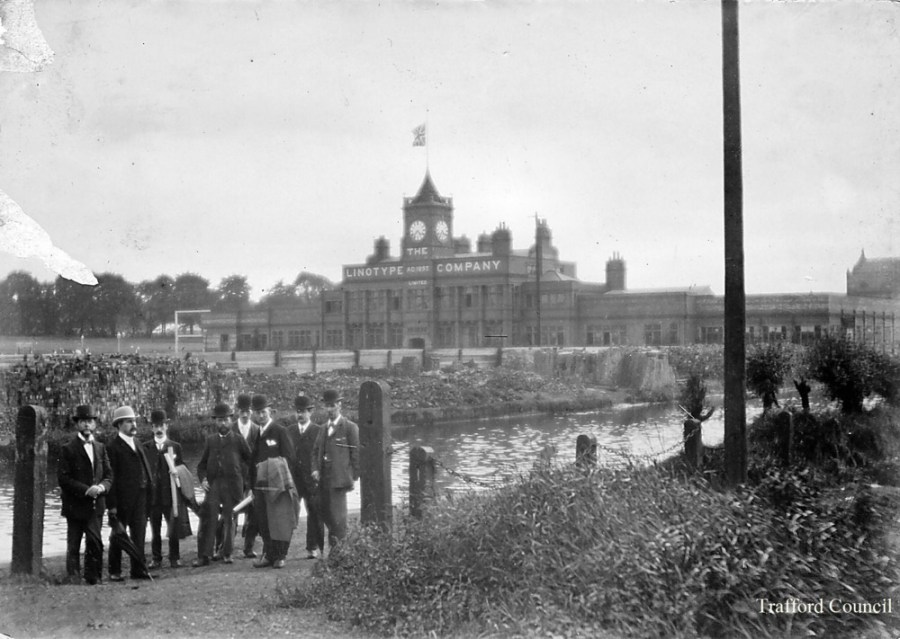
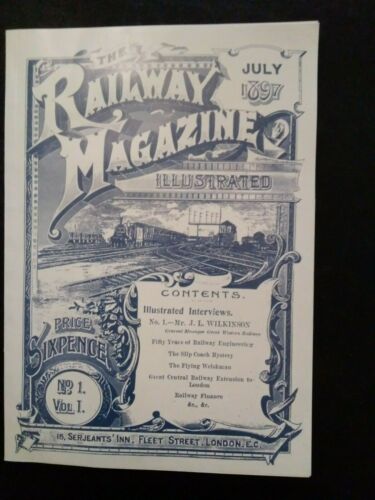
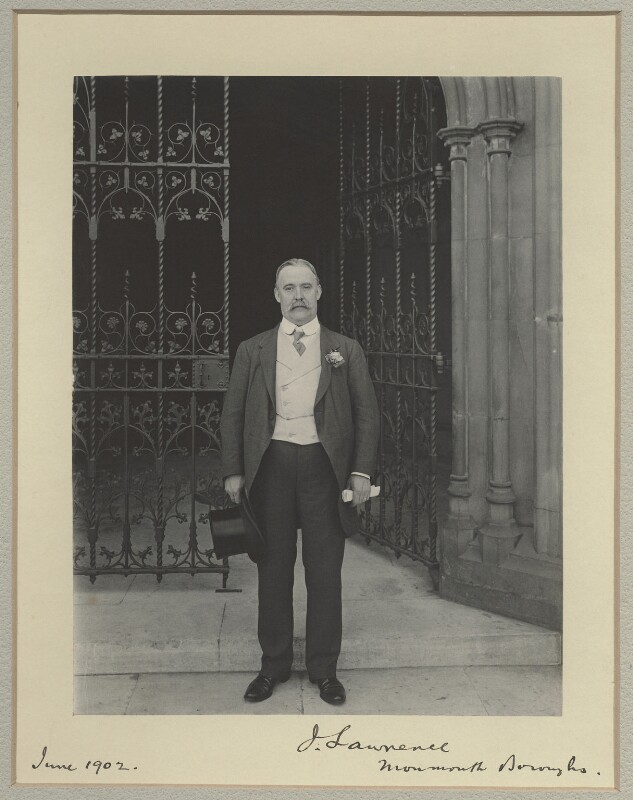
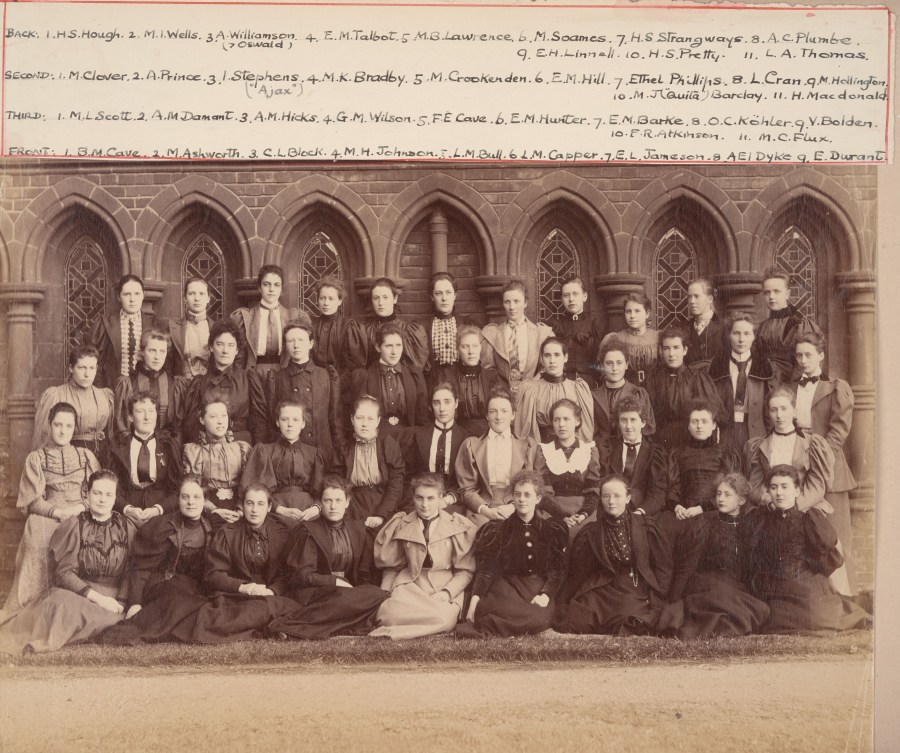
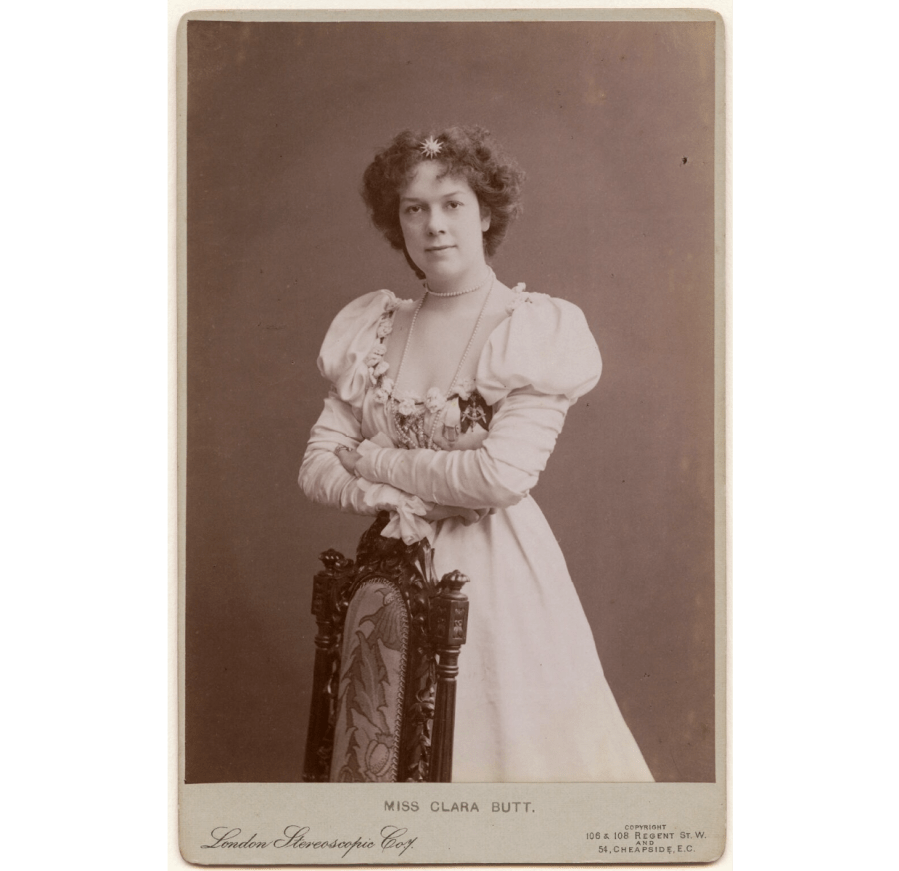


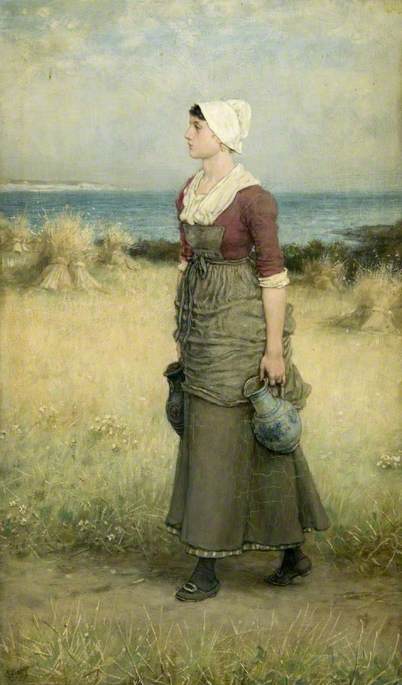
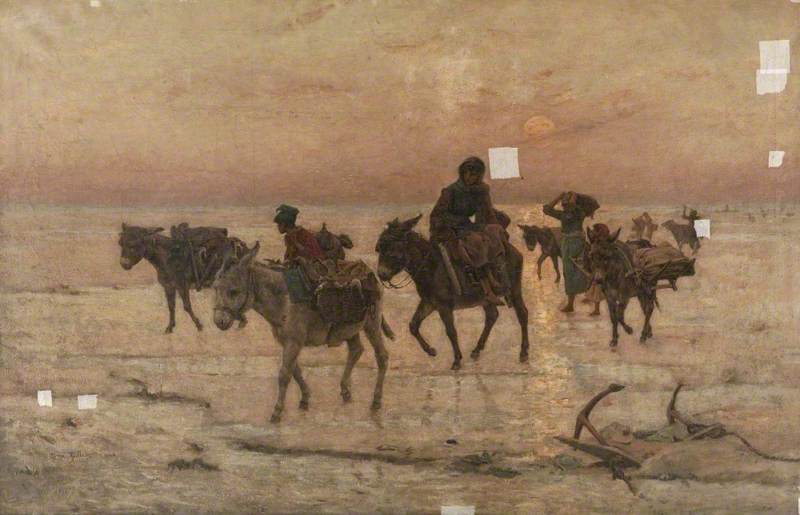
 Glasgow Museums Art Donors Group