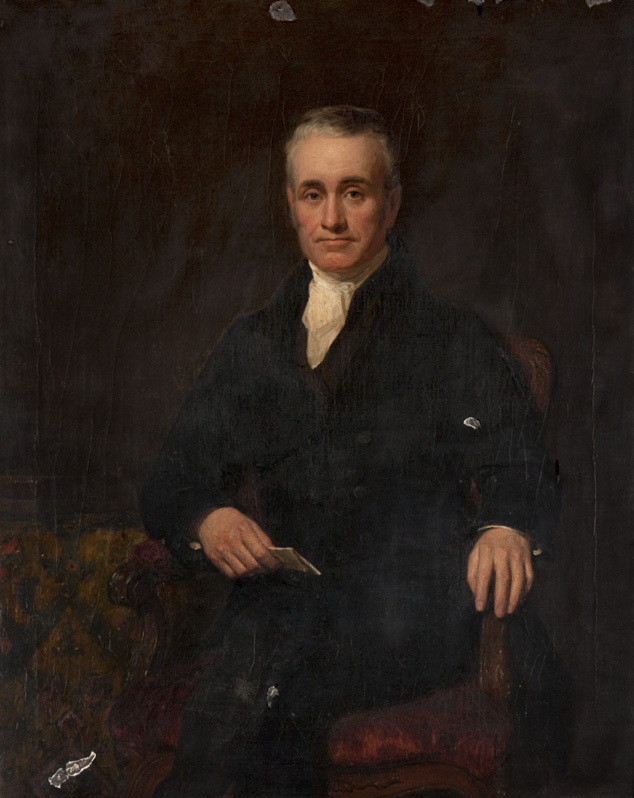
The Portrait of the late Charles Tennant by Andrew Geddes was received by Glasgow Corporation in 1920. It had been bequeathed by his grandson, James Couper, to his wife Jane as life rent (2) and under the terms of his Will, after her death, was then to be given by his Trustees to Glasgow Corporation.
James Couper was born on 13 September 1839 (3) the son of John Couper MD MRCP, Regius Professor of Materia Medica at Glasgow University (4) and his wife Charlotte Couper. His mother was the daughter of Charles Tennant (5) and his father was the son of Tennant’s great friend and associate, William Couper. (6)
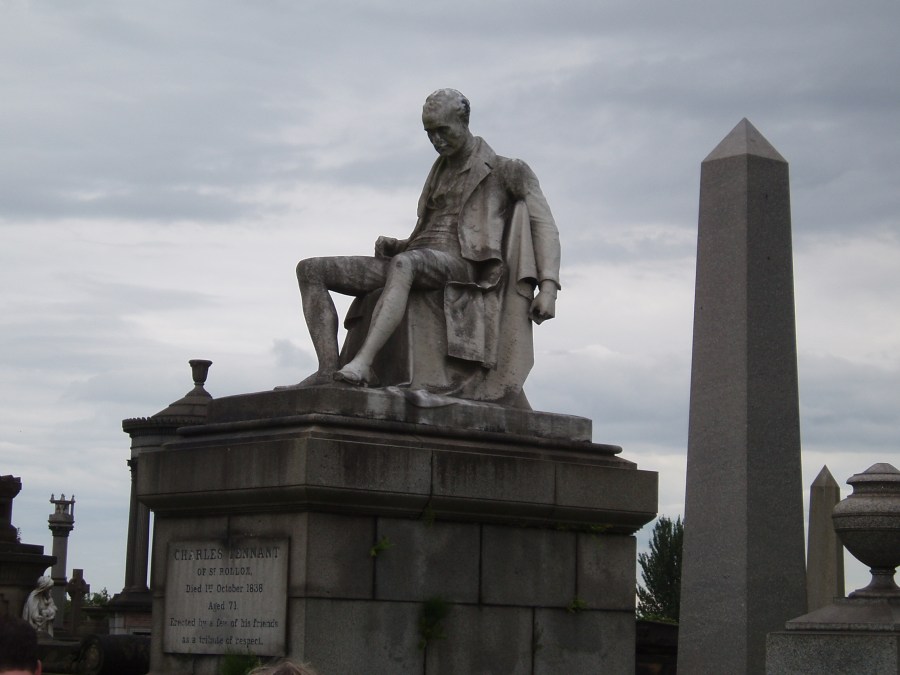
The monuments to these men are side by side in the Necropolis in Glasgow. (7)
In the 1871 Census James Couper is living in Glasgow but visiting his parents and he is a manufacturing chemist. (8) James Couper moved to Craigforth in Stirling in1873 as a tenant and eventually as owner in 1904. (9) In the 1881 Census he is listed as a manufacturing chemist, his wife is Jane, he has two sons, and 8 servants are listed. (10) Craigforth is an impressive country house now on the M9 looking towards Stirling Castle and the Wallace Monument. Couper was a director of the Steel Company of Scotland and of Messrs Ogston and Tennant. (11) He and his wife were active in local society and contributed to charitable and civic activities in Stirling. (12) In 1878, James and Jane gave the Bishop’s Chair to the newly established Episcopal Church of The Holy Trinity in Stirling. (13)
He was a Director of Stirling Royal Infirmary and of The Albert Hall Company while these were being built. (14)
He died in the Central Hotel in Glasgow on 13 June 1916. (15)
His funeral was attended by many people including his nephew Mr. Charles Tennant Couper. He is buried in Logie cemetery. (16)
Charles Tennant (1768-1838) was a bleacher from Ayrshire with bleach fields in Darnley. (17) There is a watercolour of the bleach fields by an unknown artist in the collection of Lady Maxwell in Pollok House, Glasgow (18) and a map from 1791 showing their location in the East Renfrewshire Public Library in Giffnock. (19) He went on to develop the first chemical method of bleaching using bleaching powder and to establish the St Rollox works in Glasgow, the first great chemical works in the world. (20) His son John Tennant (21) developed the firm and built Tennant’s Stalk- a huge chimney in the North of Glasgow. His son was Sir Charles Tennant, an art collector, Liberal politician and industrialist. He was the founder of a family well known in social and political circles. (22) (23) In 1926 the business became part of Imperial Chemical Industries and in 2008 became part of Atezo Nobel. (24)
References
Archives of Glasgow Museums
National Records of Scotland Wills and Testaments 1916
National Records of Scotland Statutory Births 1839
Archibald Walker Finlayson was a linen thread manufacturer whose company had factories in Johnstone, Renfrewshire and in the USA.
He was born in October 1849 (1) the oldest child of James Finlayson and his wife Rachel nee Watson. At that time they were living in Paisley. His father was a linen thread manufacturer, one of the first to introduce the spinning of flax mechanically.
(2 ) In 1844, James and his brother Charles and C.H, Bousefield had established a business manufacturing linen thread which continued in production up to 1958 and formed part of the Linen Thread Company Ltd. The factory became a major employer in Johnstone. So Archibald was born into a successful family business.
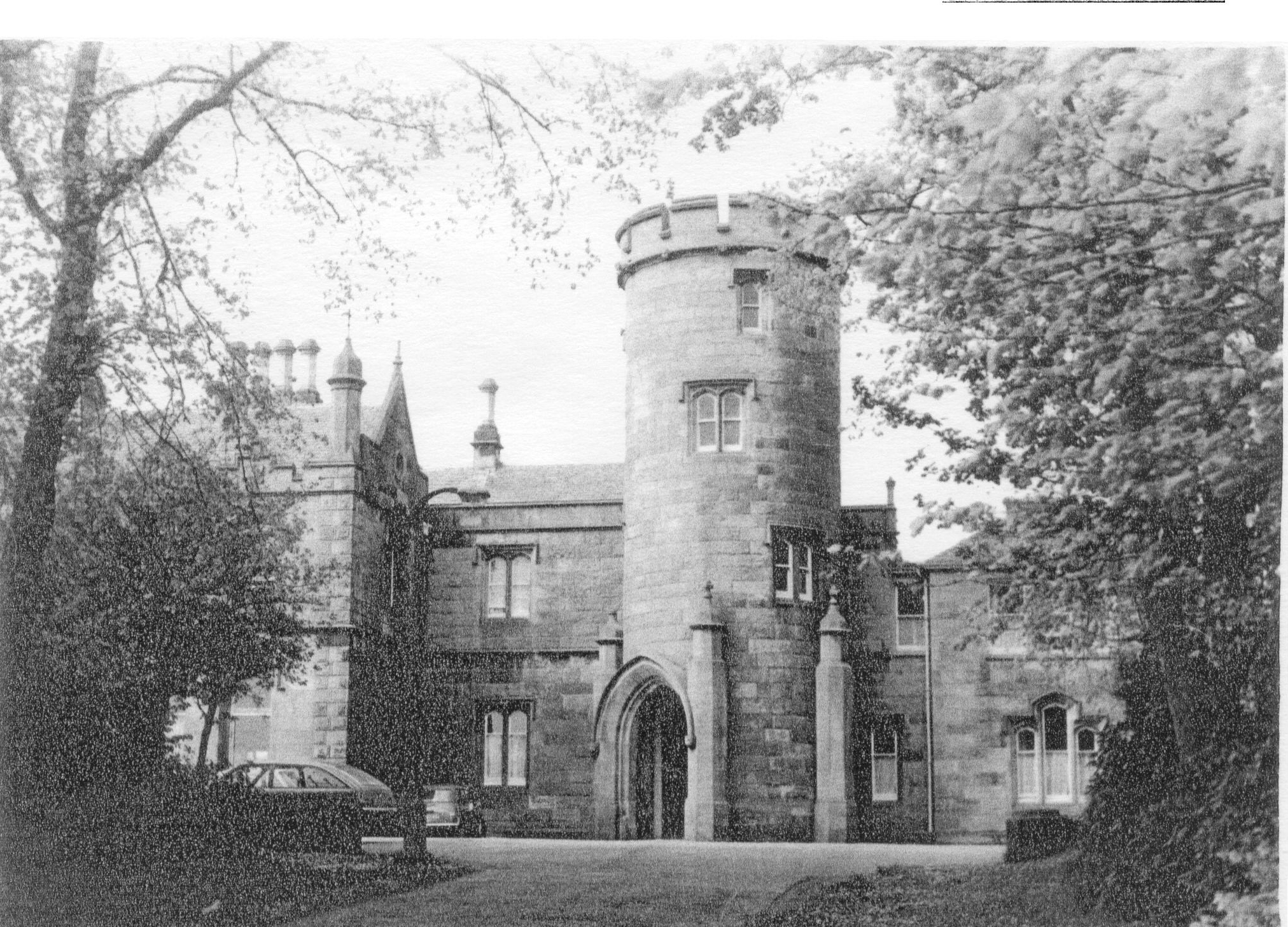
Figure 1. Merchiston House. From Canmore.
His education is not known. At the age of 21years, (3 ) he is living with his parents and brothers and sisters in the family home , Merchiston, Johnstone, Renfrewshire , an impressive turreted building which required 7 servants to run (4). Later this house was to become part of the estate of the Western Regional Hospital Board as Merchiston Hospital.(5 )
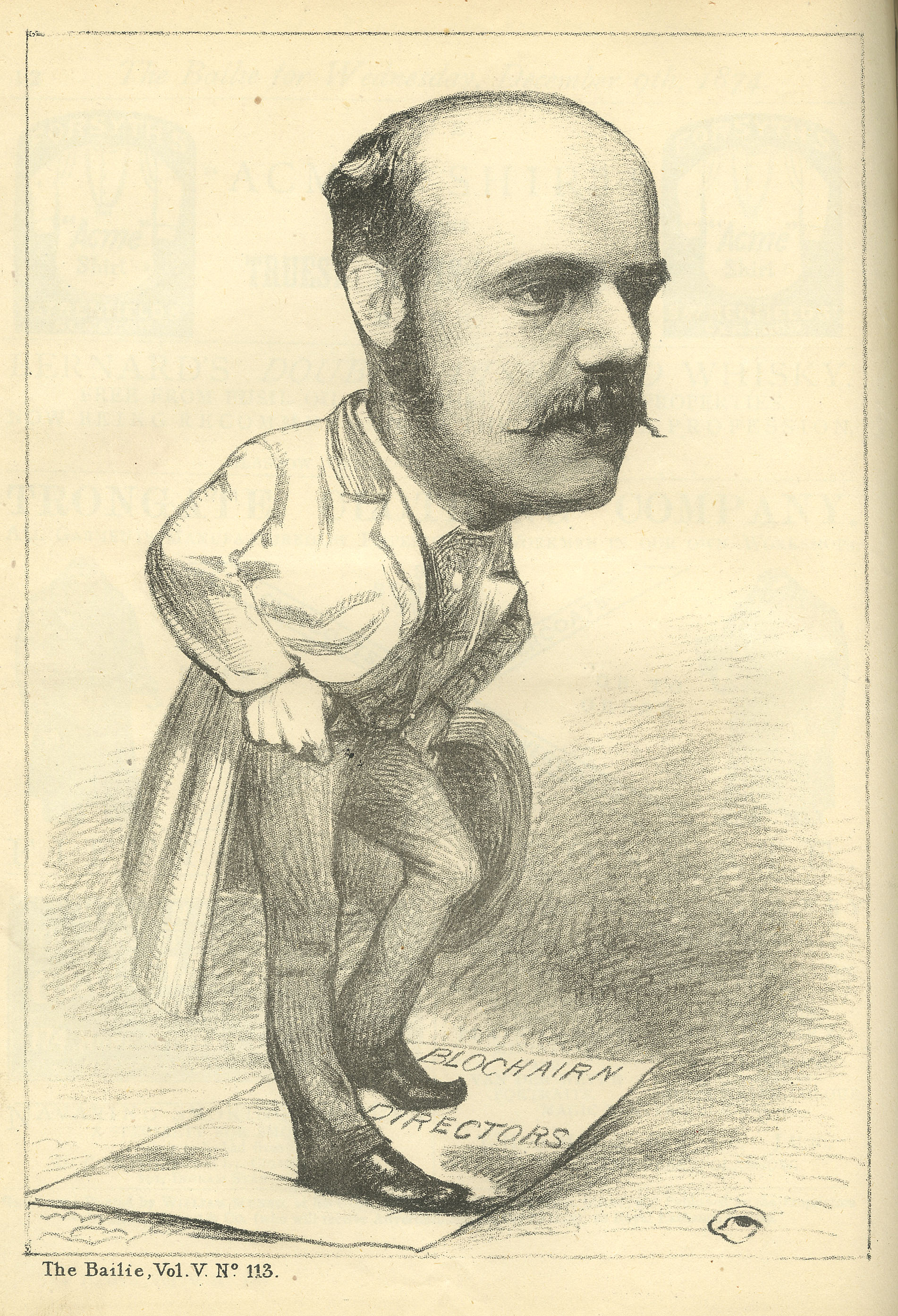
In 1847 at the age of 25 years, he wrote to the Glasgow Herald (6 ) as one of the shareholders in what became known as the The Blochairn Share Scandal-effectively a “bubble”- which had promised impossibly high returns and which lost many small shareholders money. The subject was taken up by the Glasgow Herald in an article published the next day.(7 )
The Bailie, discovering that he was the son of James Finlayson, a former M.P. and Deputy Lieutenant of Renfrewshire, were fulsome in his praise and promised a bright political future.(8)
Archibald joined the family firm and was sent to America in 1880 to establish a linen thread mill in Massachusetts. He travelled to and from America on occasions. Eventually the firm became part of The Linen Thread Company, Ltd. (9)
He married Elizabeth MacAndrew. In 1891 his home address was Spring Grove, Kilbarchan. (10 ) He lived there until 1903 when his father died. (11) He then moved back to Merchiston. (12 )
He was not able to become an MP but contented himself with representing West Renfrewshire on the County Council, was a JP and gave the Provost’s chain to Paisley. There is a death notice and an obituary in the local paper (13) on his death in November 1916. (14)
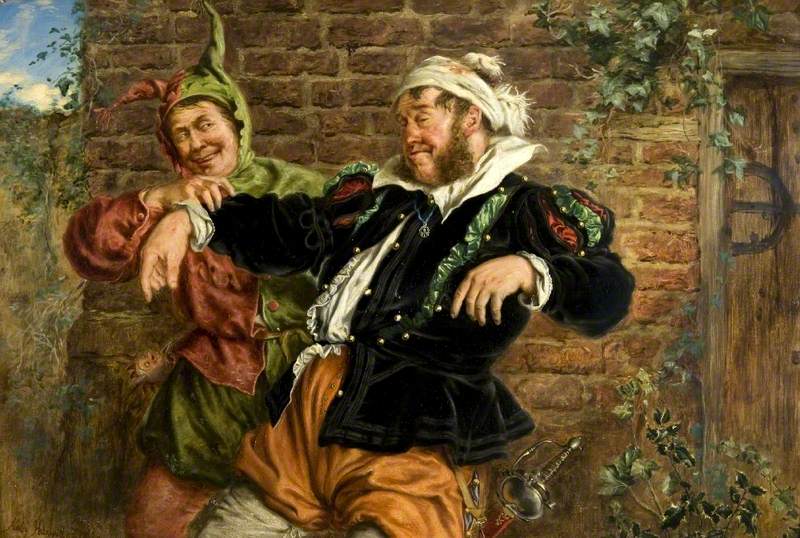
He gave two paintings to Glasgow Museums. In the Object file for the 1903 donation (15), there is a letter from him with information about Sir Toby Belch and the Clown , by Keeley Halsewell. It was painted in 1862 at which time it cost £40, was shown at the Paisley Arts Institute Exhibition in 1896(16) then bought by Archibald Finlayson in 1901.
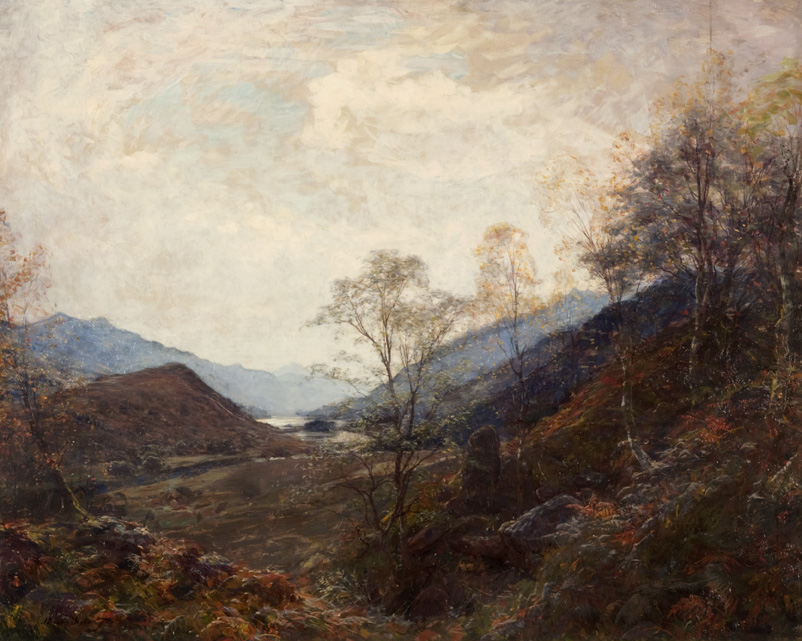
The other painting, September, Glen Falloch by A. Brownlie Docherty was exhibited at the Glasgow Institute and at the St Louis National Institute in 1904. (17) It was bought by Finlayson in 1907 and donated to Glasgow City Council. (18)
References
National Records of Scotland Statutory Births OPR 18492.
Calder, John. Finlayson, James. Oxford Dictionary of National Biography, Oxford University Press, 2014.
National Records of Scotland. Census 1871
Photographs of houses in Renfrewshire. Renfrew Archive
Canmore images
The Glasgow Herald 9 November 1874 page 4
The Glasgow Herald 10 November 10 1874 page 9
The Bailie 1874 vol 5 pp 113-1149.
Calder, John. Finlayson, James. Oxford Dictionary of National Biography, Oxford University Press, 2014.
National Records of Scotland Census 1891
National Records of Scotland Statutory Deaths
National Records of Scotland Census 1891
Paisley and Renfrew Gazette 18 November, 1916
Ancestry .co.uk
Glasgow Museums Archive
Catalogue of Paisley Fine arts exhibitions, Paisley Archive.
The Glasgow Herald 13 November 1940 A. Brownlie Docherty Obituary
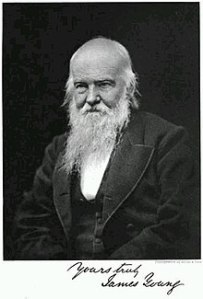
James Young was a chemist and industrialist and is known as the father of the oil industry. (1) In the 20th century members of the family of James Young gave paintings, which they had inherited from his collection, to Glasgow Museums in his memory. The paintings form an important part of the museum’s Italian collection. (2) It is therefore fitting that he is considered a donor.
James Young (3) was born 14 July 1811 to John and Jean (Wilson) Young, who lived in the Drygate, Glasgow. The family moved to Rottenrow when James was 4 years old. (4 ) He attended the parish school. His father was a Master Joiner and James was apprenticed to him. It was said that his life changed when he was sent to Anderson’s college to mend a window, heard Thomas Graham lecturing’ and decided to study chemistry.(5)
A university education was expensive and beyond their means but he was encouraged by his father to attend classes at the Mechanics Institute and also at Anderson’s College. In 1832 he became assistant to Thomas Graham, who lectured in Chemistry, and Young’s lectures were much appreciated because they comprised theoretical and practical sessions.(6) His class included David Livingstone, James Muspratt and Lyon Playfair who all became lifelong friends. In 1837 Thomas Graham went to London as Professor of Chemistry at University College, London, and James Young went with him. (7) In 1838(8) James married his cousin, Mary Walker and needed to support a family. He eventually was appointed manager at James Muspratt’s chemical works in Newton le Willows in 1839. (9) Muspratt was a major alkali manufacturer.(10) In 1844, Young was appointed chemical trouble shooter at Charles Tennant’s (11) works in Manchester.(12 ) It was understood that he could continue with his chemical research and could benefit from it personally. His research diaries held in the University of Strathclyde, contain his experiments. (13 ) and are accessible and interesting. He continued his friendship with Lyon Playfair who was to become Professor of Chemistry at Edinburgh University and who later became Post Master General and 1st Baron Playfair.(14 )
Young was told by Playfair of an oil seepage on the estate of Playfair’s brother in law, James Oakes, at Alfreston in Derbyshire.(15 ) Stimulated by Playfair to analyse this , he extracted naptha (rock oil, the thinnest of the bitumens of a yellowish colour) which gave a very bright light on burning. Until then naptha had to be imported from Persia. Young’s stated aim was to enable cheap lighting for homes. He then set out to find the best sources and discovered that by dry distillation of cannel coal he could obtain oil. He named the products paraffin oil and paraffin wax. (16 ) He had the foresight to ensure that this process was patented.(17) He continued to process patents and to pursue offenders through the courts. There are many interesting descriptions of lawsuits which ensued! (18)
The search was on for sources of paraffin and one was discovered on Torbanhill, a farm near Bathgate.(19 ) It was named Torbanite , at that time classed as coal but now as shale.(20) In 1851,with partners Edward Binney, a geologist who first published the theory that coal came from plants, (21 ) and Edward Meldrum he opened the first commercial oil works in the world at Bathgate to distill paraffin from Torbanite . In 1857, Edwin Drake struck oil in Pennsylvania and the American oil rush began. (22) The oil was easily accessible and was to make America self sufficient in oil although Young would argue that the quality was variable.
In 1864, Young split with his two partners and in 1866 he set up Young’s Paraffin Light and Mineral Oil Company at Addiewell. The site occupied 50 acres of ground and he became a major employer in the area. (23)
He and his cousin Mary Walker had ten children, four sons and six daughters. (24) In 1857, he bought an estate at Limefield House, Polbeth, and lived there for ten years. In 1867, he moved with his wife and family to Kelly House, Wemyss Bay from where he could enjoy sailing. (25) Gradually he moved away from the Bathgate works and spent more time in Ayrshire, retiring finally in1870. (26)
He re-engaged with Anderson’s College endowing a chair in Chemistry and serving as President of Anderson’s College in Glasgow.
He was elected Fellow of the Royal Society of Edinburgh in 1861 and Fellow of the Royal Society in 1873.He was made LLD by the University of St Andrews.
He was Vice President of the Chemical Society 1879 to 1881. (27)
He travelled widely in his yacht Nyanza to Egypt and in Europe,mainly to Italy.
His travel notebooks are in the Strathclyde University Archives. (28) After he retired, he spent 6 months sailing to the Mediterranean and to Italy where he bought important paintings to bring back to Scotland. There is an interesting account by Robert Wright, one of the crew, of the voyage which left Largs in November and returned in June.
He built a gallery on Kelly House to house the paintings. They included works by Salvator Rosa, and some at that time attributed to Tintoretto and Botticelli which were bought by his agent Dr W. Robertson since Young was colour blind. (30) Four paintings were inherited by the family and bequeathed to Glasgow Museums in 1901, 1902 and 1953. (31)
He had a number of influential friends including Lord Kelvin who lived near him at Largs. Both men had ocean going yachts and shared a voyage on one occasion.(31) A particular friend from his student days was the missionary and explorer David Livingstone. Indeed two of Livingstone’s daughters lived with the Young family after their mother died. He financed some of Livingstone’s expeditions to Africa , particularly helping with his last and tragic expedition.(32) The statues in George Square of Thomas Graham and David Livingstone were donated by Young. The Livingstone statue is now in the cathedral precinct.
He died on the 13 May 1883(33) and Lyon Playfair was an executor of his will.(34)
Acknowledgement
I have to acknowledge conversations with Mary Leitch and particularly the book written by her James Paraffin Young and Friends which greatly enhanced my knowledge of her great grandfather.
James Young is widely regarded as the father of the modern Petrochemical Industry (35) and now that shale is headline news again interest in Young has revived.
Paintings from James Young’s Collection
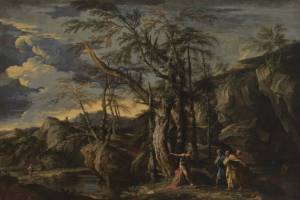
St John the Baptist baptizing Christ by Salvator Rosa. Donated by Alice Thom. 1953 Grand daughter
St John the Baptist revealing Christ to the Disciples by Salvator Rosa. Donated by the family of John Young. 1952
Virgin and Child with the child Baptist and two angels by Raffaelino del Garbo. Donated by Mary Ann Walker. Daughter .1902
Virgin and Child with Angels by a follower of Pesselino. Donated by T Graham Young Son . 1902
In his will of 1902, Robert Jeffrey bequeathed the contents of his library at Crosslie House, Renfrewshire to the Mitchell Library in Glasgow. This bequest consisted of ‘all the books that shall belong to me, at the time of my decease, together with the bookcases in which they are contained and the statuettes on the top thereof, as well as the ivory carving statuettes and mosaics on the wall between the principal bookcases and the oriel window in my library at Crosslie House’. 1 An incidental part of his bequest included two portraits one of himself and one of his wife Margaret Jeffrey (nee Reid)
Robert Jeffrey was born into a family of cloth manufacturers whose business spanned the eighteenth and nineteenth centuries. Robert`s grandfather, James Jeffrey, was a linen manufacturer in Fife where Robert`s father, Robert Thomson Jeffrey was born in 1787. His mother was Margaret Thomson.2 On the 21 December 1813, Robert Thomson Jeffrey married Margaret Jack in Biggar, Lanarkshire. 3 Margaret`s father, James, was a farmer in Roberton. The marriage produced eight children; William born 1816, Agnes 1817, John 1818, James 1820, Andrew Gordon 1822, all born in Biggar. 4 After the birth of Andrew, the family moved to Edinburgh where Robert set up business in the Lawnmarket: ‘Jeffrey, Robert, cotton manufacturer, 300 Lawnmarket.‘5
During their stay of about nine years in Edinburgh, three more children were born; Isobel 1824 and Francis 1830. Robert Jeffrey junior was born on the 4 March 1827 in Edinburgh and christened in St. Cuthbert`s Church. 6 About 1833, the family moved to Glasgow where Robert set up business at 37 St. Andrew`s Street with a house at 16 St. Andrew`s Square later moving to 49 St. Andrew`s Square: 7 ‘Jeffrey, R, stripe, check and linen manufacturer, 37, St Andrew’s St, house 49 St Andrew Sq.’8
With business obviously prospering, the family moved to Wyndford House in Maryhill, Glasgow:‘Jeffrey, R. cotton and linen manufacturer, 37, St Andrew`s Street, house Wyndford by Maryhill’ 9
In the census of 1841, the family at Wyndford consisted of Robert and Margaret Jeffrey, Agnes, William, James and Francis along with Robert Jeffrey junior aged 13. Robert was educated at Glasgow High School and at the Collegiate School which opened in 1842 in Garnethill.10,11 Two family members not on the census were John and Andrew. John Jeffrey had probably left by this time to take over or establish a base for the family business in Kirkcaldy 12 and Andrew may already have moved to Balfron to look after the family`s interests there.
(The Ballindalloch cotton works near Balfron were built in 1790 by Robert Dunmore and sold to Kirkman Finlay of James Finlay & Co. in 1798. They were subsequently sold to Robert Jeffrey & Sons in 1845 after the death of Kirkman Finlay). 13
By 1851 Robert Jeffrey was a linen manufacturer employing 54 males and 114 females.14 The firm exhibited at the Great Exhibition in London: ‘Jeffrey, Robert, Mary Hill, Glasgow, Kirkaldy (sic), Forfar, and Brechin – Specimens of huck, dowlas, ticks, loom sheeting, diaper, &c.’ 15
In that year, Robert and Margaret together with Agnes, James and Robert junior were still at Wyndford. Robert junior was now aged 23 and employed as a clerk of works. 16
On 3 November 1858 the thirty-one-year old Robert Jeffrey, a ‘manufacturer’ married Margaret Reid who was twenty-two. The wedding took place in Hillock House, Govan which was the bride`s home. Her father Alexander Reid was a turkey red dyer who had founded the Govan Dyeworks in 1829; 17 her mother was Mary Veitch. 18 Robert and Margaret moved to 17 Buckingham Terrace, Glasgow with Robert employed in the family business at 118 Brunswick Street. 19
Meanwhile John Jeffrey was overseeing the building of the family`s Balsusney Works in Kirkcaldy 20 with William and Andrew in control of the Ballindalloch Works:
‘an extensive Cotton work on the banks of the Endrick Water, the building varies from one to six storeys in height and was erected in 1789. The machinery is propelled by water of about 30 horse power. This work employs about 250 persons when in full operation, chiefly females. Property of W. and A. Jeffrey, Balfron.’ 21
The works which were employed in cotton spinning would have been supervised by Andrew Gordon Jeffrey who lived locally in Buchanan Street, Balfron.
Robert Thomson Jeffrey was widowed in 1861 when his wife Margaret died at Wyndford on 15 March. 22 In the census of 1861 his address was Garscube Road, Maryhill, still a cotton and linen manufacturer now aged 73 with his daughter Agnes aged 44. Three years later on 6 May 1864 Robert Thomson Jeffrey died at Wyndford House. 23 In his will dated 27 April 1863 24 he left all his assets; ‘in favour of William Jeffrey, manufacturer in Glasgow, John Jeffrey, manufacturer in Kirkcaldy, Andrew Jeffrey, cotton spinner, Ballindalloch, Balfron, Robert Jeffrey junior, manufacturer in Glasgow, all my sons’.
He described his business relationship with his sons as a ‘copartnery. and his four sons were to divide equally the whole residue of his estate between them. There was no mention of his daughter Agnes.
In 1867, Robert Jeffrey, his wife Margaret and brother Andrew sailed from Liverpool to Boston, Massachusetts where they arrived on 9 May. 25 On their return, on 31 July 1867, Robert Jeffrey
‘retired from and ceased to be a partner in the company of Robert Jeffrey & Sons, Manufacturers in Glasgow and at Wyndford near Glasgow, Balsusney near Kirkcaldy and Ballindalloch near Balfron of which he and the other subscribers were the sole partners ‘.
The ‘other subscribers’ were William Jeffrey and John Jeffrey with no mention of Andrew. This was reported in the London Gazette the following year. 26
Robert and Margaret Jeffrey moved to Crosslie House as tenants about 1869 with previous addresses being 224 Great Western Road and 21 Holyrood Crescent. 27 It would be about this time that Robert started to collect books for his library and begin his travels in Europe and venturing as far as Egypt. From the outset, though, he was involved in discussions with the owners of Crosslie House concerning repairs and alterations first of all to the offices and then to part of the building damaged by fire. The Glasgow architect John Baird was employed to draw up plans. This work was completed by 1873. However, later that year Robert intimated that ‘he will renew his tenancy for 11 years provided that certain alterations are made to the house and he ‘wishes permission also to erect vineries, conservatories or glass houses’. The plans give a description of the house and grounds:
‘The house has 3 floors and “a sunk flat”. The Ground Floor includes a Large Entrance Hall and a Large Library (formerly two rooms converted into one) and the First Floor comprises Dining Room, Drawing Room and Bedroom. The Offices consist of Coachman or Gardener’s House (2 rooms and kitchen) Stable 3 stalls and loose box, Coach house for 3 carriages, Washing-shed, 2 Conservatories (Stone Built), Dog Kennel (Modern).The Garden and Grounds extend to 10 acres or thereby, and are beautifully wooded and planted with a fine variety of pines and shrubs.’ 28
The 1871 census confirms that Robert and Margaret were at Crosslie House, Renfrewshire and employed a cook and a housemaid. He was described as a ‘retired merchant’. In the same year, Andrew Jeffrey died of heart disease at Buchanan Street, Balfron. He was Justice of the Peace for Stirlingshire and a Captain of Rifle Volunteers. 29
In 1879 Robert set out a second time to visit the USA. This time on his own. He sailed from Glasgow via Larne and arrived in New York aboard the ‘State of Nevada’ on 24 February 1879 30
The firm of Robert Jeffrey & Sons appears to have ceased trading in the 1880s. The Glasgow Post Office Directory for 1880/81 has the listing:
‘Jeffrey, Robert & Sons, cotton spinners, Ballindalloch Works, Balfron; linen and cotton manufacturers, Wyndford Works, Maryhill; warehouse 110 Brunswick Street’.
However, in the Glasgow Post Office Directories from 1881 to 1887 only the Wyndford Works is mentioned and the entry for 1887/88 is the last for the firm. The year 1889 saw the opening of the Castle Brewery in Maryhill, which was
‘built upon the premises vacated some time since by Messrs. Robert Jeffrey & Sons, Linen and Cotton manufacturers, and the ground, buildings, and accessories cover an area of fully an acre’. 31
On 29 August 1899, Margaret Jeffrey died at Crosslie House. She was sixty two. 32 In the census of 1901, Robert was at Crosslie House, aged 74 and a retired linen manufacturer. A visitor to Crosslie at the time of the census was Francis Barrett aged sixty five. He was Glasgow`s City Librarian and first Librarian of the Mitchell Library. He seems to have guided Robert in his choice of books for his library. Robert Jeffrey died on 18 August the following year at Crosslie House, probably of cancer of the stomach. His death was reported by his gardener. 33 He was buried on 22 August at Craigton Cemetery in Glasgow. His grave (F 630 – 632) 34 is next to that of his brother-in-law Thomas Reid who was the principal shareholder of the cemetery at the time of his death.
Fig. 3 Jeffrey Family Grave and Gravestone Inscription, Craigton Cemetery. Photograph: Alistair Macdonald.
Sacred To the Memory of Margaret Daughter of Alexander Reid Of Govan and Wife of Robert Jeffrey Manufacturer, Glasgow Died 29th August 1899 Aged 62 Years
Also The Above Robert Jeffrey Died 18th August 1902 Aged 75 Years.
He bequeathed to the Public And Endowed The Jeffrey Reference Library
In the memorandum written by Francis Thornton Barrett, Robert Jeffrey amassed his collection of books over a period of about thirty years. The collection includes first editions of collected works by Dickens, Scott and Thackeray. There are many works of Scottish history and literature including the Kilmarnock edition of the poems of Robert Burns. Among the many works of natural history there is a double elephant folio of The Birds of America by John James Audubon – apparently a gift from Margaret to Robert. At his death the collection amounted to over 4,300 volumes and had cost about £6,300. It was valued at the time of his death at £4789.5.6. His total estate was valued at £32,901.15.2 35
His will 36 was written at Crosslie House by Johnstone, Renfrewshire. It was presented for registration at Edinburgh on 23 August 1902 and at Paisley on the 26th of February 1903. Francis Thornton Barrett, librarian of the Mitchell Library, was one of the trustees and executors. He was given a legacy of £50 paid annually. Robert`s housekeeper Jessie Robertson was to choose articles of furniture and plenishings from the house to the value of £100. She also to be given £50 per annum. On the death of his wife Margaret Reid he had received about £2000 derived from the estate of her father, he wished this to be returned to her family i.e. her four nieces. and shared equally. £50 per annum was to be paid to Francis Jeffrey and £100 per annum to Robert Milne Jeffrey and William Jeffrey sons of his deceased brother William Jeffrey. It was also evident from the inventory of his estate that he had retained possession of Hillock House, his wife`s former home and that he rented it out with a piece of vacant ground to Mackie and Thomson, shipbuilders.
The bulk of his will is devoted to the disposal of his library. He states that he has bestowed much time, labour and expense on the acquisition of his library of books. He wishes it to be preserved intact and to be called ‘The Jeffrey Reference Library’ and made available ‘for the benefit and instruction of all well conducted persons’… He wishes to hand over all the books….together with the bookcases in which they are contained and the statuettes on the top thereof, as well as the ivory carving statuettes and mosaics on the wall between the (four) principal bookcases and the oriel window in the library at Crosslie House……and that they shall in all time coming be retained and held by the Managers of the Mitchell Library without any power to dispose of them. To be kept separate and apart from other books of the Mitchell Library with a separate catalogue and not added to. If the Mitchell Library refused the gift or failed to meet the conditions, the library was to be offered to the University Court of the University of Glasgow. It was a further condition that whoever accepted the gift of the library had to agree to provide the funds to maintain his burying ground and monument in Craigton Cemetery ‘in all time coming’ in perfect condition. No further internments were to be allowed. His library was to be fully insured against loss or damage by fire, theft or otherwise. It was to be under the management of a Special Assistant whose salary is to be considered as part of the cost of maintenance.
If the Mitchell and the University were to refuse the gift then the library was to be sold and all together with the whole residue of his means and estate to be given to the Royal Infirmary Glasgow subject only to them maintaining his burying ground and monument in Craigton Cemetery. The Mitchell if it accepted the gift was forbidden to try to dispose of any part of it under threat of forfeiture to the University and the same for them to the Royal Infirmary.
Figure 4. Robert Jeffrey at Crosslie House. Glasgow Weekly Herald, 30th August, 1902
References
National Records of Scotland, Wills and Testaments, SC58/42/63
Scotland`s People Death Certificate (Robert Thomson Jeffrey)
Old Parish Registers, Family Search
Old Parish Registers, Family Search; ancestry.co.uk., 1851 Census
Edinburgh Post Office Directory, 1832-3
Old Parish Registers, Family Search
Glasgow Post Office Directories, 1833-34 to 1841-42
On the 21st November 1944 an oil painting by George Henry, R.A. In a Japanese Garden was presented by Mr. Edward N. Marshall, 8 Cleveden Drive, Glasgow, W.2.
“There was submitted a letter from Mr E. N. Marshall, 8 Cleveden Drive, Glasgow, offering to present to the Corporation the picture “In a Japanese Garden” by the late George Henry, and the committee, after hearing a report from the Director, agreed that the gift be accepted and that a letter of thanks be sent to the donor”. 1
In 1951 Mr E. N. Marshall also donated the following items:
Landscape, 1893, by Alexander Frew (2913), oil on canvas,
A Galloway Landscape, 1889 by Bessie MacNicol, (2914), oil on canvas,
Portrait of James Sellars, architect, 1880, by Georgina M. Greenlees, (2915), oil on canvas
A collection of 29 prints by various artists including Bone, Brockhurst, Cameron, McBey, Smith, Strang, Zorn etc. (PR.1960.23).
A collection of scrapbooks and other items ( OG1953.4)
(Part of this collection is displayed in the “Photographer`s Shop” window at the Riverside Museum, Glasgow and consists of a gift to a Mr and Mrs Paterson on the occasion of their Golden Wedding).
Figure 2. Family Photographs (4596). Photograph A. Macdonald
Figure 3. Locket with Inscription to Mr and Mrs Paterson (4599). Photograph A. Macdonald.
Edward Nixon Marshall was born on the 3rd June 1891 at 5 Spring Gardens, Kelvinside, Glasgow. His father, James Marshall, was a “master flour miller” who had married Mary Carswell Gow on the 6th March 1877. 2 In 1901 the family home was at Woodcroft House, Crow Road, Partick. Edward was a “scholar” aged 9.3 From 1904 to 1911, he attended Loretto School in Musselburgh initially in the Junior School (“Nippers”) and then until the age of 19 when he left from the sixth form. According to school records, he was a prize winner and prefect.4 In 1911 he was a boarder at 41, Linkfield Road, Inveresk, Musselburgh and was therefore presumably still attending Loretto. 5 From Loretto, he went on to Trinity College, Oxford as a Senior Commoner and graduated M.A. in 1914.6
In 1900, Edward`s father had set up his bakery business “James Marshall (Glasgow)”as a limited liability company with himself as managing director and his son James P. Marshall as the only other director. 7 The company manufactured biscuits under the trademarks of “Farola” and “Granola”. In 1906 two more of Marshall`s sons, Thomas and Allan, joined the company followed in 1908 by his youngest son Edward.
During the First World War, Edward Marshall served with the Duke of Wellington`s, Riding Regiment in France and Flanders. He was a 2nd Lieutenant in 1914 and gained the rank of Captain in 1916. He was mentioned in dispatches and was awarded the M.C. in the New Year`s Honours List of 1st January 1918. 8 (This decoration was awarded to Captain Marshall for an act or acts of exemplary gallantry during active operations against the enemy. However, because the award was made as part of the New Year`s Honours, citation details were not published).
After the war, Edward returned to work in the family firm which advertised itself as: “Marshall, James (Glasgow), Ltd., millers, proprietors of “Marshalls` Semolina”, and “Farola”, 25, Cumberland St., Calton.; telephone nos., 2637 and 93 Bridgton”9
Edward was meantime residing at 21 Eglinton Drive, Kelvinside. 10 On the 13th of September 1928 he joined the Merchants` House of Glasgow (fee 21 guineas). He gave the firm`s address as, 2, Orr Place and described himself as a “merchant”. 11 By 1930 he was living at 21, Cleveden Gardens and the firm was now described as “Macaroni Manufacturers” and proprietors of “Marshall`s Semolina” and “Farola”. 12
On the 11th of September 1935, Edward, then aged 44, married Gertrude Maie Hamilton Marshall at 62, Great George Street, Glasgow (the bride`s home). (Edward is described as a “Cereal Food Manufacturer, formerly married to Margaret Rosamund Leigh Gregor against whom he obtained Decree of Divorce). 13 The couple moved to 8, Cleveden Drive, Glasgow and by 1940, Edward had become Managing Director of Jas. Marshall (Glasgow), Ltd. 14 From 1944-46 he was also the Chairman of the Macaroni Section of the Food Manufacturer`s Association. 15
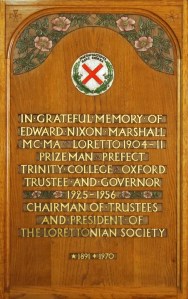
In 1925 Edward had become a governor of Loretto School. He maintained this association with his old school, becoming in 1946 Vice-chair of Governors till 1952 and Chairman of Governors from 1952 to 1956. He was also the President of the Fettesian-Lorettonian Club in 1951-52 and later, Lorettonian Society President from 1959 to 1963. He ceased to be a governor in 1961.16
Edward Nixon Marshall died on the 13th of March 1970 in a nursing home at 121 Hill Street, Glasgow. He was 78. He had been suffering from chronic bronchitis and emphysema. He was twice married and had been divorced from his first wife Rosamund Gregor. 17 His funeral took place at Glasgow Crematorium, Maryhill on the 17th of March 1970. 18
In his will he bequeathed the painting West Wind, Macrihanish by William McTaggart to Loretto School. The painting hung in the staffroom for many years until it was sold, with the consent of the family, at Gleneagles Hotel in 1998. The sum raised was £35,600, and helped to fund a new Technology Centre and library in the school. 19 Edward Marshall became a member of the Board of Governors of the Glasgow School of Art in 1943. 20 and this probably brought him into contact with leading artists of the day.
Figure 4. Plaque in the Chapel at Loretto School. Courtesy of Irene Molan, Database & Web Administrator, Loretto School
References
Glasgow Corporation, Minutes of Art Galleries and Museums Committee, 17th October, 1944, page 1542
Scotland`s People, birth certificate
ancestry.co.uk., 1901 Census
Records of The Lorettonian Society courtesy of Emma Sinclair, Membership Co-ordinator
ancestry.co.uk., 1911 Census
Records of The Lorettonian Society courtesy of Emma Sinclair, Membership Co-ordinator
Dictionary of Scottish Business Biography, 1860 – 1960, Anthony Slaven, Aberdeen University Press, 1986
London Gazette, 1st Jan 1918, page 41
Glasgow Post Office Directory, 1920-21
ibid
List of Members of the Merchants` House of Glasgow, Robert Anderson & Sons Ltd. 72, Howard Street, 1963; Matriculation Book of the Merchant`s House of Glasgow 1912-, Mitchell Library
Glasgow Post Office Directory, 1930-31
Scotland`s People, marriage certificate
Glasgow Post Office Directory, 1940-41
Records of The Lorettonian Society courtesy of Emma Sinclair, Membership Co-ordinator
ibid
Scotland`s People, death certificate
Glasgow Herald, 14th March, 1970, p16
Glasgow Herald, 29th August, 1998 and 3rd September, 1998
Glasgow School of Art, Archives, GOV 2/18, Board of Governor`s Minute Book, 1937-1945
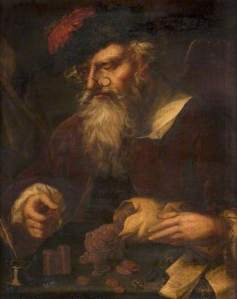
A Miser- 18th Century German School Accession Number 2367
The painting was donated in 1944. It is unsigned but has been attributed to the eighteenth century German School by Hamish Miles in 1961.1 In addition the National Inventory of Continental and European Paintings gives 1700 as the earliest date and 1800 as the latest date and goes on to say, “The figure of the old man,the embodiment of greed and miserliness,reflects well-known models of Netherlandish tradition ,including those of Rembrandt.”2 The inscription in the painting,”Haec mea voluptas” means,” this is my obsession.”
Although the painting was donated by Archibald Montgomerie Craig(AMC) it had belonged to his father William Blackburn Craig , a wealthy Glasgow merchant, at least as early as 1902.3 AMC also donated an 18th Century Scottish tablecloth dated 1783 or 1788 to Glasgow Museums in September 1925.4
There is no record of the painting ever having being exhibited.
Family Background
AMC’s paternal grandfather was James Craig, a wine and spirit merchant, who married Margaret Aitkin Blackburn in 1821.5James Craig had various business premises in Glasgow including 22 Stockwell Street and 9 Miller Street.6They were fairly affluent, living at such genteel addresses as Abbotsford Place7 and 4 Carlton Place in the Gorbals.8 Carlton Place was begun in 1802, designed by Peter Nicholson and the brainchild of John and David Laurie who had bought the land on the south side of the river, now known as Laurieston, with the intention of developing an up-market suburb on the south side of the River Clyde.9 James Craig and his family , including AMC’s father William, were living at 4 Carlton Place from at least 1851 to 1861 along with two live-in servants10, an indication of affluence. By 1861 ,William, aged 18, was a clerk, possibly in his father’s business.11
Family Homes to c 1890
Athough AMC was born at Fordbank House , Lochwinnoch, the Craigs only occupied this house between c 1872 and c1874.12 William Craig and his family followed the path of most wealthy Glasgow merchants, living first of all at various addresses in Glasgow’s New Town, Blytheswood Hill.13 William and Elizabeth’s first home post marriage in 1863 was in West George Street( formerly Camperdown Street) 14.From 1865 to 1871 they lived at 239 St Vincent Street.15
On returning from Renfrewshire they lived at 245 St Vincent Street then c187516 , as Blytheswood Hill was more and more being turned over to business premises, they moved out to the west end of Glasgow to 2 Lancaster Terrace off Great Western Road.17By the time AMC was about nine years old the family were living at 10 Westbourne Terrace18,in a terrace of houses designed by Alexander ‘Greek’ Thomson.19
Schooldays
AMC’s father owned 10 x£10 shares in Kelvinside Academy20, a private school which opened in the West End of Glasgow on 21st September 1878 with places for 155 boys.21The Kelvinside Academy Company Limited had a share capital of £15-20,000 in £10 shares.22 In Colin McKay’s History of Kelvinside Academy 1878-1978 there is a photograph of the First Elementary Class 187823 ,one of whom is Arthur Blackburn Craig, AMC’s elder brother.
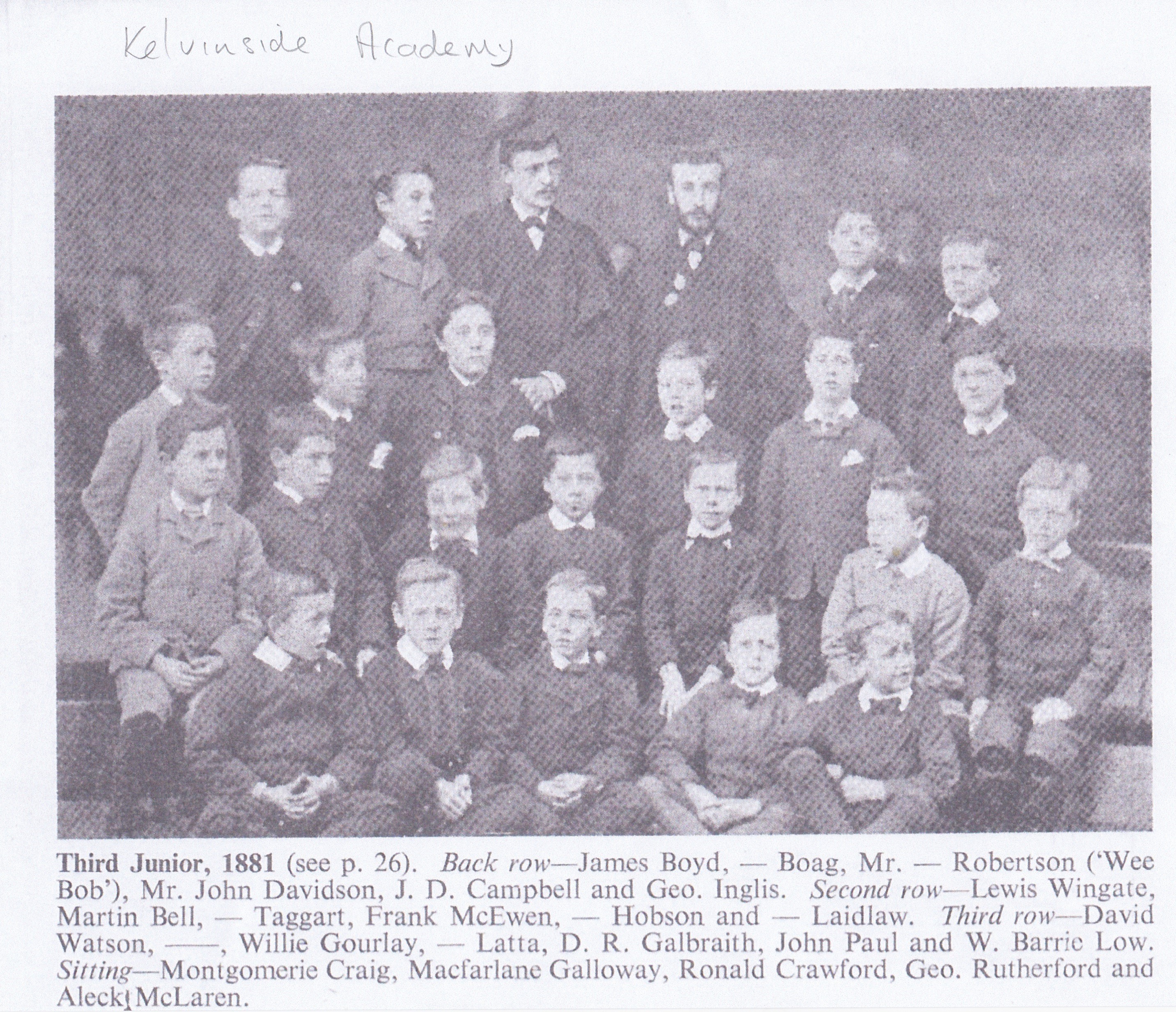
There is also a photograph of the Third Junior Class of 1881 where we find young Archibald Montgomerie Craig aged about eight . He is named in the photograph as ‘Montgomerie’. Elsewhere in the book we are told that AMC was known as ‘Gummy’ to his classmates.The curriculum in those early years included shorthand and book-keeping . The reason for this was that most of the pupils then were the sons of business men and were expected to join their father in business at the end of their time at the school rather than go to University.24 Although there is no evidence that Edward, the youngest Craig brother attended Kelvinside Academy, the fact that if three members of one same family attended the school only half the fee was due, might lead us to believe Edward went there too.25
According to the 1871 UK census William Blackburn Craig’s occupation was that of “drysalter”, a dealer in gums, dyes and various chemicals. From that period onwards he appears in census records as ‘living on private means’ or a ‘retired drysalter’.26 However the real wealth came from property. His obituary in the Bearsden and Milngavie Herald referred to “ …Mr William Blackburn Craig, well-known in property circles in Glasgow. One of his latest undertakings was the purchase of the valuable ground and the erection of a handsome block of red buildings in course of completion at the corner Buchanan Street and St Vincent Place…”.27 The Valuation Rolls tell us that in 1865 W B Craig was the owner of 5 properties in Glasgow City Centre consisting of three counting houses(Great Clyde Street and St Vincent Street) a warehouse(St Vincent Street) and two stores(St Vincent Street and Fox Street). 28 By 1895 he owned 41 properties in Glasgow City Centre, mostly in St Vincent Street and Virginia Street. These were rented out to a variety of businesses. No 11 Virginia Street was a Gospel Hall. No 63 St Vincent Street-presumably at street level- was a tea room.29 No 151 St Vincent Street was a branch of the Commercial Bank.30His own main business premises were at various times 63a St Vincent Street where John Smiths Bookshop was for many years31 and 147 St Vincent Street.32
Family Homes from c1890
Our donor, AMC, never married and lived most of his life with his family first with his parents and brothers and sisters 33 and latterly with his unmarried or widowed sisters .34 About 1890 the family moved to ‘Borva’, a substantial house in Middlemuir Road, Lenzie35 , a growing suburb of Glasgow to which many wealthy Glasgow merchants moved when the opening of a railway station made commuting to the city easy.36
William Blackburn Craig continued to follow the path of many wealthy Glasgow merchants when in 1896 he bought the 836 acre Ballagan Estate near Strathblane in Stirlingshire. Ballagan House was completely renovated and the family moved in around 1897.37 AMC was 18 by this time.
According to the 1891 UK Census AMC was an accounts clerk, one presumes in the family business. He first appears in the Glasgow Post Office Directory in 1897 as an iron merchant ‘at Arthur Blackburn Craig , iron merchant’ at 63a St Vincent Street. Thus he was working with or for his elder brother. He remained there until 1903. 38 William Blackburn Craig died in February 190339 and AMC became one of the trustees of Ballagan Estate along with his younger brother Edward and his three sisters. Strangely, Arthur Blackburn Craig, the eldest son, is not mentioned in the Will of William Blackburn Craig either as a beneficiary or as a trustee.40 Had Arthur already received his share in the family wealth, perhaps to set up in business for himself or is there some other explanation for the eldest son not to be mentioned?
Arthur had married Mary Balfour Robertson on 19th June 1900. The wedding took place at the Windsor Hotel, St Vincent Street. The wedding was carried out under the rites of the Episcopal Church.41 According to the 1901 UK census Arthur and his bride lived at ‘Beechmount’ Dalkeith Avenue Dumbreck, which was the home of Mary’s parents, Mr and Mrs Anthony Robertson. Anthony Roberston was an iron master42, which was also Arthur Blackburn Craig’s occupation at the time of his marriage.43
Had there been a family feud? Arthur’s sister Williamina was one of the witness at the wedding so some of the family were there.44 There is no evidence as to why Arthur was not mentioned in his father’s will.
AMC became head of the household at Ballagan in 1903. Also living in the house were his mother, Elizabeth Samson Craig until her death in 1908 45, his younger brother Edward who was an accountant and his three sisters, Elizabeth, Williamina and Margaret.46
In 1903 AMC joined H F Docherty and Company-gas and steam heating and appliance manufacturers of Robertson Street.47 He remained with Docherty and Company until around 1906.48 During this period AMC and HF Docherty registered three patents:-
1903Improvements in Gas Cooking Attachments for Kitchen Ranges
1905 Improvements in Apparatus for the Production of Acetylene Gas
1905 A New or Improved Generator for the Production of Acetylene Gas 49
Perhaps HF Docherty and Company manufactured this equipment for their customers but there is no information available to support this.
From about 1906 until 1914 AMC was in business for himself as a ‘bakery utensil manufacturer’ of whom there were many in Glasgow at that time.50 He had premises in St Enoch Square, then Queen Street, then from 1911 in Springfield Court between Buchanan Street and Queen Street.
In 1912 AMC put his name to another patent registration-Improvements in Egg Whisks.51 Robert McDiamid was the other name on the application. This was possibly a business or work colleague.From the technical drawing it appears that the egg whisk was for industrial rather than domestic use.
AMC’s elder brother Arthur was also operating his business as an iron merchant from the Springfield Court Premises from about 1910.Whatever the reason for not being mentioned in their father’s Will the two brothers appear to have been on good terms.52
The Saturday Soldier 1890-1903
Around 1890 at the age of 17 AMC became what was often referred to as a ‘Saturday Soldier’. He joined what would be known today as the Territorial Army. He joined the 5th Volunteer Battalion (Glasgow) Highland Light Infantry.53 This battalion is better known as ‘The Glasgow Highlanders’.
In 1859, after the Crimean War had ended, the Government decided a civilian Volunteer Force was needed in time of war when regular forces were deployed overseas. Regiments were formed at county level with no connection to the regular army.54
In 1868 a group of Glasgow migrants from the Highlands formed such a regiment. It was called the 105th Lanarkshire (Glasgow Highland) Rifle Volunteers.55
The 105th wore the Black Watch kilt and cap badge at that point.56 In 1881 Secretary of State for War Childers put through a series of reforms which linked the Volunteer Defence Forces more closely to regiments of the regular British army.57 The 105th was allied to the Highland Light Infantry and became the 10th Lanarkshire Rifles. In 1887 this was changed to the 5th Volunteer Battalion(Glasgow) HLI in . 58 Headquarters was 81 Greendyke Street near Glasgow Green.59
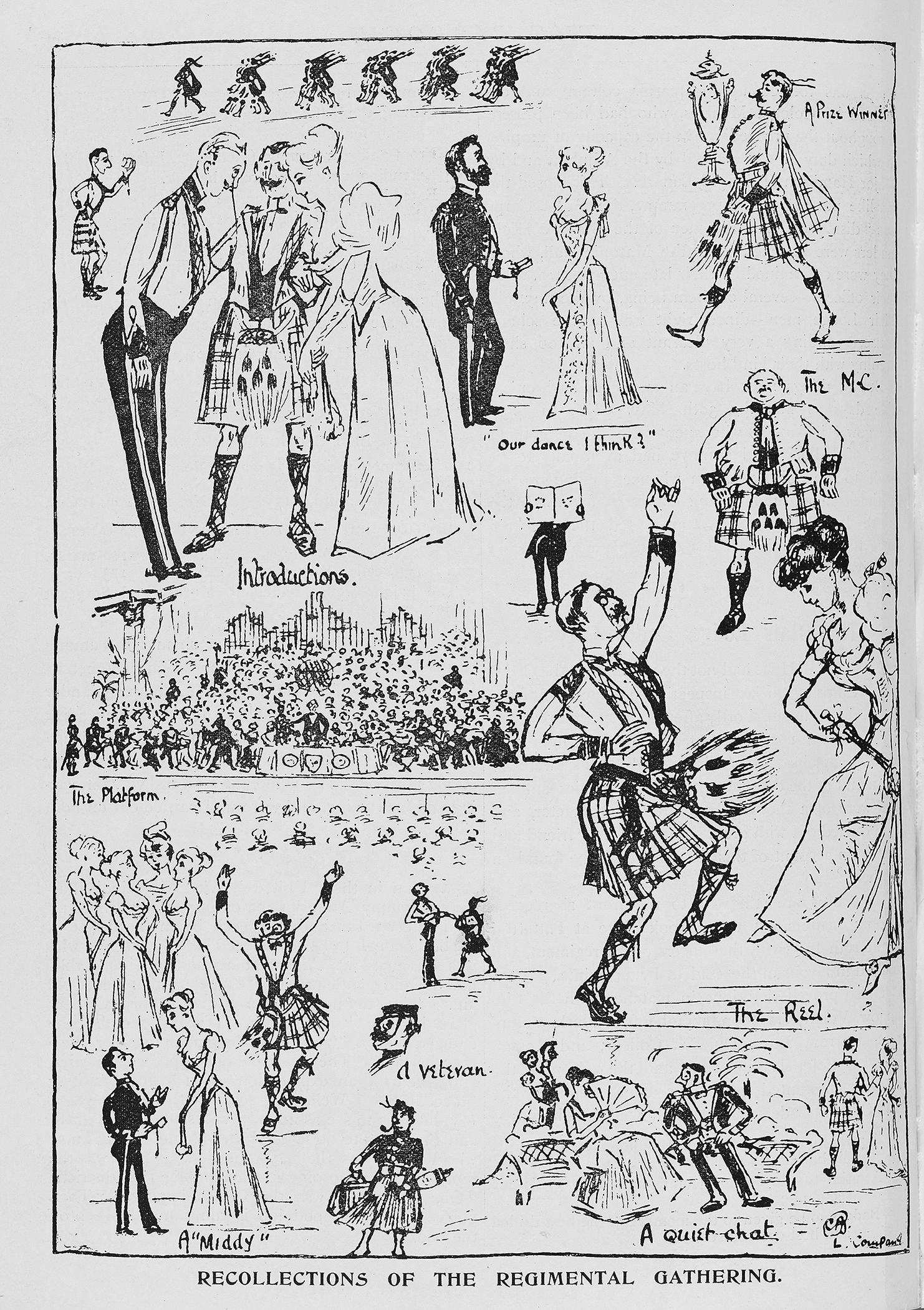
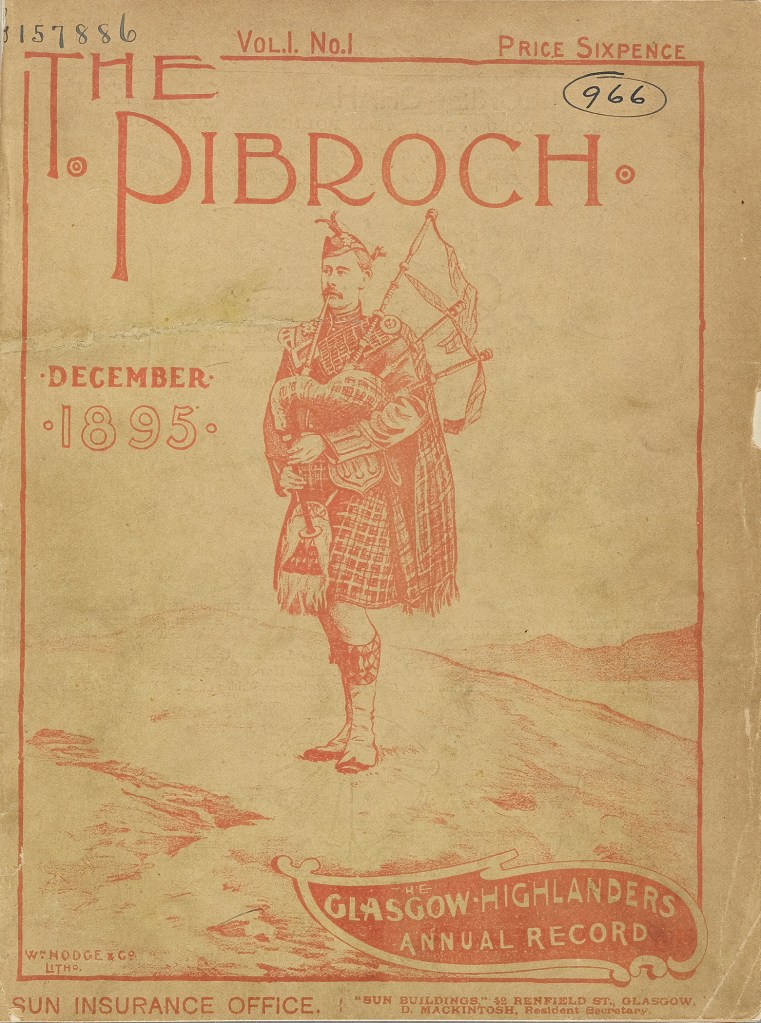
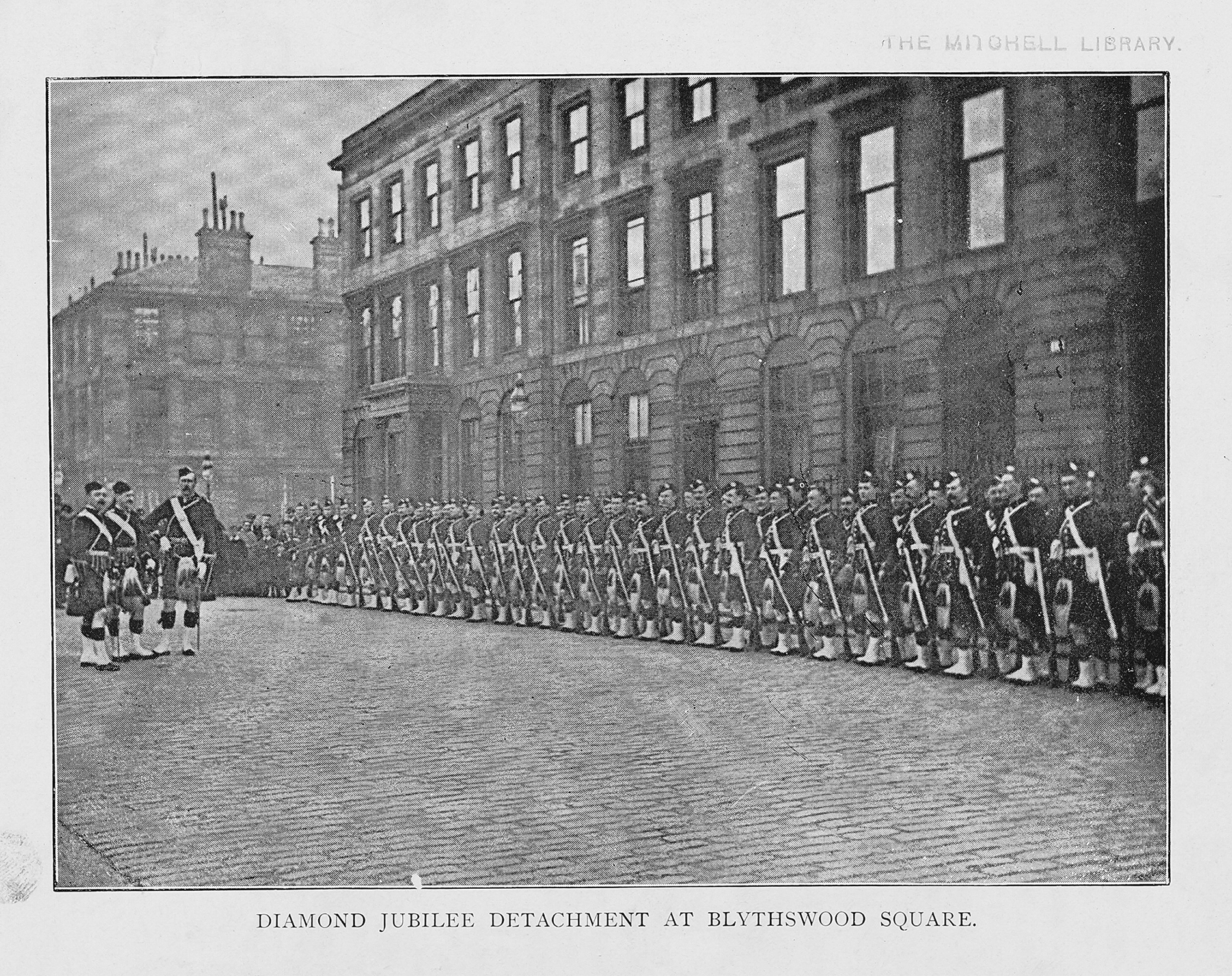
The 5th VB was distinct from the other HLI volunteer battalions because they continued to wear the Black Watch kilt rather than the Mackenzie tartan trews of the HLI. They did have their own cap badge by this time.60As well as regular drills and rifle shooting out at the Rifle Range at Patterton61, there was annual camp which , according to the The Pibroch, the annual report of the Glasgow Highlanders published each December from 1895, was much enjoyed by the volunteers.
An annual gathering each December at St Andrews Halls and one can imagine the good social life that would go along with the serious purpose of the organisation. In time of war many of the volunteers went on active service,in the South African War for example. In fact in 1900 the Annual Ball was cancelled and only a concert was held in order to respect those of the Highland Brigade who had fallen at Magersfontein.62
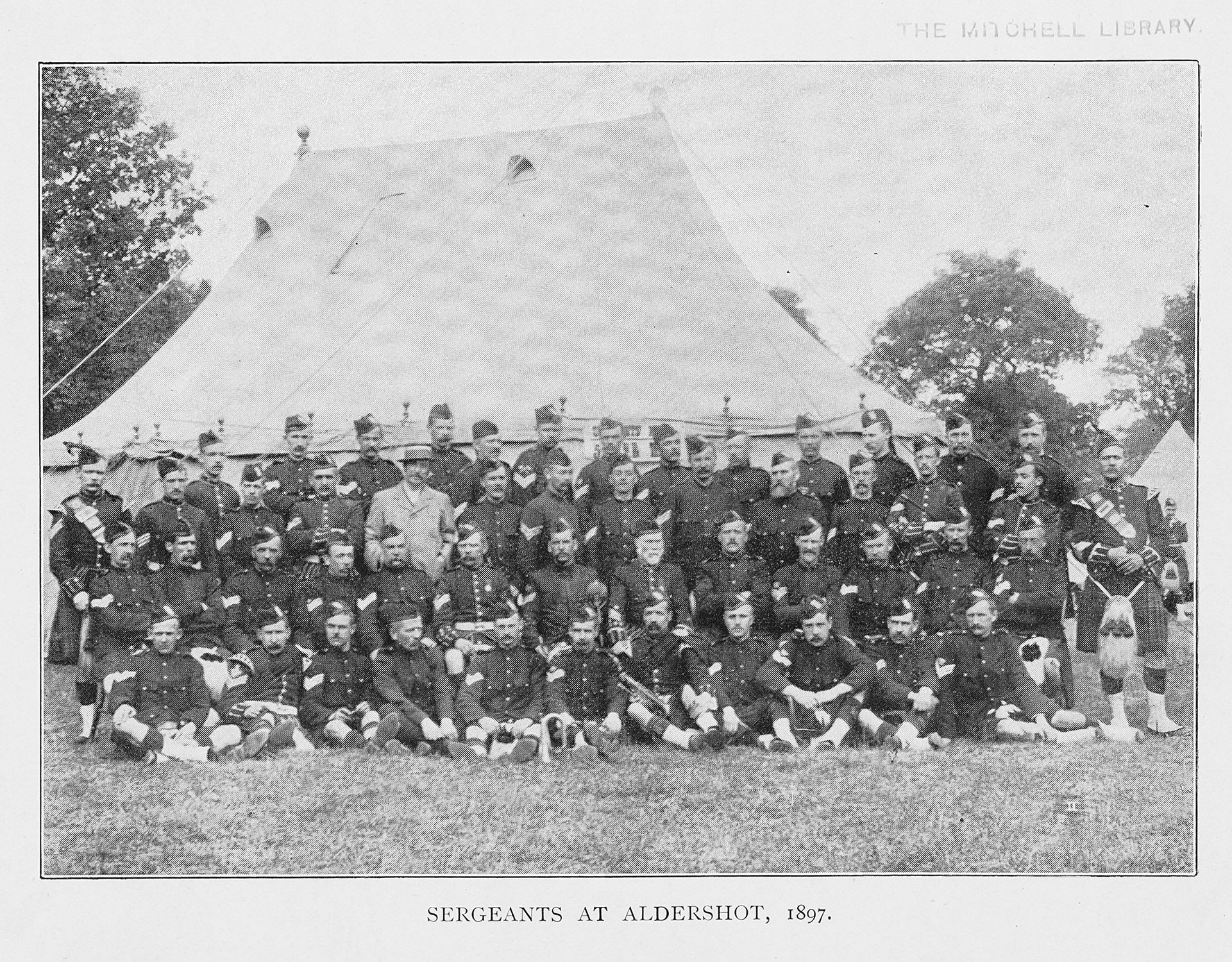
The 5th VB had companies A-M all over the city. AMC joined M Company based at Hillhead.63 This Company was commanded by Alexander Duff Menzies. AMC’s brother Arthur was already in M Company as Colour Sergeant.64The Pibroch-the annual record of The Glasgow Highlanders- enables us to follow AMC’s career as a Saturday Soldier.
For some reason AMC was demoted to Lance Sergeant again in 1899. The reason is not evident.68 Arthur resigned in 1899, the reason given is ‘expiry of term of service and other causes’ one of which may have been that he was due to marry the following year. AMC served until 1903, still as Lance Sergeant .On resignation he was given a special certificate ‘For long and good service’. AMC does not appear to have distinguished himself in any way-winning rifle shooting competitions etc- but appears to have given good service.69 Perhaps he resigned because of heavier business and family duties. His father had died in February 190370 and he was now head of the household. Also the volunteer forces were changing. The annual camp was shortly to be lengthened to two weeks and was to be compulsory, while the training was to brought much more in line with that of the regular forces.71 AMC was 31 by this time and perhaps he thought he had been a Saturday Soldier long enough.
War Service 1914-16
By the beginning of World War One in August 1914 the volunteer forces had been reorganised yet again.72 In 1908 the reforms of Richard Haldane,Secretary of State for War, had established the Territorial Force (TF) from the old volunteer brigades. In Scotland the TF consisted of 2 Divisions (1) Highland Division and (2) Lowland Division . AMC’s former battalion became the 9th (Glasgow Highland )Battalion HLI Territorial Force and was in the Lowland Division. The conditions of service had been altered from 1908.The men now had to complete 10 drills and a musketry course. The annual camp was now two weeks and was compulsory. This meant the entire annual holiday and more for many men in Glasgow and elsewhere. Even though many employers cooperated and the men were paid, a lot of good men resigned, either unwilling or unable to make this commitment. The weakness in the system, however was that no man in the Territorial Force was obliged to serve overseas.73
The 9th (Glasgow Highland)HLI now had eight companies-A-H and its HQ and Drill Hall was still 81 Greendyke Street. It was probably there that our donor reported when on 9th September 1914 at the age 41 he enlisted in 2/9th Battalion(Glasgow) HLI-still known as the Glasgow Highlanders.74
Along with his fellow volunteers AMC was sent to Lochend Camp Dunfermline. According to army records AMC (Service no 2989) was five foot six inches tall with grey eyes and grey hair. His occupation is given as that of commercial traveller .75 In October 1914 he was promoted to sergeant .76 On 24th October AMC signed Army Form E624 whereby he volunteered for overseas service. It appears that the volunteers in Dunfermline had been paraded before the commanding officer, Colonel W Fleming, for the purpose of urging them to commit themselves to overseas service, which most of them did .77
The 2/9th Battalion (Glasgow) HLI embarked for France in November 1914.78 However AMC did not go with them. No reason is forthcoming at that point but in August 1915 we find AMC in Craigleith Military Hospital in Edinburgh suffering from heart problems which had begun to show themselves in June 1915 . The medical report of 4th August 1915 states that he was suffering from myocardial disease which manifested itself in shortness of breath and occasional pains in his chest when marching etc. He was recommended for light duties.79
On 18th August 1915 AMC was transferred to 9th Scottish Provisional Battalion, Company A which was a reserve battalion used for coastal defence formed in May 1915 of home service men. The 9th Scottish was a battalion of the 1st Provisional Brigade’. The 1st Brigade was moved down to Kent in June 1915 and the 9th Scottish Provisional Battalion was stationed in Deal .80There is no information as to whether AMC was in Deal, one can only presume that he was with his battalion.
What is known is from 3rd September to 12th October 1915 AMC was a patient in Newcastle on Tyne Workhouse Military Hospital. His medical records state that he although he has myocardial disease the reason for his stay in Newcastle was that he was also suffering from a disease which was very common in the army at that time . AMC was discharged on 12th October 1915, presumably to go back to his battalion.81 In November 1915 he was promoted to Acting Company Master Sergeant of C Company. 82
There were several changes to the organisation and names of regiments and battallions of the British Army during 1915 and it has proved difficult to track the movements of AMC and the 9th Scottish Provisional Battalion during the period following AMC’s stay in Newcastle. However, by September 1916 he was at the 2nd Scottish Command Depot near Randalstown County Antrim in Northern Ireland. 83
Sir Alfred Keogh, Director of Army Medical Services, concerned about the availability of beds in UK Hospitals , set up four large convalescent camps in Blackpool, Epsom, Dartford and Eastbourne. This system was further refined early in 1916 by the establishment of over twenty Command Depots for the rehabilitative training of wounded soldiers who were too fit for a convalescent hospital but not fit enough to return to the front. One of these Depots was at Shanes Park near Randalstown, County Antrim in the grounds of Lord O’Neill’s Estate .84 Presumably AMC was there to assist in the retraining of troops as he had already been declared unfit for duty abroad .85
It was from here on 8th September 1916, after two years, that AMC was discharged from military service at his own request. The only reason given for his discharge was ‘Termination of Engagement ’.86 Perhaps it was AMC’s health problems or his age-he was 43 by this time. The Military Service Act of January 1916 had ended the distinction between home and foreign service and all Territorial Force soldiers became liable for overseas service but they had to be medically fit, which AMC was not. Also the age limit for conscription was 41 so perhaps it was a combination of his health and his age which led him to request his discharge.87
Home Again-Glasgow 1916-c1921
At some point in 1914 our donor’s three sisters, Williamina, Elizabeth and Margaret, had left Ballagan House and became tenants of Woodhall House , Kirkintilloch Road ,Bishopbriggs. 88 Ballagan House was rented to a farmer, John Paton. 89 Perhaps this was done because AMC, the head of the household, had volunteered for the army and the ladies wanted to live somewhere smaller(though Woodhall was a sizeable house ) and perhaps nearer to other members of the family. Younger brother Edward and his wife lived in nearby Lenzie in a house called ‘Craigmillar’ .90 The Ballagan Estate was eventually advertised for sale in November 1917 .91 It was sold to Colonel Peter Charles Macfarlane ,shipowner.92 The purchase price was £15,925.00. 93
It was to Woodhall House that AMC went after his discharge .94 According to the Glasgow Post Office Directories up to 1921 AMC was a commercial agent based at 63a St Vincent Street.After 1921 there is no trace of AMC in Glasgow again until 1931 except in 1925 when he donated an eighteenth century Scottish tablecloth to Glasgow Museums95 giving his address as 9 Kelvin Drive. The three Craig sisters had moved to 9 Kelvin Drive in the west end of Glasgow around 1922. 96
Where did he go? 1921-1931
AMC’s brother Arthur and wife Mary had moved to London around 1918 where Arthur set up in business as a merchant in Chancery Lane 97 with a home at 24 Regent Court Park Road in Westminster 98,a prestigious address and later as a land agent at 8 Blenheim Street Mayfair,SW1.99 Arthur and Mary spent the rest of their lives in London at various prestigious addresses including Belsize Park Hampstead, Baker Street100, Courtfield Gardens Kensington101 and from c about 1938 at 52 South Edwards Square Kensington 102 where Arthur died in on 20th August 1947. 103
Did AMC go down to London to join his brother? There are a few tantalising yet inconclusive pieces of evidence that suggest he may have gone to London. In the London Telephone Directories of 1922,1923,1925 and 1927 there are entries for an A. Montgomerie Craig in Chancery Lane where his brother Arthur was in business at that time and then in Dane Street Holborn. 104 As we have seen AMC was probably known as Montgomerie rather than Archibald since his school days. Did his sisters move to the much smaller house at 9 Kelvin Drive because their brother was moving to London? We can only speculate. These slight pieces of evidence alone cannot allow us to say definitely that these London Post Office entries refer to our donor. So his whereabouts remain a mystery until further sources of evidence can be accessed.
Later Life 1931-1947.
AMC re -appears as a Glasgow resident in 1931 living with his sisters at 9 Kelvin Drive. He was about 60 years old by this time.105 There is no evidence that he worked again after his return to Glasgow. 106 As we know he donated the painting The Miser to Kelvingrove Art Gallery and Museum in 1944. He died on May 26th 1947 of chronic myocarditis at the age of 74. 107 He was buried in the family grave at Glasgow Necropolis which had been designed for his father in 1903 by Glasgow architect James Thompson (1835-1905). 108
Figure 12. Craig Family Memorial Glasgow Necropolis- Epsilon. Copyright J M Macaulay
References and Notes
Miles, Hamish Catalogue of Dutch,Flemish and Netherlandish Paintings in the GlasgowArt Gallery. Glasgow Corporation 1961. Vol I p59
Glasgow Post Office Directories 1912-21; Glasgow Electoral Rolls 1931-1947
Glasgow Post Office Directories 1890-1895
The Edinburgh and Glasgow Railway Company opened a station in 1848 to serve the town of Kirkintilloch,naming it Kirkintilloch Junction. The building of houses around the station for Glasgow commuters began in the 1850s but the housing and population boom really began in the 1870s when piped and running water was made available to the villas. The North British Locomotive Company renamed the station Lenzie Junction in June 1890. http://www.edic.co.uk Local History and Heritage.
The Territorial and Reserve Forces Act 1907,also known as the Haldane reforms after Richard Haldane, Secretary of State for War, transferred existing volunteer and yeomanry units into a new Territorial Force where all units were attached to regiment of the British Army.
Glasgow City Archives TD366/3/2. Glasgow Highlanders, Notes on Battalion 1908-18.
James Donald was one of the principal donors to the Kelvingrove Gallery. Over his lifetime, he collected paintings from The Hague School, French Barbizon School and also from British artists such as Turner and Constable. Towards the end of nineteenth century, he also used to loan a number of his paintings to exhibitions held in Glasgow and Edinburgh. The bequest to the Gallery from James Donald in 1905, which contained paintings of the nineteenth century Dutch, French and British oil paintings and watercolours, set the foundation for the Kelvingrove Galleries’ Impressionist Collection. During his lifetime, James Donald also made significant donations to his home town of Bothwell.
James Donald was born in 1830 in Bothwell, Lanarkshire. His parents were Mr John Donald, a grocer and spirit dealer in Bothwell and Mrs Jane (Lang) Donald. He had two older brothers, John born in 1826 and Gavin born in 1828 and a younger brother Robert who died in infancy. After the deaths of his father John Donald in 1834, when our donor was only four years old, and his brother John Jr. in 1841 [1], his mother Mrs Jane Donald found herself running the business as grocer and spirit dealer alone and looking after two young boys. This difficult period in the Donald Family’s life is somehow relieved when Mrs Donald, our donor’s mother married George Miller, a manufacturing chemist in 1843 (the Banns were proclaimed in Bothwell and Glasgow). In the 1851 census, it is recorded that the family has moved to 3 James Street, Calton, Lanarkshire near Bridgeton. However, in this census, our donor, James Donald is not listed with the family. The occupation of Mr Miller, James Donald’s stepfather is listed as the Head of the household and his occupation is described as manufacturing chemist employing 74 men in his firm.
From the Glasgow Post Office Directories 1905-1906 [2] the name and the address of his stepfather’s Chemical Manufacturing firm to be:
Miller, George, & Co., gas coal-tar distillers, manufacturers of sulphate of ammonia, naphthas, benzoles, pitch, carbolic acid, creosote, and dipping oils; 40 West Nile Street.
The works; 89 Rumford St.
Miller, Geo., commission agent; 20 Smith St., Hillhead.
In the 1861 census, the Miller Family is still in Glasgow but James is still not with them. At the time of the 1861 census, the family had moved to 137 Greenhead St, Calton, Glasgow. In the 1871 census, James Donald re-appears. He is now 39 years old and the address is Wingfield Bothwell Lanarkshire. He is recorded as the stepson of the Householder George Miller (retired manufacturing chemist) and his occupation is recorded as Manufacturing Chemist.
During this period (1861), there appears to be a court case taken against George Miller and Company by the famous chemist James (Paraffin) Young and others with regard to some dispute over patent infringement [3]. However, the name of James Donald does not appear in the records quoted.
James Donald’s stepfather George Miller of Wingfield Bothwell died on the 5th January 1877. His estate was valued [4] at £13,649 8s 5d with an additional estate of £410.
In the 1881 census, James appears on the census as living at 5 Queens Terrace, Barony, Lanark. He is the head of the house and his brother Gavin is staying with him. There is also a domestic servant in the house by the name of Margaret Nicholson. In the 1891 census, it is recorded that James is now 60 years old and married to Emily Mary. Mr and Mrs Donald are living with their daughter also called Emily. There are four others in the household. Their address is recorded as: 5 Queens Terrace, Barony, Lanark.
In the 1901 census, James Donald appears in the English Census as living in 96 Anerly Park, Anerly, London SE, Borough of Camberwell, Hamlet of Penge. He is living with his wife Emily Mary and two servants. His son-in-law Harry Busby lives with Emily at 94 Anerly Park, Anerly, London.
On the 16th March 1905, Mr James Donald died. The following notice was recorded in the Death Notices of the Glasgow Herald [5] of 21st March 1905:
Donald, – At 96 Anerly Park Anerly, London on 16th March (inst.) James Donald also of 5 Queens Terrace, Glasgow – Friends please accepts this (the only) intimation.
The key words which was used in this search was ‘manufacturing chemist’, the profession of Mr James Donald. It was evident that James Donald, the donor, worked in his stepfather’s firm, George Miller and Co. in Glasgow as a Manufacturing Chemist. Because of the scientific nature of his profession, initially, it was assumed that he might have been a graduate of Glasgow University. However, a search in the register of graduates revealed that his name did not appear there. We know that all university students do not necessarily graduate for one reason or another. Therefore, it is possible that Mr Donald may have attended the university but not graduated. No further search was made as to his university education.
From his collection which was bequeathed in 1905, it was clear that he was a keen art collector. As there were a number of well known art dealers in Glasgow in the 1880s, such as Alexander Reid and Craig Angus, it was fairly easy for him to indulge in collecting the works of the new art of the era. Our donor was particularly interested in the artists of the Hague School of the Netherlands and French Realists such as Jozef Israëls and Jean Francoise Millet respectively.
Furthermore, it is known that he also made significant contributions to Bothwell, the town of his birth. Firstly, in 1880, he donated the Centre Window of the Bothwell Parish Church [6]. This is a three-light window whose theme is a series of six parables drawn by Sir John E Millais R A which originally appeared in a magazine called “Good Words” edited by Dr Norman Macleod [7] in the 1860s. Other portions of the windows were designed and the entire work was executed by Cottier & Co. of London in 1880. A picture of this window is depicted below.
Figure 1. Centre Window of Bothwell Parish Church. Courtesy of the Rev.James Gibson.
An inscription on the brass plate beneath the picture states “This window was gifted by Mr James Donald in expression of his appreciation of the order in which the parish Church graveyard had been put by the Heritor’s of Bothwell during the Ministry of the Rev. John Pagan M A, March 1880.”
Secondly, another contribution of James Donald was to erect a monument to Joanna Baillie, who was a famous daughter of Bothwell. Her father, Rev. James Baillie (c.1722–1778), was a Presbyterian minister and briefly, during the two years before his death, a Professor of Divinity at the University of Glasgow. Her mother Dorothea Hunter (c.1721–1806) was a sister of the great physicians and anatomists, William and John Hunter.
Joanna Baillie was born in the manse behind the church on 11th September 1762. Her father having died in 1776, Joanna and the family moved to London where she was later to become a friend of Sir Walter Scott. Joanna spent the rest of her life in Hampstead where she is buried. Here, she was to gain fame as a poet and a playwright, often writing in her native lowland Scots dialect, her verse “Family Legend” being one of her best known works. A picture of the Joanna Bailley Memorial is shown below. More information about Bothwell Church and Joanna Baillie monument may be obtained from the links below.
Figure 2. Joanna Bailley Memorial in Bothwell. Courtesy of the Rev. James Gibson
The third important contribution made by James Donald to the town of Bothwell was to leave money in his will for a place of education and recreation for boys. This resulted in the building of the Donald Institute in 1910 by the architect Alexander Cullen who had secured the commission by competition. Later, the Donald Institute was converted to Bothwell Public Library which to this day contains a room dedicated to James Donald called the “Donald Institute”. More information can be obtained from the following link:
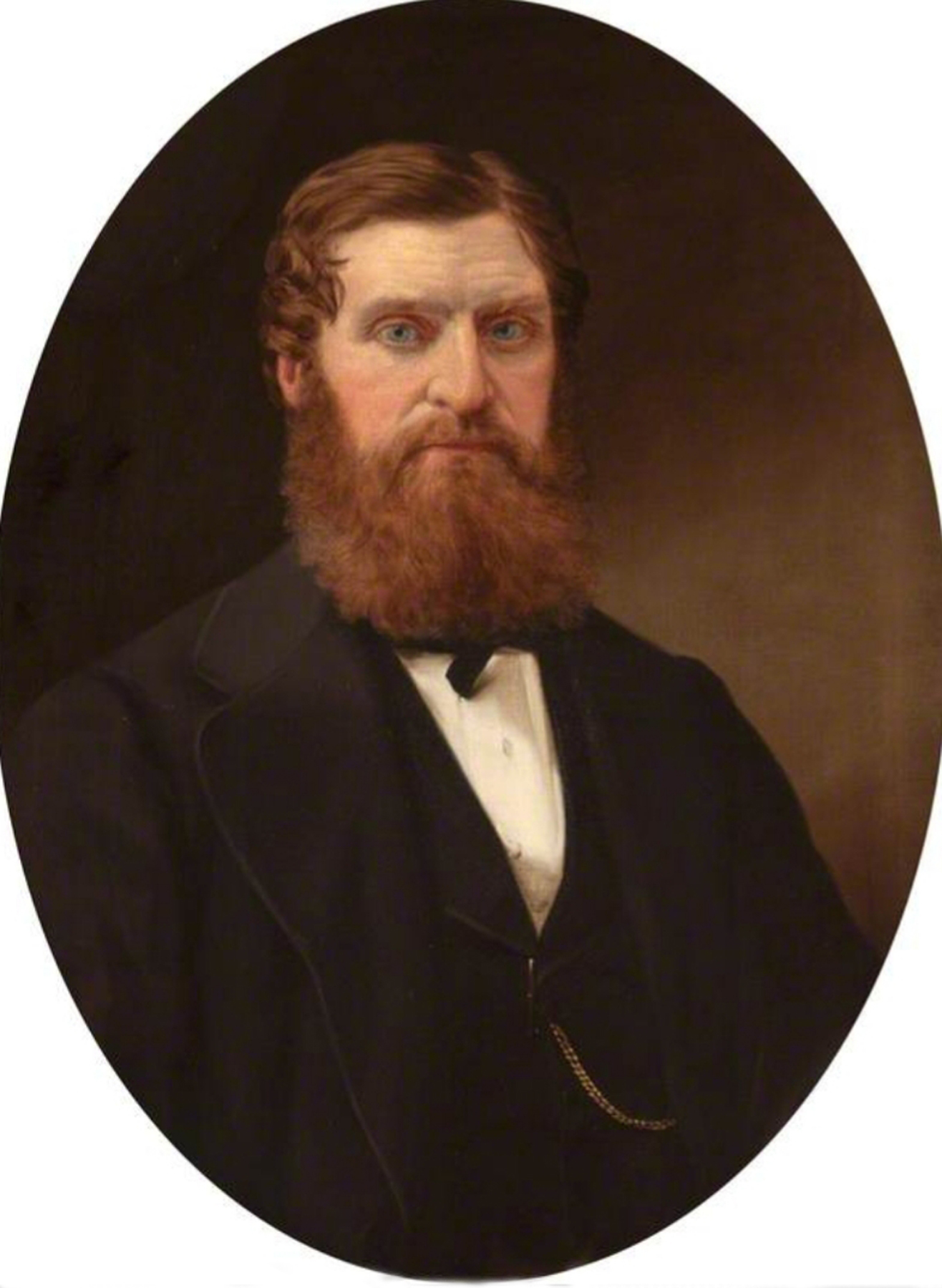
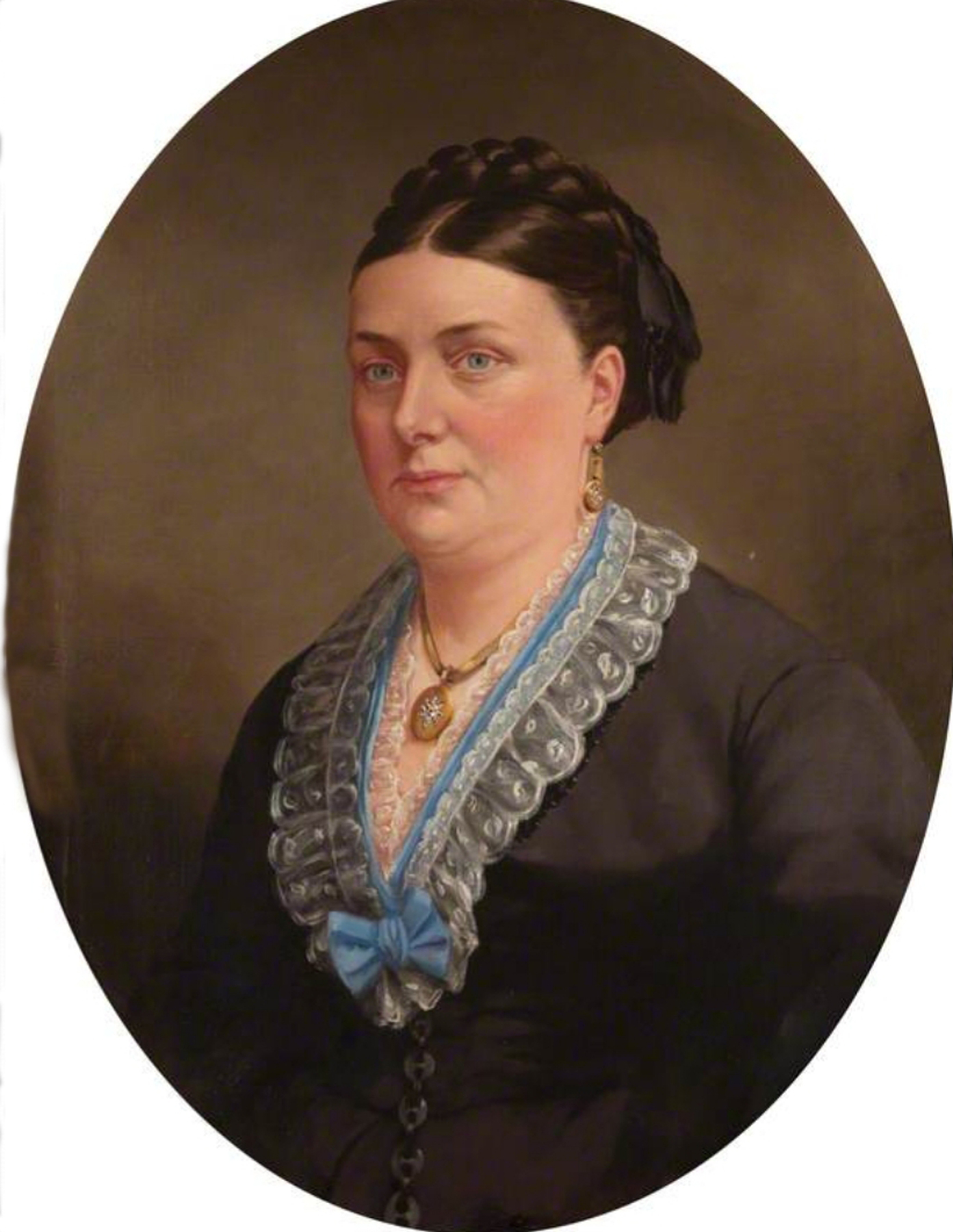
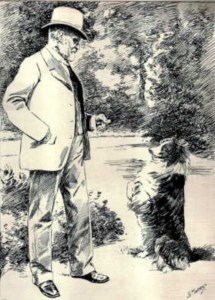
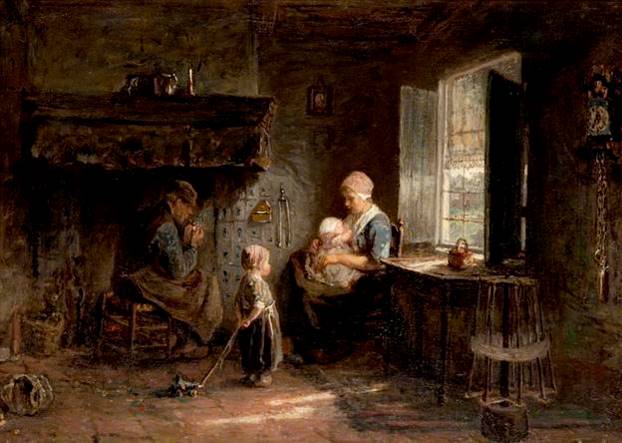
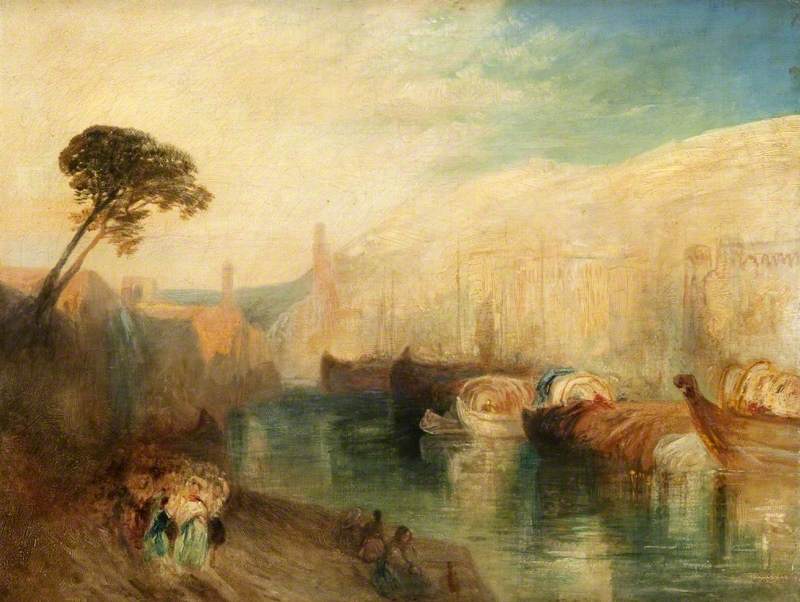
When he died on 16th March 1905, James Donald bequeathed to the Corporation in trust of the City of Glasgow a large number of paintings and bric-a-brac. A descriptive inventory and valuation of the pictures etc. had been prepared by an expert, who had valued the bequest at over £42,000 (in the year of 1905). The pictures include some of the finest examples of Turner, W.Q. Orchardson, Velasquez, Corot, Rousseau, Millet, Kalf and other eminent artists. The copies of the official minutes are kept by the Corporation of the City of Glasgow, in chronological order. Below are the 4 of his 40 paintings that James Donald gifted to the Gallery.










 Glasgow Museums Art Donors Group