Dr Arthur James Ballantyne (1876 – 1954)

There was submitted an offer by Dr A. J. Ballantyne, 11 Sandyford Place, Glasgow C3, to gift the oil painting Interior by Tom McEwan, and the committee, after hearing a report from the director, agreed that the picture be accepted and that a letter of thanks be sent to the donor.1 The painting was received on 30 January 1942.
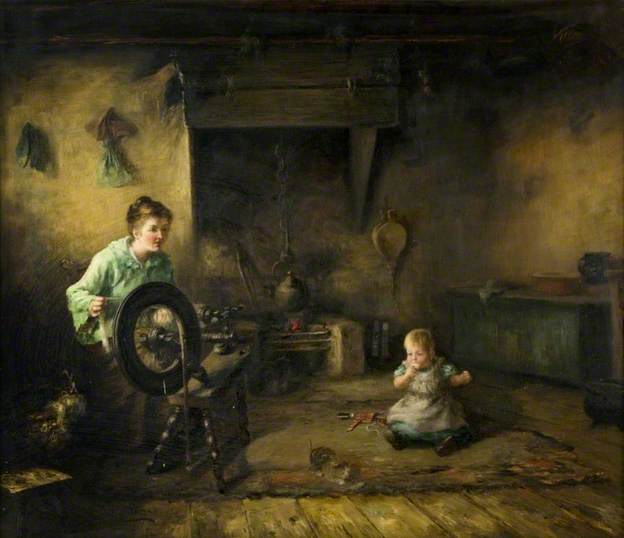
Fig. 1 Interior – (The Spinning Wheel) (2268) – Tom McEwan

© CSG GIC Glasgow Museums (Not listed on ArtUK)

The painting was exhibited at the Royal Glasgow Institute of the Fine Arts Annual Exhibition of 1895, priced at £65 2
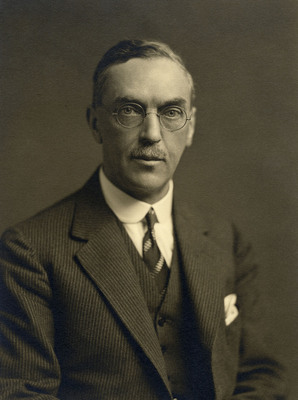
  Fig. 2 Arthur James Ballantyne (1876 – 1954)

            Arthur James Ballantyne was born on 13 July 1876, at 36 Dalhousie Street, Blythswood, Glasgow 3. He was one of a ‘large and brilliant family of a Glasgow merchant.4

His father Thomas Ballantyne was a pawnbroker and jeweller who had married Jane Kate Chalmers on 20 September 1870 in Glasgow 5. Thomas Ballantyne was born in Paisley in 1828, and this was his second marriage. Jane Kate was born in Dundee in 1838. According to the 1881 Census, in addition to Arthur, aged four, there were nine other siblings at 36 Dalhousie Street ranging in ages from 20 years to 2 months 6. Thomas Ballantyne died of cancer in 1887 leaving Jane ‘living on private means’. 7 The family moved to 260 Renfrew Street, Glasgow and in the 1891 Census there were eight children at home with one servant employed 8.

            Arthur Ballantyne was educated at Garnethill School, Glasgow and graduated M.B., Ch. B. in 1898 and M.D. in 1901 from the University of Glasgow. 9 His doctoral thesis was entitled Contusion Injuries to the Eyeball. 10 After spending a year at the University of Vienna, he returned to Glasgow and spent two years as Assistant House Physician and Assistant Surgeon at the Glasgow Eye Infirmary. He joined the Ophthalmological Society of the United Kingdom in 1903 and in 1906 was elected to the Fellowship of the Royal Faculty of Physicians and Surgeons of Glasgow. He was appointed Surgeon at the Glasgow Eye Infirmary in 1909 – a post he held until 1935. In 1909 he was appointed Professor of Physiology at Anderson`s College of Medicine. This post was relinquished in 1914 when he became Professor of Ophthalmology at the College. The previous year he had held a similar post at St. Mungo`s College. 11

            At the 1911 Census,Arthur was living with his mother and brother Thomas who was a civil engineer and two servants at 11 Sandyford Place, Anderston. His occupation was ‘physician, eye-specialist. 12 On 14July 1916 he attended a meeting of the Oxford Ophthalmological Congress where he read a paper on Quinine Amaurosis. He was then ‘Surgeon to the Glasgow Eye Infirmary’ 13. During the latter stages of the First World War, he was given a temporary commission as a lieutenant in the Royal Army Medical Corps and was appointed Ophthalmic Surgeon to the 67th General Hospital in Salonika 14. When he arrived in Salonika, he was to take the place of a certain Dr Tom Honeyman (later Director of Kelvingrove Art Gallery and Museum, Glasgow) who had become ill due to an attack of fever.15

            In 1920, Ballantyne was appointed Lecturer in Ophthalmology at the University of Glasgow. In the same year, on 23 June, at the age of 43, he married Jessie Snodgrass, the daughter of one of his colleagues. She was 27. The marriage took place in the Grand Hotel, Glasgow 16. Sadly, Jessie died from eclampsia on 27January 1928. 17 It may have been on this occasion that he reportedly wrote to a colleague, ‘These have been sad days for us, but work and service remain to make life worthwhile.’ 18

            Part of this “work” involved travelling to give lectures on his research and on 15 August 1930, he arrived in Montreal, Canada aboard the Duchess of Bedford. His final destination was St. Albans, Vermont in the U.S.A. 19 almost certainly to deliver lectures there.

            He was appointed the first Tennent Professor of Ophthalmology at the University of Glasgow in 1935, a post he held until his forced retirement in 1941 due to age rules. (The Tennent chair was the first in Ophthalmology to be founded in the United Kingdom. It was endowed by Gavin Patterson Tennent who graduated M.D. from the University in 1870). On his retirement, Arthur Ballantyne was awarded an LL.D. by the University and made an Emeritus Professor. 20
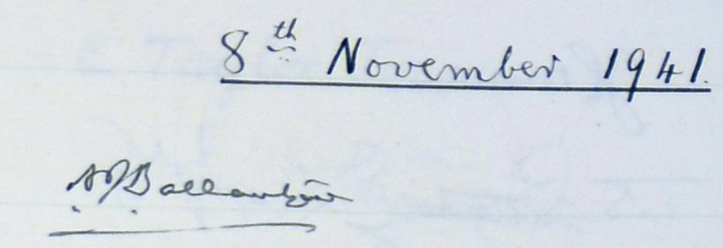
               Fig. 3 Arthur Ballantyne`s signature on the Register of Awards of
Honorary LL.D. s 21

He ‘continued his ground-breaking research in diabetic retinopathy’ and was awarded the Mackenzie Medal in 1942. (This award was established in 1924 to mark the centenary of the Glasgow Eye Infirmary. It was named after its founder and was awarded to an eye surgeon who had made a special contribution to ophthalmology). In 1943 Dr Ballantyne delivered the Montgomery Lectures in Dublin and in 1946 the Doyne Memorial Lectures at Oxford. 22

            In 1947 he travelled to Roanoke College in Virginia to be awarded an honorary D.Sc. degree. It was recorded in the immigration papers that he was ‘aged 70 and a widower, 5 ft 5 ins tall, fair complexion with grey hair and grey eyes’.23 He continued to publish original research and in 1950 was awarded the Nettleship Medal for the ‘best piece of original work by a British ophthalmologist published in any journal during the previous three years’. 24

            Despite living all his life in the West End of Glasgow, Arthur Ballantyne retired to the village of Killearn, and he died there on 9 November 1954 aged 78. The cause of death was cardiovascular degeneration. 25 His estate was valued at £83,051:14:0 26. An obituary recorded that while ‘His professional work claimed most of his time, he was an expert in colour photography and a connoisseur of art in which he was not a mere dilettante; he was a member of the Committee of the Glasgow Institute for Fine Arts and was on the hanging committee’ (of that Institute). 27 An obituary was also published in the British Journal of Ophthalmology.28

            Arthur Ballantyne was a ‘prolific contributor to medical literature’  and had an international reputation for his research activities. He served upon the editorial committees of the Glasgow Medical Journal, the Ophthalmoscope, Ophthalmologica, and the British Journal of Ophthalmology. He was co-author of the Textbook of the Fundus of the Eye which was published posthumously in 1962. A description of the book stated that; “The problems of the fundus of the eye were the life-long study of the late Professor Arthur J. Ballantyne who brought to them an unusual patience fordetail and an appreciation of their importance in the understanding of the total picture. He stimulated a generation of Glasgow ophthalmologists with his interest”. 29

References

  1. Minutes of Corporation of Glasgow, 17 February, 1942, C1/3/105, p791.
  2. Billcliffe, Roger, The Royal Glasgow Institute of the Fine Arts, 1861-1989: A Dictionary of Exhibitors at the Annual Exhibitions, (Woodend Press, 1990).
  3. Scotland`s People, Birth Certificate
  4. Thomson, A. M. Wright The Glasgow Eye Infirmary, 1824-1962
  5. Scotland’s People, Marriage Certificate
  6. ancestry.co.uk, Scottish Census, 1881
  7. Thomson, A. M. Wright The Glasgow Eye Infirmary, 1824-1962
  8. ancestry.co.uk, Scottish Census, 1891
  9. www.universitystory.gla.ac.uk
  10. www.bjo.bmj.com
  11. www.universitystory.gla.ac.uk.
  12. ancestry.co.uk, Scottish Census, 1911
  13. British Journal of Ophthalmology, 1917; 1; 153 -161
  14. British Journal of Ophthalmology, 1917; Supplement to the London Gazette, 2 July 1917.
  15. Webster, Jack, From Dali to Burrell, The Tom Honeyman Story, B & W Publishing, Ltd., Edinburgh, 1997
  16. Scotland’s People, Marriage Certificate
  17. Scotland’s People, Death Certificate
  18. British Journal of Ophthalmology, 1955; 39:1, 63 – 64.
  19. ancestry.com, Border Crossings: From Canada to U.S., 1895 – 1954
  20. Archives of the Royal College of Physicians and Surgeons,
  21. Glasgow; University Archives
  22. Minutes of the Royal College of Physicians and Surgeons of Glasgow, 6 December 1954.
  23. ancestry.com, New York, Passenger Lists, 1820 – 1957.
  24. Minutes of the Royal College of Physicians and Surgeons of Glasgow, 6 December 1954.
  25. Scotland’s People, Death Certificate
  26. Confirmations and Inventories, 1954. National Records of Scotland.
  27. British Journal of Ophthalmology, 1955; 39:1, 63 – 64.
  28. Minutes of the Royal College of Physicians and Surgeons of Glasgow, 6 December 1954.
  29. http://www.amazon.com/Textbook-Fundus-Arthur-Ballantyne-F-R-F-P-S/dp/B007LVOPXY/ref=sr_1_1?s=books&ie=UTF8&qid=1372834404&sr=1-1

Appendix

The library of the Royal College of Physicians and Surgeons of Glasgow has a set of instruments called Ballantyne Droppers. These were used and probably designed by Arthur Ballantyne.
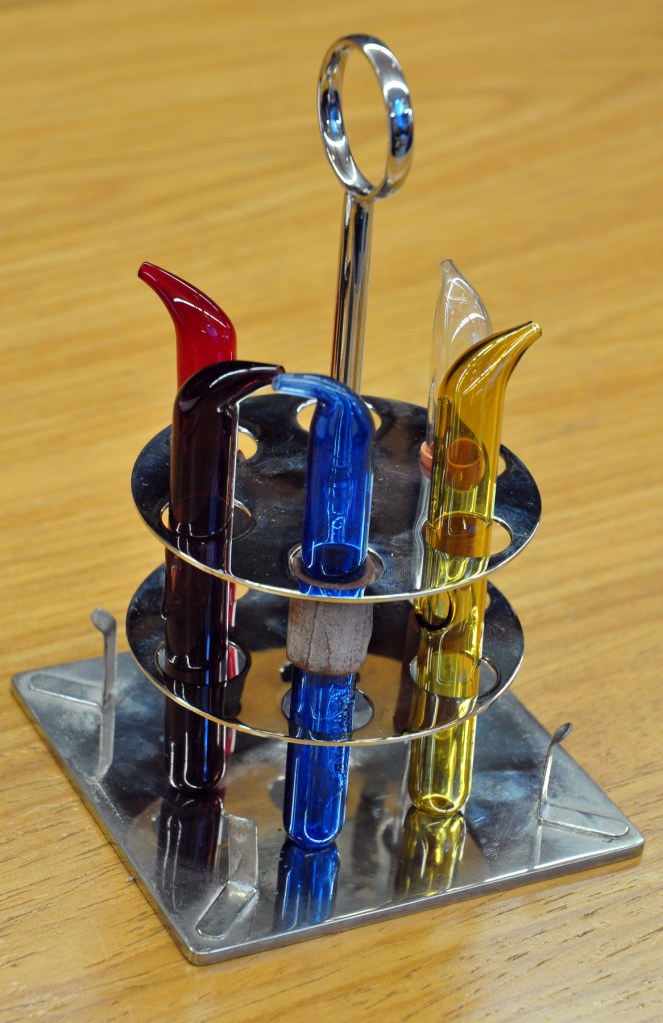
Fig. 4, A Set of Ballantyne Droppers
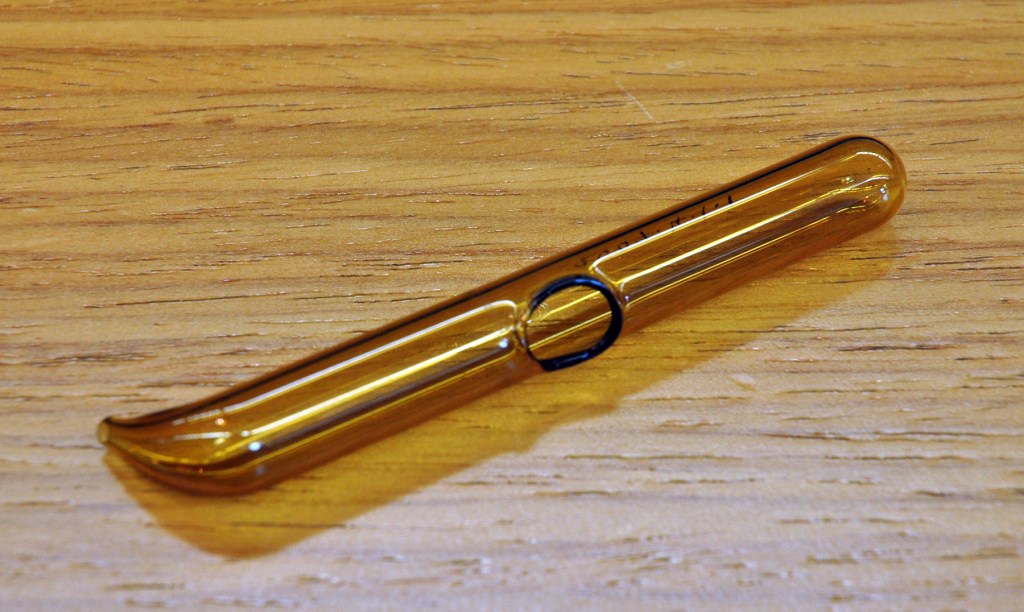
Fig. 5, A Ballantyne Dropper

Sir Thomas McCall Anderson 1836-1908

Figure 1. McTaggart,William: SummerBreezes( 2368) Glasgow Museums Resource Centre © CSG GIC Glasgow Museums  Collections.

Donors: Mary Constance Parsons, Helen Muriel Buchanan

The Glasgow Corporation Minutes of 1943-44 detail the donation of the McTaggart painting shown above. The offer of donation was from Mrs Muriel Buchanan of Helensburgh and she offered the painting on behalf of herself and her sister, Mrs Charles Parsons. (1)

Figure 2. Sir Thomas McCall Anderson 1836-1908. https://eleanor.lib.gla.ac.uk/record=b1474623.

Sir Thomas McCall Anderson and Lady Margaret McCall Anderson were the parents of the two donors of the painting. Sir Thomas McCall Anderson was the son of Alexander Dunlop Anderson, who was a doctor and President of the Faculty of Physicians and Surgeons in Glasgow. His mother was Sara McCall. (2)

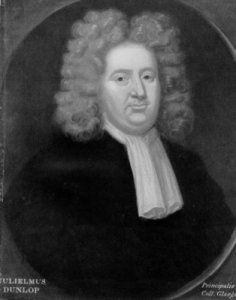
Sir Thomas came from an eminent Glasgow family with noted clerical and medical ancestors. These included William Dunlop, Principal of Glasgow University 1690 – 1700; Reverend Mr Anderson, Minister of the Ramshorn Church in Glasgow; and John Anderson, Scientist. (3)                                                         

Figure 3. William Dunlop. Principal of Glasgow University 1690-1700. University of Glasgow Archives and Special Collections, University Photographic collection, GB248 UP2/11/1

William Dunlop (1645-1700) was a Covenanter, Minister and  latterly principal of the University of Glasgow from 1690 to 1700. He was the son of an Ayrshire minister. He came from a Covenant supporting family and as a young man he  worked as a tutor for the family of Lord Cochrane, who was also a Covenanter. He went to Carolina, which at that time was known to be a place sympathetic to Protestant Non Conformists and he served there as both a minister and as a member of the militia. He came back to Scotland after the Revolution of 1688 and the accession to the British throne of William III  and was appointed Principal of Glasgow University in 1690. His appointment was believed to be helped by the influence of his brother in law and cousin, the royal adviser William Carstares and to Dunlop’s role in exposing a plot to undermine the authority of the King in Scotland. He invested In the ill-fated Darien Scheme and persuaded Glasgow University to match his considerable donation. (4)

John Anderson (1668-1721), noted in the Dictionary of National Biography as a theologian and controversialist , (5) was ordained minister of Dumbarton and became embroiled in the controversy between the Episcopal and the Presbyterian churches. He was a stout defender of Presbyterianism. In 1720, after much debate within the church about his appointment, he was appointed Minister of the Ramshorn Church in Glasgow. His tenure was short. He died in 1721 at the age of 53. He is buried in the Ramshorn Churchyard. His grandson, Dr John Anderson erected a tombstone in his memory. (6)

OP-4-1-6
Figure 4. John Anderson: Strathclyde University Archives. Image courtesy of the University of Strathclyde Archives and Special Collections (reference:OP/4/1/6)

Dr John Anderson (1726 – 1796) was the founder of Andersonian College, Glasgow and a noted contributor to the advancement of science throughout his life. He graduated from Glasgow University in 1745. He enlisted as a volunteer officer in the Jacobite rebellion of 1745-1746. In 1755 he was appointed Professor of Oriental Languages at Glasgow University. Known as ‘Jolly Jack Phosphorus’ to his students, Anderson was less popular with some of his colleagues, becoming involved in quarrels and even legal disputes with them. He developed an Experimental Philosophy evening class which was advertised in local papers and which was available to the working classes. In 1786 he published a book , The Institutes of Physics  to help his students. It ran to five editions in ten years. Anderson’s will showed plans for the foundation of Anderson University, which stipulated that women should be allowed to attend lectures. Andersonian College is now Strathclyde University (7)

Sir Thomas McCall Anderson became a noted physician who held the chair of Medicine in Glasgow University and who was also an Honorary Physician to the King in Scotland.

Sir Thomas began his medical studies at Glasgow University in 1852 and went on to study in Europe – in Paris, Wurzburg, Berlin, Vienna and Dublin. In 1861, he founded the Glasgow Skin Dispensary with Andrew Buchanan. In 1865 he became the Professor of Practice of Medicine at Anderson’s College. In 1874 Thomas McCall Anderson was appointed Chair of Clinical Medicine at Glasgow University. He held this post until 1900, in conjunction with the post of Physician to the Western Infirmary. In 1900 he became Chair of Practice of Medicine at Glasgow University. Sir Thomas maintained family tradition through his medical work, but also through his lifelong membership of the Church of Scotland. He was an elder in Park Church, Glasgow and also had interests in his life outside of work, being a keen cyclist and golfer. He died suddenly on 25 January 1908 in the St Enoch Hotel Glasgow after making a speech at a dinner there. He is buried in the Necropolis.  The only son and the youngest child of the family, also named Thomas McCall Anderson, went to America in 1908 to study medicine at the University of Maryland Medical School. He became physician to the Actors’ Fund of America and the St George Society of New York. He died of a heart attack on 24 March 1939 aged 57. (8)

Sir Thomas and Lady McCall Anderson had six children. The oldest Anderson daughter, Katherine,  followed her father into medicine, becoming matron of a hospital in Newcastle Infirmary, then moving to become Matron of St George’s Hospital in London. She served with the Red Cross during the South African War for which she was awarded the Royal Red Cross. She returned to military nursing during the first World War, serving as matron in several Military hospitals.(9)

The donors of the painting were the two youngest daughters of the family, Mary Constance, born in 1873 and Helen Muriel, born in 1879. Both women were married and lived in Scotland, Muriel Buchanan in Helensburgh and Mary Parsons in Glasgow.

The object file for the painting identifies the two children in the painting as being the daughters of Sir Thomas McCall Anderson. The painting was completed in 1881. Looking at the children in the painting and at the ages of the two youngest Anderson daughters, it seems likely that the two donors are the two children in the painting. Helen Muriel would have been aged two and Mary Constance would have been aged seven at the time the painting was completed. The older sisters at this time would have been aged eleven, thirteen and fifteen and do not seem to match the ages of the children in the picture. If the two younger sisters are the subject of the painting, this would explain why it was in their possession and was theirs to dispose of as they wished. (10)  Lachlan Goudie’s History of Scottish Art acknowledges that these paintings of children were McTaggart’s bread and butter and enabled the artist to spend his summers in Kintyre, working on the seascapes for which he would become famous. (11)

There is little further available information about the donors. Mary Constance was born in Largs in 1873. In 1900 she married Charles Parsons, a stockbroker. Helen Muriel born in Glasgow in 1879 married Andrew Buchanan, a chartered accountant in 1915. Muriel Buchanan died in Helensburgh in 1950. Mary Constance Parsons died in Glasgow in 1963. (12)

1.Glasgow Corporation Minutes. November 1943 – April 1944 p.815

2. http://www.universitystory.gla.ac.uk/image/id?=UGSPOO893

3. The Baillie July 31st 1907, Men you Know no.1815

4. http://www.universitystory.gla.ac.uk/biography

5. COOPER, James, 1912, Dictionary of National Biography : London: Smith,       Elder and Co

6. BLAIKIE,  William Garden, 1901: ANDERSON, John  in:  STEPHEN, Leslie: Dictionary of National Biography :London: Smith Elder and Co

7. Strathclyde University Archives      https/www.strath.ac.uk/archives/iotm/may2010/

8. Glasgow Herald: 27.01.1908; 28.01.1908; 30.01.1908; 03.02.1908

9.  Oxford Dictionary of National Biography 2020. Introduction

10. Object File, GMRC. Summer Breezes, William McTaggart 2368

11. GOUDIE, Lachlan , 2020: The Story of Scottish Art :London.:Thames and Hudson

12. Scotland’s People, www.scotlandspeople.gov.uk

Anderson Thomas McCall, Birth 646/3 1 472: 1906

Anderson, Mary Constance, Birth 602/6 8 1873

Anderson, Helen Muriel Dunlop, Birth 644/9 1879

Other sources consulted: Who’s Who in Glasgow 1909 pp.4

Sir George Thomas Beatson (1848-1933)

In 1933 Sir George Beatson bequeathed  Haul on the Sands painted by Joseph Henderson in 1874, a Glasgow based artist who became known for his marine paintings. Henderson was a frequent exhibitor at the Royal Scottish Academy and at the Royal Glasgow Institute of Fine Arts, and was president of the Glasgow Art Club. 

Henderson, Joseph, 1832-1908; Haul on the Sands
Figure 1. Henderson, Joseph; Haul on the Sands; Glasgow Museums; (© CSG CIC Glasgow Museums Collection)

George Beatson was born in Trincomalee, Ceylon (now Sri Lanka) in 1849 to Surgeon-General George Stewart Beatson (1) and Mary Jane Cochrane.(2) George senior was honorary physician to Queen Victoria and served with distinction in Ceylon and India during the Crimean War, subsequently becoming principal Medical officer at Netley Hospital in Hampshire. The impressive hospital buildings were not however well designed for patients welfare and it was Florence Nightingale who subsequently put pressure on the government to improve facilities.(3) Mary Cochrane, whose family came from the Isle of Man,  was the daughter of an officer who was a member of The Ceylon Rifles.(4)

 George junior followed in his fathers footsteps in medicine and his name is now very much associated with cancer treatment in Scotland, particularly in Glasgow.

Sir_George_Thomas_Beatson._Photograph_by_T._&_R._Annan_&_Son_Wellcome_V0026013
Figure 2.   Sir George Thomas Beatson           Photograph by T & R Annan and Sons, Creative Commons Attribution 4.0 , Wellcomecollection.org/works/jkp6w8u

George was brought up in Campbeltown, Argyll with his parents and attended school there. He continued his education at King Williams College in Isle of Man, presumably due to his mothers connection to the island. From there he studied at Clare College, Cambridge where he achieved Batchelor of Arts in 1871, and continued his medical studies at the University of Edinburgh, where he qualified as Batchelor of Medicine in 1874.(5) It was during this period that he became interested in the treatment of breast cancer and graduated as Doctor of Medicine in 1878. His final thesis focused on the links between ovulation, lactation and cancer. In 1896 he published a paper on oophorectomy, a surgical procedure to remove the ovaries, in which he proposed a treatment for advanced breast cancer and which became standard practice in cancer treatment.(6) 

While in Edinburgh George became House Surgeon and studied antiseptic principles under Lord Lister, who was Professor of Surgery at the University of Glasgow in 1860, and who is commemorated by a statue in Kelvingrove Park in Glasgow. During Beatsons time as House Surgeon at University of Edinburgh, W E Henley, a patient and poet friend of R L Stevenson, composed some lines to describe George’s character…

Exceeding tall, but built so well his height,

Half disappears in flow of chest and limb,

Frank-faced, frank-eyed, frank-hearted, always bright,

And always punctual-morning, noon and night,…(7)

Perhaps not the finest poem ever composed but it probably describes him well, as he appears to have been a highly respected figure who combined compassion with ambition.

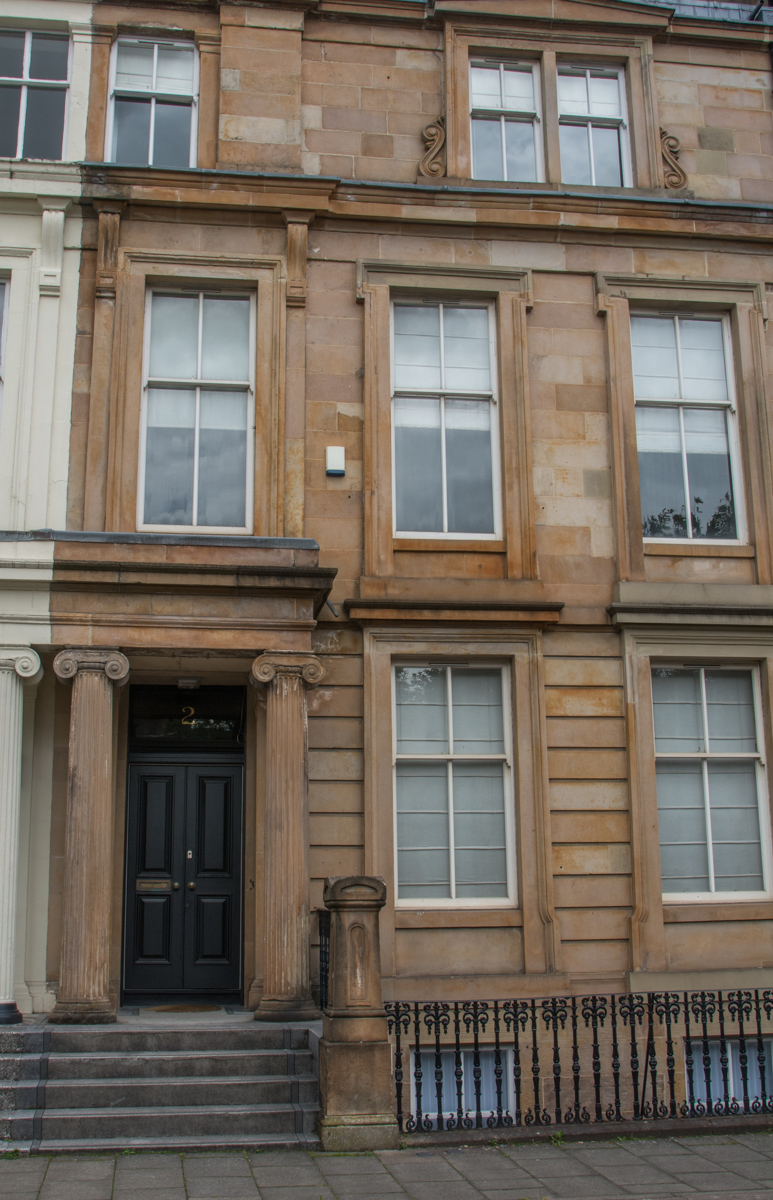
George moved to Glasgow in 1878 and took up general Practice before progressing to surgical appointments in the Western Infirmary.(8) He lived at 2 Royal Crescent, Glasgow (9) till around 1900 when he moved to 7 Woodside Crescent nearby and remained there till his death in 1933. (10)

DSC_9997
Figure 3. 2 Royal Crescent, Glasgow. Photograph by author

In 1893 he was appointed to Glasgow Cancer and Skin Institute, renamed Glasgow Cancer Hospital in 1894, was appointed Director and took complete control over its functions. He appears to have had formidable organisational and administrative skills, perhaps influenced by his military background. He encouraged research at the hospital and pioneered radium therapy in Scotland.

 He persuaded Lady Burrell, wife of the shipping magnate who gifted the Burrell Collection to Glasgow, to provide £10,000 to open the Radium Institute at 132 Hill Street, Glasgow.(11) On the establishment of The National Health Service in 1948 the hospital came under the control of the Western Board of Management and in 1953 was renamed The Royal Beatson Memorial Hospital in his memory. (12)

The clinical section was moved to a new centre within the Western Infirmary and was named The Beatson West of Scotland Cancer Centre. In 2007 the Centre was moved to new state of the art premises within Gartnavel Hospital in Glasgow’s West End which has clinical links with 21 hospitals in the west of Scotland. It is the second largest facility of its type in the UK.(13)

Beatson’s pioneering research played an important role in improving cancer treatments and this work continues at The Beatson Institute in Glasgow. In 1967 the Department became The Beatson Institute for Cancer Research and in 1976 moved to new premises at Garscube Estate in Glasgow.(14)

Beatson_Institute_for_Cancer_Research,_Glasgow_02
Figure 4. Beatson Institute for Cancer Research, Glasgow. Creative Commons Attribution-Share Alike 4.0 International, Permission of Vojtech Dostal.

George managed to make time for other interests. At the end of the 19th century there was no ambulance service in Glasgow and he pioneered the forming of the St Andrew’s Ambulance Association. He was also active in the Volunteer Association, forerunner of the Territorial Army. He played a leading role in the Scottish Red Cross Association in Glasgow and a portrait of him remains at their headquarters in Glasgow.(15)

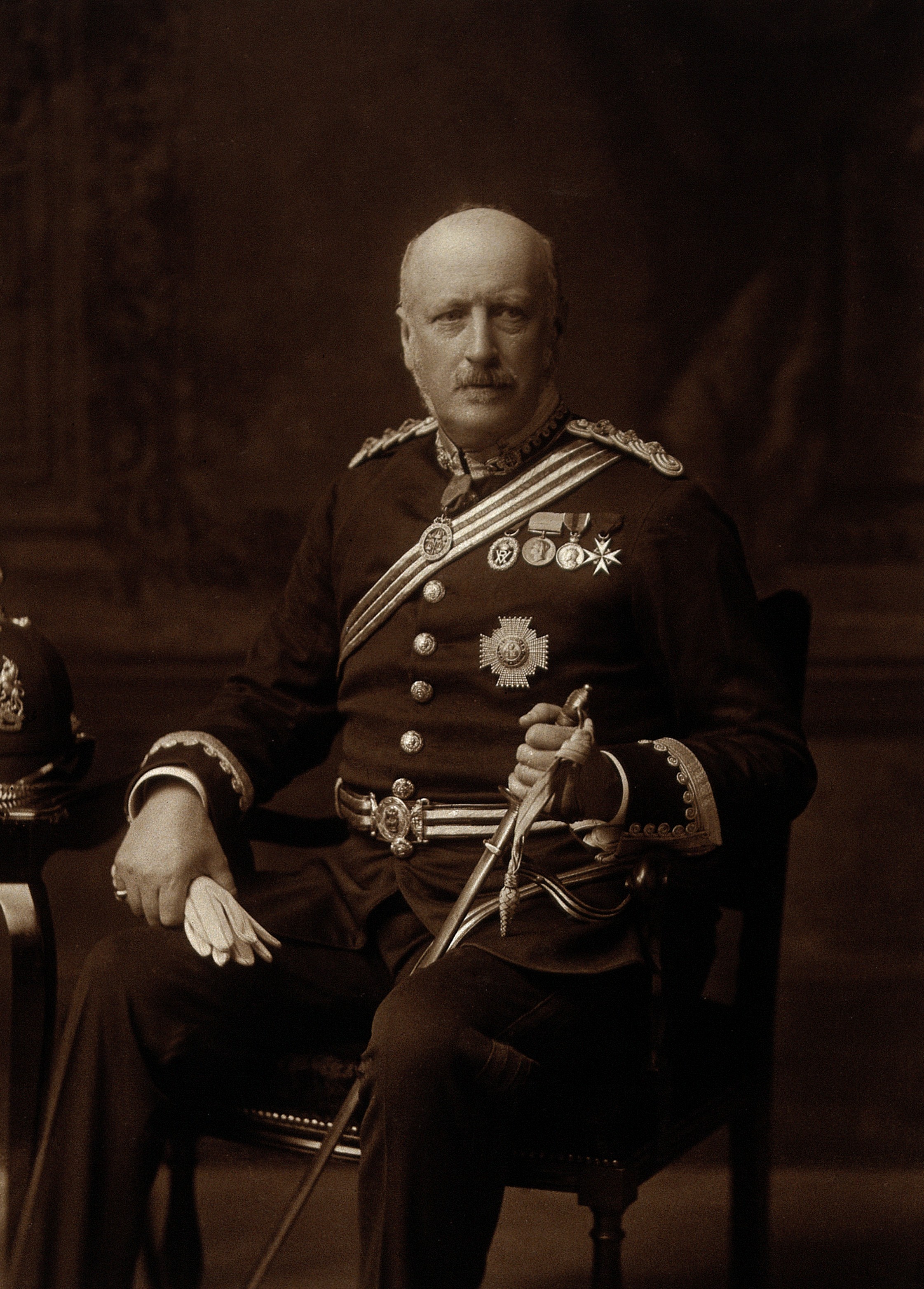
V0026014 Sir George Thomas Beatson. Photograph by Warneuke.
Figure 5. Sir George Thomss Beaton. Credit: Wellcome Library, London. Wellcome Images images@wellcome.ac.uk http://wellcomeimages.org Sir George Thomas Beatson. Photograph by Warneuke. Published: – Copyrighted work available under Creative Commons Attribution only licence CC BY 4.0 http://creativecommons.org/licenses/by/4.0/

During his long and active career he received many honours and decorations. He was knighted in 1907 and awarded an OBE in 1918 in recognition of his services during World War 1 and in 1919 he became Deputy Lieutenant of City of Glasgow.(16) In 2006 the University of Glasgow commissioned a bronze bust of Sir George by Guyan Porter, a Glasgow based artist, for the Hunterian Museum.

Beatson, George by
Figure 6. Bust of George Beatson by Guyan Porter, Hunterian Museum, Glasgow. Creative Commons Attribution Share Alike 4.0 International, permission Stephen C Dickson

Sir George died at his home at 7 Woodside Crescent, Glasgow in his 85th year on 16th February 1933 after a period of ill health.(17) The funeral was held at Park Church and was attended by representatives of many medical organisations including The Red Cross and St Johns Ambulance. His ashes were interred at his mothers grave on the Isle of Man.(18)

DS

References –

  1. https://www.universitystory.gla.ac.uk/biography/?id=WH27292&type=P
  2. Deaths, Beatson George, Thomas K (644/12 0213), http://www.scotlandspeople.gov.uk
  3. https://en.wikipedia.org/wiki/Netley_Hospital
  4. https://www.beatson.scot.nhs.uk/content/default.asp?page=s32
  5. https://en.wikipedia.org/wiki/George_Beatson
  6. https://www.universitystory.gla.ac.uk/biography/?id=WH27292&type=P
  7. https://www.thebreastonline.com/article/0960-9776(92)90121-H/pdf
  8. https://www.universitystory.gla.ac.uk/biography/?id=WH27292&type=P
  9. Census 1891 Beatson George T (644/09 018/09 012), www.scotlandspeople.gov.uk 
  10. Deaths, Beatson George, Thomas K (644/12 0213), www.scotlandspeople.gov.uk 
  11. https://www.thebreastonline.com/article/0960-9776(92)90121-H/pdf
  12. https://www.beatson.scot.nhs.uk/content/default.asp?page=s32
  13. https://www.nhsggc.org.uk/your-health/health-services/cancer-services/the-beatson-west-of-scotland-cancer-centre/
  14. http://www.beatson.gla.ac.uk/About/history.html https://www.thebreastonline.com/article/0960-9776(92)90121-H/pdf
  15. https://www.thebreastonline.com/article/0960-9776(92)90121-H/pdf
  16. https://www.bmj.com/content/1/2627/1090.3
  17. Deaths, Beatson George, Thomas K (644/12 0213), www.scotlandspeople.gov.uk
  18. https://acsjournals.onlinelibrary.wiley.com/doi/pdf/10.3322/canjclin.33.2.105