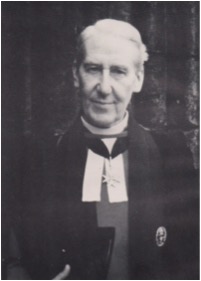
Reverend John McClure Brodie (1874-1964)

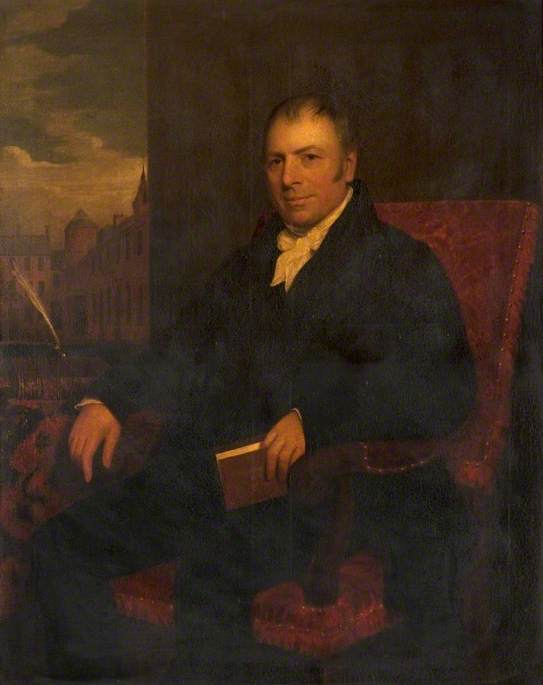
Figure 1. Bailie John Alston of Rosemount by John Graham Gilbert. © CSG GIC Glasgow Museums Collection.(www.artuk.org).

This portrait was donated to Glasgow Art Galleries  in 1953 by  the Reverend John McClure Brodie. The painting had originally been owned by the Glasgow Blind Asylum in Castle Street and was offered to Glasgow Art Galleries in 1934 when the building was sold  to Glasgow Royal Infirmary. However the Galleries Committee rejected the work and it was given to our donor.1

The subject of the portrait was our donor’s great- grandfather .2
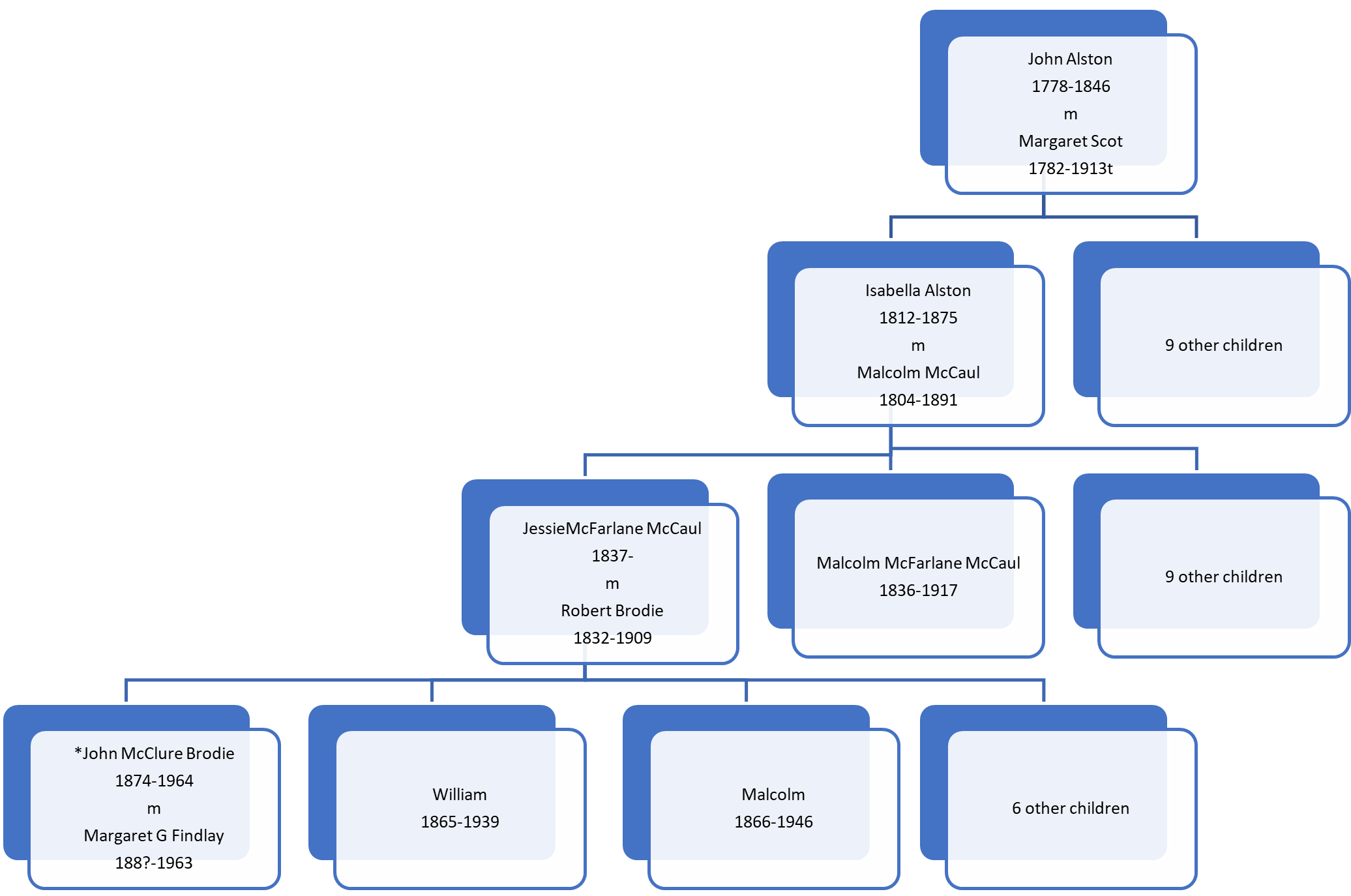
Figure 2. Alston/Brodie Family Tree. © J M Macaulay

John Alston was a cotton manufacturer based at 55 Glassford Street ,Glasgow but lived at Rosemount House on the Rosemount Estate  in the area of Glasgow now known as Roystonhill, previously known as  Garngad.3 The Rosemount Estate was described as,’ composed of beautiful grounds and orchards.’  The area is now a housing estate but its history is remembered by  one of the streets being named Rosemount Street.4
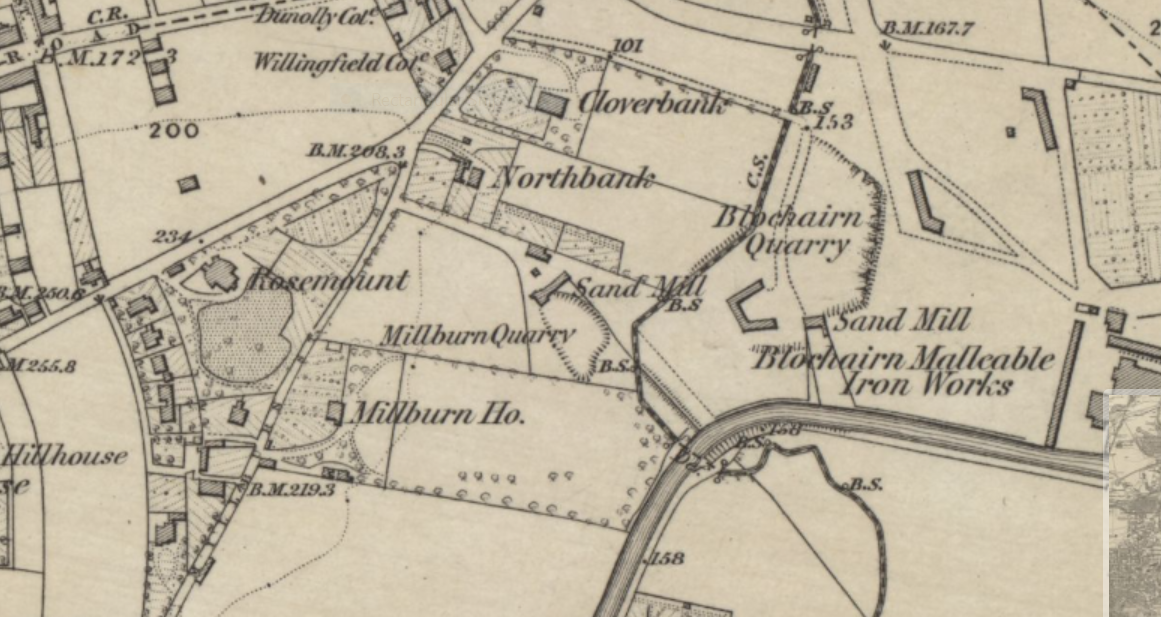
Figure 3. Extract from map showing position of Rosemount Estate, Garngad, Glasgow c. 1858. © National Library of Scotland.

During his life in Glasgow John Alston was a town councillor, a magistrate and Deacon Convenor of the Incorporated Trades and a tireless supporter of many charities. However he is best known for his work for the Glasgow Blind Asylum of which he was a director and honorary treasurer and enthusiastic  fund- raiser. He developed a system of reading for the blind using an embossed version of the Roman alphabet arguing that sighted people could then teach the blind to read. Alston Type  was used at the School for the Blind in Paris for many years before the adoption of the system invented by Louis Braille.  Alston produced the first embossed copy of the New Testament  printed on the Asylum printing press. His ambition was that every blind child in the country  should be able to read The Word of God. By 1844 almost 14,000 volumes of the whole Bible had been distributed across the country.5
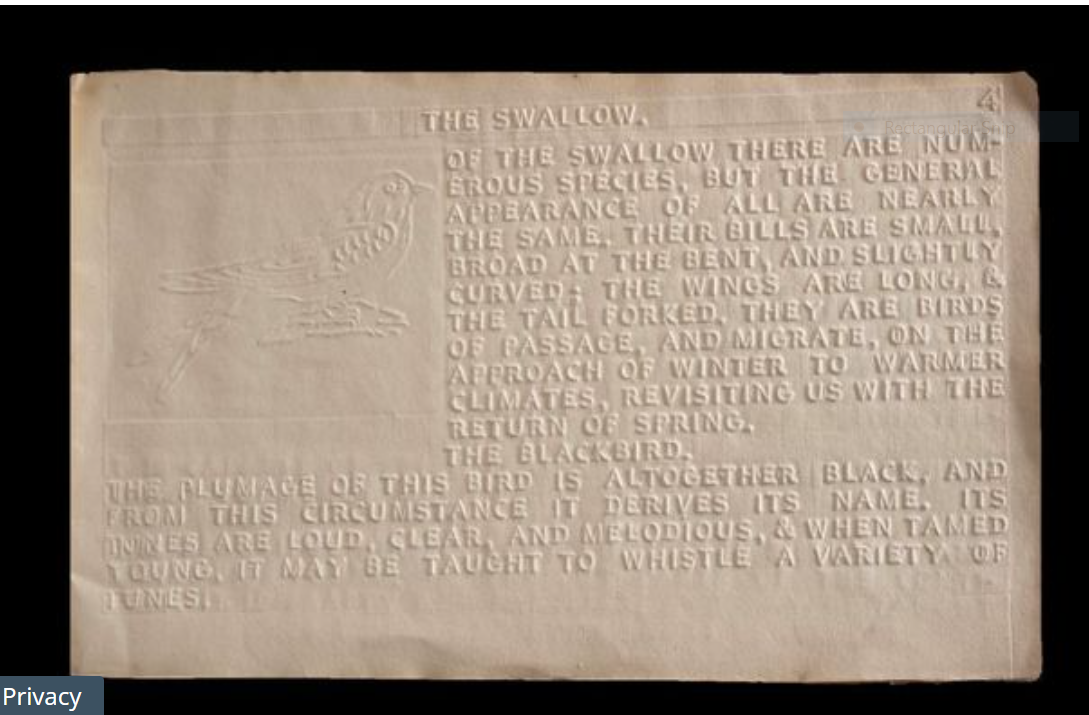
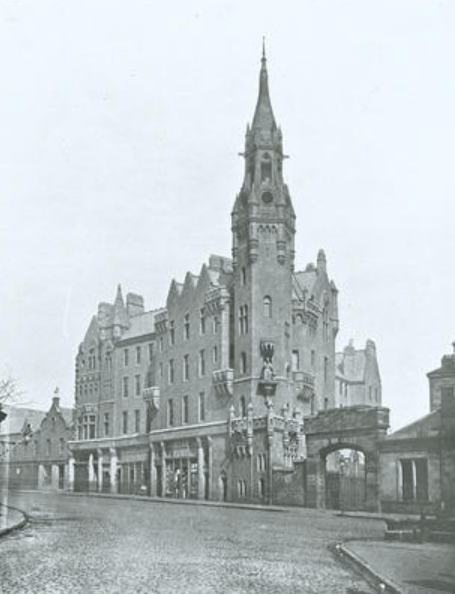
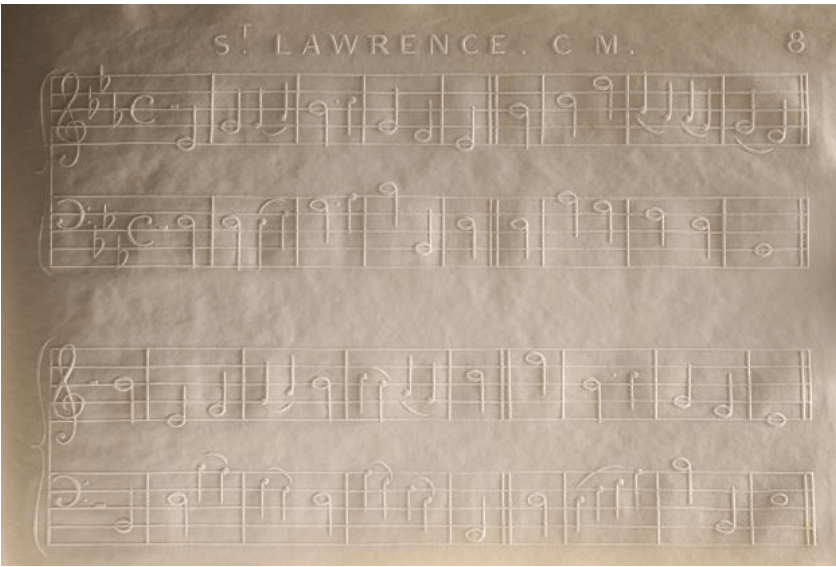
Figure 4. Example of Shorter Catechism for use of the blind. c1839. ©CSG CIC Glasgow Museums. Alston Collection.
Figure 5. Glasgow Blind Asylum c. 1901.© CSG GIC  Glasgow Museums Alston collection . GCf 1920.04GLA
 

The Glasgow Blind Asylum was founded in 1804 but the first building was erected in Castle Street in 1828 to be replaced in 1881 with a building designed by William Landless. The building was taken over in  1934 by the Glasgow Royal Infirmary as the Out Patients Department. Residents of the Asylum were taught music as well as various trades. Costs were covered by subscriptions, donations, bequests and the sale of articles made in the workshops such as brushes, baskets and bedding made in the various workshops.


Figure 6. Detail from the musical catechism for the use of the blind.

©  CSGCIC Glasgow Museums Alston Collection

Reverend John McClure Brodie 1874-1964)

John McClure Brodie(J McC) was born on 5 September 1874 in Govan.7 He was one of several children born to Robert Brodie8 and Jessie McFarlane McCaul.9According to  the 1881 UK Census the family lived at 23 Belhaven Terrace, Partick, Glasgow which remained the family home until Robert Brodie’s death in 1909.10 Robert Brodie was a partner in the firm of McClure,Naismith and Brodie ,Writers to the Signet, and our donor was probably named after John McClure, one of the partners.11 In the 1891 census  JMcC was recorded as a scholar and  probably attended  Kelvinside Academy as not only did his father  Robert Brodie hold shares in the company which owned the school12 but John’s brother Malcom certainly attended the school13.By 1901 John McC was a law clerk and scholar, possibly working for his father’s firm   though that is not certain.14 He graduated  Batchelor of Law from Glasgow University in 1902.15 While attending the University he was a member of the Volunteer Medical Staff Corps. 16

Sometime after graduating J McC appears to have moved to Edinburgh where in 1907 he was a partner in the firm ofGraham ,Miller and Brodie, Writers to the Signet, at 44 Frederick Street17 and lived at 9 Marchmont Street.18 He appears to have moved back to Glasgow by the time of the 1911 Census  or perhaps was commuting to Edinburgh. He lived in the family home at 23 Belhaven Terrace in Hillhead  along with his mother, brother Thomson who was an accountant and sisters Margaret and Mary both spinsters in their thirties. By this time JMcC was thirty -six years old.19

Our donor’s life changed later in 1911 when he emigrated to New Zealand via Australia where he landed in Melbourne in October 1911 on the SS Anchises.20  We do not know for certain why he went to New Zealand, perhaps the death of his father in 1909 was the catalyst. Also his uncle Malcolm McFarlane McCaul(see Figure 2 above) had emigrated first to Australia sometime after 1862 and then moved to New Zealand sometime before 188121 Perhaps this was the reason for our donor’s choosing New Zealand. JMcC went via Australia perhaps  to visit his  elder brother, Malcolm who lived there.22

  By September 1912 JMcC was living at 12 Lower  Symonds Street , Auckland, North Island, where he was enrolled as a solicitor of the Supreme Court of New Zealand  on the motion of W.A. Styak23 for  whose law firm at Colville Chambers in Auckland he worked for the next few years.24

After the outbreak of WW1 at the age of forty-one  JMcC volunteered for the New Zealand Expeditionary Force  and became a private in the New Zealand Medical Corps.25 As we have seen while  at Glasgow University JMcC had been a member of the  Volunteer Medical Staff Corps of the Glasgow University Volunteers. While living in Auckland he  had also been a volunteer with the Auckland Highland Company one of many such volunteer companies.26

According to his Military Record  JMcC enlisted as a private on 15 December 1915 and was posted  for training the following day  to the Awapuni Camp near Palmerston, North Island.27 Established in October 1915 this was New Zealand’s only dedicated training camp for medical officers, orderlies, stretcher bearers and medical crew for hospital ships.28 He remained at Awapuni until March 1916 and was then transferred to Featherston Training Camp as a lance corporal and then back to Awapuni  from where he was posted to the Hospital Ship Marama on 1 September 1916. Only three days later he was sent back to Awapuni  having been demoted to private again, though it appears this may have been a temporary promotion and was ended when he was no longer needed.29  JMcC’s Military Record also states  he was posted back to the Marama on 10 November 1916 in time  to  sail on its second commission on November 12 1916.The ship sailed via Bombay to Suez then proceeded to Southampton where 540 patients were embarked for New Zealand. A few days out from Southampton the Marama rescued survivors from a torpedoed ship.
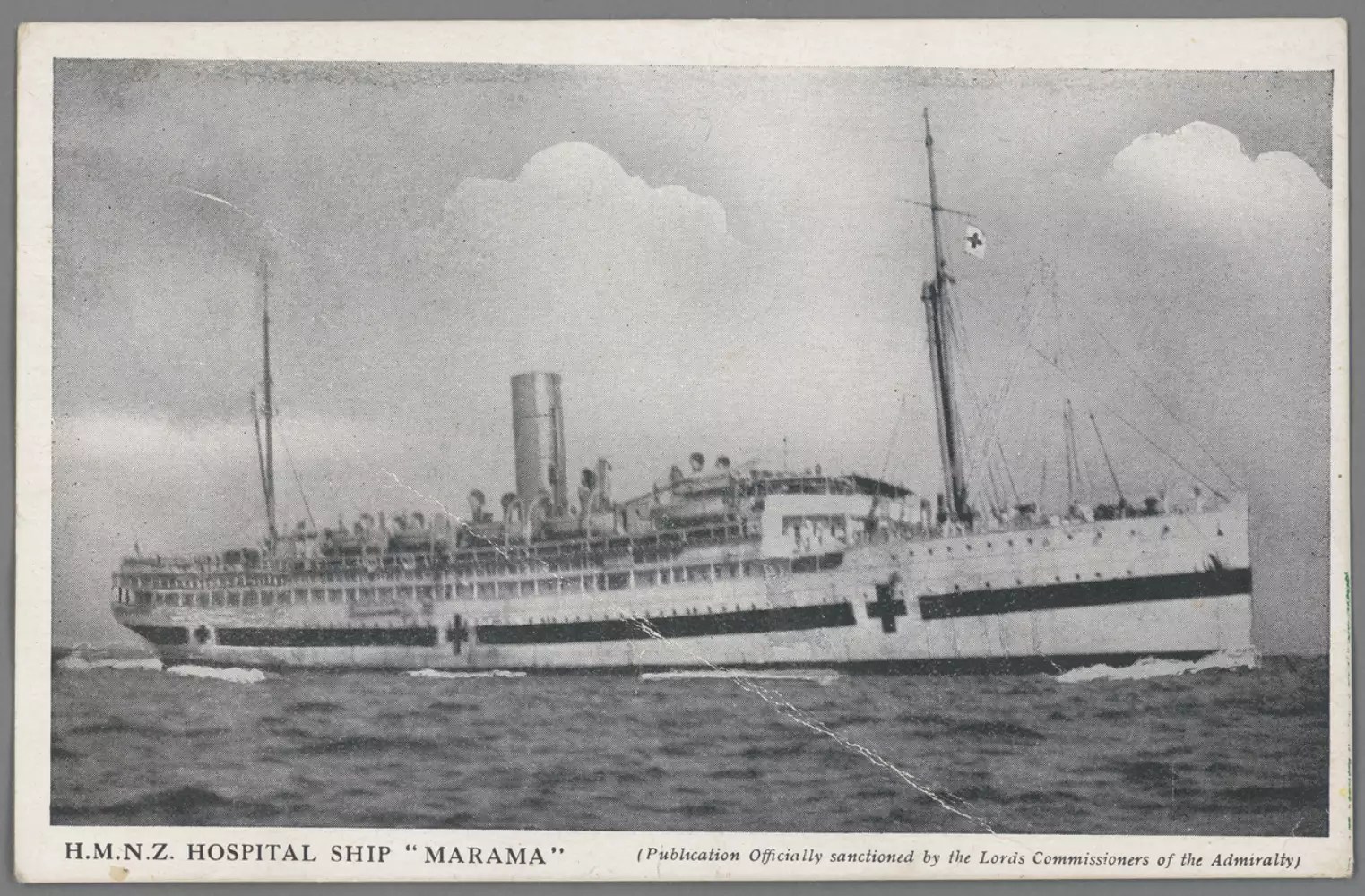
Figure 7. Hospital Ship Marama. No known ©. By permission of Auckland Military Museum, Nerw Zealand.

The ship sailed again for England via Bombay on 17 March 1917 then to Mesapotamia and Suez  where orders were received that the Mediterranean was unsafe and all nurses had to disembark. This may have been because  in March 1917 the  German Government had announced an unrestricted submarine campaign resulting in the sinking of several hospital ships in the English Channel. From Suez the  Marama  sailed to Durban. The lack of nurses put a great  strain on the orderlies ,of which JMcC was probably one, as they had to take over the nursing of the most severely wounded, who were confined to the cots, as well as carrying out their own duties.30 JMcC must have been doing a good job    as  on 3rd May 1917 he was promoted to the rank of Corporal.31

From Durban they went to Cape Town and Sierra Leone and finally docked in Avonmouth to pick up a full complement of wounded New Zealand soldiers bound for home via the Suez Canal.32 JMcC’s Military Record states that he reported to Awapuni Camp on 10 October 1917 only to rejoin the Marama on 19 October 1918. The purpose of this voyage was to clear the New Zealand Hospitals in England of New Zealand patients and transport them back to various ports in New Zealand as necessary.33 He arrived back at Awapuni on 27 January 1919 and was finally discharged on 6 March 1919.

After discharge JMcC  appears to have taken a post as a school teacher in Wallaceville ,Upper Hutt, a city in  Wellington Region.(Military record; voting reg).34 According to The Wallaceville School  Attendance and Examination  Register of February to December 1921 the teacher was certainly a J.M Brodie.35

 Then in 1922 JMCc enrolled as a student at Knox College, Dunedin in South Island in order to train to be a minister in the Presbyterian Church.36 There is some evidence of his earlier  involvement in the Presbyterian Church in three letters kept in the National Library of Scotland addressed to John McClure Brodie at 23 Belhaven Terrace Glasgow between 1894 and 1896 which refer to his proposed sponsorship of a local person as an agent, possibly a missionary, in another  country but unfortunately the content lacks detail .37 JMcC was also a member of the Kirk Session of St Andrews Church, Wellington, presumably while he was living in the area after his war service thus giving us further evidence of his connection to the Presbyterian Church.38
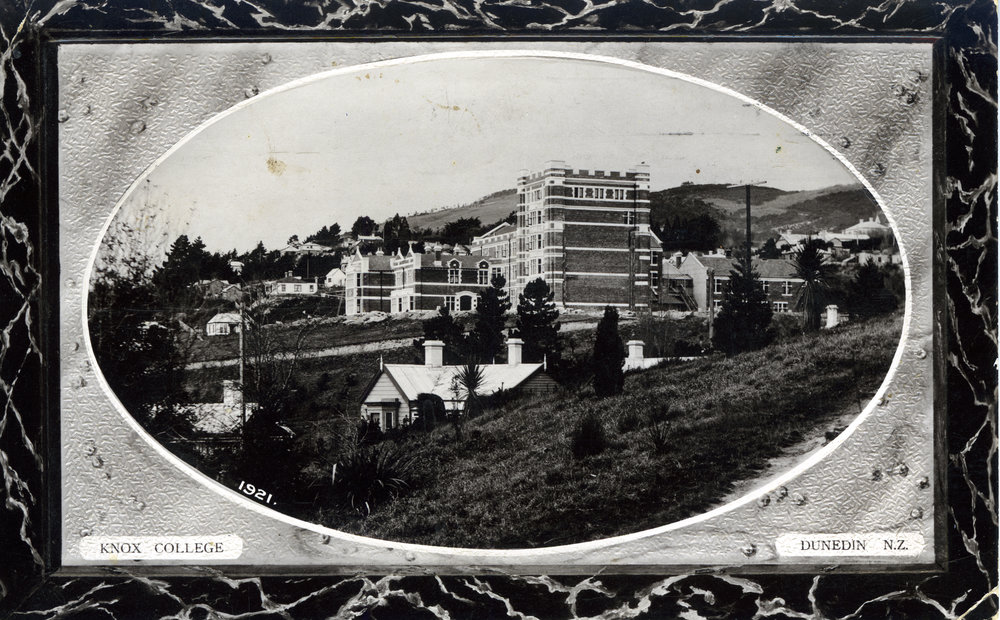
Figure 8. Knox College, Dunedin c.1921 ©  Knox College Archives, Dunedin

While at Knox College JMcC appears to have made his mark amongst his fellow students as in the student magazine The Knox Collegian No 14 1923 p23 the following ‘poem’ appeared along with others in the same vein regarding other students:-

                   “We now have a legal advisor

                     John Brodie, B.L. word geyser

                    He will scratch his bald head

                   And talk like-nuff sed-

                  But at the end you’re no wiser.”39
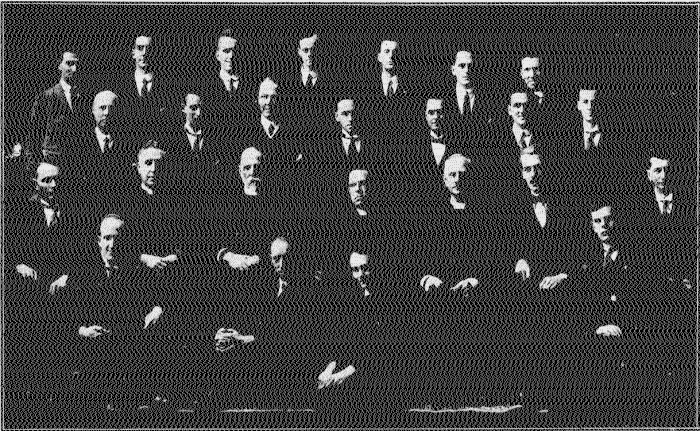
Figure 9. Staff and Students Theological Hall, Knox College 1925 © Knox College Archives Dunedin

J.M Brodie  is first on left, second row from the back.

By 1925 JMcC was 50 years old and at that point, surprisingly, he  married. He married 43- year- old Margaret Graham Findlay from Glasgow who appears to have sailed to New Zealand specifically to marry our donor. Margaret had sailed from Southampton on the SS Corinthic accompanied by one of her  sisters, a Miss A Findlay, though we do not know if it was Agnes or Anna, on 27 November 1924.They travelled First Class and were headed for Wellington.40 According to the Intention To Marry Register dated 10th January 1925 John McClure Brodie, theological student aged fifty  had been resident in Wellington for three weeks. On the other hand Margaret Graham Findlay, spinster aged 43, had been resident in Wellington for only two days which suggests she arrived in very early January1925.41The couple were married on 15 January 1925 in the Scots Church, Seatown, Wellington.42

Margaret Graham Findlay was born in Glasgow on 2 January 1882 at 9 Montgomerie Drive, Kelvinside in Glasgow’s West End. Her father was Joseph Findlay(1852-1910),a cotton merchant and her mother was Jessie B Marshal(1852-1927).43 There is little information about Margaret except from census records. In 1891 the family was living at 11 Winton Drive, Kelvinside. There were six children including twin girls Agnes and Anna.44 The 1901 census gives us the same address and Margaret is recorded as being still a scholar even at the age of nineteen though we have no information as to the school.45

There is no mention of Margaret at the family home in Kingsborough Gardens in Hillhead in the 1911 Census, though there is a record of a Margaret Findlay aged 29 who was a patient at a Nursing Home at 4 Queens Crescent in the Park District of Glasgow but it is mere speculation that  this is the same person.46 By 1921 she was back living in the family home at 16 Kingsborough Gardens, Hillhead along with her mother Jessie and twin sisters Agnes and Anna 00.47How Margaret and JMcC came to know one another is a complete mystery at this time.

The newly-weds  lived in Dunedin at 15 Craigleith Street and  attended the First Presbyterian  Church in Dunedin48 until 1926 when John McClure Brodie was ordained as the Minister of the Seacliff and Warrington Presbyterian Church, Otago on 29th June for a period of five years.49 Seacliff was a small village on the east coast  of  the Otago Region  of New Zealand’s South Island  about twenty miles north of Dunedin. Most early Otago settlers were Presbyterians and the district had been served by Presbyterian ministers  or missionaries in one way or another since 1858. The Seacliff Parish was first established  around 1916 but there was no church building until 1923. However a manse was built in 1916 on land purchased in Kilgour Street ,Seacliff, intended for both the manse and the church. The first minister was the Reverend F. Tucker. 50Seacliff is best  known for the  presence of the Seacliff Mental Hospital, opened in 1884 and once the largest building in New Zealand.51
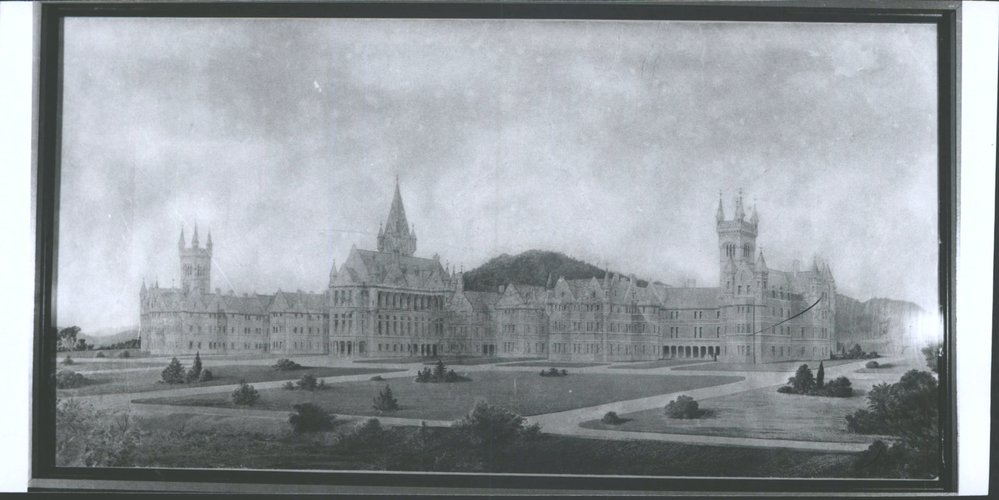
Figure 10.Seacliff Mental Hospital Otago. By permission of TheHocken Collection. University of Otago Library

The foundation stone for the new church was laid in June 1923 by Dr A.C. McKillop, Medical Superintendent of the Seacliff Mental Hospital. The Seacliff Presbyterian Church had an intimate connection with  Mental Hospital from its inception and there is a suggestion that it was originally built for the staff of the hospital. Before the building of the church services were often held in the hospital hall as well as in the local school. The various ministers who served the parishioners in  the district over the years also ministered to the patients in the hospital. Services were held in the wards and hospital patients also attended services in the Seacliff Presbyterian Church  after its opening in 1923 and much of the minister’s time was spent serving the  patients in the hospital.52

Figure 11. Seacliff Presbyterian Church , Kilgour Street.
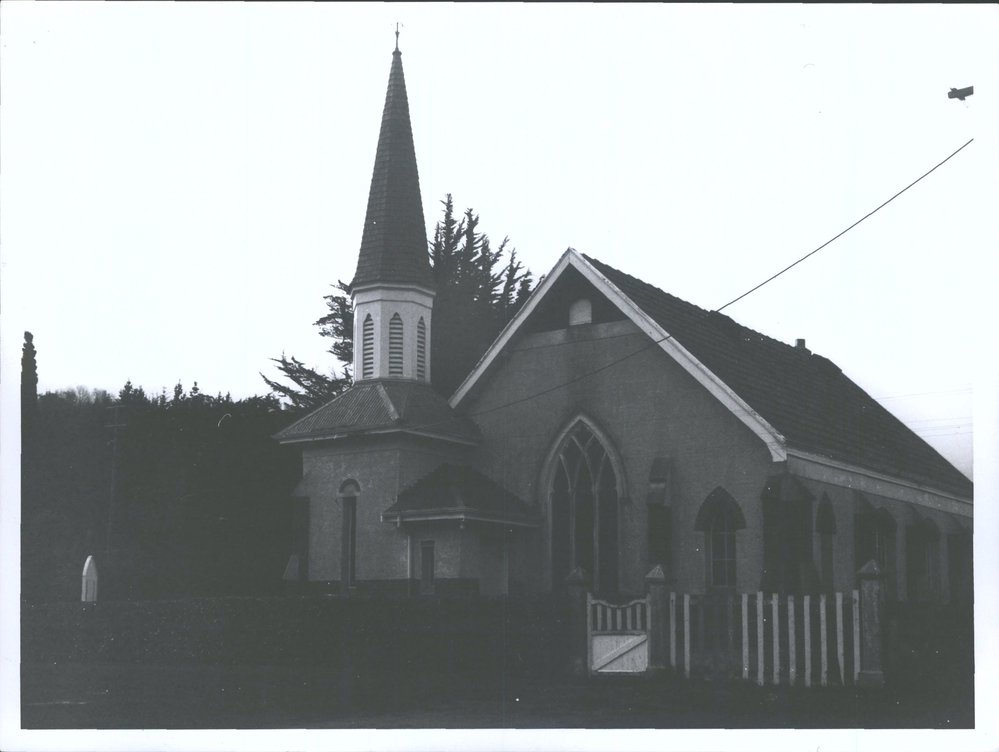
Figure 11. Seacliff Presbyterian Church , Kilgour Street. Photographer J Chisholm. By permission of The Hocken Collection. University of Otago Library.

John and Margaret Brodie appear to have remained living at The Manse in Seacliff until 1929.53
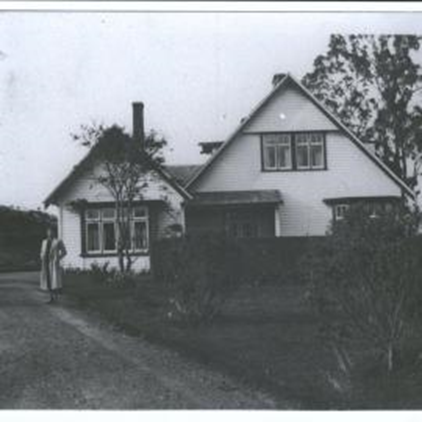
Figure 12. The  Manse ,Kilgour Street, Seacliff. Photographer J Chisholm. By permission of The Hocken Collection. University of Otago Library.

In March 1929 after only three years  JMcC resigned as minister of Seacliff because of  unspecified eye trouble.54 There had been some warning about this in the Kirk session Minutes of 22nd March 1927 when  it was reported that, ‘Mr Brodie had had to postpone a communion service for Karitane( a small village about 3 miles north of Seacliff) because of eye trouble.’55 We do not know if this was the reason the Brodies  decided to  return to Scotland that same year. They travelled Third Class from Brisbane, Australia on the SS Berima, arriving in London on 27  August 1929.56

We do not know if JMcC had treatment for his eye problem but the  Brodies did not return to New Zealand. By 1930 JMcC and his wife were living in Glasgow, probably at 18 Bank Street off Great Western Road.57 At some point in 1930  JMcC became Assistant Chaplain to the Reverend James Cardwell at the Glasgow Royal Mental Hospital in Great Western Road. Perhaps his experience ministering  to  the patients  at  the Seacliff Mental Hospital had played a part in the appointment. The Reverend Cardwell had been chaplain for 25 years. J McC took over from him sometime before 1940 when Cardwell died.58

Gartnavel  Royal Hospital as it is known today originally opened in 1814 as the Glasgow Lunatic Asylum in Parliamentary Road, Cowcaddens. The hospital was awarded a Royal Charter in 1924 and became the Glasgow Royal Lunatic Asylum. It moved to new premises in the Gartnavel district of Glasgow in 1843  designed by architect Charles Wilson in the Tudor Gothic Style. There were two main wings to the hospital. The West House, later West Wing was for private patients and the East House ,later East Wing, for patients who could not afford to pay for their treatment. The hospital became Glasgow Royal Mental Hospital in 1931 then Gartnavel Royal Hospital in 1963.  59

There is little information about our donor’s time at Gartnavel .He did find time to write a History of Gartnavel Mental Hospital1810-1948 though it was never published. 60 The only information we have about JMcC during this period is from a couple of newspaper reports. In 1931 the Scotsman reported that along with others  the Reverend J M Brodie had donated £1/1/0 to the New Zealand Earthquake Relief Fund.61 Then in 1940 the JMcC attended the celebration of the founding of Presbyterianism in New Zealand held at the Martyrs Church in Paisley.

 ‘ In the afternoon  the Reverend J M Brodie, formerly a member of the Kirk session of St Andrews Church, Wellington, was the preacher.’62

 The Brodies lived at 18 Bank Street during the 1930s 1940s  and early 1950s.63 JMcC retired from Gartnavel  around 1950.64Then around 1952 or1953 at the age of seventy-nine J McC and Margaret moved to 3 Buckingham Terrace, Great Western Road. Numbers 3 and 4 Buckingham Terrace at that time were the Kirklee Hotel. So perhaps the couple felt life would be easier for them at their age if they lived in a hotel.65

 On 9 January 1962 Margaret Brodie was admitted to the West Wing of Gartnavel Royal Hospital.66 This wing was for private patients. J McC joined her  on 30th January 1963 aged eighty-eight.67 Margaret died on the 19 November 1963 of ,’myocardial degeneration with arterio sclerosis’68 and the Reverend John McClure Brodie died on 11 April the following year of ‘generalised arterio sclerosis’.69 We do not know if Gartnavel Hospital  acted as a care home and took in elderly patients as a matter of course or if the Brodies were taken as patients because JMcC had once worked there. There is no information as to where the couple are buried.

References

1.Glasgow Museums Resource Centre Object File. Accession No 2993

2. http://www.ancestry.co.uk

3.Glasgow Post Office Directory  1840-41

4. www.roystonroadproject/archive/history/garngad_royston.htm

5. https://theglasgowstory

6. as above

7. www.scotlandspeople.co.uk Statutory Births

8.UK Census 1881,1891,1901

9. op cit ref 7

10. www.scotlandspeople.co.uk   Statutory Deaths

11. Glasgow Post Office Directory 1890-91

12. www.scotlandspeople.co.uk  Will of Robert Brodie

13. Victoria State Library  https://www.slv.vic.gov.aw/

14.UK Census 1901

15. https://www.universitystory.gla.ac.uk/biography

16. Archives New Zealand. New Zealand Defence Force. Personnel Records. John McClure Brodie. Ref AABK 18805 W5520 0018299

17. Edinburgh Post Office Directories 1907-1911

18. op cit ref 12

19. UK Census 1911

20. www.ancestry.co.uk Incoming and Outgoing Passenger Lists 1845-1940

21. https://nzolivers.com/tree/ps01/ps01_041.html

22. op cit  ref 13

23. New Zealand Herald  02/09/1912  p.8

24. op cit ref 16

25. as above

26. op cit  ref 24

27. op cit ref  24

28. https://nzhistory.gov.nz>photo>awapuni:-wa

29. op cit ref 16

30. Archives New Zealand. New Zealand Defence Force. Personnel Records. John McClure Brodie. Ref AABK 18805 W5520 0018299

31. Barnes,Frank . Hospital Ship Marama http://ehive.com/account/3319

32. as above

33. op cit ref 31

34. op cit ref 16

35. https://uncl.recollect.co.nz

36. Knox College Archives Dunedin.  pcanzarchives@prcknox.org.nz

37. National Library of Scotland. Missionary Correspondence for United  Presbyterian Church. Ms.7707,Ms 7710-11

38. Scotsman 01/04/1940 p.6

39. Knox Collegian No 14.1923 p.33

40. www.ancestry.co.uk  UK and Ireland Outward Passenger Lists 1890-1960

41. Archives New Zealand. Ref BDM 20/165/p1914/27

42. New Zealand Herald  05/02/1925 p.1

43. www.scotlandspeople.co.uk Statutory Births

44. UK Census 1891

45.UK Census 1901

46. UK Census 1911

47. www.scotlandspeople.co.uk 1921 Census

48. pcanzarchives@prcknox.or.nzFirst Church Dunedin Communion Roll1916-35

49. Otago Daily Times 26/10/1926 p.7

50. Tod, Frank E. The History of Seacliff :a History of the District to 1970. pub Otago Daily Times Print ,Dunedin 1971 p.65

51. https://thespinoff.co.nz

52. op cit ref 50

53. op cit  Tod p.66

54. Seacliff Warrington Presbyterian Church  Session Minutes 25/3/1929  pcanzarchives@prcknox.org.nz

55. as above  22/03/1927

56. www.ancestry.co.uk  UK and Ireland Incoming Passenger Lists1878-1960

57. Glasgow Post Office Directory 1931-2

58. Brodie,John McClure  The Glasgow Royal Mental Hospital 1810-1948  unpublished. NHS Archives HB13/14/24 Mitchell Library, Glasgow

59. https://theglasgowstory.com

60. op cit 58

61. Scotsman  09/03/1931 p.1

62. Scotsman  01/04/1940 p.6

63. Glasgow Post Office Directories 1932-1951

64.  Church Of Scotland Yearbook 1964.pub. Church Of Scotland Committee on Publications

65. Glasgow Post Office Directory 1952-3

66. Register of Patients 1959-63.ref HB/13/6/70 NHS Archives. Mitchell Library Glasgow

67. As above

68. www.scotlandspeople.com  Statutory Deaths

69. as above

Acknowledgements

I would like to thank the following people for their invaluable help with the research for this donor: Danielle Ashby Coventry and Alison Metcalfe-National Library of Scotland; Laura Stevens-NHS Archives,Mitchell Library Glasgow; Susan Taylor-Special Collections,Mitchell Library,Glasgow;Matthew-Auckland Military Museum;Nick Austen-Hocken Collection,University of Otago;Hilary Ackroyd-Archives New Zealand;Linda McGregor-National Library of New Zealand;Rachel Hurd and Jane Boore -Presbyterian Research Centre(Archives) Knox College Dunedin.

Humphrey Gordon Roberts-Hay-Boyd (1866 – 1931)

The Town Clerk reported that the late Rev. Humphrey Gordon Roberts Hay Boyd, Townend-of-Symington, Ayrshire, had by his Trust Disposition and Settlement*, directed his Trustees to convey and deliver free of legacy duty certain pictures from his art collection to the Kelvingrove Art Galleries. The Director reported that the said bequest consisted of the following pictures viz:

1. Oil painting of roses in a gilt frame by S.J. Peploe. (This painting was not subsequently given to Glasgow).

2. Small oil painting The Fisherman by J. Weissenbruch. (This painting was ascribed to Jan Hendrick Weissenbruch (1824-1903) Dutch but is probably by his son Willem Johannes (1864 – 1941). Its title is now An Artist Sketching from a Boat – early 1900s (Accession number 2231).

Weissenbruch, Jan Hendrik, 1824-1903; An Artist Sketching from a Boat

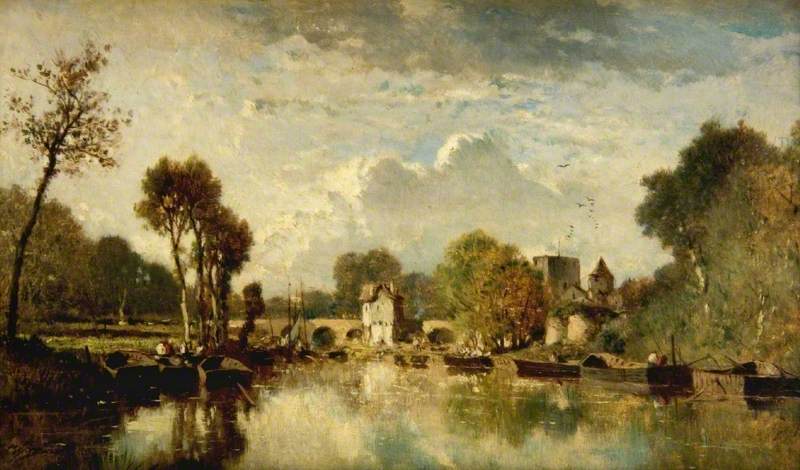
3. Oil painting on panel A River Scene by Charles-Francois Daubigny (1817 – 1898). Now titled River Scene Sunset – 2230.

Daubigny, Charles-Francois, 1817-1878; River Scene, Sunset

4. Watercolour Drawing Sunset Brise (Briare) by the French master Henri Harpignes (1819 – 1916) – 2235.

                                                                 
5.Water Colour Drawing, Barge in Dry Dock by Robert Purves Flint, R.S.W. (1883 – 1947) – 2234. This is an oil painting not a watercolour.

               
 6. Oil painting Ploughing by the French master Leon L’Hermitte (1844 – 1925). Now called Ploughing with Oxen, Evening, 1871 – 2229

Lhermitte, Leon-Augustin, 1844-1925; Ploughing with Oxen

This painting was exhibited at the Royal Academy of Arts in 1872 with title Oxen Ploughing. 1 It was purchased by H.G.R. Hay-Boyd after 1918, probably from Eugene Cremetti, London. 

7. Small oil painting River Scene by Frank Brissot – (Active 1879 – 1881) – 2233

Brissot, Frank, active 1879-1881; River Scene

The committee agreed the bequest be accepted’.2

*His will stated that the pictures should remain in his wife`s possession till her death. Hence, although he died in 1931 the date of the donation was 1941.

All the above paintings © CSG GIC Glasgow Museums Collection.

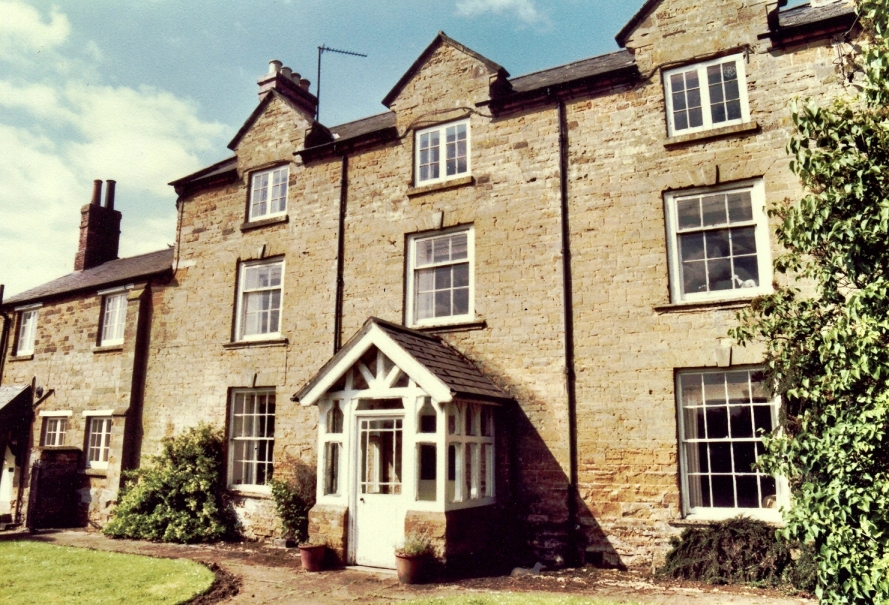
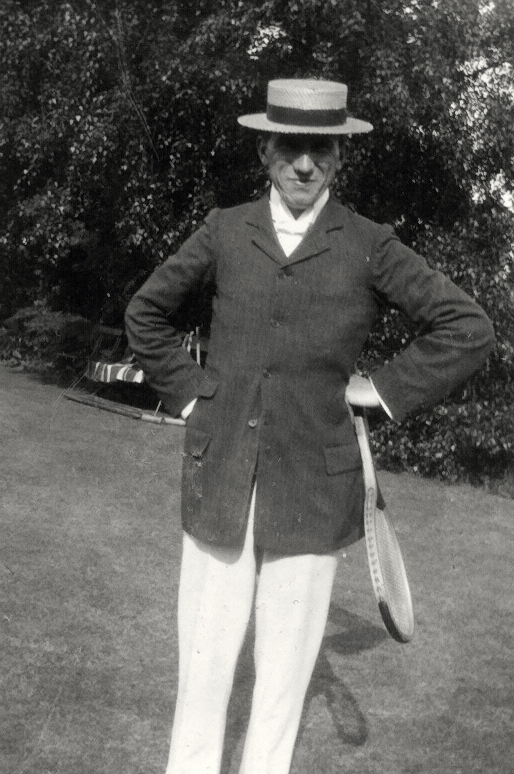
Humphrey Gordon Roberts was born in September 1866 in Waterloo, Liverpool. He was the son of Humphrey Roberts Esq., a merchant in Liverpool, and Margaret Thomson. 3 Between 1871 and 1881, the family moved to London, firstly to 10 Ashburn Place (by which time Humphrey`s father was a retired merchant ‘living on his own means’) and then to 8 Queen`s Gate Place, Kensington.4 Having attended Uppingham School, Humphrey entered Jesus College, Cambridge in October 1884, aged 17, graduated BA in 1887 and MA in 1891.5,6 He also attended Ridley Hall Theological College in Cambridge. According to the 1891 census he was a theology student, living in Kensington, London with his widowed father and four sisters. 7 He was ordained Deacon (Canterbury) in 1891 by the Archbishop of Canterbury at Maidstone Parish Church 8 and was Deacon of Sandgate in Kent from 1891 to 1894 after which he moved to a similar post at Spratton, Northants. 9 He was Vicar and Patron of Spratton between 1897 and 1905. 10 On moving there, he opted not to occupy the early eighteenth century vicarage, which was probably in need of updating, but moved to a much grander residence which he renamed The Manor House.11

Figure 1. The Manor House, Spratton, Northants. From Enid Jarvis, Chair, Spratton Local History Society

1655 -Rev Humphrey Hay-Boyd
Figure 2. Humphrey Gordon Roberts late 1890s. From Enid Jarvis, Chair, Spratton Local History Society

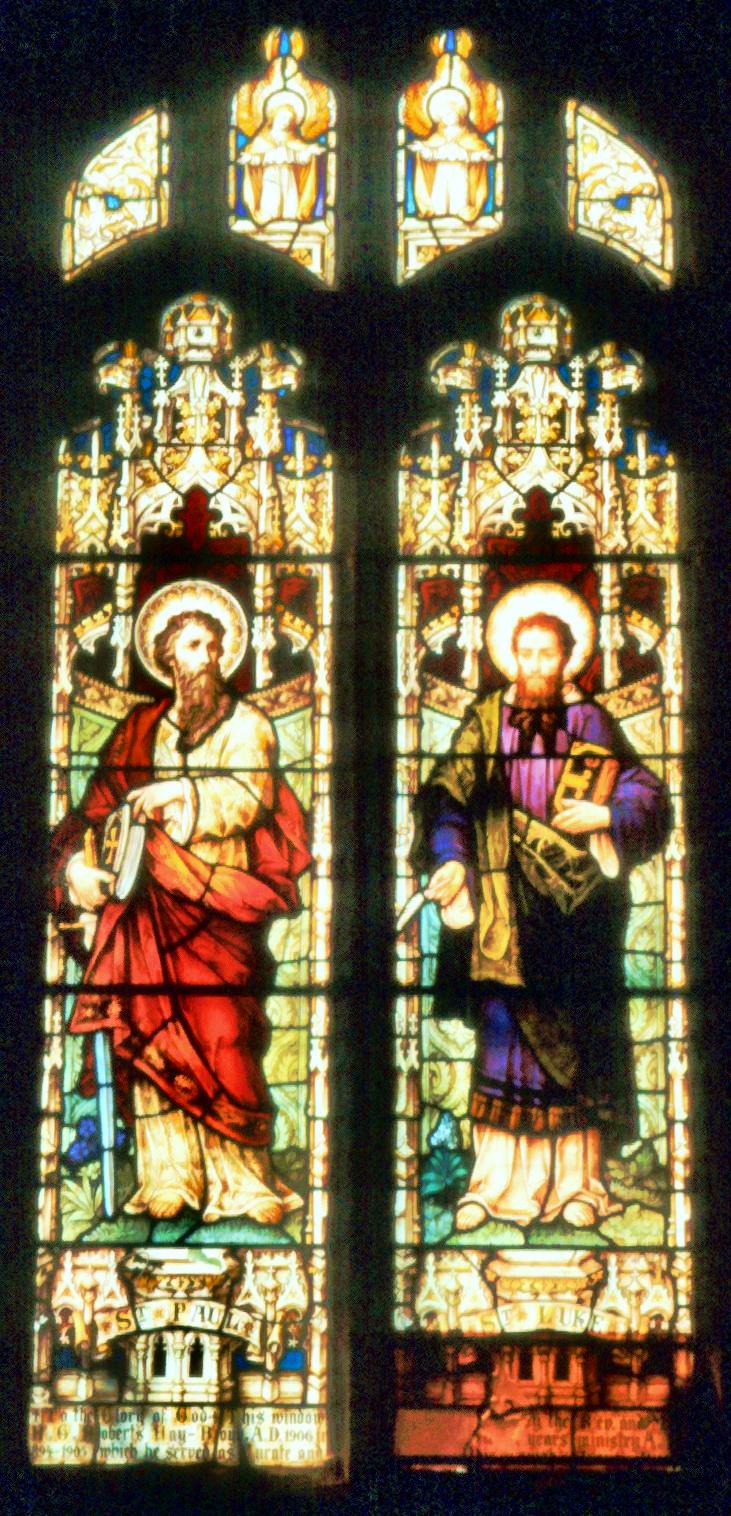
On 23 March 1901, Humphrey married Mary Elizabeth Hay-Boyd at St. George’s Chapel, Albemarle Street, London. 12 She was born in 1865 at Symington, Ayrshire the only child of Lieut-Col. James George Hay-Boyd, JP DL of Townend of Symington and Mary Adeline McAlester. (Mary Adeline was the daughter of Lieut-Col. Charles Somerville McAlester of Loup and Kennox, Ayrshire). Their son, George Edward Humphrey Roberts, was born in Spratton on 3 July 1902. (He died in 1983, at East Dereham, Norfolk). 13 The family moved in 1905 to Townend of Symington and at this point changed their name to Roberts-Hay-Boyd. Before leaving Spratton, the couple arranged for the donation of a stained-glass window to Spratton Parish Church.

0748-ps-nk-churchsouthmainaislewindow-2
Figure 3. Stained Glass Window. From Enid Jarvis, Chair, Spratton Local History Society

Figure 4. Spratton Church from an old engraving. From Enid Jarvis, Chair, Spratton Local History Society

The window carries the inscription ‘To the Glory of God this window was donated by the Rev. and Mrs. H.G. Roberts Hay-Boyd, A.D.1906, in thanks for eleven years ministry, A.D. 1894-1905, which he served as curate and vicar of this parish.’14

Soon after arriving in Ayrshire, Humphrey acquired at least two racehorses one of which ran in the Adamhill Cup at Ayr Racecourse as part of the Scottish Grand National Festival in 1907.15 The other ran in the Motherwell Plate at Hamilton Park in the same year. It was not a successful outing as his horse was defeated by fifty lengths! 16

In retirement in Ayrshire the Hay-Boyds seem to have enthusiastically embraced the local music and amateur dramatics scene. (Before her marriage, Miss Hay-Boyd had appeared as ‘a most dignified Lady Somerford’ in a performance of The Jacobite in the Oddfellows Hall, Kilmarnock.17) A ‘Historical Masque – Men of the Westland’ was given in Ayr Town Hall in March 1910. This portrayed the ‘progress of civilisation in Carrick, Cunninghame and Kyle from pagan to modern times.’ It appears to have been a lavish affair, help with costumes being given by Fra Newberry and the governors of the Glasgow School of Art. The Rev. Hay-Boyd played John Knox and Mrs Hay-Boyd was the personification of the Town of Ayr.18

In the 1911 census Humphrey was at the Rutland Hotel, Edinburgh with his son. He was described as a ‘retired clergyman’, aged 44.19 Later that year he travelled back to Spratton to help raise funds for the lighting of Spratton’s streets. This took the form of two variety entertainments in the school at which Humphrey performed two songs, Love’s Coronation and Three for Jack ‘sung in rousing style’.20 In the same year (possibly at the same time?), Mrs Hay-Boyd also returned to Spratton;

The Sunday School treat was held in the field and garden of Mr and Mrs R. GILBY of Olde House Farm, Yew Tree Lane. The prizes were distributed by Mrs ROBERTS HAY-BOYD and the tea was organised by Miss Letitia GILBY. 21

In December 1913, Humphrey boarded the S.S. Otway in London bound for Naples.22 In May 1925, the Roberts-Hay-Boyds hosted a coming-of-age ball for their son George in Ayr Town Hall which was, according to reports, attended by the cream of local society including the Marchioness of Ailsa and Major Hastings Montgomerie. 23

Both the Rev. and Mrs. Hay-Boyd had a great interest in music and were heavily involved in the musical affairs of Ayrshire. He was president of the Ayr Choral Union from 1916 till his death, and both subscribed to the staging of The Messiah in the Town Hall, Ayr on 26 December 1930. He was a Vice-President and a member of the council of the Ayrshire Musical Festival ‘and took his fair share of the work associated with that annual event’.24,25In describing one of the Ayr Art exhibitions a local newspaper states that Mrs Roberts-Hay-Boyd had ‘provided a splendid concert’ in connection with the event and that one of the ‘principal artistes’ was the Rev. Mr. Hay-Boyd. Unfortunately, there is no mention of what his special talent was. 26

The Hay-Boyds were also in possession of several works of art of outstanding quality and from 1909 to 1919 they regularly lent paintings to various exhibitions in the Carnegie Library in Ayr.27

1909    Exhibition of Old Engravings
Milking Time                                          C. Troyon, engraved by V. Girarchet
(Line Engraving – Steel)                            (Lent by Rev H. Roberts Hay-Boyd)

1910    Ayr Fine Art Exhibition
Conway Castle                                                 J.M.W. Turner R.A.,
(Was this the picture which was sold in 2010 by Christie`s for £325,250?)

The Ferry Boat                                                 C. F. Daubigny
On the Oise                                                      C. F. Daubigny
Resting                                                             Alexander Nasmyth
(Lent by Rev. H. Roberts-Hay-Boyd, Esq.,)

George Douglas of Rodinghead,                       Sir Henry Raeburn
(Lent by Mrs Roberts Hay-Boyd).
This was probably a family heirloom as Mrs Hay-Boyd`s grandmother was Elizabeth Douglas of Rodinghead.
(Was this the painting which was sold at Sotheby`s in 1993?)

1919    Ayr Sketch Club
Carting Timber                                                 Anton Mauve
(Lent by Rev. H. Roberts-Hay-Boyd, Symington).

Humphrey Gordon Roberts-Hay-Boyd died on 25 October 1931, aged 64, in Greystones Nursing Home, Prestwick, Ayrshire. His occupation was ‘minister of religion’ but with no charge.28 He was buried in Symington Churchyard with other members of the Hay-Boyd family.

1249 - Hay Boyd Grave
Figure 5 Hay-Boyd family grave in Symington Churchyard (photo by author)

In Memory Of
MARY ADELINE HAY BOYD
Died 13th Novr. 1894
wife of
Colonel JAMES GEORGE HAY BOYD
of Townend of Symington
and daughter of the late
Col. CHARLES SOMERVILLE McALESTER
of Kennox

Also of
Colonel JAMES GEORGE HAY BOYD
of Townend of Symington
Late XXth Regt.
Died 21st November 1904
Son of Capt. FRANCIS HAY XXXIVth Regt.
& Mrs ELIZABETH DOUGLAS or HAY
Of Rodinghead

To the Beloved Memory of the
Revd. HUMPHREY GORDON ROBERTS, M.A.
and husband of
MARY ELIZABETH HAY BOYD of Townend
Obit 25th October 1931
Also the above
MARY ELIZABETH ROBERTS-HAY-BOYD
who died at Townend 25th February 1941.

He was survived by his wife and son. An obituary in the Ayrshire Post contained the following information: ‘Mr and Mrs Roberts-Hay-Boyd resided part of the time in the former home in Wellington Square of Colonel Hay-Boyd, one of the few remaining residences in the square, and at the picturesque home in Townend, embowered among trees near Symington Village. Mr Roberts-Hay-Boyd was of a quiet and unobtrusive nature and was held in high esteem in the district’.29 An obituary was also published in the London Times 30and his death was reported in the Northampton Mercury.31

As well as the pictures given to Glasgow, He also bequeathed paintings to the Town Council of Ayr and to the National Gallery of Scotland (NGS).

‘In terms of deceased`s trust disposition and settlement, the legacy was not to take effect until the death of his widow, but Mrs. Hay-Boyd desires now to deliver the following four pictures:

  1. Roses in a white frame           S. J. Peploe                                          Oil
  2. Sunset, Kilbrannan Sound      Sir J. Lawton Wingate, P.R.S.A.             Oil
  3. The Four Master                     R. Burns (!) Flint                    Watercolour
  4. View of Haarlem                    J. H. Weissenbruch               Watercolour’ 32

Bequests were also made to the NGS and were presented in 1941.

          Roses                                         S. J. Peploe                                         Oil
          Peaches on a Dish                     Henri Fantin-Latour                            Oil

References

  1. Graves, Algernon, F.S.A., The Royal Academy of Arts A Complete Dictionary of Contributors and their work from its foundation in 1769 to 1904, Vol III, Henry Graves and Co. Ltd., London and George Bell and Sons, 1905
  2. Glasgow Corporation Minutes – Committee on Art Galleries and Museums, Mitchell Library, Glasgow 25.4.1941.
  3. Births, Deaths and Marriages Index, England and
  4. ancestry.co.uk, Census England, 1871, 1881.
  5. ancestry.co.uk, Cambridge University Alumni (1261 – 1900)
  6. London Evening Standard 15 May 1891 p3
  7. ancestry.co.uk, Census England 1891.
  8. Folkstone Herald, 30 May 1891
  9. Northampton Mercury 24 November 1905
  10. Ayrshire Post, 30 October 1931
  11. From Enid Jarvis, Chair, Spratton Local History Society
  12. The Globe, March 25, 1901 p7; The Queen 30 March 1901 p43
  13. Burke`s Peerage, Baronetage and Knightage, 107th Edition, 2003, www.thepeerage.com
  14. From Enid Jarvis, Chair, Spratton Local History Society.
  15. Scotsman 12 April 1907 p4
  16. Sporting Life, 15 July 1907, p5
  17. Ardrossan and Saltcoats Herald, 12 March 1897, p4
  18. Queen, 26 March 1910, p563
  19. Scotland’s People, 1911 Census, Scotland
  20. Northampton Mercury, 14 July 1911, p5
  21. Spratton Parish Magazine 1911.
  22. Homeward Mail from India, China and the East, December 22, 1913 p27
  23. Gentlewoman, 9 May 1925, p16
  24. Ayrshire Post, Oct. 30 1931, p8.
  25. Catalogues of Exhibitions of Ayr Sketch Club, Ayr Fine Arts Society, Ayr Art Union
  26. ibid
  27. ibid
  28. Scotland’s People, Death Certificate
  29. Ayrshire Post, Oct. 30, 1931, p8.
  30. The Times, Oct. 27, 1931, p15.
  31. Northampton Mercury, Oct 30, 1931 p5
  32. Ayrshire Post, 21 May 1937, p12. 

Family and Trustees of Reverend Robert Buchanan DD (1802-1875)

 Donors-Family and Trustees of Reverend Robert Buchanan (1802-1875)

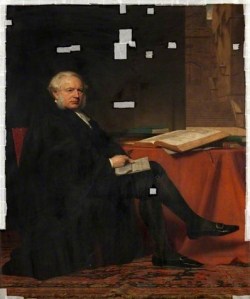
Figure 1. The Reverend Robert Buchanan DD, by Norman Macbeth ARSA 1872 . © CSGCIC Glasgow Museums and Libraries. Acc 883

This painting was exhibited at the Royal Scottish Academy Annual Exhibition in 1873.1The subject is the Reverend Robert Buchanan DD, Minister of the Free Church College Church in Lyndoch Street Glasgow . He is painted wearing the robes of the Moderator of the Free Church sitting to the right of stairs leading to the entrance of the Free Church College in Edinburgh. The portrait was donated to Glasgow Corporation  by the family and trustees of the late Robert Buchanan in a letter dated 5 July 1898 from Messrs McKenzie Robertson and Co Writers.2 The donation was made after the death of Mrs Elizabeth Stoddart Buchanan in April 1898.3

Robert Buchanan  was born in St Ninians, Stirling on 15 August  1802. He was the sixth son of Alexander Buchanan, a brewer and farmer. He was educated at the University of Glasgow (1817-20) and then at the University of Edinburgh (1820-25). He was first licensed as a preacher in the Church of Scotland by the Presbytery of Dunblane in 1825. Buchanan served briefly as tutor to the Drummond family of Blair Drummond and through their influence was ordained  minister to the Parish of Gargunnock in 1826. He then served in the parish of Saltoun in East Lothian from 1829 to 1833.

In 1833 a vacancy arose at the prestigious Tron Church in Glasgow where Thomas Chalmers had begun his Glasgow ministry. Buchanan was called to fill this charge and so began the most important part of his career. At the time the bulk of the congregation were not from the area surrounding the Tron Church around Glasgow Cross but from a much wider area to the west  which had a growing and much more affluent population.

Robert Buchanan agreed with the views of Thomas Chalmers regarding the missionary work of the church among the poor of the city, the importance of setting up and maintaining  schools as well as Chalmers’ evangelical views. He did much work in the Wynds, a very poor area around Glasgow Cross and was instrumental in raising money for several new churches.

In fact Robert Buchanan became one of the leading figures in the evangelical wing of the Church of Scotland in the west. The story of the Disruption of the Church of Scotland in 1843 is well-known and need not be repeated here except to state that Robert Buchanan was a leading figure during the period leading up to the Disruption. He represented the dissenting evangelical majority party in the negotiations with the Westminster government in London to try to resolve the situation. It was Buchanan who moved the ‘Independence Resolution’ at the General Assembly of the Church of Scotland in 1838 where the majority refused to defer to the civil courts in spiritual matters especially in the appointment of  church ministers. Buchanan was one of the signatories to the  Disruption document in 1843.

Figure 2. First General Assembly of the Free Church of Scotland. Signing of the Deed of Demission at Tanfield May 1843. By Amelia Robertson Hill, after David Octavius Hill. © The Hunterian, University of Glasgow.

After the Disruption Buchanan took his congregation from the Tron Church  and for a while held church services in Glasgow City Hall which had opened in 1840. The congregation then moved to the new Dundas Street Free Church opened in 1844.4 In 1857 a new church was opened in Lyndoch Street adjacent to the recently opened Free Church College for the training of ministers which was designed by architect Charles Wilson. The Free  Church College Church was also  designed by Charles Wilson at the cost of £10,000.5 Robert Buchanan was invited to be  minister of the new church a post which he accepted.

Figure 3. Free Church College ,31 Lyndoch Street from Sauchiehall St c 1900. © CSGCIC Glasgow Museums and Libraries.     

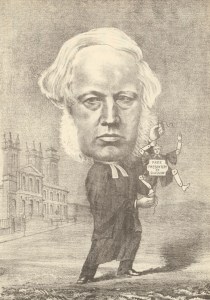
 In 1847 on the death of Thomas Chalmers, Buchanan  became the Convener of the Sustentation Fund, the financial system devised by Chalmers  whereby the  richer congregations of the Free Church subsidised the poorer. For thirty years he managed this fund, giving the Free Church a sound financial footing and earning the respect of his contemporaries. Such was thought to be Buchanan’s influence on the Free Church that the caricaturist of the satirical magazine The Bailie portrayed him as its ‘puppet master’.

Figure 4. The Puppet Master. © CSGCIC Glasgow Museums and Libraries.

 The Ten Years of Conflict  was Buchanan’s  scholarly account of the Disruption which went a long way to justify to the public the actions of those who ‘went out’. He also published  Clerical Furloughs an account of a visit to the Holy Land in 1860.6

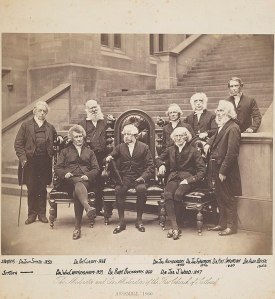
In 1860  Robert Buchanan was elected Moderator of the Free Church of Scotland which showed the high esteem in which he was held.7

Figure 5. The Moderator and Ex-Moderators of the Free Church of Scotland Assembly 1860. Photograph John Moffat. © National Galleries of Scotland

His congregation at the Free Church College Church ,along with other subscribers, also showed their appreciation of their minister when in  August 1864  the sum of 4000 guineas was presented to Robert Buchanan  at a reception at the Queens Hotel in George Square, part of what is now the Millenium Hotel. The gift was  presented, ‘as a tribute to his private worth and to his public labours as a citizen of Glasgow’. Mrs Buchanan was presented with ,” a silver epergne and appendage’.8 The same congregation  commissioned our portrait.9

Robert Buchanan continued as senior pastor to the Free Church College Church  as well as serving the city of Glasgow in many ways. For example he was elected to the newly formed Glasgow School Board in 1873.10 In  the winter of 1874 when he went to Rome to take charge of the Free Church in Rome for the winter, his wife and two of his daughters went with him. While there he caught a cold and died on 31 March  1875. He had just been appointed the next Principal of the Free Church College in Glasgow.11 

The body was brought back to Glasgow by members of the family. Robert Buchanan was buried in the Glasgow Necropolis on 18 May  1875. According to the Glasgow Herald which reported the funeral in great detail, 15000 people lined the streets to see the funeral cortege. Among the many of Glasgow’s most notable citizens who walked behind the coffin were the Lord Provost, the Dean of Guild and the Deacon Convenor.12

The Buchanan Family (1)

Robert Buchanan was first married in 1828 to Ann Handyside in Edinburgh. They had six children of whom three survived to adulthood. Alexander was born in 1829,Hugh in 1831 and Ann Wingate in 1837. Sadly Buchanan’s wife Ann died in 1840.13 In 1841 Robert and two of the boys were living in Richmond  Street  Glasgow which is now the site of one of the University of Strathclyde buildings.14 Alexander became an engineer and spent most of his adult life in Derby15 and as we shall see he was one of the trustees of his father’s estate.

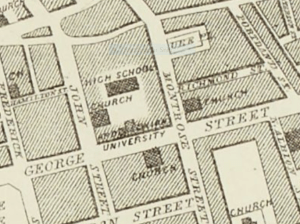
Hugh attended The High School of Glasgow16 which until 1878 was situated between John Street and Montrose Street. The High School of Glasgow began in the twelfth century as the Glasgow Cathedral Choir School. It was absorbed into The Glasgow School Board in the early 1870s only to become an Independent School once again in the 1970s.17

Figure 6. Location of  High School of Glasgow  1840s. © National Library of Scotland

Hugh died in 1852 aged only twenty. He  is recorded in the 1851 census as being a warehouseman. As he died in Georgetown, Demerara one can only assume  that he had gone out there to improve his prospects.18

In 1843 Robert Buchanan   married again to Elizabeth Stoddart who was born in Hertfordshire in 1825.19 Daughter  Ann lived in the family home until her marriage to John McLaren on 22 August  1861.20 John McLaren is recorded in various census reports as being a merchant. He must have been fairly prosperous as in the 1871 census he and Ann were living at 5 Belhaven Terrace, a prestigious address off Great Western Road and they had five  servants. They had six  children between 1864 and 1876.21

Buchanan Family (2)

Elizabeth and Robert went on to have six children between 1844 and 1855.

  • Charlotte Gordon born 1844
  • Elizabeth born 1846
  • Lawrence Barton born 1847
  • Isabella McCallum born 1849
  • Harriet Rainy born 1852
  • Edith Gray born 185522

The family moved to 11Sandyford Place, Sauchiehall Street around184523 and then to 2 Sandyford Place around 184824  where they remained until Robert Buchanan’s death in 1875.25 The family then dispersed, several to live in England as we shall see.

By the time of the 1881 census Mrs Buchanan had moved to 192 Berkley Street, Glasgow and was living with two servants. She then moved to London as the 1891 census puts her at 52 Ladbroke Grove, Kensington where she was living with her unmarried daughter Harriet and her granddaughter Louise McLaren, daughter of her stepdaughter Ann. Elizabeth Stoddart Buchanan died at this address in 1898.26 As we have seen it was after their mother’s death that the portrait was donated to Glasgow by the family and trustees of Robert Buchanan, though there was no mention of the portrait in  Elizabeth’s will. One of the trustees was Alexander Buchanan, eldest son of Robert Buchanan’s first wife Ann Handyside.27

Charlotte Gordon Buchanan (1844-1919)

There is very little information about the life of Charlotte Buchanan except for the minimal detail provided on census records. She was born in 1844,presumably at 11 Sandyford Place and would have moved to 2 Sandyford Place along with the family around 1848.28There she remained until her father’s death in 1875 when the family was dispersed. Charlotte accompanied her parents on the trip  to Rome in 1874 and it was she who sent the simple telegram, ‘Father died suddenly last night’ to her  step-sister Ann’s husband  John McLaren  to inform the world at large of her father’s death.29

Charlotte was staying with her sister Mrs Edith Gray Wilson at 9 Woodside Crescent, Glasgow at the time of the 1881 census.30She does not appear in the 1891 census but by 1901 Charlotte had moved to London and was living at 31 Hawke Road, Upper Norwood in a  ten bedroom house called St Ninians which was the name of the village outside Stirling where her father had been born. Perhaps she moved to London to be near other members of the family who had moved there. She is still at that address in 1911 and is said to be ‘of independent means’.31 Charlotte died in London on 5 September  1919. 32

Elizabeth McAlpine Thornton  (1846-1932)

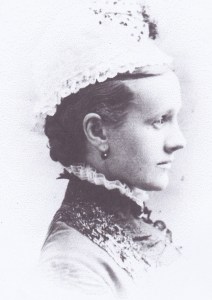
Figure 7. Elizabeth c. 1875. Photography Ralston & Sons Whitby Ontario. © Public Domain.

Elizabeth was born in 1846 and lived in the Buchanan’s family home at 2 Sandyford Place 33 until her marriage to the Reverend Robert McAlpine Thornton on July 20th 1871. Robert McAlpine  was the minister of Knox’s Presbyterian Church, Montreal at the time of the marriage.34The marriage ceremony was performed by Elizabeth’s father. Robert became minister of Wellpark  Free Church in the east end of Glasgow  around 1872.35 As with most women of the time it was Elizabeth’s husband’s life which is on record rather than her own.

Robert Thornton was born in Ontario, Canada ,the second son of the Reverend Robert Hill Thornton who had been called to Whitby Township, Ontario in 1833 as minister of the first Presbyterian Church and who went on to have a distinguished career as founder of several churches and schools and was also Superintendent of Education until his death in 1875. Robert McAlpine Thornton was one of ten children.36In 1881 the Reverend and Mrs Thornton were living at 12 Annfield Place, Dennistoun, Glasgow along with three sons. Kenneth Buchanan was seven, David Stoddart was five and Robert Hill was four.37

The family moved to London around 1883 as Reverend Thornton was called to be minister of Camden Road Presbyterian Church.38By this time four more children had been born. Margaret Elizabeth  was  six, Edith Wilson was seven and John McLaren was aged one. The family were living at 72 Carleton Road, North Islington.39

The Reverend Thornton had a distinguished career. He raised large sums for the African Missions.40 The Mail reported on the 25 November 1910 that  he was unanimously chosen as Moderator of the next Synod  of the Presbyterian Church of England which was to meet in Manchester in May 1911.

1898 the Reverend Thornton was one of many ministers who contributed to what was to be the third edition of Charles Booth’s Life and Labour of the People of London  which was published in seventeen volumes 1902-3.41The Thorntons were still at 72 Carleton Road  in 190142. In 1911 Robert visited his son Robert Hill Thornton in Whitley Bay ,Northumberland where he was a Church of England Minister. Robert Junior was married with two children. Elizabeth was at home with the children at 18 Hilldrop Road North London.43

The Reverend Robert Thornton died in London on 19 July  1913. His death was marked by a complimentary obituary in the London Times.44 It was perhaps fortunate he did not live to experience the sadness of the death of his youngest son John McLaren who was killed in action in Flanders in 1916.45 At the time of Robert’s death the family were living in Elgin Crescent Notting Hill46 and it was there that Elizabeth died on 28 March 1932 aged 86.47

Lawrence Barton Buchanan (1847-1926)

Born about 1847  Lawrence lived at the family home at 2 Sandyford Place.48He attended Glasgow Academy, Glasgow’s oldest independent school founded in 1845 and which was in Elmbank Street at that time. Lawrence’s father had been involved in setting up the school.49


Figure 8. Original Glasgow Academy building, Elmbank Street . High School of Glasgow from 1878. Porticos added by High School. © CSGCIC Glasgow Museums and Libraries.

 William Campbell of Tullichewan, founder of the drapery and warehouse emporium  J&W Campbell50 had been instrumental in setting up the school. He was a generous benefactor to the  Glasgow Royal Infirmary, Glasgow Botanic Gardens and to the Free Church of Scotland among many others. In May 1845 William Campbell convened a meeting  with Free Church ministers at the Star Hotel in George Square to discuss the possibility of setting up ‘ an academic Institution in the city’. Dr Robert Buchanan, Lawrence’s father and then Minister of the Tron Church, proposed that ‘an academic Institution shall be established for the purpose of teaching youth the various branches of secular knowledge, based upon strictly  evangelical principles and pervaded by religious instruction’. This was unanimously agreed by those present. A school of 400 pupils was envisaged. Although admission of girls was discussed this did not happen for another 145 years. Lawrence’s father headed a committee charged with selecting the  headmaster and staff of the school. The first headmaster or rector as he was known was James Cumming, who was appointed in January 1846.  The  school was built in Elmbank Street, Charing Cross  and was designed by Charles Wilson. It was financed by the issuing of 200 shares at £40 each.51 In 1878 the school moved to Colebrooke Street  Kelvinbridge  and the Elmbank Street premises were sold to the High School of Glasgow which was taken over by the Glasgow School Board after the passing of the 1872 Education(Scotland )Act.52

The Glasgow Post Office Directory of 1874-5 tells us that Lawrence was a ‘writer’ meaning a lawyer, working for Bannantyne, Kirkwood and McJannets, a legal firm, at 145 West George Street,  while still living in the family home. After his father’s death in 1875  Lawrence moved to 17 Ashton Lane, Hillhead which remained his address until about 188053 by which time he was a writer with premises at 190 West George Street but living at ‘Fernlea’ in Bearsden.54

On 28 May 1877 The Glasgow Herald reported the laying of the foundation stone of the Buchanan Memorial Free Church in Caledonia Road ,Oatlands. Lawrence attended the ceremony and spoke of his father’s work  and ‘expressed the hope that the Church…would be the means of prospering Christian work in the district.’ The church was designed by Glasgow architect John Honeyman.

Lawrence married Elizabeth(Lizzie) Agnes McLachlan in October 1877 in St Pancras in London.55Lizzie was the daughter of  Elizabeth McLachlan and the late David McLachlan.56 David McLachlan  had been first a wine and spirit merchant with premises in Oxford Street ,Glasgow and also had  business dealings in London.57 In June 1868 he took over the George Hotel at 74 George Square at the  east corner of what is now Glasgow City Chambers.58                                                                                                                               

Figure 9. George Square from the south-east c1829 by Joseph Swan. © CSGCIC  Glasgow Museums and Libraries. Carriages can be seen depositing patrons outside The George Hotel far right

George Square had undergone many changes since it was laid out in  1781.59 At the time of the Jacobite Rising in 1745 it was a marsh surrounded by meadowlands and kitchen gardens.60 At the beginning of the nineteenth century it was still ,’a hollow filled with green water and a favourite resort for drowning puppies ,cats and dogs while the banks of  this suburban pool were the slaughtering place of horses’.61 Building began around 1789  with a series of elegant town houses. The only statue in 1829 was that of Sir John Moore, erected in 1819.62 As Glasgow prospered the town houses of George Square were taken over by commercial enterprises and hotels.

By the 1860s  George Square had many hotels. Along the western side for example was The Edinburgh and Glasgow Chop House and Commercial Lodgings. In 1849 this had been taken over by George Cranston, father of Catherine Cranston who became famous later in the nineteenth century for her tearooms. The Chop house was renamed  The Edinburgh and Glasgow Hotel and then Cranston’s Hotel. Around 1855 the  town houses on the  north side of the square were converted into the Royal, the Crown and the Queen’s Hotel. This  expansion was possibly as the result of the opening  of the Edinburgh and Glasgow  Railway with  its Queen Street Station (known as Dundas Street station at first) in  1842. David McLachlan became a well-known Glasgow hotel keeper.63 After  her husband’s death in 187264  Elizabeth McLachlan took over the running of the  hotel and when the George Hotel was due for demolition to make way for the new Glasgow City Chambers Elizabeth McLachlan took over the Queen’s Hotel at 40 George Square   and later changed the name  to the George Hotel.65

Figure 10. George Square c. 1868. © CSGCIC Glasgow Museums and Libraries.The George Hotel can be seen in the far right corner. The Queen’s Hotel can be seen  on the far left . 

One  can only speculate how  Lawrence and Lizzie met  but  in  February 1877 Lawrence, in his capacity as a lawyer, defended Mrs Elizabeth McLachlan when she was prosecuted for a breach of the George Hotel licence.66 If this was when they first met and they were married the following October it must have a whirlwind romance or perhaps Lawrence had been acting as Mrs McLachlan’s lawyer for some time as his office was in nearby West George Street. Why they married in London  raises  a question unless it was because, as we have seen, Lawrence’s mother and other members of his family had moved to London by then.

By the time of the 1881 census Lawrence and Lizzie had three children. May Hamilton  aged four was born in France rather unusually. A second daughter Ethel Howard was born in England about 1879 and a son Lawrence Gordon in New Kirkpatrick, Dumbarton in May 1880.67

Around 1880-1 Lawrence’s life seems to have taken a different direction. At the time of the  1881 census Lawrence and his family  were living  at 40 George Square  Glasgow at  the Queen’s Hotel, later renamed The George Hotel. He and his mother-in-law, Elizabeth McLachlan,  were listed as hotel keepers.68  What made Lawrence decide to give up the legal profession and take up that of  hotel keeper is not known but it turned out to be a fortuitous  decision. On 14 October  1881 Mrs McLachlan died suddenly of ‘apoplexy’.69 She was only 58 years old.70 There had been a serious fire at the George in July 1881 which had destroyed a third of the roof. The Glasgow Herald  commented that the damage was around £200 and even though the premises were insured ‘the loss to the lessee of the hotel was considerable‘.71 Perhaps the stress of the fire  caused  the stroke.

Lawrence was proprietor of the George Hotel for the next ten  years.72 Sometime in 1890 The George was taken over by J. Fritz Rupprecht73  who previously owned the  Alexandra Hotel  at 148 Bath Street.74The name of the hotel was changed to the North British Railway Hotel sometime in 1891.75 Then in 1903 this hotel and the Royal at 50 George Square were bought by the North British Railway Company and became one hotel. This is today the Millennium Hotel.76

There is no trace of either Lawrence or his wife after about 1890. They do not appear in the 1891 census. The only clue we have is contained in Lawrence’s mother’s will. When she wrote her will in July 1893 she commented that her son was  living in Stuttgart in Germany but no reason for this is given.77 Neither  do they appear in the UK  census of 1901 but by 1911 Lawrence, aged 64, was back in the UK living in Saffron Waldon with his wife ,daughter May and  son Lawrence. His occupation was given as ‘retired solicitor’.78 Lawrence Buchanan died on 31 July  1926  at 2 London Lane, Bromley Kent aged 79 and was buried in Plaistow Cemetery in Bromley.79

Isabella McCallum Bruce (1849-1908)

Isabella Buchanan lived in the  family home at 2 Sandyford Place until at least 1871 according to the census of that year. There is no trace of her in the 1881 census.80 She married Thomas Boston Bruce who was a barrister. They married at the British Consul in Rome on 26 February 1885.81 Thomas was six or seven years younger than Isabella. It is not known at this time why the wedding took place in Rome. In 1891 the Bruces were living at 22 Ladbrooke Grove in Kensington. They had three children by this time. Charles Gordon was  four, Isabel M  two and Rosamund was one.  There were four servants living in the house demonstrating that the Bruces were quite prosperous.82 Another daughter Elizabeth Winifred was born about 1894.83 As we have seen several members of the Buchanan family had moved to London by this time and Isabella’s mother was living close by at 52 Ladbroke Grove at the time of her death in 1898.

According to the 1901 Census the Bruce family were at  2 Lunham Road Upper Norwood. Thomas Boston Bruce had  chambers at 32 Camden House Chambers, Kensington at the time of his death. 84 There is very little information forthcoming about the Bruces except that gleaned from the census records. We do know that the eldest son, Charles Gordon followed in his grandfather’s footsteps and became a minister of the church though it was the Church of England rather than the Free Church of the Reverend Robert Buchanan.85 Isabella died at the Lunham Road address on 5 January 1908 aged 59.86

Harriet Rainey Buchanan (1852-1925)

Harriet was probably given her middle name in honour of the Reverend Robert Rainey, a friend and colleague of her father. Robert Rainey was a leading figure in the Free Church of Scotland and was for many years  Principal of New College Edinburgh, the first training college for Free  Church ministers in Scotland after the Disruption.87 Harriet lived at the family home in Sandyford Place until the death of her father in 1875.There is no trace of her in 1881 but by 1891 she was living with her mother at 52 Ladbroke Grove ,Kensington.88Her sister Isabella was living at 22 Ladbroke Grove at this time. After her mother’s death in 1898 Harriet appears to have moved in with her eldest sister Charlotte in Hawke Road, Norwood. Also living in the house was niece Margaret Thornton, daughter of elder sister Elizabeth and Robert McAlpine Thornton.89

At the time of the census in 1911 Harriet was staying with her sister  Edith Gray Stewart who was married to Robert Barr Stewart ,a  solicitor. Their home was  Hillfoot House ,New Kilpatrick. It appears the middle classes were already moving to Bearsden by this time.90

In all the census reports consulted Harriet is said to be ‘living on her own means’ and there is no evidence of her having a paid occupation. Like her eldest sister Charlotte Harriet never married. Harriet died in Edinburgh of pneumonia in October 1925 aged 73. At the time of her death she was living in Eglinton Crescent , Edinburgh. Her death was registered by her brother-in-law Robert who by this time was living at 4 Huntley Gardens, Glasgow.91

Edith Gray Stewart (1855-1938)

Edith was the youngest of the children of  Robert and  Elizabeth Buchanan. She lived in the family home in Sandyford Place92 until her marriage on 4 November 1874. She was nineteen when she married Dr James George Wilson, Professor of Midwifery at Anderson’s College Glasgow.93 Dr Wilson was more than twice Edith’s age and already had a home at 9 Woodside Place in Glasgow’s west end.94 Dr Wilson died  on 4 March 1881 at the age of 52.95 Edith  remarried in the spring of 1887 to  Robert Barr Stewart, Writer to the Signet and Notary  Public. They were married in Kensington possibly because, as we have established, Edith’s mother and other members of the family were living in London by this time. Edith’s brother-in-law the Reverend  Robert  McAlpine Thornton assisted at the wedding.96 In 1891 Edith and Robert were living in Inverallen Place ,Stirling97 and later moved to Carronvale Road, Larbert.98

They moved again to Hillfoot House in Bearsden along with their two children . Alex was 22 at this time  and Lillian was twenty.99 At the time of their deaths the Barr Stewart’s usual residence was 4 Huntley Gardens Glasgow. Edith died of cerebral thrombosis at Balmenoch, Comrie Road Crieff on 21 September  1938 aged 84. Her death was registered by her daughter Lilian, now Oldham.100 Less than a month later on 20 October  Edith’s husband Robert died in Perth.101

The Buchanans appear to have been a very close family. Through the years we have seen numerous examples of members of the family visiting one another, living with one another and generally supporting one another. Even as late as 1939 when she was in her eighties we find Lawrence Buchanan’s widow Lizzie and unmarried daughter May  either visiting or living with the Reverend Charles Gordon Bruce , the son of Lawrence’s sister Isabella.102

References

  1. Baile de Laparriere (editor). The RSA Exhibition 1826-1990. 1991
  2. Minutes of Glasgow Corporation Parks and Gardens Committee July 6th
  3. ancesty.co.uk Statutory Deaths. Elizabeth Stoddart Buchanan
  4. Stephen, Sir Leslie (editor). Dictionary of National Biography.(DNB). OUP, 1921
  5. Morning Post 02/04/1875
  6. Op cit 4
  7. http:/www.archive.org/stream/disruptionworthi00edin
  8. Glasgow Herald (GH) 08/08/1864
  9. Op cit 5
  10. Op cit 5
  11. GH 05/04/1875
  12. GH 19/05/1875
  13. Op cit 4
  14. UK Census Records 1841 http://www.scotlandspeople.co.uk
  15. UK Census Records 1861-1891 http://www.ancestry.co.uk
  16. GH 29/091846
  17. highschoolofglasgow.co.uk/why-hsog-/history
  18. Inverness Courier 28/10/1852
  19. Op cit 4
  20. scotlandspeople.co.uk/Statutory Marriages
  21. UK Census Records 1871,1881 http://www.scotlandspeople.co.uk
  22. Ibid 1851,1861
  23. Glasgow Post Office Directory (GPOD)1845
  24. Ibid 1848
  25. UK Census Records 1881 http://www.scotlandspeople.co.uk
  26. scotlandspeople.co.uk. Will of Elizabeth Stoddart Buchanan
  27. ibid
  28. UK Census Records 1851-1881 ancestry.co.uk
  29. GH 01/04/1875
  30. UK Census Records 1881 http://www.scotlandspeople.co.uk
  31. UK Census Records 1891-1911 http://www.ancestry.co.uk
  32. England and Wales National Probate Calendar1858-1966.www.ancestry.co.uk
  33. UK Census Records 1851-1871 http://www.scotlandspeople.co.uk
  34. scotlandspeople.co.uk Statutory Marriages
  35. GH 26/09/1874
  36. whitby.library.on.ca
  37. UK Census Records 1881www.ancestry.co.uk
  38. London Times 21/07/1913 Obituary Reverend R. M. Thornton
  39. UK Census Records 1891.www.ancestry.co.uk
  40. 0p cit 28
  41. Charles Booth Online Archive . Ref Booth B213 pp2-10** check
  42. UK Census Records 1901 http://www.ancestry.co.uk
  43. Ibid 1911
  44. Op cit 38
  45. University of London Student Records 1836-1945.Role of War Service 1914-18.www.ancestry.co.uk
  46. Op cit 32
  47. ancestry.co.uk/Statutory Deaths
  48. UK Census Records 1851-1871 http://www.scotlandspeople.co.uk
  49. McLeod, Iain The Glasgow Academy.150 Years. Glasgow Academy 1997 pp1-9
  50. glasgowmuseumsartdonors.co.uk Lt Colonel Henry Alastair Campbell OBE
  51. Op cit McLeod
  52. theglasgowacademy.org.alumni/from-our-archives/the-history-of-the-academy
  53. Glasgow Post Office Directories1876-1881
  54. Glasgow Post Office Directory 1880-81
  55. General Record Office. Marriage Certificate. Lawrence Barton Buchanan and Lizzie Agnes McLachlan 02/10/1877
  56. GH 25/07/1872
  57. UK Census Records 1851 http://www.ancestry.co.uk
  58. GH 11/06/1868
  59. Sommerville,Thomas A History of George Square. Glasgow 1891 p12
  60. Ibid p9
  61. Ibid p12
  62. Ibid p26
  63. ibid p43
  64. North British Daily Mail 03/07/1874
  65. Glasgow Evening News and Star 04/12/1880
  66. GH 24/02/1877
  67. scotlandspeople.co.uk/Statutory Births
  68. UK Census Records 1881 http://www.scotlandspeople.co.uk
  69. Dundee Evening Telegraph 15/10/1881
  70. scotlandspeople.co.uk/Statutory Deaths
  71. GH 11/07/1881
  72. Glasgow Post Office Directories 1881-1891
  73. Dundee Courier and Argus 23/12/1890
  74. Glasgow Evening News 08/03/1890
  75. Glasgow Post Office Directory 1891-2
  76. theglasgowstory.com
  77. Op cit 26
  78. UK Census Records1901,1911 ancestry.co.uk
  79. London Times 03/08/1926
  80. UK Census Records1851-1881 scotlandspeople.co.uk
  81. Dundee Courier 02/03/1885
  82. UK Census Records 1891 ancestry.co.uk
  83. Ibid 1901 ancestry.co.uk
  84. England and Wales National Probate Calendar 1858-1966 ancestyry.co.uk
  85. Ibid
  86. Op cit 54
  87. Robert Rainey DD 1826-1906 DNB ancestry.co.uk
  88. UK Census Records 1861-1891 scotlandspeople.co.uk
  89. Ibid 1901
  90. Ibid 1911
  91. scotlandspeople.co.uk/Statutory Deaths
  92. UK Census Records 1861,1871 scotlandspeople.co.uk
  93. scotlandspeople.co.uk/Statutory Marriages
  94. UK Census Records 1871 scotlandspeople.co.uk
  95. scotlandspeople.co.uk/Statutory Deaths
  96. ibid Statutory Marriages
  97. UK Census Records 1891 scotlandspeople.co.uk
  98. Ibid 1901
  99. Ibid 1911
  100. scotlandspeople.co.uk/Statutory Deaths
  101. Ibid
  102. 1939 England and Wales Register.www.ancestry.co.uk>search>collection

Illustrations Notes:

Figure 2. Amelia Robertson Hill was the wife of David Octavius Hill. The original was painted by David Octavius Hill between 1843 and 1866 and is owned by the Free Church of Scotland.

Figure 3. Mitchell Library Special Collections. Virtual Mitchell Ref C2607

Figure 4. The Baillie No 29 May 1873

Figure 5. National Galleries of Scotland .ID PGP751

Figure 6. http://www.maps.nls.uk/index.html

Figure 7. Whitby Online Historic Photographs Collection.

http:/www.whitbylibrary.ca/archives

Figure 8. Mitchell Library Special Collections. Virtual Mitchell Ref C5141

Figure 9. Mitchell Library Special Collections. Ref GC914.14353 SWA

Figure 10. Mitchell Library Special Collections. Ref C8571

The Very Reverend Nevile Davidson Ch.St.J., D.D., D.L. (1899-1976)

In 1945, Dr Nevile Davidson, Minister of Glasgow Cathedral, wrote to the Director of Glasgow Museums, Dr Tom Honeyman, offering a painting, Still Life by David Horn, a seventeenth century Dutch artist, to the Art Gallery(1).

donor 1
Figure 1 Still Life by David Horn,© CSG CIC Glasgow Museums Collection.

He had bought it in poor condition, had it cleaned, but now wished to donate it. Dr Honeyman  suggested  that the painting had some  merit and would be useful for educational purposes.  It now hangs in the  “Looking at Art” gallery in Kelvingrove Art Gallery. It is in the style of a Vanitas which possibly appealed to Dr. Davidson.

Andrew Nevile Davidson was born to James Davidson, Minister of the Free Church, Blackadder Church   of Scotland, in North Berwick and to his wife Rosina Constance nee Agnew(2)(3). He was educated at the High School, North Berwick and graduated from Edinburgh University(4). He was assistant minister at St George’s West Church, Edinburgh. In 1925, he was called to St Mary’s, Aberdeen and in 1932 he moved to St Enoch’s, Dundee. In 1935, he was appointed minister of Glasgow Cathedral from where he retired in 1967. In 1940, he volunteered as an army chaplain(5) and was sent to France with the King’s Own Scottish Borderers. The battalion was eventually evacuated from Cherbourg and his war service continued on the mainland. In 1942, he was persuaded to return to the Cathedral since there was greater need there.

He married(6) Margaret Helen de Carteret Martin, daughter of Colonel de Carteret Martin M.D., on 19th January, 1944. He had no children.

donor 2
Figure 2 Very Reverend Nevile Davidson, from ‘Beginnings but no Ending’

He served on various committees of the Church of Scotland, particularly as Convenor of The Committee on Church and Nation(7). He was made Chaplain to the King in 1946. This entailed visits to the Royal Family at Balmoral on many occasions. In 1962-1963, he was Moderator of the Church of Scotland. In his Moderatorial year, he travelled widely both in Scotland and abroad. In a three month tour, he visited the Scots of King’s Own Scottish Borderers in Aden. He and his wife flew from there to Kenya and then on to Australia and New Zealand. They returned to Scotland with time in Los Angeles and San Francisco. At every place he was able to preach and his account is full of memorable places and people.

He was a promoter of communication, involved in the ecumenical movement and in the founding of the Dunkeld Fellowship for Church of Scotland ministers. He established the Friends of Glasgow Cathedral.

He was the recipient of the St Mungo Prize in 1958. He was Scottish Prelate of the Most Venerable Order of St John of Jerusalem.

Dr. Davidson had a great affection for the cathedral and wrote its history(8). Dr. and Mrs. Davidson tried to introduce colour and art to the cathedral which they felt had been swept away at the Reformation and were major donors to the cathedral. They gave a studio copy of a painting by Camillo Procaccini (ca 1600) The Adoration of the Shepherds and two early paintings of the cathedral. With Lord Bilsland, Dr Davidson was responsible for the project to replace the nineteenth century stained glass which used the talents of contemporary artists and took many years to complete. Dr and Mrs. Davidson gave six new windows by Harry Stammers, and four sixteenth and seventeenth century windows from Switzerland, all now in the Blacader Aisle .

He moved to Dunbar after he retired in 1967. He died suddenly in 1976. There were many tributes to him after his death, including one by Ronald Falconer(9) who wrote a personal memoire of ” a devout Christian and a hospitable man”(10) . He is buried in the Necropolis and there is a memorial window in the cathedral by Gordon Webster(11). The Archive of his papers was given by his wife to the National Library of Scotland(12).

Sources

  1. Letter in file at Glasgow museums
  2. Statutory births, Deaths and Marriages: Scotland’s People
  3. Ancestry.co.uk
  4. Obituary. Glasgow Herald:1976 December 21st
  5. Beginnings but no Ending by   A. Nevile Davidson. Edina Press
  6. Ancestry.co.uk
  7. Davidson, op. cit.
  8. Glasgow Cathedral: A Short History and Guide by A. Nevile Davidson
  9. Ibid
  10. Nevile Davidson: A personal memoir; Ronald Falconer
  11. A Walk through Glasgow Cathedral by   Very Rev William Morris: Society of Friends of Glasgow Cathedral
  12. National Library of Scotland Inventory