The sisters depicted in Fig. 1 are Charlotte Crawford-Cumming (seated) and Marion Finlay Crawford-Cumming. They are pictured in the garden of their home in Rosneath. The sisters were the daughters of Robert Crawford-Cumming (1808-1876) and his wife Sophia Connell (1815-1890). In 1839, Robert, on the death of his father Dougald, inherited the Barreman Estate on the Rosneath peninsula in Dunbartonshire. This estate comprised about six hundred acres and included the village of Clynder. On 13 August 1840 Robert married Sophia Connell in Rosneath 1 and on 24 June 1841 Charlotte Crawford-Cumming was born. 2 Her sister Marion was born on 22 September 1843.3 In the 1851 census, the family was at Port Street, St. Ninians, Stirlingshire with Sophia’s relatives. Robert was described as a ‘landed proprietor’. His lands included the House and Garden of Barrieman (Barreman), Barrieman Farm (occupier as well), Crossewan Farm, Stroul Farm, Stroul Park and Stroul Quarry. 4 In 1861 the family was at 42 Albany Street, Edinburgh with Charlotte 19 and Marion 17. 5 On 23 July 1868 Charlotte married Robert Henderson, eldest son of Robert Henderson of Malone Park, Belfast in St. John the Evangelist Church, Notting Hill, London. The service was conducted by the Rev. James Connell, Vicar of Hammersmith who was a cousin of the bride. 6 Robert’s father was a shipping agent in Belfast and was also involved in the ship building and ferry trade. In 1847, he became a Commissioner of Belfast Harbour Board and, in 1853, formed the Belfast Screw Steam Shipping Co. He became a shareholder in William Sloan & Co., of Glasgow in 1858 and acted as their agents in Belfast. Robert (1842-1895) carried on the business when his father died. 7 On 4 March 1871 Marion Finlay Crawford-Cumming married Edward James Henderson, merchant, brother of Robert, in St. James Piccadilly, London. 8 It seems that Marion’s parents attended the wedding as they were in London at the time. 9 In the same year, Robert sold his Rosneath Estate to Robert Thom of Canna for £20,300. It was described as a ’fine property…..extending a mile and a half along the Gareloch shore’. 10 The sale was apparently to avoid the estate passing to his nearest male relative who was resident in Australia, as it was covered by a Deed of Male Entail. The sale was thus strictly illegal. However, his wife and daughters appear to have received the funds after Robert died on 24 September 1876. 11 Marion Finlay Henderson (Crawford-Cumming) died aged thirty-five from convulsions leading to a coma at Strollamus, Isle of Skye on 9 January 1881. On her death certificate, her husband Edward is described as a ‘tacksman’. 12,13 Marion was buried on 17 January in Belfast City Cemetery. Edward Henderson died in Bath on 30 May 1890. 14 leaving his daughter Marguerite, orphaned and probably in the care of her aunt and uncle. Charlotte and her husband were staying at the Burlington Hotel in Hene, Worthing, Sussex at the time of the census of 1891 perhaps preparing for the marriage of their niece Marguerite. Robert was a ’shipowner’ neither employed nor employer. 15 Robert died four years later in London. Charlotte published an ‘In Memoriam’ in remembrance. 16 In ever loving memory of Robert Henderson, my beloved husband, who entered into rest on the night of the 30th December 1895 at Clarges Street, Mayfair. Charlotte died at 26 Dover Street, London on 9 January 1900. She was buried on 13 January in the Belfast City Cemetery. 17 Later that year it was reported that ‘the estate of Charlotte Henderson late of Belfast in the County of Antrim formerly of 41, Clarges Street, Piccadilly,….. was granted to Marguerite Kennedy Groome wife of Harry Groome of Luxford Cottage, East Grinstead.18 The ‘estate has been valued at £67,055 17s 10d (£66,223 11s 4d net) (and that she) devised and bequeathed all of her real and personal estate to her husband Mr. Robert Henderson, of Belfast who died in her lifetime……(the) estate has therefor been granted to her niece and only next-of-kin Mrs Marguerite Kennedy Groome 19 Marguerite Kennedy Groome nee Henderson was born on 10 May 1873 in Belfast. 20 She was the daughter of Edward James Henderson and Marion Crawford-Cumming. On 10 November 1893, Marguerite married Harry Groome at St. Botolph’s, Church, Hene, Sussex. 21 Harry was thirty-two and from Broadwater, Sussex. The couple spent their honeymoon in the south of France. 22 The wedding was attended by Mr and Mrs Robert Henderson, the bride’s uncle and aunt. 23 In March 1901, Marguerite, now twenty-eight, was living at Luxford Cottage, Lewes Road, East Grinstead, Sussex, with her husband Harry Groome and a son, Robert E. Groome, aged six and born in Eastbourne, Sussex. They were living on ‘Private Means’. 24,25 Ten years later Marguerite and Harry were boarding at Oak House, Brockenhurst, Lymington, Hampshire. 26 Their son Robert Edward Charles Groome aged sixteen was a boarder attending Harrow School, Harrow on the Hill, Middlesex. 27 Tragically, Robert Groome, died in 1915 after the battle of Ypres. 28
Second-Lieut. Robert E. C. Groome Royal Field Artillery, died near Ypres on March 4th (1915) of wounds received in action on the previous evening. The only child of Mr. and Mrs. Harry Groome of Brooklands, Brockenhurst, he was educated at the Priory School at Malvern and at Harrow, afterwards passing to the Royal Military Academy, Woolwich. He received his commission in December 1913 and at the time of his death was in his 21st year. 29
In the census of 19 June 1921 Marguerite was 46 years 1 month. She and Harry were living at Lymington Road, Brooklands, Brockenhurst, Hampshire. Marguerite was probably widowed before 29 January 1929, when she undertook a ‘round voyage’ from England. 30 In the pre-war register of 1939, Marguerite gave her date of birth as 10 May 1873. She was a widow living on private means at 6 Burlington Court Flats, Eastbourne, Sussex. 31 Thereafter Marguerite moved to Sidcliffe House, Sid Road, Sidmouth, Devon and in 1950 she advertised for a ‘cook-housekeeper’ and seems to have been quite particular! Required Cook-Housekeeper; one lady: small flat: age 45; C. of E.; good references. Apply by letter. – Groome, Sidcliffe House, Sidmouth’. 32
The two paintings were donated to Glasgow in 1952 probably because of the sisters’ birthplace in Rosneath near Glasgow. It may also have been about this time that Marguerite moved to a nursing home in Devon. It was here that she died on 14 October 1963 aged ninety. 33 Some details of her will were published the following year. Mrs Margaret Kennedy Groome of Cranford Nursing Home, Exmouth, Devon, widow of Harry Groome, formerly of Sidmouth, Devon, who died on October 14, leaving £149,365 (£148,559 net) left her property “Finaghy” Belfast and one half of the residuary estate to her cousins Jean McMullen and Sidney A. B. Smyth of Malone Park, Belfast and £100 to the Royal Victoria Hospital, Belfast. 34 She also left £100 to various hospitals and one half of the residuary estate to be divided equally between the N.S.P.C.C., St. Dunstan’s, the National Institute for the Blind, the Royal U.K. Beneficent Society, the Distressed Gentlefolks Aid Association, the R.N.L.I. and the R.S.P.C.A. 35
References
Scotland Marriages, 1561 – 1910, FamilySearch
Scotland Births and Baptisms, 1564 – 1950, FamilySearch
On 9 February 1871, William Ridge-Beedle (39), a general merchant, married Jane Walker Denniston (25) in Glasgow.1 After spending a few months in Glasgow with Jane’s parents 2, the couple moved to Buenos Aires, Argentina where a daughter, Elizabeth was born on 24 February 1872. 3 A son, Robert, was born in January 1874. Tragically, the same year that a second son, William, was born, Robert died of dysentery aged fifteen months.4 This may have prompted the family to move back to Scotland where on 20 November 1876, their son Peter Denniston Ridge-Beedle was born in his grandparents’ house at 17 Holyrood Crescent, Kelvin, Glasgow. Peter’s birth was registered by his grandfather, Robert Dennistoun, as his father had returned to Argentina and was ‘domiciled in Belgrana, Buenos Ayres’. 5 The following year Peter’s brother William died in Glasgow and on 2 December 1880 his father died of a suspected heart attack at Cathcart Railway Station in Greenock. 6 After his father’s death, Peter his mother and sister continued to live at his grandparents’ house at 17 Holyrood Crescent. 7 It is not recorded where Peter attended school. However
‘When I was fourteen, my mother, who was a widow, took my sister and myself for about eighteen months to the Riviera and Switzerland. There, I thoroughly acquired French and extended my knowledge of German, which I subsequently perfected. I then tackled Spanish and, after having reached an advance stage in it, was thinking of starting to master a further language, as I had become keen on acquiring them. ……..in later years I acquired a considerable knowledge of Italian’. 8
On return, the family moved to 12 Ashton Gardens, Govan where Peter’s mother was tenant/occupier. 9 By 1898, the firm of Ridge-Beedle & Co., merchants had been established at 116 Hope Street, Glasgow. 10 The following year there would appear to have been a partner in the business.
Beedle, Peter D. Ridge 12 Ashton Gardens (of MacBean & Ridge Beedle, merchants, 57 West Nile Street), later Ridge Beedle & Co., merchants, 116 Hope Street 11
In 1901 Peter, now twenty-four and a merchant was living at 18 Ashton Gardens with his mother Jane who was the head of the household and his sister Elizabeth twenty-nine. There were two servants in the house. 12 It may be that Peter’s mother took more than a passive interest in his business as in 1905 she was the proprietor of a warehouse and workshop at 90/92 Argyll Street, Glasgow. 13 On the census of 1911 Peter’s mother and sister were visiting his aunt Agnes Denniston in Dunoon. Mother and aunt were living on ‘private means’. 14 Peter does not appear on the census. Just prior to World War One, Peter submitted a paper on Air Ships in Naval Defence to the Navy League but was met with little interest. He warned of the ‘aerial threat’ from Germany particularly from a fleet of Zeppelins that Germany was building. 15 In a speech to the Navy League in Glasgow he warned that compared to Germany, Britain only had three tiny airships and about twenty aircraft. The meeting adopted a resolution requesting a grant of £1,000,000 from the Treasury to the Royal Flying Corps. 16 As the war progressed, Peter became more involved with the Navy League. He was Hon. Treasurer of the Ladies Committee appealing for funds to send ‘comforts’ to Royal Navy personnel and to provide food parcels for naval prisoners of war. 17 He was also an early advocate of a ‘Mid Scotland Ship Canal’ and as Hon. Secretary of the Glasgow and West of Scotland branch of the Navy League he sent a letter to the Government urging that such a canal be constructed on a direct route from Grangemouth to Yoker.18 Perhaps feeling that his political views would be best put forward in parliament, on 24 October 1918 he was adopted as the prospective Unionist candidate for the Clydebank and Dumbarton Burghs constituency. He was described as a ‘prominent iron ore merchant of the firm of Messrs. Ridge-Beedle & Co.’ 19 He appears to have withdrawn his candidacy before the election as his name did not appear on the ballot paper. On 31 March 1919, Peter arrived in New York having sailed from Liverpool aboard the S.S. Orduna. He intended to stay for one month. On the ship’s manifest he is described as ‘5ft 6 1/4 in, dark brown hair, dark grey eyes, fair complexion, person in old country, Mrs J. W. Ridge-Beedle., mother’. 20 On his return he was involved in a serious accident on the Drymen Road outside Glasgow when his chauffeur-driven car was involved in a collision with another car. His mother and sister who were with him sustained broken bones when the car overturned. He himself had his leg crushed and his face lacerated. Luckily the chauffeur managed to turn the engine off to prevent a fire. 21 In 1920, Ridge-Beedle and Co. Ltd. was registered as a private company with capital of £40,000 to carry on the business of ore, metal, foreign and general merchants etc. 22 Its offices were at 116 Hope Street, Glasgow with a garage at 17 Elliot Lane, Govan. 23 In 1921 Peter’s mother was still head of the household at 18 Parkville Road, Partick with Peter an ‘ore, metal and foreign merchant’. His sister Lizzie was also present and two servants. 24 In the following three years, Peter again stood for Parliament as a Unionist candidate. In Bothwell in 1922 and 1923 where he lost to Labour and in 1924 in Camlachie where he again lost to Labour but by a close margin of 215 votes.25 Perhaps encouraged by this result, he was again adopted as the Unionist candidate for Camlachie in the 1929 General Election. In a pre-election address at Dennistoun Parish Church, he directed his ire at the Scottish National Party. ‘There was undoubtedly a sinister aspect about this movement in that there existed a Roman Catholic tinge amongst its leaders’. 26 He also blamed the influx of Irish people for the fact that many Scots could not find employment. However, he failed to impress the voters of Camlachie and was again unsuccessful. In the 1930s, Peter was living at 55 Dowanside Road, Hillhead, Glasgow presumably with his mother and sister. 27 Jane Walker Ridge-Beedle died on 30 August 1938 at the age of ninety-two. In 1939 Peter was made a Life Member of the Iron and Steel Institute. He was Governing Director, Ridge-Beedle & Co. of 116 Hope Street, Glasgow. His private address was 6 Albert Gate, Glasgow. 28 During WW2, Peter was again involved with The Navy League, this time as chairman of the Glasgow and West pf Scotland branch. Under the banner ‘Lend a Hand’, advertisements appeared appealing for ‘knitted goods and gifts of all kinds for the men of the fleet’ Subscriptions were to be sent to the chairman. 29 In times of rationing it was clarified later that the wool to be used was ‘coupon free’ and sold at reduced prices. 30 Peter Ridge-Beedle had long been an advocate of the Mid-Scotland Ship Canal. This was a proposal first mooted in the late nineteenth century to build a canal capable of carrying large ships from the Forth to the Clyde via Loch Lomond. It was debated in Parliament in 1913 and a report produced in 1917. However, it was not carried forward. The idea seems to have been revived in the war years, and a Mid-Scotland Ship Canal Committee set up with Peter as a member. The report was submitted to Parliament with a booklet published independently, by Peter in January 1944 entitled Report of Mid-Scotland Ship Canal Committee….The Case for the Canal etc. However, the proposal was not well received, not least by the Glasgow Chamber of Commerce which prompted a furious response from Peter. 31 Peter Ridge-Beedle continued as chairman of the Navy League in Glasgow and in 1945 received a letter from Buckingham Palace informing him that the Queen had instructed that a consignment of comforts be sent to their Glasgow depot. These had been made by the Buckingham Palace, Windsor Castle and Balmoral work parties. 32 Consistent with his interest in languages, Peter in 1947 published a book Why Not English? Which claimed to contain ‘A New Alphabet for the English Language (The Bedel Alphabet) enabling each word to be spelled as it is pronounced and pronounced as it is spelled’.33
Fig. 3 Advertisement for Why Not English and ‘The Bedel Alphabet’ (Stratford Press)
Fig. 4 Example of the Bedel Alphabet in use
A favourable review appeared in the press but the new alphabet seems not to have been taken further.34 On 10 January 1952, two years after the death of his sister, Peter intended to leave Liverpool aboard the Reina Del Pacifico heading for Valparaiso, Chile. It is not clear that he undertook the voyage as his name has a line through it on the ship’s manifest. His address was 8 Albert Gate, Dowanside Road, Glasgow. 35 Peter Denniston Ridge-Beedle died suddenly on 8 May 1952 at 121 Hill Street, Glasgow. He was seventy-six. 36 Just a few days before his death he had been re-elected as a director of the Scottish General Insurance Co. Ltd. 37 A brief obituary appeared in a local newspaper.
P. D. Ridge-Beedle (76), a well-known Glasgow merchant who in 1947 published the “Beedle Alphabet”, which was designed to make the spelling and pronunciation of English correspond. He was a director of two prominent insurance and assurance companies. 38
He was buried in the Glasgow Necropolis. The inscription on the gravestone reads:
Erected by PETER DENNISTON RIDGE-BEEDLE Merchant Glasgow in memory of his father WILLIAM RIDGE – BEEDLE Foreign Merchant who died 2nd December 1880 aged 48 years, and his mother JANE WALKER RIDGE-BEEDLE who died 30th August 1938 aged 92 years, who are interred in the vault in the 5th avenue to the west of her father ROBERT DENNISTOUN Shipowner Glasgow, also his brothers ROBERT and WILLIAM who died in infancy in 1875 and 1877 and interred in this vault, his sister ELIZABETH( LIZZIE) DENNISTON RIDGE-BEEDLE who died 27h February 1950 aged 78 years, PETER DENNISTON RIDGE –BEEDLE Merchant Glasgow born 20th November 1876, died 8th May 1952
Two years after his death, on 30 December 1954, the firm of Ridge-Beedle & Co., Ltd. was wound up voluntarily. 39
References
Scotland’s People, Marriage Certificate
Scotland’s People, Census 1871
Baptisms Recorded at St. Andrew’s Scots Presbyterian Church Buenos Aires, Vol. 3 1871-1878, Jeremy Howat, June 2015
Deaths Recorded at St. Andrew’s Scots Presbyterian Church Buenos Aires, Vol. 3 1871-1878, Jeremy Howat, June 2015
Scotland’s People, Birth Certificate
Scotland’s People, Death Certificate
Scotland’s People, Census 1881
Why Not English? The Stratford Press, 116 Hope Street. Glasgow, 1947
Scotland’s People, Valuation Roll, Govan, 1895
Grace’s Guide
glasgowwestaddress.co.uk
Scotland’s People, Census 1901
Scotland’s People, Valuation Roll, Glasgow 1905
Scotland’s People, Census 1911
Aberdeen Press and Journal, 13 March 1913
The Scotsman, 13 March 1913
Glasgow Herald 30 October 1916
Milngavie and Bearsden Herald 13 July 1917
Glasgow Observer and Catholic Herald, 2 November 1918
New York, Passenger Arrival Lists (Ellis Island) 1892-1925, family search
Daily Record, 15 October 1919
Grace’s Guide
Scotland’s People, Valuation Roll, Govan, 1920
Scotland’s People, Census 1921
United Kingdom Election Results, Wikipedia
John o’ Groats Journal, 9 November 1928
Scotland’s People, Valuation Roll, Glasgow 1935
Grace’s Guide
Daily Record, 22 January 1940
Various newspapers, e.g. Linlithgowshire Gazette, 10 October 1941
Daily Record, 1 February 1944
The Scotsman, 10 March 1945
Why Not English, The Stratford Press, 116 Hope Street. Glasgow
Daily Record, 26 January 1948
ancestry.co.uk, UK and Ireland Outward Passenger Lists, 1890-1960
On 6 September 1881, John McLean Finlayson married Elizabeth Semple in Hillhead, Glasgow.1 The following year, on 17 September, their daughter Elizabeth Campbell Finlayson was born at 19 Shaftesbury Terrace, Glasgow, Kelvin.2 By 1891, the family had moved to 144 Holland Street and Elizabeth now had two sisters, Georgina and Margaret. The family also employed two servants. 3 Ten years later, Elizabeth aged eighteen and an arts student had moved with her parents and siblings to forty-seven Albert Drive, Pollokshields. John Finlayson was now a sugar broker. 4 Shortly afterwards, the family moved again. This time to 8 Matilda Road, Pollokshields 5 and from the census of 1911, Georgina was now twenty-seven and a music student while Margaret, aged twenty-two, was a student in arts. 6
On 27 June 1914 at the Trinity Free Church, Claremont Street, Glasgow, Elizabeth Campbell Finlayson, thirty-one, married William Barr Inglis Pollock an ophthalmic surgeon aged thirty-six. The wedding reception was held in the Grand Hotel.7,8 After a honeymoon in Switzerland, the couple moved into the groom’s home at 21 Woodside Place, Glasgow. In 1916, Dr. Inglis Pollock completed registration for the Medical Recruiting Scheme. He was at that time Consultant Assistant Surgeon, Glasgow Eye Infirmary, Ophthalmic Surgeon, Ayr County Hospital, Govan School Board and Ayr School Board. He stipulated that should his services be required, arrangements had to be made to ensure his present work was carried out during his absence. 9 The couple continued to live at 21 Woodside Place. 10 In 1926, Dr. Pollock applied unsuccessfully for the Chair of Ophthalmic Medicine and Surgery at the Anderson College of Medicine.11 Dr. Inglis Pollock died aged seventy-five at 1055 Great Western Road, Glasgow (usual residence 21 Woodside Place). He was an ophthalmic surgeon, retired. 12 The two paintings were given to Glasgow shortly afterwards, possibly as a result of Elizabeth downsizing. Elizabeth Campbell Pollock died of a cerebral haemorrhage aged eighty-one on 23 September 1963. She was found dead at 14 Royal Terrace, Glasgow. Her death was reported by a nephew John A. Barr Pollock. 13
Daily Record, 29 June 1914 (This contains a full report of the wedding including a description of the dresses etc. worn by the bride and bridesmaids. Two of the latter were the bride’s sisters, Georgina and Margaret. The best man was Mr. A. Barr Pollock from Hong Kong, brother of the groom).
https:/smsec.rcpe.ac.uk
Scotland’s People, 1921 Census
Archives of Royal College of Physicians and Surgeons, Glasgow.
The subject of the painting is Mrs Ellen Watson (c1820-1902), our donor’s paternal grandmother. Painted by Sir James Guthrie c1898 it has been exhibited on several occasions including at the RSA in 1901, The Franco -British Exhibition in 1908, Links House Scottish Art Promotion in Glasgow in 1966 and the Arts Council’s London and Empire Tour ‘Decade 1890-1900’ in 1967.1 The painting was in the possession of the sitter’s son George Lennox Watson(see below) until his death in 1904 and was then passed down the family until it was gifted to Glasgow Museums by the sitter’s granddaughter Mrs Ellen Marjorie Grenside or Watson in 1952.2
Ellen Marjorie Watson (1904-1963)
Ellen Marjorie Watson(known as Madge) was born at 9 Highbury Terrace Dowanhill Glasgow on 29 April 1904. Her father was George Lennox Watson (GLW)and her mother was Marie (or Mary) Alice Lovibond .3 By the time of our donor’s birth her father was well established as a yacht designer of great repute.4
GLW was born on 30 October 1851 in Regent Street Glasgow. His father was Thomas Lennox Watson, a doctor at Glasgow Royal Infirmary, and his mother, the subject of our portrait, was Ellen Burstall ,5 daughter of engineer Thomas Burstall who was involved in the Rainhill Locomotive Trials in 1828/9.6 As a boy GLW spent holidays at Inverkip on the River Clyde where he is believed to have developed a passion for yachts and at the age of sixteen became an apprentice draughtsman at the shipyard of Robert Napier andSons in Glasgow. During this training period GLW was involved in the use of hydrodynamics in yacht design. He went on to gain more experience with Aand J Inglis Shipbuilders . In 1873 at the age of twenty two he founded the world’s first dedicated yacht design office-G Watson & Company. He had early success with racing yachts such as Verve, Clothildeand Vril.This brought his name to the fore as the most innovative yacht designer of the time. Though he was personally involved in the building and part ownership of these early yachts he never made a business of yacht building instead concentrating on yacht design. He went on to design over 400 yachts for some of the wealthiest men in the world venturing into steam yachts from 1885. 7
In 1893 GLW designed the Britannia (see Figure 3) for Edward ,Prince of Wales, later Edward VII who was a keen sailor. The yacht was built at the Clyde yard of D& W Henderson. In 1910 the new king George V, also a keen sailor, inherited Britannia and competed with it successfully for the rest of his life .8 GLW designed four yachts for the Americas Cup Race including Shamrock IIfor Sir Thomas Lipton .9
Other famous clients included the Tsar of Russia (Zarnitza),10 F. W.Vanderbilt the American millionaire(Warrior) which was launched by Mrs Marie Watson in February 1904.11 GLW also redesigned Scotiafor the Scottish Antarctic Expedition of 1902-4 .12
In addition to yacht design GLW was also heavily involved with the Royal National Lifeboat Institution (RNLI). He became consulting Naval Architect in 1887 and remained involved with the RNLI for the rest of his life. He developed the Watson- Class Lifeboat which in several variations was operated by the RNLI around the coasts of Britain and Ireland between 1888 and 1991 .13 As we shall see this involvement influenced his daughter throughout her life
Involvement in yacht design and other interests seemed to leave GLW little time for his personal life. He did not marry until he was 52 years old when he married Marie Alice Lovibond in Putney ,London on 10 June 1903. The wedding was described as ‘a gathering of the most fashionable people in society.’ Sir Thomas Lipton, Lord Dunraven and Peter and James Coats of Ferguslie were among many other prominent guests .14 The couple lived at 9 Highbury Terrace, Dowanhill, Glasgow where our donor was born .15 Ellen or Madge as she became known ,was to grow up not knowing her father as he died suddenly on 12 November 1904 of ‘Coronary asthma’. 16
Shortly after her father’s death Madge and her mother moved from Glasgow to Putney Hill, Greater London where they lived at 12 Chartfield Avenue . Marie Watson came from Putney so they possibly moved there to be near her family. According to the 1911 Census the house was also occupied by Madge’s nurse and three servants .17 The Watsons lived at this address until 1922 when they moved to a house called Vril in Holloway Hill, Godalming in Surrey. The house was probably named after one of Madge’s father ‘s first yachts and was previously known as Braemar House until bought by the Watsons .18
There is little information about our donor’s life in the nineteen twenties and early thirties but we do know that she was a talented pianist gaining the Licentiateship of the Royal College of Music in 1927 which qualified her to teach the piano.19 She was also pianist for the Rainbow Band, ‘a small ensemble of the daughters of Godalming families specialising in playing for charity concerts .’20 One example of this was in January 1931 when ,’Miss Madge Watson and the Rainbow Band provided the music for a pantomime The Sins of Cinderella’ which was performed by The Cottage Players at the Church Room in Godalming to raise money for the Church Room Building Fund. 21 Rainbow was also the name of one of Madges fathers yachts.(Wikipedia)22
Madge was said to be involved in numerous social activities including the Godalming Badminton Club and the Hindhead Golf Club. She was also heavily involved with the Godalming branch of the RNLI ,appointed as honorary secretary, in 1929 ,an office she held for 30 years .23
Madge’s mother died on 23 March 1929 leaving her daughter living alone at Vril .24 However at the age of thirty Madge married Philip James Grenside (known as Jimmie) ,an electrical engineer, on 20 January 1934 at the Church of St Peter and St Paul in Godalming.25 We do not know how they met but perhaps through mutual social interests such as sport as Jimmie was also a member of the Godalming Badminton Club and the Hindhead Golf Club.
George Lennox Watson was not forgotten at the wedding as the wedding cake was decorated with a silver cup presented by the RNLI on the occasion of the marriage of Madge’s parents .26
Figure 6 Wedding of Philip James Grenside and Ellen Marjorie Watson
The couple both lived at Vril after the wedding. A son, George, was born in 193527 followed in 1937 by a daughter, Hazel .28 In 1938 they moved to The Mount, Bushbridge Lane, Godalming and this house was renamed Vril .29There in 1940 a third child, Lois, was born. 30 There appear to have been three servants living in the house including Alice Agnew .31
Jimmie was a member of Brooklands Flying Club and in June 1935 acquired a Royal Aero Club Aviators Certificate .32 According to the 1939 Register by 1939 his occupation was that of Assistant Flying Instructor .33 From April 1940 until November 1945 Jimmie was a First officer in the Air Transport Auxiliary which had been established in 1939 for the purpose of delivering aircraft to the Royal Airforce and the Royal Navy as well as other air transport tasks auxiliary to the war effort .34
Madge continued her volunteer work as honorary secretary of the Godalming RNLI. In 1936 she was awarded the RNLI Gold Badge for her work .35 Her work continued during the war. For example in September 1941 she organised a whist drive at the Church Rooms in Godalming which raised £16.36 just one of many fundraising events. Throughout her life she helped raise a total of £7750 for the RNLI. In 1949 she was appointed an Honorary Life Governor. 37
Madge was also involved with the British Red Cross Society, The British and Foreign Bible Society ,The Mission for Seamen and the United Nations. She was a regular church goer attending the Busbridge Parish Church and later of St Johns Church, Farnham .38
Madge was also interested in local history and for many years was Honorary Curator of the Weybridge Museum which had been founded in 1911.39
By the end of the war the Grensides had moved to Ramsden Road, Godalming .One of the former servants ,Alice Agnew, was still living with the family. Again the house was names Vril .40
By 1961 Madge, Jimmie and the three children had moved again to Flat 1, Frith Hill House ,Nightingale Road, Farnham .41 Here Jimmie died on 8 July 1961. His estate on his death was very small 42 compared to that of Madge 43 who died at the Royal Surrey Hospital on 24 August 1963. As was said in the obituary published in the Guilford and Godalming Advertiser,
‘ Mrs Grenside devoted most of her spare time to helping others less fortunate than herself ‘.44
References
1. Glasgow Museums Resource Centre Object File 2949 Grenside Mrs E. M
Hugh Reid was born in Manchester on 9 February1860. (1) His father was the locomotive manufacturer James Reid and his mother was Margaret Ann Scott. His parents moved to Glasgow when he was 3 years old (2) and he was brought up in Springburn. (3) He was educated at the High School of Glasgow. (4) He was apprenticed to his father’s firm, Neilson and Company at the Hydepark Engineering Works from 1871 to 1875. He then attended the Faculty of Engineering at Glasgow University from 1881 to 1883. (5) After the death of James Reid’s oldest son in 1881(6) James decided that his four sons should eventually be directors of the company of which he had been the sole director since 1874 and this was fully accomplished in1893. (7) James died in 1894 (8) and Hugh as the oldest son became Senior partner in the Hydepark Works, which in 1903 amalgamated with the Atlas Works and The Queens Park Works and the North British Locomotive company was born .
This became a major locomotive company exporting steam engines to Australia , Malaysia, New Zealand, Palestine and South Africa employing thousands of men. Hugh Reid was Chief Managing Director and Deputy Chairman. (9) At this time the company continued to innovate and he personally was responsible for the Reid Ramsay steam turbine electric locomotive. A full list of his patents is available in an article in Ancestry. (10) In later years the company designed diesel locomotives but this was not so successful and the company filed for bankruptcy in 1962.
Private Life
On 8 August 1888 he married Marion McClune Bell in Prestwick the daughter of a deceased shipbuilder. (11) They had four children (12): Captain James Reid (1889-1915) killed in the battle of Loos; Madelaine (1882-1983); Sir Douglas Neilson Reid (1898-1971) and George Hugh Neilson Reid (1901-1961). George was childless and at his death the baronetcy lapsed.(13 ) The family lived in Belmont House in Springburn.(14 )
Marion died on 7 December 1913 at Belmont House. (15) She is buried in the family grave in the Glasgow Necropolis. Sir Hugh died in 1935 of a heart attack. (16) There were extensive obituaries in The Glasgow Herald (17), The Scotsman (18) and in The Times. (19) His grave is in the Glasgow Necropolis.
Public Life
The Bailie 27 November 1901
He held no elected office in Parliament or In Glasgow city council. He is reported in the Bailie as saying that it is neither necessary to be in Parliament nor in the City Council to do good service to the city. (20) He followed this precept all his life. He was Deacon of the Hammermen in the Trades House in Glasgow in 1903.(21) He was a member of the Merchants House in Glasgow and in 1916 he was elected by the members to be Dean of Guild thus becoming the second citizen of Glasgow. The Lord Provost is the first.
He was awarded the Freedom of the City of Glasgow in 1917 and a granddaughter returned the casket to the City in 2017. (22)
He joined the First Lanarkshire Volunteers as a private in 1877 and retired as Lieutenant Colonel in 1903. He became CBE in 1918 awarded for service to the Red Cross during the war. He had converted a part of the Springburn Works in to a military hospital. He successfully chaired a Munitions Committee.
He was created a baronet in 1922 and was Deputy Lord Lieutenant of the city of Glasgow.(23) He was a Brigadier in the Royal Company of Archers and he excelled at archery, winning the King’s prize in 1934. (24)
He served on the committee which appointed Charles Rennie Macintosh as architect for the Art School. He chaired the Machinery and Lighting committee for the Great Exhibition of 1901 for which he received much praise in the Bailie. (25) He was Chairman of the Royal Glasgow Institute for the Fine Arts from 1925 to 1928. (26
Philanthropy
He followed his father in giving to Springburn. He commissioned the statue of his father which is in the park. He gave land to extend Springburn Park and gave buildings such as the Winter Gardens in the park and also funded the Reid Hall and the Reid library. (27)
With his brothers, he donated some paintings which had been collected by his father James Reid to Glasgow Museums. Information about these can be found in the blog under James Reid of Auchterarder.
He gave a painting on his own behalf which is shown here.
Reference
National records of England statutory Births 1862.
Who’s Who in Glasgow 1909
National Records of Scotland census 1871
Who’s who in Glasgow 1909
David Fox in Ancestry.co.uk. Sir Hugh Reid
National records of Scotland Statutory deaths 1881
National Railway Museum Records
National Records of Scotland statutory deaths 1894
National Railway Museum Records
Ancestry .com. Sir Hugh Reid and Marion M. Reid, article by David Fox
Ibid
Post office Directories Glasgow
Laing, Alan ‘Sir Hugh Reid’ in The Glasgow Herald 20 December 2012
Death of Marion recorded on Hugh Reid gravestone 7 December 1913
National records of Scotland statutory deaths 1935
The Glasgow Herald 8 July 1935
The Scotsman 8 July 1935 ‘Death of a Captain of Industry’
*There would seem to be a doubt as to who donated the painting. The Paintings’ Register at Glasgow Museums’ Resource Centre (GMRC) states that it was Mrs John Roberts while a record card in the Object File at GMRC says John Roberts.
The Roberts Family George Roberts (1798 – 1877) was a clothier in Selkirk. In October 1838, he purchased Forest Mills in the town to build a spinning mill in partnership with Andrew Dickson a manufacturer in Galashiels. In January 1843, George married Agnes Scott Fowler (1871 – 1901) in Melrose. The couple had a daughter Eliza and six sons. The company prospered and expanded. When George died in 1877, he was succeeded by his sons George, Alexander and Thomas James Scougal and his nephew Frank. Another son, John (1845 – 1934) emigrated to New Zealand but his son, also John (1876 – 1966), returned to Scotland and in 1894 joined the firm and played a major role in its development. The firm became very prosperous and up till the outbreak of WW1 was one of the leaders of the Scottish woollen industry. The two relatives associated with this painting are John junior and Thomas Scougal Roberts. 1
Thomas Scougal Roberts (He commissioned the painting) Thomas Scougal Roberts was born in Selkirk on 24 January 1850, the son of George Roberts and Agnes Scott Fowler.2 In the 1861 census he was aged 11, a scholar living at Wellwood Park, Selkirk with his parents, brothers and a sister.3 On 31 March 1875 he married Hyndmer Rutherford Crawford aged eighteen of Caddenfoot, Selkirk.4 The couple moved to Byethorn House in Selkirk and had two children, George Crawford born in 1878, and Alexander Thomas born in 1885. (Alexander became the ‘American Cousin’ mentioned in the donation). In 1881 Thomas was 31, a tweed manufacturer living at Byethorn House, Selkirk.5 By 1891, he had moved with his wife and son Alexander aged 5, to the Mansion House, Stow, Caddonfoot, Selkirk.6 (His son George had died in 1885.) It was possibly here that he commissioned the present painting of his wife, Hyndmer, from Alexander Roche in 1895. In 1901, the family was living at Drygrange, Melrose, Roxburghshire, with eight servants.7 Hyndmer Roberts died in 1911. The following year, Thomas travelled to Canada arriving in Victoria aboard the Makura in May 1912 8 and then on to Vancouver in June 1912 aboard the Empress of Japan.9 Thomas Scougal Roberts died on 3 February 1921 in Edinburgh. 10 Probate was granted in Edinburgh on 16 May 192111, on 16 June in London.12 and in Otago and Wellington, New Zealand in the same year. Among his executors were his brother Alexander Fowler Roberts, Fairnielee, Galashiels, and his son Alexander Thomas Roberts. His will was dated 4 March 1920 and recorded in Jedburgh on 16 May 1921. The value of his estate was £253,246.4s.2d.
Fig. 2 Label from the reverse of the painting.
This label indicates that the painting was owned and exhibited in 1908 by Thomas James Scougal Roberts who was now living at Drygrange, Melrose.
Fig. 3 Record card for the painting (GMRC)
This record card states that the subject of the painting is the mother of the ‘American cousin’. This is Alexander Thomas Roberts who was born in Selkirk but emigrated to America in the early 1900s. The card gives the donor as John Roberts.
Sir John ‘Jack’ Roberts – Mill owner and Provost of Selkirk. (Possible Donor of the painting) John Roberts (1845 – 1934), a brother of Thomas Scougal Roberts emigrated to New Zealand from Selkirk and married Louisa Jane Kettle (1848 – 1922) on 26 January 1870. Their son, John Roberts junior was born in 1876. He was educated at Otago Boys High School from 1888 to 1892 and then emigrated to Scotland where he attended Merchiston Castle School from 1892 to 1894. After leaving school, in 1895 he joined the family firm of George Roberts and Co Ltd.13 At the 1901 census he was lodging at 4 Marion Crescent, Selkirk, and was a ‘manufacturer of wool.14 Later the same year, on 18 September, he married Agnes Amelia Muir, daughter of Dr. John Stewart Muir the local GP in Selkirk.15 This was the same year that his grandmother Agnes Scott Roberts (nee Fowler) died. She had occupied the house and lands around Wellwood in Selkirk which had belonged to her husband, George, and then to her son, John Roberts senior, who, in 1902 was listed as the proprietor of Wellwood and Haugh, Railway Station Lands and in 1903 of a house with garden and stable at Wellwood, Ettrick Terrace, Selkirk.16 These properties were passed on to John junior by at least 1914. In the census of 1911, John and Agnes were boarding at the Gordon Arms in Selkirk with their children, Andrina Barbara Henderson Roberts, 8, John Stewart Roberts, 6, Louisa Jane Roberts, 4, Stewart Muir Roberts, 3, and George Edward Roberts, six weeks.17 In 1914 he gave ‘an interesting lecture’ in the Masonic Hall in Motherwell in which he described a trip to New Zealand.18 In the same year he subscribed to a fund for the relief of the Belgian People.19 John Roberts was Provost of Selkirk three times, the first of these in 1908 and then in 1915-1920 but he resigned from the latter term for health reasons and stated in a letter to the local newspaper that he would remain in office until the new Council was elected. 20 He was again Provost in 1935 until 1941 when he resigned both as Provost and Councillor. 21 He does not appear on the 1921 census, but he was the proprietor/occupier of Wellwood House at 52 Ettrick Terrace, Selkirk.22
Fig. 4 Wellwood House. Selkirk 23
John Roberts was a prominent member of the Roxburgh and Selkirk, Unionist Association, 24 later becoming vice-chairman.25 He was made a Freeman of the Royal Burgh of Selkirk in 1952. The following year, he received a knighthood in the Coronation Honours ‘For political and public services in Selkirkshire.’ 26 Sir John Roberts died at the age of ninety at Craigallan, Heatherlie Park, Selkirk on 23 January 1966 having outlived his wife by eighteen years. His son Stewart reported his death. 27
Alexander Thomas Roberts (Inherited the Painting and donated it remotely) Alexander Thomas Roberts was born on 8 May 1885 in Byethorn House, Selkirk to Thomas James Scougal Roberts and his wife Hyndmer Rutherford Crawford who had married on 31 March 1875 at Mountainview, Duns(e). Perhaps his parents had second thoughts about his name as it was Thomas Alexander Roberts on his birth certificate, later changed on 23 July. 28 At the age of fifteen, he was a pupil at Fettes College, Comely Bank, Edinburgh.29 In the early 1900s Alexander emigrated to America. He is recorded as arriving at Ellis Island, New York in 1913 aboard the S.S. Campania. His place of residence was Melrose, Scotland.30 This was probably a return trip from Scotland as on 15 June 1913 he married Evelyn Laura Henderson, 22, in Detroit. On the marriage license he was described as a ‘manufacturer’.31 It is possible that his father attended the wedding as he had been travelling in Canada the year before.32 In 1916, Alexander and Evelyn visited Scotland and stayed at Drygrange, Melrose with Alexander’s widowed father. They returned from Liverpool to New York aboard S.S. St. Louis on 25 November. He did not list an occupation. 33 On 12 September 1918 Alexander provided the following details for a draft registration card. He was a British citizen, living with his wife at 10 Longfellow Avenue, Detroit and was an officer in the British War Office on sick leave. He was of medium build and height with blue-grey eyes and black hair.34 (According to his obituary, he had attained the rank of Captain in pre-war service in the King’s Own Scottish Borderers).35 Alexander and Evelyn again travelled to Scotland to stay at Drygrange, Melrose with Alexander’s father. They returned to Detroit by way of Liverpool and the S.S. Orduna on 19 December 1919.36 Thomas Scougal Roberts died on 3 February 1921. Alexander and Evelyn may have spent most of that year in Scotland. Alexander was in Edinburgh on 9 May for the reading of his father’s will. As an only child he would have inherited the bulk of his father’s £253,246.4s.2d estate. This enabled him to purchase the Park-Ward company of London which manufactured automobile bodies for Rolls-Royce and Bentley. He retained ownership of the company until 1939 when he sold it to Rolls-Royce.37 Alexander and Evelyn arrived back in America on 2 December 1921 having sailed from Liverpool aboard the S.S. Baltic. Both had ‘nil’ under ‘occupation’ and both listed an aunt, Mrs. A. F. Roberts of Fairnielee, Galashiels, as their nearest relative in Scotland.38 In April 1922, Alexander and Evelyn again travelled to Scotland for an extended stay in Melrose.39 They returned to New York from Southampton travelling first class aboard S.S. Mauretania on 19 October 1923.40 Sometime afterwards, Alexander and Evelyn were divorced. Evelyn married William Frue, ten years her junior on 22 June 1931 in Fulton, Ohio.41 It seems that Alexander also remarried about this time as on 2 February 1935 he sailed from Southampton aboard S.S. Bremen presumably bound for New York. His place of birth was given as ‘Selkirk’ and his last permanent residence ‘London’. He was accompanied by Mary Elizabeth Roberts who was 37 and born in Toronto. Both were listed as ‘married’. 42 They must have returned to Britain later that year as on 26 February 1936 they again left Southampton aboard S.S. Bremen and while Alexander lists his occupation as ‘none’, Mary is a housewife. 43 On 25 April 1940, Alexander flew from Havana in Cuba where he had been staying at the Hotel Plaza to Miami. He was now fifty-five and retired. His home address was 11 Keofferam Road, Old Greenwich, Connecticut. 44 In 1941 he was required to complete a Draft Registration card. His address was now 5 Grant Avenue, Old Greenwich, Connecticut. His ‘named person’ was David Rosen of 105 Bedford Street, Stamford, Connecticut, possibly suggesting that he was now widowed or divorced. 45 In any event, on 14 February 1946, Alexander now aged sixty obtained a licence to marry Emily Wright Johnston who was thirty-nine from Buffalo, New York. According to the licence, obtained In Marlboro County, South Carolina, Alexander was an American citizen.46 After their marriage, and possibly as late as 1952, the couple moved to Pinehurst, North Carolina.47 Alexander had been a frequent visitor to Pinehurst since travelling there to play golf in 1917. 48 This is about the time he gave instructions for the painting of his mother to be given to Glasgow. Alexander Thomas Roberts died of a cerebral thrombosis on 14 May 1972 aged 87, at the Moore Memorial Hospital, Pinehurst, North Carolina. His wife Emilie Wright Roberts reported his death and gave his occupation as ‘owner, auto body manufacturer’. 49 He was buried at the Mount Hope Cemetery, Southern Pines, North Carolina. Still apparently a Scottish citizen. 50 He was survived by his wife and a stepdaughter. 51
Mary Ellis (Possible Donor)
Fig. 5 Mary Ellis about 1936 (Archiveradio1930@archiveradio1930-dw5kg, YouTube)
May Belle Elsas was born on 15 June 1897 in Manhattan, New York to Herman and Caroline (nee Reinhardt) Elsas. Her father had emigrated from Germany; her mother was born in Texas to a German father. In 1900 the family was living at 88th Street, New York. Herman was a paper manufacturer. 52 As a child, May made several trips to Europe with her family. For example, on 28 September 1909 aged 12 she, along with her parents and twenty-one-year-old sister Lucile who was born in Texas, arrived back in New York from Southampton aboard the S. S. KronprinzWilhelm. Her father was forty-five and her mother forty-one. All were U.S. citizens. 53 Herman Elsas was a manufacturer in the paper industry. 54 Caroline Elsas was a talented pianist. May began studying music and taking singing lessons in her teens. She made her professional debut, with her name now Mary Ellis, in December 1918 at the Metropolitan Opera in the world premiere of Puccini’s triptych Il trittico , creating the role of Suor Genovieffa in Suor Angelica and understudying Florence Easton in the role of Lauretta in Gianni Schicchi . She was only the second singer to perform the aria ‘O Mio Babbino Caro’ when Florence Easton became ill. Her performance was very well received and was followed by roles as Gianetta in L’elisire d’amore with Enrico Caruso and in Charpentier’s Louise with Geraldine Farrar. 55 During the war years, Mary met a young airman, Louis G. Bernheimer, who had been ‘sent home from France with medals and a nervous breakdown’. 56 After the first season of the opera, he persuaded Mary to marry him and on 6 February 1920, escorted by her parents, Mary married Louis in City Hall, Lower Manhattan. The subsequent honeymoon in Paris proved to be ‘traumatic’ as Mary recounts in her autobiography. ‘Louis told me he longed to see his mistress of the war days, Marie Delorme. Finally, I had the sense to tell him to go and visit her. He said that if he did not come back to the hotel by six that evening, he would be staying with her and that we would take it from there’. After a day spent on a bench on the Champs Elysees, Mary returned to the hotel to find Louis there. However, he was inconsolable as Marie had died months before. ‘Added to this he was suffering unromantically from piles, to which I had to apply some healing ointment every few hours. The Paris honeymoon was over’. The couple divorced within the year. Mary’s next venture was in to classical theatre, possibly while waiting for her voice to mature. She signed up with David Balasco to appear as Nerissa in The Merchant of Venice. This opened in the Lyceum Theatre, New York on 26 February 1923. Perhaps because of the staging and although it ran for several months, it was not a success. However, Mary later said ‘it gave me an experience the like of which I have never had again’. Later that year, on 30 April 1923, despite misgivings and advice from friends, Mary married Edwin Harris Knopf in Manhattan, New York. 57 Again, the marriage was short-lived. The following year on 2 September at the Imperial Theatre in New York, Mary appeared in the title role in the operetta Rose-Marie ‘and the ‘Indian Love Call’ became theatre history. All I remember of that first night is sitting cross-legged on the table in Act One and reaching a pianissimo high B-flat which brought the house down’. After a successful year, Mary felt she had had enough and persuaded the producer Arthur Hammerstein to let her leave. However, he made her sign an injunction which prevented her from singing for any management but his. This meant she never sang professionally in the United States again. In a return to the stage, Mary played Leah in The Dyubbuk in 1925 and in 1927 she played Kate in The Taming of the Shrew opposite the British actor Basil Sydney. The play ran for thirty-two weeks, the longest ever consecutive run of a Shakespeare play! In 1929, in New Milford, Connecticut, Mary and Basil were married and subsequently settled in Britain. Her first London appearance was in Knave and Quean opposite Robert Donat at the Ambassadors Theatre in 1930, and she played Nina in the British premiere of Eugene O’Neill’s Strange Interlude a year later. Her marriage to Basil Sydney ended in 1934 when Basil left her to live in New York with a young actress who had appeared in his play Dinner at Eight. Mary was offered a two-year contract with Paramount to do three films in Hollywood including All the King’s Horses ‘a pretty mediocre effort’ and Paris Love Song. In 1935, she travelled back to London to star as Militza Hajos in Ivor Novello’s musical Glamorous Night at the Theatre Royal, Drury Lane. When it closed, she completed her contract in Hollywood with a third film Fatal Lady. While there, she obtained a divorce from Basil in Nevada. Back in London, Glamorous Night was made into a film in 1937 at Elstree Studios with Mary in the leading role.
Clip of Mary Ellis performing in Glamorous Nights 58
In January 1938, Mary met Jack ‘Jock’ Roberts the oldest son of Provost and Mrs Roberts of Selkirk (above) while she was appearing in The Innocent Party at the Lyceum Theatre in Edinburgh. 59 It was just after Mary had learned that her father had died. Jock told her that he had been so excited to see her that he had crashed his car on leaving the theatre. As a result, he had stayed overnight and was still in his evening clothes and a bit dishevelled. He asked for her to forgive him which of course she did but also told him she was in deep distress. ‘An hour later my room at the hotel was filled with flowers from him’. After six months of ‘the most hectic and instructive courtship’ during which Mary met Jock’s family ‘(his mother had her doubts about me, but his father liked me)’ the couple announced their engagement on 28 June that year although they had been engaged for some weeks. 60
Fig. 6 Dundee Courier 28 June 1938 p2
Mary Ellis married Jock Muir Stewart Roberts on 1 July 1938 at Westminster City Register Office (Caxton Hall). Miss Ellis’s mother and two friends were the only people present. 61 They spent their honeymoon in Norway. Mary co-starred again with Novello in The Dancing Years which opened in March 1939 in Drury Lane. After that she gave up the stage temporarily during the war years to engage in ‘Welfare and occupational therapy work in Emergency Hospitals’. Her first posting was to an RAF Coastal Command unit on the Isle of Islay in the Inner Hebrides. This was followed, months later, by a posting to an emergency hospital near Peebles. After a spell in Iceland, Jock was posted back to London and Mary Joined him. On 9 November 1943 she returned to the stage at the Phoenix Theatre in Ivor Novello’s Arc deTriomphe. When this closed in 1944, she returned to Scotland to stay with Jock and his family until he was called away on war duty. ‘I loved his family, and I could talk for hours to his father about Edwardian life and listen to his Scottish stories.’ Post war, Mary’s created the roles of Millie Crocker-Harris in The Browning Version and Edna Selby in Harlequinade in Terence Rattigan’s Playbill in September 1948. The following year she was asked to appear at the Edinburgh Festival in a Peter Ustinov play The Man in the Raincoat. This gave her the opportunity to meet Jock’s family again and they all came to the theatre. However, relations with Jock were strained. She also appeared in several television plays; all broadcast live. On 6 March 1950 while preparing for a trip to Switzerland, Jock Roberts was killed in a climbing accident in Thornbush Quarry on Selkirk Hill. In 1952, Mary appeared as Volumnia in Shakespear’s Coriolanus at Stratford-Upon Avon and in Mourning Becomes Electra, directed by Peter Hall in 1955. Her final musical role was in 1954 as Mrs Erlynne in After the Ball, Noel Coward’s musical adaptation of Oscar Wilde’s Lady Windemere’s Fan. Her final West End performance was in Look Homeward, Angel in 1962 at the Vaudeville Theatre and her last theatre appearance was in Mrs Warren’s Profession at Yvonne Arnaud Theatre, Guildford in 1970. In the same year as she published her autobiography, Mary was interviewed on the Christmas Day edition of Desert Island Discs. She made two appearances on television in The Casebook of Sherlock Holmes, 1993 and The Memoirs of Sherlock Holmes 1994. Mary Ellis died on 30 January 2003 at her home in Eaton Square at the age of 105 ‘as a snowstorm flurried around SW1: a friend told me that Miss Ellis had given a drinks party in her bedroom only the previous day’. 62 At the time of her death, she was believed to have been the last surviving performer to have created a role in a Puccini opera.
Hyndmer Rutherford Crawford (The Sitter) Hyndmer Rutherford Crawford was born on 27 February 1857 in Newtown Street, Dunse, Berwickshire. Her father, Alexander Crawford, was a writer. Her mother was Agnes Hewat. 63 In 1871 she was living at Mountview Villa, Dunse aged fourteen with her brothers William, 33, Richard, 21 and David, 16 and sister Agnes, 28, and three servants. 64 After her marriage to Thomas Roberts the couple moved to Byethorn House in Selkirk where Hyndmer gave birth to two sons, George Crawford Roberts on 20 August 1876, 65 (Tragically, George died of Bright’s disease on 30 March 1885 aged eight 66), and Alexander Thomas Roberts on 8 May 1885. Hyndmer Rutherford Roberts died on 6 September 1911 aged 54 at Drygrange, Melrose. 67 She was buried in Wairds cemetery. The inscription on her headstone reads: In memory of Hyndmer Rutherford Crawford, Wife of TJS Roberts of Drygrange, Born 27th February 1857 Died 6th September 1911. Also, of his son George Crawford Born 30th August 1876. Died 30th March 1885. 68
Supplement to the London Gazette, 1 June 1953, page 2941 and Jedburgh Gazette, 5 June 1953
Scotland’s People, Death Certificate
Scotland’s People, Birth Certificate and Register of Corrected Entries
ancestry.co.uk, Scottish Census, 1901
New York Passenger Arrival Lists (Ellis Island), 1892-1924, FamilySearch
Return of Marriages in Michigan, FamilySearch,
Canada, Passenger Lists, 1881-1922, FamilySearch
New York Passenger Arrival Lists 1892-1924, FamilySearch
United States World War I Draft Registration Cards, 1917-1918″, databasewith images, FamilySearch (https://www.familysearch.org/ark:/61903/1:1:7T6S XCMM:8July 2024), Alexander Thomas Roberts, 1917-1918.
Greensboro Daily News (Greensboro, NC), 15 May 1972, p20 (On findagrave.com)
New York Passenger Arrival Lists 1892-1924, FamilySearch
Greensboro Daily News (Greensboro, NC), 15 May 1972, p20 (On findagrave.com)
New York Passenger Arrival Lists 1892-1924, FamilySearch
Ibid
ibid
Ohio County Marriages, 1789 – 2016, FamilySearch
United Kingdom Outgoing Passenger Lists, 1890 – 1960, FamilySearch
Ibid
Index to Aliens Arriving by Airplane at Miami, Florida, 1930 – 1942, FamilySearch
United States World War II Draft Registration Card, 1941, FamilySearch
South Carolina, County Marriage Licenses, 1911 – 1953, FamilySearch
Greenwich Directory, 1952 states that ‘Roberts, Alex. T. and Emilie W. removed to Pinehurst, N.C’. FamilySearch
Greensboro Daily News (Greensboro, NC), 15 May 1972, p20 (On findagrave.com)
Death Certificate, North Carolina State Board of Health, Family Search
Find a Grave Index, Database, FamilySearch
Greensboro Daily News (Greensboro, NC), 15 May 1972, p20 (On findagrave.com)
Family Search, United States Census, 1900, Manhattan, New York
Family Search, List of Alien Pasengers for United States
Family Search, United States Census, 1910, Manhattan, New York
James Reid was born in Kilmaurs, a small Ayrshire town to the north of Kilmarnock on 8 September 1823. (1) He was the second son of William Reid described as a carter, or maybe a contractor (2) and his mother was Mary née Millar. Scotland had for years offered primary school education for all and there is no evidence that he had proceeded any further with schooling although there were long established Grammar Schools in Irvine (3) and in Ayr. (4)
His first job was as a blacksmith’s assistant. He moved to the firm of Liddell and company in Airdrie, a firm of millwrights and metal workers and served an apprenticeship there. (5) Such firms relied on blacksmiths and it would have been progress from his previous employment. He next moved nearer to home to Greenock where he initially joined Scott’s of Greenock a shipbuilding firm principally at that time, producing engines for small vessels. (6 ) Staying in Greenock he joined another shipbuilding firm, Cairds and Company of Greenock which built seagoing, steam propelled ships. (7) Working in these firms would have exposed him to the various uses to which engines could be put and focussed his attention on their production. At Cairds he rose to the position of chief draughtsman.
He married Margaret Scott in Greenock in December 1850. (8 ) She was the daughter of a cabinetmaker. (9) A son William Scott Reid was born in February 1852 but died in April. He is buried in the churchyard in Greenock.
At this time, interest was developing in engines both stationary and for railway locomotives and the West of Scotland was well placed for their manufacture because of the local availability of iron and coal. He must have seen this as the coming thing so he moved to Springburn, in Glasgow, to Neilson and company at the Hydepark Works. At this time, he was living at St Vincent Street, Glasgow. (10) Two children were born: Elizabeth (11) and James (12). He rose to become general manager of the firm until in 1858 he was replaced by Henry Dubs, a German engineer then working for Sharp Stewart and a company in Manchester which had extensive experience in the manufacture of railway engines. Dubs became a partner in the firm. (13)
James Reid then made an important decision and moved to Manchester to Sharp and Stewart for further experience. (14) In Manchester three more children were born: Hugh (15 ) John (16 ) and Andrew. (17) The family lived in Charlton upon Medlock. (18 )
In 1863 James moved back to Glasgow to the Hydepark Works now as a director of the firm which became Neilson and Reid. (19) He can be found in Springburn living at Wellfield House certainly until 1874. (20 ) Another three sons were born: Edward (21),Walter (22) and William(23). William died aged 3 years.
About 1875 the family moved to 10 Woodside Terrace in the Park District of Glasgow, living in some style with four live-in servants. (24 ) (25)
His wife, Elisabeth Ann died in August 1881 in Perthshire. (26)
James and family suffered another tragic bereavement in November 1882 (27) on the death of his oldest son James. The Glasgow Herald and other papers gave an account of the accident. (28 ) (29 ) (30 ) He had been shooting partridge on the Glenquaich estate with Mr Wilkes, the shooting tenant and his son. One of the party stumbled and his gun discharged all of its shot into James Reid’s thigh. All efforts were made to stop the bleeding and he was taken to the Royal Hotel, Crieff. The next day Professor Robertson of Glasgow performed a hind quarter amputation but James died that night from weakness and haemorrhage . In 1886 James married Charlotte Geddes. ( 31) There is evidence that the family had visited Perthshire on occasions and in 1887 he bought Auchterarder house (32 ) which was extensively remodelled for him by the architect Sir John James Burnett.
In 1894 James died of a heart attack on the golf course at St Andrews . (33) He is buried in the Necropolis in Glasgow.(34)
Family grave stone in Glasgow Necropolis Image from Find my Grave
To his four sons he bequeathed not only material goods but also a legacy of public service, philanthropy and sound business sense. His son Hugh became Managing Director and his brothers were all directors of Reid and Sons.
James was involved in civic affairs as a Town Councillor and a JP being elected in 1877. (35) In 1880 he took a prominent part in the decision about the building of the new City Chambers. The Bailie (36 ) records his views on the proposal to limit the finance available which restrictions, he thought, showed Glasgow in a poor light compared to the proposals for other cities such as Manchester. In 1893, he became the Second Citizen of Glasgow when he became Lord Dean of Guild, Head of the Merchants House. (37 ) He died in office.
James Reid was a member of the Institution of Mechanical Engineers founded in 1857 and now the IMechE. He was President of the Scottish Institution of Engineers and Shipbuilders 1882-84. (38.)
Statue of James Reid in Springburn Park. Copyright Fiona Murphy
Because he had lived and worked in Springburn, he was Chairman of the Springburn School Board. He was a major donor to Springburn and gave land to the citizens for Springburn Park and bandstand. This is commemorated by a statue in the park, raised by public subscription in 1903. (39)
He was also a Director of the Tramways Company.
He was an art collector of note (40) favouring the Barbizon and Hague schools. He chaired the Royal Glasgow Institution of Fine Arts.
When he died his sons gifted ten important paintings from his collection to the City of Glasgow, now in Kelvingrove Art Gallery and Museum. These are among the best known and much valued paintings in the collection. (41)
Artist
Painting
J M Turner
I Pifferari
John Constable
Hampstead Heath
Sir Lawrence Alma Tadema
A Lover of Art
Sir William Quiller Orchardson
The Farmer’s Daughter
John Lanelli
Downward Rays
Patrick Naismith
Windsor Castle
Jean B C Corot
Pastorale
Constant Troyon
Landscape and Cattle
Josef Israels
The Frugal meal
Sir George Reid
James Reid of Auchterarder
In March 1914 an auction of his remaining 114 pictures was held at J and R Edminston. The catalogue includes paintings by Horatio McCulloch, William McTaggart, John Faed, Sam Bough and many others showing his interest in and support for the Scottish painters.
References
OPR Births and Baptisms 21.09.1823
National Records of Scotland Statutory Deaths 1894
Irvine Academy website
Ayr Academy website
Grace’s Guide to British Industrial history
Wikipedia Scotts of Greenock website
Wikipedia Cairds of Greenock website
OPR Marriages 20.12.1850
National Records of Scotland Statutory Deaths 1881
Post Office Directories Glasgow 1852
National Records of Scotland Statutory Births 1857
National Records of Scotland Statutory Births 1858
Henry Dubs Wikipaedia
Grace’s Guide to British Industrial history
National Records of England Statutory Births 1860
National Records of England Statutory Births 1861
National Records of England Statutory Births 1862
National Records of England Census 1861
Grace’s Guide to British Industrial history
National Records of Scotland Census 1871
National Records of Scotland Statutory Births 1862
National Records of Scotland Statutory Births 1865
Ancestry .co.uk 1871
Post Office Directories Glasgow 1871
National Records of Scotland Census 1881
National Records of Scotland Statutory Deaths 1881
National Records of Scotland Statutory Deaths 1881
The Glasgow Herald 21 November 1881
The Glasgow Herald 22 November 1881
Leamington Spa Gazette 22 November 1881
National Records of Scotland Statutory Marriages 1886
Auchterarder House Wikipaedia
National Records of Scotland Statutory Deaths 1894
Find a grave website
Obituary in Grace’s Guide to British Industrial history
The Bailie no 407 August 1880. The Man you Know
Grace’s Guide to British Industrial history
Institution of Mechanical Engineers website
Springburn Park website
Frances Fowles. Impressionism in Scotland. National Galleries of Scotland in Association with Culture and Sport Glasgow. Edinburgh, 2008
Edmiston: A catalogue of a valuable collection ofpictures belonging to the late James Reid esq.10 Woodside Terrace and his representatives. Thursday 26 March 1914
National Railway Museum records
James W Lowe. British Steam Locomotive Builders 2014. Kindle Edition, Amazon 2014
Appendix 1
Railway Locomotive Manufacturers in Glasgow.
The firm of Neilson and Mitchell was established in 1836 to manufacture marine and stationary engines at Hyde Park Works in Glasgow. It was not until 1855 that they began to produce railway engines. The firm of Sharp and Roberts had been originally established in Manchester in 1828 to manufacture stationery engines for cotton mills and to make machine tools. They built their first railway engine in 1833. In 1843 the firm became Sharp, Stewart and Company and had established an excellent reputation at home and abroad.
By 1861 Neilson and company had established an export business in locomotives exporting to Europe and India. Henry Dubs left the company and formed his own company at the Glasgow Locomotive works at Polmadie in 1863.
Walter Neilson branched out on his own to establish the Clyde Locomotive company in 1884. In 1887 Sharp Stewart and Company, looking to expand their business moved to Glasgow and purchased the Clyde Locomotive Company.
There were at that time three competing locomotive works in Glasgow: Neilson Reid and Company, Sharp and Stewart Company and The Glasgow Locomotive company. In 1903, they amalgamated and became
The North British Locomotive Company.
Information received from two main sources:
The records of the North British Locomotive Company and constituent companies, Locomotive builders, Glasgow Scotland held in the National Railway Museum (42)
James W Lowe, British Steam Locomotive Builders (43) Both these sources can be consulted for further information.
This portrait was donated in June 1915 by his son, William Heath Wilson, artist, in memory of all that his father had contributed to the teaching of art in the city of Glasgow.
The artist was Sir John Watson Gordon (1788-1864) who was a successful portrait painter of the artists, literati and intellectuals of his day.(1) He was a founding member of the Royal Scottish Academy in 1826.
William Heath Wilson
William was his father’s fourth child and the only son of his second wife, Johanna Catherine, daughter of William John Thomson, himself a portrait painter. He was also the grandson of the artist Andrew Wilson.
He was born in Edinburgh in 1849 and lived in the United Kingdom until 1868 when the family moved to Florence, Italy, and he was still living there in the 1870’s and 1880’s.(2)
He was taught to paint by his father at Glasgow School of Art and specialised in genre scenes and landscape painting, mostly in oil and mostly on a small scale. He painted in the Impressionist Style. His paintings are of Scotland, Italy, London and Cairo. Ten of his works are in the Glasgow Museums’ collection in Glasgow Museums Resource Centre at Nitshill.
In 1881 he married Isabella Clements who had been born in 1853.
He used to travel to London every year between 1884 and 1899 to exhibit his work at the Royal Academy, London.
His work was, and continues to be, very popular, and frequently appears for sale in Auction Houses, including Christies. Prices for his works are also increasing.(3) An auction of the contents of Hopton Hall, Worksworth in 1989 saw four of his paintings sold there.(4)
Charles Heath Wilson ‘Missionary Of Art’
Charles was not a donor of paintings to Glasgow Museums although there are some of his works in their collections. He is, however, one of the most important figures in the history of Fine Arts in Glasgow.
He was born in September 1809 in London, the eldest son of Andrew Wilson, landscape painter and art importer, and Master of the Trustees Academy from 1818-1826. He trained for a short period with Alexander Naysmith and worked in London, and was friends with David Wilkie.(5)
Charles studied painting with his father and accompanied him to Italy in 1826, where he studied ancient architectural ornament. He stayed there until 1833, when he returned to Edinburgh, where he practised as an architect, and taught ornament and design in the School of Art. (6)
The 1841 census has him living in Woodhill Cottage, Corstorphine with his wife and daughter.(7)
His pictorial work was principally in watercolour and one of his paintings is in the National Gallery of Scotland – a fine watercolour of Florence and the Arno. He gave several works to Glasgow University in 1869. He was also an expert on Fresco Painting.
In 1835 he was elected ARSA but he did not not exhibit after 1842, which resulted in his resignation in 1858.
He was interested in stained glass and spent 10 years re-glazing Glasgow Cathedral, working with the Board of Trade, and using panels made in Munich. This caused considerable controversy with those who thought that the glass should come from elsewhere but he did have the support of such people as the Duke of Hamilton and Sir John Maxwell of Pollock.(8)
He was twice married – firstly to Louisa Orr, daughter of the surgeon John Orr, in 1838; and secondly, in 1848, to Johanna Catherine, daughter of William John Thomson, the portrait painter. Altogether he had two sons and three daughters.
He was passionately interested in education. Between 1837 and 1843 he was Head of the Department of Design at Edinburgh Trustees Academy. In 1840 he visited the Continent and reported to the Government on Fresco Painting. Between 1843 and 1848 he became Director of the Government Schools of Design at Somerset House in London. It was in this capacity that he co-founded, together with John Mossman and others, the world renowned Glasgow School of Art (then known as the Glasgow School of Design).(9)
In 1849 he moved to Glasgow and lived at 29 St. Vincent Place. He was appointed Headmaster of the Government School of Design in Glasgow, which was housed at 116, Ingram Street. The school was immediately oversubscribed and additional space was purchased in Montrose Street.(10)
In 1853, with the creation of the Science and Art Departments, it became the School of Art. While Headmaster, Wilson made many changes to the school. He introduced life classes and set up a mechanical and architectural drawing class. He taught a class on practical geometry and superintended the advanced class. The courses of study were modified to retain established designers and pattern drawers in the school. He worked closely with the Mossman Brothers who were teaching many of the sculptors and carvers who produced the bulk of the city’s architectural sculpture and monuments in the Glasgow Necropolis and who studied their craft at evening classes in Ingram Street.
Wilson was also involved with the creation of another of the city’s great institutions, the McLellan Galleries whose treasures formed the nucleus of Glasgow’s civic art collection in 1856.
He continued with painting and architecture and was involved in several commissions and competition designs. In 1855, along with the Mossmans, he designed the monument to Henry Monteith of Carstairs in the Necropolis.(11)
In the 1861 census he was living at 286 Bath Street. (12)
In 1864 the Board of Trade masterships were suppressed and Wilson was pensioned off, although his involvement with the School of Art continued for a few more years. He became an Honorary Director of the School of Art and one of the trustees of the Haldane Academy. He gave evidence to several House of Commons Select Committees and prepared a Report for the Commission on the Design of the National Gallery.(13)
After leaving the Art School, he returned to full-time practice as an architect in 1864, opening an office at 29 St. Vincent Place, and formed a partnership with a former pupil, David Thomson.(14)
One of their projects was the monument to John Graham Gilbert in the Glasgow Necropolis, designed in 1867. In the same year they redesigned the interior of the Maclellan Galleries, converting part of the building into a picture gallery for Glasgow Corporation. They made alterations to the stables at Pollok House and rebuilt Duntreath Castle, Strathblane in 1864. These are just some of a long list of commissions and designs worked on by the partnership.(15)
In 1868 he inherited a large sum of money and in 1869 he and his family went to live in Italy. He never returned to Scotland.(16)
He spent his last years in Florence, where he was at the centre of a large circle of artists and writers. He wrote a book entitled Life of MichaelangeloBuonarotti in 1876 and he also illustrated some books for which he was awarded the cross of the ‘Corona d’Italia ‘ by Victor Emmanuel.(17)
He died in Florence in 1882.
Almost every member of his family inherited his artistic capability, the most well-known being his son, William, the donor of the painting.
In 2000 Wilson was the subject of an exhibition of his life and work held at Glasgow School of Art and entitled Missionary of Art: Charles Heath Wilson1809-1882. This was accompanied by the publication of the book Missionary ofArt(ed: Rawson) which contains the above portrait and is lavishly illustrated with examples of his paintings and designs. He is remembered chiefly as ‘one of the most important contributors to (the city’s) art scene that Glasgow has witnessed’.(18)
References
Harris, Paul and Julian Halsby. The Dictionary of Scottish Painters 1600 to the Present. Canongate Books. 2001. ISBN 1 84195 150 1
This oil painting was bequeathed by the sitter, David Fortune, of the Scottish Legal Life Assurance Society, 84 Wilson Street. It was received in June 1911.
David Fortune was born about 1842 in Glasgow. His parents were Helen Brown and David Fortune, a master plumber. It is possible that both his parents died when David was young because in the 1851 census he was with his grandfather, David Fortune, a journeyman plumber, and his grandmother Smollet Renton.1 (His grandparents had married on 19 June 1818 in Glasgow). 2 They were living at 74 Cannon Street, Glasgow along with David`s uncle John Fortune who was 17 and his aunt Smollet Fortune aged 14. David`s parents do not appear in any census. In the 1861 census 3, David`s occupation was ‘printer compositor’. He was now aged 18 and living with his uncle John and his wife Mary at 140 Cumberland Street, Hutchesontown. His grandfather was living with them.
By 1865, aged 23, David Fortune had become secretary of the Central Working Men’s Club based at 153 Trongate. He had a house at 10 Wellington Street 4. While occupying this position, he was instrumental in setting up the first of several industrial exhibitions he was to be involved with. From a retrospective article in The Bailie we are told that:
Mr. David Fortune was the Secretary of the first Industrial Exhibition in Scotland. It was held under the auspices of the Central Working Men`s Club, in the present Royal Polytechnic buildings, in the year 1865, and was opened by the late Duke of Argyll as a Winter Exhibition. Mr. Fortune was also connected with the Partick and Whiteinch Exhibition held in the same year. 5
(An earlier edition of The Bailie had demoted him somewhat stating that he was ‘janitor of an industrial exhibition in what is now (1889) the Polytechnic Warehouse’). 6 According to the Glasgow Encyclopaedia, The Royal Polytechnic buildings were at 99 Argyll Street and the exhibition (of 1865) had ‘500 exhibits, 400 of which, its placards announced, were by working men’. 7
Figure 2. A medal Awarded at the Industrial Exhibition of 1865. On file at Glasgow Museums Resource Centre (GMRC)
The Post Office Directory for 1866-67 lists David Fortune as the ‘manager of an Industrial Museum at 99 Argyll Street with a house at 26 George Street’.
On 15 March 1866, David Fortune married Ann Webster, a seamstress, at 24 Stockwell Street, Glasgow. In the same year, on 29 November, their first child, George Roy Fortune was born. 8 This occasion gives the first glimpse of David`s passion for the Temperance Movement as the child seems to have been named after George Roy Esq. who, according to a report on the movement 9, was a prominent member of the Scottish Temperance League and became its Honorary Director in 1868. The whole family was named as members of the Scottish Temperance League in 1868-69 with George Roy (aged 2) a ‘Juvenile Adherent’. In the report David Fortune is listed among those ‘Gentlemen who have frankly given their occasional services in the advocacy of the cause….their labours have been most abundant and self-denying’. He contributed five shillings in Donations and Subscriptions. (William Collins, the publisher, and future employer of David Fortune, who was also a member, contributed £5).
The following year, aged 25, David Fortune was appointed to the post of Janitor of Anderson`s University and Keeper of the University Museum. There were 267 applicants for the post with 14 leeted. (Whether significant or not, David Fortune was the first name on the leet). He was appointed on 18 September 1867, with a salary of £60 per annum. In addition, he was to receive a 5% commission on Annual Subscriptions to the University which he was to collect. He was also to occupy the Janitor`s House rent free with water, gas and coal included and free of taxes. He sent his letter of acceptance on 20September 10 (Appendix 1).
In the census of 1871 11, the family was at 204 George Street (the Janitor`s House). David is described as the ‘Curator of University’. Apart from George Roy, aged 4, there were two other children, Jamie E. (a daughter who probably died young) and Maggie Webster aged 7 months. Another child, Anne Smollett Fortune, had been born on 24 July 1869 12 but is not recorded on the census. In the Glasgow Post Office Directories from 1868 to 1872, David Fortune is listed at the Andersonian University, 204 George Street. He was still pursuing his temperance activities as the following advertisement, which appeared in The Temperance Record of 1871, illustrates:
Amy Royson`s Resolve, by David Fortune. A New Prize Temperance Tale. Price, in paper covers, 1s; post free, 14 stamps. In extra cloth boards, 2s; post free 28 stamps. Published by John S. Marr and Sons, Glasgow. 13
According to the Anderson`s University Calendar, David Fortune was Janitor of the University until 1871-2. However, on 21 February 1872 he tendered his resignation in order to take up a ‘new post’. Although his terms of employment stated that he was required to give three months’ notice, he asked to be allowed to relinquish his post within fourteen days and was given permission to leave on 1 March.14 His ‘new post’ was that of Secretary of the Irish Temperance League (ITL) in Belfast.15 On 2 June 1873 he communicated an article on The Origin of the Temperance Agitation in Ireland which was published in a volume entitled The Early Heroes of the Temperance Reformation. 16 ‘He was a very dynamic and effective secretary’ of the League and had the idea of setting up coffee stalls in Belfast ‘for which the ITL is popularly remembered’. 17
In 1876 an International Temperance Conference was held in Philadelphia. David Fortune contributed an article The Irish Temperance League which was published in a Memorial Volume. 18 He left the ITL in 1877 (a departure that was ‘greatly regretted’) and returned to Glasgow to take up a ‘share in the management of the important business of Sir William Collins &Co.’.19 From 1879 to 1881 he was living at 89 North Frederick Street 20 and according to the census of 1881 he was the ‘foreman of a stationery manufacturer’. There had been an addition to the family – David jnr. who was aged two and born in Glasgow.21
Between 1881 and 1886 he became President of the Scottish Legal Life Assurance Society (SLLA).22 It is likely that this was a part-time post as his main occupation was still with William Collins. In the same year he gave evidence to the Select Committee on ‘National Provident Insurance’. 23, 24 (Appendix 2) At that time the SLLA had over 30,000 children under the age of five listed as members, but he denied, in his evidence, that child insurance encouraged infanticide or neglect.
He was now resident at 104 Peel Terrace, Hill Street, Garnethill. As The Bailie commented ‘whenever a decent, hard-working, shoemaker or warehouseman blossoms into a ‘swell’ he chucks his ancient dwelling-place in Monteith Row or North Frederick Street, and travels ‘out West’. 25 The article was bemoaning the exodus from the East-end of Glasgow and the increased prominence in city affairs of the West-end.
On 25 November 1886 an Industrial Exhibition was opened at the Burnbank Drill Hall and Grounds in Great Western Road. David Fortune was a member of the Executive Committee and Honorary Secretary. Of the members of the Executive Committee, The Bailie commented ‘One and all of these gentlemen, each of whom is a citizen of repute, has wrought with might and main to further the scheme’. 26
Figure 3. The Executive Committee, Burnbank Industrial Exhibition. The Bailie, 24 November 1886.
An advertisement was placed in TheGlasgow Herald advising that there would be ‘Illuminations with Electric Light’, ‘Machinery in Motion’ and ‘Sir Noel Paton`s Choice Works’ etc. etc. The proceeds of the first week and any overall profits were to be given to local charities. An article in the same issue gave a full account of the attractions on offer. 27
In the Glasgow Post Office Directory of 1888-89 David Fortune is described as ‘manager, Sir William Collins, Sons and Co., Stirling Road’ and ‘President of Scottish Legal Life Assurance’. According to The Bailie the SLLA ‘may be congratulated on the possession of a Chairman (President) whose strong common sense and admirable business faculty has already been of the utmost advantage in their interests’. 28 He was also Chairman of the Congress of Friendly Societies and Director of the Scottish Temperance League. His interest in education was shown when he gave evidence before a Royal Commission on Technical Education.
David Fortune`s next major project was the East-End Industrial Exhibition of 1890 held in Dennistoun.
‘It is but a few months since an East-end Industrial Exhibition was suggested by Mr. David Fortune, and today………the Marquis of Lothian unlocks a palace of instruction and entertainment’. 29
Perhaps because of the influence of David Fortune the exhibition seems to have been a teetotal affair and perhaps because of that ‘misguided decision’ was lacking in visitors. 30 However, a later edition of The Bailie states that the exhibition ‘resulted in a surplus of £3000 being handed to the Corporation to aid in building the People`s Palace.’ 31 This is confirmed by an article in the Glasgow Encyclopaedia:
The East End Industrial Exhibition of Manufactures, Science and Art, took place in 1890-91. Its profits were to go towards establishing ‘an institute for the intellectual and social improvement and recreation of the inhabitants of the East End of Glasgow’. – this objective was realised by the erection of the People`s Palace.32
‘Concerning Mr. David Fortune, the Chairman of the Executive Committee, there is little need to say anything. Mr. Fortune is an eager and enthusiastic worker at whatever he puts his hand to, and he usually contrives to make the different enterprises with which he is connected turn out successes.’ 33
One of his duties was to reply to the toast to the executive at the opening ceremony.
According to the 1891-92 Glasgow Post Office Directory he was ‘President, Scottish Legal Life Assurance Society’ but was now described as a ‘mercantile stationer’ at 28 Gordon Street. In the 1893-94 edition he was a manager at Sir William Collins, Sons and Co., Stirling Road and had become Secretary of Scottish Legal Life. In 1895-96 he is listed as ‘J.P., F.S.S.’. In 1897 he moved to 197 Pitt Street and two years later he moved again to 19 Rowallan Gardens, Broomhill.
David Fortune was Chairman of the Glasgow East End Industrial Exhibition which ran from 9 December 1903 till 9 April 1904. It was staged in Duke Street in premises designed for the East End Exhibition of 1890 – 91 and attracted 908,897 visitors. Its aim was to raise funds for the Royal Infirmary but in the event made a disappointing profit of £221. An advertisement for the exhibition appeared in the Glasgow Herald of 9 December 1903. At the closing ceremony ‘the members of the Executive, accompanied by Sir John Ure Primrose, the Hon. the Lord Provost came upon the platform and were enthusiastically received. Mr. David Fortune, who presided, briefly introduced the Lord Provost’. 34 In his speech, the Lord Provost congratulated the Executive on the success of the Exhibition. Mr. Fortune then proposed a vote of thanks to the Lord Provost and the formal proceedings were terminated.
The Bailie again commented:
‘Mr. Fortune`s zeal and energy have permeated the various committees. Exhibitions are Mr. Fortune`s hobby, but in the serious business of life he devotes his time and attention to the work of the Scottish Legal Life Assurance Society, where, as the able and efficient Secretary, he renders yeoman service. Mr. Fortune is also actively identified with the leading social, educational, and municipal movements in the city.’ 35
On 10 October 1911, David Fortune was presented with his portrait in oils ‘in recognition of 50 years public service in Glasgow’. (This was the painting which was subsequently bequeathed to Glasgow). Rather appropriately, the portrait was presented to him at the Scottish National Exhibition of 1911 held in Kelvingrove. The purpose of this exhibition was to raise funds to endow a Chair of Scottish History and Literature at the University of Glasgow. For once, David Fortune appears not to have been involved. The presentation was made by Lord Rowallan in front of a large gathering in the Athole Restaurant. At the same time, Mrs. Fortune was presented with a gold pendant set with pearls. Among those present were David Fortune`s daughter and his son Dr. George Fortune. Also present was Francis Wilson who painted the portrait. 36
On 16 June 1912 Annie Fortune died aged 65 at home in Broomhill. Her death was reported by her son G. Roy Fortune but some details on her death certificate differ from those shown on her marriage certificate i.e., her father is listed as David Webster, a blacksmith and farmer, and her mother as Annie Webster m.s. Hall. 37
After his wife’s death, David Fortune appears to have remarried although this marriage is not recorded on Scotland’s People. His new bride was a widow Mary Ann Gray (nee Kemp) who predeceased him. She died on 24 March 1917. 38
David Fortune died, aged 75, on 12 November 1917 at 19 Rowallan Gardens, Broomhill. He was buried in the Glasgow Necropolis on 14 November but there is no evidence of a gravestone having been erected. His death certificate records that he was an insurance secretary, widower of 1. Annie Webster, 2. Marion (sic) Gray. The death was reported by his son G. Roy Fortune and again the details differ from those on his marriage certificate. His father is given correctly as David Fortune, plumber but his mother is listed as Maggie Fortune m.s. Galloway. 39 His obituary was published in TheGlasgow Herald under the heading ‘A Social Reformer – Death of Mr David Fortune’. The author noted that as well as his many other interests, David Fortune was a ‘keen Burnsian’ and was frequently called upon to deliver ‘The Immortal Memory’. He was a Fellow of the Royal Statistical Society and of the Chartered Institute of Secretaries and a member of the Greenock Harbour Trust. 40 A memorial service was held on 18 November 1917 in the Newton Place United Free Church in Partick.
Figure 5. Order of Service (On File at GMRC)
His estate was valued at £6913.18s. 6d and in his will,41 he left £100 each to the Scottish Temperance League and the Royal Glasgow Institute for the Deaf and Dumb and £50 each to the Royal National Lifeboat Institute and the East Park Home for Infirm Children. He also left bequests to the Sabbath Schools of the Newton Place United Free Church, Partick ‘for the purchase of prizes’ and to the Rose Street Day Industrial School to help with funding the Annual Excursion and Christmas Entertainment for the poorer children. The ‘goods and chattels’ belonging to his second wife were left to her grand-niece Marjorie Hartstone who was then living at 19 Rowallan Gardens.
Two paintings are mentioned in his will; Scotland Yet by Cameron (first name not given) ‘bequeathed to me by the grandson of Robert Burns’ which was left to his elder son and his portrait by Francis Wilson which was to be given to the People`s Palace in Glasgow.
His portrait was offered by his trustees to Glasgow Corporation on 1 February 1918 and was initially declined due to a lack of space at the People`s Palace. However, after further consideration and correspondence from the trustees, the painting was accepted on 31 May 1918. 42
The Artist
Francis Wilson was primarily a painter of landscapes and portraits. He was born in Glasgow in 1876. He studied at the Glasgow School of Art and continued his training in Florence, Paris and Rome. On his return from the Continent, he set up a studio in Glasgow, exhibiting at many of the Scottish societies, including the Royal Scottish Academy and the Glasgow Institute. He also exhibited at the Paris Salon. He was a Member of the Glasgow Art Club and his work is represented in the Glasgow Art Gallery.
References
ancestry.co.uk, Scotland Census 1851
familysearch.org
ancestry.co.uk, Scotland Census 1861
Glasgow Post Office Directory, 1865-66.
The Bailie, No. 1626, 16 December 1903, Mitchell Library, Glasgow
The Bailie, No. 886, 9 October 1889
Fisher, Joe, The Glasgow Encyclopaedia, Mainstream Publishing, 1994. pp 130-134.
Information from Archie Wood, Honorary Archivist, Irish Temperance League. (Sent by email, 2012)
Centennial Temperance Volume. A Memorial of the International Temperance Conference, held in Philadelphia, June 1876. (Published 1877, article number 851 – 852). (Google Books).
The Bailie, No. 886, 9 October 1889
Glasgow Post Office Directories
Scotland’s People, Census 1881
Glasgow Post Office Directories
Scotland in the 19th Century, (ebook), Chapter 6, Section 6.8, Insurance
The Bailie, No. 736, 24 November 1886.
The Bailie, No. 886, 9 October 1889.
The Bailie, No. 736, 24 November 1886
The Glasgow Herald, 25 November 1886 pages 1 and 5.
The Bailie, No. 886, 9 October 1889.
The Bailie, No. 949, 24 December 1890.
ibid
The Bailie, No. 1626, 16 December 1903.
Fisher, Joe, The Glasgow Encyclopaedia, Mainstream Publishing, 1994 pp 130-134.
The Bailie, No. 949, 24 December 1890.
The Glasgow Herald, 11 April 1904, page 9.
The Bailie, No. 1626, 16 December 1903.
The Glasgow Herald, 11 October 1911, page 9.
Scotland`s People, Death Certificate.
ibid
ibid
The Glasgow Herald 12 November 1917.
Scotland’s People, Wills and Testaments, SC36/51/179, pp 228-239, 1918
Glasgow Corporation Minutes, 1 February 1918, C1 3.58, p584; 1 May 1918, p1089; 31 May 1918, C1 3.59, p 1277, Mitchell Library
Appendix 1
David Fortune`s letter of acceptance of the post of Janitor of Anderson`s University and Keeper of the Museum.
26, George Street, 20th September 1867
Sir,
I beg to acknowledge receipt of your communication of yesterday, acquainting me of my appointment by the Managers, as Janitor to Anderson`s University, and Keeper of the Museum connected with that institution. I cordially agree to the terms specified in your letter, and I need scarcely say that my best energies shall be devoted to the fulfilment of the various duties required of me, in a manner which, I hope, shall prove satisfactory to the Managers and the other gentlemen connected with, and interested in the welfare of the University. With thanks for the great favor (sic) bestowed on one, I remain, Sir etc.
(signed) David Fortune
William Ambrose Esq. Secretary, Anderson`s University.
Taken from the Minute Book of Anderson`s University, 1865-1881.
Appendix 2
David Fortune, the President of the Scottish Legal Life Assurance Society, which was a mutual as well as a collecting society, said its business was almost entirely confined to the working classes. Out of a total of 400,000 members, 38,771 were under the age of 5 and 37,731 between the ages of 5 and 10. He disclaimed the suggestion that child insurance encouraged infanticide or neglect. He recommended that only one insurance should be allowed on a child, as with only one certificate, there would be no possibility of insurance beyond the legal amount. He thought all societies insuring children ought to be registered under the Friendly Societies Act, 1875, but did not recommend the registration of every child life insurance as this would be extremely unpopular among the working classes
The oil painting Adam’s First Sight of Eve (2570) by John Martin was presented to Glasgow on 4 October 1946 by the Imperial Chemical Company, Ardeer, through Lord McGowan and the Local Secretary Ms. Pitceathly. 1 It had been discovered in the Kilmeny Hotel in Ardrossan by Evelyn Waugh when he was stationed there during WW2.
Since the donor’s history is well documented it seemed more interesting to research the provenance of the painting and how it came to be in a hotel in Ardrossan, Ayrshire.
What Was Known?
Adam`s First Sight of Eve was completed in 1812 by John Martin. It is signed J. Martin, 1812. He sent it to the Royal Academy Exhibition of 1813 where to his delight it was displayed in the Great Room. It was accompanied by a quote from Milton’s Paradise Lost,
‘Nature herself, though pure of sinful thought, Wrought on her so, that, seeing me, she turned’.
It was purchased, probably from the exhibition, by ‘Spong, a rich Kentish collector’ for seventy guineas. 2, 3, 4
What Is New?
A search of the census records suggested that the ‘Spong’ in question was Thomas Spong who was born in Aylesford, Kent in 1780/81. He was christened on 6 January 1781. 5 He is recorded in three census records where he is described as a ‘merchant’ aged 60 (1841), a ‘coal merchant’ aged 69 (1851) and a ‘retired gentleman’ aged 80 (1861). In 1861 he was living at 2 Albion Terrace, Faversham next door to his son William. 6
The painting seems to have remained in the possession of Thomas Spong for forty years as the next we hear of it is when it was advertised for sale by Christie and Manson in a collection of English pictures which was held at their Great Room, 8 King Street, London on 30 June 1853. 7 The sale catalogue listed
‘Lot 81, Adam’s first sight of Eve. The celebrated work, exhibited at Somerset House about 1813’.
Unfortunately, the painting failed to sell. (No buyer to take the story forward!) The reserve on it was £50 and the bidding went up to £47. The seller, whose name was not disclosed at the time of the sale was a Mr. Walter Tebbitt, of 3 Union Crescent, Wandsworth Road, London. 8 Walter Tebbitt was born in 1827/8 in Surrey. On 5 February 1850 he was elected to the Linnean Society. Their records give his address as Cottage House, Clapham Common, London. His main interest was botany. On 5 May 1850 he co-presented a portrait of Edward Stanley (1779-1849) to the Society. 9 In the 1851 census for St. Giles in the Fields he is listed as aged 23, unmarried with his occupation ‘Mother of Pearl Works Ornamental’, born Surrey and employing one servant. His address was 4 North Crescent. 10On 28 April 1852, in Aylesford, Kent, Walter Tebbitt married Grace Nash Spong who was 19 and the daughter of Thomas Spong. 11
Walter Tebbitt left the Linnean Society on 1 November 1860. On the 1861 census he and Grace and their two children were living at Martinhoe, North Devon, Wooda Bay. He was now a ‘fundholder’. 12 Thomas Spong died at Canterbury on 15 August 1865. He was survived by his wife, Mary Eliza Spong who inherited most of his effects. There was no mention of the painting in his will. 13 Walter Tebbitt died on 24 March 1893 at Marlborough House, Tunbridge Wells. The painting is not mentioned in his will, but he did leave his pictures to his widow. 14 Grace Tebbitt died on 4 December 1924 in Tunbridge Wells. 15 It seems that she did not leave a will. From 1853 to 1942 the whereabouts of the painting are unknown.
In April 1942 Evelyn Waugh, then a captain in the Royal Marines, was posted to Glasgow and then to the Special Services Brigade in Ardrossan. He had earlier undertaken commando training on the Isle of Arran. Later in the year, on 28 September, when visiting Diana Cooper in Bognor Regis he told her that there was a small painting by John Martin in the Kilmeny Hotel in Ardrossan. 16
Kilmeny Hotel
Kilmeny* House (later the Kilmeny Hotel) was built in South Crescent, Ardrossan for John Galloway between 1885 and 1888. John Galloway was born in Glasgow in 1829. In the census of 1861, he was aged 31 and living at 55 Clarence Street, Glasgow with his wife Margaret and two daughters. He was a ‘Clerk Cashier in a Shipping Insurance Broker’s Office’. 17 He moved to Ardrossan shortly after and in 1865 was the tenant occupier of a house in Countess Street. 18 He was employed by the firm of Patrick (Paddy) Henderson ship owners and eventually was appointed its managing director. In 1874 he became a member of the Glasgow Chamber of Commerce. The following year he was the proprietor/occupier of a house and offices in South Crescent and the occupier of a house in Raise Street, Ardrossan. 19 In 1885 he was elected a Director of the Glasgow Chamber of Commerce. The first mention of Kilmeny appears on 22 September 1888 when an article in the Ardrossan and Saltcoats Herald notes that ‘Mr. John Galloway (of Messrs P. Henderson Ltd.) who resided at Kilmeny, Ardrossan, placed a memorial stone in the Free Church’. In the 1895 Valuation Roll for Ardrossan, he is listed as Proprietor, Kilmeny House Offices and Garden, South Crescent. He was also a tenant at 2 Manse Street, Church Place suggesting that he may have been using Kilmeny House as offices only. He was re-elected Chairman of Glasgow Chamber of Commerce in January 1899. In the census of 1901, he is listed as a ‘retired shipowner’. John Galloway passed away on 25 September 1904.
‘John Galloway, Homehill, Bridge of Allan, (formerly of Kilmeny Ardrossan), died. He was head of Patrick Henderson shipowners before his retirement. His estate was valued at £53,613, 16s. 6d.’20, 21
His death and an appreciation of his service was noted in the minutes of the Glasgow Chamber of Commerce. 22
From his death certificate his father George Galloway was an artist. Could he have acquired the painting?
The next proprietor of Kilmeny House in 1905 was James Cant, a timber broker with premises at 52 St. Enoch Square, Glasgow. 23 On 4 October 1907 he was elected president of the local branch of the National Bible Society. 24 He was still proprietor in 1915 but by 1920 ownership had passed to Major Frederick Charles Gavin. On 12 April 1922 North Ayrshire Licensing Court granted a certificate by 7 votes to 3, for an inn and hotel for Kilmeny House, South Crescent, Ardrossan. The licensee was Charles F.O. Lee the keeper of the nearby Eglinton Arms Hotel. ‘Kilmeny House is a private residence, containing 30 apartments, and had not previously been licensed, and objections were stated against granting a licence, on behalf of a number of persons owning and occupying property in the vicinity’. 25
ICI
Following his invention of ‘dynamite’, Alfred Nobel formed the British Dynamite Company Ltd. In 1870. He purchased land on the Ardeer Peninsula in Ayrshire to set up a plant to manufacture dynamite. Its relative remoteness and substantial sand dunes made it suitable from a safety point of view. The company, renamed as Nobel’s Explosives Company Ltd. In 1877, became the largest explosives factory in the world. 26
Harry Duncan McGowan was born in Glasgow on 3 June 1874. He attended Hutchesons’ Grammar School and Allan Glen’s School, Glasgow but left at age fifteen to join Nobel’s Explosives Company eventually becoming manager. During the First World War he was able to merge most of the British explosives industry, and by 1920 he had become Chairman and Managing Director of the resulting Nobel Industries Ltd. In 1926 this company merged with other chemicals-based industries to become Imperial Chemical Industries (ICI). McGowan became Chairman and Managing Director in 1930 and remained Chairman until 1950. He was made Baron McGowan of Ardeer in 1937. Ardeer, which is about three miles from Ardrossan, became the Nobel Division of ICI after the merger in 1926. 27
ICI began using the Kilmeny Hotel to entertain and accommodate guests from 1929 28 and Charles Lee remained the proprietor until at least 1940 and probably till 1945 when it was taken over by ICI. The painting was found in a dirty state and was cleaned and restored under the supervision of Mr. F. C. Speyer who was the Controller of the Industrial Ammonia Division at ICI. 29 On 4 October 1946, the painting was donated to Glasgow. When ICI moved out of Kilmeny in 1949 a report in a local newspaper opined that ‘in the last twenty years it has looked more like a mausoleum than a hotel’. 30 This might account for the state of the painting.
(In the Object File there are two references purporting to be referring to the sale of the painting.
A Christie’s sale on 7 August 1855. Christie’s could find no trace of this sale. In fact, the date in incorrect. It should be 7 August 1875 – The Hooton Hall Sale.
Lot 850 – Adam and Eve Praying at Sunset by John Martin- sold by Naylor and bought by Fitzhenry
On 3 May 1879 – Nield Sale – lot 59 – Adam and Eve with an angel in the Garden of Eden by John Martin, bought by Fraser.
Both refer to different John Martin paintings).
* Kilmeny may derive from a poem by James Hogg.
.. Bonnie Kilmeny gaed up the glen; But it wasna to meet Duneira’s men, Nor the rosy monk of the isle to see, For Kilmeny was pure as pure could be. It was only to hear the yorlin sing, And pu’ the cress-flower round the spring; The scarlet hypp and the hindberrye, And the nut that hung frae the hazel tree;
etc.
Figure 2. Bonnie Kilmeny by John Faed. Public Domain.
References
Glasgow Museums, List of Donors, Glasgow Museums Resource Centre
Equivalent to about £5,500 today
Pendered, Mary, John Martin, Painter – His Life and Times, Hurst & Blackett, London, 1923 pp 61, 77, 79,
Balston, Thomas, John Martin 1789 – 1854: His Life and Works, Gerald Duckworth, London, 1947 p36,
Old Parish Registers, Kent, Family Search
Ancestry.co.uk, Census Records, England
The Morning Post, 20 June 1853
Information from Lynda McLeod, Archivist, Christie’s Archives, transcribed from sales’ catalogue and sellers’ list
Information from Luke Thorne, Assistant Archivist, Linnean Society
Ancestry.co.uk, Census Records, England
Old Parish Registers, Family Search
Ancestry.co.uk, Census Records, England
Will proved at HM Court of Probate, Canterbury, 8 September 1865
Will probate granted to his widow and three other executors. 27 May 1893
Ancestry.co.uk, Grace Nash Spong family tree
Page, Norman, An Evelyn Waugh Chronology (Author Chronologies), Palgrave Macmillan, London, September 1997 (also on Google Books)
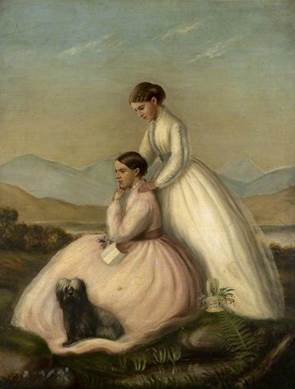
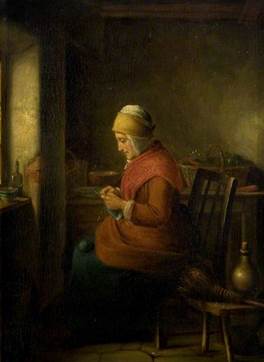
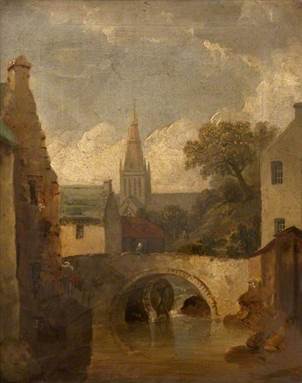
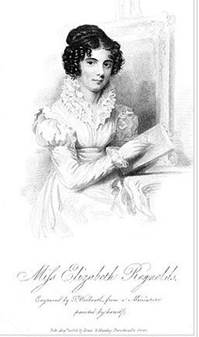
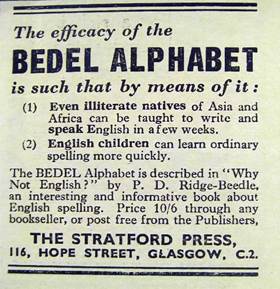
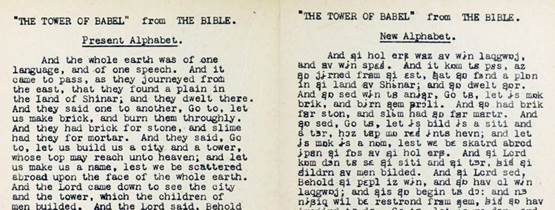
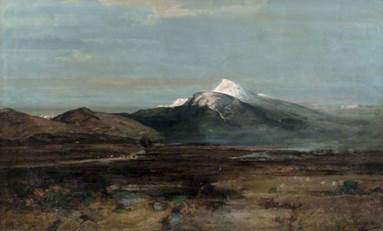
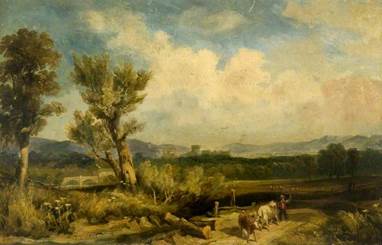
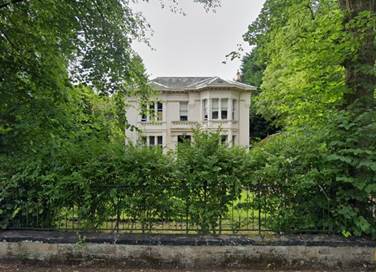
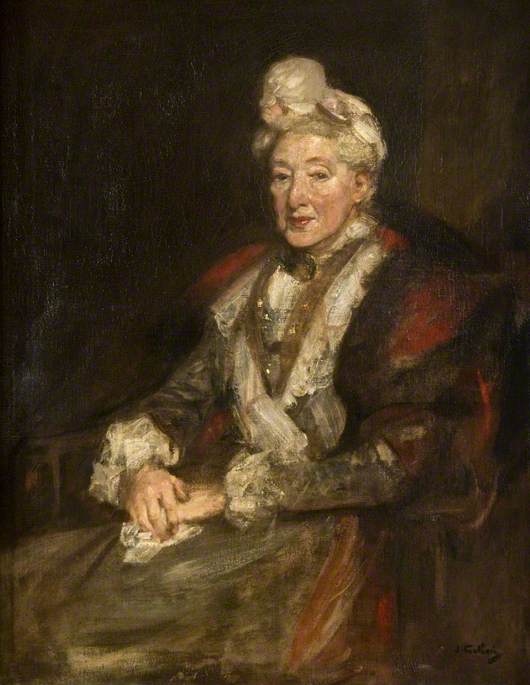
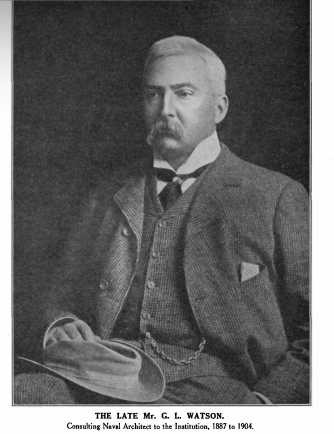
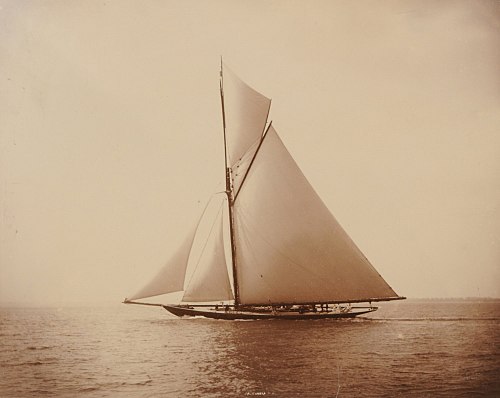
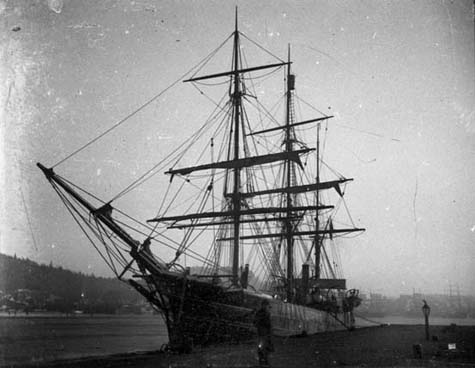
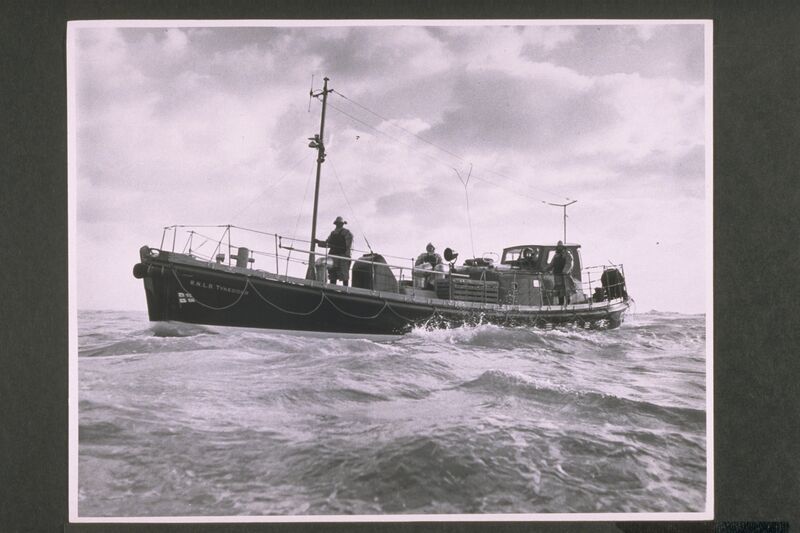
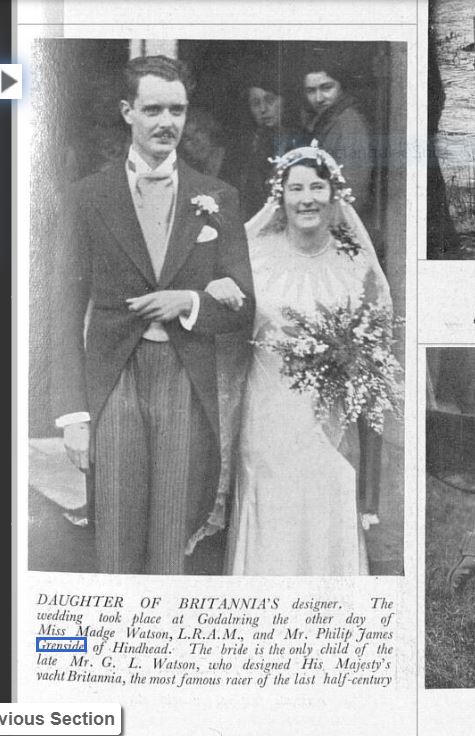
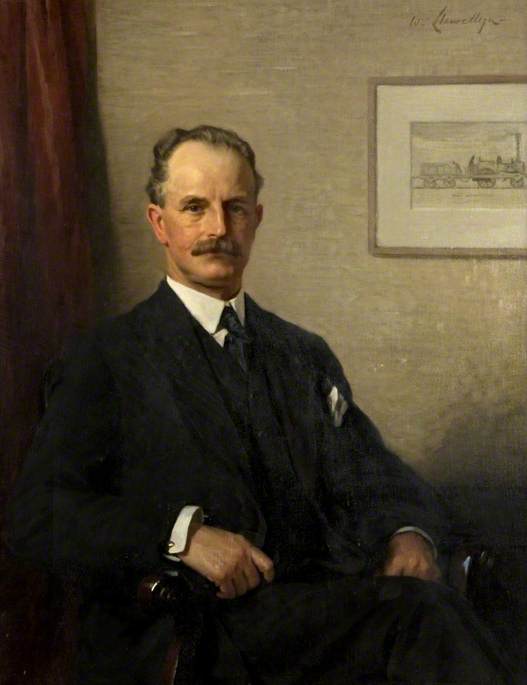
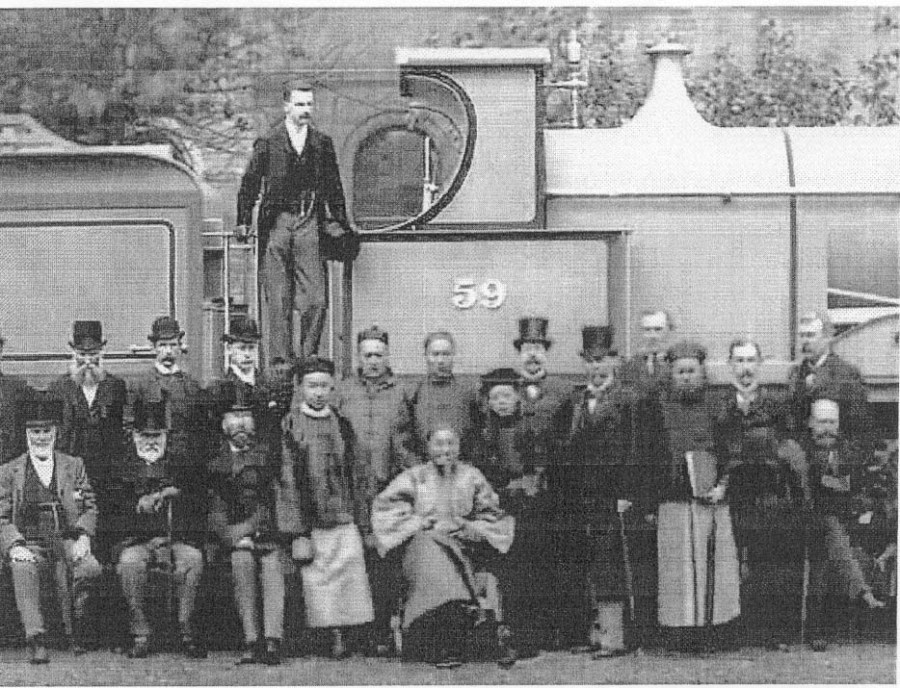
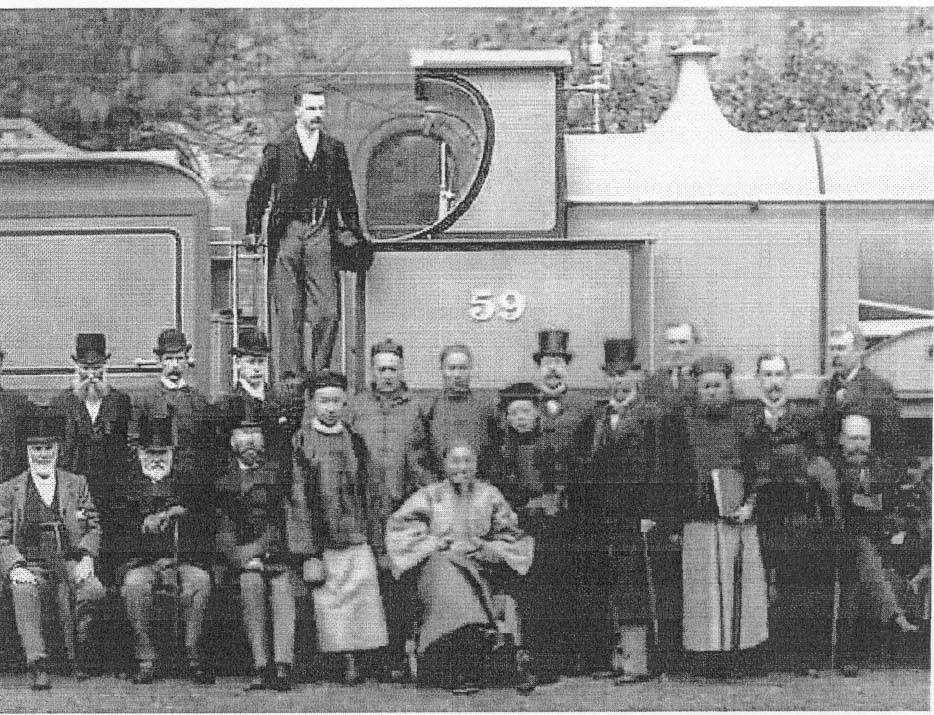
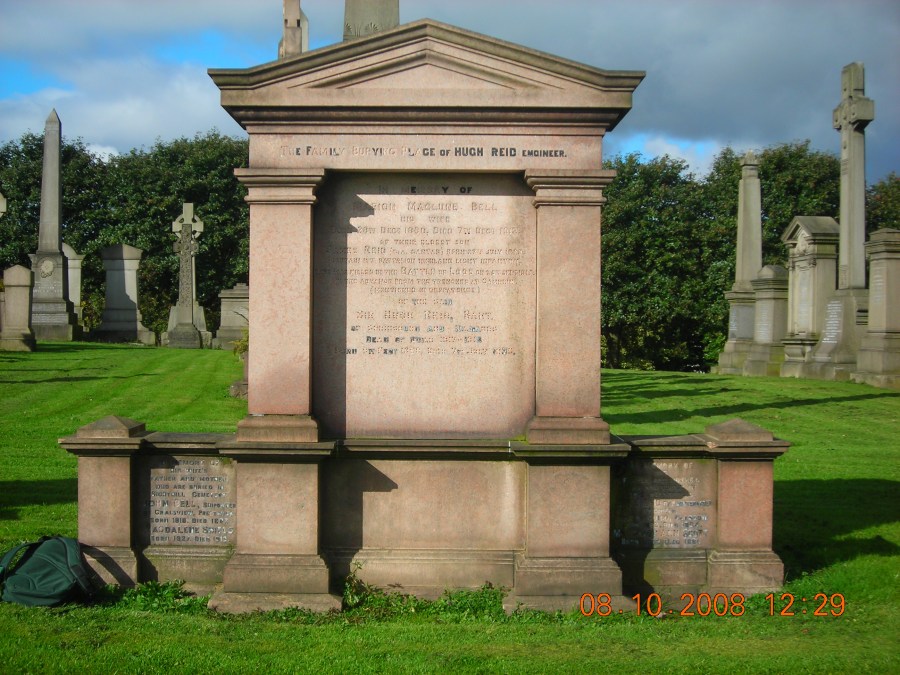
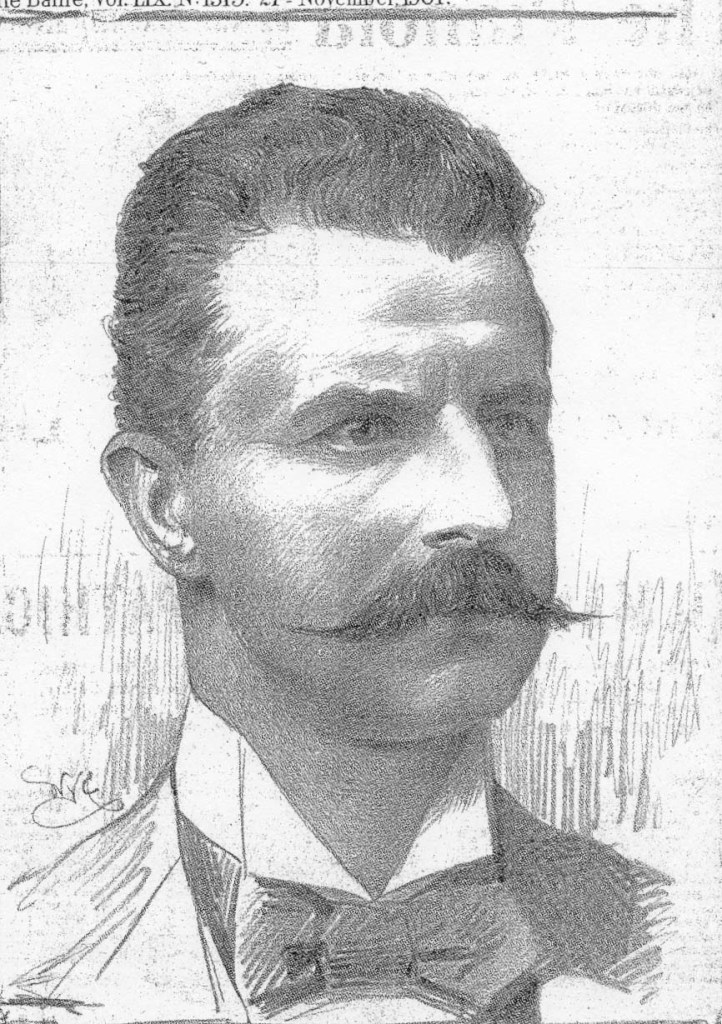
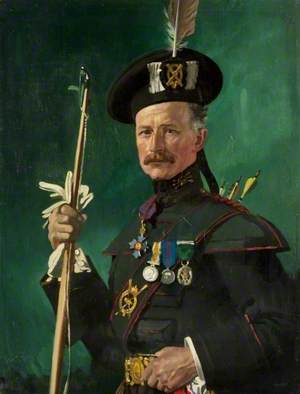
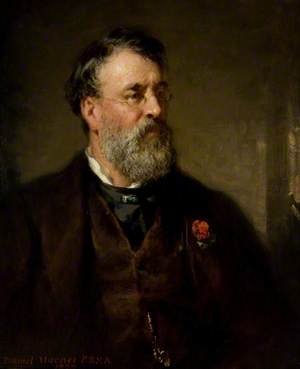
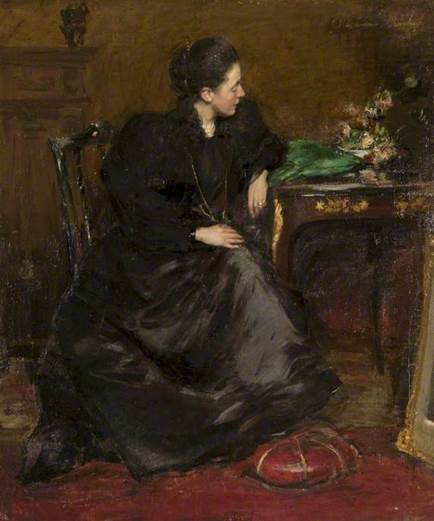
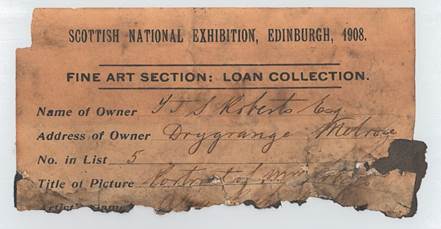
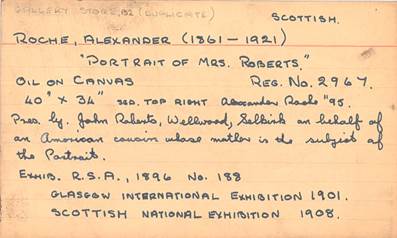
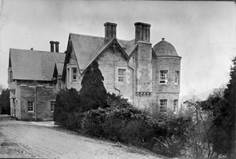
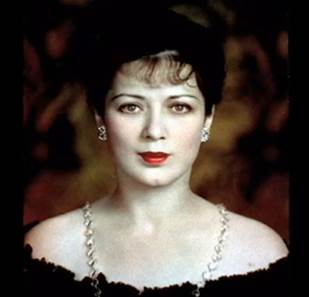
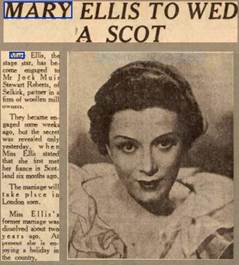
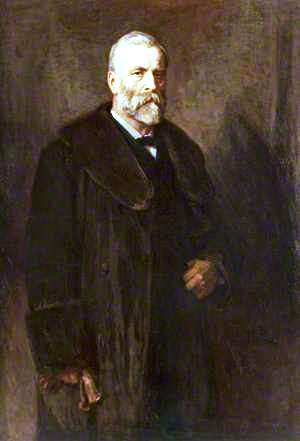
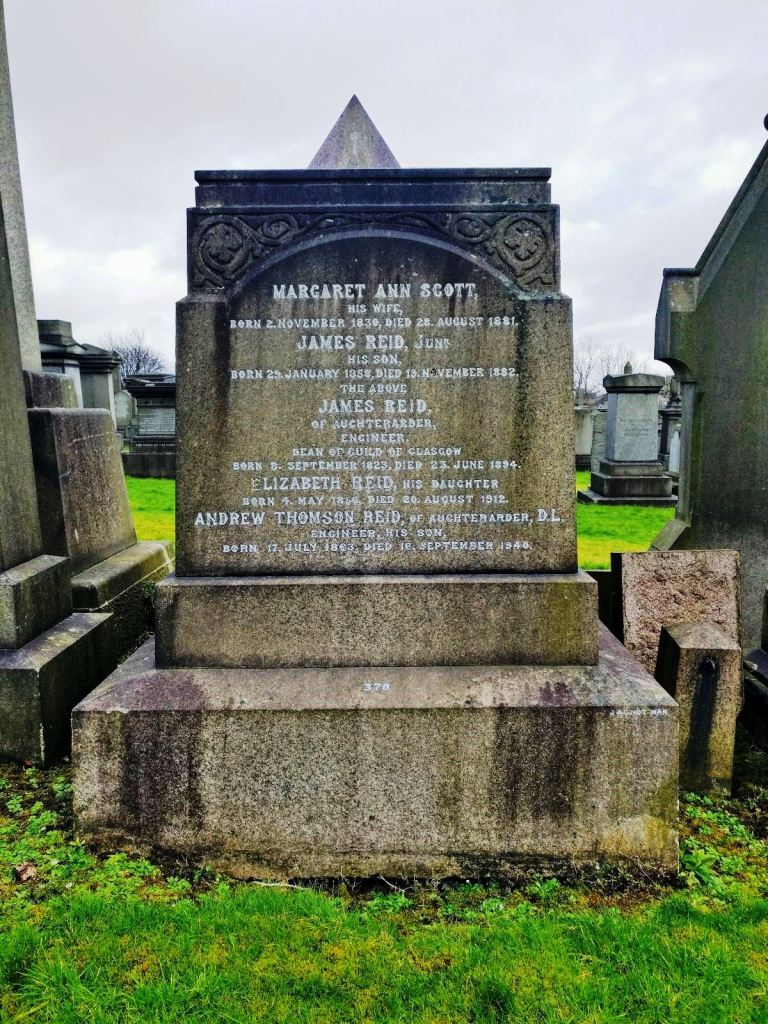
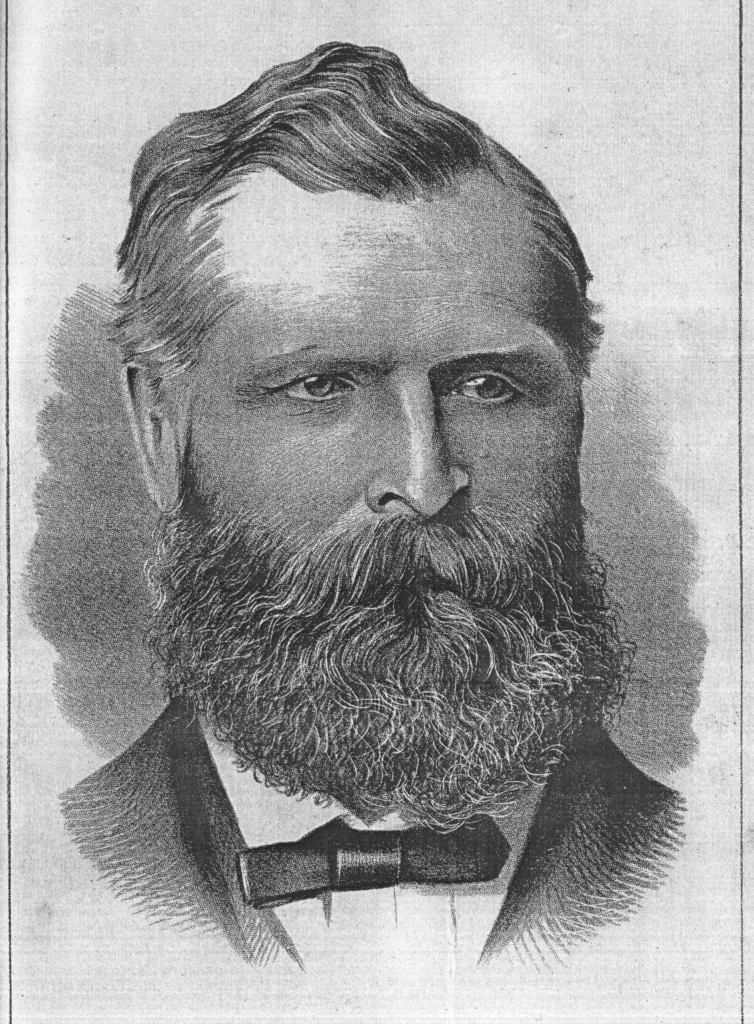
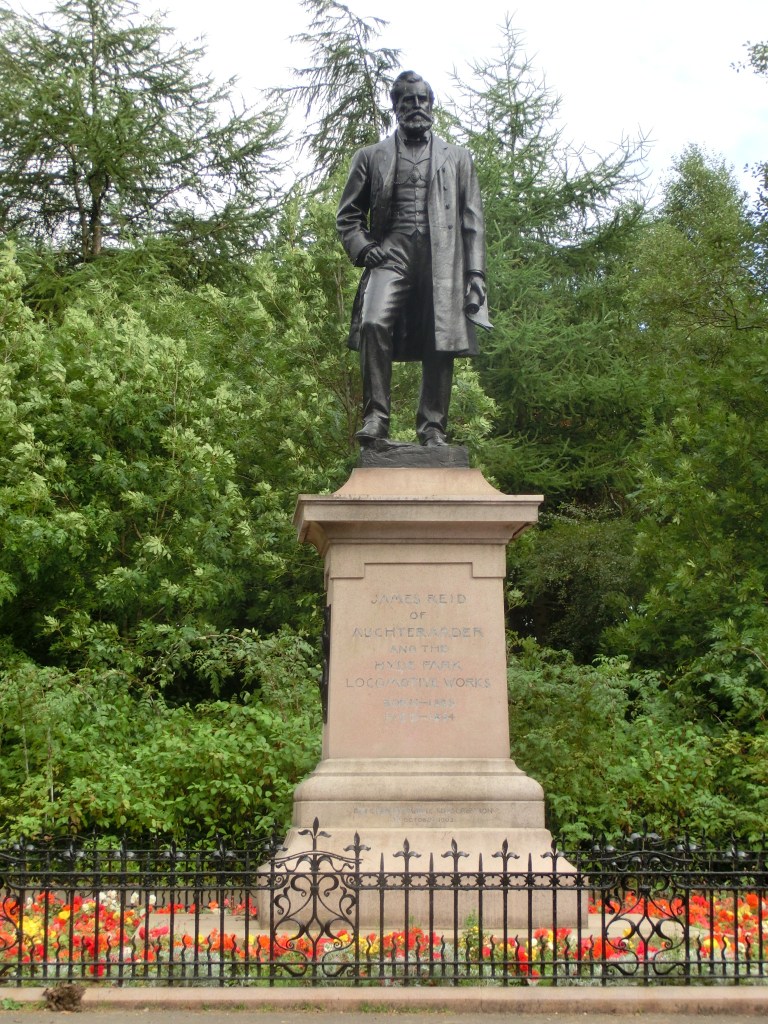
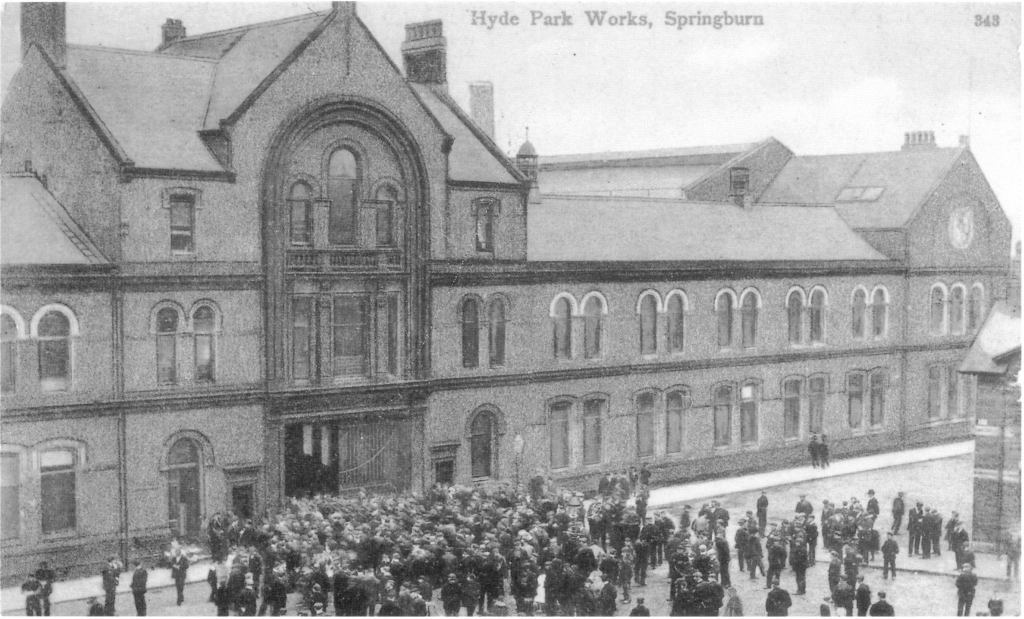
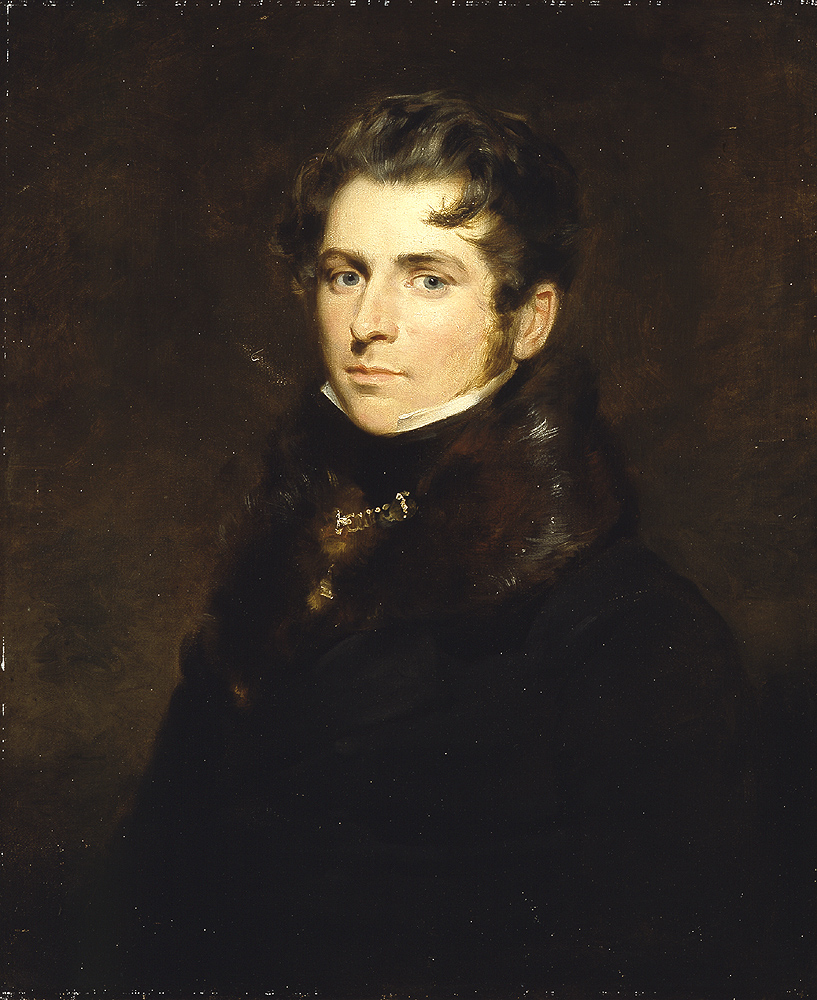

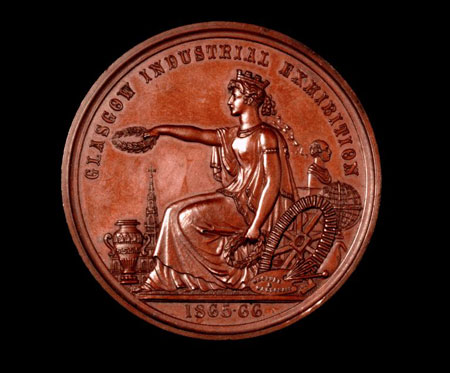
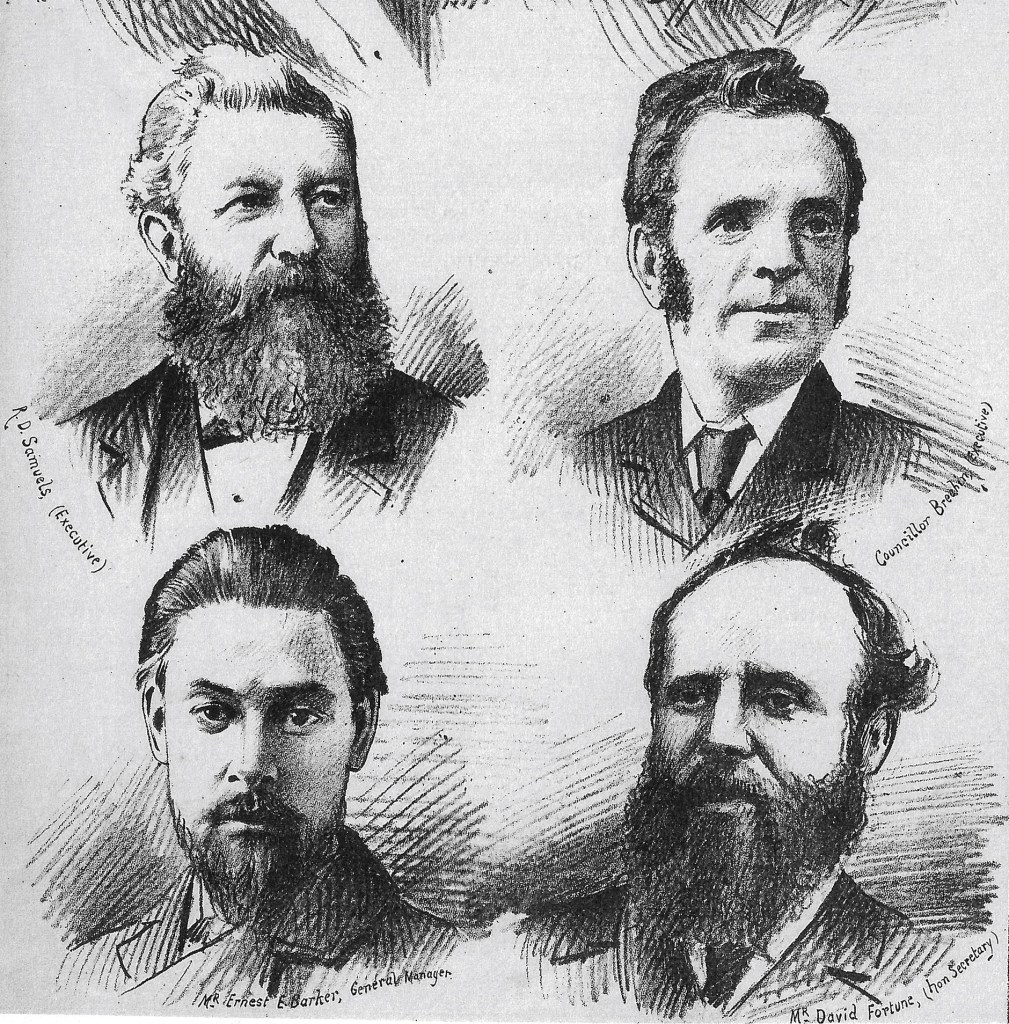
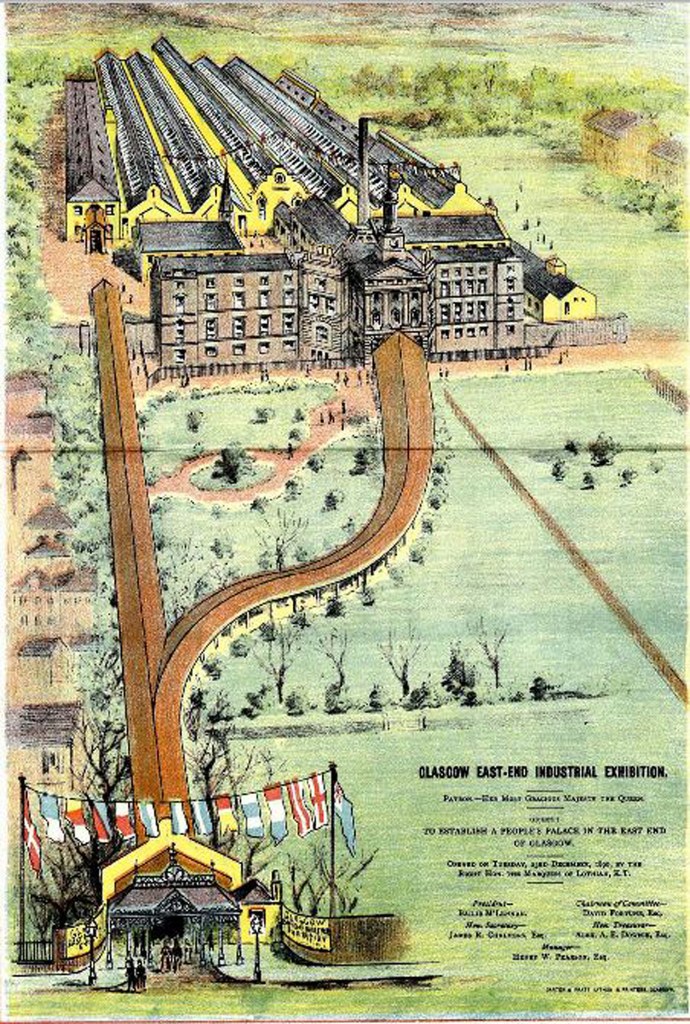
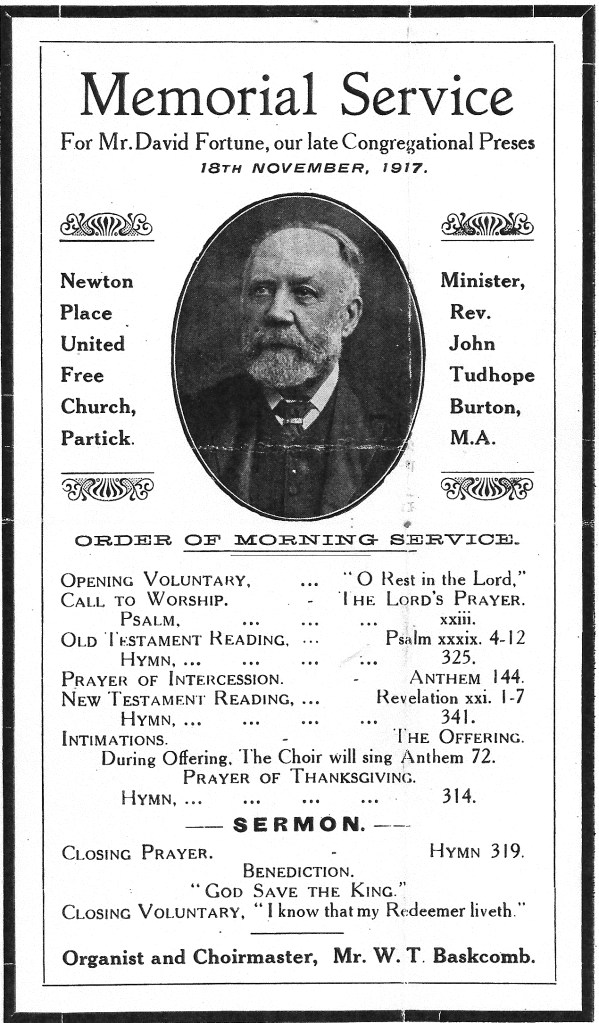
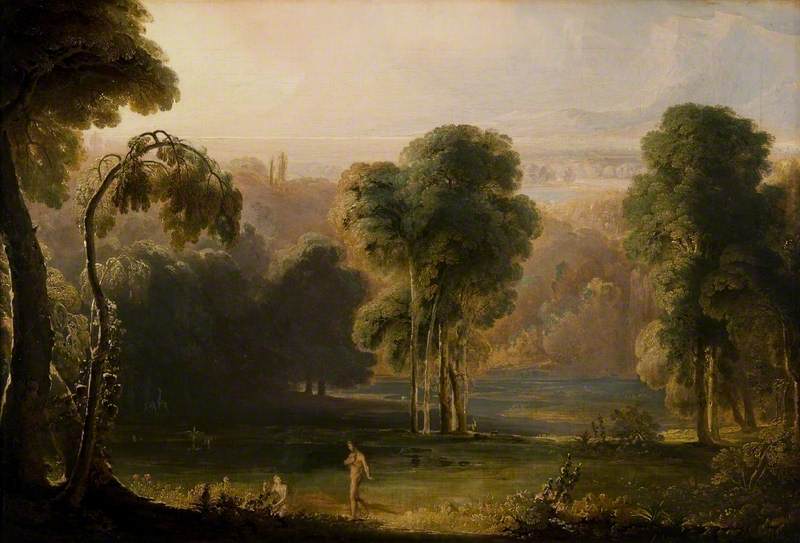
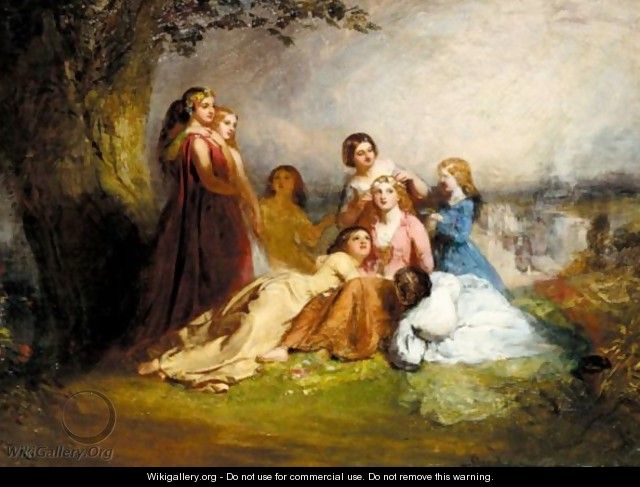
 Glasgow Museums Art Donors Group
