Two paintings were donated to Glasgow Corporation in 1947 by “The Sir F. C. and Lady E. M. Gardiner Trusts”, per Messrs Brownlie, Watson and Beckett, 241 St Vincent Street, Glasgow. C.2. The Glasgow Corporation minutes record that “There was submitted a letter from Messrs Brownlie, Watson and Beckett, solicitors, intimating bequests by the late Sir Frederick Gardiner and Lady Gardiner of Old Ballikinrain, Balfron, of their portraits by Sir James Guthrie, and the committee, having heard a report by the Director, agreed to the bequests being accepted.” 1
Frederick Crombie Gardiner was born on the 10th of February 1855 at Kincardine Manse, Tulliallan, Perthshire where his father Dr. Andrew Gardiner was minister of the United Presbyterian Church.2 Frederick`s mother Jane Guthrie, was a sister of the Rev. Dr. John Guthrie father of the artist Sir James Guthrie. Andrew and Jane were married in 1842 and went on to have a family of six boys and two girls. In 1861 the family was living at the U.P. Church manse in Tulliallan.3 However, after serving for twenty years at Tulliallan, the Reverend Gardiner accepted the post of pastor at Dean Street Church, Stockbridge, Edinburgh. On the 26th of March 1863, the family, including Frederick then aged 8, moved to Edinburgh – first to 24 and then to 26 Scotland Street. 4,5
Figure 3. Tulliallan Manse
Figure 4. Guthrie, James, 1859-1930; Reverend Dr Andrew Gardiner (d.1892). James Gardiner 1902, National Galleries of Scotland. Bequest of Lady Gardiner 1947
Elizabeth Morton Ritchie was born on the 28th of June 1861 at 14 Henderson Row, in the Stockbridge area of Edinburgh.6 She was the only daughter of William Ritchie a “master bookseller” with the firm of Paton and Ritchie 7 and his wife Wilhelmina Morton.8 Elizabeth enrolled in the Mary Erskine School for girls in October 1870. This was in the year the school moved to Queen Street and became a day rather than a purely boarding school resulting in a large increase in the school roll.9 The following year the family was living at 12 Lonsdale Terrace with Elizabeth a scholar aged nine.10 Elizabeth may have remained at school as a “pupil-teacher” as ten years later aged nineteen she is still recorded as a “scholar”. 11
As a boy, Frederick Gardiner suffered from delicate health and indeed he was troubled with asthma throughout his life. Health problems interrupted his schooling – his attendance at the Edinburgh Institution was restricted to two years between 1868 and 1870 12 and was part of the reason he did not attend university. Some sources suggest that he was about nineteen when he travelled to New Zealand partly to see if the change of climate would improve matters. However, he was not with his family in the 1871 census suggesting that he may have travelled out much earlier – possibly aged sixteen. During his time in New Zealand he worked as a clerk in the firm of Oliver and Ulph.13, 14 His co-workers clearly thought highly of him as a report in a local newspaper of 1876 indicates.
“A pleasing ceremony took place at the warehouse of Messrs. Oliver and Ulph yesterday, when the employees presented Mr. F. C. Gardiner, who has long been a clerk in the employ of the firm, with a handsome gold albert and locket, as a memento of their respect for him on his leaving them for a visit to his native country.” 15
This further suggests a longer stay in New Zealand. Whatever the case, Frederick appears to have put the experience gained to good use as, returning to Scotland in 1880, he joined with two of his elder brothers, James and William to set up the firm of James Gardiner and Co., shipowners. The firm operated extremely successfully for almost forty years amassing a fleet of fourteen cargo vessels by the start of the first World War. 16
On the 15th of September 1887, Frederick married Elizabeth (Lizzie) Morton Ritchie whose father was now a “wholesale stationer” at her home, 6 St. Margaret`s Road, Edinburgh. Frederick`s father Andrew was the officiating minister. At the time, Frederick`s address was 15 Grosvenor Crescent, Edinburgh.17 The couple settled in Glasgow and four years later were living at 1 Rowallan Quadrant, Kelvinside.18
Although not a university graduate himself, Frederick put great store by the benefits a university education could bring and in 1898, along with his brother William, he endowed two lectureships at the University of Glasgow; one in Organic Chemistry and one in the Pathology of Diseases of Infancy and Childhood. 19 The following year he was elected a member of the Glasgow Chamber of Commerce and became a Director ten years later.
Another interest of Frederick`s was electrical energy generation and in 1911 he became a director of the Clyde Valley Electrical Power Company. In the census of that year he was living at 5 Dundonald Road, Kelvinside with his wife Lizzie and three servants. In 1920 he became chairman of the company and under his leadership it increased its customer base to 130,000 and from the 1920s was linked to the National Grid. 20
The portrait of Elizabeth Gardiner was painted in 1914 and exhibited at the Royal Scottish Academy the following year. 21
During WW1, Frederick served on several war-related committees including the “Foodstuffs Requisition Committee” and the “Advisory Committee of the Admiralty Transport Department”. He was also a member of Lloyds and was Chairman of the Glasgow Lloyd’s Association.22 The company`s fleet of ships would have been invaluable in the war effort but at the end of the war, the decision was taken to dispose of the fleet and perhaps contemplate retirement. With this in mind, Frederick had earlier purchased the estate of Old Ballikinrain in Killearn, Stirlingshire. 23 The estate consisted of a mansion house, four houses, a sawmill, two lodge houses, a farm and separate fields, woods and shootings. His brother William also had a house on the estate.24
In 1919, he and his brother William continued their association with the University of Glasgow by each providing £60,000 to endow the “Gardiner Chairs” in Physiological Chemistry, Bacteriology and Organic Chemistry. In 1920 Frederick was awarded the degree of LL. D. by the University in thanks for his generosity.25 This was also the year that his portrait was painted by his cousin, Sir James Guthrie. Thanks to his services to the country during the war, Frederick Gardiner was knighted in 1921. In 1923 he was appointed Deputy Lieutenant of the City of Glasgow and Lord Dean of Guild. The following year he was also appointed Deputy Lieutenant of the County of Stirling.26
The firm of James Gardiner & Company was dissolved by mutual consent on the 31st of December 1924 when Sir Frederick C. Gardiner retired.27
Sir Frederick and Lady Gardiner spent a good part of their retirement in travelling. In 1925 they sailed aboard the Empress of Canada from the Philippines to Hong Kong and Japan and thence to Seattle, Vancouver and Victoria B.C. On this trip Frederick’s occupation was listed as “Naval Architect” 28 and “Civil Engineer”29. The following year they were in South Africa 30 and in 1932 they left Southampton for Colombo, Sri Lanka 31.
Sir Frederick and his brother William continued to make charitable donations. In
1926 they gave £20,000 to be distributed among youth organisations and charities in Glasgow and the West of Scotland including the Boys` Brigade, Boy Scouts, Girls Guides and Girls` Guildry and in 1928 they gave £12,000 to endow the Gardiner Chair of Music at Glasgow University as well as a lectureship in the “Pathology of Diseases of Infancy and Childhood”.32 In the same year the brothers presented a series of sixteen studies to the Scottish National Portrait Gallery. Another portrait study, that of William Ferguson Massey, Prime Minister of New Zealand was presented to the National Portrait Gallery in London in 1930. These studies were made by their cousin Sir James Guthrie for his painting “Some Statesmen of the Great War”. 33
In 1927 Lady Gardiner was elected to the Board of Governors of the Atheneum School of Music in Glasgow. She served on a joint committee one of whose objectives was to establish a Chair of Music. The committee was formed from Governors of the Atheneum together with members of Sir D. M. Stevenson`s committee. Lady Gardiner was first present at the meeting of the 3rd of May 1927 and was present at the Finance Committee on the 3rd of June. She was a subscriber to the scheme to raise funds for the Music Chair and was involved in trying to elicit funds from others. At a meeting on the 2nd of August 1927 it was agreed that the name of the institution would be changed from the Atheneum to the Scottish National Academy of Music.34 In 1928 Sir Frederick and William Gardiner endowed the Gardiner Chair of Music with the incumbent occupying a dual role as Professor at Glasgow University and Principal of the SNAM 35. (This arrangement persisted until 1953)
Lady Gardiner was for some years President of the Nurses` Memorial to King Edward VII at Hazelwood House, Dumbreck, Glasgow.36 This house had been an auxiliary hospital during WW1 and was now a home for retired nurses.
In October 1931 a memorial exhibition of Sir James Guthrie’s works was held at Glasgow`s Kelvingrove Art Gallery. Sir Frederick contributed to the exhibition by lending the portraits of himself and Lady Gardiner. 37
In 1936, the year before his death, Sir Frederick donated £10,000 for the provision of the Gardiner Medical Institute at Glasgow University with the trustees of his brother William`s estate providing the same sum – William having died in 1935. After experiencing some years of ill-health, Sir Frederick Crombie Gardiner died on the 7th of August 1937 at Old Ballikinrain, Balfron. He was 82.38 He left an estate valued at £541,466. Among the bequests in his will were £7,500 to build and equip the Gardiner Medical Institute (the Institute was officially opened by Lady Gardiner in 1938), £3000 to the Glasgow Royal Cancer Hospital, £1500 to the Glasgow Western Infirmary and £1000 to the Royal Society for the Relief of Indigent Gentlewomen in Scotland.39 The funeral service was held at Landsdowne Church Glasgow of which he had been a member, followed by burial in the Necropolis.40
Lady Elizabeth Morton Gardiner died aged 85 on the 17th of May 1947 at Old Ballikinrain, Killearn. 41 She was buried beside her husband in the Glasgow Necropolis. The Minutes of the Board of Governors meeting of the Royal Scottish Academy of Music and Drama immediately after her death record the following:
“The chairman paid tribute to the late Lady Gardiner (died 17th May 1947) who had been a Governor since the inception of the Academy and had latterly been an Honorary Vice-President. She had always maintained a warm and practical interest in the work of the Academy and her kindly presence would be missed.”
A brief obituary also appeared in the Glasgow Herald.42
References
Glasgow Corporation Minutes 12th August 1947
Scotland`s People, Birth Certificate
ancestry.co.uk, Scotland 1861 Census.
Askew, Bob George Gardiner, Early Days and Musical Influences; Hampshire Voices, September 2011
ancestry.co.uk, Scotland, 1881 Census
Scotland`s People, Birth Certificate
Edinburgh Post Office Directory, 1860-61
Family Search, Scotland
Archives, Mary Erskine School, Edinburgh, Dorothy Sharp, archivist
Scotland’s People, 1881 Census
Scotland’s People, 1891 Census
Stewart’s Melville College Archives, Ian McKerrow, Archivist
The New Zealand Railways Magazine, Vol. 9, 1st August 1934
New Zealand Parliamentary Debates, Vol. 133, p 422
Minutes of the Board of Governors Meetings, Glasgow Atheneum
Royal Conservatoire of Music, archives
Glasgow Herald, 19th May 1947, Obituary
Object File at GMRC
Scotland’s People, Death Certificate
The Scotsman, October 1937
Glasgow Herald, 9th August 1937, Death Notices
Scotland’s People, Death Certificate
Glasgow Herald, 19th May 1947, Obituary
Footnotes
The Gardiner Brothers owned several of Sir James Guthrie’s paintings. James Gardiner bequeathed The Highland Funeral to Glasgow in 1903 Acquisition Number 1060). Sir Frederick Gardiner owned The Garden Party (now in a private collection) and The Wash which was passed down through the family and is now in the Tate Gallery in London.
Oliver and Ulph were the proprietors of the first railway in New Zealand – the Port Chalmers to Dunedin line which operated from the 18th of September 1872. The firm was also involved in import/export and shipping.
In 1922, Mrs M D Lindsay (1) gave 5 paintings from the collection of Colonel Barclay Shaw to Glasgow Kelvingrove Art Gallery and Museum. This painting, which hangs in the Glasgow Boys gallery in Kelvingrove, is Japanese Girl with Fan by George Henry.
Margaret Dykes Cook was born (2) on 14th November, 1857, in Tradeston, Glasgow, the daughter of Christine and James Cook, Master Brass Founder. On the 30th April, 1878, she married (3) Robert Barclay Shaw at her family home, Tinavale, Shields Road, Pollokshields, Glasgow.
Robert Barclay Shaw (4) was born in 1852.He was the son of William Shaw, and Janet Barclay. His father, a builder, was a prominent member of the Incorporation of Wrights in the Trades House and one_ time Deacon (5)(6). When Robert was young, the family lived in Pollok Street, moving to Valleyfield, Aytoun Rd about 1870. Robert Barclay Shaw was only 19 years old when, on the death of his father, he succeeded to the business, William Shaw and sons, Wallace St. Glasgow. His firm moved into speculative building, building the impressive tenements in Glencairn Drive known as Olrig Terrace. After he married local girl Margaret Dykes Cook at her home, Tinavale, Shields Rd, he and his wife lived in number 6, Olrig Terrace. Later he built a detached house in Pollokshields, 40 Dalziel Drive, known as Dykeneuk, and was living there in 1888. The development of Pollokshields (7 ) as a garden suburb saw many fine houses built in varied architectural styles, indeed no two houses are identical. Shaw built three houses in Dalziel Drive, Dykeneuk, Oak Knowe and Hazliebrae.
His firm moved into specialist building construction and became very successful. His first main contract was for the buildings for the 1888 International Exhibition in Glasgow. (8 ) The architect was James Sellars, building in the Moorish style known locally as “Baghdad by Kelvinside”. James Sellars unfortunately died in October,1888 reportedly of blood poisoning from standing on a rusty nail.
Robert Barclay Shaw was the builder and he was much praised in The Bailie(9), being credited with the exhibition’s finishing on time and on budget. The site covered 10 acres. Shaw employed 1,000 men on the contract, used 5 million bricks, 750 tons of iron, 700,000 cubic feet of wood and 250,000 square feet of glass.
This was his first connection with Kelvingrove and it was the success of the Exhibition and the profit from it that enabled Kelvingrove Art Gallery and Museum to be commissioned. Both Barclay Shaw and Sellars are in this painting by John Lavery of the great and the good in Glasgow when Queen Victoria visited the Exhibition in 1888.
Shaw and William Smith later supervised the building, to the design of James Miller, for the Main Hall for the Glasgow Exhibition in 1901 and for the exhibition Concert Hall.
In 1895, he built the Kildrastan buildings with shops and adjacent tenements in Terregles and Glencairn Drives. In the valuation rolls for 1905 (10 ), Mrs Dykes Shaw is the proprietor of properties in Kildrastan Street which included shops and residential buildings. As well as the properties in Pollokshields, he built the Langside Tram Depot and stands at Hampden Football Park for Queens Park Football Club.
He was a sociable man. He followed his father as a member of Trades House- in the Incorporation of The Wrights- and was elected as Collector in 1888. (11) Why Colonel Barclay Shaw?
While he was still a lad he joined the 8th Lanarkshire Volunteers which became the 3rd Blythswood Volunteer Battalion of the Highland Light Infantry in 1887.(12) He was gazetted Colonel in 1904. (13)
In 1895, he purchased Annick Lodge(14 ) near Irvine, an imposing country house. The estate extended to 45 acres with 15 estate houses and a farm of 95 acres.
Annick Lodge Canmore Collection 1150924
He died in 1905. His death is reported by Rev. William Lindsay, minister of Dreghorn.(15 )
After his death, his widow continued living at Annick Lodge. Valuation Rolls show that she ran the estate with a manager. In 1908 (16), she married the Reverend James Lindsay, M.A, B.Sc., B.D., D.D the minister of St Andrews Church of Scotland , Kilmarnock(17 ) and brother of the minister at Dreghorn, who had registered the death of Barclay Shaw. She continued to manage the estate. Dr Lindsay died in 1923 (18 ) but she continued to live at Annick Lodge, then administered by a Trust, (19) until it was sold in 1934 and she moved to Dalry. She died in 1942.(20 )
The Donated Paintings
The other oil painting in the donation is entitled The Storm by John Lawson.
Donated in July 19491, the painting was bought from an auction held at the Crown Hall Auction Rooms in Glasgow on 8th April 1949 for £1.2 ( Today a Denovan Adam painting can fetch as much as £60003).
Joseph Denovan Adam was a Scottish painter specialising in the painting of animals, Highland landscapes and still life. In 1887 he set up a school of animal painting at Craigmill near Stirling which became the centre for a group of Stirling and Glasgow artists. It was based on Adam’s small farm where students were encouraged to paint his herd of Highland Cattle from life.4
Exhibitions.
The painting was exhibited at the Smith Art Gallery in Stirling in 1996 in an exhibition called, Mountain,Meadow,Moss and Moor.5
Ronald McNeilage (1935-1959)
The official donor of this painting is rather unusual as he was only 14 years old when he gave the painting to Glasgow. At the time of the donation Ronald was a patient in Killearn Hospital, Stirlingshire, suffering from a brain tumour. The brain tumour was pressing on an optical nerve and affected his eyesight. Killearn Hospital was a specialist hospital which dealt with brain injuries and illness which affected the brain. His parents were Alexander McNeilage, an electrical engineer, and Jessie Lowe Nicolson. They lived at 32 Alden Road Newlands, Glasgow at that time.
The Director of Glasgow Art Gallery and Museum, Dr Tom Honeyman, wrote to Ronald thanking him for the painting . Ronald was so proud of the letter that he had it framed and showed it to all his visitors. Dr Honeyman even wrote again to Ronald who was still in hospital, in November 1949 to say that Ronald was still in the thoughts of himself and the staff of the Art Galleries.
As one might guess there was more to this story. In fact it was Ronald’s maternal grandfather, David Gordon Nicolson (DGN), who masterminded this donation. After acquiring the painting he wrote to Dr Honeyman explaining the circumstances of his grandson’s illness and asked him to write the letter of thanks to his grandson.6 As we already know DGN had bought the painting for £1 in at an auction in Glasgow in 1949 (buying and selling Figure 2. paintings at auctions was a hobby) and hatched the plan for its donation probably hoping this would cheer up his grandson who was in hospital for the greater part of 1949.
According to his younger brother, Alan, Ronald was in and out of Killearn for the next ten years . He had several operations and was under the care of neurosurgeon James Sloan Robertson. Ronald eventually went to work for the RNIB in Glasgow where he was a library assistant. Both Ronald and Alan were pupils at Glasgow High School.7
David Gordon Nicolson (1871-1952)
Thus our true donor is David Gordon Nicolson (DGN). He was born in Dunse, Berwickshire. His father, David William Nicolson, was a mariner and his mother was Mary Jane Whitelaw.8 The couple were married in Liverpool where Mary’s family ran a boarding house.9 Perhaps DGN’s father had been a lodger at the boarding house when his ship came to Liverpool? DGN had an elder brother William Darling and a sister Janet, known as Jessie. By 1881 the family had moved to Musselburgh. The father was not on the census and was presumably at sea.10
David was a pupil at Musselburgh Grammar School which was managed by the Musselburgh School Board. In July 1885 at the age of 14 he was employed as a pupil -teacher at the school. 11 At that time in Scotland and in England this was one road into teaching.
At the age of fourteen (after Standard III) the best pupils in a school were chosen to stay on as pupil-teachers. They remained as pupil-teachers until they were 18.
They were paid a salary starting at £10 per annum rising to £20. Schools were allowed to have one pupil teacher per 25 pupils and were paid to have pupil teachers. Pupil -teachers had to sit an examination every year and were annually inspected.12
David remained as a pupil- teacher until 10th September 1889 when he left the Musselburgh School to take up the post of uncertificated teacher at Brand’s School Milnathort in Kinrosshire.13 It was common for ex-pupil teachers to work as uncertificated teachers after completing their ‘ apprenticeship’. We know he remained at Brands School for 15 months.14
DGN was back in Musselburgh at the time of the 1891 Census, usually held in March. He was listed in the census as a ‘teacher of English’ while his sister Janet was a ‘certificated teacher’. It is unknown at this point in which school they were teaching. Mary, DGN’s, mother appears to have been running a boarding house as there were two more certificated teachers and one assistant teacher living as lodgers at the same address. Running a boarding house appears to have been a Whitelaw family business.
It is unknown at this time where DGN was between March 1891 and February 1892. There is a family story, backed up by a photograph of DGN in uniform that he served in the Boer War, however he does not appear in any of the military records.15 Information from Dr Patrick Watt of the National Museum of Scotland suggested the photograph was taken in the 1890s and identified the uniform as that of the Royal Scots, possibly a volunteer battalion. Perhaps DGN, like many other young men of that time had joined one of the volunteer regiments. The Royal Scots were the local Edinburgh Regiment based at Glencorse Barracks. The photograph may have been taken at the annual summer camp which was part of the commitment required of volunteer soldiers.
In February 1892 DGN began a course at the Church of Scotland Teacher Training College in Edinburgh. He was there for two years graduating in December 1893 25th out of a class of 13416. There is little information as to how teacher training was financed during the 1890s. Until the 1860s pupil -teachers could sit a competitive examination for a Queens Bursary of £25 per year for men (less for women) which would maintain them while at college. Presumably college fees would be paid as well.17 There is some evidence that these bursaries carried on after the 1872 Elementary Schools (Scotland)Act when there was a huge rise in demand for teachers. It is not known if DGN was in receipt of a bursary as the records of male students have been lost but the list of female students records some in receipt of a bursary.18
Until 1905 provision of teacher training was in the hands of the churches either the Church of Scotland, the Free Church of Scotland, the Catholic Church or the Episcopalian Church. The latter two were much smaller organisations. In Edinburgh the Church of Scotland Teacher Training College was first in Johnston Terrace and then in Chambers Street while the Free Church Training College was at Moray House. In 1905 teacher training was taken out of the hands of the churches and taken over by the Scotch Education Department as it was then known. The two Presbyterian Edinburgh Colleges amalgamated in 1907 and became Moray House Teacher Training College, one of four Provincial Training Colleges in Scotland, the others being in Glasgow, Aberdeen and Dundee.19
In January 1894 DGN began his first post as a probationary teacher at Grahamston Public School in Barrhead, Renfrewshire. The headmaster of the School was James Maxton, father of the James Maxton who became the ‘Red Clydesider ‘ MP in the 1920s.20 Even though he was in his first year of probation DGN was given Standards 1V,V and V1 to teach- in other words what would be known today as Secondary Education which had only been publicly funded since 1892. The 1872 Act had only provided public funds for elementary education before that date.21
.DGN’s appointment possibly came about as a result of comments made by the School Inspector during his annual visit to Grahamston School in 1893. When commenting on the Senior School, Standards 1V,V and V1 –“The staff of the senior department would require to be strengthened if these subjects are to be carried on to any further extent.”22
DGN seems to have settled in well as the log book entry for February 2nd 1894 states,” Mr Nicolson is promising very well and manages Standard 1V… very satisfactorily”. DGN completed his two year probation and became a certificated teacher in February 1896.23 As the log books show, at this time schools underwent an inspection every year and the results of that inspection affected the annual grant given by the SED.
In December 1896 DGN married Ellen Agnes Robertson in Musselburgh.24 DGN’s home before his marriage was in Albany Place Nitshill where he appears to have been a lodger. 25
DGN was obviously ambitious and keen to earn extra money as he quickly became involved in teaching evening classes at various schools under the Neilston Parish School Board. There are several entries in the minutes of the Evening Class Committees of the Neilston Parish School Board from 1895 onwards regarding DGN’s involvement in evening class teaching at Cross Arthurlie Evening School and Uplawmoor Evening School where he was described as ‘Chief Teacher’ of the evening school.26
On April 29th 1898 after four years at Grahamston Public School another entry in the log book tells us that on the order of the Neilston Parish School Board Mr DG Nicolson was to be transferred to another Barrhead School i.e. Cross Arthurlie Public School (also under the Neilston Parish School Board) as First Assistant27(Deputy Head today). The Nicolsons continued to live at Nitshill where in 1898 a daughter Ellen was born. Mary followed in 1900 shortly after which the family were living at 36 Carlibar Road Barrhead in a block of 3 storey tenements.28.
In 1902 the Nicolsons moved to Uplawmoor, Renfrewshire as on 8th September DGN took up his duties as headteacher of Uplawmoor Public School, living in the School House.29
DGN was a keen golfer and was one of the founder members of the Caldwell Golf Club, Uplawmoor, in 1903. The first meeting was held at the Old School House in the village, DGN’s home. He became the club’s first secretary and treasurer.30
While at Uplawmoor DGN was given leave of absence for two weeks to attend,” a course of instruction at the Royal College of Art ,South Kensington”. DGN had a keen interest and talent in artistic subjects. In the annual Inspectors Report in May 1904 DGN was praised for his teaching of the Supplementary Course in art subjects single-handed.31
In 1905 DGN was transferred to Neilston Public School as Headmaster, again living in the School House. This was probably because of the sudden death of the headmaster, Duncan Martin in February 1905. DGN’s salary was £200 per annum and use of the School House. Both Uplawmoor and Neilston schools were managed by the Neilston Parish School Board. The family lived at 47 High Street Neilston which was the School House.32 DGN is credited with starting the Neilston School Magazine.33
In 1908 another daughter, Jessie Lowe was born. She became the mother of our young donor Ronald.34
DGN remained at Neilston until 1924 when he was appointed Headmaster of Mearns Street School in Greenock.35 He was headmaster of Mearns Street School until his retirement in 1932.36
According to his grandson, Alan, DGN was a keen chess player and a member, Honorary Secretary and Treasurer for several years , of Glasgow Chess Club which met in the Athenaeum building in Glasgow. As we know he was a keen golfer. He was a keen angler too. His efforts were once reported in the press when he spent three hours on the River Stinchar bringing in a salmon with a trout rod. He used to go and stay at the Portsonach Hotel on Loch Awe and look after the fishing for hotel guests. His grandson, Alan, visited the Hotel in 1959 and found his grandfather’s handwriting in the catch record book.
DGN was a talented sketcher and loved carving items such as animals out of wood. As we have seen, a favourite hobby was going to art auctions and buying and selling paintings. On his retirement he presented a painting to Mearns Street School and as we know he bought a painting for his grandson to present to Glasgow.
DGN was a freemason, holding the office of Provincial Grand Junior Warden for Renfrewshire East based in Paisley. On January 1st 1932 for holding this office DGN was presented with a small wooden mallet made from the old rafters of Paisley Abbey.37
DGN’s retirement was not short of adventure. In July 1937, he and Ellen his wife, daughter Ellen and son-in -law John embarked on a road trip to Venice. Ellen chose Venice as she said she wanted to make sure, “it wasn’t just a Fairy Tale”. They travelled in a Hillman Minx-AGG 149- which the young people had just bought on HP. (see figure 2)
What was known as the Automobile Association in those days was extremely helpful providing them with routes and all the official documents they needed for the trip for the car and for themselves. The AA, as it is known today ,arranged the ferry crossing from Dover to Calais with AA representatives to smooth the path at the ports, all for £12/11/-(£12 and 11 shillings-£12 60 pence today). Each car had to be hoisted on board as there was no such thing as a roll-on roll-off car ferry in 1937.
There is no time or space here to go into too much detail of the trip but from the first stop of the trip outside Doncaster where bed, breakfast and supper for four at the Rosery Cafe was 30 shillings (about £1.25 today), they travelled to Dover where bed and breakfast and supper cost seven shillings each (about 70pence). They then drove through France, Switzerland and Italy to Venice where they spent only a few days before starting the journey home.
The party travelled back through Austria, Germany and Belgium where they spent time at the Great War Battlefields such as Ypres. The scrapbooks are fascinating to read. They tell of hair- raising climbs up mountain passes such as the Brenner Pass as well as friendly meetings with local people and visiting places of interest such as Versailles, Cologne Cathedral and St Marks in Venice.
The travellers had taken with them a small spirit stove and everywhere they went in all the countries they passed through, often staying only one night, they made tea and had lunch by the roadside on most days, eating locally bought provisions.
They were in Italy during the time of Mussolini and in Germany during the time of the Third Reich where they only once came into contact with,” that Heil Hitler nonsense “, as DGN put it. In all they covered 3,500 miles in AGGI 49 as the car became known, having developed a personality by the time the party had travelled in her for a while. The car never travelled above 55 miles an hour and never had a puncture.38
Ellen died in 194339 and eventually DGN went to live with his daughter Ellen in Hamilton from where he masterminded the donation of Calves in aCabbage Patch on behalf of his grandson Ronald. David Gordon Nicolson die on March 2nd 1952.40
And what of our young donor Ronald? Unfortunately at the age of 24, after years of being in and out of hospital for numerous operations, the brain tumour returned once again41 and, sadly, Ronald died in Killearn Hospital on September 13th 1959.42 At least his grandfather did not live to see that.
Postscript
While researching David Gordon Nicholson, entries were found on the http://www.ancestry.co.uk website referring to photographs of one David G Nicolson. They were posted by Lorraine Whitelaw Speirs who lives in Vancouver. As Whitelaw was the maiden name of DGN’s mother the owner of these photographs was contacted in order to confirm that the posts referred to DGN. Mrs Lorraine Whitelaw Spiers revealed that she was a descendant of Robert, younger brother of Mary Whitelaw, mother of DGN. Lorraine knew nothing of the McNeilage side of the family but had visited Scotland several times researching her family. When Alan McNeilage, Ronald’s younger brother and grandson of DGN was informed of the existence of a branch of the family of which he was unaware he was delighted. By pure chance he and his wife Caryl had a holiday planned in July 2018 to Vancouver. Alan and Lorraine are now in touch by e-mail and plan to meet during the visit. Who says there is no such thing as co-incidence?
References.
1.Glasgow Museums Resource Centre. Object Files. Adam, J Donevan.
Acc 3442 1/1/563 (GMRC)
2.GMRC
3.www.bonhams.com/auctions/14216/lot/57
4.Julian Halsby, Paul Harris. The Dictionary of Scottish Painters 1600 to the Present. Canongate 2001 p.1
5.Glasgow Herald 7/7/1996
6.GMRC
7.Interview with Alan McNeilage, grandson of DGN. 16/04/2018(A. McNeilage)
8.www.scotlandspeople.gov.uk. Statutory Births
9.www.ancestry.co.uk. Statutory Marriages
10.UK Census 1881
11.East Lothian Archives. SCH 34/1/1
12.Marjorie Cruikshank History of the Training of Teachers in Scotland.University of London 1979.p.56
13.East Lothian Archives SCH 34/1/1
14.Grahamston Public School Log Book 19/01/1894. Glasgow City Archives (GCA) REF. C02/5/6/4/1
15.A. McNeilage
16.Edinburgh University Library. Special Collections. REF GB237EUA 1N18.(EUL)
17.Cruikshank.p61
18.EUL
19.Cruikshank.Chapter 5.
20.Grahamston Public School Log Book. 19/01/1894.GCA Ref. C02/5/6/4/1
21.Cruikshank .p219
22.Grahamston Public School Log Book. 06/05/1893.GCA Ref.C02/5/6/4/1
23. As above 02/02/1896
24. http://www.ancestry.co.uk.Statutory Marriages.
25. http://www.scotlandspeople.gov.uk. Valuation Rolls 1895
26.Neilston Public School Board Minutes. GCA Ref.C02/5/3/14/11
27.Grahamston Public School Log Book 29/04/1898.Ref.GCA C02/5/6/4/1
28.UK Census 1901
29.Uplawmoor Public School Log Book 08/09/1902.Ref.GCA C02/5/6/78/2
30. Caldwell Golf Club:The First Hundred Years-1903-2003. Akros Printers 2003
31.GCA.Ref.C02/5/6/78/2. Supplementary Classes were classes aimed at the Intermediate and Leaving Certificate for pupils who stayed on after the age of 14. See Cruikshank.
32.Berwickshire News and Advertiser 11/04/1905 33.e-mail correspondence with Lorraine Whitelaw Speirs
34.UK Census 1910
35.Sunday Post 06/07/1924
36.A. McNeilage
37. ibid.
38. To Venice and Back July 1937.Scrapbooks 1-4 A. McNeilage Family Papers.
39.www.scotlandspeople.gov.uk Statutory Deaths
40. ibid
41. A McNeilage
42. www.scotlandspeople.gov.uk Statutory Deaths
Acknowledgements
Many thanks to Alan McNeilage and his wife Caryl for their hospitality and for the supply of so much invaluable information from family papers and photographs. JMM
How does it come about that an English spinster lady, of no note whatsoever as was typical of most of her class at the time, donates a painting to Glasgow? The answer lies not with her father William Miller Coultate who was born in England but with her maternal great uncle James whose life, friendships and achievements were typical of the men who made the Industrial Revolution.
On the 13th November 1912 Miss Amy Esther Coultate of Colwyn Bay wrote to James Paton the Superintendent of Glasgow Corporation Art Galleries offering to Glasgow a portrait of the Scottish poet Thomas Campbell by the artist James Lonsdale.[1] In a second letter to James Paton Miss Coultate stated that she had always understood the portrait had been painted at the request of her maternal great uncle James Thomson who paid the artist 500 guineas, and had been done at Primrose House, Clitheroe, the home of her great uncle, where the poet sometime stayed.[2]
Miss Coultate was the middle child of three and was born in 1852 to William Miller Coultate and Eliza Jane Thomson, James Thomson’s niece, and was baptized at Holy Trinity Church in Habergham Eaves, a suburb of Burnley in Lancashire.[3] Her elder sister Marion Elizabeth and younger brother Arthur William were born in 1850[4] and 1856 respectively.[5]
Her father, born in Clitheroe, Lancashire in 1813, was a surgeon and a Fellow of the Royal College of Surgeons in England. He had been in practice in Burnley since 1836 after completing his studies in Dublin. He was also vice president of the British Medical Association in Lancashire and Cheshire and had at one time been surgeon of the Fifth Royal Lancashire Militia.[6]
His wife Eliza Jane Thomson was born in 1821[7], the daughter of William Thomson, the brother of James, both of whom were calico printers. They married in 1849[8] and lived at 1 to 3 Yorke Street in Burnley for most of their married life and where William also had his practice.[9]
Amy’s mother died at a relatively young age in 1871.[10] As was typical for wives of the time perhaps she left very little, her ‘effects’ being valued at less than £20.
The family continued to live in Yorke Street and in the 1881 census, no occupation for any of the children is given despite them being well into their twenties.[11] In subsequent censuses the sisters are recorded as living on private means, and Arthur is described as a gentleman when he marries in 1883.[12]
Amy’s father died in 1882 from an apoplectic seizure. He left an estate valued at £4583 11s 11d, probate being granted to a fellow surgeon, Joseph Anningson, and Amy’s sister Marion Elizabeth.[13]
The two sisters, who never married, by 1901 were living together at Cae Gwyn,[14] Colwyn Bay. Marion died in 1902, leaving an estate valued at £3757 17s 2d, probate being granted to Amy.[15]
Both sisters clearly led very uneventful, unremarkable lives essentially living on their inheritances from their father. Amy’s one departure from the ordinary appears to have been a trip she made on the SS Hildebrand in 1920. Its departure port was Manaos, Brazil. Her port of embarkation was Lisbon, arriving in Liverpool on 25th March. At this time she was living in Southport.[16] She died on 29th October 1930 at the Barna Private Hotel, Hindhead, Surrey. She left an estate valued at £4155 0s 6d.[17]
If Amy’s life was that of a typical Victorian spinster, her great uncle James’s life was that of an educated, entrepreneurial, enlightened male of the Industrial Revolution. He was born in 1779 in Blackburn to John Thomson, (a “Scotch” gentleman), and his wife Elizabeth. His father was an iron-liquor merchant, a fixing chemical used in the calico dyeing industry.
In 1793 he attended Glasgow University befriending Gregory Watt, the son of James Watt and the poet Thomas Campbell. At the age of sixteen he joined the calico printing company of Joseph Peel & Co in London remaining there for six years developing his knowledge and understanding of the chemical technology involved in the industry through study and friendships with scientists including Sir Humphrey Davy and William Hyde Wollaston.
Joseph Peel was an uncle of Sir Robert Peel, 1st Baronet, and there is a suggestion, not proven, that James Thomson’s mother Elizabeth was a sister of Sir Robert. If true, that plus the fact of his father’s involvement in the calico industry would certainly have aided his employment with Joseph Peel.
He subsequently managed the company’s works near Accrington until 1810 at which time he set up his own calico printing company in partnership with John Chippendale of Blackburn, the new company eventually being established at Primrose near Clitheroe. He travelled extensively in Europe to further his business, his fundamental drive being to identify and implement scientific improvement to his printing processes. In 1821 he was elected a fellow of the Royal Society. He supported schools of design and the extension of copyright periods for dress patterns as he believed this would establish and enhance standards for the industry as a whole. His skill as a chemist and his process improvements in design and printing led to him being referred to as the ‘Duke of Wellington’ of calico printing.[18]
He married Cecilia Starkie in 1806[19] and had four sons and three daughters[20], which raises the question of how the painting came into Miss Coultate’s possession. With so many children the expectation would have been that one of his offspring would inherit. Unfortunately, this research has not established how it came to her; via her mother seeming the most likely route.
James was mayor of Clitheroe in 1836-1837 and became a JP in 1840. He died at home on 17 September 1850 whilst preparing for the Great Exhibition of 1851. He is buried in the graveyard of St Mary’s Church, Clitheroe.[21]
The artist James Lonsdale was a friend of Thomson’s and was a frequent visitor to his home. He was a popular portrait painter of the day and painted many eminent individuals including British and foreign royalty. His portrait of Thomson is in the Salford Museum and Art Gallery.[22]
[1] Object Files at Glasgow Museum Resource Centre (GMRC), Nitshill.
[7] Baptisms (PR) England. Clitheroe, Lancashire. 8 August 1821. THOMSON, Eliza Jane. Register; Baptisms 1813-1829, Page 93, Entry 741. LDS Film 1278857. Lancashire Online Parish Clerk Project. http://www.lan-opc.org.uk/Search/indexp.html
[8] Marriages (PR) England. Habergham Eaves, Burnley, Lancashire. 20 February 1849. COULTATE, William Miller and THOMSON, Eliza Jane. Collection: Lancashire, England Marriages and Banns 1754-1936. Reference Pr 3098/1/13. http://ancestry.co.uk:
[10] Testamentary records. England. 8 February 1872. COULTATE, Eliza Jane. Principal Probate Registry, Calendar of the Grants of Probate. p. 293. Collection: England and Wales National Probate Calendar 1858-1966. http://ancestry.co.uk
[12] Marriages (PR) England. Burnley, Lancashire. 6 January 1883. COULTATE, Arthur William and BRIDGES, Mary Jane. Lancashire, England Church of England Marriages and Banns, 1754-1936http://ancestry.co.uk
[13] Testamentary records. England. 20 May 1882. COULTATE, William Miller. Principal Probate Registry, Calendar of the Grants of Probate. p. 338. Collection: England and Wales National Probate Calendar 1858-1966. http://ancestry.co.uk
[14] Census. 1901. Wales. Llandrillo yn Rhos, Colwyn Bay, Caernarvonshire. RG13, Piece:5290; Folio:10; Page:11. http://ancestry.co.uk:
[15] Testamentary records. England. 19 December 1902. COULTATE, Marian, Elizabeth. Principal Probate Registry, Calendar of the Grants of Probate. p. 169. Collection: England and Wales National Probate Calendar 1858-1966. http://ancestry.co.uk:
[16] Passenger List for S.S. Hildebrand arriving Liverpool. COULTATE, Amy Esther. 25 March 1920. Collection: UK Incoming Passenger Lists, 1870-1960. http://ancestry.co.uk
[17] Testamentary records. England. 3 January 1931. COULTATE, Amy Esther. Principal Probate Registry, Calendar of the Grants of Probate. p.791. Collection: England and Wales National Probate Calendar 1858-1966. http://ancestry.co.uk:
[18] Aspin, Christopher. (2004) Thomson, James (1779-1850). In Oxford Dictionary of National Biography. Oxford: Oxford University Press. http://www.oxforddnb.com
[19] Marriages (PR) England. Blackburn, Lancashire. 18 March 1806. THOMSON, James and STARKIE, Cecilia. Register; Marriages 1801-1809, Page 357, Entry 1419. LDS Film 1278807. Lancashire Online Parish Clerk Project. http://www.lan-opc.org.uk/Search/indexp.html
[21] Aspin, Christopher. (2004) Thomson, James (1779-1850). In Oxford Dictionary of National Biography. Oxford: Oxford University Press. http://www.oxforddnb.com
[22] Cust, L.H. (2008) Lonsdale, James (1778-1839) In Oxford Dictionary of National Biography. Oxford: Oxford University Press. http://www.oxforddnb.com
John Stewart became a partner in a grain merchants business and had lifelong interests in family history, boating and photography, but it is Lochranza on the island of Arran which provides a common thread which brings together all of these topics. In 1928 John gifted a painting to Glasgow Loch Ranza by Andrew Black to Glasgow, who often depicted west of Scotland coastal scenes incorporating fishing and leisure boats.
John A Stewart by permission of The Stewart Society
John Stewart was born at 15 Willowbank Street, Glasgow on 23rd March 1877 to Alexander Stewart, a seaman first mate, and Euphemia Hamilton Allen, a dressmaker (1). They married in 1875 at a time when Alexander senior was second mate aboard SS County of Sutherland, following his fathers’ maritime occupation as a ships carpenter (2). John lived with his mother and her sister, Margaret together with his grandmother Jane Allen. According to the census of 1881 his mother had been widowed by that date.
John and his mother went to live with his uncle, William McHarg and aunt Margaret at Hillbank Cottage in Milngavie (3). William was a grain merchant with a large store at 104-112 Cheapside Street, Glasgow. Around 1890 John was employed as a clerk in the business and in the early 1900s became a partner in the business when the name changed to McHarg and Stewart, by then described as grain merchant and general storekeepers (4).
Interestingly the Cheapside Street building was designed by architects Honeyman and Keppie in 1892, who employed the young Charles Rennie Mackintosh as a draughtsman from 1889. Mackintosh submitted some drawings for the premises but it is not known if any of his work was included in the plans for the building. The design was influenced by northern Italian palazzi, with massive arches and pilasters. The northern third was designed for William McHarg and remained in the McHarg family till the 1950s when Samuel McHarg and Company were the owners. It was then used as a bonded warehouse storing large quantities of whisky and other spirits (5).
McHarg & Stewart Grain Stores, Cheapside Street by permission of University of Glasgow Library, Special Collections.
On 28th March 1960 a devastating explosion destroyed the building, the resulting fire killing fourteen members of the Glasgow Fire Brigade and five members of the Glasgow Salvage Corps. The date is commemorated in Glasgow each year.
In 1901 John was living with the McHarg family at 294 St Vincent Street, moving to 9 Clifton Street, Kelvingrove by 1909 (6).
John never married, and throughout his life maintained an interest in boats. In his early years he would accompany his mother to Arran, often in a small rowing boat. They especially loved Lochranza. Photography became a passion for John and he published a series of his work, mainly of west of Scotland scenes. One of these is titled ‘Fair Lochranza in the Isle of Arran’ which is dedicated ‘to my mother and happy memories of Loch Ranza in Victorian Days’,and includes images of boats and hills aroundthe castle of Lochranza (7).
Fair Loch Ranza 1949, Geo Stewart & Co, Edinburgh – by permission of The Stewart Society
Photograph from Fair Loch Ranza by John A Stewart – by permission of The Stewart Society
Another is titled ‘Rosneath and Clynder Views’ which is introduced by Admiral Sir Angus Cunninghame Graham in 1958. The Cunninghame Grahams of Ardoch appear to have been family friends. He writes ’…the pleasing photographs reveal something of the generation which was concerned with the greatness of Glasgow and the Clyde.’(8)
When John retired, about 1940, he moved to a large house, ‘Bonaly’ in the village of Clynder on the Clyde and quickly became a well known member of the yachting fraternity and contributed articles on yacht design in Yachting Monthly, leading to speed improvements in racing yachts (9).His greatest passion however was family history. Again Lochranza is the starting point. In 1262 the castle belongedto Walter Stewart, third Steward of Scotland, gifted by the Earl of Menteith.
Walter and his wife were interred on the island of Inchmahome on Lake of Menteith and are represented by possibly the finest 14th century effigies in Scotland (10). Also interred on the island is Robert Bontine Cunninghame Graham (1852-1936) who made his name in politics (he was the first president of the Scottish National Party), and spent time in Argentina as a rancher with the local gauchos.
John’s interest in the Stewart family led to him co-founding the Stewart Society in 1899 and he was an active member for nearly sixty years. He became known as John A Stewart of Inchmahome and is referred to as such in many of his publications. The Stewart connection with Inchmahome led to him purchasing the island in 1926, subsequently gifting it to The Stewart Society in 1948, and it is now administered by Historic Scotland on their behalf (10).
John also had an interest in heraldry and published ‘The Story of the Scottish Flag’ in 1925.
On his death John wished to be buried on the island and arranged for a small mausoleum to be built. He died on 28th February1962 and his funeral was held at Port of Monteith Church. Thereafter the funeral party crossed the icy lake to lay John to rest in his mausoleum (11).
Mausoleum on Island of Inchmahome, by permission of The Stewart Society
In May 1921, Mr James Howden Hume donated to Kelvingrove Museum a painting which is called “Roses” by Louisa Perman (Mrs. Torrance) and a copy of it is displayed below.
Our Donor, James Howden Hume was born in Glasgow in 1866. His father was William Hume, an iron merchant, and his mother was Ann Howden, sister of James Howden [1]. He was educated at The High School and the Royal Technical College, now Strathclyde University. He lived at 11, Whittingehame Drive, Govan, and Glasgow and spent the last eight years of his life in London [2]. His illustrious uncle, Mr James Howden [3,4], during the end of the nineteen century, took the industrial revolution one stage further by his inventions and modifications which were able to increase the efficiency and the applications of steam power machinery, mainly used in marine engines and boilers [5]. As our donor’s profession and business life were closely linked to his uncle, it is appropriate that at this point, some more information is given about his uncle, Mr James Howden.
Young James, after completing his education at the Royal Technical College, served his apprenticeship as an engineer in the firm founded by his uncle, James Howden (1832-1913), who was born in Prestonpans, East Lothian in 1832 and was educated at the local parish school. His parents were James Howden and Catherine Adams. At this point, as there are too many similar names in this family, to ease the confusion a clarification must be made. The name of our donor is James Howden Hume. His uncle was James Howden whose father was also James Howden.
Mr. James Howden, the uncle, served as an apprentice from 1847 with James Gray & Co., an engineering firm in Glasgow, a firm with an established reputation for stationary engines. It was noticed that his talents for technical drawing were considerable and, even before his formal apprenticeship was concluded, he was promoted to the position of the chief draughtsman.
Figure 2. James Howden Hume Snr. Chairman 1913–1938 by kind permission of Mr Nick McLean, Website & Digital Marketing Manager of Howden.
Mr James Howden, having finished his apprenticeship, started work first with Bell and Miller, the civil engineers, then with Robert Griffiths, who designed marine screw propellers. In 1854 at the age of 22, he set up in business in Glasgow as a consulting engineer and designer. Before long he registered a vast number of patents in many fields of engineering [6].
Mr James Howden’s first major invention was the rivet-making machine. The selling of the patent rights to a company in Birmingham for this invention secured him financially and James Howden & Co. was established as a manufacturer of marine equipment. In 1857, James Howden began work on the design and supply of boilers and steam engines for the marine industry. His first contract was to supply the Anchor Liner’s ship Ailsa Craig [7] with a compound steam engine and water boilers, using steam at 100 lb pressure. Using this sort of pressure was a considerable advance on existing technology. That same year, together with Alexander Morton of Glasgow, he was awarded a patent for the “invention of improvements in obtaining motive power.” On 28 February 1859, he applied for a patent for the “improvements in machinery, or apparatus for cutting, shaping, punching, and compressing metals.” In 1860, he patented a method of preheating combustion air; his patent was granted for the invention of “improvements in steam engines and boilers, and in the apparatus connected therewith”. In 1862 he decided to construct main boilers and engines to his own design and started manufacturing in his first factory in Scotland Street in Glasgow’s Tradeston district [8]. A breakthrough came in 1863 when he introduced a furnace mechanical draught system which used a steam turbine driven axial flow fan.
James Howden’s best-known work was the “Forced Draught System”, introduced in the 1880s, which used waste gases to heat the air in boiler’s combustion chamber and which was adopted by shipbuilders all around the world. This system dramatically reduced the amount of coal used in ships’ boilers. Howden patented this device in 1882 as the ‘Howden System of Forced Draught’. During the 1880s, more than 1000 boilers were converted to this specification or constructed according to Howden’s patent. The first vessel to use the system was the ship the New York City, built in 1885. Amongst the liners to use the Howden system in their boilers were the Lusitania and Mauretania, the fastest liners in the world when they were built [9].
Now, we come to our donor, James Howden Hume. He started his career as an apprentice in his uncle’s firm James Howden & Co. Ltd in the 1880’s [10]. Then, he became a director in 1890. Together with his uncle, he managed the firm until his uncle’s demise in 1913, when young James became the Chairman of the company and remained in this position until his own death in 1938.
Below are the pictures of some of the machinery that were manufactured by Howden and Co. Ltd., the cover of Howden’s Quarterly depicting an artist’s impression of the factory and the main offices of James Howden & Co. Ltd. at 195 Scotland Street, Glasgow, as well as the cover of Howden’s Quarterly Centenary Edition No 20, October, 1954.
Figure 3. Howden engines at Shieldhall Sewage Works of Glasgow Corporation, installed in 1908.Figure 4. A triple expansion high-speed Howden engine of 2,700 H.P for Woolwich Arsenal, London, installed in 1914 the largest of that design in the country at the timeFigure 5. Artist’s impression of the factory and the main offices of James Howden & Co. Ltd. at 195 Scotland Street, GlasgowFigure 6. On the cover of Howden’s Quarterly Centenary Edition No 20, October, 1954. Clockwise from the top: A Victorian era paddle steamer: Howden Patent boiler front: triple expansion reciprocating steam engine: double inlet forced draught fan: auxiliary steam engine circa 1880s: steam turbine fan drive: rotors of a Lysholm screw compressor: vortex dust collector: double inlet fan impeller and shaft: Variable pitch axial fan impeller.
(Figures 3,4,5, and 6 by kind permission of Mr Nick McLean, Website & Digital Marketing Manager of Howden.)
James Howden was fortunate that his nephew turned out to be an engineer of much the same skill and stature as he was. James Howden Hume had joined the firm just when the “forced draught system” was on the point of being widely used in the 1880s. It was not long before he became Chief Draughtsman and his uncle brought him in as a Partner in the firm. Around the mid-1890s, such was the success of the two gifted engineers, uncle and nephew, that James Howden had hoped to be able to retire from manufacturing and continue working as a consultant. However, he could not find anyone reliable enough to make the fans and other machinery needed to work his forced draught system properly. So, once again, he had to take on manufacturing his inventions himself and leave the management of the firm to his nephew. At that time, his existing factory had been designed to build main engines and boilers and was unsuitable for the much smaller auxiliary machinery needed for the new system. So he constructed another factory at 195 Scotland Street. This remained the main headquarters of the Company for nearly a hundred years. The next advance was when the firm became a private limited Company in 1907, with James Howden as Chairman of the Board and James Howden Hume as Managing Director and James Howden’s son, William Howden, as a Director [11]. On the death of Mr James Howden on 21 November 1913, our donor, Mr. James Howden Hume became the Chairman of James Howden and Company.
In 1914, at the break of the First World War, the first challenge that our donor Mr. James Howden Hume, as the Chairman of the Company, was to cope with the cancellation of orders from German ship owners amounting to about a third of the firm’s marine work. However, new ships needing Howden equipment were being placed by British ship owners, as the German submarines sank large numbers of British merchant fleet, with appalling loss of life. It was then an extraordinary story emerged of a British ship that had escaped from an attack by a German submarine by making full use of its Howden equipment, increasing its speed far beyond the normal by forcing its boilers to the maximum. When the Ministry of Shipping heard of this, they immediately ordered that all ships, replacing those sunk, should be fitted with the Howden forced draught system. In the time gap while these new ships were being built, J.B.MacGillivray, who joined Howden in the 1880s and worked with three generations of the Howden family, using his Howden international contacts, managed to find twelve Japanese built ships, amounting to a total of over 115,000 tons, which were duly delivered to the Ministry of Shipping, making the British government the owners of merchant ships for the first time in their history [12]!
In addition to the war effort shown by Howden Company, in 1914, a 15MW turbo-generator, the largest in the United Kingdom, was supplied to Manchester Corporation and came into operation after a year of the death of Mr James Howden, the uncle of our donor. It is believed that the replacement was not only for the increased demand for electric power but also for the old and very noisy turbine in situ [13].
Later, when the United States had joined the war, they also needed Howden equipment. However, the Glasgow Scotland Street factory was hard pressed to fulfil all its orders, so our donor, James Howden Hume, had decided that manufacturing directly in the USA had become an urgent need. Therefore, in 1918 a factory was acquired in Wellsville, New York. His eldest son, Crawford William Hume, who had joined the firm in 1913, was sent out to set up and run this factory [14]. This action gave the Howden Company an international status.
At the end of the Great War, the Howden order books were very full. However, this did not last long as the worsening economic situation forced the cancellation of contracts by the early 1920s. Keeping the Works going at full capacity had become a problem. This problem, however, was solved after our donor’s two sons met Frederick Ljungstrom, an engineer of the Swedish firm, AB Ljungstrom Angturbin, quite by chance in Brussels. In their conversation, Frederick Ljungstrom, having realised that all of them were in the same business, showed them a design of a new mechanical air pre-heater that his firm had developed. When they returned to Glasgow and showed the design to their father they all realised that it was the answer to the problem of pre-heating air for the much larger boilers that were by then being used in the Howden land business. The principle of the modification was that the heat is retained within the system rather than lost up the chimney and the boilers become much more efficient, with a dramatic saving of fuel. Howden obtained the license [15] from Ljungstrom for ‘exclusive rights for manufacturing and sales for land use within the British Empire’ and this turned out to be of great importance to both Companies and has being used in power stations, oil refinery distillation and methanol, ammonia, copper & steel furnaces and many other applications, including ships. In his presidential address to the Institution of Engineers & Shipbuilders, our donor, Mr James Howden Hume described it as [16]:
The latest development in hot air forced draught is a somewhat radical departure from the standard arrangement, involving an entirely novel method of heating air by mechanical means, instead of the original stationary tubular heater.
It was during those precise weeks that a new contract came through for Howden equipment for the boilers of the new Battersea power station in London [17], so the situation was saved from disaster in the nick of time. Looking back, the building of that huge and distinctive red-brick power station with its four giant chimneys became something of an iconic symbol of the recovering economy of the whole nation. Alas, today in 2018, the Battersea Power Station is no more, as it was recently converted to luxury flats.
After the both World Wars, Howden Company continued collaborating with the Swedish partners. In fact, one of the Swedish engineers later became a Technical Director in the Howden Company.
In The Bailie [18] a summary of his life is given. It is mentioned that, in his lifetime, our donor, James Howden Hume, had a wide number of interests in the affairs of Glasgow and was a Deacon of the Incorporation of Hammerman 1924-1925 (http://www.hammermenofglasgow.org/index.htm) as well as being a Freeman of the City of London and Liveryman of the Worshipful Company of Shipwrights (https://www.shipwrights.co.uk). The Bailie also mentions that from 1923 to 1925 he was the President of the Institution of Engineers and Shipbuilders in Scotland (IESIS) (http//www.iesis.org/about/presidents.aspx). About his early age, it is mentioned that James Howden Hume took a keen interest in art, particularly in the works of Guthrie, Lavery, and Henry of the Glasgow School of Art between 1919 and 24, he was President of Royal Glasgow Institute of Fine Arts (https://theroyalglasgowinstituteofthefinearts.co.uk/). He was also a keen collector. He possessed several very notable paintings by McTaggart and many of his pictures being in constant demand by various exhibitions throughout the country. He was a keen yachtsman and sailed on the Clyde and he loved yacht racing and cruising [19]. In addition to that, as a young man, he also had the skill and spunk to play for Queen’s Park Football Club, Scotland’s oldest amateur soccer team founded in 1867. He spent his last days in London where he died in 1938. He was survived by his wife Agnes, two sons and a daughter [20].
In summary, our donor, James Howden Hume, was working with his uncle in the 1880’s. Subsequently becoming Chief Draughtsman, then General Manager, he became a director of the firm James Howden & Co. Ltd in 1900. On the death of his uncle in 1913, he became the Chairman of the company and remained in this position and continued with the progress of the company until his own death in 1938. In the Obituaries column of the Glasgow Herald of Thursday, May 26, 1938, an article appeared for NOTED GLASGOW ENGINEER, James Howden Hume [21].
After his death, the Howden Hume family continued to run the firm. The business was to grow and became the world’s leading fan makers. They were involved with most of the important engineering jobs of the 20th century. A few examples [22] of these are the following great engineering feats of Howden Company:
In 1947 they supplied the main blowers for two nuclear reactors at Windscale.
In November 1982, the CEGB (Central Electricity Generating Board) awarded a contract to Howden for the first-ever wind turbine generator in the UK; this was commissioned with an output of 200kW.
In 1988, two Channel Tunnel drilling machines had been built at James Howden & Co. 195 Scotland Street, Glasgow.
Acknowledgements
I should like to thank Mr Nick McLean, Website & Digital Marketing Manager of Howden for his kind permission to use some of the pictures of early Howden machinery as well as some archive material taken from the book “Douglas Hume a personal story” by David H. Hume whom I owe my thanks for making the Industrial Revolution Era and his family’s contribution to that era a very interesting read.
References:
[1] Douglas Hume a personal story by David H. Hume,Published in aid of the June and Douglas Hume Memorial Fund administered by Foundation Scotland, ISBN 978-1-905989-88-1, Printed by Nicholson & Bass Ltd., Belfast.
On 3rd September 1943 an oil painting with the title Landscape by R. Macaulay Stevenson was bequeathed by Mr Samuel M. Mavor. The painting has an acquisition number 2339.
The minutes of Glasgow Corporation for the 17th August 1943 contain the following: “There was submitted a letter from Mclay, Murray and Spens, Solicitors, intimating that the late Mr Mavor of Cleghorn House by Lanark had bequeathed to the Corporation, subject to the life-rent enjoyment of his sister, a landscape by Macaulay Stevenson and that Mr Mavor`s sister had given authority for the picture to be delivered to the Corporation now. The Committee, after hearing a report from the director, agreed that the bequest be accepted, and that delivery of the picture be taken now.”
On 3rd September 1943, a note in the minutes indicates that a “Landscape by R. Macaulay Stevenson had been received”. 1
Samuel Miller Mavor was born on 3rd June 1863 at 25, Kelvinhaugh Street, Anderston.2 He was the fifth of seven boys born to James Mavor, a schoolmaster and Free Church minister, and his wife Mary Ann Taylor Bridie. His parents married on 22nd August 1851 in Barony. Samuel also had three sisters, 3 one of whom, Jessie, was also to become a donor to Glasgow (see Acquisition Number 2559). At the time of the 1871 Census the family was at Middleton Cottage, Dunoon with Samuel aged seven and a “scholar”. His father`s occupation was “schoolmaster” born in Aberdeen; his mother was born in Forfar. 4
Samuel`s father graduated M.A. from the University of Glasgow in 1871 as a Licentiate of the Free Church. Thereafter he was the Principal of a Private Academy in Pollokshields till his death in 1879.5 It was at this Academy that Samuel received his early education before moving to the Glasgow Royal Technical College.6 He then began serving his time as an apprentice engine fitter with Robert Harvey and Co. at Parkgrove Ironworks 7 and in the 1881 census, he is aged 17 and an “engine fitter”, living with his mother, seven siblings and two servants at “Devon Bank Villa”, Kinning Park.8 Later that year he enrolled at Glasgow University to study Natural Philosophy.9
Matriculation Album, 1881. University of Glasgow Archives
However, his time at university seems to have been short or non-existent as he went to work for his brother Henry, the agent in Scotland for the firm of Crompton and Co., who were pioneers in setting up electric lighting systems in Britain and Ireland.10 His first “lighting” task was to illuminate the square in front of Holyrood Palace while Queen Victoria was in residence in 1881. Earlier he had been on parade as a volunteer in the 105th Glasgow Highlanders and from his own account, had to do a quick change to prepare for the demonstration.11
One of the Mavors` achievements was to install, in 1884, electricity to light the General Post Office in George Square, Glasgow. This was the first public building in Glasgow to have electric lighting installed. This was followed by other establishments in Glasgow i.e. the Royal Exchange and Messrs. Arthur & Co., Ltd. (In 1890, Glasgow Corporation purchased the generating plant, and this became the nucleus of the public electricity supply in Glasgow).12
Samuel undertook the first of many foreign travels in 1886 when he sailed from the Tyne aboard a Japanese warship to serve as a junior engineer in the Japanese Navy.13 On his return he joined his brother`s firm of Muir and Mavor, electrical engineers.14 Later, when the firm became Mavor & Coulson, Samuel became a partner.15
He had been involved in the erection of electric lighting plant during the construction of the Forth Rail Bridge and had become friends with Sir William Arrol. After his return from the Far East, Sir William had offered him the post of Chief Electrical Engineer at the bridge which, because of his commitment to his firm, he felt obliged to refuse. Later he introduced Arrol to the collector and connoisseur T.G. Arthur when they met at Ayr Racecourse. 16
In the 1891 census, Samuel was living with his mother, three sisters and two servants at 4 Elmbank Crescent, Glasgow He was now an electrical engineer aged 27.17
The Mavors had a long connection with Russia. His mother had spent a winter in St. Petersburg and Moscow and his grandfather, Captain Bridie “in 1839 left Dundee on the brig Europe” bound for St. Petersburg. But in the Gulf of Finland the ship was chased by pirates and ran ashore. (Using the insurance money, the captain later managed to have the ship refloated but on its return voyage it was wrecked in a storm off the Mull of Kintyre and was not insured). 18 The Thornton Woollen Mills Company owned a giant mill near St. Petersburg and in 1896 an order was placed with Mavor and Coulson for the electric lighting of the mill. Samuel travelled out to see the completion of the first stage of the enterprise. As well as St. Petersburg he visited Moscow and other cities in Russia. Two years later, in 1898 he undertook a voyage across Russia as the guest of a large Russian transport company which had ordered electrical plant from Mavor and Coulson. 19 In 1899 and 1900 he addressed the Royal Philosophical Society of Glasgow about his travels in Russia. 20
By 1901 he had moved to 37 Burnbank Gardens, Maryhill with his sister Isabella. He continued to work for Mavor & Coulson who advertised themselves as;
“manufacturers of electric dynamos, motors and coal cutters; and contractors for the erection and equipment of electric power and lighting in Central Stations, public works, factories, coal mines, and public and private buildings”.21
In 1897 the company had started to build electric coal-cutting machines. They were the first to manufacture a completely enclosed electric coal-cutter and the first to incorporate an ironclad motor in one of these machines.22 Samuel specialized in this part of the business. He was a pioneer “notably in the providing of the machinery for mechanical coal cutting” and was “recognised as one of the highest authorities in the country in that branch of his profession”. He wrote many papers on the subject and many of these were translated into French and German 23.
“It was Sam Mavor`s faith in the future of electric coal-cutters that kept the enterprise going, and when mining machinery became a permanent part of the company`s interests, it was he who organised the nucleus of mining engineers who supervised the commissioning of machines. Sam Mavor was active in other countries as well – by 1914 continental coal- producing countries were buying 90 percent of their long-wall requirements from Mavor and Co.”24
In 1908 he was one of a group invited by the Canadian Mining Institute to tour Canada`s mining and smelting industries. The tour began in Nova Scotia and extended to Vancouver Island. On his return journey while staying at the Banff Springs Hotel, he met an acquaintance whom he had known in Scotland:
“My friend was Edmund Morris, a Canadian artist whom I had known some years earlier when he spent a summer painting on the coast of Fife. He was now working on a commission for the Canadian Government – the painting of portraits of the Chiefs of the various Indian tribes; these now hang in the National Gallery at Ottawa. ……I asked him to paint for me the portrait of a representative chief; some time after my return home it arrived – a very striking portrait of Tcillah (Bullhead) the Head Chief of the Sarsee Indians, titled “The Mourner” for his only son had just died”. 25
Samuel continued to travel; in 1910 he was in Germany and was one of the passengers in the maiden voyage of the airship, Düsseldorf; he was in America in 1911 and in Provence in 1912 and also found time to travel in Scotland 26 His address was still 37, Burnbank Gardens where he was now living with two of his sisters and two servants. 27
By 1913, the output of coal cutting machinery reached its peak and was exported world-wide. In this year, 25 percent of Scottish coal was cut by machinery and Mavor and Coulson were at the forefront of production. When his brother Henry died in 1915 Samuel took over the management of the company.
During WW1, Samuel Mavor was a director of the Glasgow Chamber of Commerce and served on various government committees including the Industrial Welfare Committee of the Ministry of Munitions. 28
(from “The Bailie” – Mitchell Library)
Throughout his life Samuel Mavor made friends with people from many different backgrounds. He befriended; revolutionaries – Prince Peter Kropotkin, academics – George Forbes – Professor of Natural Philosophy at Anderson`s College, Glasgow and for many years the deliverer of the David Elder Lectures on Astronomy at the Royal Technical College; John Scott Haldane whom he met at meetings of the Council of the Institution of Mining Engineers (Professor Haldane carried out research into the composition of the atmosphere in mines); authors – R.B. Cunninghame Graham whom he last met in 1935 at the unveiling of a memorial to Neil Munro near Inveraray, (Mavor and Coulson had previously installed equipment for the lighting of Inveraray Castle); shipbuilders – Sir Archibald Denny whom he met when Peter Denny placed an order with M&C for a power station to provide electric light in his shipyards. The two also met at meetings of the British Standard Institution. He met Auguste Rodin in 1900 with a group of admirers of Balzac. He later wrote that “Our Kelvingrove Galleries contain casts of Rodin`s St. John the Baptist, Head of Victor Hugo and a figure from the group The Burgesses of Calais”. 29
He was also a well-respected employer. Thanks in large part to his initiatives, Mavor and Coulson adopted enlightened methods for works organisation and were praised for their scheme for education and welfare among their apprentices. They produced the “Mavor and Coulson Apprentices Magazine”, the first of its kind in Scotland. A bonus system of wages was introduced – payment by results which enabled the employees to earn high wages – while a suggestion scheme provided workpeople with awards for initiative. When Mavor and Coulson celebrated its jubilee in 1931, Samuel was presented with his portrait in oils from the employees. 30
The following year he left Glasgow for New York aboard the “Cameronia” and arrived there on the 9th of February 1932. He was then 68.32 He retired from the position of managing director of the firm in 1934 but retained the chairmanship. He was succeeded by his nephews, Mr J. B. Mavor and Mr. E. I. Mavor, sons of the founder of the firm. In the same year, to recuperate from a severe illness he spent three and a half months of the winter in Jamaica. This included a two-week voyage through the Azores and a stop in Bermuda. He visited South Africa in 1935 and flew from Johannesburg to Capetown a distance of 820 miles in a time of 8 hours. In 1939 at the age of 76 he left Liverpool 33 bound for South America visiting Chile and the Falkland Islands and voyaging around the tip of the continent to visit Juan Fernandez (Robinson Crusoe`s island).
In 1940 he published a volume of reminiscences, “an informal record of 50 years of engineering and the friendships it yielded”.34
Portrait from frontispiece of his “Memories”)
In this book he also records another donation which he made to Glasgow – King Theebaw`s Bed. Theebaw was the last king of Burmah deposed by the British. Samuel first came across the bed at the house of a retired Rangoon merchant. When this merchant died his goods were dispersed and sometime later Samuel came across it again in an antique furniture shop in Edinburgh. He bought it and so this “gaudy relic of fallen royalty” now resides in the Glasgow Museums Resource Centre looking rather the worse for wear.35
Roger Quinn was a Border`s Poet author of “The Borderlands”. His death in 1925 seems to have prompted the donation of the bust. One of his poems describes a scene in George Square, Glasgow;
NOCTURNE George Square, Glasgow, 2 A.M.
The City’s clamour now has ebb’d away,
And silence settles o’er the dusky Square,
Save for a cough, sepulchral, here and there,
From shivering forms, that wait the coming day;
Hunger and Houselessness, without one ray
Of hope to chase the shadow of Despair,
Keep weary vigil in the wintry air,
Each heart to dread Despondency a prey.
Proudly the Civic Palace, over all,
Looms through the night, and, with a sculptur’d frown,
Meets the dull gaze of Want’s lack-lustre eye:
Till slowly, like some vast funereal pall,
The chill, dense curtain of the mist creeps down,
Shrouding the splendour, and – the Misery!
Roger Quin 1850-192537
The following is a list of the many posts Samuel Mavor at one time or another held
“Chairman of Mavor and Coulson Ltd; Member of the Scottish Committee on Art and Industry; Governor, Glasgow Western Infirmary; Glasgow Royal Technical College; Glasgow School of Art; Director on Board, Glasgow Chamber of Commerce; President, Mining Institute of Scotland, 1936-38; past Chairman, Scottish Section of Institution of Electrical Engineers; Member of Council, Institution of Mining Engineers; Director on Board, Glasgow Eye Infirmary; past Chairman, N.W. Engineering Employers Assoc.; Member of Council, The Royal Scottish Geographical Society.” He was also the author of many papers on Geographical, Engineering and Mining subjects. 38
Samuel Miller Mavor died, unmarried, on 11th June 1943 aged 80 at Cleghorn House, Lanark.39 His death was announced in the Glasgow Herald of 12th and an obituary, was published on page 4 of the same issue.
Although Samuel Mavor had no children, his nephew was Dr. O. H. Mavor aka James Bridie the playwright.
References
Minutes of Glasgow Corporation, Committee on Art Galleries and Museums, Vol. Apr. – Nov. 1943, p 1300 (Mitchell Library)
Scotland`s People, Birth Certificate
Family Search, Scotland, births
Scotland`s People, 1871 Census
Addison, W. Innes, “Roll of Graduates of the University of Glasgow, 1727 – 1897”, Glasgow, James MacLehose and Sons, 1898
Scottish Biographies, 1938. London: E. J. Thurston, Glasgow: Jackson, Son & Co., 1938
Glasgow Herald, 12th June 1943, p4 (Obituary)
Scotland’s People, 1881 Census
Matriculation Album, University of Glasgow Archives
Glasgow Herald, 12th June 1943, p4 (Obituary)
Mavor, Sam, “Memories of People and Places”. London: William Hodge and Co., 1940, p11
In May1914, Miss Catherine S. Howden and her brother gave A SpringRoundelay by E.A. Hornel to Kelvingrove Art Gallery and Museum. The painting now hangs in the City Chambers in the Satinwood Room.
Catherine Spence Howden was born in 1875in Helensburgh, (1) though her birth certificate cannot be sourced. She was the daughter of James Howden and his first wife, Helen Burgess Adams (2). She had two younger brothers James and William born to his second wife, Allison Hay. In the 1891 census the family were living at 66 Berkeley Street in Glasgow.
In 1892, she matriculated at the Queen Margaret College in Glasgow (3) in the Faculty of Arts where she studied for three years. Then in 1895, she enrolled in the Medical School there. In Glasgow University Archives there are records of her enrolment in classes until 1900 and she progressed through the years to her final year. There is no record that she graduated. Since the archives do not keep records of class tickets there is no reason given for this. In July 1899(5), her stepmother died of a cerebral tumour, having been ill for ten months, leaving two sons who were teenagers. Her family commitments may have meant she had to change her plans. In 1901(6), she is living with her father and two teenage brothers at 2 Princes Terrace, Dowanhill, Glasgow. It is possible to keep track of her through the census and valuation rolls. Her brother James died on 16th January 1908 in Montreux, Switzerland (7). Her father died in 1913 (8), leaving her a substantial legacy (9) so that she could live on private means. In 1915, she was living as proprietor (10) at 15 Mirrilees Drive and was proprietor of Lodge Cottage in Cove.
An Article in the Glasgow Herald after her death states that “During her lifetime, Miss Howden was a generous patron of art and music in Glasgow”.
The City Council minutes(11) of 1914 acknowledge the gift of A Spring Roundelay by E A Hornel presented by Miss C S Howden, 2 Princes Terrace, Dowanhill, on behalf of her brother and herself. In the City Council minutes of February 1919(12), Miss Howden’s donation of 17 etchings and prints by Whistler, Legres, Beuer, Gordon Craig, Zorn, Haddon, Maryon and Muirhead Bone to the recently established Print Room in Kelvingrove is acknowledged. It has not been possible to trace her membership of societies in Glasgow related to Art or Music.
She died on the3rd May 1925 (13) and her death certificate is signed by Dr Marion Gilchrist, the first female graduate in Medicine from Glasgow University, who was her contemporary. Soon after her death, articles appeared in the Glasgow Herald (14) because of a further bequest to the City of Glasgow. “In all Miss Howden’s bequest consists of 117 etchings and prints, a portfolio of 21 etchings by Charles Keene-one of a set of 150-and Muirhead Bone’s 50 lithographs of Glasgow, with notes on Glasgow by A.H. Charteris, published in 1911 in a limited edition of 900 copies by Messrs James Macclehose and Sons. The collection contains such valuables as an etching by Van Dyck, one by Van Oestede, one by Durer and four by the master etcher, Rembrandt.” These were seen as a valuable addition to the print room of the Art Galleries which was then in the early stages of development. Full details of the bequest are detailed in the Council minute of June 19th, 1925(15). In her will (16) she left £5,000 to endow a scholarship at Edinburgh University in the name of her nephew Dr Andrew Adams Rutherford and a painting by Stuart Park to an aunt and uncle.
James Howden (1832-1913)
James Howden (17)(18) was an engineer and business man who displayed great talent for innovation and an enterprising business flair. He was born in East Lothian and moved to Glasgow in 1847. His apprenticeship was with engine builders James Gray and Company. He set up his own business as a consulting engineer in 1854. In 1862, he established the firm of James Howden and Company to manufacture engines and boilers specialising especially in boilers for ships. The invention for which he is remembered is the Forced Draught Engine. This enabled ships to go twice as fast on half the amount of coal and greatly contributed to trade around the world.
He married twice. He was married to Helen Burgess Adams and they had a daughter, Catherine. His second marriage, in 1872, was to Alison Moffat Hay (19) and there were 2 sons. His son James, who studied engineering at Glasgow University, predeceased him in 1908 and William was a director of the company but died childless in 1943 (20). In 1882, a nephew, James Howden Hume, joined the company and a limited company was established in 1907. Howden Hume succeeded as company chairman on his uncle’s death. Howden (21) is still based in Renfrewshire providing air and gas handling products in over 20 countries world wide.
In his will (22), James Howden left £388,251, leaving his daughter well provided.
Thomas Francis Donald came from an established Glasgow family. His great grandfather and his grandfather were among the chief importers of tobacco in the city of Glasgow.(1)
Thomas Francis Donald was a Chartered Accountant and Stockbroker. His father, Thomas Donald, was the County Clerk of Lanarkshire. His mother was Frances Maxwell. (2)
“There are few families now in existence in Glasgow who are more connected with the Glasgow of olden days than the Donalds” (3)
Mr Donald worked in 104 West George Street (a building which also housed Leslie Hunter, the artist). He lived in 14 Huntly Gardens (4) and in later life moved to Dargavel House, Bishopton , the seat of the Maxwell Family. He lived here until his death. Dargavel House is now a B listed building, which became part of the Royal Ordnance Factory and is now owned by BAE Systems. (5)
Thomas Francis Donald achieved great success in his chosen career. He was noted for his thoroughness, and was widely respected. He was a member of the Glasgow Stock Exchange, twice holding the position of chairman. It was noted that he never gave any client thinking of having a “flutter” any too rosy a picture of his prospects. “His honesty was merciless” He was a keen sportsman, a member of the Royal Northern Yacht Club, where he held the position of secretary and treasurer from 1887 until 1896. He was also a member of the Mudhook Yacht Club. He was a golfer, taking up the game in 1864. He would therefore have been in the forefront of the expansion of golf in Scotland which occurred in the second half of the nineteenth century. This expansion was due to two events – the discovery of the gutta percha ball and the expansion of the railways. This made golf more accessible and led to the formation of golf clubs in Scotland. One of these clubs was Prestwick, created by Old Tom Morris in 1851.(6) In 1920, Thomas Donald became the Captain of Prestwick golf club. (7)
Thomas Donald was an active member of Glasgow society and was secretary to the Knot of Bachelors. He was a member of, and treasurer to, the Western Club. (His great great grandfather had been a founding member.) He was chairman of the Western Club from 1924/25 and wrote a brief history of the club to mark the club’s centenary. He occupied the chair at the Club’s centenary celebrations. (8)
He was a member of the Hodge Podge Dining Club, many of whose members came from the Western Club. This club was established in 1750, originally as a discussion group, but members quickly decided to abandon discussion in favour of Whist, which was played between 5 p.m. and supper at 9 p.m. The club exists to the present day, meeting in the Western Club every six months. (9)
The Baillie summed him up thus:
“Mr Donald is a Glasgow citizen of credit and renown…. He comes of excellent stock…. and the traditions of this stock are excellently maintained in his person. Success on the local bourse has left him abundant time and opportunity to cultivate the higher graces of life… His offices speak volumes for his savoir faire, and for the high esteem in which he is held by the circles of which he is a member. Mr Donald’s reading is extensive and peculiar. It ranges from volumes on the abstruser sciences down to the latest cookery book. Consequently, among his intimates his conversation is uncommonly bright and interesting. Even his censure is accepted with as good a grace as is the approval of another.” (10)
Thomas Francis Donald
The Baillie July 8th 1886
His obituary in the Glasgow Herald summed up Thomas Donald : ” He warmed, if ever a man did, both hands before the fire of life….He had a good knowledge of literature and was well versed in family history. He contributed frequently to the columns of the Glasgow Herald. He also wrote a good deal otherwise, chiefly on antiquarian subjects. His love of music was very real and he was a member of Glasgow Amateur Dramatic Club. He had a most happy knack of light verse. He was a connoisseur in cuisine and no one could arrange a dinner or ball to better effect. It is a matter of regret that he was not painted by Raeburn, for he was one well fitted for that master’s brush. His strong features and ruddy, clean shaven face would ….have gone well with a white stock and a canary waistcoat. With him there passes an intimate knowledge of nineteenth century Glasgow.” (11)
In all that has been written about Thomas Donald there is no mention of particular interest in art, or of art collection. It is possible to surmise that his yachting experiences on the Clyde led to his interest in the particular painting which he donated. It is also notable that the timing of his donation coincides with his move from Glasgow to Bishopton. He is buried in the Necropolis. (12)
References
(1) The Baillie July 8th 1896
(2) Scotland’s People Census 1861
(3) Old Country Houses of the Old Glasgow Gentry: Glasgow James Maclehose, 1878
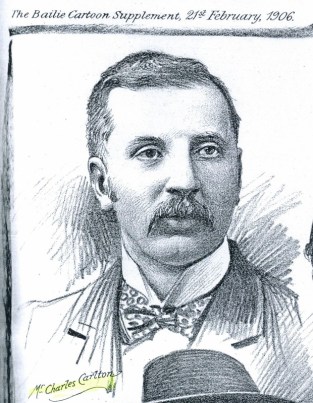
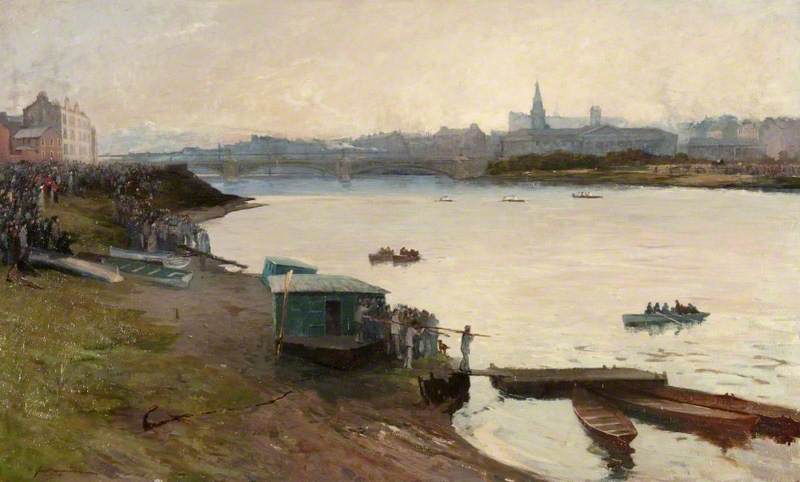
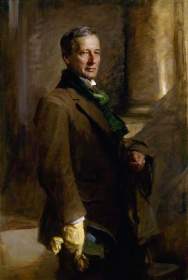

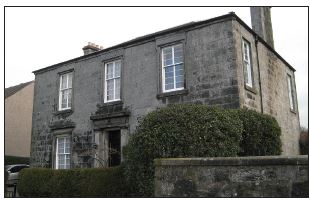
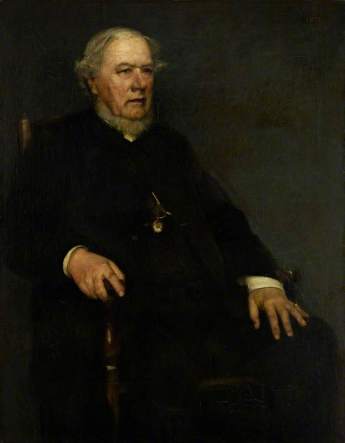

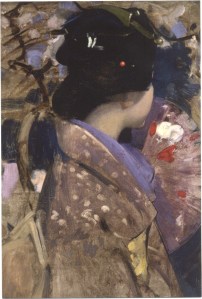

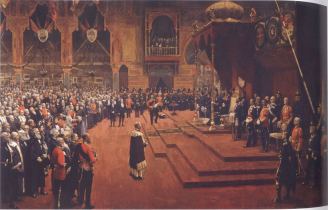
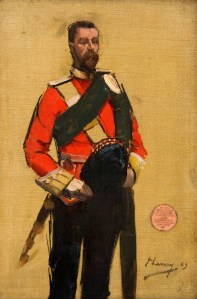
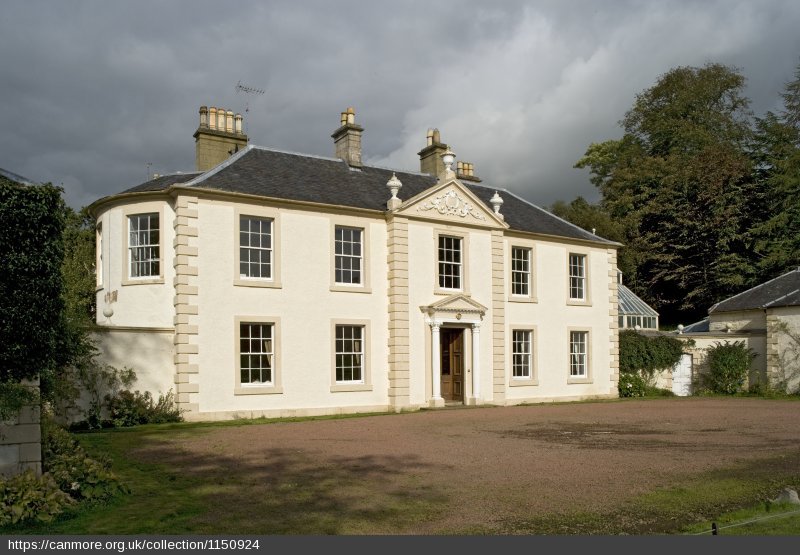


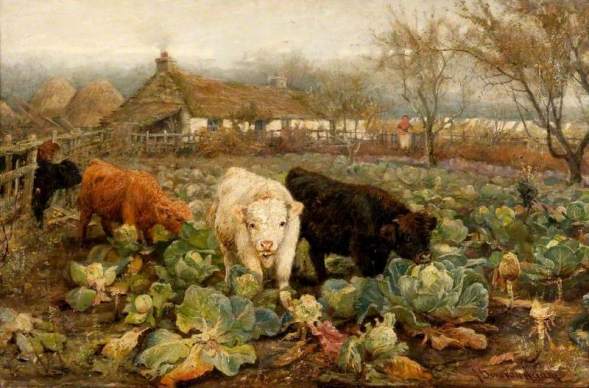
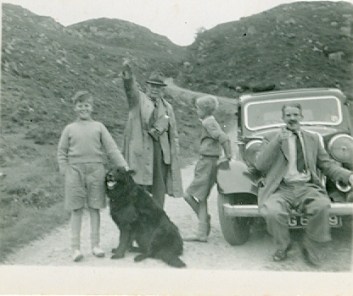

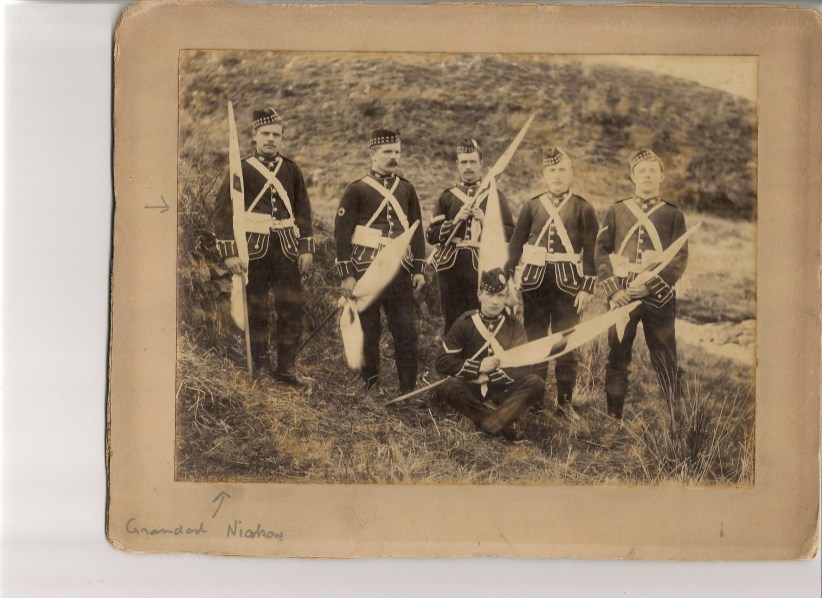
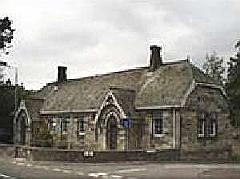
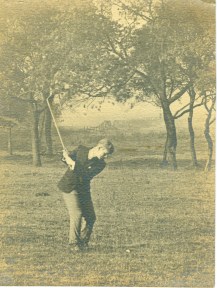
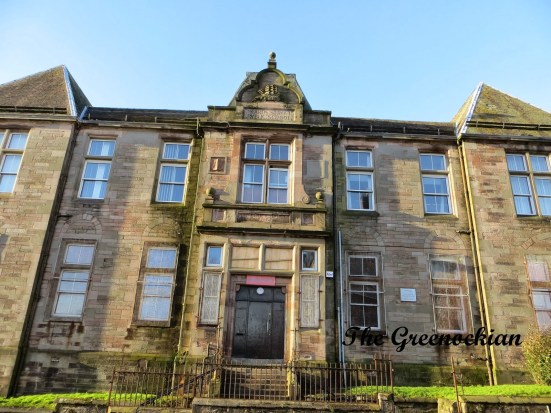

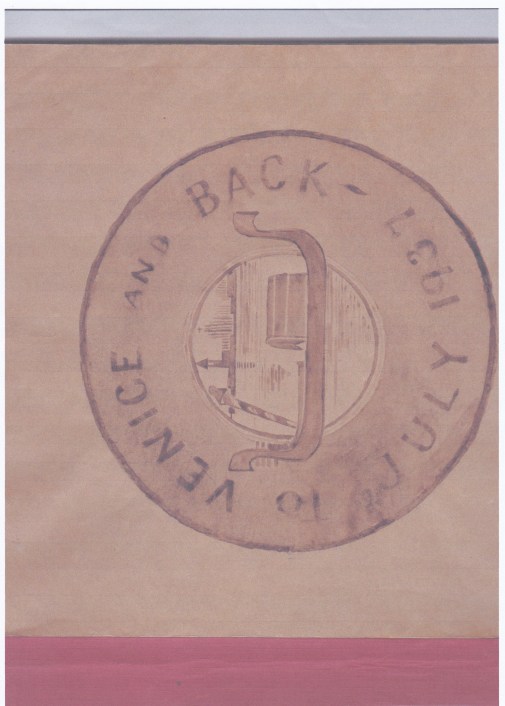
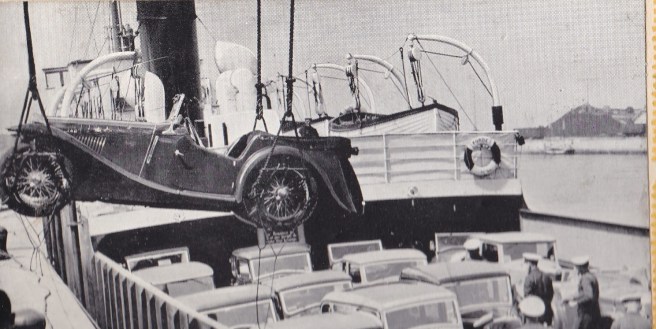


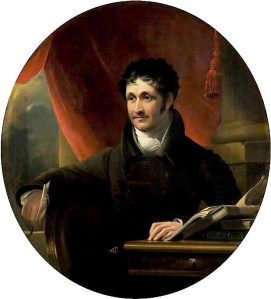


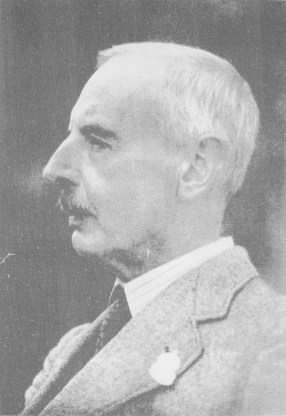

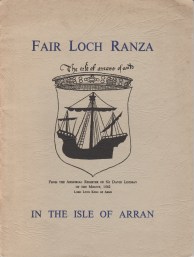


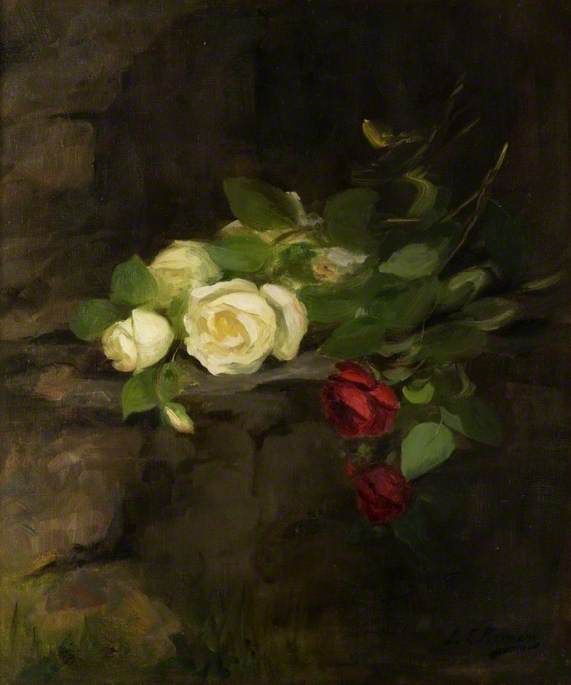
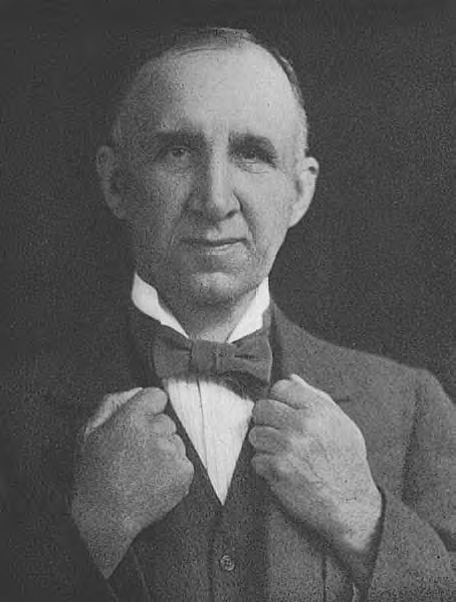
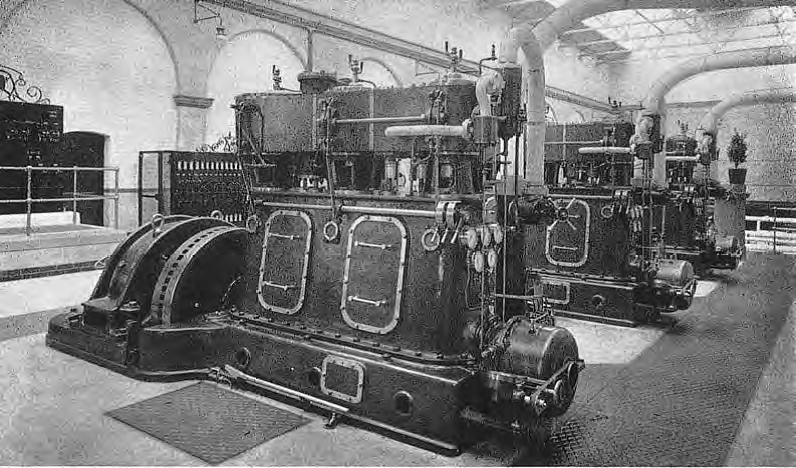
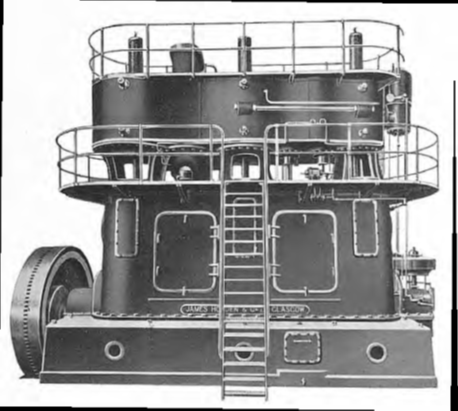
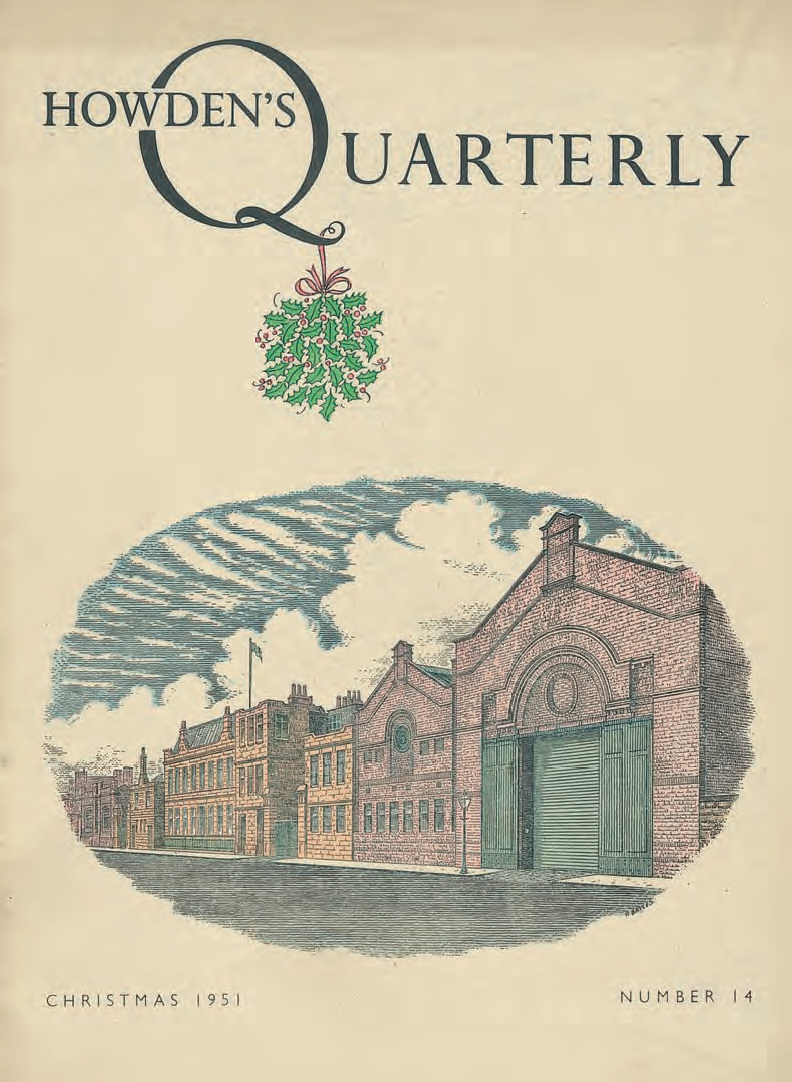
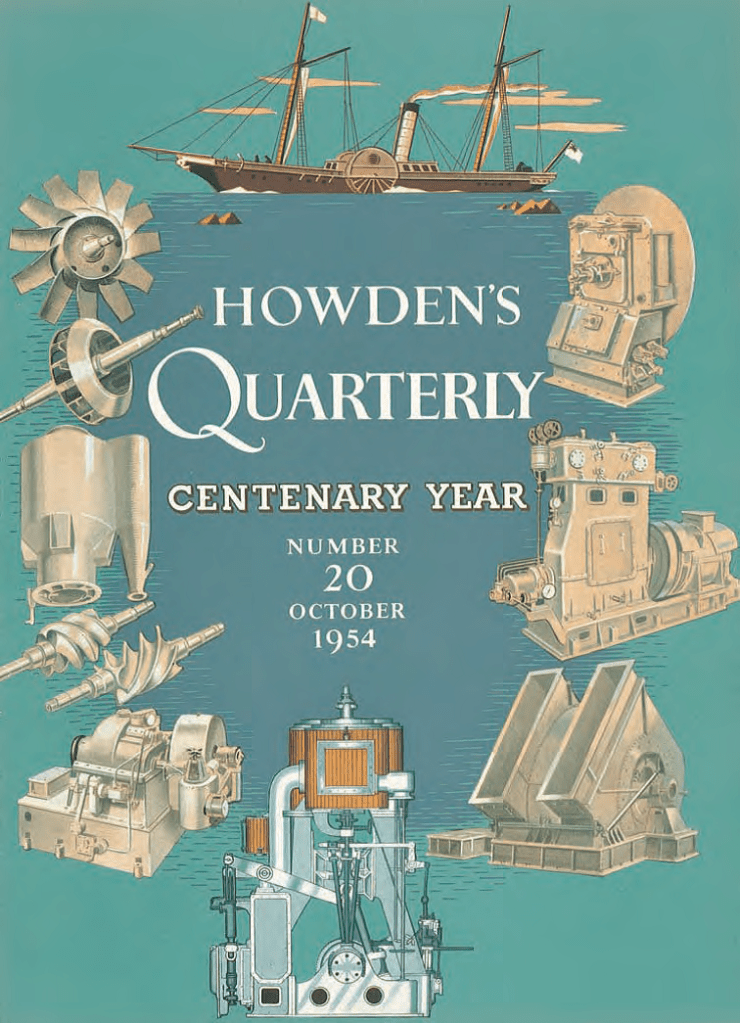
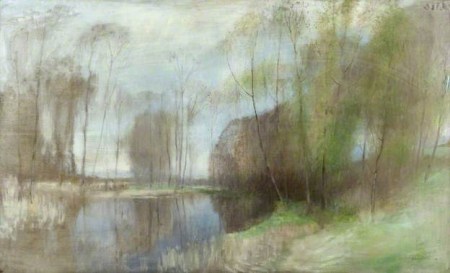
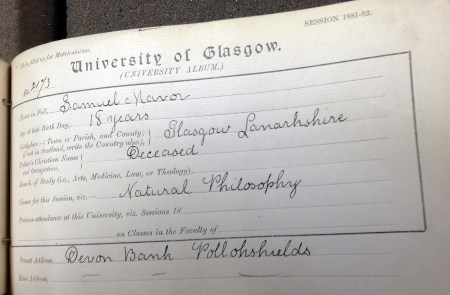
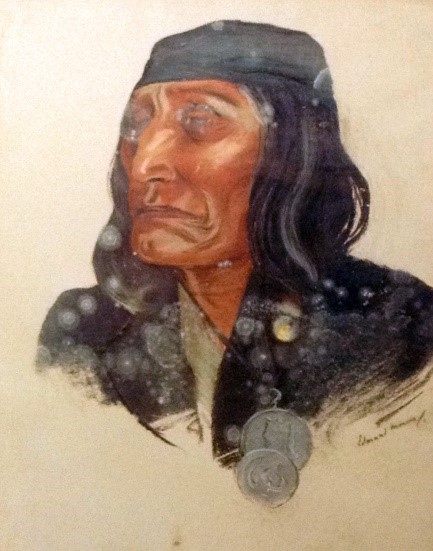
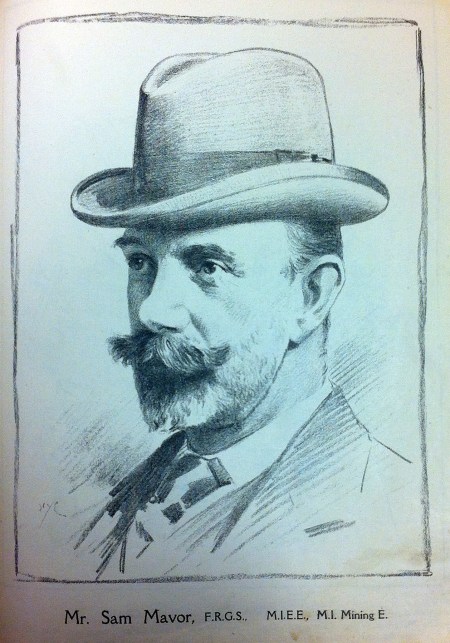
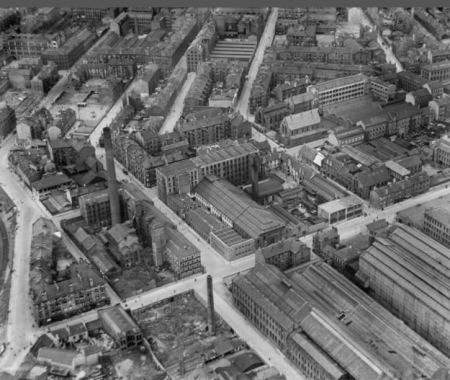
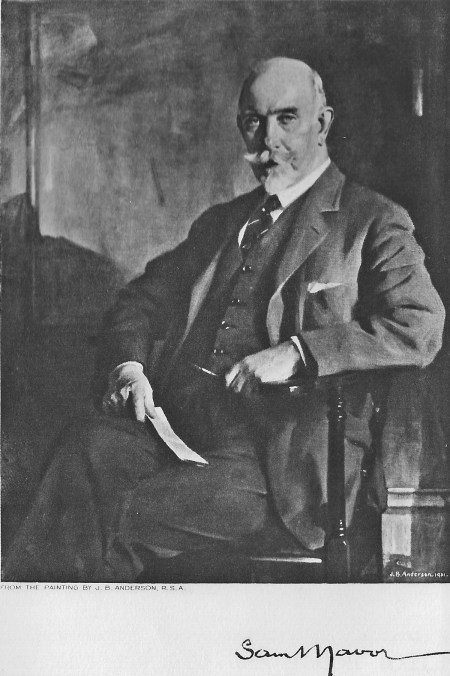
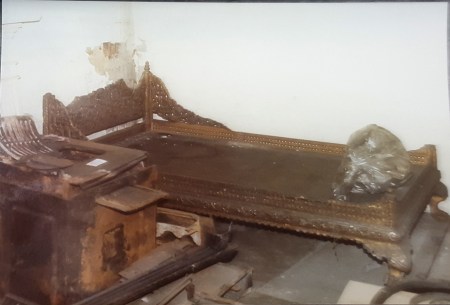
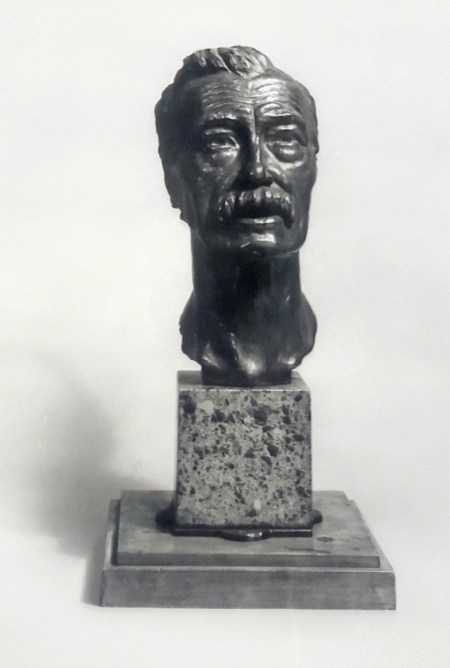
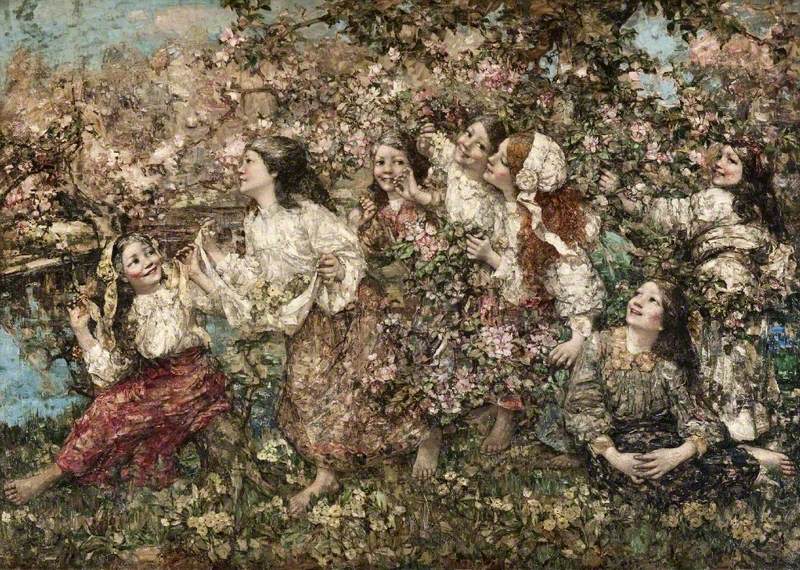


 Glasgow Museums Art Donors Group