Donor . Gilbert James Innes OBE (1888-1971)
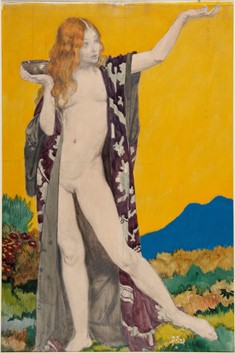
The Painting
This painting , a watercolour, gouache on paper ,appears to be a study for a larger work Sowing New Seed for the Board Of Agriculture and Technical Instruction In Ireland (see below Figure 2))which was described by one newspaper as ,’a baffling but beautiful piece of imaginative painting’ when it was exhibited at The New English Art Club in December 1913. 2 (See Appendix A)
The completed painting is now in the collection of the Mildura Arts Centre in Victoria, Australia. 3
The painting was donated in February 1952. The work appears to have been previously owned by T. & R. Annan Ltd , Photographers and Fine Art Dealers of 518 Sauchiehall Street ,Glasgow. According to a letter dated 21 January 1952 from Thomas Craig Annan, one of the directors of the firm, to Dr Tom Honeyman ,the Director of Glasgow Museums, a ‘visitor’ had approached him wanting to know if Dr Honeyman would be interested in the painting if it was presented to Glasgow Corporation and if it might then be loaned to Glasgow School of Art for the students to study. Apparently some of the instructors at GSA had praised the work and had sent students to the Annan Gallery to study the work. The visitor referred to was probably Gilbert J Innes or his representative as the work was presented by Gilbert to Glasgow Museums the following month. There is no information at this date that the painting was loaned to Glasgow School of Art at any time .4
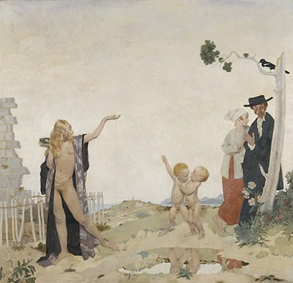
By kind permission of the Mildura Art Centre Collection
Senator RD Elliott Bequest. Presented to the City of Mildura by Mrs Hilda Elliot 1956
Donor. Gilbert James Innes (1888-1971)
1888-1914
Gilbert James Innes was born on 5 April 1888 at 24 Oakfield Terrace ,Hillhead in Glasgow. His father was Gilbert Innes ,a draper and warehouseman, and his mother was Margaret Richmond .5 Gilbert was the eldest of four boys . John Richmond was born in 1891, Frederick in 1892 and Thomas in 1894.6 Frederick had a twin sister Margaret who sadly died of whooping cough when eight weeks old .7 By 1901 the family were living at 27 Hamilton Drive in Partick and employed two servants .8 All the Innes boys attended Glasgow Academy ,a private school for boys near Kelvinbridge in Glasgow’s West End. Gilbert was in the Latin Class and attended the school from 1898 to 1904 when he left aged sixteen .9 Gilbert retained a connection to the school throughout his life. For example he was an Honorary Governor of the Glasgow Academicals War Memorial Trust from 1957 to 1971.10 In 1961 he gave £2000 to the school to provide new laboratory equipment for the school .11
In 1908 Gilbert became a member of the Incorporation of Weavers at Trades House in Glasgow. The Innes family had connections to the weaving industry. His father ,Gilbert was a draper and his grandfather, James Innes, was a calico printer and mill manager .12
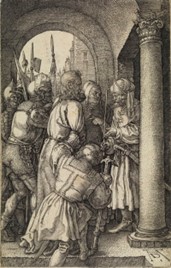
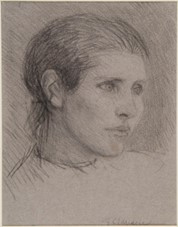
The family had moved to 16 Kirklee Road in Hillhead by 1911. This remained the family home for many years . Gilbert was twenty-two years old in 1911 and was employed as a clerk in a shipping agency .13 His employer was probably P Henderson & Company where his uncle, John Innes, had been a partner since 1887. John Innes was managing director of the company from 1884 to 1927.14 John Innes was a knowledgeable and wide collector of art. He was especially known for as a collector of prints. In the 1920s he presented over 170 prints and etchings to Glasgow Art Galleries including works by Albert Durer, Lucas von Leyden , Rembrandt, Whistler ,Cameron and Boner(see figure 3 ). This donation forms a valued part of the ’black and white ‘ section of Glasgow Art Galleries .It may be that this interest influenced his nephew but this is mere speculation.
© Figure 3 Examples of etchings CSGCIC Glasgow Museums and Libraries
P Henderson & Company had been founded in Glasgow in 1834 by twenty-five year old Patrick Henderson. The company were ship owners, agents and managers. From about 1854 the company began to transport Scottish emigrants to New Zealand in sailing ships and had the contract for Royal Mail to New Zealand. As there was little cargo to carry back from New Zealand at that time the company ships began calling regularly at Burma for cargo such as teak to take back to Glasgow. So successful was this venture that to increase the supply of much needed capital more investing partners were taken on in 1860 and formed The Albion Shipping Company Ltd which dominated trade with New Zealand and in 1882 pioneered the first refrigerated frozen meat shipment from New Zealand to London using sailing ships as there were no coaling stations en route at that time.
Figure 4 Poster advertising emigration from Glasgow to Otago, New Zealand.
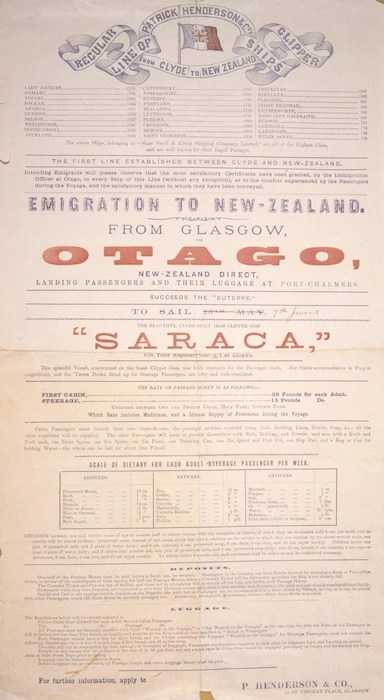
In 1865 the opportunity arose to become involved in the Irrawaddy Flotilla Company which operated a ferry service on the Irrawaddy River in Burma. This company was managed by P. Henderson and Company from Glasgow and by the nineteen twenties operated over 600 ferries on the river .16 The company also started a steamship service between Glasgow, Liverpool and Burma in 1870 which in 1882 need capital for expansion and amalgamated with Shaw Savill and Company becoming Shaw, Savill &Albion Co Ltd. The ships continued to be managed by P Henderson & Company for whom our donor probably worked after leaving school at sixteen .17
1914-1919
Gilbert and his three brothers all served in the army during World War One. Gilbert’s service at the beginning of the war is rather confusing as he appears to have originally enlisted with 9th Battalion Highland Light Infantry as a private but in August 1915 he was transferred to the 8th Battalion Scottish Rifles(The Cameronians) as a 2nd Lieutenant .18 It appears that these two battalions both served at Hamilton Barracks at the beginning of the war and transfers between battalions were quite common 19, especially if a soldier had previous officer training as Gilbert may have done in the Glasgow Academy Officer Training Corps which was attached to the 9th Battalion HLI from 1908.20 Gilbert served in Egypt, Palestine and in France between 1916 and 1918. He was wounded in France in July 1918 by which time he was a captain in the 8th Battalion Scottish Rifles. Lt Colonel J.M. Findlay who was the commanding officer of the 8th Battalion in his book With The Scottish Rifles 1914-1918, writes , ‘Innes ,my adjutant, was badly wounded ‘. This was at a battle in Baigneux which was fought between 28 July and 4 August 1918.21 Gilbert’s brother John was also serving in the 8th Battalion though John may have ended war as a captain in Royal Engineers .22 All the Innes brothers survived the war.
Post War Years
Gilbert was made a partner at P. Henderson and Company in 1920.23 He was principally concerned with the design of ships and later with the passenger side. He played an active part in the world of shipping becoming a member of several organisations connected to shipping. For example he was a member of the management committee and later chairman of The British Corporation Classification Society, later The British Corporation Register of Shipping and Aircraft, before its absorption by Lloyds Register of Shipping. He was elected as a member of the General and Technical Committee of Lloyds Register of Shipping 24 and was an underwriter for Lloyds. 25 He served as honorary treasurer of The Institution of Engineers and Shipbuilders in Scotland 26 and also became chairman of the Clyde Lighthouse Trust .27
At the time of the 1921 census Gilbert was a boarder staying at Ellerslie, a guesthouse in Cove, a popular holiday destination on the Clyde Coast. Also staying the house were two nurses, one of whom was Dorothy S.Prain .28 We do not know if Gilbert and Dorothy already knew each other or if this is when they first met but they were married on July 12 1922 in Dundee .29
Dorothy was born in Longforgan , Perthshire on 29 April 1893. Her father was John Prain ,a farmer at the time of her birth. Her mother was Nellie Boyd Scrymegeour .30 Dorothy attended the High School of Dundee .31 Dorothy’s mother died in 1907 aged only thirty-three 32 and her father married again in 1913.33
There is no information as to Dorothy’s activities during WW1 but she trained to be a nurse at the Western Infirmary in Glasgow and was registered as a nurse in 1919 so presumably she was undergoing nursing training during the war . 34 Perhaps Dorothy and Gilbert met in the hospital while Gilbert was recuperating from his wounds.
According to the tradition at that time Dorothy would have given up her nursing career on marriage. The couple lived at 8 Queensburgh Gardens in Hillhead Glasgow after their marriage and on July 15 1928 a daughter Doreen Prain Innes was born. Doreen was born at a private nursing home at 1 Claremont Terrace in Glasgow. 35 There were several nursing homes in Claremont Terrace at that time. 1 Claremont Terrace was run by Henrietta Gunn who was an experienced nurse and midwife. 36
During the nineteen twenties Gilbert travelled abroad several times and spent time in Burma possibly because of P. Henderson &Company’s connection with the Irrawaddy Flotilla Company. In March 1928 he and his uncle John Innes travelled to Rangoon in Burma on the SS Amorapoora and later that year Gilbert and Dorothy travelled to Rangoon on the SS Yoma departing from Liverpool on 26th October 1928.37 Both ships were owned by the Henderson Line. Whether daughter Doreen travelled with them is unknown as she would have been only three months old at the time.
At the end of the decade the Innes family moved to Killearn in Stirlingshire where they built a house called Gartaneaglais .38 The house was designed by a naval architect called Gardener and the garden by J B Wilson. 39
1930-1971
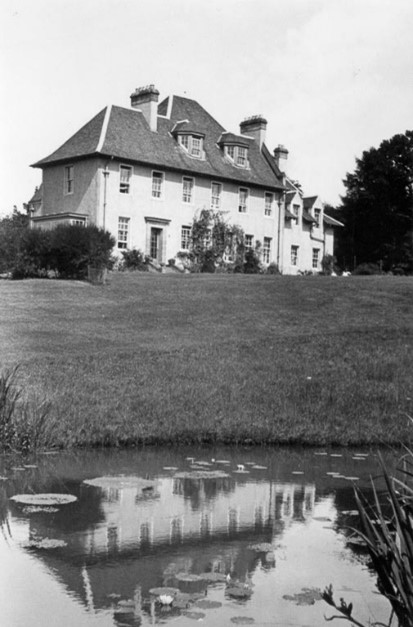
Gilbert continued to be involved in the shipping industry after the move to Killearn both as a partner in Patrick Henderson Ltd and in various shipping concerns as well as being an underwriter for Lloyds. One example in 1953 was his bid to became a major shareholder in the Liverpool Steamship Company. 40
Our donor appears to have had an interest in charitable activities throughout his life. In 1930 he was elected a member of the Incorporated Glasgow and Stirlingshire and Sons of the Rock Society an organisation founded to help those in need. The annual dinner was held at the Golden Lion Hotel in Stirling. 41
He was also a founding member of The Killearn Trust which was founded in July 1932 for the ‘promotion and advancement of the welfare and interests of the Parish of Killearn.’ Gilbert is quoted as ‘the moving spirit’ of the Trust and remained its chairman until his death in 1971.42 The activities of the Trust are too numerous to mention here but one of the main activities was to provide housing for those in need in the community. 43
Gilbert was, like his Uncle John, a collector of art including the Scottish Impressionists. He gave several paintings from his collection to The Glasgow Academy. 44 He was listed as a member of the council of the Royal Glasgow Institute of Fine Arts when it met at the Glasgow Art Club in March 1937.45 Gilbert was also a keen photographer. Several local photographs taken by Gilbert were included in the second edition of a book about Killearn The Parish of Killearn. 46 As we have seen Gilbert also took an interest in Glasgow School of Art (GSA). He was a member of GSA Board of Governors from 1935 and Vice Chairman from 1941 to 1967. From 1936 to 1949 he was Convenor of the School and Staff Committee and Honorary Vice President from 1967 to 1972.47
Dorothy Innes also played a part in community activities .To support the war effort during WW2 for example on 2 November 1939 she presided over a meeting of the Killearn Red Cross Society. 48 In May 1942 Mr and Mrs Innes invited local people to visit the gardens at Gartaneaglais to view the great show of daffodils, narcissi and flowering shrubs and to give donations to the Women’s Royal Institute (WRI) Comforts Fund for HM Forces. 49 In June 1944 on behalf of the Dumgoyne WRI Mrs Innes granted the use of her kitchen at Gartaneaglais for the canning of fruit. 50 In December 1945 an advertisement appeared in the Stirling Observer for a Christmas Sale of toys and fancy goods at Gartaneaglais in aid of the Thanksgiving Fund. 51 These are only a few of many such events.
Participation business and the local community is a constant theme in our donor’s life. He was a member of the Glasgow Chamber of Commerce and was Convener of the Postal, Telephone and Telegraph Committee in the 1940s. 21 He was a member of the Glasgow Western Hospital Board of Management. When a new medical rehabilitation and geriatric hospital opened at Killearn Hospital in 1957 Gilbert stated, ’Western Hospitals Group, since the inception of the NHS, had been very much in need of the facilities now provided in Killearn’. 53
Gilbert was also involved in business and commercial education. At some point he became vice-chairman of the Board of Governors of the Glasgow and West of Scotland Commercial College Ltd 54 which had been founded in 1915 and which moved to a new building at 173 Pitt Street in Glasgow in 1934. Among its courses the college offered qualifications in business and commerce, librarianship and secretarial studies and ran the Scottish Hotel School which was based at Ross Hall in Crookston in Glasgow. In 1955 this college became The Scottish College of Commerce. In 1964 the college joined with the Royal College of Science and Technology in George Street, Glasgow to form the new Strathclyde University. In 1975 173 Pitt Street became the headquarters of Strathclyde Police. 55
There is little further information regarding the Innes family other than they often spent holidays in Iona for which they had great affection. 56
Daughter Doreen attended St Andrews University and in 1950 graduated with a BSc in Mathematics and Astronomy 57 going on to earn an Honours BSc in 1952.58 She married William Thomas Foster in 1956.59
It is to be assumed that Gilbert continued his involvement in the various activities described above as his contribution to the community and the business world was recognised in the Queen’s Birthday Honours in 1963 when he was awarded an OBE in June specifically for his services as chairman of the Glasgow War Pensions Committee. 60 Gilbert had been involved in this organisation since at least 1937 when he was vice-chairman. 61
Dorothy Innes died, aged 74 on November 1 1967 of bronchopneumonia while staying in Perth possibly with a cousin A. M Prain who witnessed the death certificate. 62
Gilbert died on 2 November 1971 aged eighty-three at Cannisburn Hospital Bearsden of ,’peripheral vascular failure’ and artherosclerosis’. 63
References
1. www.newenglishartclub.co.uk/past-members/william-orpen
2. Leicester Chronicle and Leicestershire Mercury 06/12/1913 p. 2
3. https://paulineconolly.com/2021/orpens-sowing-newseedof-protest/the
4. Glasgow Museums Resource Centre (GMRC) Object File 2941
5. www.scotlandspeople.org.uk Statutory Births .1888
6. as above 1891,1892,1894
7. www.scotlandspeople.org.uk Statutory Deaths 1894
8. UK Census 1901
9. https://theglasgowacademyarchive.org.uk
10. MacLeod, Iain The Glasgow Academy. 150 Years.Appendix . p.iii. The Glasgow Academicals War Memorial Trust 1997
11. Glasgow Herald 30/06/1961 p. 2
12. www.tradeshouselibrary.org.uk
13. UK Census 1911
14. Laird,Dorothy ,Paddy Henderson: the Story of P .Henderson & Company 1834-1961. P Henderson &Co 1961.pp.227-8
15. as above p. 156
16. op. cit. Laird p. 113
17. http://www.en.wikipedia.org/wiki/P_Henderson_%26_Company
18. Army Lists. Monthly Supplement September 1915
19. https://www.longlongtrail.co.uk>regiments-and-corps
20. op. cit. MacLeod. p. 64
21. Findlay,Colonel J.M. With The Scottish Rifles 1914-18 . Blackie & Sons 1926. p.169
22. Army Lists. Monthly Supplement September 1917
23. op. cit. Laird p. 184
24. Times 11/04/1949 p. 8
25. Liverpool Echo 30/11/1958 p.5
26. Dundee Evening Telegraph 05/04/1939 p. 6
27. op. cit. Laird p. 184
28. UK Census 1921
29. www.scotlandspeople.org .uk Statutory Marriages 1922
30. www.scotlandspeople.org.uk Statutory Births 1893
31. Dundee Courier 27/06 1908 p. 8
32. www.scotlandspeople.org.uk Statutory Deaths 1907
33. www.scotlandspeople.or.uk Statutory Marriages 1913
34. www.ancestry.co uk UK and Ireland Nursing Register.Royal College of Nursing 1898-1968
35. www.scotlandspeople.org.uk Statutory Births 1928
36. www.ancestry.co.uk Midwives Register 1904-1957
37. www.ancestry.co.uk Passenger Lists 1890-1960
38. Glass, Fiona (editor)The Parish of Killearn :the Village and its History. 3rd edition The Killearn Trust 2009.p.151
39. as above
40. Birmingham Post 22/10/1953 p. 9
41. Falkirk Herald 25/01/1930 p. 6
42. Wilson, Andrew (editor) The Parish of Killearn. 2nd edition 1988 .The Killearn Trust .p. 146
43. as above
44. Killearn Trust . heritage@kcfc.co.uk
45. Scotsman 24/03/1937 p. 11
46. op. cit. ref 42 pp 40-41
47. archives@gsa.ac.uk
48. Stirling Observer 02/11/1939 p. 4
49. Stirling Observer 07/05 1942 p. 4
50. Stirling Observer 29/06/1944 p.4
51. Stirling Observer 13/12/1945 p. 4
52. Courier and Advertiser 20/03/1947 p. 3
53. Edinburgh Evening News 16/02/1957 p. 5
54. Scotsman 02/07/1955 p. 3
55. http://www.theglasgowstory.com
56. op. cit. ref 38 p. 151
57. St Andrews Citizen 17/06/1950 p. 3
58. Scotsman 05/07/1952 p. 3
59. www.scotlandspeople.org.uk Statutory Marriages 1956.
60. Daily Record 08/06/1963 p. 9
61. Scotsman 11/10/1937 p. 11
62. www.scotlandspeople.org.uk Statutory Deaths 1967
63. as above 1972
Appendix A The Painting
Our study is of the naked female on the left of the full painting. The inspiration for the completed painting was reported to be a reaction to Orpen’s anger that at that time in Ireland government grants for art and education
came from Whitehall under the direction of the Irish Board of Agriculture. Orpen was horrified by this situation which he thought was bizarre and furious that agriculture received far more funding than art. His painting is thought to mock the attitudes of the government using allegorical figures. The nude female(our study) represented the sowing of new ,more progressive ideas while the naked children appear as the offspring of this intellectual enlightenment. The peasant couple on the right and the ramshackle farmhouse with the pig-pen to the left signified the Board of Agriculture’s awkward attitude towards art and culture.
Appendix B The Artist
William Newenham Montague Orpen (1878-1932)
William Orpen was born in Stillorgan ,County Dublin and studied at the Dublin Metropolitan School of Fine Art for six years from the age of thirteen. He won every major prize including the British Isles Gold Medal for life drawing. He then moved to London and studied at the Slade School from 1897 to 1899. He had a private teaching studio in Chelsea along with Augustus John ,a fellow Slade graduate. He split his time between Dublin and London and built a lucrative reputation painting society portraits as well as group portraits known as ‘conversation pieces’ for example The Café Royal in London (1912).During WW1 he was a war artist based mainly in Amiens, travelling to the Somme in April 1917. He painted portraits of Douglas Haig and Sir Hugh Trenchard, commander of the Royal flying Corps. He continued to be successful after the war exhibiting at the New English Art Club and The Royal Academy .4 Orpen also had connections to Glasgow School of Art. During the 1914 to 1915 academic year Orpen was an assessor for diplomas, scholarships and bursaries (Drawing and Painting) and one of the judges for the Haldane Travelling Scholarships.
Acknowledgements
I would like to offer many thanks to the following people for their help in the research for this report:
Jillian Peterson of the Mildura Arts Centre ,Victoria, Australia
Fiona Glass ,a member of the Innes family and editor of the 3rd edition of The Parish of Killearn.
Gill Smith of the Killearn Trust
J.M.M.
 Glasgow Museums Art Donors Group