John Aitchison (1769-1859)

In 1886 Janet Aitchison gifted a portrait of her father to Glasgow. Painted by Sir Daniel McNee, a renowned Scottish portrait painter who became president of the Royal Scottish Academy in 1876, it depicts John Aitchison as a confident, successful businessman. 

Figure 1. Macnee, Daniel; John Aitchison (1769-1859). © CSG GIC Glasgow Museums Collection.(http://www.artuk.org).

The painting was exhibited at The Glasgow Institute of Fine Arts exhibition of 1894 and lent by The Corporation of Glasgow.(1)

In 1868 the painting was exhibited in The Illustrated Catalogue of Exhibition of Portraits on Loan in The New Galleries of Art, Corporation Buildings, Sauchiehall Street, Glasgow and lent by Walter Paterson who was a son of John’s sister Euphemia.(2)

John was a prominent merchant in Glasgow at a time when trade with America was particularly strong. However, with the decline of the tobacco industry after the American War of Independence, the British Empire looked for other opportunities, especially in the colonies. The sugar industry expanded and by 1790 the West Indies became Glasgow’s primary trading outpost.(3) Raw sugar had to be processed to make it saleable and it was these refining processes which John helped to develop. 

John was born in Glasgow on 2 September 1769 to Walter Aitchison and Isobel Henderson, who had married in 1768.(4) John was the first of seven children (5) and he lived in Glasgow for much of his life. On 14 August 1797 John married Margaret Robertson (6) whose father James was a merchant in Glasgow. Their first child Walter was born in 1798 and they went on to have a family of twelve over the following sixteen years.(7) 

In 1786 aged seventeen John entered The Ship Bank as an apprentice.(8) One of the earliest banks in Glasgow, it was founded by some of the wealthiest merchants in the city, particularly  those involved in the tobacco trade. In 1776 The Ship Bank became known as Moores, Carrick & Company, then in 1789 changed its name to Carrick, Brown & Company.(9) Robert Carrick was the leading partner at the time and lived above the bank. One of John’s duties, as the youngest apprentice, was to sleep in the premises at night, armed with a gun, bayonet, powder-horn and a bag of slugs and Mr Carrick would lock the door behind him to ensure security. Both Robert Carrick and John were fond of playing the violin, and they would often practise after work at Robert’s flat. Carrick was known as a bit of a miser and it is said that he left a fortune of £1 million pounds ‘…a grim old bachelor without leaving one plack or penny to any of the charitable institutions of the city….’ The two remained friends till Robert’s death in 1821.(10)

In 1796 John is recorded in the Trades House library as a Burgess and Guild Brethren of Glasgow. He is described as a merchant and serving apprentice with Messrs Moore, Carrick and Company at this time.(11) John left the Bank for the mercantile world, specialising in the processing of cane sugar which was being imported in large quantities from The West Indies. Greenock and Glasgow became major sugar refining centres and much of the machinery required was manufactured locally.

 In the early nineteenth century one of the sugar-refining processes enabled impurities to be extracted, by boiling the cane sugar to form a liquid. The liquid was transferred to a series of pans until the required density was achieved. However, if the temperature was too high the liquid would turn into uncrysallizable molasses (treacle). As with many other industries in Glasgow during the Industrial Revolution improvements and efficiencies were constantly being developed. Messrs D Cook of Glasgow developed a more efficient design for evaporating sugar. A Mr Cleland of Glasgow also developed a system of using steam to quicken the evaporating process. It was John Aitchison who developed this process further by controlling the flow of liquid along a specially designed copper apparatus. The boiling action caused the impurities to rise to the surface and form a crust, which could then be easily taken off when the liquid cooled, leaving purified sugar.(12) The process was later patented.(13)

One of the few surviving sugar refining buildings in Glasgow is at 40-50 Speirs Wharf on The Forth and Clyde canal just north of Glasgow city centre, now converted to flats.

Figure 2. 40-50 Speirs Wharf, Glasgow, photo by author

In 1833, Margaret died. In a letter dated 26 July 1833 to his son Robert, who had sailed from Rothesay to Madeira, John describes Margaret’s failing health and the good care she received from their doctor. News of the death was communicated to the Captain of the ship Brig Staffa just before leaving Rothesay and the news was broken to Robert when at sea. Robert became a merchant in Burma until his death in 1838. The funeral was attended by some prominent merchants including John Buchanan of Woodlands and James Buchanan of Dowanhill. Mention is made of Robert’s brother John who applied to a Captain Johnston in London for work, presumably, like Robert, at sea. John senior also makes reference to ‘making every exertion so to get your brother into the service of The East India Company’. It is not clear which brother he refers to. John also refers to his business dealings in the sugar industry , ‘We have not done much as yet in the wee Sugar House …we expect liberty soon to refine all sorts of Foreign Sugars…struggle to get using E India sugars, it will be good bye and bye’.(14)

In 1837-38 John’s business address is recorded as Adam’s Court Lane, Argyll Street, and he is described as a merchant and patentee for machines for sugar refining.(15) In 1838 his business address is recorded as 14 St Enoch Square, Glasgow (replaced in 1875 by Teachers whisky offices). He lived at 52 Renfield Street, Glasgow at this time (the building was replaced by The Odeon Cinema in the nineteen thirties).(16) From 1845 to 1852 he was living at 105 Kensington Place, Sauchiehall Street.(17) By 1855 he had moved to 15 Claremont Street, just off Sauchiehall Street,(18) west of Charing Cross, where he resided till his death in 1859.(19)
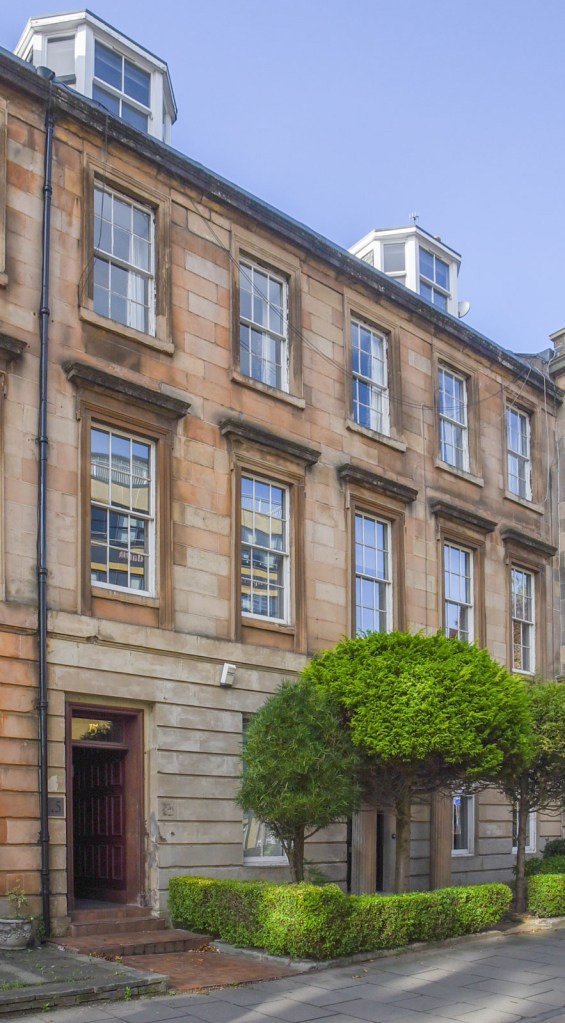
Figure 3. 15 Claremont Street, Glasgow photo by author

He was buried at Ramshorn Church in Glasgow,(20) where many notable Glasgow merchants were laid to rest including Robert Carrick (21) who maintained a friendship with John throughout his life. John’s son James and daughters Euphemia and Isabella Henderson are also laid to rest there.(22) 

According to the 1861 census Mary Newbigging Aitchison, John’s daughter, was living at 9 Sandyford Place, Glasgow, just across the road from John’s final home.(23) She and Janet never married and they probably lived with John to his final days.(24) The head of the household at 9 Sandyford Place was Margaret, her sister. Also noted as being present was George Bogue Carr, studying In Glasgow to be a minister of The United Free Church.(25) He was from Berwick-upon-Tweed and after a period as minister in Tranent, then Dalmeny Street Church in Edinburgh he emigrated to the USA, becoming Professor of Religious Rhetoric and English at Lincoln University. George was John Aitchison’s grandson whose mother was Jane Robertson Aitchison, John’s second daughter.(26) The Carr family and the Aitchison family were closely associated through marriage at this time.(27)

DS

References

1) https://www.tradeshouselibrary.org/uploads/4/4/7/2/47723681/old_g_asgow_exhibition_1894.pdf

2) https://archive.org/details/illustratedcatal00anna/page/68/mode/2up?q=aitchison

3) https://it.wisnae.us/sugar-and-slavery/

4) From the notebook of Walter Aitchieson, by permission of Andy Laing, descendent of John Aitchison

5) Family Tree (Family of Carr from Berwick-Upon-Tweed), by permission of Andy Laing, descendent of John Aitchison

6) Marriages, Robertson Margaret (Old Parish Registers Marriages 644/1 270 236 Glasgow) page 236

7) Family Tree (Family of Carr from Berwick-Upon-Tweed), by permission of Andy Laing, descendent of John Aitchison

8)  Glasgow Herald 22/08/1859 p 5  www,Britishnewspaperarchive.co.uk

9) https://archiveshub.jisc.ac.uk/search/archives/cce07d78-984c-3625-bae7-52a10c00a1f8

10) Glasgow Herald 22 Aug 1859, Obituaries, The Late Mr John Aitchison, p.5

11) https://www.tradeshouselibrary.org/uploads/4/7/7/2/47723681/burgess_book_1751_to_1846.pdf, p.203

12) Harvey Robert, https://zenodo.org/record/2252792#.YTSv8C2ZPgE (Creative Commons Zerov1.0 Universal)

(13) http://www.mawer.clara.net/sugaraa.html

14) Letter from John Aitchison to his son Robert dated 6th July 1833, by permission of Andy Laing, descendent of John Aitchison

15) Post Office Directories, https://digital.nls.uk/directories/browse/archive/90159667 p.24

16) Post Office Directories, https://digital.nls.uk/directories/browse/archive/83813514 p.24

17) Post Office Directories, https://digital.nls.uk/directories/browse/archive/84099400, p.27

18) Post Office Directories, https://digital.nls.uk/directories/browse/archive/84119828 p.39

19) Deaths,Aitchison, John (Statutory Registers Deaths 644/8 666), www.scotlandspeople.gov.uk

20) Deaths,Aitchison, John (Statutory Registers Deaths 644/8 666), www.scotlandspeople.gov.uk

21) https://www.findagrave.com/memorial/216350861/robert-carrick

22) Glasgow & West of Scotland Family History Society https://www.gwsfhs.org.uk/records/isabella-henderson-aitchison/

23) Census, 1861 (Census 644/8 66/ 19), www.scotlandspeople.gov.uk

24) Census 1851 (Census 622/ 109/ 15)   www.scotlandspeople.gov.uk

25) Census, 1861 (Census 644/8 66/ 19), www.scotlandspeople.gov.uk

26) Family history provided by Andy Laing, descendent of John Aitchison

27) Family Tree (Family of Carr from Berwick-Upon-Tweed), by permission of Andy Laing, descendent of John Aitchison

Mrs Elizabeth Webster Gow (1873 – 1951)

On 19 January 1943, an oil painting by James Godsell Middleton entitled Jeannie Deans and the Queen was presented by Mrs E. W. Gow, Ardchattan, 2 Wellshot Drive, Cambuslang. Its acquisition number is 2309. 1

Figure 1. Middleton, James Godsell; Jeanie Deans and the Queen;
© CSG GIC Glasgow Museums Collection.

The frame of the painting bears a tablet with the inscription ‘J. Middleton (Scottish School) Jeannie Deans and the Queen / Lent by Captain Dennistoun’.

The painting was exhibited at the Royal Academy Exhibition of 1845 by the artist whose address was 76 Newman Street, London . It carried the caption:

Jeannie Deans begging the life of her sister from Queen Caroline.
“Tear followed tear down Jeannie`s cheeks as, her features glaring and
quivering with emotion, she pleaded her sister`s cause etc. Heart of
Midlothian”, (481). 2

The artist also exhibited the painting at the Royal Scottish Academy the following year with a shortened caption!

Jeannie Deans begging the life of her sister from Queen Caroline,
vide The Heart of Midlothian (136) 3

There was no record of the donation in the Corporation Minutes.

            Elizabeth Webster Waugh (later Mrs. E. W. Gow) was born on 2 June 1873 at 5 East Howard Street, Glasgow. 4 Her father, Robert Waugh, was a storekeeper who married, Elizabeth Chambers, a domestic servant, on 30 September 1870 at Hamilton Street in Motherwell. 5 Elizabeth Waugh was the second of six children of the marriage. In 1881 “Bessie” (Elizabeth) and her family were living at 115 Stirling Road, Glasgow along with four older siblings – children of Robert Waugh`s first marriage to Janet Marshall. Robert Waugh died on 6 July 1888 6 and the family moved to 9 Glebe Street, Glasgow. In 1891, Bessie, aged 17 was a ‘furniture polisher’. 7 (It may have been because of her occupation that she met her future husband Walter Gow who was a house furnisher/furniture dealer).              
Elizabeth`s mother died in 1892 8 and three years later, on 19 March 1895, Elizabeth, aged 21, married Walter Gow who was then 35.  It was Walter`s second marriage. (He had first married Elizabeth Marquis on 29 June 1883 in Glasgow 9. At that time, he was a cabinet maker and upholsterer with an address at 73 Buccleuch Street. However, Elizabeth Marquis “formerly married to Walter Gow” re-married in 1894 10 presumably after she and Walter divorced).

            The marriage to Elizabeth was ‘by declamation’ at 63, Cockburn Street, Edinburgh in the presence of Elizabeth`s sister Margaret and her brother Thomas. According to the marriage certificate Walter Gow was a bachelor whose occupation was ‘cabinet maker’. He gave his address as ‘The Grand Hotel, Charing Cross, Glasgow’. 11 (Walter Gow`s father Joseph was also a cabinet maker and had originated the family business of ‘J. Gow and Sons’, house furnishers. In 1899 the business was based at 187 (later 175) Trongate, 12).

                    After their marriage, Walter and Elizabeth moved to ‘Glenholm’ a large house at 31 Hamilton Drive, Cambuslang.13,14 The marriage did not produce any children. However, by 1911 Walter and Elizabeth had adopted Mosina (Ina) Mills the daughter of Elizabeth`s sister Annie and were living in Hamilton Drive along with Elizabeth`s older sister Margaret and one servant. Walter was a house furnisher and employer. 15

                    By 1927 Walter and Elizabeth had moved to ‘Ardchattan’, 2 Wellshot Drive, Cambuslang. The business was now based at 11 Hope Street. 16 (The name of the house would have derived from Walter`s interest in Clan or Family History. In 1898, he had been a subscriber to a book concerning the history of Clan Chattan.17 Gow is one of the minor Septs of Clan Chattan).

On 30 April 1929 Elizabeth`s niece and adopted daughter Ina, married Alexander Stephen, a fishery officer from Peterhead, in Glasgow Cathedral.18

 Walter Gow died aged 76, on 26 March 1936 at 2 Wellshot Drive, Cambuslang and was buried in East Kilbride Cemetery. 19 He left an estate valued at £100,111:18s:7d.20 Elizabeth inserted “In Memoriam” notices in the Glasgow Herald each year from 1937 to 1951 (apart from 1949 and 1950) in memory of her husband.

For example, the following appeared in the ‘In Memoriam’ column of the Glasgow Herald, on 26 March 1943:

            GOW. In loving memory of my beloved husband Walter Gow, J.P., who died on
26th March 1936. Inserted by Mrs Gow, “Ardchattan”, Cambuslang”

Elizabeth moved from Cambuslang to 29 Newlands Road in 1945 or 1946 and in the following year to ‘White Croft’, Barrhead. (Taken from Glasgow Herald, In Memoriam Columns.) Sometime between 1948 and 1951 she moved to ‘Glengyron’, Whitecraigs in Renfrewshire.

Elizabeth Gow died aged 78 at ‘Glengyron’, 38 Ayr Road, Whitecraigs on 21 August 1951 21. She was buried beside her husband in East Kilbride Cemetery on 24 August.22

The business of J. Gow and Sons was still operating from 11 Hope Street in 1964 23.

References

  1. Glasgow Museums Record of Donations
  2. Graves, Algernon, The Royal Academy of Arts; a complete dictionary of contributors and their work from its foundation in 1769 to 1904, H. Graves and Co., London, 1905.
  3. Object File at Glasgow Museums Resource Centre
  4. Scotland`s People, Birth Certificate
  5. Scotland’s People, Marriage Certificate
  6. Scotland’s People, Death Certificate
  7. ancestry.com, Scotland Census 1891,
  8. Scotland’s People, Death Certificate
  9. Scotland’s People, Marriage Certificate
  10. ibid
  11. ibid
  12. Glasgow Post Office Directory, 1899-1900
  13. Cambuslang Suburban Directory, 1900/01
  14. Glasgow Post Office Directory, 1902/03 till 1920/21
  15. Scotland`s People, Census 1911.
  16. Glasgow Post Office Directory 1927/8.
  17. Fraser-Mackintosh, Charles, of Drummond, An Account of the Confederation of Clan Chattan: Its Kith and Kin; The Minor Septs of Clan Chattan. J. Mckay, Glasgow, 1898
  18. Scotland’s People, Marriage Certificate
  19. Scotland’s People, Death Certificate
  20. Confirmations and Inventories, Mitchell Library
  21. Scotland’s People, Death Certificate
  22. Glasgow Herald, Deaths, August 22, 1951, page 1.
  23. Glasgow Post Office Directory, 1966-67

Louisa Ellen Perman  (1854-1921)

Torrance, James, 1859-1916; Kitty
Figure 1. Torrance, James: Kitty (1521): Glasgow Museums Resource Centre. © CSG GIC Glasgow Museums Collection.(http://www.artuk.org)

The donor of the above painting was Louisa Ellen Perman. Louisa Perman was born in Eastwood and died in Helensburgh. The painting, donated after her death by her trustees, is the portrait, “Kitty”. The portrait was the work of her husband, James Torrance (1859 – 1916). Her trustees were instructed to donate ‘all pictures and drawings to such of the principal art galleries in any part of the world as they think proper.’ An offer was made to Glasgow Corporation, who accepted the painting of Kitty by James Torrance and six wash drawings for his book illustrations. (1)

Louisa Perman and James Torrance were working artists, their story one of two people who lived and worked within their artistic and social communities and who made a contribution to the artistic life of Scotland. Their work provided them with a living, but some have argued that their contribution to Scottish art was underestimated.

Perman, Louisa Ellen, 1854-1921; Roses
Figure 2: Roses : Perman, Louise Ellen. Glasgow Museums Resource Centre. © CSG GIC Glasgow Museums Collection.(http://www.artuk.org)

Louisa Perman studied at Glasgow School of Art from 1884 until 1890. She was a noted painter of flowers, often exhibiting with artists such as Jessie Algie, Jessie M. King and Margaret Muir. Caw compares Perman favourably to Stuart Park, a flower painter associated with the Glasgow boys: ‘her pictures evoke much of the feeling which has been indicated as wanting in his’ (2) ( Caw p.450)  She was a frequent exhibitor at the Royal Scottish Academy between 1885 and 1920. (3)  In 1908, her painting White Roses was bought by the Luxembourg in Paris. (4)

She was a member of the Glasgow and West of Scotland Lady Artists’ Club and was serving as Vice-President of the Club at the time of her death in 1921. (5) The Dictionary of Scottish Art and Architecture describes Louisa Perman as ‘an underestimated painter whose true qualities are only now beginning to be recognised.’ (6) Although she may have been underestimated in Scotland, her work was widely shown in Europe: Munich, Berlin, Dresden and Prague, to name but a few.

This image has an empty alt attribute; its file name is james-torrance-2.jpg
Figure 3. James Torrance T & R Annan & Sons. National galleries of Scotland. http://www.nationalgalleries.org

Louisa Perman’s husband was James Torrance who was born in Glasgow in 1859 and was an illustrator and artist.

Torrance worked for some time in London as a book illustrator and a portrait painter. He illustrated fairy stories for children, including Sir James Douglas’ ‘Scottish Fairy Tales and Folk Tales‘ Some of the original illustrations for this work are held in the Victoria and Albert in London, the National Gallery of Scotland and others are held in Glasgow Museums’ collections. Torrance also illustrated the works of the American author, Nathaniel Hawthorne (7) and a book of Folk and Fairy Tales by W. B. Yeats.  (8)

95312
Figure 5. “Tammie felt the wind of Nuckleavee’s clutch” Study for an illustration for Scottish Fairy and Folk Tales. James A.S. Torrance. National Galleries of Scotland. http://www.nationalgalleries.org
Figure 4. The Legend of Tyrone: Study for an illustration for Scottish Fairy and Folk Tales. James A.S. Torrance. National Galleries of Scotland. http://www.nationalgalleries.org

James Caw described Torrance thus: ‘although his work is never seen in the exhibitions and his name is practically unknown outside a very limited circle in Glasgow and the west, Mr James Torrance is one of the most vital painters of the younger generation.’ (9)

Torrance and Perman had a long engagement. They did not marry until 1912, by which time she was 58. She had received a legacy which enabled her to buy a house in Helensburgh.  The house was called ‘The Glen’ and both artists had studios there. His was above the coach house, hers was in the garden. In later years, her studio became the meeting place of the Helensburgh and District Art Club, which was formed in 1951. Both artists were involved in staging an art exhibition in Glasgow in 1916, the proceeds of which were to relieve cases of hardship arising from the First World War. Torrance died in 1916.

Helensburgh has had a strong artistic community over many years. Neil Munro described it as ‘Painters too have favoured it; there is no Helensburgh School it is true, but studios hide among its flowers, and an infinite number of pictures have been inspired by the hills, shores and sylvan lanes of its neighbourhood’ (10) The obituaries written in the local newspaper for both artists suggest that they became valued members of the Helensburgh community. (11)

 As well as the bequest to Glasgow museums, Louisa Perman left a brass Buddha and her drawing room piano to the Glasgow and West of Scotland Lady Artists’ Club. A note in the minutes of the Club details the Buddha being brought to the Club by one of the members, with the piano to be delivered later. (12)  She also left a sum for the upkeep of her husband’s grave in Faslane Cemetery.

After Torrance’s death, Louisa Perman left a sum of money in memory of her husband, the interest on which was ‘to be awarded to a person, not being a member or associate of any Royal Art Society exhibiting, as his or her own work, a painting in oil or water colour of high artistic merit at the annual exhibition of the Royal Glasgow Fine Art Institute. The judges were to be three professional painters appointed annually, one from the council of the RGI, one from the council of Glasgow Art Club and one from the Council of the Glasgow Lady Artists Club.’ The prize is awarded to the present day.

References

(1) Glasgow Corporation Minutes 02.09.1921

(2) CAW, James L, 1908: Scottish Painting Past and Present 1620 – 1908: London: T.C. & E.C. Jack, 16 Henrietta Street London

(3) RSA Exhibitors 1826-1990 (Mitchell Library)

(4) CAW, James , 1908.: Scottish Painting Past and Present 1620 – 1908: London: T.C. & E.C. Jack 16  Henrietta Street London

(5) Archive Material on Glasgow and West of Scotland Lady Artists’ club (Mitchell Library)

(6) McEWAN, Peter J.M. (2004): Dictionary of Scottish Art and Architecture: Ballater, Aberdeenshire: Glengarden Press

(7) www.nationalgalleries.org/es/art-and-artists/79093/james-torrance  accessed 6.10.2021

(8) YEATS W.B. (1893): Irish Folk and Fairy Tales: London: Scott N.D.  

(9)  CAW, James L, (1908): Scottish Painting Past and Present 1620 – 1908: London: T.C. & E.C. Jack, 16 Henrietta Street London. p.430.

(10) MUNRO, Neil (1907): The Clyde, River and Firth: London: Adam and Charles Black

(11) Helensburgh and Gareloch Times: 8 March 1916; 9 March 1921

(12) Archive Material on Glasgow and West of Scotland Lady Artists’ club (Mitchell Library)

Other sources:

Century of Art Exhibition 1835-1935 (Mitchell Library)

Reference Library, Helensburgh Library

Some Helensburgh Artists and their Studios: Ailsa Tanner