Ellen Stewart Carrick (1857-1933
Ellen Stewart Carrick was the daughter of John Carrick. She lived on private means all her life. She donated a painting of her father John Carrick by Sir Daniel Mcnee to Glasgow Art Galleries. On 7 April 1920 the Parks Committee accepted the donation.(1)
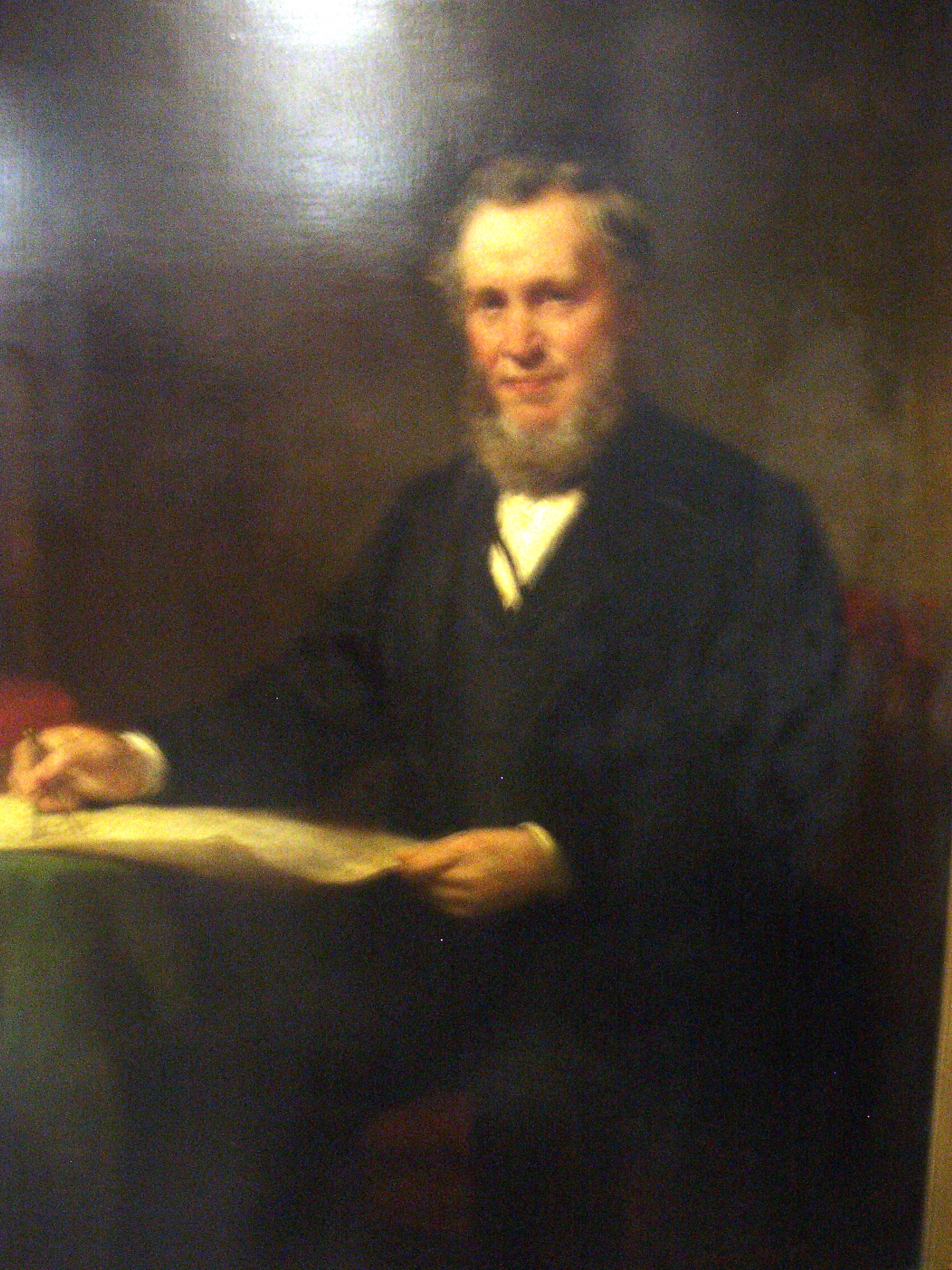
Ellen Carrick (or Helen or Nellie) was born on 11 August 1857 at Dundonald, Ayrshire to John Carrick and his wife Jane Stewart.(2) She was the youngest of 7 children.(3.) _There is little to learn about her early life which is not covered by her father’s history.Until his death she lived at home. In his Will she inherited the contents of the family home at 5 Park Quadrant and the rents of the properties at number 5 and number6 foras long as she was unmarried. (4 ) She did not marry and during her life time she moved to England and can be found at different addresses sometimes living with relatives. In the 1911 census she is at the home of her sister, Jane Thomson, at North Gate, Regents Park, London.(5 ) In 1918, she donated some of her father’s effects to Glasgow museums from an address in Hasselmere,Surrey.(6 ) In 1920 she is living at 10 Promenade Terrace in Harrogate from where she donated Sir Daniel MacNee’s painting of her father.(7). Again in 1926 she gave more of her father’s. collection of coins and other objects from an address in Southbourne Rd. Bournemouth.(8 ) She died on the 14 March 1933 in Abbey Road Marylebone.London.(9 ) There is a separate stone in the Necropolis,(10) Glasgow erected by a niece which reads:
For the daughters of John Carrick. Ellen Stewart Carrick and Marion Dunn Carrick,.wife of Thomas Chalmers.
John Carrick, (1819-1890) City Architect
John Carrick was born at Larbert on 6 May 1819 to William and Marion Carrick. His father was a hotel keepe..(11) He lived in Denny as a child. At the age of 12 he entered the office of John Bryce, Architect in Glasgow as an apprentice. (12) When he had served his time, he went into partnership with James Brown and the firm was Brown and Carrick.(13 ) In 1844 he became Superintendent of Streets in Glasgow. In 1854 he was appointed Superintendent of Public Works and then City Architect. (14 ) In 1866 he developed and became responsible for the City Improvement Trust Schemes.(15) In this position he played a large part in the layout and redevelopment of Glasgow which forms much of the city centre as we know it today.
He was involved in the planning of many of the city’s landmarks among these the City Halls, what is now formally known as The Merchant City and the relocation of the Maclellan Arch on Glasgow Green.(16 ) When the foundation stone for the New Municipal Buildings was laid in 1883, he had a prominent position behind the Lord Provost and the City Council in the grand procession which went from Infirmary Square to George Square.(17 )
By 1861(18 ) he is living at 5 Park Quadrant in the Park District and ,from his will, (19 )we know that he owned one other house there at number 6. In 1871(20 ) he was living at Arran View in Prestwick.
He died in 1890 (21 ) and is buried in the Necropolis in Glasgow with his father and mother. (22) His gravestone reads:
In memory of MARION DUNN wife of William Carrick died September27 1843 aged 45 years WILLIAM CARRICK died April6 1853 aged 56 years JANE STEWART wife of John Carrick born December 5 1817 died November 6 1836 JOHN CARRICK born May 6 1812 died May 20 1890 for forty six years City Architect and Master of Works of this city SAMUEL CARRICK second son of John Carrick born September 30 1848 died June 17 1893
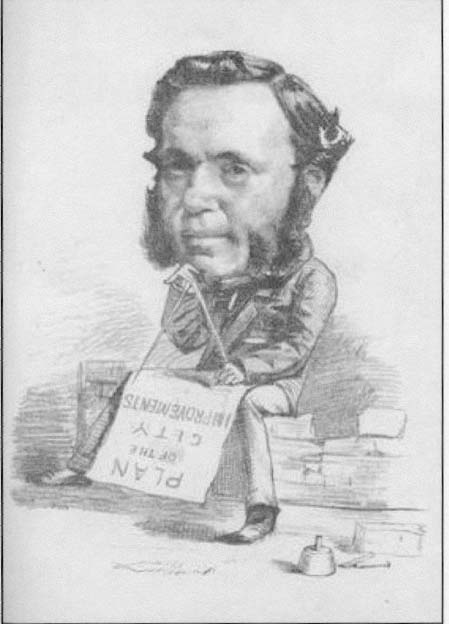
.As befits a man who by the nature of his profession shaped the character and geography of Glasgow and particularly that of the Merchant City there are many sources relating to his achievements. Preeminent among these are articles in The Dictionary of Scottish Architects.,(23 ) and in Glasgow City of Sculpture (24)which within a detailed account of his life list all of the buildings in which he had an interest. Articles in The Merchant City Trail (25 ) and the Bailie (26 ) all Fserve to underline his importance as a Glasgow citizen and are useful for further reading.
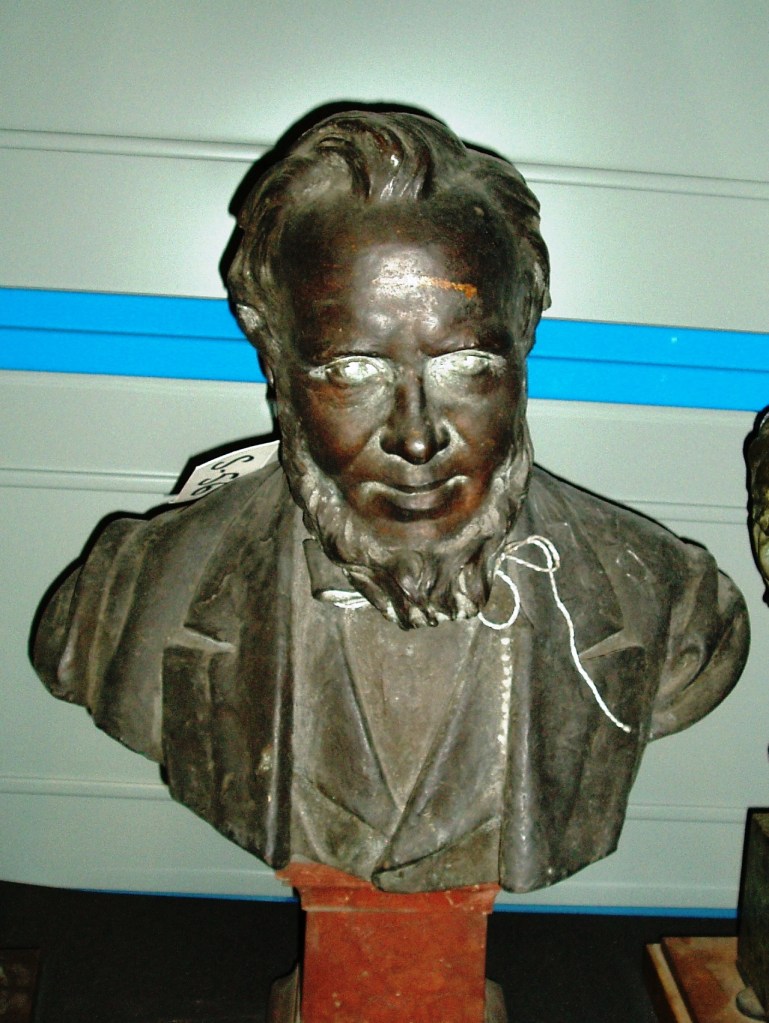
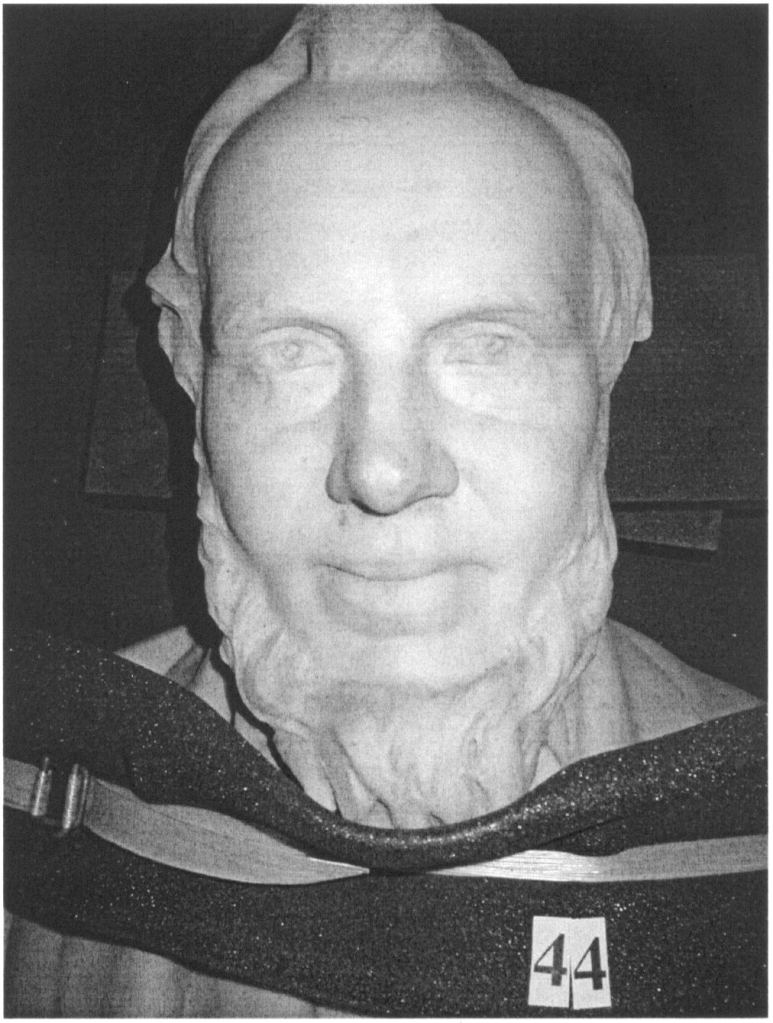
Glasgow Museums holds a bronze sculpture and a marble bust by Pittendreigh McGillivray. (27 ) He is also portrayed in the painting of Queen Victoria’s visit to the 1888 Exhibition by John Lavery. (28)
References
- Glasgow City council
- National Records of Scotland Statutory Births 1857
- National Records of Scotland census 1861
- National Records of Scotland Wills and Testaments 1890
- 1911 England census accessed via Ancestry.co.uk
- Archives of Glasgow Museums
- Minutes of Glasgow city council 1920
- Archives of Glasgow Museums
- England and Wales Death Index accessed through Ancestry .co.uk
- Records of The Necropolis Glasgow
- National Records of Scotland Statutory Births 1819
- Dictionary of Scottish architects accessed via their website
- Ibid
- The Bailie Mitchell Library Glasgow ref,92004BAI
- Dictionary of Scottish architects accessed via their website
- Ibid
- New Municipal Buildings Glasgow
- National Records of Scotland census 1861
- National Records of Scotland Wills and Testaments 1890
- National Records of Scotland census 1871
- National Records of Scotland Statutory Deaths 1890
- Records of the Necropolis Glasgow
- Dictionary of Scottish Architects accessed via their website
- www.glasgowsculpture.com
- www.glasgowmerchantcity.net/trail.htm
- The Bailie Mitchell Library Glasgow ref,92004BAI
- Collections of Glasgow Museums
- ibid

 Glasgow Museums Art Donors Group