‘The Lord Provost intimated that Robert Hannah, Esq., of 82 Addison Road, Kensington, London, had, through his friend, David Ritchie, Esq., of Messrs. Buchanan, Wilson and Co., Limited, Glasgow, intimated his desire to present to the Corporation, to be placed in the New Art Galleries, Kelvingrove Park, the free gift of a picture entitled “The Countess of Nithsdale Petitioning George I on Behalf of her Husband who was under sentence of death for rebellion” painted by the donor, and which had been exhibited at the Royal Academy in 1854. The Lord Provost moved that, in accepting this picture, the Corporation express their high appreciation of the valuable gift and accord the donor a cordial vote of thanks therefor. The motion was unanimously agreed to.’ 1
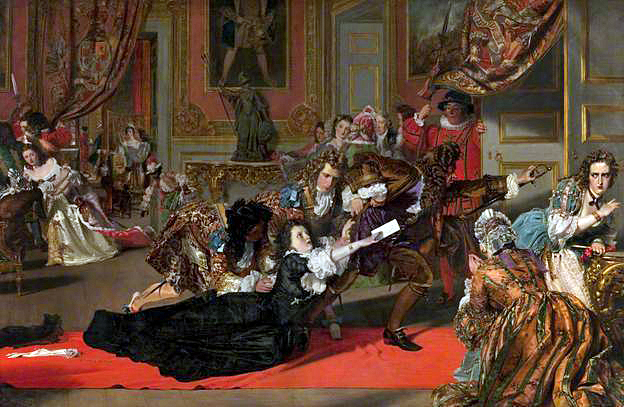
Fig. 1 The Countess of Nithsdale Petitioning George I on Behalf of her Husband
© CSG GIC Glasgow Museums Collection/ArtUK (Accession Number1177)
This painting depicts; ‘The interior of a room in Windsor Castle (in 1716). In the centre is George I making for the door and dragging (Winifred) Lady Nithsdale, who grasps his coat, along the floor. Two courtiers endeavour to release the King from her hold. On the right, kneeling, is Mrs Morgan a friend of Lady Nithsdale, and to the left, seated, are Lady Nairn and the Duchess of Montrose. Various groups of lords and ladies-in-waiting etc. are about the room.” 2
(The King turned down her petition but Lady Nithsdale (1680 – 1749) was successful in rescuing her husband from the Tower of London by dressing him as a woman. The couple then escaped to France).
According to the Parish Register, Robert Hannah was christened on 2 July 1812 at Kirkmabreck near Creetown, Kirkcudbright. (Most references state that he was born on 3July in Creetown). He was the fifth of eight children born to John Hannah, a builder and artisan, and Janet Brait. 3 (The family name was originally Hannay but Robert`s father preferred the palindromic symmetry of Hannah). Janet Brait`s father had been a farmer in Chapleton but died relatively young. It was said that his three daughters were ‘remarkable for their personal attractions.’ 4
Very little is known about Robert`s early life but it may be that, like his eldest brother John, he spent his youth with his mother`s relatives in Chapleton. 5 It was said that John left home at an early age ‘to avoid the possibility of becoming burdensome to his parents.’ Perhaps a similar sentiment influenced Robert`s decision to leave home early. He studied first in Liverpool and then at the Royal Society of Arts Schools in London. He also spent some time in Rome and by 1842 was exhibiting his paintings at the Royal Academy (RA) in London. His address at this time was Shubbery House, Brompton Road, London.6 In all he exhibited 22 works at the RA between 1842 and 1870.7 Two of his paintings – The Novel and The Play – which were exhibited at the RA in 1852 – were bought by Charles Dickens.
Two small oil paintings (10 inches x 7.2 inches) of Dickens giving a public reading are in the Charles Dickens Museum in London. These were made from memory by Hannah the morning after he had been present at one of Dickens` readings. The paintings were given to Georgina Hogarth, Dickens` sister-in-law, by Hannah in January 1904. They were gifted to the museum in 1941 by Comte Alain de Suzannet.8 One of these paintings was exhibited at the 34th Annual ‘Dickens on the Strand’ festival in Galveston, Texas in December 2007 9.
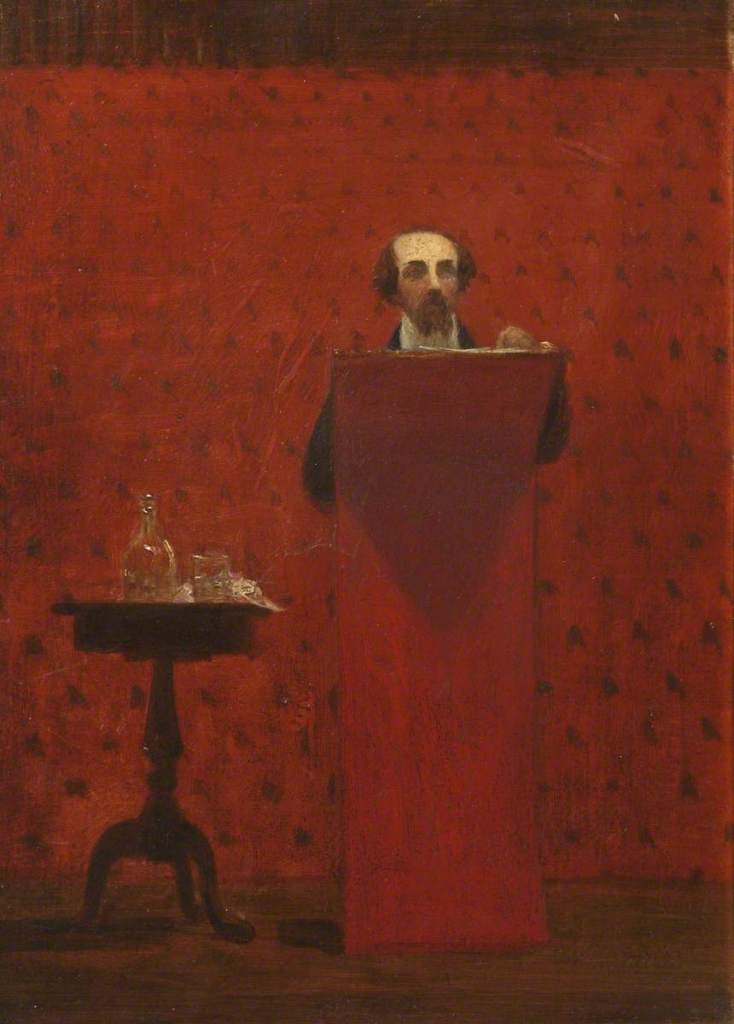
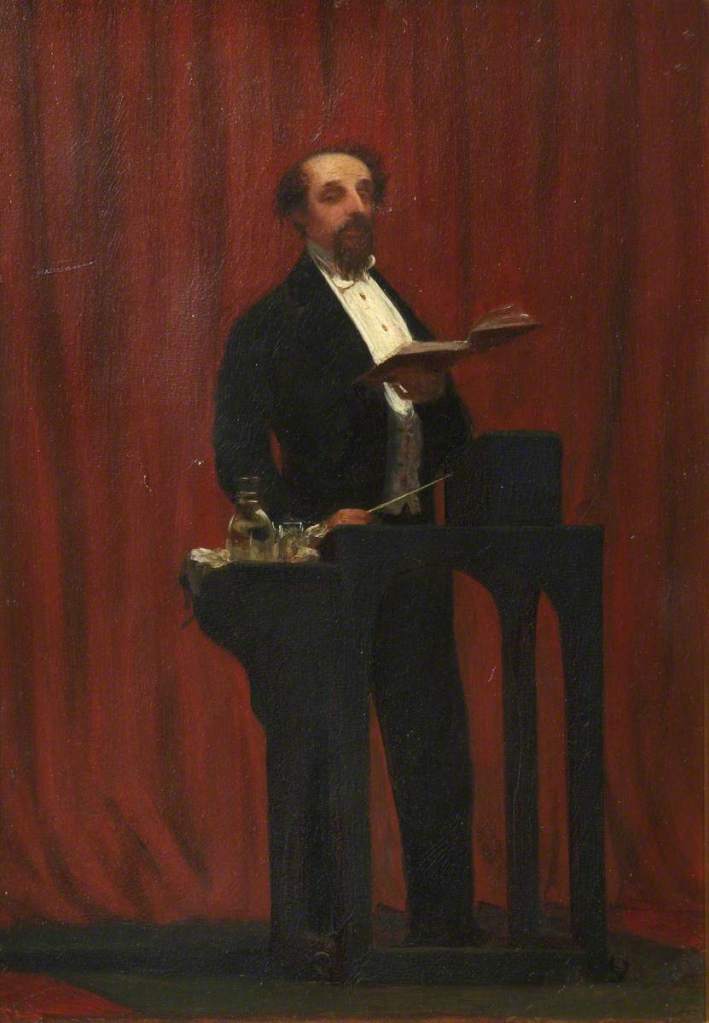
Figs. 2 and 3 Charles Dickens giving a public reading
Charles Dickens’ Museum, London/ArtUK
https://creativecommons.org/licenses/by-nc-sa/4.0/
In 1845 Robert Hannah married Emma Cordy Baxter in Kensington, London. 10 She was born in St. Pancras on 26 June 1820.11 In 1851, the two were living at 2 Alfred Place West, Kensington. His occupation was ‘artist and painter’ and he employed two servants. 12
In 1851, Robert`s eldest brother John (b. 1802) was living in Burton-on-Trent with his sister Agnes. He was a widower with three young daughters and a son. John was a ‘cheese factor’. 13 He was also a part-time poet; a volume of his poetry was published posthumously. 14 John Hannah died in 1854 and Robert and Emma, who had no children of their own, took over the task of raising John`s three girls; Janet Sarah, born 1837, Gertrude, born 1841 and Bessie (Elizabeth?), born 20 August 1842. They afterwards became the subject of many of Robert’s paintings.15
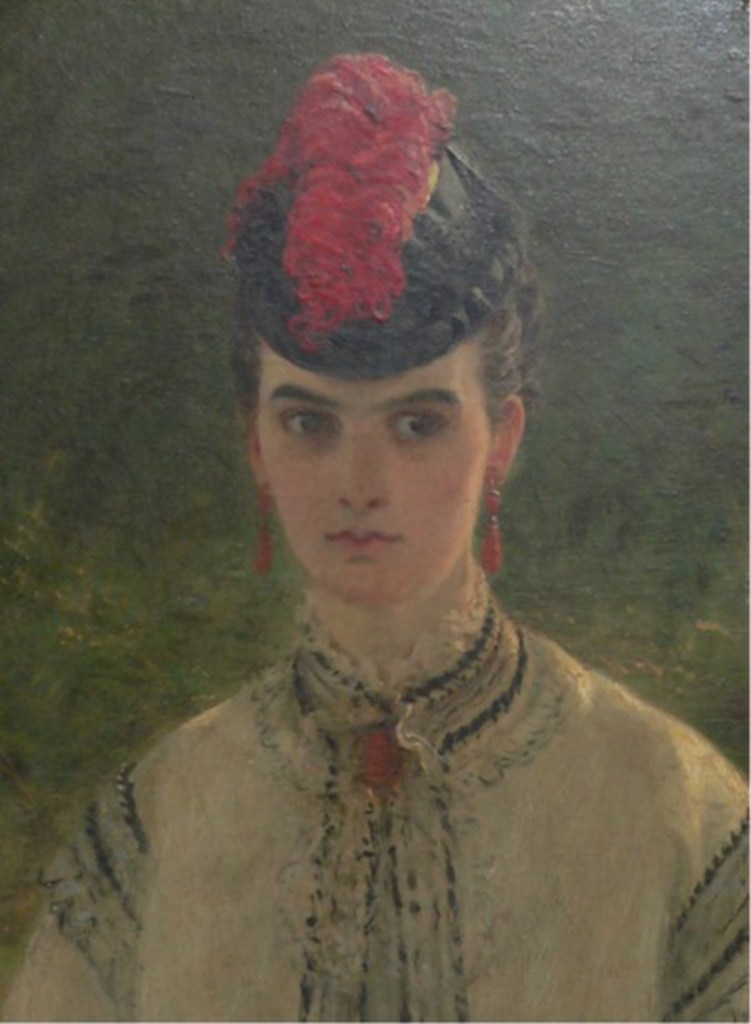
Fig. 4 Portrait of Bessie Hannah painted by
her uncle and given to her as a
wedding gift.
In the 1861 census Robert Hannah (listed as Hannay) was a ‘bond fund holder and proprietor of houses.’ Bessie aged 17 was still living with Robert and Emma while Gertrude had found employment as a governess at Eton. In 1863, the Glasgow Institute of the Fine Arts held an Exhibition of Works by Living Artists. Robert Hannah whose address was 2 Alfred Place West, Old Brompton, London, exhibited two works: Sisters of Charity (no price given) and A Birthday Present priced at £105.00.16 Both pictures had been exhibited at the RA in London the previous year.
By 1871 Robert and Emma had moved to 153 Upper Church Street, Chelsea. From the census, Robert was living on ‘income from houses and dividends’. Emma and his niece Janet were with him. It seems that he was now part of the thriving artistic community in Chelsea and was a friend of William Holman Hunt.
In 1870 Birnie Philip moved his workshop to a villa in Manresa Road, and artists were also starting to move into Upper Church Street: Robert Hannah, the Scots historical painter, made large additions to (the house at) number 153. He was still at the same address in 1881.
In the 1890s several artists moved into Upper Church Street. Number 123 on the corner of Elm Park Road was built in 1894 for Felix Moscheles, and by 1901 the Chelsea Arts Club had moved into two old villas at numbers 143-5. Evelyn and William de Morgan moved to numbers 125-7 (8-9 Bolton Place) Upper Church Street, where two terraced houses were adapted for them in 1909-10. Augustus John occupied Robert Hannah’s house at number 153, until he moved to Mallord Street. 17
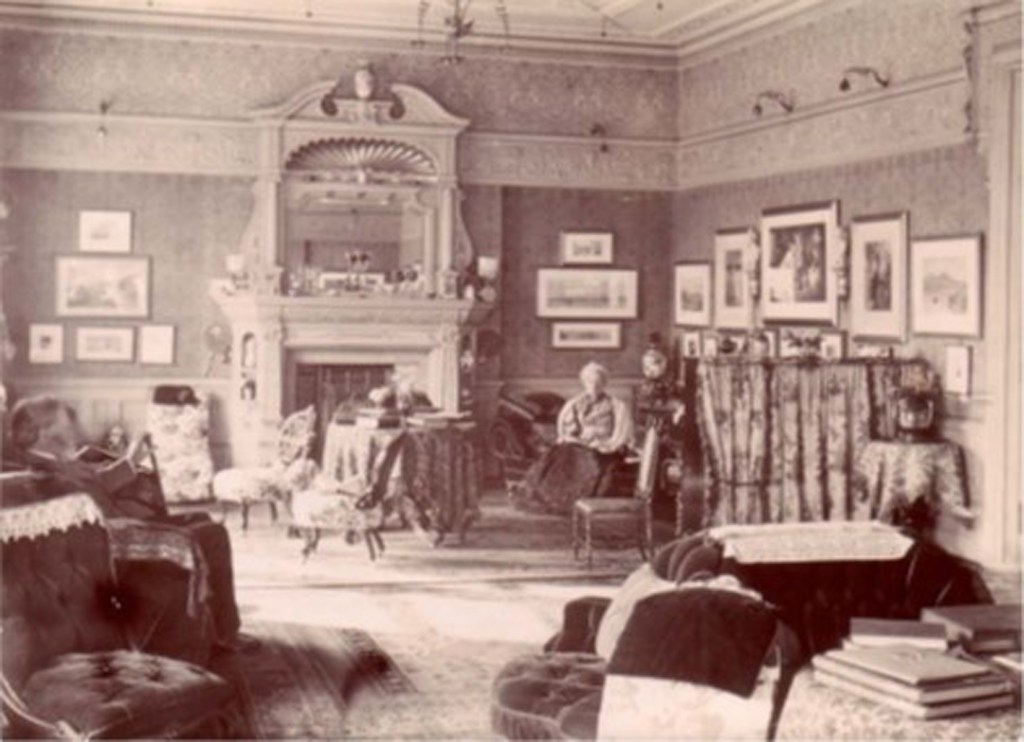
Fig. 5 Robert and Emma Hannah in their London Home.
By this time (1891) Robert and Emma had moved to 82 Addison Road, Kensington. In the census of that year, Robert is described as ‘living on his own means’ and employing two housemaids, a cook and a footman. He was still at the same address in 1901, aged 88 and an ‘artist and painter’. He had four servants.
Emma Hannah died at home the following year aged 82. Robert Hannah died in Kensington on 5 April 1909 aged 97 after a long illness. 18
It may be that Robert Hannah made more from his property dealings than from his paintings. He does not rate a mention in the Dictionary of National Biography.
Among his listed paintings are:
Astronomy in the Castle Douglas Art Gallery, Stewartry Collection 19.
Confidence (1844).
Refreshing the Weary (1847) which was bequeathed anonymously to York Art Gallery in 1970 20.
William Harvey Demonstrating the Circulation of Blood to Charles I (1848).
(A wood engraving of this painting was published in the Illustrated London News, in 1851 and was also reproduced in Nuland, Medicine: The Art of Healing, 1992).
Master Isaac Newton in his Garden, (1856)
Portrait of the Artist, J. C. Hook, A.R.A. (1859).
Eton College from the Thames, In the Victoria and Albert Museum, London. (Dixon Bequest)
Honeymoon (This painting was sold in London on 5 November 1997, for £4,485) 21.
Robert Hannah was described as a painter of portraits, genre scenes, landscapes and historical subjects with a style similar to that of the Faeds. 22
References
- Minutes of the Corporation of Glasgow, 22 February 1906, C1/3/34 page 876, Mitchell Library, Glasgow
- Glasgow Art Galleries Catalogue, 1935.
- Parish Registers, Family Search, familysearch.org
- John Hannah of Creetown, Poet’ http://www.kirkcudbright.co/historyarticle.asp?ID=296&p=5&g=4
- ibid
- McEwan, Peter J. M., Dictionary of Scottish Art and Architecture, Antique Collectors Club 1994
- Parkinson, R., Victoria and Albert Museum, Catalogue of British Oil Paintings 1820-1860, London: HMSO, 1990, p. 117
- Dexter, Walter, The Dickensian, June 1941. (From Michael Slater, Emeritus Professor of Victorian Literature, Birkbeck, University of London – by e-mail).
- molly.dannenmaier@galvestonhistory.org
- England and Wales Marriage Registration Index, 1837-2005, database, FamilySearch (https://familysearch.org/
- England Births and Christenings, 1538-1975, database, FamilySearch (https://familysearch.org/
- ancestry.co.uk, Census 1851, England
- ibid
- Hannah, John, Posthumous Rhymes 1854, Samuel Wilton Rix. http://www.kirkcudbright.co/historyarticle.asp?ID=296&p=5&g=4
- My Ancestry; http://www.feeshowell.com/…/Microsoft%20Word%20-%20Ch1%20-…
- Exhibition Catalogue, Mitchell Library, Glasgow
- ‘Settlement and building: Artists and Chelsea’, A History of the County of Middlesex: Volume 12: Chelsea (2004), pp. 102-106. http://www.britishhistory.ac.uk/report.aspx?compid=28699. Date accessed: 07 July 2012.
- Parkinson, R., Victoria and Albert Museum, Catalogue of British Oil Paintings 1820-1860, London: HMSO, 1990, p. 117
- www.artistsfootsteps.co.uk
- ibid
- Benezit, Dictionary of Artists. Paris, 2006
- ibid

 Glasgow Museums Art Donors Group