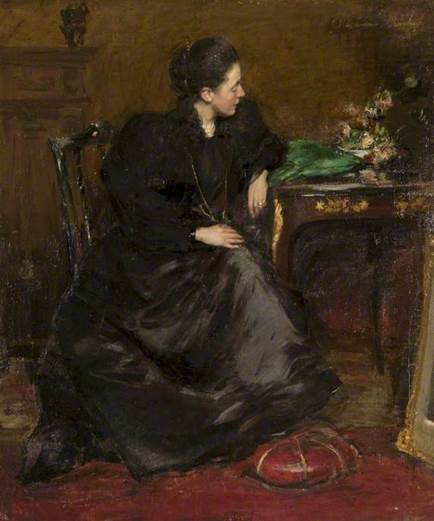
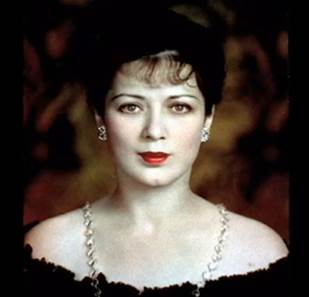
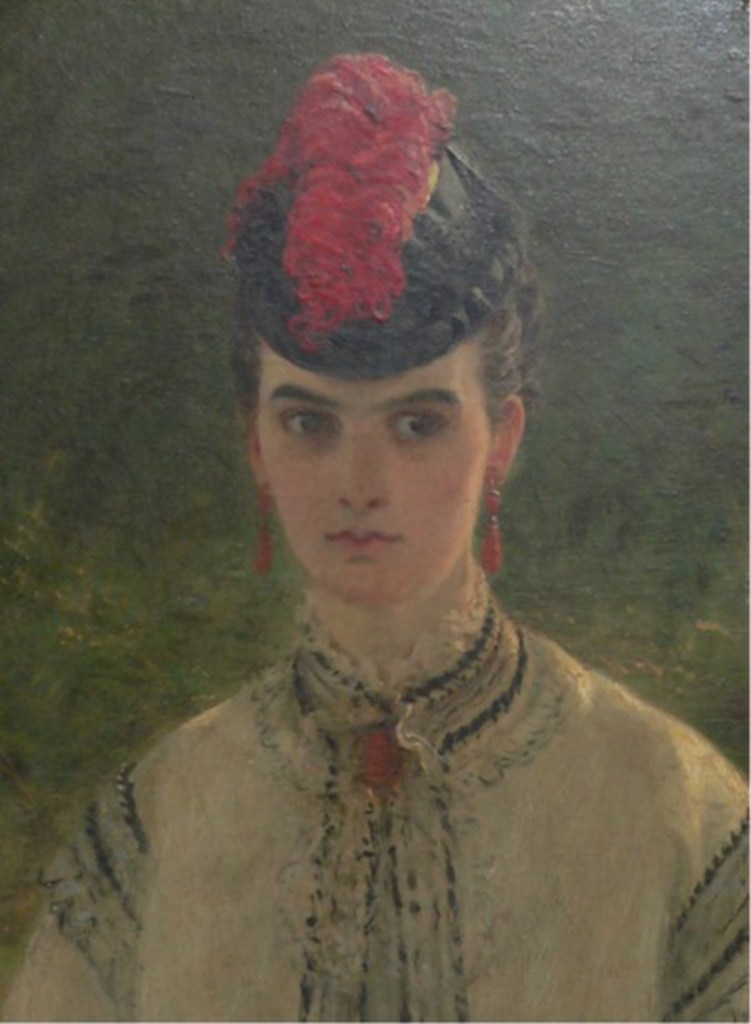
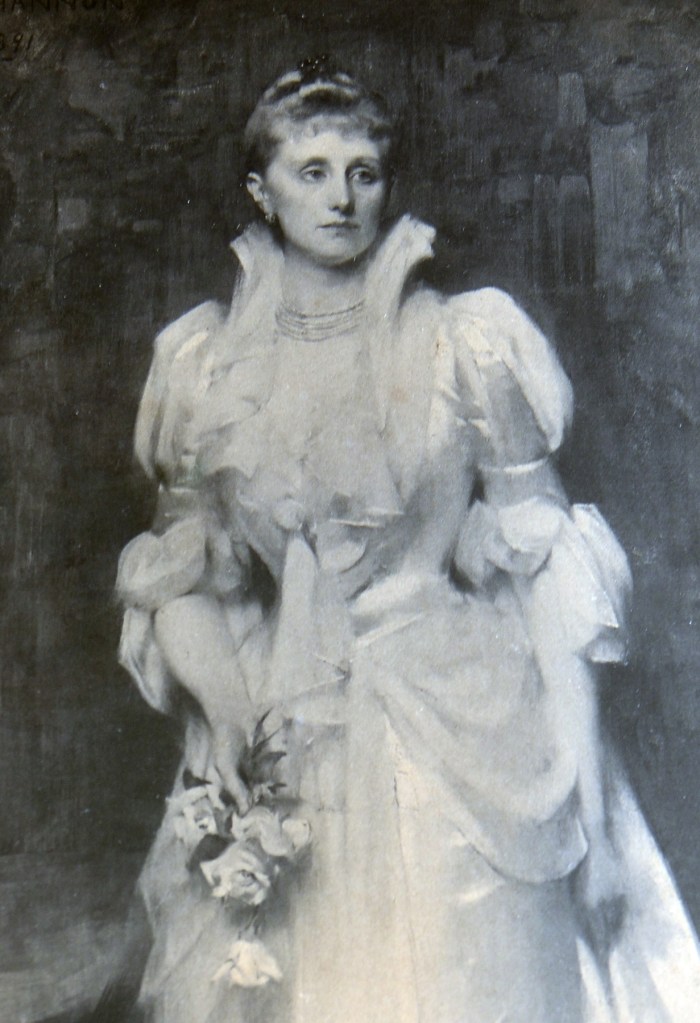
In 1953, Lady Florence Willert gifted a portrait of her mother, Lady Simpson by Valentine Cameron Prinsep to Glasgow. Accession Number 2997.
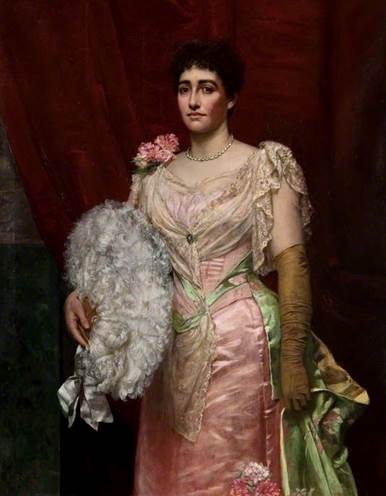
Fig. 1 Lady Simpson (nee Anne Fitzgerald MacKay) (1892)
Valentine Cameron Prinsep (1838-1904)
(© CSG GIC Glasgow Museums/ ArtUK)
Lady Simpson
On 7 November 1854, Alexander MacKay married Isabella Thomson in Wick, Caithness. 1 The family moved to Thurso where a daughter, Rose-Ann MacKay was born on 31 August 1856 in Durness Street. 2 From the census taken in 1861, the family had moved to 9 Dempster Street in Pulteneytown, Wick. Alexander, aged fifty-five, was a mason born in Rogart, Sutherland while Isabella, thirty-six, had been born in Eday, Orkney. The couple had two daughters, Isabella aged eleven (perhaps from a previous marriage?) born in Avie, Orkney and Rose-Ann aged four. 3 Ten years later Roseanna (sic) and her parents were still at 9 Dempster Street, but Isabella was not. 4 The family later moved to Kintore, Aberdeenshire where Alexander is listed as tenant/occupier of Kintore House from 1877-1880. 5
Rose-Ann MacKay, (now styled Ann Fitzgerald MacKay) married Sir Walter Grindlay Simpson of 5 Randolf Cliff, Edinburgh on 13 January 1881 in the Manse at Banchory Devenick, Kincardinshire. Walter was thirty-seven and an advocate. Ann was twenty-four living at Kintore, Aberdeenshire. On the marriage certificate, Ann’s parents are Alexander MacKay, architect, deceased and Isabella Catherine Thomson. 6
(According to the 1911 census for England, Ann Simpson (nee MacKay) was born in Thurso about 1857. The only birth listed on Scotland’s People for that date is that of Rose-Ann MacKay born to Alexander MacKay and Isabella Thomson. There is no record of an Ann Fitzgerald MacKay.)
The best man at the wedding was the groom’s brother, William Simpson. The sole bridesmaid was Evelyn Farquharson, cousin of the bride. Ann’s uncle, Peter Farquharson was a witness. (Evelyn Farquharson was born in Kirkwall, Orkney on 24 August 1843. Her parents were Peter Farquharson and Mary Thomson7 who married in Shapinsay on 18 January 1842 8) After the ceremony the couple left for London and thence to a honeymoon in the south of France. 9
Walter Grindlay Simpson was born on 1 September 1843 in Edinburgh. He was the second son of Sir James Young Simpson (7 June 1811 – 6 May 1870), the eminent physician and pioneer in the use of chloroform as an anaesthetic) and Janet (Jessie) Grindlay. With the death of his father in 1870, Walter became the second baronet. He was a good friend of Robert Louis Stevenson whom he met at the University of Edinburgh and in 1876, the pair undertook a voyage by canoe from Antwerp to Pontoise. This was later documented by Stevenson. 10
Sir Walter and Lady Simpson had four children, James Walter MacKay Simpson (1882 – 1924), Odo Louis MacKay Simpson (1885 – 1917, k.i.a.), Ethel Lucy Florence MacKay Simpson (later Lady Willert) and Beatrix Frances Frederica MacKay Simpson. In 1891 the family was living in Hanover Square, Belgravia, London. 11 This suggests the painting was completed in London the following year when Lady Simpson was thirty-six.
Walter Grindlay Simpson died on 29 May 1898 at his home, Ballabraes, House Ayton, Berwickshire. He was 54. 12 Obituaries mentioned that he was educated at Edinburgh Academy and Caius College, Cambridge where he studied chemistry and anatomy graduating with a BA Hons. in Natural Science. He also rowed stroke for the university. He was called to the Scottish Bar in 1873. 13 He was an enthusiastic golfer and was Captain of the Honourable Company of Edinburgh Golfers. He published an authoritative guide to the game The Art of Golf in 1887. It seems that he purchased Millbank House about 1890 14 and renamed it Balabraes 15
Now widowed, Lady Simpson continued to live at Balabraes House with her two daughters. She and Florence were ‘living on their own means’. 16 Florence married Arthur Willert in 1908 and by 1911 Ann was in residence in Kensington, London with Beatriix and Odo. The census of that year states that she was born in Thurso. 17 During WW1, her son Odo enlisted in the Canadian Expeditionary Force. Ann signed his Attestation Papers 18 Tragically, he was killed in action in 1917. She seems to have retained ownership of Balabraes until about 1920 when it was sold. 19 In 1921, Ann Simpson was living at 14a Westbourne Terrace, Paddington, London. 20 This was the home of her daughter Beatrix and husband Bertram Couly. (They divorced in 1933). She probably attended the wedding of her grandson Paul Willert in 1934. Lady Ann Fitzgerald MacKay Simpson died on 23 October 1941 at 62 St. John Street, Oxford. She was eighty-six. 21
Lady Willert
Florence Ethel Lucy Mackay Simpson (later Lady Willert) was born in Kensington, London in the second quarter of 1882. 22 She was the daughter of Sir Walter Grindlay Simpson, Bt. and Anne Fitzgerald Mackay. Florence was also the granddaughter of Sir James Young Simpson who pioneered the use of chloroform as an anaesthetic.
She must have been a precocious child since when her grandmother, Isabella MacKay, died on 26 January 1896 at Sunnyside, Bridge of Allan, Stirlingshire, the thirteen-year-old Florence was entrusted with reporting the death the following day. 23 She was seventeen when her father died in 1898 at the family home Ballabraes House, Ayton, Berwickshire.24 She was one of the executors of her father’s will. 25 In 1901, Florence was with her widowed mother, both living on their own means, and sister Beatrix F. Simpson aged five at Ballabraes House. 26 (There are two mistakes in the census; Florence was not twenty-five and her mother was not born in England).
On 25 January 1908, Florence married Arthur Willert. 27 The marriage took place in Italy.
In Genoa, at the Archbishop’s Palace, and before H.B.M.’s Consul General, Arthur, son of P. F. Willert Esq., Headington Hill, Oxford, to Florence, elder daughter of the late Sir Walter Grindlay Simpson, Bart. of Balabraes, Ayton, Berwickshire. 28
The following month, on 10 February both Florence and Arthur left Southampton to sail to New York and then on to Washington D.C. 29
After returning from America, Florence gave birth to a son, Paul Odo Willert, on 25 May 1909, in Marylebone, London. 30 On 15 January 1910, Arthur Willert sailed to New York from Liverpool on his own. His last permanent address was that of his parents at Headington Hill, Oxford. He was a journalist. 31
Arthur and Florence again sailed to New York and then to Washington on 7 February 1910 with Florence’s mother, Lady Simpson, listed as their nearest relative in the old country. They remained in Washington at The Dresden Apartments and were there at the time of the census on 28 April 1910. Florence confirmed that her parents were born in Scotland. Arthur’s occupation was ‘journalist’. They were also travelling with a nurse. So, although Paul does not appear on the census, it would appear he was with them. 32
Arthur Willert was The Times‘s chief United States correspondent from 1910 to 1920, with an interruption from 1917 to 1918, when he was Secretary of the British War Mission in Washington and the representative of the Ministry of Information. He formed an extensive network of influential American contacts, which enabled him to supply the British government with valuable information concerning American politics during the First World War and to convey British views to American officials. 33
It seems likely therefore that Florence and Arthur spent the years 1914-1918 in America returning to Britain at the end of the war. On 19 February 1919, Arthur sailed from Liverpool via New York to Washington. Later that year he was in Canada but there is no indication that Florence was with him. 34
Arthur Willert was appointed Knight Commander of the Order of the British Empirein 1919 ‘for valuable services rendered in connection with the war’ and was ‘late secretary of the British War Mission in Washington’. 35
In 1924 Florence was joint author of Told in the Corner Tides with B. Montgomery and E. Paterson. 36 Thereafter she and Arthur appear to have been part of the London social scene. ‘Sir Arthur and Lady Willert (who) lived in Washington for some years’ attended a reception given by the American Women’s Club for the new American Consul-General’. 37 It was also noted that Sir Arthur and Lady Willert and Mr Paul Willert have returned to Cambridge Square from Italy. 38 On 12 November 1925 Lady Willert assisted in the opening of a Grand Bazaar at St. Thomas the Apostle church. 39 In 1927 she sailed to New York with her son Paul who was then a student aged 18. They travelled on ‘Diplomatic Passports’. 40
On 11 June 1934, Paul Willert married the Honourable Brenda Pearson daughter of Viscount Cowdray at St. Mark’s Church, North Audley Street, London. 41
On 20 December 1935 Arthur and Florence sailed from Southampton to New York aboard S.S. New York. He was described as a ‘writer’, she was a ‘housewife’. 42 They remained in Washington over Christmas and the New Year and later visited the White House.
As Eleanor Roosvelt recorded on 4 January 1936,
Sir Arthur and Lady Willert, who spent many years in Washington when he was correspondent for the London Times, were also staying with us. He has since served many years in the Foreign Office in London. There were many to greet them warmly on their reappearance even here where people are quickly forgotten because they change so often. 43
and on 16 March 1936,
This morning, I said goodbye to Lady Willert who is sailing for England, and now I am on the train on my way back to Washington. 44
Arthur and Florence again spent the following Christmas and New Year in Washington having sailed from Southampton on 23 December 1936, aboard S.S. New York. Both were described as ‘writers’. Florence was 57yrs 10mo, Arthur 54yrs 4mo. 45 The following year on 24 February they had dinner at The White House and were also houseguests of President Roosevelt. 46
Eleanor Roosevelt again recorded on 1 March 1937 that
Lady Willert, Miss Fannie Hurst, Mrs. Leach and I had a grand evening of talk.
One of the items discussed appears to have been the White House meals which the President had complained were too ‘routine’. Mrs. Roosevelt revealed that she had given the President a ‘New Deal’ and that the new menus would include several items suggested by Lady Willert. 47
On 4 November 1942, Mrs. Roosevelt recorded,
I was in London. During the day I saw my old friends, Sir Arthur and Lady Willert and their granddaughter (born in 1936) who is my godchild.
From 1939 to 1945, Sir Arthur Willert oversaw the regional work at the Ministry of Information. At a leaving ceremony in 1945 he was presented with an engraved silver tankard, and Lady Willert received a bouquet of flowers. 48
In 1948, Lady Willert and her sister Mrs. Beatrice Long gifted some documents related to the early use of chloroform as an anaesthetic to the University of Edinburgh. These included a letter from Sir William Lawrence to Sir James Young Simpson reporting the first use of chloroform in St. Bartholomew’s Hospital in 1847. 49
Two years after she donated the painting of her mother, Dame Ethel Lucy Florence Mackay Willert died on 3 April 1955. Her address at the time was 12 Sloane Terrace Mansions, Chelsea, London. Arthur Willert died aged ninety in 1973. His papers were bequeathed to Yale University. Among them are his own letters to and from his wife and also correspondence of Florence’s e.g. to and from Winston Churchill in 1917 and to/from Eleanor Roosevelt at various times between 1932 and 1955.
References
- Scotland Marriages 1561-1910, FamilySearch
- Scotland’s People, Birth Certificate
- Scotland’s People, Census 1861
- Scotland’s People, Census 1871
- Scotland’s People, Valuation Roll, Kintore, Aberdeenshire
- Scotland’s People, Marriage Certificate
- Scotland Births and Baptisms, 1564-1950, FamilySearch
- Scotland’ People, Old Parish Registers
- Home News for India, China and the Colonies, London, 4 February 1881. (Contains a full description of the wedding).
- An Inland Voyage, Stevenson, Robert Louis, C. Kegan Paul and Co. 1878
- ancestry.co.uk, England Census, 1891
- Dundee Evening Telegraph 1 June 1898
- Edinburgh Evening News 30 May 1898
- Scotland’s People, Valuation Roll, Berwickshire 1890
- Dundee Evening Telegraph 31 May 1898
- Scotland’s People, Census 1901
- ancestry.co.uk, England Census, 1911
- ancestry.com, Canada CEF Attestation Papers
- Scotland’s People, Valuation Roll, Berwickshire 1920.
- ancestry.co.uk, England Census, 1921
- Berwick Advertiser, 30 October 1941
- England and Wales, Birth Registration Index, 1837-2008, FamilySearch
- Scotland’s People, Death Certificate
- Ibid
- Morning Post, 7 June 1898
- Scotland’s People, Census 1901
- ancestry.com. North America, Family Histories, 1500-2000 [database on-line]
- Illustrated Berwick Journal, 6 February 1908
- Passenger and Crew Lists of Vessels arriving at New York, 1897-1957, FamilySearch
- England and Wales, Birth Registration Index, 1837-2008, FamilySearch
- Passenger and Crew Lists of Vessels arriving at New York, 1897-1957, FamilySearch
- United States Census 1910 FamilySearch.
- Wikipedia
- United States Border Crossings from Canada to US 1895-1956, FamilySearch
- Gloucester Journal, 11 January 1919
- Ashbourne Telegraph 27 June 1924
- London Evening News, 30 October 1924
- Westminster Gazette, 29 September 1924
- West London Observer, 6 November 1925
- New York Passenger and Crew Lists, 1909, 1925-1958, FamilySearch
- London Daily News, 12 June 1934
- New York Passenger and Crew Lists, 1909, 1925-1958, FamilySearch
- The Eleanor Roosevelt Papers Digital Edition (2018)
- Ibid
- Passenger and Crew Lists of Vessels arriving at New York, 1897-1957, FamilySearch
- The Eleanor Roosevelt Papers Digital Edition (2018)
- Daily Express, 2 March 1937
- Reading Standard, 3 August 1945
- The Scotsman, 28 January 1948
 Glasgow Museums Art Donors Group