George Edgar Campbell (1899 – 1976)

On 16 October 1950 an oil painting Mimosa (2863) by F. J. Conway was donated to Glasgow Corporation by Mr George Campbell, per Dr. Honeyman. 1

Figure 1. Mimosa © CSG GIC Glasgow Museums Collection. (http://www.artuk.org)

In 1952, the same donor gave a second painting, Amintas Revived by Sylvia (2959), by François Boucher, (after). 2

Figure 2. Amintas Revived by Sylvia © CSG GIC Glasgow Museums Collection. (http://www.artuk.org)

This painting has labels on the reverse, ‘19219’; ‘Pictures with Care Dr T. J. Honeyman Glasgow’; ‘G E Campbell’ ‘no. 2/’; ‘5GA’; ‘6013-2’S’. At one time it was in the possession of Asher Ezra Wertheimer a London art dealer. It was sold at Christie’s, London in 1923. 3

                Also in 1952, a companion piece to the above was purchased from George Campbell by Glasgow Corporation. This is Sylvia Saved by Amintas also by François Boucher  (after) (2958)

Figure 3.  Sylvia Saved by Amintas © CSG GIC Glasgow Museums Collection. (http://www.artuk.org).

            The artist F. J. Conway (Ferdinand Joseph Conway) 4 was born on 19 January 1888 in Paddington, London. 5 He was the son of the British art dealer Asher Ezra Wertheimer and his wife Flora. Asher had inherited premises in London from his father Samson. Ferdinand  and his older brother changed their name to Conway ‘perhaps to avoid anti-German sentiment during the First World War’. 6 He became known as Bob Conway, artist, and writer. John Singer Sargent was commissioned by Asher to paint twelve portraits of his family between 1898 and 1908. Nine of these portraits are now in the Tate Britain Gallery in London.

Figure 4, Essie, Ruby, and Ferdinand, Children of Asher and Mrs Wertheimer,John Singer Sargent, 1902. © Tate Gallery. (http://www.artuk.org)

When Conway died on 1 April 1950, he left his house, Tarras, Crawley Drive, Camberley, ten thousand pounds, ‘and all my personal chattels’ to his friend George Edgar Campbell. He also instructed his trustees to pay George Edgar Campbell during his lifetime, the income from his estate. 7 Although not specifically mentioned in his will, it is likely that the two donated paintings were among his ‘personal chattels’ since Conway and Campbell shared the same house for many years.

            George Edgar Campbell was born on 9 December 1899 in Liverpool. 8 His parents, Thomas Campbell and Margaret Farrell were Scottish. He was christened at Edge Hill on 10 January 1900. 9 In 1911 he was living at 85 White Rock Street, Liverpool, the youngest of the family of four sisters and four brothers. His eldest brother Thomas Matthew Campbell aged 33, a railway van man, was head of the family his mother having been widowed. An uncle, Robert Edmond Farrell was also living with them. 10

            On 20 August 1917, George, aged seventeen, joined the White Star Line shipping company as a steward and sailed to New York aboard the RMS Adriatic. He is described on the ship’s manifest as ‘Scotch’. 11 The following year from 1 to 25 June he served as an ordinary seaman in the Royal Navy Volunteer Reserve (RNVR) on HMS Vivid 3 based at Devonport. From 26 June to 20 October, he was based at HMS Victory 6. Like H.M..S Vivid, this was a land-based establishment and not an actual ship. (At this time, Crystal Palace was used as a Royal Navy training establishment and was given the name HMS Victory 6). He returned to HMS Vivid on 21 October 1918 and remained there until discharged with a disability on 6 February 1919 and was paid a war gratuity.12 The RNVR records describe him as being 5’10”, 38” chest with light brown hair, grey eyes and a fair complexion. His character was VG and his ability Satisfactory.

            After his war service, George enrolled in the Regent Street Polytechnic to study sculpture. After five years he passed the exams of the Royal College of Art and won the Whitechapel Prize for sculpture. On completing his studies, he travelled in Italy, Switzerland and the USA and lived for a time in France. 13 He continued to sculpt and between 1934 and 1937 he completed at least three works, Virginia (1935), Helen (1936) and A Youth (1937) which were shown at the Royal Scottish Academy (RSA) of Painting, Sculpture and Architecture exhibitions between 1935 and 1937. His address at that time was 26 Holland Villas Road, London, W14. Between 1934 and 1966 he exhibited one or two works per year (twenty-two times in all) at the Royal Academy of Arts summer exhibitions. 14

            ‘Bob’ Conway commissioned a house to be built at 32 Newton Road, Paddington from the architect Denys (later Sir Denys) Lasdun. The house was completed in 1938 and was occupied by Conway and Campbell till at least 1943.15

Figure 5. The house at 32 Newton Road, Paddington, London. © Copyright Jim Osley, licensed for reuse under the Creative Commons  Licence.

The house was bought in the 1950s by the cartoonist Ronald Searle and his wife Kaye Webb. It was remarked that the house was,

‘built for a pair of bachelor artists, (unknown artistically, but extremely wealthy) it was topped by a splendid studio favoured by north light, as the estate agents say, and a fine terrace overlooking half of Paddington. As Searle remarked to his friend David Arkell, ‘If one had to overlook half of Paddington, this was the way to do it.’ 16

The Searles found that ‘the cellar was full of stuff left by the previous owners (including several Lucian Freuds, which they returned)’.17

It is not clear that the ‘previous owners’ were Conway and Campbell since in 1943 they were in residence at Tarras, Crawley Drive, Camberley. In that year George Campbell exhibited Archangel Gabriel at the RSA. 18

            George Campbell again saw service in WW2. He was promoted to lieutenant on 23 June 1941 and, as part of the Royal Naval Reserve, was stationed at the shore base HMS Lucifer in Swansea. 19 This was the base for a mine sweeping trawler fleet tasked with ensuring the Bristol Channel was kept free of mines. 20

            When Conway died in 1950, he left an estate valued at £83,690 with George Campbell one of his trustees and main beneficiary, He was buried in St. Peter’s Churchyard, Frimley, Surrey. 21 George Campbell had two nephews and a godson living in Sydney 22 and on 22 November 1951, he travelled first class to Australia aboard the P&O steamship Strathnaver. His London address was now 37 Holland Park Road, W.14. 23
On his return he continued to exhibit at the Royal Academy summer exhibitions, and he also executed a large amount of religious works. He became an Associate Member of the Royal Society of British Sculptors (RSBS) in 1941 and organized Children in Sculpture for the society in 1947. Two years later he served as a Member of Council. He was elected a Fellow of the RSBS in 1951. 24 In the same year, Glasgow Corporation bought one of his sculptures, Torso from the Royal Glasgow Institute of the Fine Arts Exhibition. 25

Figure 6. Torso – Sculpture in Wood by George Edgar Campbell, 1944 (S.265). © CSG GIC Glasgow Museums Collection. (http://www.artuk.org)

George Edgar Campbell died on 11 May 1976 at 71 Marsham Court, Marsham Street, London, SW1. He was seventy-six.26                                              

            On 10 March 2021, a 44.5 inch, bronzed, plaster maquette by Campbell, of Judith at the Well was put up for auction with an estimate of £1500 – £2000. It was unsold. 27

Figure 7. Judith at the Well

References

  1. Catalogue of Donors to Glasgow Museums, Glasgow Museums Resource Centre
  2. Ibid
  3. Toutziari, Dr. Georgia, National Inventory of Continental European Paintings, Culture and Sport Glasgow (Museums): Kelvingrove Museum
  4. Information from his will published 15 June 1950
  5. “Find A Grave Index,” database, FamilySearch (https://www.familysearch.org/ark:/61903/1:1:7JW8-TWZM : 3 August 2020), Wertheimer, ; Burial, Frimley, Surrey Heath Borough, Surrey, England, St. Peter’s Churchyard; citing record ID 197025066, Find a Grave, http://www.findagrave.com.
  6. https://en.wikipedia.org/wiki/Wertheimer_portraits
  7. Information from his will published 15 June 1950
  8. ancestry.co.uk, Royal Naval Reserve Service Records Index, 1860-1955, http://discovery.nationalarchives.gov.uk
  9. FamilySearch.org., England Births and Christenings, 1538-1975
  10. ancestry.co.uk, Census 1911, England
  11. ancestry.co.uk, New York, U.S., Arriving Passenger and Crew Lists (including Castle Garden and Ellis Island), 1820-1957
  12. https//www.forces-war-records.co.uk
  13. Stevenson, Hugh, Catalogue of Sculpture Collections, Glasgow Museums Resource Centre, August 2008
  14. ‘George Edgar Campbell’, Mapping the Practice and Profession of Sculpture in Britain and Ireland 1851-1951, University of Glasgow History of Art and HATII, online database 2011 [http://sculpture.gla.ac.uk/view/person.php?id=msib6_1204564125, accessed 12 Nov 2021]
  15. http://architectuul.com/architecture/house-in-newton-road
  16. Russell Davies in http://ronaldsearle.blogspot.com/
  17. Ibid
  18. ‘George Edgar Campbell’, Mapping the Practice and Profession of Sculpture in Britain and Ireland 1851-1951, University of Glasgow History of Art and HATII, online database 2011 [http://sculpture.gla.ac.uk/view/person.php?id=msib6_1204564125, accessed 12 Nov 2021] This gives George Campbell`s address from 1943
  19. Forces Records, UK Navy List, February 1942.
  20. https://rootschat.com>forum
  21. https://www.findagrave.com/
  22. Information from his will, published 30 July 1976
  23. ancestry.co.uk, UK and Ireland, Outward Passenger Lists, 1890-1960
  24. ‘George Edgar Campbell’, Mapping the Practice and Profession of Sculpture in Britain and Ireland 1851-1951, University of Glasgow History of Art and HATII, online database 2011 [http://sculpture.gla.ac.uk/view/person.php?id=msib6_1204564125, accessed 12 Nov 2021]
  25. Catalogue of Donors to Glasgow Museums, Glasgow Museums Resource Centre
  26. Information from his will, published 30 July 1976
  27. https://auction.gorringes.co.uk/

Jessie Whyte Craig (1856 – 1950)

On 18 November 1950, fifteen oil paintings, three watercolours and one pastel were received by Glasgow corporation having been bequeathed by Miss Jessie Whyte Craig through Messrs. Frame and Macdonald, 5 Fitzroy Pl., Glasgow, C.3. 1 Fourteen of the oil paintings are shown below, the fifteenth has been presumed stolen.

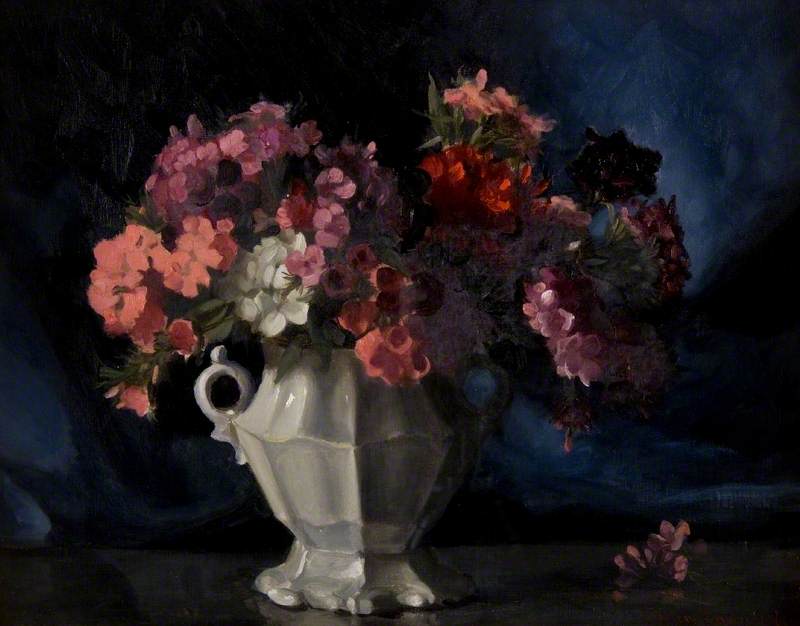
Figure 1. Campbell, Colin Cairns Clinton; Sweet William in a White Vase. © CSG GIC Glasgow Museums Collection.(http://www.artuk.org)
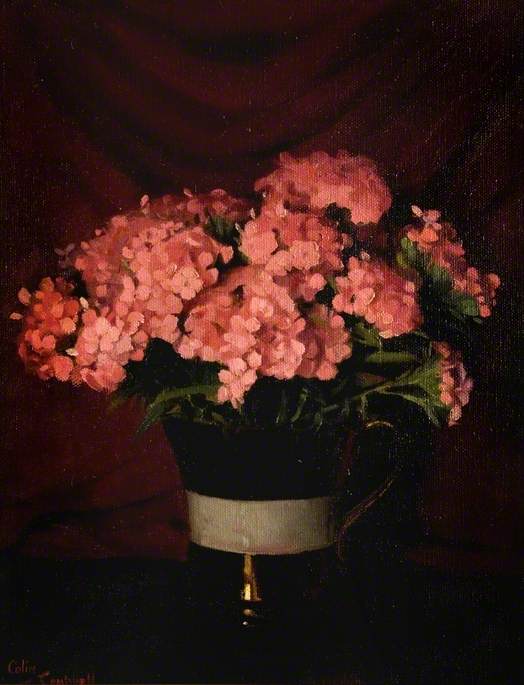
Figure 2. Campbell, Colin Cairns Clinton; Sweet William in a Lustre Jug. © CSG GIC Glasgow Museums Collection.(http://www.artuk.org)
Figure 3. Algie, Jessie; Rambler Roses; © CSG GIC Glasgow Museums Collection.(http://www.artuk.org)
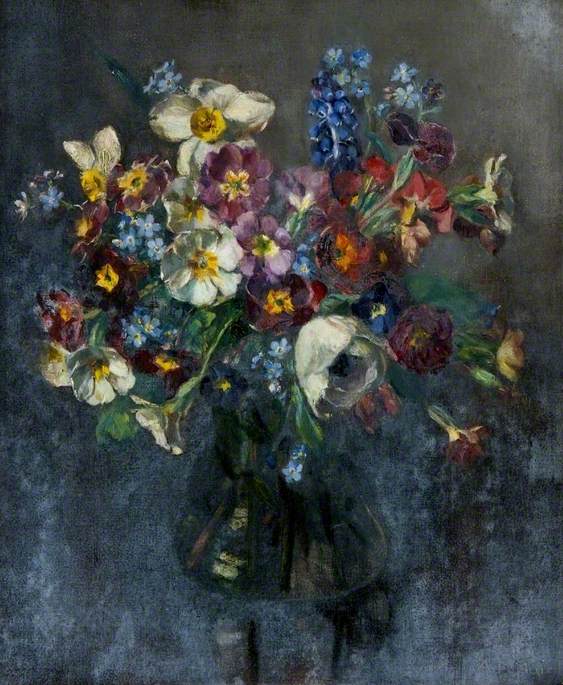
Figure 4. Muir, Anne Davidson; Primulas in a Blue and White Vase. © CSG GIC Glasgow Museums Collection.(http://www.artuk.org)
Figure 5. Muir, Anne Davidson; Spring Bouquet. © CSG GIC Glasgow Museums Collection.(http://www.artuk.org)
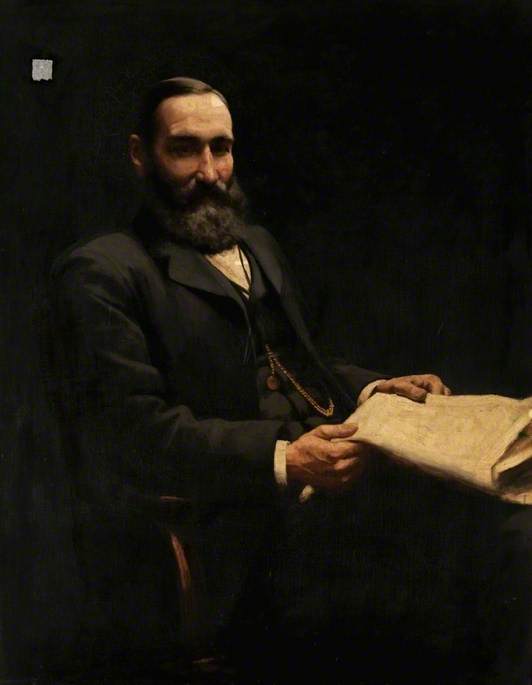
Figure 6. Dobson, Cowan; Old Lady Reading. © CSG GIC Glasgow Museums Collection.(http://www.artuk.org)
Figure 7. Morris, May; Rocky Cove. © CSG GIC Glasgow Museums Collection.(http://www.artuk.org)
Figure 8. Perman, Louisa Ellen; Red and White Roses. © CSG GIC Glasgow Museums Collection.(http://www.artuk.org)
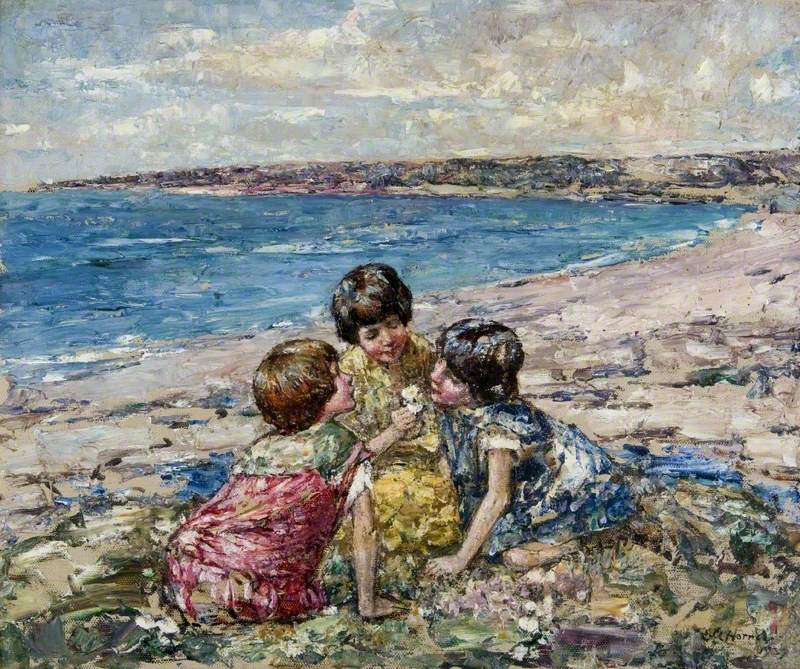
Figure 9. Hornel, Edward Atkinson; Children on the Sands. © CSG GIC Glasgow Museums Collection.(http://www.artuk.org)
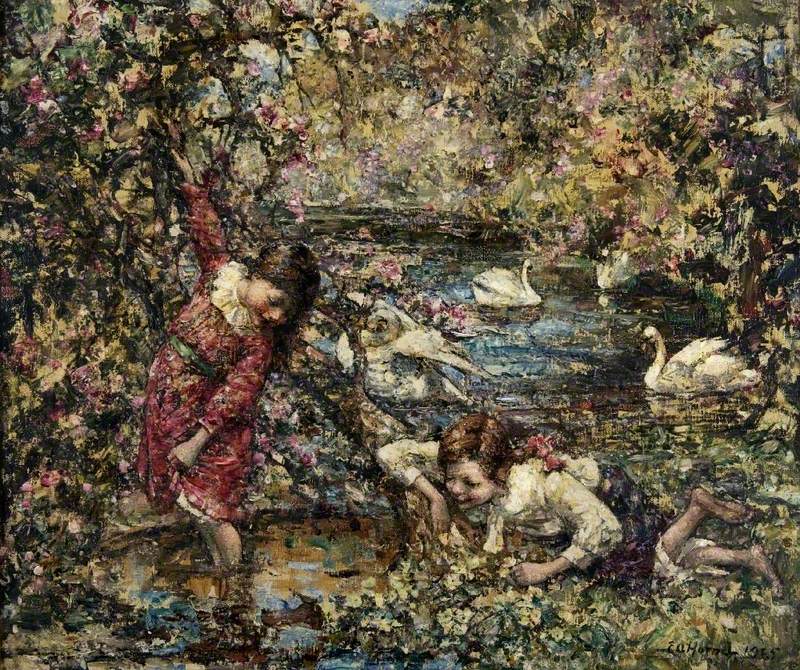
Figure 10. Hornel, Edward Atkinson; Two Girls and Swans at a Pool. © CSG GIC Glasgow Museums Collection.(http://www.artuk.org)
Figure 11. McGhie, John; Rocky Seascape; Glasgow Museums. © CSG GIC Glasgow Museums Collection.(http://www.artuk.org)
Figure 12. Wylie, Kate; Wallflower. © CSG GIC Glasgow Museums Collection.(http://www.artuk.org)
Figure 13. McKinna, Mary E. Tait; Nasturtiums in a Lustre Jug. © CSG GIC Glasgow Museums Collection.(http://www.artuk.org)
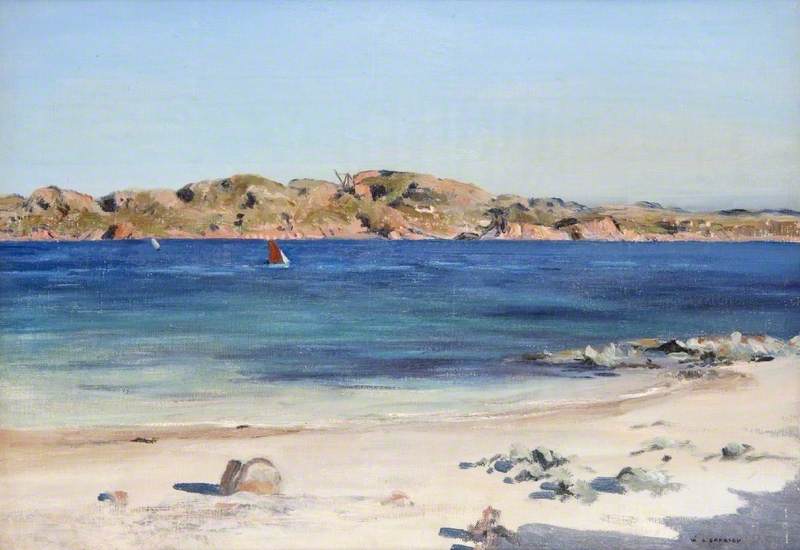
Figure 14. Carrick, William Arthur Laurie; Iona. © CSG GIC Glasgow Museums Collection.(http://www.artuk.org)

The watercolours were ‘By the Sea‘ by Robert Eadie R’S’W., ‘Pink Roses‘ by James G. Lang and ‘Kintello Village‘ by Charles A. Sellar. The pastel is ‘Delphiniums‘ by M. Hamilton.                                                     

Jessie Whyte Craig was born in ‘the village of Bothwell’, on 8 October 1856, the second child of Robert Craig, an accountant, and Agnes Brown.  Robert, Jessie’s older brother was born in Tradeston on 3 February 1855. 2 Jessie’s birth was registered in Bothwell and Glasgow where the family home was at 163 Eglinton Street, Tradeston.3 Her younger brother George was born on 2 February 1861 and her sister Jane on 2 September 1863. 4 In 1861, the family was living at Shields Road Junction Cottage with the four-year-old Jessie ‘an accountant’s daughter’. 5 In the following two years the children became orphaned when first their father died followed by their mother Agnes on 9 April 1865 at 42 Grant Street. She was thirty-three. 6 The children appear to have been taken into the care of their maternal grandparents, George and Janet Brown (both born in 1800) living at 79 Eglinton Street. By 1871, Robert was an apprentice clerk with Jessie, George and Jane, scholars. Also living with them and their grandparents, was their unmarried aunt, Jessie Brown who was twenty-six. 7 By 1881, the family had moved to 109 Eglinton Street with Jessie Brown now the head and housekeeper. Jessie Craig had her occupation listed as ‘milliner’ with her sister Jane aged seventeen, still a scholar. George Craig was an ‘analytical chemist’ living as a lodger at 387 Craigston Square, Auchinleck, Ayrshire.8

  George Craig became a tenant at 9 Hampden Terrace, Cathcart 9 *and by 1901, his two sisters, Jessie, and Jane as well as his aunt Jessie Brown had moved in with him. 10 There is no occupation given for Jessie in the census. Jessie Craig remained domiciled at 9 Hampden Terrace for the rest of her life, living on ‘her own account’. 11 When her brother George died in the early 1930s, Jessie took over the tenancy. 12

            Jessie Whyte Craig died aged 94 at 9 Hampden Terrace on 10 October 1950. Her death was reported by her cousin Jean Craig Renton whose address was in Canford Cliffs in Devon. 13 She was buried in Cathcart Cemetery on 12 October 1950. 14 The following month, Glasgow received the bequest of nineteen pictures.

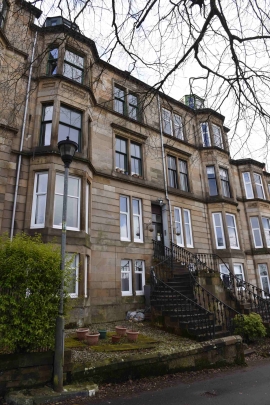
  • 9 Hampden Terrace was probably built about 1880 and consists of three storeys and a basement and large external staircase. It is now category C listed.

References

  1. Glasgow Corporation, list of donors held at Glasgow Museums Resource Centre
  2. Scotland’s People, Birth Certificate
  3. Ibid
  4. Ibid
  5. Scotland’s People, Census 1861
  6. Scotland’s People, Death Certificate
  7. Scotland’s People, Census 1871
  8. Scotland’s People, Census 1881
  9. Scotland’s People, Valuation Roll, Cathcart, 1895
  10. Scotland’s People, Census 1901
  11. Scotland’s People, Census 1911
  12. Scotland’s People, Valuation Roll, Cathcart, 1935
  13. Scotland’s People, Death Certificate
  14. Glasgow Herald, 11 October 1950, p1


Helen Murray (1868 – 1959)

On 22 June 1946, a painting entitled Nurse and Child (2557) in oils by R. C. Crawford was presented by Miss Murray of 15 Belhaven Terrace, Glasgow. 1

Figure 1. Crawford, Robert Cree; Woman and Child; © CSG GIC Glasgow Museums Collection. (http://www.artuk.org)

On ArtUK the painting is entitled Woman and Child by Robert Cree Crawford and is dated to about 1895 – 97.

The initial problems with researching this donor were that she was listed simply as ‘Miss Murray’ with no first name or initial given. Also, she could not be located at the address given in the Glasgow Post Office Directories spanning the years 1944 to 1949.

However, in March 2014, a distant relative of the artist visited the Glasgow Museums Resource Centre (GMRC) to view the painting. She was able to identify the child in the painting as Helen, youngest daughter of the artist Robert Cree Crawford. 2 It then seemed possible that ‘Miss Murray’ might be the woman in the picture – the child`s nurse/governess. On checking the 1891 Census 3 there was listed at 46 St. James Street, Hillhead, along with the Crawford family, an ‘Ellen Murray’ who was single, aged 23 and employed by the family as a nurse. She had been born in England. There was no Helen Crawford but there were six children under the age of eleven, one of whom was deaf, so it would have been appropriate to employ a governess.

By 1901, the family had moved to 12 Derby Crescent, Kelvinside and in the census of that year 4 there appears, ‘Helen Murray, governess, single, aged 31’ in the Crawford household. There is also a Helen C(harlotte) Crawford, daughter of Robert and born in 1892.

        So, assuming the child in the painting is Helen Charlotte aged about five, the painting must have been completed about 1897 when Helen Murray would have been about 28 and a ‘governess’.

            By the time the picture was painted Helen would have been with the family for ten years. Perhaps it was a birthday/anniversary present? In his will, Robert Cree Crawford left everything to his wife but there is no mention of this painting. 5 It is also a possibility that Helen Charlotte was named after a favourite nurse/governess as there seemed to be no other ‘Helens’ in the family. If this is so it shows that Helen Murray was held in high regard by the family.

Helen Murray was christened on 11 March 1868 in Everton, Liverpool. 6  Her father, David Murray was a joiner from Canonbie in Dumfries who had married Mary Beattie in Canonbie on 29 August 1862. 7 The couple and their eldest daughter, Jane moved to Liverpool around 1865 and lived there for about the next ten years. In the 1871 census 8 they were at Toxteth Park, Liverpool, and ‘Ellen’, aged 3, now had a brother Robert. By 1881 they had moved back to Scotland to Carrutherstown Village, Dalton, Dumfries. 9 Helen was now thirteen and a ‘scholar’. She had, in addition to Jane and Robert, two younger siblings, George and Mary. Ten years later, Helen, aged 23, was employed by Robert Cree Crawford as a ‘domestic servant, nurse’ and was living with the Crawford family at 46 St. James Street, Hillhead. 10 The donated painting was completed about 1897. By 1901 the family had moved to 12 Derby Crescent, Kelvinside and in the census of that year Helen`s occupation is ‘governess’, aged 31. 11

Robert Cree Crawford married his first cousin, Sophia Jean Cree. His ‘in-laws’ (or uncle and aunt) lived at ‘Woodneuk’, Rahane near Garelochhead. His father-in-law (uncle) died in 1894 and his mother-in-law (aunt) in 1903. 12 Sometime after this the Crawford family moved to Rahane, and Helen went with them. In the census of 1911 for ‘Woodneuk’ she is described as a ‘lady help’ aged 42.13 However, the family must have kept the house at 12 Derby Crescent as this was described as his usual address when Robert Cree Crawford died in 1924.

Sophia Jean Crawford died intestate in 1929 at ‘Woodneuk’ leaving £3123, 5s 5p. Her two daughters Sophia Cree Crawford and Helen Charlotte Crawford were granted confirmation, and both gave their address as Woodneuk, Rahane. 14, 15 The following year Helen Murray was in residence at 15 Belhaven Terrace, Glasgow 16. She was now 62 and had been employed by the Crawford family for over 40 years. She presented the painting to Glasgow in 1946 when she was 78.

Helen Murray died at 2 Lorraine Road, Glasgow – a nursing home – on 8 March 1959. She was 91. Her usual address was still 15 Belhaven Terrace. 17

MURRAY – At a nursing home, Glasgow on 8th March, 1959, Helen Murray, 15,

Belhaven Terrace, Glasgow, W2 – Funeral tomorrow (Wednesday) at 12.10 p.m. from Messrs Wylie & Lochhead, Ltd., 31, Bath Street to Glasgow crematorium, Maryhill arriving at 12.30 p.m.; friends desirous of attending phone …..; no flowers or letters please. 18

Helen Charlotte Crawford died, unmarried, in 1979 at Callender. She was 87.19

References

  1. Catalogue of Donations to Glasgow, Glasgow Museums Resource Centre (GMRC)
  2. Information in the Object File at GMRC
  3. Scotland`s People, Census 1891
  4. Scotland’s people, Census 1901
  5. Scotland`s People, Wills and Testaments, Robert Cree Crawford,
  6. Births and Christening Records, Old Parish Registers, Family Search, England
  7. Scotland’s People, Marriage Certificate
  8. Ancestry.co.uk, Census, England, 1871
  9. Scotland’s People, Census, 1881
  10. Scotland’s People, Census, 1891
  11. Scotland’s People, Census, 1901
  12. Scotland’s People, Death Certificates
  13. Scotland’s People, Census, 1911
  14. Scotland`s People, Death Certificate
  15. Confirmations and Inventories, Mitchell Library, Glasgow
  16. Scotland’s People, Valuation Roll, 1930
  17. Scotland’s People, Death Certificate
  18. Glasgow Herald, Death Notices, 10 March 1959
  19. Scotland’s People, Death Certificate

Mrs Elizabeth Webster Gow (1873 – 1951)

On 19 January 1943, an oil painting by James Godsell Middleton entitled Jeannie Deans and the Queen was presented by Mrs E. W. Gow, Ardchattan, 2 Wellshot Drive, Cambuslang. Its acquisition number is 2309. 1

Figure 1. Middleton, James Godsell; Jeanie Deans and the Queen;
© CSG GIC Glasgow Museums Collection.

The frame of the painting bears a tablet with the inscription ‘J. Middleton (Scottish School) Jeannie Deans and the Queen / Lent by Captain Dennistoun’.

The painting was exhibited at the Royal Academy Exhibition of 1845 by the artist whose address was 76 Newman Street, London . It carried the caption:

Jeannie Deans begging the life of her sister from Queen Caroline.
“Tear followed tear down Jeannie`s cheeks as, her features glaring and
quivering with emotion, she pleaded her sister`s cause etc. Heart of
Midlothian”, (481). 2

The artist also exhibited the painting at the Royal Scottish Academy the following year with a shortened caption!

Jeannie Deans begging the life of her sister from Queen Caroline,
vide The Heart of Midlothian (136) 3

There was no record of the donation in the Corporation Minutes.

            Elizabeth Webster Waugh (later Mrs. E. W. Gow) was born on 2 June 1873 at 5 East Howard Street, Glasgow. 4 Her father, Robert Waugh, was a storekeeper who married, Elizabeth Chambers, a domestic servant, on 30 September 1870 at Hamilton Street in Motherwell. 5 Elizabeth Waugh was the second of six children of the marriage. In 1881 “Bessie” (Elizabeth) and her family were living at 115 Stirling Road, Glasgow along with four older siblings – children of Robert Waugh`s first marriage to Janet Marshall. Robert Waugh died on 6 July 1888 6 and the family moved to 9 Glebe Street, Glasgow. In 1891, Bessie, aged 17 was a ‘furniture polisher’. 7 (It may have been because of her occupation that she met her future husband Walter Gow who was a house furnisher/furniture dealer).              
Elizabeth`s mother died in 1892 8 and three years later, on 19 March 1895, Elizabeth, aged 21, married Walter Gow who was then 35.  It was Walter`s second marriage. (He had first married Elizabeth Marquis on 29 June 1883 in Glasgow 9. At that time, he was a cabinet maker and upholsterer with an address at 73 Buccleuch Street. However, Elizabeth Marquis “formerly married to Walter Gow” re-married in 1894 10 presumably after she and Walter divorced).

            The marriage to Elizabeth was ‘by declamation’ at 63, Cockburn Street, Edinburgh in the presence of Elizabeth`s sister Margaret and her brother Thomas. According to the marriage certificate Walter Gow was a bachelor whose occupation was ‘cabinet maker’. He gave his address as ‘The Grand Hotel, Charing Cross, Glasgow’. 11 (Walter Gow`s father Joseph was also a cabinet maker and had originated the family business of ‘J. Gow and Sons’, house furnishers. In 1899 the business was based at 187 (later 175) Trongate, 12).

                    After their marriage, Walter and Elizabeth moved to ‘Glenholm’ a large house at 31 Hamilton Drive, Cambuslang.13,14 The marriage did not produce any children. However, by 1911 Walter and Elizabeth had adopted Mosina (Ina) Mills the daughter of Elizabeth`s sister Annie and were living in Hamilton Drive along with Elizabeth`s older sister Margaret and one servant. Walter was a house furnisher and employer. 15

                    By 1927 Walter and Elizabeth had moved to ‘Ardchattan’, 2 Wellshot Drive, Cambuslang. The business was now based at 11 Hope Street. 16 (The name of the house would have derived from Walter`s interest in Clan or Family History. In 1898, he had been a subscriber to a book concerning the history of Clan Chattan.17 Gow is one of the minor Septs of Clan Chattan).

On 30 April 1929 Elizabeth`s niece and adopted daughter Ina, married Alexander Stephen, a fishery officer from Peterhead, in Glasgow Cathedral.18

 Walter Gow died aged 76, on 26 March 1936 at 2 Wellshot Drive, Cambuslang and was buried in East Kilbride Cemetery. 19 He left an estate valued at £100,111:18s:7d.20 Elizabeth inserted “In Memoriam” notices in the Glasgow Herald each year from 1937 to 1951 (apart from 1949 and 1950) in memory of her husband.

For example, the following appeared in the ‘In Memoriam’ column of the Glasgow Herald, on 26 March 1943:

            GOW. In loving memory of my beloved husband Walter Gow, J.P., who died on
26th March 1936. Inserted by Mrs Gow, “Ardchattan”, Cambuslang”

Elizabeth moved from Cambuslang to 29 Newlands Road in 1945 or 1946 and in the following year to ‘White Croft’, Barrhead. (Taken from Glasgow Herald, In Memoriam Columns.) Sometime between 1948 and 1951 she moved to ‘Glengyron’, Whitecraigs in Renfrewshire.

Elizabeth Gow died aged 78 at ‘Glengyron’, 38 Ayr Road, Whitecraigs on 21 August 1951 21. She was buried beside her husband in East Kilbride Cemetery on 24 August.22

The business of J. Gow and Sons was still operating from 11 Hope Street in 1964 23.

References

  1. Glasgow Museums Record of Donations
  2. Graves, Algernon, The Royal Academy of Arts; a complete dictionary of contributors and their work from its foundation in 1769 to 1904, H. Graves and Co., London, 1905.
  3. Object File at Glasgow Museums Resource Centre
  4. Scotland`s People, Birth Certificate
  5. Scotland’s People, Marriage Certificate
  6. Scotland’s People, Death Certificate
  7. ancestry.com, Scotland Census 1891,
  8. Scotland’s People, Death Certificate
  9. Scotland’s People, Marriage Certificate
  10. ibid
  11. ibid
  12. Glasgow Post Office Directory, 1899-1900
  13. Cambuslang Suburban Directory, 1900/01
  14. Glasgow Post Office Directory, 1902/03 till 1920/21
  15. Scotland`s People, Census 1911.
  16. Glasgow Post Office Directory 1927/8.
  17. Fraser-Mackintosh, Charles, of Drummond, An Account of the Confederation of Clan Chattan: Its Kith and Kin; The Minor Septs of Clan Chattan. J. Mckay, Glasgow, 1898
  18. Scotland’s People, Marriage Certificate
  19. Scotland’s People, Death Certificate
  20. Confirmations and Inventories, Mitchell Library
  21. Scotland’s People, Death Certificate
  22. Glasgow Herald, Deaths, August 22, 1951, page 1.
  23. Glasgow Post Office Directory, 1966-67

Mary Alston Waddell Thomson (1876-1947)

‘There was submitted a letter from Messrs. A. and J. Graham, writers, intimating that the late Miss M. A. W. Thomson of Ridge Park, Lanark, had bequeathed to the corporation a collection of pictures and the committee, after hearing a report from the Director, agreed to accept eighteen of the pictures mentioned in the list now submitted.’1

The pictures selected consisted of five watercolours and thirteen oils. The water colours were:

Sir John Lavery R. A.   Head of a Child                                          (2634, Accession No.)

Sam Bough R. S. A.     Busy Harbour                                             (2635)

Jan Zoetelief Tromp   The Young Harvesters                                 (2636)

Janet M. Aitken          Trafalgar Square                                         (2645) 

This artist lived at 2 Woodlands Terrace until 1925. She exhibited at the Glasgow Instutute 1906 – 1920.                           

M. B. Barnard (?)        Shore Scene                                                (2648)  

The thirteen oils are shown below. Given the dates of completion, it seems likely that Miss Thomson purchased all of them.           

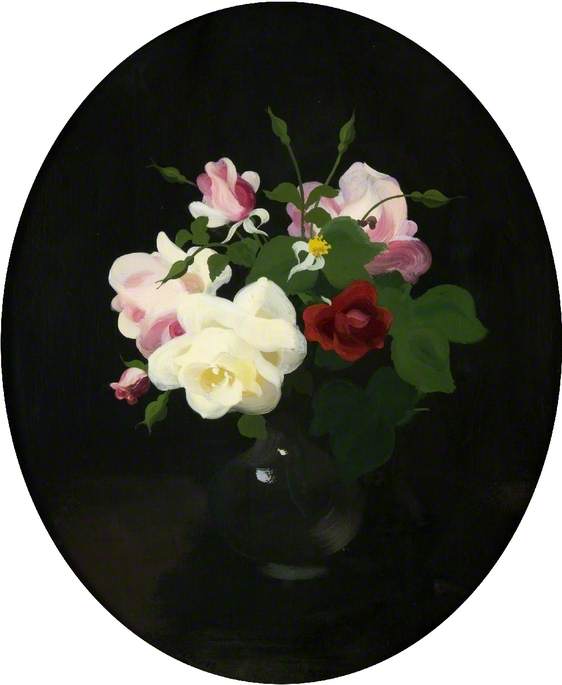
Figure 1. Park, Stuart; Vase of Roses; © CSG GIC Glasgow Museums Collection. (2633)
(http://www.artuk.org)
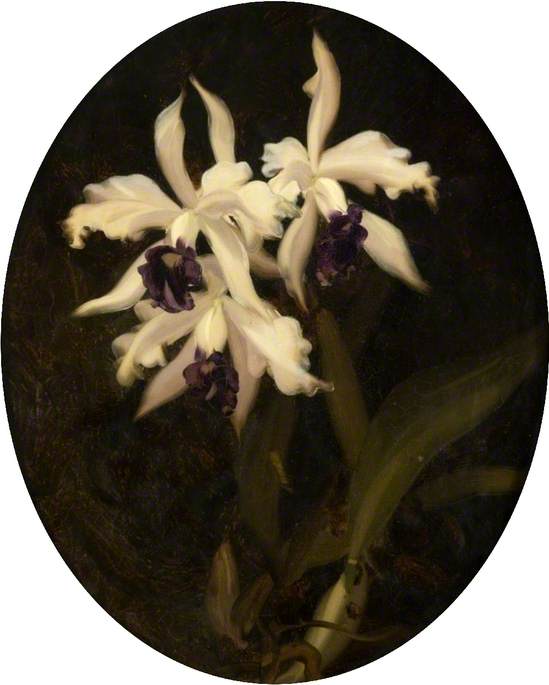
Figure 2. Park, Stuart; Orchids; © CSG GIC Glasgow Museums Collection. (2649)(http://www.artuk.org)
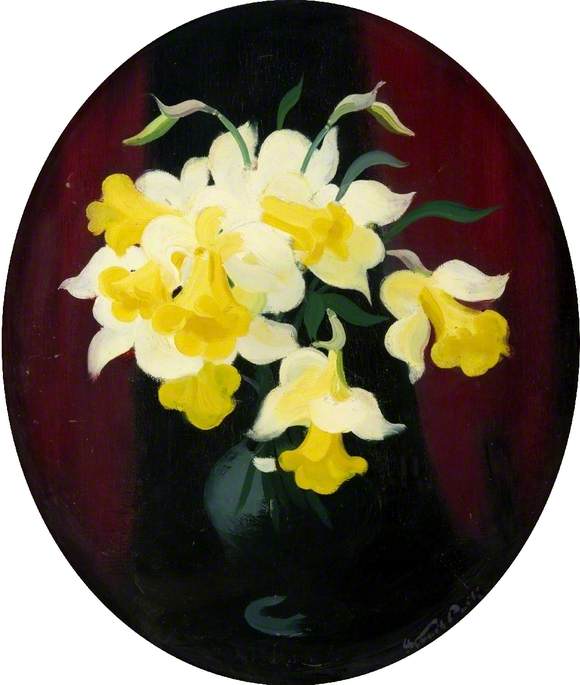
Figure 3. Park, Stuart; Daffodils; © CSG GIC Glasgow Museums Collection. (2650) (http://www.artuk.org)

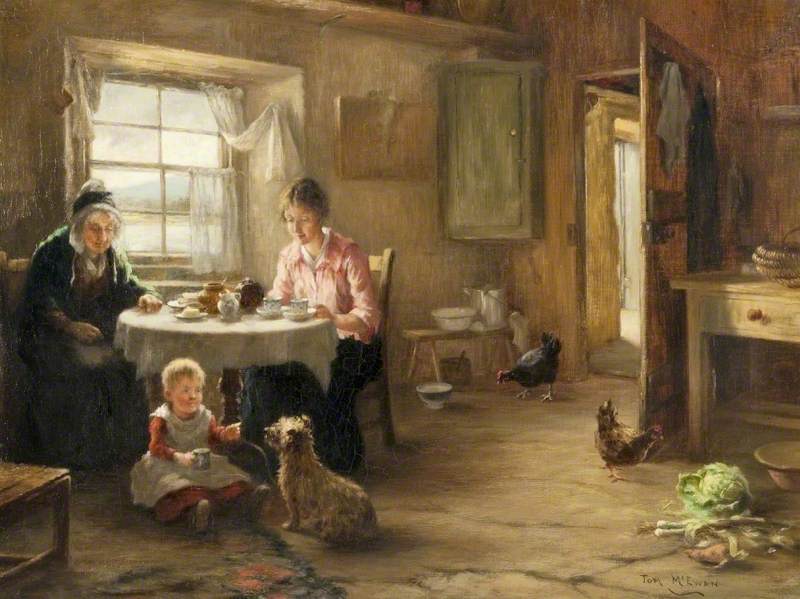
Figure 4. McEwan, Thomas; Tea Time; © CSG GIC Glasgow Museums Collection. (2638) (http://www.artuk.org)

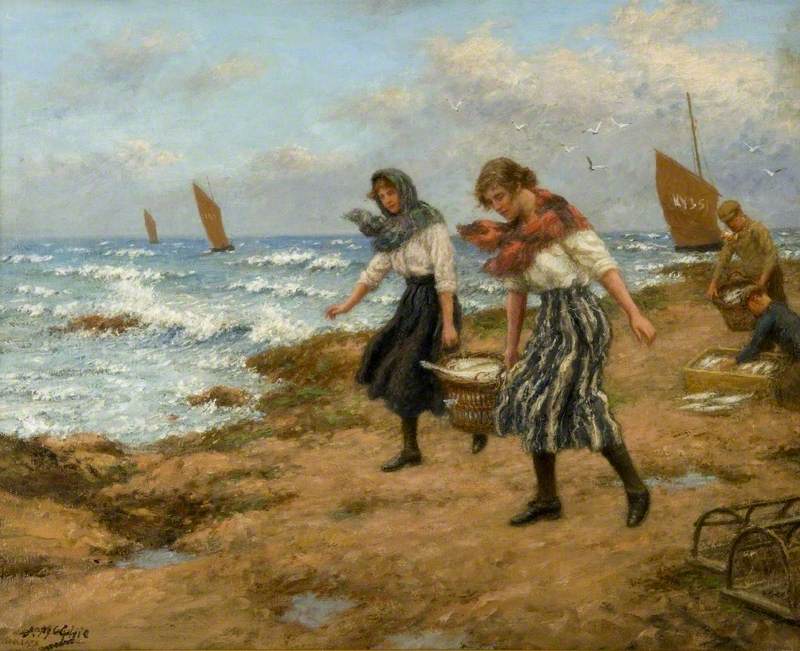
Figure 5 McGhie, John; Fisher Girls Landing the Catch; © CSG GIC Glasgow Museums Collection. (2639) (http://www.artuk.org)

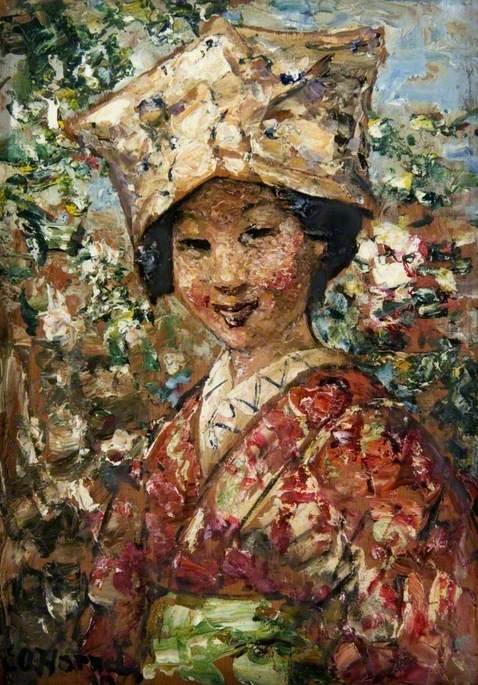
Figure 6. Hornel, Edward Atkinson; The Paper Hat;  © CSG GIC Glasgow Museums Collection.(2641) (http://www.artuk.org)
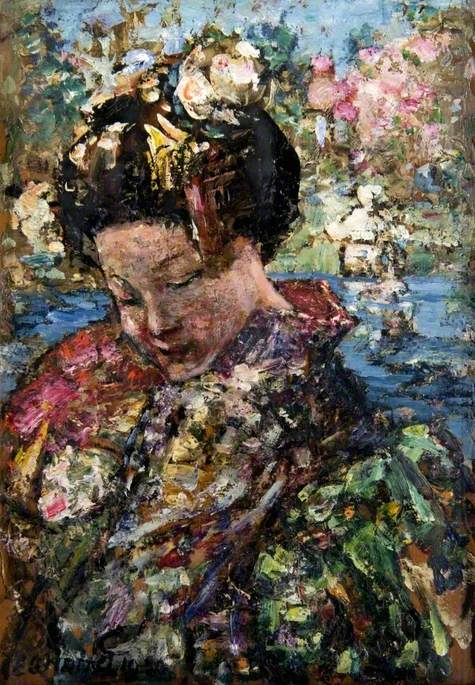
Figure 7. Hornel, Edward Atkinson; In a Japanese Garden; © CSG GIC Glasgow Museums Collection.(2642) (http://www.artuk.org)

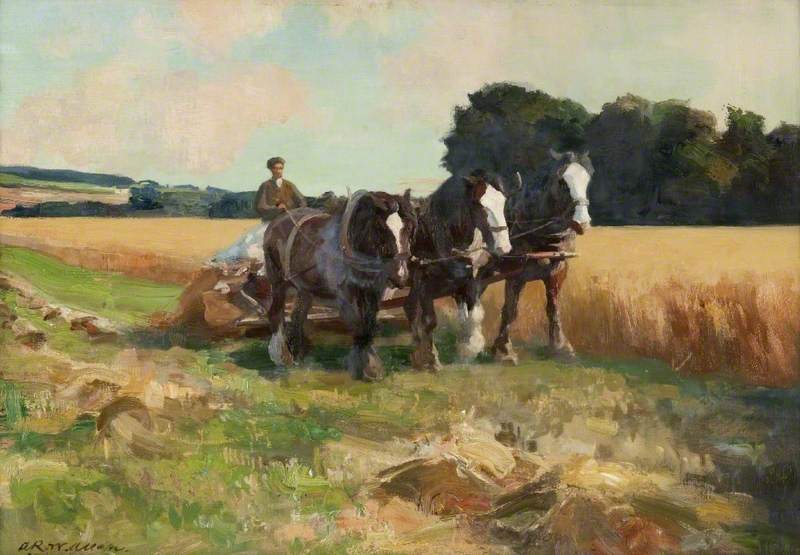
Figure 8. Allan, Archibald Russell Watson; Harvest Time; © CSG GIC Glasgow Museums Collection.(2643) (http://www.artuk.org)

Figure 9. Elwell, Frederick William; The Squire; © CSG GIC Glasgow Museums Collection.(2644) (http://www.artuk.org)
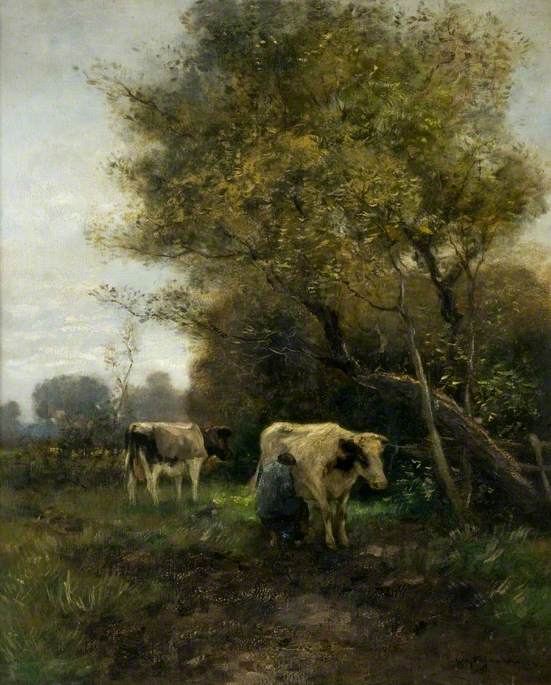
Figure 10. Jansen, Willem Georg Frederik; Milking Time; © CSG GIC Glasgow Museums Collection.(2646) (http://www.artuk.org)

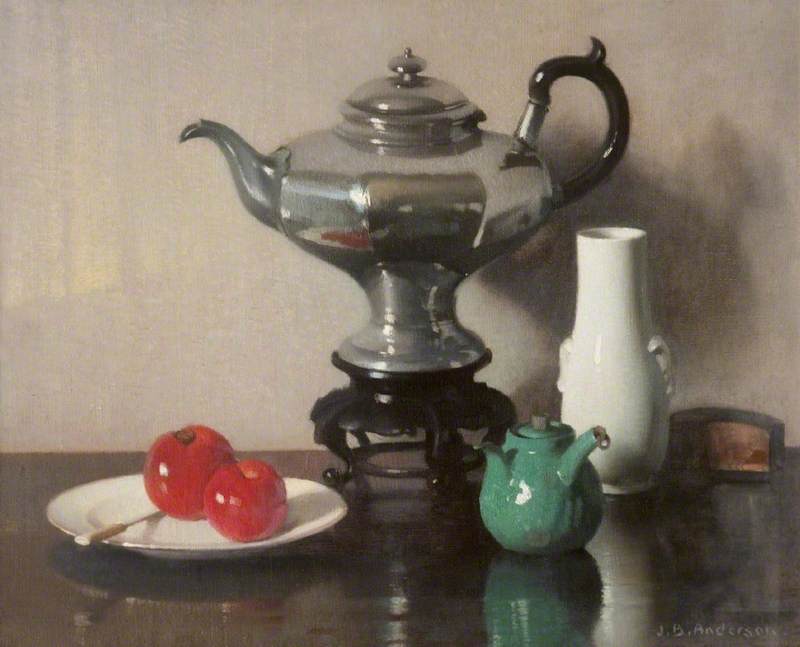
Figure 11. Anderson, James Bell; Still Life; © CSG GIC Glasgow Museums Collection.(2647) (http://www.artuk.org)

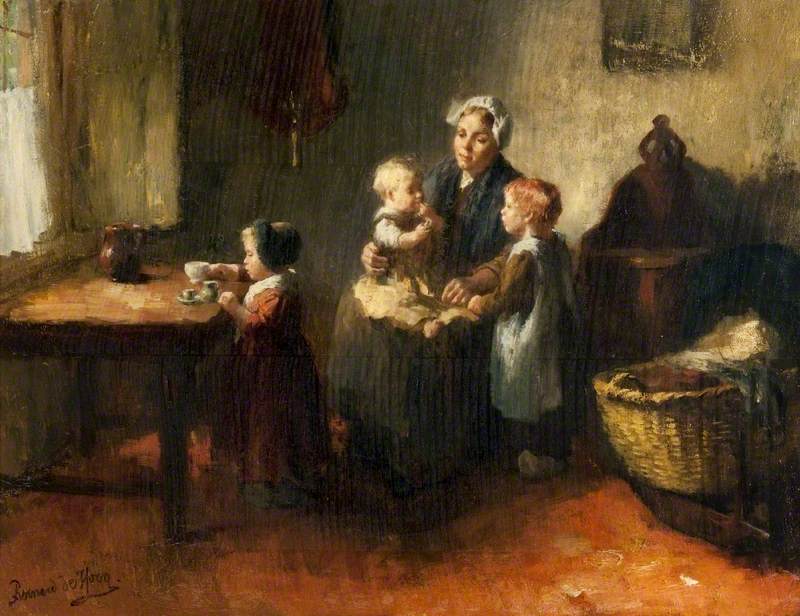
Figure 12. de Hoog, Bernard; Tea Time; © CSG GIC Glasgow Museums Collection.(2637) (http://www.artuk.org)
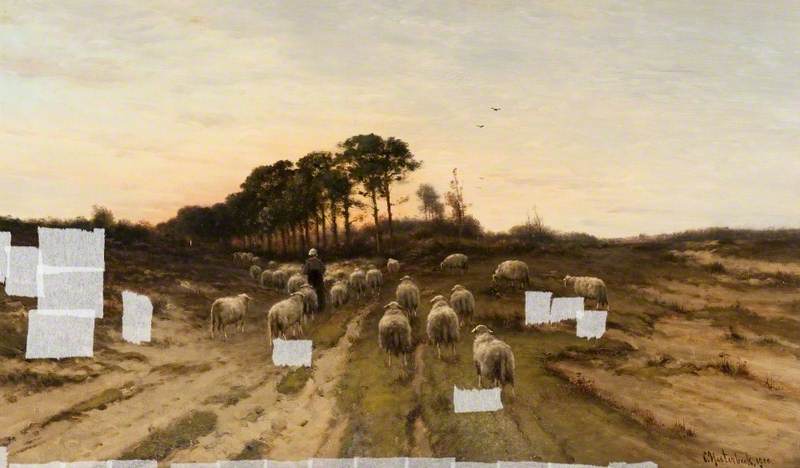
Figure 13. Westerbeek, Cornelis; At the End of the Day; (currently under restoration). © CSG GIC Glasgow Museums Collection.(2642) (http://www.artuk.org)

Mary Alston Waddell Thomson was born on 14 December 1876 at 10 Moray Place, Regent’s Park, Strathbungo – one of a row of houses designed by Alexander ‘Greek’ Thomson but apparently no relation. This was the home of her grandparents after whom Mary was named. Her mother Catherine was born in 1851 at Wiston, Lanarkshire to James Waddell a coal master and his wife Mary Alston.2 Catherine married William Thomson on 28 October 1875 also at 10 Moray Place.3 Mary’s birth was registered in two separate birth certificates – one for Kinning Park and one for Shettleston which was her father’s ‘domicile’. Her father, William Thomson a rope manufacturer, had a house ‘Ferndean, in Shettleston, Glasgow.4 The family business was the Glasgow Rope Works which was founded in 1842 by William’s father, Archibald Thomson. The firm had offices at 58 Howard Street, Glasgow, and a factory in Shettleston. Archibald Thomson lived nearby at Braidfaulds, Tollcross. 5 In 1891 this was ‘one of the oldest houses engaged in this branch of productive industry in Glasgow. The trade of the firm is of world-wide proportions and at one time employed over three hundred people’.6

The 1881 census recorded Mary and her parents at Ferndean, 299 Main Street, Shettleston. Mary’s father was a ‘cordage manufacturer, master, employing 105 men, 95 boys, 40 females’. Also on the census was Mary’s younger brother Archibald and her aunt Mary Waddell.7 Mary’s sister, Helen Jane Thomson was born in 1883.8 William Thomson died suddenly and intestate at Ferndean on the 11 September 1888 aged forty-two.9 An inventory valued his personal estate at £1189.16.3. 10 Archibald Thomson then assumed sole control of the ropeworks and moved into Ferndean. 11

In the 1891 census the family was at Stockbriggs House near Lesmahagow. (Stockbriggs was a family estate owned at one time by Mary’s great grandfather James William Alston a wealthy Glasgow merchant one of whose sons Edward Richard Alston became a prominent zoologist contributing many papers to the ‘Proceedings of the Zoological Society’. He was elected Zoological Secretary of the Linnean Society in 1880 but died the following year. 12) In the census, the head of the household was John Waddell, Mary’s uncle, who was a coal master. Also present were Mary’s grandmother Mary Waddell, aged seventy-five and Mary’s mother Catherine both of whom were living on private means. Mary, aged fourteen, her brother and sister were all ‘scholars’. Also present were Catherine’s sister Mary McMillan and her family. 13

Archibald Thomson died aged seventy-four on 27 October 1893. Shortly afterwards the firm amalgamated with John Black and Co. to become Archibald Thomson, Black and Co. 14 They maintained the works at Shettleston until about 1911. 15 Mary’s grandmother, Mary Waddell died at 11 Newark Drive, Glasgow on 30 January 1899. Her death was reported by her son John A. Waddell whose address was 10 Moray Place. 16

In 1901 Mary was with her mother who was living on her own means, brother Archibald and sister Jane, at Cragieburn, Crichton Road, Rothesay. Mary was twenty-four, with no occupation listed. Archibald aged twenty was a bank clerk and Jane aged seventeen, was a scholar. 17 Archibald Thomson was a former pupil of Glasgow High School. In 1914 he succeeded his maternal uncle to became Laird of Stockbriggs. He was interested in agriculture and would have been keen to develop the land around Stockbriggs for farming but with the outbreak of WW1 he enlisted in the 16th Highland Light Infantry. 18 He served with the 14th Platoon, ‘D’ Company and later transferred to the 97th Machine Gun Corps. Unfortunately, he did not survive the War and was listed as missing in action on 2 December 1917. He was commemorated as ‘Private Archibald Thomson, H.L.I., of Stockbriggs, Lesmahagow, Lanarkshire. Only son of Catherine Thomson (now of Largs, Ayrshire) and the late William Thomson.’ 19

Mary and her mother Catherine moved to Largs possibly as early as 1914. By 1925 Mary was the proprietor/occupier of Moorburn House and Grounds on the north side of Largs. 20 Five years later she was still the proprietor of Moorburn but apparently, not the occupier. 21 Mary’s mother Catherine died at Moorburn on the 21 May 1931. She was eighty-six. 22 In the 1935 valuation roll Mary is listed as the proprietor of Moorburn and also of Moorcote House in Haco Street, Largs. 23 Moorburn House was described as ‘one of the most stunning mansions in Largs’. 24 After her mother’s death, Mary put Moorburn House on the market. It sold for £7,500 and became the offices of the district council in 1936. 25

On 26 May 1934, Ridge Park House in Lanark was advertised for sale. 26 This was after the death of the owner Maria Louisa Roberts Vassie the previous month. 27 However, the house did not sell and was re-advertised the following year when it was purchased by Mary Thomson. The house was set in nine acres of land and has three public rooms, a billiard room and five bedrooms with central heating, a garage, a tennis lawn and a greenhouse. 28

While resident at Ridge Park, Mary Thomson involved herself in local affairs and especially those involving the youth of the area. She ‘acted as inspecting officer for a Girls’ Guildry display in 1938 and expressed herself greatly impressed by the smart appearance of the girls. She also presented prizes and decorations.’ 29 The following year she was present, along with the great and good of the district, at the opening and dedication of the new Salvation Army Hall in Westport. She proposed the vote of thanks after the dedication service. 30 Towards the end of 1945 she was present at the re-opening of the Lanark YMCA Institute, which had been commandeered by the military during the war. In her speech she said that ‘the YMCA was the big brother of the BWTA the women of which had run a soldiers’ parlour in the town for three years and the YMCA had helped greatly. She thought it would be nice if the YMCA could carry on the work among the men who were returning from the forces. She was pleased that BWTA had helped them furnish their premises and she wished them every success.’ 31

Mary Alston Waddell Thomson was found dead at Ridge Park on the 21 April 1947. She was seventy years old and had died suddenly from heart failure. Her death was reported by a friend Walter J. J. Cook. 32 After a service at Ridge Park, she was buried in Cathcart Cemetery. 33

In her will, Miss Thomson left bequests to various charities and to her household staff as well as the bequest to Glasgow Art Galleries. 34 In November 1947 a sale of furniture and household effects was conducted by McTears auctioneers. This raised £5000 and was notable for the fact that a bedroom suite sold for more than £700 which, as the local newspaper reported, could have purchased a small bungalow.35 Miss Thomson left Ridge Park House and her estate of £74,000 to the Royal Hospital for Sick Children, Glasgow. She hoped that the house would be converted to a childrens’ or nurses’ home. However, the hospital decided against conversion and sold it to the local council for £8,555. 36

Miss Thomson suffered from a rare eye condition called side-vision which meant she could not see things in front of her, only to the side. As part of her bequest, she instructed that her eyes should be offered for research to either the Glasgow Ophthalmic Institute or the Glasgow Eye Infirmary. Both institutions turned down the bequest. 37

References

  1. Glasgow Corporation Minutes, 10 June 1947, Mitchell Library
  2. Old Parish Registers, FamilySearch
  3. Scotland’s People, Marriage Certificate
  4. Scotland’s People, Birth Certificate
  5. Glasgow Post Office Directory, 1880-81
  6. glasgowwestaddress.co.uk/1891_Book/Thomson_Archibald_&_Co.htm
  7. ancestry.co.uk, 1881 Census, Scotland
  8. Scotland`s People, Birth Certificate
  9. Scotland’s People, Death Certificate
  10. Scotland’s People, Wills and Inventories
  11. Glasgow Post Office Directory, 1890-91
  12. Bettany, George Thomas. Edward Richard Alston, in Dictionary of National Biography, , Vol 1,1885-1900
  13. Scotland’s People, 1891 Census
  14. Glasgow Post Office Directory, 1900-1901
  15. Glasgow Post Office Directory, 1911-1912
  16. Scotland’s People, Death Certificate
  17. Scotland’s People, 1911 Census
  18. https://www.highschoolofglasgow.co.uk/media/812654/biographies-part-6.pdf
  19. https://www.pagesofthesea.org.uk/soldier/archibald-thomson/
  20. Scotland’s People, Valuation Roll, 1925, Largs, Ayrshire
  21. Scotland’s People, Valuation Roll, 1930, Largs, Ayrshire
  22. Scotland’s People, Death Certificate
  23. Scotland’s People, Valuation Roll, 1935, Largs, Ayrshire
  24. http://www.oldlargs.com/Walk%20-%20Gnk%20Rd%20to%20Gallowgate%203.html
  25. Ibid
  26. Scotsman, 26 May 1934
  27. Scotsman, 7 April 1934
  28. Scotsman, 2 March 1935
  29. Carluke and Lanark Gazette, 28 April 1938
  30. Carluke and Lanark Gazette, 17 November 1939
  31. Carluke and Lanark Gazette, 26 October 1945
  32. Scotland’s People, Death Certificate
  33. Glasgow Herald, 23 April 1947
  34. Carluke and Lanark Gazette, 22 August 1947
  35. Carluke and Lanark Gazette, 21 November 1947
  36. Ibid
  37. Carluke and Lanark Gazette, 22 August 1947

Joseph Henderson R.S.A., R.S.W. (1832-1908)

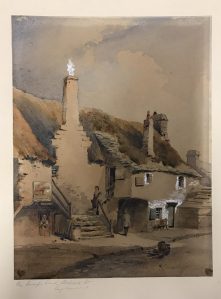
Figure 1. The Sweep’s Land, Stockwell Street by Thomas Fairbairn © CSG GIC Glasgow Museums Collection.

‘The gifts include a water colour, “The Sweep`s Land, Stockwell Street” by James (sic) Fairbairn, presented by Mr Joseph Henderson, R.S.W., Glasgow, and this sub-committee resolved that a special vote of thanks be accorded him for the gift’. 1

Joseph Henderson was born on 10 June 1832 in Stanley, Perthshire, He was the third of four boys. When he was about six, the family moved to Edinburgh and took up residence in Broad Street. The two older boys joined their father, also Joseph, as stone masons. 2 Joseph’s father died when Joseph was eleven leaving his mother, Marjory Slater, in straightened circumstances. 3 As a result, Joseph and his twin brother, James, were sent to work at an early age and the thirteen-year-old Joseph was apprenticed to a draper/hosier. At the same time, he attended part-time classes at the Trustees’ Academy, Edinburgh. At the age of seventeen, on 2 February 1849, he enrolled as an art student in the Academy.4 From the census of 1851, Marjory, Joseph and James were living at 5 Roxburgh Place, Edinburgh. Marjory was now a ‘lodging housekeeper’ with two medical students as boarders. James was a ‘jeweller’ while Joseph was a ‘lithographic drawer’.5 In the same year Joseph won a prize for drawing at the Academy enabling him, along with fellow students, W. Q. Orchardson, W. Aikman and W. G. Herdman, to travel to study the works of art at the Great Exhibition in London, which he found to be a very formative experience.6

He left the Academy about 1852-3 and settled in Glasgow. He is first mentioned in the Glasgow Post Office Directory for 1857-8 where he is listed as an artist living at 6 Cathedral Street.7 The census of 1861 confirms this address where he is a ‘portrait painter’ living with his wife Helen, daughter Marjory aged four and his mother Marjory who is now his ‘house keeper’.8

Joseph Henderson’s first exhibited work was a self-portrait which was shown at the Royal Scottish Academy (RSA) in 1853.9 He painted several portraits of friends and local dignitaries including a half-length portrait of his friend John Mossman in 1861. His painting, The Ballad Singer established his reputation as one of Scotland`s foremost artists when exhibited at the RSA in 1866.10 Throughout his career he continued in portraiture. He executed portraits of James Paton (1897) a founder and superintendent of the Kelvingrove Art Gallery and Museum (this portrait was bequeathed to Kelvingrove in 1933) and Alexander Duncan of the Faculty of Physicians and Surgeons of Glasgow. 11 He also painted Mr. Scott Dickson, Sir Charles Cameron, Bart., DL, LLD (1897), RGI and Sir John Muir, Lord Provost of Glasgow (1893). 12 His portrait of councillor Alexander Waddell (1893) was presented to Kelvingrove in 1896.13

However, it is probably as a painter of seascapes and marine subjects that he became best known. His picture Where Breakers Roar attracted much attention when exhibited at the Royal Glasgow Institute (RGI) in 1874, ‘as a rendering of angry water’.14

Figure 2. Joseph Henderson, The Bailie, No. 277, 6th Feb. 1878. (Mitchell Library).

Henderson was in part responsible for raising the profile and status of artists in Glasgow and was a member of the Glasgow Art Club (he was President in 1887-8), the Royal Glasgow Institute of the Fine Arts (founded 1861) and the Royal Society of Painters in Watercolour.15 Between 1853 and 1892, he exhibited frequently at the RSA and at the RGI and between 1871 and 1886 he had twenty pictures accepted for the Royal Academy in London. In 1901 he was entertained at a dinner by the President and Council of the Glasgow Art Club to celebrate his jubilee as a painter. He was presented with a solid gold and silver palette. An inscription on the palette read: ‘Presented to Joseph Henderson, Esq., R.S.W. by fellow-members of the Art Club as a mark of esteem and a souvenir of his jubilee as a painter, 8th January 1901’ 16

Joseph Henderson was married three times. On  8  January 1856 he married Helen Cosh (d. 1866) with whom he had four children including a daughter Marjory who became the second wife of the artist William McTaggart. On 30 September 1869 he married Helen Young (d. 1871) who bore him one daughter and in 1872 he married Eliza Thomson with whom he had two daughters and who survived him.17 Two of his sons, John (1860 – 1924) and Joseph Morris (1863 – 1936) became artists; John was Director of the Glasgow School of Art from 1918 to 1924.18

By 1871 he had moved with his family; wife Helen, daughter Marjory and sons James, John and Joseph and his mother Marjory from Cathedral Street to 183 Sauchiehall Street. He also employed a general servant. He is described in the census as a ‘portrait painter’.19 In 1881, Joseph was living at 5 La Belle Place, Glasgow with Eliza, two sons and four daughters.20 He later moved to 11 Blythswood Square, Glasgow. 21 In the 1901 census he was still at this address with his wife Eliza, sons John and Joseph and daughter Mary and Bessie. His occupation is ‘portrait and marine painter’.22

Figure 3. Joseph Henderson in 1894. Painted by his son-in-law William McTaggart. © CSG GIC Glasgow Museums Collection. (http://www.artuk.org)
Figure 4. Joseph Henderson, The Bailie, No. 1472, 2nd Jan. 1901. (MItchell Library)

Joseph Henderson painted many of his seascapes at Ballantrae in Ayrshire. At the beginning of July 1908, he again travelled to the Ayrshire coast. However, he succumbed to heart failure and died at Kintyre View, Ballantrae, on 17  July 1908 aged 76 and was buried in Sighthill cemetery in Glasgow. 23  A commemorative exhibition of his works was held at the RGI in November of that year. 24 A full obituary was published in the Glasgow Herald. 25

As well as his devotion to art, Joseph Henderson was a keen angler and golfer. A contemporary account states that he was ‘frank and genial, with an inexhaustible fund of good spirits and a ready appreciation of humour, of which he himself possesses no small share’. 26

A comprehensive account of the life and works of Joseph Henderson has been written by Hilary Christie-Johnston. 27

Thomas Fairbairn (1821 – 1885) was an older contemporary of Henderson and both were friends of John Mossman and Robert Greenlees.  A series of his drawing were acquired by Glasgow Corporation. 28 It is possible that the painting The Sweep`s Land, Stockwell Street was given to him by the artist.

References.

  1. Glasgow Corporation Minutes, 6 July 1898, p 642.
  2. Scotland’s People, 1841 Census, St. Cuthbert’s Edinburgh
  3. glasgowwestaddress.co.uk/1909
  4. J. L. Caw, rev. Elizabeth S. Cumming. ‘Henderson, Joseph (1832–1908)’. Oxford Dictionary of National Biography, Oxford University Press, 2004.
  5. Scotland`s People, 1851 Census, St. Cuthbert`s Edinburgh
  6. glasgowwestaddress.co.uk/1909
  7. Glasgow Post Office Directory, 1857-1858, National Library of Scotland
  8. Scotland`s People, 1861 Census, St. David`s, Glasgow
  9. Baile de Laperriere, Charles (ed.) Royal Scottish Academy Exhibitors, 1826 – 1990, Vol II,  Hillmartin Manor Press, 1991
  10. https://www.markmitchellpaintings.com/joseph-henderson-1832-1908
  11. Billcliffe, Roger, Royal Glasgow Institute of the Fine Arts 1861-1989. Vol 2, Roger The Woodend Press, 1991
  12. Glasgow Herald, 18th July 1908, p9
  13. Art UK/ Glasgow Museums Resource Centre
  14. Waters, Grant M., Dictionary of British Artists, (1900 – 1950),  Eastbourne Fine Arts Publications, 1975.
  15. glasgowwestaddress.co.uk/1909
  16. Glasgow Herald, 18 July 1908, p9
  17. Caw, J. L.  rev. Elizabeth S. Cumming. ‘Henderson, Joseph (1832–1908)’. Oxford Dictionary of National Biography, Oxford University Press, 2004.
  18. Glasgow School of Art, archives
  19. Scotland`s People, 1871 Census, Glasgow, Barony
  20. Scotland’s People, 1881 Census, Glasgow
  21. Scotland’s People, 1891 Census, Glasgow
  22. Scotland`s People, 1901 Census, Blythswood, Glasgow
  23. Scotland`s People; Death Certificate.
  24. Billcliffe, Roger, Royal Glasgow Institute of the Fine Arts 1861-1989. Vol 2, Roger The Woodend Press, 1991
  25. Glasgow Herald, 18 July 1908.
  26. The Bailie, Mitchell Library, Glasgow, GC 920.04 BAI., No. 277, Feb. 6th, 1878; No. 1472, Jan. 2nd. 1901.
  27. Christie-Johnston, Hilary, Joseph Henderson: Doyen of Glasgow Artists, 1832 – 1908,   Macmillan Art Publishing, Melbourne, Australia, 2013
  28. https://electricscotland.com/art/artinscotland18o.htm


Robert Gemmell Hutchison (1855 – 1936)

Robert Gemmell Hutchison pre 1900
Figure 1. Robert Gemmell Hutcheson, R.S.W., R.B.A.from a chalk study by H.W.Kerr, A.R.S.A. G. Setoun, Art Journal, 1900 p 321

In December 1918, Robert Gemmell Hutchison of 8, St. Bernard`s Crescent, Edinburgh and “Coral Den”, Carnoustie presented the painting Getting Ready to Glasgow Corporation as a memorial to his son the artist.1

(c) Glasgow Museums; Supplied by The Public Catalogue Foundation
Figure 2. Getting Ready by George Jackson Hutchison, 1916. © CSG GIC Glasgow Museums Collection. (www.artuk.org)

Robert Gemmell Hutchison was born at 35, North Richmond Street, Edinburgh on 1st July 1855. He was the first child of George Hutchison, a brass founder, and his wife Margaret Forman. 2 Soon after his birth, the family moved to 37, Carrubbers Close, Canongate. 3 It is not recorded which school Robert attended but he did not enjoy the experience! He was described as “scraping from class to class with as little work as possible, and, as soon as he could, leaving it gladly”.4 From the census of 1871, the family was still at 37, Carrubbers Close and had increased to seven; three sons and four daughters. Robert`s occupation was “seal engraver”. 5 “Still, if he did not like school, he liked seal-engraving, to which he was apprenticed, less”. With encouragement from his mother of whom he “always speaks with great reverence”, he was determined to become an artist and gave up seal-engraving to attend, aged 17, the Board of Manufacturers` School of Art in Edinburgh (also called the Trustees Academy).6 One of his instructors here was William McTaggart. He also attended the Royal Scottish Academy (RSA) Schools. At this time, he received valuable advice and help from the artist J. Campbell Noble, RSA and thus encouraged he sent some of his paintings to the RSA Annual Exhibitions. After several rejections, he was eventually successful in 1878 when he had three small landscapes exhibited: Youthful Labour, Quiet Pastures and A Country Well. 7 One of these was bought by the Royal Association for the Promotion of the Fine Arts in Scotland and for which Hutchison received the sum of six guineas. 8 He submitted the paintings from his studio at 1, India Buildings, Edinburgh.

On 24th June 1879, Robert aged 23, married Janet Boe who was 21 and the daughter of a grocer in Biggar. The marriage took place at 4, Morningside Park, Edinburgh. On the marriage certificate he listed his occupation as “artist (figure painter)” and his address as 38, Jamaica Street, Edinburgh. For some reason he omitted to sign his surname on the certificate! 9 The couple had nine children only five of whom survived infancy 10. These were four daughters; Jane (1880-1956), Marion Maud (1887-1963), Roberta Louise (1889-1966), Ann Carr Forman (1893-1978) and a son, George Jackson Hutchison who was born in 1895. In 1881, Robert was with his wife and daughter Jane at 26, Caledonian Place, Edinburgh. His occupation was “artist”.11

After a period spent painting landscapes along the Fife coast, Robert began to specialise in scenes of Scottish rural life especially those involving children and in the year after his marriage, he had a painting The Empty Cradle exhibited at the Royal Academy (RA) in London. His studio was now at 53, George Street, Edinburgh. There followed five exhibits at the RA over the next decade all sent from addresses in London.12 He continued to exhibit annually at the RSA and in 1886 was awarded a prize for his painting Boys Guddling Trout. From 1888 onwards he also exhibited at the Royal Glasgow Institute. At the 1891 Census he was an “artist, figure and portrait”, living at 4, Melville Place, Edinburgh with his wife and four daughters. 13 His son George was born at the same address four years later. 14

He began to paint and exhibit widely throughout Britain. A favourite location was Carnoustie in Angus where he had a house, “Coral Den”, in William Street. He also painted in Macrihanish, at Musselburgh and on the Farne Islands. From about 1896 to 1903 the family (Robert, Janet, Roberta, Ann and George) was living at St. Ive`s Cottage Lanark Road, Braidwood, Carluke. 15,16 Robert was elected to many prestigious institutions throughout the British Isles; e.g. to the Royal Society of Painters in Watercolour, (RSW) in 1895, the Royal Society of British Artists (RBA), 1896, the Royal Institute of Oil Painters (ROI), and Associate of the Royal Scottish Academy (ARSA) in 1901 and RSA in 1911.17 In 1903 he exhibited a work Bairnies Cuddle Doon at the Paris Salon. 18 He was awarded a gold medal and the painting was purchased by the Scottish Modern Arts Association.21 He was awarded a second gold medal at the Paris Salon Exhibition of 1928 for his painting The White Seam. This was bought by Paisley Corporation and is now at the Paisley Museum and Art Gallery. Hutchison was elected to full membership of the RSA in 1911, replacing William McTaggart who had died the previous year.20 “Gemmell Hutchison had held McTaggart in the highest esteem and it was to him that he owed his loose painterly technique and in many ways his most popular subject matter – that of children on the beach. Both his family and that of McTaggart confirmed that the latter was a luminary for Hutchison. 21

RGHutchison Edit
Figure 3. Robert Gemmell Hutchison (early 1900s). Royal Scottish Academy Archives  Copyright R.S.A                                   

Another influence on Hutchison was the artistic style of the Hague School in Holland which he visited in 1905. On his return to Scotland he took to painting in the open air with a “looser technique and lighter palette”. 22 One of his works of this period was Seagulls and Sapphire Seas (1909) which he sold to Bolton Art Gallery in 1912 (Appendix 1). In 1910 he was commissioned to paint the coronation of George V and Queen Mary at Westminster Abbey. From the census of 1911 he and his family were living at 14, Craighall Terrace, Inveresk, Musselburgh. In his later years he spent his summers at his daughter`s home in Coldingham, Berwickshire painting outdoors. His subjects included views of St. Abbs, Gulls on the Farne Islands as well as portraits of his daughter. He continued to exhibit up till the year of his death.

Robert Gemmell Hutchison died of a cerebral haemorrhage at Coldingham on 23rd August 1936. He was 81 years of age. 23 He was buried in the Dean Cemetery in Edinburgh after a private service at his home at 8, St. Bernard`s Crescent. Two of his daughters, his son-in-law and a nephew were among the pall-bearers. Also present were many fellow artists and members of the artistic establishment. 24,25

His estate was valued at £11,079.10s.7p with his two daughter named as next of kin. 26

Headstone
Figure 4. Gravestone in Dean Cemetery, Edinburgh.© http://www.gravestonephotos.com

Various critics have commented on his painting style:

“Robert Gemmell Hutchison is one of the best-known of the early twentieth-century Scottish artists who drew their inspiration from the Hague School of painters and by the work of the nineteenth century Dutch artists Joseph Israels and Bernardus Johannes Blommers. His paintings of fisher-folk, especially of young children playing by the sea or seated in cottage interiors, have a charming pathos and are similar in subject to those painted by his luminary William McTaggart ”. 27

He “has an appreciation of the fusing influence of tone and atmosphere, and brings a broad and vigorous method of painting, good drawing, and effective design to bear upon a rather fresh view of village life. Despite a certain commonness, his pictures are usually well thought out, and, logically put together in a pictorial way, tell their stories with considerable point. His feeling again, although lacking in charm or novel insight, is sympathetic, and his treatment of childhood, if somewhat literal, fresh and individual”. 28

His paintings today are valued and continue to sell well e.g. The Village Carnival sold for £110,000 in Edinburgh in 2006. 29 (See also Appendix 2).

George Jackson Hutchison was a gifted painter but was killed in action at Merville, France on 28th June 1918 aged only twenty-two. He had served as a private in the K.O.S.B.s. After George`s death, his father presented his painting Getting Ready to Glasgow Corporation as a memorial to his son. The painting was accepted on 18th December 1918. The Minutes of the Corporation record that;

“The sub-committee agreed to accept the picture by this talented young artist, who made the supreme sacrifice for King and Country, and to recommend that the Corporation accord his father a vote of thanks for the gift and extend to him their sympathy and condolence in his bereavement”. 30

Each year, Edinburgh College of Art awards a “George Jackson Hutchison Memorial Prize” for outstanding painting. It seems likely that this was initiated by Robert Gemmell Hutchison in memory of his son. However, Edinburgh College of Art, now incorporated into Edinburgh University, could not confirm this due to the current state of their records.

References

  1. Glasgow Corporation Minutes, Sub-Committee on Art Galleries and Museums, C1 3.60, p330, 18th December 1918.
  2. Scotland`s People, Birth Certificate
  3. ancestry.co.uk, Scotland Census 1861
  4. Setoun, G., R. Gemmell Hutchison, R.S.W., R.B.A., Art Journal, 1900, pp 321-6
  5. ancestry.co.uk, Census 1871
  6. Setoun, G., R. Gemmell Hutchison, R.S.W., R.B.A., Art Journal, 1900, pp 321-6
  7. Royal Scottish Academy Exhibitors, 1826 – 1990, Hilmartin Manor Press, 1991.
  8. Setoun, G., R. Gemmell Hutchison, R.S.W., R.B.A., Art Journal, 1900, pp 321-6.
  9. Scotland`s People, Marriage Certificate
  10. Scotland`s People, Census 1911
  11. Scotland`s People, Census 1881
  12. Catalogues of the Royal Academy Exhibitions, 1880-89, W. Clowes and Sons, Ltd.
  13. Scotland`s People, Census 1891
  14. Scotland`s People, Birth Certificate
  15. Scotland`s People, Census 1901
  16. Slater`s National Commercial Directory of Scotland, 1882-1915
  17. Johnson, J and Greutzner, A., Dictionary of British Artists, 1880 – 1940, , Antique Collectors Club, 1976).
  18. Setoun, G., R. Gemmell Hutchison, R.S.W., R.B.A., Art Journal, 1900, pp 321-6
  19. Fowle, Frances, The Oxford Dictionary of National Biography, OUP, 2004-13, May 2011.
  20. The Scotsman, February 9th, 1911, p5.
  21. https://lyonandturnbull.com/content/show_news.asp?id=146
  22. Fowle, Frances, The Oxford Dictionary of National Biography, OUP, 2004-13, May 2011.
  23. Scotland`s People, Death Certificate
  24. The Scotsman, August 27th, 1936, p8.
  25. The Scotsman, August 24th, 1936, Death Notices
  26. Confirmations and Inventories, 1936, Mitchell Library, Glasgow
  27. artfact.com › Auctioneer Directory
  28. Caw, J.L., Scottish Painting, 1908, p 427-8.
  29. Edinburgh Evening News, May 3rd, 2006.
  30. Glasgow Corporation Minutes, Sub-Committee on Art Galleries and Museums, C1 3.60, p330, 18th December 1918.

Appendix 1

One of the finest paintings by Robert Gemmell Hutchison, possibly the best loved of Scottish artists, set a new world record for the artist at Bonhams Annual Scottish Sale in Edinburgh on Wednesday 31 August, 2011 when it was sold for £120,000. Sea Gulls and Sapphire Seas was painted in 1909 and represents the artist at the height of his powers. In a dazzling display of impressionistic technique, Hutchison places a characteristic foreground of children in the sand dunes against the sparkling sea and whirling gulls. Many of his most popular paintings feature children playing beside the sea and he often used his daughters and their friends as models in coastal locations in Berwickshire, East Lothian and Carnoustie. The painting was sold by Bolton Museum which bought the work from the artist for £150 in 1912.

Beach
Figure 5. Public Domain (http://www.artdaily.org)

Appendix 2

A pensioner has unearthed a hoard of stolen art treasures in the loft of his Helensburgh home. The 67-year-old discovered the missing paintings while rummaging in the dusty room and – not realising their value – decided to try to raise a few pounds by selling them. After seeking advice from an art expert, he was told the paintings were not his to sell. The canvasses were the creations of two celebrated Scottish artists, which had been stolen five years ago and were worth at least £250,000. Inquiries revealed that the three paintings by Robert Gemmell Hutchison and two by Sir James Guthrie were stolen from a house in Helensburgh’s Cairndhu Gardens in 2002. Investigators believe that when the thieves failed to sell the works they dumped them in the communal attic above a block of flats in the town’s Kirkmichael estate. The paintings are The Pink Pinafore, Feeding the Gulls and Cottarita by Gemmell Hutchison and Luss Road and Candlelight by Guthrie.

One resident said: “The old boy went up there on Thursday and initially tried to sell them on. He contacted someone at the Fine Art Council and they made checks and realised they were stolen. “There were five paintings in total and my mate was offered them as a set, but wasn’t that impressed and wouldn’t have paid more than £50 for the lot.” He added: “The paintings have obviously been nicked years ago by a gang of young lads, but when they found out they couldn’t get anything for them, they just dumped them.

Robert Gemmell Hutchison was born in Edinburgh in 1855 and was a prolific artist whose works were lauded around Britain. His work, The Village Carnival, was sold for £110,000 in 2006.  At the time of their theft in 2002 the five paintings were valued at £246,000.

The Scotsman, Saturday 12 January 2008

Robert Jeffrey (1827 – 1902)

In his will of 1902, Robert Jeffrey bequeathed the contents of his library at Crosslie House, Renfrewshire to the Mitchell Library in Glasgow. This bequest consisted of ‘all the books that shall belong to me, at the time of my decease, together with the bookcases in which they are contained and the statuettes on the top thereof, as well as the ivory carving statuettes and mosaics on the wall between the principal bookcases and the oriel window in my library at Crosslie House’. 1 An incidental part of his bequest included two portraits one of himself and one of his wife Margaret Jeffrey (nee Reid)

20200111_182712 - Altered
Figure 1.Robert Jeffrey (unknown artist) Mitchell Library.© CSG GIC Glasgow Museums Collecton.


20200111_182815 - Altered
Figure 2. Margaret Jeffrey (unknown artist) Mitchell Library. © CSG GIC Glasgow Museums Collection.

Robert Jeffrey was born into a family of cloth manufacturers whose business spanned the eighteenth and nineteenth centuries. Robert`s grandfather, James Jeffrey, was a linen manufacturer in Fife where Robert`s father, Robert Thomson Jeffrey was born in 1787. His mother was Margaret Thomson.2 On the 21 December 1813, Robert Thomson Jeffrey married Margaret Jack in Biggar, Lanarkshire. 3 Margaret`s father, James, was a farmer in Roberton. The marriage produced eight children; William born 1816, Agnes 1817, John 1818, James 1820, Andrew Gordon 1822, all born in Biggar. 4 After the birth of Andrew, the family moved to Edinburgh where Robert set up business in the Lawnmarket: Jeffrey, Robert, cotton manufacturer, 300 Lawnmarket.5

During their stay of about nine years in Edinburgh, three more children were born;  Isobel 1824 and Francis 1830. Robert Jeffrey junior was born on the 4 March 1827 in Edinburgh and christened in St. Cuthbert`s Church. 6 About 1833, the family moved to Glasgow where Robert set up business at 37 St. Andrew`s Street with a house at 16 St. Andrew`s Square later moving to 49 St. Andrew`s Square: 7 Jeffrey, R, stripe, check and linen manufacturer, 37, St Andrew’s St, house 49 St Andrew Sq.’8

With business obviously prospering, the family moved to Wyndford House in Maryhill, Glasgow:Jeffrey, R. cotton and linen manufacturer, 37, St Andrew`s Street, house Wyndford by Maryhill’ 9

In the census of 1841, the family at Wyndford consisted of Robert and Margaret Jeffrey, Agnes, William, James and Francis along with Robert Jeffrey junior aged 13. Robert was educated at Glasgow High School and at the Collegiate School which opened in 1842 in Garnethill.10,11 Two family members not on the census were John and Andrew. John Jeffrey had probably left by this time to take over or establish a base for the family business in Kirkcaldy 12 and Andrew may already have moved to Balfron to look after the family`s interests there.

(The Ballindalloch cotton works near Balfron were built in 1790 by Robert Dunmore and sold to Kirkman Finlay of James Finlay & Co. in 1798. They were subsequently sold to Robert Jeffrey & Sons in 1845 after the death of Kirkman Finlay). 13

By 1851 Robert Jeffrey was a linen manufacturer employing 54 males and 114 females.14 The firm exhibited at the Great Exhibition in London: ‘Jeffrey, Robert, Mary Hill, Glasgow, Kirkaldy (sic), Forfar, and Brechin – Specimens of huck, dowlas, ticks, loom sheeting, diaper, &c.’ 15

In that year, Robert and Margaret together with Agnes, James and Robert junior were still at Wyndford. Robert junior was now aged 23 and employed as a clerk of works. 16

On 3 November 1858 the thirty-one-year old Robert Jeffrey, a ‘manufacturer’ married Margaret Reid who was twenty-two. The wedding took place in Hillock House, Govan which was the bride`s home. Her father Alexander Reid was a turkey red dyer who had founded the Govan Dyeworks in 1829; 17 her mother was Mary Veitch. 18 Robert and Margaret moved to 17 Buckingham Terrace, Glasgow with Robert employed in the family business at 118 Brunswick Street. 19

Meanwhile John Jeffrey was overseeing the building of the family`s Balsusney Works in Kirkcaldy 20 with William and Andrew in control of the Ballindalloch Works:

‘an extensive Cotton work on the banks of the Endrick Water, the building varies from one to six storeys in height and was erected in 1789. The machinery is propelled by water of about 30 horse power. This work employs about 250 persons when in full operation, chiefly females. Property of W. and A. Jeffrey, Balfron.’ 21

The works which were employed in cotton spinning would have been supervised by Andrew Gordon Jeffrey who lived locally in Buchanan Street, Balfron.

Robert Thomson Jeffrey was widowed in 1861 when his wife Margaret died at Wyndford on 15 March. 22 In the census of 1861 his address was Garscube Road, Maryhill, still a cotton and linen manufacturer now aged 73 with his daughter Agnes aged 44. Three years later on 6 May 1864 Robert Thomson Jeffrey died at Wyndford House. 23 In his will dated 27 April 1863 24 he left all his assets; ‘in favour of William Jeffrey, manufacturer in Glasgow, John Jeffrey, manufacturer in Kirkcaldy, Andrew Jeffrey, cotton spinner, Ballindalloch, Balfron, Robert Jeffrey junior, manufacturer in Glasgow, all my sons’.

He described his business relationship with his sons as a ‘copartnery. and his four sons were to divide equally the whole residue of his estate between them. There was no mention of his daughter Agnes.

In 1867, Robert Jeffrey, his wife Margaret and brother Andrew sailed from Liverpool to Boston, Massachusetts where they arrived on  9  May. 25 On their return, on 31 July 1867, Robert Jeffrey

retired from and ceased to be a partner in the company of Robert Jeffrey & Sons, Manufacturers in Glasgow and at Wyndford near Glasgow, Balsusney near Kirkcaldy and Ballindalloch near Balfron of which he and the other subscribers were the sole partners ‘.

The ‘other subscribers’ were William Jeffrey and John Jeffrey with no mention of Andrew. This was reported in the London Gazette the following year. 26

Robert and Margaret Jeffrey moved to Crosslie House as tenants about 1869 with previous addresses being 224 Great Western Road and 21 Holyrood Crescent. 27 It would be about this time that Robert started to collect books for his library and begin his travels in Europe and venturing as far as Egypt. From the outset, though, he was involved in discussions with the owners of Crosslie House concerning repairs and alterations first of all to the offices and then to part of the building damaged by fire. The Glasgow architect John Baird was employed to draw up plans. This work was completed by 1873. However, later that year Robert intimated that ‘he will renew his tenancy for 11 years provided that certain alterations are made to the house and he ‘wishes permission also to erect vineries, conservatories or glass houses’. The plans give a description of the house and grounds:

‘The house has 3 floors and “a sunk flat”. The Ground Floor includes a Large Entrance Hall and a Large Library (formerly two rooms converted into one) and the First Floor comprises Dining Room, Drawing Room and Bedroom. The Offices consist of Coachman or Gardener’s House (2 rooms and kitchen) Stable 3 stalls and loose box, Coach house for 3 carriages, Washing-shed, 2 Conservatories (Stone Built), Dog Kennel (Modern).The Garden and Grounds extend to 10 acres or thereby, and are beautifully wooded and planted with a fine variety of pines and shrubs.’ 28

The 1871 census confirms that Robert and Margaret were at Crosslie House, Renfrewshire and employed a cook and a housemaid. He was described as a ‘retired merchant’. In the same year, Andrew Jeffrey died of heart disease at Buchanan Street, Balfron. He was Justice of the Peace for Stirlingshire and a Captain of Rifle Volunteers. 29

In 1879 Robert set out a second time to visit the USA. This time on his own. He sailed from Glasgow via Larne and arrived in New York aboard the ‘State of Nevada’ on 24 February 1879 30

The firm of Robert Jeffrey & Sons appears to have ceased trading in the 1880s. The Glasgow Post Office Directory for 1880/81 has the listing:

‘Jeffrey, Robert & Sons, cotton spinners, Ballindalloch Works, Balfron; linen and cotton manufacturers, Wyndford Works, Maryhill; warehouse 110 Brunswick Street’.

However, in the Glasgow Post Office Directories from 1881 to 1887 only the Wyndford Works is mentioned and the entry for 1887/88 is the last for the firm. The year 1889 saw the opening of the Castle Brewery in Maryhill, which was

‘built upon the premises vacated some time since by Messrs. Robert Jeffrey & Sons, Linen and Cotton manufacturers, and the ground, buildings, and accessories cover an area of fully an acre’. 31

On 29 August 1899, Margaret Jeffrey died at Crosslie House. She was sixty two. 32  In the census of 1901, Robert was at Crosslie House, aged 74 and a retired linen manufacturer. A visitor to Crosslie at the time of the census was Francis Barrett aged sixty five. He was Glasgow`s City Librarian and first Librarian of the Mitchell Library. He seems to have guided Robert in his choice of books for his library.  Robert Jeffrey died on 18 August the following year at Crosslie House, probably of cancer of the stomach. His death was reported by his gardener. 33 He was buried on 22 August at Craigton Cemetery in Glasgow. His grave (F 630 – 632) 34 is next to that of his brother-in-law Thomas Reid who was the principal shareholder of the cemetery at the time of his death.

20200225_151851
Fig. 3 Jeffrey Family Grave and Gravestone Inscription, Craigton Cemetery. Photograph: Alistair Macdonald.

Sacred To the Memory of Margaret Daughter of Alexander Reid Of Govan and Wife of Robert Jeffrey Manufacturer, Glasgow Died 29th August 1899 Aged 62 Years

Also The Above Robert Jeffrey Died 18th August 1902 Aged 75 Years.                       

He  bequeathed to the Public And Endowed The Jeffrey Reference Library

In the memorandum written by Francis Thornton Barrett, Robert Jeffrey amassed his collection of books over a period of about thirty years. The collection includes first editions of collected works by Dickens, Scott and Thackeray. There are many works of Scottish history and literature including the Kilmarnock edition of the poems of Robert Burns. Among the many works of natural history there is a double elephant folio of The Birds of America by John James Audubon – apparently a gift from Margaret to Robert. At his death the collection amounted to over 4,300 volumes and had cost about £6,300. It was valued at the time of his death at £4789.5.6. His total estate was valued at £32,901.15.2 35

His will 36 was written at Crosslie House by Johnstone, Renfrewshire. It was presented for registration at Edinburgh on 23 August 1902 and at Paisley on the 26th of February 1903. Francis Thornton Barrett, librarian of the Mitchell Library, was one of the trustees and executors. He was given a legacy of £50 paid annually. Robert`s housekeeper Jessie Robertson was to choose articles of furniture and plenishings from the house to the value of £100. She also to be given £50 per annum. On the death of his wife Margaret Reid he had received about £2000 derived from the estate of her father, he wished this to be returned to her family i.e. her four nieces. and shared equally. £50 per annum was to be paid to Francis Jeffrey and £100 per annum to Robert Milne Jeffrey and William Jeffrey sons of his deceased brother William Jeffrey. It was also evident from the inventory of his estate that he had retained possession of Hillock House, his wife`s former home and that he rented it out with a piece of vacant ground to Mackie and Thomson, shipbuilders.

The bulk of his will is devoted to the disposal of his library. He states that he has bestowed much time, labour and expense on the acquisition of his library of books. He wishes it to be preserved intact and to be called ‘The Jeffrey Reference Library’ and made available ‘for the benefit and instruction of all well conducted persons’… He wishes to hand over all the books….together with the bookcases in which they are contained and the statuettes on the top thereof, as well as the ivory carving statuettes and mosaics on the wall between the (four) principal bookcases and the oriel window in the library at Crosslie House……and that they shall in all time coming be retained and held by the Managers of the Mitchell Library without any power to dispose of them. To be kept separate and apart from other books of the Mitchell Library with a separate catalogue and not added to. If the Mitchell Library refused the gift or failed to meet the conditions, the library was to be offered to the University Court of the University of Glasgow. It was a further condition that whoever accepted the gift of the library had to agree to provide the funds to maintain his burying ground and monument in Craigton Cemetery ‘in all time coming’ in perfect condition. No further internments were to be allowed. His library was to be fully insured against loss or damage by fire, theft or otherwise. It was to be under the management of a Special Assistant whose salary is to be considered as part of the cost of maintenance.

If the Mitchell and the University were to refuse the gift then the library was to be sold and all together with the whole residue of his means and estate to be given to the Royal Infirmary Glasgow subject only to them maintaining his burying ground and monument in Craigton Cemetery. The Mitchell if it accepted the gift was forbidden to try to dispose of any part of it under threat of forfeiture to the University and the same for them to the Royal Infirmary.

20200214_112305
Figure 4. Robert Jeffrey at Crosslie House. Glasgow Weekly Herald, 30th August, 1902

References

  1. National Records of Scotland, Wills and Testaments, SC58/42/63
  2. Scotland`s People Death Certificate (Robert Thomson Jeffrey)
  3. Old Parish Registers, Family Search
  4. Old Parish Registers, Family Search; ancestry.co.uk., 1851 Census
  5. Edinburgh Post Office Directory, 1832-3
  6. Old Parish Registers, Family Search
  7. Glasgow Post Office Directories, 1833-34 to 1841-42
  8. Glasgow Post Office Directory, 1838-39
  9. Glasgow Post Office Directory, 1841-42
  10. https://oldglasgow.tumblr.com/post/96015172496/glasgows-collegiate-school-looks-familiar
  11. Robert Jeffrey and his Library, Francis Thornton Barrett, Mitchell Library, Glasgow, AGN 1933, MP (31) 155, 156
  12. https://lundinlinks.weebly.com/blog/john-jeffrey
  13. The Ballindalloch Notes Issues of 1830, P. Symes, 1996
  14. Scotland`s People, Census 1951
  15. Catalogue of Great Exhibition of 1851
  16. Scotland`s People, Census 1851
  17. Slaven, A. and Checkland, S. (eds) Dictionary of Scottish Business Biography, 1860 – 1960, Vol. 1, Aberdeen University Press, 1986, p 395
  18. Scotland`s People, Marriage Certificate
  19. Glasgow Post Office Directory, 1860-61
  20. https://lundinlinks.weebly.com/blog/john-jeffrey
  21. http://www.balfron.org.uk/history/ballindalloch-cotton-works/
  22. Scotland`s People, Death Certificate
  23. Ibid
  24. National Records of Scotland, Wills and Testaments, SC36/51/47
  25. Massachusetts, Passenger and Crew Lists, 1820 – 1963, ancestry.co.uk
  26. London Gazette, 24th January, 1868
  27. Glasgow Post Office Directories, 1864 – 1868
  28. https://canmore.org.uk/site/197633/crosslee
  29. Scotland`s People, Census 1871; Scotland`s People, Death Certificate
  30. New York, Passenger and Crew Lists, 1820 – 1957, ancestry.co.uk
  31. https://www.oldglasgowpubs.co.uk › castlevaultsmaryhill
  32. Scotland`s People, Death Certificate
  33. Ibid
  34. Craigton Cemetery Burial Records, Glasgow City Archives, Mitchell Library
  35. National Records of Scotland, Wills and Testaments, SC58/42/63
  36. Ibid.

Dr. Helen Constance Herbert Story (1871 – 1942)

On the 17th of March 1942, Dr. Helen Story donated two watercolours by her sister Elma Story.

Figure 1. Wooden Posts in Lagoon near Venice (2273). © CSG GIC Glasgow Museums Collection.

Figure 2. Study of a Beech Tree. (2274). © CSG GIC Glasgow Museums Collection.

`The Director reported that Dr. Helen Story, 21, Ashton Road, W.1 had gifted two small watercolours by the late Miss Elma Story, and the committee agreed that the gift be accepted and that a letter of thanks be sent to Dr. Story`.1

Helen Constance Herbert Story was born on 13th May 1871 in her maternal grandparents` home at 48 Melville Street, Edinburgh.2 Her father was the Reverend Robert Herbert Story, who had been minister of the parish of Rosneath in Dunbartonshire since 1860.3 Helen`s birth was registered in both Edinburgh and Rosneath. Her mother was the novelist Janet Leith Story nee Maughan.

Janet Story published seven novels with titles, Charley Nugent (1860), The St Aubyns of St Aubyn (1862), The Co-Heiress (1866), Richard Langdon or Foreshadowed, The Man of Mark, Kitty Fisher the Orange Girl (1881) and Equal to Either Fortune. In 1911 at the age of 83 she published Early Reminiscences. This was followed in 1913 by Later Reminiscences.

Helen`s parents were married in Edinburgh on 31st October 1863. Their first child, a son, died a few hours after birth. Helen`s sister, Elizabeth Maria Margaret Arnott Story (Elma) was born in Edinburgh on 17th September 1866.4

Robert and Janet
Figure 3. Robert and Janet Story

Helen Janet Elma
Figure 4. Helen, Janet and Elma Story about 1872. Figs. 3 and 4 from: Story, J. L., Early Reminiscences, James MacLehose and Sons, Glasgow, 1911

Helen and Elma’s early years were spent in almost unbroken happiness in our beloved Rosneath`. Their grandmother lived close-by and ‘my little girls went daily to see her until she died in 1882’. 5 In the Census of 1881 Helen was a “scholar”, aged 9 living at Rosneath Manse with her parents and sister. 6

Rosneath
Figure 5. Rosneath Village late 1800s. From:Story, J. L., Later Reminiscences,  James MacLehose and Sons, Glasgow, 1913

However, in 1886 Robert Story was appointed Professor of Church History in the University of Glasgow and the following year the family moved to Number 8, The College, Glasgow. ‘Having been appointed to the chair of Church History in the University of Glasgow, Dr. Story had reluctantly to resign the parish of Rosneath, and took leave of the congregation to whom he had so long ministered on Sunday 5th June 1887’. 7

At the 1891 Census, Helen, aged 19 and her father, were visitors at Barshimming Mansion House, Stair, Ayrshire. She gave her occupation as “professor`s daughter”. Her mother and Elma were at home at Number 8, The University. In her twenties, Helen became interested in trying to alleviate the causes of social deprivation.

“There is no record of the origin and growth of her devotion to the cause of Social Service, but it became her life work and her abiding memorial”.8

In 1897, she was one of the women involved in the founding of the “Queen Margaret College Settlement”. The Settlement,

was founded by a group of pioneering women in 1897. They had struggled  for the right to access Higher Education and, having achieved this against much opposition, they felt a commitment to others whose needs were often disregarded. The basic idea was simple: young people from the University should move into areas of deprivation to live with the poor and by this means, share in their lives and provide practical support through personal contact. Based first in Anderston (opened 1901) and later in Drumchapel, Settlement Volunteers were pioneers in many areas of    social work throughout the 20th century. They provided legal and welfare advice, they set up credit unions and after-school clubs. From these beginnings developed: Legal Aid, The Citizens Advice Bureau, Savings Banks and a multitude of self-help groups”. 9

In 1898 Robert Story was appointed Principal of the University and the family again moved this time to the Principal`s House at Number 13, The College. The move seems to have been made reluctantly. Janet Story wrote that ‘very cosy and contented we were for eleven years in our happy home at No. 8, The College’. 10 In the 1901 Census, Helen, aged 29, was living with her parents and Elma at this address.

Drawing Room
Figure 6. The drawing room at Number 11, The College when Helen lived there. From: Story, J. L., Later Reminiscences,  James MacLehose and Sons, Glasgow, 1913

Helen continued to be involved in social work and in 1903 wrote that,

“One of the most practical phases of modern social and philanthropic work is the formation of settlements in the poorer parts of the city where workers (can) learn how best to take a share in helping (their neighbours) overcome their difficulties”. 11

From 1906 she was a member of the Joint Committee which created the Glasgow School of Social Study and Training. Other members were the Misses, M.G. May, Galloway, Younger, Snodgrass, E.S. Stevenson, Brown, Redie, Gairdner and Marwick. In 1908 she became Convener of the Committee and in 1912, when the school was established she became its ‘long-time secretary’:

“all others proclaim her as the mainspring and continuing force in the creation, the building and the development of the Glasgow School of Social Study and Training”.12

The Reverend Robert Story died at home on 13th January 1907 and was buried in Rosneath Churchyard. 13, 14 His death meant that the family had to vacate the Principal`s House and they moved to 30 Lilybank Gardens, Hillhead. 15 Helen and Elma wrote a biography of their father which was published in 1909.16 A copy signed by Elma is in the Mitchell Library.

In the 1911 Census, Helen, aged 39, was a visitor at Newtondee House, Cults, Aberdeenshire. (It may be a coincidence but today Newton Dee is a Camphill Community in Aberdeen.  It offers a home, meaningful work and opportunities for personal development to adults with learning disabilities and other special needs).

The three women continued to live at 30 Lilybank Gardens, Hillhead, until Janet Story died aged 98 on 11th of September 1926. 17 Thereafter, the sisters moved to 21 Ashton Road. 18

Helen became a Governor of the Glasgow and West of Scotland College of Domestic Science in 1931 and held this post for eleven years latterly becoming Convener of the Cookery Committee. The College Minutes recorded that ‘she has done much to maintain the high standards of the work of the College’.19

From 1932 to 1935 she was Vice-President of the Scottish Section of the Workers` Educational Association (WEA). In an address to the WEA she drew attention to the wide range of social services that now existed.

“When I came to Glasgow in 1887 these services were practically non-existent. There was no workmen`s compensation, no Health Insurance, no Old Age Pension, no Widows` pensions, no Unemployment Insurance, very little Health Service apart from the Hospitals or Child Welfare. It must be very difficult for anyone born in this century to realize what a revolution has come about in these ways in the course of little more than a generation, and what an easing of the burdens of life has resulted”.20

On 21st June, 1939 Helen Story was awarded an Honorary LL.D. degree from the University of Glasgow. The citation for the award was as follows:

“Miss Helen Story is joint-authoress of a full and sympathetic life of her father – a former Principal of this University. Her chief work, however, has been in the study of the social problems of a great city, such as this, and she has contributed by thought and effort towards the solution of them. Thus, she has taken part in the management of the Queen Margaret Settlement since its foundation; in the work of the collecting Savings Banks; in the care of soldiers` dependents during the war; in the provision of training for Women and in the direction of the College of Domestic Science. From the beginning of these activities, Miss Story recognized that an improvement in social conditions depended on increase in knowledge of them, and in the application of that knowledge when obtained. With this ideal before her, she had a large part in the founding of the School of Social Study and Training, of which she has been the indefatigable and tactful Secretary since 1912”.21,22

Helen Story LLD
Figure 7. Helen`s Story`s signature on Hon. Ll. D. roll. Glasgow University Archives, Album of Honorary Doctorates, 1939.

Sig on page from Hon LLD Record

On 29th May, 1941, Helen`s sister Elma died and was buried at Rosneath.  Helen caused to be cut into the gravestone ‘There is no friend like a sister In calm or stormy weather’.

It is likely that Helen gifted the watercolours as a memorial to her sister. Elma was a talented artist who had exhibited at the RSA from 1898 till 1934.

On the  21st August 1941 Helen Story died of colon cancer at her home 21, Ashton Road.23 Her funeral service was held at the University Chapel on Tuesday, 24th after which she was buried at Rosneath. 24

In his memoir written after her death G. E. R. Young wrote that

‘Her sense of humour ….. was one of rare quality. A story …..of Anderston or Port St., retailed by Helen was enriched and scintillated in the telling. And who among her friends will forget when moments of disaster arrived or things went wrong, that quiet, detached, dispassionate “Damnity, Damn!!’. 25

References

  1. Minutes of the Corporation of Glasgow C1/3/105, p 946, Minute of Committee on Art Galleries and Museums, 17th March 1942.
  2. Scotland`s People, Birth Certificate
  3. Bayne, T. W. Oxford Dictionary of National Biography, 2004, revised by A. T. B. McGowan
  4. Scotland`s People, Birth Certificate
  5. Story, J. L., Later Reminiscences,  James MacLehose and Sons, Glasgow, 1913
  6. ancestry.co.uk, Scotland Census 1881
  7. https://electricscotland.com/bible/Memoir-of-Robert-Herbert-Story-by-His-Daughters.pdf
  8. Young, G. E. R. Elma and Helen Story, A Recollection, 1948. (A copy of this pamphlet is held in the Glasgow University Archives).
  9. http://www.src.gla.ac.uk/volunteer/settlement/history/‎
  10. Story, J. L., Later Reminiscences. James MacLehose and Sons, Glasgow, 1913
  11. Young, G. E. R., Elma and Helen Story, A Recollection, 1948.
  12. Ibid
  13. Scotland`s People, Death Certificate
  14. Bayne, T. W., Oxford Dictionary of National Biography, 2004, revised by A. T. B. McGowan
  15. Glasgow Post Office Directories 1908-9
  16. Principal Story, A Memoir By His Daughters, Glasgow, James MacLehose and Sons, 1909
  17. Scotland`s People, Death Certificate
  18. Glasgow Voters` Rolls, 1926
  19. Young, G. E. R., Elma and Helen Story, A Recollection, 1948.
  20. ibid
  21. ibid
  22. ibid
  23. Scotland`s People, Death Certificate
  24. Glasgow Herald, 22 August 1942, Death Notices.
  25. Young, G. E. R. Elma and Helen Story, A Recollection, 1948.

James Bryce McLennan (1869-1950) and Robina Birnie Lawrence (1868-1946)

On the 21st of August 1946 a portrait in oil of Mrs. J. B. McLennan (nee Robina Birnie Lawrence) by Alexander Spottiswoode Duthie was presented to Glasgow Corporation by Mr and Mrs J. Bryce McLennan, Hotel Swisse, Hyeres (Var), France, formerly of Ardoch, Blanefield 1 (2566)

Robina
Figure 1. Robina Birnie McLennan. © CSG GIC Glasgow Museums Collection.

Robina Birnie Lawrence was born at Gowanhill, Rathen, Aberdeenshire on the 23rd April 1868. Her parents, William Jamieson Lawrence, a general merchant and Elizabeth Hall Morgan, the daughter of a shipmaster, had married at St. Clement’s Aberdeen on the 25th of November 1837. 2  Robina was named after her paternal grandmother.

The family remained at Gowanhill and by 1881 Robina had five older siblings and one younger. 3 Sadly, her mother Elizabeth had died of tuberculosis at Bridge of Allan in 1879. Her father was now a merchant, a bakery shop owner and a farmer. 5 However, he died in Aberdeen on the 29th of September 1885 6 and the business was taken over by Robina’s brother William. Gowanhill was now a shop and a farm and the home of William, Robina and their three sisters. The business also employed four ‘servants’. 7

James Bryce McLennan was born on the 26th of December 1869 at 68, Pollok Street, Tradeston, Glasgow. His parents were James McLennan, a ‘commercial traveller’ and Henrietta Bryce. 8 They had married on the 24th of December 1868 in Govan and went on to have seven children. (This was James McLennan`s second marriage; he had a son Andrew born in 1866 by his first marriage to Agnes Watt Logan. Agnes died, aged only nineteen, in the same year that Andrew was born. 9 By the 1881 census the family had moved to 88, Leslie Street, Govan and James` father was now a ‘wholesale wine and spirit merchant’. Ten years later, James was a commercial clerk aged 21 living at 20, South Crescent, Ardrossan with his family. 10  It was probably about this time that James joined his father in the wine and spirits trade. His great grandfather Alexander Bryce founded the firm of Alexander Bryce and Co. in 1812. 11 James McLennan, senior was born in 1838 in Coylton, Ayrshire, the son of an innkeeper. He moved to Glasgow in 1853 to work for a firm of bonded storekeepers. Twelve years later he was employed as a ‘traveller’ for Alexander Bryce and Co. Three years after the death of his first wife, James married Henrietta Bryce the granddaughter of Alexander on Christmas Eve 1868. 12  In 1875 he was appointed as a partner in the firm. The other partners were Alexander Kirkpatrick and Peter Clark both sons-in-law of Alexander Bryce. Alexander Kirkpatrick retired in 1875 and when Peter Clark died in 1882, James McLennan became sole owner of the firm and very wealthy. His eldest son by his marriage to Henrietta was James Bryce McLennan. Father and son were both members of the Trades’ House of Glasgow with James senior elected Deacon Convenor in 1884. In his memory a portrait bust was presented to the House.13 In 1892, as Deacon Convenor, James McLennan purchased part of the façade of the 1796 Adam designed Assembly Rooms (Atheneum) in Ingram Street then under demolition. He presented this to Glasgow and after being moved several times has, since 1991, been located at the entrance to Glasgow Green – The McLennan Arch. 14

On the 21st of December 1898 at the Free Church in Rathen, Aberdeenshire, James Bryce McLennan, wine merchant, married Robina Birnie Lawrence. James` address was Newhall, Dowanhill Gardens, Partick which was his parents` home at the time. 15 In the same year, or very soon thereafter, the couple took over the tenancy of Ardoch, an estate in Strathblane, Stirlingshire owned by Sir Archibald Edmonston, at a yearly rent of £40. 16 They then began to cultivate the garden at Ardoch, which was later to become a showpiece of the district and for which they became well known further afield.

On the 7th of February 1899 James McLennan senior died at his house, Newhall, Hillhead. 17 The firm was bought from the trustees of his estate by James and his brother Andrew and they continued to run the business successfully for many years.

With James having the business to run (in the census of 1901 his occupation is ‘wine and spirit merchant’) responsibility for the garden at Ardoch seems to have fallen, initially at least, to Robina. Within a few years the garden became well established so much so that it was open to the public and advertised in the Press. On the 11th and 12th of September 1909 King Edward VII visited Strathblane and a local newspaper reported: Mrs McLennan of Ardoch, noted for their (sic) fine gardens, which were opened to the public, had created a floral tribute in the form of a crown of red, white and blue flowers. 18

In 1911 when the couple had been married for twelve years, they were employing three servants and a chauffeur. James was still listed as a wholesale wine and spirit merchant. 19 However, in 1916 the firm of Alexander Bryce and Co was wound up 20 presumably giving James the opportunity to devote more time to landscape gardening. Robina and James continued to cultivate the garden and advertised ‘Open Days’ in the Glasgow Herald. This was usually accompanied by a report of the garden in glowing terms. Robina featured in articles in Scottish Country Life:

Ardoch 4
Figure 2. The Rock Garden at Ardoch, Blanefield. Its owner, Mrs. R. B. McLennan, is the well-known landscape gardener, who devotes special attention to this department of her art. Scottish Country Life, September 1930, p162, (Photo John A. Stewart).

KM_C364e-20160610121659
Figure. 3 Ardoch, Blanefield, Stirlingshire (from an old photograph)

KM_C364e-20160610121659
Figure 4. Ardoch in the Trees (from an old photograph)

The following notice appeared in the Glasgow Herald: 21

Advert

Mrs. McLennan advertised herself as a landscape gardener/garden designer and had a hand in designing gardens up and down the country. The following newspaper article dated 26 May 1933 is in the donor’s file at the Glasgow Museum Resource Centre as are the two old postcards shown in figures 3 and 4.

                                                               A DREAM GARDEN

BLANEFIELD COUPLE`S CLEVER WORK

There is a garden in Blanefield, so lovely that it takes your breath away, and so clever that it might have happened by some divine chance. It belongs to Mr. and Mrs. R. B. McLennan, who for 35 years have made it their life work.

Beyond a sweep of smooth lawn rises the rock garden, ablaze with azaleas and rhododendrons. In the water garden, a tiny stream runs between low banks into a brown pool edged with reeds and golden marigolds. Further on is the “pleasaunce”, a quaint, formal garden of circular green lawns and square flower beds filled with dignified yellow tulips.

Down a mossy path lies the last part of the 13 acres – the woodland garden – where the wild hyacinths lie like a blue mist among the long grasses and the clumps of fern, and the rabbits come out boldly to play.

Although the Blanefield garden was originally begun as a hobby, Mrs. McLennan and her husband have since taken up the work of landscape gardening as a profession. Mrs. McLennan has designed gardens from Inverness to Buckinghamshire.

Looking at the garden in the glory of a May afternoon, one could not but wonder at the beauty of it. If ever an enthusiasm justified itself, this one has. – M.                           

In 1938, the couple gave up the tenancy of Ardoch 22 and seem to have moved temporarily to The Old Cloth Hall, Cranbrook, Kent. The electoral registers for Cranbrook 23 confirm that they were occupants of the property in 1939, although whether they were owners or tenants is unclear. The property had extensive gardens which would have appealed to them. Their next move was to France. James B. McLennan was described as ‘an ardent Francophile and well-read in French Literature’. 24 In 1938, he presented a bronze statue of Robert Burns to the British Institute at the Sorbonne. Coming from Ayrshire, his ‘ancestors were well acquainted with him (Burns)’. 25 During the occupation the statue was hidden to prevent it being melted down by the Nazis. After the war it was restored and is presently on display at the Sorbonne.

20180122_155930 - Burns Statue at Sorbonne
Figure 5. Photograph from Erica Burnham, Head of Library, IT and Facilities, University of London Institute in Paris. (Used with permission)

20180122_155925 - Plaque on Statue
Figure 6. Photograph from Erica Burnham, Head of Library, IT and Facilities, University of London Institute in Paris. (Used with permission)

In gratitude for preserving the statue, the Burns Federation presented a set of the Scottish National Dictionary to the Sorbonne in 1946. 26

At some point the couple moved to France settling at Hyeres on the south coast. They were of course caught up in the Nazi occupation and Robina, in particular, suffered a great deal. In a letter written in 1947 on behalf of Dr T. J. Honeyman in reply to J. McLennan Boyd a nephew of the couple he mentions that Mrs McLennan ‘had gone through so much during the occupation and that she had been “such an outstanding figure in the history of landscape gardening’. He was also ‘particularly charmed’ by the merit of the painting. 27

Robina McLennan died at the Hotel Suisse, Hyeres, France on the 15th of August 1946. She was 78. James arranged for her body to be brought back to Blanefield and buried in the churchyard. He inserted a notice of her death in the Glasgow Herald : ‘Ruby (nee Lawrence) loving wife and companion for 47 years of James Bryce McLennan, late of Ardoch, Blanefield, Stirlingshire’. 28

Gravestone Ruby Inscription
Fig 7  Gravestone Inscription in Blanefield Cemetery. (Photo by author)

       The portrait was presented after her death perhaps as a memorial to her. The artist seems to have been a family member as one of Robina`s brothers was Robert Duthie Lawrence. In the probate of Robina`s will she is described as ‘Lawrence or McLennan Robina Birnie of Old Cloth Hall, Cranbrook, Kent and Hostellerie du Beau Rivage, Carqueiranne, (Var), France’. 29

After his return from France, James McLennan lived on in Strathblane  at the Kirkhouse Inn. He died there on the 3rd of March 1950 aged eighty His death was reported by a nephew John McLennan 30 and a notice appeared in the Glasgow Herald. 31

References

  1. Glasgow Museums Archives
  2. Scotland`s People, Birth Certificate
  3. ancestry.co.uk, Census 1881
  4. Scotland`s People, Death Certificate
  5. Scotland`s People, Census 1881
  6. Family Search, Find a Grave
  7. Scotland`s People, Census 1891
  8. Scotland`s People, Birth Certificate
  9. Scotland`s People, Death Certificate
  10. ancestry.co.uk, Census 1891
  11. https://jenjen999.wordpress.com/alexander-bryce-1788-1855-and-his-business/
  12. Scotland`s People, Marriage Certificate
  13. The Records of the Trades’ House of Glasgow, Craig R Bryce M.Sc., M.Ed., F.R.S.A. Trades House Honorary Archivist, MMXVII
  14. glasgowhistory.co.uk/Books/EastGlasgowDictionary/…/McLennanArch.htm
  15. Scotland`s People, Marriage Certificate
  16. Valuation Roll, Stirlingshire 1900 – 1901, Stirling Archives
  17. Scotland`s People, Death Certificate
  18. Stirling Saturday Observer, 18th September 1909 and strathblanefield.org.uk/history/KingsVisit
  19. Scotland`s People, Census 1911
  20. The Edinburgh Gazette, 9th June 1916, p 1067
  21. Glasgow Herald, 3rd June 1930, p1
  22. Valuation Roll, Stirlingshire, 1938-39, Stirling Archives
  23. findmy past.co.uk
  24. Letter from a nephew on file at Glasgow Museums Resource Centre
  25. Ibid
  26. robertburns.plus.com/MonumentsAyr.htm)
  27. Object File, Glasgow Museums Resource Centre
  28. Glasgow Herald 20th August 1946 p1
  29. clanmclennan-worldwide.com/genealogy
  30. Scotland`s People, Death Certificate
  31. Glasgow Herald, 4th March 1950, p1