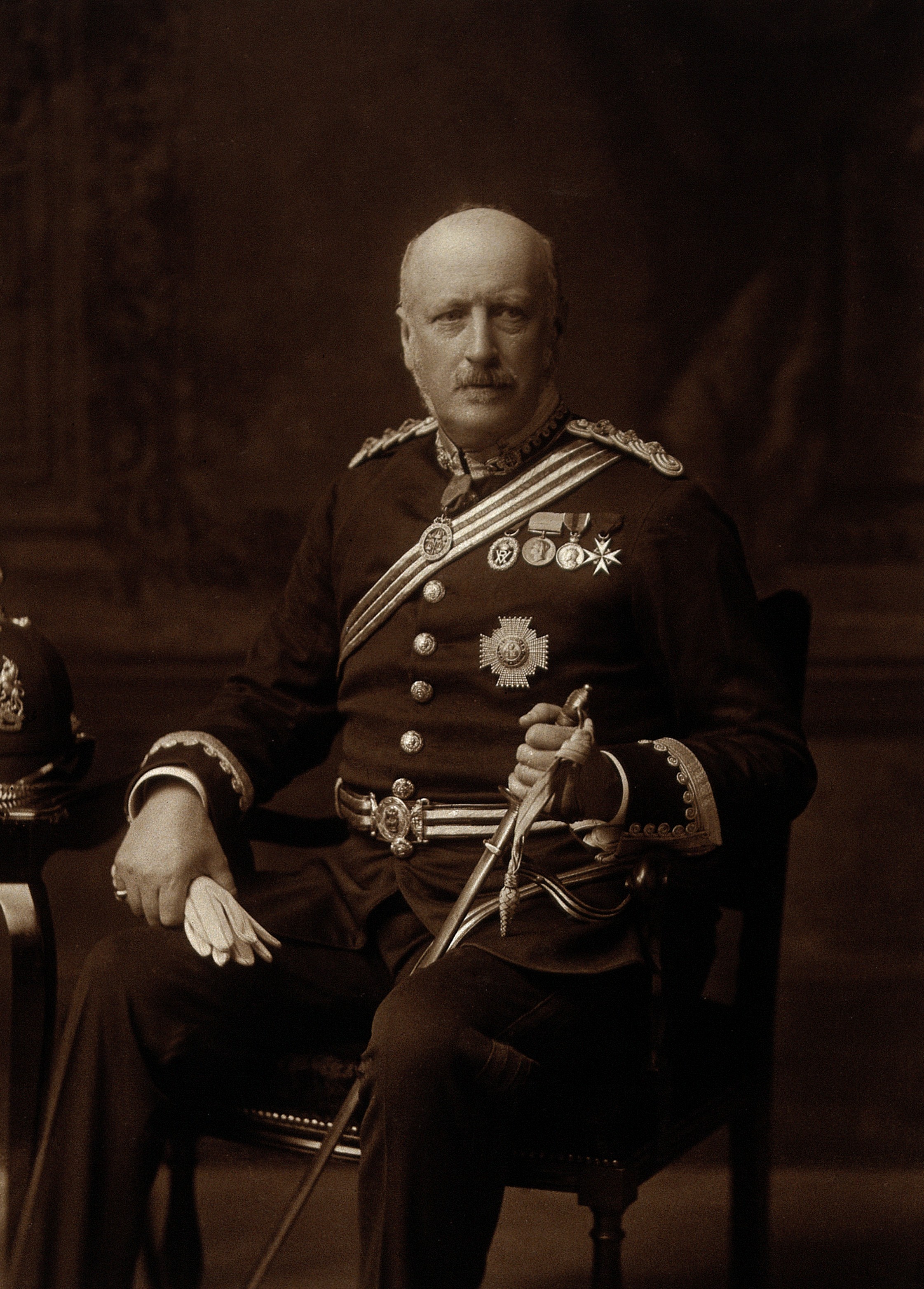
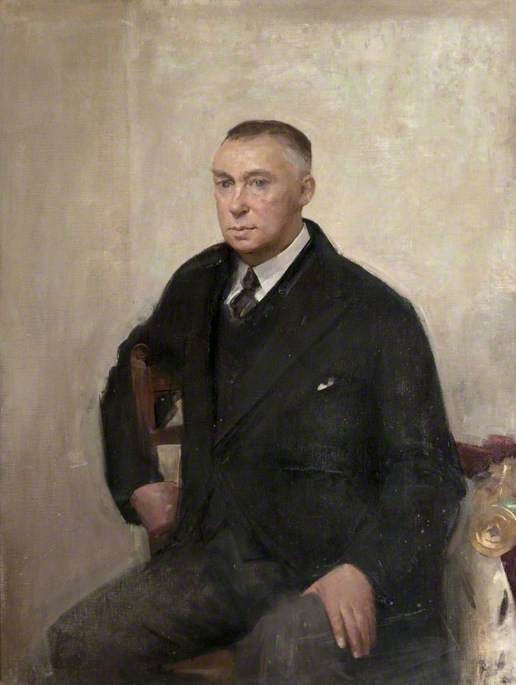
John Mathieson Mathias 1906-1963

Donor.  John  Mathieson Mathias (1906-1963)

John M Mathias donated four paintings to Glasgow in December 19511. Two are by French artist Andre Lhote   (Figures 1 and 2) and two are by English artist Mark Gertler(Figures 3 and 4) 

     https://artuk.org/discover/artworks/head-of-a-woman-84963

 Figure 1 .Head of a Woman by Andre Lhote   c1925   ©CSGCIC Glasgow Museums . Acc 2930 

 https://artuk.org/discover/artworks/nude-84964

Figure 2 Nude by Andre Lhote c1925 © CSGCIC Glasgow Museums. Acc 2931

The Paintings

 Figures 1 and 2  are  the work of  Andre Lhote (1885-1962). He was born in Bordeaux and trained first as a decorative wood carver before attending L’Ecole des Beaux- Arts in Bordeaux where he took up painting. He  moved to Paris in 1906  where his works were shown for example at the Salon d’Automne. Lhote originally painted colourful landscapes in the Fauvist style but his mature works were in the Cubist style.  Over the next few years Lhote’s works were shown all over Europe including in London in 1912 at the Second Post  Expressionist  exhibition at the Grafton Galleries  which was organised by Roger Fry and the Bloomsbury Group. He set up his own art school- Academie Montparnasse in Paris  in 1922. His most significant work however was not as a visual artist but  as a writer who articulated Cubist theories and as an educator who influenced a generation of French artists.2

We do not know at this point for certain  how or when these paintings were acquired by  John Mathias or the Mathias family. We do know that in November 1927 Andre Lhote held an exhibition of his own and his students work at the Claridge Gallery at 52 Brook Street in London 3 which was partly owned by our donor’s mother Ena Mathias . In the 1927 exhibition catalogue (Exhibition of Paintings and Drawings by Andre Lhote and His Pupils)  there is one work entitled Negresse  which is the title  given to one of two  Andre Lhote paintings which appear in the  1951 Catalogue of French Paintings  published by Glasgow Museums. The description and measurements  correspond to  Figure 1  Head of a Woman” above.  The original  title  was obviously changed at some point as it would not now be acceptable .There  are three works entitled Nu   in the 1927 exhibition catalogue any one of which could be our  Nude ( Figure 2) in the 1951 catalogue though there is no description or any measurements to support  this .4 It is possible  that both paintings were  bought by someone in the Mathias family from this exhibition.

 During the period of the  exhibition Andre Lhote gave a lecture at the home of Mrs Emile Mond  whose home was a centre of art and culture at the time. She was said to be a talented artist and musician .5 Emile Mond was a cousin of Robert Moritz Mathias, our donor’s father(See Appendix ) .    

Figures 3 and 4 are the work of English artist  Mark Gertler(1891-1939) )   who was born in Spitalfields of Polish -Jewish descent. 6 He attended the  Slade School of Art from 1908-1912 where he won several prizes. His  health was not good and he spent a lot of time in the South of France where he was influenced by Post -Impressionism. His style was highly individual with strong elements of Eastern folk art. He specialised in still lives, female portraits and nudes. He had a studio in Hampstead  and frequently exhibited in various London Art Galleries such as the Leicester Galleries. He was very successful until the nineteen thirties  when his popularity began to wane. He suffered bouts of depression and after  an unsuccessful exhibition at the Lefevre Gallery in London in 1939 he committed suicide .7 We can only speculate  at this point as to how these two paintings came into the possession of John Mathias or the Mathias family or why they were given to Glasgow. We know that one  of Gertler’s patrons was Lady Ottoline Morrell, half -sister of the Duke of Portland. She was also a close friend of Ena Mathias. Another  link between Gertler and  the Mathias family is that Ena’s brother Robert bought one of Gertler’s paintings .8 Ottiline suggested that Gertler might exhibit at her friend Ena’s Claridge Gallery at a time when his finances were low but Gertler refused saying the Claridge was not prestigious enough and Ena could not offer him an advance payment. However in  November 1926 Robert Mathias did buy one of Gertler’s paintings  -possibly Pomegranates and Melon for £50 which  according to 

Gertler was ,’a Godsend’. 9  According to The Times  Gertler did exhibit at the Claridge Gallery at the end of 1926.10  Clytie and Autumn Leaves was exhibited at the Leicester Galleries in 1932.11 A work called  After Giotto was exhibited in the Lefevre Gallery in London in May 1939 shortly before Gertler’s death . 12  These may have been our paintings  but we still do not know how they came into the hands of the Mathias family.

Figure 3 Clytie and Autumn Leaves  by Mark Gertler c 1932  © CSGCIC Glasgow Museums .Acc 2929

Figure 4 After Giotto(also known as Pieta) by Mark Gertler is  a study of a detail from Giotto’s Lamentation (The Mourning of Christ) c 1911-1939 © CSGCIC Glasgow Museums  Acc 2928

The Mathias/Wertheimer  Family

Our donor’s father   was Robert Moritz Mathias (1873-1961) and his  mother  was Helena(known as Ena) Wertheimer(1874-1936). 

Robert M Mathias was a watercolourist as well as a collector of art . He was born in Cologne ,Germany in 1874  and he  came  to Britain partly because of religious persecution against Jewish people at that time  and also  to work for his uncle Ludwig Mond(See Appendix )). He became a naturalised British citizen in 1910. The naturalisation papers were signed by Winston Churchill who was then one of the Principal Secretaries of State.13 His father was Mathieson Mathias (1823-1883) and his mother was Mathilde Mond (1845-1928).14 At the time of our donor’s birth in 1906 Robert Mathias was the managing director of the Mond Nickel Company .15 He does not appear on the UK Census of 1891 or 1901  but was in the UK by 1905 when he married Ena Wertheimer .16

Ena Wertheimer was one of the daughters of  successful London art dealer Asher Wertheimer (1844-1918) who had a gallery at 154  New Bond Street ,London which had been established by his father Samson Wertheimer, who was born in Germany but fled  to  Britain in the 1830s as a result of the  antisemitic persecution of that time.  A Family Romance  by Jean Strouse gives a detailed account of  Samson and Asher Wertheimer’s  very successful dealing in the British art world in the late nineteenth and early twentieth centuries when they bought from and sold to  prominent families in London society including the Rothschilds as well as British aristocracy and  became part of  London Society of the early twentieth century .17  The Wertheimers  moved to 8 Connaught Place  near Hyde Park, London  in 1884 . Connaught Place housed a mixture of titled aristocrats and wealthy Jewish families. Lord and Lady Randolf Churchill lived at 2 Connaught Place .18 

Asher Wertheimer was a friend of  the artist John Singer Sargeant and commissioned him to paint twelve portraits of his family over a period of ten years including portraits of Ena and her sister(Figure 5). Nine of the twelve paintings were  bequeathed to the nation in 1918 after the death of Asher Wertheimer and were displayed in their own room in the National Gallery between 1923 and 1926. Many of these portraits are now in The Tate Gallery in London. When Asher Wertheimer died in 1918  his obituary in The Times described his involvement in the highest echelons of the world of art dealing and the respect in which he was held by the art world  during his life Asher Wertheimer left £1.5 million  in his will which was an enormous fortune at that time .19

Ena and Betty, Daughters of Asher and Mrs Wertheimer 1901 John Singer Sargent 1856-1925 Presented by the widow and family of Asher Wertheimer in accordance with his wishes 1922 http://www.tate.org.uk/art/work/N03708

Fig 5. Ena and Betty Werthiemer. John Singer Sargeant 1901 © Public Domain

  Ena had attended the Slade School of Art between 1902 and 1905 to study painting. ()Ena was said to be ,’an accomplished painter’ 20  who  seems to have been something of a force of nature . She carried on the Wertheimer family’s presence in the art trade by opening the Claridge Gallery at 52 Brook Street London. This was not her fIrst commercial venture. 1923 Ena had opened a dress shop for girls and debutantes  which specialised in French dresses which  she obtained from Paris. The shop was called Poulain (foal) and was in  George Street in London’s West End. Russian emigrees and a manageress ran the shop which soon moved to larger premisses at 52 Brook Street. However an examination of the accounts showed that the business was deeply in the red partly because the manageress had been helping herself to cash.  Ena’s husband Robert commented that,

‘she might as well have given each dress away with a £10 note pinned to it.’

 The Mathias marriage was said to be tempestuous with the couple agreeing on nothing. ‘Ena was as extravagant ,strong-willed and impulsive as her husband was cautious and restrained’. Ena loved to entertain and gave lavish dinners, teas and musical entertainments with the help of a large household staff .21 Her activities were frequently reported in  the press as in 1912 when the Westminster Gazette reported her taking part in a pageant at the Allbert Hall to raise money for the University College Hospital ,London. The pageant consisted of the performance of a series of fairy stories in which Ena took part in the production of  Aladdin .The pageant was attended by the Prince of Wales and other members of the Royal Family .22 Her friends included prominent artists, poets and authors such as Somerset Maugham and  the Sitwells . Celebrities from   the world of ballet such as  Diaghilev  and from the art world such as Picasso had dinner in Montague Square. While he lived Ena had a close relationship with John Singer Sargeant and they wrote to one another frequently. It was even suspected by Robert that  they had an affair .23

 After the demise of Poulain 52 Brook Street  was reconfigured as the Claridge Gallery which was said to appeal more to Ena’s cultural and artistic interests. The Claridge Gallery was opened  in  July 1925 with an  exhibition of the work of John Singer Sargent (1856-1925)who had recently died. The proceeds of the sale of the exhibition catalogue were to go to the National Art Collections  Fund .24

  The Gallery did not follow the Wertheimer tradition  of exhibiting and  dealing in Old Masters, portraits and the art of the French ancient regime. Ena exhibited  twentieth- century art   giving  young artists an opportunity to show their works without having to pay the exorbitant fees and commissions charged by other west-end galleries. She exhibited established artists as well including Lhote, Mark Gertler, Raoul Dufy, Harold Squire and many others .25

 Also   part owner  of the gallery was Walter Archibald Propert who as well as being a surgeon was a  devotee of ballet and art. He wrote a book on Russian ballet  and many of the exhibitions at the Claridge Gallery  concerned Russian  art and Russian ballet. He  had served as a surgeon in Russia during WW1 so perhaps his interest in Russia stemmed from then. He had been a friend  of the Mathias family for at least twenty years  and was one of the referees who supported John Mathison Mathias’s application to become a student at  The  Inner Temple in 1927(see below).26 

After several apparently successful years where visitors included Queen Mary in June 193027  the Claridge Gallery closed on December 18  1931. There appear to be two reasons for the closure. The Daily Mirror in December 1931 reported that the closure of the gallery would be regretted by many people  even though few bought paintings .28 It is said Ena bought many works that failed to sell .29 The Daily Sketch  reported that     a recent exhibition of the work of a popular young artist  had attracted 1800 people only six of whom  bought paintings. The Daily Sketch however also reported that the lease of the property was up .30

The Mathias family lived at 15 Montague Square,  Marylebone,London at the time of our donors birth 31 and in the late nineteen twenties also  bought  Bury Manor, a country house  in the village of Bury in West Sussex .This was a house of fourteen bedrooms ,six bathrooms and several reception rooms.32 As we have seen the Mathias family, though Jewish were  not overtly so and were greatly involved in London society many of whom were frequent  guests at Bury Manor. The Mathias family was also involved  in  the community around Bury Manor and Ena especially was involved in many fundraising charity events,  those involving the creative arts being her greatest interest .33

John Mathieson Mathias

John Mathieson Mathias was born on 4 September   1906.34 He had four siblings:-

Diana Henrietta born 1908

Anthony Robert born 1910

Elizabeth Flora born 1912

David Frederick Archibald born 191335

As we have seen at  the time of his birth the family was living 15,  Montague Square ,Marylebone ,London. The 1911 Census  tells us that at that time of the  census John ,Diana and Anthony were staying at the home of his father’s cousin ,Robert Mond, eldest son of Ludwig Mond the chemist ,at Combe Bank, Sundridge in Kent. Also in the house were Robert Mond’s two daughters, Freda age 11 and Irena age 10 . Neither set of parents were in the house and it appears that all the children were being looked after by the governess ,Amy Allen and a house full of servants .36 There is no trace of either set of parents in the 1911 Census  so perhaps they were abroad on holiday . Robert and Ena Mathias often travelled abroad to the Continent ,North Africa and the Middle East leaving the children with nannies and governesses .37

There is little information regarding our donor’s childhood.  In a letter to his mother John Singer Sargent referred to him as ,

“the Greek God so shy and struggling  although possessed of magnificent aplomb” which appears to be something of a contradiction. 38

  John  attended a school in Horsham ,West Sussex  but we do not know which one .39 The 1921 Census sees the family still living in Montague Square together with a butler, cook and housemaid. John was fourteen at the time of this census and described as a full-time  student .40 He appears to have matriculated in October 1925 when he would have been 17 years old.

John  was admitted to Trinity College Cambridge on 1 October 1925 to study for a BA in History  as a ‘pensioner’ which was the name given to regular fee-paying students. He was assigned historian Denys Arthur Winstanley as a tutor. For his first two years he lived at 11 Portland Stree,Cambridge ,moving to  Bishops Hostel where he remained until the end of his third year  at Easter 1928. His name does not appear in the residency lists after this point. 41

The University Records show that in 1928 he was granted leave to proceed to study for an  LLB but appears to have failed the Principal Examination in Law at the end of that year. However in 1929 he sat the Principal Examination in French and achieved a second -class grade finally gaining his BA in 1930. During his time at Trinity JMM appears to have been a member of the Magpie and Stump-a Trinity College debating Society and a member  of the Boat Club .42

John’s career studying for his LLB was rather mixed. He was admitted to the Inner Temple on 22 September 1927 to study for the Bar while still attending Trinity College.  Between 1928 and 1931 he failed several exams at the first sitting  but eventually passed his Final Exams in the Hilary Term of 1931. He was called to the Bar  at the inner Temple on 17 November 1931.43  He is listed as a member of the Inner Temple  in the 1932 Law List which is an annual record of solicitors and barristers .44 His professional chambers were in the Goldsmith Building of the Inner Temple from 1932  while he lived at various address in the West End of London .45 Unfortunately we have  no information about JMMs career as a barrister.

The  Mathias  country home Bury Manor had been owned by the Mathias family since at least 1928 .46  As already stated the family involved themselves in the local community for example opening the gardens of Bury Manor each year to raise money for local causes and ran an annual bazaar to raise money  for the Bury and District Nursing Association .47 Ena Mathias was very hospitable and generous. According to the West Sussex Gazette ,’ she had in its highest and best sense the artistic temperament -an acute and sensitive love of beauty unmixed with any trace of pose or affectation’ .48  and The Times reported that ,

‘at her charming house in London and at her lovely little manor house under the Sussex Downs it was her delight to entertain her friends .’49

John Mathias’s mother, Ena died in a London nursing home on 24 March  1936 of stomach cancer. According to the local press she was much missed by the people of Bury most of whom attended a memorial service for her in the local church to which she had donated two brass candlesticks .50

On 9  November 1937 John married Ludmilla Krassin who was the daughter of the late Leonid Krassin ,Russian  Ambassador to the United Kingdom before his death  in 1926. Leonid Krassin was a prominent Bolshevik .The marriage took place in the Chelsea Registry Office. 51 It is not known how John and Ludmilla met.

Before being Soviet Ambassador in London Leonid Krassin  had been Soviet Ambassador in Paris where he lived with his wife and three daughters. In 1925 he was appointed to the post in London but died in 1926 leaving a vast fortune according to rumours of the time but which turned out to be a myth. 52  There were numerous reports in newspapers about Ludmilla  Krassin’s  romantic entanglements . One that she had secretly married M Gaston Bergery, a lawyer who had been secretary to a former Prime Minister of France . The marriage was reported to have taken place in the Soviet Embassy in Paris in August 1927 but was later denied by M. Bergery who said they were merely engaged. The second rumour going around in 1927  was that Ludmilla was to marry the French Duc de la Rochefoucaud . The newspapers emphasised  Ludmilla’s beauty  and wealth .53 However neither’ romance  ended in marriage as Ludmilla was described as a spinster on the certificate of her marriage to John Mathias. Perhaps finding out that Ludmilla had not inherited a fortune affected her previous romances.

 In 1938 John and Ludmilla  were living at 27 Donne Place in  the Borough of Kensington and Chelsea,London. They later moved to 3 Sterling Street in Kensington which remained their London home until around 1958 /1959 when they moved to a flat at 23 Rutland Gate, London  SW 7.54

At the time of the 1939 Register John and  Ludmilla together with father Robert   and sister Elizabeth were living at Bury Manor  while still retaining  town houses in London. The sister of Robert Mathias , Theresa Said -Ruete was also there. Also listed was Dorothy Braddell whose husband was the son of Sir Thomas Braddell ,Chief Justiciary to the Federal Malay States. Dorothy was there with her daughter Virginia who was in her twenties.

  There were  twenty three people listed as  living at Bury Manor , five of whom were servants .55 Those who were not either family friends or relatives  may have been evacuees.  2 September  1939 saw the beginning of Operation Pied Piper ,the name given to  the British Government plan to evacuate mothers with babies as well  as school age  children  from the threat of bombing in London at the outbreak of war. West Sussex saw the arrival of thousands of evacuees to the Petworth area which was near Bury Manor. 56 Listed in the 1939 Register as living at Bury Manor were Rosina Linton with her daughter Doreen who was only a few months old and Irene Linton with her son Anthony who was about a  year old .57 They had all previously lived in London. The 1939 Register was taken at  the end of September 1939 giving time for evacuees to be listed .58

We have little information regarding life  at Bury Manor during World War 2  apart from Robert Mathias being  fined £1 for not immobilising his car according to wartime legislation. 59  Robert remarried in December 1942. His bride was Mary Branch who had  lived at White Webbs Cottage in Bury .60 Another wedding in the family was that of Elizabeth Mathias, John’s sister, to Captain Robert Guillaumet of the Fighting French. 61 

Whether John and Ludmilla spent the war living at Bury Manor or lived in London is not known at this point. They did not have any children. John Mathias does not seem to appear in any military records of the period. The 1939 Register tells us that Ludmilla was involved with ‘W.S Red Cross’ which may be an abbreviation of West Sussex Red Cross. However  the inhabitants of Bury Manor played a part in fund- raising for various causes during the war. One example is a Garden Fete held to raise funds for the Bury and Amberley District Nursing Association in which the new Mrs Mathias participated .62 She  also organised a whist drive and dance in the tithe barn of Bury Manor  in 1944 in aid of The Agricultural Fund of the Prisoners of War Fund .63

On 9 August 1952 Ludmilla and John set sail from London   for Vigo  on the south west coast of Spain presumably for a holiday. They travelled  First Class on the Highland Monarch 64 which was  a combined cargo and passenger ship of the Royal Mail Line which had been built in 1928 by Harland and Wolff for the Nelson Line and  transferred to the Royal Mail Line in 1932. 65   The Highland Monarch covered the South American route calling at Vigo ,Lisbon, Las Palmas ,Rio de Janeiro, Santos, Monte Video and Buenos Aires .66

The Mathias family appear to have continued their interest in art as in July 1960 John Mathias was one of the sponsors of a posthumous exhibition of the works of local artist Harold Squire of Henfield in West  Sussex . Robert Mathias owned two of Squire’s works which he loaned to the exhibition which was held in aid of the Chilean earthquake  relief fund. Harold Squire was born in Chile. 67

Robert Mathias died in London on 25 January 1961 aged eighty-nine leaving over £184,000 in his will .68 John Mathiesson Mathias died at Bury Manor on April 18 1963 aged only fifty-seven. He left over £230.00 in his will .69 He also bequeathed a painting to the Victoria and Albert Museum. The work was  Mongol Archer on Horseback described as  an ink on paper painting by an unknown artist from the Ming Dynasty(c 1368-1644) and is in the East Asian Collection .It had been exhibited at Sotherby’s Gallery in January 1940 which may have been when it was bought by a member of the Mathias family.70

Figure 6. Mongol Archer on Horseback  c15th-16th century artist unknown © V&A

After the death of John Mathias Bury Manor was put up for auction 71 and became Dorset House Preparatory  School which it remains to this day .72 The former tithe barn which saw fundraising events during WW2  is now a popular wedding venue .73

Appendix
The Mond Family

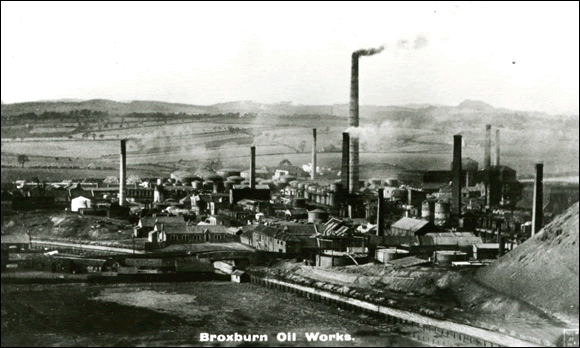
 Mathilde Mond ,our donor’s grandmother, was the sister of the chemist Ludwig Mond (1839-1909) who was responsible for setting up the Brunner Mond Company in 1873 to produce soda ash. Brunner Mond  eventually became part of  Imperial Chemical Industries  in 1926. Ludwig was also a collector of Italian art .He   set up  the Mond Nickel Company in 1900  which was licensed to mine nickel in Canada   which was then sent to Britain to be purified by the carbonite process patented by Ludwig Mond.  Robert  Mathias ,our donors father ,was a director of  the Mond Nickel Company.   Alfred M Mond  was a son of Ludwig Mond who was involved in the various family businesses, became a Liberal MP in 1906 and was elevated to the House of Lords  as  first Baron Melchett of Landford in 1928.74(1869-1936)( Oxford Dictionary of National Biography).

References

1. Minutes of the Corporation of Glasgow November 1951-May 1952 p.1351

2. www.britannica.com/biography/AndreLhote

3. Westminster Gazette 04/11/1927 p8

4. Glasgow Art Gallery. Catalogue of French Paintings.  Glasgow Art   Gallery and Museums, 1953

5. op cit  ref 3

6. Sunday Times 2/11/1965

7. Time and Tide 01/07/1939 pp21-22

8. Strouse, Jean  Family Romance; John Singer Sargent and the Wertheimers   

    Farrar Strous and Giroux 2024 .p196

9. McDougall, Sarah  Mark Gertler.  John Murray 2002. p245

10. Strouse p 198

11. Time and Tide 15/10/1932 p1114

12. The Times 13/05/1939  p12

13. www.ancestry.co.uk Statutory Births . John Mathieson Mathias

14. www.ancestry.co.uk  Geanet Community Trees

15. op cit ref 13

16. Strouse  pp146-9

17. Strouse.  Chapter 4

18. as above p 72

19. The Times 12/08/1918

20 .South of England Advertiser 2/04/1936 

21. Strouse p p 198-201

22.  Westminster Gazette 05/12/1912 p6

23.  Strouse pp201-2

24. Strouse. p 191

25. as above

26. Strouse p194-5

27. Scotsman 13/06/1930 p8

28. Daily Mirror 7/12/1931 p11

29. Strouse p.198

30. Daily Sketch 18/12/1931 

31. op.cit ref 13

32. West Sussex County Times  20/09/1963 p21

33. op cit ref 20

34. op.cit  ref 13

35 .www.ancestry.co.uk  Statutory Births

36. UK Census 1911

37. Strouse p 201

38. Strouse p.150

39. archives@trin.cam.ac.uk

40. UK Census 1921

41.  op cit ref 39

42. as above

43. cpilkington@innertemple.org.uk

44. Law List 1932

45. www.ancestry.co.uk  UK Census and Electoral Rolls

46. Worthington Gazette 05/09/1928 

47. West Sussex Gazette 31/10/1935 p4

48. West Sussex Gazette 02/04/1936 p3

49. The Times  27/03/1936 

50. op cit ref 48

51. Daily News 10/11/1937 p11

52. Daily Express  22/08/1927 p2

53. Daily News 20/08/1927 p7. Illustrated Police News 18/08/1927 p2

54. www.ancestry.co.uk  Electoral Registers 1938-1963

55. 1939 Register

56. iwm.org.uk/history/second-world-war/the-evacuation-of-children

57. op cit ref 55

58. www,nationalarchives.gov.uk

59. Littlehampton Gazette 19/09/1941 p3

60. West Sussex Gazette 17/12/1942 p2

61. as above 11/03/1943

62. as above 29/07/1943

63. as above 06/01/1944

64. www.ancestry.co.uk  Passenger Lists 

65. http://www.mastermariners.org.au/stories-from-the-past/6218-mv-highland-monarch-1928

66. op cit ref 64

67. West Country Times 07/04/1960 p19

68. www.ancestry.co.uk Index of Wills and Administrations 1858-1985

69 as above

70  https://collections.vam.ac.uk

71. West Sussex County Times  20/09/1963 p21

72. The Observer  15/05/1964 p6

73. https://burymanorbarn.co.uk

74.  Oxford Dictionary of National Biography.

Harry McShane 1891-1988

Harry McShane, Socialist Activist 1891 – 1988
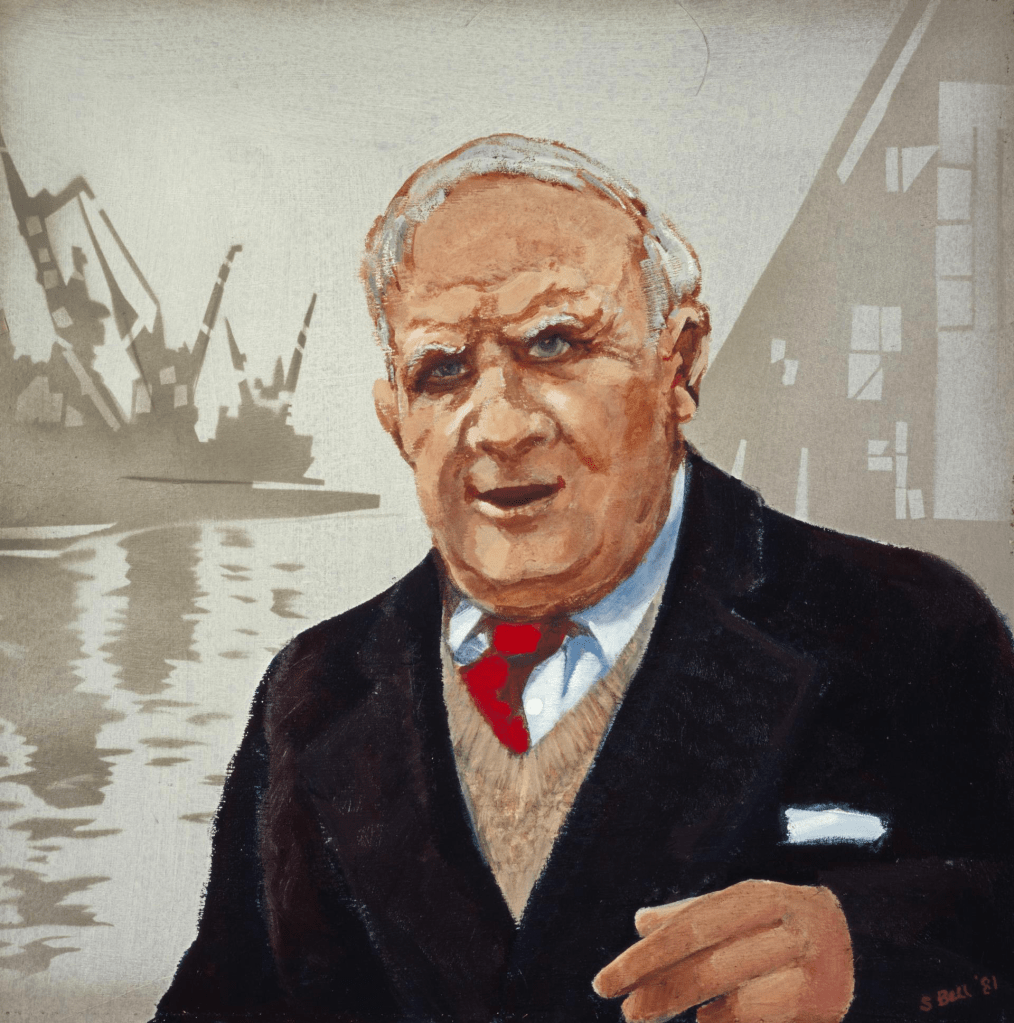
                             Harry McShane 1891-1988 Socialist Activist

                                           Artist – Stanley Bell,1981

                                         National Gallery of Scotland

‘He became a revolutionary Marxist in 1908 and he died a revolutionary Marxist in 1988.’

Thus Paul Foot described Harry McShane, going on to call Harry an agitator in the struggle between the classes. ‘He made up his mind very early on that the socialist society he wanted was not going to be made by anyone for the workers, it was going to be made by the workers or not at all’. (1) 

Harry McShane lived in Glasgow for almost a century, living and working within the city throughout most of this time, witnessing first hand and being actively involved in many of the significant events of the movement. 

Early Life

Harry McShane was born on 7 May 1891. (2)  His father, John McShane, was from an Irish Catholic family. McShane’s paternal grandparents came from County Tyrone in Northern Ireland. His mother, Janet Sanson, was from a family who were originally from Edinburgh. They were a Protestant family. The couple met and married in Glasgow. Janet worked in a fish hook factory in Glasgow. John was a mason’s labourer. (3)

Harry McShane wrote about the problems facing those who entered into mixed marriages in the 1900s. Both Catholics and Protestants disapproved of such marriages. When he was a few months old his parents separated and his father took him to live with his grandparents. Harry stated that the differences in the marriage were about status as well as religion. Harry’s father and grandfather were builders’ labourers. His maternal grandfather, Tom Sanson, was a blacksmith, a skilled worker, and was also a member of the Church of Scotland. McShane stated that Tom Sanson was very anti Catholic. 

The separation between Harry’s parents did not last long.  John McShane went back to his wife and they went on to have ten more children. They never separated again. Harry, however, stayed with his grandparents and rarely saw his mother, although his father came regularly to visit him at his grandparents and took him out a lot. He was brought up as a Catholic. (4)

Family Life

Compulsory education in the 1890s began at six, but Harry started school at five. He remembered that he wore shoes to school, while most of the other children had bare feet. Harry had a shaky start at the local school in the Gorbals – ‘ My first day, I saw a teacher hitting a boy’s bare leg with a cane. Then, to make matters worse I lost my road home.’ His grandparents decided not to send him back to that school. They moved from Gorbals to Tradeston, to a house where Harry could have his own bedroom, and he was sent to St Margaret’s in Kinning Park, where Harry got what he described as his ‘meagre Catholic education’. He described a cruel regime at the school, although he acknowledged that there were some good teachers there. Harry’s father’s influence on his education was significant. He encouraged him to read and also influenced what he read, steering him away from boys’ stories to more serious reading, such as the essays of Macauley. 

Harry describes buying books to read: ‘ There  was a string of barrows right along the riverside then, with second-hand tools and books – this was before Barrowland grew up in the East End of Glasgow’. 
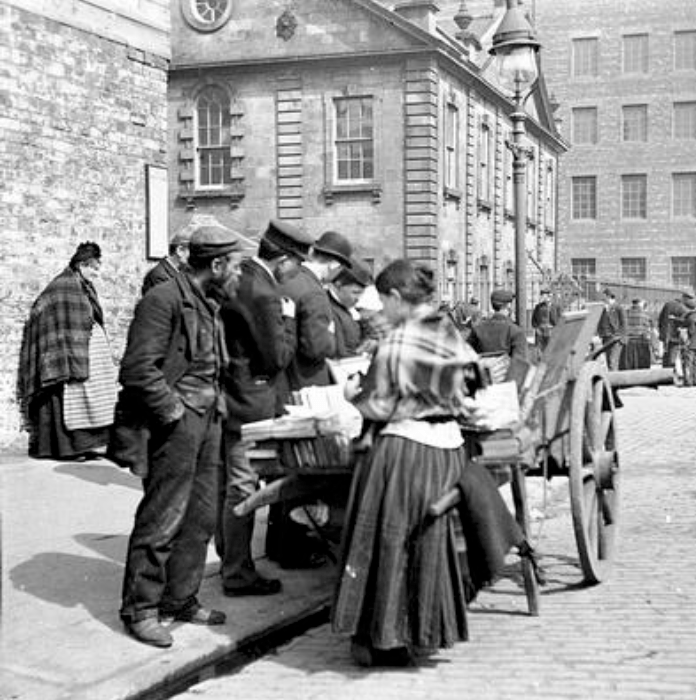
                                      Book Barrow in Greendyke Street c 1916

                                          Glasgow City Council.  Glasgow Museums

Harry also remembered being told at school that for his knowledge of English he should read Macaulay’s essays and the Glasgow Herald. Many of his grandparents’ generation were illiterate, not uncommon at the time, as many of that generation would not have attended school as children. He described people coming to his grandparents’ house so that Harry could read reports from the newspapers to them. (5)

Harry started a relationship with Jean Johnstone when he was aged eighteen. She lived in the next close to him and Harry described her as ‘the best-looking girl in the whole place’ Their social life consisted of visits to music halls and theatres, with an occasional visit to a restaurant. They married in 1915. (6)  His wife attended Communist Party Meetings when they were first married.

Political Awakening

Growing up, Harry would have been aware of working life around him. He recalled playing around the Kingston Docks near to where he lived in Tradeston. Harry’s father and grandfather were both involved in the union movement. Originally they were members of the Workers’ Union, which eventually merged into the Transport and General Workers Union after the First World War. Harry had an awareness of politics, both British and Irish, and the union movement from an early age. He attended meetings and debates from his early teenage years onwards. Glasgow Green on a Sunday was where debates and speeches would be heard. Large numbers of people would attend these gatherings, which began at noon and went on until nearly ten o’clock at night. Harry described hearing arguments during these debates and following them up by visiting the Mitchell Library to find books on the issues he had heard discussed. When he left school, the priest and others tried to persuade him to go to St Mungo’s Academy, but he resisted as he wanted to start work. His grandparents agreed with him and they and his father encouraged him to try for an engineering apprenticeship. They did not want him to be a labourer or a handyman as they had been. Harry began an engineering apprenticeship in 1907, aged sixteen.

Harry’s engineering apprenticeship involved attending evening lectures twice a week. A normal day was getting up at 5.30 am to attend work, then going to his lectures in the evening. Harry described his status as an engineer, which had been so important to his grandparents and father: ‘ They (engineers) weren’t the highest paid men. The joiners, masons and bricklayers were better paid than we were, but we had much greater security’. (7)

Working hours were long at the beginning of the twentieth century. Up to 1914 the working week was 54 hours. Working people, including boys and girls started the day at 6.00 am and finished at 5.30 pm and worked until noon on Saturdays. Harry McShane described working at Dalmuir during the war and having to leave the house before 5 a.m. to get the ferry to Anderston Cross and the train to Dalmuir.

Harry had joined the Independent Labour Party (ILP) in 1909 and left the Catholic Church shortly afterwards, in spite of pressure from local Catholics and the priest. This pressure served only to strengthen Harry’s decision to break with the church. The decision to join the ILP seems to have been influenced by the slump of the early 1900s. By 1908 unemployment in Glasgow was very high and there were mass demonstrations about unemployment, which took place in George Square every week until they were banned by magistrates. One of the leaders of these meetings became legendary in Glasgow history – John Maclean. (8) John Maclean was a Glasgow teacher who believed that Marxism had to be accepted as the only way to look at socialism. He established regular classes to teach Marxist economics. These classes were held every Sunday afternoon at the Central Halls in Glasgow and were regularly attended by several hundred people. Harry believed these meetings led to a transformation of the Labour movement in Glasgow. 

McShane was a member of the Tramp Trust Unlimited, a small group of unemployed people who travelled around the country spreading ideas of militant socialism. The Tramp Trust Unlimited was formed by John Maclean and campaigned for a minimum wage a six hour working day and full unemployment benefits.  
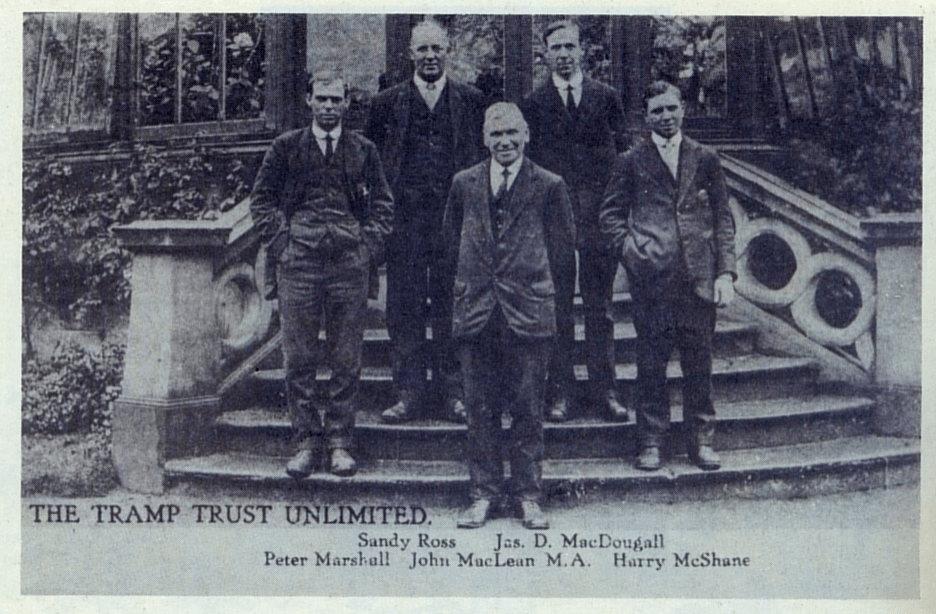
                                      Hayes People’s History Michael Walker 2013 (6)

Political activity at this time was associated with self-improvement.  Harry McShane wrote of John MacLean: ‘ He educated the Socialists of Clydeside and of Scotland. Let me say that he had a greater influence on me than any man I have ever known.’  (9)                                             

In September 1914, Harry enlisted in the army with the aim of doing propaganda work with his fellow soldiers. He joined the Royal Engineers. He became a sapper and learned how to handle explosives and build bridges and pontoons. He never intended to take part in the war and he returned to Glasgow on leave and never went back to the army. Harry was sheltered by friends and tried to get work under an assumed name, but every time he got a job he would be recognised and have to move on. (10)

Union Activism

After the war, unions were keen to see a reduced working week, some suggesting 47 hours. The engineering workers took up the fight to reduce the working week to 40 hours. A strike to support this was called on 27 January 1919. The strike caused significant unrest in the city centre. Harry McShane was present during most of it. He described the aim of the strike as reducing the working week from 54 to 40 hours. It was believed that the reduction in the working week would lead to improved chances of work for soldiers returning from the war. When the strike ended on Monday 10 February an agreement for a 47 hour week had been made and the workers started work at 8am. The 40 hour week did not come into being until after the Second World War. (11) 
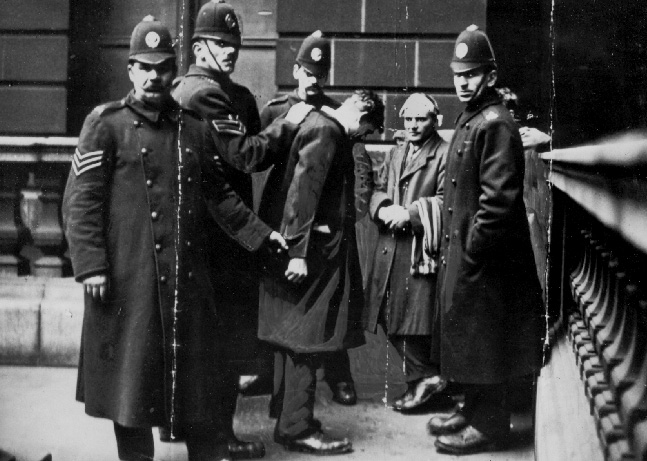
                   David Kirkwood and Willie Gallagher being arrested. George Square 1919
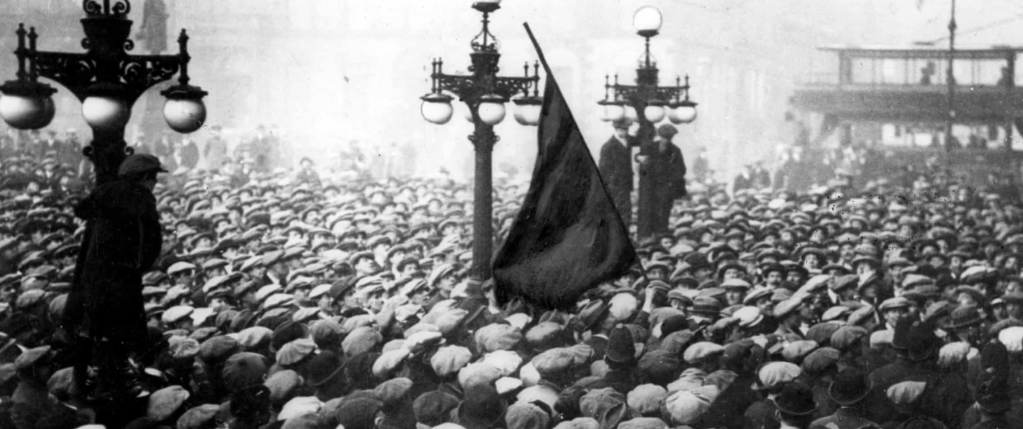
 

                                         George Square 1919  Herald and Times Group

In 1920/21 Harry McShane became involved in working with the unemployed. He continued to work as an engineer, moving south to England where he worked during the 1920s. In 1928 he moved briefly to America and Canada, working in the Yukon. In 1930 Harry discovered that his marriage had ended. The only other evidence found of the ending of the marriage is on Harry’s death certificate which states that he was divorced. (12)

Harry McShane joined the Communist Party in 1922, which led to a break in his friendship with John McLean. Harry remained a member until 1953, when he decided he could no longer agree with the party’s leadership. During his time in the Communist party, he was the main Scottish spokesman for the National Unemployed Workers Movement (NUWM) and led many marches and demonstrations throughout the UK. During the Second World War he joined the staff of the Daily Worker, the newspaper of the Communist Party.

In the early 1940s, the NUWM had closed down and he started working on the Daily Worker, the newspaper of the Communist Party. A Scottish edition was being published and McShane and a small group of others were responsible for producing the weekly paper. He worked there, apart from a brief closure, until 1953. (13)

Scrutiny by the State

Between 1930 and 1939 there is evidence in the National Archives at Kew, London that Harry McShane was under scrutiny by the state. This included warrants to intercept his mail, where some correspondents discussed use of arms and spreading of discontent leading to possible uprisings. McShane’s articles were also scrutinised. His passport was limited to the UK. No commonwealth travel was permitted. A record of McShane’s court appearances, mostly for incitement to breach of the peace, was kept.

The warrants stated that they were issued by one of His Majesty’s Principal Secretaries of State. The reason given for the warrant was that he was an official or leading member of the Communist Party of Great Britain…… and may have been engaged in different open or underground phases of communist work.  Some of the letters he received were considered suspicious. Programmes of meetings he attended were kept and he was being followed, as reports were made of his movements around the UK. When he tried to join the army at this time, he was turned down as unsuitable. There were suspicions that the intention was to enlist for the purposes of obtaining weapons. Correspondence with someone known as Winged Spur suggested to McShane that he and others should enlist in the territorial army for the purposes of obtaining weapons, which Winged Spur claimed were held in drill halls throughout the country. Winged Spur argued that these weapons could then be used to carry out an uprising. 

McShane’s marches were also closely monitored. On 28 September 1932 a memo gave information that McShane had been instructed by the HQ of the National Unemployed Workers’ Union to call at the GPO in each town on the march to pick up material or instructions. The GPO was provided with details of the route and asked to intercept the mail and examine the correspondence when it arrived. (14)

Later Life

In 1953 Harry left the Communist party and became unemployed. He took work in the shipyards and worked there until he could claim his old age pension at 69.

After his retirement aged 69, Harry McShane remained active. In his eighties he was still writing pamphlets, lecturing at Saskatchewan University and taking part in right to work marches. In his nineties he saw off an attempt to evict him from his Church of Scotland Nursing home because he was an atheist.  He also supported the staff at his nursing home in an industrial dispute. In 1987, the year before he died, he addressed the May Day rally in Glasgow. 

In 1984 Harry McShane was given the Freedom of the City of Glasgow. It was noted jokingly during the Ceremony that Harry had cost the city a great deal of money over the years. First, when he led the unemployed, the cost of policing the City Chambers to keep him out. Years later, when he finally got in, there was the cost of the banquet to celebrate his freedom of the city. During that day, the red flag flew over the City Chambers and instead of the National Anthem the guests sang ‘I Belong to Glasgow’. (15)

‘We all know that great men and women don’t make history, but we also know that working class history would be a mean thing if it were not enriched by great men and women’. (16)

Harry McShane’s archive is held in the City Archive in the Mitchell Library (17)

References

  1.  https://www.marxists.org//archive/foot-paul/1988/mcshane.html

2.   http://www.scotlandspeople.co.uk  Statutory Registers of Births 644/12733 1891

3.    http://www.scotlandspeople.co.uk Statutory Registers Marriages 644/12733 1893

           4.  McShane H and Smith J.  No mean Fighter. Tramps Trust Unlimited 1977. p3

           5.   Op cit pp 5-7

           6.   http://www.scotlandspeople.co.uk Statutory Registers Marriages 644/1821

           7.   McShane H and Smith J.  No mean Fighter. Tramps Trust Unlimited 1977. p20

           8.   https://www.marxists.org/archive/mcshane//1958/10/maclean.html

       Harry McShane: John MacLean 

9.   McShane H and Smith J.  No mean Fighter. Tramps Trust Unlimited 1977 pp 67-70

10.  ourhistory-hayes.blogspot.com Hayes People’s History, Michael Walker, 2013

 11. Glasgowlife.org.uk. The Battle of George Square – Times Past

 12. http://www.scotlandspeople.co.uk Death Certificate 1159 5531

 13. The Times London April 16 1988

 14. http://www.nationalarchives.gov.uk KV 2/3588

 15. The Times London April 16 1988

  16. The Harry McShane Collection https:/libcat.cs.glasgow.org/web/arena/mcshane

             17. https://www.marxists.org//archive/foot-paul/1988/mcshane.htmlf
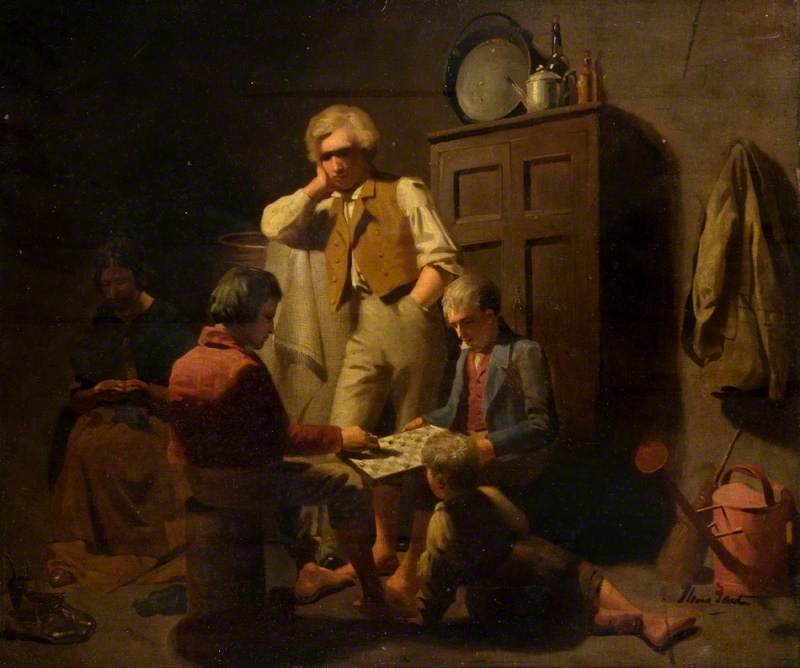
John Alastair Faed (1905 – 1981)

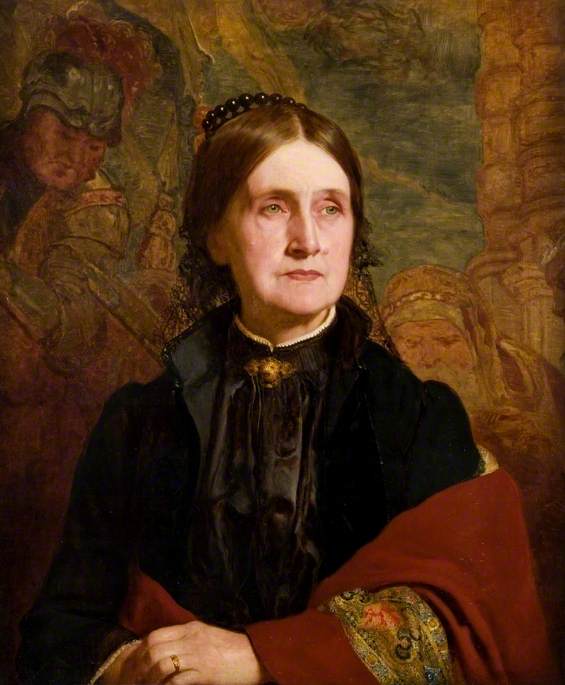
James was born into a family of prominent nineteenth-century artists and engravers who lived at Barley Mill in Gatehouse of Fleet, Galloway. He gifted two paintings to Glasgow 1) Interior With Figures by Thomas Faed (his father), and 2) The Artists Wife, Jane McDonald by John Faed (his uncle).

Figure 1. Faed, Thomas; Interior with Figures; Glasgow Museums; http://www.artuk.org/artworks/interior-with-figures-83913
Figure 2. Faed, John; The Artist’s Wife, Jane Macdonald (1820-1897); Glasgow Museums; http://www.artuk.org/artworks/the-artists-wife-jane-macdonald-18201897-83907

James Alastair was born on 19 November 1905 to James Faed junior, artist, and Eleanor Annie Herdman, (1) who came from a flour milling family from East Lothian and had moved to 38 Abbey Road, St John’s Wood, London prior to Jame’s birth. (2) James junior (1856 – 1920) was a landscape painter and much influenced by his father, sometimes referred to as James senior. 

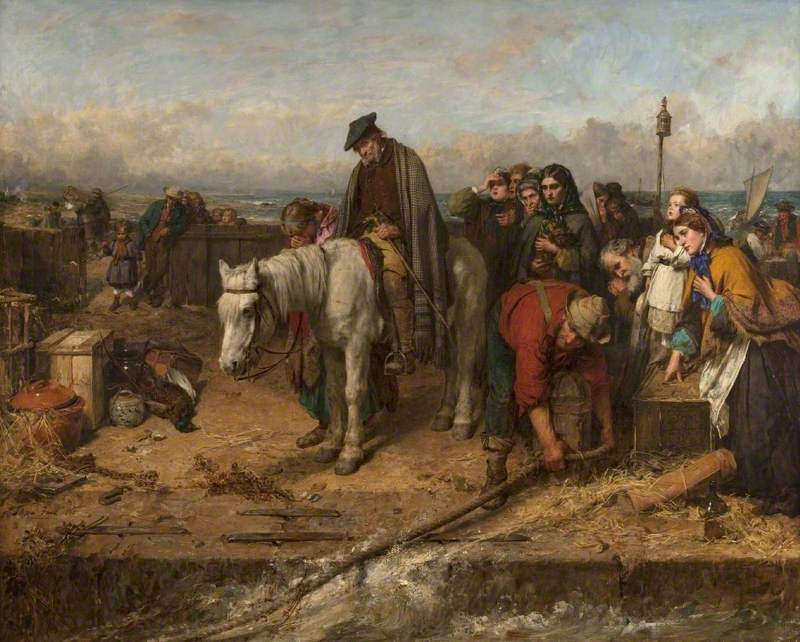
James senior’s brothers Thomas and John were also artists and Thomas is probably the best known, having moved to London, exhibited at the Royal Scottish Academy and become a full member of The Royal Academy in London in 1864. Thomas’s best known work is Last of The Clan which has become an iconic symbol of Scottish emigration, and is currently exhibited at Kelvingrove Art Gallery in Glasgow. (3)

Figure 3. Faed, Thomas; The Last of the Clan; Glasgow Museums; http://www.artuk.org/artworks/the-last-of-the-clan-83914

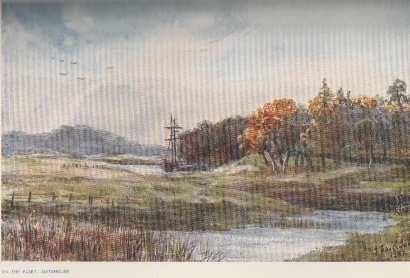
James Faed junior’s uncles excelled in painting pictures of humble Scottish life and people, but James preferred to paint landscapes, especially in Galloway, capturing the colour and depth of the countryside. (4) In 1908 James junior illustrated the book Galloway by J M Sloan, which describes the landscapes and history of Galloway. Each chapter is illustrated with a relevant watercolour such as On The Fleet, Gatehouse. (5)

Figure 4. On The Fleet, Gatehouse James Faed jun, from Galloway by J M Sloan 1908

He married Eleanor Annie Herdman in 1897 and soon afterwards they moved to St John’s Wood in London where there was a thriving artists population. Their first son, James Ronald Herdman was born in May 1899. He entered the royal Navy as a midshipman at the outbreak of WW1 and tragically was killed when his ship Goliath was torpedoed in the Dardanelles in May 1915. He was awarded the Star Victory Medal.(6) By 1913 James junior and Eleanor had moved with the young James Alastair to The Bungalow, New Galloway. The valuation roll of 1915 notes Eleanor Annie Faed of 38 Abbey Road, London as proprietor, with James Faed Junior as tenant. (7) James junior did little painting after 1915 due to paralysis of his hands, although he subsequently did some painting using his mouth. He died on 17 February 1920 and is buried in Kells Churchyard, New Galloway. Eleanor returned to Edinburgh shortly thereafter. (8)

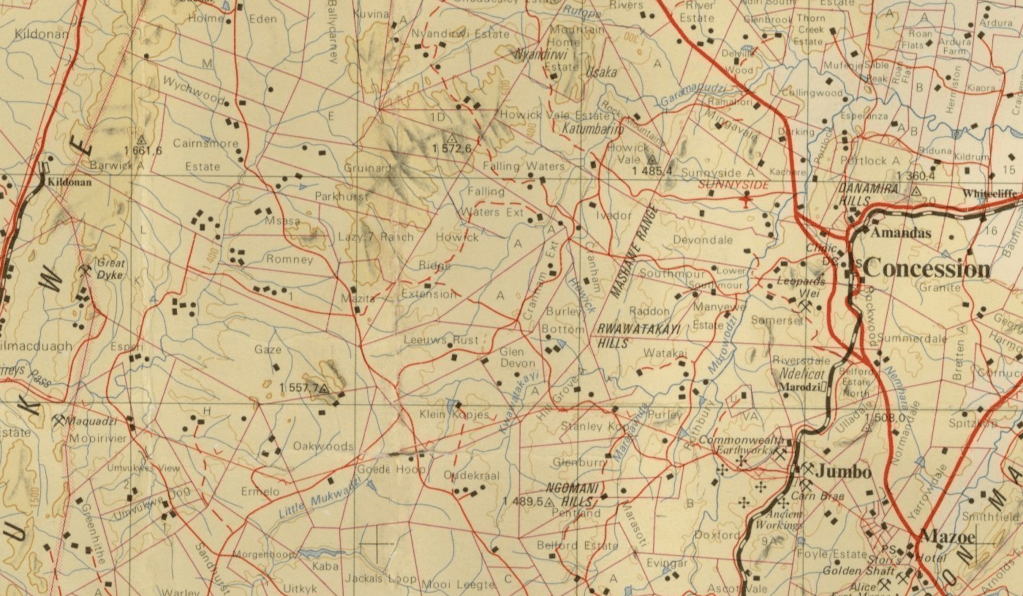
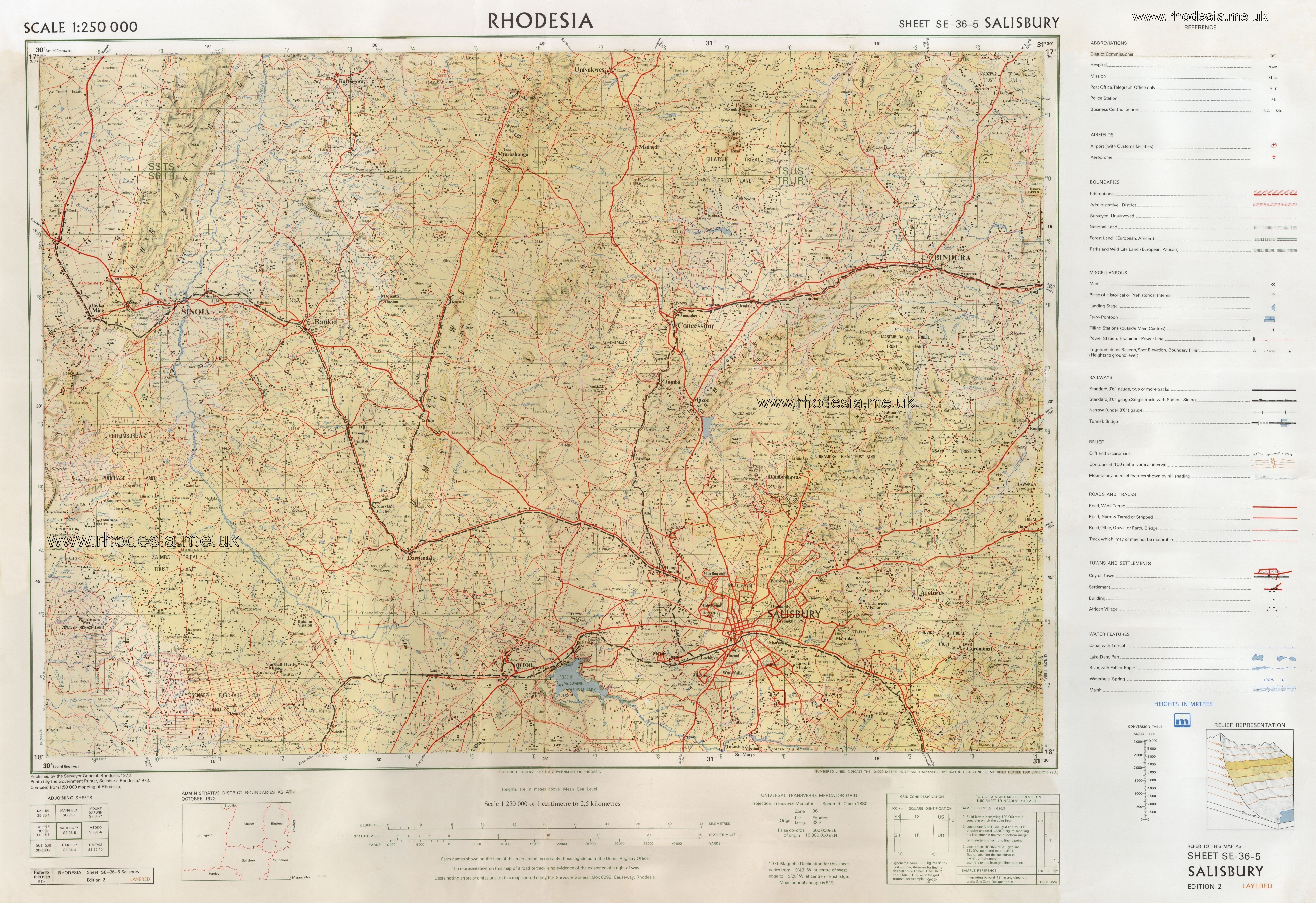
 James Alastair emigrated to Southern Rhodesia (now Zimbabwe) when he was in his twenties. He became a farmer and lived at Cairnsmore Ranch, possibly named after the hill Cairnsmore of Fleet, a short distance from Gatehouse of Fleet in Galloway, the home of his forebears.(9) The farm is near the village of Umvukwe in Mazoe district about thirty five miles north of the capital Salisbury, now Harare.

Figure 5. Cairnsmore Estate (top left of image)https://rhodesia.me.uk/wp-content/uploads/2018/03/Salisbury4_final_0021.jpg

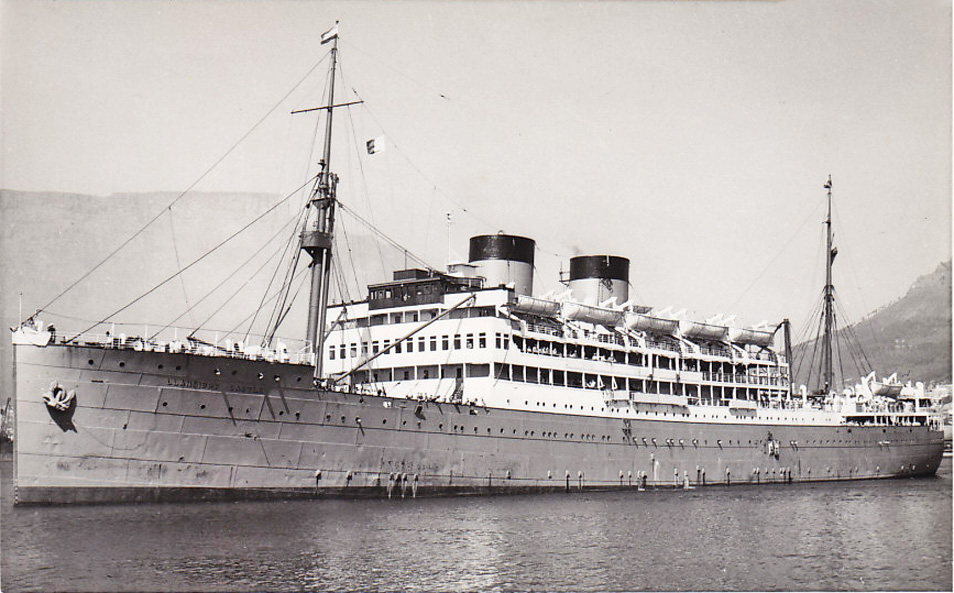
His mother left Edinburgh and travelled from the UK with James on 18 May 1933 on the ship Llangibby Castle (built by Harland and Wolff, Govan in 1929) to Mozambique,(10) and later that year on 12 October James Alastair married Frances Elizabeth Herdman in Salisbury, Rhodesia. (11) Frances was born in Edinburgh in 1905 (12) to John Herbert Herdman, a flour miller and Edith Marian Paton who lived in Edinburgh and who had been married at St Giles Cathedral on 20th June 1900. (13) James Alastair and Frances had two children, Fiona Joan Faed and Simon James Faed. (13)

Figure 6. Llangibby Castle, https://www.clydeships.co.uk/view.php?ref=9139

James Alastair qualified as MRAC (Member of the Royal Agricultural College) (14) and arrived in Southern Rhodesia at a time when immigration was encouraged, especially from the UK, to establish and build on agricultural output. The Mazoe area was a wilderness up to the early twentieth century, the name being a corruption of the word manzou, meaning ‘place of the elephants’. 

Gold mining was an important industry in the area, but as the fertile region developed, farming gained in importance. Orange growing developed in the Mazoe valley, helped by the building  of The Mazoe Dam, completed in 1920 by The British South Africa Company which supplied irrigation water to maintain production on a large scale. (15) 

Tobacco plantations were developed, with cattle ranches and, to a lesser extent, dairy farming becoming a feature of the area. The decline in mining in the early 1900’s led to The British South Africa Company encouraging settler farmers from abroad. Consequently, agricultural research, settlement schemes and farm training programmes were implemented. By attracting settler farmers with at least £500 capital, the fertile land was developed commercially and led to increased exports, compared to the more traditional subsistence farming of the indigenous population. (16)

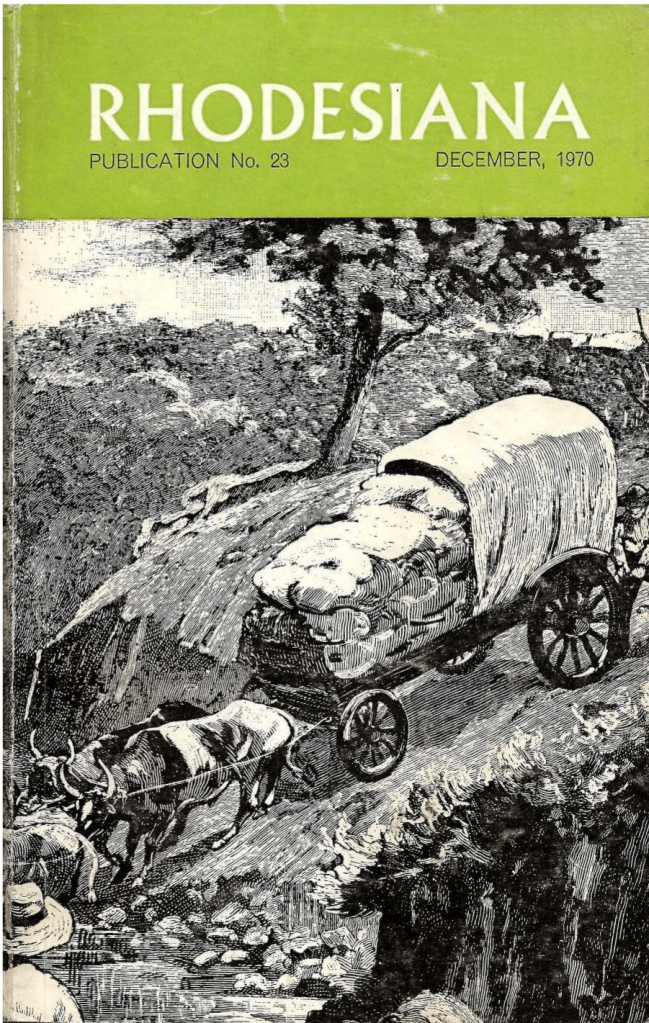
The Rhodesiana magazine was published from 1956 by The Rhodesiana Society and promoted historical studies and research about Rhodesia. Occasionally a list of subscribers was included and James Alistair is listed as a member over a number of years. 

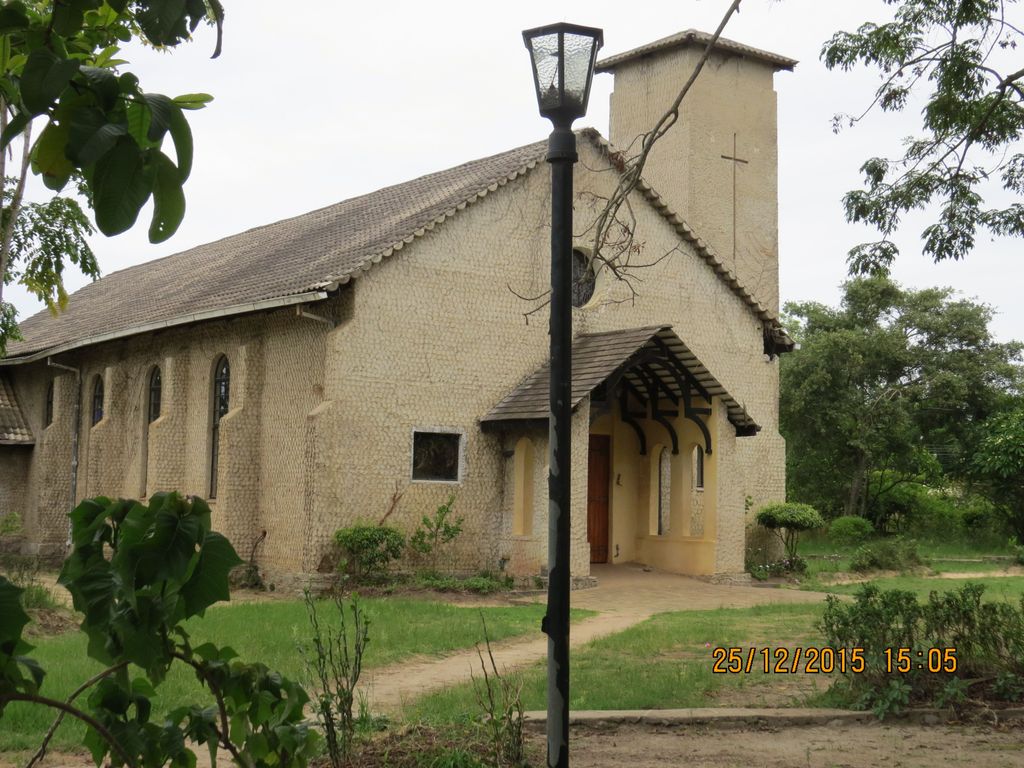
James Alistair Faed died in Zimbabwe in 1981 and was interred in The Anglican Cathedral cemetery, Mazoe District, Zimbabwe. Frances returned to Edinburgh and died in 1996.

Figure 8. Anglican Cathedral, Mazoe District, Rhodesia (Zimbabwe), Findagrave.com

Figure 9. Anglican Cathedral Cemetery, Findagrave.com

References – 

  1. www.ancestry.co.uk/family-tree/person/182135923521

(2) www.kirkcudbrightgalleries.co.uk – James Faed jnr

(3) www.kirkcudbrightgalleries.co.uk – John Faed

(4) www.kirkcudbrightgalleries.co.uk – James Faed jnr

(5) Galloway, Painted by James Faed June, Described by J M Sloan – Adam and Charles Black, London 1908

(6) www.gatehouse-folk.org.uk/ww1 – James Ronald Herdman Faed

(7) valuation Rolls Faed, James (Vr010600043-/103 Kirkcudbright)

(8) www.kirkcudbrightgalleries.co.uk – James faed jnr

(9) Voter Registration, Southern Rhodesia 11th May 1938 – Family search.org/en/LVV4-BBB/John-Alastair-Faed

(10) Ancestry.co.uk – Outward Passenger Lists 1890-1960

(11) Marriages, ancestry.co.uk (164352030) 12 October 1933, John Alastair Faed

(12) ancestors.familysearch.org/en/GDGF-J82/frances-elizabeth-herdman

(13) www.scotlandspeople.gov.uk (marriages 685/4363), John Herbert Herdman

(13) http://www.gatehouse-folkorg.uk, Faed Family Tree

(14) Voter Registration, Southern Rhodesia 11th May 1938 – Family search.org/en/LVV4-BBB/John-Alastair-Faed

(15) www.rhodesia.me.uk/mazoe-citrus-estate

(16) http://www.archive.org/details/rhodesiana/volume39/page/60

George Robb (1833-1909)

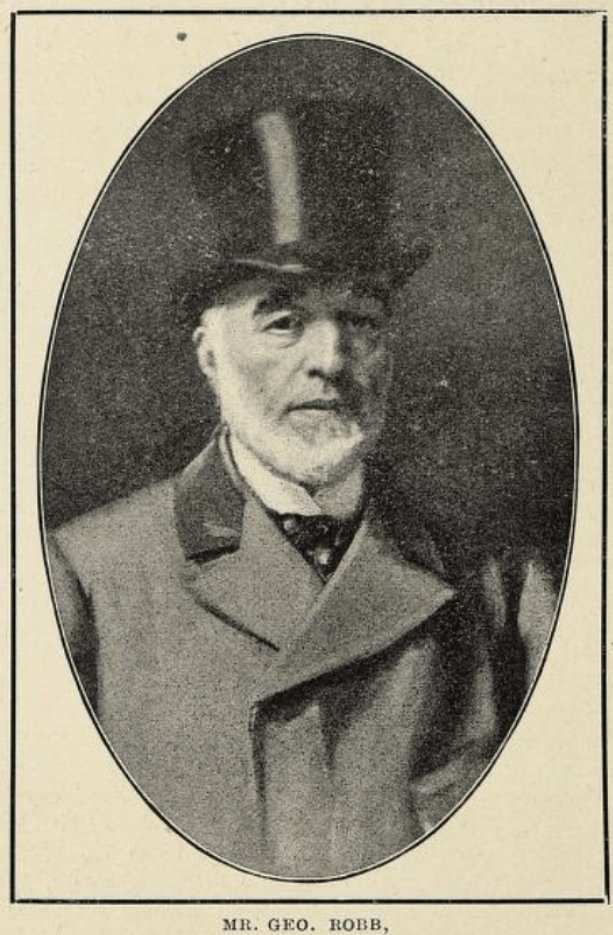
Figure 1. George Robb, Carting Superintendent, Caledonian Railways – The Railway Magazine Sep 1907

George Robb came from an old family of carters who provided a service transporting goods to many towns in south west Scotland, at a time when the railway network was in its infancy.(1) The Robb family was prominent in the Kilmarnock area, where the earliest Scottish railway to be incorporated by private Act of Parliament was built between Kilmarnock and Troon in 1808. As the railway system developed, George moved to Glasgow where he joined the Caledonian Railway Company  and progressed to become Superintendent of their Carting Department.(2)

Figure 2. Typical Goods cart early 20th century – The Railway Magazine Sep 1907

George was born in December 1833 in Kilmarnock to James, Innkeeper of The Wheatsheaf in Kilmarnock and a goods carrier between Glasgow and Carlisle, and Elizabeth Hutchison. George was educated at Kilmarnock Academy and left school to work with his uncle, Charles Robb at his carting business in Glasgow, based in Brunswick Street before moving to West Nile Street. (3) George succeeded to the business on his uncle’s death. George is recorded as living at 102 West Nile Street by 1861 and described as a railway agent. (4) By 1871 his address is 223 Hope Street and he was recorded as Carting Superintendent for Caledonian Railway. (5)

Carting services were widely publicised in local newspapers. In 1837/38, for example, J & W Robb  (possibly related to George) advertised carrier services from Dumfries to Sanquhar and Thornhill ‘from opposite Mr Hairsten’s, High Street, every friday’. (6) All kinds of goods were carted, including alcohol. When George became Carting Superintendent he assumed responsibility for the efficient management of the service and checks were made to ensure that goods arrived at their destination intact. At one time carriers from Glasgow were met halfway to Kilmarnock by carters from that town. On one occasion it was discovered that there was ‘a great leakage in strong waters somewhere on the road. He (George Robb) rode to the rendezvous by devious hidden paths, and found the men indulging freely in the wine of the country. There was no more illicit jollification on Mearns moor’.(7)

The railway system in Scotland developed rapidly in the early nineteenth century. The Caledonian Railway was established by Act of Parliament in 1845 as a result of the absorption and amalgamation of a number of existing lines. By 1866 the Scottish Central and Scottish North Eastern Railways had been absorbed by The Caledonian.(8) Although the need for carting declined as the railways expanded there was still a demand to service the transport of goods between destinations not covered by the railways. The Carting Department of The Caledonian Railway was set up on 1 February 1870 and George was offered the job of managing the Department, which he accepted, and had free reign to organise the business as he felt fit. The Company acquired George’s stud of horses. By 1906 the company ran its own carting services from 55 of its stations and employed 1000 staff and over 1000 horses.(9) George had a renowned knowledge of horses and a reputation for acquiring only the best on the market. He related a story that when he was only ten years old he purchased his first pony, which he sold the following day for a profit of £5. Later in life he exhibited and judged horses at agricultural shows.(10)

One of George’s responsibilities was the purchase of healthy working horses. On 15 April 1881 a John Rankin from Largs sold a bay horse for £68 to George Robb, at the cattle market in Glasgow. On 20 April George wrote to Rankin to advise that the horse was unsound, being a ‘roarer’ ( a condition whereby a deformity in the throat causes the animal to ‘roar’) and should be returned. The case went to court and was found in Robb’s favour.(11)

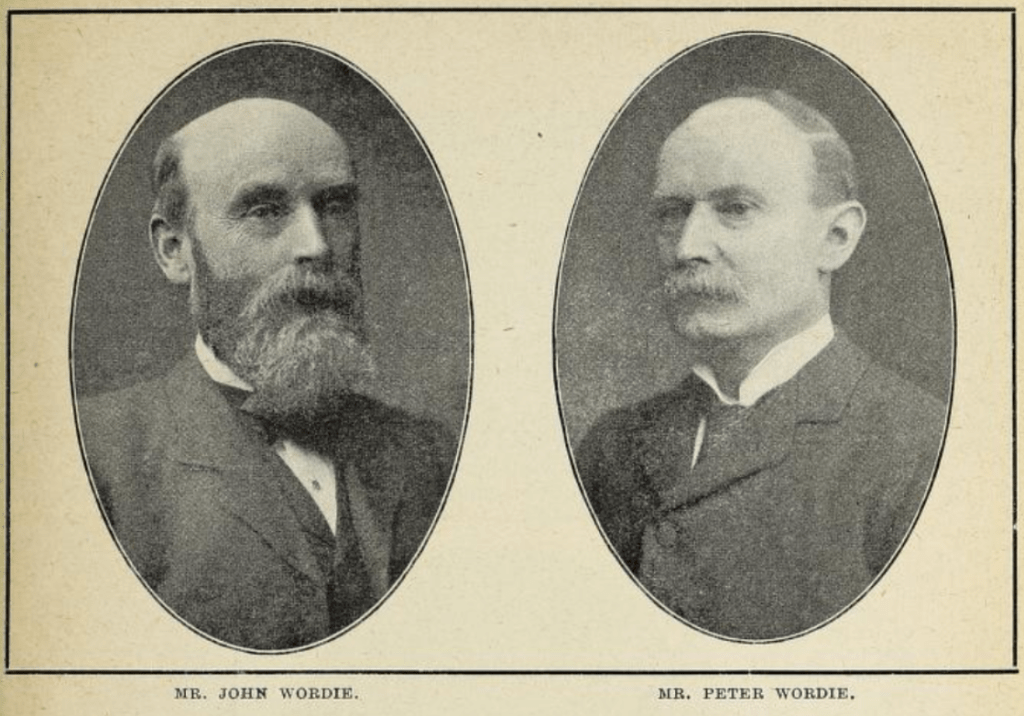
The railway employed several contractors, Messrs Wordie and Company being one of the most prominent. The firm had been connected with The Caledonian Railway since its inception and had a reputation as being equivalent to the English firm of Messrs Pickfords. At the end of the nineteenth century John Wordie and Peter Wordie, sons of the company’s founder William Wordie,  were partners, and worked with George Robb at Caledonian Railway Company in the management of its carting services.(12) 

Figure 3. John and Peter Wordie – The Railway Magazine Sep 1907

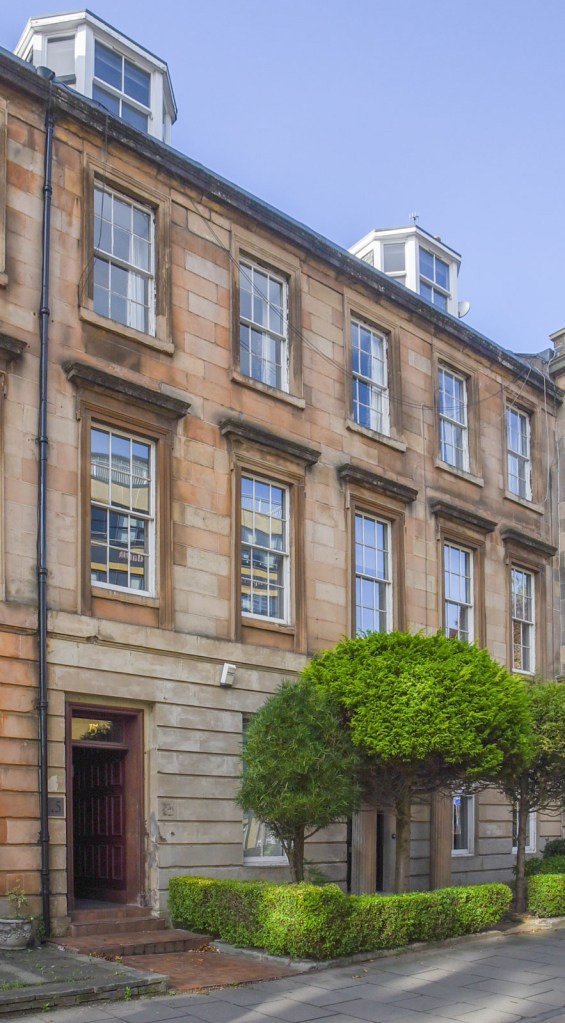
By 1891 George was living at 17 Scott Street, a dwelling with 11 rooms. Also resident were a house keeper and a domestic servant. The building no longer exists and is replaced by Glasgow School of Art structures.(13)

George died at his home at 17 Scott Street, Glasgow on 27 February 1909 (14) and was interred in his family grave at The High Kirk churchyard in Kilmarnock. Mr Robb was a well known and respected figure and a special train conveyed mourners to his funeral in Kilmarnock. The service was conducted by the Reverend Mr Gunson, minister of Ramshorn Church, Glasgow, formerly St David’s Church, where many prominent Glasgow merchants are interred.(15) George Robb left an estate of almost £80,000 including a bequest ‘to the Kirk Session of The Ramshorn Church the sum of one thousand two hundred pounds, the free annual revenue of which shall be paid to the minister of the church for the time being’, that being the Reverend Gunson at the time. Bequests were also made to friends and business associates including John Wordie and Peter Wordie.(16)

Figure 4. Headstone, George Robb, High Kirk, Kilmarnock – http://www.findagrave.com/memorial/173297828/George-Robb

George bequeathed two paintings to Glasgow…

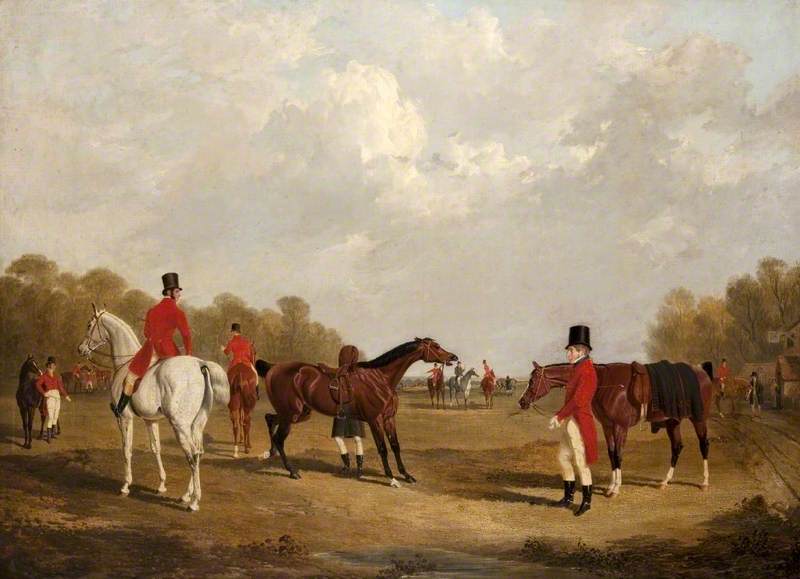
Figure 5. Herring, John Frederick; The Meet; Glasgow Museums; http://www.artuk.org/artworks/the-meet-84477.

1) The Meet by John Frederick Herring Snr 1795-1865. Herring specialised in painting horses, especially hunting and race horses and his clientele included Queen Victoria. 

2) Coming from Church by David Adolf Constant Artz 1837-1890. Artz was a dutch painter who  was associated with the Hague School.

Figure 6. Artz, David Adolph Constant; Coming from Church; Glasgow Museums; http://www.artuk.org/artworks/coming-from-church-83090

References…

(1) Local history Section, Burns monument Centre, Kilmarnock,

(2) https://en.wikipedia.org/wiki/Kilmarnock_and_Troon_Railway

(3) Local history Section, Burns monument Centre, Kilmarnock – Obituary, Kilmarnock Standard 6/3/1909

(4) Census 1861 (1861 644/06001/06013), http://www.scotlandspeople.gov.uk/

(5) Census 1871 (1871 644/06025/06010), http://www.scotlandspeople.gov.uk/

(6) Pigot & C0, Directory for Dumfries and Maxwelltown 1837/38, https://dgnhas.org.uk/wood-pigot-personal/pigot-personal-dumfries-maxwelltown-1837-38

(7) Local History Section, Burns Monument Centre, Kilmarnock – Obituary, Kilmarnock Standard      6/3/1909

(8) The Caledonian Railway Association (https://crassoc.org.uk/web/node/9)

(9) The Railway Magazine, Diamond Jubilee Edition Sep 1907, Article by G Robb, Carting Superintendant, Caledonian Railway.

(10) Local history Section, Burns monument Centre, Kilmarnock – Obituary, Kilmarnock Standard 6/3/1909

(11) Court Case, Rankin v Caledonian Railway Coy – https://www.casemine.com/judgement/uk/ 5a8ff81b60d03e7f57eba253

(12) The Railway Magazine, Diamond Jubilee Edition Sep 1907, Article by G Robb, Carting Superintendant, Caledonian Railway.

(13) Census 1871 (1871 644/06025/06010) http://www.scotlandspeople.gov.uk/

(14) Deaths (Statutory register of deaths 644/9 158) http://www.scotlandspeople.gov.uk/
(15) Local history Section, Burns monument Centre, Kilmarnock – Obituary, Kilmarnock Standard 6/3/1909

(16) Wills and Testaments (SC36/51/150, Glasgow Sheriff Court Wills) 

http://www.scotlandspeople.gov.uk/

John Aitchison (1769-1859)

In 1886 Janet Aitchison gifted a portrait of her father to Glasgow. Painted by Sir Daniel McNee, a renowned Scottish portrait painter who became president of the Royal Scottish Academy in 1876, it depicts John Aitchison as a confident, successful businessman. 

Figure 1. Macnee, Daniel; John Aitchison (1769-1859). © CSG GIC Glasgow Museums Collection.(http://www.artuk.org).

The painting was exhibited at The Glasgow Institute of Fine Arts exhibition of 1894 and lent by The Corporation of Glasgow.(1)

In 1868 the painting was exhibited in The Illustrated Catalogue of Exhibition of Portraits on Loan in The New Galleries of Art, Corporation Buildings, Sauchiehall Street, Glasgow and lent by Walter Paterson who was a son of John’s sister Euphemia.(2)

John was a prominent merchant in Glasgow at a time when trade with America was particularly strong. However, with the decline of the tobacco industry after the American War of Independence, the British Empire looked for other opportunities, especially in the colonies. The sugar industry expanded and by 1790 the West Indies became Glasgow’s primary trading outpost.(3) Raw sugar had to be processed to make it saleable and it was these refining processes which John helped to develop. 

John was born in Glasgow on 2 September 1769 to Walter Aitchison and Isobel Henderson, who had married in 1768.(4) John was the first of seven children (5) and he lived in Glasgow for much of his life. On 14 August 1797 John married Margaret Robertson (6) whose father James was a merchant in Glasgow. Their first child Walter was born in 1798 and they went on to have a family of twelve over the following sixteen years.(7) 

In 1786 aged seventeen John entered The Ship Bank as an apprentice.(8) One of the earliest banks in Glasgow, it was founded by some of the wealthiest merchants in the city, particularly  those involved in the tobacco trade. In 1776 The Ship Bank became known as Moores, Carrick & Company, then in 1789 changed its name to Carrick, Brown & Company.(9) Robert Carrick was the leading partner at the time and lived above the bank. One of John’s duties, as the youngest apprentice, was to sleep in the premises at night, armed with a gun, bayonet, powder-horn and a bag of slugs and Mr Carrick would lock the door behind him to ensure security. Both Robert Carrick and John were fond of playing the violin, and they would often practise after work at Robert’s flat. Carrick was known as a bit of a miser and it is said that he left a fortune of £1 million pounds ‘…a grim old bachelor without leaving one plack or penny to any of the charitable institutions of the city….’ The two remained friends till Robert’s death in 1821.(10)

In 1796 John is recorded in the Trades House library as a Burgess and Guild Brethren of Glasgow. He is described as a merchant and serving apprentice with Messrs Moore, Carrick and Company at this time.(11) John left the Bank for the mercantile world, specialising in the processing of cane sugar which was being imported in large quantities from The West Indies. Greenock and Glasgow became major sugar refining centres and much of the machinery required was manufactured locally.

 In the early nineteenth century one of the sugar-refining processes enabled impurities to be extracted, by boiling the cane sugar to form a liquid. The liquid was transferred to a series of pans until the required density was achieved. However, if the temperature was too high the liquid would turn into uncrysallizable molasses (treacle). As with many other industries in Glasgow during the Industrial Revolution improvements and efficiencies were constantly being developed. Messrs D Cook of Glasgow developed a more efficient design for evaporating sugar. A Mr Cleland of Glasgow also developed a system of using steam to quicken the evaporating process. It was John Aitchison who developed this process further by controlling the flow of liquid along a specially designed copper apparatus. The boiling action caused the impurities to rise to the surface and form a crust, which could then be easily taken off when the liquid cooled, leaving purified sugar.(12) The process was later patented.(13)

One of the few surviving sugar refining buildings in Glasgow is at 40-50 Speirs Wharf on The Forth and Clyde canal just north of Glasgow city centre, now converted to flats.

Figure 2. 40-50 Speirs Wharf, Glasgow, photo by author

In 1833, Margaret died. In a letter dated 26 July 1833 to his son Robert, who had sailed from Rothesay to Madeira, John describes Margaret’s failing health and the good care she received from their doctor. News of the death was communicated to the Captain of the ship Brig Staffa just before leaving Rothesay and the news was broken to Robert when at sea. Robert became a merchant in Burma until his death in 1838. The funeral was attended by some prominent merchants including John Buchanan of Woodlands and James Buchanan of Dowanhill. Mention is made of Robert’s brother John who applied to a Captain Johnston in London for work, presumably, like Robert, at sea. John senior also makes reference to ‘making every exertion so to get your brother into the service of The East India Company’. It is not clear which brother he refers to. John also refers to his business dealings in the sugar industry , ‘We have not done much as yet in the wee Sugar House …we expect liberty soon to refine all sorts of Foreign Sugars…struggle to get using E India sugars, it will be good bye and bye’.(14)

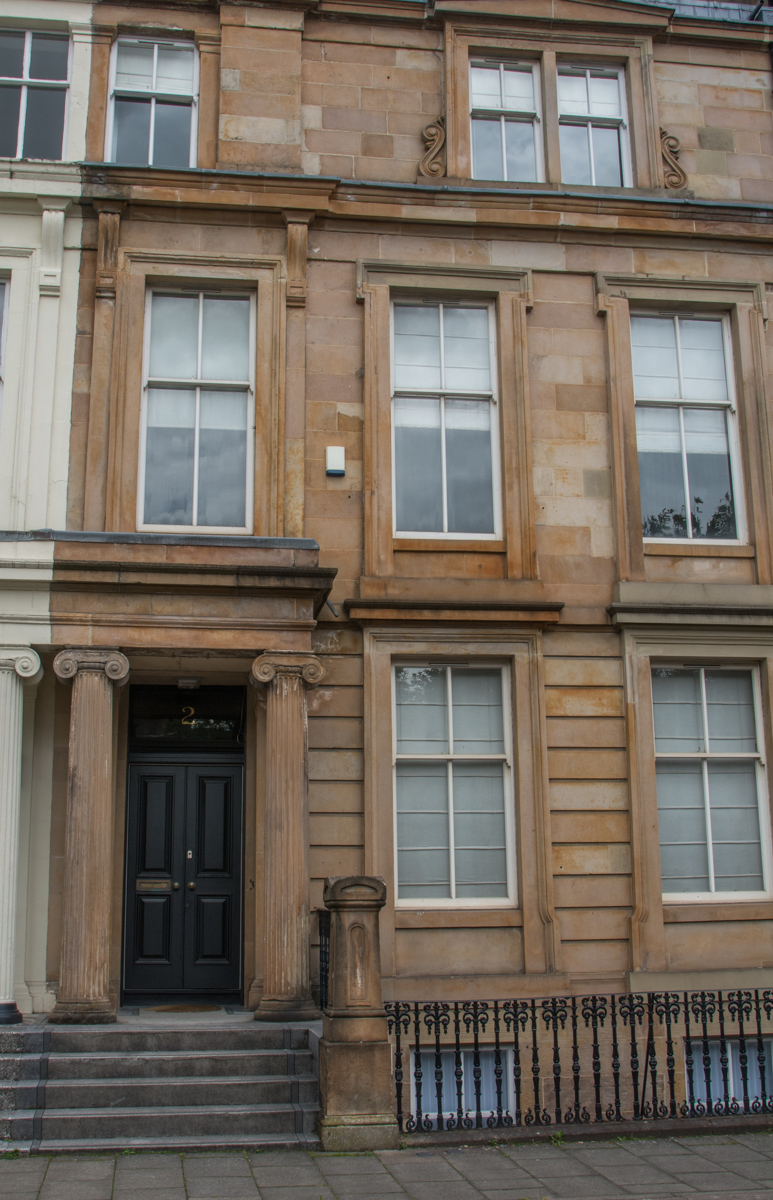
In 1837-38 John’s business address is recorded as Adam’s Court Lane, Argyll Street, and he is described as a merchant and patentee for machines for sugar refining.(15) In 1838 his business address is recorded as 14 St Enoch Square, Glasgow (replaced in 1875 by Teachers whisky offices). He lived at 52 Renfield Street, Glasgow at this time (the building was replaced by The Odeon Cinema in the nineteen thirties).(16) From 1845 to 1852 he was living at 105 Kensington Place, Sauchiehall Street.(17) By 1855 he had moved to 15 Claremont Street, just off Sauchiehall Street,(18) west of Charing Cross, where he resided till his death in 1859.(19)

Figure 3. 15 Claremont Street, Glasgow photo by author

He was buried at Ramshorn Church in Glasgow,(20) where many notable Glasgow merchants were laid to rest including Robert Carrick (21) who maintained a friendship with John throughout his life. John’s son James and daughters Euphemia and Isabella Henderson are also laid to rest there.(22) 

According to the 1861 census Mary Newbigging Aitchison, John’s daughter, was living at 9 Sandyford Place, Glasgow, just across the road from John’s final home.(23) She and Janet never married and they probably lived with John to his final days.(24) The head of the household at 9 Sandyford Place was Margaret, her sister. Also noted as being present was George Bogue Carr, studying In Glasgow to be a minister of The United Free Church.(25) He was from Berwick-upon-Tweed and after a period as minister in Tranent, then Dalmeny Street Church in Edinburgh he emigrated to the USA, becoming Professor of Religious Rhetoric and English at Lincoln University. George was John Aitchison’s grandson whose mother was Jane Robertson Aitchison, John’s second daughter.(26) The Carr family and the Aitchison family were closely associated through marriage at this time.(27)

DS

References

1) https://www.tradeshouselibrary.org/uploads/4/4/7/2/47723681/old_g_asgow_exhibition_1894.pdf

2) https://archive.org/details/illustratedcatal00anna/page/68/mode/2up?q=aitchison

3) https://it.wisnae.us/sugar-and-slavery/

4) From the notebook of Walter Aitchieson, by permission of Andy Laing, descendent of John Aitchison

5) Family Tree (Family of Carr from Berwick-Upon-Tweed), by permission of Andy Laing, descendent of John Aitchison

6) Marriages, Robertson Margaret (Old Parish Registers Marriages 644/1 270 236 Glasgow) page 236

7) Family Tree (Family of Carr from Berwick-Upon-Tweed), by permission of Andy Laing, descendent of John Aitchison

8)  Glasgow Herald 22/08/1859 p 5  www,Britishnewspaperarchive.co.uk

9) https://archiveshub.jisc.ac.uk/search/archives/cce07d78-984c-3625-bae7-52a10c00a1f8

10) Glasgow Herald 22 Aug 1859, Obituaries, The Late Mr John Aitchison, p.5

11) https://www.tradeshouselibrary.org/uploads/4/7/7/2/47723681/burgess_book_1751_to_1846.pdf, p.203

12) Harvey Robert, https://zenodo.org/record/2252792#.YTSv8C2ZPgE (Creative Commons Zerov1.0 Universal)

(13) http://www.mawer.clara.net/sugaraa.html

14) Letter from John Aitchison to his son Robert dated 6th July 1833, by permission of Andy Laing, descendent of John Aitchison

15) Post Office Directories, https://digital.nls.uk/directories/browse/archive/90159667 p.24

16) Post Office Directories, https://digital.nls.uk/directories/browse/archive/83813514 p.24

17) Post Office Directories, https://digital.nls.uk/directories/browse/archive/84099400, p.27

18) Post Office Directories, https://digital.nls.uk/directories/browse/archive/84119828 p.39

19) Deaths,Aitchison, John (Statutory Registers Deaths 644/8 666), www.scotlandspeople.gov.uk

20) Deaths,Aitchison, John (Statutory Registers Deaths 644/8 666), www.scotlandspeople.gov.uk

21) https://www.findagrave.com/memorial/216350861/robert-carrick

22) Glasgow & West of Scotland Family History Society https://www.gwsfhs.org.uk/records/isabella-henderson-aitchison/

23) Census, 1861 (Census 644/8 66/ 19), www.scotlandspeople.gov.uk

24) Census 1851 (Census 622/ 109/ 15)   www.scotlandspeople.gov.uk

25) Census, 1861 (Census 644/8 66/ 19), www.scotlandspeople.gov.uk

26) Family history provided by Andy Laing, descendent of John Aitchison

27) Family Tree (Family of Carr from Berwick-Upon-Tweed), by permission of Andy Laing, descendent of John Aitchison

Colonel John Macfarlane (1846-1910)

Figure 1. Reynolds, Warwick; Colonel John Macfarlane (1846-1910); Glasgow Museums;© CSG CIC Glasgow Museums Collection.

In 1933 Gertrude Elizabeth Macfarlane gifted a portrait of her father Colonel John MacFarlane to Glasgow Museums. The painting, titled Portrait of Colonel John MacFarlane M.V.O., V.D., D.L., J.P., of The 1st Lanarkshire Rifle Volunteers was completed by Warwick Reynolds in 1907, who was  better known as a painter of animals, but he had an interest in depicting regimental figures. The portrait was exhibited at The Royal Glasgow Institute of Fine Art in 1909.(1)

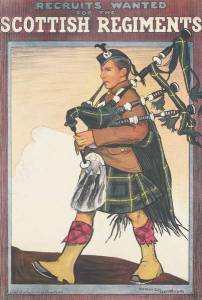
Figure 2. Reynolds; Warwick, Poster – Recruits Wanted for the Scottish Regiments: Permission of Imperial War Museum, Accession IWM PST 13490

In 1919 Reynolds designed a poster entitled Recruits Wanted for the Scottish Regiments, a copy of which is in The Imperial War Museum.(2)

Gertrude was born in Glasgow on 6 January 1877 to John Macfarlane, a grain merchant, and Marion Buchanan McCallum from Lanarkshire.(3) John was born at Gartmore, Perthshire on 19 June 1846 and his parents were John MacFarlane, farmer and portioner (inheritor of a small piece of land), and Janet Sands.(4)

John junior, the subject of our story, attended Dalmary School in Gartmore, and when the family moved to Glasgow he was educated at St Enoch’s Public School followed by Andersons College. (5) At age 16 he started in business in Helensburgh with his brother Robert. Six years later he was working in a grain store in Glasgow, and in 1869 he set up business with another brother Malcolm. (6) Number 14 Kent Road, Charing Cross, Glasgow was the business address of Robert S MacFarlane, grain merchant, from 1865 to 1868, followed by Malcolm MacFarlane, grain merchant from 1868 to 1870. The same address was then occupied by the firm of M & J Macfarlane from 1870 to1879, (7) so this appears to be Johns place of work for this period and his progression to a senior level within the business. The business expanded and a branch was opened in Coleraine in Ireland followed by several agencies in Africa. (8)

John married Marion on second of February 1872 at 15 Hill Street, Garnethill, Glasgow. (9) In 1881 they were living at 11 Camphill Quadrant adjacent to Queens Park in Glasgow, with their family, John, William, Robert, Gertrude (our donor) and Marion aged from five months to eight years.  They employed three servants. (10)

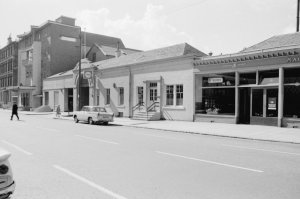
Figure 3. 20 Berkeley Street, Glasgow 1968. Permission of J R Hume https://canmore.org.uk/collection/685598

John then became senior partner with Messrs M and J MacFarlane, grain merchants, and eventually sole partner with Macfarlane Brothers, Job Masters, hiring out horse drawn carriages in Berkley Street. (11) The arched entrance gave access to two levels for horses and carriages. The premises were demolished in 2000 to make way for a large block of flats and shops.

In 1907-08 John and Marion were living at 15 Dundonald Road in the West End with their son William (12)  who was employed in both of these businesses.

During his lifetime John contributed much to public duty, beginning as a reforming member of The Barony Parochial Board. In 1884 he entered the Town Council as a representative of the fourteenth ward and was a Magistrate of the city from 1889 to 1903. He became Convenor of The Statute Labour Committee from 1894 to 1902, with responsibility for looking after the public streets of Glasgow, and laying the foundation stones of three Glasgow bridges; Millbrae Bridge over the River Cart, Rutherglen Bridge over the River Clyde and Kirklee bridge over the River Kelvin. (13)

Among his many prominent roles he was preceptor (chairman) of Hutchieson’s Hospital from 1905 to 1908 and a Justice of The Peace and President of Central Division Liberal Association, Glasgow. He was Deputy Lieutenant of the County of the City of Glasgow and was on the board of many charitable institutions. (14)

One of his overriding interests was in The 1st Lanarkshire Volunteers, where he passed through all the grades to command the battalion as Colonel Commandment. John’s services were recognised by being awarded The Volunteer Decoration, and in 1905 he was enrolled as a member of The Royal Victorian Order by King Edward V11 when on a visit to Edinburgh. (15)

During a Royal Visit to Glasgow in 1907 Colonel John MacFarlane’s skills were employed in organising the royal processions. (16) John also originated the ‘Marches Out’, and these included the then famous midnight march to Lenzie and the three day march to Gartmore and around Loch Katrine. Johns’ favourite pastimes were riding and shooting and he also made time to join The Royal Clyde Yacht Club.(17)

John died on 19 December 1910 of pneumonia at his home at 15 Dundonald Road.(18)

DS

References…

  1. Mitchell Library, Royal Glasgow Institute record of exhibitions
  2. https://www.vads.ac.uk/digital/collection/IWMPC/id/4526/rec/1
  3. (births 644/090118) 1877, https://www.scotlandspeople.gov.uk/
  4. https://www.clanmacfarlanegenealogy.info/genealogy/TNGWebsite/getperson.php?personID=I8257&tree=CC
  5. Mitchell Library, Glasgow Contemporaries at The Dawn of the xxth Century, John M’Farlane p.82
  6. Mitchell Library, Index of Glasgow men 1909, Colonel John MacFarlane
  7. http://www.glasgowwestaddress.co.uk/Kent_Road/14_Kent_Road.htm
  8. Mitchell Library, Index of Glasgow men 1909, Colonel John MacFarlane
  9. (Marriages 64/060062),1872, https://www.scotlandspeople.gov.uk/
  10. (Census, 560/00006/00044) 1881 https://www.scotlandspeople.gov.uk/
  11. Mitchell Library, Gaskell, Ernest, Lanarkshire Leaders Social and Political, Col. John MacFarlane, D.L., M.V.O,  V.D., J.P.
  12. Mitchell Library, Post Office Directories 1907-08
  13. Mitchell Library, Index of Glasgow men (1909) http://gdl.cdlr.strath.ac.uk/eyrwho/eyrwho1212.htm
  14. Mitchell Library, Gaskell, Ernest, Lanarkshire Leaders Social and Political, Col. John MacFarlane, D.L., M.V.O,  V.D., J.P.
  15. Mitchell Library, Index of Glasgow men (1909) http://gdl.cdlr.strath.ac.uk/eyrwho/eyrwho1212.htm
  16. Mitchell Library, Gaskell, Ernest, Lanarkshire Leaders Social and Political, Col. John MacFarlane, D.L., M.V.O,  V.D., J.P.
  17. Mitchell Library, Index of Glasgow men (1909) http://gdl.cdlr.strath.ac.uk/eyrwho/eyrwho1212.htm
  18. (Deaths 644/120946) 1910 https://www.scotlandspeople.gov.uk/

James Turner of Thrushgrove 1768-1858

Figure 1. Macbeth, Norman; James Turner of Thrushgrove (1768-1858), a Former Magistrate of the City. © CSG GIC Glasgow Museums Collection.

Jessie Turner bequeathed a portrait of her grandfather James Turner by Norman Macbeth to Glasgow City Council in 1927. Jessie was born in 1837 in Laurieston, Glasgow to William Turner, an ironmonger and Elizabeth Paterson, whose family were from Ayr.(1) They married in 1834 in Glasgow.(2) Williams’ parents were James Turner, a tobacco spinner, and Jean Hardie (3) who married in 1797 (4) and it is James who is the subject of the portrait.

James was born on 29th April 1768 in Glasgow (5) and became a wealthy tobacconist, living at Thrushgrove House in the district of Garngad, an area which became a centre of social unrest in the early nineteenth century. 

In Recollections of James Turner Esq of Thrushgrove 1854 by J Smith, he is described as ‘rather under the middle size, of firm make and benevolent aspect. …an adorable portrait by Mr Macbeth gives an admirable idea of what he was when an octogenarian.’ (6) James Macbeth was born in Greenock and  spent some time in Glasgow and Edinburgh as a portrait painter. He became a full member of The Royal Scottish Academy in 1880. (7)

James was the son of William Turner, a shoemaker in Glasgow. (8) He appears to have been a very obstinate boy as he refused to go to school. His father resolved to punish him by making him a tobacco boy. James served with several tobacconists before entering the employment of a Mr Hamilton as an errand boy at sixteen pence a week. Mr Hamilton  regularly read to his employees and James decided that he should be able to read and write. Although some of his education would have been from home, he benefited from his employer’s benevolence. Following  a nine years apprenticeship James continued as a Journeyman. In 1798 he set up his own business as a tobacconist and tobacco spinner with a shop at 275 High Street near the University. (9)(10)

Figure 2. Site of tobacco shops at 275 and 104 High Street Glasgow, shop at Gallowgate and Duke Street prison, Street Guide to Glasgow (probably 1920’s) owned by author

On 4 June 1797 James married local girl Jean Hardie (11) and rented their first house using part of his savings of around £100, a larger than average amount for a newly wed at the time.

The business flourished and he moved to premises at The Cross Well, farther down High Street at number 104, and he remained there till 1831 when he retired.(12)(13) The couple had a total of eleven children, only three surviving at the time of James death; George, William and James. In 1813 he was able to afford his own small estate of Thrushgrove on the edge of Glasgow at Garngad, now Royston. (14) The property ran from Castle Street to Garnock Street and the area was later intersected by Turner Street (in memory of James Turner), Villiers Street, Cobden Street and Bright Street, also named after men who shared Turner’s radical views. (15) He lived there till 1838 (Jane died in 1837) when he moved to London Street followed by St Andrew Square and East George Street, and finally to Windsor Terrace. (16)

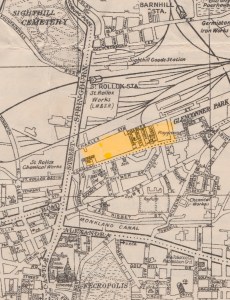
Figure 3. Approximate site of Thrushgrove Estate, Street Guide to Glasgow (probably 1920’s) showing Turner Street centre of highlighted area

It was in the aftermath of the Napoleonic wars that James Turner came to public notice. There was great discord in the country, high unemployment, and dissatisfaction with living conditions and the lack of representation in local and national government. There was universal outcry for parliamentary reform, and public meetings became a common occurrence. In 1816 both the town council and the owners of land normally used for meetings refused permission for a meeting to demand political reform. It was during this emergency that James Turner came forward and offered the radicals the use of the fields of Thrushgrove, as it lay just outside the jurisdiction of the magistrates of Glasgow. 

 It is believed that upward of 40,000 attended the meeting on 29 October 1816, which lasted from twelve till four pm. It was the largest radical gathering ever seen in Scotland. The City Council was so afraid of trouble that the 42nd regiment was drawn up in arms within the barrack square in Gallowgate in readiness. However order prevailed throughout and physical intervention was not required.

James chaired the meeting and his speech included calls for an overhaul of The House of Commons and voting rights for citizens to elect members of Parliament and representatives of town councils.

A petition of nineteen resolutions was sent to His Royal Highness, The Prince Regent. James Turner was later charged with high treason and was imprisoned in the Bridewell Prison in Duke Street. However he was never brought to trial and was soon released. (17) The Bridewell was rebuilt as Duke Street prison around 1825 and survived till 1955, when it closed and was finally demolished in 1958. (18)

Figure 4. Thomas Sulmans 1864 Bird’s Eye View of Glasgow.      https://universityof glasgowlibrary.wordpress.com/2015/08/01

A contemporary east end poet, Sanny Roger penned the following verse amid the foment going on in the city at the time. He is better known for The Muckin’ o Geordie’s Byre. (19)

        Vile sooty rabble what d’ye mean

        By raisin’ a’ this dreadful din

        Do you no ken what horrid sin

        Ye are committing

        By haudin’ up your crafts sae thin

        For sig a meeting?

When the demand for political reform was renewed in 1830, Turner became a leading member of the Glasgow Political Union, which aimed to unite working class supporters of reform of Parliament. When the Reform Act of 1832 gave the vote only to the middle class, Turner continued to campaign for further reform and for a further extension of the franchise to include all householders. In 1833 a democratic electorate was introduced in politics and Turner was elected to the new town council as a representative of the First Ward. He remained an active member of the council until his defeat in 1847, when he became a Baillie. He continued his interest in reform and was regularly asked to chair political reform meetings, although he did not go as far as The Chartists did, in supporting universal suffrage. He remained convinced of the importance of re-establishing the links between middle class and working class reformers. (20)

James acquired many properties, mainly around High Street, Gallowgate and adjacent to the Thrushgrove Estate. Flats, shops and land were passed on to his three surviving sons on his death. In his Will, probated on 13 July 1858, he describes two shops ‘just under Blackfriars Church and on the east side of High Street’ (Blackfriars Church stood next to Glasgow University which was later demolished to make way for The City of Glasgow Union Railways College Station). 

Just to the north of Thrushgrove was land bordered by the site of Charles Tennant and the Company of St Rollox. (21) Charles Tennant discovered bleaching powder and founded a mighty industrial dynasty and the St Rollox Works soon grew to be the largest chemical plant in the world. (22) Charles Street was named in his memory and had just been formed when Turner made his Will. Some 1433 square yards of land between St Rollox and Thrushgrove is part of Turner’s bequest to his sons. (23)

On 20 May 1858 James died at the ripe old age of 90 at his son’s house in Windsor Terrace, Glasgow (24) and was laid to rest in the Necropolis, adjacent to Glasgow Cathedral. The Glasgow Herald reported in his obituary that ‘in private life he was highly esteemed by all…in personal matters he was uniformly kind and conciliatory.’ (25)

DS

References

  1. Births 1837 (644/002 0050 0006 Gorbals ), https://www.scotlandspeople.gov.uk/
  2. Marriages 1834 (644/001 0410 0514 Glasgow) https://www.scotlandspeople.gov.uk/
  3. Births 1805 (644/0010200 0249 Glasgow) https://www.scotlandspeople.gov.uk/
  4. Marriages 1797 (644/001 0270 0233 Glasgow) https://www.scotlandspeople.gov.uk/
  5. Births 1768 (644/001 0150 0057 Glasgow) https://www.scotlandspeople.gov.uk/
  6. Smith J, Recollections of James Turner Esq of Thrushgrove 1854, printed at The Examiner office, Glasgow 1854. Collection University of Guelph, Toronto.
  7. https://en.wikipedia.org/wiki/Norman_Macbeth
  8. Deaths 1858 (644/07 0340) https://www.scotlandspeople.gov.uk/
  9. Smith J, Recollections of James Turner Esq of Thrushgrove 1854, printed at The Examiner office, Glasgow 1854. Collection University of Guelph, Toronto.
  10. (10) No 275 High Street, Post office Directories 1819
  11. (11) Marriages 1797 (644/001 0270 0233 Glasgow) https://www.scotlandspeople.gov.uk/
  12. (12) Smith J, Recollections of James Turner Esq of Thrushgrove 1854, printed at The Examiner office, Glasgow 1854. Collection University of Guelph, Toronto.
  13. (13) 104 High Street, Post Office Directories 1825
  14. (14) Smith J, Recollections of James Turner Esq of Thrushgrove 1854, printed at The Examiner office, Glasgow 1854. Collection University of Guelph, Toronto.
  15. (15)http://roystonroadproject.org/archive/history/garngad_royston.htm
  16. (16) Smith J, Recollections of James Turner Esq of Thrushgrove 1854, printed at The Examiner office, Glasgow 1854. Collection University of Guelph, Toronto.
  17. (17) Smith J, Recollections of James Turner Esq of Thrushgrove 1854, printed at The Examiner office, Glasgow 1854. Collection University of Guelph, Toronto.
  18. (18)https://universityofglasgowlibrary.wordpress.com/town-plan-of-glasgow-duke-street-prison/
  19. (19)http://roystonroadproject.org/archive/history/garngad_royston.htm 
  20. (20) Smith J, Recollections of James Turner Esq of Thrushgrove 1854, printed at The Examiner office, Glasgow 1854. Collection University of Guelph, Toronto.
  21. (21) Wills and Testaments 1858, Turner, James (SC36/51/38, Glasgow Sheriff Court Wills)
  22. (22)https://gracesguide.co.uk/Charles_Tennant_(1768-1838) 
  23. (23)Wills and Testaments 1858, Turner, James (SC36/51/38, Glasgow Sheriff Court Wills)
  24. (24) Deaths 1858 Turner James (644/7 340 https://www.scotlandspeople.gov.uk/
  25. (25) Glasgow Herald, obituaries twenty second of May 1858

Sir George Thomas Beatson (1848-1933)

In 1933 Sir George Beatson bequeathed  Haul on the Sands painted by Joseph Henderson in 1874, a Glasgow based artist who became known for his marine paintings. Henderson was a frequent exhibitor at the Royal Scottish Academy and at the Royal Glasgow Institute of Fine Arts, and was president of the Glasgow Art Club. 

Henderson, Joseph, 1832-1908; Haul on the Sands
Figure 1. Henderson, Joseph; Haul on the Sands; Glasgow Museums; (© CSG CIC Glasgow Museums Collection)

George Beatson was born in Trincomalee, Ceylon (now Sri Lanka) in 1849 to Surgeon-General George Stewart Beatson (1) and Mary Jane Cochrane.(2) George senior was honorary physician to Queen Victoria and served with distinction in Ceylon and India during the Crimean War, subsequently becoming principal Medical officer at Netley Hospital in Hampshire. The impressive hospital buildings were not however well designed for patients welfare and it was Florence Nightingale who subsequently put pressure on the government to improve facilities.(3) Mary Cochrane, whose family came from the Isle of Man,  was the daughter of an officer who was a member of The Ceylon Rifles.(4)

 George junior followed in his fathers footsteps in medicine and his name is now very much associated with cancer treatment in Scotland, particularly in Glasgow.

Sir_George_Thomas_Beatson._Photograph_by_T._&_R._Annan_&_Son_Wellcome_V0026013
Figure 2.   Sir George Thomas Beatson           Photograph by T & R Annan and Sons, Creative Commons Attribution 4.0 , Wellcomecollection.org/works/jkp6w8u

George was brought up in Campbeltown, Argyll with his parents and attended school there. He continued his education at King Williams College in Isle of Man, presumably due to his mothers connection to the island. From there he studied at Clare College, Cambridge where he achieved Batchelor of Arts in 1871, and continued his medical studies at the University of Edinburgh, where he qualified as Batchelor of Medicine in 1874.(5) It was during this period that he became interested in the treatment of breast cancer and graduated as Doctor of Medicine in 1878. His final thesis focused on the links between ovulation, lactation and cancer. In 1896 he published a paper on oophorectomy, a surgical procedure to remove the ovaries, in which he proposed a treatment for advanced breast cancer and which became standard practice in cancer treatment.(6) 

While in Edinburgh George became House Surgeon and studied antiseptic principles under Lord Lister, who was Professor of Surgery at the University of Glasgow in 1860, and who is commemorated by a statue in Kelvingrove Park in Glasgow. During Beatsons time as House Surgeon at University of Edinburgh, W E Henley, a patient and poet friend of R L Stevenson, composed some lines to describe George’s character…

Exceeding tall, but built so well his height,

Half disappears in flow of chest and limb,

Frank-faced, frank-eyed, frank-hearted, always bright,

And always punctual-morning, noon and night,…(7)

Perhaps not the finest poem ever composed but it probably describes him well, as he appears to have been a highly respected figure who combined compassion with ambition.

George moved to Glasgow in 1878 and took up general Practice before progressing to surgical appointments in the Western Infirmary.(8) He lived at 2 Royal Crescent, Glasgow (9) till around 1900 when he moved to 7 Woodside Crescent nearby and remained there till his death in 1933. (10)

DSC_9997
Figure 3. 2 Royal Crescent, Glasgow. Photograph by author

In 1893 he was appointed to Glasgow Cancer and Skin Institute, renamed Glasgow Cancer Hospital in 1894, was appointed Director and took complete control over its functions. He appears to have had formidable organisational and administrative skills, perhaps influenced by his military background. He encouraged research at the hospital and pioneered radium therapy in Scotland.

 He persuaded Lady Burrell, wife of the shipping magnate who gifted the Burrell Collection to Glasgow, to provide £10,000 to open the Radium Institute at 132 Hill Street, Glasgow.(11) On the establishment of The National Health Service in 1948 the hospital came under the control of the Western Board of Management and in 1953 was renamed The Royal Beatson Memorial Hospital in his memory. (12)

The clinical section was moved to a new centre within the Western Infirmary and was named The Beatson West of Scotland Cancer Centre. In 2007 the Centre was moved to new state of the art premises within Gartnavel Hospital in Glasgow’s West End which has clinical links with 21 hospitals in the west of Scotland. It is the second largest facility of its type in the UK.(13)

Beatson’s pioneering research played an important role in improving cancer treatments and this work continues at The Beatson Institute in Glasgow. In 1967 the Department became The Beatson Institute for Cancer Research and in 1976 moved to new premises at Garscube Estate in Glasgow.(14)

Beatson_Institute_for_Cancer_Research,_Glasgow_02
Figure 4. Beatson Institute for Cancer Research, Glasgow. Creative Commons Attribution-Share Alike 4.0 International, Permission of Vojtech Dostal.

George managed to make time for other interests. At the end of the 19th century there was no ambulance service in Glasgow and he pioneered the forming of the St Andrew’s Ambulance Association. He was also active in the Volunteer Association, forerunner of the Territorial Army. He played a leading role in the Scottish Red Cross Association in Glasgow and a portrait of him remains at their headquarters in Glasgow.(15)

V0026014 Sir George Thomas Beatson. Photograph by Warneuke.
Figure 5. Sir George Thomss Beaton. Credit: Wellcome Library, London. Wellcome Images images@wellcome.ac.uk http://wellcomeimages.org Sir George Thomas Beatson. Photograph by Warneuke. Published: – Copyrighted work available under Creative Commons Attribution only licence CC BY 4.0 http://creativecommons.org/licenses/by/4.0/

During his long and active career he received many honours and decorations. He was knighted in 1907 and awarded an OBE in 1918 in recognition of his services during World War 1 and in 1919 he became Deputy Lieutenant of City of Glasgow.(16) In 2006 the University of Glasgow commissioned a bronze bust of Sir George by Guyan Porter, a Glasgow based artist, for the Hunterian Museum.

Beatson, George by
Figure 6. Bust of George Beatson by Guyan Porter, Hunterian Museum, Glasgow. Creative Commons Attribution Share Alike 4.0 International, permission Stephen C Dickson

Sir George died at his home at 7 Woodside Crescent, Glasgow in his 85th year on 16th February 1933 after a period of ill health.(17) The funeral was held at Park Church and was attended by representatives of many medical organisations including The Red Cross and St Johns Ambulance. His ashes were interred at his mothers grave on the Isle of Man.(18)

DS

References –

  1. https://www.universitystory.gla.ac.uk/biography/?id=WH27292&type=P
  2. Deaths, Beatson George, Thomas K (644/12 0213), http://www.scotlandspeople.gov.uk
  3. https://en.wikipedia.org/wiki/Netley_Hospital
  4. https://www.beatson.scot.nhs.uk/content/default.asp?page=s32
  5. https://en.wikipedia.org/wiki/George_Beatson
  6. https://www.universitystory.gla.ac.uk/biography/?id=WH27292&type=P
  7. https://www.thebreastonline.com/article/0960-9776(92)90121-H/pdf
  8. https://www.universitystory.gla.ac.uk/biography/?id=WH27292&type=P
  9. Census 1891 Beatson George T (644/09 018/09 012), www.scotlandspeople.gov.uk 
  10. Deaths, Beatson George, Thomas K (644/12 0213), www.scotlandspeople.gov.uk 
  11. https://www.thebreastonline.com/article/0960-9776(92)90121-H/pdf
  12. https://www.beatson.scot.nhs.uk/content/default.asp?page=s32
  13. https://www.nhsggc.org.uk/your-health/health-services/cancer-services/the-beatson-west-of-scotland-cancer-centre/
  14. http://www.beatson.gla.ac.uk/About/history.html https://www.thebreastonline.com/article/0960-9776(92)90121-H/pdf
  15. https://www.thebreastonline.com/article/0960-9776(92)90121-H/pdf
  16. https://www.bmj.com/content/1/2627/1090.3
  17. Deaths, Beatson George, Thomas K (644/12 0213), www.scotlandspeople.gov.uk
  18. https://acsjournals.onlinelibrary.wiley.com/doi/pdf/10.3322/canjclin.33.2.105

Sir Garnet Douglas Wilson 1885-1975

Garnet Wilson joined the family business of G L Wilson’s department store in Dundee and became a distinguished Lord Provost of that city. He donated a portrait of himself painted by Rodrigo Moynihan to Glasgow in 1950. Moynihan was a British artist who was influenced by the French Impressionists, especially Manet, and moved between figurative and abstract work. (1) The University of Dundee holds another portrait of Wilson by Moynihan. 

Moynihan, Rodrigo, 1910-1990; Sir Garnet Wilson (1885-1975)
Figure 1. Sir Garnet Douglas Wilson by Rodrigo Moynihan. © CSG GIC Glasgow Museums Collection. (http://www.artuk.org)

Garnet was born in Cupar, Fife on 24 March 1885 to Gavin Laurie Wilson, draper, and Jessie McCulloch who came from a farming family in Ayrshire. (2) Wilson’s first name Garnet was chosen after General Lord (Garnet) Wolseley came to the rescue of General Gordon in Khartoum in 1884-85. (3) In 1891 the family was living at 29 Crossgate, Cupar.  Garnet was then aged six and the household consisted of his father Gavin,  younger brother John, sister Jessie, and Gavin’s mother-in-law Janet McCulloch. (4) Garnet’s mother had died in 1888 at the time of Jessie junior’s birth. In 1891 Gavin Wilson married Alison Johnston Russell whose father had moved to New Zealand as a minister.(5)

Garnet was educated at Bell Baxter School in Cupar, then he attended  Newport Public School in Dundee (6) followed by a year at the High School of Dundee, a historic institution which dates its origins back to 1239 and which, reputedly, William Wallace attended. (7)

Dundee_High_School
Figure 2. High School of Dundee. Creative Commons Attribution Share Alike 3.0 Unported (Ydam-GNU Free Documentation)

Instead of going to university he joined the firm of P F & J Husband, solicitors, where he completed a law apprenticeship. (8) However, family loyalties were to play a role in his career and in 1903 he joined his father’s drapery business, G L Wilson’s at the junction of Murraygate and Commercial Street, popularly known as the ‘Corner’, and one of the most prominent stores in Dundee. Opened in 1894, it’s Christmas Grotto was a popular attraction and traded successfully for many years. Garnet’s brother John joined the business on leaving school but then studied for a BA in Engineering and left for America. On a holiday back home in 1913 he decided to stay and rejoin G L Wilson’s. He became known for his kind-heartedness and remained with the store till his death in 1962. (9)

Dundee The Corner
Figure 3. G L Wilsons, Dundee by permission of Libraries, Leisure and Culture, Dundee

 In 1911 Garnet was living at 20 Kilburn Place with his father Gavin, stepmother Alison, brothers John and Gavin, and sisters Jessie, Alison and Dorothy. (10) Jessie became a favourite pupil of Ann Macbeth who taught at Glasgow School of Art and who was associated with Charles Rennie MacKintosh and The Glasgow Style. Jessie excelled in embroidery and pottery.(11)

 Local politics became a passion, carrying on the family tradition in supporting the Liberal Party, and he became a member of Newport Council from 1919 to 1929. (12) Newport-on-Tay is a small town in Fife just across the River Tay from Dundee and he lived at 6 Albert Crescent in Newport for much of this period. (13)

In 1925 Garnet married Gladys Marjory Johnson of Longton in Staffordshire and they had three children, Guy, Ian and Jennifer. The family then moved from Newport to St Colms, 496 Perth Road, Dundee, a sizeable Victorian house in the western part of the city and near the waterfront. (14) Garnet became a Town Councillor for Dundee in 1929 and played an active role in its Education Authority, and was chairman of the Education Committee from 1930 to 1935. (15)

City_Chambers,_Dundee,_Scotland
Figure 4. Original City Chambers, Dundee. Creative Commons CCO 1.0 Universal Public Domain Dedication, (Zc Beaton, English Wikipedia)

 In 1940 he was appointed Lord Provost of Dundee and re-elected for a second three-year term in 1943. (16) When the second world war was raging and many parts of the UK were suffering high unemployment, the UK government passed the Distribution of Industry Bill to revitalise designated areas, but Dundee was initially not included. Just prior to the passing of the Bill Garnet persuaded the authorities to include part of Dundee in the scheme and he subsequently persuaded the National Cash Register Company (Manufacturing) Ltd, better known as N.C.R, to set up business there. He was also influential in establishing Dundee Airport, and in 1946 visited the French city of Orleans to attend the ceremony of twinning the two cities. In 1944 Garnet was knighted for his services to Dundee. (17)

Garnet continued to contribute to society especially in education and housing. From 1940 to 1949 he was a member of the St Andrews University Court, 1940 to 1949 was the chairman of the Scottish Special Housing Association, and from 1942 to 1951 was the Vice Chairman of the Advisory Council on Education in Scotland. From 1946 to 1952 he was appointed as the President of University College, Dundee. In 1952 Garnet was appointed as the Chairman of the Glenrothes Development Corporation, which was set up to oversee the creation of one of Scotland’s post war ‘new towns’. He retired from this position in 1960. (18)

In 1970 he performed the official opening of Craigie High School in Dundee. Garnet Road, which leads to the school, was named in his honour. (19)

Garnet died on 18 September 1975. (20)

DS


References:

(1)    https://en.wikipedia.org/wiki/Rodrigo_Moynihan

(2) (births 420/45)1885 https://www.scotlandspeople.gov.uk/

(3) Wilson, Garnet The Making of a Lord Provost. David Winter & Son Ltd, Dundee 1965, p12.

(4) (census 420/3/3)1891, https://www.scotlandspeople.gov.uk/

(5) Wilson, Garnet The Making of a Lord Provost. David Winter & Son Ltd, Dundee 1965, p8.

(6) Wilson, Garnet The Making of a Lord Provost. David Winter & Son Ltd, Dundee 1965, p12.

(7)  https://www.highschoolofdundee.org.uk/about-the-school/history/our-history

(8) Wilson, Garnet The Making of a Lord Provost. David Winter & Son Ltd, Dundee 1965, p13.

(9) Wilson, Garnet The Making of a Lord Provost. David Winter & Son Ltd, Dundee 1965, p10.

10)  (census 431/2/2)1911 https://www.scotlandspeople.gov.uk/

(11) Wilson, Garnet The Making of a Lord Provost. David Winter & Son Ltd, Dundee 1965, p8.

(12) https://en.wikipedia.org/wiki/Garnet_Wilson

(13) 1925 Wilson, garnet Douglas (Valuation Rolls VR010100071-/202, Fife county)

(14) Wilson, Garnet The Making of a Lord Provost. David Winter & Son Ltd, Dundee 1965, p14.

(15) https://en.wikipedia.org/wiki/Garnet_Wilson

(16) Wilson, Garnet The Making of a Lord Provost. David Winter & Son Ltd, Dundee 1965, p16.

(17) Wilson, Garnet The Making of a Lord Provost. David Winter & Son Ltd, Dundee 1965, p49.

(18) Glasgow museum Resource Centre, Who Was Who vol V11.

(19) https://en.wikipedia.org/wiki/Garnet_Wilson

(20) (Deaths 352/650)1975 https://www.scotlandspeople.gov.uk/


Lindsay Grandison MacArthur 1873-1956

In 1946 Lindsay MacArthur’s widow, Beatrice Butts Thomson, donated four paintings to Glasgow. Lindsay was an artist and two of these works were his own, The Golden Quarry and Pastorale, Evening. 

MacArthur, Lindsay Grandison, c.1866-1945; The Golden Quarry
Figure 1. MacArthur, Lindsay Grandison; The Golden Quarry; Glasgow. (© CSG CIC Glasgow Museums Collection)

Lindsay’s father, also Lindsay Grandison, was born in the village of Ecclefechan, Dumfriesshire. (1) His mother Catherine McNicol, known as Kate, who hailed from Dublin was Lindsay’s second wife and was twenty- one years his junior. (2) They married in Liverpool in 1860  and shortly moved to Braehead Villa, Oban in Argyll where Lindsay junior was born on 21 April 1865. (3) This was a period when the rail network was expanding, enabling many people to travel to coastal resorts. Oban was already a busy fishing town and ferry port. In 1866 Lindsay senior built the 80 room Alexandra Hotel, on vacant land which is now known as the Corran Esplanade, a prime site overlooking Oban Bay and competed with The Great Western Hotel for the top end of the market. He ran the hotel with his daughter Jane till his death in 1885. He left debts of £2478 of which £1000 was owed to Thomas Lawrie, art dealers in Glasgow, so perhaps Lindsay junior’s interest in art was inspired by his father. The hotel was then managed by Lindsay Senior’s wife until 1897 when it was put up for sale. (4) Although the family had a house at 3 Hampden Terrace in Glasgow, they resided mainly at the Alexandra in Oban in the 1870s. (5) 

blog Alexandra_Hotel,_Oban
Figure 2. Alexandra Hotel, Oban

Lindsay junior appears to have had an early interest in art, attending Glasgow School of Art from 1881 to 1884. (6) In the 1891 census, when he was 25, he is described as a landscape painter. His brother Robert also studied art but by 1891 had become a surgeon. (7) Interestingly the 1881 census reveals that the artist William Black was staying at the Alexandra Hotel. He was a popular novelist whose landscape painting  influenced his writing style such as in White Wings: A Yachting Romance of 1880. (8) 

Lindsay  travelled south in the 1890s and lived in the picturesque village of Broadway in The Cotswolds and became part of a group of artists known as The Broadway Group which was mainly comprised of expatriate American artists. The most prominent member was John Singer Sergeant who produced some of his best known works there such as Carnation, Lily, Lily, Rose which was painted in the garden of Russell House in the village. This was the home of American artist Francis Millet who purchased the nearby Abbot’s Grange, a ruined monastery which he converted into a communal artists studio. 

Sargent, John Singer, 1856-1925; Carnation, Lily, Lily, Rose
Figure 3. Sargent, John Singer; Carnation, Lily, Lily, Rose 1885-6; Tate; digital image © Tate released under Creative Commons CC-BY-NC-ND 3.0 (Unported).

One of Millet’s best known works is Between Two Fires of 1892 which depicts a puritan standing between two rather confident kitchen maids. The puritan figure is modelled on Lindsay MacArthur who is described by a contemporary as ‘a highland landscape artist with a sardonic biting humour, a quick temper and fierce loyalties.’ (9)

Between Two Fires c.1892 by Francis Davis Millet 1846-1912
Figure 4. Francis Davis Millet, Between two Fires, 1892 digital image © Tate released under Creative Commons CC-BY-NC-ND 3.0 (Unported)

Another of Millet’s paintings The Black Sheep, in The New Bedford Library, Massachusetts, and of a similar setting to Between Two Fires includes the same character modelled on MacArthur. Millet’s last return to the USA was, unfortunately, in 1912 when he boarded The Titanic and was last seen helping women and children as she sank. The bohemian Broadway Group had a reputation for the high life, with singing and drinking regularly breaking the peace of the village. The writer Edmund Gosse describes…’Nothing we do scandalises the villagers…one of the Americans was chased down the village street, screaming all the time and and trying to escape up lamp-posts and down wells. Not a villager smiled, they only say ‘them Americans is out again’. (10)

While at Broadway MacArthur designed a bookplate (National Galleries Scotland) for Lady Maud Bowes-Lyon, aunt to Her Majesty The Queen Mother. She lived at Orchard farm in the village and frequently hosted concerts in her music room (she was an accomplished violinist) and held regular art exhibitions. (11)

One of MacArthur’s donations Pastorale, Evening may have been painted during his stay in the Cotswolds, and he exhibited thirteen paintings at The Royal Academy between 1893 and 1904. (12)

MacArthur, Lindsay Grandison, c.1866-1945; Pastorale, Evening
Figure 5. MacArthur, Lindsay Grandison; Pastorale, Evening.(© CSG CIC Glasgow Museums Collection)

The 1901 census places MacArthur at Spencer Street, London and little is known of his whereabouts in the following few years. However, he appears to have spent time travelling as many of his paintings from this period are landscapes and seascapes of Palestine and Ceylon with a few from France. He does not appear to have dated his work.

In 1934 Lindsay married Beatrice Butts Thomson in Chelsea. Beatrice was born in 1873 in Japan to British parents. (13) Her first husband, John Leslie Thomson was a landscape artist from Aberdeen and trained at The Slade in London He was a member of The New English Art Club and requested an invitation to one of Whistler’s famous 10 0’Clock lectures. He died in 1929. (14) They lived at 1 Hornton Street, Kensington. (15)

After their marriage Lindsay and Beatrice lived at 9a St Mary Abbot’s Place, Kensington and over the next few years Lindsay exhibited at Royal Scottish Academy with landscapes of England, Galilee and Ceylon. (16)

Lindsay died in Surrey in 1945 aged 80. (17) In 1946 Beatrice was living at 37 Drumsheugh Gardens, Edinburgh and she gifted paintings to public collections around Scotland with the majority going to Kirkcaldy Galleries. Around half of the donations were painted by Lindsay Grandson MacArthur, with the remainder by her first husband John Leslie Thomson. (18) It would appear that both artists were influenced by the French Impressionists, depicting fleeting moments of time and displayed a remarkably similar style to each other.

Thomson, John Leslie, 1851-1929; Seascape, Anglesey
Figure 6. Thomson, John Leslie; Seascape, Anglesey; (© CSG CIC Glasgow Museums Collection)

Beatrice moved to Devon, to the market town of Honiton where she died in 1956. (19)

DS

References

1. (Census, 1881, 677356) http://search.ancestry.co.uk

2. (Census, 1881, 644/9 61/21) https://www.scotlandspeople.gov.uk

3. (Births,Lindsay Grandson MacArthur 523/000023) https://www.scotlandspeople.gov.uk

4.  Fiona Morrison, Bournemouth University Thesis, http://eprints.bournemouth.ac.uk/22514/

5. (Census 1871, 560/00004/00027)  https://www.scotlandspeople.gov.uk

6. Glasgow Schoo; of Art, archives@gsa.ac.uk

7. (Census 1891, 52300002/00001)  https://www.scotlandspeople.gov.uk

8. https://en.wikipedia.org/wiki/William_Black_(novelist)

9. https://www.cotswolds.info/arts-crafts-antiques/broadway-artists.shtml

10. https://www.cotswolds.info/arts-crafts-antiques/broadway-artists.shtml

11. http://www.broadwaymanor.co.uk/blog/page/2/

12. Royal Academy (libraryinformationdesk@royalacademy.org.uk)

13. England and Wales Marriages 1837-2005,  https://search.findmypast.co.ukBMD/M/1934/3/ AZ/000990/030

14. University of Glasgoe, https://www.whistler.arts.gla.ac.uk/correspondence/people/biog/?bid=Thom_JL&firstname=&surname=thomson

15. (Census 1911, 2frg), https://search.findmypast.co.uk

16. Royal Scottish Academy, https://collections@royalscottishacademy.org

17. England and Wales Deaths, https://search.findmypast.co.uk/record?id=bmd1945

18. https://artuk.org

19. England and wales Deaths, https://search.findmypast.co.uk/record?id=bmd2f1945