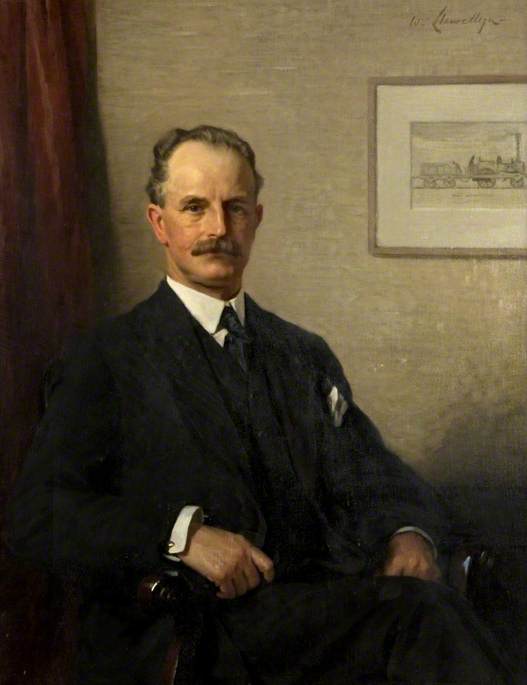
Sir Hugh Reid CBE, VD, LLD (1860 – 1935)

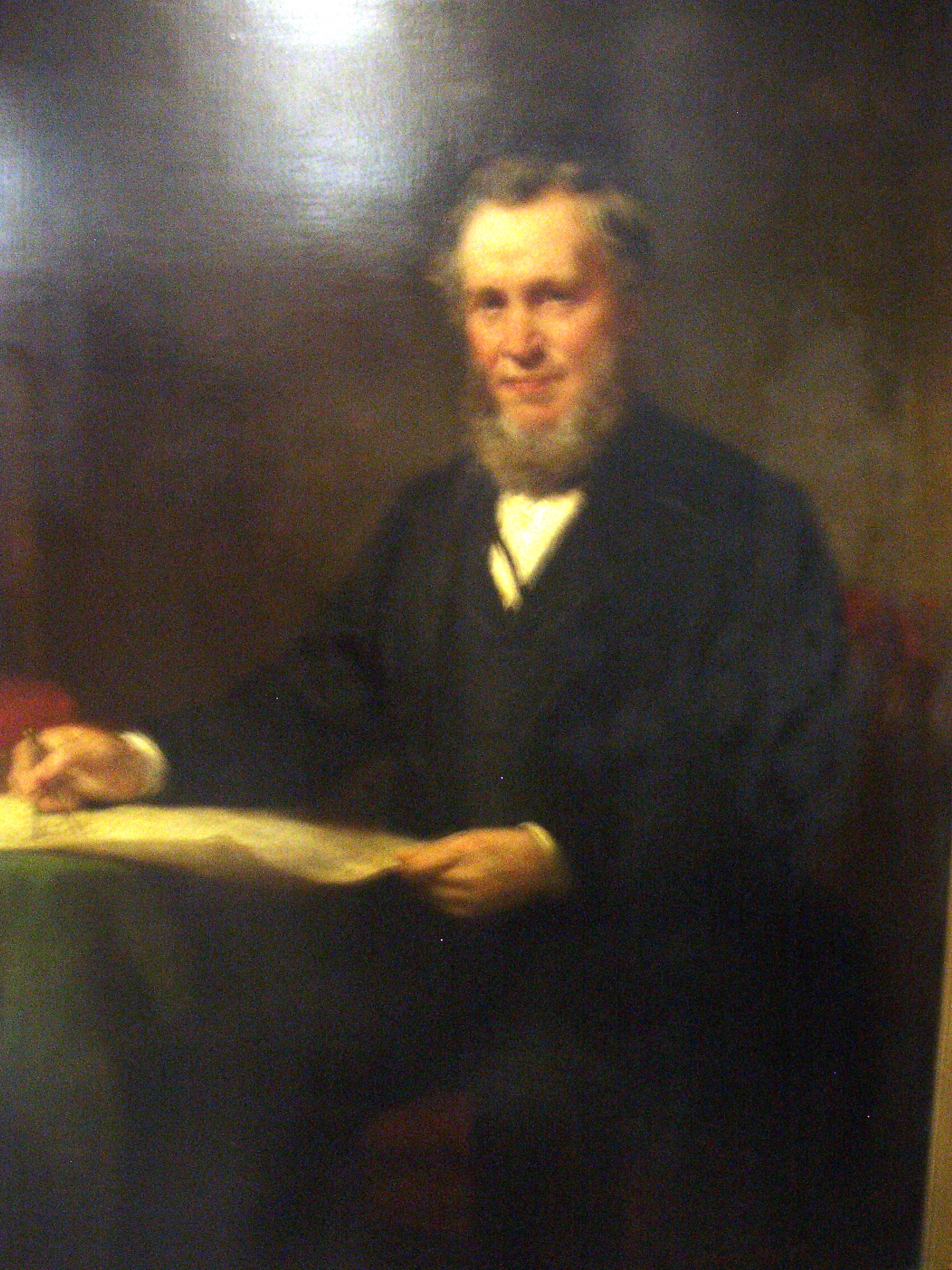
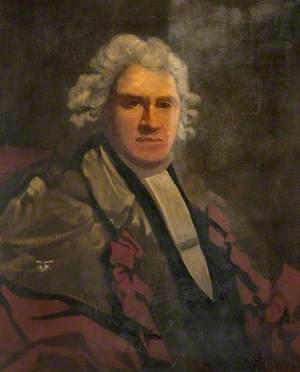
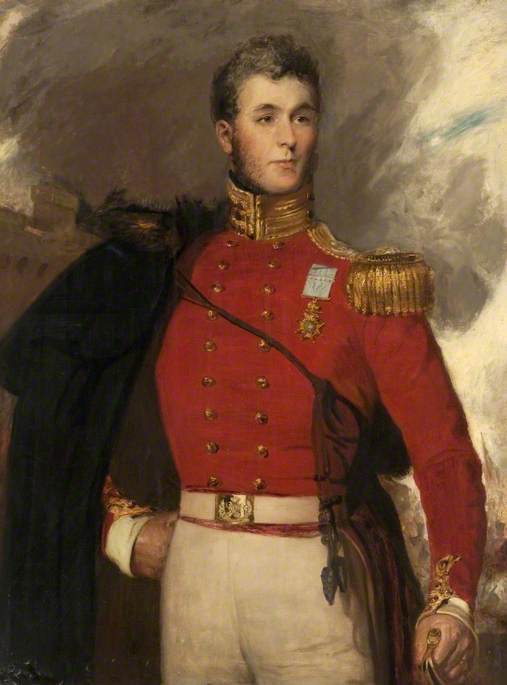
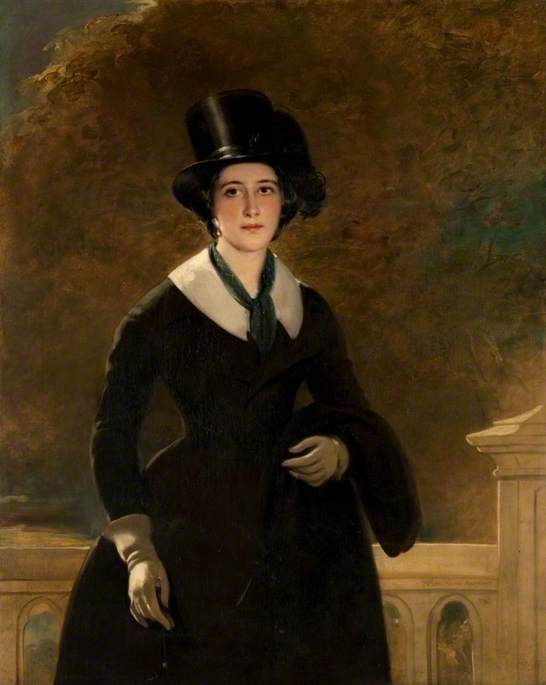
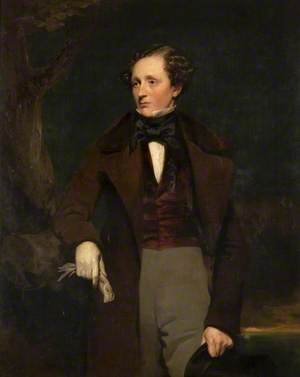
Sir Hugh Reid;Samuel Llewelyn. © CSG CIC Glasgow Museums Collection

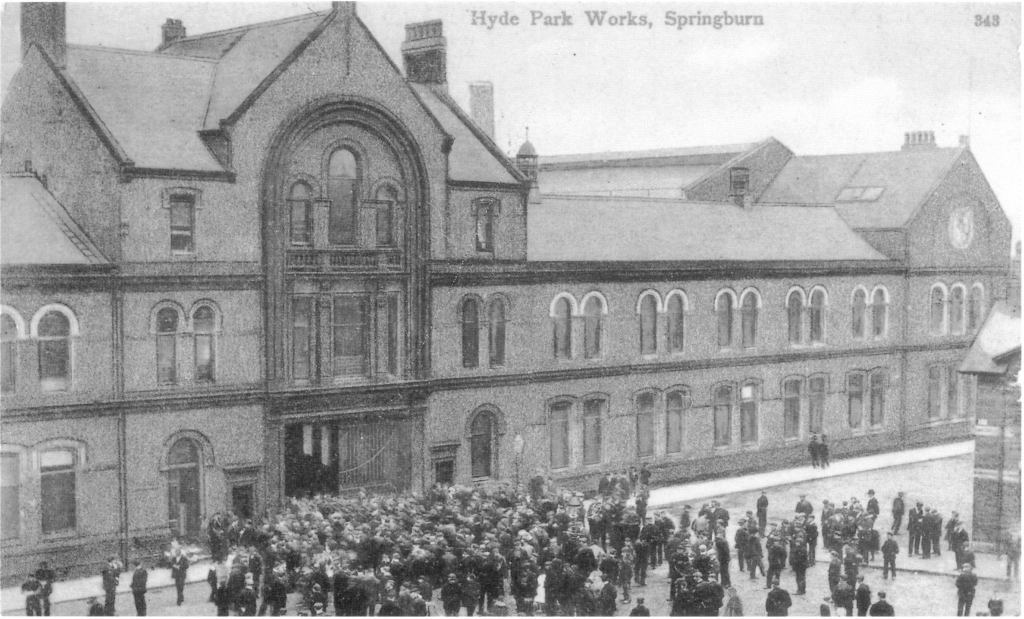
Hugh Reid was born in Manchester on 9 February1860. (1) His father was the locomotive manufacturer James Reid and his mother was Margaret Ann Scott. His parents moved to Glasgow when he was 3 years old (2) and he was brought up in Springburn. (3) He was educated at the High School of Glasgow. (4) He was apprenticed to his father’s firm, Neilson and Company at the Hydepark Engineering Works from 1871 to 1875. He then attended  the Faculty of Engineering at Glasgow University from 1881 to 1883. (5) After the death of James  Reid’s oldest son in 1881(6) James decided that his four sons should eventually be directors of the company of which he had been the sole director since 1874 and this was fully accomplished in1893. (7) James died in 1894 (8) and Hugh as the oldest son became Senior partner in  the Hydepark Works, which in 1903 amalgamated with the Atlas Works and The Queens Park Works  and the North British Locomotive company was born .
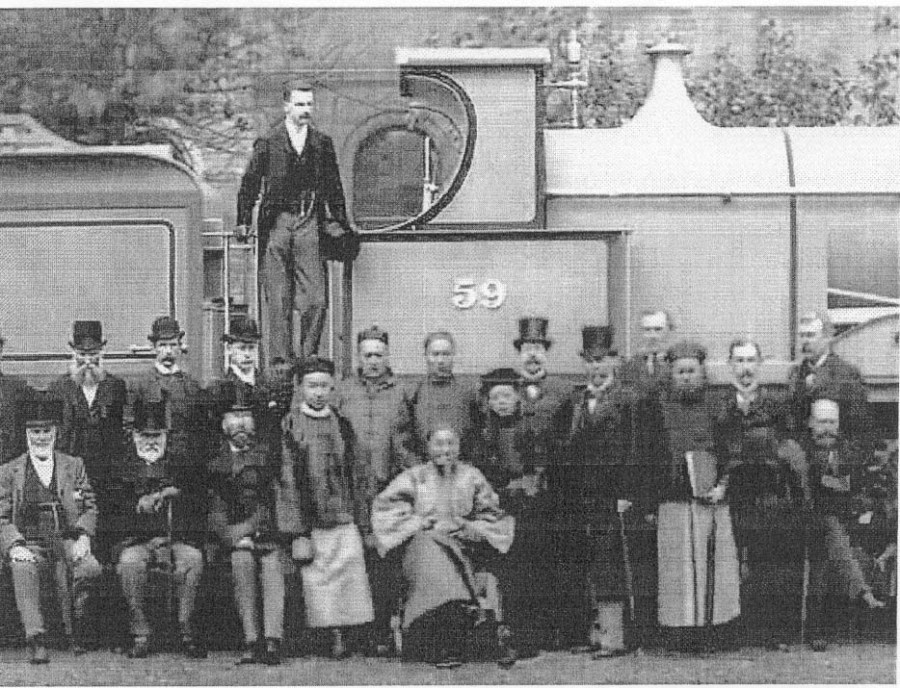
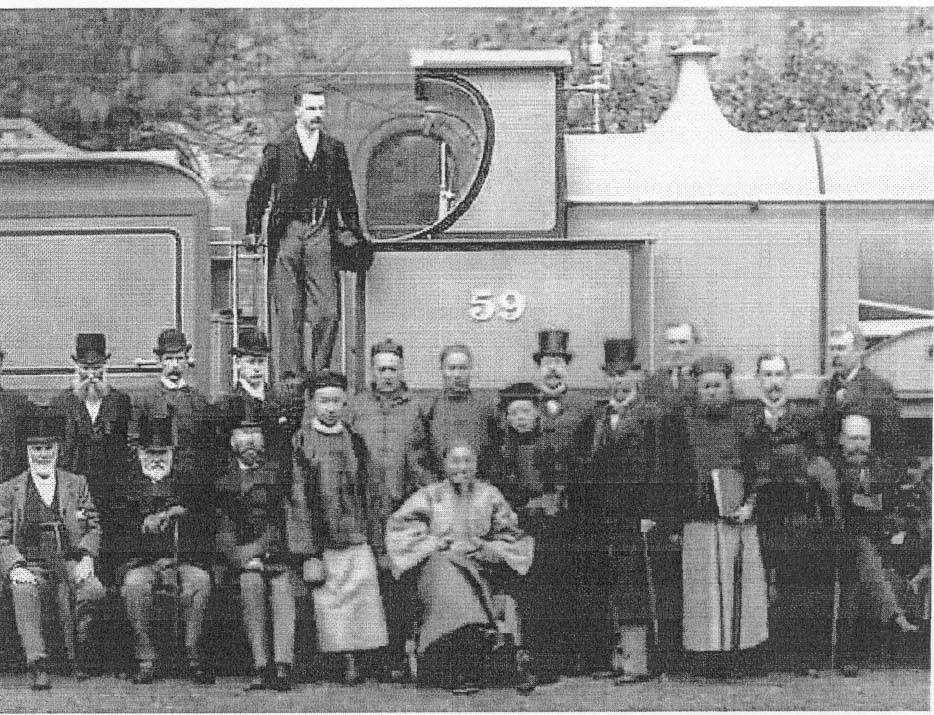
This became a major locomotive company exporting steam engines to Australia , Malaysia, New Zealand, Palestine and South Africa employing  thousands of men. Hugh Reid was Chief Managing Director and Deputy Chairman. (9)  At this time the company continued to innovate and he personally was responsible for the Reid Ramsay steam turbine electric locomotive. A full list of his patents is available in an article in Ancestry. (10)    In later years the company  designed diesel locomotives but this was not so successful and the company filed for bankruptcy in 1962.
Private Life

On 8 August 1888 he married Marion McClune Bell in Prestwick the daughter of a deceased shipbuilder. (11) They had four children (12): Captain James Reid (1889-1915) killed in the battle of Loos; Madelaine (1882-1983); Sir Douglas Neilson Reid (1898-1971) and George Hugh Neilson Reid (1901-1961). George was childless and at his death the baronetcy lapsed.(13 ) The family  lived in Belmont House in Springburn.(14 )
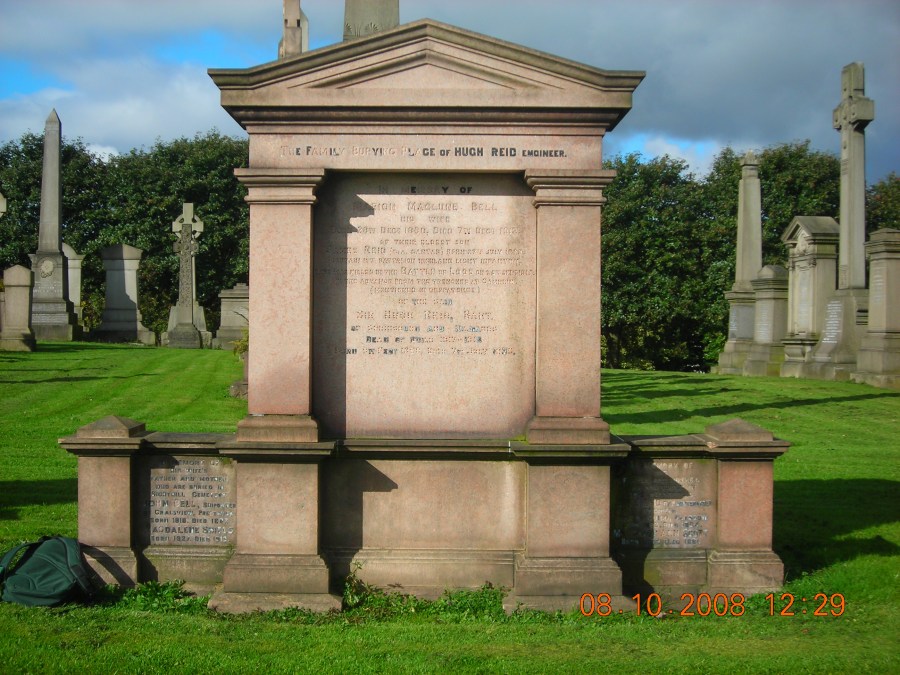
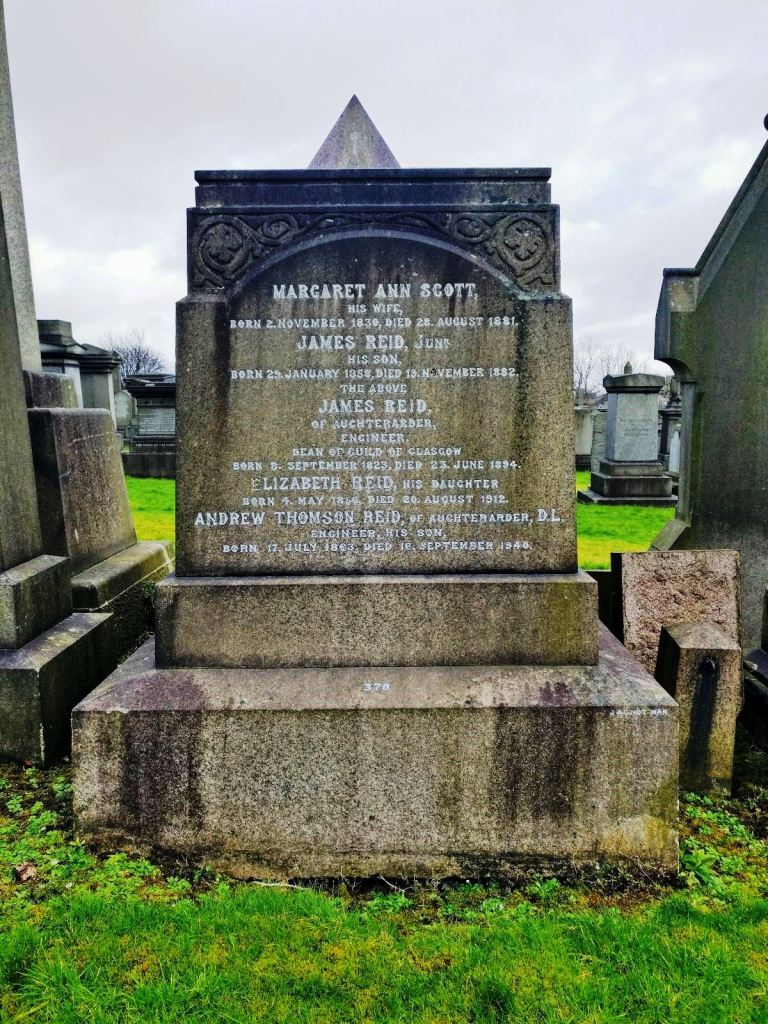
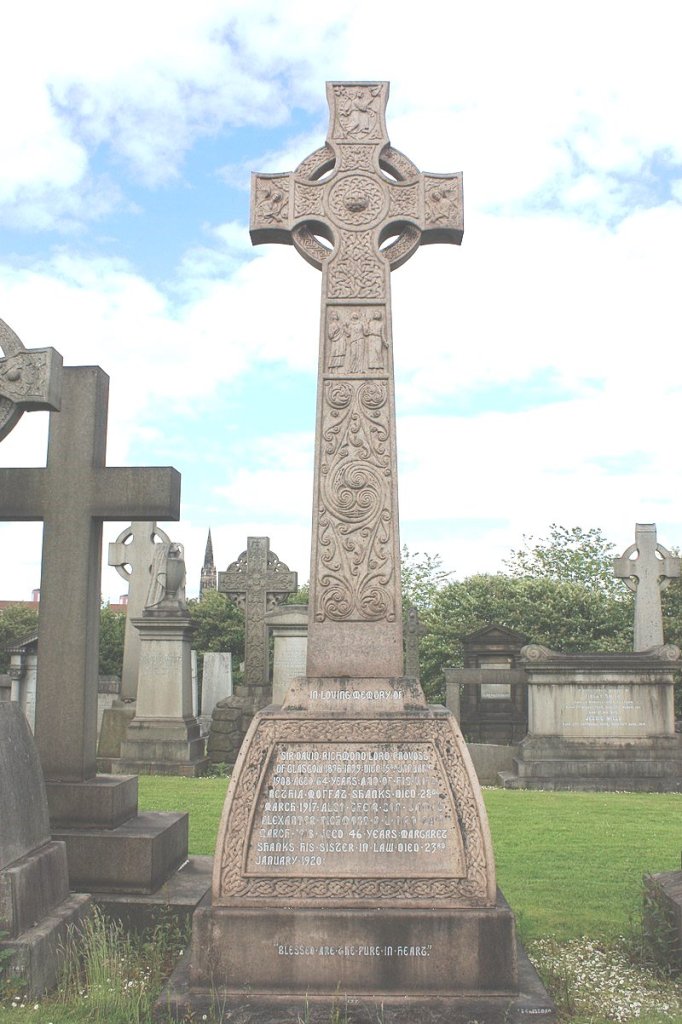
The grave of Sir Hugh Reid. https://www.findagrave.com

Marion died on 7 December 1913 at Belmont House. (15) She is buried in the family grave in the Glasgow Necropolis. Sir Hugh died in 1935 of a heart attack. (16) There were extensive obituaries in The Glasgow Herald (17), The Scotsman (18) and in The Times. (19) His grave is in the Glasgow Necropolis.

Public Life
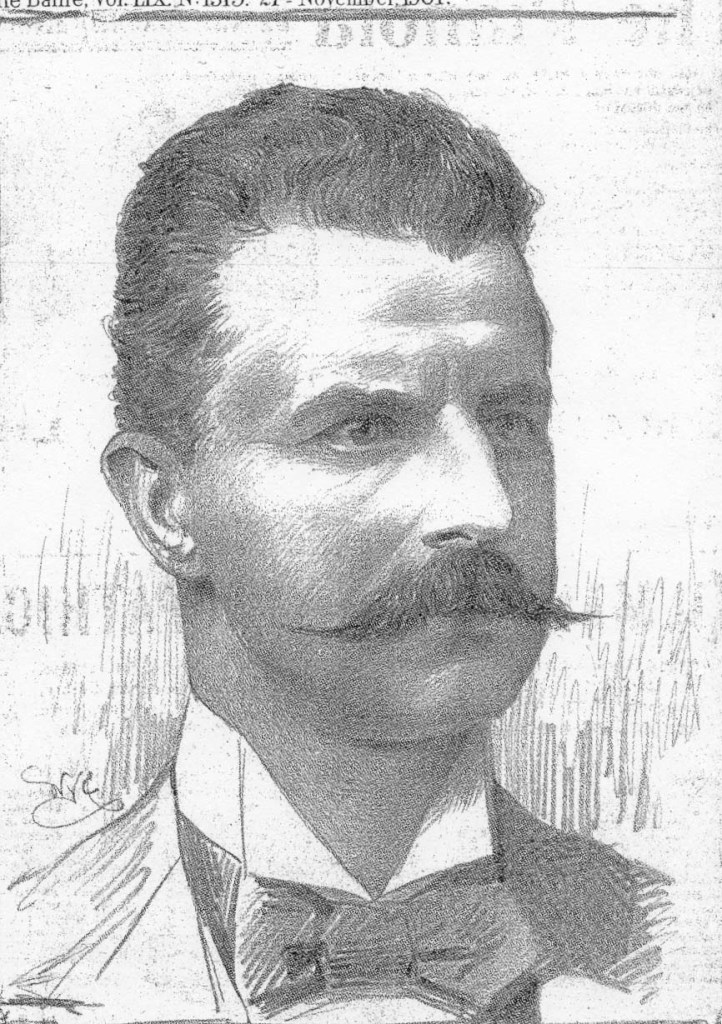
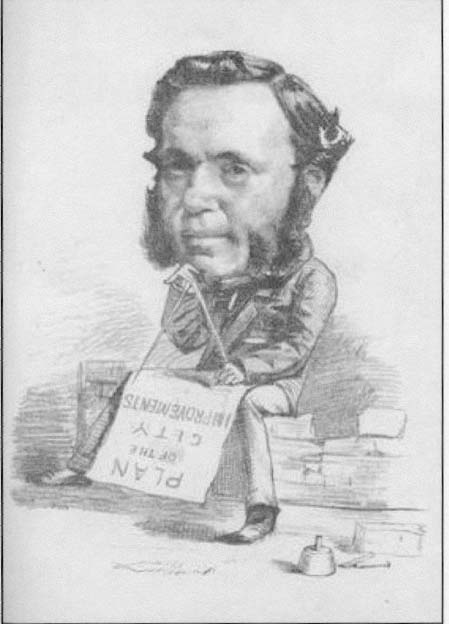
The Bailie 27 November 1901

He held no elected office in Parliament or In Glasgow city council. He is reported in the Bailie as saying that it is neither necessary to be in Parliament nor in the City Council to do good service to the city. (20) He followed this precept all his life. He was Deacon of the Hammermen in the Trades House in Glasgow in 1903.(21) He was a member of the Merchants House in Glasgow and in 1916 he was elected  by the members to be Dean of Guild thus becoming the second citizen of Glasgow. The Lord Provost is the first.

He was awarded the Freedom of the City of Glasgow in 1917 and a granddaughter returned the casket to the City in 2017. (22)
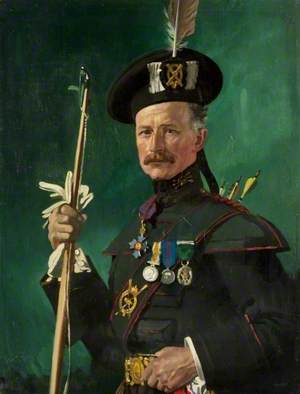
Sir Hugh Reid in the uniform of the Royal Archers; William Orpen. © CSG CIC Glasgow Museums Collection

 He joined the First Lanarkshire Volunteers as a private in 1877 and retired as Lieutenant Colonel in 1903. He became CBE in 1918  awarded  for service to the Red Cross during the war. He had converted a part of the Springburn Works in to a military hospital. He successfully chaired a Munitions Committee.

 He was created a baronet in 1922 and was Deputy Lord Lieutenant of the city of Glasgow.(23) He was a Brigadier in the Royal Company of Archers and he excelled at archery, winning the King’s prize in 1934. (24)

Services to The Arts in Glasgow
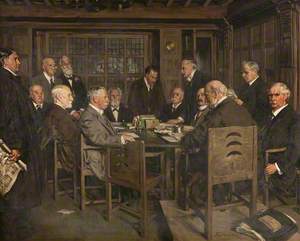
Newbery, Francis Henry; The Building Committee, Glasgow School of Art; © Glasgow School of Art

He served on the committee which appointed Charles Rennie Macintosh as architect for the Art School. He chaired the Machinery and Lighting committee for the Great Exhibition of 1901 for which he received much praise in the Bailie. (25) He was Chairman of the Royal Glasgow Institute for the Fine Arts from 1925 to 1928. (26

Philanthropy

He followed his father in giving to Springburn. He commissioned the statue of his father which is in the park.  He gave land to extend Springburn Park and gave buildings such as the Winter Gardens in the park and also funded the Reid Hall and the Reid library. (27)
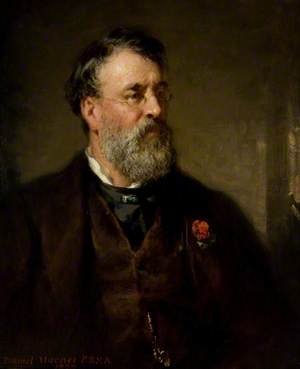
Sam Bough (1822-1878 ;Daniel Macnee. © CSG CIC Glasgow Museums Collection

With his brothers, he donated some paintings which had been collected by his father James Reid to Glasgow Museums. Information about these can be found in the blog under James Reid of Auchterarder.

He gave a painting on his own behalf which is shown here.

Reference

National records of England statutory Births 1862.

  1. Who’s Who in Glasgow 1909
  2. National Records of Scotland census 1871
  3. Who’s who in Glasgow 1909
  4. David Fox in Ancestry.co.uk. Sir Hugh Reid
  5. National records of Scotland Statutory deaths 1881
  6. National Railway Museum Records
  7. National Records of Scotland statutory deaths 1894
  8. National Railway Museum Records
  9. Ancestry .com. Sir Hugh Reid and Marion M. Reid, article by David Fox
  10. Ibid
  11. Post office Directories Glasgow
  12. Laing, Alan ‘Sir Hugh Reid’ in The Glasgow Herald 20 December 2012
  13. Death of Marion recorded on Hugh Reid gravestone 7 December 1913
  14. National records of Scotland statutory deaths 1935
  15. The Glasgow Herald 8 July 1935
  16. The Scotsman 8 July 1935 ‘Death of a Captain of Industry’
  17. The Times 3 July 1935
  18. The Bailie ‘The Man you Know’ 27 November 1901
  19. Obituary in The Glasgow Herald’ 8 July 1935
  20. The Bailie ‘The Man You Know’ 23 September 1908
  21. The Glasgow Herald 20 November 2017
  22. Grace’s Guide to British Industrial History. https://gracesguide.co.uk.  Creative commons
  23. Munn, Charles W. Dictionary of Scottish Business Biography: Sir Hugh Reid. Aberdeen University Press.1990
  24. The Bailie ‘The Man you Know’ 27 November 1901
  25. Graces Guide to British Industrial History
  26. http://cdlr.strath.ac.uk/springburn/sprin041     17/12/2009
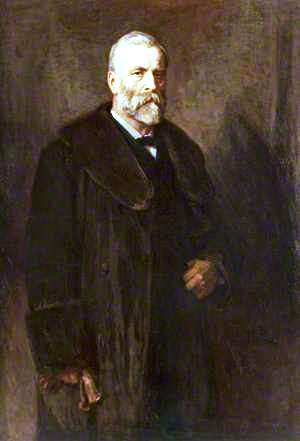
James Reid of Auchterarder (1823-1894)

James Reid was a locomotive engineer and Art collector.

James Reid of Auchterarder and The Hydepark Works. By George Reid.© CSG CIC Glasgow Museums Collection

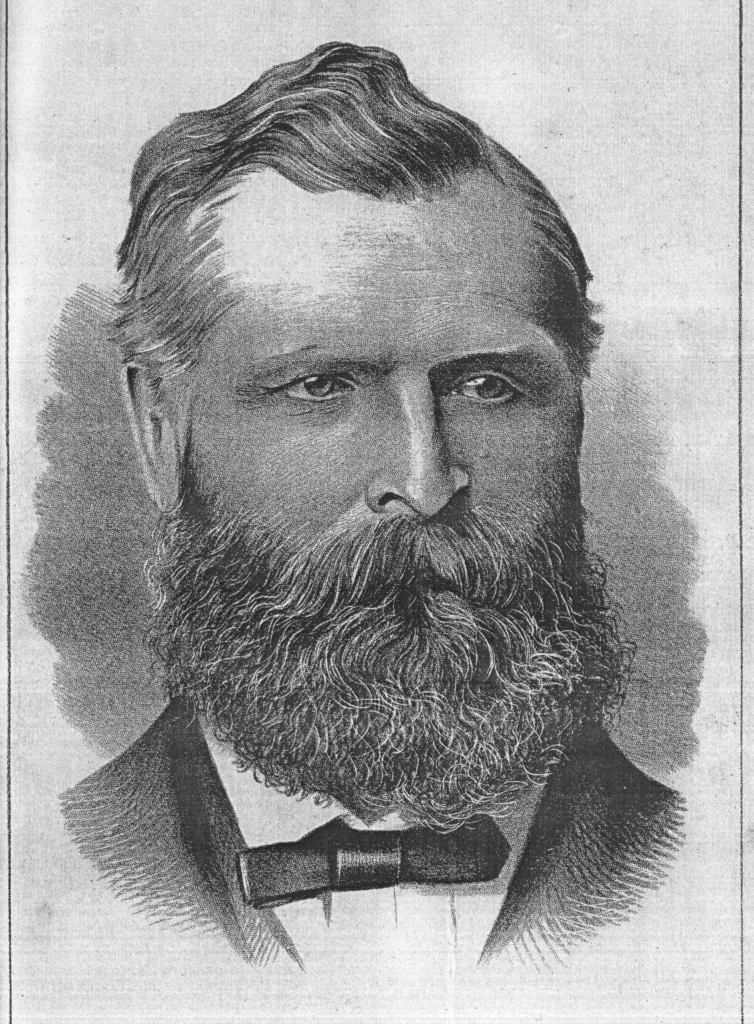
James Reid was born in Kilmaurs, a small Ayrshire town to the north of Kilmarnock on 8 September 1823. (1) He was the second son of William Reid described as a carter, or maybe a contractor (2) and his mother was Mary née Millar.  Scotland had for years offered primary school education for all and there is no evidence that he had proceeded any further with schooling although there were long established Grammar Schools in Irvine (3) and in Ayr. (4)

His first job was as a blacksmith’s assistant. He moved to the firm of Liddell and company in Airdrie, a firm of millwrights and metal workers and served an apprenticeship there.  (5)   Such firms relied on blacksmiths and it would have been progress from his previous employment. He next moved nearer to home to  Greenock where he initially joined Scott’s of Greenock  a shipbuilding firm principally at that time, producing engines for small vessels. (6 )  Staying in Greenock he joined another shipbuilding firm, Cairds and Company of Greenock which built seagoing, steam propelled ships. (7) Working in these firms would have exposed him to the various uses to which engines could be put and focussed his attention on their production.  At Cairds he rose to the position of chief draughtsman.                                                                    

He married Margaret Scott in Greenock in December 1850. (8 )  She was the daughter of a cabinetmaker. (9) A son William Scott Reid was born in February 1852 but died in April. He is buried in the churchyard in Greenock.

At this time, interest was developing in engines both stationary and for railway locomotives and the West of Scotland was well placed for their manufacture because of the local availability of iron and coal. He must have seen this as the coming thing so he moved to Springburn, in Glasgow, to Neilson and company at the Hydepark Works. At this time, he was living at St Vincent Street, Glasgow. (10)  Two children were born: Elizabeth (11) and James (12). He rose to become general manager of the firm until in 1858 he was replaced by Henry Dubs, a German engineer then working for Sharp Stewart and a company in Manchester which had extensive experience in the manufacture of railway engines. Dubs became a partner in the firm. (13)

James Reid then made an important decision and moved to Manchester to Sharp and Stewart for further experience. (14) In Manchester three more children were born: Hugh (15 ) John (16 )  and Andrew. (17) The family lived in Charlton upon Medlock. (18 )

In 1863 James moved back to Glasgow to the Hydepark Works now as a director of the firm which became Neilson and Reid. (19) He can be found in Springburn living at Wellfield House certainly until 1874. (20 ) Another three sons were born: Edward (21),Walter (22) and William(23). William died  aged 3 years.

About 1875 the family moved to 10 Woodside Terrace in the Park District of Glasgow, living in some style with four live-in servants. (24 ) (25)

   His wife, Elisabeth Ann died in August 1881 in Perthshire. (26)

James and family suffered another tragic bereavement in November 1882 (27) on the death of his oldest son James. The Glasgow Herald and other papers gave an account of the accident. (28 ) (29 ) (30 )  He had been shooting partridge on the Glenquaich estate with Mr Wilkes, the shooting tenant and his son. One of the party stumbled and his gun discharged all of its shot into James Reid’s thigh. All efforts were made to stop the bleeding and he was taken to the Royal Hotel, Crieff. The next day Professor Robertson of Glasgow performed a hind quarter amputation but James died that night from weakness and haemorrhage .
In 1886 James married Charlotte Geddes. ( 31) There is evidence that the family had visited Perthshire on occasions and in 1887 he bought Auchterarder house  (32 ) which was extensively remodelled for him by the architect Sir John James Burnett.

In 1894 James died of a heart attack on the golf course at St Andrews .  (33)  He is buried in the Necropolis in Glasgow.(34)

Family grave stone in Glasgow Necropolis
Image from Find my Grave

To his four sons he bequeathed not only material goods but also a legacy of public service, philanthropy and sound business sense.  His son Hugh became Managing Director and his brothers were all directors of Reid and Sons.

Public Life and Membership of Societies

James Reid in The Bailie 407 ©CSG CIC Glasgow Museums and Libraries Collection: The Mitchell Library, Special Collections”
 

James was involved in civic affairs as a Town Councillor and a JP being elected in 1877. (35)  In 1880 he took a prominent  part in the decision about the building of the new City Chambers. The Bailie (36 ) records his views on the proposal to limit the finance available which restrictions, he thought, showed Glasgow in a poor light compared to the proposals for other cities such as Manchester. In 1893, he became the Second Citizen of Glasgow when he became Lord Dean of Guild, Head of the Merchants House. (37 ) He died in office.

James Reid was a member of the Institution of Mechanical Engineers founded in 1857 and now the IMechE. He was President of the Scottish Institution of Engineers and Shipbuilders 1882-84. (38.)

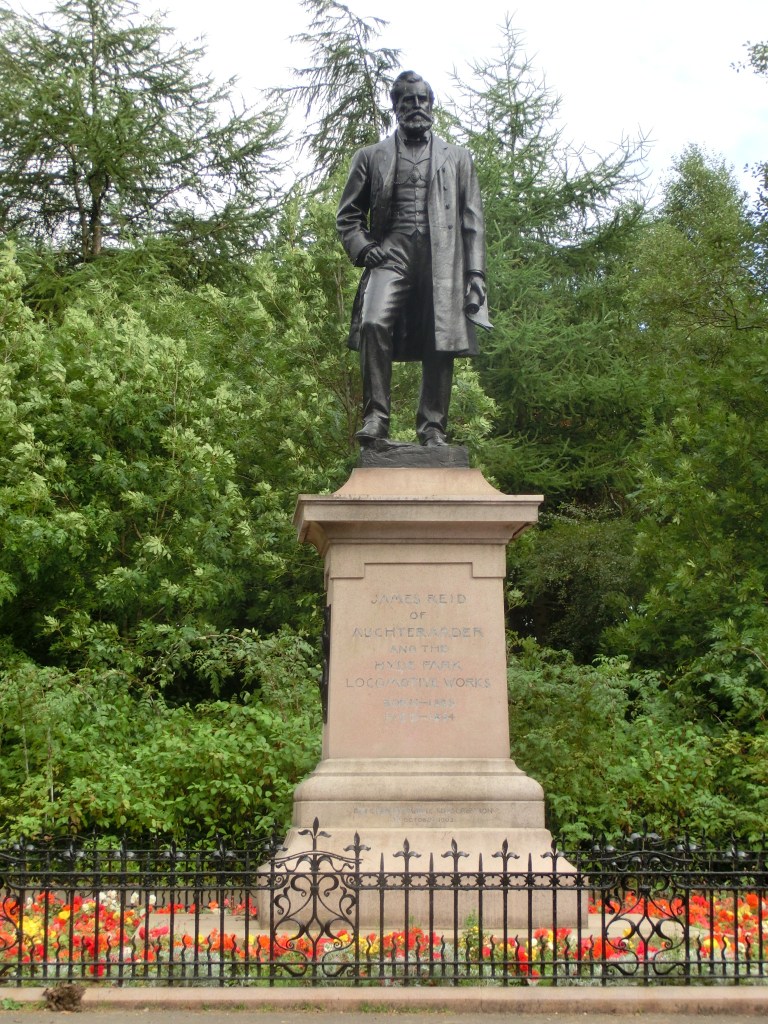
Statue of James Reid in Springburn Park. Copyright Fiona Murphy

Because he had lived and worked in Springburn, he was Chairman of the Springburn School Board. He was a major donor to Springburn and gave land to the citizens for Springburn Park and bandstand. This is commemorated by a statue in the park, raised by public subscription in 1903. (39)

He was also a Director of the Tramways Company.

He was an art collector of note (40) favouring the Barbizon and Hague schools. He chaired the Royal Glasgow Institution of Fine Arts.

When he died his sons gifted ten important paintings from his collection to the City of Glasgow, now in Kelvingrove Art Gallery and Museum. These are among the best known and much valued paintings in the collection. (41)

ArtistPainting
J M TurnerI Pifferari
John ConstableHampstead Heath
Sir Lawrence Alma TademaA Lover of Art
Sir William Quiller OrchardsonThe Farmer’s Daughter
John LanelliDownward Rays
Patrick NaismithWindsor Castle
Jean B C CorotPastorale
Constant TroyonLandscape and Cattle
Josef IsraelsThe Frugal meal
Sir George ReidJames Reid of Auchterarder
  

In March 1914 an auction of his remaining 114 pictures was held at J and R Edminston. The catalogue includes paintings by Horatio McCulloch, William McTaggart, John Faed, Sam Bough and many others showing his interest in and support for the Scottish painters.

References

  1. OPR Births and Baptisms 21.09.1823
  2. National Records of Scotland Statutory Deaths 1894
  3. Irvine Academy website
  4. Ayr Academy website
  5. Grace’s Guide to British Industrial history
  6. Wikipedia  Scotts of Greenock website
  7. Wikipedia Cairds of Greenock website
  8. OPR Marriages 20.12.1850
  9. National Records of Scotland Statutory Deaths 1881
  10. Post Office Directories Glasgow 1852
  11. National Records of Scotland Statutory Births 1857
  12. National Records of Scotland Statutory Births 1858
  13. Henry Dubs Wikipaedia
  14. Grace’s Guide to British Industrial history
  15. National Records of England Statutory Births 1860
  16. National Records of England Statutory Births 1861
  17. National Records of England Statutory Births 1862
  18. National Records of England Census 1861
  19. Grace’s Guide to British Industrial history
  20. National Records of Scotland  Census 1871
  21. National Records of Scotland Statutory Births 1862
  22. National Records of Scotland Statutory Births 1865
  23. Ancestry .co.uk 1871
  24. Post Office Directories Glasgow 1871
  25. National Records of Scotland  Census 1881
  26. National Records of Scotland Statutory Deaths 1881
  27. National Records of Scotland Statutory Deaths 1881
  28. The Glasgow Herald  21 November 1881
  29. The Glasgow Herald 22 November 1881
  30. Leamington Spa Gazette 22 November 1881
  31. National Records of Scotland Statutory Marriages 1886
  32. Auchterarder House Wikipaedia
  33. National Records of Scotland Statutory Deaths 1894
  34. Find a grave website
  35. Obituary in Grace’s Guide to British Industrial history
  36. The Bailie no 407 August 1880. The Man you Know
  37. Grace’s Guide to British Industrial history
  38. Institution of Mechanical Engineers website
  39. Springburn Park website
  40. Frances Fowles. Impressionism in Scotland. National Galleries of Scotland in Association with Culture and Sport Glasgow. Edinburgh, 2008
  41. Edmiston:  A catalogue of a valuable collection of pictures belonging to the late James Reid esq.10 Woodside Terrace and his representatives. Thursday 26 March 1914
  42. National Railway Museum records
  43. James W Lowe. British Steam Locomotive Builders 2014.  Kindle Edition, Amazon 2014

Appendix 1

Railway Locomotive Manufacturers in Glasgow.  

The firm of Neilson and Mitchell was established in 1836 to manufacture marine and stationary engines at Hyde Park Works in Glasgow. It was not until 1855 that they began to produce railway engines. The firm of Sharp and Roberts had been  originally established in Manchester in  1828 to manufacture stationery engines for cotton mills and to make machine tools. They built their first railway engine in 1833. In 1843 the firm became Sharp, Stewart and Company and had established an excellent reputation at home and abroad.

By 1861 Neilson and company had established an export business in locomotives exporting to Europe and India. Henry Dubs left the company and formed his own company at the Glasgow Locomotive works at Polmadie in 1863.

Walter Neilson branched out on his own to establish  the Clyde Locomotive company in 1884. In 1887 Sharp Stewart and Company, looking to expand their business moved to Glasgow and purchased the Clyde  Locomotive Company.

There were at that time three competing locomotive works in Glasgow: Neilson Reid and Company, Sharp and  Stewart  Company and The Glasgow Locomotive company. In 1903, they amalgamated and became

The North British Locomotive Company.

Information received from two main sources:


The records of the North  British Locomotive Company and constituent companies, Locomotive builders, Glasgow Scotland held in the National Railway Museum (42)

James W Lowe, British Steam Locomotive Builders (43)
Both these sources can be consulted for further information.

Mrs Agnes Janet Fairlie nee Richmond

Agnes Janet Richmond was born to David Richmond and his wife Bethia on 29 March 1871 (1) then living at 7 Newark Drive Kinning Park. She was a twin and her brother was James Alexander Richmond (2). His birth is found in the statutory register of births but hers is not.

She lived at home until her marriage. In 1891 the family are at 53 Albert Drive.(3)

On 25 July 1906, she married John Fairlie .(4) He was a mechanical engineer and came from a family of Indian merchants. She was his second wife. There are no children of the second marriage. Both her father and her husband- to- be made Wills (5 ) (6 ) which effectively ensured that she would inherit from her father but not from her husband since there were children and heirs from his first marriage.

When Sir David Richmond died on 15 January 1908 Agnes and her mother inherited money from the estate.(7)

Agnes and her husband would appear to have spent time in Lamlash on the Isle of Arran and were benefactors of the Lamlash Parish Church (8).There is no evidence that they were permanent residents in Arran. Agnes Fairlie donated a stained-glass window by Andrew Rigby Gray in memory of her father.(9) In 1913, her husband gave a church bell in Agnes’ honour.(10) In 1934 she gave the organ to the church in memory of the Reverend Peter Robertson.(11) John Fairlie died on 19 May 1921. (12)

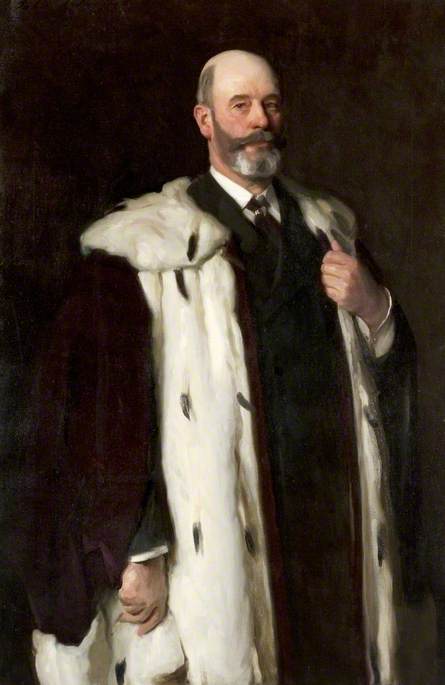
Figure 1. John Singer Sargent. Sir David Richmond Lord Provost of Glasgow 1896-1899 © CSG CIC Glasgow Museums Collection

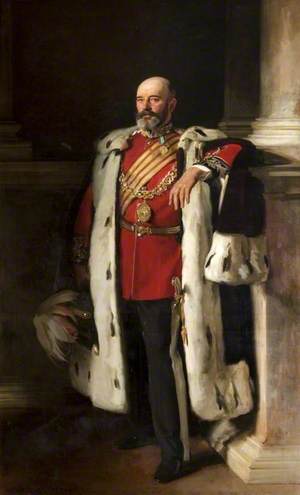
Agnes died on 10 April 1946 (13)  at 61 Clevedon Drive and in her will she donated a painting of her father  by John Singer Sargent to Glasgow. Another painting hangs in the City Chambers.

Sir David Richmond (1843-1906)

David Richmond was born in Deanston Perthshire on 14 July 1843, the ninth of ten children to James King Richmond and his wife, Mary Lauchlan .(14) His parents moved to Glasgow when he was an infant He was educated at St James Parish School then Glasgow High School. He is also recorded as having attended the Mechanics Institute. (15) .In his teenage years he was sent to Australia because he had poor health and he spent two years there. (16) He returned in 1868 to set up a tube works, which was located at Aytoun Court in Glasgow.

Figure 2. Sargent, John Singer; Sir David Richmond (1843-1908), Lord Provost of Glasgow (1896-1899) © CSG CIC Glasgow Museums Collection

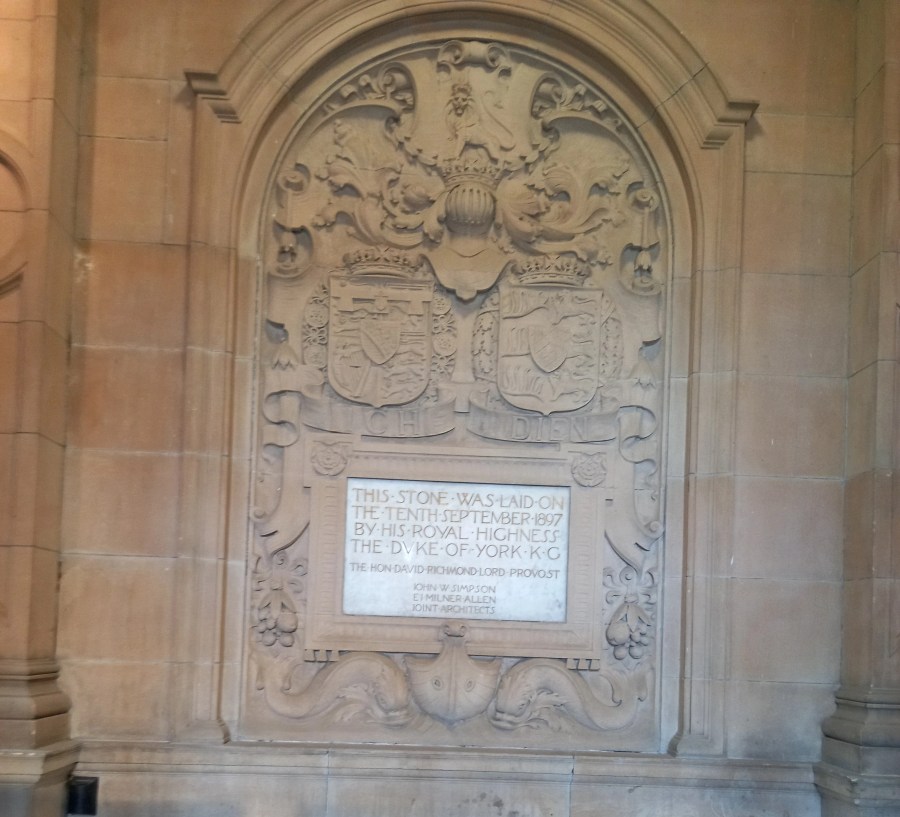
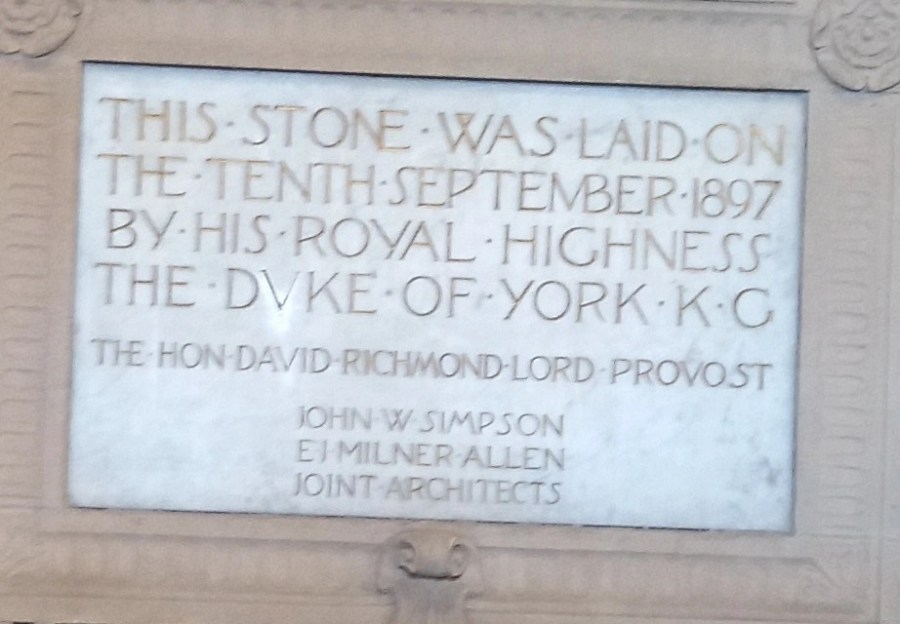
 In 1879, he joined the Glasgow Town Council representing the 14th ward (17). His most important contributions as Lord Provost were the building of the Peoples Palace in 1899 (18) and hosting the laying of the foundation  stone of the Kelvingrove Art Gallery and Museum by The Duke of York in 1897.(19) This is commemorated in Kelvingrove.

Figure 3. Kelvingrove. Photograph F. Dryburgh.
Figure 4. Kelvingrove. Photograph. F. Dryburgh.

He was greatly involved in the expansion of electricity through the city and in initiating building of several public baths and fire stations . (20) He also supervised the establishment of  Tollcross Park (21) and Richmond Park (named in his honour). (22)  He was knighted in 1899 by  Queen Victoria.(23)

Figure 5. The grave of Sir David Richmond in Glasgow Necropolis. Wikipaedia Creative Commons

 By 1900, his company had expanded and had premises at both Broomloan Road in Govan at 35 Rose Street in the Hutchesontown district. Sir David was then living at Broompark in Pollokshields. (24) After he retired he served as Chairman of the Clyde Trust.

He died at 53 Albert Drive in Glasgow on 15 January 1906 and his heir was his son James (25). Agnes and her mother inherited money from the estate.  He is buried in the Glasgow Necropolis. 26)

References

  1. Ancestry.co.uk
  2. National Records of Scotland Statutory Births 1871
  3. National Records of Scotland census1891
  4. National Records of Scotland Statutory marriages
  5. John Fairlie Glasgow Sheriff Court Wills 1921
  6. Sir David Richmond  Glasgow Sheriff Court Wills 1906
  7. Ibid
  8. Homepage.ntlworld.cm/morritek/lamlashchurch
  9. Ibid
  10. Ibid
  11. Ibid
  12. National Records of Scotland Statutory Deaths 1921
  13. National Records of Scotland Statutory Deaths 1946
  14. Grace’s Guide to British Industrial History
  15. Ibid
  16. Ibid
  17. Who’s Who in Glasgow Mitchell Library, Glasgow
  18. The Peoples Palace Glasgow Website
  19. The Glasgow Story
  20. Grace’s Guide to British Industrial History
  21. Tollcross Park web site
  22. Richmond Park web site
  23. Grace’s Guide to British Industrial History
  24. National Records of Scotland census 1901
  25. National Records of Scotland Statutory Deaths 1906
  26. Find a Grave Index

*Ellen Stewart Carrick (1857-1933)

Ellen Stewart Carrick (1857-1933

Ellen Stewart Carrick was the daughter of John Carrick. She lived on private means all her life. She donated a painting of her father John  Carrick by Sir Daniel Mcnee to Glasgow Art Galleries.  On 7 April 1920 the Parks Committee accepted the donation.(1)

Figure 1. John Carrick City Architect : Sir David Mcnee © CSG CIC Glasgow Museums Collection

Ellen Carrick (or Helen or Nellie) was born on 11 August  1857 at Dundonald, Ayrshire to John Carrick  and his wife Jane Stewart.(2) She was the youngest of  7 children.(3.) _There is little to learn about her early life which is not covered by her father’s history.Until his death she lived at home. In his Will she inherited the contents of the family home at 5  Park Quadrant and the rents of the properties at number 5 and number6 foras long as she was unmarried. (4 ) She did not marry and during her life time she moved to England and can be found at different addresses sometimes living with relatives. In the 1911 census she is at the home of her sister, Jane  Thomson, at North Gate, Regents Park, London.(5 ) In 1918, she donated some of her father’s effects to Glasgow museums from an address in Hasselmere,Surrey.(6 ) In 1920 she is living at 10 Promenade Terrace in Harrogate from where she donated Sir Daniel MacNee’s painting of her father.(7).  Again in 1926 she gave more of her father’s. collection of coins and other objects from an address in Southbourne Rd. Bournemouth.(8 ) She died on the 14 March 1933 in Abbey Road Marylebone.London.(9 )    There is a separate stone in the Necropolis,(10) Glasgow   erected by a niece which reads:

For the daughters of John Carrick. Ellen Stewart Carrick  and Marion Dunn Carrick,.wife of Thomas Chalmers.

John Carrick, (1819-1890) City Architect

John Carrick was born at Larbert on 6 May 1819 to William and Marion Carrick. His father was a hotel keepe..(11) He lived in Denny as a child.  At the age of 12 he entered the office of John Bryce, Architect in Glasgow as an apprentice. (12) When he had served his time, he went into partnership with James Brown and the firm was Brown and Carrick.(13 ) In 1844 he became Superintendent of Streets in Glasgow.   In 1854 he was appointed Superintendent of Public Works and then City Architect. (14 ) In 1866 he developed and  became responsible for the City Improvement Trust Schemes.(15) In this position he played a large part in the layout and redevelopment of Glasgow which forms much of the city centre as we know it today.

He was involved in the planning of many of the city’s landmarks among these the City Halls, what is now formally known as The Merchant City and the relocation of the Maclellan Arch on Glasgow Green.(16 ) When the foundation stone for the New Municipal Buildings was laid in 1883, he had a prominent position behind the Lord Provost and the City Council in the grand procession which went from Infirmary Square to George Square.(17 )

By 1861(18 ) he is living at 5 Park Quadrant in the Park District and ,from his will, (19 )we know that he owned one other house there at number 6. In 1871(20 ) he was living at Arran View in Prestwick.

He died in 1890 (21 ) and is buried in the Necropolis in Glasgow with his father and mother. (22) His gravestone reads:

In memory of MARION DUNN wife of William Carrick died September27 1843 aged 45 years WILLIAM CARRICK died April6 1853 aged 56 years JANE STEWART wife of John Carrick born December 5 1817 died November 6 1836 JOHN CARRICK born May 6 1812 died May 20 1890 for forty six years City Architect and Master of Works of this city SAMUEL CARRICK second son of John Carrick born September 30 1848 died June 17 1893

Figure 2. The Bailie. John Carrick City Architect. © CSG CIC Glasgow Museums and Libraries

.As befits a man who by the nature of his profession shaped the character and geography of Glasgow and particularly that of the Merchant City there are many sources relating to his achievements. Preeminent among these are articles in The Dictionary of Scottish Architects.,(23 ) and in Glasgow City of Sculpture (24)which within a detailed account of his life list all of the buildings in which he had an interest.  Articles in The Merchant City Trail (25 ) and the Bailie (26 ) all Fserve to underline his importance as a Glasgow citizen and are useful for further reading.

Glasgow Museums holds a bronze sculpture and a marble bust by Pittendreigh McGillivray. (27 ) He is also portrayed in the painting of Queen Victoria’s visit to the 1888 Exhibition by John Lavery. (28)

Figure 3. John Carrick: Bronze. Pittendriegh Mc © CSG CIC Glasgow Museums Collection. Gillivray
Figure 4. John Carrick: Marble. Pittendreigh McGillivray  © CSG CIC Glasgow Museums Collection

References

  1. Glasgow City council
  2. National Records of Scotland Statutory Births 1857
  3. National Records of Scotland census 1861
  4. National Records of Scotland Wills and Testaments  1890
  5. 1911 England census accessed via Ancestry.co.uk
  6. Archives of Glasgow Museums
  7. Minutes of Glasgow city council 1920
  8. Archives of Glasgow Museums
  9. England and Wales Death Index accessed through Ancestry .co.uk
  10. Records of The Necropolis Glasgow
  11. National Records of Scotland Statutory Births 1819
  12. Dictionary of Scottish architects accessed via their website
  13. Ibid
  14. The Bailie Mitchell Library Glasgow ref,92004BAI
  15. Dictionary of Scottish architects accessed via their website
  16. Ibid
  17. New Municipal Buildings Glasgow
  18. National Records of Scotland census 1861
  19. National Records of Scotland Wills and Testaments  1890
  20. National Records of Scotland census 1871
  21. National Records of Scotland Statutory Deaths 1890
  22. Records of the Necropolis Glasgow
  23. Dictionary of Scottish Architects accessed via their website
  24. www.glasgowsculpture.com
  25.  www.glasgowmerchantcity.net/trail.htm
  26. The Bailie Mitchell Library Glasgow ref,92004BAI
  27. Collections of Glasgow Museums
  28. ibid

Godfrey Herbert Pattison (1877-1960)

In December 1945, Godfrey Pattison donated five paintings to Glasgow museums. The paintings were thought to be associated with family members from the late eighteenth to nineteenth centuries. Godfrey Pattison was a widower with no surviving children and no surviving brother. It is reasonable to suppose that, having no immediate family, he would ensure that family pictures were in safekeeping.

 Godfrey Herbert Pattison was born in Chorleton upon Medlock, Lancashire on 16 April 1877 to John Pattison (1840-1917) and Mary Jane Ovington (1850-). (1 ) He was from a well-known Glasgow family descended from John Pattison of Kelvingrove House. He lived with his parents in Withington, in Lancashire and then in Cheshire. In !897 he sailed from the Liverpool docks bound for Calcutta. (2) The records of The Imperial Yeomanry show that he enlisted during the Boer War and served in South Africa from January 1900 to June 1901. (3)

Our subject is found travelling to and from England during his lifetime but passenger lists do not give his occupation or profession. Over the years he had different temporary addresses when he was on leave. In 1932 he was travelling to the UK from Dar-es-Salaam and his permanent address is given as Tanganyika (now Tanzania).   He returned to Mozambique in 1932. (4)   By 1939 he was home living in Andover, Hampshire. (5) His occupation at that time was given as farmer. When he gave the paintings in 1945 his address was given as the Commercial Hotel, High Street, Andover, Hants. (6)

In1939 he is described as widowed but there is no mention of his wife’s name or of a wedding. A son Donald Moncrieff Pattison (1920- 1944) was born in Tanganyika Territory. He served in the Second World War in the Royal Army Corps but died in action in June 1944 in Calvados in France and is buried in Ryles War Cemetery. (7)

 Godfrey continued to travel to Africa after 1945 and was travelling to and from Mombasa in 1958. (8) He died in 1960 and is buried in Manchester. (9)

Family History

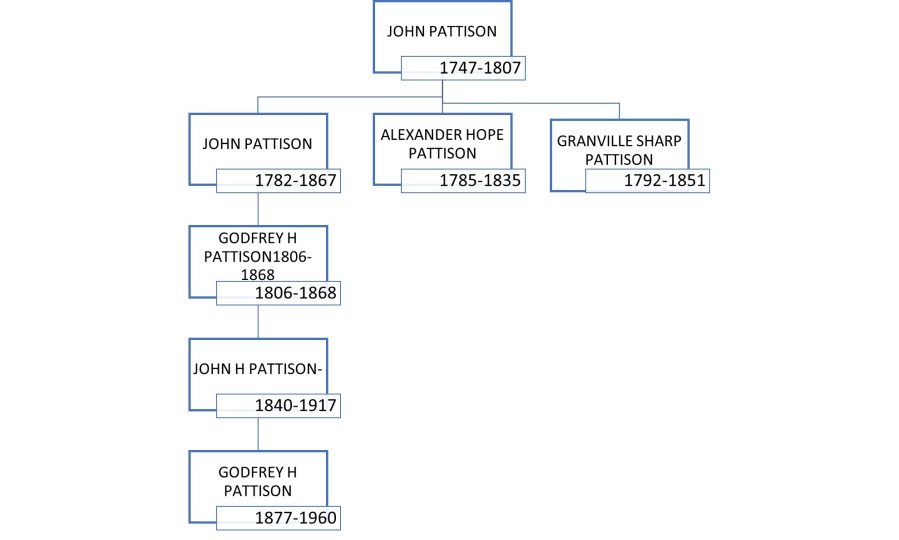
Figure 1. Pattison Family Tree

The family history, not only shows the direct line of descent of our subject from John Pattison of Kelvingrove House and the links to the present day Kelvingrove Museum, but also that this was a family who did not remain in Glasgow and were well travelled.

His father, John Pattisson (1840-1917) was the son of Godfrey Thomas Hope Pattison (1806- 1868) and Mary Cornelia Thomson (1819-1885). . He was born in New York at the British Naval Dockyard Hospital (10) (11) and his mother was an American citizen He is next found in the UK 1851and 1861 censuses (12) (13) in Glasgow. He married Mary Jane Ovington in 1873 in Glasgow. (14)  Thereafter he lived in Lancashire and then in Altringham Cheshire. (15) (16) His occupation was given as Silk Merchant.  He died on 7 March 1917 and is buried in Chorlton-cum-Hardy. (17)

His grandfather, Godfrey Thomas Hope Pattison (1806-1868) was the son of John Pattison (1782-1867) and Rebecca Monteith (1786-). (18)    He became an American citizen on January 2 1828. (19) The reason for his being in America and his occupation have not been ascertained. However, he was a nephew of Alexander Hope Pattison and of Granville Sharp Pattison, who was Professor of Anatomy in the University of New York. (20)  Godfrey married Mary Cornelia Thomson (1819 -1885) in 1836 in New York at a ceremony conducted by the mayor. (21). His son John was born in New York. Thereafter the family returned to Glasgow and are found in the 1851(22) and 1861(23) censuses at 27 Newton Place when he is described as a Commission merchant. He died in Glasgow in 1868 (24) and is buried in the Glasgow Necropolis.

Our subject’s great grandfather, John Pattison (1782-1867) was born   in Glasgow son of John Pattison of Kelvingrove (1747-1807) and his wife Hope Margaret Moncrieff (1755-1803) of Culfargie in Perthshire. (25) He was active in local politics and a strong supporter of the Reform Act of 1832. (26) He married Rebecca Monteith in Glasgow in 1803. He lived in Bothwell in 1851(27) and in Mauchline (28) in 1861. He died in 1867 in Edinburgh. (29) He is buried in the Glasgow Necropolis. (30) It is his portrait by the American artist Chester Harding which was donated to Glasgow.

Our Subject’s great great grandfather John Pattison (1747-1807) of Kelvingrove was born in Paisley on 7 December 1750. (31) He was a Glasgow merchant and mill owner who owned one of the largest steam driven spinning mills in Glasgow. (32 ) He married Hope Margaret Moncrieff of Culfargie  in the Low Church  Paisley on 17 July 1781. (33)

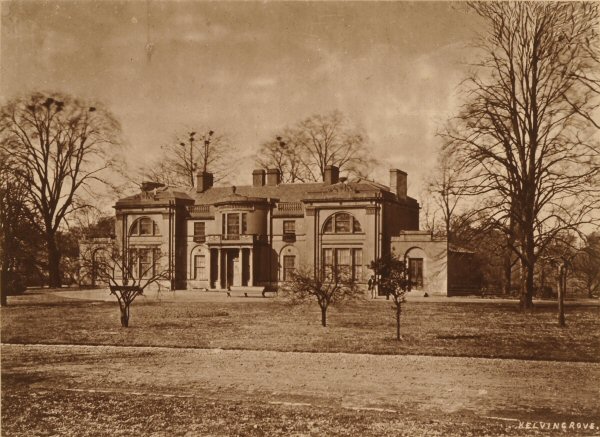
Figure 2. Kelvingrove House by Thomas Annan. Wikimedia Commons

In 1792 he bought Kelvingrove House, which had been built for Lord Provost Patrick Colquhoun in 1782. With the house was an estate of 24 acres .and to which he added and sold both in 1795. It was not until 1852 that it was acquired by Glasgow Corporation .and became Kelvingrove House in the West End Park. Kelvingrove House was much extended to become a museum but it was later demolished. (34)    Kelvingrove Park is the site of the present day Kelvingrove Museum Glasgow. He died in Glasgow in December 1807. (35)

John Pattison and Hope Margaret Moncrieff Pattison had a large family who incorporated the names ‘Hope’ and ‘Moncrieff’ into the family forenames.

The Donated paintings

Painting                                                     Artist

Lt Colonel A .Hope PattisonThomas Duncan R.S.A.
Portrait of a Young Man, nephew of the aboveUnknown
Lord MoncrieffAfter Raeburn
John PattisonChester Harding
Unknown GentlemanUnknown
  

These portraits give some clues to the antecedents of Godfrey Pattison but there are some questions about the reliability of their connections.

Four of the paintings merit some attention. The other is obscure and there is no information about the identity of the subject or of the painter.

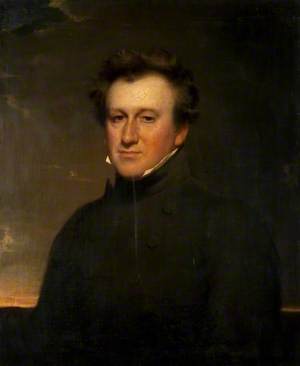
Figure 3. Harding,Chester; John Pattison;© CSG CIC Glasgow Museums Collection

The painting of John Pattison by Chester Harding is not of John Pattison of Kelvingrove (1747-1807) but of his son John Pattison (1782-1867). Harding was an American artist who did not arrive in Britain until 1823. (36) John Pattison of Kelvingrove died in 1807. It is of interest that there is a painting of his wife Hope Margaret Pattison by Harding which is in a private collection.

Figure 4. Raeburn, Henry; Lord Moncrieff(1776-1851);© CSG CIC Glasgow Museums Collection

The painting of Lord Moncrieff (1776-1851) is of Sir James Wellwood Moncrieff of  Tullibole in Kinross. (37) No family link has been found at the time of the marriage with Hope Margaret’s family who were Moncrieff of Culfargie in Perthshire. Her father was a minister of the Church of Scotland. However it may be that the families have a common ancestor.

Figure 5. Duncan Thomas; Lt. Colonel A. Hope Pattison;© CSG CIC Glasgow Museums Collection

The painting of Lt. Colonel A Hope Pattison (1785-1835) by Thomas Duncan does have a strong family connection. He was a son of John Pattison of Kelvingrove and Hope Margaret Moncrieff but our subject is not a direct descendant. Alexander fought with distinction in the Napoleonic wars. There is a monument to him and to other members of the Pattison family (38)) in the Glasgow Necropolis and there is much information about them on their website   and in the Glasgow Stories website of Glasgow University.

The painting of a young man, nephew of Alexander Hope Pattison, might be a portrait of Godfrey Thomas Hope Pattison but without knowledge of artist or date this is only a theory.

References

  1. Ancestry .co.uk/ Church of England Births and Baptisms
  2. Passenger lists 1878-1960
  3. Ancestry.co.uk/Records of Imperial Yeomanry
  4. Incoming passenger lists 1878-1960
  5. 1939 England and Wales Register
  6. Archives of Glasgow Museums
  7. Royal  Army Corps Records
  8. Outgoing Passenger Lists 1878-1960
  9. Find a Grave Index 1300 to current day
  10. Ancestry.co.uk
  11. Wikipaedia  Naval Dockyard Hospital, New York City USA
  12. National Records of Scotland Census 1851 and 1861
  13. National Records of Scotland Statutory Marriages 1873
  14. Ancestry .co.uk
  15. Ibid
  16. ibid
  17. England and Scotland Select Cemetery Registers 1800-1961
  18. Ancestry.co.uk/Old Parish Records
  19. Philadelphia. Naturalisation Records 1789-1880
  20. www.glasgownecropolis.org/profiles/The Pattison family
  21. Newspaper Extractions from North east :  Christian Intelligencer of the Dutch Reformed Church.17 September 1836
  22. National Records of Scotland Census 1851
  23. National Records of Scotland Census 1861
  24. National Records of Scotland Statutory Deaths 1868
  25. Ancestry.co.uk
  26. Catalogue of Portraits at the New Art Gallery, Glasgow 1861 Glasgow Museums Archives.
  27. National Records of Scotland Census 1851
  28. National Records of Scotland Census 1861
  29. National Records of Scotland Statutory Deaths
  30. www.glasgownecropolis.org/profiles/The Pattison family
  31. Ancestry.co.uk
  32. Glasgowwestaddress.co.uk/old_country_houses
  33. National Records of Scotland Statutory Marriages 1781 correct
  34. Glasgowwestaddress.co.uk/ old_country_houses
  35.  Britishnewspaperarchive.co.uk
  36. Leah Lipton .Chester Harding in Great Britain. Antiques. Vol.CXXV No 6. June 1984
  37. Millar.Gordon F.  Moncrieff, James Wellwood (1811-1895) Oxford Dictionary of National Biography, Oxford University Press, 2014.
  38. www.glasgownecropolis.org/profiles/The Pattison family

Janette Thesiger née Ranken (1877 – 1970) Actor and socialite

Janette Mary Fernie Ranken was born on 16 December 1877 to Robert Burt Ranken, Writer to the Signet, and his wife Mary at 8 Learmonth Terrace, Edinburgh. (1)      On her birth certificate she is ‘Jeanette’ but on all other documents this is spelt ‘Janette’.  She first appears in the 1881 census (2) with father, mother and her brother Thomas and household staff which included a cook, 2 housemaids, a laundress, 3 nurses and a kitchen maid. In the 1891 census (3) she is at Cringletie Manor House, near Eddleston, with her younger brother William, and a governess, housekeeper, nurse, cook, laundry maid and coachman. Her parents are not present and are presumably furth of Scotland. Cringleltie is now a hotel and is a substantial house which was then rented, since it was owned by another family. (4)

Figure 1. Janette Ranken at Lady Margaret Hall .By kind permission of the Principal and Fellows

She attended Lady Margaret Hall in Oxford from 1895 to 1897 and in their records is described as having been educated at home. (5)

 From time to time her father, while retaining his main residence in Learmonth Terrace in Edinburgh, rented other substantial houses in the Borders   In 1901 Janette’s residence is listed as with her father at Dalswinton house, Dumfries (6) and at 8 Learmonth Terrace, Edinburgh. (7)

Her father died in August 1902 (8) at Dalswinton House and she was named a Trustee in his Will with her older brother Thomas and others. (9) Glimpses of her may be seen in Hilary Spurling’s biography of Ivy Compton Burnett (10) ‘her (Margaret Jourdain’s) closest friend at Lady Margaret Hall, Oxford was Janette Ranken, a statuesque beauty from a well-to –do Edinburgh family’. Margaret Jourdain became a writer and a much-admired historian of furniture. She and Janette lived together until 1917. (11)   Margaret was friendly with Janette’s brother William and with his friend Ernest Thesiger. They all moved in a literary and aesthetic circle in London. (12)

 Janette eventually became an actor. During the 1914-1918 war she worked in censorship and in relief organizations. From 1918 she worked for the Theosophist Society. (13)

Figure 2. From ‘The Sketch‘ 30 May 1917

Janette married the actor Edward Thesiger, a friend of her brother William, on 29 May 1917 at Holy Trinity, Chelsea London. (14)  Margaret Jourdain then became Ivy Compton Burnett’s lifelong companion. Janette’s forthcoming marriage was reported in various papers, in The Scotsman (15) and in The Sketch ‘An interesting marriage between the actor Edward Thesinger and the well-known actor Miss Ranken’. (16)   This was because he was known to be gay. She was given away by her brother Major Thomas Ranken.

On the subject of her marriage Hilary Spurling comments that ‘Janette whose devotion to Margaret remained unimpaired by a marriage so unexacting on both sides that a great many of Ernest’s friends never suspected him of having a wife at all’. (17) An article in The Stage published after his death quoted him as saying ‘that the marriage was never consummated’.  (18)

After her marriage her life is not well documented and she would appear to have lived on private means and to have continued her interest in Theophisists but she did travel to Colombo in 1928 and to Durban in 1936 (19) (20) and she appears to have been unaccompanied.   Ernest Thesinger died in 1961. (21)

Figure 3. W.E.B. Ranken The Garden Door © CSG CIC Glasgow Museums Collection
 

 Janette was always very close to her brother William and when he died in 1941, (22) she distributed his paintings to Art Galleries in the UK and abroad.

She gave two paintings to Glasgow Museums in 1926 both by William Ranken’, an Oil Painting The Garden Door and a watercolour Dreaming Room at 139 Picadilly  She died in June 1970, aged 92 years, in Kensington, London.  The last years of her life had been marred by illness. She was blind and latterly bedridden. (23)

It was generally agreed that Janette found women more attractive than men (24) but there were three men in her life. Her brother Thomas Ranken was a donor to Glasgow museums in his own right and is reported separately.

 The second and most important was her brother the artist William Bruce Ellis Ranken (1881-1942). (25) He was educated at Eton and the Slade School of Art under Henry Tonks. (26)  It was there that his lifelong friendship with Ernest Thesiger began. His first exhibition in London in 1904 was well received. He became friendly with John Singer Sargent and travelled to America possibly with him. In America his clientele expanded to include the wealthy and famous and he exhibited successfully. He returned to Britain and his studio was at 14 Cheltenham Terrace, London.  His subjects included Queen Mary and the Princess Christian. (27)  He also painted miniatures for the Queen’s Dolls’ house.

Figure 4. Ranken, William Bruce Ellis; The Throne Room, Madrid; © CSG CIC Glasgow Museums Collection
 

He was an accomplished and prolific painter and painted interiors e.g.in Madrid and landscapes in France.

Figure 5. Ranken, William Bruce Ellis; Sir John Stirling Maxwell (1866-1956), 10th Bt; Pollok House, Glasgow. © CSG GIC Glasgow Museums Collection. (www.artuk.org).

His many portraits include that of Sir John Stirling Maxwell at Pollok House, which is in the Glasgow Museums Collection and hangs in Pollok House. (28)   He became quite wealthy and bought an estate Warbrook, in Hampshire.  

He died suddenly in 1942 and left about 200 paintings. (29)

Janette was responsible for donating these to Art Galleries around Britain. Eighty-two of his paintings feature in the ArtUK website. (30)
Her husband Ernest Thesiger (1879-1961) (31) came from a prominent English family of public and civil servants. (32)     His grandfather was the first Lord Chelmsford; his father was Sir Edward Pierson Thesiger a civil servant; an uncle was General Charles Thesiger of the African campaign and a cousin was the explorer, Wilfred Thesiger.

Figure 6. W.E.B. Ranken. Ernest Thesiger. Photo credit: Manchester Art Gallery (www.artuk.org).

After an education at Marlborough College, he proceeded to the Slade School of Art where he met William Ranken. (33) He tried to follow a career as a painter but became an actor though he continued to be an accomplished embroiderer. From 1909 he had success on the London stage and moved in artistic circles which included George Bernard Shaw and John Singer Sargent. He served in France in the First World War but was wounded and honourably discharged. He first appeared in a film in 1916 but it was not until 1930 that his Hollywood career was launched properly.  He continued to appear in films until the year before he died. He appeared in over 50 films and among them are some which are well known such as The Bride of Frankenstein and The Man in the White Suit. (34)  He was awarded a CBE in 1960 (35) and died in 1961. (36).       
References

  1. National Records of Scotland Statutory Births 1877
  2. National Records of Scotland Census 1881
  3. National Records of Scotland Census 1891
  4. Cringletie House Hotel website
  5. Archives of Lady Margaret Hall. By kind permission of the Principal and Fellows
  6. Dalswinton House Dumfries
  7. National Records of Scotland Wills and Confirmations 1902
  8. National Records of Scotland Statutory Deaths 1902
  9. National Records of Scotland Wills and Confirmations 1902
  10. Hilary Spurling. Secrets of a Woman’s Heart: the later life of Ivy Compton-Burnett. Hodder and Stoughton, London, 1984
  11.  Ibid           
  12. Milne, James Lees.    Ranken, William Bruce (1881-1961).    Oxford Dictionary of National Biography, Oxford University Press, 2014.
  13. Archives of Lady Margaret Hall. By kind permission of the Principal and Fellows
  14. Ancestry.co.uk
  15. The Scotsman 10 April 1917
  16. The Sketch 30 May 1917
  17. Hilary Spurling. Secrets of a Woman’s Heart: the later life of Ivy Compton-Burnett. Hodder and Stoughton, London, 1984
  18. The Stage 20 October 2000
  19. Ancestry.co,uk
  20. ibid
  21. England and Wales National Probate Calendar
  22. Milne, James Lees.    Ranken, William Bruce Ellis (1881-1961).    Oxford Dictionary of National Biography, Oxford University Press, 2014.
  23. Hilary Spurling. Secrets of a Woman’s Heart: the later life of Ivy Compton-Burnett. Hodder and Stoughton, London, 1984
  24. ibid
  25. National Records of Scotland Statutory Births 1881
  26. A Forgotten Gay Great: mrmhadams.typed.com
  27. ibid
  28. Art.uk
  29. Ancestry.co.uk
  30. Art.uk
  31. Ancestry.co.uk
  32. National Portrait Gallery website
  33. Anderson, Michael. Thesiger, Ernest Frederic Graham (1879-1961) Oxford Dictionary of National Biography, Oxford University Press, 2014.
  34. Wikipedia
  35. Anderson, Michael. Thesiger, Ernest Frederic Graham (1879-1961) Oxford Dictionary of National Biography, Oxford University Press, 2014.
  36. ibid
  37. Ancestry.co.uk

Thomas Ranken T.D. W.S.

Thomas Ranken was a Writer to the Signet, and a Match Rifle Shot who won medals in The Olympic Games in 1908.

Figure 1. Ranken, William Bruce Ellis; The Throne Room, Madrid; © CSG CIC Glasgow Museums Collection

Thomas Ranken was born on the 18 May 1875 to Robert Burt Ranken and his wife Mary  nee Dunlop in Edinburgh . His father was a Writer to the Signet. (1)  It was a prosperous household. In the 1881 census he lived at 8 Learmonth Terrace, Edinburgh with father, mother, 2 siblings and household staff which included a cook, 2 housemaids, laundress, 3 nurses and a kitchen maid. (2) His brother, William Bruce Ellis Ranken (3) was to become an artist and his sister, Janette Mary Fernie Ranken was to become a well known actress and socialite, marrying Ernest Thesiger. (4) Their father rented a country house in the Borders, Cringletie Manor and in the census of 1891 (5) two of the children are there but not Thomas. This was because he was educated at Eton and then at Balliol College. (6) In 1896 , when he was 21 years of age and had reached his majority, The Edinburgh Evening News reported that the tenants and employees of the Cringletie Estate had presented him with a rose bowl to mark the occasion. (7)

He graduated BA in 1899. During his time at Balliol he was a Lieutenant in the 1st Oxford University V.B. Oxford Light Infantry and it was there that he began a lifelong involvement with rifle shooting. He was president of the University shooting committee and of the Small- Bore Club. (8)

He returned to Edinburgh and was apprenticed to his father in1899. The apprenticeship was for two/three years because he had graduated from Balliol. In 1902 (9) Thomas was accepted as a Writer to the Signet and in the same year his father died. (10)  This was the beginning of his professional life and he continued to practise until his death.  

He had another interest which continued successfully for many years and this was small-bore rifle shooting. There are many references in the press about his success in his chosen pastime. Indeed when he died his obituary in the Scotsman (11) is headed ‘Champion Rifle shot . Death of Major T Ranken’.  He competed in the 1908 Summer Olympic Games. (12)  He won a silver medal in the Single Shot Running Deer event and in the Double Shot Running Deer event (both now discontinued) and came fifth in the 1000 yards free rifle event. He was also in the team which won the silver medal for the team prize. He took part in the 1924 Olympic Games but won no prizes. (13)

He served as a member of the council of the National Rifle Association and was a member and sometime Captain, of the Scottish Twenty. Among the many prizes he won were the Prince of Wales Prize, The Association Cup for Match Rifles and the Scottish Champion Cup  at Barnley in 1906. He was often in the final stages of the Queen’s and Kings Prize at Bisley. (14)

He served in the First World War, rejoining the 8th Royal Scots from the T.F. reserve in 1915. He acted as a Musketry Officer from April 1915 to June 1915 and then Brigade Major to 2/1 Lothian Infantry Brigade. He was thereafter attached to the General Staff Scottish Northern Command until 1919. (15)

In 1920 he married Marion Bruce, daughter of the Hon F J Bruce of Seaton House, Arbroath. (16) They had two sons. (17) He died on 27 April 1950 and is buried in the Dean cemetery in Edinburgh (18) (19) and his gravestone reads:

                                 Maj. THOMAS “TED” RANKEN

                Remember TOM RANKEN a large lovable personality.

                                        18 V 1875 -27 IV 1950

Acknowedgement

I have to thank the Archivist of the Library of the Signet in Edinburgh for his help with my researches. It was much appreciated.

Paintings

In 1948 Thomas Ranken wrote to the keeper of the Art Galleries in Kelvingrove offering several paintings. The following were accepted: (20)

Figure 2. The Honourable Mrs Alexander Macalister;by John Watson Gordon © CSG CIC Glasgow Museums Collection
Figure 3. Alexander Macalister of Loup, Torrisdale and Strathaird (1802-1876);by John Watson Gordon © CSG CIC Glasgow Museums Collection

  • The Honorable Mary Fleming by John Watson Gordon
  • Alexander MacAllister of Torrisdale by John Watson Gordon
  • The Throne Room Madrid by William Bruce Ellis Ranken

References

  1. National Records of Scotland Statutory Births 1875
  2. National Records of Scotland Census 1881
  3.  www.williamranken.org.uk   Wendy and Gordon Hawksley
  4. Jeanette Thesiger   http://www.ernestthesiger.org
  5. National Records of Scotland Census 1891
  6. Archive of The Signet Library, Edinburgh. Personal Communication
  7. Edinburgh Evening News 26 May 1896
  8. Balliol College Register   www. archivesballiol.ox.ac.uk
  9. Archive of The Signet Library, Edinburgh. Personal Communication
  10. National Records of Scotland Statutory Deaths 1950
  11. The Scotsman 29 April 1950
  12. Wikipedia Summer Olympics 1908
  13. Wikipedia summer Olympics 1924
  14. The Scotsman 29 April 1950
  15. Archive of The Signet Library, Edinburgh. Personal Communication (WS Roll of Honour 1914-1919)
  16. Dundee Evening Telegraph 27 February 1920
  17. Ancestry.co,uk
  18. National Records of Scotland Statutory Deaths 1950
  19. Dean Cemetry  www.deancemetry.org.uk
  20. Correspondence in Glasgow Museums Archive

James Couper (1839-1916)

Mr James Couper of Craigforth, Stirling was a Company Director living on private means.

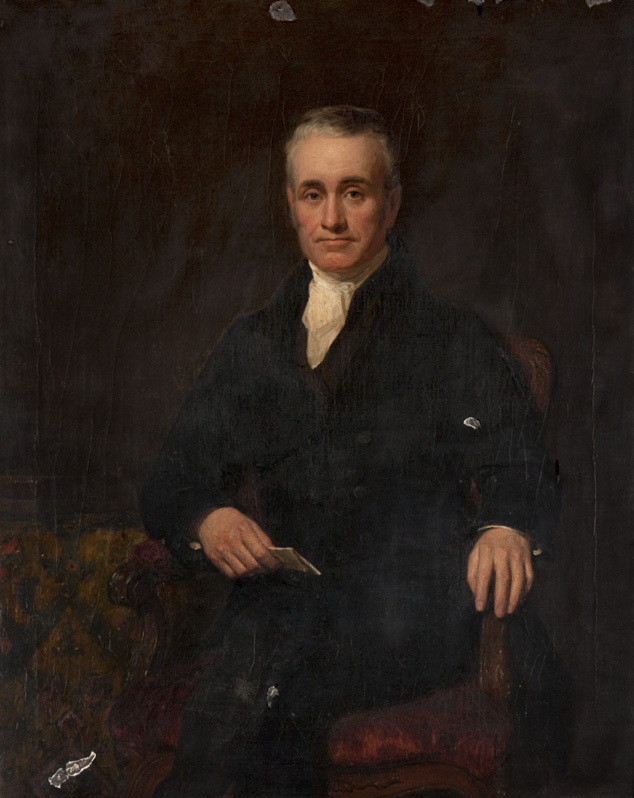
Figure 1. Portrait of the late Charles Tennant by Andrew Geddes. © CSG CIC Glasgow Museums Collection

The Portrait of the late Charles Tennant by Andrew Geddes was received by Glasgow Corporation in 1920. It had been bequeathed by his grandson, James Couper, to his wife Jane as life rent (2) and under the terms of his Will, after her death, was then to be given by his Trustees to Glasgow Corporation.

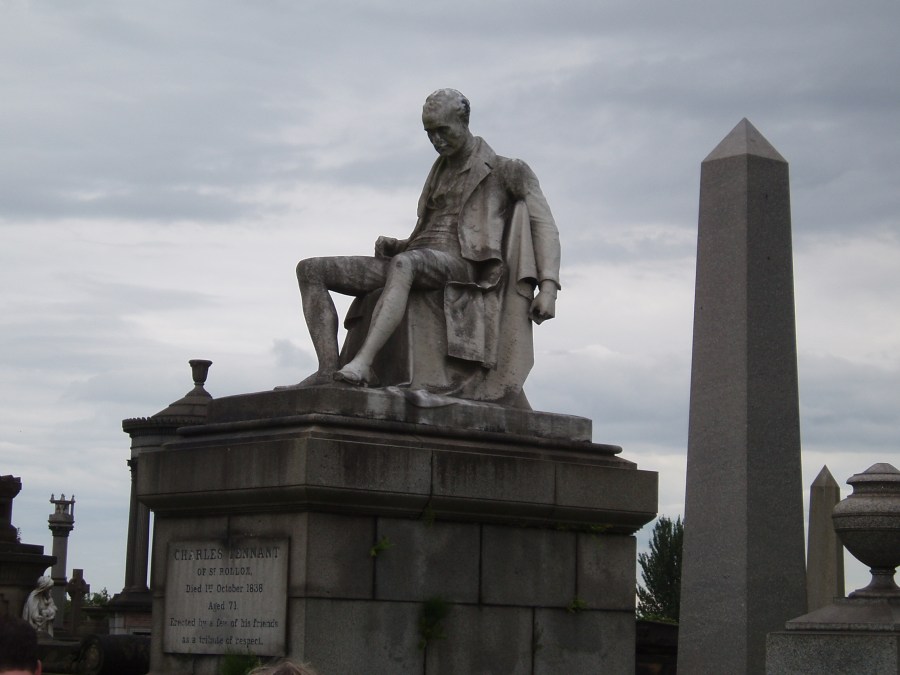
Figure 2. Statue of Charles Tennant and Obelisk for William Couper. Image © F J Dryburgh

James Couper was born on 13 September 1839 (3) the son of John Couper MD MRCP, Regius Professor of Materia Medica at Glasgow University (4) and his wife Charlotte Couper. His mother was the daughter of Charles Tennant (5) and his father was the son of Tennant’s great friend and associate, William Couper. (6)

The monuments to these men are side by side in the Necropolis in Glasgow. (7)

In the 1871 Census James Couper is living in Glasgow but visiting his parents and he is a manufacturing chemist. (8) James Couper moved to Craigforth in Stirling in1873 as a tenant and eventually as owner in 1904. (9)  In the 1881 Census he is listed as a manufacturing chemist, his wife is Jane, he has two sons, and 8 servants are listed. (10)  Craigforth is an impressive country house now on the M9 looking towards Stirling Castle and the Wallace Monument. Couper was a director of the Steel Company of Scotland and of Messrs Ogston and Tennant. (11) He and his wife were active in local society and contributed to charitable and civic activities in Stirling. (12) In 1878, James and Jane gave the Bishop’s Chair to the newly established Episcopal Church of The Holy Trinity in Stirling. (13)

He was a Director of Stirling Royal Infirmary and of The Albert Hall Company while these were being built. (14)

He died in the Central Hotel in Glasgow on 13 June 1916. (15)

His funeral was attended by many people including his nephew Mr. Charles Tennant Couper. He is buried in Logie cemetery. (16)

Charles Tennant (1768-1838) was a bleacher from Ayrshire with bleach fields in Darnley. (17)  There is a watercolour of the bleach fields by an unknown artist in the collection of Lady Maxwell in Pollok House, Glasgow (18) and a map from 1791 showing their location in the East Renfrewshire Public Library in Giffnock. (19) He went on to develop the first chemical method of bleaching using bleaching powder and to establish the St Rollox works in Glasgow, the first great chemical works in the world. (20)  His son John Tennant (21) developed the firm and built Tennant’s Stalk- a huge chimney in the North of Glasgow. His son was Sir Charles Tennant, an art collector, Liberal politician and industrialist. He was the founder of a family well known in social and political circles. (22) (23)   In 1926 the business became part of Imperial Chemical Industries and in 2008 became part of Atezo Nobel. (24)

References

  1. Archives of Glasgow Museums
  2. National Records of Scotland Wills and Testaments  1916
  3. National Records of Scotland Statutory Births 1839
  4. John Couper The University of Glasgow Story.  https://universitystory.gla.ac.uk/people
  5. National Records of Scotland Wills and Testaments  1840
  6. John Couper The University of Glasgow Story.  https://universitystory.gla.ac.uk/people
  7. The Glasgow Necropolis. http://www.glasgownecropolis.org
  8. National Records of Scotland census 1871
  9. Stirling Advertiser and Journal 3 March 1916. Obituary of James Couper
  10. National Records of Scotland census 1881
  11. Stirling Advertiser and Journal 3 March 1916. Obituary of James Couper
  12. Personal communication Stirling librarian
  13. http://www.holytrinitystirling.org
  14. Stirling Advertiser and Journal 3 March 1916. Obituary of James Couper
  15. National Records of Scotland Statutory Deaths 1916
  16. Stirling Advertiser and Journal 16 March 1916. Funeral of James Couper
  17. Massie, Alan. Glasgow Portraits of a City. London: Barrie and Jenkins,1989
  18. Watercolour of Mr Charles Tennant’s Bleachfields, artist unknown, held in Pollok House, Glasgow.
  19. Map of East Renfrewshire, 1791 showing Mr Tennant’s Bleachfields held in the East Renfrewshire Public Library, Giffnock
  20. Massie, Alan. Glasgow Portraits of a City. London: Barrie and Jenkins,1989
  21. Lindsey, Christopher F. Oxford Dictionary of National Biography. Oxford University Press, 2014.
  22. Sir Charles Tennant Wikipaedia
  23. Ibid
  24. ibid

John Douglas Campbell White M.D. (1871 – 1940)

Dr. John Douglas Campbell White was heir to his uncle, Lord Overtoun. He donated four paintings to Glasgow Museums in 1935. (1)

Figure 1. The Tryst by  Sir John Noel Paton RSA © CSG CIC Glasgow Museums Collection

J D C White was born at Hayfield House, Rutherglen on 18 August 1871, to John Orr White and Fanny Campbell White (2) who were second cousins and came from a family of industrialists. The family moved to London. His father died on 22 January1879 (3) but his mother continued to live in London. (4) He was educated at Charterhouse School where he did well. (5) He then attended Trinity College Cambridge and in his five years there he was awarded a BA First Class in the Classical Tripos (1894) and also in the Theological Tripos (1896). He proceeded to an MA in 1899. (6) He went to the London Hospital where he was a House Physician and qualified MRCS and LRCP. (7) In 1905 Cambridge awarded him an MD. (8) He did not go into medical practice but joined the Lister Institute to undertake research. This was made possible in 1908 because he was his uncle Lord Overtoun’s heir and on his death inherited his estate in Dunbartonshire. (9)

Figure 2. Loch Ericht by Henry John Boddington © CSG CIC Glasgow Museums Collection

 His research was mainly into the social aspects of venereal disease and he was a member of the British Social Hygiene Council. (10) In the following years he published and lectured quite widely. In the First World War he was a Captain in the Royal Army Medical Corps. (11) In 1922 he was sent by the army to Constantinople to conduct an anti-venereal disease campaign. (12) From 1923 he was Chairman of the Council of the Tavistock Clinic. (13)He was a committed Christian and continued to take an interest in religious affairs. He had been ordained a Deacon in the Church of St Peters in Eaton Square, London in 1898. (14)  He was Chairman of the Council of the Modern Churchmen’s Union from 1923 to 1930.  (15)

Figure 3. Dog in the manger by Walter Hunt © CSG CIC Glasgow Museums Collection

In 1898 he married Lucy Agnes McClure (16) and they had a son. He died at Harrow-on the-Hill on 25 March 1940. (17) His life is summed up in the BMJ obituary: ‘Circumstances made it possible for him to do unpaid jobs; training made him competent to look on sociological problems from both ethical and physiological viewpoints.’ (18)

Figure 4. Where’s my Good Little Girl   by  Thomas Faed RA © CSG CIC Glasgow Museums Collection

Paintings donated to Glasgow Museums:

Oil. Thomas Faed RA. Where’s my Good Little Girl

Oil. Henry John Boddington.  Loch Ericht

Oil. Walter Hunt. Dog in the manger

Oil. Sir John Noel Paton RSA. The Tryst

The Family Inheritance

The White family members were industrialists and chemical manufacturers in the west of Scotland. They combined business acumen with strong religious beliefs and a commitment to civic service. (19) The family had come out at the Disruption in the Church of Scotland and clung to the ethics of the Free Church.

In the early years of the nineteenth century, brothers James and John White established a factory to make soda and soap in Shawfield, Rutherglen near Glasgow. By 1830 they were producing potassium dichromate, used as a mordant for the dye industry. By 1850 the site covered 200 acres and employed 500 men. It was a very successful business, a near monopoly, because of the large textile factories within Glasgow and Paisley. (20) James was well known in business and for philanthropy and his statue now stands in Cathedral Square, Glasgow. (21)

Their sons, John Orr White, son of James and John Campbell White, son of John, carried on the business but it was John Campbell White who became best known. (22) He studied at Glasgow University, graduating MA and studied law before entering the business. (23) Over the years he left others to run the business and devoted himself to philanthropy and religious causes and gave much time and money to charity. He was a powerful figure in the Liberal Party and became Baron Overtoun in 1893. He developed his estate in Dumbarton at Overtoun which he had inherited from his father.

The chrome business was successful but it was a dirty business. Little heed was paid to the well-being of workers or to the disposal of toxic waste. In 1899, the workers went on strike and their cause was taken up by Keir Hardie. This became a cause célèbre with much criticism of Lord Overtoun and can be followed in the Scotsman. (24) (25 ) (26 )(27) Opinions are divided about how much Lord Overtoun was involved.   Eventually a compromise was reached and the workers returned to work with improved conditions of employment but the legacy of chrome persisted in ill health and environmental damage.

In 1903 Lord Overtoun gave public parks to Dumbarton and to Rutherglen, both called Overtoun Park. For this he was made a Freeman of Dumbarton (28) in 1903 and of Rutherglen in 1905. (29)

In 1908 Lord Overtoun died childless and the estate and his art collection passed to his nephew. (30)  Dr John Campbell Douglas White also inherited a religious belief and a sense of duty to society.

 In 1935 the estate was given to Dumbarton by Dr White and some paintings were given to Glasgow and Dumbarton. (31)

  1. Minutes of Glasgow City Council 1935
  2. National Records of Scotland Statutory Births 1877
  3. Ancestry .co.uk
  4. Census England and Wales 1880
  5. Venn J.A, Alumni Cantabriensis London England. Cambridge University Press, 1922-1954
  6. BMJ 20 April 1940 p673. Obituary
  7. Ibid
  8. Ibid
  9. National Records of Scotland Statutory Deaths 1908
  10. BMJ 20 April 1940 p673. Obituary
  11. Venn J.A, Alumni Cantabriensis London England. Cambridge University Press, 1922-1954
  12. BMJ 20 April 1940 p673. Obituary
  13. ibid
  14. Venn J.A, Alumni Cantabriensis London England. Cambridge University Press, 1922-1954
  15. BMJ 20 April 1940 p673. Obituary
  16. Venn J.A, Alumni Cantabriensis London England. Cambridge University Press, 1922-1954
  17. Ancestry.co.uk
  18. BMJ 20 April 1940 p673. Obituary
  19. Ritchie, Lionel Alexander. ‘John Campbell White, Lord Overtoun’ in Slaven, A              A Dictionary of Scottish Business Biography. Aberdeen. Aberdeen University Press,1986. Page 293
  20. ibid
  21. Memoirs and Portraits of 100 Glasgow Men
  22. Who’s who in Glasgow in 1909
  23. ibid
  24. The Bailie. The Man you Know June 1889
  25. The Scotsman 29 June 1899
  26. The Scotsman 5 July 1899
  27. The Scotsman 5 August 1899
  28. Who’s who in Glasgow in 1909
  29. ibid
  30. Wills and Probate. London, England
  31. Personal communication Dumbarton Librarian


Archibald Walker Finlayson J.P.

Archibald Walker Finlayson was a linen thread manufacturer whose company had factories in Johnstone, Renfrewshire and in the USA.

He was born in October 1849 (1) the oldest child of James Finlayson and his wife Rachel nee Watson. At that time they were living in Paisley. His father was a linen thread manufacturer, one of the first to introduce the spinning of flax mechanically.

  (2 ) In 1844, James and his brother Charles and C.H, Bousefield had established a business manufacturing linen thread which continued in production up to 1958 and formed part of the Linen Thread Company Ltd. The factory became a major employer in Johnstone. So Archibald was born into a successful family business.

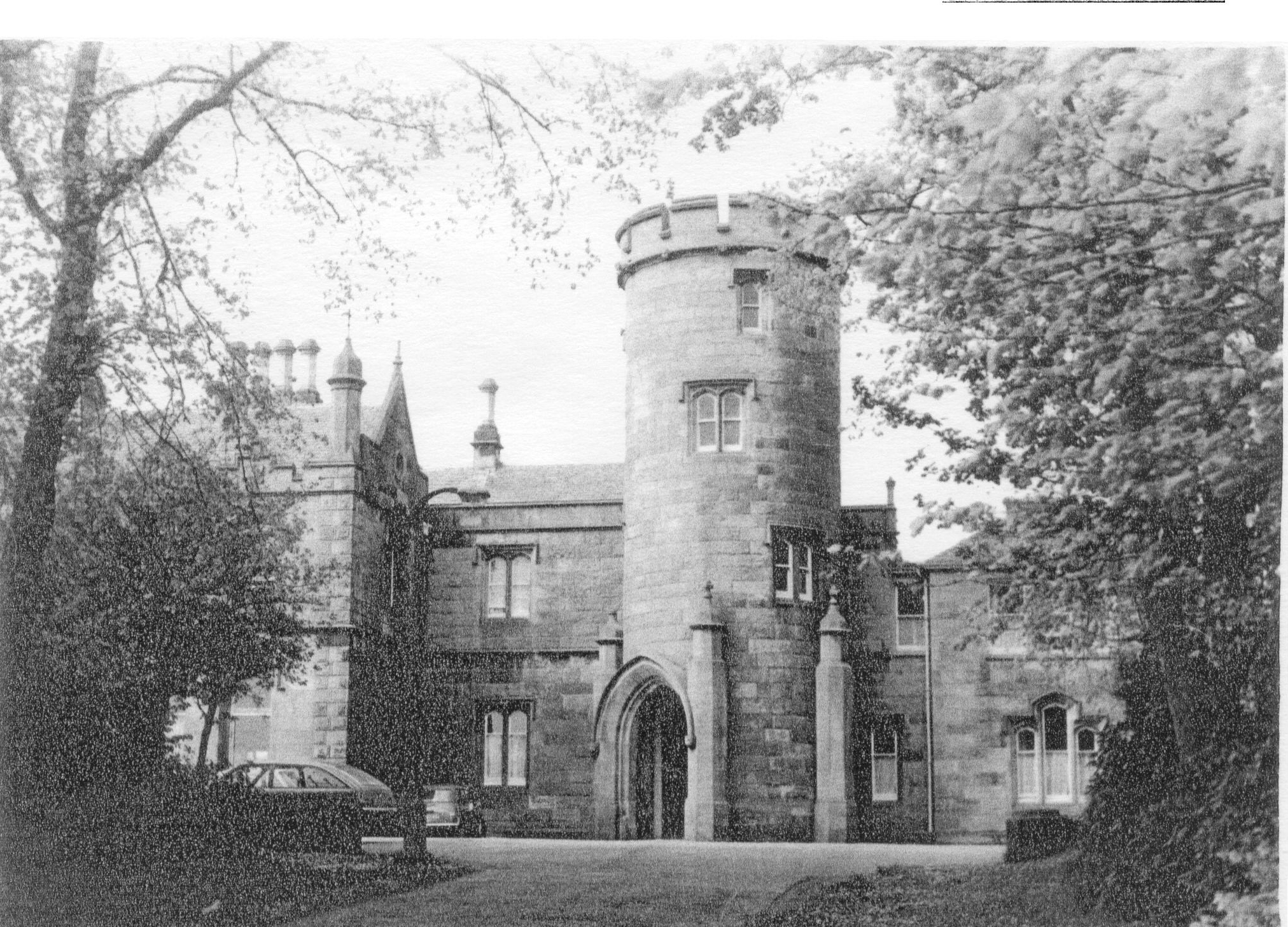
Merchiston House
Figure 1. Merchiston House. From Canmore.

 His education is not known. At the age of 21years, (3 ) he is living with his parents and brothers and sisters in the family home , Merchiston, Johnstone, Renfrewshire , an impressive turreted building which required 7 servants to run (4). Later this house was to become part of the estate of the Western Regional Hospital Board as Merchiston Hospital.(5 )

In 1847 at the age of 25 years, he wrote to the Glasgow Herald (6 ) as one of the shareholders in what became known as the The Blochairn Share Scandal-effectively a “bubble”- which had promised impossibly high returns and which lost many small shareholders money. The subject was taken up by the Glasgow Herald in an article published the next day.(7 ) 

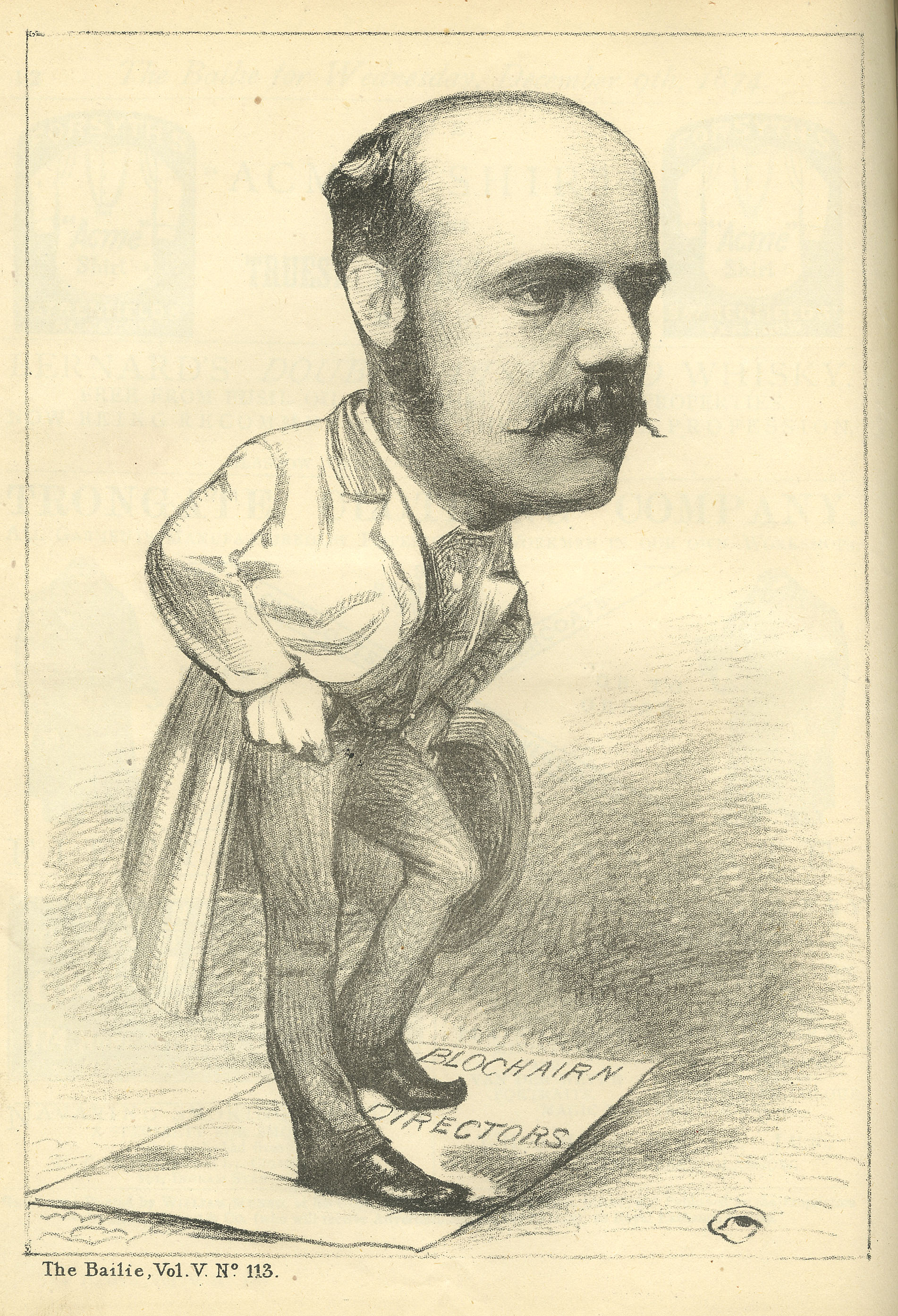
02 Mr Archibald Finlayson no 113
Figure 2 Archibald Walker Finlayson The Bailie  © CSG CIC Glasgow Museums and Libraries

 The Bailie, discovering that he was the son of James Finlayson, a former M.P. and Deputy Lieutenant of Renfrewshire, were fulsome in his praise and promised a bright political future.(8)

 Archibald joined the family firm and was sent to America in 1880 to establish a linen thread mill in Massachusetts. He travelled to and from America on occasions. Eventually the firm became part of The Linen Thread Company, Ltd. (9)

He married Elizabeth MacAndrew. In 1891 his home address was Spring Grove, Kilbarchan. (10 ) He lived there until 1903 when his father died. (11) He then moved back to Merchiston. (12 )

 He was not able to become an MP but contented himself with representing West Renfrewshire on the County Council, was a JP and gave the Provost’s chain to Paisley. There is a death notice and an obituary in the local paper (13) on his death in November 1916. (14)

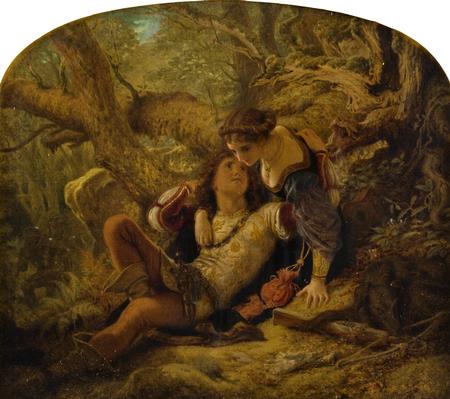
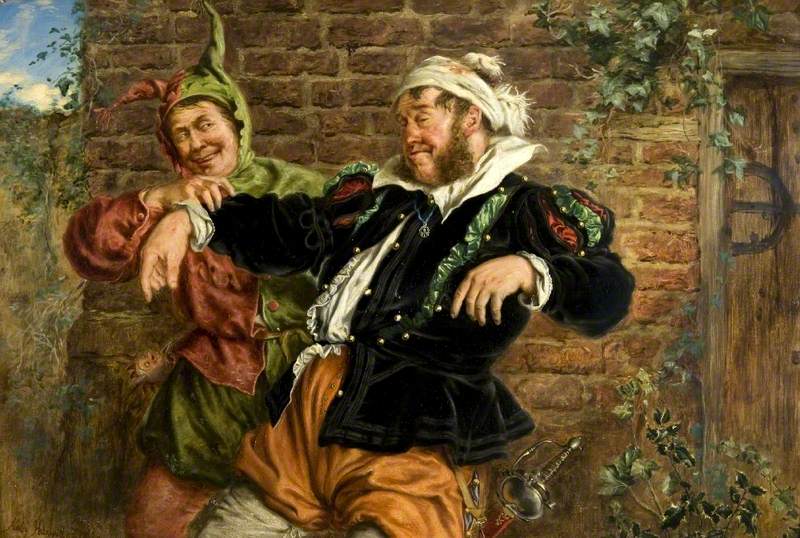
Halswelle, Keeley, 1832-1891; Sir Toby Belch and the Clown
Figure 3. Sir Toby Belch and the Clown  by  Keeley  Halsewell   © CSG CIC Glasgow Museums Collection

He gave two paintings to Glasgow Museums. In the Object file for the 1903 donation (15), there is a letter from him with information about Sir Toby Belch and the Clown , by Keeley Halsewell.    It was painted in 1862 at which time it cost £40, was shown at the Paisley Arts Institute Exhibition in 1896(16) then bought by Archibald Finlayson in 1901.

_ISP4824.NEF
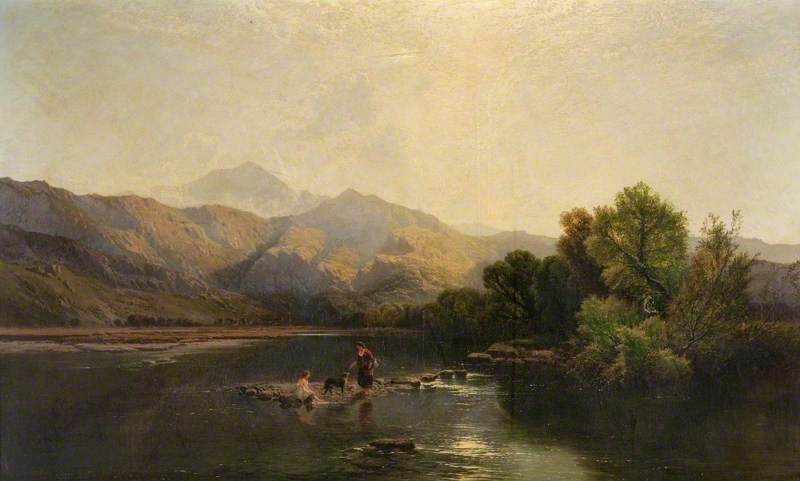
Figure 4 September, Glen Falloch by A Brownlie Docherty© CSG CIC Glasgow Museums Collection

The other painting, September, Glen Falloch by A. Brownlie Docherty was exhibited at the Glasgow Institute and at the St Louis National Institute in 1904. (17) It was bought by Finlayson in 1907 and donated to Glasgow City Council. (18)

References

  1. National Records of Scotland      Statutory Births  OPR 18492.
  2. Calder, John.  Finlayson, James. Oxford Dictionary of National Biography, Oxford University Press, 2014.
  3. National Records of Scotland. Census 1871
  4. Photographs of houses in Renfrewshire. Renfrew Archive
  5. Canmore images
  6. The Glasgow Herald 9 November 1874 page 4
  7. The Glasgow Herald 10 November 10 1874 page 9
  8. The Bailie 1874 vol 5 pp 113-1149.
  9. Calder, John.  Finlayson, James. Oxford Dictionary of National Biography, Oxford University Press, 2014.
  10. National Records of Scotland      Census 1891
  11. National Records of Scotland      Statutory Deaths
  12. National Records of Scotland      Census 1891
  13. Paisley and Renfrew Gazette 18 November, 1916
  14. Ancestry .co.uk
  15. Glasgow Museums Archive
  16. Catalogue of Paisley Fine arts exhibitions, Paisley Archive.
  17. The Glasgow Herald 13 November  1940 A. Brownlie Docherty   Obituary          
  18. Minutes of Glasgow City Council 1907.