In May1914, Miss Catherine S. Howden and her brother gave A SpringRoundelay by E.A. Hornel to Kelvingrove Art Gallery and Museum. The painting now hangs in the City Chambers in the Satinwood Room.
Catherine Spence Howden was born in 1875in Helensburgh, (1) though her birth certificate cannot be sourced. She was the daughter of James Howden and his first wife, Helen Burgess Adams (2). She had two younger brothers James and William born to his second wife, Allison Hay. In the 1891 census the family were living at 66 Berkeley Street in Glasgow.
In 1892, she matriculated at the Queen Margaret College in Glasgow (3) in the Faculty of Arts where she studied for three years. Then in 1895, she enrolled in the Medical School there. In Glasgow University Archives there are records of her enrolment in classes until 1900 and she progressed through the years to her final year. There is no record that she graduated. Since the archives do not keep records of class tickets there is no reason given for this. In July 1899(5), her stepmother died of a cerebral tumour, having been ill for ten months, leaving two sons who were teenagers. Her family commitments may have meant she had to change her plans. In 1901(6), she is living with her father and two teenage brothers at 2 Princes Terrace, Dowanhill, Glasgow. It is possible to keep track of her through the census and valuation rolls. Her brother James died on 16th January 1908 in Montreux, Switzerland (7). Her father died in 1913 (8), leaving her a substantial legacy (9) so that she could live on private means. In 1915, she was living as proprietor (10) at 15 Mirrilees Drive and was proprietor of Lodge Cottage in Cove.
An Article in the Glasgow Herald after her death states that “During her lifetime, Miss Howden was a generous patron of art and music in Glasgow”.
The City Council minutes(11) of 1914 acknowledge the gift of A Spring Roundelay by E A Hornel presented by Miss C S Howden, 2 Princes Terrace, Dowanhill, on behalf of her brother and herself. In the City Council minutes of February 1919(12), Miss Howden’s donation of 17 etchings and prints by Whistler, Legres, Beuer, Gordon Craig, Zorn, Haddon, Maryon and Muirhead Bone to the recently established Print Room in Kelvingrove is acknowledged. It has not been possible to trace her membership of societies in Glasgow related to Art or Music.
She died on the3rd May 1925 (13) and her death certificate is signed by Dr Marion Gilchrist, the first female graduate in Medicine from Glasgow University, who was her contemporary. Soon after her death, articles appeared in the Glasgow Herald (14) because of a further bequest to the City of Glasgow. “In all Miss Howden’s bequest consists of 117 etchings and prints, a portfolio of 21 etchings by Charles Keene-one of a set of 150-and Muirhead Bone’s 50 lithographs of Glasgow, with notes on Glasgow by A.H. Charteris, published in 1911 in a limited edition of 900 copies by Messrs James Macclehose and Sons. The collection contains such valuables as an etching by Van Dyck, one by Van Oestede, one by Durer and four by the master etcher, Rembrandt.” These were seen as a valuable addition to the print room of the Art Galleries which was then in the early stages of development. Full details of the bequest are detailed in the Council minute of June 19th, 1925(15). In her will (16) she left £5,000 to endow a scholarship at Edinburgh University in the name of her nephew Dr Andrew Adams Rutherford and a painting by Stuart Park to an aunt and uncle.
James Howden (1832-1913)
James Howden (17)(18) was an engineer and business man who displayed great talent for innovation and an enterprising business flair. He was born in East Lothian and moved to Glasgow in 1847. His apprenticeship was with engine builders James Gray and Company. He set up his own business as a consulting engineer in 1854. In 1862, he established the firm of James Howden and Company to manufacture engines and boilers specialising especially in boilers for ships. The invention for which he is remembered is the Forced Draught Engine. This enabled ships to go twice as fast on half the amount of coal and greatly contributed to trade around the world.
He married twice. He was married to Helen Burgess Adams and they had a daughter, Catherine. His second marriage, in 1872, was to Alison Moffat Hay (19) and there were 2 sons. His son James, who studied engineering at Glasgow University, predeceased him in 1908 and William was a director of the company but died childless in 1943 (20). In 1882, a nephew, James Howden Hume, joined the company and a limited company was established in 1907. Howden Hume succeeded as company chairman on his uncle’s death. Howden (21) is still based in Renfrewshire providing air and gas handling products in over 20 countries world wide.
In his will (22), James Howden left £388,251, leaving his daughter well provided.
Thomas Francis Donald came from an established Glasgow family. His great grandfather and his grandfather were among the chief importers of tobacco in the city of Glasgow.(1)
Thomas Francis Donald was a Chartered Accountant and Stockbroker. His father, Thomas Donald, was the County Clerk of Lanarkshire. His mother was Frances Maxwell. (2)
“There are few families now in existence in Glasgow who are more connected with the Glasgow of olden days than the Donalds” (3)
Mr Donald worked in 104 West George Street (a building which also housed Leslie Hunter, the artist). He lived in 14 Huntly Gardens (4) and in later life moved to Dargavel House, Bishopton , the seat of the Maxwell Family. He lived here until his death. Dargavel House is now a B listed building, which became part of the Royal Ordnance Factory and is now owned by BAE Systems. (5)
Thomas Francis Donald achieved great success in his chosen career. He was noted for his thoroughness, and was widely respected. He was a member of the Glasgow Stock Exchange, twice holding the position of chairman. It was noted that he never gave any client thinking of having a “flutter” any too rosy a picture of his prospects. “His honesty was merciless” He was a keen sportsman, a member of the Royal Northern Yacht Club, where he held the position of secretary and treasurer from 1887 until 1896. He was also a member of the Mudhook Yacht Club. He was a golfer, taking up the game in 1864. He would therefore have been in the forefront of the expansion of golf in Scotland which occurred in the second half of the nineteenth century. This expansion was due to two events – the discovery of the gutta percha ball and the expansion of the railways. This made golf more accessible and led to the formation of golf clubs in Scotland. One of these clubs was Prestwick, created by Old Tom Morris in 1851.(6) In 1920, Thomas Donald became the Captain of Prestwick golf club. (7)
Thomas Donald was an active member of Glasgow society and was secretary to the Knot of Bachelors. He was a member of, and treasurer to, the Western Club. (His great great grandfather had been a founding member.) He was chairman of the Western Club from 1924/25 and wrote a brief history of the club to mark the club’s centenary. He occupied the chair at the Club’s centenary celebrations. (8)
He was a member of the Hodge Podge Dining Club, many of whose members came from the Western Club. This club was established in 1750, originally as a discussion group, but members quickly decided to abandon discussion in favour of Whist, which was played between 5 p.m. and supper at 9 p.m. The club exists to the present day, meeting in the Western Club every six months. (9)
The Baillie summed him up thus:
“Mr Donald is a Glasgow citizen of credit and renown…. He comes of excellent stock…. and the traditions of this stock are excellently maintained in his person. Success on the local bourse has left him abundant time and opportunity to cultivate the higher graces of life… His offices speak volumes for his savoir faire, and for the high esteem in which he is held by the circles of which he is a member. Mr Donald’s reading is extensive and peculiar. It ranges from volumes on the abstruser sciences down to the latest cookery book. Consequently, among his intimates his conversation is uncommonly bright and interesting. Even his censure is accepted with as good a grace as is the approval of another.” (10)
Thomas Francis Donald
The Baillie July 8th 1886
His obituary in the Glasgow Herald summed up Thomas Donald : ” He warmed, if ever a man did, both hands before the fire of life….He had a good knowledge of literature and was well versed in family history. He contributed frequently to the columns of the Glasgow Herald. He also wrote a good deal otherwise, chiefly on antiquarian subjects. His love of music was very real and he was a member of Glasgow Amateur Dramatic Club. He had a most happy knack of light verse. He was a connoisseur in cuisine and no one could arrange a dinner or ball to better effect. It is a matter of regret that he was not painted by Raeburn, for he was one well fitted for that master’s brush. His strong features and ruddy, clean shaven face would ….have gone well with a white stock and a canary waistcoat. With him there passes an intimate knowledge of nineteenth century Glasgow.” (11)
In all that has been written about Thomas Donald there is no mention of particular interest in art, or of art collection. It is possible to surmise that his yachting experiences on the Clyde led to his interest in the particular painting which he donated. It is also notable that the timing of his donation coincides with his move from Glasgow to Bishopton. He is buried in the Necropolis. (12)
References
(1) The Baillie July 8th 1896
(2) Scotland’s People Census 1861
(3) Old Country Houses of the Old Glasgow Gentry: Glasgow James Maclehose, 1878
Artist : Harding was an American portrait painter. He was born in Massachusets of humble origins. He was largely self-taught but became very successful. He spent time in Europe between 1823 and 1826 and was very popular. Even members of the royal family commissioned him. This portrait was probably painted around 1825 as another portrait by Harding of Thomas Grahame, Robert’s son, has a date of 1825. Our portrait was exhibited in Glasgow in 1868 in an Exhibition of Portraits held at ‘The New Galleries of Art’,Sauchiehall Street (McLellan Galleries). It was loaned by Thomas Grahame of Leamington Spa – son of Robert Grahame(1) .
Donor
The portrait was presented to Glasgow Museums on 26th November 1947 by Felicia Pepys Cockerell (FPC) of Brook House Aldermasten, Berkshire2. The first question one must ask is how a lady living in Berkshire in 1947 came to possess a portrait of a former Lord Provost of Glasgow? In fact FPC was the great-great granddaughter of Robert Grahame and the portrait was probably handed down through the generations of the family. The diagram below shows the link between FPC and Robert Grahame.
Grahame Family Tree
Fig. 2. Jackie Macaulay
Robert Grahame (1759-1851)
Robert Grahame was born on 28th December 1759 in Stockwell Street, the son of Thomas Grahame, Writer to the Signet, (Solicitor) and from 1751 a member of the Faculty of Procurators in Glasgow. Robert followed his father into the legal profession and went into partnership with his father as the firm of “Thomas and Robert Grahame”. He joined the Faculty of Procurators in 1792. On the death of Thomas Grahame in 1791 Robert carried on the practice alone until 1802 when he went into partnership with Andrew Mitchell and the practice became “Grahame and Mitchell”. ‘No firm ever stood higher in Glasgow’.
Robert married Helen Geddes(1751-1824) of Cupar, Fife, in 1786.They had four surviving children (see above diagram),one of whom was James Grahame, our donor’s great grandfather.
In 1797 Robert bought Whitehill House and Estate in what is now the east end of Glasgow in the suburb of Denniston. The original house(the centre part) was built by John Glassford , one of the Glasgow Tobacco Lords. Glassford sold the estate in 1759 to John Wallace of Neilstonside who in turn sold it to a retired London merchant, Nathaniel Gordon. Robert Grahame bought it from John Gordon, son of Nathaniel. The house remained in the Grahame family until the 1840s. It was eventually sold to the Denniston family3.
Fig. 3. Whitehill House from The old country houses of the old Glasgow gentry. John Guthrie Smith and John Oswald Mitchell, 1878. Glasgow: James Maclehose & Sons. http://gdl.cdlr.strath.ac.uk/smihou/smihou098.htm
Robert was one of the most respected men of his time in Glasgow. He was well-known for his liberal and democratic views . He was an ardent supporter of the emancipation of slaves, a friend and correspondent of William Wilberforce and Thomas Clarkson. He was against oppression throughout the world. He was President of the Glasgow Emancipation Society for many years. He was known to support the American War of Independence and be not entirely unsympathetic to the aims of the French Revolution. In 1793 the British Government was in something of a panic regarding the holding of liberal views and feared that the ideals of the French revolution might spread to Britain. As a result of this Robert was watched by the government. The Lord Provost of Glasgow received instructions from the Lord Advocate to activate an arrest warrant drawn up for Robert Grahame. The Lord Provost wrote to the Lord Advocate saying that such was the esteem in which Robert Grahame was held in the town that he could not guarantee civic order if Robert Grahame were to be arrested. As the Lord Provost was Grahame’s political opponent it says a lot for the reputation and standing of Robert Grahame at the time. He was not bothered again.
This fracas did not prevent Grahame from acting as an agent in the defence of Thomas Muir and the political martyrs of 1793 or in trying to get a reprieve in 1819-20 for Hardy and Baird and James Wilson for their part in the Radical Insurrection of that year.
Grahame campaigned long and hard for Parliamentary Reform and was the first Lord Provost of Glasgow (1833-4) to be elected after the passing of the Reform Act. However by 1834 his health and his age was beginning to take its toll and he only served a year as Lord Provost. He left Glasgow for warmer climes and went to live on the south coast of England. The 1841 Census finds him living with his daughter, Ann Donald, in Clifton, near Bristol. In 1851 he was staying with his son Thomas in Chorley Wood near Watford in Hertfordshire. He died on December 28th 1851 at Hatton Hall Northamptonshire, aged 91. Whether or not this was his home is not known at this time4.
James Grahame (1790-1842)
The next name in the story is Robert Grahame’s eldest son James who was born in Glasgow on 21st December 1790. James was educated at the Grammar School of Glasgow in George Street. This became the High School of Glasgow in 1834. He then attended classes at Glasgow University where he heard lectures from Professor Playfair. Around 1810 he became a student at St John’s College Cambridge, it is thought to study literature as he had literary ambitions. Even though James’s time at Cambridge was short, while there he became great friends with a fellow student, John Herschel, who is to play a pivotal role in our story . John Herschel, later Sir John Herschel, became known as an astronomer and chemist.
During one university vacation James met and fell in love with a woman called Matilda Robley. As he wanted to marry Matilda James went back to Scotland to study for the Scottish Bar in Edinburgh, presumably to be able to support a wife. He was called to the Scottish Bar as an advocate in June1812 and married Matilda in Stoke Newington in October 1813.
Unfortunately he found the practising of law not to his taste. He wrote to a friend, (possibly John Herschel), ”Until now I have been my own master and I now resign my independence for a service I dislike”. However he does seem to have carried on a satisfactory practice, no doubt spurred on by his love for his wife, as he further wrote, “Love and ambition unite to incite my industry.”
Who was this woman who captured James’s heart? According to one of her teachers, a Mrs Barbauld, she was “…young, beautiful, amiable and accomplished…. with a fine fortune”5. Ironically much of Matilda’s fine fortune came from the profits of plantations owned by her uncle , Joseph Robley, in Tobago. Sugar and cotton were the crops grown on the plantations. Joseph owned several plantations and thousands of slaves. Matilda’s father, John Robley, managed the business from the London end. The Robleys lived at Fleetwood House, Stoke Newington6. How this all sat with James who had been brought up by a father who abhorred slavery in all its forms can only be guessed at. According to Eleanor M Harris, James was,” so moved at the privilege of gaining her that it brought about a religious conversion which lasted the rest of his life.” It must have been a case of love conquering all!
James and Matilda had three children: Anne(b1814), Robert (b. 1816) and Matilda (b.1817). Tragically daughter Anne died in 1817,followed by much loved wife Matilda in 1818. James was said to never really recover from these events.” He was left with his religion, his children, and the wealth”. After Matilda’s death the children, Robert and Matilda were left with a ninth share of the Tobago estate with James inheriting a life rent of it. In 1827 wrote that,”My conscience was quite laid to sleep.Like many others, Idi not do what I could, because I could not do what I wished. For years past something more than a fifth part of my income has been derived from the labour of slaves. God forgive me for having tainted my store!…Never more shall the price of blood enter my pocket!…Till we can legally divest ourselves of every share, every shilling…is to be devoted to the use of some part of the unhappy race from whose suffering it is derived”. When his children were of age they gave up their shares.7
James Grahame was not of robust health. The death of Anne in 1817 and then of his wife the following year brought on illness which threatened his life (though it is not known what the illness was). However he slowly began to take up his literary pursuits again. He had previously written pamphlets on various subjects such as ‘Inquiry into the Principle of Population’ in 1816 and in 1817 a spirited defence of Scottish Presbyterianism in opposition to Walter Scott’s ‘ The Tales of my Landlord ‘ which Grahame said subjected them to contempt. In 1823 he went to the Low Countries for his health. Also in that year he was admitted as a Fellow of the Royal Society of Edinburgh. About the same time,influenced by his father , he began to think about what was to prove the main work of his life, writing a history of the United States of America. One of his chief interests was American history. Washington and Franklin were his great heroes.
In 1825 his mother, Helen Geddes, died at Whitehill. In London in 1825 and early 1826 James was again suffering illness and depression. He was still working at his law practice in Edinburgh when his doctors prescribed moving to a warmer climate. In March 1826 he wrote,”I am now preparing to strike my tent…I quit my profession without regret, having little liked it and greatly neglected it.”
In 1827 the first two volumes of his history of the United States was published– ‘The History of the Rise and progress of the United States of North America ‘till the British Revolution in 1688’. During 1827 and 1828 he spent time in Madeira, Paris and Nantes, travelling for his health. He stayed in Nantes until May 1828. By December 1829 the 3rd and 4th Volumes of his history of the USA had been published-‘ The History of the United States of North America from thePlantation of the Colonies ‘Till their Revolt and Declaration of Independence’. It has to be said that the works did not arouse much interest on either side of the Atlantic.
James suffered another bout of ill health and returned to Nantes where he spent much of his time, especially the winters, until his death. In 1830 he married Jane A. Wilson, daughter of the Reverend Mr Wilson ,Protestant pastor in Nantes. Apparently this was a very happy marriage. Matilda, James’s daughter by his first marriage, lived with them in Nantes. She was of fragile health also and the new Mrs Grahame looked after them both very well. The family stayed at the Chateau L’Eperonniere. They took a central role in Nantes society and became warmly attached to the French people of Nantes.
About this time James began revising the four volumes of his history of the USA. Perhaps this was because in 1831 a favourable review of the first two volumes appeared in the North American Review. He was urged by writer Washington Irving himself to write a history of the Revolutionary Wars.The first real evidence of public respect for his works in the United States came in August 1839 when he was awarded an honorary degree of Doctor of Laws from Harvard University. This was in recognition of his writings after the four volumes were republished in 1837 and in 1839 an American edition was published in Philadelphia.
Although James himself was backwards and forwards between London and Nantes, having to oversee his publications, his family remained mostly in Nantes. This was mainly because his daughter Matilda had several life-threatening periods of illness during the early 1830s. Much to everyone’s surprise she made a full recovery and went on to marry the next player in our story, John Stewart (1814-1887). They married in Nantes in 1839. (See below- Fig 4 Stewart Family).
James Grahame spent much of the remainder of his life in Nantes along with his wife and his daughter and son-in law who split their time between London and Nantes. His final publication was, ‘ Who is to Blame? Or a Cursory View of the American Apology for American Accession to Negro Slavery’ which was published in 1841/42. There is some evidence that James intended to return to live in Britain. He died in London on 3rd July 18428.
The Stewart Family
As we have seen, Matilda Grahame became Matilda Stewart on 2nd October 1839. Who was John Stewart and what was his family background?
Alexander Stewart (1764-1821)
From the family tree below9, John Stewart was the son of Alexander Stewart, a Scottish Presbyterian minister. At the time of John’s birth his father was parish minister in Dingwall, Ross-shire . Alexander Stewart was of the Evangelical wing of the Church of Scotland, having undergone a ‘conversion ‘ about 1796. He supported the abolition of slavery and the non-consumption of sugar, rum and tobacco as part of that support. His work ‘Elements of Gaelic Grammar’ first published in 1801 , went into 12 editions between 1807 and 1823.
John Stewart’s mother was Alexander’s second wife, Emilia Calder, eldest daughter of Charles Calder, Minister of Urquart, Ross-shire. She and Alexander had eight children. John, born in 1814, was the youngest. His sister, Margaret Brodie, born in 1810, plays an important part in our story. Alexander’s first wife was Louisa who died around 1799, having had two children, Alexander, who went on to be one of the Disruption Worthies of the 1843 Disruption of the Church of Scotland , and Catherine who married a local minister in Ross-shire.
Alexander had been plagued with ill health for several years, an unspecified internal complaint which caused him much pain. He decided, on the advice of his doctors, to take his family to Edinburgh where better medical facilities were available. Around 1819 the Stewart family moved to Edinburgh, living at some point, according to the Edinburgh Post Office Directory,at 5,Hermitage Place. Alexander’s health improved somewhat and when the minister in charge of Canongate Parish died suddenly, Alexander was given the post, thanks to the influence of one of his wife’s family. Unfortunately the illness returned with a vengeance in the winter of 1820 and although he valiantly carried out his duties as parish minister, he died on May 27th 182110. John was only about seven years old when his father died. The family appeared to have stayed in Edinburgh until about 1830 when they moved to London.
Why the family moved to London is unclear. John’s father’s financial position is not known,though he is referred to as a landowner in one source. John Stewart’s financial position as the youngest son when he started out is not known either. On 3rd March 1829 Margaret Brodie Stewart married John later Sir John Herschel, in Marylebone , London , a prestigious address. Herschel was the only son of William Herschel , the distinguished astronomer who discovered the planet Uranus. His son John also became a distinguished astronomer , mathematician and photographic pioneer. He appears to have become friends with his young brother -in – law. In the summer of 1829, while in the Pyrenees, John Herschel drawing with a’ camera lucida’ wrote in a letter to his mother,” Johnny and I are running a race which shall sketch most-he draws very nicely …).They went on to develop a close relationship11.
In London John Stewart entered the printing business with his brothers. Between 1838 and 1841 he was in partnership with Alexander Elder Murray as Stewart and Murray printers , London. John Stewart’s brother Patrick (b.1808) was a partner in the publishing firm of Smith, Elder and Co. , so perhaps the world of publishing and printing became known to John through him. The printers did a great deal of work for Smith and Elder in which John Herschel had invested. Smith and Elder took over the printing company in 1855.
As we have seen, in 1839 John Stewart married Matilda Grahame, who was said to be ‘an old childhood friend’. As the Stewart family lived in Edinburgh from about 1819 to 1830 and we know that Matilda’s father, James Grahame, was an advocate in Edinburgh from c 1813 to 1826, one presumes they became known to one another in Edinburgh. Also John Herschel and James Grahame had been friends since they were at Cambridge together which may also have brought John and Matilda together. John Herschel certainly went to Nantes to attend the wedding12 . The newly- weds set up home in Nantes. This was possibly to be near her father who had moved there for his health or perhaps because the climate was good for her health too. As we have seen she suffered several periods of ill-health.
About 1846 they moved to Pau in the Pyrenees, South-West France13. Perhaps after the death of her father there was nothing to keep them in Nantes. John’s financial situation at this time is not known. Whether he had financial resources of his own or he made use of his wife’s money is not known either. There was presumably some financial settlement on the marriage. Even before her father’s death Matilda was a wealthy woman, having inherited wealth from her mother. On her father’s death, after her step-mother had been taken care of financially, she and her brother inherited half each of her father’s wealth also14. Whatever the source John Stewart went on to become very successful financially as we shall see.
The couple had two children. Matilda Jane was born in 1841 and James Grahame, our donor’s father, was born in 1842 while they were still living in Nantes.
Pau was already an important British ‘colony’ when John and Matilda moved there. The city had first been discovered by the British when it was occupied in February 1814 by Wellington’s troops during the Napoleonic Peninsular Wars. The troops found the flat terrain perfect for training, for horse-racing, even fox- hunting and golf. Twenty years later more and more British travellers went to Pau, attracted by its mild climate and the beauty of the scenery. When Dr Alexander Taylor went to Pau in 1833 to recover from typhus and dysentery and recovered in a very few weeks he decided to set up a medical practice in Pau. Whether as a clever piece of advertising or genuine belief Taylor wrote his book,’ On the Curative Influence of the Climate of Pau’ which was published in 1842. Immediately it became a best seller amongst British Society. Perhaps that was what attracted the Stewarts there. Certainly there was a large influx of the British aristocracy who went to Pau with their families and friends. The British ‘invasion’ would start in mid-September each year. John and Matilda Stewart and their children spent every winter in Pau from about 1850, the rest of the time in London
The British influx led to an economic boom in Pau in construction, housing and in the demand for valets, domestic servants, gardeners etc. Living was cheaper than in London and many other British cities. Magnificent villas were built with beautiful gardens. Pau changed from the 1850s and became a modern, for the times, city with an up-to date theatre, a Winter Palace and many parks and gardens. The ‘Boulevard des Pyrenees’ gave wonderful views of the snow-covered Pyrenees. In 1842 the race course was opened and this became the main sports activity in Pau and remains so today15.
One of the main sources of information about John Stewart is ‘Pau Golf Club Who’s Who 1856-1966‘16.
According to the Who’s Who John Stewart was a man of many parts. He was a banker and a diplomat though there is no more information given about his diplomatic life. For forty years he and his family lived a large part of their lives in Pau and played a large part in the life of the community. In 1847 John Stewart was awarded the Legion d’Honneur’ by the French Government for activities in French Indo China connected with the wrecking of a French Naval ship. Again here is tantalisingly little information available about this incident.
Possibly as a result of his friendship with John Herschel, John Stewart took up photography. Exactly when is not known. He joined a group of artists in Pau who became known as ‘L’Ecole de Pau’. Among these were well-known early photographers such as Henri-Victoire Regnault, Jean -Jacques Heilman and Maxwell Lyte. They established a studio and printing establishment. Stewart specialised in landscape photographs of the Pyrenees. In 1853 his photographs were published in an album, ‘ Souvenirs des Pyrenees‘ by top photographic editor Blanquart- Evard. John Stewart exhibited in the London Exhibitions of the Society of Arts in 1852, the Photographic Institution in 1854 and The Photographic Society in 1855. In that year also he became a member of the Societe Francaise Photographique. His portrait of Sir John Herschel was exhibited at the 1857 Manchester ‘ Art Treasures ‘ exhibition.
In 1856 , in London , the newly established Photographic Club produced an album of fifty photographs of views around Britain. Fifty copies were produced to be distributed among the fifty photographers plus two more, one of which was presented to Queen Victoria and the other to the British Museum. To mark his contribution to photography, Stewart’s portrait of Sir John Herschel was included in the work.
Stewart’s photographs were much admired by his contemporaries. In a paper on photography’s relation to art, Sir William Newton in the Journal of the Photographic Society in 1853 commented that photographs should not only be chemically but also artistically beautiful, “The nearest approach in this respect…were the excellent Photographs exhibited by Mr Stewart.”17
John Stewart was a friend of George Smith, of Smith, Elder and Co., Charlotte Bronte’s publisher. Sometime during 1856-7 Smith arranged for Stewart to visit Haworth Parsonage to photograph the portrait of Charlotte Bronte by George Richmond to be used as the basis of an engraving for the frontispiece of Elizabeth Gaskell’s biography of Charlotte Bronte. This enabled the public to see Charlotte Bronte for the first time. He appears to have visited Haworth three times, also taking photographs of the parsonage. In a letter to George Smith in November 1856, Mrs Gaskell wrote that “Mr Stewart is an excellent amateur photographer gone out to Iceland by the Danish government’s request to take photographs of the boiling springs and those sort of things … and has had to go and show his photographs to the Queen as the ‘crackest ‘things of the kind in the Kingdom”.18
Apart from photography as a hobby, John Stewart was a keen golfer. In 1856 he was one of the five founder members of Pau Golf Club, the oldest golf club on Continental Europe. He was President in 1885 and 1886. He was also keen on fox-hunting and a great supporter of the Pau Hunt. When the Hunt was going through bad times around 1879, Stewart is credited with engaging the help of the Mayor, Aristide de Montpera, to save fox-hunting in Pau. According to Who’s Who,it was down to Stewart that fox-hunting was legally recognised .
Apparently his business dealings towards the end of the 1850s led to the lessening of his photographic activities. There is not a lot of information available on John Stewart’s business life. Again we must depend on Who’s Who . In 1857 Stewart bought land on which to build a house which was called ,”Villa Stewart” later known as “ West Cottage “ in what is now Avenue Dufau in Pau. In 1862 , along with Pastor Brown of the “Scottish Church”, John Stewart was instrumental in establishing the Holy Trinity Church in Pau which today is the “Cinema D’Arte et D’Essais” showing art films. Before the building of the Holy Trinity Church Scottish Presbyterians in Pau would hold services at the Stewart’s first home in Pau,La Maison Labetoure.
In 1866 John Stewart, along with Dr Alexander Taylor, Musgrove-Clay, director of the English Bank in Pau, and Henry Alcock, a banker from Skipton North Yorkshire, founded ‘La Societe des Anglais ‘. The aim of the English Society was to buy farmland on which to build an estate of apartments. These apartments were rented out during ‘the season’ which was from about mid-September to the end of March when British visitors would flock to Pau to escape the winter at home. This became known as ‘Quartier des Anglais’.
Who’s Who also reported that John Stewart was one of the founder members, then a director, of the Ottoman Bank. This bank was founded by Sultan Abulaziz to mitigate the economic crisis within the Ottoman Empire. There were French, English as well as Ottoman Government shareholders. In 1875 the bank became the State Bank of the Ottoman Empire. Its main function was to negotiate international loans for the Ottoman Government. In the 1870s, the time of the Franco- Prussian War, it is claimed that John Stewart secured loans for the French Government for the defence of France.
John Stewart certainly died a wealthy man. At his death on 29th July 1887 his personal wealth stood at £295,000. Today this sum would have a purchasing power of around £36millon19. He died in London at 5 Cleveland Row, his London home20. Before his death he had put his wealth into a trust for his wife and children. Matilda lived on in Pau until her death there in January 1893. Her funeral as held at the Holy Trinity Church in Pau attended by a large crowd of both British and French inhabitants. According to Le Journal des Etranges of 22nd January 1893 (a local newspaper for the British Colony in Pau )Matilda was an ”esprit agreeable et cultive, quel coeur bon et charitable”21.
James Grahame Stewart (1842-1913)
As we know,our donor’s father, James Grahame Stewart was born in Nantes in North West France but the family moved to Pau in South West France and by 1850 was spending every winter there while maintaining a house in London. James received most of his education in Pau at Le Lycee de Pau where he was a brilliant honours student. There is no indication that he went to university. He appears to have followed his parents’ habit of spending much of his time in Pau where he played a full part in the life of the community. He was a member of Pau Golf Club and was its President in 1901 and 1904. He also helped to found the ‘Societe de Jeu des Paumes de Pau’ ( Pau Real Tennis Club). In May 1901 he made a speech on behalf of the British Colony in Pau on the occasion of the visit of the President of France, Monsieur Carnot, in the presence of the delegation led by the UK Vice Consul of Pau Foster-Barnham.22
There is some evidence that he had similar business interests to his father. For example he was elected a Director of the Bank of Egypt in May 187823. There are reports of his presentation at Royal Levees in London in May 1880 and 188524.
James was 43 when he married Helen Louisa Georgina Ellis at the Holy Trinity Church in Pau on 16th April 1885. Helena was 20 years younger than her husband. She was the daughter of Major Charles David Cunynghame Ellis, late of the 60th Rifles, and granddaughter of the 1st Baron Seaford of Seaford. According to the Morning Post of 20th April 1885 Helen was also the niece of Colonel Arthur E Ellis, Equerry to the Prince of Wales and of the Honourable Mrs A Harding, Lady in Waiting to the Princess of Wales, thus the bride was very well connected. The best man was Prince Clermant Tonnerre and one of the six bridesmaids was also French, which shows how integrated the Stewarts were with the French population of Pau. The honeymoon was spent in Paris25.
James and Helen appear to have spent much of their life in Pau along with their children, Felicia who was born in 1890 and John Cecil who was born in 1897 as they are nowhere to be found in the UK Census of 1891 and 1901. Only in the 1911 Census does the family appear to have given up spending winters in Pau and were now living at Stonewall Park, near Edenbridge, Kent. Stonewall Park was a 140 acre estate about 26 miles from London. They lived in a beautiful Georgian House there but also spent time in London for “The Season”.
According to the 1911 Census James was “of independent means”. This probably meant he was living off the trust fund set up by his father26. As we have seen he also had business interests of his own. In 1907 he also inherited the estate of his uncle, Robert Grahame, who was his mother Matilda’s only sibling. He was Uncle Robert’s sole heir, inheriting £46,530 of personal wealth. This would have the purchasing power of roughly £5millon today. Robert Grahame was living in Brighton at the time of his death27.
James Grahame Stewart appears to have been well thought of while living at Stonewall Park. When reporting his death in September 1913 The Kent andSussex Courier stated,” There will be no doubt that his cheery presence will be missed in many a village function. He was a model employer and much respected by all who knew him here”28.
Our Donor. Felicia Pepys Cockerell (1890-1900)
Felicia was born in London on 4th October 1890 at 19 Carlton House Terrace in London29. She had one brother, John Cecil, born in 1897.
We know that there was no trace of the family in either the 1891 or the 1901 census and that this is possibly because, like her father’s parents, John and Matilda Stewart, Felicia’s mother and father spent a good part of each year living in Pau until about 1911,though still keeping a house in London.
From the 1911 Census we know that Felicia’s home at that time was Stonewall Park, near Eden Bridge in Kent some 26 miles from London. The Stewarts also had the house in London and as we are aware were obviously wealthy. Felicia’s father died in 1913 leaving a personal estate of £260,000-worth £26m of purchasing power today. On her father’s death, by which time Felicia was 23, she had inherited a trust fund of £35,000 -over three and a half million pounds of purchasing power today – which provided her with a very comfortable income. She was a very rich woman30.
Fig. 6 Stonewall Park copyright Matt Clayton for Locations >info@stonewallpark.co.uk
Like most girls of her ‘class’ Felicia did the London Season. In fact she did five Seasons-1908-1913, attending on average four balls a week31. She was presented at court on 15th May 190832. She also appeared to be interested in amateur dramatics. There is an account in the Tatler for Dec 8th and Dec 15th 1909 which shows a photograph of her among a group of other ‘debs ‘ taking part in “St Ursula’s Pilgrimage” a play put on at the Court Theatre in London by the Hon Mrs Edith Lyttleton – a well-known member of London Society who supported all sorts of women’s and worker’s causes , for example women’s suffrage. This production was in aid of The Industrial Law Indemnity Fund. In 1911 Felicia attended the Shakespeare Memorial Ball at the Albert Hall dressed as Juliet (one of about 40 Juliets! ). Perhaps she wore the same costume she wore the previous year when she played the part of Juliet in, “The Masque of Shakespeare” a theatrical event organised again by Mrs Lyttleton in aid of The Shakespeare Memorial Theatre Fund33. In 1913 she and her mother attended the wedding of Vita Sackville West to Harold Nicholson34. Weddings seemed to feature greatly in her life.
After her father’s death in 1913 Felicia, her mother and brother moved to The Grove, Exton ,Hampshire. They were living there by 1914.
At the outbreak of WW1 now aged 23 Felicia was still single – maybe she was a bit choosy-she could afford to be!
By 1915 Felicia was doing her bit for the war by working at the Bere Hill VAD hospital near Whitchurch in Hampshire, leaving her mother at home at The Grove. Her mother had written on the 1915 National Registration Form for Females that she had no skills, could not work in munitions and was very busy at home!35
John Cecil, Felicia’s brother had gone to Eton and aged only 17 joined the army on 15th August 1914 -5th Battalion Kings Royal Rifle Corps. He was promoted lieutenant on 14th August 1915 and sent to France. He survived for just a month. He was killed at the Battle of Loos on 25th September 1915.Thus Felicia would inherit everything after her mother’s death36.
There was a notice in The Times on July 23rd 1918 of Felicia’s engagement to Major Walter Headforte Brooke of the Kings Own Yorkshire Light Infantry. But the print was hardly dry when an announcement appeared in the same newspaper the following month saying that the marriage would not take place-not usual in those days37. Had Walter been killed in action like so many young men? That was not the case. He went on to marry someone else in 1920 and it is not known what went wrong between him and Felicia.
Fig 7 Felicia in 1918, age 28.T From ‘The Sketch’ 7th August 1918 . Copyright Mary Evans Picture Library
There is little information about Felicia during the years after her engagement was broken off. We know she drove a car as she managed to come up against the law in January 1918 by contravening the Gas Restriction Order of February of that year which forbade the use of gas for a private car. She managed to get off on a technicality and only had to pay two shillings costs. One can only presume that Felicia’s life carried on during the years after the war as it had done before, attending weddings and balls. Her home during this period was 25 Edwardes Square, Kensington.38
At the age of 32 on St Valentine’s Day 1922 she married Frederick Pepys Cockerel MC OBE – he was 14 years older than she was. They married at St Margaret’s Westminster. There is no information as to how they met. The wedding was reported in The Times the following day. ”Miss Stewart made a lovely Valentine’s Day bride in a crystal and georgette gown with a long silver tissue train”. The bride was given away by her cousin Sir Guy Campbell and the best man was Guy Ridley,a barrister friend of the groom. Among the many guests The Times listed many titled people. The couple began their honeymoon at Greenwood Gate, Ashdown Forest, the home of The Earl and Countess of Norbury and then went on to the Riviera and Greece. After the honeymoon they lived in Palace Gate Kensington39.
Frederick was a barrister at the time of the marriage. He was a descendent of Samuel Pepys, the diarist, through Pepys’s sister Pauline. His father, also Frederick Pepys Cockerell, was a noted architect as was his grandfather . Frederick had attended Winchester School and then New College, Oxford but left in 1896 to go out to South Africa where he served in the war against the Boers. He had been a distinguished soldier during the Boer War, after which he spent a couple of years in the Colonial service in South Rhodesia. He was called to the Bar (Lincolns Inn) in 190940. He stood twice, unsuccessfully, for Parliament in 1910 and 1912 as Unionist Candidate for Mansfield in Nottinghamshire41.
Frederick was one of the Old Contemptibles, entering WW1 at the beginning as a lieutenant. He was captured after the battle of Loos, escaped, found his way back to the British lines and was arrested by a Colonel who did not know him and thought he was a German spy. He was a talented linguist and spoke several European Languages as well as several African dialects and served a large part of the war in the Intelligence Unit, ending up as Lt Colonel in the Middle East in charge of the policing of the largest oil depot in the world at that time at Baku. General Dunsterville said of him,”My chief of military police ,the then Captain Cockerell reaches the last degree of unsurpassed skills.” He continued to serve after the war, serving on the Upper Silesia Plebiscite Commission in 192142.
Frederick and Felicia had two children. John Lawrence, born in 1924 and Mary Georgina in 1926. The marriage did not last, however, and in 1928 there appeared a report in The Times of the granting of a decree nisi between Felicia and Frederick on the grounds of his adultery at Palace Gate and the Park Lane Hotel. Felicia was given custody of the children44.
What does one do to cheer oneself up after a divorce? You buy yourself a castle! Holt Castle in Worcestershire to be exact. Felicia and the children, John Lawrence and Mary lived there from 1928 until 1947. In 1939 Felicia was living there with Mary and eight domestic servants45. It is not known how much contact the children had with their father.
Fig 8 Holt Castle Worcestershire. ‘Country Life’ 20th July 1940. Copyright Country Life Picture Library
There was a notice in a local paper in 1937 saying that Holt Castle Gardens would be open to the public for a couple of afternoons to raise money for Birmingham hospital, so Felicia was obviously involved in local charities46. She also appears to have kept exotic pets as in 1939 she put a notice in The Times advertising a kookaburra for £5, cage included!47
Fig. 9 The Hall, Holt Castle. ‘Country Life’ 27th July 1940. Copyright Country Life Picture Library
From 1940 to 1945 Holt was leased to Southover Manor School, a private Girls School which had been evacuated from Lewes, Sussex and at which Mary was a pupil48. Felicia also kept a house in London which in 1940 was 8 Westbourne Park Road W2. There is no information to date as to how Felicia spent the war49.
But what happened to Frederick, Felicia’s ex-husband? He married to Grace A. Corbett in 192850. He then attempted to go into show business putting on performances of Russian singers at various theatres52, then opened a book shop in London. He was apparently an expert on old coins and books. He seems then to have got into financial difficulties after buying an old Tudor house , Ramsden Bellhouse Hall near Wickford, spending a lot of money trying to get it back to its Tudor glory and throwing many parties. Sadly he committed suicide in April 1932. He was found by police in a garden in Wimbledon with a bottle of poison by his side. According to the inquest he committed suicide while temporarily mentally disturbed. His obituary in The Times described him as, “ a man of great ability and much personal charm”52. After this time Felicia always referred to herself as a widow.
Felicia’s mother died in 1934 and the contents of The Grove were sold53. We can guess that this was probably the time that Felicia inherited our portrait. There was an article in Country Life Magazine in July 1940 about Holt Castle ( see above figs 8 and 9) which has photographs of the interior showing many paintings on the walls and which refers in the text to family portraits of Pepys ancestors54. Perhaps we can guess that our portrait may also have been on a wall in Holt Castle and when Felicia downsized in 1947 to go and live in Brooke House in Aldermaston she had no room for this portrait and gave it to Glasgow Art Galleries.
There is little more information available about Felicia after this. Her son John Lawrence had joined the Colonial Service. Felicia sailed from Liverpool on June 19th1952 on MV Apapa, heading for South Africa. She returned on August 11th aboard MV Areol. We may presume she had visited her son55. Her daughter Mary became an architect, following her grandfather and great grandfather Pepys Cockerell56. There is a reference in the local Aldermaston paper in the 1960s which refers to the local annual fete and lists the various cups and awards which have been presented over the years, one of which was the Pepys Cockerell Cup-so Felicia must have supported events in the local community57.
Felicia died at Brooke House on 10th June 1970 aged 80. The death certificate described her as the widow of Frederick Pepys Cockerell , bookshop proprietor58. Perhaps she never really forgot him.
References
https://www.nga.gov Chester Harding; ‘Illustrated Catalogue of the Exhibition of Portraits on loan in the New Galleries of Art,Corporation Buildings,,Sauchiehall St.’(McLellan Galleries) https://babel.hathi.trust.org
4. Robert Grahame of Whitehill .Obituary Glasgow Herald 12/11/1852
Quincey,Josiah “Memoir of James Grahame LLD. ”Charles C Little &James Brown Boston 1845(.Originally) written for the Collection of the Massachusetts Historical Society.
James Henry Roger is best known as a successful wine merchant, whose enthusiasm for amateur rowing led to the formation of Clydesdale Amateur Rowing Club. He donated a very large painting in 1899 ‘Glasgow Green with the proposed Straitening of the Clyde’ by William Glover.
James was born in 1839 in Kirkintilloch to the north of Glasgow to John, a clothier who had a business in Buchanan Street, Glasgow and Marion (nee McLaren), also from Kirkintilloch (1). The family moved to Glasgow when he was six he lived in 37 North Frederick Street in 1851 with his brother John and sister Agnes (2). James showed a keen interest in rowing from an early age and in 1857 became secretary to the newly formed Clydesdale Rowing Club which was based on the river Clyde at Glasgow Green (3). In the early days members would relax after racing by kicking a ball around the Green, and it was this activity which developed into the formation of Rangers Football Club in 1873 (4). A mural at Ibrox Stadium commemorates the origins of Rangers with Clydesdale rowers at Glasgow Green.
James Henry Roger – The Baillie, Mitchell Library, Glasgow
In 1859 Queen Victoria visited Glasgow to open the Loch Katrine waterworks in the Trossachs. James took part as a volunteer guard at the event, which was accompanied by constant heavy rain. He may already have been involved in the drinks industry as he is said to have organised the installation ofcontainers for whisky in the gun cartridge cases, no doubt to warm up the cold wet volunteers (5).
In 1863 James married Margaret McLeod, a Glasgow girl and they had three children, John, James and Margaret (6). Margaret died in 1870 at Rutland Place in Govan (7). James is described as a clothier at this time and may have worked at his father’s business.
James remarried in 1880 to Kate Stirling at her hometown of Comrie, Perthshire (8). They had two children, Kate and Bertie and according to the 1891 census they were all living at 23 Radnor Street, Glasgow.
In the 1870s the Bodega Spanish Wine Cellar in Royal Exchange Square, Glasgow was in decline and in 1879 James took over the business and turned it around. Business boomed and he opened further branches in Glasgow and then in Edinburgh, Greenock and Dundee which were stockedfrom bonded warehouses in Glasgow where special whiskies were blended, and wines and ports stored (9).
The Bodega in Royal Exchange Square later changed its name to ‘Rogano’, a name familiar to many Glaswegians as a fine restaurant with (later) art deco styling. The name is said to come from the first half of Roger’s surname, and ‘ano’ from ‘another’ which refers to a Mr McCulloch, a silent partner in the business.
The Glasgow International Exhibition of 1888 in Kelvingrove park, which promoted industry, science and art to the world as the second city of the empire, provided an opportunity for many local businesses to promote their wares. The Bodega opened a temporary branch in the park despite the protestations of an active temperance movement in the city. Contemporary accounts reveal the popularity of the venue which employed 175 and had had difficulty in coping with the queues (10).
Glasgow International Exhibition 1888 – The Bodega. ‘by permission of University of Glasgow Library, Special Collections’
The painting ‘Glasgow Green with the proposed Straitening of the Clyde’ has great significance for James Roger’s interest in rowing. In the late nineteenth century the Clyde at Glasgow Green was used by several rowing clubs. Weirs had been constructed to control tidal waters in the city centre and the level waters were ideal for rowing. However, in 1899, the weir had been removed and James, being an ambassador for rowing, proposed the straitening of the river to enhance rowing facilities. The painting was commissioned to illustrate the proposed plans which Glasgow Corporation would hopefully carry out. However the plan did not materialise and when James died in 1913 at his home Venard in Pollokshields, he incorporated a clause in his Will stating that if the improvements were carried out within five years of his death the residue of his estate would contribute towards the funding, failing which the funds would be used for youth facilities in Kirkintilloch, his town of birth.
In 1905 a new boathouse was constructed on the north side of the Clyde to replace the southside building. This was shared with another club. James provided funding and this was conditional on Clydesdale Rowing Club having choice of the preferred eastern part, otherwise the offer would be withdrawn. The building is still used by two rowing clubs and is currently being upgraded, and is included in the Glasgow annual Open Doors event.
West Boat House, Glasgow Green. Creative Commons Licence – Thomas Nugent
William Glover completed the painting in 1898 or 1899. Although it could be described as a sketch, it provides a snapshot of Glasgow Green at the close of the nineteenth century and includes the newly opened Peoples Palace. Glover made his name as a theatre manager and scene painter and was an accomplished artist. An image of the painting is currently on view at the Peoples Palace.
Her address was given as 186 Woodville Street, Govan, Glasgow. This was the address of the Scottish Machine Tool Corporation at the time of the donation. That, plus the lack of a residential address and first names for the lady meant that initial research focused on the history of the company. As my researches progressed it became clear that Mrs. Clements husband was the originator of the donation (he gave seven paintings in total between 1940 and 1945) which he chose to make in his wife’s name. For that reason, whilst I have biographies of them both, Mr. Clements is more detailed and extensive.
The late Mrs. Jane Pelosi (granddaughter) provided me with a good deal of information about her grandfather and allowed me to take photographs of the several family items which illustrate this article.
Albion Works at 186 Woodville Street was the place of business of G. and A. Harvey who were engineers and machine tool makers. The company was founded in 1857 (Woodville Street being its original place of business) and remained independent until 1937 when along with four other Scottish engineering and machine tool makers (James Allan Senior & Sons, Loudon Bros., James Bennie & Sons, Craig & Donald) it became part of the Scottish Machine Tool Corporation.[1] The new company prospectus dated 18 March 1937 identified Alexander Blair Clements as joint managing director of Harvey’s.[2]
His wife Margaret was the ostensible donor of the George Leslie Hunter paintings.
Figure 3 Alexander Blair Clements.
Alexander Blair Clements was born in Shanghai China on 3rd March 1884.[3] His father Ebenezer Wyse Clements (1850 – 1928)[4] worked as a ship’s engineer with Alan C. Gow and Company (known informally as the Glen Line at that time), sailing on the company’s Far East routes. At the time of Ebenezer’s marriage in 1877 to Jeanie Ramsey Blair (1848 – 1919)[5] he was an engineer on board the SS Glenroy sailing to Penang, Singapore and China.[6] His first son (also Ebenezer Wyse Clements) was born in Glasgow on 10th June 1878[7] and the 1881 census shows that Jeanie and her son were staying with her mother in Glasgow.[8] It’s safe to assume therefore that sometime between 1881 and Alexander’s birth the family moved to Shanghai where Ebenezer presumably pursued an on-shore engineering career possibly with the Shanghai Dock and Engineering Company. Alexander’s younger brother Edward Joshua Wyse Clements (1886 – 1958) was also born in Shanghai.[9]
Alexander’s schooling was initially in China where he attended the Shanghai Public school. His secondary education was completed back in Glasgow where he was a pupil at Allan Glen’s Grammar school.
Figure 4 Biographical notes written by Alexander Blair Clements
On his return to China he served an engineering apprenticeship with the Shanghai Dock and Engineering Company. During his apprenticeship he attended evening classes and in 1905 distinguished himself by winning the prize for ‘Best Paper Submitted by a Student at the Evening Classes’ presented by the Shanghai Society of Engineers and Architects.
Figure 5 Shanghai Prize
The prize consisted of three technical publications: ‘The Construction of Locomotives’, ‘Marine Propellers’, and ‘Petrol Motors and Motor Cars’. He also subsequently gained an Extra First-Class Board of Trade certificate. He was subsequently employed as a third, then a second engineer with the China Merchants Shipping Company from 1906 to 1908.[10]
What he did in the years immediately after 1908 is not particularly clear however he and other members of his family travelled to the USA and Australia, New South Wales. In 1908 Alexander sailed from Yokohama to Seattle on the SS Minnesota arriving on 13th May. The passenger list details his destination as London and his next of kin as his father at Nayside Road, Shanghai.[11] What he did there and when he returned to China has not been established. In 1910 his brother Edward and his father and mother travelled from Sydney, Australia to St. Albans, Vermont via Canada on the SS Manuka. The passenger list indicates that both men had no employment and that Alexander had remained in Shanghai.[12] Alexander was again travelling in May 1911 when he sailed from Kobe to Sydney on the SS Empire.[13] He subsequently ended up in New Zealand but returned to New South Wales that year on board the SS Maheno sailing from Auckland to Sydney arriving on 4th August.[14] It could be concluded perhaps that the family were looking to leave China maybe to improve their situation or simply to seek employment. Another consideration perhaps was the fact that China was in turmoil at the time which resulted in the overthrow of the Qing dynasty and the establishment of the Republic of China in 1912, headed by Sun Yet Sen.
What Alexander did in New South Wales is not known but in due course he met his wife to be Margaret Fraser Harvey of Blackburn, Yass.
Figure 6 Record of Margaret Harvey’s birth in family Bible
Margaret was the daughter of Robert Harvey (1853 – 1921)[15] and Margaret Adair (1852 – 1931)[16] both originally born in Scotland and married there in 1884.[17] Margaret was born in Shelby Springs, Birmingham, Alabama on the 2nd August 1890.[18] She may have been born there due to her grandfather Thomas Harvey being a ship’s master. It’s possible that her parents sailed with Robert’s father hence her birth place.
She was the third of four children, one (a son) was stillborn in Cumberland in 1885,[19] the second (a girl) also born in Alabama died at one year in 1889[20].
Figure 7 Record of death of Thomas Harvey in Palestine 1917 in family Bible.
The youngest, Thomas, (born 1893 in Alabama)[21] reached adulthood only to be killed in action in Gaza, Palestine in 1917. At some point the family ended up in Yass, New South Wales where Robert became a sheep farmer.
The family had a connection with Yass through Margaret Adair’s mother Jane Kirkland Blair (1830[22] – 1914[23]) who married George Weir[24] (1833 – 1909)[25] after her first husband George Frederick Adolphus Augustus Adair died in Calcutta in 1856.[26] Sometime after 1895 the Weirs moved to Yass where they lived until their deaths.
An interesting aside is that George along with his brother James (1843 – 1920) formed in 1872 the engineering company G & J Weirs (Weirs of Cathcart). In 1887 or thereabouts Weir’s design for a horizontal boring mill was built by G and A Harvey. After the business became a limited company in 1895 James bought out his brother (he was apparently annoyed at George casting church bells in the company forge for free) who shortly afterwards moved to Australia with his wife.[27]
The Weir’s mother Jane Bishop (1811 – 1899) was a granddaughter of Robert Burns. Her mother was Elizabeth Burns (1785 – 1817) the illegitimate daughter of Burns and Elizabeth Paton (b.1760).[28]
Alexander married Margaret on the 4th June 1912 at St Andrews Church, Yass with both sets of parents present.[29] Shortly afterwards Alexander, Margaret, and his parents set sail for London on the T.S.S. Themistocles arriving there on the 15th August.[30] A small painting of the ship executed by Alexander during the voyage was autographed by several passengers and crew. One of the signatories was Robert Baden Powell.[31]
Figure 8 ‘Themistocles’ painted by Alexander Blair Clements. Baden Powell signature on left hand side just above the ‘Massey’ signature.
By 1913 Alexander and Margaret were living in Glasgow at 79 Fotheringay Road, with Alexander being employed by G and A Harvey, as was his father and his brother Edward who lived at 12 Kelbourne Street.[32] How this came about is not known; were Margaret’s family connected to G and A Harvey in some way? Did the Weir connection play a part? At any rate all three were to remain in employment there for some time.
In 1913[33] and 1918[34] respectively their daughter Margaret Jean and their son Eben Harvey were born in Glasgow. By this time, they were living at 6 Larch Road Dumbreck.[35] Around 1923 Ebenezer moved in with the family subsequently dying there in 1928.[36]
Alexander and Edward remained with Harvey’s until 1947[37] by which time it had become part of the Scottish Machine Tool Corporation. In the new company’s 1937 prospectus it was stated that Harvey’s held 50% of the new company equity. As joint managing director Alexander was clearly a senior employee and probably had shares in the new company.[38] Additionally, he jointly with the company in 1943 and 1944 was granted patents in the UK and Canada, relating to the manufacture of briquetting machines[39] and lathes respectively.[40] The new company traded from 1937 (having become an associate of a forge equipment manufacturer in the 1960s) until 1982 when it went into liquidation.[41]
For a period after 1947 Alexander was chairman of C. and A. Stewart Ltd, located at Spiersbridge Industrial Estate Glasgow.[42]
Figure 9 Glasgow Art Club Membership 1941.
Alexander had a number of interests and it has been established that he was a reasonably serious collector of paintings albeit with no obvious theme in mind. At some point he became friends with Tom Honeyman (prior to Honeyman’s appointment to Kelvingrove) and was proposed as a member of the Glasgow Art Club by him in 1941. He was seconded by the famous Glasgow photographer James Craig Annan. He remained a member of the club until resigning in October 1948.[43]
Amongst his collection were works by J. Pettie (‘The Step’), S.J. Peploe (‘Roses’), D.Y. Cameron (various), Leon L’Hermitte (‘Figures in Field’) and George Leslie Hunter. He donated a total of seven paintings to Kelvingrove from 1940 to 1945. This was confirmed in a letter to his son in 1990 from Anne Donald who was Keeper of the Fine Art Department of Kelvingrove at that time. As it happens one of these paintings (a Leslie Hunter) was gifted to the Brest Museum in France, the museum being destroyed during the war.[44] The letter is shown below – Figure 10.
It may be that his donations (and his purchases) were inspired by Tom Honeyman, which would certainly fit with Honeyman’s modus operandi of seeking to influence industrialists of the day towards purchasing paintings. Where and when he bought is generally not known however he did buy the Pettie in 1947 for £150 from W.B. Simpson of St. Vincent Street and gave it to his son Eben.[45]
Figure 11 Notes on the step by Eben Clements.
He was also something of an amateur artist, his favourite subject being ships. Some of these drawings are in a sketch book in the possession of his granddaughter Mrs. Jane Cossar Pelosi.[46]
Figure 12 Painting by Alexander Blair Clements
He had a keen interest in music and the theatre. He had an eclectic taste in music ranging from classical (Aida, La Boheme) through cinema (Dianna Durban, Paul Robeson) to music hall (Will Fyfe, Harry Lauder). His record collection was large and meticulously recorded in a notebook currently in Mrs. Pelosi’s possession. He was a life member of the Glasgow Citizens Theatre society – possibly another Honeymoon influence at work?[47]
Figure 13 Caledonian Philatelic Society President 1956.
He was also a keen stamp collector being President of the Caledonian Philatelic Society in 1920-21 and again in 1956, its golden jubilee year. Incidentally an exhibition of the society’s collections was held in Kelvingrove from the 27th February to the 11th March of that year to celebrate the occasion.[48]
Alexander and his wife Margaret lived at a number of addresses in Glasgow finally resident at 69 St. Andrews Drive where he died on the 20th April 1966 from cancer of the oesophagus.[49] His wife died on the 21st October 1980.[50]
Alexander’s collection of paintings in due course passed to his son Eben and daughter Margaret. Margaret married Douglas Alexander Wright in 1939[51] and had two sons who inherited their mothers share of the collection on her death in 1994. I understand these paintings remain in the family.[52]
Eben married Jane Brown Cossar of the Cossar publishing family in 1941[53]and had a daughter Jane (Mrs. Jane Cossar Pelosi). In 1969 he had his paintings assessed for insurance purposes by Tom Honeyman who valued them at £5615.[54]
Figure 14 Tom Honeyman Evaluation 1969
On his death in 1982 his paintings passed to his wife who subsequently bequeathed them to the National Trust for Scotland on her death in 2004.[55]
‘The Step’ by Pettie has recently been seen by the author on display in ‘Greek’ Thomson’s Holmwood House in Cathcart.
[1] Glasgow University Archives Services. Records of Scottish Machine Tool Corporation. GB 248 UGD 175/1 http://archiveshub.jisc.ac.uk
[3] Birth Certificate in the possession of Mrs. Jane Pelosi. ‘Births within the District of the British Consulate General at Shanghai. Registration No. 335, dated 21 July 1884.’
[9] Deaths (CR) Scotland. Govan, Glasgow. 02 December 1958. CLEMENTS, Edward Joshua Wyse. 644/10 1312. http://www.scotlandspeople.gov.uk Place of birth confirmed by Mrs Jane Pelosi.
[11] Passenger List for S.S. Minnesota departing Yokohama. CLEMENTS, Alexander Blair. 1 May 1908. Collection: Washington, Passenger and Crew Lists, 1882-1965. http://ancestry.co.uk
[12] Passenger List for S.S. Manuka departing Sydney. CLEMENTS, Ebenezer Wyse, wife Jeanie and son Edward Joshua. 9 May 1910. Collection: Washington, Passenger and Crew Lists, 1882-1965. http://ancestry.co.uk
[13] Passenger List for S.S. Empire departing Kobe. CLEMENTS, Alexander Blair. 24 May 1911. Collection: New South Wales, Australia, Unassisted Immigrant Passenger Lists, 1826-1922.http://ancestry.co.uk
[14] Passenger List for S.S. Maheno departing Auckland. CLEMENTS, Alexander Blair. August 1911.
Collection: New South Wales, Australia, Unassisted Immigrant Passenger Lists, 1826-1922.http://ancestry.co.uk
[29] Marriages Australia. Yass, New South Wales. 4 June 1912. CLEMENTS, Alexander Blair and HARVEY, Margaret Fraser. Certificate of Marriage in the possession of Mrs. Jane Pelosi. Minister’s register number 31, registration number 55883.
[30] Passenger List for T.S.S. Themistocles departing Sydney. CLEMENTS, Alexander Blair.1912.
[39] Espacenet. Improvements in or relating to Briquetting Machines. No. GB55505. 25 August 1943. Scottish Machine Tool Corporation, Alexander Blair Clements.https://worldwide.espacenet.com
[51] Marriages. (CR) Scotland. Pollok, Glasgow. 1939. WRIGHT, Douglas Alexander and CLEMENTS, Margaret Jean. 644/18 0448.http://www.scotlandspeople.gov.uk
Our donor, James Carfrae Alston, son of Thomas Scott Alston and Jessie Seaton Alston was born on 18th August 1835 in Glasgow. His father was a “Cloth Merchant”[1]. James Carfrae Alston was married to Bertine Amelia Wood and they both lived at 18 Oakfield Terrace , Glasgow[2] for a few years and then moved to 9 Lorraine Gardens, Partick, Glasgow,where his wife died in 1908 [3].
In 1909, he gifted to the Kelvingrove Gallery his art collection. Some of the paintings with their titles and the artists’ names are shown below within the text. The letter, offering his collection of paintings to the Corporation of Glasgow, which was sent from his club to the Lord Provost of the day by Mr Alston, is reproduced below:
Western Club
Glasgow,
7th July 1909.
Dear Ld. Provost,
I beg to offer for your acceptance, as the official head of my native city, the gift of small collection of pictures and of one bronze, to be the property of the Corp. of Glasgow and to be placed in their galleries.
The pictures are characteristic of the thirteen artists represented, and I may venture to say are of good quality.
It will be gratification to me should they be the means of affording pleasure to many as they to myself.
I am,
Yours faithfully,
J. Carfrae Alston.
Our donor, James, did not follow his father’s footsteps as a cloth merchant but decided to be a tobacco merchant. From the Valuation Roll [4], it is seen that he established his premises in 27, James Watt Street, Glasgow. From a very early age our donor showed a deep interest in civic affairs. So much so that, when he was a young man, he was one of ten men, who started the Scottish Volunteer Movement in Glasgow on 2nd May, 1859 [5,6]. He served with the group for 20 years and he left with the title of Major.
The well-known Boys Brigade, which was first formed by Mr W.A. Smith in 1883, had a lot in common with the Volunteer Movement. Therefore, it was not surprising that, in 1885 the Executive of the Boys Brigade appointed Mr. J. Carfrae Alston as Brigade President and Mr. W. A. Smith as Brigade Secretary as Mr Smith had declined to be the president and preferred to be the secretary.
Another important activity in our donor’s life was to continue with the good work of his grandfather, John Alston, at the blind Asylum. His grandfather did a great deal of work by helping to improve the system of reading for the blind by the means of raised Roman characters which later gained wide acceptance before the ascendancy of Braille. John Alston maintained that ‘blind children can be trained to do almost anything’ [7]. Boys who attended the asylum were aged 10 to 16 and, in addition to attending classes, they made nets for wall-trees and sewed sacks, while girls were educated along gendered lines and assisted in household work and knitted silk purses, stockings and caps [8].
At the National Archives [9], they hold two copies of what is thought to be the first ‘tactile’ map of Great Britain and Ireland made for the use of blind people. Produced at the Glasgow Asylum for the Blind in 1839, the maps are made of thick paper with the lines and other details embossed so that they can be ‘seen’ by the reader’s fingertips. Although Braille had already been invented, it did not come into common use in the United Kingdom until later in the nineteenth century, so the text is written with raised versions of ordinary letters.
The National Archives hold these two maps because John Alston, the Asylum’s director, sent them to London to draw the government’s attention to the work done by his organisation and to the difficulty and expense of producing books and similar materials for blind people. One copy is marked for the attention of Lord John Russell [10], Secretary of State for the Home Department, and the other for Fox Maule [11], the Under-Secretary. However, Treasury records [12] reveal that Mr Alston’s appeal to the government was successful. The Glasgow Asylum was awarded a grant of £400 towards printing bibles in raised type.
Our Donor continued the family’s interest in the needs of the blind and was one of the managers of the Blind Asylum. Furthermore, he was a director of the Glasgow Training Home for Nurses and of Glasgow Day Nurseries Association. He was also a member of the Juvenile Delinquency Board. On his business side, he was head of the firm of Alston Brothers of Tobacco Bonded Stores in James Watt Street, Glasgow. These stores were sold in 1903.
Apart from being a very active man in civic affairs, he was also interested in cultural affairs. He travelled widely with his wife, Bertine Amelia, to Europe, Egypt and India. He was an art collector and specialised in The Hague School, Whistler and the Glasgow Boys. He was a member of the Royal Glasgow Institute of Art and he often generously lent from his art collection to many exhibitions, including the 1901 Glasgow Exhibition. One of his collection Whistler’s “The Shell”, which was among his loan to the exhibition was considered to be sensuous. This particular work by Whistler was bought in 1892 from the Glaswegian art dealer Alexander Reid. More reference to “The Shell” may be found in [13].
Our donor, James Carfrae Alston, died on 20th November 1913, at Dowanhill, Glasgow [14]. The following obituary note appeared in the Glasgow Herald of 21st November 1913:
Obituary 21st November 1913 Glasgow Herald.
Alston- at 9 Lorraine Gardens Dowanhill, Glasgow on 20th November 1913 James C. Alston aged 78 eldest son of Thomas C. Alston- Funeral on Saturday 22nd November from Westbourne Church, Funeral service at 2.pm.
Officers who served in the 1st Lanarkshire Rifles volunteer corp., Officers of the Boys Brigade and those associated with Mr Alston in other departments of public work are invited to be present at the service.
No uniforms will be worn. Personnel who wish to attend, personal friends who desire to be present at the interment at the Western Necropolis will send their names to Messrs Wylie and Lockhead, 96 Union Street. Carriages from St. Georges Church till 3.30p.m. Nofollowers by special request.
[8] Alston, J. “Statements of the education, employments, and international arrangements, adopted at the Asylum for the Blind”, (1842, 1895 reprint), pub. Glasgow. London: Sampson. Low, Marston.
On 29 December 1943, a bequest from Kenneth Sanderson, Esq., W.S., Edinburgh, of a portrait in oil of George Murdoch (2352) by David Martin was received.
“There was submitted a letter from Wishart & Sanderson, solicitors, Edinburgh, intimating that the late Mr. Kenneth Sanderson, W.S., had bequeathed to the Corporation the portrait of George Murdoch, Lord Provost of Glasgow, 1766, by David Martin. The committee, after hearing a report by the Director, agreed that the bequest be accepted”.1 (Accepted 29th December 1943).
Kenneth Sanderson was born on the 1st of July 1868 at Knowe Park, Galashiels. 2 He was the fourth of eight sons born to Robert Sanderson a woollen manufacturer and his wife Elizabeth Cochrane whom he had married on the 22nd of September 1859. The eldest child of the family was a daughter, Jane, born in 1860. 3
Sanderson was educated at the Edinburgh Institute (now Stewart`s Melville College) which he attended from 1882 to 1885. The following lists some of his achievements during and after his time at school 4:-
“SANDERSON, Kenneth, 5, Northumberland Street. Particulars at School – 1st XV, 1884-85. After Leaving School – W.S., 23, Rutland Street, Edinburgh; Chairman, Edinburgh Public Library; Lawn Tennis: Scotland v Belgium, 1914; 1914-18, Assistant in Law Department of Board of Trade; Fellow of the Society of Antiquities of Scotland; Director, Scottish Power Company”
After leaving school in 1885, he attended Edinburgh University. At the same time, he was serving his apprenticeship as a Writer to the Signet which he began on the 2nd of November 1885.5 From the census of 1891, he was at his parents` home with four of his brothers. His occupation was “apprentice law clerk”.6 Having studied Civil Law and Conveyancing, he completed his apprenticeship in the office of Messrs. Bruce and Kerr, W.S. on the 13th of July 1891 when he became a member of the W.S. Society. 7 The following year, along with Andrew Wishart W. S., he formed the firm of Wishart and Sanderson where he remained a senior partner throughout his life. The firm built up a considerable practice both in Edinburgh and the Borders.8 In 1897 he wrote a letter to the Scotsman from 65, Castle Street, Edinburgh supporting the idea that “Scottish bills …. could fittingly be dealt with by a tribunal sitting in Scotland”.9 In both the 1901 and 1911 censuses he was living at 5, Abercromby Place and employing two servants. His profession was “W.S. and N.P.” 10
Photograph of Sanderson from, James Hamilton, Research Principal, The WS Society, The Signet Library, Edinburgh
Kenneth Sanderson was a talented lawn tennis player. In 1887 he competed in tournaments in Galashiels and Melrose and in 1888, he entered the Scottish Championships, reaching the semi-finals. He competed in the Queen`s Challenge Cup in 1890 and reached the final of the Scottish Border Championships in 1903. In 1904 another entry into the Scottish Championships ended when he lost in round one. He also competed in tournaments on the Continent, South of France (quarter-finals in 1905) and Cannes (semi-finals in 1905) and again in 1909. He again reached the semi-finals of the Scottish Championships in 1908 and played in the South of Scotland Tennis Championships at Moffat as current North of Scotland Champion. He reached the men`s singles final and played in the mixed doubles.11 In April 1914 he toured Belgium with the Scottish Lawn Tennis Team and represented Scotland against Belgium in the first international match in which a Scottish team was involved. (He won two and lost two matches). (The team attributed its relatively poor form to having to play the match so soon after arriving in Belgium!)12
Sanderson (right) playing at Moffat from “Aspects Of Scottish Lawn Tennis”, Being A Series Of Articles By J. Patten Macdougall, C.B., A. Wallace Mcgregor, A. Morrice Mackay, Edinburgh, 1st Jan 1910.
He wrote a critique of Scottish Tennis comparing the standard of play now and 40 years previously. In it he mentions some of the prominent players and tournaments.13 This was republished, (unaltered because of its historical interest), in 1927. 14
In other arenas, he was an expert angler (“a passionate sport from boyhood on Ettrick and Tweed”) and a fine golfer becoming a member of the Royal Burgess Golfing Society. He was also elected a council member of the Royal Scottish Geographical Society in 1907.
When the Edinburgh Sir Walter Scott Club was established in 1893, Sanderson was a founder member and was elected to the post of Honorary Secretary. The First Annual Meeting and Dinner of the club was held on the 7th November 1894.
“The Secretary (Mr. KENNETH SANDERSON, W.S.) read the Minute of the Meeting constituting the Club, which was held on 13th June last, and the same was approved of. He reported that the membership to date numbered 496”.15
His address at this time was 15, York Place. The following year he attended the meeting of the Club in the Synod Hall, Edinburgh where the Rev. John Watson (a.k.a. Ian Maclaren) was the speaker. The speaker commented that even then Scott was “not read”. 16 The 7th Annual Dinner of the Club was held at the Royal Hotel, with Sanderson as Hon. Sec. 17 In this capacity, he wrote to Sir Donald MacAlister in 1909 inviting him to be President of the Club for the following year. Sir Donald was then Principal of Glasgow University and the letter is preserved in the archives of the University. 18 The invitation was accepted. On the 8th of April 1910 he wrote to Lord Crewe possibly with a similar invitation. 19
After 27 years as Hon. Sec. of the Club, he indicated his intention to resign that position on 31st October 1921 and his resignation was accepted at the AGM and Dinner on the 17th of December that year.20 Presumably this prompted a presentation to him of “the Bracket Clock by Joseph Kniff, given to me by the Edinburgh Sir Walter Scott Club” which is mentioned in his will and which was left to his nephew Robert Kenneth Sanderson. He retained a connection with the club and attended its Thirtieth Annual Dinner in 1930 at the North British Hotel, with the Rt. Hon. Stanley Baldwin presiding. He was no longer an office bearer.21
In 1932 he wrote authoritative articles in the Scotsman describing exhibits (for example “The Engraved Portraits” of Scott) on display at the Scott Centenary Exhibition in the National Galleries of Scotland.22
The Old Edinburgh Club was founded in 1908 with Sanderson a founding member.23
Kenneth Sanderson`s main interests outside of his law practice were Scottish Art, Prints and Engravings, and libraries. He was regarded: “as one of the finest art connoisseurs in Scotland; he had not only one of the largest private collections of pictures and prints, but an intimate knowledge of the work of each of the great painters and engravers, particularly of the 18th century. His favourite portrait painter was probably David Martin, the master of Sir Henry Raeburn, though he had an affection for Allan Ramsay and Andrew Geddes”.24
His “intimate knowledge” is exemplified in a letter of 1917 on the subject of “Sir Henry Raeburn`s “Glengarry””25. He was instrumental in the foundation of the Scottish Print and Fine Arts Club which held exhibitions in Edinburgh, Glasgow and Aberdeen and he contributed regularly to “The Print Collector`s Quarterly”. For example, he wrote an article on “Engravings after Raeburn” for one of the 1925 editions.26
In 1928 he became Curator of the Signet Library a post which he held for the rest of his life.27 He was Chairman of the Edinburgh Library Committee from 1930. 28 In a letter of that year he requested donations of local materials to be housed in a new library being built in Leith.29 In 1934 he presided over a meeting of the General Committee of the Edinburgh Public Library and announced that he was giving two pencil drawings by Henry Gastineau and a letter of James Gordon dated 1680, to the Edinburgh Room.30 This was followed in 1935 by his gift of two watercolour drawings to Edinburgh Central Library; “The Edinburgh Tollbooth, 1829” and “View of Portobello, 1838”.31 He was also chairman of the Library Committee of Edinburgh University.32 He was passionate about “the extensions and welfare of the Public Library – which he regarded as his chief life`s work”.33
In 1936 he was appointed to the Board of Trustees of the National Galleries of Scotland (NGS). He subsequently served as the National Galleries of Scotland Accounting Officer.34 In 1938 in his capacity as Trustee he was a member of the Executive Committee set up in Edinburgh in connection with “the most comprehensive exhibition of Scottish Art which has ever been undertaken”. The exhibition was to be held at the Royal Academy, Burlington House, London in 1939. Other members of the committee were Sir James L. Caw, Sir D. Y. Cameron, Mr. Stanley Cursiter and Mr J. R. Blyth, Chairman of the Kirkcaldy Art Gallery Committee.35 John Lavery and Sir Muirhead Bone were involved in the London committee. In connection with this exhibition he gave a series of weekly lectures on Scottish painters featuring, for example, the work of Wilkie and Geddes.36 He also lent the portrait of George Murdoch (subsequently donated to Glasgow) to be exhibited at the Royal Academy.
Sanderson visited many of the galleries in Europe the last being those in Copenhagen and Stockholm in the year before the war.37 In 1941 he represented the Trustees of NGS at an exhibition of “Inter-Allied Art” which was opened by Tom Johnston Secretary of State.38 He was reappointed to the Board of Trustees in 1942 (along with Sir William Burrell and Sir D. Y. Cameron).
“Interested in the development of electrical supply in the South of Scotland, he became a director of the Scottish Power Company and the various electrical supply companies associated with it”.39
Kenneth Sanderson never married. He died aged 75 on the 16th October 1943 at his home, 5, Northumberland Street, Edinburgh. “An Appreciation” appeared in the Scotsman;
“His bright, engaging and energetic personality endeared him not only to friends in the Parliament House and in other legal quarters, but in several artistic, literary and other societies. His zest, wide knowledge, sincerity and sound judgement were characteristics which won the admiration of all whom he came in contact with.”40
The Edinburgh Evening News of 18th October 1943 contained a brief obituary and according to the Weekly Scotsman, his estate was valued at £26,503. 41 Among other bequests he left £1000 to the City of Edinburgh Council of Social Service, £500 to the Kirk Session of St. Cuthbert`s Parish Church – of which he had been an elder – (“for behoof of the Choir Endowment Fund”) and £200 to the Scottish Modern Arts Association. He also bequeathed a print showing the opening of the Scott Monument to Edinburgh Central Library.
The National Galleries of Scotland have a large collection of prints and drawings from the Kenneth Sanderson bequest of 1944. In addition, the Fine Arts Library in Edinburgh Central Library has a collection of artists` autographs and letters also from the bequest.
References
Glasgow Corporation Minutes, 16th November 1943, Committee on Art Galleries and Museums. (Mitchell Library)
Scotland`s People, Birth Certificate
ancestry.co.uk
Edinburgh Institution, 1832 – 1932, J.R.S. Young, George Waterston & Sons Ltd., 1933
Information and photograph of Sanderson from, James Hamilton, Research Principal, The WS Society, The Signet Library, Edinburgh
Scotland`s People, Census, 1891
Scots Law Reporter, 1943, p191
Information from Andrew Wishart, grandson of Kenneth Sanderson`s partner; He also provided the information that a walnut tallboy was bequeathed to the Royal Scottish Museum and is on display there;
“Fifty Years of Lawn Tennis in Scotland”, 1914, Wallace MacGregor, editor and publisher
“Aspects Of Scottish Lawn Tennis”, Being A Series Of Articles By J. Patten Macdougall, C.B., A. Wallace Mcgregor, A. Morrice Mackay, Edinburgh, 1st Jan 1910
“Fifty Years of Lawn Tennis in Scotland”, Wallace MacGregor, publisher. 1927
Minutes of the Edinburgh Sir Walter Scott Club,7th November 1894, reprinted 9th March 2009
The Scotsman, 26th Nov 1895. p9
The Scotsman, 10th January 1901, p9
Glasgow University Archives, MS Gen 544/42
Cambridge University Archives, Crewe C.14.1.24
From the Minutes of the Edinburgh Sir Walter Scott Club, courtesy of Lee Simpson, Hon. Treasurer
The Scotsman, 17th January 1930, p10
The Scotsman, 1st and 2nd July 1932, p12
Information from, James Hamilton, Research Principal, The WS Society, The Signet Library, Edinburgh
The Scotsman, 19th October 1943, p4; 18th October 1943. Notice of his death and an obituary
The Scotsman, 24th July 1917, p6
The Print Collector`s Quarterly, Vol. 12, No. 2, April 1925
Information from, James Hamilton, Research Principal, The WS Society, The Signet Library, Edinburgh
The Scotsman, 22nd January 1930;
The Scotsman, 24th January 1930 p7
The Scotsman, 31st July 1934, p7
The Scotsman 1st October 1935, p13
The Scots Law Times, 6th November 1943, pp 47,48
“A Friend`s Tribute”, The Scotsman, 21st October 1943
I am grateful to Kerry Eldon, Librarian, Scottish National Gallery, for information and for allowing access to its collection of Sanderson papers.
The Scotsman, 4th June 1938, p17
The Scotsman 28th January 1939, p15
“A Friend`s Tribute”, The Scotsman, 21st October 1943
Glasgow Herald, 31st May 1941
Edinburgh Evening Dispatch, 18th October, 1943
The Scotsman, 19th Oct 1943
The Weekly Scotsman, 3rd Jan 1944, p3
The Painting
The portrait was painted by David Martin (1737 – 1797) in 1793. It is signed “Martin, P.W.P* pinxit 1793”. It was a family commission and remained in the family till 1931.
It was exhibited in Glasgow in 1868 (with the attribution that it was by Raeburn) and in 1894 at an exhibition of “Old Glasgow Art”, lent by Andrew B. Yuille.
It was sold at Christie’s in London on July 10, 1931 from the property of C.T. Murdoch, Esq., M.P.** It was bought by Leggatt for £105 and sold on to Kenneth Sanderson.
In 1937 it was loaned by Kenneth Sanderson to The Scottish Fine Arts and Print Club Loan Exhibition and again in 1939 to the Exhibition of Scottish Art at the R.A., London.
*P.W.P. = Painter to the Prince of Wales
** Charles Townshend Murdoch (27 May 1837 — 8 July 1898) was a banker and Conservative politican who sat in the House of Commons between 1885 and 1898.
The Sitter
George Murdoch was admitted a burgess of Glasgow on 26th September 1737, “by right of his father”. He was Dean of Guild in 1751 and 1752. He was elected Provost of Glasgow from 1754-1755 and again from 1766-1767. He was a merchant primarily trading in wines from Madeira, but became involved in related enterprises such as becoming a partner in a glass bottle works in 1742, and forming Murdoch & Warroch to build and operate the famous Anderston Brewery. George Murdoch was thrice married. His first wife was Margaret Leitch, daughter of a Glasgow merchant whom he married about 1740 and had a family of five sons and three (four?) daughters. His subsequent marriages (to Janet Bogle and Amelia Campbell) produced no further children.
One of his sons, James, went to work in Madeira at the age of thirteen and another, George, ended up in Grenada. In 1767, while in his second term as Provost, Murdoch laid the foundation stone for the new Jamaica Street Bridge. A mason, in 1769 he became “Provincial Grand Master over the Counties of Lenrick (Lanark?), Renfrew, Air, Dumbarton and Argyle”.
George Murdoch died at Frisky Hall, Dunbartonshire on 19th September 1795 and was buried in Blackfriars Churchyard. He was survived by his third wife.
The information about the painting and the sitter comes from the object files at Glasgow Museums Resource Centre.
Painting: Princess Theresa Benedikta Maria of Bavaria. (2452)
From the studio of Georg Desmarees
In the Glasgow Corporation minutes of 1944 (1) this painting is listed as a portrait of Clementina Sobieska by Largilliere. It is now believed that the subject is Theresa Benedikta Maria, a princess of Bavaria, and it is now attributed to the studio of George Desmarees. (2)
Princess Theresa Benedikta Maria was the third child of Charles, Elector of Bavaria and Holy Roman Emperor. Theresa Benedikta Maria died at the age of 17 in 1743.
There is a Sobieski connection. The grandmother of the princess was a Sobieska, the daughter of King John III of Poland. The princess therefore had a familial connection with Clementina Sobieska. The portrait below of Clementina Sobieska gives an opportunity to compare the two women to see if there is any family resemblance. It may also help to explain why the initial confusion about the naming of the subject of the painting arose.
Princess Maria Clementina Sobieska (1702 – 1735). Wife of Prince James Frances Edward Stuart. Martin van Meytens (1695-1770). Reproduced by permission of The Blairs Museum Trust.
The donor of the painting of Princess Theresa Benedikta Maria was Sir Daniel M. Stevenson, Bart. The painting was bequeathed to him by his brother John, an entrepreneur who lived and worked in Pennsylvania.
Daniel Stevenson was an astute businessman, an iron and coal exporter. As well as his business interests, Stevenson was a formidable local politician who helped make governance in Glasgow a model for other cities across the world.
Daniel Macaulay Stevenson came from a notable family. His grandfather was Dan Macaulay who edited “The Liberator” and “The Free Trade Advocate” and was a noted social and political reformer. Born and raised in a tenement in Hutchesontown, his father was John Stevenson, an engineer, who was also committed to social improvement for the poor. One of his brothers was Robert Macaulay Stevenson, one of the Glasgow Boys. (3)
Daniel Stevenson was educated at the Glasgow Secular School. He left school at sixteen and served an apprenticeship with a city Shipbroking firm. In 1879 he set up his own business, exporting coal, and became the largest coal and iron exporter in Scotland. (4)
By all accounts, Daniel Stevenson was a successful businessman. But he was much more than that. He became a very significant local politician, serving as Lord Provost of Glasgow between 1911 and 1914. He represented the Woodside ward between 1892 and 1914. Sir Daniel was a Liberal with a strong belief in communal solutions to social problems. (5)
What were Stevenson’s political achievements? Museums and Art Galleries which open on Sunday – the cartoon below shows Stevenson trying to force open the door of the People’s Palace on a Sunday, a testament not only to his vision for the Museums’ services, but also to his determination to ensure that his policies would be implemented even in the face of opposition.
The Baillie Cartoon Supplement: 22 December 1897, The Mitchell Library.
Other innovations overseen by Stevenson included: Corporation libraries, municipalisation of transport, telephone systems, licensing laws, gas and electricity and improved procedures and financial structures within the Corporation. Stevenson was a dedicated advocate of “Municipal Socialism”. He was a founder in 1889 of the Glasgow Social Union and a promoter of the Glasgow Workmen’s Dwellings Company, which aimed to provide decent housing for the working class, with affordable rents. Stevenson believed that a society which took care of everyone was a stronger, more stable society. (6)
Sir Daniel Stevenson was also involved in promoting the Scottish Labour Colony Union. This was an organisation which aimed to provide work for those who had lost their jobs until they could find new ones and which, for the Glasgow branch, provided farm work in Dumfriesshire. The movement’s aim was to help those who were willing to help themselves. Today, this type of support for the unemployed has fallen out of favour, categorised as punishing the unemployed, but the movement had wide support in Stevenson’s time, including from the Salvation Army and Beatrice and Sydney Webb, the founders of the Fabian Society. (7)
Daniel M Stevenson, with other notable Liberals, presided over a period of municipal development in Glasgow which was the envy of many, including American politicians, who were particularly interested in how Glasgow was governed and the success of its municipalisation. They liked the model of the businessman politician, closely rooted in his local community, someone who knew what it was like in the working world and understood business concerns, but they were also drawn to the community element of the governance. Everyone was being catered for, rich and poor alike. Community cohesion was seen as critical. Other cities had similar models, but Glasgow’s was seen by many to outstrip the rest. (8)
Eventually the tide turned against Liberal socialism. The First World War, to which Sir Daniel was vehemently opposed, stating that “he would have preferred the Clyde to resound to the building of Merchant ships rather than the construction of warships” (Glasgow Vol II p.6.), brought with its ending a new wave of socialism across Europe. Sir Daniel retired from local politics in 1914, but maintained his commitment to his community throughout the next thirty years.
He was a founding father of the Scottish National Academy of Music which became the Royal Scottish Academy of Music and Drama, which is now the Royal Conservatoire of Scotland. Stevenson’s sister was a talented musician but was unable to complete her musical education in Scotland due to lack of facilities. She went to study in Hamburg and eventually married there, her husband becoming the Mayor of Hamburg. (9) Stevenson also stated in a letter that he wanted to establish a music school so that students from the Highlands and Island of Scotland could have access to musical education. (10) The Stevenson Hall at the Conservatoire was named in recognition of his generosity and effort in the establishment of the school. He endowed chairs of Italian and Spanish at Glasgow University and also exchange scholarships for Spanish, French and German studies. He established a citizenship fund at the University. He eventually became Chancellor of the University from 1934 -1945. He established chairs at Liverpool and London University. (11)
Sir Daniel was a noted Europhile and spoke a number of European languages. Although he opposed the First World War, he helped to organise an Ambulance Brigade during the Spanish Civil War. He also received many awards from European Countries – Italy, Spain, Belgium and Germany, including the Legion d’honneur from France. (12)
According to the Baillie he was an intellectual, forward thinking man, although it did acknowledge that he was not a great public speaker. He was also a man who was ready to argue for what he believed in. (13) He stood for Parliament once but failed to be elected. It could be argued that Westminster’s loss was Glasgow’s gain.
Although Sir Daniel was a widely travelled man who enjoyed visiting other countries and often admired what he saw there, on receiving the freedom of Glasgow in 1929, he stated that: “One could have no worthier ambition than to be a good and faithful servant of one’s own city.”
There can be no doubt about his contribution to his home city. It is estimated that Sir Daniel gave £400,000 to the city until his death in 1944. In his will he remembered the city also, leaving his estate to the public good. His house at 5 Cleveden Road was left to the Salvation Army for use as a children’s home. His Steinway Grand piano along with all his sheet music and music books were left to the Conservatoire. Other books were left to the Mitchell Library
“Stevenson’s wholly positive outlook and concern to promote community values reflected a strong strand of continuity in Glasgow’s Civic government which had proved remarkably successful in maintaining the city’s integrity between 1833 and 1912” (Portable Utopia)
Sir Daniel died in 1944.
Sir Daniel Macaulay Stevenson (1851–1944), Lord Provost of Glasgow (1911–1914)
Glasgow Corporation Minutes April 1944 – November 1944. !5th August 1944 p.1274
Object file 2452 G.M.R.C
DOLLAN, P.J. (1944), Forward 22 July : Royal Conservatoire of Scotland Archive
theglasgowstory.com: The Glasgow Story 1914 to 1950: Personalities – Sir Daniel Macaulay Stevenson
ASPINWALL, B. (1984) Portable Utopia: Glasgow and the United States 1820 – 1920 Aberdeen: Aberdeen University Press
glasgowhistory.co.uk/housing/bridgeton and dalmarnock
FIELD, J. (2009) Able Bodies: Work Camps and the Training of the Unemployed in Britain before 1939. Stirling Institute of Education : University of Stirling
MAVER, I; FRASER, W.H. (1996) Glasgow: Volume II 1830 – 1912, Manchester: Manchester University Press
Glasgow Herald 17.7.1944: J. Arnold Fleming
Letter from D.M.Stevenson 4.9.42: Royal Conservatoire of Scotland Archive
The Glasgow Herald: 12th July 1944;13th July 1944; 14 July 1944; 15th July 1944
Glasgow City Council: Freedom of the City Recipients
The Baillie: 18th March 1891; 29th December 1897; 17th October 1906; 7th July 1909; 15th November 1911; 2nd October 1912; 17th June 1914; 20th January 1921
Other Reading: Who’s Who in Glasgow 1909 pp.198/199
This painting was exhibited at the Royal Academy Exhibition of 30th October 2010 to 23rd January 2011.(1) Another version of this painting is to be found in the National Galleries of Scotland.
He also donated “Hunting and Coursing” – six pen and ink sketches on paper catalogued as PR. 1943. 8.1 to 8.6. (Numbers 8.1 and 8.3 are drawn on menu cards of the Calfe Hotel, Tangier, Morocco.) All works are located at the Glasgow Museums Resource Centre in South Nitshill.
Hugh Locke Anderson was the son of a master house painter. His father, also Hugh Locke Anderson, was born about 1818 in Glasgow. He trained as a painter while living at 223 Gallowgate Street, Glasgow.(2) After completing his apprenticeship he formed his own company based at 119, Renfield Street and by 1851 was employing twelve men.(3) He married Helen Willox, on 9th of December 1847 in Pollokshaws,(4) and in 1851 they were living at 113, Cumberland Street, Lauriston, Glasgow.(5) Throughout the 1850s the business continued to thrive necessitating the addition of a workshop at 13, Renfield Lane and later at 16, East St. Vincent Lane.(6)
About 1860, Hugh Locke Anderson, moved with his family, which now consisted of two boys and three girls, to Williamwood House, Cathcart. (7),(8) Hugh Locke Anderson, junior was born there on 21st March 1863,(9) and was christened in Glasgow on the 3rd of May. Two years later the family moved again, this time to Hillside House, Partickhill. The firm was now styled, “H. L. Anderson and Co., Carlton, house painters and decorators”.(10) In 1871, the family moved to “Ava Cottage” at 92, Glasgow Street in Helensburgh. Hugh senior now employed 30 men and 8 boys with premises located at 141, St. Vincent Street, Glasgow.(11),(12)
In 1875 the family was living at 11, Glasgow Street, Helensburgh with the name “Ava Cottage”, moving with them!(13) With the success of his business, Hugh senior was able to have his sons John and Hugh educated privately at Larchfield Academy in Helensburgh.(14) Both boys had successful school careers with John going on to become a procurator fiscal and Hugh a marine insurance broker. Hugh continued to take a keen interest in the activities of his old school and in 1899 was a member of the committees of the Larchfield Academical Club and the Larchfield Literary Society.(15)
Both Hugh, senior and his wife Helen owned substantial stock in the City of Glasgow Bank.(16) The collapse of this bank in 1878 may have hastened Helen Anderson`s death which occurred in 1879 when she was 53.(17) After her death, the family moved again, this time to “Ava Lodge” at 14, Glasgow Street.(18) There is no mention of the family in the 1881 census.
Hugh Locke Anderson, senior, died aged 70 in Helensburgh on 11th of January 1888 and his son John became head of the family. In the 1891 census, Hugh, junior, was a marine insurance clerk, living at 14, Glasgow Street, Helensburgh and ten years later he had become a “marine insurance broker”.(19) He was employed by Bennett, Browne and Co. an old established Glasgow firm based at 17, Royal Exchange Square.(20) He became a joint partner and then sole partner, a position he held for many years until his retirement.(21) Other positions he held were the vice- chairmanship of the Royal Exchange and Justice of the Peace for the County of Dumbarton.
He also devoted a good deal of time to philanthropic work, and as a Director of the Glasgow Sailors` Home was a keen and enthusiastic supporter of that institution. For many years, until its winding up in 1923, he was a Director of the `Empress` Training Ship for Boys.(22) (This ship, formerly HMS Revenge, was moored in the Gareloch from 1889 to 1923 and was owned by the Clyde Industrial Training Ship Association. The Association had the object of providing for the education and training of boys who, through poverty, parental neglect, or any other cause, were destitute, homeless, or in danger from association with vice or crime).
Figure 2. Talisman at Rhu with The Empress Training Ship in the background. Courtesy of Helensburgh Heritage Trust.Figure 3. Christmas Card sent from The Empress Training Ship. Courtesy of Helensburgh Heritage Trust
Hugh Locke Anderson had a great appreciation for art and possessed a valuable collection of paintings. He was an Extraordinary Member of the Royal Glasgow Institute of Fine Arts. In this capacity he is likely to have encountered a variety of contemporary artists especially those with a connection to Helensburgh. Edward Arthur Walton was born in 1860 and was thus a contemporary of Hugh Locke Anderson. He was one of the “Glasgow Boys” and among his friends were the artists James Whitelaw Hamilton, James Guthrie and Joseph Crawhall. Walton, Crawhall and Guthrie spent a great deal of time painting in Helensburgh and district and stayed with Hamilton at weekends at his home “The Grange”, 23 Suffolk Street. They spent one whole summer at Rosneath. Like Anderson, Whitelaw Hamilton (1860 – 1932) was a former pupil of Larchfield Academy. One of his paintings “Evening on the Gareloch” (In the Anderson Trust Collection, Helensburgh) contains a view of the Empress Training Ship.
It is thus likely that Hugh Locke Anderson knew Crawhall and it is possible that the paintings he subsequently donated were given to him by Crawhall or that he purchased them from him.
Figure 4. Walton, Crawhall, Guthrie and Whitelaw Hamilton in 1883. Courtesy of T & R Annan and Sons.
The photograph above appeared in the programme for Helensburgh and District Art Club’s loan exhibition ‘Helensburgh and The Glasgow School’, staged in the Victoria Halls, Helensburgh from September 9-23, 1972.
In his leisure pursuits, Hugh Locke Anderson was a member of the Helensburgh golf and tennis clubs and in 1926 was President of the Helensburgh Bowling Club.(23) For a great many years he was a member of the choir of the Helensburgh Congregational Church.(24) He also found time to travel. In 1914 he sailed from Liverpool to New York arriving there on the 5th of June. Again, on 3rd of December 1926 (probably after he retired) he left London for Australia. He stayed till the end of the month, leaving Sydney on the 30th of December bound for London. On the way home, the ship called at Melbourne, Adelaide, Colombo and Bombay.(25)
Hugh Locke Anderson, junior died on 22nd December 1928 at Ava Lodge in Helensburgh (26),(27) and was buried in Helensburgh Cemetery on the 26th.(28) His estate was valued at £72,813:3:7. In his will he stipulated that “all my pictures by Jos. Crawhall I bequeath to Glasgow Corporation in decease of my sister Jessie Jane & the large picture by Simon to my brother Stuart outright”. All his other pictures were left to Jessie Jane.(29) This explains the time interval between his death and Glasgow Corporation receiving the pictures. Jessie Jane Anderson died at Ava Lodge in November 1942. She was 85 years old.(30)
A list of Hugh Locke Anderson`s bequests to Glasgow is contained in “Joseph Crawhall, The Man & The Artist” by Adrian Bury, published by Charles Skilton Ltd., London 1958.
References
1. static.royalacademy.org.uk/files/gallery-3-etruscan-red-864.pdf (Lent by Culture and Sport Glasgow on behalf of Glasgow City Council)
2. ancestry.co.uk, 1841, Scottish Census
3. Scotland`s People, 1851, Scottish Census
4. Family Search, Scotland
5. Scotland`s People, 1851, Scottish Census
6. Glasgow Post Office Directories, 1851-1859
7. Glasgow Post Office Directory, 1860/61
8. Scotland`s People, Census 1861
9. Scotland`s People, Birth Certificate
10. Glasgow Post Office Directory, 1865/66
11. Scotland`s People, Census 1871
12. Glasgow Post Office Directory, 1871/72
13. Helensburgh Directory, 1875
14. Helensburgh and Gareloch Times, 26th December 1928, p3
15. ibid
16. Otago Daily Times, 28th November 1878, page 2 (paperspast.natlib.govt.nz/cgi-bin/paperspast?a=d&d…2.4)
17. Scotland`s People, Death Certificate
18. Helensburgh Directory, 1879
19. Scotland`s People, Census 1891
20. Glasgow Post Office Directory, 1891/2
21. Helensburgh and Gareloch Times, 26th December 1928, p3
22. ibid
23. Past Presidents` Board, Helensburgh Bowling Club
24. Helensburgh and Gareloch Times, 26th December 1928, p3
25. Ancestry.co.uk, UK Arrivals/Departures
26. Glasgow Herald, Death Notices, 26th December 1928.
27. Scotland`s People, Death Certificate
28. Helensburgh and Gareloch Times, 26th December 1928, pp 2 and 3
29. National Records of Scotland, SC65/36/28, page 183
James Donald was one of the principal donors to the Kelvingrove Gallery. Over his lifetime, he collected paintings from The Hague School, French Barbizon School and also from British artists such as Turner and Constable. Towards the end of nineteenth century, he also used to loan a number of his paintings to exhibitions held in Glasgow and Edinburgh. The bequest to the Gallery from James Donald in 1905, which contained paintings of the nineteenth century Dutch, French and British oil paintings and watercolours, set the foundation for the Kelvingrove Galleries’ Impressionist Collection. During his lifetime, James Donald also made significant donations to his home town of Bothwell.
James Donald was born in 1830 in Bothwell, Lanarkshire. His parents were Mr John Donald, a grocer and spirit dealer in Bothwell and Mrs Jane (Lang) Donald. He had two older brothers, John born in 1826 and Gavin born in 1828 and a younger brother Robert who died in infancy. After the deaths of his father John Donald in 1834, when our donor was only four years old, and his brother John Jr. in 1841 [1], his mother Mrs Jane Donald found herself running the business as grocer and spirit dealer alone and looking after two young boys. This difficult period in the Donald Family’s life is somehow relieved when Mrs Donald, our donor’s mother married George Miller, a manufacturing chemist in 1843 (the Banns were proclaimed in Bothwell and Glasgow). In the 1851 census, it is recorded that the family has moved to 3 James Street, Calton, Lanarkshire near Bridgeton. However, in this census, our donor, James Donald is not listed with the family. The occupation of Mr Miller, James Donald’s stepfather is listed as the Head of the household and his occupation is described as manufacturing chemist employing 74 men in his firm.
From the Glasgow Post Office Directories 1905-1906 [2] the name and the address of his stepfather’s Chemical Manufacturing firm to be:
Miller, George, & Co., gas coal-tar distillers, manufacturers of sulphate of ammonia, naphthas, benzoles, pitch, carbolic acid, creosote, and dipping oils; 40 West Nile Street.
The works; 89 Rumford St.
Miller, Geo., commission agent; 20 Smith St., Hillhead.
In the 1861 census, the Miller Family is still in Glasgow but James is still not with them. At the time of the 1861 census, the family had moved to 137 Greenhead St, Calton, Glasgow. In the 1871 census, James Donald re-appears. He is now 39 years old and the address is Wingfield Bothwell Lanarkshire. He is recorded as the stepson of the Householder George Miller (retired manufacturing chemist) and his occupation is recorded as Manufacturing Chemist.
During this period (1861), there appears to be a court case taken against George Miller and Company by the famous chemist James (Paraffin) Young and others with regard to some dispute over patent infringement [3]. However, the name of James Donald does not appear in the records quoted.
James Donald’s stepfather George Miller of Wingfield Bothwell died on the 5th January 1877. His estate was valued [4] at £13,649 8s 5d with an additional estate of £410.
In the 1881 census, James appears on the census as living at 5 Queens Terrace, Barony, Lanark. He is the head of the house and his brother Gavin is staying with him. There is also a domestic servant in the house by the name of Margaret Nicholson. In the 1891 census, it is recorded that James is now 60 years old and married to Emily Mary. Mr and Mrs Donald are living with their daughter also called Emily. There are four others in the household. Their address is recorded as: 5 Queens Terrace, Barony, Lanark.
In the 1901 census, James Donald appears in the English Census as living in 96 Anerly Park, Anerly, London SE, Borough of Camberwell, Hamlet of Penge. He is living with his wife Emily Mary and two servants. His son-in-law Harry Busby lives with Emily at 94 Anerly Park, Anerly, London.
On the 16th March 1905, Mr James Donald died. The following notice was recorded in the Death Notices of the Glasgow Herald [5] of 21st March 1905:
Donald, – At 96 Anerly Park Anerly, London on 16th March (inst.) James Donald also of 5 Queens Terrace, Glasgow – Friends please accepts this (the only) intimation.
The key words which was used in this search was ‘manufacturing chemist’, the profession of Mr James Donald. It was evident that James Donald, the donor, worked in his stepfather’s firm, George Miller and Co. in Glasgow as a Manufacturing Chemist. Because of the scientific nature of his profession, initially, it was assumed that he might have been a graduate of Glasgow University. However, a search in the register of graduates revealed that his name did not appear there. We know that all university students do not necessarily graduate for one reason or another. Therefore, it is possible that Mr Donald may have attended the university but not graduated. No further search was made as to his university education.
From his collection which was bequeathed in 1905, it was clear that he was a keen art collector. As there were a number of well known art dealers in Glasgow in the 1880s, such as Alexander Reid and Craig Angus, it was fairly easy for him to indulge in collecting the works of the new art of the era. Our donor was particularly interested in the artists of the Hague School of the Netherlands and French Realists such as Jozef Israëls and Jean Francoise Millet respectively.
Furthermore, it is known that he also made significant contributions to Bothwell, the town of his birth. Firstly, in 1880, he donated the Centre Window of the Bothwell Parish Church [6]. This is a three-light window whose theme is a series of six parables drawn by Sir John E Millais R A which originally appeared in a magazine called “Good Words” edited by Dr Norman Macleod [7] in the 1860s. Other portions of the windows were designed and the entire work was executed by Cottier & Co. of London in 1880. A picture of this window is depicted below.
Figure 1. Centre Window of Bothwell Parish Church. Courtesy of the Rev.James Gibson.
An inscription on the brass plate beneath the picture states “This window was gifted by Mr James Donald in expression of his appreciation of the order in which the parish Church graveyard had been put by the Heritor’s of Bothwell during the Ministry of the Rev. John Pagan M A, March 1880.”
Secondly, another contribution of James Donald was to erect a monument to Joanna Baillie, who was a famous daughter of Bothwell. Her father, Rev. James Baillie (c.1722–1778), was a Presbyterian minister and briefly, during the two years before his death, a Professor of Divinity at the University of Glasgow. Her mother Dorothea Hunter (c.1721–1806) was a sister of the great physicians and anatomists, William and John Hunter.
Joanna Baillie was born in the manse behind the church on 11th September 1762. Her father having died in 1776, Joanna and the family moved to London where she was later to become a friend of Sir Walter Scott. Joanna spent the rest of her life in Hampstead where she is buried. Here, she was to gain fame as a poet and a playwright, often writing in her native lowland Scots dialect, her verse “Family Legend” being one of her best known works. A picture of the Joanna Bailley Memorial is shown below. More information about Bothwell Church and Joanna Baillie monument may be obtained from the links below.
Figure 2. Joanna Bailley Memorial in Bothwell. Courtesy of the Rev. James Gibson
The third important contribution made by James Donald to the town of Bothwell was to leave money in his will for a place of education and recreation for boys. This resulted in the building of the Donald Institute in 1910 by the architect Alexander Cullen who had secured the commission by competition. Later, the Donald Institute was converted to Bothwell Public Library which to this day contains a room dedicated to James Donald called the “Donald Institute”. More information can be obtained from the following link:
When he died on 16th March 1905, James Donald bequeathed to the Corporation in trust of the City of Glasgow a large number of paintings and bric-a-brac. A descriptive inventory and valuation of the pictures etc. had been prepared by an expert, who had valued the bequest at over £42,000 (in the year of 1905). The pictures include some of the finest examples of Turner, W.Q. Orchardson, Velasquez, Corot, Rousseau, Millet, Kalf and other eminent artists. The copies of the official minutes are kept by the Corporation of the City of Glasgow, in chronological order. Below are the 4 of his 40 paintings that James Donald gifted to the Gallery.

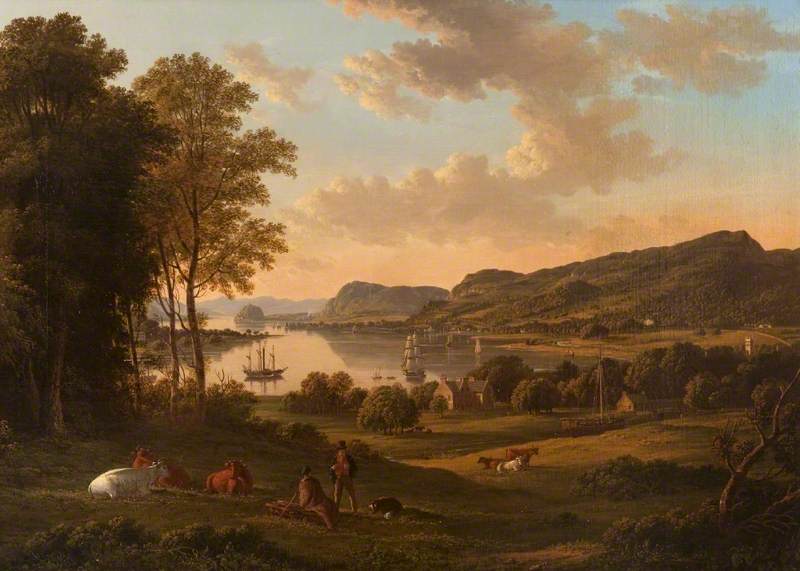
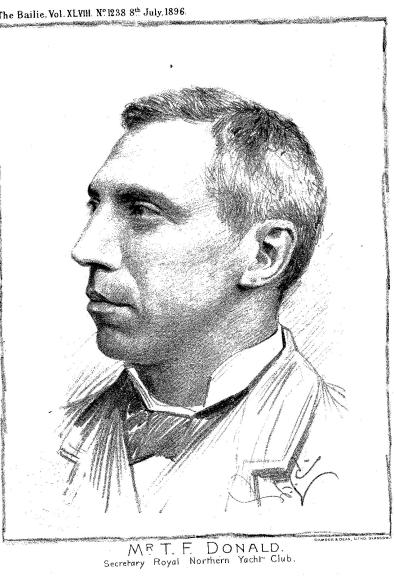

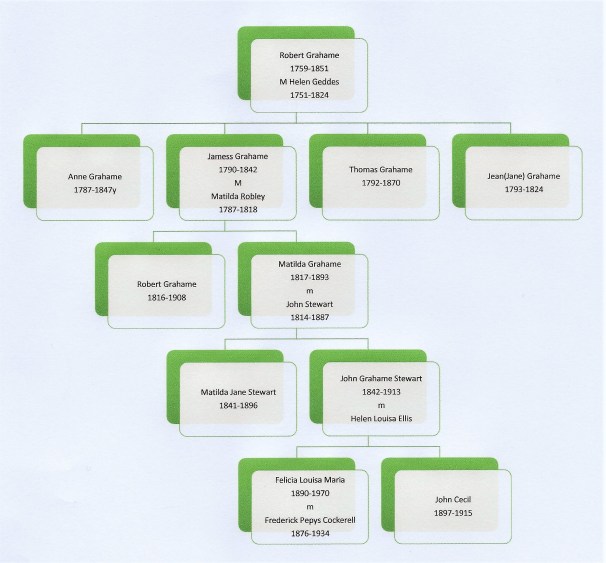

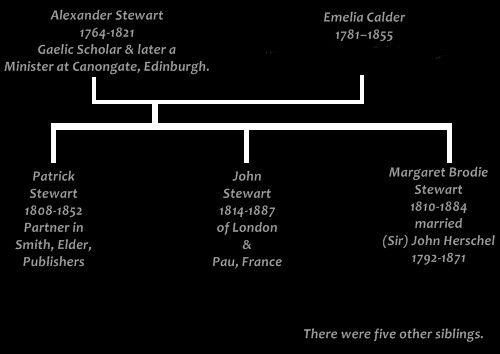

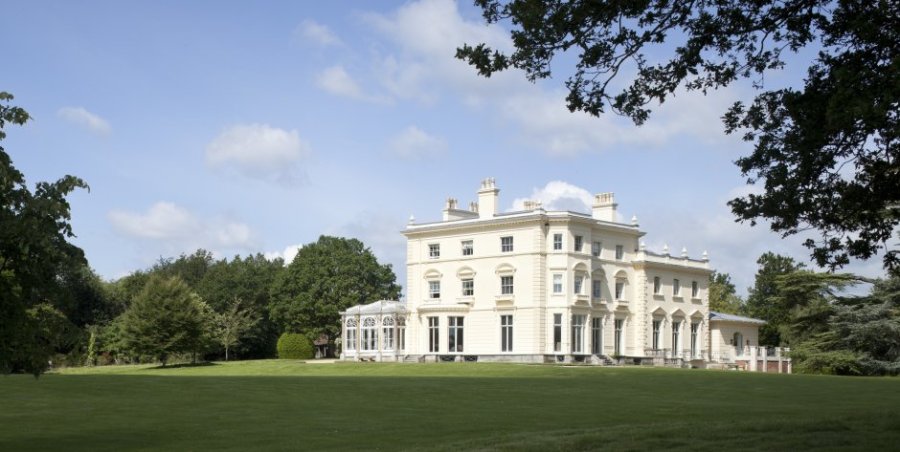
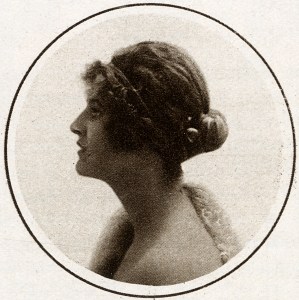
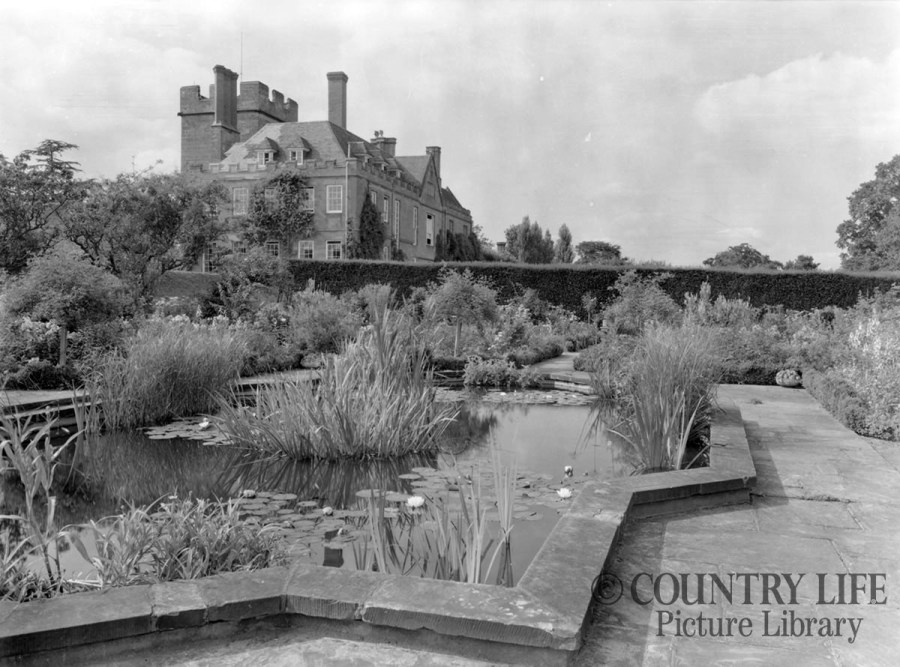

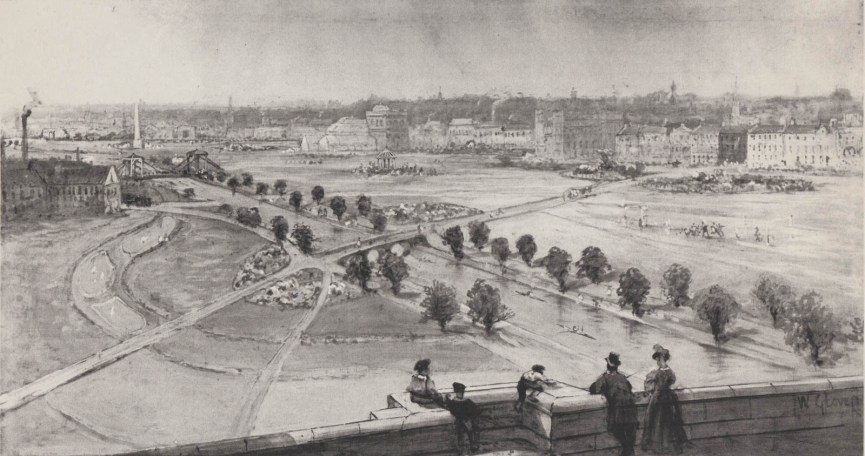


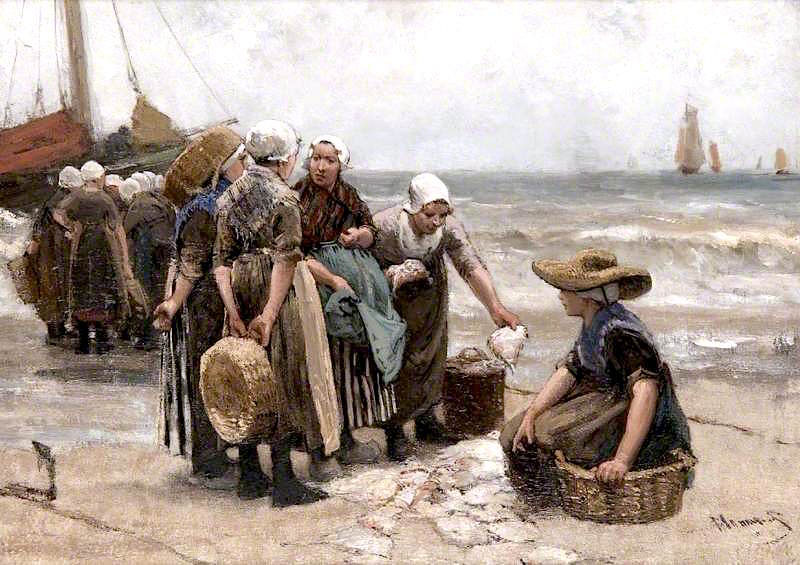


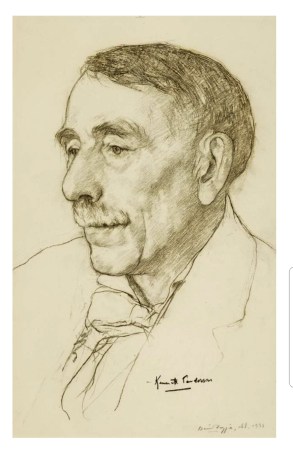


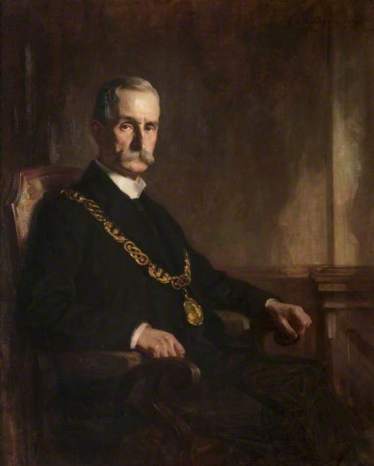



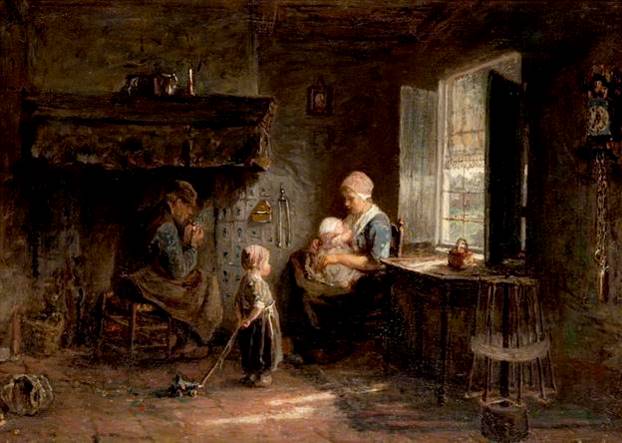

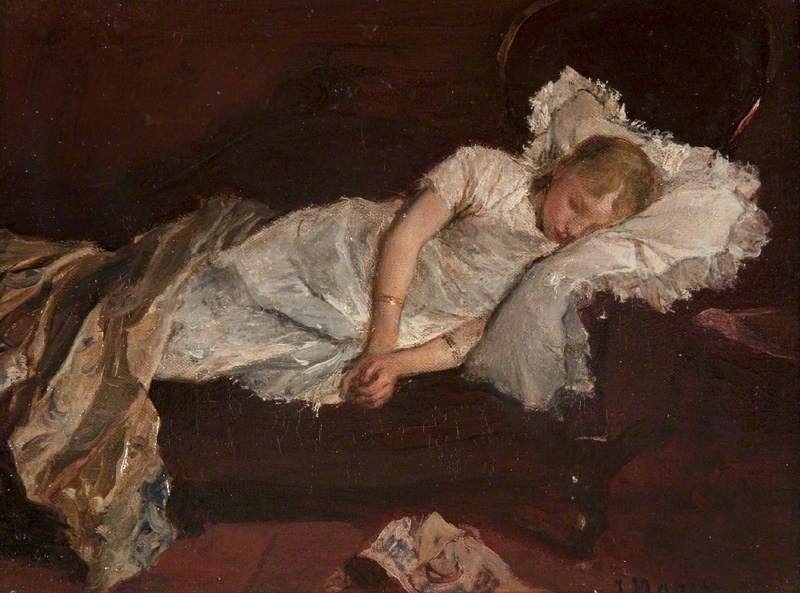

 Glasgow Museums Art Donors Group