This painting was donated by ‘Miss Rule’ from Perthshire on 19 December 1951.1 According to Scotland’s People there were four ‘Miss Rules’ who died in Perthshire after 1951. Two of these were in the wrong timeframe and only one of the others was a ‘Miss’. This left the likely donor as being Miss Elsie Spiers Rule. 2
Elsie Spiers Rule was born at 7 Montgomerie Crescent, Kelvinside, Partick on 25 April 1879. Her birth was reported by Catherine Black, a nurse. Elsie’s parents were Robert Rule (a soft goods manufacturer) and Louisa Shand who had married on 9 June 1868 in Partick. 3 Elsie was their youngest child in a family of four girls (Louisa E. born 1871, Helen Margaret, born 1872, Mary Shand, born 1876 and Elsie) and a boy, Robert born 31 May 1873. 4
The family was at 7 Montgomerie Crescent in 1881 with Elsie S. Rule aged 1. Elsie’s father Robert who was born in Rothesay in 1837, was a ‘manufacturer of cotton and woollen dress goods employing twenty men and ten women’. 5 He was the second son of Robert Rule, a Paisley yarn merchant. Elsie’s mother, Louisa, was a sister of Baron Shand of Woodhouse, Dumfriesshire who sat as a Lord of Appeal in the House of Lords. She died on 28 September 1888 aged 53. 6, 7
All three of Elsie’s sisters married. On 19 January 1898, Louisa married J (I?) Graham, an East India Merchant at 7 Montgomerie Crescent. Two years later, on 18 April 1900, Helen, married J. D. Nimmo, also an East India Merchant at the same adress. Mary married Robert Spiers Fullarton, a General Practitioner at The Grant Arms, Grantown on Spey on 11 July 1908. Elsie was a witness at this wedding. 8
In 1891, Elsie and her sister Mary both scholars, were in Dollar visiting a Miss Jane Macalister in Academy Street, Eglinton Place. 9 Also present were Margaret Cameron, pupil governess and Elizabeth Birch, lady housekeeper. This latter person remained with the family until her death in 1939. 10
Eight years later, Elsie passed the Arts and Sciences Preliminary Examination at Glasgow University. 11 Her brother Robert had earlier graduated with an MA from the same University.
Elsie does not appear on the 1901 Census, however, her father Robert Rule aged 63, widowed, and retired was residing at Pokesdown, Hampshire. 12 The family home remained at 7 Montgomerie Crescent, Govan. 13 On 5 October 1905 a Miss E. S. Rule left England for Calcutta aboard the Oceana although it is not clear that this is the same Miss Rule. 14 In 1911, Elsie was still at 7 Montgomerie Crescent with her father and four servants, living next door to Mary Kirkpatrick (qv) who was also a donor of paintings to Glasgow. 15 On 6 December 1913, Elsie sailed from Glasgow to New York aboard the California. She had no occupation listed. 16
By 1915, Robert Rule had become the proprietor/occupier of Benachie House and Grounds in Crieff, as well as retaining his house at 7 Montgomerie Crescent, Govan. 17 Benachie was to become Elsie’s future home. The family seems to have taken up a prominent place in Crieff society. In 1921 Elsie attended the Crieff Highland Gathering among the ‘fashionable attendance’ in the grandstand. She was accompanied by Mrs Robert Rule and Miss Birch. 18 In the census of that year Elsie is listed at Benachie with her father and his grandson, also Robert, along with four servants. 19 Later, Elsie’s father acquired more property in Crieff with a house and offices in Ferntower Road. 20 Robert Rule died at Benachie on 19 October 1929 aged ninety-two. His death was reported by his son Robert. 21, 22,23
The following year, Elsie donated a view indicator to be placed on the Knock of Crieff, a small, wooded hill to the north of the town, in memory of her father. 24 The inscription reads:
IN MEMORY OF ROBERT RULE
BENACHIE CRIEFF
“I will lift up mine eyes unto the hills from whence cometh my help”
Fig. 2 View Indicator on the Knock of Crieff 25
Thereafter, Elsie Rule became ‘one of Crieff’s most respected residents, a lady who gave unstintingly of her wealth – through channels publicly and anonymously’. 26 In the same year as her father’s death she contributed £200 to the miners’ relief fund. 27 In 1934 she again travelled to America arriving in Boston on 1 September aboard the St. Louis. 28In 1940 she was still the proprietor of the house at 3 Cleveden Crescent, as well as Benachie House and grounds, The Haven, Ferntower Road West and a house on Ferntower Road, all Crieff. During the war years it was reported that she donated a ham to Crieff Cottage Hospital 29 and provided funds so that the men of the 3rd Battalion Home Guard could be provided with a ‘Balmoral’ in place of the F.S. Cap. 30 She attended various fund-raising events and at the Crieff Ladies’ Lifeboat Guild sale, held to raise funds for the RNLI, she won one dozen (13) eggs in a raffle. 31 She was especially generous to ex-servicemen who were down on their luck by providing money and purchasing of various items of clothing. She also supported events at Morrison’s Academy, presenting the Senior Shot Putt Cup in 1958. 32
In 1952, the year after her donation of the painting to Glasgow, she gifted her house ‘one of the finest mansions in Strathearn’ to Crieff Old Peoples’ Welfare Committee as a ‘home for old folks’. 33
Elsie Spiers Rule died aged 83 on 27 October 1962 at Benachie, Crieff. Her death was reported by her personal servant William F. Eades who was living at Benachie Cottage, Ferntower Place, Crieff. 34 A memorial service was held at Woodside Crematorium Chapel in Paisley on 30 October. 35
In the grounds of the crematorium stands a stone marking the Rule Family Memorial. An inscription contains the following information:
‘Erected in the Abbey burying ground by Robert Rule (Elsie’s grandfather), merchant in Paisley, in memory of Margaret Spiers his wife, who died 24th Sept 1842 aged 35 years, and was buried in the angle formed by the north transept and nave of the church, where was also buried Robert Rule (Elsie’s father) who died 7th Feb’y 1854, aged 53 years. This stone was removed by their son Robert, in consequence of the ground being required for the late repairs upon the Abbey Church and is placed here to mark the spot where lie the mortal remains of his beloved sisters’ (Helen, and Jessie Currie Rule).
Various tributes were paid to Elsie including at the AGM of the local Horticultural Society. An obituary in the local paper noted that she had ‘disbursed thousands of pounds to deserving causes and to people in Crieff and further afield over the past 30 years’. She was a Christian Scientist and attended the Crieff South Church. 36 In her will, she left £73,397. Her house at 3 Cleveden Crescent was left to her caretaker Ian David Eades and his wife Jean ‘with the hope that it would not be turned into flats’. Her chauffeur was given the house that he occupied at the time of her death. 37
The painting was initially owned by ‘Mrs Edwards’. (This was Ruth Edwards who with her husband, were Fantin-Latour’s British agents. He often visited the Edwards at Sunbury-on-Thames during the 1860s. 38,39 The painting was exhibited at the Royal Glasgow Institute of Fine Arts, Glasgow in 1892, cat. no. 369, as Baigneuses. It was priced at £31. This may have been where it was purchased by Robert Rule and passed to his daughter.
References
Glasgow Museums Resource Centre, List of Donations to Glasgow.
Scotland’s People, Death Certificates.
Scotland’s People, Birth Certificate.
Ibid
Scotland’s People, Census, 1881.
Scotland’s People, Death Certificate
Glasgow Herald, 29 September 1888
Scotland’s People, Marriage Certificates.
Scotland’s People, Census, 1891.
Scotland’s People, Death Certificate.
Glasgow Herald, 20April 1899, p3.
ancestry.co.uk, 1901 Census, England.
Scotland’s People, Valuation Roll 1905
ancestry.co.uk, UK and Ireland, Outward Passenger Lists, 1890-1960.
Scotland’s People, Census, 1911
ancestry.co.uk, UK and Ireland, Outward Passenger Lists, 1890-1960.
In 1956, the same couple donated two paintings by the same artist to Michigan State University via the Carlebach Gallery of New York. Information about these donations is contained in the following letters.
Fig. 3 Letter offering paintings. Michigan State University Archives, Used with permission.Fig. 4 Letter acknowledging receipt of the paintings. Michigan State University Archives, Used with permission.
These letters provided the background to Mr. E. K. Perry and gave an address to work from. One also provided some information about the artist. One of the paintings Dancing in Harlem was painted in the 1940s.
John Edmund Liggett was born on 11 June 1826 in St. Louis. He was a co-founder, in 1873, of the Liggett and Myers Tobacco Company which became the fourth largest tobacco company in America. The company had its origins in a snuff mill in New Egypt, New Jersey owned by Christopher Foulks. When the mill was destroyed by British soldiers in 1812, Foulks moved to Illinois and then to St. Louis to set up business. His daughter, Elizabeth married Joseph K. Liggett and their son John Edmund entered the business about 1845. The company became J. E. Liggett and Brother until a partnership was formed with George Smith Myers in 1873. 2
John Liggett married Elizabeth J. Calbreath on 21 December 1851. 3 They had one son and four daughters one of whom, Dorothy (‘Dolly’) married Claude Kilpatrick about 1883. One of their two daughters, Mary Lois Kilpatrick (born 1885) married Eugene Albert Perry and their only son, Eugene Kilpatrick Perry was born in New York on 18 December 1918. 4 In the fourteenth US Census of 1920 5 the family was living in Manhattan with Eugene A. Perry a stockbroker aged 39, born in Virginia. However, his wife, a ‘housewife’, is listed as Georganne Perry aged 34, born in St. Louis.
In 1927, the nine-year-old Eugene and his parents sailed from New York aboard the Nieuw Amsterdam. They arrived at Plymouth on 12 September before travelling on to London and staying at the Park Lane Hotel. 6
In the 1930 census 7 the details are essentially the same as in 1920, but the wife’s name is now Lois K. Perry who is aged 44. The family was employing three maids and a servant. Shortly after this, Eugene’s parents were divorced, and his mother married Russell L. McIntosh a textile dealer. In 1934, Eugene, with his mother and stepfather, were in Hamilton, Bermuda and on 6 April sailed from there aboard the S.S. Monarch of Bermuda, arriving in New York on 8 April. The family’s address was now Darien, Fairfield, Connecticut. 8 Later in August the same year, Eugene, aged fifteen, sailed with his family to Britain. They left Southampton on 25 August aboard the S.S. Statendam and arrived in New York on 1 September. 9 The following year, after a stay in the Ritz Hotel in London, the family left Southampton aboard the S.S. Bremen on 11 September 1935 bound for New York. Russell L. McIntosh was now retired, and Eugene was a student aged 16. 10 In 1937, the family was again on holiday. This time leaving Vancouver, British Columbia on 7 August and sailing to Hawaii aboard the S.S. Empress of Canada. They arrived in Honolulu on 12 August and stayed at the Royal Hawaiian Hotel. 11 On 1 September 1939, the family sailed from Buenos Aires aboard S.S. Brazil arriving in New York on 18 September. Their address was East Trail, Darien, Connecticut. 12
In the census of 1940 13 Eugene was at the same address ‘stepson to Russell L. McIntosh’, aged 21. His parents were in Miami and the family employed three servants, all German.
In 1940, Eugene competed a Draft Registration Form giving his address and stating that he was unemployed. It also gave some personal details. On 18 November he enlisted for three years in Battery C of the 207th Coastal Artillery, National Guard.
Fig. 5 Draft Registration Form 14
Eugene’s father, Eugene Albert Perry died aged sixty-four on 26 May 1944 in Charlottesville, Virginia. He was a stockbroker divorced from Lois Kilpatrick Hayes. 15 A Florida state census of 1945 recorded Eugene K. at Boca Raton with his mother and stepfather. His occupation was ‘army’. 16
Fig. 6 Posting and Demobilisation 17
Eugene was demobilised on 13 January 1946 and on 12 March he married Cristina DeLeon in West Palm Beach, Florida.
Fig. 7 Marriage License 18
A report of the wedding in a local newspaper contained the information that Eugene was an ‘alumnus of the Hun School in Princeton, N. J. and that he enlisted in the old 7th Regiment of New York’. ‘Until recently (he) served in the Army Medical Corps in the Philippines and Japan’. In the same report, Cristina was described as the ‘daughter of Mrs. Amanda B. de Leon of 1185 Park Ave., New York’. One of the bridesmaids was Miss Nara de Leon, the bride’s sister. Cristina’s father was ‘the late Diego de Leon of Madrid and her grandfather was Rafael Lopez Andrade, court painter to the late King Alfonso’. A reception took place ‘at the winter home of the bridegroom’s mother, Mrs. Russell L. McIntosh, and Mr. McIntosh in Boca Raton’. 19
The bride’s mother was Amanda Rangel, daughter of Domingo Rangel and Luisa Espinal. She was born in Caracas, Venezuela on 19 April 1901.20 She married Diego De Leon and had three children: Ester born 27.10.1917, Edna (27.12.1918) and Ralph (21.7.1922) Diego died in May 1922 and Amanda married Albert Bencid. Her children took their stepfather’s surname. However, Albert died in 1923 and Amanda emigrated to the United States with her family. She landed at New York on 13 May 1924, aboard the S.S. Prins Frederik Hendrik. This information is contained in her application for naturalisation. When she applied, on 29March 1938 she was living at 353 Central Park West, New York. 21 She was granted naturalisation on 19 December 1940. Her address was now 1 West 85th Street, New York and her occupation was ‘housekeeper’. She declared that all children were the issue of (her) first husband, Diego de Leon, who died in May 1922 in British West Indies. She also stated that all her children were born in the British West Indies rather than in Caracas as stated previously. Her witnesses were a millinery designer and an art student perhaps reflecting her own artistic endeavours. 22
Fig. 8 (Ref. 21)
At some point after entering the US, both daughters changed their names, Ester Bencid became Nara de Leon and Edna became Christina (or Cristina) de Leon. In the 1940 census, Amanda Bencid was living in Manhatten, a widow aged 39 with no occupation listed. With her were her son Ralph Bencid, 17, and daughters, Nara de Leon, 21, and Cristina de Leon, 20. Both daughters were employed as models in advertising. All four were listed as born in Venezuela.23
Cristina completed a Declaration of Intention to seek naturalisation on 30 April 1938. She stated that her full name was ‘Christina de Leon of 352 Central Park West, New York. She was born in Trinidad, B.W.I. on 27 December 1918 and had arrived in the US on 13 May 1924 under the name of Edna Bencid. She was a model and had dark hair, brown eyes and was five foot three inches tall.
Fig. 9 (from ref. 24)
A petition for naturalisation was completed two years later. Her address was now 1 West 85th Street and she was an art student. 24 On 8 December Cristina was issued with a passport. She became a US citizen in July 1942. 25 Her sister, Nara, received naturalisation on 7 June 1943. She stated she was born on 27 October 1917 in Port of Spain, British West Indies. Cristina and her mother were witnesses, both living at 1185 Park Avenue, New York. Cristina’s occupation was ‘artist’ and her mother’s ‘housewife’. They both claimed to have known Nara continuously in the United States since 13 May 1924. 26
On 21 May 1949, Eugene’s mother, Mary Lois Kilpatrick McIntosh died aged 64 in New York. She had been married three times. Firstly, to Louis Lee Hayes in 1907, secondly to Eugene Albert Perry and finally, to Russell L. McIntosh. In 1928 she inherited a one-million-dollar estate from her mother Dolly Kilpatrick. She was buried in the Bellefontaine Cemetery in St. Louis on 24 May. 27
On 28 December 1949 the family again set sail, this time bound for Genoa, Italy. Eugene and Cristina were accompanied by Amanda Bencid, Nara and her husband Gerard Heim. The ship, S.S. Vulcania left New York and was due to arrive in Genoa on 8 January 1950. According to the ship’s manifest, Eugene, Cristina and Amanda planned to stay abroad for six months while the Heims’ stay was to be indefinite. 28
However, there was obviously a change of plans as on 7 April 1950 the whole family Amanda Bencin, Andrew Gerard Heim, Nara Heim, Eugene Kilpatrick Perry, Cristina Perry, all with an address at 1185 Park Avenue, New York, arrived at La Guardia airport from Maiquetja, Venezuela.29 The census of 9 April 1950 records that Nara E. Heim, aged 28, born in Venezuela, was married to Andrew G. Heim, aged 35, born in New York. He was a freelance artist. 30 Nara Heim was now a painter and sculptor with works in several galleries.
After their return, the Perrys moved to Pelham, New York – one of the oldest settlements in the USA. On 7 March 1952, they set off on a cruise accompanied by Amanda aged 50 and her son Ralph, 29. They all gave their addresses as 165 Boulevard, Pelham, New York. Cristina’s age is mistakenly listed as 25. The cruise was aboard Nieuw Amsterdam and returned to New York on 15 March. 31
Cristina Perry became an accomplished portrait painter. ‘She recently painted a large portrait of Helen Hayes which the actress claimed was the only one ever to capture her true likeness and personality’.
Fig. 10 Helen Hayes by Cristina Perry. US National Portrait Gallery website.
Due to the favourable reception of this painting, a second one, depicting Helen Hayes in her role of Queen Victoria, was commissioned. Both canvases were placed on exhibition in the Helen Hayes Theatre. 32
Fig. 11. Pelham artist, Cristina Perry (right) and Helen Hayes, take a pleased look at the picture of the actress painted by Miss Perry. The occasion was the unveiling of two portraits executed by Miss Perry.’ 33
Cristina also wrote an account of her meeting with Miss Hayes which took place in the Spring of 1956.
Cristina Perry, one of the country’s distinguished portrait artists who makes her home on the Boulevard, Pelham Heights, with an artist’s sensitivity records impressions both on her canvas and with words. Her work brings her into contact with many of the world’s great and near great and she presents for Pelham Sun readers this week a discerning pen portrait of one of her famous sitters, Helen Hays.
A member of a notable artistic family. Mrs Perry, wife of E. K. Perry, is the daughter of artist Amanda de Leon and sister of another artist Nara Heim. They all make their home in Pelham.34
Thereafter, the couple set about disposing of their collection of Amanda de Leon art. This consisted of donations to various art museums around the world. Cristina gave two paintings, Summer and FlowerVendor to the Lowe Art Museum in Miami on 12 January 1953 35 and Eugene is credited with donations to the Museum of Modern Art in Barcelona 36 and the Kunsthaus in Zurich in 1954.37 Thereafter the donations are invariably made under their joint names. Information from the Kunstmuseum in Basel may indicate how the donations were made.
‘The work (Evening in the Country) was bequeathed to the Kunstmuseum by Mr. and Mrs. Eugene Kilpatrick Perry in 1954. According to a letter (in the museum archives), they decided to give a work to the museum after a visit to Basel. The work was shipped from New York to Basel in the spring of 1954 after the Kunstmuseum confirmed its acceptance. There is no evidence that Mr. and Mrs. Eugene Kilpatrick Perry personally delivered it to Basel. According to the archive, a selection of several works was presented to the museum, which then decided on Evening in the Country. The only information we have about the artist Amanda de Leon is that she was born in Madrid on April 19, 1908, and trained in Caracas, Venezuela, before becoming an American citizen. She is also described as a peintre naif.’ 38
In 1954 they donated two paintings to Glasgow and on 23 November 1955 they gave ‘two modern paintings by Amanda de Leon, Boy with Dogs and At the Horse Races’ to the Art Gallery of the University of Notre Dame to ‘augment the galleries’ growing collection of modern art’. 39 A label from the reverse of Park Scene confirms their donation to the Saginaw Museum, Michigan in 1956. 40
Fig. 12. Label from reverse of Park Scene. From auctioneers Du Mouchelles website.
On 3 February 1957, the McGuire Hall Art Galleries in Richmond, Indiana were gifted a painting Mother and Child by Nara Heim, sister of Christina Perry. This was donated via the Carlebach galleries of New York. (A list of the couple’s other donations is contained in the appendix)
In 1957, Eugene and Christina embarked on a cruise aboard the British ship T.S.S.Ocean Monarch to Hamilton, Bermuda and Nassau, Bahamas. They left New York on 15 February returning to New York on 23February. In the column headed ‘U.S. Passport Number/Place of Birth’ Cristina’s details are listed as ‘U. S. Dist. CT. N.Y.C Dec. 8/40, S. America’. 41
In 1960, the following intimation appeared in the Pelham Sun,
Mr and Mrs Eugene Kilpatrick Perry have moved from the Boulevard to New Rochelle. They have purchased a new home at 100 Pryer Terrace.42
Fig. 13. – 100 Pryer Terrace, New Rochelle (Redfin Real Estate App)
However, before moving they donated two oil paintings by Amanda de Leon, Peasant Woman of Avila, Spain, and Shanti Town to the Hunter Art Gallery, Chattanooga on 8 September 1962. 43
Amanda Bencin (Rangel, de Leon), Cristina’s mother, and the artist responsible for all the paintings, died on 1 March 1996 in Miami Beach, Florida aged ninety-five. 44
Having retired to Miami, Eugene Kilpatrick Perry died at 5080 Alton Road Miami-Dade, Miami Beach on 11 May 1998 aged seventy-nine. His occupation was ‘Investor in Stock Market’, married to Cristina De Leon who was the informant. 45 Ralph Bencid (de Leon) died at Broward, Florida on 2 August 2001. He was 79. 46
References
Catalogue of donations to Kelvingrove Art Gallery, Glasgow
Wikipedia – CC BY-SA 4.0
Nisinger, Connie, findagrave.com
ancestry.com, Find a Grave Memorial ID 107675665, US Records
ancestry.com, United States Census 1920
ancestry.com, UK and Ireland, Incoming Passenger Lists, 1878-1960
ancestry.com, U.S. Arriving Passenger and Crew Lists (including Castle Garden and Ellis Island) 1820 – 1957
ancestry.com, UK and Ireland, Outward Passenger Lists, 1890 -1960ancestry.com, Honolulu, Hawaii, U.S. Arriving and Departing Passenger and Crew Lists, 1900 – 1959
ancestry.com, U.S. Arriving Passenger and Crew Lists (including Castle Garden and Ellis Island) 1820 – 1957
ancestry.com, United States Census 1940
Connecticut, World War II Draft Registration Cards, 1940 – 1945,
The Palm Beach Post, West Palm Beach, Florida, 13 Mar 1946 also reported in The Miami News
familySearch.org, United States, Social Security Numerical Identification Files (NUMIDENT), 1936-2007database,
New York, U.S. District and Circuit Court Naturalization Records, 1824-1991, familysearch.org
ibid
ancestry.com, United States Census 1940
familysearch.org, New York, U.S. District and Circuit Court Naturalization Records, 1824-1991
ancestry.com New York State, Passenger and Crew Lists, 1917-1967, S.S. New York, U.S. District and Circuit Court Naturalization Records, 1824-1991, familysearch.org
St. Louis Globe-Democrat, 23 May 1949
ancestry.com New York State, Passenger and Crew Lists, 1917-1967, S.S. Vulcania
familysearch.org, New York, New York Passenger and Crew Lists 1909, 1925-1957
familysearch.org, United States Census 9 April 1950
ancestry.com, New York, U.S., Arriving Passenger and Crew Lists, 1820 – 1957
Pelham Sun, 2 August 1956
Pelham Sun, 5 December 1957
ibid
Information from the Lowe Art Museum, Miami, by email.
Information from MACBA, Centre d’Estudis, Barcelona, by email
Information from the Kunsthaus Zurich, by email
Information from the Kunstmuseum Basel by email
University of Note Dame, Dept. of Public Information, 18 November 1955
The painting was auctioned by Du Mouchelles, 409 East Jefferson Ave., Detroit in July 2016. Image from their website.
ancestry.com, U.S. Arriving Passenger and Crew Lists (including Castle Garden and Ellis Island) 1820 – 1957
familysearch.org, United States, Social Security Numerical Identification Files (NUMIDENT), 1936-2007
Ibid
Ibid
Appendix 1
Paintings by Amanda de Leon Donated by the Perrys
Title Year of Gallery Donation
Flower Vendor 1953 Lowe Museum, Miami* Summer 1953 Lowe Museum, Miami* Man with Snakes 1954 Kunsthaus, Zurich * Nativity 1954 Museum of Modern Art, Barcelona * Evening in the 1954 Kunstmuseum, Basel * Country (1953) Spanish Dancers 1954 Glasgow Museums * The Papaya Tree 1954 Glasgow Museums * Girls with Kittens 1954 Musee des Beaux Arts Lausanne * Chinatown 1954 Municipal Gallery of Modern Art, Dublin * Night Scene 1954 Art Gallery of Toronto * Tropical Scene 1954 Hamburger, Kunsthalle * Boy with Dogs 1955 Notre Dame * At the Horse Races 1955 Notre Dame * Park Scene(1950) 1956 Saginaw Museum, Michigan * In the Seminary 1956 Krannert Art Museum, Ill* Dancing in Harlem 1956 Krannert Art Museum, Ill* Peasant Woman of 1962 Hunter Art Gallery, Chattanooga* Avila, Spain Shanti Town 1962 Hunter Art Gallery, Chattanooga.*
Others probably donated by the Perrys but not confirmed.
Gypsy Cave Osterreichische Galerie, Vienna (4) The Market Place Municipal Art Museum, Dusseldorf (4) Volcano Wolfgang Gurlitt Museum Linz, Austria (4) Cock Fight Museum of Modern Art, Sao Paulo (4) Convent Bound National Museum of Modern Art, Tokyo (B) Scene from “Giselle” Municipal Gallery of Modern Art, Genoa (B) The Bathers National Gallery of Modern Art, New Delhi (B) On the Lake National Gallery of Modern Art, Rome (B)
N.B. * Confirmed by the museum; “4” Is from 4rarefinds a seller on eBay. The seller lists prints of Amanda’s paintings for sale and helpfully gives the gallery where the originals can be found. “B” indicates information from a book containing prints of Amanda’s paintings. (Osbourne, Duncan, Contemporary Masterpieces Series, 1954.)
Some, possibly all of these donations were arranged through the Carlebach Gallery in New York. The Perrys also offered a painting to the Tate Gallery in London which was declined.
Paintings Sold at Auction Nuns on Horseback Sold 2017 Du Mouchelles, Detroit $150.00 Farm Scene c1940 Sold 2008 Toomey & Co.
On occasion, the Perrys also donated paintings by Cristina’s sister, Nara e.g. Mother and Child, 1957 to the McGuire Hall, Richmond *
Appendix 2
Amanda de Leon (1901 – 1996)
It has been difficult to pin down this artist. This is partly because references to her always give her dates as 1908 – 1990 and state that she was born in Madrid, the daughter of Rafael Andrade, ‘a well-known portrait painter in his own right’.1 However, it has been impossible to trace any reference to this painter. Initial findings said she was raised in Venezuelaand educated at theSan Jose de Tarbes, Convent in Caracas.2 She lived in the US in Pelham, New York throughout her creative period.3 She painted mainly on Masonite (hardboard) and was described as a Peintre naif.4
In fact, she was born Amanda Rangel in Caracas, Venezuela on 19 April 1901, the daughter of Domingo Rangel and Luisa Espinal.5 She married Diego de Leon about 1917 and had three children, all born in the British West Indies; Esther, 27 October 1917, Edna, 27 December 1918 and Ralph 21 July 1922. Diego died in May 1922, and she moved back to Caracas. She then married Albert Bencid on 15 April 1923, but he died the same year. She emigrated to the United States from La Guaira, Venezuela arriving on 13 May 1924 aboard the Prins Frederik Hendrik. At the time she applied for naturalisation she was living at 1 West 85th Street, New York and was employed as a housekeeper. 6
In the 1940 census, she is listed as Amanda Bencid and was living in Manhattan, a widow aged 39 with no occupation given. With her were her son Ralph Bencid, 17, and daughters, Nara de Leon, 21, and Cristina de Leon, 20. 7 After her daughter Cristina (formerly Edna) married Eugene Kilpatrick Perry in 1946, Amanda moved in with her daughter and son-in-law at 1185 Park Avenue, New York. On 28 December 1949 she sailed with the family including her daughter Nara (formerly Esther) and Nara’s husband Andrew Gerard Heim, to Genoa arriving there on 8 January 1950. The visit must have been curtailed as on 7 April 1950 the whole family arrived at La Guardia Airport, New York having visited Venezuela. Shortly after this, the family moved to 165 Boulevard, Pelham NY which was the address given when Amanda this time accompanied by her son Ralph as well as Eugene and Cristina cruised from New York aboard the Nieuw Amsterdam.
The following year, her daughter and son-in-law began donating some of Amanda’s paintings to various art museums around the world. This began with a gift to the Lowe Museum in Miami of Flower Vendor and Summer.
In 1954 a booklet of copies of fourteen of her paintings was published in the Contemporary Masterpieces series with an introduction by Duncan Osbourne.
A volume of color reproductions of paintings by Amanda de Leon, noted artist who resides at 165 Boulevard, Pelham Heights has recently been published by the Fine Arts Publishers of New York. The paintings reproduced in the book are from the collections of museums in 14 different countries.
Miss de Leon’s works are represented in over 50 major museums throughout the world, including the Musee d’Art Moderne, Paris, the National Gallery of Modern Art, Rome, the Museum of Modern Art, Barcelona and the Glasgow Art Gallery, Scotland.
Universally famous, Amanda de Leon is considered to be one of the most notable self-taught painters of the generation. 8
Each painting has a legend indicating the gallery to which the original was donated. However, there is little in the way of biographical detail. One copy of the book was gifted to the Joslyn Memorial Art Library in 1957 by Eugene Kilpatrick Perry.
Exhibition of Paintings by Amanda de Leon An exhibition of paintings by internationally known Amanda de Leon of 165 Boulevard began Monday at the Mattatuck Museum in Waterbury, Conn. The one-man show will continue until Jan. 30. Many of the works on display have been loaned by museums, universities and distinguished private collectors. Miss de Leon, outstanding in the primitive style, has had several one-man shows in Paris and New York. 9
In 1955 she held an exhibition of her works in Washington D.C. Venezuelan painter Amanda de Leon held a successful exhibition of her works last June at the Pan American Union building in Washington D.C. by special invitation extended to her by that organisation.10
And later the same year she had an exhibition at the Carlebach Gallery in New York.
Paintings of Amanda de Leon on Exhibition A reception in honor of Amanda de Leon famous Pelham artist was opened on Monday evening September 19 by Mrs. Vincent R. Impellitteri wife of the former mayor of New York City. The occasion was the opening of her new exhibition of paintings at the Carlebach Gallery of 943 Third Avenue in New York. Many notables attended the reception including leading artists, sculptors and museum directors. Miss de Leon resides on the Boulevard, Pelham Heights. Last week Mayor Stanley W. Church of New Rochelle appointed Amanda de Leon as ambassador at large of New Rochelle. As the artists paintings hang in over (?) major museums throughout the world, Mayor Church said she has done a wonderful job fostering cultural relations between this country and the nations where her work is exhibited. Miss de Leon who is one of the leading contemporary painters of our time is noted for her originality and mastery of color and design. Although the daughter of a famous portrait painter of Madrid, the artist is independent of any tradition and paints in a style completely her own. The forcefulness and vitality of her work is enhanced by her rich and sumptuous colors. Amanda de Leon is the mother of two daughters, Cristina Perry and Nara Heim, successful artists themselves who are following in the footsteps of their illustrious mother. During the exhibition at the Carlebach Gallery, Miss de Leon will be the subject of numerous interviews on radio and television shows. 11
Five Years Ago Pelham Artist Amanda de Leon, an internationally known painter, has been included in the 1957 edition of “Who’s Who in the East,” as well as “Who’s Who in American Art.” The artist, whose paintings are represented in over 70 major museums throughout the world, is currently having a one-woman show in the Museum of Modern Art in Genoa. Subsequently, the exhibit will travel to museums in Barcelona and Dusseldorf. Amanda de Leon is the mother of the well-known artists Christina Perry and Nara Heim, all of whom have their residence and studios at 165 Boulevard. 12 Presumably Amanda continued to paint but there is no record after this point of any further donations of her artworks. Amanda de Leon (nee Rangel), also known as Amanda Bencid, died on 1 March 1996 aged ninety-five in Miami Beach, Miami-Dade, Florida. 13
Information from the archives of the Kunstmuseum Basel via. Marion Keller
familysearch.org, United States, Social Security Numerical Identification Files (Numident), 1936-2007
familysearch.org, Petition for Naturalisation 19 December 1940
ancestry.com, U.S. Census, 1940 (Check same as before)
Pelham Sun, 28 April 1955
Pelham Sun, 14 January 1954
Venezuela Up-to-date, 1956, Volumes 7-10, p 19. Google e-book.
Pelham Sun 22 September 1955
Pelham Sun 4 October 1962
Florida Death Records (Check)
Appendix 3
Nara Heim
Ester de Leon was born in Port-au-Spain Trinidad on 27 October 1917 to Diego de Leon and Amanda Rangel. When her father died, her mother married Albert Bencid and Ester took his name. After emigrating to the United States, she adopted her father’s surname and changed her first name to Nara. She worked as a photographic model in New York before marrying Andrew Gerard Heim. She studied at the Art Students League of New York and at the National Academy of Design School also in New York,and the Sculpture Center in New York.1 She exhibited at the Carlebach Gallery, New York (1950), New Rochelle AA (1952*, 1954), Manor Club (1952* – 1954), Westchester Arts and Crafts (1954 – 1955*) and Mount Vernon AA (1955*). (* Her exhibit was awarded a prize). Her work was exhibited at Everhart Museum of Art, Scranton, PA; Lyman Allyn Museum; Howard University; Farnsworth Museum of Art, Wellesley, MA; Georgia Museum of Art, Athens; Hickory Museum of Art, NC; and Mills College, Oakland, CA.2 She has an entry in Who Was Who in American Art, 1564 – 1975. 3 Nara Heim died on 13 March 2004 in Miami Shores. 4
In 2010, the following appeared on an art auction site,
Nara Heim painting (Venezuela/New York, born 1921), “The Sun Bathers”, signed upper right “Nara Heim”, mixed media on Masonite, 30 x 20 in.; lattice style gilt and painted wood frame. Some losses to composition material; frame with abrasions. Carlebach Gallery, New York City; Mr. and Mrs. E.K. Perry, Pelham, New York; Property of the Hickory Museum of Art, Hickory, North Carolina. 5
References (Appendix 3)
askart.com
fr.artprice.com
Who Was Who in American Art, 1564 – 1975, Falk, Peter Hastings, 1999
Our donor was born Edith Mary Adam on 20 January 1870 at 6 Oakley Terrace, Dennistoun ,Glasgow .2 Her father was John Adam whose family owned a bleachworks, William Adam & Son of which John was a partner .3 Her mother was Elizabeth Jane Cochrane .4 According to the 1871 Census Edith lived at at 8 Oakley Terrace with her parents and the following siblings:- John aged seventeen, Catherine aged fifteen, Charles aged ten and Eliza aged eight. There were also at least four servants living in the house .5
Oakley Terrace was part of a model middle- class suburb planned from the 1850s by Alexander Dennistoun, from a wealthy Glasgow merchant family . Up to that time this area to the east of Glasgow consisted of country estates such as Craigpark ,Whitehill and Meadowpark which were owned by wealthy Glasgow businessmen(see below Figure 2).
Alexander’s father James had bought the Golfhill Estate in 1814 and built Golfhill House, the home of Alexander Dennistoun. Architect James Salmon was engaged to design the feuing and planning of the suburb after Alexander Dennistoun had purchased the above estates in the 1850s, an area of around 200 acres. However the plan was eventually modified and only Oakley Terrace, Westercraig Street and Clayton Place were built as after the 1870s there was competition from the expanding building for wealthier Glaswegians to the west and south of the city. Also, with builders were requesting more profitable feus to build tenements in the Dennistoun area to house lower middle- class and working class families often from Ireland, Italy and Eastern Europe. This put an end to the original plan for a model suburb for the wealthier middle class merchants in Dennistoun .6
Edith’s father’s occupation was that of master bleacher of the firm WilliamAdam and Son of Milnbank which was a bleaching and dyeing company located at 399-400 Townmill Road Glasgow situated between the Monkland Canal and the Molindinar Burn and employing over 300 workers 7 The bleachworks were situated east of Alexander Park in Dennistoun(see below Figure 4). The earliest reference to the Milnbank bleachworks was in the Glasgow Post Office Directory of 1828-9.
The following year, 1872, the Adam children lost both their parents. Eliza Adam died at 6 Oakley Terrace on 2 March 1872 of congestion of the brain and lungs .8 Edith’s father John also appears to have had health problems as he died on 13 December 1872 while ‘visiting Bournemouth for his health’.9
Edith was only two years old at the time of her parent’s death. It appears she and her elder sister Eliza went to live with her father’s elder brother William and his wife Helen. From about 1875 William Adam and his wife lived at 5 Windsor Terrace West in Glasgow’s West End .10 Edith, now aged eleven , was with her Uncle William and Aunt Helen at the time of the 1881 census ,visiting a Mrs Agnes Arthur at Cove , Kilcreggan in Dunbartonshire .11 She was at 5, Windsor Terrace, aged 21, with her Aunt Helen at the time of the 1891 Census with no indication that she was merely a visitor .12 She was married from that address in 190013 so we may presume that her Uncle William and his wife became substitute parents. It would also explain why Edith donated the painting Crummock Water by Samuel Bough in memory of her Uncle William .14 When Edith’s sister Eliza married in 1886 her address on the marriage certificate was also 5 Windsor Terrace .15
William Adam was also a partner in the family bleaching and finishing business. Helen Adam or Walker was his second wife ,his first wife Frances having died in 1869.16 Helen was Frances Walker’s younger sister .17 At this point no record of the second marriage has been found but according to William’s will Helen was certainly his wife .18
Uncle William died age sixty-seven on 24 September 1894 at 5 Windsor Terrace of ‘general debility’ so did not see his niece Edith marry .19 Edith married John Willison Anderson, an East India merchant, on November 7 1900 . John was twenty-seven and Edith was thirty .20
The Anderson family were cotton manufacturers in Glasgow so both families were involved in the cotton textile business which may be how the couple met. The business began in 1822 as Anderson & Lawrie, cotton manufacturers .21 It was taken over in 1839 by brothers David and John Anderson who was John W. Anderson’s grandfather .22 They built the Atlantic Mills in Bridgeton in 1864 which was a major employer in Bridgeton with 700 looms. The company concentrated on high quality fabrics with short production runs. Their shirt fabrics in particular earned a strong reputation at the top end of the market. D &J Anderson expanded in the early twentieth century becoming a limited company in 1911. In 1959 the company was absorbed into the House of Fraser .23
John Anderson, our donor’s husband, worked for Steel Brothers Co. Ltd, Burma24 which had originally been W S Steel & Co founded in Burma by Glasgow merchant William Strang Steel(1832-1911) in 1870. After moving to London in 1873 the founder was joined by his brother James Alison Steel as Steel Brothers Co. Ltd. The company traded in rice from 1871, in the export of teak from the 1890s and in 1906 became involved in the Indo -Burma OilCompany of which they eventually took control .25
Edith and John were married at St Georges Church in Buchanan Street Glasgow which was popular with wealthy Glaswegians .26 Only ten days after the wedding Edith and John boarded the SS Derbyshire in Liverpool bound for Marseilles and from there to Rangoon (now Yangon ), in Burma ( now Myanmar) where they appear to have spent the next ten years or so .27 Both their children were born in Rangoon: Hilda Constance Willison on 12 August 190528 and Freda Campbell Willison on 19 November 1910 .29 Neither Edith nor her husband appear in either the 1901 or the 1911 UK Census so it would appear they were living in Burma during this period.
The couple returned to Britain for a visit in 190330 and Edith and daughter Hilda came back in 1910. Mother and daughter sailed on the SS Derbyshire arriving in London on March 24th 1910 via Port Said and Marseilles .31 This journey may have been made for the purpose of bringing five year old Hilda to live in England as she appeared in the 1911 census living with her mother’s elder sister Elizabeth and her family in Willsden , Middlesex .32 Elizabeth had married Archibald E. Scott, a civil engineer, in 1886.33 Perhaps the climate in Burma did not suit such a young child. Edith herself certainly returned to Rangoon because as we have seen her second daughter Freda was born there on 19 November 1910.
By 1918 the Andersons had returned to Britain though the exact date of their return is not known. In 1918 they were living in a house called Greystones ,St Georges Hill, Weybridge. 34 St Georges Hill was a luxurious ,gated estate some 19 miles from London and had been developed by builder Walter George Tarrant . Tarrant had begun as a carpenter but in 1895 set up the building firm of W. G Tarrant Ltd. In 1911 he bought 964 acres of Surrey scrubland from the Edgertons, the family of the Earl of Ellesmere, on which he planned to build homes for wealthy London businessmen, the estate being near to Weybridge Railway station thus within easy commuting distance of London. No house was to be built on less than one acre of land and most had grounds of up to 10 acres. St Georges Hill was to contain not only a championship golf course which was laid out in 1912 but also tennis courts, croquet lawns, bowling greens , a swimming pool and an archery range. Such was the prestige attached to the development that the SurreyAdvertiser issued a special supplement in 1912 describing all the features of St Georges Hill in glowing terms. Each plot was to be sold freehold to individuals and several different architects were contracted so most houses were custom- designed, many being very large mansions .35 Greystones was built in 1913 to a design by architect Theophilus A. Allen . There is no information to date when the Andersons bought the house. The original name was Blythewood but the name was changed to Greystones in May 1914 so one could speculate that that is when the Andersons bought it. There is no image available of the house at this time but it was,’ three storeys high, classical style, buff roughcast ,red pantiles ….stone surround to front door.’ 36
There is little information about the life the Andersons led at Greystones .They employed several servants so one can presume they were affluent. There are references in local newspapers to a Mrs Anderson and a Miss Anderson taking part in tennis tournaments but we do not know if these referred to our donor and her daughters .37 There is also some evidence that a Miss H. Anderson(Hilda perhaps?) was involved in the Oatlands and Weybridge Girl Guide Association during the nineteen thirties.38
During World War Two both daughters served in the Voluntary Aid Detachment 39, a voluntary unit of civilians who provided nursing care for military personnel both in Britain and abroad .40 According to the 1939 Register Hilda was Acting Commandant of presumably a local VAD unit 41 while Freda served abroad where she probably met Major Edwin Archer of the Royal Army Service Corps. Major Archer was Scottish and was born in Morningside 42, Edinburgh in 1914 .They were married in Colombo, Ceylon(now Sri Lanka) on 17 May 1944. Eldest daughter Hilda did not marry .43 There is no further information at this point regarding John, Edith or Hilda Anderson during World War Two.
John And Edith remained at Greystones along with Hilda until their death. John died on 22 October 194544 and Edith died on 27 October 1952.45
St Georges Hill remains an exclusive gated community today where houses sell for millions of pounds. In recent decades it has been home to celebrities such as John Lennon, Ringo Starr, Cliff Richard and Elton John .46
Isabella Ure’s parents were Alexander Ure (b.1788), a writer in Glasgow, and his wife Mary Ross (b.1800) the daughter of a grocer in the Gorbals. Alexander and Mary had married on 4 December 1819 in the Gorbals and had four children; John Francis, b. 1820, Margaret, b. 1822, d. 1829; Mary, b. 1824, d. 1826; and Isabella who was born on 15 March 1828 at 13 St. Vincent Place, Glasgow. Isabella of Alexander Ure and Mary Rofs in Hutchesontown, 15th March, bapt. 27th1 Alexander Ure died on 23 November 1830 when Isabella was only two years old and was buried in the Old Gorbals Cemetery alongside his two infant daughters. Mary Ure and her two surviving children moved to 145 Hill Street, Garnethill. Later John Francis was sent to a boarding school in England leaving Mary and Isabella on their own. In the 1851 Census, they were visiting 34 Portland Street, Gorbals 2. John Ure became a civil engineer and then Resident Engineer with the Clyde Trust. In this capacity he is likely to have met John Elder of ‘Randolph, Elder and Co.’, marine engineers on the Clyde. There would then follow an introduction to his sister Isabella. In any event, on the 31 March 1857 ‘in her mother`s home’, Isabella, now aged 28 married John Elder (b. 1824) master engineer and shipbuilder 3. He was the third son of the marine engineer David Elder. The service was conducted by the Rev. Norman MacLeod after banns had been read in the Barony Church where Isabella was a member. An ante nuptial contract had been signed on 30 March 1857. By this agreement, Isabella was free to do whatever she wished with her own estate without reference to her husband. In the event of his death all his estate was to pass to her. After their marriage, John and Isabella moved as tenants to 121 Bath Street (built in 1840) and were listed there with three servants in the 1861 Census 4. The business of ‘Randolph and Elder’ which was concerned in the manufacture of marine engines, continued to flourish and in 1863 the Fairfield Estate in Govan was purchased, and the firm diversified into shipbuilding. This necessitated a move by John and Isabella to Elmpark, a villa in Govan Road. The Elders seem to have been very happy together sharing a common interest in music (Isabella played the piano) and they had a wide circle of friends and acquaintances among whom were Professor Macquorn Rankine, Regius Chair of Civil Engineering and Mechanics at Glasgow University and the Reverend Norman Macleod who was later to preach to Queen Victoria at Crathie Church. Both John and Isabella had strong religious convictions and were motivated to try to improve the lot of their Govan workforce. Apprentices were encouraged to attend evening classes with expenses paid where necessary; an accident fund was set up and a cooking depot provided at the gate of the shipyard. The business was expanding and when Charles Randolph retired in 1868 it was renamed ‘John Elder and Company’. However, in 1869, John Elder`s health began to decline. He and Isabella went to London to consult specialists, but it was to no avail. John Elder died in London on 17 September 1869. His body was returned to Glasgow and interred in the Necropolis on 23 September. The business of John Elder and Co. now employed about five thousand workers and had many orders to fulfill. For nine months after John Elder`s death, Isabella ran the business single-handedly until strain and exhaustion forced her to seek partners. The senior partner nominated was her brother John Francis Ure. It was also at this time that she decided to move from Govan back to Glasgow. She bought Claremont House, a mansion in the West End which had been designed by John Baird I and built in 1842. Also, at this time because of the state of her health, Isabella was advised by her doctor to embark on a tour of the Continent. She and a lady companion, Miss Caroline Jay set of from Glasgow in November 1870 apparently with no great enthusiasm. She wrote,
I certainly expected no enjoyment from this Continental tour but went as a duty – I was too crushed by my great sorrow and unnerved by long anxiety and fatigue during Mr. Elder`s illness and afterwards, to look to the right or the left for anything of the kind.
They visited England, Belgium, Germany, Austria and Italy. While staying at the Hotel Danieli in Venice they first encountered the man Isabella referred to in her notes as ‘the Russian’ and later just as ‘R’. After her return to Glasgow in May 1871, ‘R’ turned up unexpectedly at Claremont House. He subsequently proposed marriage in a letter. She immediately wrote back rejecting his proposal which she had received with some alarm. In the summer of 1872, Isabella travelled to Florence to commission a bust of her late husband. On the way she received two letters from ‘R’ one of which claimed they were now engaged! While she was staying at Ems on the return journey ‘R’ turned up at her hotel. He pleaded with her to give him money to repay a debt. ‘I, very foolishly perhaps, gave him £50….‘ On this visit, ’R’ also met John Francis Ure who was visiting his sister but who was unaware of the situation between them. All three left Ems to journey to Metz where they visited the battlefields of the Franco-Prussian war. On the way, Isabella lent ‘R’ her watch which had been a present from her husband and precious to her. In October 1872, ‘R’ turned up unexpectedly at Claremont House and was asked to stay to dinner to meet John Francis. Before dinner he apparently said to her, ‘If you don`t accept me, I`ll hunt you like a Red Indian as long as you live’. This eventually prompted Isabella to tell her brother the whole story. He visited ‘R’ and told him to discontinue his visits. Later, through her lawyer, Isabella received her letters and her watch. She never saw ‘R’ again. In the 1880s a man called Romanoff was executed in Paris. Her law agent at the time told her that ‘R’ and Romanoff were one and the same. Isabella was now a wealthy widow with a comfortable and commodious house. Its walls were hung with pictures including A Lake Scene by Corot and Flowers by Narcisse Diaz which were later bequeathed to Glasgow. However, she felt the need to return something to the community, especially that of Govan where her husband had made his fortune. She began in 1873 by giving £5000 to Glasgow University as a ‘supplementary endowment’ to the Chair of Civil Engineering in memory of her husband. This ‘augmented the Professor`s salary ….. by £225 a year’5. Professor McQuorn Rankine was a close friend whom Isabella held in high regard. Earlier that year he had published a Memoir of John Elder which had a very favourable reception in the press. (Professor Rankine was also one of those who proposed the idea of supplying Glasgow`s water from Loch Katrine). Isabella`s mother died in Dunoon in 1876 aged 79 years. Her death was reported by Isabella`s brother John Francis 6. Because of failing health, John Francis retired in 1878 and took up residence in Cannes. Isabella spent the winters there with him until he died of a stroke in 1883. In 1883 Isabella gave a further donation of £12,000 to Glasgow University to endow the “John Elder Chair of Naval Architecture” the first such chair of its kind in the world. In the same year, she purchased 37 acres of land opposite Elder`s shipyard and had it turned into a park for the people of Govan at a total cost estimated at £50,000. The park was eventually opened in 1885 by the Earl of Roseberry amid great fanfare and a public holiday.
Figure 1. Isabella Elder (The Bailie, 12 December 1883).
In 1884, Isabella bought North Park House and grounds near the Botanic Gardens in Glasgow for £12,000 and gave it to Queen Margaret College (QMC) to be used for the Higher Education of Women on condition that the College raised £20,000 as an endowment fund. When Queen Victoria visited the College in 1888, Isabella was presented to her as ‘a true benefactress to women`s education’. To commemorate the visit, Isabella presented the College with a new set of gates for the main entrance. Reporting on a Bazaar organized to raise funds for the endowment of the College, the Glasgow Evening Times observed that Mrs. Elder, who gave the opening speech, ‘is a buxom, well-preserved lady, with a self-possessed manner, and she said what she had to say with calm deliberation’. 7 She was then 64 years old. As a result of the bazaar, the endowment fund was now raised, and Isabella gifted North Park house and grounds to the university in October 1893. When the College extended its teaching to include female medical students, Isabella undertook to meet the running costs for the first few years. The College became incorporated into the University of Glasgow and the first female medical students graduated in 1894. Another project with which Isabella was involved was the School of Domestic Economy in Govan. The aim was ‘to improve the ability of women to cook nutritious meals cheaply and well and also to manage a home’. This was established in 1885 in the Broomloan Halls. Isabella met all the costs of the School and contributed money for prizes. An article praising the work of the school appeared in the British Medical Journal 8. She was one of the subscribers (ordering two copies) to Memoirs and Portraits of One Hundred Glasgow Men in 1886. This contained entries for both her husband and brother 9. A statue of John Elder which had been paid for by public subscription was unveiled in the Elder Park, Govan on 28July 1888. In 1891, Isabella arranged and paid for a course of lectures to be given at QMC on Astronomy. This was to continue for three years. She also gave an orrery to QMC. In her will she left £5000 to the Glasgow and West of Scotland Technical College to found a course of lectures on astronomy. These ‘David Elder Lectures’ (named after her father-in-law) are still given today at the University of Strathclyde. Isabella continued to take an interest in medical education for women both in Queen Margaret College and elsewhere. In October 1895 she gave an address to the Edinburgh School of Medicine for Women in which she described what had been established in Glasgow at QMC. She concluded,
It is always a great happiness to me when women, wherever educated, distinguish themselves and prove their sex worthy of the higher education so long withheld.
In 1901 as part of the 450th anniversary celebrations of the University of Glasgow, Isabella was one of four women awarded an Honorary LLD degree. This was the first-time women had been awarded honorary degrees by the university. In the same year she provided a home in Govan for the Cottage Nurses Training Scheme and donated £27,000 to establish the Elder Park Library which was opened by Andrew Carnegie in 1903.
Figure. 2 The Elder Park Library. (photograph by author)
She also gave £5000 to the building fund of the Glasgow and West of Scotland Technical College. Another gift, the Elder Cottage Hospital was opened in Govan in 1903. Isabella paid all of the hospital expenses up till her death and in her will she gave an endowment of £50,000 to assist with running costs Isabella Elder died at home on 18 November 1905 leaving an estate valued at £159,404. 0s. 6d. (about £15,000,000 today). Her death certificate stated that she died of heart failure, gout, bronchitis and cerebral effusion 10. Appropriately it was signed by Dr. Marion Gilchrist – the first female medical student to graduate from Queen Margaret College. Isabella was buried in the Elder Family Tomb in the Necropolis on 22 November 1905.
Figure 3. The Elder Family Tomb in the Glasgow Necropolis. (Creative Commons Attribution-Share Alike 3.0 Unported)
A statue of Mrs. Elder, paid for by public subscription, was unveiled in Elder Park on 13 October 1906 by the Duchess of Montrose. In the same year the ‘Ure-Elder Fund for Indigent Widows of Glasgow and Govan’ was set up under the terms of her will.
Figure 4. Statue of Isabella Elder in the Elder Park in Govan. (photograph by author)
The 500th anniversary of the University of Glasgow was marked in 1951 with the erection of new wrought iron gates at the main entrance. These incorporated the names of twenty-eight people associated with the University. One of these was Isabella Elder – the only woman so honoured.
Figure 5. Glasgow University Main Entrance Gates. (photograph by author)
References
Much of the material for this report was taken from the biography of Isabella Elder The Lady of Claremont House, Isabella Elder, Pioneer and Philanthropist, by C. Joan McAlpine, Argyll Publishing, 1997.
The same author also wrote the entry for Isabella Elder in the Oxford Dictionary of National Biography, OUP 2004-13, May 2006.
Scotland`s People, OPR, Glasgow, 1828.
Scotland`s People, Census Record 1851
Scotland’s People, Marriage Certificate
Scotland’s People, Census, Glasgow, 1861
The Bailie, 12 December 1883.
Scotland’s People, Death Certificate
Glasgow Evening Times, 25 November 1892.
British Medical Journal, 14 June 1890.
Memoirs and Portraits of One HundredGlasgow Men etc. Maclehose, James & Sons,Glasgow, 1886
Scotland’s People, Death Certificate
Appendix 1
Mrs. Isabella Elder of 6 Claremont Terrace, Glasgow, bequeathed twenty paintings to Glasgow in February 1906:
Oil. John Linnell. (1792-1882). The Disobedient Prophet (1854). Acquisition 1153. Destroyed by enemy action 1939-451
Oil. James Archer R.S.A. (1823-1904). Portrait of J. F. Ure (1884). Acquisition 1171.
Oil. Sir Daniel Macnee P.R.S.A. (1806-1882). Portrait of John Elder (after 1826). Acquisition 1172.
Another version of this painting is in the Harris Museum and Art Gallery.
This was called Hero and Leander.
This was bought at Sir Richard Wallace`s sale as by Canaletto.
This was painted by Sir Peter Lely and had the title, Nell Gwynne.
This was by Artois ‘with figures added by Teniers’.
She also gifted busts of John Elder by Powers, David Elder, senior by Ewing and Diana by Powers.
Appendix 2
Isabella Elder`s Will – Abridged – The Scotsman, 24 November 1905, p 8.
The trustees are instructed to hand over to the Corporation of Glasgow the following paintings in the house at 6, Claremont Terrace, Glasgow, along with the busts of John Elder by Powers, of David Elder, sen., by Ewing and of “Diana” by Powers.
“The Disobedient Prophet”, by John Linnell, “Hero and Leander”, by Armitage, “Royalists Seeking Safety”, by Marcus Stone, “Grand Canal Venice”, bought at Sir Richard Wallace`s sale as by Canaletto, “Sea Piece”, by Lambinet, “Nell Gwynne”, by Sir Peter Lely, “Roses”, by Diaz, “Wood Scene”, by Corot, “Four Faces”, by Fosco Fritta, “Passing the Cross”, by Goodall, “The Chess Players”, by Serra, “Playmates”, by Duverger, “Sea View” by Peter Graham, “Loch Achray”, by Sam Bough, “Cattle”, by Cooper, “Sheep”, by Cooper, “Children Coming from School”, by Lionel Smythe, And landscapes by Artois, with figures added by Teniers.
They are also directed to hand over to the Corporation the portraits of the testator’s late brother and husband upon the condition that the two pictures be hung together in such gallery or other suitable place as the Corporation may see fit to locate them in. And, in addition to the paintings and portraits enumerated above the trustees are given the fullest power, should they think fit to do so, to hand over to the Corporation of Glasgow such others of the remaining paintings and watercolours as the Corporation may desire, declaring that as this bequest in intended entirely for the benefit of the public in all time coming, the Corporation shall at no time be at liberty to sell the said paintings and others or any of them.
Appendix 3
Deaths: Glasgow Herald, 20 November 1905.
ELDER – At 6 Claremont Terrace, Glasgow, on the 18th inst., Isabella, widow of John Elder, engineer and shipbuilder in Glasgow. – Funeral from 6 Claremont Terrace to the Glasgow Necropolis on Wednesday, the 22nd curt (?) at 2 p.m. to which all friends are invited; carriages at St. George`s Church at 1.40; those desiring to attend will please notify Messrs Wylie & Lochhead, 96 Union Street.
Obituary:Glasgow Herald, 20 November 1905
Mrs. John Elder of Govan. A Noted West of Scotland Philanthropist.
By the death of Mrs. John Elder, which took place on Saturday evening at her house, 6, Claremont Terrace, Glasgow, the West of Scotland loses one of its most distinguished and philanthropic ladies and the burgh of Govan one who has been closely associated for many years with its principal industry, and who has besides conferred on it many benefactions. Than “Mrs. Elder of Govan” there is no better known on the Clydeside, and even among those who had not seen her she was respected and revered, not only because of her husband, who predeceased her by thirty-six years, but also because of the way in which she has spent her life in good works, always more than ready to anticipate any possible method whereby she could help a good cause quietly, and above all to do something for the social and moral welfare of the West of Scotland in general and the burgh of Govan in particular. In Govan her name has all along been a synonym for open-handed though discreet philanthropy, and she could always be depended upon to contribute to any movement likely to benefit the public of the burgh.
Association with Shipbuilding
Mrs. Elder was the widow of Mr. John Elder, the famous shipbuilder and engineer, whose improvements on the marine steam engine have always been considered as second only to those made by James Watt. Mr. Elder with his friend Mr. Randolph founded the engineering firm of Randolph & Elder, and after about eight years as millwrights and engineers began, in 1860, to build ships. Their business increased immensely and ultimately became the great works which afterwards developed into Fairfield Shipbuilding and Engineering Company (Limited), Govan. Mr. Elder in his later years had entire chargeof the works, which he carried on with great success until his death in1869 at the early age of forty-five. To these works or to Mr. John Elder himself it is unnecessary to make more extended reference here. Mrs. Elder was the only daughter of Mr. Alexander Ure, who was in his day a well-known writer in Glasgow, and her only brother was Mr. John F. Ure, one of the most distinguished of civil engineers, and a man who, as engineer of the Clyde Navigation Trust, laid the foundation of many of the improvements which were afterwards made in the harbor and the river. When Mr. Elder died his widow was left sole proprietrix of the extensive business at Fairfield. This position, however, she retained for only nine months. First her brother became a partner and some time later the works passed entirely into other hands and became first a private and then a public limited liability company. Mrs. Elder, however, never ceased to take a personal interest in everything that concerned Fairfield and she was a frequent and welcome visitor at the establishment, which is even yet among those who have known it long spoken of as “Elder`s Yard”.
Mrs. Elder and Govan
Of Mrs. Elder`s methods of spending the wealth which her husband`s genius and industry endowed her it is hardly possible to speak with adequate fullness. Her private benefactions were many but of those the public were always kept in ignorance.
Annie Isabella Cameron was born at 16 Grafton Square, Glasgow on 10 May 1897. Her parents were James Cameron, a civil engineer who had been involved in the construction of the Glasgow Underground and Mary Sinclair Cameron whom he married on Christmas Day 1894 at 42 Church Street, Ayr. 1 16 Grafton Square was Annie’s father’s home before his marriage. In 1901, Annie and her two siblings, Donald aged one and Mary four months with their parents were visiting James Gray, a grocer and his family at 60 Church Street, Ayr. 2 By 1911 the family had moved to Willbraepark, Overton Road, Strathaven. James Cameron was now aged 62, a civil engineer and contractor, with Mary 44, and children Annie 13, Donald 11, Mary 10 and Ewen 9. The children were all scholars. The family employed one domestic servant. 3 Mary Cameron became the tenant/occupier at Willbraepark after the death of her husband in 1921 and remained there until at least 1925. 4
After attending school in Strathaven, Annie Cameron enrolled at Glasgow University and graduated with a first-class honours degree in history in 1919. 5 She then undertook teacher training at Jordanhill College in Glasgow. After a brief spell of teaching, she returned to academia to study for a PhD supervised by Professor R.K. Hannay at Edinburgh University. Her subject was James Kennedy, Bishop of St Andrews (1408 – 1465). She completed her PhD in 1924 6 and in 1928 was awarded a Carnegie Research Fellowship which enabled her to live in Rome and to attend the Vatican School of Palaeography. In the Vatican Archives she found a rich source of fifteenth century material relating to Scotland, in particular the Scottish Supplications to Rome. The research and publication (from 1934 to 1970) of this material became her life’s work. Her frequent visits to the archives in this connection resulted in her affectionate nickname Nonna (grandmother) of the Archivo Vaticano. 7
Figure 1. Dr Annie I. Dunlop (nee Cameron) National Library of Scotland, Creative Commons Attribution 4.0 International Licence 8
Annie Cameron was awarded a DLitt from the University of St Andrews in 1934 9 and was employed in the Scottish Record Office until she married George Dunlop (qv) on 23 August 1938 at Juniper Green in Edinburgh. 10 The couple then moved to Dunselma in Fenwick about five miles from Kilmarnock. Annie taught part-time at Edinburgh University and contributed regularly to her husband’s newspaper the Kilmarnock Standard. She was awarded an OBE in the King’s Birthday Honours of 1942 (Annie Isabella Cameron, MA, PhD, DLitt, (Mrs. G. B. Dunlop), Member of the Council of the Scottish History Association). After the war she was able to resume her research in Rome in 1947 – accompanied on this occasion by her husband. She was awarded an honorary LLD from St Andrews University in 1950 – the same year she was widowed. After her husband’s death, Dunselma was given to the Church of Scotland as a residential home for the elderly although Annie continued to live there. Thereafter she travelled widely continuing her research, lecturing and writing. She embarked on a lecture tour of the United States in 1955 promoting Scottish history. 11 She was appointed to the Royal Commission on the Ancient and Historical Monuments of Scotland on 26 April 1955 and was a member of the Scottish History Society whom she addressed on 12 December 1964 12 and the Scottish Church History Society. In 1972 she was awarded the Papal Benemerenti medal by Pope Paul VI. A particularly rare honour especially for a non-Catholic but reflecting the esteem in which she was held by the Vatican. 13
Annie I. Dunlop died at Dunselma on 23 March 1973. 14 Her funeral service was held at Masonhill Crematorium, Ayr on 27 March. 15 She was remembered as a kind, gentle, diligent personality who was always willing to offer help to others. 16 She was instrumental in ensuring that her husband’s bequest was delivered to Glasgow and to the National Galleries of Scotland. She also donated paintings on her own behalf to Glasgow’s Hunterian Art gallery.
The Annie Dunlop Endowment was set up at the Centre for Scottish and Celtic Studies at the University of Glasgow. Funds from the endowment are awarded bi-annually for the purpose of ‘promoting historical research into documents relevant to Scotland that are located outside Scotland’.
Figure 2. Roses and Larkspur (Roses et pieds-d’alouette Henri Fantin-Latour (1836 – 1904) Hunterian Art Gallery, University of Glasgow/ArtUK Gift from Annie Dunlop from the estate of her husband, George B. Dunlop, 1951
Figure 3. Fisher’s Landing. William McTaggart (1836-1910). Hunterian Art Gallery/ArtUK Gift from Mrs Annie Dunlop, widow of George B. Dunlop, 1951Figure 4. The Seashore (Sur la plage). Eugene Louis Boudin (1824-1898) Hunterian Art Gallery, University of Glasgow/ArtUK. Gift from Annie Dunlop, widow of George B. Dunlop, 1951Figure 5. Evening Thoughts, 1864. Robert Inerarity Herdman (1869-1888). Presented to the National Galleries of Scotland by Mrs. Annie Dunlop from the estate of George B. Dunlop, 1951. (ArtUK)Figure 6. Loch Katrine. John Lavery (1856-1941). National Galleries of Scotland /ArtUK. Presented by Mrs Annie Dunlop from the estate of George B. Dunlop, 1951
Glasgow Herald, 26 March 1973. This is from an obituary which also claims erroneously that she was born in Strathaven and attended the Glasgow High School for Girls.
Close, Rob, FSA (Scot) Ayrshire Notes No. 2018/1 Spring 2018 ISSN 1474-3, Ayrshire Archaeological & Natural History Society (pub.) in association with Ayrshire Federation of Historical Societies
Frontispiece of Calendar of Papal Letters to Scotland of Clement VII of Avignon, 1378-1394, Scottish History Society
The Apostolic Camera and Scottish Benefices, 1418 – 1488 Humphrey Milford, OUP (pub) for St Andrew’s University 1934
Scotland’s People, Marriage Certificate
Ewan Elizabethet al. The Biographical Dictionary of Scottish Women from the earliest times to 2004. Edinburgh University Press, 2007
St. Andrew’s University Archives
Ewan Elizabethet al. The Biographical Dictionary of Scottish Women from the earliest times to 2004. Edinburgh University Press, 2007
Scotland’s People, Death Certificate
Glasgow Herald, 24 March 1973
Close, Rob, FSA (Scot) Ayrshire Notes No. 2018/1 Spring 2018 ISSN 1474-3, Ayrshire Archaeological & Natural History Society (pub.) in association with Ayrshire Federation of Historical Societies
George Brown Dunlop was born on 24 November 1876 at Witch Road, Kilmarnock. His parents were George Dunlop, a reporter, and Annie Roxburgh who had married in Kilmarnock on 14 October 1869. 1 By 1881 the family had moved to 78 Titchfield Street, Kilmarnock. George aged four had two older siblings, Annie R. born 1872, and James W. born 1873 and a younger sister Helen Jane born 1878. 2
In 1891 the family was living at 82 Titchfield Street, Kilmarnock. George was now aged fourteen and a scholar. 3 By 1901 George had become an ‘assistant publisher’ living with the same family members apart from James. 4 George Dunlop senior died in 1909 5 and with Annie Dunlop now head, the family moved to 19 Portland Road, Kilmarnock. In the 1911 census, George was thirty-four, single and a ‘publisher – employer’. His sister Helen was also living with them. 6 George’s mother, Annie Dunlop died the same year. 7
From 1915 to 1935, George was the proprietor/occupier of a house at 44 Portland Road, Kilmarnock 8 probably remaining there until 23 August 1938 when he married Annie Isabella Cameron (qv) at Juniper Green in Edinburgh. 9 The couple then moved to Dunselma in Fenwick about five miles from Kilmarnock.
George Dunlop senior was for many years the editor/partner of the Kilmarnock Standard newspaper which was founded 1863. George became its second editor in 1878. and the following year he formed a business partnership with William Drennan to form the firm of Dunlop and Drennan publishers of, among other things, the Kilmarnock Standard. George was highly respected as an editor and as a historian. He was a founder member of the international Burns Federation.10 When he died in 1909 George junior succeeded him initially as a partner and then as head of the firm. During his tenure he appears to have been able to maintain the prestige and standards of the paper so that it had a reputation as one of the best provincial weeklies in Scotland. 11
Away from work George Dunlop had a great interest in art and was for a time vice-president of the Kilmarnock Art Club. He had an extensive art collection and had a gallery built onto his house at Dunselma in Fenwick to display it to the full. Included in his collection in addition to those artists mentioned above were works by William McTaggart the elder and Joseph Crawhall. It was reputed that his collection of works by D. Y. Cameron (a close friend) was the largest in the country. 12 As well as his bequests to Glasgow, he gave several paintings to Kilmarnock which are now displayed at the Dick Institute. He also donated each year the Kilmarnock Academy dux prize for art. 13
Another of George Dunlop’s interest was chess. He was a leading member of the Kilmarnock Chess Club and a past president. He was also honorary president of the Ayrshire Chess Association to whom he gifted a ‘beautiful trophy’. 14
Like his father before him, George was an elder in the Portland Road Church and a generous contributor to church funds. When he moved to Fenwick, he became associated with the church there. He was a major shareholder in Kilmarnock Football Club and an avid supporter rarely missing one of the club’s matches. 15
George Brown Dunlop died at his home, Dunselma, on 11 October 1950. After a service at Portland Road Church, he was buried in Kilmarnock cemetery. 16 A provision in his will was that Dunselma was to be given to the Church of Scotland for use as an Eventide Home. This was completed in 1956 although his wife continued to live there.
“Mr Dunlop was […] the possessor of an extensive library, which included a considerable number of volumes of Ayrshire interest, many of which had been passed on to him by his father.” Following his death his widow Annie Isabella Dunlop (1897–1973), presented the University of Glasgow with a collection of 170 volumes of English and Scottish literature from his library. 17
After being donated to Glasgow, the painting Blue Flax by E. A. Hornel was put on display in Glasgow City Chambers. It remained there for over twenty years until 1994 when it was stolen. At that time, it was valued at £100,000 but it was felt that it would have been almost impossible to sell. 1 The painting was later recovered having been left in a telephone box,
Figure 1. George Grant Blair from The Bailie Cartoon Supplement 16 September 1924.
Not all donor stories are grand ones. Some donations are large, some small but sometimes even the smallest of stories can give an insight into a life well lived within a community.
George Grant Blair was born in Karachi, India in 1859. His mother was Letitia Blair who was born in Bombay. His father was John Blair, an officer in the Indian Army. George was the oldest child of six and in 1871 the family was living in Dollar, where George and his siblings attended Dollar Academy. There is no record of the father in the census, so it is possible that he continued to serve as a soldier in India. (1)
George attended the school until 1875-76, by which time he would have been 16 or 17. The remaining family members had left the school by 1879-80 and did not appear in the Dollar census of 1881. According to Dollar’s archives, the family paid fees up to 1875-76. In 1876-77 the three youngest brothers are on the list of Free Scholars. To be a Free Scholar at Dollar, the family had to be resident in the town for at least three years and the family income had to be below a certain level. Apparently a lot of families from all over the UK came to Dollar because the fees were low and they would have a chance of a free education if the family fell on hard times. It is possible to speculate that around 1875/76 the family experienced some hardship which led the younger boys to become free scholars and which may have precipitated George and his younger brother Henry leaving the school. (2)
The Baillie, in the “Men You Know” Column (3), mentions that George, after leaving school, undertook some preliminary business training in Glasgow. The same column confirms George’s father’s occupation as an officer of the Indian Army. George, after his training in Glasgow, became a purser on McCallum Ferries, where he worked for forty years.
McCallum Ferries was the forerunner of Caledonian MacBrayne, which serves the Hebrides to the present day. Martin Orme and John McCallum ran two separate ferries to the Hebrides. They operated two steamships, the Dunara Castle and the Hebrides. From 1877 these ships operated a summer sailing from Glasgow to Village Bay on St Kilda. This service operated until 1939, although St Kilda was evacuated in 1930. The company also served most of the other Hebridean islands and supported the Hebridean communities living there. Eventually the two companies merged into one, which was taken over by MacBrayne’s in 1948. (4)
According to the Baillie, although George Grant Blair had no Hebridean connections, after forty years sailing around the islands he was “in person, in sympathy and sentiment a Hebridean among Hebrideans.” The article states that George Blair became a Gaelic speaker who embraced the culture of the Hebrides and knew the history and the people of the islands well……He sings their songs and he speaks their language. He tells their stories and he voices their needs. ” The writer also comments on his universal appeal to others. “ there is scarcely a shieling on the islands… in which he is not known and deservedly popular and there is certainly no country seat…in which he in person is unfamiliar to the residential tenant or laird. “ He was chosen for the “Men You Know“ column “because he is a first rate fellow; the singer of a capital song and a first rate teller of a rattling good tale; because he is a genial and kindly host and the staunchest of friends; because he is an efficient and enthusiastic officer, and because he is at heart in sympathy with the finest things of the people among who he has moved so long – their literature, their music and their arts.”
The National Library of Scotland Archive has a short film of the McCallum ferry “Hebrides” touring round the islands of Scotland, ending with a visit to St Kilda. George Blair is seen briefly at the beginning of this film, shot between 1923 and 1928, which gives some indication of ferry travel (and island living) in those days.(5)
George Grant Blair died on the 27 November 1956 in Glasgow, aged 97. He left a picture of himself to Kelvingrove, a picture of a man who came from one side of the world to another and found a niche for himself in the most remote parts of Scotland.
This painting was gifted to Glasgow in 1955 by John F. Carson. 1
Alexander Dennistoun is the subject of a report listed elsewhere in this blog.
From Scotland’s People there are two John F. Carsons who died after 1955. John French Carson who died in Greenock in 1984 and John Findlay Carson who died in Maybole in 1955. The latter seemed more likely as the donor.
John Findlay Carson was born at St. Oswald, Kilmacolm, Renfrewshire on 9 November 1883. He was the son of David Simpson Carson, a chartered accountant, and his wife Margaret Findlay. John’s parents had married on 19 September 1878 in the Church of Scotland Manse, Kirkoswald, Ayrshire where Margaret’s father was the minister. 2 John’s older brother, David Simpson Carson was born in Kilmacolm in 1879. He also had two sisters, Jessie Muriel Carson born 1880 in Partick and Una Margaret Carson born 1889 in Kilmacolm. 3
From the 1901 Census,4 John was a pupil at Fettes College in Edinburgh. Afterwards he followed his father in becoming a chartered accountant. He joined the Royal Naval Volunteer Reserve (RNVR) and on 2 January 1910 he was appointed Assistant Paymaster.5 In 1911 he and his father were boarders at the Hydropathic Institute in Kilmacolm. 6 At about this time, he became a partner in Moores, Carson and Watson, chartered accountants based at 209 West George Street, Glasgow. (He remained with this firm for 44 years until ill-health forced his retirement).7 On 10 June 1912 he was promoted to Paymaster, RNVR followed by a secondment/connection to the Admiralty on 13 June.8 A further promotion followed in 1914 when he was appointed Acting Paymaster Commander, RNVR.
On 30 January 1914, ‘An engagement (was) announced between John Findlay Carson, younger son of David S. Carson, St. Oswald’s, Kilmacolm and Molly, youngest daughter of the late Cecil Arkcoll and Mrs W. M. MacLeod, and stepdaughter of W. M. MacLeod, Markyate Cell, Dunstable’. 9 The couple were married at St. John’s Church, Markyate on 18 July 1914 with the bride now referred to as Mary Frances.10 The Luton Reporter also had an account of what was a lavish wedding with a full list of all the wedding presents given by almost everyone in the village. The bride was the daughter of the ‘Lord of the Manor’. After the nuptials, the couple honeymooned in Switzerland and Northern Italy. 11
On 25 August 1914, John Carson transferred from his base at Clyde to Blandford in Dorset. Blandford Camp was set up at the outbreak of WW1 as a base depot and training camp for the RNVR. The poet Rupert Brooke was stationed here at this time, and it was here that he wrote his poem ‘The Soldier’.
Figure 2. ‘The Soldier’ by Rupert Brooke. British Library, Creative Commons, (CC BY-NC)
On 16 October 1914 John Carson was made Acting Staff Paymaster and in January 1915 he joined the 1st R.N. Brigade at RNVR, HQ. In 1916 he was posted for a time to Mudros. This was a small Greek port on Lemnos and acted as a base for the British attempt to seize control of the Dardanelles. It was also where the armistice was signed between Turkey and the Allied Forces in 1918. Later that year John embarked on H.M.T. Franconia for France. (This ship was sunk by U-boat action in October 1916 on her way from Alexandria to Marseille). In France he was posted to Rouen which was a base depot for supplies, transport, reinforcements and hospitals. During his service, he seems to have been called up frequently for duty at the Admiralty.
John and Mary’s first child, Ian Seton Findlay Carson, was born on 22 September 1916 at Kilmacolm.12 A second child, Allan McLeod Carson was born on 18 September 1917. 13 This year also saw the death of John’s father, David Simpson Carson at 12 Claremont Terrace, Glasgow. He was 67. 14 On 11 July 1918 John Carson was made Acting Paymaster Commander, Lieutenant Commander RN Division. He still held this position when on 12 December 1919 he was awarded an OBE. ‘His name was brought to the notice of the Secretary of State for War for valuable services rendered in connection with the war’. 15
After the war, he returned to his position as partner in Moores, Carson and Watson. He came into possession of extensive property near Maybole in Ayrshire which comprised houses and farms at Fisherton and Drumbain (his main residence), a house near Ayr, woodlands, shootings etc. 16
In public life he became a Trustee of the Glasgow Savings Bank in 1933 and from 1947 to 1955 he was a Director of the Merchants’ House in Glasgow and Director of the Glasgow School of Art and from 1950 to 54, Director of the Glasgow Chamber of Commerce. In 1950 he was elected President of the Institute of Accountants and Actuaries in Glasgow. He was Past Chairman of the Glasgow and West of Scotland College of Domestic Science and a Past President of the Scottish Chartered Accountants Benevolent Association. 17
Mary Frances Carson died at Drumbain, Dunure on 21 November 1952. John Findlay Carson died three years later on 23 November 1955 at Drumbain.18 They were buried in Dunure Cemetery.
Agnes Janet Richmond was born to David Richmond and his wife Bethia on 29 March 1871 (1) then living at 7 Newark Drive Kinning Park. She was a twin and her brother was James Alexander Richmond (2). His birth is found in the statutory register of births but hers is not.
She lived at home until her marriage. In 1891 the family are at 53 Albert Drive.(3)
On 25 July 1906, she married John Fairlie .(4) He was a mechanical engineer and came from a family of Indian merchants. She was his second wife. There are no children of the second marriage. Both her father and her husband- to- be made Wills (5 ) (6 ) which effectively ensured that she would inherit from her father but not from her husband since there were children and heirs from his first marriage.
When Sir David Richmond died on 15 January 1908 Agnes and her mother inherited money from the estate.(7)
Agnes and her husband would appear to have spent time in Lamlash on the Isle of Arran and were benefactors of the Lamlash Parish Church (8).There is no evidence that they were permanent residents in Arran. Agnes Fairlie donated a stained-glass window by Andrew Rigby Gray in memory of her father.(9) In 1913, her husband gave a church bell in Agnes’ honour.(10) In 1934 she gave the organ to the church in memory of the Reverend Peter Robertson.(11) John Fairlie died on 19 May 1921. (12)
Agnes died on 10 April 1946 (13) at 61 Clevedon Drive and in her will she donated a painting of her father by John Singer Sargent to Glasgow. Another painting hangs in the City Chambers.
Sir David Richmond (1843-1906)
David Richmond was born in Deanston Perthshire on 14 July 1843, the ninth of ten children to James King Richmond and his wife, Mary Lauchlan .(14) His parents moved to Glasgow when he was an infant He was educated at St James Parish School then Glasgow High School. He is also recorded as having attended the Mechanics Institute. (15) .In his teenage years he was sent to Australia because he had poor health and he spent two years there. (16) He returned in 1868 to set up a tube works, which was located at Aytoun Court in Glasgow.
In 1879, he joined the Glasgow Town Council representing the 14th ward (17). His most important contributions as Lord Provost were the building of the Peoples Palace in 1899 (18) and hosting the laying of the foundation stone of the Kelvingrove Art Gallery and Museum by The Duke of York in 1897.(19) This is commemorated in Kelvingrove.
Figure 3. Kelvingrove. Photograph F. Dryburgh.
Figure 4. Kelvingrove. Photograph. F. Dryburgh.
He was greatly involved in the expansion of electricity through the city and in initiating building of several public baths and fire stations . (20) He also supervised the establishment of Tollcross Park (21) and Richmond Park (named in his honour). (22) He was knighted in 1899 by Queen Victoria.(23)
Figure 5. The grave of Sir David Richmond in Glasgow Necropolis. Wikipaedia Creative Commons
By 1900, his company had expanded and had premises at both Broomloan Road in Govan at 35 Rose Street in the Hutchesontown district. Sir David was then living at Broompark in Pollokshields. (24) After he retired he served as Chairman of the Clyde Trust.
He died at 53 Albert Drive in Glasgow on 15 January 1906 and his heir was his son James (25). Agnes and her mother inherited money from the estate. He is buried in the Glasgow Necropolis. 26)
References
Ancestry.co.uk
National Records of Scotland Statutory Births 1871
National Records of Scotland census1891
National Records of Scotland Statutory marriages
John Fairlie Glasgow Sheriff Court Wills 1921
Sir David Richmond Glasgow Sheriff Court Wills 1906
Ibid
Homepage.ntlworld.cm/morritek/lamlashchurch
Ibid
Ibid
Ibid
National Records of Scotland Statutory Deaths 1921
National Records of Scotland Statutory Deaths 1946
Grace’s Guide to British Industrial History
Ibid
Ibid
Who’s Who in Glasgow Mitchell Library, Glasgow
The Peoples Palace Glasgow Website
The Glasgow Story
Grace’s Guide to British Industrial History
Tollcross Park web site
Richmond Park web site
Grace’s Guide to British Industrial History
National Records of Scotland census 1901
National Records of Scotland Statutory Deaths 1906
The William Graham Collection consists of approximately 3000 glass negatives, 450 lantern slides bought and donated by Thomas Holt Hutchison in 1916 and originally one and now two volumes of prints 180 of which were bought by purchase in 19121 and others donated later by Mrs Graham and it is thought by other members of the Graham family. 2 The collection is a unique photographic record of different areas of Scotland especially of Glasgow and the includes many buildings which have long been demolished, eminent Glasgow men of the time as well as slums and old stone carvings and photographs of ordinary citizens .3
William Graham was born in Glasgow on February 8 1845 .4 His father, William, was a ‘railway servant’ 5 and his mother was Elizabeth Hamilton. 6 The family home was Little Hamilton Street (Figure 1) off George Square between Frederick Street and John Street.
He was educated at St Paul’s Parish School in Stirling Street (Figure 1) off the High Street and later at St Andrew’s Parish School in Greendyke Street.
His first job as a young boy was that of carter’s boy employed by J&P Cameron. William changed occupations several times and was variously a printer working for a well-known Glasgow Printers Bell and Bain, a cooper with Mathers Wine Merchant in Queen Street, a fireman with the Edinburgh to Glasgow Railway and an engine driver with the North British Railway Company (see Figure 2). 7
There is also some evidence that somewhere along the line he was also an ‘iron turner’ possibly around the 1870s.8
William was first married to Mary Morton possibly in 1868 9 with whom he had at two children, Elizabeth, who was born at 16 Colgrain Terrace in Springburn in 186910 and William who was born in 1871.11 Eight days after young William’s birth his mother died of puerperal fever. 12 In 1873 William remarried. His second wife was Catherine Wilson and it is on the marriage certificate that the occupation ‘iron turner’ is recorded. Catherine was a domestic servant at the time of her marriage which appears to have taken place at 131 New City Road in Glasgow, the location of her father’s grocery business. 13
According to the 1881 census William, Catherine and twelve year old Elizabeth were living at 29 Portland Street. This was probably during William’s time with Mathers Wine Merchants .14 There is no mention of son William so perhaps he did not survive long after his mother’s death. By the time of the 1891 census Catherine and William were living at 4 Colgrain Terrace in Springburn and William’s occupation was that of ‘engine driver’ with the North British Railway Company. 15 After a series of strikes in 1890-1891 William was sacked from his job and went into business as a photographer ,having been an enthusiastic amateur for many years. He set up a studio in Vulcan street in Springburn. 16 The couple had moved to 468 Springburn Road by the time of the 1901 census in which William’s occupation was described as ‘photographic artist’ and which remained the family home.
William was a friend of another amateur photographer ,Duncan Brown ,who had acquired a reputation for his work in the 1850s and 1860s 17(see Fig 2).
William was a freemason and a founding member of the Old Glasgow Club which was founded in 1900 and which met in the Trades Hall in Glassford Street. 18 The aim of the club was to inform members of Glasgow’s history, architecture etc in the form of papers presented by members and guests. William contributed himself. For example on 21 February 1910 he gave a talk illustrated with his photographs entitled ‘Inscribed Sculptured Stones in and around Glasgow with Lime-Light Illustrations.’ 19 He had friends in Glasgow’s artistic community for example watercolourist William Young RSW (1845-1916). They often went for walks together and Graham took photographs while Young painted. The photograph of William Graham (Figure 3 below) was taken on a walking trip in September 1909 to the Peel of Drumry near Drumchapel. 20
In 1914 in a letter to the Club Secretary William suggested the Club might acquire ‘certain photographs taken by him of Old Glasgow Buildings and other items of interest…’.However William had died before this offer could be discussed. Whether ‘acquire’ meant purchase is unknown. 21
There is little information as to how financially successful was William’s business . His talents as a photographer certainly did not go unnoticed by the press . The Weekly Herald reported in February 1913, ‘Mr William Graham, photographer,…is well known in the city…his pictorial stories have been frequently called on to supply material for illustrated lectures and they are always available for the newspaper press of the city’. 22 We know he had financial dealings dealings with George Outram & Co, owners of the Glasgow Herald, as he took a photograph of a cheque from Outram’s for photographs he had taken of the 1911 Glasgow International Exhibition. 23 There is little information about William or Catherine and their day- to- day life but William Graham will always be remembered for his hundreds of photographic prints and plates which form the William Graham Collection .
William Graham died at the age of 69 on July 22 1914 at his home in Springburn of arterial sclerosis. 24 Catherine lived until 1921 and died at the family home at 468 Springburn Road. On her death certificate it is stated that Catherine was the widow of ‘William Graham iron turner’ with no mention of her husband’s photographic career or his railway years. 25
The Hutchison family came from Perthshire. Our donor’s great-grandfather Thomas Holt(1760-1855) was a tailor who in 1784 married Betty Miller, daughter of a mason. 26 Among their children was Joseph (1790-1854) who by 1835 was running a ‘comb warehouse ‘ at 36 High Street in Glasgow. 27 This business had expanded into that of ,’comb manufacturer, jeweller, hardware merchant and importer of foreign goods, wholesale’ by 1841. and was at 25 St Andrews Street near St Andrews Square. 28
By 1851 Joseph was living at 35 St Andrews Square with his wife Elizabeth ,formerly McIntyre,(1790-1865) and four children of whom John was born in 1822, and our donor’s father Peter in 1834. Joseph is described in the 1851 census as a merchant who employed 23 men. 29
Thomas Holt Hutchison (THH) (1861-1918)
Early Life and Education
Our donor was born on 19 February 1861 at 211 Sauchiehall Street, Glasgow the home of his parents Peter Hutchison and Marion Paterson Hutchison(or Holt).30Thomas was the eldest of five surviving children. Elizabeth was born around 1863, Joseph around 1865, Jeanette around 1867 and Marion around1870.31 By 1865 the family home was 15 Charing Cross which was off Sauchiehall Street at the junction of Woodside Crescent and Sauchiehall Street but which today has been replaced by the M8 motorway complex. 32
The family had moved to Berkley Street by the time of the 1871 census in which THH was reported to be ‘a scholar’ .33
His obituary states that THH had his early education at the old Albany Academy and then at Glasgow Academy. 34 Albany Academy, a private school for boys, was opened around 1871 at 328 Sauchiehall Street 35 and then in 1876 moved to 44 West Cumberland Street( later changed to Ashley Street) off Woodlands Road to a new school building designed by architects H&D Barclay which was described as ‘More like a city mansion than a school.’36 Hence the reference to the ‘old Albany Academy’. The building still stands today and is a Community Volunteer Centre. The headmaster was James N. McRaith, formerly an assistant teacher of English at Glasgow Academy (see below).37
THH was enrolled at Glasgow Academy in Elmbank Crescent, aged twelve ,for the 1873-4 academic year in Class 4L so he probably attended Albany Academy before it was moved. 38 Glasgow Academy was a private school founded in 1845 by, ‘a number of gentlemen connected with the Free Church’ one of whom was the Reverend Robert Buchanan .39 The building was designed by Charles Wilson and situated in Elmbank Street off Sauchiehall Street.40 These premises were opened in 1847 but the school was moved to Kelvinbridge in 1878 after the Elmbank premises were sold to the Glasgow School Board. During our donor’s time at Glasgow Academy the rector was Donald Morrison MA LLD who was rector from 1861 to 1899. Although originally a boys only school it is now co-educational. 41 THH remained at Glasgow Academy for three academic years while the family were living in nearby Berkley Street and left in 1896 at the age of fifteen. 42
After leaving school THH travelled and studied in France and Greece before entering the family ship- owning business of J&P Hutchison. 43 The family had moved to 3 Lilybank Terrace in Hillhead by 1881 and this remained the Glasgow home of THH’s parents and where THH lived until his marriage and where his mother Marion died in 1888.44
Like many young men of the time THH joined one of the many volunteer companies which were founded after 1859 at the end of the Crimean War when the British Government became concerned about home defence at times when most of the regular army was abroad fighting various wars.4 5 These volunteer companies underwent several amalgamations and name changes in the late nineteenth and early twentieth centuries according to the various government initiatives of the time. We do know that THH joined the 19th Lanarkshire Corps as a 2nd Lieutenant in 1879,46 was promoted to Captain in the renamed 5th Lanarkshire Regiment(2nd Northern Company) in 188247 resigned his commission in 188448 only to be made Captain again in April 1885.49 This regiment eventually became the 5th(City of Glasgow) Battalion the Highland Light Infantry50 in which THH served for eight years.
Business Career
According to the 1881 census THH ,aged 20, was working as a shipping clerk, presumably in the family business of J &P Hutchison. At this time the business was based at 69 Great Clyde Street. 51 J&P Hutchison was founded around 1869 by our donor’s uncle John Hutchison who was joined in the enterprise by his brother Peter, our donor’s father. 52 The company’s ships traded with Ireland ,France and Portugal as well as around the coast of Scotland. 53 When Peter Hutchison died in 1899 the company had majority shareholdings in approximately thirteen ships. 54 THH became sole partner in the company in September 1911.55 In 1919 the company was taken over by The Royal Steam Packet Company and later became part of the Moss Hutchison Line. 56
THH had many other business interests and investments including shares in the Caledonian Railway Company, J&P Coats Ltd, The Lanarkshire Steel Company Co Ltd, The Ailsa Shipbuilding Company of which he was a director and The Galway Granite Quarry and Marble Works Ltd to name but a few. 57 The Hutchison family also owned several tenement properties in Glasgow which were rented out for example several tenements around Dumbarton Road in Partick. 58
Public Service
THH , following his father Peter’s example, served on Glasgow City Council. 59 After many invitations in 1910 THH agreed to stand for and was elected one of the councillors for Park Ward and in 1915 became a Bailie.60 Possibly his most valuable contribution was during his chairmanship of the Libraries Committee where he was instrumental in setting up the Commercial Library, the first such library in Britain outside London which was open to the public. The idea was first suggested in October 1913.61
Figure 10. Thomas Holt Hutchison. The Bailie. Men You Know No 2302 November 29 1916. By permission National Library of Scotland.
The first Commercial Library was to use part of the Stirling’s Library at 21 Miller Street, which had formerly housed the Mitchell Library before it was moved to its current premises in North Street ,Charing Cross. The City Librarian was encouraged to ‘utilise as far as possible furniture, books ,periodicals etc already available in the City Libraries and to add such further books etc and minor fittings as necessary’.62 The City Librarian had visited the London Chamber of Commerce , the Imperial Institute and the Guildhall Library for information and assistance in setting up Glasgow’s Public Commercial Library. 63 A booklet was produced to describe the library and its function. Four thousand copies were printed at a cost of £22.64
The Commercial Library was formally opened by the Lord Provost on 3 November 1916 ,’ with a large and representative attendance of businessmen’.65 The library was intended to serve the needs of local industry and commerce with ‘business directories, telephone directories with world- wide coverage, book stock on company law, economics, insurance, taxation, trade publications, patents and trade -marks for the UK and overseas and newspapers and statistical publications’. 66 One of the councillors paid tribute to Bailie Hutchison’s ‘zeal and energy…in helping to establish and develop this Commercial Library’. 67
There were 15,000 enquirers and visitors in the first few months and it was decided more books and other materials were needed .68 By March 1917 all four thousand copies of the Commercial Library pamphlet had been distributed and the Libraries Committee agreed that a second edition be published. 69 In 1955 the Commercial Library, along with Stirling’s Library, was moved to to the former Royal Bank of Scotland building in Queen Street which had been bought by Glasgow Corporation in 1949 and remained there until its closure in 1983 when its function was transferred to the Mitchell Library. 70 THH was also responsible for the building and opening of Langside Library which was the first in Glasgow to experiment with the open access method and which proved to be such a success that the system was adopted throughout the city, overcoming the prediction in some quarters that the result would be “all sorts of sacrilege, destruction and even theft. 71
THH also took a deep interest in the Glasgow Trades House and in September 1917 was elected Deacon Convenor of the Incorporation of Hammermen. He was treasurer of the Hillhead United Free Church ‘and gave valued service to several philanthropic institutions’.In 1915 he was elected to the Magistrates Bench. 72 He was a well-respected magistrate and councillor and remained on Glasgow Corporation Council until 1918.73
Family and Home Life.
In 1890 THH married Florence Riley at the Church of Scotland in Uddingston. Florence was the daughter of James Riley, general manager of the Steel Company of Scotland whose home was Brooklands Villa in Uddingston.74 The couple began married life at 4 Windsor Quadrant(now Kirklee Quadrant) in Kelvinside where they remained until around 1897-1898.75 The building was a red sandstone tenement block which was built in the later 1890s 76 and rent was £105 per year plus £20 feu duty.77 During this period Florence gave birth to a son, James Riley in 1893 and a daughter Marion, known as Maisie, born in 1895. 78 The Hutchisons moved to 16 Crown Terrace in Dowanhill, around 1898- 1899 where a second son Thomas Holt was born in 1899.79 16 Crown Terrace was one of a row of terraced houses designed by James Thomson and built around 1880 consisting of two floors ,an attic and a basement. 8016 Crown Terrace remained their Glasgow home until the death of THH in 1918.81
The Hutchisons also had a country home. Sometime before June 1910 82 the Hutchison’s had become tenants of Cranley House and Estate near Carstairs, which was rented along with two other shooting estates. One can presume that THH enjoyed shooting, a fashionable pastime among the rich at the time. Cranley was owned by the Monteith family. 83 The Hutchisons appear to have played a full part in the local community with many references in local newspapers to participation in local events such as Mrs Hutchison’s attendance at the Carstairs Horticultural Society Flower Show 84 and THH’s participation in local political meetings such as that to support the prospective Unionist Candidate for South Lanark in November 1912.85
World War One
THH continued his involvement in the Volunteer Movement during WW1 and was a Major commanding the Third Battalion Lanarkshire Volunteers attending such events as a Parade Inspection at Lanark .86 He was also involved in the formation of the Biggar Company of the Third Lanarkshire Volunteers. 87
The Lanarkshire Volunteer Regiment was part of the World War One equivalent of what was to become the Home Guard during World War Two. The Volunteer Movement had been replaced in the Haldane Act of 1908 by the Territorial Movement, with each volunteer regiment being attached to a regiment of the Regular Army. When World War One broke out many of the Territorial Regiments went to fight with the Regular Army leaving the Home Front with little defence. At the outbreak of the war there had been calls from those under or over the age of enlistment or those unable to enlist for other valid reasons to form volunteer battalions to be trained for home defence in case of invasion. These ‘civilian defence companies’ were organised all over the country and were largely self -financing through membership fees. At first their value was not officially recognised by the War Office as it was thought these civil defence companies would deter recruits from enlisting in the regular Army. However it was gradually realised that these men could carry out duties which would free up trained troops. The Central Association of Volunteer Training Corps (VTC) was set up in London to coordinate these civilian defence groups with a similar body in Scotland. There was much public and press pressure to have official recognition of the VTC. 88
The Scottish Volunteer Association (SVA )was formed in the spring of 1915 under the presidency of Lord Roseberry and was officially recognised by the War Office in May 1915. The aim of the SVA was to co-ordinate and supervise the volunteer movement in Scotland. A communication was sent to Lord Provosts, Provosts of all burghs in Scotland and to the Lord Lieutenants of all counties to bring all the volunteer forces within their respective areas in touch with the new organisation. 89
In March 1916 due to the introduction of conscription and much public pressure the dormant 1863 Volunteers Act was reinvigorated and regulations were drawn up by the War Office to organise the Volunteer Training Corps which was to be organised strictly on a county level and administered by the Lord Lieutenant of each county. Recruits had to be 17 with ‘no alien to be enrolled’. Commissions were to be temporary and the VTC were eventually allowed to wear the khaki uniform with a red armband inscribed with the letters ‘G R’. So at last the former civilian defence organisations became volunteer regiments named after the county concerned. The demands upon the services of the VTC grew and they were used for example to guard munitions factories, on the rail network and to bring in the harvest.90
The VTC trained regularly in Drill Halls, took part in many shooting competitions and had to attend summer training camps, for example at Lanark Race Course.91 Some members of the public did make jokes rather unkindly about the VTC referring to the ‘GR’ as meaning ‘Grandpa’s Regiment’ or ‘Government Rejects’. But by July 1918 they were being issued Enfield Rifles and Hotchkiss Mk 1 machine guns by the War Office. 92
Florence Hutchison, along with her daughter Maisie, also contributed to the war effort from Cranley by being one of the founders of the local Red Cross Society. They helped to recruit seventy volunteers who knitted socks and other garments for soldiers. 93 In 1915 they played a role in the National Egg Collection, an appeal for one million eggs ‘for our wounded soldiers and sailors’. The Hamilton Advertiser reported Mrs Hutchison’s thanks to local farmers for contributing 404 eggs which were sent to London. 94 They also entertained convalescing soldiers at Cranley. 95 Maisie became secretary of the Red Cross Society and her work was greatly valued. 96 She married Lieutenant J. E. Glynn Percy at Carstairs Parish Church in March 1918.97
THH’s two sons, James Riley Holt and Thomas Holt also played their part in the war. James Riley Holt obtained a commission in the Lanarkshire Yeomanry at the outbreak of the war and was later attached to the 19th Lancers in France after which he transferred to the 17th Cavalry in India . He also had a distinguished career in World War Two serving with the French Resistance and was awarded the DSO. After the war he became Conservative MP for Glasgow Central and was awarded a baronetcy. 98 The younger son, Thomas Holt, had to wait until March 1918 when, aged 18, he joined the Royal Naval Air Service as a Probationary Flight Officer. 99
The J&P Hutchison shipping fleet also played its part by transporting Red Cross goods and ambulances to France free of freight charges 100 and suffered casualties with at least three ships being lost. The Chloris and the Dartmoor appear to have been lost or badly damaged as compensation was paid by the British Government. 101 The Chloris had been torpedoed off Flamborough Head on 27 July 1918 with the loss of three lives including that of the master.102 The Atalanta, sailing from Galway to Glasgow with a cargo which included coal, timber and scrap iron, was torpedoed off the coast of Connemara on 14 March 1915 but the crew of sixteen who were all from Cushendall in County Antrim managed to escape by lifeboat. 103 The ship ,though taking, water was towed to harbour and the damage later repaired .104
Thomas Holt Hutchison died at Cranley on 22 June 1918 aged fifty -seven of pernicious anaemia 105 so did not live to see the end of the war. The HamiltonAdvertiser reported that his death ,’ was not unexpected ,none the less it was a surprise to the community’. At the beginning of the proceedings of the Northern Police Court in Glasgow just after his death THH was paid a tribute by Bailie John Bryce who referred to his death as ,’a great loss to the city’ 106 THH was buried at the Glasgow Necropolis on 25 July 1918.107
In 1921 Mrs Hutchison and the Hutchison Family presented an organ to Carstairs Parish Church in memory of Thomas Holt Hutchison. 108
Notes and References
1. Glasgow Corporation Minutes 10/12/1912 p. 312
2. William Graham Collection. Mitchell Library Special Collections
Thanks to the following for the help given in the production of this report:-
Staff of the Glasgow City Archives and Special Collections at the Mitchell Library Glasgow, the National Library of Scotland, Glasgow Academy Archives and Glasgow School of Art Archives.
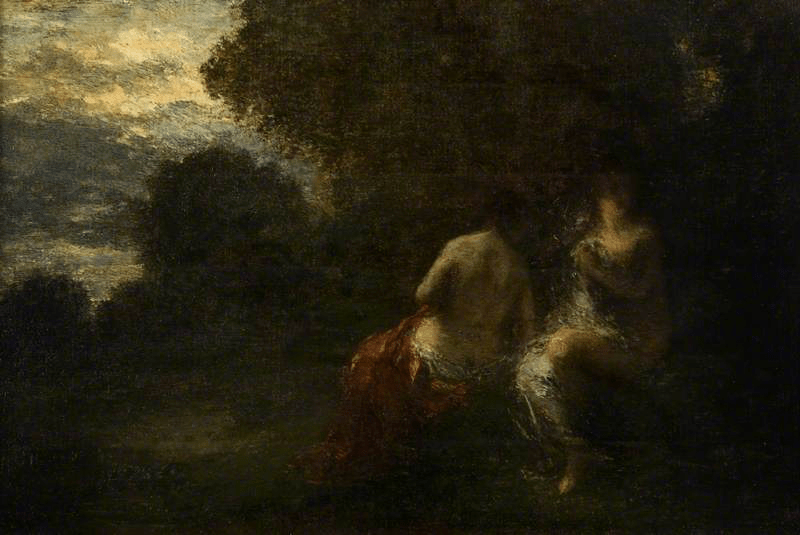
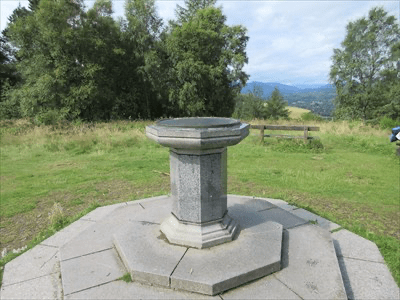
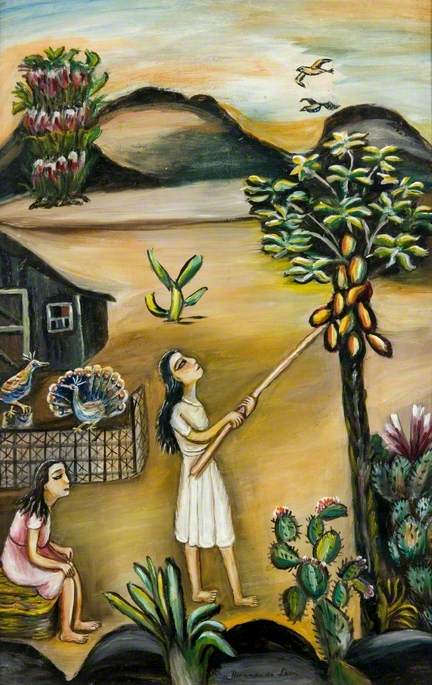
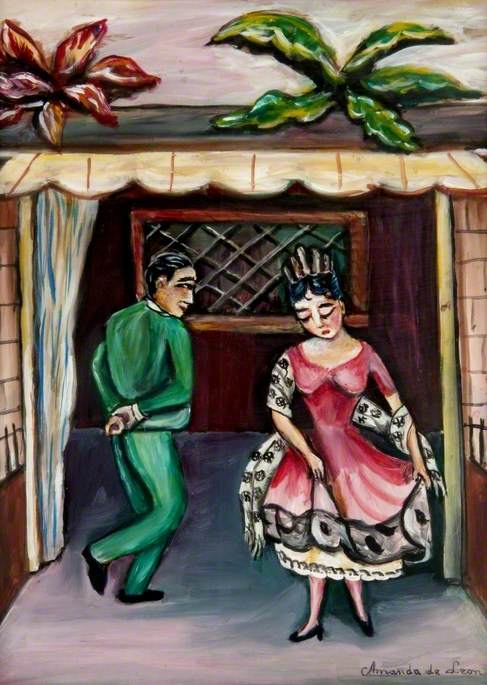
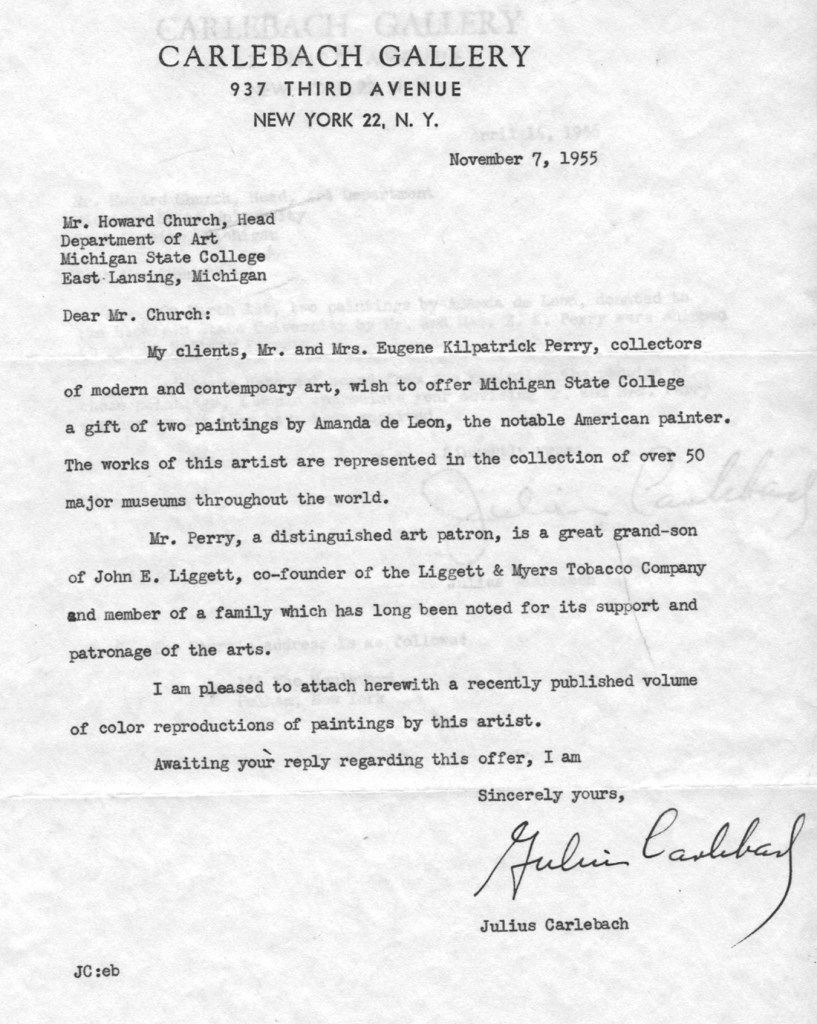
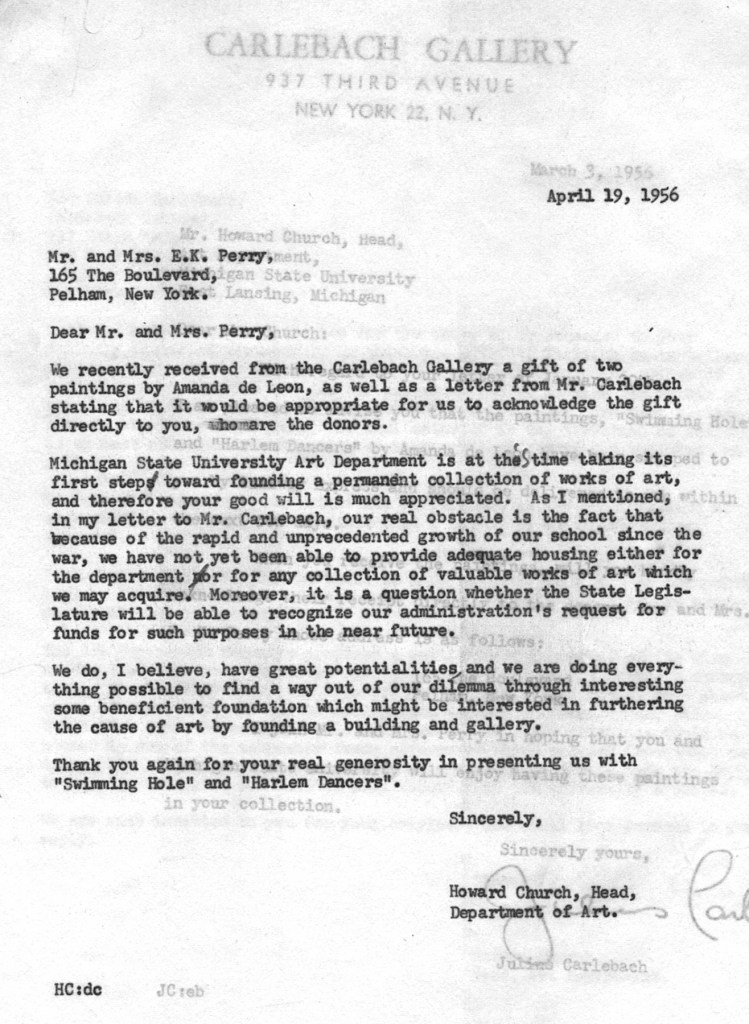
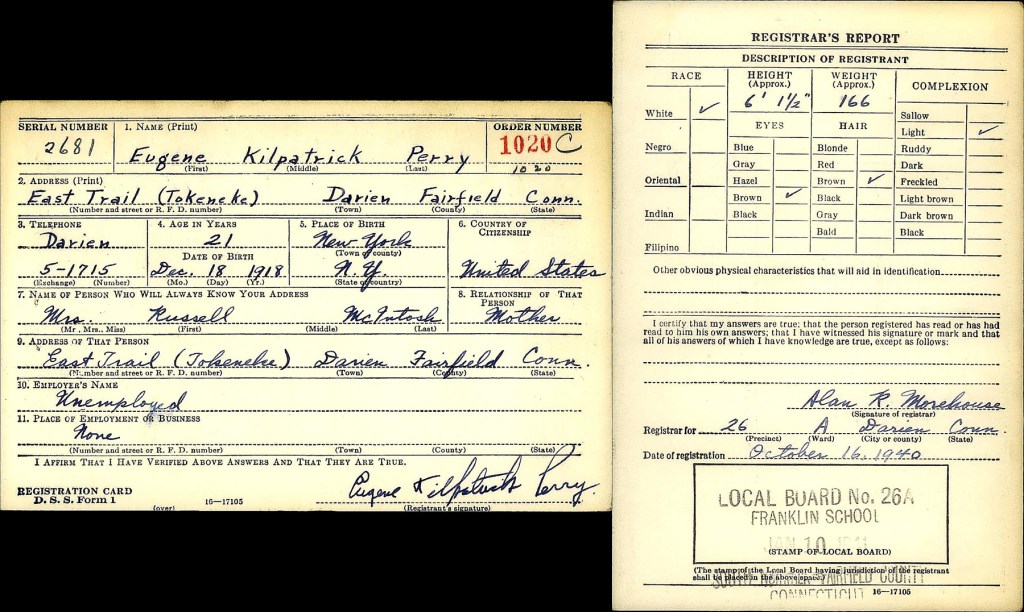
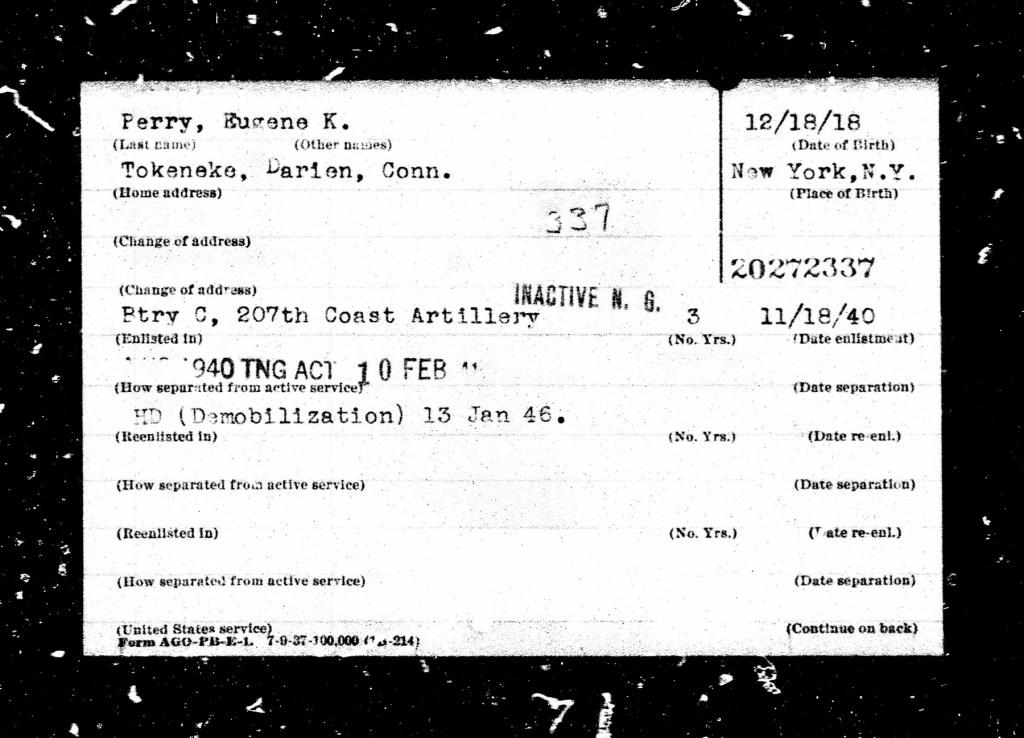
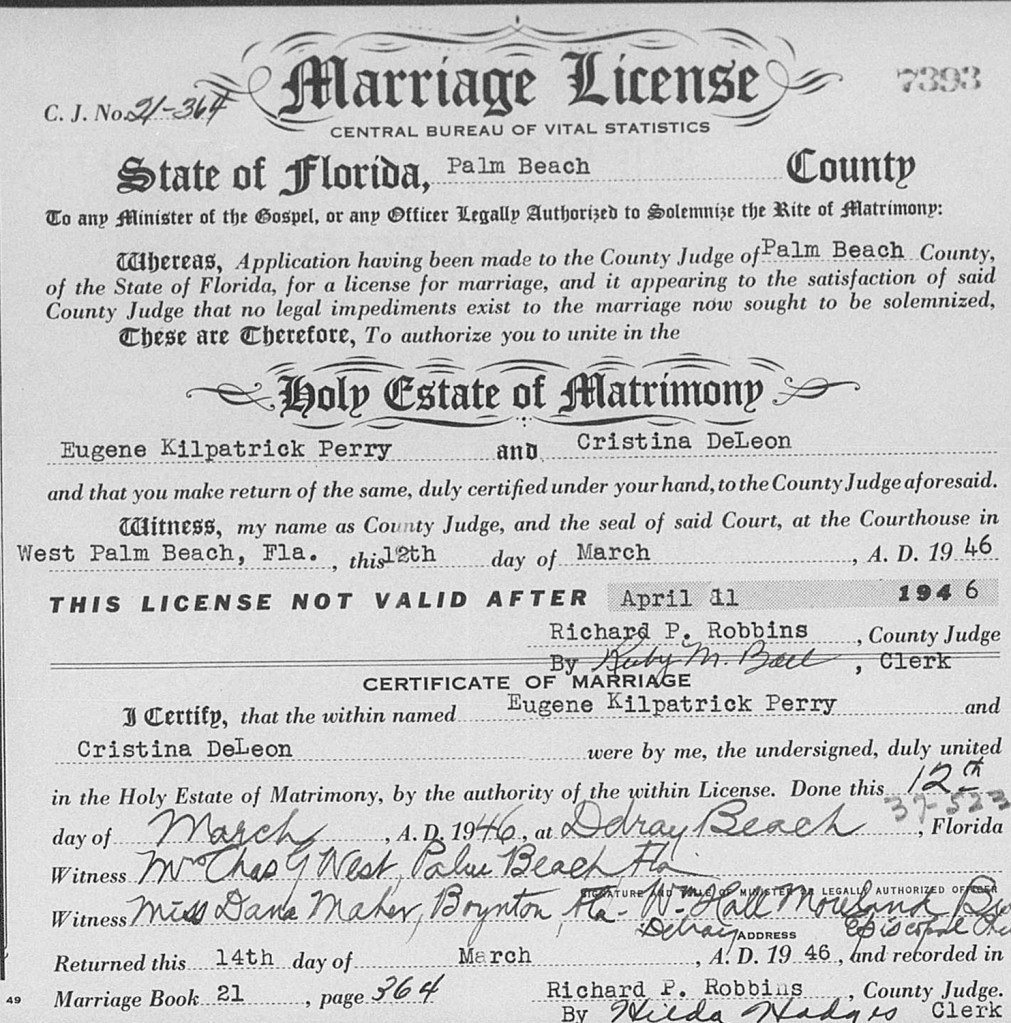
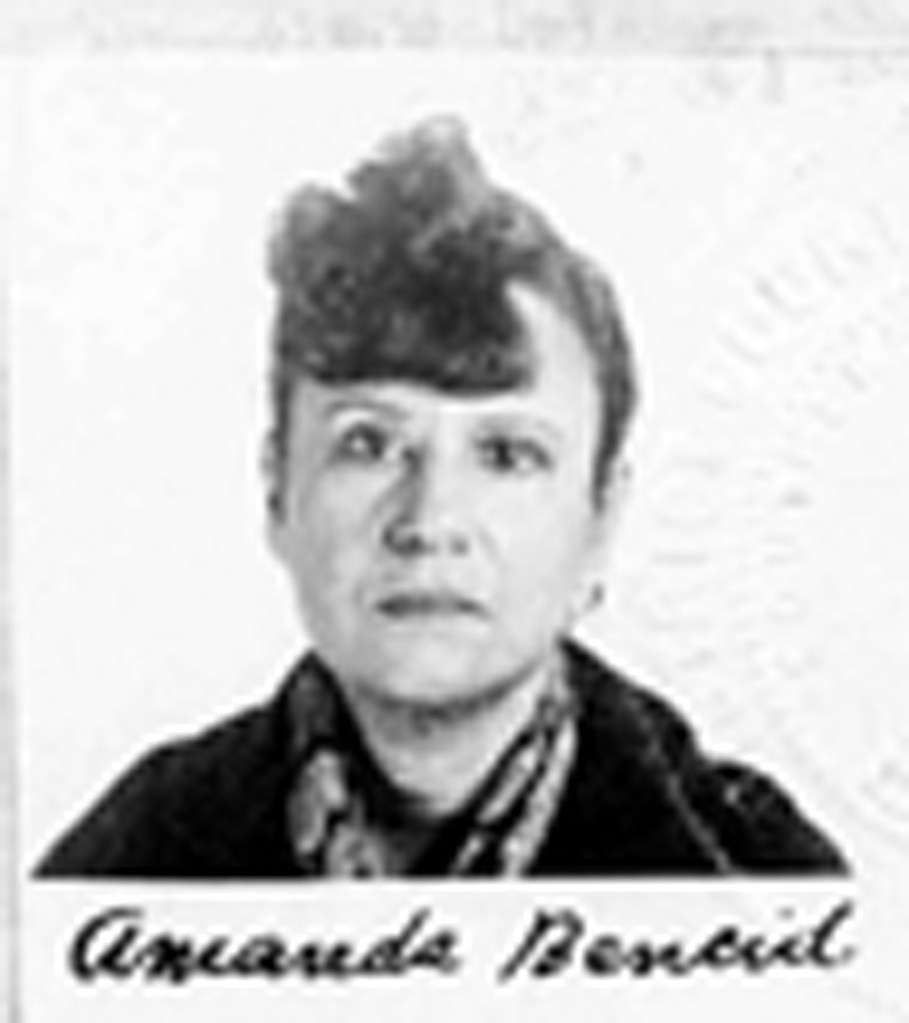
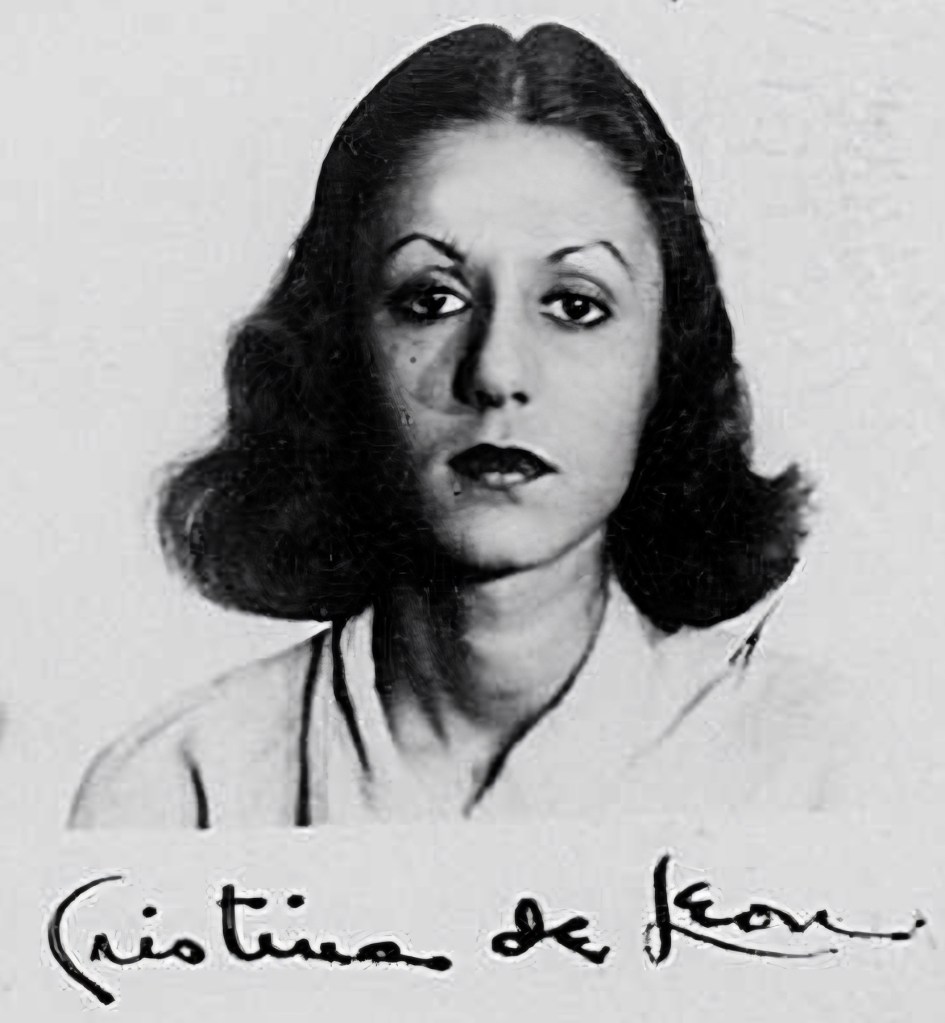
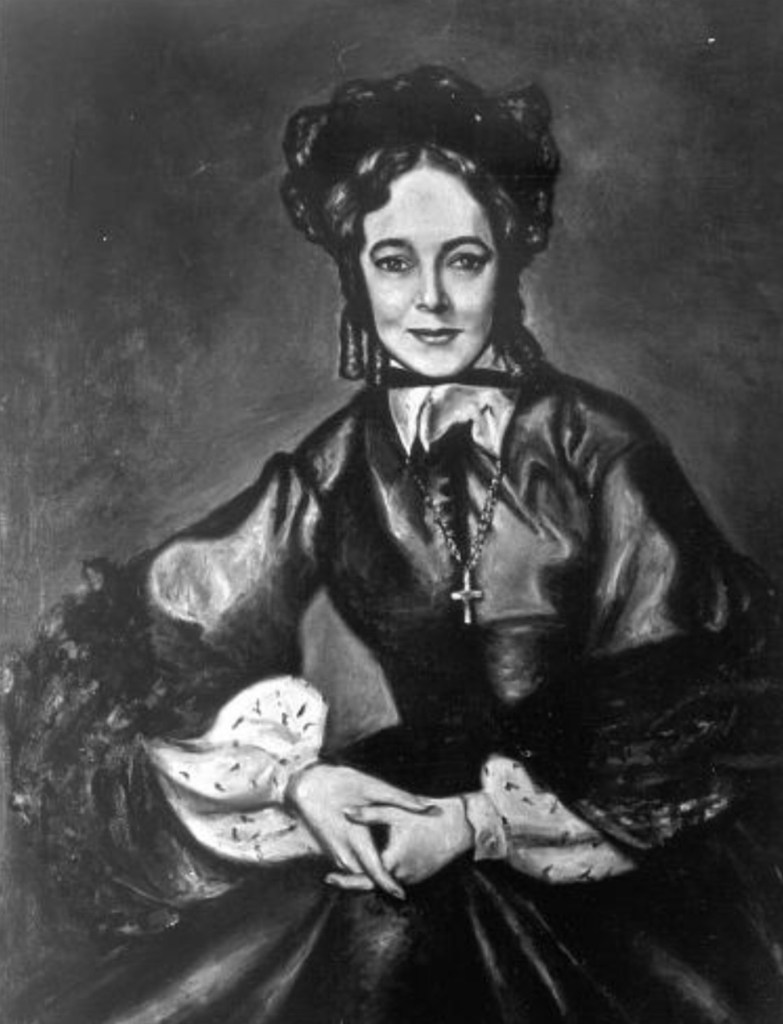
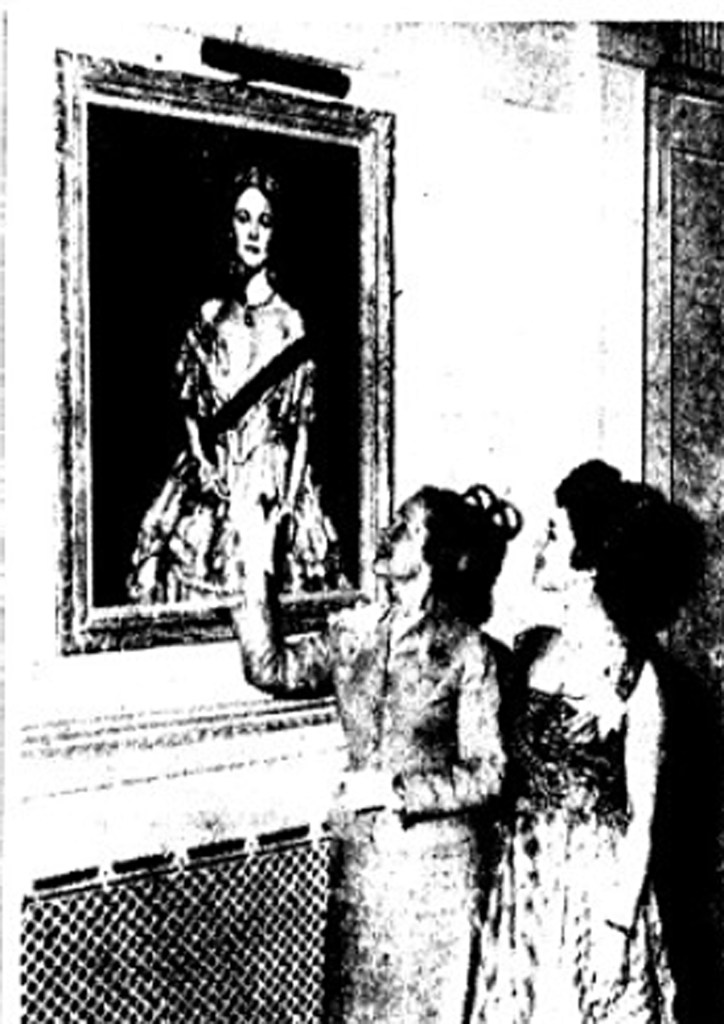
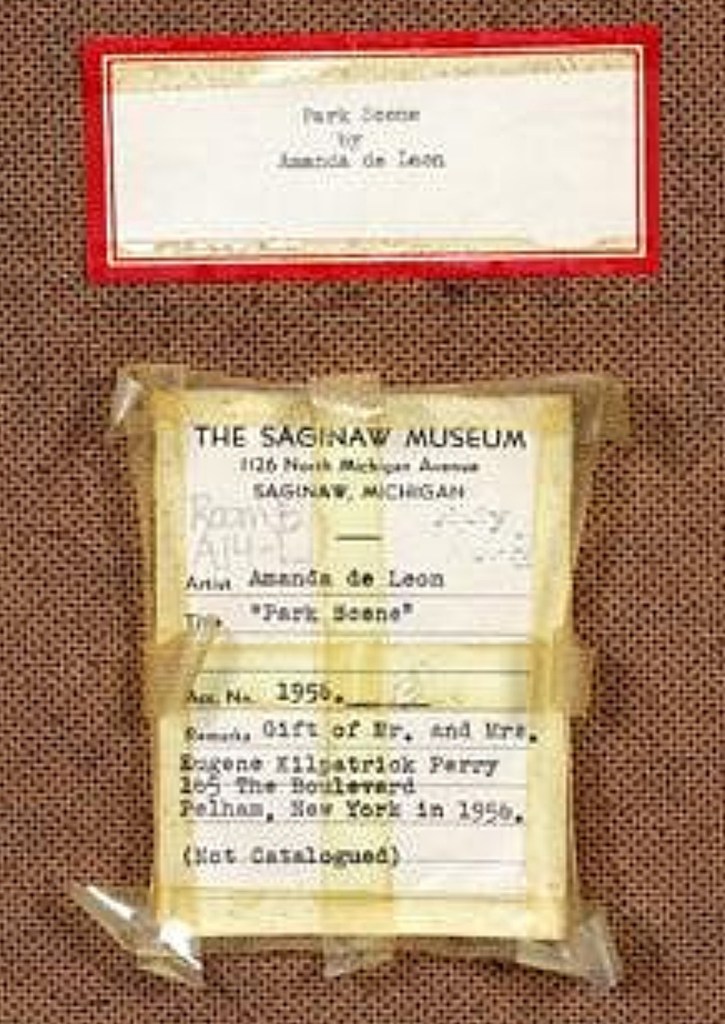
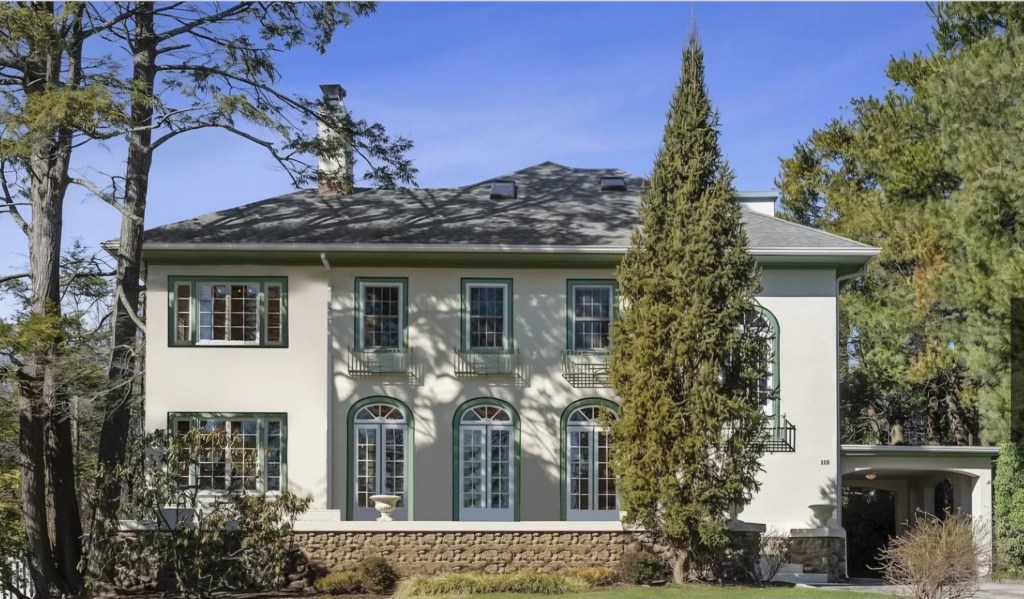
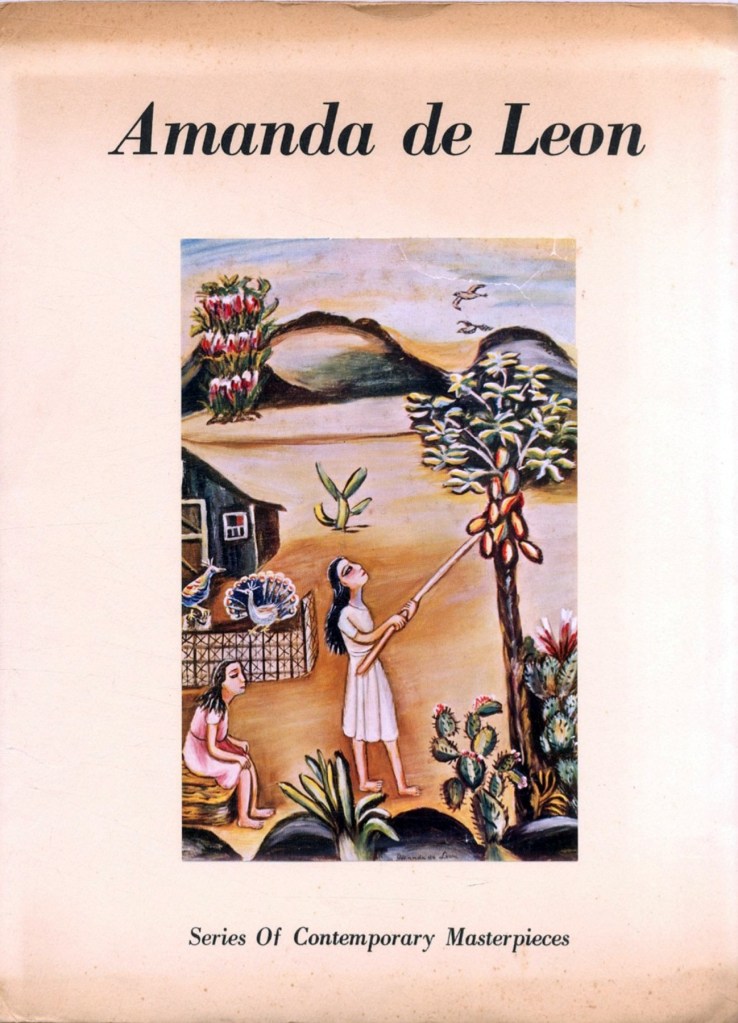
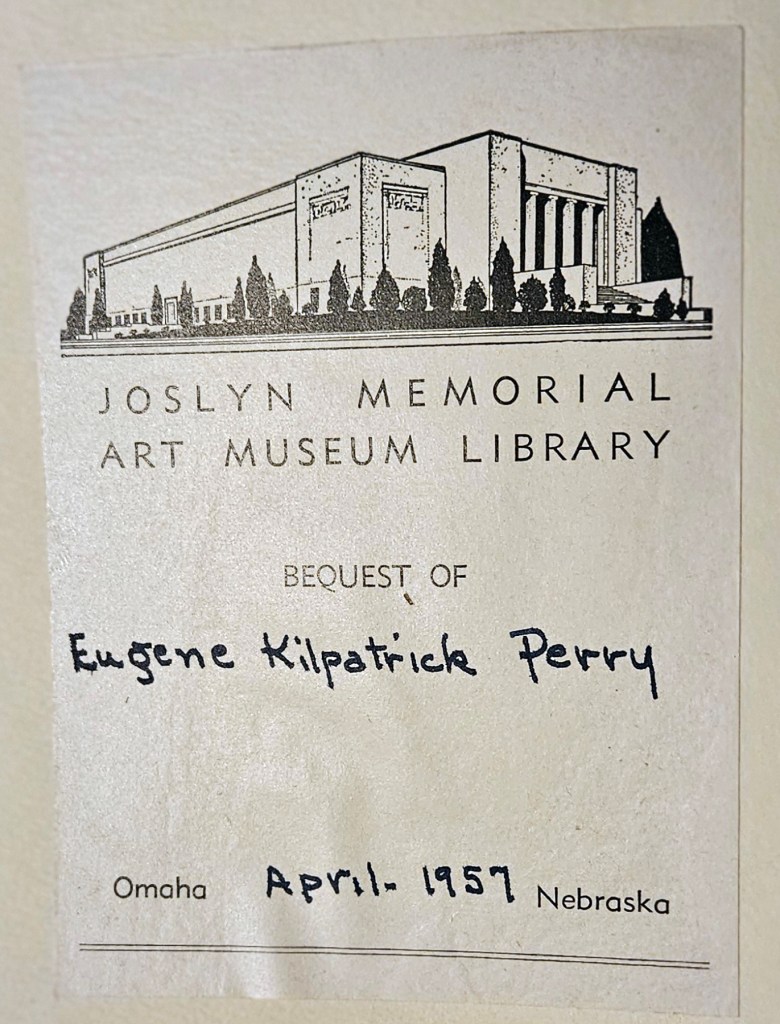

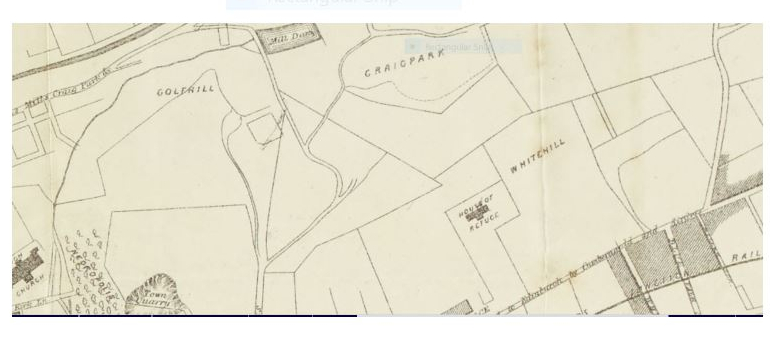
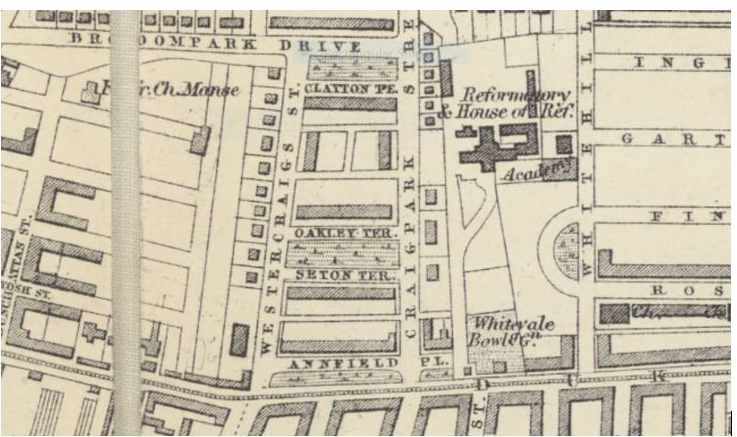
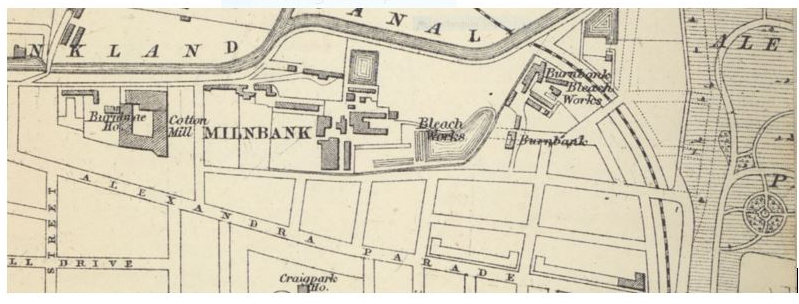


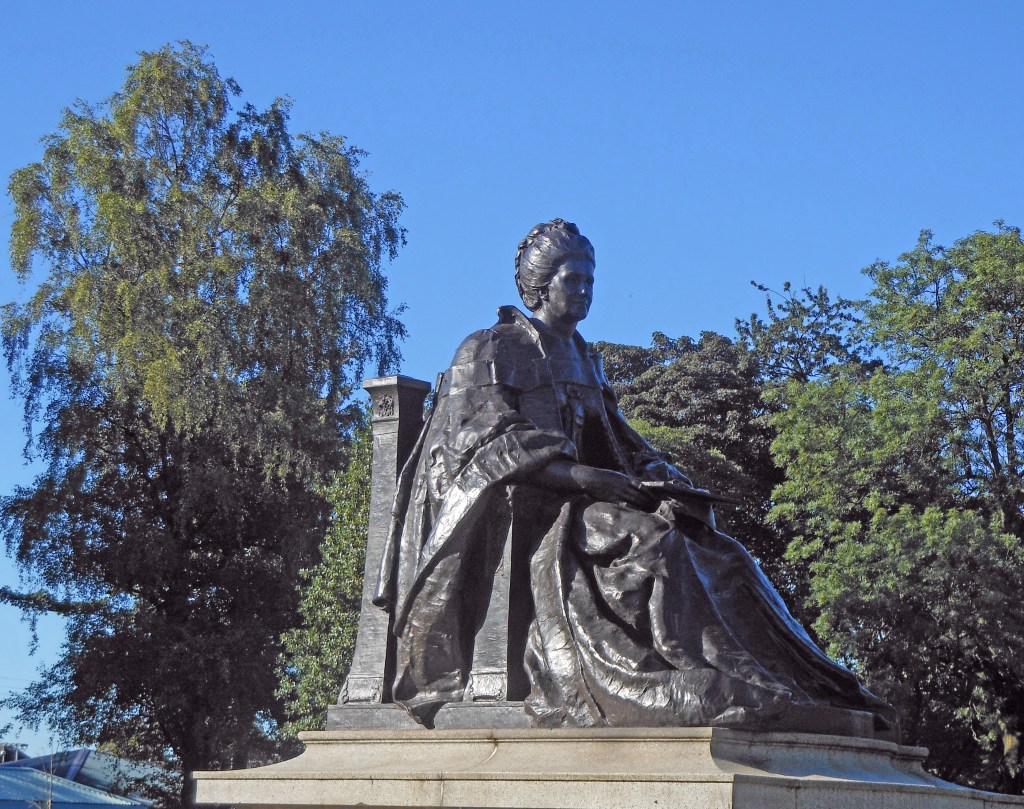
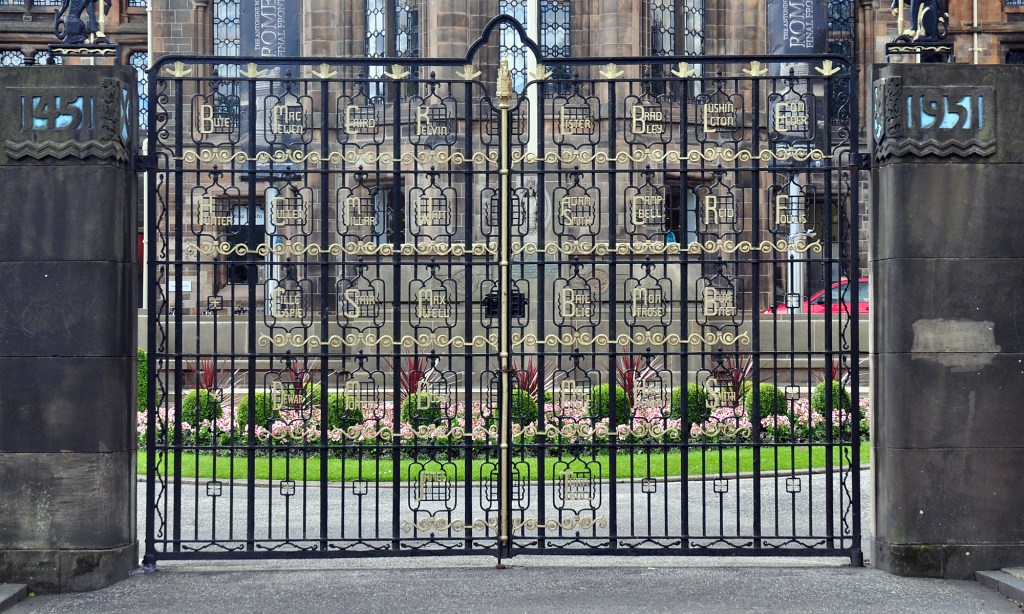

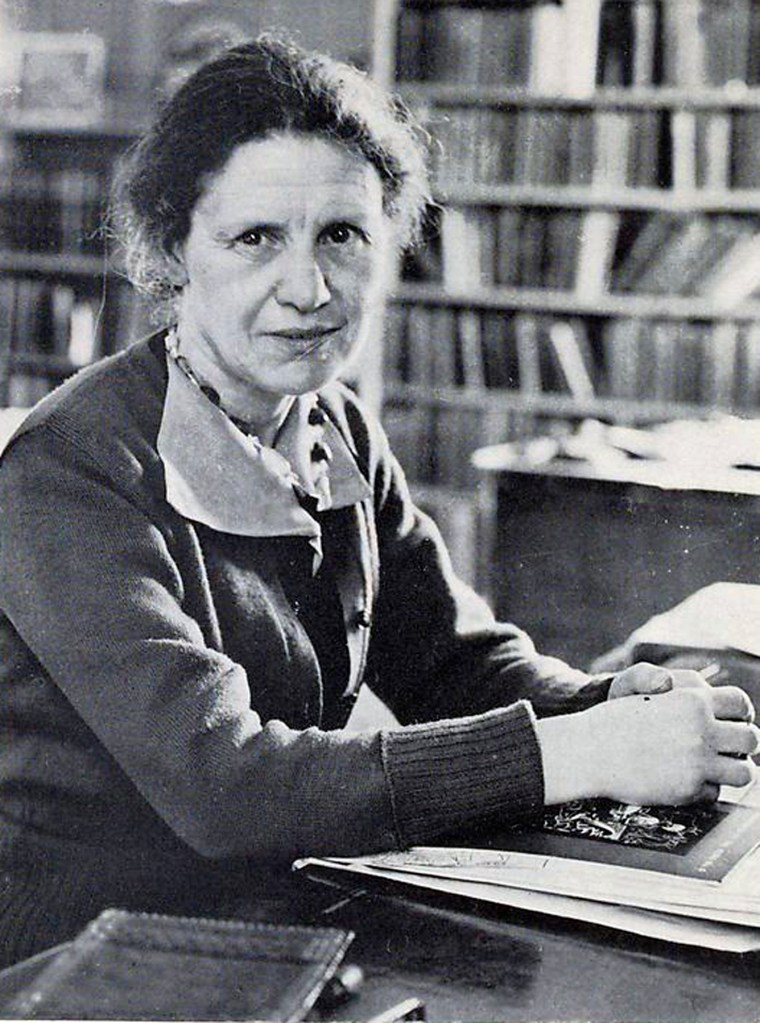
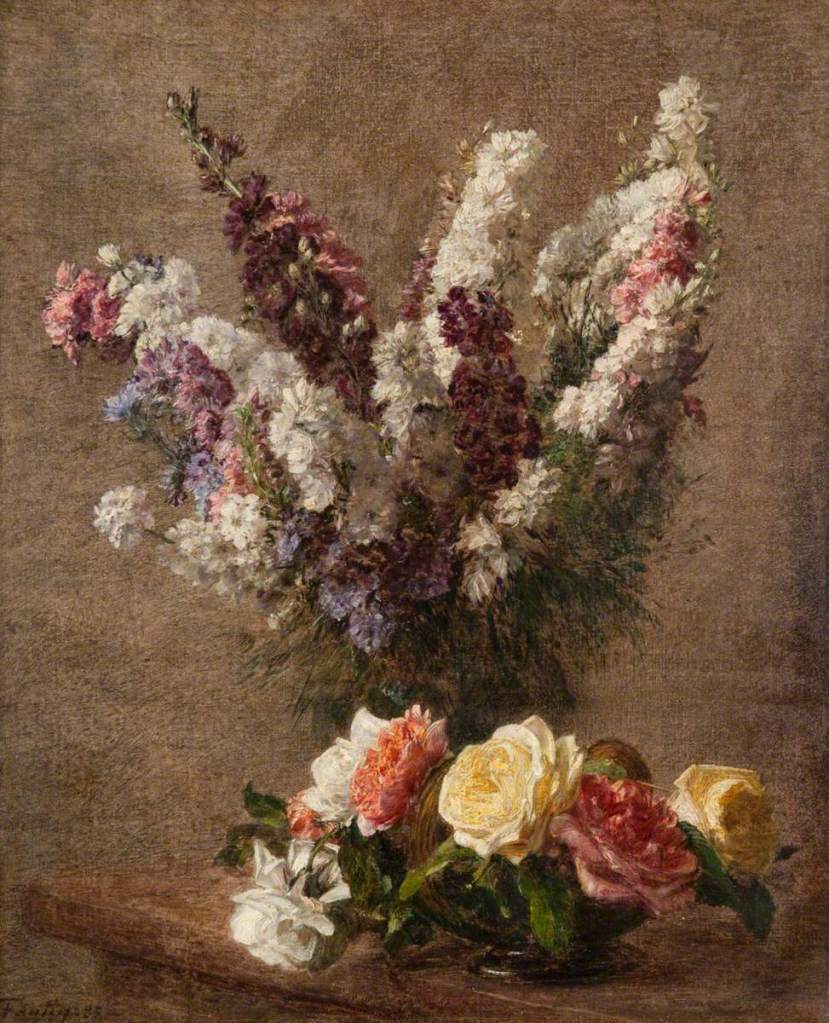
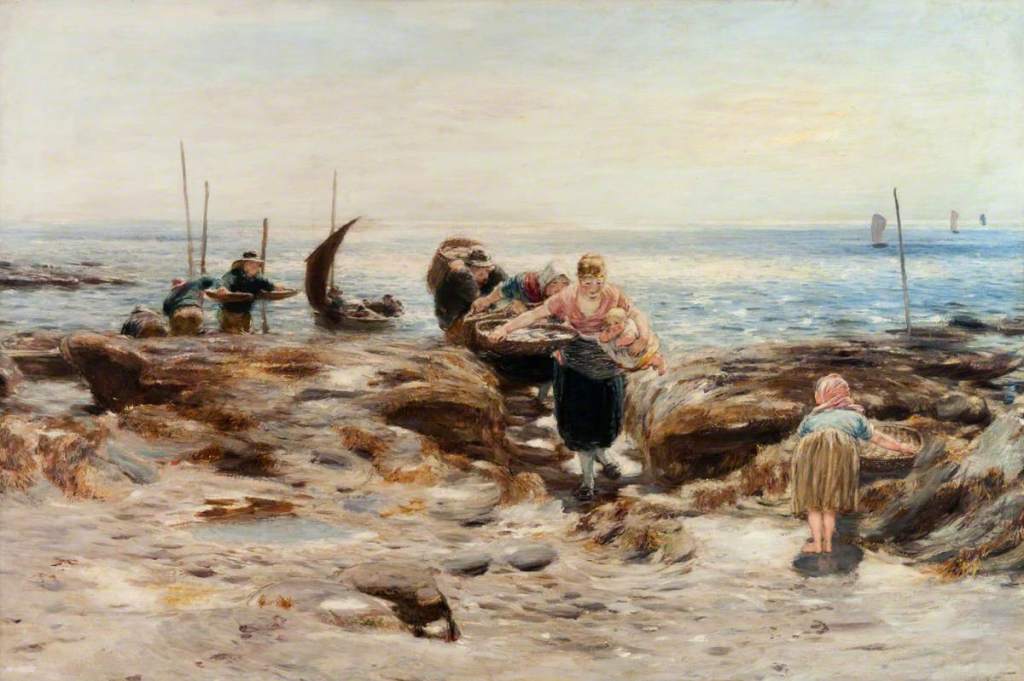
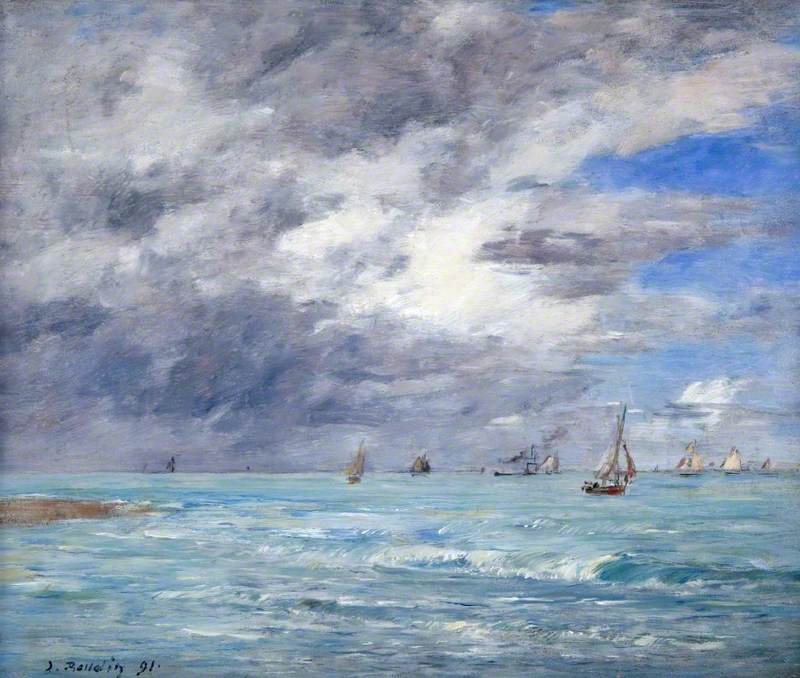
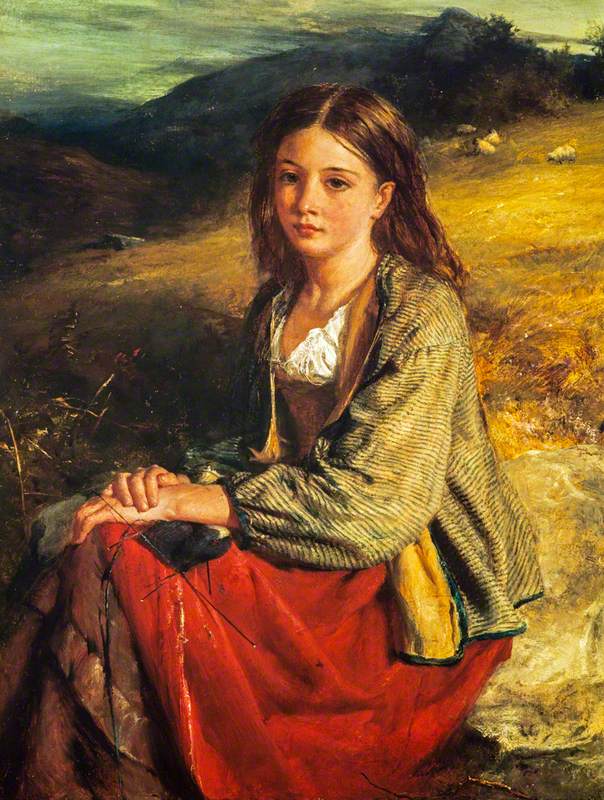
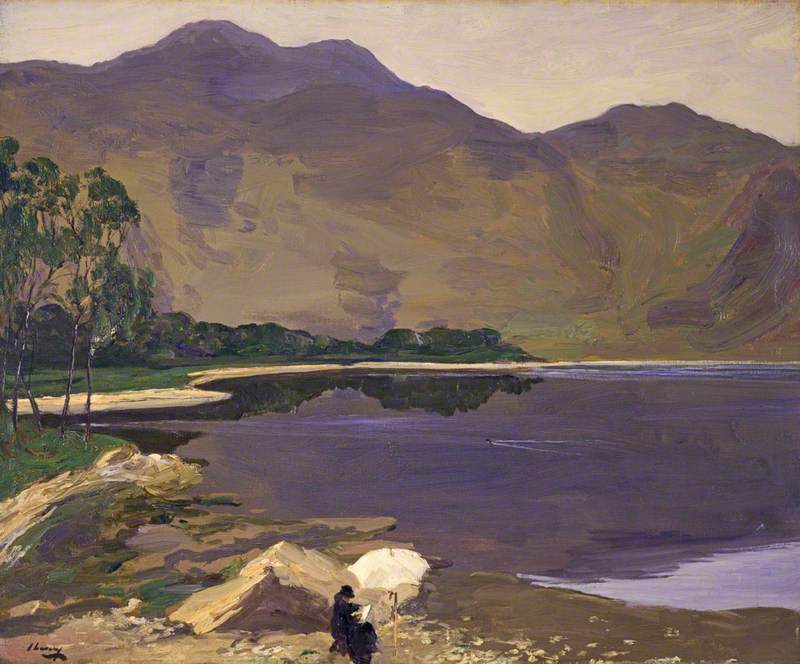
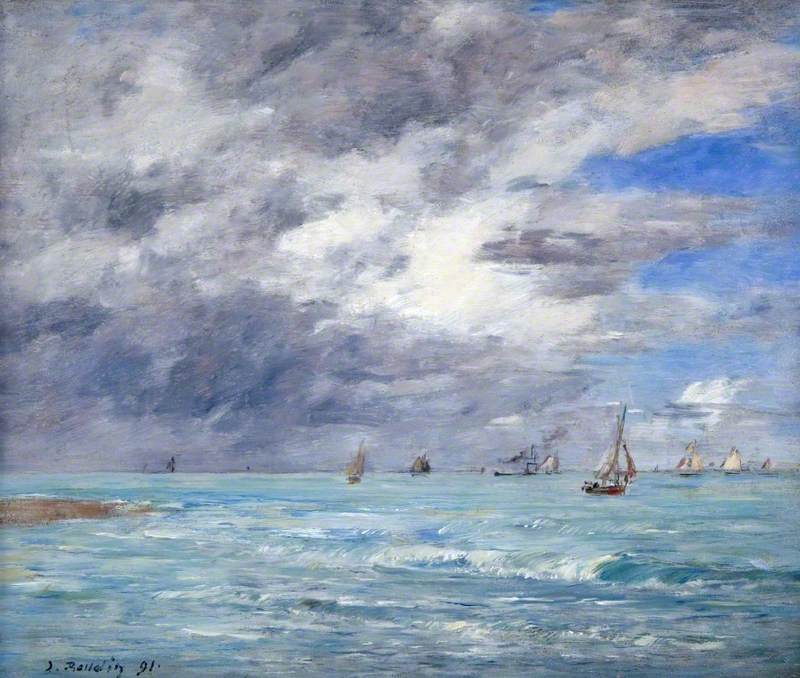


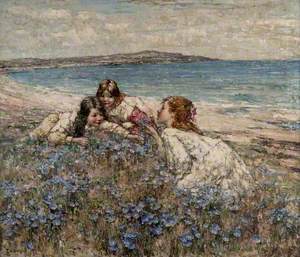

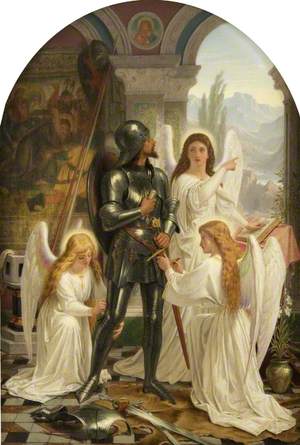
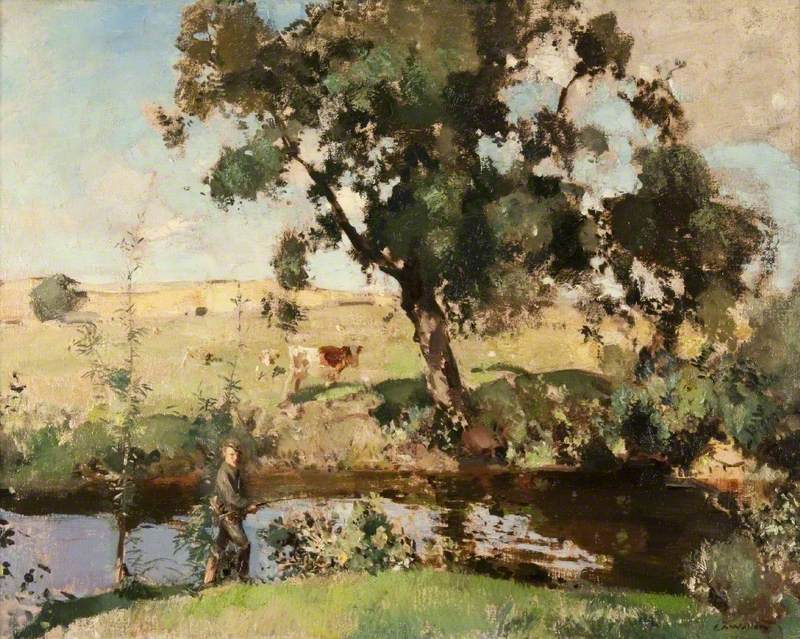

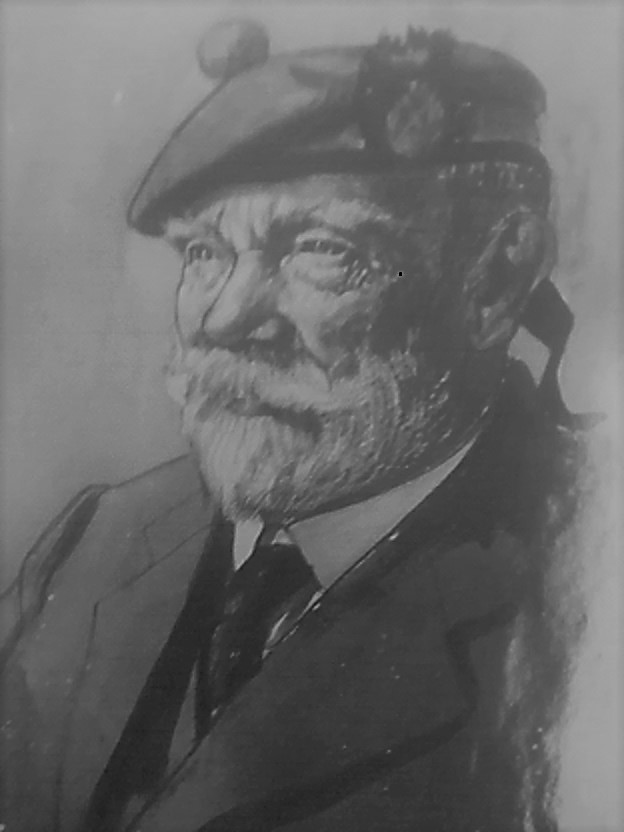

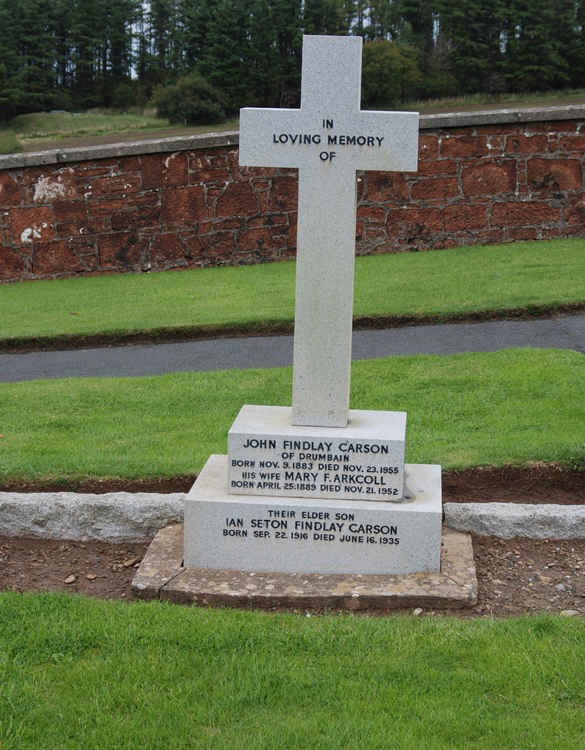
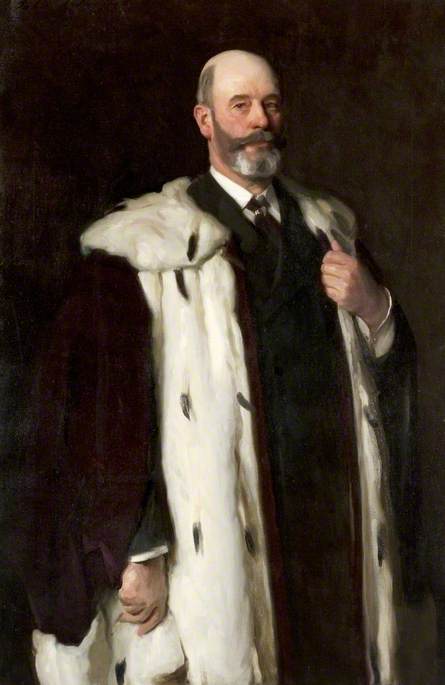
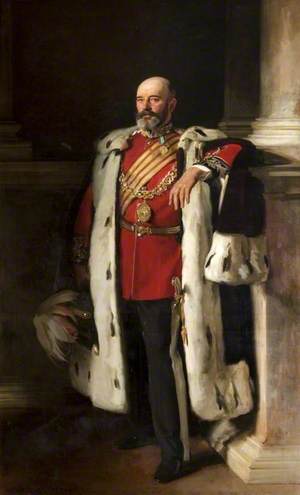
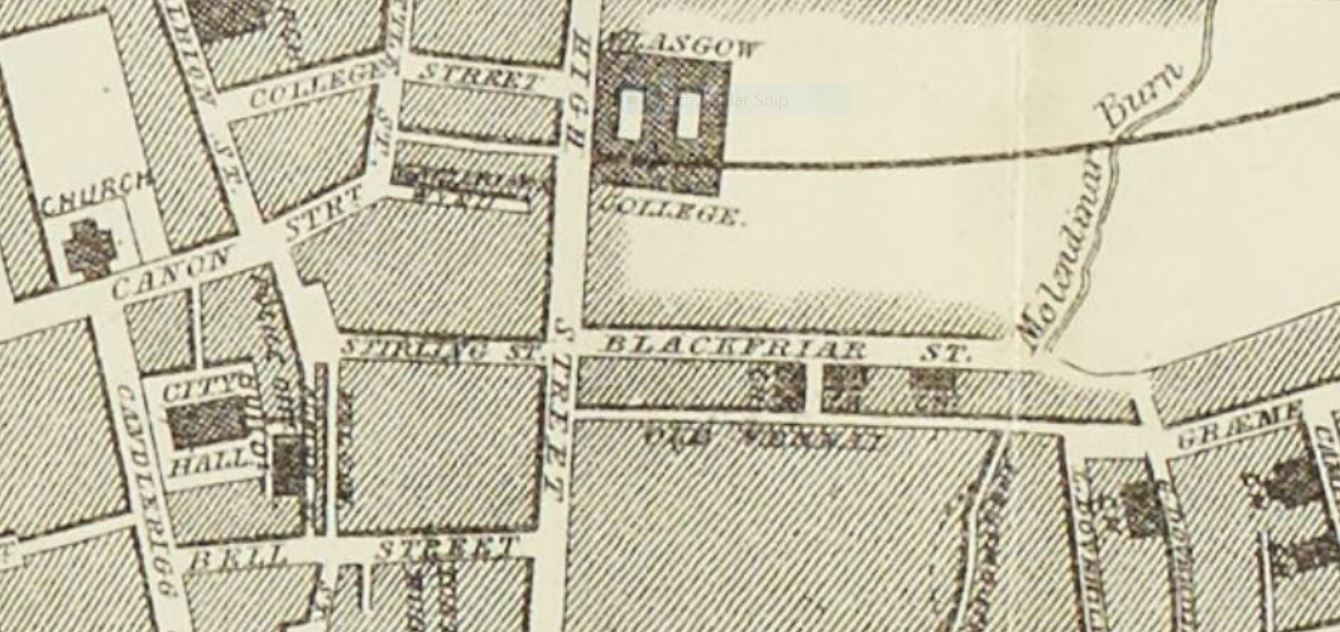

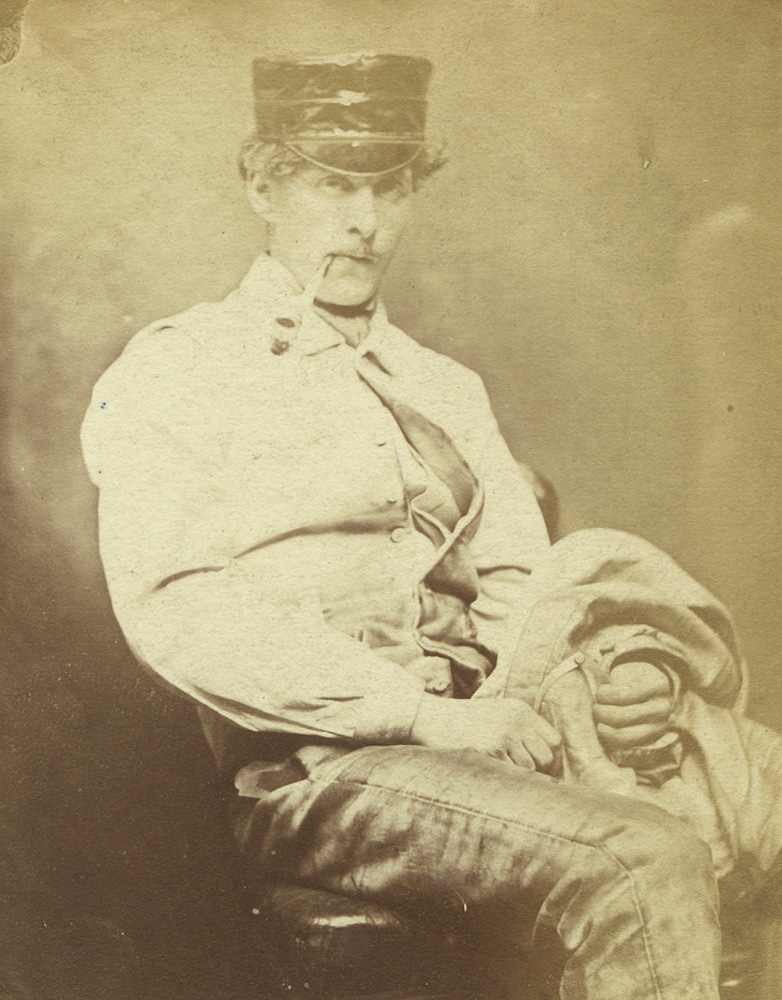
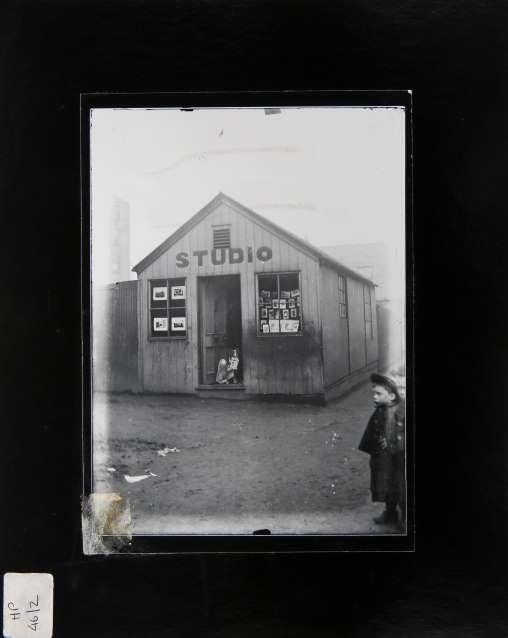
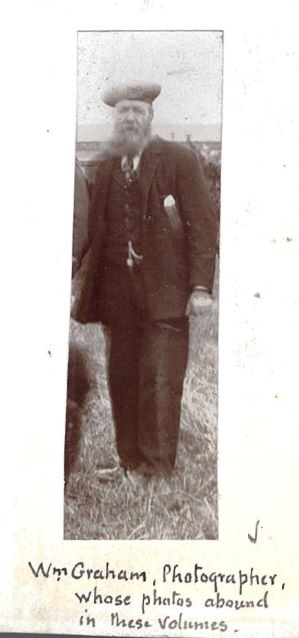
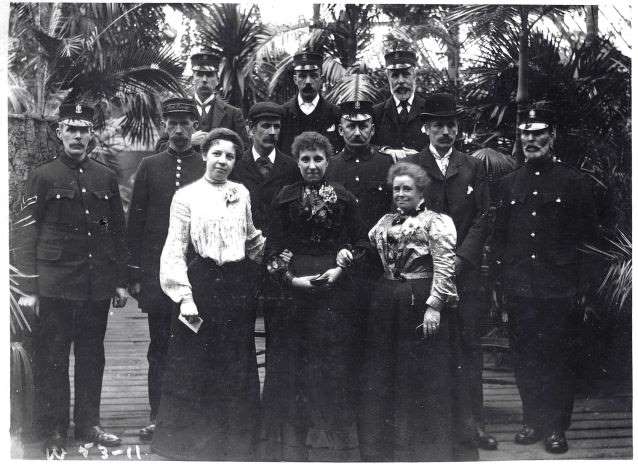
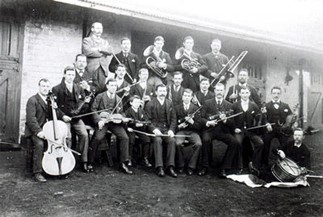
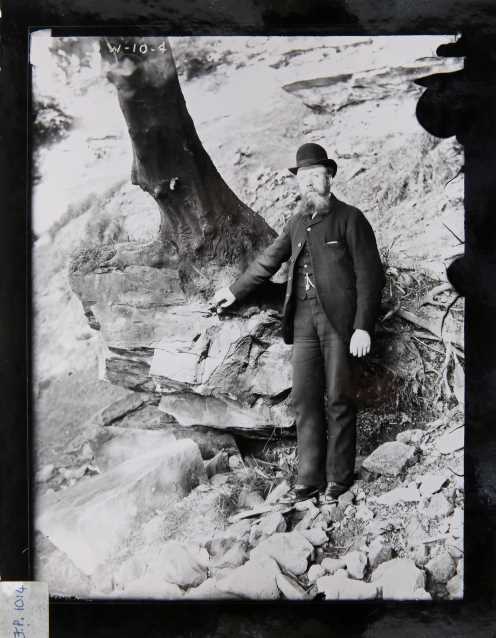
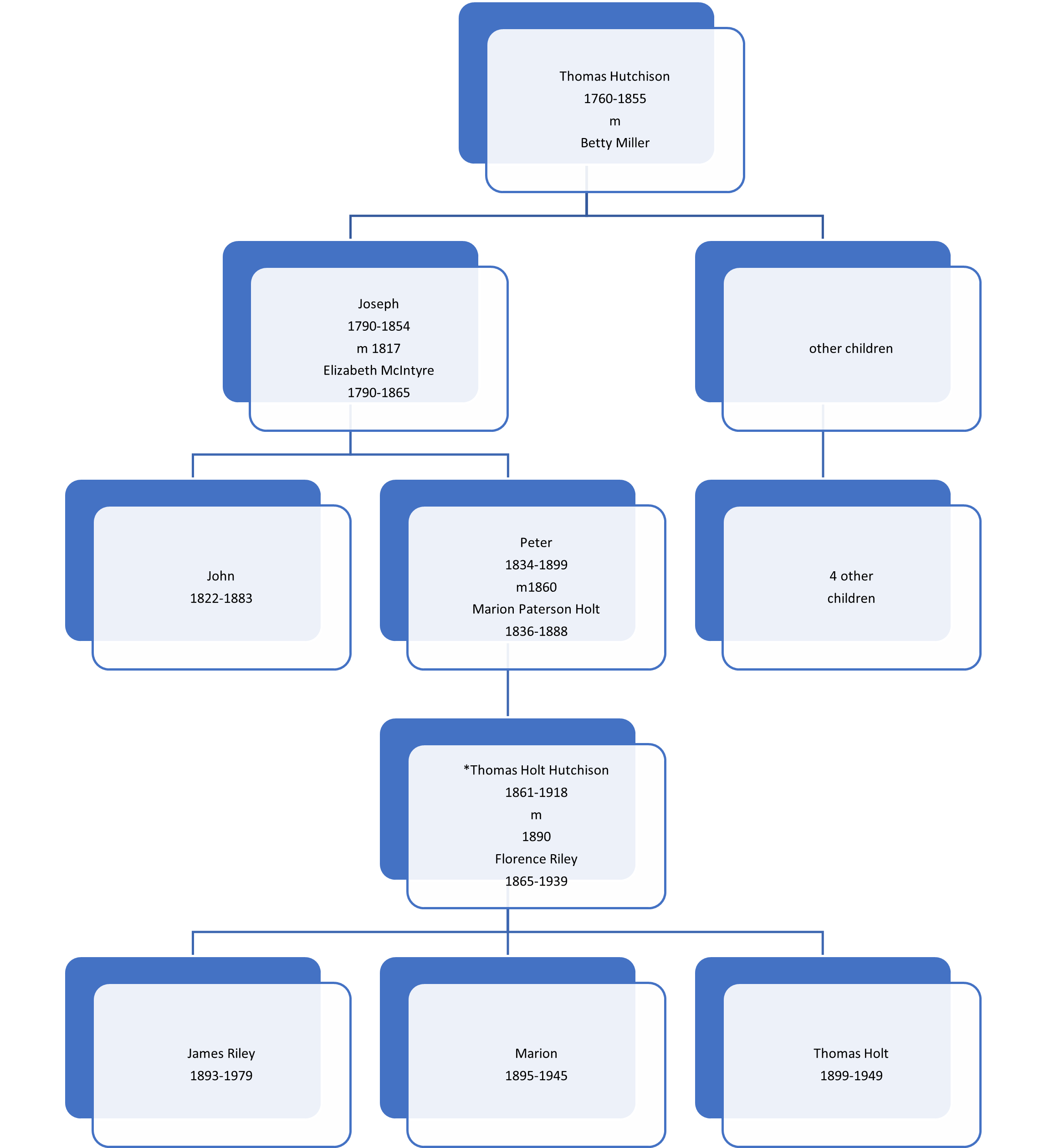
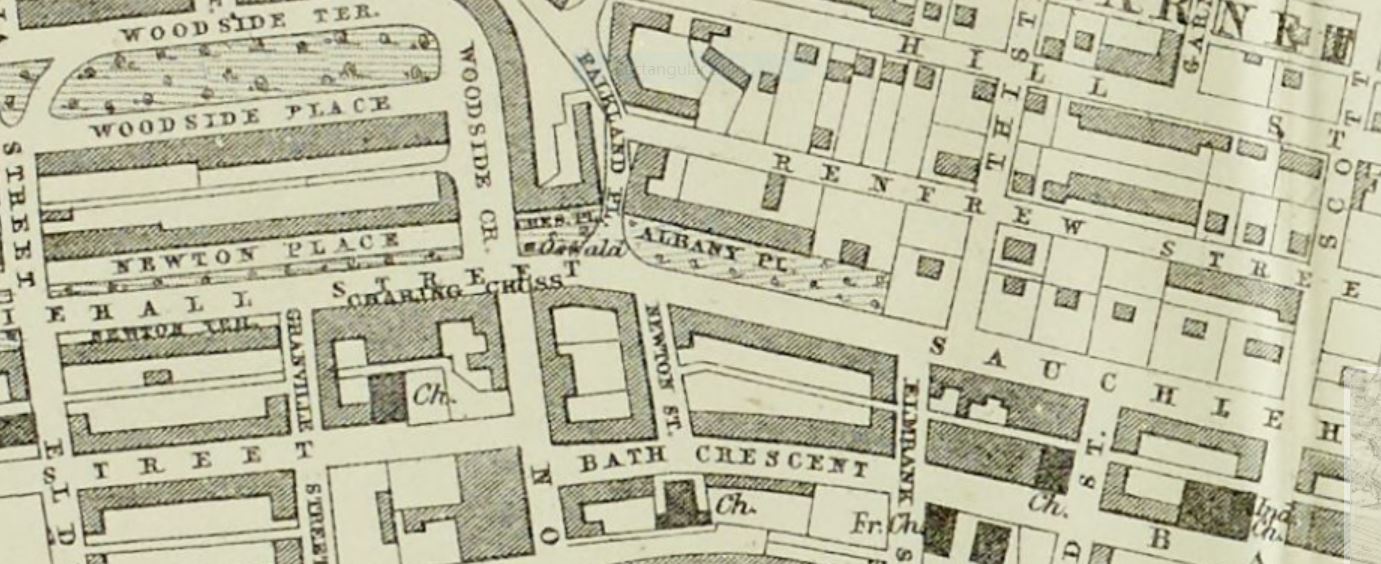
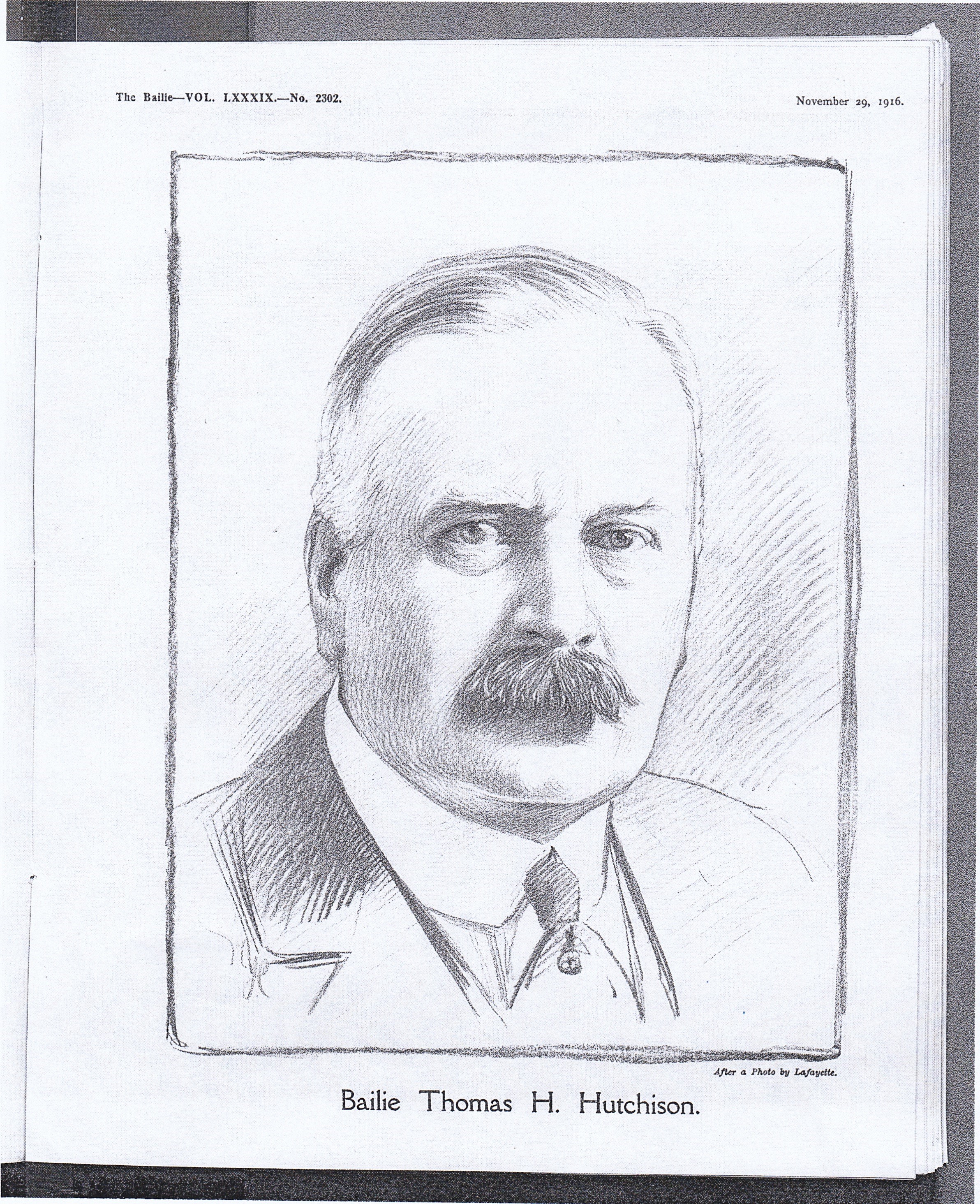
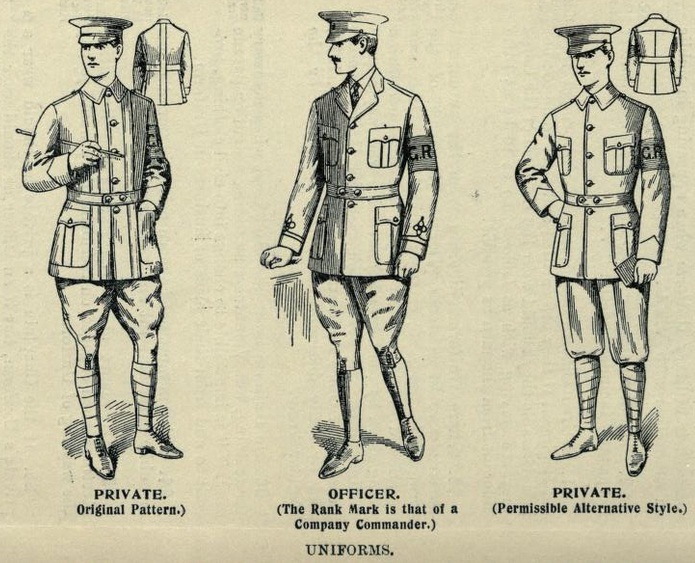
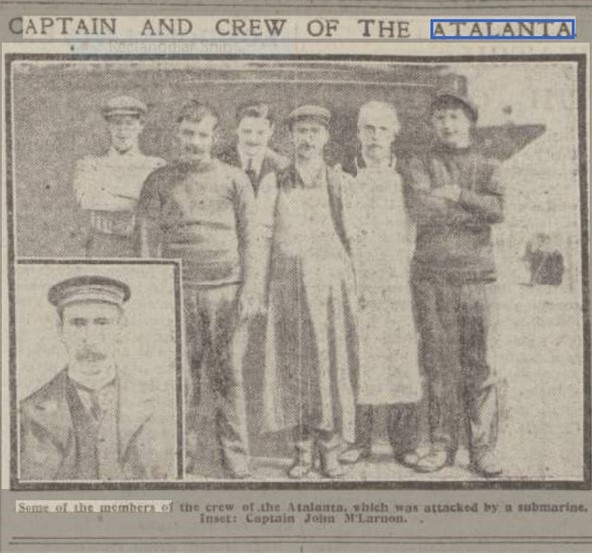
 Glasgow Museums Art Donors Group