Archibald Walker Finlayson was a linen thread manufacturer whose company had factories in Johnstone, Renfrewshire and in the USA.
He was born in October 1849 (1) the oldest child of James Finlayson and his wife Rachel nee Watson. At that time they were living in Paisley. His father was a linen thread manufacturer, one of the first to introduce the spinning of flax mechanically.
(2 ) In 1844, James and his brother Charles and C.H, Bousefield had established a business manufacturing linen thread which continued in production up to 1958 and formed part of the Linen Thread Company Ltd. The factory became a major employer in Johnstone. So Archibald was born into a successful family business.
Figure 1. Merchiston House. From Canmore.
His education is not known. At the age of 21years, (3 ) he is living with his parents and brothers and sisters in the family home , Merchiston, Johnstone, Renfrewshire , an impressive turreted building which required 7 servants to run (4). Later this house was to become part of the estate of the Western Regional Hospital Board as Merchiston Hospital.(5 )
In 1847 at the age of 25 years, he wrote to the Glasgow Herald (6 ) as one of the shareholders in what became known as the The Blochairn Share Scandal-effectively a “bubble”- which had promised impossibly high returns and which lost many small shareholders money. The subject was taken up by the Glasgow Herald in an article published the next day.(7 )
The Bailie, discovering that he was the son of James Finlayson, a former M.P. and Deputy Lieutenant of Renfrewshire, were fulsome in his praise and promised a bright political future.(8)
Archibald joined the family firm and was sent to America in 1880 to establish a linen thread mill in Massachusetts. He travelled to and from America on occasions. Eventually the firm became part of The Linen Thread Company, Ltd. (9)
He married Elizabeth MacAndrew. In 1891 his home address was Spring Grove, Kilbarchan. (10 ) He lived there until 1903 when his father died. (11) He then moved back to Merchiston. (12 )
He was not able to become an MP but contented himself with representing West Renfrewshire on the County Council, was a JP and gave the Provost’s chain to Paisley. There is a death notice and an obituary in the local paper (13) on his death in November 1916. (14)
He gave two paintings to Glasgow Museums. In the Object file for the 1903 donation (15), there is a letter from him with information about Sir Toby Belch and the Clown , by Keeley Halsewell. It was painted in 1862 at which time it cost £40, was shown at the Paisley Arts Institute Exhibition in 1896(16) then bought by Archibald Finlayson in 1901.
The other painting, September, Glen Falloch by A. Brownlie Docherty was exhibited at the Glasgow Institute and at the St Louis National Institute in 1904. (17) It was bought by Finlayson in 1907 and donated to Glasgow City Council. (18)
References
National Records of Scotland Statutory Births OPR 18492.
Calder, John. Finlayson, James. Oxford Dictionary of National Biography, Oxford University Press, 2014.
National Records of Scotland. Census 1871
Photographs of houses in Renfrewshire. Renfrew Archive
Canmore images
The Glasgow Herald 9 November 1874 page 4
The Glasgow Herald 10 November 10 1874 page 9
The Bailie 1874 vol 5 pp 113-1149.
Calder, John. Finlayson, James. Oxford Dictionary of National Biography, Oxford University Press, 2014.
National Records of Scotland Census 1891
National Records of Scotland Statutory Deaths
National Records of Scotland Census 1891
Paisley and Renfrew Gazette 18 November, 1916
Ancestry .co.uk
Glasgow Museums Archive
Catalogue of Paisley Fine arts exhibitions, Paisley Archive.
The Glasgow Herald 13 November 1940 A. Brownlie Docherty Obituary
On 27 March 1908 Miss Sophia MacLehose wrote a letter to the Provost of Glasgow Corporation asking him to accept on behalf of the Corporation a present of a picture, which was entitled Ben Ledi painted by Charles N. Woolnoth (1820-1904), she and her sisters Sophie Harriet, Louisa Sing and Annie Russell were making. [1]
At the time of the presentation that was made to the Kelvingrove Gallery, the sisters were living together at their late brother’s house named Westdel, in Dowanhill, Partick. The red sandstone villa was designed by Edinburgh architect George Washington Browne and was built for Robert MacLehose, their brother who lived there with his wife, Seymour Martha Porter. Furthermore, during 1898-1901, the Glasgow architect Charles Rennie Mackintosh was responsible for designing the second-floor bedroom of their house. It included a dormer window and adjoining bathroom. This was one of Rennie Mackintosh’s first recorded ‘white room’. The house still exists, but the room was dismantled. Furniture and fittings from the room as well as the original plans are held in the Hunterian Museum. [2]
THE FAMILY MACLEHOSE
As our donors’ name is very much entangled with their family, it is found that here a short introduction to their family may be suitable here.
The ‘MacLehose’ name had a special meaning in the publishing world, it is appropriate to start with the father of the donors, James MacLehose. According to the 30 March 1851 Scotland Census [3], the father, James MacLehose, was the son of Thomas MacLehose, a weaver. James was born on 16 March 1811 in the District of Govan of the Burgh of Lanarkshire, Glasgow, Scotland. In 1823, he was apprenticed for seven years to George Gallie, the Glasgow bookseller. In 1833, he made his way to London to Seeley’s, a well-known publishing house. Then, in 1838, he returned to Glasgow, where he began his business at 83 Buchanan Street with his business partner, Robert Nelson as ‘J. MacLehose & R. Nelson’. In 1841, he took over the business and continued in his own name. In 1850, he married Louisa Sing, the eldest daughter of Mr John S. Jackson, a Manchester banker. The census records show that they lived at 1 Kelvingrove Place, Glasgow and Mr James MacLehose’s occupation was recorded as Bookseller and Stationery. It is interesting to note that David Livingstone, a missionary and explorer, and a friend of our donors’ father had visited his friend on the morning of his first visit to Africa as a missionary. The two breakfasted together. [4]
The 1861 Scotland Census [5] shows that their first daughter Sophia Harriet was born in 1852 and then, their second daughter Louisa Sing in 1853. This was followed by Robert in 1854, Jeanie Maclean in 1855, James Jackson in 1858, Norman Macmillan in 1859 and finally Annie Russell, in 1862. [6,7] James MacLehose was appointed as the Glasgow University’s bookseller in 1864, and then as publisher to the University in 1871. [8] Having assumed his sons Robert and James into the business which had become known as ‘James MacLehose and Sons’ in 1881, James MacLehose senior died on 20 December 1885. [9]
His sons Robert and James both graduated from Glasgow University with MA degrees and continued the publishing business. [10] The other son Norman MacMillan MacLehose also graduated from Glasgow University with an MA in 1882 and became a surgeon. [11] On 6 March 1886, Norman Macmillan MacLehose married Olive Macmillan, daughter of the late Alexander Macmillan, publisher in London, and they lived in London. Robert MacLehose married Seymour Martha Porter and in 1896, James married Mary Macmillan another daughter of Alexander Macmillan, hence, cementing a long great friendship between the two great publishing houses of Great Britain. Norman MacMillan MacLehose died on 30 August 1931. [12]
Our donors, the Misses Maclehose
Our donors studied at the ‘Glasgow Association of Higher Education for Women’ from 1879 to 1883. They studied Logic, Moral Philosophy and Physiology in the class lists from 1877 onwards.
A name which is mostly associated with the ‘Glasgow Association of Higher Education for Women’ at the end of nineteenth century was one Janet Campbell (always known as Jessie Campbell) who promoted the need for higher education for women in Glasgow. She proposed that lectures be given by professors from Glasgow University and these lectures were very successful and continued until 1877 when the ‘Glasgow Association for the Higher Education’ for Women was formed. [13]
In spite of being deprived of a University education, it is clear that the MacLehose women received a very good education as we see from their contributions. The eldest daughter Sophia Harriet and her sister Louisa Sing were both authors in their own rights. Sophia was the author of two books:
(1) Tales from Spencer.
(2) From the Monarchy to the Republic in France 1788-1792.
Both of these books were published by their family firm:
Glasgow, James MacLehose and Sons, Publishers to the University, I90I
These books are still available and can be bought from bookshops.
Sophia Harriet MacLehose died on 22 June 1912. [14]
In 1907 a book entitled Vasari on Technique written by Giorgio Vasari, an artist, architect and a biographer of the artists of the Renaissance, was published in London by J M Dent & Co. The book was printed at the University Press by Robert MacLehose & Co. Ltd. and for the first time translated from Italian into English by Louisa Sing MacLehose, the translation being done during her stay near Florence.
Due to the fact that her brother Robert MacLehose passed away just before the book was published, there is a note from the author, his sister, on the first pages of the book.
The original book written by Giorgio Vasari was first published in Italian in the 1550s. Louisa Sing MacLehose’s translation into English was reprinted in 1960. Furthermore, Louisa S MacLehose was thanked by the editor of the Scottish Historical Review (issue October 1913) for her translation of some letters, written in 1543, from Italian into English. [15]
Louisa Sing MacLehose died on 7 April, 1917. [16] Her home address at the time of her death was recorded as Westdel, Dowanhill, Partick, and Glasgow.
The third eldest daughter of the MacLehose Family was Jeanie MacLean. She was born on 6 Sep 1855 and she last appears in the 1881 Scotland’s Census when she was 25. There is no record of her been married. But there is a record of her death in Ancestry.com pages of as ‘Death 30 October 1888 • Antwerp, Belgium’ [17] and no other references were given.
Annie Russell was the youngest of the MacLehose Family. She was born in 1862. She appears on the English census during a visit to London. She she also travelled to New York in 1924. She travelled back via Montreal, Quebec. On her return she stayed at Westdel.
Annie R MacLehose died on 1 December 1950 in Edinburgh in the Church Hill Hotel Edinburgh. [18]
References
[1] 1908 minutes of the Glasgow Corporation, Mitchell Library.
[ 2] Design for a fireplace, for the upper bedroom, Westdel, Glasgow c.1898,
Colonel Charles Louis Spencer was a merchant, a soldier, a yachtsman and a generous donor to museums in Glasgow and Edinburgh and a donor to The National Trust for Scotland.
He was born in 1870 to John and Robina (nee Jarvie) Spencer (1 ) then living at 165 Hill Street, Glasgow. John Spencer had been a manufacturer of optical and photographic equipment, in business with his father, John senior, with premises at 34 Union Street, Glasgow. (2) John senior retired in 1869 and the business closed down. ( 3) By 1872 young John was a merchant, at 125 West Regent Street, Glasgow. The family home was at 2 Rosslyn Terrace, Victoria Park, Glasgow. ( 4) By 1881, they were living in Bridge of Allan and John is listed as a foreign merchant. (5 )
Charles was educated at Kelvinside Academy (6 ) and then from 1895 to 1896 at the College Chaptal in Paris. This was a college dedicated to the education of young men, destined for a career in commerce and industry, in science and languages. (7 ) His father John died in 1890. (8) His mother moved to Edgehill, Horselethill Road, Glasgow and her children John, Elizabeth and Ann lived with her. They had a cook, a laundress and a table maid. (9)
Charles and his older brother John carried on their father’s business. (10) Their father’s inventory (11) published after his death gives an idea of the scope of their business in Canada, the USA, Calcutta and Colombo. The brothers were admitted to the Merchants House in 1912. (12 )
Charles had a long association with the Lanarkshire Volunteers Royal Engineers (13) During the First World War, he was a Lieutenant Colonel in the Royal Engineers and served in France and Flanders. (14) He was thrice mentioned in dispatches and received the DSO in 1918.(15) and in 1919 he was appointed a CBE (16)
He was a yachtsman and gained his Master’s certificate in 1897. He was Commodore of the Clyde Cruising Club and Flag Officer for 23 years. He sailed in his yacht RON and King George V was a frequent guest. (17 ) He collected, fashioned and repaired ship models and some of these are now in Glasgow museums’ collection.(18 ) On board ship sailing from India or from Canada he spent time making ship models. His book Knots , Splices and Fancy work went to several editions. (19 )
His brother John made a study of the Darien scheme and when he died in 1939 ( 20) his collection of papers was left to the University of Glasgow where they are kept as the Spencer Bequest in Special Collections. (21)
Charles was a member of the Society of Antiquaries in Edinburgh. He was a Councillor from 1922 to 1937.(22 ) Charles and his sister Ann lived together at 5 Great Western Terrace and also bought a house at Warmanbie in Dumfriesshire in 1933.(23) In 1940 they wrote to Glasgow City Council (24 ) offering;
Two pastel drawings by Sir James Guthrie: Ploughing and The Smiddy; An oil painting Black Setter by Sir George Pirie and The Steeple Chase by Joseph Crawhall
12 items of arms and weapons
A collection of Japanese swords
16 books relating to arms and armour
In addition Colonel Spencer wanted to place on permanent loan several models of sailing ships.(25 )
The National Museums of Scotland received the rest of his weapons collection. This comprises 18 crossbows, 7 prodds,1 windlass,4 cranequins and 8 crossbow bolts. (26
Another donation should be noted. He had inherited two small islands in Loch Lomond in 1911 from Donald Macgregor of Ardgarten and in 1943 he gave them to The National Trust for Scotland.(27 )
Charles and John had set up a Trust to maintain the upkeep of the Nunnery garden in Iona.(28 )
Charles died at Warmanbie in 1948. (29 ) His sister Ann died in 1952. (30 )
Acknowledgement
I am pleased to acknowledge the help I received from Roderick Mc Callum from the Annandale Museum with respect to documents relating to Colonel Spencer’s time in Warmanbie and to his death there.
References
National Records of Scotland Statutory Births 1870
In 1877 Alexander Dennistoun donated to Glasgow Museums the painting View of Glasgow and Cathedral by the Scottish painter John Adam Houstoun. However, this was not the only ‘gift’ he gave to Glasgow as in 1861 he began to create the suburb of Dennistoun in the east of the city.
Alexander’s father was James Dennistoun who along with his brother Alexander established J & A Dennistoun, cotton merchants. It’s not clear when the company was set up but when their father, yet another Alexander, died in 1789 his will describes them as merchants in Glasgow.[1]
Their father was farmer Alexander Dennistoun of Newmills Farm, Campsie whose wife was Margaret Brown. James was their third child, baptised in 1759, [2] Alexander, the fourth, baptised in 1764. [3] Their siblings were Jean, Ann and George, the two girls being the first children of the family.[4]
It is not clear where James or Alexander was educated, what is certain however is that neither matriculated nor graduated from Glasgow University.
There is some evidence to suggest that by 1787 James was a merchant manufacturer in Glasgow. Whilst there are three James Dennistouns listed in that year’s city directory it’s clear that the first two are father and son Dennistouns of Colgrain.[5] By 1799 J & A Dennistoun was listed as manufactures in Brunswick Street, neither brother being separately listed.[6]
J & A Dennistoun continued in business until circa 1876 by which time James and Alexander were both dead. Over its eighty odd years it moved premises on a number of occasions, but it centred mainly on various addresses in Montrose Street until 1839, thereafter in George Square until it ceased trading. More on the business in due course.
James married Mary Finlay, daughter of William Finlay of the Moss, Killearn in 1786. They had eight children, donor Alexander being the eldest boy, born in 1790.[7]
His siblings were:
Elisabeth, born in 1787 in Glasgow.[8] She married Glasgow merchant John Wood in 1807 [9] and had five children between 1808 and 1817.[10] One of her daughters Anna, born in 1812, married William Cross in 1835.[11] She was the mother of John Walter Cross[12] who married the novelist George Eliot (Mary Ann Evans) in 1879 and subsequently wrote her biography after her death in 1880.[13]
James, born in Barony parish in 1799.[21] He matriculated at Glasgow University in 1813,[22] and married Marjory Gibson Gordon of Milrig. He died in June 1828 of consumption [23], five days before his son James was born.[24]
John, born in Glasgow in 1803,[25] matriculated at Glasgow University in 1816.[26] In due course he and his brother Alexander became the key players in the family business. He also had his own company, John Dennistoun & Co., cotton spinners, usually located at the same premises as J & A Dennistoun. He was elected as one of the two MPs for Glasgow in 1837, succeeding James Oswald. He remained an MP until 1847 when he lost his seat at the general election. He married Frances Anne Onslow, the daughter of Sir Henry Onslow at All Saints in Southampton in 1838.[27] They had three children, all surviving into adulthood. At various times they lived in England and in Scotland, essentially as business and parliamentary life required. He died in 1870 at Rhu, Dumbarton.[28] His estate was valued at over £130,000 with property in Scotland, England, Paris, Melbourne and New Orleans.[29]
Mary Finlay died sometime around 1808 in Devon, unfortunately not confirmed by any primary source. James subsequently married widow Maria Ann Bennett in 1813.[30] She had previously married John Cukit a merchant of Liverpool in 1802,[31] however he had died in 1809,[32] the marriage apparently being childless.
James and Maria had three daughters all born in Glasgow as follows:
Figure 3. Golfhill House. From The Old Country Houses of the Old Glasgow Gentry by John Guthrie Smith and John Oswald Mitchell. 1878.
J & A Dennistoun flourished during this period, allowing James to purchase the estate of Goufhill, which later became known as Golfhill. The estate was part of the ecclesiastical lands of Wester Craigs which had come into the ownership of the Merchants House in 1650. Merchant John Anderson bought Golfhill from the House in 1756 his family trustees selling it to James Dennistoun in 1802.[36] In the following year James had built Golfhill House, designed by architect David Hamilton.[37]
How brother Alexander’s life was developing is not known as I’ve not been able to establish anything in that respect. As the business grew it had branches in Australia, France, England and the United States, the US being key to their cotton and manufacturing activities. I rather suspect therefore he moved to their New York premises at some point to manage that side of the business. The only evidence I have to support that contention is that an Alexander Dennistoun died there in 1846, the information given to, or by, a William Wood of Liverpool, where the company had offices.[38] He also had a nephew of that name, the son of his sister Elisabeth and John Wood. Pure conjecture.
James became a member of the Glasgow Merchants House serving on various committees over a number of years and in 1806-07 became a bailie.[39] He was a Burgess and Guild Brother (B and GB) of Glasgow although it’s not clear from what date. However, sons Alexander and John became the same in 1824 and 1845 respectively, by right of their father.[40]
In 1809 he and sixteen others founded the Glasgow Banking Company, the last partnership bank to be formed in Glasgow. James was the lead and managing partner, having invested £50,000 in the venture amounting to one quarter of the capital raised.[41] The bank’s original premises were located at 74 Ingram Street, moving to 12 Ingram Street in 1825.
In the meantime, the business was expanding from a cotton based one essentially trading with the US to one which was an export /import business serving worldwide markets. Subsidiary companies were set up in in various places including Dennistoun, Cross and Company, London (his niece Anna’s husband William Cross), Dennistoun, Wood and Company, New York (his brother-in-law John Wood and/or his nephew William Wood previously mentioned), A & J Dennistoun and Company, New Orleans and Dennistoun Brothers and Company, Melbourne.[42]
Figure 4. Alexander Dennistoun. From Memoirs and Prtraits of 100 Glasgow Men by James Maclehose. 1886.
His sons were all involved in the business, Alexander from c.1815 followed by James and then John, James’ involvement being cut short by his untimely death in 1828.
James senior retired from the family firm and the bank in 1829, continuing to live at Golfhill House until his death in October 1835.[43] He left over £204,000 with various legacies to the children of his two marriages,[44] his second wife Maria predeceasing him in February 1835.[45] Currently that sum would equate to over £20 mllion in terms of purchasing power. By other measures it could be worth just under £1bn.[46] When his father Alexander had died in 1789 his estate had been valued at £29.[47]
Like his brothers, James’ eldest son Alexander had matriculated at Glasgow University in 1803.[48] It’s not clear when he became active in the family business however by 1820 he was in New Orleans running the company’s cotton trade operation. Following his return to Britain he managed the company’s Liverpool branch for a time. It was during this period that he met Eleanor Jane Thomson, the daughter of John Thomson of Nassau, New Providence, then living in Liverpool.[49] They married in St Anne’s in Liverpool in 1822, continuing to live there until his return to Glasgow around 1827 when he was first listed in the Post Office directory.[50]
They had eight children, five sons and three daughters as follows:
James, born in Cathcart in 1823.[51] Died circa 1838 from scarlet fever.[52]
Robert, born in Cathcart in 1826.[53] He joined the 11th Dragoons at the age of 14 and in 1847 he purchased his promotion from Cornet to Lieutenant [54] and transferred to the 6thDragoons.[55] He seems to have left the army prior to 1851 as in that year’s census he is boarding in a hotel in Little Meolse, Chester being described as ‘late Lieutenant, army’.[56] What he did subsequently has not been established however in 1867 he is recorded in the London Gazette as one of the partners in the multiple family partnerships as they were renewed, his father Alexander signing approval on his behalf.[57] In a similar Gazette statement in 1870 he is not listed amongst the partners.[58] It seems he never married as in his will, he died at Eastbourne in 1877, there is no mention of a wife or children. He left a number of legacies, one to a Lieutenant Colonel of the 54th Regiment, his estate being valued at just under £64,000 with assets in Scotland, England and Australia.[59]
Alexander Horace, born in Scotland in 1827. [60] He matriculated at Trinity College, Cambridge in 1847 and graduated BA in 1852. In 1850 he was admitted to Lincolns Inn whilst still a student. What profession he followed after that, if any, is not clear however he gained an MA from Cambridge in 1872.[61] At some point he joined the 1st Dumbartonshire Rifle Volunteers’, formed in 1860,[62] as in 1870 he was promoted from Captain to Major.[63] Further promotions followed in 1876[64] and 1892 when he became Lieutenant Colonel and finally Honorary Colonel.[65]He married Georgina Helena Oakeley, the daughter of Sir Charles Oakeley, in 1852 at St John the Baptist in Hillingdon.[66] They had seven children, the first five of whom were girls born between 1855 and 1864. The first son and heir Alexander Heldewier Oakeley was born in 1867,[67] to be followed by brother Charles Herbert Oakeley in 1870 in London,[68] the only child not to be born in Scotland. Alexander joined the Black Watch and in 1891 had the rank of Captain. He went to France in 1916 and at the end of his military service had attained the rank of Major.[69] Charles went to Eton and matriculated at Trinity in 1888.[70]In Alexander’s Trust Settlement of 1866 son Alexander Horace was named as one of his father’s executors, with eldest son Robert not included in the list. It was clear however that once specific legacies had been paid, mainly to the daughters, then the estate residue would be shared equally between the brothers. A change was made in a codicil dated 1873 which essentially varied the daughters’ legacies but left the brothers’ inheritance as per 1866. However, in 1874 a few months before he died Alexander, in a further codicil, essentially disinherited Robert by leaving him only 200 shares in the Union Bank of Scotland, the residue of the estate, both heritable and movable, being left to Alexander Horace.[71] The estate inventory valued it at over £343,000.[72] Why this change occurred is not known. Alexander Horace died in 1893 whilst visiting Fort Augustus, his usual residence being Roselea, Row, Dumbartonshire.[73]
Eleanor Mary was born in Havre de Grace, Normandy in 1829 and baptised later that year in Ingouville.[74]Alexander at that time was running a branch of the family business in France, subsequently moving to Paris before returning home sometime before 1833.[75] Eleanor married William Young Sellar, interim Professor of Humanity at Glasgow University in 1852.[76] He was the son of Patrick Sellar of Sutherland and had a distinguished academic career. He matriculated at Baliol College Oxford in 1842, gained a BA in 1847, followed by a MA in 1850. He was a Fellow of Oriel College from 1848 to 1853. He subsequently held professorships at Glasgow, Edinburgh and St. Andrews Universities.[77] They had 6 children, 3 sons and 3 daughters between 1853 and 1865.[78] Eleanor wrote a family history in 1907 called Recollections andImpressions dedicated to her children, grandchildren and great grandchildren, which I have referred to from time to time in this report.[79] William died in 1890,[80] Eleanor in 1918.[81]
Walter Wood was born in Ingouville, Normandy in 1831 and baptised there in 1832.[82] He died of consumption in 1847.[83]
Elizabeth Anna was born in Scotland in 1833.[84] She married insurance broker Seton Thomson, a maternal cousin, in 1862 [85]. They had one son, Seton Murray Thomson born at Golfhill House in 1864.[86] Seton senior had been born in the Bahamas [87]and at the time of his marriage was living at Golfhill House. Elizabeth died intestate in London in 1885, her estate valued at just under £1,000.[88] Seton died in 1918 at Linlithgow, his estate valued at £172,500, son Seton Murray being the major beneficiary.[89]
Euphemia was born in Scotland circa 1835. She died in 1840. [90]
John Murray was born in Scotland circa 1837. He died in 1840.[91] Both he and Euphemia would appear to have died from meningitis.
Figure 5. Germiston House. From The Old Country Houses of the Old Glasgow Gentry by John Guthrie Smith and John Oswald Mitchell. 1878.
When Alexander and family returned from France in 1833 they lived at Germiston House.[92] In January 1835 he was elected MP for Dunbartonshire, a position he held until 1837, having decided not to stand as a candidate for that year’s election.[93] Despite not pursuing his political career Alexander remained a firm supporter of the Whig party as an advisor and benefactor. When his father James died in 1835, he and his family moved to Golfhill House where he lived for the rest of his life.
Figure 6. Mrs Alexander Dennistoun and some of her children. From Recollections and Impressions by her daugher Mrs Eleanor Mary Sellar 1907.
He and his brother John continued to be involved with J & A Dennistoun and the various subsidiary companies with significant success. They also maintained their interest in the Glasgow Banking Company which in 1836 amalgamated with the Ship Bank. In 1843 the Union Bank of Scotland was formed when the Glasgow and Ship Bank joined with the Glasgow Union Bank.[94] By 1847 however, as described above, four of his eight children had died before reaching adulthood. More tragedy was to follow with the death of his wife Eleanor from consumption in 1847, shortly after the death of his son Walter.[95]
In 1857 a serious financial issue arose for Alexander and the family when the Borough Bank of Liverpool failed, the Dennistouns being major shareholders of the bank.[96] The situation was exacerbated as the bank failure was coincident with the American financial crisis of the same year, the ‘Panic of 1857’, which was caused by a declining international economy and the over expansion of the American economy.[97] The effect on the business was that liabilities exceeded £3million, resulting in the suspension of payment to creditors which would have ended in bankruptcy. Alexander and John dealt with it by asking their creditors for a period of grace to allow them to resolve the issue, which was agreed. Within a year confidence in the business was restored and the creditors paid their dues in full plus five per cent interest. The following few years took the business back to its pre-crisis financial condition. [98]
Before the financial problems of 1857 Alexander began to plan the founding of the suburb to Glasgow which would bear his name, Dennistoun. For some time he had been buying plots of land adjacent to Golfhill which included Craig Park, Whitehill, Meadow Park, Broom Park and parts of Wester Craigs. Some of these purchases came from merchant John Reid who had similar ideas but had died in 1851 before any significant action had been taken.[99] In 1854 the architect James Salmon was commissioned by Alexander to design and produce a feuing plan for such a suburb.[100]
By 1860 Alexander also owned Lagarie Villa on the Gareloch at Row (Rhu), sharing his time between there and Golfhill. Brother John also had a home in the parish of Armadale.[101]
In 1861 the process of creating Dennistoun began however the eventual reality did not reflect the grand detail of Salmon’s design for a number of reasons. Nonetheless Dennistoun was eventually successfully established, much reduced from the original concept, with a mixed style of housing as opposed to the Garden Suburb with villas, cottages and terraces, aimed at the middle-class, envisaged by Alexander and James Salmon. The first street to be formed was Wester Craig street which ran from Duke Street northwards. It was on that street that the first house was built by James Dairon in 1861.[102]
In 1861 the Glasgow Corporation acquired the Kennyhill estate and started to lay out what became Alexandra Park. Alexander donated five acres to the project which allowed the main entrance to the park to be from Alexandra Parade.[103]
Figure 7. Alexander Dennistoun in later life. From Recollections and Impressions by her daugher Mrs Eleanor Mary Sellar 1907.
Alexander spent the rest of his life quietly at the Gareloch or Golfhill. He continued to be keenly interested in the development of Dennistoun and is said to have travelled round the district often to observe the changes made. His daughter Eleanor described him in her book as someone who had a great interest in finance and politics despite him having no formal business training and having eschewed a political career. He had a great interest in art and had a ‘very good collection, ancient and modern‘[104] He was described by others as affable and courteous with a kindly disposition, and a willingness to help others when it was needed.[105]
There is one possible sour note however. The University College London research on the Legacies of British Slavery identifies an Alexander Dennistoun who received £389 2s 4d compensation in 1837 for the release of 25 slaves from a plantation in the Bahamas. It states that it possibly could be Alexander Dennistoun of Golfhill but that it was not certain.[106] It may be significant that his wife Eleanor was born in the Bahamas.
Alexander died on the 15th July 1874 at Lagarie, his son Alexander Horace, as described above, his heir.[107]
References.
[1] Testamentary Records. Scotland. 6 August 1789. DENISTON, Alexander. Hamilton and Campsie Commissary Court. CC10/5/12. www.scotlandspeople.gov.uk
[13] Ashton, Rosemary. (2008). ‘Evans, Marion (George Eliot) (1819-1880).’ In: Oxford Dictionary of National Biography. Oxford: Oxford University Press. https://www.oxforddnb.com/view/article/6794.
[29] Testamentary Records. Scotland. 4 January 1871. DENNISTOUN, John. Dumbarton Sheriff Court. SC65/34/16. www.scotlandspeople.gov.uk
[30] Marriages (PR) England. Neston, Cheshire. 10 September 1813. DENNISTOUN, James and CUKIT, Maria Ann. Record 218. Collection: England, Cheshire Bishop’s Transcript 1598-1900. https://www.familysearch.org/ark:/61903/1:1:NHH5-8ZZ
[31] Marriages (PR) England. Liverpool, Lancashire. 19 April 1802. CUKIT, John and BENNETT, Maria Ann. Collection: England Select Marriages 1538-1973. https://search.ancestry.co.uk
[38] Death Announcements (1846). 25 July 1846. Dennistoun, Alexander. p.49. Collection: New York, Death Newspaper Extracts 1801-1890 (Barber Collection). https://search.ancestry.co.uk
[50] Marriages (PR) England. Liverpool, Lancashire. 12 March 1822. DENNISTOUN, Alexander and THOMSON, Eleanor, Jane. Collection: Lancashire, England, Church of England Marriages and Banns 1754 – 1936.
[62] Grierson, Major-General J.M. (1909) Records of the Scottish Volunteer Force 1859-1908. Edinburgh and London: William Blackwood and Sons. pp. 228-232. https://www.tradeshouselibrary.org
[66] Marriages (PR) England. Hillingdon, Middlesex. 10 November 1852. DENNISTOUN, Alexander Horace and OAKELY, Georgina Helena. London Metropolitan Archives; London, England; Reference Number: dro/110/017https://search.ancestry.co.uk
[67] Births (SR) Scotland. Glasgow. 14 June 1867. DENNISTOUN, Alexander Heldewier Oakeley. 644/ 2 1262. www.scotlandspeople.gov.uk
[68] Births (SR) England. London, Westminster. 23 February 1870. DENNISTOUN, Charles Herbert Oakeley. City of Westminster Archives Centre; London, England; Westminster Church of England Parish Registers; Reference: STA/PR/4/21https://search.ancestry.co.uk
[69] Hart’s Annual Army List 1908. DENNISTOUN, Alexander Heldewier Oakeley, and Army Medal Office (Great Britain). WW 1 Medal Index Card. DENNISTOUN, Alexander Heldewier Oakeley. Collection: British Army WW 1 Medal Roll Index Cards, 1914-1920. https://search.ancestry.co.uk
[71] Testamentary Records. 2 November 1874. DENNISTOUN, Alexander. Glasgow Sheriff Court Wills. SC36/51/66. www.scotlandspeople.gov.uk
[72] Testamentary Records. 2 November 1874. DENNISTOUN, Alexander. Glasgow Sheriff Court Inventories. SC36/48/75.. www.scotlandspeople.gov.uk
[73] Deaths (SR) Scotland. Fort Augustus, Inverness. 29 August 1893. DENNISTOUN, Alexander Horace. 092/ A2 8. www.scotlandspeople.gov.uk
[74] Births France. Havre de Grace, Normandy. 19 September 1829. DENNISTOUN, Eleanor Mary. Collection: UK, Foreign and Overseas Registers of British Subjects 1628-1969. https://search.ancestry.co.uk
[80] Deaths (SR) Scotland. Dalry, Kirkcudbright. 12 October 1890. SELLAR, William Young. 865/ 14. www.scotlandspeople.gov.uk
[81] Deaths (SR) Scotland. St George, Edinburgh. 9 February 1918. SELLAR, Eleanor Mary. 685/ 1 61. www.scotlandspeople.gov.uk
[82] Births France. Ingouville, Normandy. 23 February 1931. DENNISTOUN, Walter Wood. Collection: UK, Foreign and Overseas Registers of British Subjects 1628-1969. https://search.ancestry.co.uk
James Young was a chemist and industrialist and is known as the father of the oil industry. (1) In the 20th century members of the family of James Young gave paintings, which they had inherited from his collection, to Glasgow Museums in his memory. The paintings form an important part of the museum’s Italian collection. (2) It is therefore fitting that he is considered a donor.
James Young (3) was born 14 July 1811 to John and Jean (Wilson) Young, who lived in the Drygate, Glasgow. The family moved to Rottenrow when James was 4 years old. (4 ) He attended the parish school. His father was a Master Joiner and James was apprenticed to him. It was said that his life changed when he was sent to Anderson’s college to mend a window, heard Thomas Graham lecturing’ and decided to study chemistry.(5)
A university education was expensive and beyond their means but he was encouraged by his father to attend classes at the Mechanics Institute and also at Anderson’s College. In 1832 he became assistant to Thomas Graham, who lectured in Chemistry, and Young’s lectures were much appreciated because they comprised theoretical and practical sessions.(6) His class included David Livingstone, James Muspratt and Lyon Playfair who all became lifelong friends. In 1837 Thomas Graham went to London as Professor of Chemistry at University College, London, and James Young went with him. (7) In 1838(8) James married his cousin, Mary Walker and needed to support a family. He eventually was appointed manager at James Muspratt’s chemical works in Newton le Willows in 1839. (9) Muspratt was a major alkali manufacturer.(10) In 1844, Young was appointed chemical trouble shooter at Charles Tennant’s (11) works in Manchester.(12 ) It was understood that he could continue with his chemical research and could benefit from it personally. His research diaries held in the University of Strathclyde, contain his experiments. (13 ) and are accessible and interesting. He continued his friendship with Lyon Playfair who was to become Professor of Chemistry at Edinburgh University and who later became Post Master General and 1st Baron Playfair.(14 )
Young was told by Playfair of an oil seepage on the estate of Playfair’s brother in law, James Oakes, at Alfreston in Derbyshire.(15 ) Stimulated by Playfair to analyse this , he extracted naptha (rock oil, the thinnest of the bitumens of a yellowish colour) which gave a very bright light on burning. Until then naptha had to be imported from Persia. Young’s stated aim was to enable cheap lighting for homes. He then set out to find the best sources and discovered that by dry distillation of cannel coal he could obtain oil. He named the products paraffin oil and paraffin wax. (16 ) He had the foresight to ensure that this process was patented.(17) He continued to process patents and to pursue offenders through the courts. There are many interesting descriptions of lawsuits which ensued! (18)
The search was on for sources of paraffin and one was discovered on Torbanhill, a farm near Bathgate.(19 ) It was named Torbanite , at that time classed as coal but now as shale.(20) In 1851,with partners Edward Binney, a geologist who first published the theory that coal came from plants, (21 ) and Edward Meldrum he opened the first commercial oil works in the world at Bathgate to distill paraffin from Torbanite . In 1857, Edwin Drake struck oil in Pennsylvania and the American oil rush began. (22) The oil was easily accessible and was to make America self sufficient in oil although Young would argue that the quality was variable.
In 1864, Young split with his two partners and in 1866 he set up Young’s Paraffin Light and Mineral Oil Company at Addiewell. The site occupied 50 acres of ground and he became a major employer in the area. (23)
He and his cousin Mary Walker had ten children, four sons and six daughters. (24) In 1857, he bought an estate at Limefield House, Polbeth, and lived there for ten years. In 1867, he moved with his wife and family to Kelly House, Wemyss Bay from where he could enjoy sailing. (25) Gradually he moved away from the Bathgate works and spent more time in Ayrshire, retiring finally in1870. (26)
He re-engaged with Anderson’s College endowing a chair in Chemistry and serving as President of Anderson’s College in Glasgow.
He was elected Fellow of the Royal Society of Edinburgh in 1861 and Fellow of the Royal Society in 1873.He was made LLD by the University of St Andrews.
He was Vice President of the Chemical Society 1879 to 1881. (27)
He travelled widely in his yacht Nyanza to Egypt and in Europe,mainly to Italy.
His travel notebooks are in the Strathclyde University Archives. (28) After he retired, he spent 6 months sailing to the Mediterranean and to Italy where he bought important paintings to bring back to Scotland. There is an interesting account by Robert Wright, one of the crew, of the voyage which left Largs in November and returned in June.
He built a gallery on Kelly House to house the paintings. They included works by Salvator Rosa, and some at that time attributed to Tintoretto and Botticelli which were bought by his agent Dr W. Robertson since Young was colour blind. (30) Four paintings were inherited by the family and bequeathed to Glasgow Museums in 1901, 1902 and 1953. (31)
He had a number of influential friends including Lord Kelvin who lived near him at Largs. Both men had ocean going yachts and shared a voyage on one occasion.(31) A particular friend from his student days was the missionary and explorer David Livingstone. Indeed two of Livingstone’s daughters lived with the Young family after their mother died. He financed some of Livingstone’s expeditions to Africa , particularly helping with his last and tragic expedition.(32) The statues in George Square of Thomas Graham and David Livingstone were donated by Young. The Livingstone statue is now in the cathedral precinct.
He died on the 13 May 1883(33) and Lyon Playfair was an executor of his will.(34)
Acknowledgement
I have to acknowledge conversations with Mary Leitch and particularly the book written by her James Paraffin Young and Friends which greatly enhanced my knowledge of her great grandfather.
James Young is widely regarded as the father of the modern Petrochemical Industry (35) and now that shale is headline news again interest in Young has revived.
Paintings from James Young’s Collection
St John the Baptist baptizing Christ by Salvator Rosa. Donated by Alice Thom. 1953 Grand daughter
St John the Baptist revealing Christ to the Disciples by Salvator Rosa. Donated by the family of John Young. 1952
Virgin and Child with the child Baptist and two angels by Raffaelino del Garbo. Donated by Mary Ann Walker. Daughter .1902
Virgin and Child with Angels by a follower of Pesselino. Donated by T Graham Young Son . 1902
This painting was exhibited at the Royal Scottish Academy Annual Exhibition in 1873.1The subject is the Reverend Robert Buchanan DD, Minister of the Free Church College Church in Lyndoch Street Glasgow . He is painted wearing the robes of the Moderator of the Free Church sitting to the right of stairs leading to the entrance of the Free Church College in Edinburgh. The portrait was donated to Glasgow Corporation by the family and trustees of the late Robert Buchanan in a letter dated 5 July 1898 from Messrs McKenzie Robertson and Co Writers.2 The donation was made after the death of Mrs Elizabeth Stoddart Buchanan in April 1898.3
Robert Buchanan was born in St Ninians, Stirling on 15 August 1802. He was the sixth son of Alexander Buchanan, a brewer and farmer. He was educated at the University of Glasgow (1817-20) and then at the University of Edinburgh (1820-25). He was first licensed as a preacher in the Church of Scotland by the Presbytery of Dunblane in 1825. Buchanan served briefly as tutor to the Drummond family of Blair Drummond and through their influence was ordained minister to the Parish of Gargunnock in 1826. He then served in the parish of Saltoun in East Lothian from 1829 to 1833.
In 1833 a vacancy arose at the prestigious Tron Church in Glasgow where Thomas Chalmers had begun his Glasgow ministry. Buchanan was called to fill this charge and so began the most important part of his career. At the time the bulk of the congregation were not from the area surrounding the Tron Church around Glasgow Cross but from a much wider area to the west which had a growing and much more affluent population.
Robert Buchanan agreed with the views of Thomas Chalmers regarding the missionary work of the church among the poor of the city, the importance of setting up and maintaining schools as well as Chalmers’ evangelical views. He did much work in the Wynds, a very poor area around Glasgow Cross and was instrumental in raising money for several new churches.
In fact Robert Buchanan became one of the leading figures in the evangelical wing of the Church of Scotland in the west. The story of the Disruption of the Church of Scotland in 1843 is well-known and need not be repeated here except to state that Robert Buchanan was a leading figure during the period leading up to the Disruption. He represented the dissenting evangelical majority party in the negotiations with the Westminster government in London to try to resolve the situation. It was Buchanan who moved the ‘Independence Resolution’ at the General Assembly of the Church of Scotland in 1838 where the majority refused to defer to the civil courts in spiritual matters especially in the appointment of church ministers. Buchanan was one of the signatories to the Disruption document in 1843.
After the Disruption Buchanan took his congregation from the Tron Church and for a while held church services in Glasgow City Hall which had opened in 1840. The congregation then moved to the new Dundas Street Free Church opened in 1844.4 In 1857 a new church was opened in Lyndoch Street adjacent to the recently opened Free Church College for the training of ministers which was designed by architect Charles Wilson. The Free Church College Church was also designed by Charles Wilson at the cost of £10,000.5 Robert Buchanan was invited to be minister of the new church a post which he accepted.
In 1847 on the death of Thomas Chalmers, Buchanan became the Convener of the Sustentation Fund, the financial system devised by Chalmers whereby the richer congregations of the Free Church subsidised the poorer. For thirty years he managed this fund, giving the Free Church a sound financial footing and earning the respect of his contemporaries. Such was thought to be Buchanan’s influence on the Free Church that the caricaturist of the satirical magazine The Bailie portrayed him as its ‘puppet master’.
The Ten Years of Conflict was Buchanan’s scholarly account of the Disruption which went a long way to justify to the public the actions of those who ‘went out’. He also published Clerical Furloughs an account of a visit to the Holy Land in 1860.6
In 1860 Robert Buchanan was elected Moderator of the Free Church of Scotland which showed the high esteem in which he was held.7
His congregation at the Free Church College Church ,along with other subscribers, also showed their appreciation of their minister when in August 1864 the sum of 4000 guineas was presented to Robert Buchanan at a reception at the Queens Hotel in George Square, part of what is now the Millenium Hotel. The gift was presented, ‘as a tribute to his private worth and to his public labours as a citizen of Glasgow’. Mrs Buchanan was presented with ,” a silver epergne and appendage’.8 The same congregation commissioned our portrait.9
Robert Buchanan continued as senior pastor to the Free Church College Church as well as serving the city of Glasgow in many ways. For example he was elected to the newly formed Glasgow School Board in 1873.10 In the winter of 1874 when he went to Rome to take charge of the Free Church in Rome for the winter, his wife and two of his daughters went with him. While there he caught a cold and died on 31 March 1875. He had just been appointed the next Principal of the Free Church College in Glasgow.11
The body was brought back to Glasgow by members of the family. Robert Buchanan was buried in the Glasgow Necropolis on 18 May 1875. According to the Glasgow Herald which reported the funeral in great detail, 15000 people lined the streets to see the funeral cortege. Among the many of Glasgow’s most notable citizens who walked behind the coffin were the Lord Provost, the Dean of Guild and the Deacon Convenor.12
The Buchanan Family (1)
Robert Buchanan was first married in 1828 to Ann Handyside in Edinburgh. They had six children of whom three survived to adulthood. Alexander was born in 1829,Hugh in 1831 and Ann Wingate in 1837. Sadly Buchanan’s wife Ann died in 1840.13 In 1841 Robert and two of the boys were living in Richmond Street Glasgow which is now the site of one of the University of Strathclyde buildings.14 Alexander became an engineer and spent most of his adult life in Derby15 and as we shall see he was one of the trustees of his father’s estate.
Hugh attended The High School of Glasgow16 which until 1878 was situated between John Street and Montrose Street. The High School of Glasgow began in the twelfth century as the Glasgow Cathedral Choir School. It was absorbed into The Glasgow School Board in the early 1870s only to become an Independent School once again in the 1970s.17
Hugh died in 1852 aged only twenty. He is recorded in the 1851 census as being a warehouseman. As he died in Georgetown, Demerara one can only assume that he had gone out there to improve his prospects.18
In 1843 Robert Buchanan married again to Elizabeth Stoddart who was born in Hertfordshire in 1825.19 Daughter Ann lived in the family home until her marriage to John McLaren on 22 August 1861.20 John McLaren is recorded in various census reports as being a merchant. He must have been fairly prosperous as in the 1871 census he and Ann were living at 5 Belhaven Terrace, a prestigious address off Great Western Road and they had five servants. They had six children between 1864 and 1876.21
Buchanan Family (2)
Elizabeth and Robert went on to have six children between 1844 and 1855.
Charlotte Gordon born 1844
Elizabeth born 1846
Lawrence Barton born 1847
Isabella McCallum born 1849
Harriet Rainy born 1852
Edith Gray born 185522
The family moved to 11Sandyford Place, Sauchiehall Street around184523 and then to 2 Sandyford Place around 184824 where they remained until Robert Buchanan’s death in 1875.25 The family then dispersed, several to live in England as we shall see.
By the time of the 1881 census Mrs Buchanan had moved to 192 Berkley Street, Glasgow and was living with two servants. She then moved to London as the 1891 census puts her at 52 Ladbroke Grove, Kensington where she was living with her unmarried daughter Harriet and her granddaughter Louise McLaren, daughter of her stepdaughter Ann. Elizabeth Stoddart Buchanan died at this address in 1898.26 As we have seen it was after their mother’s death that the portrait was donated to Glasgow by the family and trustees of Robert Buchanan, though there was no mention of the portrait in Elizabeth’s will. One of the trustees was Alexander Buchanan, eldest son of Robert Buchanan’s first wife Ann Handyside.27
Charlotte Gordon Buchanan (1844-1919)
There is very little information about the life of Charlotte Buchanan except for the minimal detail provided on census records. She was born in 1844,presumably at 11 Sandyford Place and would have moved to 2 Sandyford Place along with the family around 1848.28There she remained until her father’s death in 1875 when the family was dispersed. Charlotte accompanied her parents on the trip to Rome in 1874 and it was she who sent the simple telegram, ‘Father died suddenly last night’ to her step-sister Ann’s husband John McLaren to inform the world at large of her father’s death.29
Charlotte was staying with her sister Mrs Edith Gray Wilson at 9 Woodside Crescent, Glasgow at the time of the 1881 census.30She does not appear in the 1891 census but by 1901 Charlotte had moved to London and was living at 31 Hawke Road, Upper Norwood in a ten bedroom house called St Ninians which was the name of the village outside Stirling where her father had been born. Perhaps she moved to London to be near other members of the family who had moved there. She is still at that address in 1911 and is said to be ‘of independent means’.31 Charlotte died in London on 5 September 1919. 32
Elizabeth was born in 1846 and lived in the Buchanan’s family home at 2 Sandyford Place 33 until her marriage to the Reverend Robert McAlpine Thornton on July 20th 1871. Robert McAlpine was the minister of Knox’s Presbyterian Church, Montreal at the time of the marriage.34The marriage ceremony was performed by Elizabeth’s father. Robert became minister of Wellpark Free Church in the east end of Glasgow around 1872.35 As with most women of the time it was Elizabeth’s husband’s life which is on record rather than her own.
Robert Thornton was born in Ontario, Canada ,the second son of the Reverend Robert Hill Thornton who had been called to Whitby Township, Ontario in 1833 as minister of the first Presbyterian Church and who went on to have a distinguished career as founder of several churches and schools and was also Superintendent of Education until his death in 1875. Robert McAlpine Thornton was one of ten children.36In 1881 the Reverend and Mrs Thornton were living at 12 Annfield Place, Dennistoun, Glasgow along with three sons. Kenneth Buchanan was seven, David Stoddart was five and Robert Hill was four.37
The family moved to London around 1883 as Reverend Thornton was called to be minister of Camden Road Presbyterian Church.38By this time four more children had been born. Margaret Elizabeth was six, Edith Wilson was seven and John McLaren was aged one. The family were living at 72 Carleton Road, North Islington.39
The Reverend Thornton had a distinguished career. He raised large sums for the African Missions.40 The Mail reported on the 25 November 1910 that he was unanimously chosen as Moderator of the next Synod of the Presbyterian Church of England which was to meet in Manchester in May 1911.
1898 the Reverend Thornton was one of many ministers who contributed to what was to be the third edition of Charles Booth’s Life and Labour of the People of London which was published in seventeen volumes 1902-3.41The Thorntons were still at 72 Carleton Road in 190142. In 1911 Robert visited his son Robert Hill Thornton in Whitley Bay ,Northumberland where he was a Church of England Minister. Robert Junior was married with two children. Elizabeth was at home with the children at 18 Hilldrop Road North London.43
The Reverend Robert Thornton died in London on 19 July 1913. His death was marked by a complimentary obituary in the London Times.44 It was perhaps fortunate he did not live to experience the sadness of the death of his youngest son John McLaren who was killed in action in Flanders in 1916.45 At the time of Robert’s death the family were living in Elgin Crescent Notting Hill46 and it was there that Elizabeth died on 28 March 1932 aged 86.47
Lawrence Barton Buchanan (1847-1926)
Born about 1847 Lawrence lived at the family home at 2 Sandyford Place.48He attended Glasgow Academy, Glasgow’s oldest independent school founded in 1845 and which was in Elmbank Street at that time. Lawrence’s father had been involved in setting up the school.49
William Campbell of Tullichewan, founder of the drapery and warehouse emporium J&W Campbell50 had been instrumental in setting up the school. He was a generous benefactor to the Glasgow Royal Infirmary, Glasgow Botanic Gardens and to the Free Church of Scotland among many others. In May 1845 William Campbell convened a meeting with Free Church ministers at the Star Hotel in George Square to discuss the possibility of setting up ‘ an academic Institution in the city’. Dr Robert Buchanan, Lawrence’s father and then Minister of the Tron Church, proposed that ‘an academic Institution shall be established for the purpose of teaching youth the various branches of secular knowledge, based upon strictly evangelical principles and pervaded by religious instruction’. This was unanimously agreed by those present. A school of 400 pupils was envisaged. Although admission of girls was discussed this did not happen for another 145 years. Lawrence’s father headed a committee charged with selecting the headmaster and staff of the school. The first headmaster or rector as he was known was James Cumming, who was appointed in January 1846. The school was built in Elmbank Street, Charing Cross and was designed by Charles Wilson. It was financed by the issuing of 200 shares at £40 each.51 In 1878 the school moved to Colebrooke Street Kelvinbridge and the Elmbank Street premises were sold to the High School of Glasgow which was taken over by the Glasgow School Board after the passing of the 1872 Education(Scotland )Act.52
The Glasgow Post Office Directory of 1874-5 tells us that Lawrence was a ‘writer’ meaning a lawyer, working for Bannantyne, Kirkwood and McJannets, a legal firm, at 145 West George Street, while still living in the family home. After his father’s death in 1875 Lawrence moved to 17 Ashton Lane, Hillhead which remained his address until about 188053 by which time he was a writer with premises at 190 West George Street but living at ‘Fernlea’ in Bearsden.54
On 28 May 1877 TheGlasgow Herald reported the laying of the foundation stone of the Buchanan Memorial Free Church in Caledonia Road ,Oatlands. Lawrence attended the ceremony and spoke of his father’s work and ‘expressed the hope that the Church…would be the means of prospering Christian work in the district.’ The church was designed by Glasgow architect John Honeyman.
Lawrence married Elizabeth(Lizzie) Agnes McLachlan in October 1877 in St Pancras in London.55Lizzie was the daughter of Elizabeth McLachlan and the late David McLachlan.56 David McLachlan had been first a wine and spirit merchant with premises in Oxford Street ,Glasgow and also had business dealings in London.57 In June 1868 he took over the George Hotel at 74 George Square at the east corner of what is now Glasgow City Chambers.58
George Square had undergone many changes since it was laid out in 1781.59 At the time of the Jacobite Rising in 1745 it was a marsh surrounded by meadowlands and kitchen gardens.60 At the beginning of the nineteenth century it was still ,’a hollow filled with green water and a favourite resort for drowning puppies ,cats and dogs while the banks of this suburban pool were the slaughtering place of horses’.61 Building began around 1789 with a series of elegant town houses. The only statue in 1829 was that of Sir John Moore, erected in 1819.62 As Glasgow prospered the town houses of George Square were taken over by commercial enterprises and hotels.
By the 1860s George Square had many hotels. Along the western side for example was The Edinburgh and Glasgow Chop House and Commercial Lodgings. In 1849 this had been taken over by George Cranston, father of Catherine Cranston who became famous later in the nineteenth century for her tearooms. The Chop house was renamed The Edinburgh and Glasgow Hotel and then Cranston’s Hotel. Around 1855 the town houses on the north side of the square were converted into the Royal, the Crown and the Queen’s Hotel. This expansion was possibly as the result of the opening of the Edinburgh and Glasgow Railway with its Queen Street Station (known as Dundas Street station at first) in 1842. David McLachlan became a well-known Glasgow hotel keeper.63 After her husband’s death in 187264 Elizabeth McLachlan took over the running of the hotel and when the George Hotel was due for demolition to make way for the new Glasgow City Chambers Elizabeth McLachlan took over the Queen’s Hotel at 40 George Square and later changed the name to the George Hotel.65
One can only speculate how Lawrence and Lizzie met but in February 1877 Lawrence, in his capacity as a lawyer, defended Mrs Elizabeth McLachlan when she was prosecuted for a breach of the George Hotel licence.66 If this was when they first met and they were married the following October it must have a whirlwind romance or perhaps Lawrence had been acting as Mrs McLachlan’s lawyer for some time as his office was in nearby West George Street. Why they married in London raises a question unless it was because, as we have seen, Lawrence’s mother and other members of his family had moved to London by then.
By the time of the 1881 census Lawrence and Lizzie had three children. May Hamilton aged four was born in France rather unusually. A second daughter Ethel Howard was born in England about 1879 and a son Lawrence Gordon in New Kirkpatrick, Dumbarton in May 1880.67
Around 1880-1 Lawrence’s life seems to have taken a different direction. At the time of the 1881 census Lawrence and his family were living at 40 George Square Glasgow at the Queen’s Hotel, later renamed The George Hotel. He and his mother-in-law, Elizabeth McLachlan, were listed as hotel keepers.68 What made Lawrence decide to give up the legal profession and take up that of hotel keeper is not known but it turned out to be a fortuitous decision. On 14 October 1881 Mrs McLachlan died suddenly of ‘apoplexy’.69 She was only 58 years old.70 There had been a serious fire at the George in July 1881 which had destroyed a third of the roof. The Glasgow Herald commented that the damage was around £200 and even though the premises were insured ‘the loss to the lessee of the hotel was considerable‘.71 Perhaps the stress of the fire caused the stroke.
Lawrence was proprietor of the George Hotel for the next ten years.72 Sometime in 1890 The George was taken over by J. Fritz Rupprecht73 who previously owned the Alexandra Hotel at 148 Bath Street.74The name of the hotel was changed to the North British Railway Hotel sometime in 1891.75 Then in 1903 this hotel and the Royal at 50 George Square were bought by the North British Railway Company and became one hotel. This is today the Millennium Hotel.76
There is no trace of either Lawrence or his wife after about 1890. They do not appear in the 1891 census. The only clue we have is contained in Lawrence’s mother’s will. When she wrote her will in July 1893 she commented that her son was living in Stuttgart in Germany but no reason for this is given.77 Neither do they appear in the UK census of 1901 but by 1911 Lawrence, aged 64, was back in the UK living in Saffron Waldon with his wife ,daughter May and son Lawrence. His occupation was given as ‘retired solicitor’.78 Lawrence Buchanan died on 31 July 1926 at 2 London Lane, Bromley Kent aged 79 and was buried in Plaistow Cemetery in Bromley.79
Isabella McCallum Bruce (1849-1908)
Isabella Buchanan lived in the family home at 2 Sandyford Place until at least 1871 according to the census of that year. There is no trace of her in the 1881 census.80 She married Thomas Boston Bruce who was a barrister. They married at the British Consul in Rome on 26 February 1885.81 Thomas was six or seven years younger than Isabella. It is not known at this time why the wedding took place in Rome. In 1891 the Bruces were living at 22 Ladbrooke Grove in Kensington. They had three children by this time. Charles Gordon was four, Isabel M two and Rosamund was one. There were four servants living in the house demonstrating that the Bruces were quite prosperous.82 Another daughter Elizabeth Winifred was born about 1894.83 As we have seen several members of the Buchanan family had moved to London by this time and Isabella’s mother was living close by at 52 Ladbroke Grove at the time of her death in 1898.
According to the 1901 Census the Bruce family were at 2 Lunham Road Upper Norwood. Thomas Boston Bruce had chambers at 32 Camden House Chambers, Kensington at the time of his death. 84 There is very little information forthcoming about the Bruces except that gleaned from the census records. We do know that the eldest son, Charles Gordon followed in his grandfather’s footsteps and became a minister of the church though it was the Church of England rather than the Free Church of the Reverend Robert Buchanan.85 Isabella died at the Lunham Road address on 5 January 1908 aged 59.86
Harriet Rainey Buchanan (1852-1925)
Harriet was probably given her middle name in honour of the Reverend Robert Rainey, a friend and colleague of her father. Robert Rainey was a leading figure in the Free Church of Scotland and was for many years Principal of New College Edinburgh, the first training college for Free Church ministers in Scotland after the Disruption.87 Harriet lived at the family home in Sandyford Place until the death of her father in 1875.There is no trace of her in 1881 but by 1891 she was living with her mother at 52 Ladbroke Grove ,Kensington.88Her sister Isabella was living at 22 Ladbroke Grove at this time. After her mother’s death in 1898 Harriet appears to have moved in with her eldest sister Charlotte in Hawke Road, Norwood. Also living in the house was niece Margaret Thornton, daughter of elder sister Elizabeth and Robert McAlpine Thornton.89
At the time of the census in 1911 Harriet was staying with her sister Edith Gray Stewart who was married to Robert Barr Stewart ,a solicitor. Their home was Hillfoot House ,New Kilpatrick. It appears the middle classes were already moving to Bearsden by this time.90
In all the census reports consulted Harriet is said to be ‘living on her own means’ and there is no evidence of her having a paid occupation. Like her eldest sister Charlotte Harriet never married. Harriet died in Edinburgh of pneumonia in October 1925 aged 73. At the time of her death she was living in Eglinton Crescent , Edinburgh. Her death was registered by her brother-in-law Robert who by this time was living at 4 Huntley Gardens, Glasgow.91
Edith Gray Stewart (1855-1938)
Edith was the youngest of the children of Robert and Elizabeth Buchanan. She lived in the family home in Sandyford Place92 until her marriage on 4 November 1874. She was nineteen when she married Dr James George Wilson, Professor of Midwifery at Anderson’s College Glasgow.93 Dr Wilson was more than twice Edith’s age and already had a home at 9 Woodside Place in Glasgow’s west end.94 Dr Wilson died on 4 March 1881 at the age of 52.95 Edith remarried in the spring of 1887 to Robert Barr Stewart, Writer to the Signet and Notary Public. They were married in Kensington possibly because, as we have established, Edith’s mother and other members of the family were living in London by this time. Edith’s brother-in-law the Reverend Robert McAlpine Thornton assisted at the wedding.96 In 1891 Edith and Robert were living in Inverallen Place ,Stirling97 and later moved to Carronvale Road, Larbert.98
They moved again to Hillfoot House in Bearsden along with their two children . Alex was 22 at this time and Lillian was twenty.99 At the time of their deaths the Barr Stewart’s usual residence was 4 Huntley Gardens Glasgow. Edith died of cerebral thrombosis at Balmenoch, Comrie Road Crieff on 21 September 1938 aged 84. Her death was registered by her daughter Lilian, now Oldham.100 Less than a month later on 20 October Edith’s husband Robert died in Perth.101
The Buchanans appear to have been a very close family. Through the years we have seen numerous examples of members of the family visiting one another, living with one another and generally supporting one another. Even as late as 1939 when she was in her eighties we find Lawrence Buchanan’s widow Lizzie and unmarried daughter May either visiting or living with the Reverend Charles Gordon Bruce , the son of Lawrence’s sister Isabella.102
References
Baile de Laparriere (editor). The RSA Exhibition 1826-1990. 1991
Minutes of Glasgow Corporation Parks and Gardens Committee July 6th
ancesty.co.uk Statutory Deaths. Elizabeth Stoddart Buchanan
Stephen, Sir Leslie (editor). Dictionary of National Biography.(DNB). OUP, 1921
1939 England and Wales Register.www.ancestry.co.uk>search>collection
Illustrations Notes:
Figure 2. Amelia Robertson Hill was the wife of David Octavius Hill. The original was painted by David Octavius Hill between 1843 and 1866 and is owned by the Free Church of Scotland.
Figure 3. Mitchell Library Special Collections. Virtual Mitchell Ref C2607
Figure 4. The Baillie No 29 May 1873
Figure 5. National Galleries of Scotland .ID PGP751
Our donor Margaret Helen Garroway was the daughter of Robert Garraway, a well-known nineteenth century Scottish industrialist, and Agnes Garraway, formerly Agnes McWilliam. She was born on 24 August 1860 in Rosemount, Cumbernauld Road, Shettleston, Glasgow. [1] Her father Robert Garroway, a surgeon by training, graduated from Glasgow University and later became a manufacturing chemist [2]. He set up business with his brother James Garraway at 694 Duke Street, Glasgow, which became known as R&J Garroway, Netherfield Chemical Works [3]. Robert Garraway’s brother, James, died in 1877 and left quite a big fortune in his will to be distributed among his family and some of the workers in the factory. The total sum of his fortune was recorded as £52,218-6s-09d. [4]
The Garroway Family prospered during the Industrial Revolution which, as well as changing the world, brought great fortunes to those who were able to invest in the inventions andother developments. In Glasgow, most of the industrialists spent some of their fortunes on grand houses and objets d’art to decorate them. The Garroways were one of these families. Our donor’s uncle, James had a house in Helensburgh and father Robert had a house called ‘Thorndale’ in Skelmorlie in Ayrshire which is now a B-listed house. [5]
The Garroways were manufacturing chemists by profession. The factory that they founded was one of the notable firms engaged in the exemplification of Glasgow’s great chemical industry in the nineteenth century [6]. Their factory ‘Netherfield Works’ occupied over eight acres. The factory manufactured a variety of chemicals as well as chemical fertilisers for the home and export markets. They were awarded the gold medal at the Edinburgh International Exhibition of 1886 for excellence of manufacture.
Glasgow was a major centre for chemical manufacture in the nineteenth and early twentieth centuries. Garraway’s company survived until 1970. Since then, fertiliser manufacture has been abandoned, but the works were still producing sulphuric acid in 2002 [7].
It may be appropriate at this juncture to mention that the Garroway family was also very active in their civic duties. Between 1890 and 1893 a general reordering of the choir of Glasgow Cathedral was carried out. [8] The Garroway Family was one of the prominent donors of this major architectural renovation. In particular, the older brothers of our donor, John and James Garroway, made significant contributions to the City of Glasgow. In 1880, John Garroway donated a ‘new bell’ and James Garroway donated the ‘communion table’ to the Cathedral. It must be mentioned that, because of their contributions during the general reordering of the choir of Glasgow Cathedral, between 1890 and 1893, the father, surgeon Robert Garroway and brother, Major John Garraway, of our donor, were both buried at the Glasgow Cathedral. Also their names were carved on a memorial stone in the cathedral’s gardens.
However, our donor, Margaret Helen Garroway has been very elusive during this search, though she appears on every census since 1861. There are no records of a marriage. There is also no indication that she held any position in the company that was run by her father and her brothers. Her occupation was described as ‘living on her own means’ on the census recordings. There is no mention of her name in any of the local or national press. However, there is one public announcement that she made and that was through her solicitors. That was the bequest she made to the Glasgow’s Kelvingrove Gallery, just before her demise. This was recorded in the Minutes of the Council of City of Glasgow Art Gallery and Museums held on 11 March 1947 in Paragraph 4 mentioning the bequest made by Miss Margaret H. Garroway to the Kelvingrove Gallery [9]. It said:
Bequest made by late Miss Margaret H. Garroway. There was submitted a letter by Messrs Kidstons and Co. solicitors of 86 St. Vincent Street, Glasgow, intimating that the late Miss Margaret H. Garroway of Thorndale, Skelmorlie, had offered the Corporation under her settlement the choice of her collection of ivories, pictures and engravings, the selection to be postponed until after the death of her two nieces, Mrs Todd and Miss Haldane. The two nieces in question were agreeable to the corporation making their selection now. There was also submitted a report by the Director stating that he had inspected the collection and recommended acceptance by the Corporation of the complete set of ivories, the following pictures, three of which are shown, viz. –
MediumArtist’s NameName of the Painting
Oil Frederigo Andreotti A Violin Teacher Watercolour Eduard Detaille The Drummers Oil Lucien Gerard Young Man Reading Oil Paul Grolleron The Scout Oil Charles-Louis Kratké French Army on the March(1848-1921) Watercolour A P Robinson Highland Loch Oil Adolphe Weisz Going to Mass
There was also a number of engravings which would be useful for the library of period prints. The committee agreed that the Director’s recommendation be approved.‘Glasgow. A collection of approximately ninety pieces of oriental Ivory has been presented to the Art Gallery by the Trustees of Miss Margaret H. Garroway’.Margaret H. Garroway was brought up with her two brothers and three sisters. She was the youngest in the family. At that time, the Family Garroways had a house on Cumbernauld Rd, called Rosemount. They also had a house at Skelmorlie in Ayrshire. It is possible that our donor was educated privately, as was the custom of wealthy people at that time.
It appears that Miss Margaret Helen Garroway either inherited or possibly bought the above paintings and the collection of ivory. In her later life, our donor moved to her final home Thorndale, Skelmorlie in Ayrshire.
Margaret Helen Garroway died on 24 January 1947, when she was 86 years old. Her death was reported in the Deaths column on the first page of the Glasgow Herald of 25 January 1947. [11] It read:
‘Garroway: At Thorndale Skelmorlie, on 24th January 1947 Margaret Helen, daughter of the late Dr Robert Garroway. Funeral Private’.
There were no obituaries. The Scotsman of 23 May 1947 reported in its Wills and Estates on page seven that her estate was worth £53,248. [12]
Although our donor Margaret H. Garroway appears in all relevant Scotland Censuses, she is invisible all throughout her life until she makes her donation to Kelvingrove Gallery.
Donors: Mary Constance Parsons, Helen Muriel Buchanan
The Glasgow Corporation Minutes of 1943-44 detail the donation of the McTaggart painting shown above. The offer of donation was from Mrs Muriel Buchanan of Helensburgh and she offered the painting on behalf of herself and her sister, Mrs Charles Parsons. (1)
Sir Thomas McCall Anderson and Lady Margaret McCall Anderson were the parents of the two donors of the painting. Sir Thomas McCall Anderson was the son of Alexander Dunlop Anderson, who was a doctor and President of the Faculty of Physicians and Surgeons in Glasgow. His mother was Sara McCall. (2)
Sir Thomas came from an eminent Glasgow family with noted clerical and medical ancestors. These included William Dunlop, Principal of Glasgow University 1690 – 1700; Reverend Mr Anderson, Minister of the Ramshorn Church in Glasgow; and John Anderson, Scientist. (3)
Figure 3. William Dunlop. Principal of Glasgow University 1690-1700. University of Glasgow Archives and Special Collections, University Photographic collection, GB248 UP2/11/1
William Dunlop (1645-1700) was a Covenanter, Minister and latterly principal of the University of Glasgow from 1690 to 1700. He was the son of an Ayrshire minister. He came from a Covenant supporting family and as a young man he worked as a tutor for the family of Lord Cochrane, who was also a Covenanter. He went to Carolina, which at that time was known to be a place sympathetic to Protestant Non Conformists and he served there as both a minister and as a member of the militia. He came back to Scotland after the Revolution of 1688 and the accession to the British throne of William III and was appointed Principal of Glasgow University in 1690. His appointment was believed to be helped by the influence of his brother in law and cousin, the royal adviser William Carstares and to Dunlop’s role in exposing a plot to undermine the authority of the King in Scotland. He invested In the ill-fated Darien Scheme and persuaded Glasgow University to match his considerable donation. (4)
John Anderson (1668-1721), noted in the Dictionary of National Biography as a theologian and controversialist , (5) was ordained minister of Dumbarton and became embroiled in the controversy between the Episcopal and the Presbyterian churches. He was a stout defender of Presbyterianism. In 1720, after much debate within the church about his appointment, he was appointed Minister of the Ramshorn Church in Glasgow. His tenure was short. He died in 1721 at the age of 53. He is buried in the Ramshorn Churchyard. His grandson, Dr John Anderson erected a tombstone in his memory. (6)
Figure 4. John Anderson: Strathclyde University Archives. Image courtesy of the University of Strathclyde Archives and Special Collections (reference:OP/4/1/6)
Dr John Anderson (1726 – 1796) was the founder of Andersonian College, Glasgow and a noted contributor to the advancement of science throughout his life. He graduated from Glasgow University in 1745. He enlisted as a volunteer officer in the Jacobite rebellion of 1745-1746. In 1755 he was appointed Professor of Oriental Languages at Glasgow University. Known as ‘Jolly Jack Phosphorus’ to his students, Anderson was less popular with some of his colleagues, becoming involved in quarrels and even legal disputes with them. He developed an Experimental Philosophy evening class which was advertised in local papers and which was available to the working classes. In 1786 he published a book , The Institutes of Physics to help his students. It ran to five editions in ten years. Anderson’s will showed plans for the foundation of Anderson University, which stipulated that women should be allowed to attend lectures. Andersonian College is now Strathclyde University (7)
Sir Thomas McCall Anderson became a noted physician who held the chair of Medicine in Glasgow University and who was also an Honorary Physician to the King in Scotland.
Sir Thomas began his medical studies at Glasgow University in 1852 and went on to study in Europe – in Paris, Wurzburg, Berlin, Vienna and Dublin. In 1861, he founded the Glasgow Skin Dispensary with Andrew Buchanan. In 1865 he became the Professor of Practice of Medicine at Anderson’s College. In 1874 Thomas McCall Anderson was appointed Chair of Clinical Medicine at Glasgow University. He held this post until 1900, in conjunction with the post of Physician to the Western Infirmary. In 1900 he became Chair of Practice of Medicine at Glasgow University. Sir Thomas maintained family tradition through his medical work, but also through his lifelong membership of the Church of Scotland. He was an elder in Park Church, Glasgow and also had interests in his life outside of work, being a keen cyclist and golfer. He died suddenly on 25 January 1908 in the St Enoch Hotel Glasgow after making a speech at a dinner there. He is buried in the Necropolis. The only son and the youngest child of the family, also named Thomas McCall Anderson, went to America in 1908 to study medicine at the University of Maryland Medical School. He became physician to the Actors’ Fund of America and the St George Society of New York. He died of a heart attack on 24 March 1939 aged 57. (8)
Sir Thomas and Lady McCall Anderson had six children. The oldest Anderson daughter, Katherine, followed her father into medicine, becoming matron of a hospital in Newcastle Infirmary, then moving to become Matron of St George’s Hospital in London. She served with the Red Cross during the South African War for which she was awarded the Royal Red Cross. She returned to military nursing during the first World War, serving as matron in several Military hospitals.(9)
The donors of the painting were the two youngest daughters of the family, Mary Constance, born in 1873 and Helen Muriel, born in 1879. Both women were married and lived in Scotland, Muriel Buchanan in Helensburgh and Mary Parsons in Glasgow.
The object file for the painting identifies the two children in the painting as being the daughters of Sir Thomas McCall Anderson. The painting was completed in 1881. Looking at the children in the painting and at the ages of the two youngest Anderson daughters, it seems likely that the two donors are the two children in the painting. Helen Muriel would have been aged two and Mary Constance would have been aged seven at the time the painting was completed. The older sisters at this time would have been aged eleven, thirteen and fifteen and do not seem to match the ages of the children in the picture. If the two younger sisters are the subject of the painting, this would explain why it was in their possession and was theirs to dispose of as they wished. (10) Lachlan Goudie’s History of Scottish Art acknowledges that these paintings of children were McTaggart’s bread and butter and enabled the artist to spend his summers in Kintyre, working on the seascapes for which he would become famous. (11)
There is little further available information about the donors. Mary Constance was born in Largs in 1873. In 1900 she married Charles Parsons, a stockbroker. Helen Muriel born in Glasgow in 1879 married Andrew Buchanan, a chartered accountant in 1915. Muriel Buchanan died in Helensburgh in 1950. Mary Constance Parsons died in Glasgow in 1963. (12)
1.Glasgow Corporation Minutes. November 1943 – April 1944 p.815
In 1933 Gertrude Elizabeth Macfarlane gifted a portrait of her father Colonel John MacFarlane to Glasgow Museums. The painting, titled Portrait of Colonel John MacFarlane M.V.O., V.D., D.L., J.P., of The 1st Lanarkshire Rifle Volunteers was completed by Warwick Reynolds in 1907, who wasbetter known as a painter of animals, but he had an interest in depicting regimental figures.The portrait was exhibited at The Royal Glasgow Institute of Fine Art in 1909.(1)
Figure 2. Reynolds; Warwick, Poster – Recruits Wanted for the Scottish Regiments: Permission of Imperial War Museum, Accession IWM PST 13490
In 1919 Reynolds designed a poster entitled Recruits Wanted for the Scottish Regiments, a copy of which is in The Imperial War Museum.(2)
Gertrude was born in Glasgow on 6 January 1877 to John Macfarlane, a grain merchant, and Marion Buchanan McCallum from Lanarkshire.(3) John was born at Gartmore, Perthshire on 19 June 1846 and his parents were John MacFarlane, farmer and portioner (inheritor of a small piece of land), and Janet Sands.(4)
John junior, the subject of our story, attended Dalmary School in Gartmore, and when the family moved to Glasgow he was educated at St Enoch’s Public School followed by Andersons College. (5) At age 16 he started in business in Helensburgh with his brother Robert. Six years later he was working in a grain store in Glasgow, and in 1869 he set up business with another brother Malcolm. (6) Number 14 Kent Road, Charing Cross, Glasgow was the business address of Robert S MacFarlane, grain merchant, from 1865 to 1868, followed by Malcolm MacFarlane, grain merchant from 1868 to 1870. The same address was then occupied by the firm of M & J Macfarlane from 1870 to1879, (7) so this appears to be Johns place of work for this period and his progression to a senior level within the business. The business expanded and a branch was opened in Coleraine in Ireland followed by several agencies in Africa. (8)
John married Marion on second of February 1872 at 15 Hill Street, Garnethill, Glasgow. (9) In 1881 they were living at 11 Camphill Quadrant adjacent to Queens Park in Glasgow, with their family, John, William, Robert, Gertrude (our donor) and Marion aged from five months to eight years.They employed three servants. (10)
John then became senior partner with Messrs M and J MacFarlane, grain merchants, and eventually sole partner with Macfarlane Brothers, Job Masters, hiring out horse drawn carriages in Berkley Street. (11) The arched entrance gave access to two levels for horses and carriages. The premises were demolished in 2000 to make way for a large block of flats and shops.
In 1907-08 John and Marion were living at 15 Dundonald Road in the West End with their son William (12) who was employed in both of these businesses.
During his lifetime John contributed much to public duty, beginning as a reforming member of The Barony Parochial Board. In 1884 he entered the Town Council as a representative of the fourteenth ward and was a Magistrate of the city from 1889 to 1903. He became Convenor of The Statute Labour Committee from 1894 to 1902, with responsibility for looking after the public streets of Glasgow, and laying the foundation stones of three Glasgow bridges; Millbrae Bridge over the River Cart, Rutherglen Bridge over the River Clyde and Kirklee bridge over the River Kelvin. (13)
Among his many prominent roles he was preceptor (chairman) of Hutchieson’s Hospital from 1905 to 1908 and a Justice of The Peace and President of Central Division Liberal Association, Glasgow. He was Deputy Lieutenant of the County of the City of Glasgow and was on the board of many charitable institutions. (14)
One of his overriding interests was in The 1st Lanarkshire Volunteers, where he passed through all the grades to command the battalion as Colonel Commandment. John’s services were recognised by being awarded The Volunteer Decoration, and in 1905 he was enrolled as a member of The Royal Victorian Order by King Edward V11 when on a visit to Edinburgh. (15)
During a Royal Visit to Glasgow in 1907 Colonel John MacFarlane’s skills were employed in organising the royal processions. (16) John also originated the ‘Marches Out’, and these included the then famous midnight march to Lenzie and the three day march to Gartmore and around Loch Katrine. Johns’ favourite pastimes were riding and shooting and he also made time to join The Royal Clyde Yacht Club.(17)
John died on 19 December 1910 of pneumonia at his home at 15 Dundonald Road.(18)
DS
References…
Mitchell Library, Royal Glasgow Institute record of exhibitions
Arthur Edward Anderson donated the two paintings shown to Kelvingrove in 1931 (1) Arthur Edward Anderson was born in Wandsworth in 1870. (2) He was the son of Edward John Anderson and Eleanor Anderson. Arthur Edward Anderson died in Chessington Surrey on November 9th 1938. (3) There is no evidence of any marriage. Edward John Anderson was born in Meerut, East India, with census returns in 1871 showing him as a British Subject, his occupation listed as ‘gentleman’. His father owned a soap factory in Meerut. Edward John Anderson returned to England to live and established himself as a wharfinger. (4)
The family undoubtedly had money. Most of the scant census information available for Arthur E. Anderson, who was the first born son of the family, lists him as a gentleman, although in the 1901 and 1911 census he is listed as a clerk in the East India Merchant Company. (4) His life’s work however, seems to have been philanthropy, fuelled by his passion for art.
His wealth is also highlighted in a brief biography on the website of the British Museum which states that his art purchases were funded by his ‘inherited wealth’, although the same biography states that Anderson was ruined by the ‘great crash’ – presumably the stock market crash of 1929. It is worth noting that although he was ‘ruined’, he still managed to donate two paintings to Kelvingrove in 1931 and donated paintings to the Fitzwilliam Museum in Cambridge until 1935 (5)
A.E. Anderson was a philanthropist who definitely gave for public benefit. He wanted others to enjoy art as he did. According to Sir Sydney Cockerell who wrote Anderson’s obituary for the Times, Anderson was a man of exceptional taste who bought art works because they were beautiful. Cockerell acknowledges that he took advice from gallery directors about what he should buy. (6) Having bought these works, Anderson then donated them to Galleries and Museums around Britain.
These galleries included the Fitzwilliam Museum In Cambridge (of which Sir Sydney Cockerell was the director) and the Whitworth Institute in Manchester. Between 1924 and 1935 Anderson donated twenty six items to the Fitzwilliam Museum, including watercolours, drawings and sculpture. Between 1916 and 1927 Anderson donated 17 drawings to the British Museum. These included drawings by Brandoin, Daumier, Raemaekers and Clara Klinghoffer, among others. (7)
After his death, obituary notices were featured not only in the Times, but also in local papers in places such as Gloucester, Hull, Derby, Belfast and in Angus in Scotland, perhaps an indication of the scope of Mr Anderson’s generosity (8)
Although frequently invited to do so, Anderson seldom visited any of the museums and galleries to which he donated art works. Even when the Whitworth Institute held an exhibition of works donated by him he could not be persuaded to attend the opening. He has been quoted as saying ” I do it because I enjoy it and I don’t like being thanked.”
Apparently he did once visit Cambridge because he had at one time been destined to attend Clare College. He is also known to have attended a gathering of distinguished guests invited by the government of the day to celebrate the centenary of the foundation of the National Gallery in 1924. Largely however, Anderson was not a man who sought recognition. In some cases, paintings would arrive at galleries having come directly from the dealer where Anderson bought them with no information other than the name of the donor.
Cockerell stated of Anderson that he got as much pleasure out of finding homes for his art works as did the collector who hung his treasures on his own walls. Cockerell also hoped that “the example of this unique public benefactor will inspire others with similar enthusiasm”
Anderson himself wrote, ” I often wonder what made me take up such an unusual hobby – I simply cannot resist buying a beautiful work of art when I see it and, as there is no room in my tiny cottage, there is nothing like presenting them to the great public museums, where they will have a safe refuge for many years to come. I should hate a sale for distribution far and wide after they have been collected together with such loving care.” (9)
Arthur Edward Anderson’s story is a small but significant one. He has no great galleries named after him and most of the works he donated rest in the stores of the Museums to which he was so generous. However, his motives for giving are clear and his desire to share his love of art with others stands in tribute to his memory. Donors such as Arthur Edward Anderson form an important part of much of our cultural life. Without them our galleries and museums would be lesser places.
Bibliography
(1) Glasgow Corporation Minutes 1931
(2) ancestry.co.uk :1881 census accessed 07/04/2021
(3) The Times, November 11th 1938
(4) ancestry.co.uk: 1901 census, 1911 census accessed 07/04/2021
(5) Fitzwilliam Museum Cambridge : http://www.fitz museum.cam.ac.uk
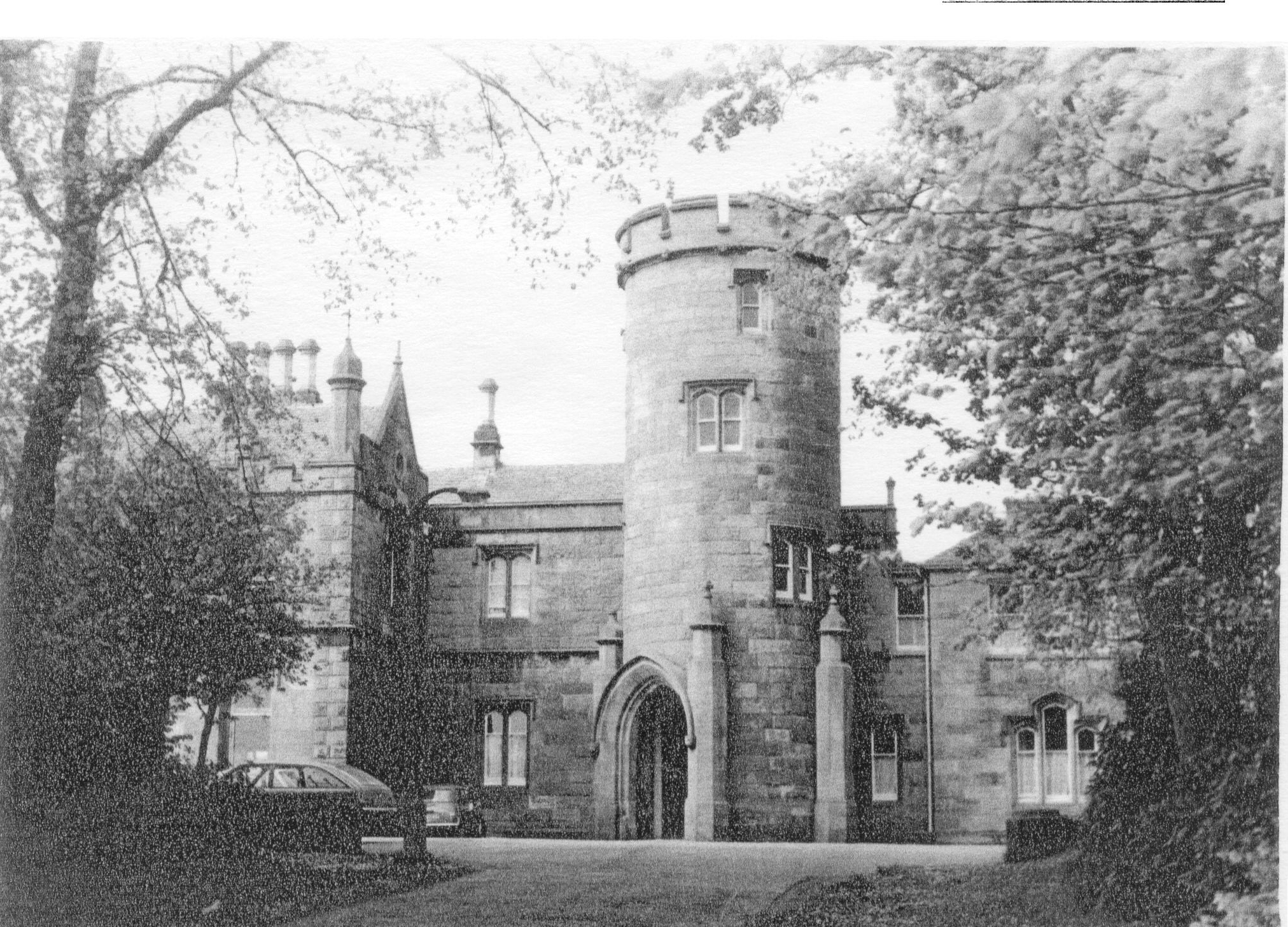
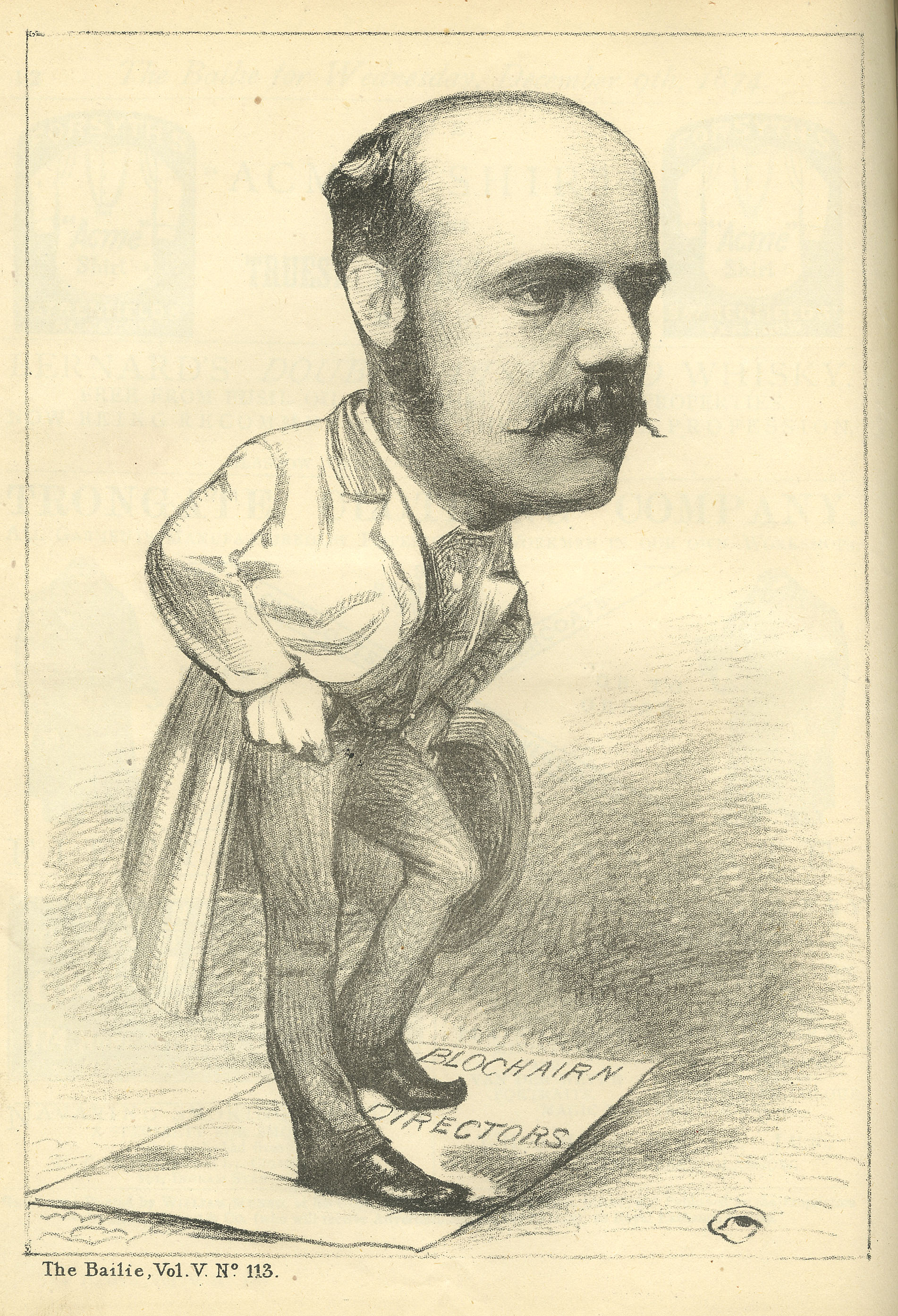
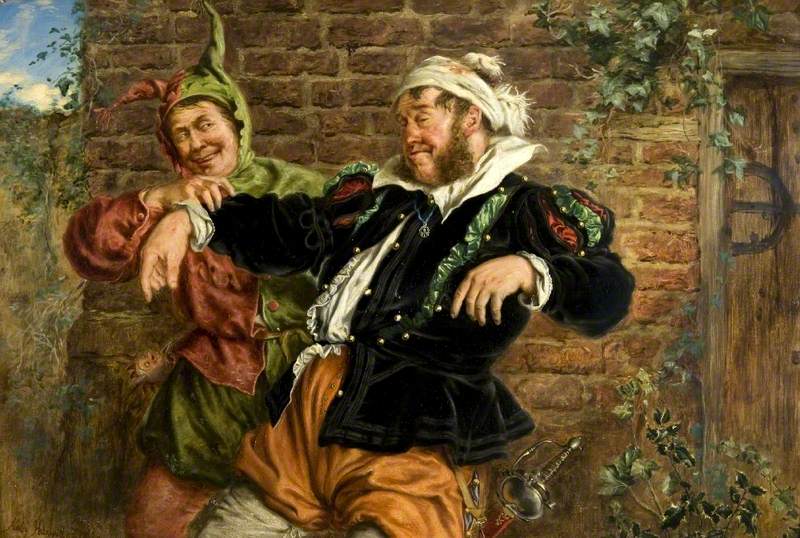
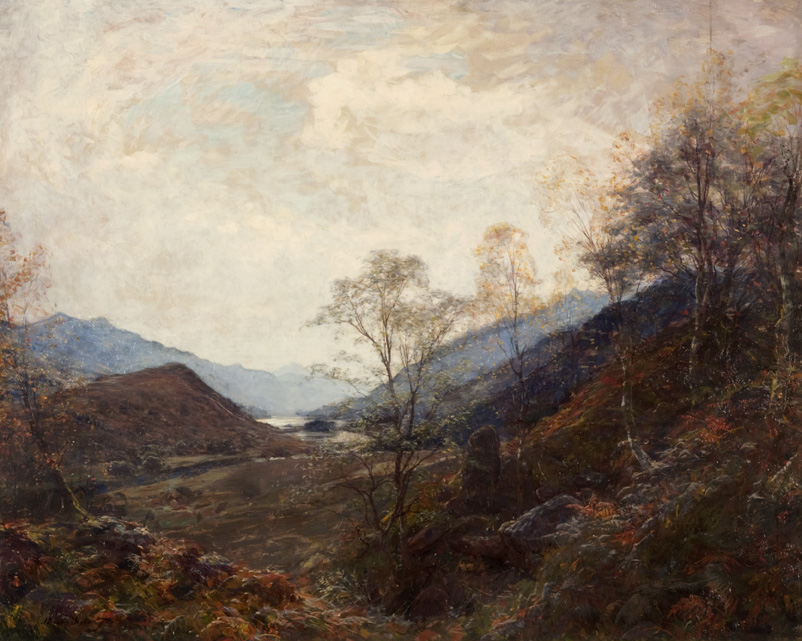
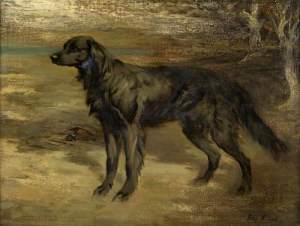


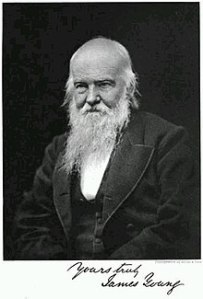
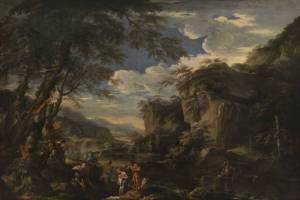
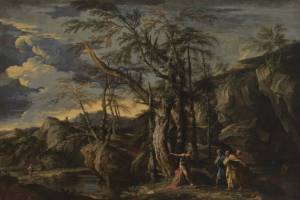
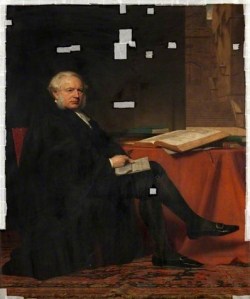
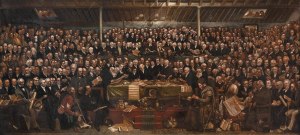
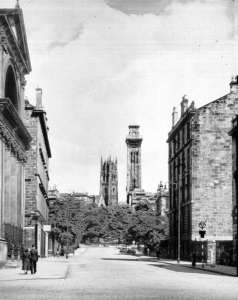
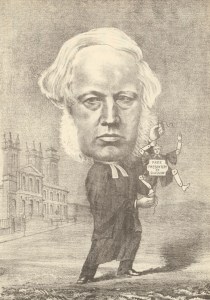
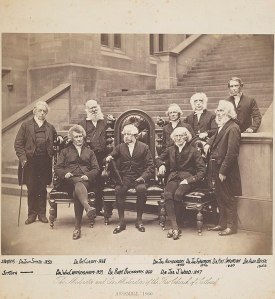
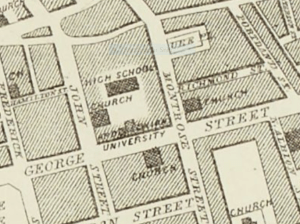
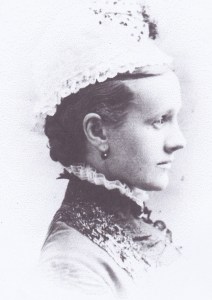
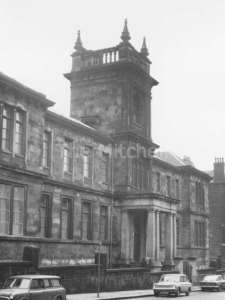
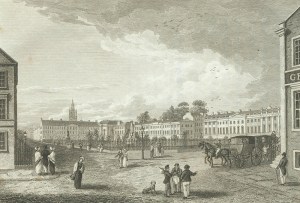
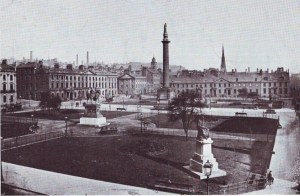
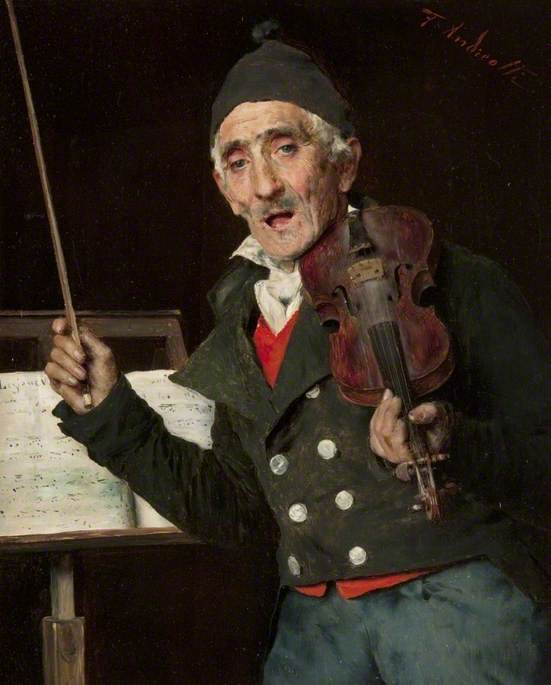

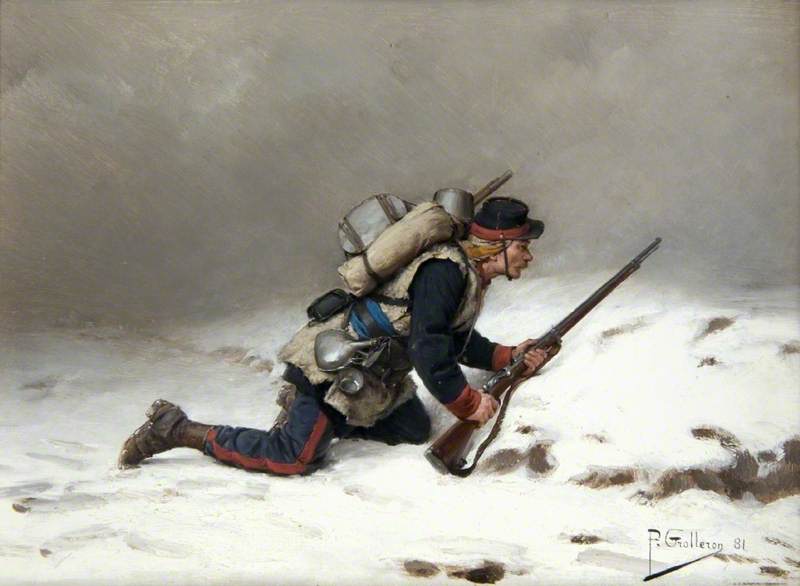


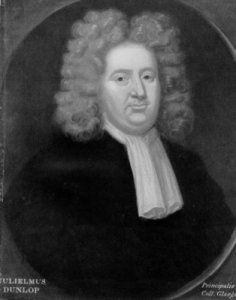


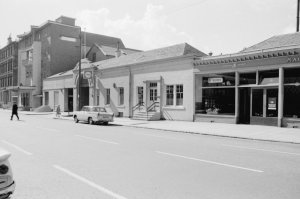
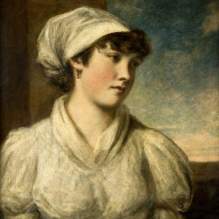

 Glasgow Museums Art Donors Group