Miss Christina Russell left four paintings to Glasgow in 1927. (1) They were Lochranza Castle by William Beattie Brown; Arcady by Cecil Ray; Glenn Affric by Horatio McCulloch and Kirkcudbright by James G Laing.
Christina Russell can be seen as a not atypical female donor to Glasgow Museums at the beginning of the twentieth century. It is much easier to define her by the details of male relatives’ lives and by the houses in which she lived than to find anything about her own interests and pursuits. She was born on 24 July 1877 in Glasgow (2) to Thomas Russell and his wife Jessie, née McGregor, then living in Bute Terrace, Queens Park, Glasgow. Her father was a retail fruit merchant who sold from the Old Fruit Market in Glasgow in partnership with William Turnbull and their names may be seen on the balcony in the Old Fruit Market. (3)
The business was dissolved in 1923 on the retirement of three of the Turnbull brothers and continued by Thomas Russell, the son, as sole owner(4). There were three other children, Catherine ((1876 to 8 June 1961)(5), Thomas (1879 to 8 February 1927)(6) and Alexander (1883 to 19 January 1915).(7) Christine lived in the family home all her life moving from Kinning Park to Govan, 29 Princess Square,(8) and then finally to Newark Drive in Pollokshields. (9) In the next 10 years family members died and she was left alone.Her brother Alexander had married Margaret Ritchie in London in 1912(10) and moved back to Glasgow to Fotheringay Road where he died in 1915. (11) Her father, Thomas, died in April 19, 1915. (12) His obituary said that he had been a Justice of the Peace and one time Chairman of the Agricultural Society.(13) Her mother, Jessie, died in July 1925 (14) and her brother, Thomas, died in July 1927.(15) Her sister-in-law, Margaret Russell lived in Terregles Avenue.(16)
The Wills of Thomas senior ((17) and of his son Thomas (18) show that both were successful businessmen. It was after the death of her brother Thomas that she gave these four paintings to Glasgow. Was this the reason for the donation? There is no information about the purchase of these paintings and who was the art lover.
Christine Russell died on 1 November 1939(19) and her ashes are buried in the family lair in Cathcart Cemetery. Unfortunately the gravestone is face down but details were available from East Renfrewshire Council(20).
References
Glasgow City Council Minutes.
National Records of Scotland Statutory Births 1877
On the 18 October 1950, three oil paintings were presented to Glasgow by Mrs Carola Yapp of 14 Clareville Court, Clareville Grove, London, S.W.7.
The paintings were an oil by Cora J. Gordon (1879 – 1950), France – The Village on the Hills (2685) and two oils by Jan (Godfrey Jervis) Gordon (1882 – 1944) – The Melon Guzzlers (2866) and The Gypsy Singer (2867).
“There was submitted a letter from Mrs. Carola Yapp offering two paintings by Jan Gordon and one by Cora Gordon as gifts to the Corporation. There was also submitted a report by the Director and the committee agreed that the paintings be accepted and that an expression of thanks be conveyed to the donor”.1
Carola Florence Stanuell was born in Dublin on the 6 August 1893. She was the second child of Charles Athill Stanuell, a Dublin solicitor, and Ida Marion Turner. Ida who was from Buxton in Derbyshire was the elder sister of the artist Cora Gordon.2 In addition to being a solicitor, Carola`s father was also a wealthy landowner and was secretary of the Incorporated Law Society of Ireland from 1913 to 1917. At the census of 31 March 1901 the family was living at 7 Clyde Road, Pembroke West in Ballsbridge, a well-to-do area on the south side of Dublin. The household consisted of Charles aged 48, Ida, 32 and their two daughters, Dorothy Helen 8 and Carola Florence 7 and three servants.3
On the 18 December 1918 Carola Stanuell married Charles Peter Yapp a lieutenant in the Bedfordshire Regiment in St. Bartholomew’s Church on Clyde Road, Dublin where Carola had lived as a child.4 After their marriage the regiment was posted to India where the couple remained for about four years. On 23 September 1922 they arrived back in Plymouth having sailed from Bombay. Charles’ occupation on the ship’s manifest was “army” while Carola’s was “domestic”. He was 27 she was 29. They took up residence in Great House Court, East Grinstead.5
In 1928 Carola gave birth to a son Peter Michael Stanuell Yapp in Kensington, London.6 From about 1932 till World War II, the family lived at Flat 5, 16 Emperor’s Gate, Kensington with Carola’s sister Dorothy Helen (and briefly, her mother Ida Marion) residing with them.7 After the war Charles, Carola and Peter moved to 14 Clareville Court.
After Carola’s husband Charles died in London in 1955 aged 59 8 her sister Dorothy moved in with her. By this time her son Peter had married and was living in Kingston, Jamaica and on 23 May 1958 Carola sailed from London to visit Peter and his wife Rita. Her address in the UK on the ship`s manifest was White House Hotel, Earls Court, London. She is listed as having “no occupation”.9 The visit seems to have gone well with Rita subsequently describing her mother-in-law as “a very sweet lady”.10
Figure 4. Carola Yapp. Courtesy of her daughter-in-law, Rita Yapp.
After spending some months in Kingston she flew to La Porte, Texas on 5 August, 1958 and then on to Miami. Her address was Stewart House, London.11 Returning to Kingston she sailed to London arriving on 26 September 1958. Her address was now West Heath Road, Hampstead and her occupation “housewife”.12
Carola Florence Yapp died on 24 July 1971 aged 78 in Hendon, Greater London.13
It remains a mystery as to why these three paintings were donated to Glasgow by a woman who was born in Dublin and spent most of her life in London. Jan Gordon died in 1944 and when Cora Gordon died six years later their paintings and artefacts appear to have been dispersed. There is a possibility that before her death Cora had asked her niece Carola to gift the three paintings to Glasgow because of a prior connection to the city 14 although nothing was mentioned specifically in her will. In any event the paintings were duly presented to Glasgow three months after Cora’s death.
References
Glasgow Corporation Minutes, 18th October 1950 – Mitchell Library, Glasgow
ancestry.co.uk, UK Incoming Passenger Lists 1878 -1960
Family Search, England and Wales Birth Registration Index, 1837-2008
ancestry,co.uk, London Electoral Registers 1832 – 1965
ancestry.co.uk, England and Wales, Civil Registration Death Index, 1916-2007
ancestry.co.uk, UK Outward Passenger Lists, 1890-1960
Personal communication via Ken Bryant
ancestry.com, Florida Passenger Lists 1898-1963
ancestry.co.uk, UK Incoming Passenger Lists, 1878 – 1960
ancestry.co.uk, England and Wales National Probate Calendar, 1858-1995
Suggestion from Ken Bryant. Ken has spent many years researching the life and works of Jan and Cora Gordon. http://www.janandcoragordon.co.uk/. He still keeps in touch with some members of the family including Rita Yapp.
In November 1950 a Mr. John Duncan M.B.E., of Cairnhouse, Wigtown, donated to Glasgow Museums an oil painting of the Glasgow Tobacco Lord John Glassford and his family. How did it come about that a farmer, born in the small parish of Menmuir, Angus in 1897, had in his possession that particular painting which was begun around 1765 and completed sometime after Glassford married his third wife in December 1768?
As it turns out it was not by purchase but by direct descent through the Glassford family to him. These notes will tell the story of the painting’s journey to John Duncan and also comment on the people it portrays.
Firstly, it may be useful to relate some of the history of John Glassford and his marriages.
His first marriage was to Anne Coats whom he married in 1743. [1] Her father Archibald Coats, a Glasgow merchant, along with Bailie George Carmichael, was taken hostage in 1745 by Bonnie Prince Charlie to ensure the terms he enforced on Glasgow were implemented.[2] These demands included “six thowsand shirt cloath coats, twelve thowsand linnen shirts, six thowsand pairs of shoes and the like number of pairs of tartan hose and blue bonnets.”[3]
John and Anne had five children, all but one dying in infancy. Daughter Jean, born in 1746, was to become a ‘staging post’ for the painting’s journey. Anne died a few weeks after giving birth to her fifth child in 1751.[4]
Less than a year later in 1752 Glassford married Ann Nisbet the daughter of Sir John Nisbet of Dean.[5] They had six children, born between 1754 and 1764, all of whom, with the exception of the fifth child John, survived into adulthood.[6] Ann Nisbet died in April 1766 from child bed fever.[7]
In 1768 there were two Glassford family marriages. The first was that of daughter Jean who married James Gordon on the 18th August.[8] This marriage was key to the painting getting to John Duncan.
The second was when Glassford married his third wife Lady Margaret McKenzie, daughter of the Earl of Cromarty, on the 7th December.[9] There were three children of this marriage, born between 1770 and 1773. Unfortunately, just over five weeks after the third child Euphemia was born[10], Lady Margaret died on the 29th March.[11]
It’s worth noting at this time that between 1745 and 1767 Glassford had bought three significant properties. The first was Whitehill House purchased c. 1745[12] and sold in 1759,[13] the second was Shawfield Mansion bought the following year for 1700 guineas from William McDowall,[14] and finally the Dougalston Estate, purchased from the Grahame family in 1767.[15]
In common with the two other major tobacco traders Alexander Speirs and William Cunninghame, Glassford was fabulously wealthy during this period, however, that was not to last, particularly as far as Glassford was concerned.
By the early 1770s the general tobacco trade was not in the best financial health. The business model was such that debt (money owed by the planters to the traders) had grown significantly, resulting in potential working capital and cash flow problems in the longer term. When the War of Independence broke out in 1775 it signalled the end of the trade as it had been. As the war progressed the French market collapsed due to French sympathies lying with the revolutionaries, import volumes dropped and debts were not being paid as settlers probably saw a way out of their debt issues.
What of Glassford’s fortune? His difficulties began before the commencement of the war. He was by nature a gambler both in business and in gaming. In particular a number of disastrous business speculations between 1774 and 1778 fundamentally laid the foundations for the loss of his fortune. He believed the war was essentially an English conflict which should have not involved Scotland. He sided with the revolutionaries, unlike his peers, even to the point of refusing to sell ships to the government to aid the war effort, leaving them berthed in Port Glasgow Harbour. This at a time when he was already in deep financial trouble and could have done with the funds that these sales would have brought.[16]
As 1783 approached Glassford’s financial affairs continued to be problematic and he was in poor health. On the 6th August he created a tailzie (entail) of his Dougalston estate in favour of his son Henry and his heirs thus protecting it from his creditors. On the 14th August he established a trust covering the rest of his property, real and personal, the purpose of which was the winding up of his financial affairs and to further protect the entailed Dougalston estate.[17]
Glassford died on the 27th August 1783, cause of death was given as ’growth in stomach.’[18] He was buried in the Ramshorn Churchyard, where also lie several members of his family.[19] It took a further ten years to sort out his finances, his personal debt amounting to £93,140.[20] Today that sum would equate to somewhere between £11million and £1.1 billion, dependant on the measure used.[21]
On his father’s death Henry, who was the only surviving son of Glassford and Ann Nisbet, succeeded to Dougalston. He was an advocate, was Rector of Glasgow University from 1805 until 1807 and MP for Dunbartonshire from 1806 to 1810.[22] He never married and when he died in 1819[23] his half-brother James, son of Lady Margaret and John Glassford, succeeded him.
James’ succession to Dougalston was not without some difficulty. Henry had amassed significant debt during his life and in 1823 the terms of the tailzie was challenged in the Court of Session, the pursuers claiming the Dougalston estate was liable for these debts. In the event the pursuers lost, two of the five judges finding for the defender, one for the pursuers, and the two others excusing themselves as “they had an interest”![24]
James was also an advocate and legal writer.[25] Despite marrying twice, he died in 1845 [26] without any offspring. He was the last of John Glassford’s sons which meant that in accordance with the tailzie his daughter Jean Gordon would succeed. However, she had died in 1785, which meant that her eldest surviving son, James Gordon, would inherit. A further condition of the tailzie was that the surname Glassford should be adopted by any heir, should that be necessary. James Gordon therefore legally became James Gordon Glassford. By this means the painting began its journey to John Duncan.
James Gordon Glassford died two years later to be succeeded by his brother Henry Gordon, who, as required, adopted the surname Glassford. He married Clementina Napier in 1831[27] and had five children, the eldest being James Glassford Gordon, born in 1832[28]. He inherited Dougalston on his father’s death in 1860[29] and became known as James Glassford Gordon Glassford. As far as I can tell he was the last Glassford owner of Dougalston.
James married Margaret Thomson Bain, the daughter of a banker, in 1861[30]. There was no information found about them in the UK census of 1871 however in 1881 they were living at Over Rankeillour House in Monimail, Fife with ten children. This census also recorded that three of the children (two girls and a boy) had been born in Otago, New Zealand between 1868 and 1872, James being described as a Runholder (lessee of a sheep run) there.[31] This explained their absence from Scotland in 1871.
In 1891 a similar picture emerged with another two daughters now living with the family, one had been born in New Zealand in 1879, the other born in Australia in 1865. Margaret was a widow by then,[32] James having died in 1881.[33] One other crucial piece of information was also evident. Staying with them at 35 Coats Gardens, Edinburgh was a 24 year old visitor by the name of James Duncan.[34]
My first thoughts were along the lines of, which daughter did he marry? Well he did marry one of the daughters, as it turned out it was not one who had been recorded in either of the 1881 or 1891 censuses.
He married Margaret Edith Gordon Glassford in St Giles, Edinburgh on the 12th June 1894. He was a farmer aged 26, the son of a doctor, she was the daughter of James and Margaret, aged 29, living at 35 Coats Gardens.[35]
Margaret Edith was born in 1864 in New South Wales, Australia.[36] When she returned to the UK is not clear however in 1881 she was living with her aunt Christian’s family in Kent.[37] Christian was the sister of her mother Margaret Bain.
By 1901 James and Margaret were living in Balfour, Menmuir where James farmed. They had two children, daughter Margaret aged five and son John aged three[38] who was in due course to inherit the Glassford family painting. He was born on the 29th April 1897 at Menmuir[39] and married Nancy Marion Robertson in 1943.[40] They had one child James born in 1944 whilst they were living at Uckfield in Sussex.[41]
John was awarded an MBE, I believe in 1943.[42] I’m not entirely sure that this date is correct, but it is the best fit for him for the years 1940 to 1955. If this is indeed him, and I believe it is, then he was a pilot officer in the Royal Air Force Volunteer Reserve in 1940, service number 03227. In 1942 he was a Flight Lieutenant and had been with the Administrative and Special Duties Branch before being released from active service.[43]
He subsequently farmed at Cairnhouse in Wigtown and according to the present owner Mr. Colin Craig he remained there until c.1955 when Mr. Craig’s parents took over the farm. Mr Craig also related that John’s son James had died in tragic circumstances and that his wife Nancy and her daughter in law had visited the farm in the 1970s.[44]
In generational terms John was John Glassford’s great, great, great grandson. It’s likely therefore he inherited the painting on his mother’s death in September 1950[45], her father James having previously inherited it along with Dougalston. On the 23 November he gifted it to Glasgow, which was the end of its journey within the Glassford family.
He died in the Royal Northern Infirmary in Inverness on the 13th August 1966, his normal home address being Allt-A-Bhruais, Spean Bridge.[46]
The Family Portrait
The Glassford family portrait, as might be expected, demonstrates how wealthy John had become with the fine clothing on display and the room’s furnishings, which was within Shawfield Mansion. Much has recently been written about it particularly around the time (2007) when conservation work on the painting was being undertaken at Kelvingrove Art Gallery and Museum.
The painting contains the surviving children from his first two marriages and his third wife Lady Margaret McKenzie. The conservation work led by conservator Polly Smith established that his second wife Ann Nisbet had originally been included but had been painted out following her death in 1766, suggesting that it was in progress prior to that date or possibly had been completed. Lady Margaret would have been added subsequent to their marriage in 1768, probably early in 1769.
Another figure was also established behind John Glassford’s chair, that of a black manservant. It had been believed previously that he had been painted out to avoid any family connection to slavery, however it seems that the figure simply faded over time.[47]
I believe the children in the painting to be Jean at the rear to the right of her father, the middle row left to right being Rebecca, Christian, Anne, Catherine and on Lady Margaret’s lap Henry, and standing at the front, John.
Who was the black servant and by what means did he come to Glassford’s household? Perhaps the answer lies in the following extracts from Frederick County, Maryland Land Records[48] and the Maryland Genealogical Society Records.[49]
Robert Peter or Peters was a Scottish tobacco factor working for John Glassford and Company in Maryland. He began in Bladensburgh circa 1746, moving to Georgetown in 1755. (In 1790 he became the first mayor of Georgetown). He was also John Glassford & Company’s attorney in Maryland. On the 27th September 1756, he bought a negro boy named Jim for 4,000 lbs of tobacco and £2 5s. For this purchase he is recorded as Glassford’s attorney. I think it probable therefore that this purchase was made in the name of the company. Why else record that it was made by the attorney of John Glassford?
Robert Peter bought other slaves but those records I have seen clearly state that the purchases were on his own or his family’s behalf, and they never involved a single slave purchase.
Was ‘Jim’ purchased for Glassford personally? Is he the manservant in the painting? In truth who knows but intriguing none the less.
Bibliography.
Devine, Tom. (1975). The Tobacco Lords. John Donald, Edinburgh.
Payne, Peter (ed.) Studies in Scottish Business History. 1967, Frank Case & Co. (Reprint from the William and Mary Quarterly entitled ‘The Rise of Glasgow in the Chesapeake Tobacco Trade 1707-1775)
Glasgow Past and Present. 3 Volumes. David Robertson and Co. 1884.
[9] Marriages. (OPR) Scotland. St Cuthbert’s, Edinburgh. 24 November 1768. GLASSFORD, John and MACKENZIE, Margaret. 685/02 0160 0212. http://www.scotlandspeople.gov.uk
[14] Goodfellow, G. L. M. “Colin Campbell’s Shawfield Mansion in Glasgow.” Journal of the Society of Architectural Historians, vol. 23, no. 3, 1964, pp. 123–128. JSTOR, JSTOR, www.jstor.org/stable/988232.
[15] Devine, T. M. (1990) The Tobacco Lords. Edinburgh: Edinburgh University Press. p. 181.
[16] Castle, Colin M. (1989). John Glassford of Dougalston. Milngavie and Bearsden Historical Society. p. 22,23 and Oakley, Charles A. (1975). The Second City. Glasgow: Blackie. p. 7,8.
[17] Shaw, Patrick and Dunlop, Alexander. (1834) Cases Decided in the Court of Session 1822-1824. Vol II. Edinburgh: Thomas Clark.pp. 431 to 433.https://books.google.co.uk
[24] Shaw, Patrick and Dunlop, Alexander. (1834) Cases Decided in the Court of Session 1822-1824. Vol II. Edinburgh: Thomas Clark.pp. 431 to 433.https://books.google.co.uk
[25] Wentworth-Shields, W.F. and Harris, Jonathan. (2004) Glassford, James (1771-1845). In: Oxford Dictionary of National Biography. Oxford: Oxford University Press. https://doi.org/10.1093/ref:odnb/10806
[27] Marriages. (OPR) Scotland. Linlithgow, West Lothian. 6 August 1831. GORDON, Henry and NAPIER, Clementina. 668/00 0120 0311. http://www.scotlandspeople.gov.uk
[28] Births. (OPR) Scotland. Linlithgow, West Lothian. 8 December 1832. GORDON, James Glassford. 668/00 0120 0089. http://www.scotlandspeople.gov.uk
[30] Marriages. Scotland. St. Georges, Edinburgh. 10 December 1861. GLASSFORD, James Glassford Gordon Glassford and BAIN, Margaret Thomson. 685/01 0273. http://www.scotlandspeople.gov.uk
[35] Marriages. (SR) Scotland. St Giles, Edinburgh. 12 June 1894. DUNCAN, James and GLASSFORD, Margaret Edith Gordon. 685/ 4 138. http://www.scotlandspeople.gov.uk
[40] Marriages. (SR) Marriage Index 1916-2005. England. Uckfield, Sussex. July 1943. DUNCAN, John and ROBERTSON, Nancy Marion. Vol. 2b, page 244. https://www.ancestry.co.uk/
[48] Maryland State Archives. Maryland Indexes, (Chancery Papers, Index), 1788-1790, MSA S 1432. 1790/12/013990: Robert Peter vs. William Deakins, Jr., Bernard O’Neal, Edward Burgess, Richard Thompson, John Peters, and Thomas Beall. MO. Contract to serve as securities. Accession No: 17,898-3990. MSA S512-4108 1/36
On the 21st November 1944 an oil painting by George Henry, R.A. In a Japanese Garden was presented by Mr. Edward N. Marshall, 8 Cleveden Drive, Glasgow, W.2.
“There was submitted a letter from Mr E. N. Marshall, 8 Cleveden Drive, Glasgow, offering to present to the Corporation the picture “In a Japanese Garden” by the late George Henry, and the committee, after hearing a report from the Director, agreed that the gift be accepted and that a letter of thanks be sent to the donor”. 1
In 1951 Mr E. N. Marshall also donated the following items:
Landscape, 1893, by Alexander Frew (2913), oil on canvas,
A Galloway Landscape, 1889 by Bessie MacNicol, (2914), oil on canvas,
Portrait of James Sellars, architect, 1880, by Georgina M. Greenlees, (2915), oil on canvas
A collection of 29 prints by various artists including Bone, Brockhurst, Cameron, McBey, Smith, Strang, Zorn etc. (PR.1960.23).
A collection of scrapbooks and other items ( OG1953.4)
(Part of this collection is displayed in the “Photographer`s Shop” window at the Riverside Museum, Glasgow and consists of a gift to a Mr and Mrs Paterson on the occasion of their Golden Wedding).
Figure 2. Family Photographs (4596). Photograph A. MacdonaldFigure 3. Locket with Inscription to Mr and Mrs Paterson (4599). Photograph A. Macdonald.
Edward Nixon Marshall was born on the 3rd June 1891 at 5 Spring Gardens, Kelvinside, Glasgow. His father, James Marshall, was a “master flour miller” who had married Mary Carswell Gow on the 6th March 1877. 2 In 1901 the family home was at Woodcroft House, Crow Road, Partick. Edward was a “scholar” aged 9.3 From 1904 to 1911, he attended Loretto School in Musselburgh initially in the Junior School (“Nippers”) and then until the age of 19 when he left from the sixth form. According to school records, he was a prize winner and prefect.4 In 1911 he was a boarder at 41, Linkfield Road, Inveresk, Musselburgh and was therefore presumably still attending Loretto. 5 From Loretto, he went on to Trinity College, Oxford as a Senior Commoner and graduated M.A. in 1914.6
In 1900, Edward`s father had set up his bakery business “James Marshall (Glasgow)”as a limited liability company with himself as managing director and his son James P. Marshall as the only other director. 7 The company manufactured biscuits under the trademarks of “Farola” and “Granola”. In 1906 two more of Marshall`s sons, Thomas and Allan, joined the company followed in 1908 by his youngest son Edward.
During the First World War, Edward Marshall served with the Duke of Wellington`s, Riding Regiment in France and Flanders. He was a 2nd Lieutenant in 1914 and gained the rank of Captain in 1916. He was mentioned in dispatches and was awarded the M.C. in the New Year`s Honours List of 1st January 1918. 8 (This decoration was awarded to Captain Marshall for an act or acts of exemplary gallantry during active operations against the enemy. However, because the award was made as part of the New Year`s Honours, citation details were not published).
After the war, Edward returned to work in the family firm which advertised itself as: “Marshall, James (Glasgow), Ltd., millers, proprietors of “Marshalls` Semolina”, and “Farola”, 25, Cumberland St., Calton.; telephone nos., 2637 and 93 Bridgton”9
Edward was meantime residing at 21 Eglinton Drive, Kelvinside. 10 On the 13th of September 1928 he joined the Merchants` House of Glasgow (fee 21 guineas). He gave the firm`s address as, 2, Orr Place and described himself as a “merchant”. 11 By 1930 he was living at 21, Cleveden Gardens and the firm was now described as “Macaroni Manufacturers” and proprietors of “Marshall`s Semolina” and “Farola”. 12
On the 11th of September 1935, Edward, then aged 44, married Gertrude Maie Hamilton Marshall at 62, Great George Street, Glasgow (the bride`s home). (Edward is described as a “Cereal Food Manufacturer, formerly married to Margaret Rosamund Leigh Gregor against whom he obtained Decree of Divorce). 13 The couple moved to 8, Cleveden Drive, Glasgow and by 1940, Edward had become Managing Director of Jas. Marshall (Glasgow), Ltd. 14 From 1944-46 he was also the Chairman of the Macaroni Section of the Food Manufacturer`s Association. 15
In 1925 Edward had become a governor of Loretto School. He maintained this association with his old school, becoming in 1946 Vice-chair of Governors till 1952 and Chairman of Governors from 1952 to 1956. He was also the President of the Fettesian-Lorettonian Club in 1951-52 and later, Lorettonian Society President from 1959 to 1963. He ceased to be a governor in 1961.16
Edward Nixon Marshall died on the 13th of March 1970 in a nursing home at 121 Hill Street, Glasgow. He was 78. He had been suffering from chronic bronchitis and emphysema. He was twice married and had been divorced from his first wife Rosamund Gregor. 17 His funeral took place at Glasgow Crematorium, Maryhill on the 17th of March 1970. 18
In his will he bequeathed the painting West Wind, Macrihanish by William McTaggart to Loretto School. The painting hung in the staffroom for many years until it was sold, with the consent of the family, at Gleneagles Hotel in 1998. The sum raised was £35,600, and helped to fund a new Technology Centre and library in the school. 19 Edward Marshall became a member of the Board of Governors of the Glasgow School of Art in 1943. 20 and this probably brought him into contact with leading artists of the day.
Figure 4. Plaque in the Chapel at Loretto School. Courtesy of Irene Molan, Database & Web Administrator, Loretto School
References
Glasgow Corporation, Minutes of Art Galleries and Museums Committee, 17th October, 1944, page 1542
Scotland`s People, birth certificate
ancestry.co.uk., 1901 Census
Records of The Lorettonian Society courtesy of Emma Sinclair, Membership Co-ordinator
ancestry.co.uk., 1911 Census
Records of The Lorettonian Society courtesy of Emma Sinclair, Membership Co-ordinator
Dictionary of Scottish Business Biography, 1860 – 1960, Anthony Slaven, Aberdeen University Press, 1986
London Gazette, 1st Jan 1918, page 41
Glasgow Post Office Directory, 1920-21
ibid
List of Members of the Merchants` House of Glasgow, Robert Anderson & Sons Ltd. 72, Howard Street, 1963; Matriculation Book of the Merchant`s House of Glasgow 1912-, Mitchell Library
Glasgow Post Office Directory, 1930-31
Scotland`s People, marriage certificate
Glasgow Post Office Directory, 1940-41
Records of The Lorettonian Society courtesy of Emma Sinclair, Membership Co-ordinator
ibid
Scotland`s People, death certificate
Glasgow Herald, 14th March, 1970, p16
Glasgow Herald, 29th August, 1998 and 3rd September, 1998
Glasgow School of Art, Archives, GOV 2/18, Board of Governor`s Minute Book, 1937-1945
In 1946 Lindsay MacArthur’s widow, Beatrice Butts Thomson, donated four paintings to Glasgow. Lindsay was an artist and two of these works were his own, The Golden Quarry and Pastorale, Evening.
Lindsay’s father, also Lindsay Grandison, was born in the village of Ecclefechan, Dumfriesshire. (1) His mother Catherine McNicol, known as Kate, who hailed from Dublin was Lindsay’s second wife and was twenty- one years his junior. (2) They married in Liverpool in 1860and shortly moved to Braehead Villa, Oban in Argyll where Lindsay junior was born on 21 April 1865. (3) This was a period when the rail network was expanding, enabling many people to travel to coastal resorts. Oban was already a busy fishing town and ferry port. In 1866 Lindsay senior built the 80 room Alexandra Hotel, on vacant land which is now known as the Corran Esplanade, a prime site overlooking Oban Bay and competed with The Great Western Hotel for the top end of the market. He ran the hotel with his daughter Jane till his death in 1885. He left debts of £2478 of which £1000 was owed to Thomas Lawrie, art dealers in Glasgow, so perhaps Lindsay junior’s interest in art was inspired by his father. The hotel was then managed by Lindsay Senior’s wife until 1897 when it was put up for sale. (4) Although the family had a house at 3 Hampden Terrace in Glasgow, they resided mainly at the Alexandra in Oban in the 1870s. (5)
Lindsay junior appears to have had an early interest in art, attending Glasgow School of Art from 1881 to 1884. (6) In the 1891 census, when he was 25, he is described as a landscape painter. His brother Robert also studied art but by 1891 had become a surgeon. (7) Interestingly the 1881 census reveals that the artist William Black was staying at the Alexandra Hotel. He was a popular novelist whose landscape paintinginfluenced his writing style such as in White Wings: A Yachting Romance of 1880. (8)
Lindsaytravelled south in the 1890s and lived in the picturesque village of Broadway in The Cotswolds and became part of a group of artists known as The Broadway Group which was mainly comprised of expatriate American artists. The most prominent member was John Singer Sergeant who produced some of his best known works there such as Carnation, Lily, Lily, Rose which was painted in the garden of Russell House in the village. This was the home of American artist Francis Millet who purchased the nearby Abbot’s Grange, a ruined monastery which he converted into a communal artists studio.
One of Millet’s best known works is Between Two Fires of 1892 which depicts a puritan standing between two rather confident kitchen maids. The puritan figure is modelled on Lindsay MacArthur who is described by a contemporary as ‘a highland landscape artist with a sardonic biting humour, a quick temper and fierce loyalties.’ (9)
Another of Millet’s paintings The Black Sheep, in The New Bedford Library, Massachusetts, and of a similar setting to Between Two Fires includes the same character modelled on MacArthur. Millet’s last return to the USA was, unfortunately, in 1912 when he boarded The Titanic and was last seen helping women and children as she sank. The bohemian Broadway Group had a reputation for the high life, with singing and drinking regularly breaking the peace of the village. The writer Edmund Gosse describes…’Nothing we do scandalises the villagers…one of the Americans was chased down the village street, screaming all the time and and trying to escape up lamp-posts and down wells. Not a villager smiled, they only say ‘them Americans is out again’. (10)
While at Broadway MacArthur designed a bookplate (National Galleries Scotland) for Lady Maud Bowes-Lyon, aunt to Her Majesty The Queen Mother. She lived at Orchard farm in the village and frequently hosted concerts in her music room (she was an accomplished violinist) and held regular art exhibitions. (11)
One of MacArthur’s donations Pastorale, Evening may have been painted during his stay in the Cotswolds, and he exhibited thirteen paintings at The Royal Academy between 1893 and 1904. (12)
The 1901 census places MacArthur at Spencer Street, London and little is known of his whereabouts in the following few years. However, he appears to have spent time travelling as many of his paintings from this period are landscapes and seascapes of Palestine and Ceylon with a few from France. He does not appear to have dated his work.
In 1934 Lindsay married Beatrice Butts Thomson in Chelsea. Beatrice was born in 1873 in Japan to British parents. (13) Her first husband, John Leslie Thomson was a landscape artist from Aberdeen and trained at The Slade in London He was a member of The New English Art Club and requested an invitation to one of Whistler’s famous 10 0’Clock lectures. He died in 1929. (14) They lived at 1 Hornton Street, Kensington. (15)
After their marriage Lindsay and Beatrice lived at 9a St Mary Abbot’s Place, Kensington and over the next few years Lindsay exhibited at Royal Scottish Academy with landscapes of England, Galilee and Ceylon. (16)
Lindsay died in Surrey in 1945 aged 80. (17) In 1946 Beatrice was living at 37 Drumsheugh Gardens, Edinburgh and she gifted paintings to public collections around Scotland with the majority going to Kirkcaldy Galleries. Around half of the donations were painted by Lindsay Grandson MacArthur, with the remainder by her first husband John Leslie Thomson. (18) It would appear that both artists were influenced by the French Impressionists, depicting fleeting moments of time and displayed a remarkably similar style to each other.
In December 1941, John Sawers donated eight watercolours and three drawings to Glasgow’s collections, including a striking watercolour, Pinks, by Charles Rennie MacKintosh. (1)
John Sawers was born in 1862 and died in 1945. He married Mary Watson in 1888 and they had three children, two daughters and a son.(2)
John Sawers, with his father Thomas and his brother George, was part of a well-known fish, game and poultry business within the city of Glasgow and beyond. The firm had branches in Birmingham and other English cities, as well as eight branches in Glasgow. There is also a Sawers in Belfast, which exists to this day. The company had a flair for publicity. For example, its fleet of vans were nicknamed after fish – Miss Haddock, Miss Crab and Miss Plaice.
The firm was the biggest buyer in the Glasgow Fish Market and could apparently “command any exotic sea creature, such as a shark, porpoise, turtle or monkfish as a centrepiece for their displays in Howard Street.” (3) The Oyster Bar within the fish emporium in Howard Street was legendary, and the gentlemen of Glasgow would congregate here to sample the wares and meet their fellow Glaswegians. It was the only licensed fishmongers in Scotland, so the city gentlemen could have their seafood with a glass of ale or porter.
When the Howard Street shop opened in 1890, a large banquet was held and many influential tradesmen and merchants in the city were invited. It was noted that “the banquet was given in almost regal style”. (4)
Many newspapers carried the story of the wonderful establishment and praised its designer, Mr J Winton Mackie, who was assisted by Mr John Sawer. “There is no more magnificent fish shop in Europe, and the splendours of the suggestive tiles and granite slabs must be inspected in order to be appreciated.” (5) The tiled panels, created for the shop by Doulton of Lambeth, attracted a great deal of attention and fortunately, when the firm folded in 1960 after attracting the attention of corporate raiders, Glasgow Museums rescued the entire tiled scheme and part of the mosaic fascia from the front of the shop.
Sawers also published an annual fish and game calendar and a cookbook ” Our Table Fishes: How to Choose and Cook Them”. (6)
In the early 1900s John Sawers bought a plot of land in Giffnock known as the Hollows. Here he built a house known as Eastwood Hollows. The house was designed by Andrew Balfour and was a fine example of an Art and Crafts House. (7) Balfour was articled to James Boucher and, during his apprenticeship, won a studentship to Glasgow School of Art (GSA). After finishing his apprenticeship Balfour worked with John Burnet. (8) The picture below shows the house and presumably the three children seated are the Sawers children.
John Sawers made a beautiful garden round his house, with a pond, a pergola and a greenhouse where he grew vines. The house was demolished, in the 1960s allegedly to make way for a road and a roundabout. (9)
John Sawers was more than just a fishmonger. He was clearly an art lover and in his obituary is mentioned as being an artist in his leisure moments. His obituary also states that he was “a pioneer of colour photography”.(10) He liked to surround himself with beautiful art, including his house in Giffnock. Even within his working environment Sawers incorporated art. His art can now be enjoyed by a wider audience thanks to his generous donation to Glasgow Museums.
References
1.Glasgow Corporation Minutes Nov 1941- May 1942 p.428
2.Scotland’s People: scotlandspeople.gov.uk
3. King, Elspeth (1991) The People’s Pictures, The Story of Tiles in Glasgow, Glasgow: Glasgow Museums
4. Stratten and Stratten (1891) Glasgow and Its Environs, Glasgow: Stratten and Stratten
5.The Baillie: October 1890 P4
6. Glasgow University Library, Special Collections.
7. Koch, Alexander, ed. (1901). Academy Architecture. Vol.19. London: Academy Architecture. pp 102,. 105.
In 1911, from the 2nd May to the 4th November, the Scottish Exhibition of History, Art and Industry was held in Kelvingrove, Glasgow. The exhibition was formally opened on the 3rd May by the Duke of Connaught (brother of the late King Edward VII) and his wife.[1] It was not on the same scale as the exhibitions of 1888 and 1901 however over its course it attracted 9.4 million visitors. Its central point was the Stuart Memorial in Kelvingrove Park surrounded by a number of palaces, the principal one being the Palace of History which was modelled on Falkland Palace. It was divided into four galleries, one of which, the West Gallery, dealt with the historical ties between Sweden and Scotland.
One of the exhibition’s key objectives was to fund the creation of a Chair of Scottish History and Literature at Glasgow University, which was achieved, the Chair being founded in 1913. [2], [3]
Between 1909 and 1911 a number of visits between the two countries had been made to determine what the Swedish/Scottish exhibition should contain. The Swedish committees were led by Professor Oscar Montelius, of Uppsala University, a noted pre-historian and archeologist, and Dr. E.E. Etzel of Stockholm and Uppsala University. The convener of the Scottish committee was John S. Samuel. [4], [5]
The agreed Swedish exhibits included the following items:
from Professor Montelius, prehistoric artefacts from graves and tombs in Sweden, similar to objects found in Scotland
a collection of medals struck in honour of celebrated Scotsmen, from the Swedish Academy of Science
pistols, guns and daggers made in Scotland and taken to Sweden by Scottish soldiers of fortune, loaned by the Royal Armoury in Stockholm
heraldic shields of Swedish Nobles of Scottish extraction. These were replicas of the originals and they were to be used again at the ‘Scots in Sweden ‘exhibition held in the Royal Scottish Museum in Edinburgh in 1962.[6]
genealogical documentation of Scots who had lived and stayed in Sweden. This information was eventually published in The Scottish Historical Review in 1912, taken from work carried out by Dr. Etzel and given to the magazine by John Samuel.[7]
portraits of Swedish and Scottish Royalty which included two copies of portraits from the Royal Gallery in Gripsholm Castle, being the work of Swedish artist John Osterlund (1875-1953), completed between 1900 and 1910. These were the paintings eventually gifted to Glasgow at the end of the exhibition by Dr. Etzel.[8]
The first portrait was that of ‘Mary Queen of Scots as a Child’, which had been discovered during a Scottish deputation to Sweden in 1909. The catalogue of the exhibition described it as ‘a unique and valuable portrait of Mary Stuart… its existence had not previously been recorded by any historian of the period of history to which it belongs.’ The original artist was unknown and the date attributed to the painting was 1577.[9]
The other was a portrait of King Gustavus Adolphus II. Again the original artist was unknown although it had been annotated with the initials ‘G.T.’ and dated 1630.
The entry in the exhibition catalogue regarding Gustavus Adolphus is interesting in that he is described as the ‘Lion of the North and Bulwark of the Protestant religion, the hero of the 30 years war, that awful period of bloodshed, rapine and robbery that devastated Germany in the early part of the 17th century.’ It also added that his victorious armies included 13,106 Scotsmen.[10]
In an attempt to find out more about the original paintings I contacted the National Museum of Sweden. The initial response from the Museum confirmed there was a painting of ‘MariaStuart’ in the Royal Gallery collection; inventory number NMGrh 1142, artist unknown. In a very comprehensive second reply I was informed that the museum did not now consider it to be a portrait of Mary Stuart and that it depicted an unknown girl. The inscription on the painting they believe to be later, the date of 1577 questionable and that the girl does not resemble Mary. They now list the painting as ‘possibly 16th century, or a later copy after a painting from the 16th century – Unknown child’.[11]
With reference to the painting of Gustavus Adolphus, there are a number of such paintings in museum collections in Sweden, none of which seemed to be the original we were looking for. It was suggested that as Osterlund had spent most of his life in Uppsala it may be that the original lay there, possibly within the University. I contacted Uppsala University who were able to confirm that they had a portrait, very similar to the Osterlund copy, which had been painted in the 17th century. It did not however give an exact date, and the artist is recorded as ‘The Monogramist P.G.’ who, it was thought, may be Pieter de Grebber.
In appearance this painting fits the bill very well, and it’s possible, maybe probable that it is the one Osterlund copied, although the copy is darker in some areas.[12], [13]
In a letter to the Lord Provost of Glasgow, Sir Archibald McInnes Shaw, dated 20th November 1911 Dr. Erik Erikson Etzel formally gifted the two Osterlund copies to Glasgow.
Little is known about Dr. Etzel except that he was a D.Ph. probably from Uppsala University. He was born in 1868 in Karlskoga, Sweden. In 1902 he lived in Stockholm which is where died in 1964. [14], [15]
John Smith Samuel was the private secretary to Lord Provost McInnes Shaw, and had held that position for 10 years serving others in that office. He was elected to the Royal Society of Edinburgh in 1902, held various other civic positions and was a member of the Glasgow Art Club. He was appointed Knight of the Royal Order of Vasa by Professor Montelius on behalf of King Gustav V of Sweden in 1910.[16], [17]
Professor Oscar Montelius, was born in Stockholm in 1843. He studied history and Scandinavian languages at Uppsala University between 1861 and 1869. He was attached to the Museum of National Antiquities, Stockholm, from 1863 and was appointed professor in 1888. He was the Museum’s director from 1907 to 1913. Still controversial is his theory, the “Swedish typology,” suggesting that material culture and biological life develop through essentially the same kind of evolutionary process. In 1911 he was Director General of the Swedish Board of National Antiquities. He died in Stockholm in 1921.[18], [19]
John Osterlund was born in 1875 in Stockholm and was mainly known as a landscape artist and conservator of paintings, particularly church paintings. He died in 1953. [20]
William Kennedy is best known as a successful businessman and for playing a major role in the fledgling shale oil industry of central Scotland in the mid-nineteenth century. He bequeathed one painting to Glasgow, The Sacrifice of Marcus Curtius by Luigo Garzi, in 1899.
William was born in Biggar, South Lanarkshire in 1836 to William, an innkeeper and Mary Scott.(1) Little is known of his early years but he moved to Glasgow when aged sixteen and joined the firm of P & R Fleming, ironmongers which had branches at 29 Argyle Street and 18 Stockwell Street. He then moved to Henry Field and Son of Buchanan Street.(2)
Figure 3. Henry Field & Son, advert from Post Office Glasgow Directories 1859-60, Mitchell Library
The first gas lighting in Glasgow was introduced in 1805 and by the mid-nineteenth century there was huge demand for gas heating and lighting in homes and Fields was well placed for the fitting of pipes, meters and other equipment. The city’s gas manufacturing and supply industry was placed under municipal control in 1869. While at Fields mineral oil was becoming a popular fuel for lighting and William assisted with its development with enthusiasm. He ensured that the best oil lamps on the market were stocked in the shop and he promoted the sale of lighting oil all over Scotland and the North of Ireland.(3)
William married Margaret Law from Linlithgow in 1860 (4) and they had three girls and a boy (also William). They were living at 39 Devon Street, Glasgow in 1861(5) and lived in Govan and Pollokshields areas for many years, and were residing at a detached villa at 32 Newark Drive in Pollokshields by 1891.(6)
James ‘paraffin’ Young was the pre-eminent ‘Father of the Oil Industry ‘ who succeeded in producing, by distilling cannel coal at a low heat, a fluid which resembled paraffin wax and in 1851 his Bathgate works became the first commercial oil-works in the world.(7) William Kennedy succeeded Young in continuing to develop manufacturing processes for new products and markets.
In 1861 William joined West Calder Oil Company and stayed with them for seven years producing paraffin. He then became actively associated with Oakbank Oil Company, West Lothian and was general manager until 1877. In that year The Broxburn Oil Company was formed for the purpose of acquiring, from Robert Bell,his rights as lessee of the oil, shales and other minerals of Lord Cardross, at Broxburn in Linlithgowshire. Bell was a pioneer of the shale industry and was the first in Scotland to distil oil from shale.William was appointed Managing Director of Broxburn Oil Company on its foundation, at a time when fierce competition from USA and Russia made life difficult for many businesses. He remained as its managing Director till his death in 1899. The Broxburn works were the first to challenge the scale of Youngs Addiewell Works and it was equipped to undertake all processes necessary to transform shale into a full range of oil and wax products, including the manufacture of candles. The works site covered an area of 250 acres and employed approximately 1700 workers. The modern equipment enabled the company to stay ahead of the competition for the next ten years. (8)
Prior to 1876 William was appointed Secretary to the Scottish Mineral Oil Association and was subsequently elected as its President. He was also a director of Niddrie and Benhar Coal Company Limited, the Glenboig Union Fireclay Company Limited and the National Insurance Company of Great Britain. He also entered local politics as a county councillor for Linlithgowshire and was a Justice of the Peace for the same county.(9)
In the 1890sWilliam moved to 21 Huntly Gardens, a fine townhouse in Glasgow’s west end.(10) In ailing health he died on 20th May 1899 leaving a significant estate of £44,600.(11) In his Will he left the painting The Sacrifice of Marcus Curtius 1715-20 to Glasgow.(12) At the time of his death it was attributed to Nicholas Poussin, an influential French baroque artist. It is now attributed to Luigi Garzi who was influenced by Poussin’s classical style while in Rome. The scene depicts the young Roman who sacrificed himself to the gods of Hades.
This painting was previously owned by John Bell who, with his brother Matthew, founded J and M P Bell & Co, the largest pottery in Scotland in the mid-nineteenth century and which produced a wide range of high-quality products for the home market and for export. John amassed a huge collection of paintings and objects during his lifetime for North Park House, which he had built adjacent to the Botanic Gardens in Glasgow (later used as the home of the BBC). He died intestate in 1880 and his collection of around 800 paintings was sold at auctions in Glasgow, Edinburgh and London. The sales catalogues list paintings by Titian, Rubens, Caravaggio, Canaletto, Raphael, and many more apparently by world=renowned artists. However, many of his paintings are now thought to be copies, and some fakes, but he did achieve sales of £50,000 in a struggling market.(13) William Kennedy may have purchased The Sacrifice of Marcus Curtius at one of these auctions and it is one of only a few objects to remain in Glasgow from Bell’s collection.
This painting was presented to Glasgow by Christopher Bell Sherriff (CBS) on 18th March 1946.1 There does not appear to be any record of the painting being exhibited at the Royal Scottish Academy or in any other exhibition.2
There is reference to an oil painting by Alexander Fraser in the inventory of Carronvale House, the family home of the Sherriff family in Larbert, Stirlingshire, from about 1857.This inventory appears in the trust papers of John Bell Sherriff, grandfather of CBS who died in 1896. Unfortunately the painting is not named but is hung in the dining room.3 Again, on the death of George Sherriff, father of CBS, who died in 1908, an oil painting by Alexander Fraser appears in the inventory of Carronvale House. This time the painting is given the name, Moorland Scene and again is hung in the dining room. There does not appear to be any record of a painting by that name executed by Alexander Fraser . Looking at the painting one could speculate that whoever compiled the inventory ,a lawyer’s clerk perhaps with little specialist knowledge, might give our painting that name as that is what he saw, rather than the name given by the artist.4
Were the Sherriff family art collectors? The two inventories of the contents of Carronvale House refer to many oil paintings, watercolours and drawings scattered throughout the house. These include works by James Faed, W.C Faed and Horatio McCulloch as well as books on painting in various rooms in the house. George Sherriff, father of CBS, was also a talented amateur photographer, with a “Photography Room” complete with equipment in Carronvale House. CBS’s sister Flora was a talented amateur artist and contributed to a book on the local area.5 Whether or not the many paintings in the house were merely the “wall furniture” normal in the home of a wealthy family at that time one cannot say for certain but it appears that at least some of the family had more than a passing interest in art.6
The Sherriff Family Origins
The Sherriff family originally came from East Lothian. CBS’s great-great grandfather, Thomas Sherriff, a wheel and cartwright, had come to the Carron area in 1760, attracted by the work on offer from the Carron Ironworks which had opened in 1759.7 On 12th December 1861 Thomas married Marion Cowie at Bothkennar. Between 1762 and 1780 they had four sons and three daughters. The eldest son was George (1768-1843), great-grandfather of CBS. George was born in Stenhousemuir on 8th May.8
George Sherriff (1768-1843)
George appears to have been the one who started the Sherriffs on the road to prosperity. He went to work for the Carron Iron Company at an early age. This was a period of rapid technological development in the science of engineering and in particular in new developments and improvements in the steam engine and when Scotland was producing many of its best inventors. George must have done well, as at the age of 18 he went to work for the firm of Boulton and Watt at the Soho works in Birmingham. There he stayed for two years learning the trade of engineering.9
In 1789 the engineer John Rennie was asked to erect a Boulton and Watt engine in Copenhagen and George Sherriff assisted with the installation on site. By this time there were many Scots working in Russia, employed by the Imperial Government and headed by Charles Gascoigne who had been poached from the Carron Iron Company.10 It had been Admiral Greig, an admiral in the Russian imperial navy, who had first suggested the employment of Scottish engineers to Catherine the Great.11 George saw opportunity here and turned up in the autumn of 1789 at the foundry in Petrozavodsk, where the Scots had the task of improving production. George worked for and with Gascoigne until the end of 1792 when he was released with a testimonial to his satisfactory work. He remained in Russia ” gradually amassing a substantial sum of money”. While still in the service of Russia on 12th September 1792 he married Sarah Roper of Kirkaldy, the daughter of one of Gascoigne’s original artisans. Sadly Sarah died on 26th September 1793 at Petrozavodsk,shortly after giving birth to a daughter, also Sarah.12
George came to the notice of the Russian Royal family when in 1797 Gascoigne sent him to St Petersburgh to install a steam engine at the Royal Mint. Sherriff is mentioned in a letter from Rennie in September 1799 as a “man skilled in the construction of steam engines which he has completed at the Bank mint.13” Tsar Alexander 1st gave George a tortoise-shell snuff box with his portrait on the lid. Tsar Nicholas gave him a silver medallion. In 1799 George returned to Britain and in 1804 opened the Dalderse Iron Foundry near Falkirk. He acquired two more acres of the lands of Dalderse close to the foundry and built Abbotshaugh House. 14 George took an active part in the local community, a habit which appears to have been passed down the following generations of the Sherriff family. He helped to raise funds for Grahamston Subscription School, completed in 1810, and contributed to the building of a new steeple in Falkirk. In 1806, already a mason, he became a member of Falkirk Masonic Lodge.15
On 5th February 1808 George married for the second time. His bride was Margaret Bell of Camelon, daughter of a prosperous merchant John Bell. Six children were born at Abbotshaugh, three girls and three boys, one of whom ,John Bell Sherriff grandfather of our donor CBS, was born in 1821.The Dalderse Foundry was not a success and had to close in 1810,many of the workers moving to the new Falkirk Iron Works.
Around 1823 George returned to Russia, presumably to work for the Russian Government again. From that time Abbotshaugh seems to have been occupied by members of his wife’s family, the Bells.16 Margaret Bell died in St Petersburg on April 1826, giving birth to the youngest son Alexander. She was thirty- nine. George died on 10th December 1843 aged 75. He is buried in Russia at Tautilo Deravino.17
John Bell Sherriff (1821-1896) (JBS)
The UK Census for 1851 tells us that our donor’s grandfather was living with his mother’s family the Bells at Abbotshaugh House, was 20 years old and a medical student. He abandoned medicine to join his uncle Christopher Bell in business in Glasgow. He later started up in business on his own account. According to the 1849-50 Glasgow Post Office Directory JBS was a merchant and agent for A&J Dawson, St Magdalene Distillery Linlithgow and in the 1851 UK Census he was a wine and spirit merchant, living in Westercommon Craighall Road, Glasgow. The 1854-5 Glasgow Post Office Directory lists JBS as merchant and agent for St Magdalene Distillery Linlithgow and Lochindaal Distillery Islay with offices at 9 Virginia Street and bonded stores in St Andrews Lane.
In 1854 in Stepney, London, JBS married Flora Taylor who was born in Islay. She was the daughter of Colin Taylor who had been a general retail merchant in Killarow, Bowmore,Islay. 18 In 1859 he bought Lochindaal Distillery at Port Charlotte, Islay.19
Whether the connection with the Taylors on Islay influenced the purchase of Lochindaal one can only speculate. The Taylor family were also owners of the Lochhead distillery in Campbeltown (William Taylor & Company) and JBS went into partnership with John Taylor.20 When John Taylor died in 1857 JBS became the surviving partner.21
JBS bought the Carronvale Estate and the residence Carronvale House, Larbert Stirlingshire in 1857. He also purchased the neighbouring estates of Stenhouse and Kerse(on which Grangemouth stands today). By the late 19th century many of these estates were being feud for housing and other urban development. He also bought the country estate of Kingairloch in Loch Linnhe.22
The couple had two children, George (b.1856) and Margaret (b.1857).23They were very involved in the local community. JBS was honorary president Local Liberal Association.24 He supported The Larbert Asylum-Scottish Institution for Imbecile Children25 and was a member of the Glasgow and Stirling Sons of the Rock Society.26 This was a philanthropic organisation founded by a group of Glasgow businessmen who lived in Stirlingshire and aimed to help those in the county of Stirling who were in dire need. The society still exists today.27
By the time of his death in 1896 JBS had also begun to invest in sugar plantations and rum distilling in Jamaica.One such plantation was Long Pond in the parish of Trelawney .He set up a company JB Sherriff &Company (Jamaica) Ltd) to manage the Jamaica end of the business.28 This was managed in Jamaica by a George Taylor but whether this was a member of his wife’s family it has not been possible to establish as Taylor was a well-established name among Jamaican planters. 29
JBS set up a trust to manage his affairs. The trust papers reveal the extent to which JBS had built up the family wealth and business. There is page after page of investments in railways in the USA, South America, mines and shipping companies such as the Glen Line. The list of properties owned in Glasgow is similarly impressive. One example is the land in George Street Glasgow on which the first building of what is now Strathclyde University stands. This was first the West of Scotland Technical College later Royal College.30
George Sherriff (1856-1908)
George, our donor’s father, was born in Pollokshields, Glasgow, where his parents appear to have been living before they moved to Carronvale House. 31 He was educated at Blairlodge School in Polmont now the site of Polmont Young Offenders Institution32 and then, according to the 1871 UK Census, at Rugby School. He entered his father’s firm J.B.Sherriff and Company Distillers Glasgow and eventually became a partner.33
In 1883 George married Catherine Jane Nimmo, daughter of Alexander Nimmo of Howkerse Bothkennar, who was also a Lieutenant Colonel in the Stirlingshire Volunteers-perhaps the source of future interest in things military among the boys in the Sherriff family. Catherine and George went on to have six living children. Flora was born in 1887, John George in 1891, Edith Mary in 1892, Alexander Nimmo in 1885 our donor Christopher Bell in 1896 and George in 1898.34
Home was Woodcroft, Carronvale Road Larbert. By this time part of the Carronvale Estate was being feud for housing by John Bell Sherriff and George appears to have taken a plot for a family home. The house was built in 1888. George commissioned architect Thomas Lennox Watson to design the house in the English Arts and Craft style.35
As his father before him George played a leading part in the local community. He represented Larbert Division for some years on Stirling County Council and he was a Justice of the Peace for the County. He was also a philanthropist. For example he was a director of the Scottish National Imbecile Institution( in more enlightened times known as Larbert Hospital).36
George was also one of the local wealthy men who were instrumental in setting up in 1894 The Larbert and Stenhouse Nursing Association with the aim of appointing a Jubilee Nurse and providing funds for a nurse to care for the poor in their own homes.37 The scheme came about as a result of Queen Victoria’s Golden Jubilee in 1887 when to commemorate this event the women of Britain collected £70,000 which they presented to the Queen. Victoria used the money to set up a training school for nurses to look after the poor in their own homes. Larbert was one of many districts in Britain which established a Nursing Association. The Queen Victoria Jubilee Institute for Nurses was set up, “for the education of nurses to attend the sick poor in their own house”. The Institute was also used to promote the establishment of branches throughout the UK. Within Scotland training facilities were soon developed in Glasgow and a Central Training Home was established in Edinburgh. At first this was a small flat in North Charlotte Street but such was the demand that the organisation moved to much larger premises in Castle Terrace. The training of Queens Nurses continued at Castle Terrace until 1970 when it moved to what is now Queen Margaret University. Although there had been earlier pioneers of what we now know as district nurses, in Liverpool and Glasgow for example through the work of William Rathbone, it was the Queen Victoria Jubilee Institute which was the major turning point in the provision of this service. Among the prominent families who supported the “Jubilee Nurse” was that of George Sherriff of Woodcroft. These families supported the Association financially and raised funds. In practice it was the wives and daughters of the prominent men who did all the work. They appointed the nurse, went over all the activities of the Association which were carefully minuted each month and even inspected the accommodation provided for the nurse to make sure it was kept up to standard. In his will John Bell Sheriff left £1000 to the Jubilee Nurse Association in memory of his daughter Margaret Eugenie Flora who had been an active supporter. Catherine Nimmo Sherriff, George’s wife and the mother of our donor, was also very active in the Association.38 Politically George was an ardent Conservative (known as Unionist at that time).39
As we have seen he appears to have had an interest in photography. According to the inventory of Carronvale House after his death there was a Photography Room. In here were racks of photographic materials and equipment including “an adjustable camera stand”. George also had shares in Eastman Kodak, again demonstrating his interest in photography. 40
Unfortunately George had “indifferent health” and died at the relatively young age of 52 on 10th November 1908. 42 His estate was left in trust to his eldest son John George who was just twenty-one.
Christopher Bell Sherriff (CBS) (1896-1967)
CBS was born on 28th February 1896 at Woodcroft. Shortly after his birth his grandfather John Bell Sherriff died, leaving his large estate in trust to his son George.43 The family moved to Carronvale House after it had been modernised. George Sherriff had engaged the architect John James Burnet to redesign and modernise the house in the Arts and Craft Style.44 George Sherriff and Burnet had both attended Blairlodge Academy in Polmont 45 which was a prestigious boarding school in the last half of the nineteenth century and is now Polmont Young Offenders Institution.46
School Days
Although his eldest brother John George had attended the Merchiston School Edinburgh47 in 1910 CBS followed his elder brother Alexander to Sedbergh School in what is now Cumbria.48 Alexander joined the Officers Training Corps (OTC) at Sedbergh and went on to Sandhurst in 1912, from where he passed out in December 1914 and was gazetted into the Northamptonshire Regiment. Like his brother CBS was pupil in Evans House. His school career is documented in the school magazine The Sedbergian. He played rugby and cricket for the school and in 1912 won several prizes for his proficiency in the hurdles and high jump. In July 1912 he was awarded the “Mathematical Prize” on Speech Day. He was also a member of the OTC and was promoted to Sergeant in February 1914. Also in February 1914 CBS was made a prefect as well as gaining a try in the 1st Team rugby match against Windermere School.
In July 1914 he was a warded the “Prefect’s leaving prize”.49 On 14th June 1914 CBS went up to Trinity College Cambridge where he began to study Engineering Science. The outbreak of war in August 1914 was to interrupt his studies.50
CBS joined the army from Cambridge on December 7th1914. This must have been very hard for his parents as his brother Alexander had been killed in action at the end of October.51 Or perhaps that is why our donor “joined up”. At first CBS was commissioned as a 2nd Lieutenant in the 11th Service Battalion of the Argyle and Sutherland Highlanders known as Princess Louise’s Regiment. However on 11th October 1915 he was transferred to the Army Service Corps.52 By this time his eldest brother John George (7th Battalion Argyle and Sutherland Highlanders) had also been killed in action on 24th April 1915.53 Whether this transfer to more of a support position was because of the death of two brothers is only speculation. In any event the death of his two eldest brothers left CBS the largest landowner in Stirlingshire and heir to a vast commercial portfolio as well as owner of distilleries in Campbeltown and Islay and of sugar plantations and rum distilleries in Jamaica.54 On his death at the age of twenty-four John George Sherriff ‘s personal estate had been worth £80,000.55 All these assets were managed by a trust set up by his father.
CBS had also inherited a vast amount of land. Apart from the Carronvale estate the Sheriffs were proprietors of The Stenhouse and Kersie Estates in Stirlingshire and the Kingairloch Estate in Argyle.56 However in 1915 his responsibilities at home were probably far from his thoughts.
Unfortunately our donor’s WW One war records are among the many destroyed during World War Two. We do know that CBS served in Malta and in Salonika from April 1917. 57 According to the London Gazette he was one of the many former cadets of the Officers Training Corps to be made acting 2nd Lieutenant in on 7th December 1914. 58 He was promoted to Lieutenant (temporary) in July 1917 and Acting Captain (temporary) in the renamed Royal Army Service Corps in May 1918. 59 At the end of the war he was awarded the Victory Medal ,1914-15 Star and the British War Medal three medals irreverently known by the troops as “Pip, Squeak and Wilfred.60
Inter War Years 1919-1939
After the war CBS returned to Trinity College Cambridge to complete his degree. He graduated BA in 1920 with an Ordinary Degree in Engineering Science. For students whose degree course had been interrupted by the war degree requirements to reside for nine terms were waived so a degree could be awarded in two years.61
CBS and his mother were Trustees for his father’s estate. He attended his first meeting on 5th May 1920. Around 1919/20 J.B.Sherriff & Company Ltd went into voluntary liquidation for reasons which are unclear. The whisky business was sold to J.P.OBrien Ltd. A new company J.B.Sherriff &Company (Jamaica ) Ltd, was formed to manage the Jamaican interests. The meetings of the Trustees appear to have been annual.62
By 1921 the new company owned at least five sugar plantations in Trelawney Parish ,Jamaica. These were Long Pond, Parnassus, Hyde Hall, Steelfield and Etingen. There was a central factory at Long Pond for the distilling etc of rum.63 CBS made several trips to Jamaica for example inMarch 1923 on the “Patuca” and on the “SS Bayano” in 1931 where CBS is described as a company director.64 The day-to-day running of the Jamaican business was in the hands of agents .The sugar and rum business was eventually taken over in 1953 by the Canadian company Seagrams, a wholly owned subsidiary of Distillers Corporation. 65
In 1925 the company bought Bowmore Distillery in Islay and ran it until 1950. During World War Two production ceased and the distillery hosted RAF Coastal Command. So as we can see CBS, as a director of J.B.Sherriff(Jamaica)Ltd was very involved in the running of the business which his grandfather John Bell Sherriff had developed.66
On Thursday 15th November 1928 in Paisley Abbey Christopher married Elizabeth Mary Greig who was the eldest daughter of Robert Greig of Hall of Caldwell Uplawmoor Renfrewshire.67 Robert Greig was a prominent Glasgow businessman. In the strange way of the coincidences of life Elizabeth was a direct descendant of Admiral Greig of Catherine the Great’s Imperial Russian Navy. It was Admiral Greig who had recommended that the ruler of Russia employ Scottish engineers, especially Galbraith, formerly of the Carron Iron Works. Galbraith in turn employed George Sherriff great grandfather of our donor.68
The report of the wedding in the Falkirk Herald of 24/11/1928 noted the presence at the wedding of the bride’s uncle Wing Commander Louis Greig,” former comptroller to the Duke of York” later King George VI. Louis Greig had studied medicine at Glasgow University and in 1906 he joined the navy. In 1909 he joined the Royal Naval College at Osborne, where he met Prince Albert, later Duke of York. The prince was ill-equipped for this hearty all male society and Louis took him under his wing. The Oxford Dictionary of National Biography rather unkindly suggests that Louis was “ambitious enough to realise how the royal cadet could further his career” though went on to say that he genuinely liked the prince and saw his potential. For his part the prince hero-worshipped his self-confident mentor. Having met Louis Albert’s father King George V encouraged the friendship and pulled strings to ensure they served together on HMS Cumberland where Greig was ship’s surgeon. In 1918 Louis was appointed equerry. During the early 1920s the two were inseparable. It was Louis who partnered the prince at his famous appearance at Wimbledon.
He encouraged the prince’s wooing of Lady Elizabeth Bowes Lyon, which in turn put an end to his position in the royal household. Louis was gradually frozen out. Louis was also close to Ramsay MacDonald and played a small but useful part in the formation of the National Government. It was Macdonald who persuaded Louis to accept a knighthood in 1932.69
Having spent their honeymoon in Sicily70 the newly-weds set up home at a house called Craigmarloch in Kilmacolm. The house had a substantial four acre garden and a further six acres of grazing and stabling for two horses. Elizabeth Sherriff seems to have been an keen member of the Lanarkshire and Renfrewshire Hunt. Many meetings were hosted at Craigmarloch.71
Carronvale House was still occupied by CBS’s mother Catherine. Catherine was the last of the Sherriffs to live at Carronvale House. She died in 1936. During World War 2 it housed the entire claims department of the Prudential insurance Company which had been removed from London. In 1946 Carronvale House was sold and became the Headquarters of The Boys Brigade in Scotland.72
Elizabeth and Christopher had three sons. Christopher George was born in 1930,John Alexander in 1931 and Robert Mark in 1936. 73
Around 1921 after his return from Cambridge CBS joined the reformed 7th Battalion Argyle and Sutherland Highlanders (T A). He was a member of Company B based at Larbert. He took an active role in the activities of the battalion throughout the interwar period.74 He was regularly promoted until in 1934 he was made Commanding Officer with the rank of Lieutenant Colonel. According to the Stirling Journal and Advertiser “he is popular with all ranks and should make an ideal commanding officer for the Seventh”.75
As his father, grandfather and great -grandfather before him, CBS played an active part in the local community. He was Honorary President of the 35th Larbert East United Free Church Scout Troup, and an honorary member of the Stenhousemuir Bowling Club. The Sherriffs had provided the land for the club and eventually sold it to the members for a very reasonable price, similarly the land for Falkirk Tryst Golf Club.76 CBS was also a member of the Larbert and Stenhouse Masonic Lodge 77 and became the President of the Larbert and Stenhouse Unionist Associaltion.78
CBS carried on the long family involvement with The Larbert and District Nursing Association79 as a Board Member and was appointed Honorary President in 1946.80 The name of the Association had been changed in 1919 to Larbert Parish and Carron District Nursing Association when Carron District was set up and a second nurse was employed following a bequest from the trust of one Miss Dawson. The Association lasted until the National Health Service took over the provision of District Nursing Services in 1950.81
Following in the footsteps of his father and grandfather CBS was a member of TheGlasgow, Stirlingshire Sons of the Rock Society, the philanthropic organisation founded in 1809 by a group of Glasgow merchants and tradesmen living in Stirlingshire to give practical and financial assistance to people within the county boundary who would otherwise be destitute. It is one of Scotland’s oldest charitable bodies and still exists today.82 CBS attended a meeting at the Golden Lion Hotel in Stirling in January 1938.83
Life for our donor was not all duty. There are several references in the local press to his attendance at annual balls of the Seventh Argyll and Sutherland Highlanders and the Stirling County Ball, again at the Golden Lion in Stirling.84 CBS was also a keen tennis player in his youth. For example in 1920 he and his brother George won the Men’s Doubles at the Scottish Central Lord Tennis Championships and he is mentioned each summer in the Falkirk Herald until his marriage in 1928 as entering various tennis championships.85
War Service 1939-45
According to the Army Lists, CBS enlisted for war service on 28th August 1939. At the age of 43 he was commissioned as a Class I Lieutenant Colonel in the Royal Pioneer Corps.86 By June 1940 he was Commanding Officer of 16 Group Royal Pioneer Corps. 16 Group had been formed at Westcliffe-on Sea and was then moved to Tonbridge. The unit remained in Britain until 29th October 1942 when the men moved to Glasgow and boarded the ‘Arundel Castle’ landing in Algiers on 1st December.87 According to Major E.H.Rhodes-Wood in his war history of The Royal Pioneer Corps CBS and Group 16 were one of the units which served in North Africa, “to provide the First Army with its military labour force.” The unit saw action in North Africa throughout 1943, returning to Gourock on 26th November 1943.88 While in North Africa CBS was Mentioned in Dispatches in September, but there is no information as to the event.89
On returning to the UK CBS’s unit proceeded to St Albans and in January 1944 moved to Bury St Edmunds then to Ipswich, Putney and by 4th June 1944 the unit was in the marshalling area in West Ham in preparation for D-Day. The unit embarked for Normandy on 8th June two days after the Normandy Landings. The unit moved to Arromanches on 12th June and for the rest of June and July were working on or near the beaches.90
.According to Rhodes-Wood, on September 4th 16 Group, commanded by Lt-Colonel C.B.Sherriff, with four companies and a Civil Labour Unit entered Dieppe which had been captured the previous day and immediately started on repairs to docks, constructing a train ferry ramp and lifting unexploded bombs. These activities provide an excellent example of how the work of the Pioneers and civilians was coordinated to get a port in running order. The unit remained in Northern France until April 1945 when the men moved to Eindhoven in Germany and there celebrated VE Day on 6th May.91 According to the Army Lists CBS had been demobilised by October 1945.92
Post War Years.
When the war ended CBS and his family were still living at Craigmarloch near Kilmacolm where they remained until 1958. As well as carrying on his ‘day job’ as a director of JB Sherriff and Co(Jamaica)Ltd, he played an active part in the local community. He was on the Board of Management of The Princess Louise Scottish Hospital for Limbless Soldiers and Sailors at Erskine, Renfrewshire-known to us as Erskine Hospital. In 1950 he was appointed a Deputy Lord Lieutenant of Renfrewshire and was also a member of the Queen’s Bodyguard in Scotland-The Royal Company of Archers.93
Around 1958 CBS bought the Pitnacree Estate near Ballinluig, Perthshire to where he and his wife moved in 1958. They lived at Pitnacree House. CBS took a great interest in farming and improving the estate and always took part very successfully in the local cattle shows. It was during his’ watch’ that the gardens at Pitnacree House became the wonderful sight they are today. Mrs Sherriff appears to have been the gardener in the family. The gardens of Pitnacree are still open each year as part of Scotland’s Garden Scheme in which Mrs Sherriff took a great interest. Both CBS and Elizabeth were members of Strathtay Kirk where CBS was an Elder.94
The Seventh Battalion Argyle and Sutherland Highlanders continued to play an important part in our donor’s life. He was Honorary Colonel from 1957 to 1963.95
Political loyalties were also maintained after the move to Perthshire where CBS was a member of the Strathtay Grandtully and Mid-Atholl Unionist Association.96
Christopher Bell Sherriff died at Pitnacree House on 29th October 1967 at the age of 72 of a heart attack97. Elizabeth died on July 26th 1990.98 According to a friend who wrote an appreciation of him in the Glasgow Herald shortly after his death,
”Chris Sherriff…will be greatly missed by a wide range of friends in all walks of life…..The countryside was his great love and he was happiest on the moor or making and growing things at Pitnacree surrounded by his wife and family.
In a world of bewildering changes of outlook and standards, his own views of what was right and wrong never varied. He was a modest man and probably never realised what a source of strength he was to all who came in touch with him….”.99
References
Abbreviations
F H -Falkirk Herald
GCA -Glasgow City Archives Mitchell Library
GMRC-Glasgow Museums Resource Centre
P A -Perth Advertiser
S J A-Stirling Journal and Advertiser
S O-Stirling Observer
1. GMRC. Object File. Accession No 2552
2.Charles Baile de Laperriere.The Royal Scottish Academy.1826-1900.Hilmartin Manor Press 1991
3.John Bell Sherriff Trust Papers. GCA.T-BK 165/7
4.George Sherriff Trust Papers. GCA.T-AF-254 p.40
5.John C. Gibson. Lands and Lairds of Larbert and Dunipace Parishes.Hugh Hopkins Glasgow 1908
9.Geoff B. Bailey.’Carron Company and the Export of Technology to Eastern Europe.’ In Calatria Vol 17 Autumn 2003. Journal of the Falkirk Local History Society.
In 1947, Mrs C.R.Ashbee donated a painting of her mother-in-law Mrs H.S.Ashbee to Glasgow museums. (1) The painting was by E. A .Walton, one of the Glasgow Boys.
Figure 1. Mrs H S Ashbee by E A Walton c CSG CIC Glasgow Museums Collection.
Janet Elizabeth Forbes(2) was born on the 28 December 1877 in Sevenoaks, Kent, to Francis A. Forbes, a cultivated stockbroker and his wife, Jessie Carrick, who was of Scottish descent but had been brought up in Saint Petersburg, Russia.(3) She was educated at home by a governess, Miss Stoy (4 ) and she studied English literature, geography, basic Latin and languages . At the age of 15 she and Miss Stoy spent a year in Germany and the next year they spent months in Paris. She began to keep commonplace books and diaries, a practice which she continued for some years. These with many letters are now in the Ashbee family archives and are a source for the remarkable biography written by her daughter, Felicity Ashbee.(5) At the age of 19, on 8 September 1898(6), she married Charles Robert Ashbee, a leading light in the Arts and Crafts movement.
Since her life thereafter was linked to his, it is reasonable to discuss Charles Robert Ashbee. He was born in 1863(7) to Henry Spencer Ashbee, a rich and successful businessman and exporter, and to his wife Elizabeth Jenny Lavy, daughter of a rich merchant from Hamburg. He was educated at Winchester College and at King’s College Cambridge(8) where he read History. It is said that his father disapproved and wished him to join the family firm, Charles Lavy and Company, however with the support of his mother he went to Cambridge. His father cut him off with £1000.(9) His father had a collection of erotica(10) which he eventually gave to the British Library. It forms the major part of its collection in the “Private Case”.
While at Cambridge, Charles met Edmund Carpenter, a founding member of the Fellowship of the New Life which extolled the virtues of the simple life, manual labour and friendship. He also came under the influence of William Morris. He decided to become an architect and (11) he lived in the East End of London at Whitechapel in
Figure 2. C R Ashbee by William Strang Wikipaedia Commons Public Domain
Toynbee Hall. There he founded Ashbee’s Guild of Handicraft. The Guild had the support of Burne-Jones, Holman Hunt and Alma Tadema to name but a few. It was a decidedly masculine society and put much faith in comradeship and craftsmanship. He lived at 37 Cheyne Walk with his mother and two unmarried sisters in a house which he had designed after his parents separated in 1893.(12 ) . E.A. Walton was a neighbour at 73 Cheyne Walk.(13)
In 1898 at the age of 35, he married Janet Forbes who was then in 19 years old.(14) His life style had been that of a homosexual but there is a touching letter (15 ) to Janet in which he asked her to be his “ comrade wife” They lived in 74 Cheyne Walk in a house which he had designed and which was paid for by Janet’s father.(16 ) She was assimilated into the Guild and took part in the fellowship and out door life that they enjoyed. (17) For example they sailed the river Wye and camped by its banks. In 1901 they travelled to America for a lecture tour with Charles’ mother, whom they called “The Little Mother”, covering the east coast ofAmerica, Washington and New York, and Chicago. They met, among others Frank Lloyd Wright. (18)
Janet became a strong and resourceful woman who took responsibility for the domestic arrangements and the many moves during her married life.
Charles Ashbee continued to promote the Guild and in 1902 it moved to Chipping Camden though he retained his office in Cheyne Walk. Number 74 was rented for a time to Rex Whistler.(19)
In Chipping Camden, there were living areas, workshops and a library and museum. All kinds of crafts were there, preferably hand worked: metalwork, jewellery, woodwork, cabinetmaking and painting. In addition to his architect practice, Charles designed silver ware and metal works which can be found in museums (20) among them the Victoria and Albert in London and the Court Barn Museum in Chipping Camden. Some are in private collections and they still come up for auction from time to time. Many young artists were attracted to work there and Mrs Ashbee became the “mother figure” although she was near to their age. She was the link with the people in Chipping Camden.(21)
After 13 years of marriage, her first daughter was born. In all she and Charles had four daughters(22) and caring for them became her fulfilment. She wrote one novel which was never published but her literary output is in her letters and diaries. She spoke French and German and had “ a facility for languages “. (23 )
The Guild was very sociable and enjoyed lectures and entertainments. It attracted many notable people (24) including Beatrice and Sidney Webb, William De Morgan, A.E.Housman, John Masefield and Lloyd Wright. The Guild eventually overextended itself and was disbanded in 1907, though it was reconstituted in 1908 but never really revived. The First World War ended the dream.
In 1915, Charles went on another lecture tour in America. In 1917, he sailed to Cairo to teach English at a training College (25). In 1918, he was appointed Civic Adviser to the British Mandate in Palestine, overseeing building works and protection of religious sites (26). He and his family lived in Jerusalem from 1918 to 1923.He published the Records of the Pro-Jerusalem Society in 1924.(27) On returning to Britain, the couple moved to his wife’s family home in Sevenoaks .He died in Seven Oaks on2 May 1942.(28) Janet died in Lancaster in June 1961.(29)
References
Minutes of Glasgow City Council 1947
Church of England Births and Baptisms 1813-1917 Ancestry.co.uk
Fiona MacCarthy: The Simple Life: C.R.Ashbee in the Cotswolds. London, Lund Humphries, 1981
Felicity Ashbee: Janet Ashbee. Love , Marriage and the Arts and Crafts Movement.Syracuse University Press.2002. p5,7.
Felicity Ashbee: Janet Ashbee. Love , Marriage and the Arts and Crafts Movement.Syracuse University Press.2002. p5,7.
England and Wales Civil Registration Marriage Index. Ancestry.co.uk
Church of England Births and Baptisms 1813-1917 Ancestry.co.uk
Cambridge University Alumni 1261-1900 Ancestry.co.uk
Fiona MacCarthy: The Simple Life: C.R.Ashbee in the Cotswolds. London, Lund Humphries, 1981
The Observer.9th February 2019. Kate Williams .What I saw in the British Library’s Dirty Book Section.
Fiona MacCarthy: The Simple Life: C.R.Ashbee in the Cotswolds. London, Lund Humphries, 1981
Felicity Ashbee: Janet Ashbee. Love , Marriage and the Arts and Crafts Movement.Syracuse University Press.2002
Letter on fie in Archives of Glasgow Museums from Alan Crawford
England and Wales Civil Registration Marriage Index. Ancestry.co.uk
Felicity Ashbee: Janet Ashbee. Love , Marriage and the Arts and Crafts Movement.Syracuse University Press.2002
Fiona MacCarthy: The Simple Life: C.R.Ashbee in the Cotswolds. London, Lund Humphries, 1981
Felicity Ashbee: Janet Ashbee. Love , Marriage and the Arts and Crafts Movement.Syracuse University Press.2002.p98
Ibid p57
Fiona MacCarthy: The Simple Life: C.R.Ashbee in the Cotswolds. London, Lund Humphries, 1981.p77
The Art Fund
Fiona MacCarthy: The Simple Life: C.R.Ashbee in the Cotswolds. London, Lund Humphries, 1981
Ancestry.co.uk
Felicity Ashbee :Janet Ashbee. Love , Marriage and the Arts and Crafts Movement.Syracuse University Press.2002
Fiona MacCarthy: The Simple Life: C.R.Ashbee in the Cotswolds. London, Lund Humphries, 1981
Felicity Ashbee: Janet Ashbee. Love , Marriage and the Arts and Crafts Movement.Syracuse University Press.2002
ibid
C R Ashbee .Jerusalem 1918-1920: Being the Records of the Pro-Jerusalem Council during the Period of British Military Administration. London ,John Murray.1924
England and Wales Civic registration Death Index 1916-2007
England and Wales Civic registration Death Index 1916-2007

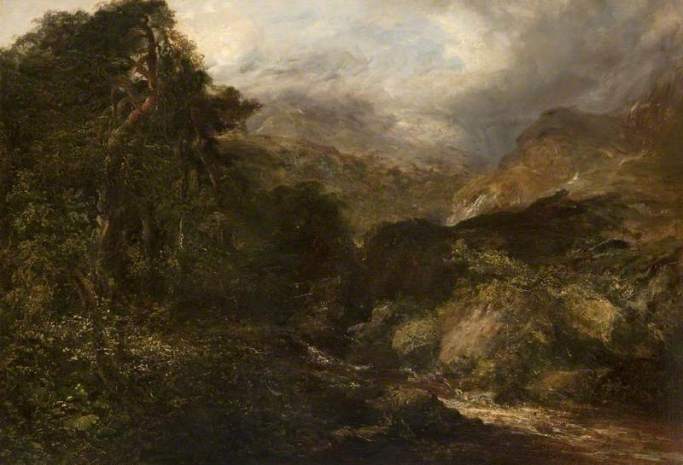
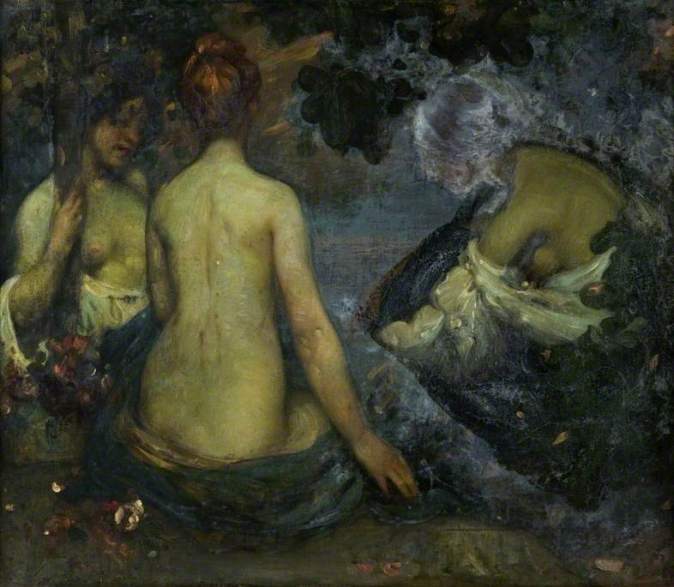


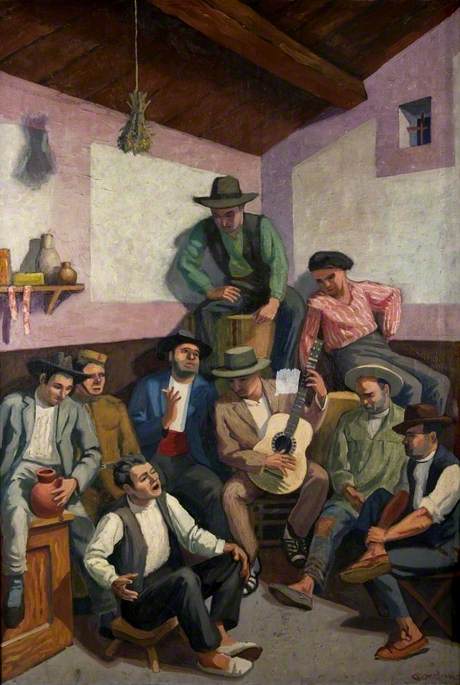


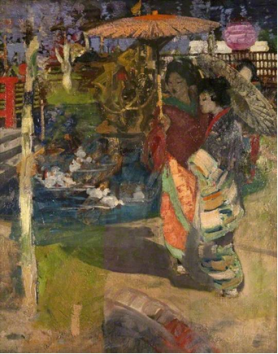

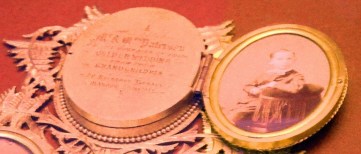

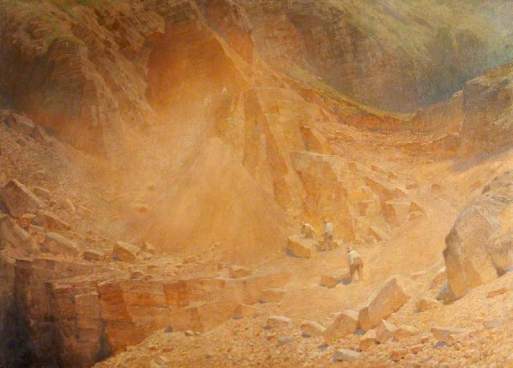
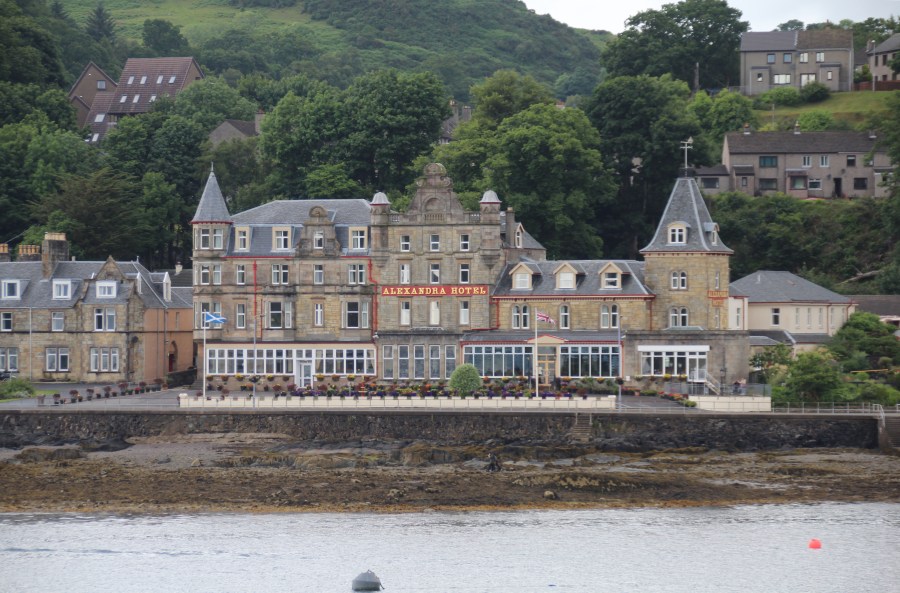
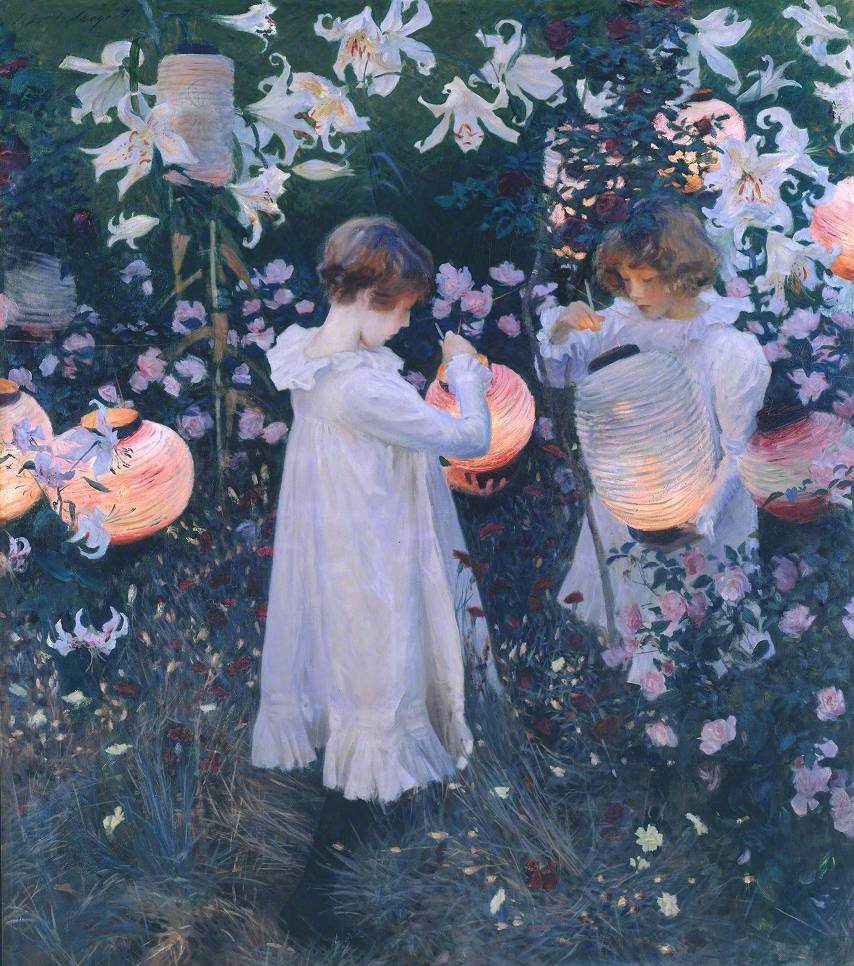
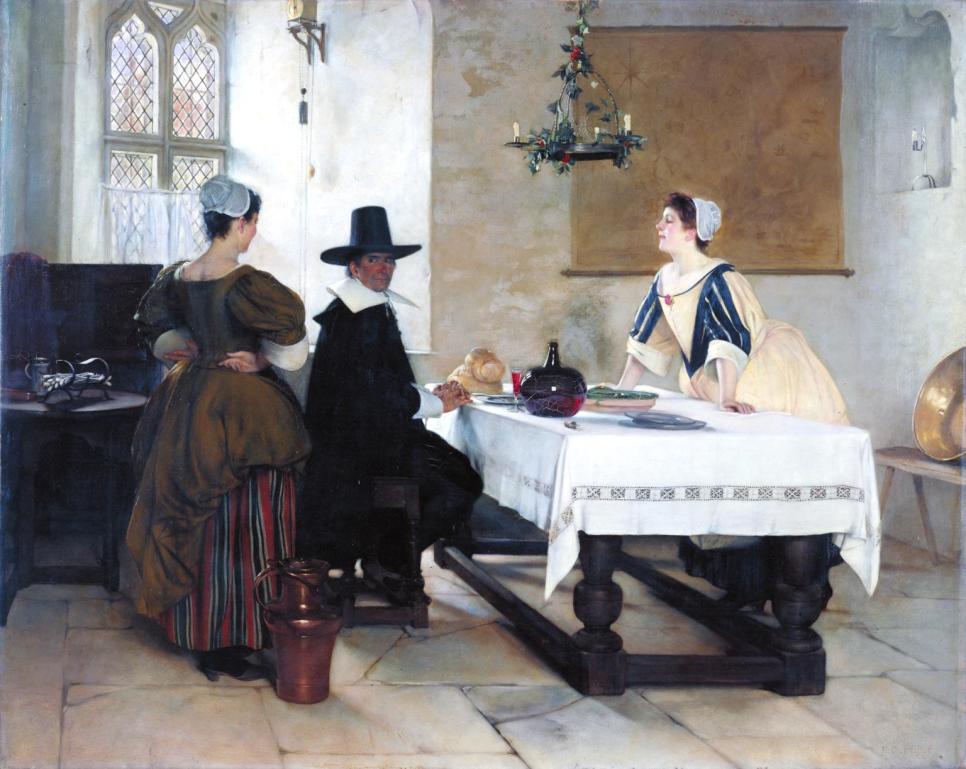
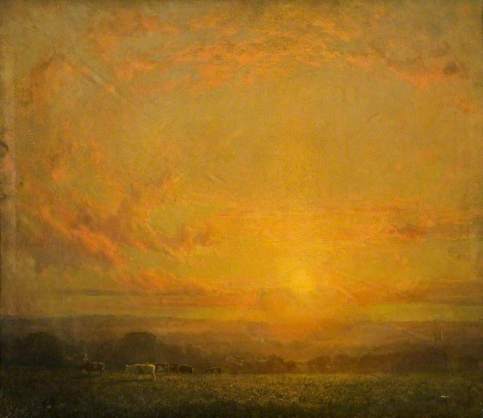
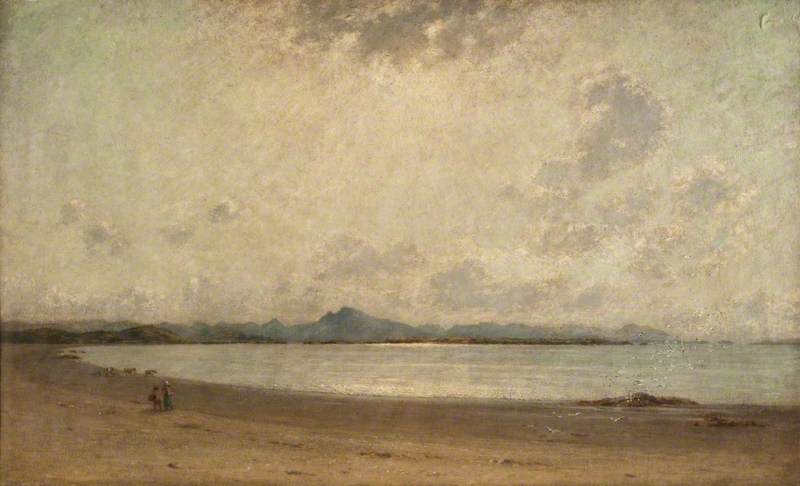
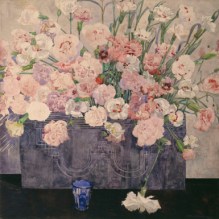
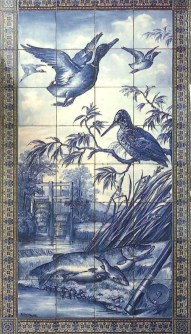


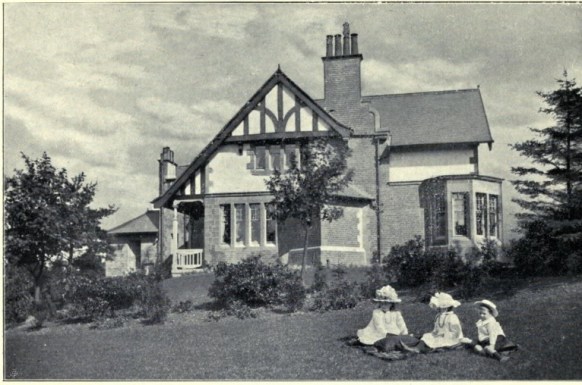


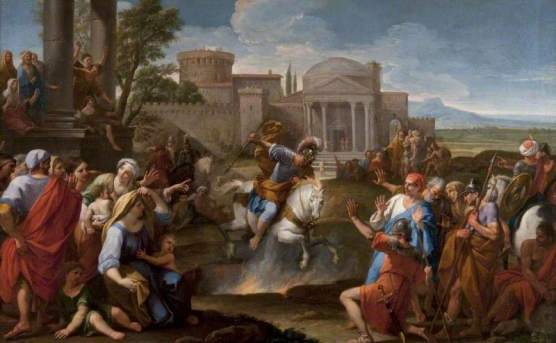


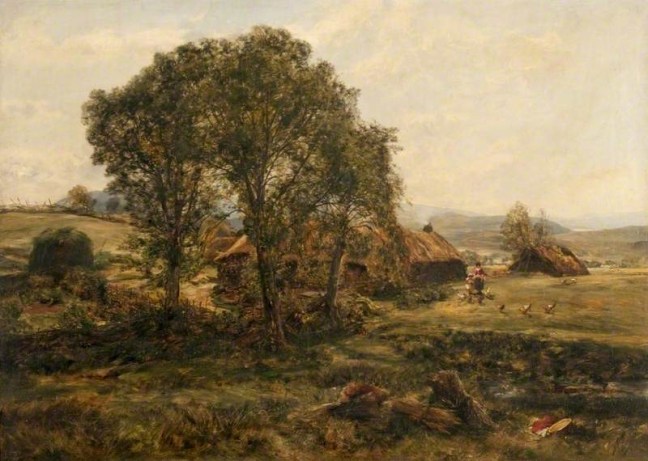


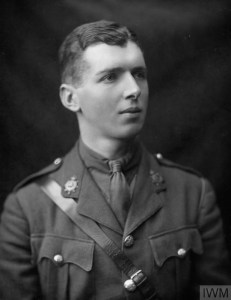

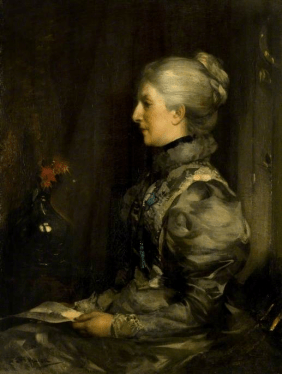

 Glasgow Museums Art Donors Group